Pandora Report 9.12.2025

Welcome to this week’s Pandora Report! This issue features coverage of the Ebola outbreak in the Democratic Republic of Congo, updates on COVID-19 and long COVID, fallout from recent CDC leadership changes, highlights from new science communication books, and GMU alumni making an impact in public health and national security. Carmen Shaw, a first-year Biodefense PhD student also joined the Pandora Report this week as a co-managing editor. She will oversee the weekly newsletter.

Ebola in the DRC

Last week, Congo’s health authorities declared a new Ebola outbreak in Kasaï province, reporting 28 suspected cases and 15 deaths, including four health workers. WHO has confirmed this as the country’s 16th outbreak of Ebola since 1976, with a case fatality rate of roughly ≈54%. The index case – a 34-year-old pregnant woman admitted to the hospital last month – has died from multiple organ failure. In response, WHO has dispatched teams to strengthen surveillance, treatment and infection control. Yet local leaders warn that critical gaps remain. “The main challenges we face involve the lack of personnel and the shortage of personal protective equipment,” said Dr. Amitié Bukidi, head of the Mweka health zone. “Beyond that, our hospitals need to be supplied with medicines and special equipment capable of addressing this epidemic.”

Further Reading:

COVID-19 Trends, Vaccine Scrutiny, and Transparency Gaps in Response

COVID-19 activity in the U.S. continues to show signs of peaking, but the impact remains uneven. The CDC’s COVID-19 surveillance data reports that test positivity for SARS-CoV-2 has dipped to 10.8% from last week’s 11.6%, yet emergency visits rose slightly from 1.5% to 1.6% and remain elevated among children ages 0 – 4 and 5 – 17 years. Against this backdrop, the FDA Commissioner Marty Makary announced an “intense investigation” into anecdotal reports of childhood deaths following COVID-19 vaccination. While no causal link has been established and current evidence does not indicate major safety risks, the probe reflects heightened scrutiny of vaccine safety at a time when public confidence remains fragile.

Attention is shifting toward the global prevalence of long COVID, which the WHO defines as a “post-COVID-19 condition” involving lingering symptoms weeks or months after infection with COVID-19. A new global meta-analysis published in Open Forum Infectious Diseases found that many teens and adolescents reported long COVID, though most symptoms resolve within three months. In their analysis, the three strongest risk factors were being unvaccinated, infections from pre-Omicron variants, and female sex. The most frequently identified lingering symptoms were memory problems and muscle weakness. “Less than 30% of adolescents reporting symptoms who tested positive reported their symptoms persisted for three or more months,” the authors concluded.

Beyond the clinical challenges of COVID-19, concerns are mounting over U.S. transparency in infectious disease reporting and tracking. HHS has indefinitely suspended a CDC project that would have launched a real-time, user-friendly platform with case counts for 127 notifiable diseases, expert interpretation, and expanded surveillance data. Envisioned as a one-stop hub – akin to a “National Weather Service for public health” – the site was designed to centralize state-level reporting and eventually integrate emergency departments, mortality, and wastewater data. Its suspension follows leadership turmoil, including the recent firing of CDC Director Susan Monarez and the resignation of senior staff like Jennifer Layden [DK1] who led the agency’s Office of Public Health Data, Science, and Technology. “We lost a lot of staff, and we couldn’t re-hire,” Layden said, noting that the ability to be effective had become increasingly difficult. Scientists involved voiced frustration that after major gains in data integration and strategy, political interference and staffing cuts are eroding progress, leaving the U.S. less transparent and less prepared for future health threats.

Further Reading:

Avian Influenza Updates

By Margeaux Malone, Pandora Report Associate Editor

Global Leaders Convene in Brazil to Address Escalating Bird Flu Threat

Approximately 500 experts from across the poultry industry, public health, science, and policy sectors met this week in Foz do Iguaçu, Brazil, for a global multisectoral dialogue on high pathogenicity avian influenza (HPAI). Organized by the Food and Agriculture Organization of the United Nations (FAO) in partnership with Brazil’s Ministry of Agriculture and Livestock, this landmark meeting aimed to coordinate international defense against the rapidly spreading highly pathogenic avian influenza (HPAI) H5N1 virus. Since 2020, HPAI has devastated poultry flocks globally and spread to 83 mammal species, including dairy cattle and wildlife. With far-reaching impacts on biodiversity, international trade, and global food security, the current avian influenza panzootic has prompted urgent calls for coordinated action.

The three-day summit focused on developing effective prevention and control strategies, building on the Global Strategy for the Prevention and Control of HPAI published by FAO in collaboration with the World Organization for Animal Health (WOAH) earlier this year. Key priorities included promoting early warning systems, vaccination strategies and biosecurity measures, with an emphasis on supporting vulnerable low-income countries and informal backyard poultry systems where surveillance and biosecurity remain challenging. Additionally, the summit focused on strengthening multisectoral coordination through a comprehensive One Health approach and sharing innovative and field-ready solutions for diagnostics, surveillance, and outbreak response. FAO Deputy Director-General Beth Bechdol stressed that “no single country or sector can tackle this threat in isolation, and failure is not an option. Practical, science-based collaboration like this is essential to protect our agrifood systems, livelihoods, and public health.”

The event marked the first time that government and scientific leaders were joined by private sector representatives in this type of global dialogue, allowing stakeholders to better understand industry challenges and also acknowledge the ongoing efforts and solutions being implemented by producers to combat the threat posed by H5N1.  

Udderly Concerning: CDC Warns Raw Milk Could Carry H5N1 Risk

A new CDC report has concluded that the risk of potentially contracting H5N1 via ingestion of contaminated foods like raw milk and unpasteurized dairy products remains “low but theoretically possible”.

The CDC’s conclusion stemmed from analysis of scientific and medical literature demonstrating that influenza A may infect mammals through non-respiratory routes, including studies demonstrating that seasonal and novel flu viruses can spread to the GI tract of infected ferrets, reports of severe H5N1 infections in dogs and cats that consumed contaminated raw food or milk, and laboratory studies showing influenza A viruses can multiply in human GI tissues.

While it is unknown if avian influenza viruses can be transmitted to people through consumption of raw dairy products from infected cows, the agency emphasized that the possibility remains theoretically viable. Given that HPAI H5N1 has been found in commercially sold raw milk, CDC recommends avoiding the consumption of raw milk and unpasteurized dairy products, noting that pasteurization effectively inactivates influenza viruses. Officials also urge proper cooking of poultry, eggs, and beef to appropriate internal temperatures.

Further Reading:

Policy & Public Health Leadership

The turmoil at the CDC continues to reverberate. Last Thursday, Secretary Robert F. Kennedy Jr. appeared before the Senate Finance Committee in a hearing that quickly turned contentious. Lawmakers from both parties pressed him on his decision to fire CDC Director Susan Monarez, appoint vocal vaccine skeptics to the advisory panel that guides immunization policy, and narrow access to updated COVID-19 vaccines. At several points, Secretary Kennedy contradicted established evidence – from vaccine safety and effectiveness to estimates of how many lives COVID-19 vaccines have saved.

Despite Secretary Kennedy’s assurances to lawmakers that “anyone” could get a COVID-19 vaccine, many Americans have reported difficulty accessing updated shots due to patchy pharmacy supply, shifting eligibility rules, and state-level confusion. Doctors, pharmacists, and local health officials are scrambling to adapt while the Advisory Committee on Immunization Practices prepares to meet on September 18 to set national guidance. In the meantime, this confusion has left vulnerable populations at risk, pending clearer guidance.

In the days following the hearing, the fallout was swift. Several members of Secretary Kennedy’s own family, including Joseph P. Kennedy III and Kerry Kennedy, publicly called for his resignation, warning that his leadership poses a direct threat to Americans’ health and wellbeing. Their criticism added to bipartisan concern in Congress and growing unease among state and local officials tasked with implementing vaccine policy. Looking ahead, the spotlight will turn back to the CDC on September 17, when former director Susan Monarez is set to testify before a Senate panel about her dismissal and the wave of high-profile resignations that followed.

Further Reading:

George Mason University Alumni Spotlight

Scott Wollek, MPA ’12 and adjunct professor in the Biodefense Graduate Program at the Schar School of Policy and Government has been named the new Director of the Maryland Hospital Preparedness Program (HPP) at the Maryland Hospital Association (MHA).

Scott, a recognized expert in public health and healthcare emergency preparedness and health security,  brings policy experience from leading a health emergency preparedness portfolio at the National Academies of Sciences, Engineering and Medicine, including collaborations with ASPR, NIH, DHS and SLTT health departments and private/non-profit healthcare systems, as well practical, operational experience in emergency response and capacity building from service with American Red Cross Disaster Services in the National Capital Region to his new role.

Now in its third decade, the HPP program provides regional collaboration statewide for health care system readiness. In Maryland the program is implemented through partnership between the Maryland Department of Health and MHA. HPP supports four regional healthcare coalitions across Maryland, bringing together hospitals, EMS, emergency management, and local health departments to strengthen and build capacity for response to disasters and large-scale emergencies.

Craig Wiener, PhD ‘16 in Biodefense (Concentration in International Security) at the Schar School of Policy and Government has been appointed as a Nonresident Fellow in Science and Technology Policy and Research Security at Rice University’s Baker Institute for Public Policy.
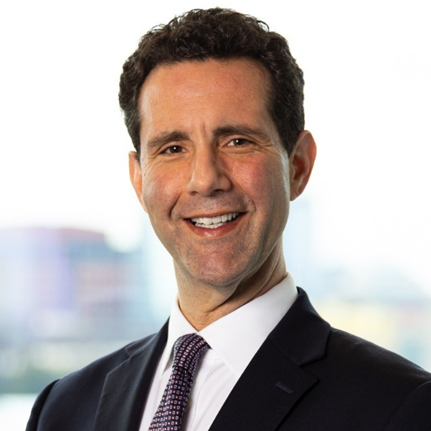
The Baker Institute is consistently ranked among the world’s top university-based think tanks, known for its nonpartisan, policy-relevant research on global and domestic challenges—from energy, trade, and diplomacy to science, technology, and security.

Wiener said, “In this capacity, I look forward to contributing to the Institute’s Science & Technology Policy Program, with a special focus on safeguarding research integrity and driving forward-thinking policy at the nexus of science, technology, and national security. This new role is complementary to my principal responsibilities as a Technical Fellow at MITRE, advising the U.S. Government, the Department of Defense, and the Intelligence Community on cybersecurity, CBRN defense, and national-level threat analysis. I will continue as a Fellow at George Mason University’s National Security Institute, at the Antonin Scalia Law School, where I engage on security issues with a nexus to U.S. national security law, defense and intelligence.”

“At the Baker Institute, I aim to help shape policy-relevant research that reinforces U.S. leadership in secure science and technology innovation, addresses the strategic dimensions of emerging technologies, and supports evidence-based decision-making.”

“I am grateful for this opportunity—and excited to collaborate with the renowned team at the Science & Technology Policy Program, alongside the broader community at Rice University and beyond.”
How to Be an Ambassador for Science: The Scientist as Public Intellectual by James L. Olds

How to be a Science Ambassador by James L. Olds explores what it means for scientists to step beyond the lab and act as public intellectuals. Drawing on decades of experience in Washington, D.C., and abroad, Olds offers practical guidance on navigating the science-policy ecosystem, engaging in diplomacy and managing crises. He emphasizes the importance of building coalitions, forging trust across political divides, and learning how to advocate effectively for science with leaders and the public. Designed as a “how-to” guide, the book provides students and professionals alike with tools to strengthen their science communication skills and embrace leadership roles in the broader public arena.

The Big One: How We Must Prepare for Future Deadly Pandemics by Michael T. Osterholm and Mark Olshaker

In The Big One, Michael T. Osterholm and Mark Olshaker warn that while COVID-19 was devastating, it was not the catastrophic pandemic experts fear most. Drawing on history, they analyze how societies have confronted past pandemics, evaluate the global response to COVID-19, and project scenarios for future outbreaks. The book underscores that the world already has many of the tools needed to prepare – from rapid vaccine platforms to stronger public health systems – but political will and sustained investment remain lacking. Framed as both a cautionary tale and a practical guide, The Big One argues that readiness today is the only way to prevent disaster tomorrow.

CTD–SPECTRE Symposium, “Tropical and Emerging Infectious Diseases for Clinicians and Translational Scientists” 

“The CTD-SPECTRE Symposium on Tropical and Emerging Infectious Diseases for Clinicians and Translational Scientists 2025 offers a unique opportunity to connect with global experts, gain cutting-edge insights, and collaborate with peers dedicated to infectious disease research and treatment.”

“Taking place September 16 -19, 2025, at the historic Grand Galvez in Galveston, TX, this immersive symposium will unite clinicians, translational investigators, and trainees to explore the latest breakthroughs in tropical and emerging infectious diseases.”

“Hosted by the Division of Infectious Diseases at UTMB, Center for Tropical Diseases (CTD) and Special Pathogens Excellence in Clinical Treatment, Readiness, & Education (SPECTRE) Program.”

Learn more and register here.

Mirror Image Biology: Pushing the Envelope in Designing Biological Systems – A Workshop

From NASEM: “Most biological molecules are chiral entities where their mirror images have different structures and functional characteristics. Scientists have begun synthesizing left-handed DNA and RNA and creating proteins that can write left-handed nucleic acids. This, and other related research, is described as “mirror biology” and includes research toward creating mirror-image self-replicating living systems. The National Academies will host a foundational workshop on mirror biology, focusing on the state of the science, trends in research and development, risks and benefits of this research, and considerations relating for future governance of relevant enabling technologies.”

This event will take place virtually, September 29-30. Register here.

Doing More with Less: Practical Biosafety on a Budget

“Led by Azelia Labs biosafety experts, Katerina Semenyuk, PhD, RBP (ABSA) and Sarah Ziegler, PhD, RPB, CBSP (ABSA) this webinar will provide a comprehensive guide to maintaining a robust biosafety program in resource-constrained environments. We will address the unique challenges that arise when faced with limited funding or leadership hesitation to invest in safety protocols.”

“This session will focus on practical, actionable strategies to overcome these obstacles. Topics will include how to prioritize essential safety measures when budgets are tight, creative solutions for providing adequate personal protective equipment (PPE), and innovative approaches to maintaining equipment and facilities without costly upgrades. We will also discuss methods for effectively communicating the value of biosafety to leadership to secure the necessary support for your program.”

This online event will take place on October 2, 12-1 pm EDT. Register here.

EMBRACE 2025 – Scientific Pathways to Biotoxin Preparedness Online Event

From CMINE: “Join us at the forefront of chemical and biological security for EMBRACE 2025 – a key event dedicated to cutting-edge research on biotoxins and human biomarkers of intoxication. This international symposium will spotlight ground-breaking scientific work and host the inauguration of EMBRACE’s Biotoxin Task Force.”

“What to Expect:

A unique opportunity to shape the scientific landscape of biotoxin threat preparedness and learn more about the EU EMBRACE project and the Biotoxin Task Force

A platform for showcasing innovation in biotoxin detection and response

Networking with global experts in biological forensics and toxicology”

This event will take place on October 15, 0900-1700 CEST. Register here.

Global Conference on Biological Threat Reduction

From the World Organisation for Animal Health: “In October 2025, WOAH is hosting its third Global Conference, with the goal of galvanising advocacy efforts to manage the rising risk of biological threats from across the world.”

“The Global Conference on Biological Threat Reduction – which will take place in Geneva on 28-30 October 2025 – will bring together top minds in the fields of
health-security, emerging technologies, and biothreat reduction policies, from the public and private sectors – to focus on the latest strategies, challenges and innovations in combating biological threats to our interconnected ecosystems.”

“The Conference will bring together approximately 400 participants from different sectors, including animal health, law enforcement and security, public health, international and regional organisations, investment and development partners, private sector and industry representatives, research, academia and regulatory authorities, youth organisations.”

“Attendees will engage in thought-provoking discussions and innovative technical presentations aimed at strengthening prevention, preparedness and response capabilities across the world.”

“The event will be guided by a narrative that traces WOAH’s commitment to biological threat reduction and the increasingly relevant role it plays at the health-security interface. Against the backdrop of an uncertain future, WOAH believes that synergies between sectors can drive positive change – making the world a safer and healthier place. ”

Learn more and register here.

GHS 2026

From GHS: “We’re excited to officially announce that the 4th Global Health Security Conference (GHS2026) will be held in Kuala Lumpur on the 9 – 12 June, 2026!”

“Building on the incredible momentum of GHS2024 in Sydney, we look forward to bringing together the global health security community once again – this time in one of Southeast Asia’s most vibrant and dynamic cities.”

“Registration and Call for Abstracts are now live!”

Learn more, submit abstracts, and register here.

Applied Biosafety Call for Papers

“The Editors of Applied Biosafety are pleased to announce a forthcoming Special Issue focused on the myriad of topics associated with global biosafety management. This special issue will showcase examples of innovative approaches, creative solutions, and best practices developed and used around the world for managing risks associated with the handling, use, and storage of infectious biological agents, toxins, and potentially infectious materials in research and clinical settings.”

Learn more and submit by November 1 here.

64th ISODARCO Course

From ISODARCO: “In recent years, the global security landscape has become increasingly volatile, shaped by a convergence of geopolitical tensions, technological advancements, and evolving nuclear doctrines. The post-Cold War order that once provided a measure of predictability in global security has eroded. Conflicts such as the wars in Ukraine and Gaza, rising tensions in the Indo-Pacific, and strategic competition between major powers have reshaped alliances and strategic postures.”

“At the same time, disruptive technologies including artificial intelligence, quantum computing, hypersonic missiles, and cyber threats – are adding new layers of complexity to both nuclear and conventional deterrence dynamics. These technologies are not only distorting the information landscape but also compressing decision-making timelines and complicating signaling mechanisms, increasing the risk of miscalculation.”

“Effectively managing nuclear escalation risks in this environment will require a combination of innovative diplomacy, technological safeguards, and renewed dialogue mechanisms to rebuild trust, reduce misperceptions, and stabilize strategic relations.”

“The ISODARCO 2026 Winter Course presents an invaluable opportunity for students and experts to discuss and examine these dynamics in depth and explore approaches to re-establishing strategic stability and reducing nuclear dangers in a volatile world.”

This course will take place January 11-18, 2026, in Andalo. Learn more and apply here.

Pandora Report 9.5.2025

This week’s Pandora Report covers the Ebola outbreak in the DRC, updates on the administration, H5N1, and more.

DRC Declares Ebola Virus Disease Outbreak

Officials in the Democratic Republic of the Congo (DRC) have declared an outbreak of Ebola virus disease in Kasai Province. As of September 4, 28 suspected cases and 15 deaths have been reported. Africa CDC reports that the index case is a 34-year-old pregnant woman who was admitted to the hospital in August with high fever and repeated vomiting, among other symptoms. The cases and deaths have been identified across the Bulape and Mweka health zones. Four cases were in healthcare workers. Furthermore, laboratory testing has confirmed the outbreak is of the Zaire strain. Kasai province last reported an EVD outbreak in 2008, while the DRC last reported an outbreak in 2022 in Équateur province.

Further Reading:

HHS Updates

Calls for Kennedy to Resign Continue

Following CDC’s chaotic saga last month, Secretary Kennedy is facing even more calls from politicians, former and current health officials, and professional organizations to step down. A letter signed by over 1,000 former and current HHS staff this week formally called for Kennedy’s resignation from HHS, building on a previous letter written following the shooting at CDC early last month. The latest letter cites Kennedy’s role in the firing of Susan Monarez, the subsequent resignations of several top CDC officials, the appointment of “ideologues who pose as scientific experts and manipulate data to fit predetermined conclusions,” and more. The letter came amid similar calls from Senate Democrats and yet more professional organizations for the secretary’s resignation. Kennedy also faced similar calls during a particularly explosive hearing before the Senate Finance Committee on Thursday.

Further Reading:

Kennedy Set to Nominate New ACIP Members Amid Vaccine Clashes

With COVID-19 activity continuing to rise and more Americans uncertain if they will be able to receive updated COVID-19 immunizations this fall, Secretary Kennedy is set to appoint seven more members to the Advisory Committee on Immunization Practices (ACIP). Among those on the list are a cardiologist, neurologist, and geneticist who have previously been critical of vaccines or mandates. The views of the four others are not clear as of yet.

Yvonne Maldonado, a pediatrician at Stanford University who served on the panel until Kennedy fired everyone on it in June, told The New York Times, “At first blush, none of these potential candidates appear to have vaccine expertise…It seems that there is a theme of ‘mainstream’ Covid policy denial. Covid is not the only disease we are dealing with now, and we should move on to dealing with the overall vaccine disease prevention landscape.”

In related news, the governors of California, Oregon, and Washington announced this week that they are forming the West Coast Health Alliance to provide unified recommendations to “ensure residents remain protected by science, not politics,” in response to upheaval at CDC. The trio warned that there will be serious ramifications if CDC becomes “a political tool that increasingly peddles ideology instead of science.”

Further Reading:

Avian Influenza Updates

By Margeaux Malone, Pandora Report Associate Editor

AI Tool Shows Promise for H5N1 Detection in Emergency Departments

University of Maryland researchers have developed an artificial intelligence tool that could greatly enhance H5N1 surveillance by identifying high-risk patients who slip through the cracks during routine emergency department visits. In the study recently published in Clinical Infectious Diseases, the team used GPT-4 Turbo to analyze over 13,000 emergency department visits from patients presenting with respiratory symptoms or conjunctivitis in 2024.

While these symptoms could indicate seasonal flu, they’re also consistent with early H5N1 infections, making it crucial to also identify potentially relevant animal exposures. The AI tool successfully flagged 76 cases where patients mentioned risk factors like working as butchers or on livestock farms. After human review, 14 patients were confirmed to have had recent exposure to animals known to carry H5N1. Notably, these exposures were often mentioned incidentally in medical notes rather than being recognized as clinically significant by healthcare providers. The entire process required just 26 minutes of human oversight and cost only 3 cents per patient record. This scalability could enable widespread deployment across hospital systems nationwide.

“Because we are not tracking how many symptomatic patients have potential bird flu exposures, and how many of those patients are being tested, infections could be going undetected,” explained lead researcher Katherine Goodman. “It’s vital for healthcare systems to monitor for potential human exposure and to act quickly on that information.”

However, experts noted some important limitations. The model was conservative when identifying animal exposures relevant to avian influenza, flagging even low-risk contact with animals such as pet dogs, emphasizing the need for human review of any flagged cases. Furthermore, current AI tools like this one rely on already knowing what to look for when screening for H5N1. More sophisticated systems will be needed to identify emerging patterns as H5N1 evolves or new pandemic threats emerge. Still, for a virus where early detection could mean the difference between containment and widespread human transmission, this represents meaningful progress in our surveillance capabilities.

Further Reading:

Other Relevant Happenings

USARPAC Hosts Inaugural Biological Defense TTX

Florida Moves to End Childhood Vaccine Mandates

CDC Scales Back FoodNet

FDA Investigating Following Confirmation of H5N1 in Raw Cat Food

Administration Agrees to Restore Public Health Datasets and Websites

US Aid Cuts Disrupt HIV Services in Tanzania and Uganda

Typologies of Terrorist Organizations: Conceptual Lenses and Counterterrorism Measures

This forthcoming book was authored by Mahmut Cengiz, Mitchel P. Roth, and Huseyin Cinoglu. Cengiz is an associate professor in the Schar School of Policy and Government and a research faculty member with Mason’s Terrorism, Transnational Crime and Corruption Center who teaches courses in the Biodefense Graduate Program: “Explore the complex landscape of global terrorism with Typologies of Terrorist Organizations: Conceptual Lenses and Counterterrorism Measures. This essential volume provides a comprehensive examination of hundreds of terrorist groups and employs a detailed framework of typological classifications—religious, left-wing/revolutionary, ethnonationalist, anarchist, right-wing, ecoterrorism, state terrorism, cyberterrorism, and narcoterrorism—to analyze each group in depth, focusing on their ideologies, key actors, methods, and underlying motives.”

“What sets this book apart is its multidimensional approach, using conceptual lenses to delve into the causes of terrorist actions, the motivations driving these groups, and their strategies. This approach not only aids in combating terrorism but also enhances understanding of the broader context in which these groups operate. It provides insights into their organizational structures, tactics, weaponry, victim profiles, target types, funding sources, and networks, painting a comprehensive picture of the evolving nature of terrorism.”

“Additionally, Typologies of Terrorist Organizations offers a critical review of domestic and global counterterrorism strategies, examining how these strategies have evolved to address emerging threats. Each chapter provides a detailed perspective on counterterrorism efforts, making this book a valuable resource for understanding both the development of terrorist tactics and the responses designed to counter them.”

“Ideal for scholars, policymakers, and security professionals, this book is not only crucial for those engaged in counterterrorism but also for anyone seeking to understand the broader contextual dynamics of global terrorism. Its combination of theoretical depth and practical analysis makes it a significant contribution to the field of counterterrorism studies and an indispensable guide for navigating contemporary security challenges.”

“Neutralizing Nipah”

Rekha Dixit recently published this article in Shaastra: “Pedro is a fluffy seven-year-old alpaca from the Andes mountains of Chile. The Pteropus medius is a large fruit bat native to the Indian subcontinent. There is little to connect the two — barring the fact that Pedro’s blood might be able to fight the deadly Nipah virus harboured by the fruit bat.”

“Researchers from Austral University of Chile and The University of Queensland, Australia, have isolated a nanobody — DS90 — from Pedro’s immune cells that can bind to a surface protein of the Nipah virus, thereby blocking its ability to enter and infect mammalian cells (bit.ly/alpaca-Nipah).”

“Nanobodies are very small antibodies — one-tenth the size of standard antibodies — and are produced only in the Camelid group of animals, which includes alpacas. Researchers are looking at nanobodies to tackle diseases ranging from infection to cancer because of their size, enhanced ability to bind with antigens, robust stability and capability to breach the blood-brain barrier. Nanobodies can also be manufactured to scale. Discovered in 1989 by a team led by Raymond Hamers and Cécile Casterman, the first nanobody-based therapy was approved in 2018 to treat acquired thrombotic thrombocytopenic purpura, a blood disorder.”

Read more here.

“Climate Change and Antimicrobial Resistance”

Geoffrey Kamadi recently published this article in The Bulletin of the Atomic Scientists, writing in part, “The cholera outbreak in Malawi illustrates how natural disasters and climate change can create or exacerbate public health crises. But researchers are only beginning to understand the relationship between climate change and AMR specifically. “For the last five years, a lot of new work has gone into how climate change and AMR are relating to one another,” says Arshnee Moodley, the team lead for AMR at the International Livestock Research Institute (ILRI) in Nairobi.”

“Simplifying Research Regulations and Policies”

From NASEM: “The U.S. scientific enterprise has produced countless discoveries that have led to significant advances in technology, health, security, safety, and economic prosperity. However, concern exists that excessive, uncoordinated, and duplicative policies and regulations surrounding research are hampering progress and jeopardizing American scientific competitiveness. Estimates suggest the typical U.S. academic researcher spends more than 40 percent of their federally funded research time on administrative and regulatory matters, wasting intellectual capacity and taxpayer dollars. Although administrative and regulatory compliance work can be vital aspects of research, the time spent by researchers on such activities continues to increase because of a dramatic rise in regulations, policies, and requirements over time.”

“To better ensure that the research community is maximally productive while simultaneously ensuring the safety, accountability, security, and ethical conduct of publicly funded research, Simplifying Research Regulations and Policies: Optimizing American Science examines current federal research regulations. This report identifies ways to improve regulatory processes and administrative tasks, reduce or eliminate unnecessary work, and modify and remove policies and regulations that have outlived their purpose while maintaining necessary and appropriate integrity, accountability, and oversight. Simplifying Research Regulations provides a roadmap for establishing a more agile and resource-effective regulatory framework for federally funded research.”

Read STAT News’ coverage of this report here.

NEW: Doing More with Less: Practical Biosafety on a Budget

“Led by Azelia Labs biosafety experts, Katerina Semenyuk, PhD, RBP (ABSA) and Sarah Ziegler, PhD, RPB, CBSP (ABSA) this webinar will provide a comprehensive guide to maintaining a robust biosafety program in resource-constrained environments. We will address the unique challenges that arise when faced with limited funding or leadership hesitation to invest in safety protocols.”

“This session will focus on practical, actionable strategies to overcome these obstacles. Topics will include how to prioritize essential safety measures when budgets are tight, creative solutions for providing adequate personal protective equipment (PPE), and innovative approaches to maintaining equipment and facilities without costly upgrades. We will also discuss methods for effectively communicating the value of biosafety to leadership to secure the necessary support for your program.”

This online event will take place on October 2, 12-1 pm EDT. Register here.

NEW: EMBRACE 2025 – Scientific Pathways to Biotoxin Preparedness Online Event

From CMINE: “Join us at the forefront of chemical and biological security for EMBRACE 2025 – a key event dedicated to cutting-edge research on biotoxins and human biomarkers of intoxication. This international symposium will spotlight ground-breaking scientific work and host the inauguration of EMBRACE’s Biotoxin Task Force.”

“What to Expect:

A unique opportunity to shape the scientific landscape of biotoxin threat preparedness and learn more about the EU EMBRACE project and the Biotoxin Task Force

A platform for showcasing innovation in biotoxin detection and response

Networking with global experts in biological forensics and toxicology”

This event will take place on October 15, 0900-1700 CEST. Register here.

ICYMI: Strengthening Biosecurity in the Latin America / Caribbean Region
From IFBA: “The International Federation of Biosafety Associations (IFBA), alongside its network of biosafety associations and partners, continue to jointly implement activities designed to strengthen biological security across the Latin America/Caribbean (LAC) region. Most recently, an IFBA/LAC delegation, including included two participants from IFBA’s LAC Mentorship Program, participated in the Sixth Session of the Working Group on the Strengthening of the Biological Weapons Convention between August 12-15, 2025 in Geneva, Switzerland. In addition to attending the plenary meeting and its associated events, the delegation engaged with the Youth for Biosecurity Fellows in collaboration with UNODA representatives during their field visit to Geneva. The IFBA’s Senior Program Officer presented the IFBA’s existing program successes and future strategic planning to the Global Partnership’s Biological Security Working Group.”

Read more here.

Biological Threats in the Age of Emerging Biotechnology – A Workshop Series

From NASEM: “The National Academies of Sciences, Engineering, and Medicine (NASEM) will convene an ad hoc planning committee to organize a workshop series with international scientists. The series will engage early-career and established experts to: a) examine dual-use risks in biotechnology research; b) explore potential misuse of knowledge, tools, and materials; c) review existing frameworks for assessing and mitigating dual-use concerns; and d) identify steps to reduce exploitation while promoting responsible innovation. The workshops will focus on balancing scientific progress with security considerations. Key insights and recommendations will be compiled in a publicly available workshop proceedings document.”

These workshops will take place 10 am-1 pm ET on September 10, 17, and 18. Register here.

CTD–SPECTRE Symposium, “Tropical and Emerging Infectious Diseases for Clinicians and Translational Scientists” 

“The CTD-SPECTRE Symposium on Tropical and Emerging Infectious Diseases for Clinicians and Translational Scientists 2025 offers a unique opportunity to connect with global experts, gain cutting-edge insights, and collaborate with peers dedicated to infectious disease research and treatment.”

“Taking place September 16 -19, 2025, at the historic Grand Galvez in Galveston, TX, this immersive symposium will unite clinicians, translational investigators, and trainees to explore the latest breakthroughs in tropical and emerging infectious diseases.”

“Hosted by the Division of Infectious Diseases at UTMB, Center for Tropical Diseases (CTD) and Special Pathogens Excellence in Clinical Treatment, Readiness, & Education (SPECTRE) Program.”

Learn more and register here.

Mirror Image Biology: Pushing the Envelope in Designing Biological Systems – A Workshop

From NASEM: “Most biological molecules are chiral entities where their mirror images have different structures and functional characteristics. Scientists have begun synthesizing left-handed DNA and RNA and creating proteins that can write left-handed nucleic acids. This, and other related research, is described as “mirror biology” and includes research toward creating mirror-image self-replicating living systems. The National Academies will host a foundational workshop on mirror biology, focusing on the state of the science, trends in research and development, risks and benefits of this research, and considerations relating for future governance of relevant enabling technologies.”

This event will take place virtually, September 29-30. Register here.

Global Conference on Biological Threat Reduction

From the World Organisation for Animal Health: “In October 2025, WOAH is hosting its third Global Conference, with the goal of galvanising advocacy efforts to manage the rising risk of biological threats from across the world.”

“The Global Conference on Biological Threat Reduction – which will take place in Geneva on 28-30 October 2025 – will bring together top minds in the fields of
health-security, emerging technologies, and biothreat reduction policies, from the public and private sectors – to focus on the latest strategies, challenges and innovations in combating biological threats to our interconnected ecosystems.”

“The Conference will bring together approximately 400 participants from different sectors, including animal health, law enforcement and security, public health, international and regional organisations, investment and development partners, private sector and industry representatives, research, academia and regulatory authorities, youth organisations.”

“Attendees will engage in thought-provoking discussions and innovative technical presentations aimed at strengthening prevention, preparedness and response capabilities across the world.”

“The event will be guided by a narrative that traces WOAH’s commitment to biological threat reduction and the increasingly relevant role it plays at the health-security interface. Against the backdrop of an uncertain future, WOAH believes that synergies between sectors can drive positive change – making the world a safer and healthier place. ”

Learn more and register here.

GHS 2026

From GHS: “We’re excited to officially announce that the 4th Global Health Security Conference (GHS2026) will be held in Kuala Lumpur on the 9 – 12 June, 2026!”

“Building on the incredible momentum of GHS2024 in Sydney, we look forward to bringing together the global health security community once again – this time in one of Southeast Asia’s most vibrant and dynamic cities.”

“Registration and Call for Abstracts are now live!”

Learn more, submit abstracts, and register here.

Applied Biosafety Call for Papers

“The Editors of Applied Biosafety are pleased to announce a forthcoming Special Issue focused on the myriad of topics associated with global biosafety management. This special issue will showcase examples of innovative approaches, creative solutions, and best practices developed and used around the world for managing risks associated with the handling, use, and storage of infectious biological agents, toxins, and potentially infectious materials in research and clinical settings.”

Learn more and submit by November 1 here.

64th ISODARCO Course

From ISODARCO: “In recent years, the global security landscape has become increasingly volatile, shaped by a convergence of geopolitical tensions, technological advancements, and evolving nuclear doctrines. The post-Cold War order that once provided a measure of predictability in global security has eroded. Conflicts such as the wars in Ukraine and Gaza, rising tensions in the Indo-Pacific, and strategic competition between major powers have reshaped alliances and strategic postures.”

“At the same time, disruptive technologies including artificial intelligence, quantum computing, hypersonic missiles, and cyber threats – are adding new layers of complexity to both nuclear and conventional deterrence dynamics. These technologies are not only distorting the information landscape but also compressing decision-making timelines and complicating signaling mechanisms, increasing the risk of miscalculation.”

“Effectively managing nuclear escalation risks in this environment will require a combination of innovative diplomacy, technological safeguards, and renewed dialogue mechanisms to rebuild trust, reduce misperceptions, and stabilize strategic relations.”

“The ISODARCO 2026 Winter Course presents an invaluable opportunity for students and experts to discuss and examine these dynamics in depth and explore approaches to re-establishing strategic stability and reducing nuclear dangers in a volatile world.”

This course will take place January 11-18, 2026, in Andalo. Learn more and apply here.

Pandora Report 12.20.2024

This week’s Pandora Report covers the first severe H5N1 case in the US, growing numbers of mpox cases in the DRC, updates to the BSAT list, the killing of Russian Lieutenant General Igor Kirillov, and more. The Pandora Report will return from the holiday break on January 10.

Congrats to Our December Biodefense MS Grads!

Mpox Cases Rise Steadily

Mpox cases in Africa rose steadily in the last week with 3,095 more cases reported, 2,632 of which were in the Democratic Republic of Congo (DRC). Africa CDC reports that 31 more people have died, 29 of which were in the DRC. Nearly 70,000 cases have been reported in 20 countries is the region this year. Guinea has also moved recently from the controlled stage to active transmission. Read more about mpox’s spread in Africa here.

CDC Confirms First Severe H5N1 Case in the United States

The CDC announced yesterday that a patient has been hospitalized with a severe case of avian influenza A(H5N1) virus infection in Louisiana, marking the first instance of severe illness linked to the virus in the United States. The case was confirmed by CDC on December 13. The CDC’s press release on this matter explains that, “Partial viral genome data of the H5N1 avian influenza virus that infected the patient in Louisiana indicates that the virus belongs to the D1.1 genotype related to other D1.1 viruses recently detected in wild birds and poultry in the United States and in recent human cases in British Columbia, Canada, and Washington state. This H5N1 bird flu genotype is different than the B3.13 genotype detected in dairy cows, sporadic human cases in multiple states, and some poultry outbreaks in the United States. Additional genomic sequencing and efforts to isolate virus from clinical specimens from the patient in Louisiana are underway at CDC.”

An investigation is ongoing, but it has already been determined that the patient was exposed to sick and dead birds in backyard flocks. No person to person spread of H5 bird flu has been detected at this time. This is the first case of H5N1 avian influenza in the US that has been linked to exposure to a backyard flock. The agency explains that, “A sporadic case of severe H5N1 bird flu illness in a person is not unexpected; avian influenza A(H5N1) virus infection has previously been associated with severe human illness in other countries during 2024 and prior years, including illness resulting in death.”

APHIS Updates Select Agents and Toxins Registration List

The US Animal and Plant Health Inspection Service (APHIS) recently completed it biennial review of the Biological Select Agents and Toxins (BSAT) list. As a result of this review, the agency is removing five select agents from the BSAT list, including Brucella abortusBrucella suis, and Brucella melitensis, African horse sickness virus, and Peronosclerospora philippinensis. The agency explained in a press release that, “Removing regulatory barriers will greatly advance research on vaccines and diagnostics, which will improve our efforts to control these diseases in animal populations.” Furthermore, it explained that the delisting of the Brucella spp. does not change the already recommended biosafety levels for work with this species of bacteria.

Russian Lieutenant General Igor Kirillov Assassinated by Ukrainian Security Forces

LTG Igor Kirillov, head of Russia’s Chemical, Biological, and Nuclear Defense Troops, was killed this week just one day after Ukraine accused him of criminal activity in the “massive use of banned chemical weapons” in Ukraine. Kirillov and an aide died after an explosive device that was planted in a scooter by an entryway detonated as they passed by. According to the Security Service of Ukraine (SBU, chemical weapons have been used by Russia more than 4,800 times since the beginning of the full-scale invasion in 2022.

Read more: “Protecting Our Precious Bodily Tissues. The Favourite Conspiracy Theories of General Kirillov, Assassinated in Moscow,” Nikita Sologub, Mediazona

Trump Nominees, Surrogates Continue to Disappoint

Washington Post Does Deep Dive on Dave Weldon’s Anti-Vaccine Past

The Washington Post recently published a piece on President-elect Trump’s pick to lead the CDC, Dave Weldon, and his longstanding history with anti-vaccination rhetoric and beliefs. The piece explains how Trump came to select the 71-year-old former Army physician to lead CDC on the advice of Robert F. Kennedy Jr., Trump’s equally troubling pick to lead HHS. The piece explains in part, “A Washington Post review of Weldon’s public comments, media appearances and congressional letters along with accounts of those who worked with him reveal a portrait of a politician and physician who emphasized the experiences of individuals while dismissing dozens of studies based on data from hundreds of thousands of patients that showed no link between vaccines and autism.”

Furthermore, “In Congress, Weldon was “absolutely and completely dismissive” of data showing vaccines were not associated with autism, recalled Josh Sharfstein, a former Democratic staff member on the House Government Reform Committee in the early 2000s when the Republicans who were in charge held regular hearings questioning vaccine safety.”

Despite this, Weldon has previously expressed support for coronavirus and influenza vaccines, offering them to patients who want them. Sharfstein, who is now Vice Dean for Public Health Practices and Johns Hopkins University and a former top FDA official, explained further that Weldon “…appeared to have a closed mind on the issue…He didn’t seem to understand that the core tool of population data analysis is one of the pivotal aspects of the work of CDC.”

Musk Shares False ‘Bioweapons Lab’ Tweet

This Wednesday, the infamous anti-LGBTQIA+ X account, Libs of TikTok, posted a screenshot of a portion of the resolution introduced by Speaker Mike Johnson aimed at averting a government shutdown on December 21. The bill would fund the government through March 14, but both President-elect Donald Trump and X owner Elon Musk have spoken out against the bill. The portion of the bill shared by Libs of TikTok reads:

SEC. 629. REGIONAL BIOCONTAINMENT RESEARCH LAB-ORATORIES.

(a) IN GENERAL—The Secretary of Health and Human Services (referred to in this section as the “Secretary”) shall make awards to establish or maintain, as applicable, not fewer than 12 regional biocontainment lab-oratories, for purposes of—

(1) conducting biomedical research to support public health and medical preparedness for, and rapid response to, biological agents, including emerging infectious diseases;

The Libs of TikTok account captioned the photo, “BREAKING: New Congressional Resolution bill includes funding for at least 12 new biolabs.” Must quote-tweeted it, adding “We’re funding bioweapon labs in this bill!” Musk’s post has been re-tweeted at least 60,000 times, yet the bill text says nothing about biological weapons. Furthermore, as noted by Politico, “The provision is part of a long-sought reauthorization of the Pandemic and All Hazards Preparedness and Response Act.”

Musk, who was recently denied a clearance and has done his best to insert himself into the Trump team, was named co-chair of the “Department of Government Efficiency” (DOGE) by Donald Trump. DOGE, which is a nod to the meme coin-Doge Coin-promoted by Musk, is a proposed presidential advisory commission that would be tasked with restructuring the federal government and removing regulations. Despite Musk’s only involvement with the government so far being receiving at least $15.4 billion in federal contracts in the last decade, he seems poised to play a prominent role in the incoming administration. That being the case, Musk should brush up on the United States’ role as a State Party to the Biological Weapons Convention, which prohibits states from developing, producing, acquiring, transferring, stockpiling, or using biological and toxin weapons.

“The United States Needs to Step Up Its Response to Bird Flu”

Biodefense MS alumna Sophia Hirshfield recently co-authored this feature from the Center for Strategic and International Studies. The authors write in part, “Since the turn of the century, every presidential administration has highlighted gaps in U.S. public health capabilities, and every Congress has left them underfunded. The H5N1 outbreak has revealed the resulting and dangerous shortcomings in U.S. pandemic preparedness: lagging data, incomplete surveillance, sluggish coordination, considerable mistrust, and insufficient planning and stockpiling of vaccines and therapies. That poor performance cuts across political parties, the federal interagency, and state leadership. Multiple players have sought to downplay the threat: the dairy industry fears further economic setbacks, state leaders are wary of federal intervention, and the Biden administration did not want to aggravate relations during the 2024 election cycle.”

They continue, “It is not too late to change course. Strong interagency, interstate, and global coordination; better protections for farm workers; accelerated planning and investment in surveillance; and the development and promotion of better vaccines and therapies remain the essential elements to prevent the sustained spread of H5N1.”

“Syria Still Has Chemical Weapons: How to Get the Country’s New Rulers to Help Eliminate Assad’s Deadly Arsenal”

Biodefense Graduate Program Director Gregory Koblentz recently co-authored this article in Foreign Affairs. The article describes the threat posed by Syria’s remaining chemical weapons, calls up on the new Syrian government to eliminate these weapons, and provides policy recommendations to the United States and its allies and partners for how they can assist in the process of destroying these weapons and holding accountable members of the former regime who conducting chemical attacks.

Koblentz was also quoted in these articles about Syria’s CW:

“Researcher Daniel Gerstein on Security Threats Posed by Drones”

RAND Corporation Senior Policy Researcher and Biodefense PhD Program alumnus Daniel Gerstein discusses threats posed by unmanned aerial systems in this interview with C-SPAN.

“Chemical and Biological Defense Program Enterprise Strategy”

The Department of Defense released the 2024 Chemical and Biological Defense Program (2024 CBDP) Enterprise Strategy. “It replaces the 2020 CBDP strategy and positions the Department to ensure the total force to carry out its missions in the face of advanced chemical and biological threats…Taking its lead from the 2022 National Defense Strategy, this strategy prioritizes delivery of operationally relevant chemical and biological defense (CBD) capabilities at speed and scale, to sustain and strengthen U.S. deterrence against the People’s Republic of China as the pacing challenge and Russia as the acute threat. The new strategy reinforces other strategic guidance including the 2023 Strategy for Countering Weapons of Mass Destruction, inaugural National Defense Industrial Strategy, and the Biodefense Posture Review. It also calls for tighter integration of CBD capabilities with international Allies and partners to ensure our combined armed forces can deter or prevail against advanced chemical and biological threats.”

“The 2024 Seoul and Tokyo Biosecurity Dialogues”

Christopher East discusses dialogues held by the Council on Strategic Risks in November in this blog post, writing in part “On 18th and 20th November 2024 in Seoul and Tokyo respectively, the Council on Strategic Risks (CSR) convened dialogues with biosecurity experts from the Republic of Korea, Japan, the United States, the United Kingdom, and NATO, concluding with a series of practicable recommendations for the governments of the Republic of Korea and Japan.”

“Securing Benchtop DNA Synthesizers”

Max Langenkamp recently published this report with IFP: “This report examines the present and future of benchtop synthesizers and provides quantitative forecasts. The concrete threat model in the report helps characterize the threat of attack and leads to certain technical mitigations. Modern cryptographic methods can enable secure and centralized screening, even for air-gapped devices…The current benchtop policy would benefit from a security certification system, as well as standardized processes for benchtop and reagent screening. Such safeguards manage to mitigate risk while enabling innovation.”

“DNA Sequencing, Synthesis and Screening in Biosecurity”

From the Cluster for National and Technical Science Arms Control Research: “The second CNTR Fact Sheet by Liska Suckau (CNTR/PRIF) provides an overview of the characteristics of DNA sequencing, synthesis and screening in biosecurity. It compares different sequencing methods and gives a basic overview of DNA synthesis. In addition, it highlights the technologies’ potentials and risks and outlines various application possibilities.”

CNTR Monitor 2024 Perspectives on Dual Use

From CNTR: “The CNTR Monitor is an annual open-access publication and the core product of CNTR’s research. It highlights technological innovations and developments in the natural sciences that are relevant to peace and security. In addition to analyses of individual technologies and reports on research and development (R&D) activities, the Monitor also explores opportunities for arms control and outlines options for political regulation.”

This year’s edition includes articles like “Technological Implications of AI in Biorisk,” “Implications of Technological Advancements for Biosecurity,” and more.

“Toward a Safer and More Secure US Bioeconomy”

Watson et al. recently published this comment in Nature Biotechnology, writing in part “To enhance the safety and security of the US bioeconomy, a new public–private partnership should be established to facilitate information sharing and threat analysis among industry, government and academia, and to develop and deploy safeguards.”

“Scientists Urge Halt to Research on Creating Synthetic “Mirror” Bacteria That Could Evade Human Immunity, Disrupt Ecosystems”

Matt Field breaks down concerns about research using mirror molecules in this piece for The Bulletin of the Atomic Scientists, writing in part “Although the capability to create organisms or bacteria that utilize mirror molecules remains at least a decade away by many estimations, 38 authors of an article published in Science Thursday said that investigation into creating such “mirror life” should not be pursued. The authors said they “were initially skeptical that mirror bacteria could pose major risks,” but have since grown “deeply concerned.”’

“A Framework for Effective Risk Assessment of AI-Biotechnology Convergence”

Lakshmy Ramakrishnan recently authored this issue brief for the Observer Research Foundation: “Advances in disruptive technologies have enabled scientists to engineer biological systems and create more efficient and sustainable products for a range of purposes. The convergence of artificial intelligence (AI) with biotechnology has contributed to the development of therapeutics and vaccines, helped address food security, aided in generating innovative processes to mitigate the effects of climate change, and expanded the bioeconomy. However, there are concerns that AI-biotechnology tools can be misused to create harm, with catastrophic global consequences. This brief advocates for a nuanced approach to assess the risks associated with the convergence of AI with biotechnology and its potential for misuse and recommends a coordinated strategy.”

“U.S. Government Support for Global Health Security – Protecting Lives and Safeguarding Economies”

The Biden administration recently released its final annual global health security report-“U.S. Government Support for Global Health Security – Protecting Lives and Safeguarding Economies”. The report highlights progress in global health security and identifies remaining challenges in this area. A White House press release on the document’s announcement explains, “The Biden-Harris Administration has advanced a bold agenda to prevent the devastating toll of outbreaks and pandemics, including investing more than $3 billion in strengthening global health security (GHS) since 2020. These investments have helped to: prepare countries around the world to more effectively prevent, detect and respond to biological threats; build stronger and more effective regional and global institutions to support health emergency preparedness and response; and respond rapidly to numerous outbreaks – from Ebola to mpox – to limit the health and economic impacts on the American people, as well as people living around the world. U.S. leadership in global health security is built on decades of investments in global health and research and development, as well as strong partnerships with other countries, regional and multilateral institutions, civil society, and the private sector.”

ICYMI: In Conversation with Jon Finer: Recent Developments in the Biden Administration’s WMD Policies

Watch the recording of the Carnegie Endowment for International Peace’s December 19 event here: “As the United States approaches the expiration of the New Strategic Arms Reduction Treaty (New START) in February 2026, there are critical questions about the future of nuclear arms control, strategic stability, and global nonproliferation efforts.”

“Join the Arms Control Association and the Carnegie Endowment for International Peace for remarks from U.S. Principal Deputy National Security Advisor Jon Finer on the Biden administration’s efforts to reduce nuclear dangers and adapt U.S. nuclear weapons and nonproliferation policy to an uncertain world, as evidenced by the rapid changes occurring in Syria. Finer will take questions from the Arms Control Association’s Executive Director Daryl Kimball.” 

“Following Finer’s address, a distinguished panel will examine the implications of the looming expiration of New START. Madelyn Creedon, chair of the 2023 Congressional Commission on the Strategic Posture of the United States, Adam Mount, senior fellow and director of the Defense Posture Project at the Federation of American Scientists, and James Acton, co-director of Carnegie’s Nuclear Policy program, will explore key considerations surrounding U.S. nuclear forces and requirements, arms control, and nonproliferation policy.”   

ICYMI: “NTI | bio Proposes New Solutions to Prevent Bioweapons Development and Use”

“The dual-use nature of modern bioscience and biotechnology, combined with the significant resources available to many states, makes it challenging to prevent the development of biological weapons using traditional arms control measures and policy approaches. During the fifth session of the Biological Weapons Convention (BWC) Working Group meetings from December 2-13 in Geneva, Switzerland, NTI | bio presented solutions that could effectively reduce the risk of bioweapons development and use by states and other powerful actors.”

Read more here.

Understanding the Introduction of Pathogens into Humans- Preventing Patient Zero: A Workshop

“The past few decades have seen the emergence of several diseases with drastic public health and economic consequences. Understanding routes of pathogen emergence and transmission is critical to preventing and mitigating disease spillover and amplification. The National Academies Forum on Microbial Threats will host a hybrid public workshop to address gaps in understanding of disease emergence, with a focus on human-animal interaction and laboratory biosafety. The workshop will explore how applications of existing policy structures, emerging technologies, and actionable research can improve biosecurity measures and prevention of future disease emergence.”

This event will take place on January 15 and 16. Learn more and register here.

How to Avoid Human-Made Pandemics

From the Asia Centre for Health Security: “Studying viruses that could potentially cause outbreaks is one of the most effective ways to reduce the risk of pandemics. However, this type of research—especially when it involves collecting samples from the field and manipulating pathogens—can unintentionally lead to a pandemic if not managed carefully. Dr Lentzos will discuss her findings from the Pathogen Project, which brought together an international taskforce of scientists, biosecurity and public health experts, ethicists, and civil society leaders to seek consensus on this question: Can we agree on ways to manage research that carries pandemic risk as safely, securely and responsibly as possible?”

This event will take place on January 23 at 8 pm (GMT +8:00) via Zoom. RSVP here.

Preparedness in Rural Communities: National and State/Local Perspectives and Plans

From Penn State: “The COVID-19 pandemic and recent hurricanes have thrust the preparedness of rural communities into the national spotlight. At the federal level, the Administration for Strategic Preparedness and Response and the Centers for Disease Control and Prevention have recently released national goals and plans for preparedness of rural communities. The overall objective of this virtual, 2-day mini-symposium is to identify opportunities in public health and agricultural preparedness and response in rural communities. The mini-symposium will focus upon national perspectives on Thursday, January 30 and the state/local perspectives on Friday, January 31. Speakers include representatives of the Administration for Strategic Preparedness and Response, the Department of Homeland Security, US Department of Agriculture, the USA Center for Rural Public Health Preparedness, and state/local leaders.”

This event will take place on January 30 and 31, from 11 am to 2 pm ET each day. Learn more and register here.

Rise of the Zombie Bugs: The Surprising Science of Parasitic Mind-Control

Johns Hopkins APL’s colloquium will feature Mindy Weisberger, author of the upcoming book Rise of the Zombie Bugs: The Surprising Science of Parasitic Mind-Control: “Zombies are all around us—insect zombies, that is. In Rise of the Zombie Bugs, Mindy Weisberger explores the eerie yet fascinating phenomenon of real-life zombification in the insect class and among other invertebrates. Zombifying parasites reproduce by rewriting their victims’ neurochemistry, transforming them into the “walking dead”: armies of cicadas, spiders, and other hosts that helplessly follow a zombifier’s commands, living only to serve the parasite’s needs until death’s sweet release (and often beyond).”

Learn more about this January 31 event here.

Cyberbiosecurity Summit

From Johns Hopkins APL and Bio-ISAC: “Advancements in biomanufacturing and biotechnology drive the science we need to thrive, everything from apples to vaccines. The Cyberbiosecurity Summit 2025 convenes leading experts in biotechnology, biosecurity, and cybersecurity to explore the intersection of these fields and discuss the strategies to create a safe, secure future for us all.”
This event will take place February 25-26 in Laurel, MD. Register here and review the call for sessions here (closes 12/12).

NEW: The Independent Panel Solicits Views and Insights on Pandemic Prevention, and Response Efforts

The Independent Panel for Pandemic Preparedness and Response, co-chaired by HE Ellen Johnson Sirleaf and RH Helen Clark, welcomes you to share your insights and expertise on the status of international and regional pandemic-related reform processes and initiatives, and how progress can be continued and accelerated in the months and years ahead.”

Learn more about this survey and submit by December 20 here.

Pandora Report 11.15.2024

This week’s Pandora Report includes program news, updates on H5N1 and the pandemic agreement negotiations, and coverage of Africa CDC’s new mpox clinical trial and Ukrainian reporting on alleged Russian chemical weapons use.

All-BIOD Panel at the Tucker Symposium on Chemical and Biological Weapons

On November 13-14, the Center for Nonproliferation Studies (CNS) at the Middlebury Institute for International Studies hosted the 13th Annual Jonathan B. Tucker Symposium. The symposium is held in honor of Jonathan Tucker who dedicated his career to fighting the scourge of chemical and biological weapons. The first panel of the symposium was composed of two alumni of the Biodefense Graduate Program at the Schar School of Policy and Government: Yong-Bee Lim, Biodefense PhD ’21, and Minh Ly, MS Biodefense ’21. Dr. Lim, who is the Deputy Director of the Converging Risks Lab at the Council for Strategic Risks, gave a presentation on “Technology Democratization and its Implications for CBW Safety and Security: Lessons Learned from Engagement with Non-Traditional Communities.” Ly, who is a Research Fellow at CNS, served as the moderator. In his talk, Dr. Lim discussed his research on the Do-It-Yourself Biology community: a grassroots, decentralized community drawn together by a shared passion for biological experimentation, fostering innovation, and a desire to democratize access and use of life sciences materials, equipment, knowledge, and tools. While often discussed as a potential biosecurity threat in policy circles, Dr. Lim’s research found that much of the conventional wisdom on this community is oversimplified or incorrect. Dr. Lim’s talk concluded with three key lessons learned from his engagement with the community: 1) there is often a gap between perception and reality about biorisks that can lead to improper metrics and incorrect assessments that complicate policy formulation and implementation; 2) as the life sciences are practiced by more people, it is imperative to positively engage and receive buy-in from these communities on addressing biorisk issues; and 3) preventing and countering CBW will be increasingly difficult in a world where definitions for key terms such as biosecurity, democratization, and terrorism are either changing or have no global consensus.

Minh Ly (left) and Yong-Bee Lim (right)

Biodefense Program Bowling Party at the White House

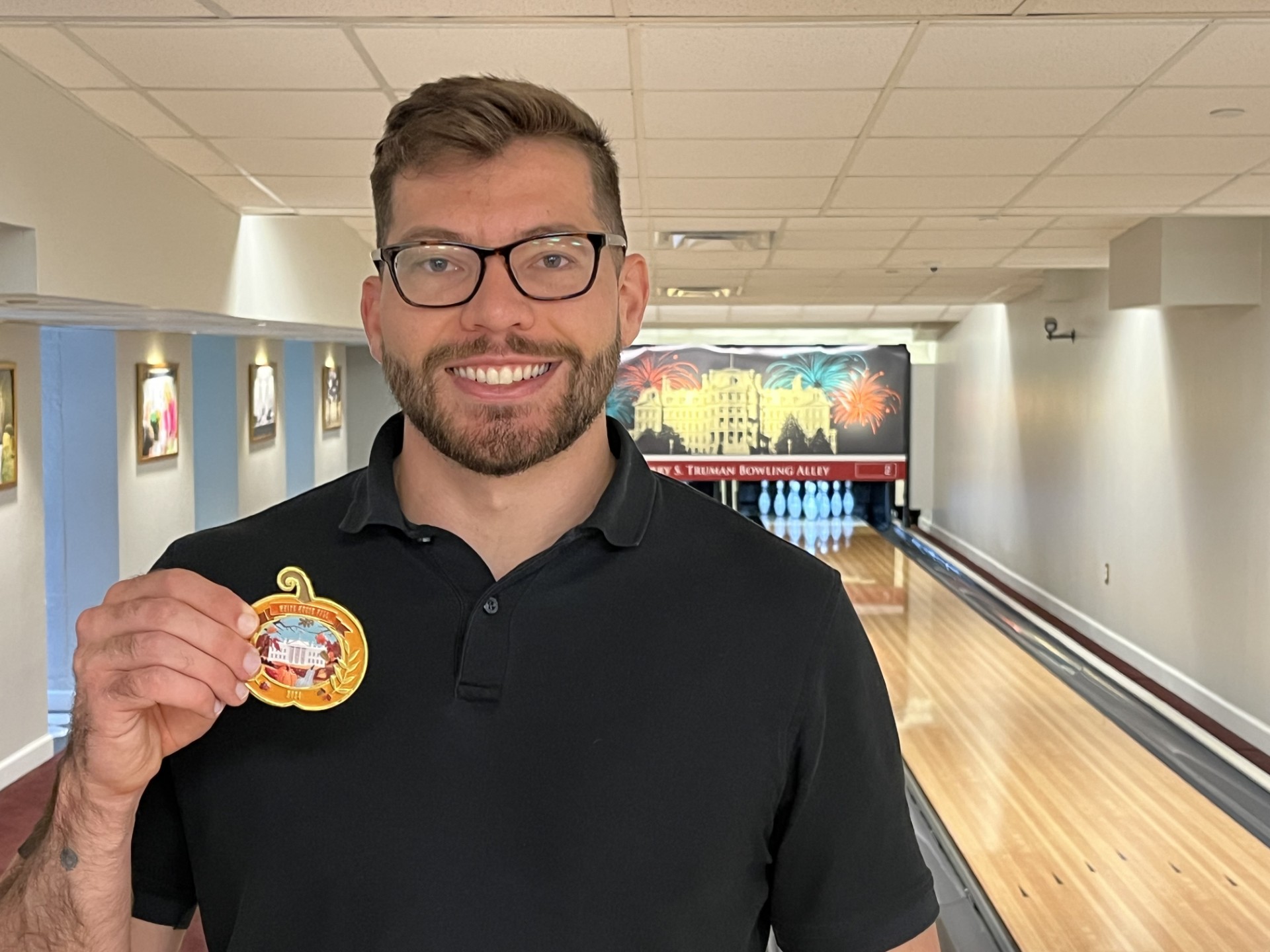
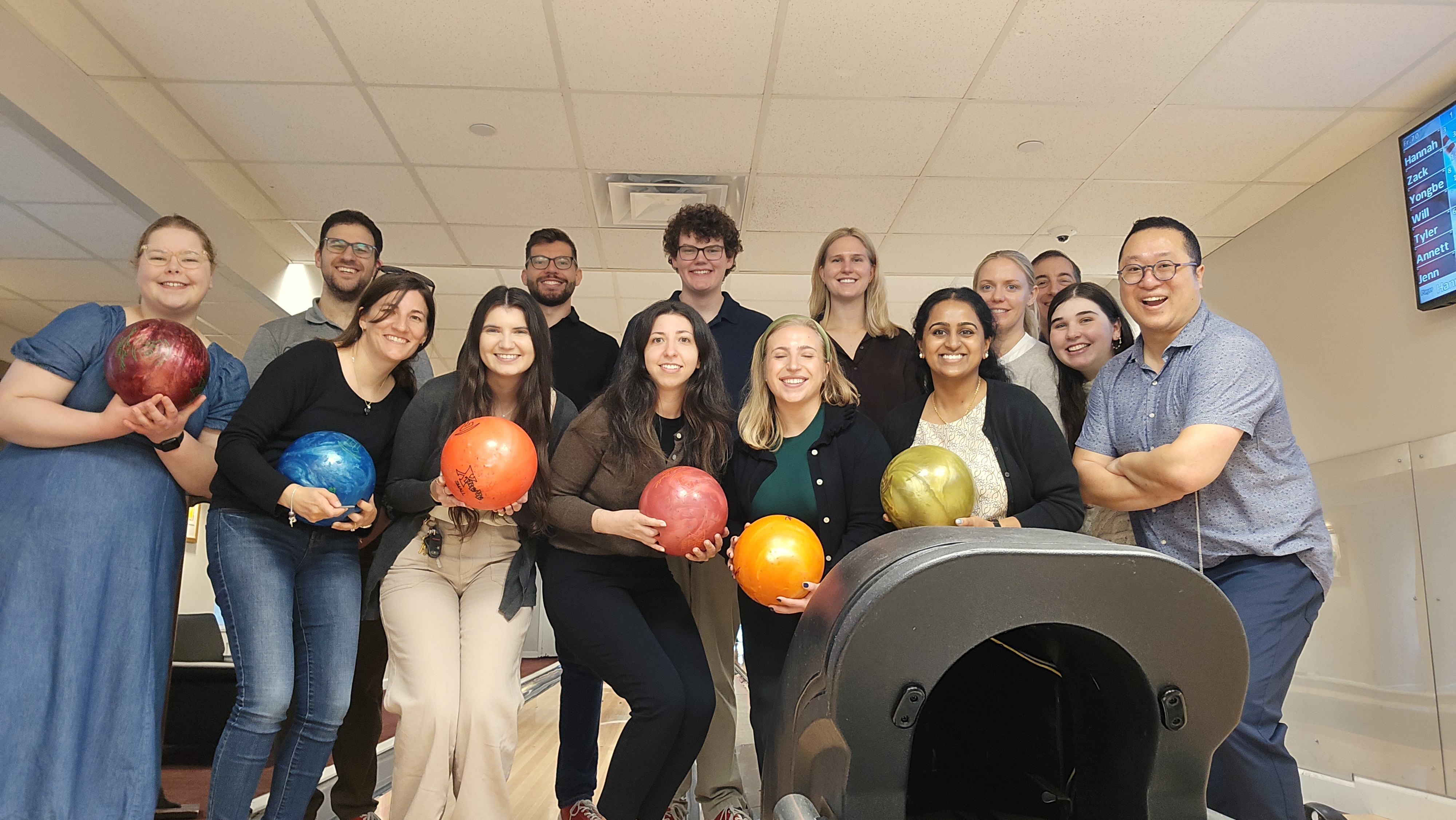
On November 7, a group of students, faculty, and alumni from the Biodefense Graduate Program at the Schar School of Policy and Government went bowling at the Harry S. Truman Bowling Alley in the Eisenhower Executive Office Building. Competition was fierce, but friendly, between Team Smallpox, Team Anthrax, Team Plague, and Team Ebola. In between strikes, spares, and gutter balls, the group enjoyed coffee, pastries, and lively conversations. Biodefense master’s student Tyler Smith won a fall-themed White House challenge coin for achieving the highest score. Team Smallpox, composed of MS Biodefense students Will MacDonald and Tyler Smith, Biodefense PhD student Annette Prieto, and Biodefense PhD alum Jen Osetek, emerged victorious and walked away with more White House merch. “This was an amazing experience,” said Annette, who works as a Technical Analyst at RAND, “The fun and friendly competition we shared in such an iconic setting made for an unforgettable day and helped build bonds that will extend beyond the lanes.” Program director Gregory Koblentz was rusty but managed to throw one strike and two spares after a healthy infusion of caffeine. The bowling party was graciously hosted by Biodefense PhD student Katherine Dammer who is Special Assistant for Global Health Security and Biodefense at the National Security Council.

Avian Influenza Updates

Canada Reports First Domestically Acquired Human H5N1 Case

The Public Health Agency of Canada (PHAC) confirmed the country’s first domestically acquired human case of avian influenza (caused by H5N1) earlier this week. On November 9, the Office of the Provincial Health Officer for British Columbia reported that a BC teenager was hospitalized and tested presumptive positive for H5N1. On November 13, PHAC’s National Microbiology Laboratory in Winnipeg confirmed the test result and that genomic sequencing indicated that the virus is related to the H5N1 viruses circulating in poultry in British Columbia. Provincial officials are conducting an investigation and are taking actions like contact tracing, testing, and offering antiviral medication to contacts. No further cases have been identified at this time, and it is not clear how the teenager was infected.

PHAC says that the risk to the general public remains low at this time, but the risk is higher for those with unprotected exposure to infected animals. Importantly, the genotype of H5N1 avian influenza in US dairy cattle is not the same as the one confirmed in the domestically acquired human case in BC. No cases of avian influenza have been reported in Canadian dairy cattle, and there is no evidence of its presence in Canadian milk samples.

CDC Calls for Expanding Testing

Federal health officials called for more testing of farmworkers after a CDC study showed that 7% of those tested in Michigan and Colorado had antibodies indicative of a previous H5N1 infection. Only one of the eight workers reported working with infected cows, despite all eight of them doing so. CDC explained in a statement that “…there are two primary ways that workers in the United States have been infected with H5N1 virus: via exposure to infected poultry during culling activities, and through exposure to infected dairy cows, including while caring for sick cows, or when working in a milking parlor, the area on the farm where cows are milked.”

Based on this, the agency has updated its existing recommendation on actions to prevent exposures to H5N1 infected animals, including:

  • “Decreasing human exposure through One Health control strategies and biosecurity to limit H5N1 virus infections in animals.”
  • “Enhancing personal protective equipment (PPE) guidance to more clearly detail what PPE is appropriate for exposure risk levels (high, medium, and low) in farming and poultry culling operations, alongside more robust worker training on proper use of PPE.”
  • “Identifying exposed workers and providing appropriate testing as well as post-exposure prophylaxis (i.e., efforts to limit spread of disease), and treatment (e.g., antivirals).”
  • “Offering testing to asymptomatic workers with a high-risk exposure who reported not wearing relevant PPE or who experienced a PPE breach or failure.”
  • “Increasing outreach and education with farm workers, employers, and advocacy groups to stress and ensure understanding of these messages and strategies.”

The CDC has also updated recommendations for testing and offering oral antiviral medications. This includes the recommendation that asymptomatic workers with a PPE-unprotected, high-risk exposure to sick animals be offered oseltamivir. The statement explains that a high-risk exposure “could include an unprotected splash in the face with raw cow milk from an infected or potentially infected cow, or not using recommended PPE during activities to depopulate poultry at a poultry farm with known H5N1.” The recommendations also include offering influenza A(H5) testing to asymptomatic workers who have had a high-risk exposure to animals infected with H5N1, whether or not that worker chooses to begin PEP.

The Pandemic Agreement Will Not Be Ready by December

Co-chairs of the World Health Organization’s (WHO) Intergovernmental Negotiating Body (INB), Ambassador Anne-Claire Amprou and Precious Matsoso, explained at a media briefing earlier this week that the pandemic agreement will not be adopted at a special World Health Assembly next month as initially thought. They indicated that this was because countries need “more time,” though the INB is already in its 12th meeting following 32 months of negotiations. Ambassador Amprou said at the briefing, “Today, member states agreed we need to conclude the agreement as soon as possible and continue negotiations into 2025 with the goal of concluding the agreement by the next WHA scheduled in May 2025, so we are moving in the right direction with a strong political commitment by member states.”’

Africa CDC Launches Mpox Drug Trial

The Africa CDC recently announced the launch of a trial of the antiviral drug brincidofovir as a treatment for mpox. Brincidofovir, sold under the brand name Tembexa, is a prodrug of cidofovir and is currently approved in the United States to treat smallpox. The trial, “The MpOx Study in Africa (MOSA),” will evaluate the safety and efficacy of brincidofovir with the drug’s developer, Emergent BioSolutions, announcing that it will be conducted and sponsored by PANTHER-the pandemic preparedness platform for health and emerging infectious response.

The trial was announced shortly after the total number of cases of mpox in this outbreak surpassed 50,000. Jean Kaseya, MD, Director General of Africa CDC, said in a statement “Africa is not just responding to the Mpox outbreak; we are leading the charge by spearheading research and development for Mpox therapeutics…The MpOx Study in Africa is a groundbreaking step toward developing an effective treatment that will save lives. This goes beyond research—it’s about African ownership and leadership in tackling our continent’s health challenges through essential research.”

Ukrainian General Staff Reports 323 Uses of Russian CW Use in October

Ukraine’s General Staff reported on November 8 that it had detected 323 Russian uses of CW on the battlefield in October. This brings the total to 4,613 uses reported by Ukraine since Russia’s full-scale invasion in 2022. An August investigation from the Kyiv Independent showed that Russia’s use of CW is growing, with some Ukrainian soldiers reporting dealing with up to six attacks daily. The United Kingdom announced sanctions against relevant Russian units last month, and the US Department of State cited Russian use of chloropicrin against Ukrainian troops in its announcement of more than 280 sanctions against individuals and entities tied to Russia earlier this year.

Emerging Infectious Diseases-“Vol 30, No. 14 Supplement – Reports from the US Department of Defense Global Emerging Infections Surveillance Program”

David M. Brett-Major writes in this issue of CDC’s Emerging Infectious Diseases‘ introduction, “This supplement contains new technical outputs and perspectives from the Global Emerging Infections Surveillance (GEIS) program within the Department of Defense (DoD). GEIS develops, invests in, disseminates, and integrates information from health surveillance activities conducted by military, academic, public health, and other partners. GEIS-funded researchers from around the world provide novel surveillance data that are used to update the military and civilian outputs from this long-standing initiative.”

“Trump Administration’s Chance to Lead on Pandemic Preparedness”

Syra Madad discusses the incoming administration’s opportunity to leverage lessons learned from the COVID-19 pandemic in this piece from the Belfer Center, writing in part “As the Trump administration prepares to take office, it faces a pivotal moment to leverage hard-earned lessons from the COVID-19 pandemic and build a more resilient, pandemic-prepared nation. The challenges of managing the first year of COVID-19 exposed critical vulnerabilities in our fragmented public health infrastructure and decentralized healthcare system. The administration is now uniquely positioned to prioritize pandemic preparedness as a matter of national security. This proactive approach is more important than ever, particularly given the current threat posed by H5N1 avian influenza, which is spreading rapidly among wild birds – among other species and causing outbreaks in U.S. poultry and dairy herds. Recent human cases among farmworkers exposed to infected livestock further underscore the urgency of this threat.”

“Cyberattacks on Healthcare: A Global Threat That Can’t Be Ignored”

Vibhu Mishra wrote this piece discussing UNSC’s interest in protecting healthcare infrastructure against cyberattacks for UN News: “An alarming surge in ransomware attacks is putting the world’s healthcare infrastructure at critical risk, endangering patient safety and destabilising health systems, the head of the UN World Health Organization (WHO) warned on Friday, as the Security Council convened to discuss strategies to counter the growing threat.”

Read more here and read the WHO Director-General’s remarks from the meeting here.

“Robust Biosecurity Measures Should Be Standardized at Scientific Cloud Labs”

Jeffrey Lee and Barbara Del Castello recently authored this commentary piece for the RAND Corporation. In it, they discuss clous labs and argue that “By adopting comprehensive security measures, including routine evaluations and monitoring via artificial intelligence (AI), the scientific community, ideally through a consortium, can harness the full potential of cloud labs while ensuring safe and secure research environments.”

“The U.S. Could Soon Face a Threat ‘More Powerful’ Than Nuclear Weapons”

Ashish K. Jha, Matt Pottinger and Matthew McKnight discuss the implications of rapid advancement in synthetic biology and how to achieve bioweapons deterrence in this Washington Post opinion piece. They point to the importance of superior intelligence gathering and analysis, writing that “For deterrence to work, Washington and its allies must have a robust, pervasive system for tracking and, where possible, eliminating highly dangerous research around the world.” However, they explain that the primary challenge to expanding and improving US BIOINT efforts is not technology, but resolve, with Congress having recently watered down the Biden administration’s budget request for pandemic prevention and biosurveillance efforts outlined in the 2023 Biodefense Posture Review remaining underfunded. They conclude that BIOINT alone won’t deter adversaries, but that all necessary elements of bioweapons deterrence depend on world-class BIOINT.

“Developing Guardrails for AI Biodesign Tools”

From NTI: “The integration of artificial intelligence (AI) with the life sciences offers tremendous potential benefits to society, but advances in AI biodesign tools also pose significant risks of misuse, with the potential for global consequences.”

“AI biodesign tools (BDTs) are technologies that enable the engineering of biological systems. These tools are trained on biological data and are developed to provide insights, predictions, and designs related to biological systems. BDTs have the potential to drive progress in the development of new therapeutics and are likely to have a significant impact across the broader bioeconomy, including in agriculture, health, and materials science. However, there are risks BDTs could be misused to design dangerous pathogens, and few safeguards exist to ensure that the benefits of these technologies can be realized safely and securely.”

“Innovative strategies are needed to reduce the risks associated with potential misuse of biological design tools without significantly hindering beneficial uses. This report identifies a number of strategies, referred to as guardrails, that could be developed to safeguard BDTs against misuse.”

Read the report here.

What We’re Listening To🎧

Build the Base Podcast-Tracy Frost and Dr. Kate Sixt, DoD Research and Engineering OUSD
“In this episode of Building the Base, Lauren Bedula and Hondo Geurts sit down with Tracy Frost, Director of Technology Industrial Innovation Base, and Dr. Kate Sixt, Principal Director for Biotechnology at the Department of Defense. The conversation explores the revolutionary intersection of biotechnology and national security, diving into how the DoD is leveraging bio-manufacturing to strengthen domestic supply chains and innovate defense capabilities. From converting waste products into valuable materials to creating new pathways for manufacturing critical components, the discussion reveals how public-private partnerships are reshaping America’s industrial base.”

One Health and the Politics of COVID-19 Book Launch

The Writer’s Center is hosting a book launch for Dr. Laura Kahn’s new book, One Health and the Politics of COVID-19 (blurb below) on November 23 at 2 pm EST in Bethesda, MD. Learn more and RSVP here.

One Health and the Politics of COVID-19 unpacks the mysteries of COVID-19’s origins to impart important lessons for future outbreaks. The One Health concept recognizes the interconnected links among the health of humans, animals, plants, and the environment. By comparing the history, science, and clinical presentations of three different coronaviruses—SARS-CoV-1, MERS, and SARS-CoV-2 (COVID-19)—Kahn uncovers insights with important repercussions for how to prepare and avoid future pandemics. The One Health approach provides a useful framework for examining the COVID-19 pandemic. Understanding the origins of this zoonotic disease requires investigating the environmental and molecular biological factors that allowed the virus to spread to humans. The book explores the many ways in which the wild animal trade, wet markets, and the camel industry contributed to the spread of the earlier SARS-CoV-1 and MERS coronaviruses. For SARS-CoV-2 (COVID-19), Kahn examines the biosafety, biosecurity, and bioethics implications of gain-of-function research on pandemic potential pathogens. This book is a must read to understand the geopolitics of the COVID-19 pandemic.”

Enhancing the Resilience of Healthcare and Public Health Critical Infrastructure

From NASEM: “Healthcare and public health infrastructure, technology, and operations are rapidly changing and are increasingly interdependent and interconnected. Threats to the nation’s critical social and physical infrastructure systems are also rapidly evolving and highly complex—posing potentially new or growing risks of disruption and challenging the assumptions used to design and protect these systems.”

“The National Academies Forum on Medical and Public Health Preparedness for Disasters and Emergencies will host a hybrid public workshop to explore strategies, policies, and innovative actions to improve the resilience of healthcare and public health (HPH) critical infrastructure to impacts from disasters and other emergencies.”

This event will take place in DC on December 9 and 10. Register here.

Resilience in the Face of Global Risks

From CSR: “The Council on Strategic Risks (CSR) cordially invites you to our first annual CSR symposium, Resilience in the Face of Global Risks, scheduled for Tuesday, December 10, 2024. This is the first event bringing together all three of CSR’s institutions—the Center for Climate & Security, the Converging Risks Lab, and the Janne E. Nolan Center on Strategic Weapons—to engage with leaders across our mission sets.”

“The United States and its allies face a complex global security landscape where systemic risks like climate and ecological crisis, nuclear proliferation, and biological threats are blending with war, geopolitical competition, and human insecurity in new and profound ways. While there has been tremendous leadership—and meaningful progress—across these overlapping risk areas, they require persistent innovation in community building to meet the modern risk landscape.”

“The symposium will dive into the progress our communities have made—and how our passionate communities can better work together to help shape the future.”

“In addition to a keynote address, guests will hear from panels, take part in breakout sessions showcasing important issues and new ideas, plus engage with thought leaders between sessions. It will be a widely attended gathering, free to attendees.”

“As we enter a new year with an exceptionally dynamic security environment, we hope CSR’s December event will inspire and build a stronger community across professionals dedicated to anticipating and addressing the world’s greatest risks. We appreciate your consideration and hope you will be able to join us on the 10th of December.”

RSVP here.

2024 CBD S&T Conference

From DTRA: “The CBD S&T Conference brings together the most innovative and influential chemical and biological defense community members from around the globe to share insights and collaborate on the emerging chem-bio threats of tomorrow.”

“Join the Defense Threat Reduction Agency’s (DTRA) Chemical and Biological Technologies Department in its role as the Joint Science and Technology Office (JSTO) for Chemical and Biological Defense, an integral component of the Chemical and Biological Defense Program, as we Focus Forward to uncover novel concepts and examine groundbreaking discoveries within the chem-bio defense landscape.”

“The 2024 CBD S&T Conference will be held at the Broward County Convention Center, December 2–5, 2024.”

Learn more and register here.

Health Security Intelligence: Managing Threats Risks and Hazards Post-Covid 19
“As  the acute impact of the COVID-19 pandemic recedes, many unaddressed questions remain for Australia about how to better prepare for the next likely health threat, risk or hazard.”

“In addition to how we enhance national public health capacity, what are the important lessons we can learn from the pandemic from national security and biosecurity perspectives?”

“Given the likelihood of another pandemic at some point, an increasingly uncertain geo-political order and the potential exploitation of biotechnology by bad actors how does Australia and its allies better prepare for a future of increasingly complex health security and biological security threats, risks and hazards?”

“This event is for all health security intelligence stakeholders (policy-makers, national security staff, scientists, researchers and clinicians) who work across the one health continuum and national security agencies.”

“It will introduce participants to Charles Sturt’s extensive research agenda across the one health biosecurity, health and biological security and discuss both their national security and scientific implications.  You will hear briefings from key researchers across both STEM and social sciences disciplines working on assessing key health security threats, risks and hazards relevant to your work.”

This event will take place in-person and over livestream on December 4 from 2-4 pm AEDT. Learn more and register here.

NEW: “New Public Health Cybersecurity Readiness Survey Set to Boost Preparedness Against Cyber Threats”

“The co-chairs of the Joint Public Health Cybersecurity Task Group of the Healthcare and Public Health Sector Coordinating Council (HSCC) published a special announcement letter announcing the launch of the Public Health Cybersecurity Readiness Survey. The move aims to enhance the cybersecurity preparedness of state, local, tribal, and territorial (SLTT) public health agencies. Participants can expect the anonymous survey to take about 15 minutes to complete, and it will be open until Monday, Dec. 2, 2024.”

Read more and access the survey here.

The Schar School is Hiring!

The Schar School of Policy and Government at George Mason University is hiring a tenure-track assistant professor. Expertise in international security, national security, homeland security, emergency management, artificial intelligence, cybersecurity, the defense industrial base, or transnational crime and corruption will be regarded positively. Candidates whose work focuses on climate security, technological change, and the future of warfare, or domestic extremism are also encouraged to apply, as are candidates with regional expertise. Details can be found here: https://listings.jobs.gmu.edu/jobs/assistant-professor-fairfax-va-virginia-united-states-other.

US AI Safety Institute Issues RFI on Responsible Development of Chem-Bio Models

From AISI: “The U.S. Artificial Intelligence Safety Institute (U.S. AISI), housed within the U.S. Department of Commerce’s National Institute of Standards and Technology (NIST), released a Request for Information seeking insight from stakeholders regarding the responsible development and use of chemical and biological (chem-bio) AI models.”

“Input from a broad range of experts in this field will help the U.S. AISI to develop well-informed approaches to assess and mitigate the potential risks of chem-bio AI models, while enabling safe and responsible innovation.”

“Respondents are encouraged to provide concrete examples, best practices, case studies, and actionable recommendations where possible. The full RFI can be found here.”

“The comment period is now open and will close on December 3, 2024, at 11:59PM Eastern Time. Comments can be submitted online at www.regulations.gov, under docket no. 240920-0247.”

Pandora Report 11.8.2024

This week’s Pandora Report discusses one Biodefense MS student’s research on malaria, the UK’s recently-announced sanctions against 56 people and entities linked to Russia, the CDC’s call for more avian influenza testing, and what a second Trump administration likely means for US public health and global health security.

Biodefense MS Student Presents at Malaria Research Symposium

Zachary Berliner, a Biodefense MS student, is presenting a poster at the 10th Annual Future of Malaria Research Symposium in Baltimore, MD, on November 8. This conference, jointly run by the Johns Hopkins Malaria Research Institute and the University of Maryland School of Medicine, provides “a platform for early-career scientists to share their research with peers, emerging leaders, and established investigators.” In 2023, nine cases of locally acquired malaria occurred in the United States, the first such cases in twenty years. Zak’s project, Public Opinions Toward Malaria Control Interventions in the National Capital Region, featured a survey of adults in the National Capital Region about their opinions toward various malaria control interventions. His study serves as an indicator of preliminary opinions among a small group of Americans to better inform politicians. His poster can be found here, and the full paper can be found here. The poster is based on the capstone paper that Zak wrote as a culmination of his experience in the Biodefense program. Zak is graduating with his MS in Biodefense in December and is looking for policy and analysis opportunities focused on biodefense and health security.

United Kingdom Announces Sanctions on 56 People and Entities Linked to Russia

The UK announced its largest sanctions package against Russia since May of last year this week, in a series of actions the government hopes “disrupts the supply of vital equipment for Putin’s war machine and bears down on Russian malign activity globally, exposing the corrupt activities of Russian proxy military groups in Africa.” Those sanctioned include Denis Sergeev (who was charged by the Met Police in the attempted murder of Sergei Skripal), entities in China, Turkey, and Central Asia, Africa Corps and other private mercenary groups linked to the Kremlin, and others. The UK is the first G7 country to directly sanction Africa Corps, which has directly threatened peace and security in Libya, Mali, and the Central African Republic.

CDC Calls for Expanded Bird Flu Testing as California and Washington Report More Cases

Officials at the CDC called for more testing on farms with avian influenza cases after a recent study found some dairy workers have shown signs of infection even though they did not report feeling sick. The study that 7% of the 115 farmworkers whose blood was tested (eight) had antibodies consistent with previous H5N1 infection, pointing to more infections than the 46 identified so far. More cases in farmworkers have also been reported in recent days, including at least four in California and three in Washington. The California Department of Public Health also recently reported one other probable case in a dairy worker who met the case definition, though CDC’s confirmation test was negative.

What Lies Ahead in Trump’s Second Term

President-Elect Trump’s recent victory likely will have severe implications for both domestic health policy and global health security. The first Trump administration largely failed in its response to the COVID-19 pandemic, despite the US ranking very well in pre-pandemic preparedness assessments like the Global Health Security Index and the Trump administration being handed a pandemic playbook by the preceding Obama administration that specifically flagged novel coronaviruses as a potential pandemic threat. The upcoming second Trump administration looks ready to fair just as poorly in terms of not just pandemic preparedness, but in general public health and global health engagement as well.

The president-elect, who has repeatedly and falsely claimed that climate change is a hoax, has promised to rollback federal regulations on the oil and gas industry that are aimed at slowing climate change. Trump pulled the United States out of the 2015 Paris Climate Accord in 2017, and his campaign has indicated it intends to do the same again once he is back in office. Trump is also expected to target the EPA during his second term. Changes like this are especially concerning as the effects of climate change, such as increased extreme weather and easier spread of infectious diseases, pose a growing threat globally.

Trump does plan to involve at least one environmental lawyer in his administration-Robert F. Kennedy Jr., an environmental lawyer who Trump has suggested may play a large role in public health in his administration. Unfortunately, Kennedy has no training in public health or medicine, and he has repeatedly peddled anti-vaccine conspiracy theories over the years. Kennedy also faced backlash for comments suggesting COVID-19 was “ethnically targeted,” saying “COVID-19 is targeted to attack Caucasians and Black people. The people who are most immune are Ashkenazi Jews and Chinese…We don’t know whether it was deliberately targeted or not but there are papers out there that show the racial or ethnic differential and impact.” Kennedy has also voiced criticism of the childhood vaccine schedule and public water fluoridation, claiming the latter is “lowering IQ in our children,” in contrast to what numerous studies over multiple decades show about its safety and efficacy.

Trump has promised to allow Kennedy to “go wild on” health, medicines, and food policy, with Kennedy saying he believes entire departments at the FDA “have to go.” Kennedy has also said he wants an eight-year-long “break” in NIH funding for infectious disease research, and that he would move that money to chronic disease research. Congressional Republicans have targeted the NIH in recent years, including efforts to strip its authority over gain of function research and repeatedly attacking former NIAID Director, Anthony Fauci.

Trump’s second term also may pose threats to global health security more directly. For example, in 2020, the Trump administration formally notified the United Nations that it intended to withdraw the country from the World Health Organization. This move would have cut off one of the largest funding sources to the WHO in the middle of the COVID-19 pandemic. Furthermore, some experts argue the attempt was unlawful, in addition to the threat it posed to domestic and global health and security. While the Trump campaign mentioned few specifics about foreign policy for a second term, the United Nations is bracing itself for this incoming administration.

This week’s election results have many experts deeply concerned about what this administration will bring. Saskia Popescu, an alumna of the Schar School’s Biodefense PhD Program and current adjunct professor at the school made this statement to The Bulletin of the Atomic Scientists about the election result’s implications for public health: Right now, I think you’d be hard-pressed to find many in public health, healthcare, and pandemic preparedness/response, who are not deeply concerned. The recent notion that Robert F. Kennedy Jr. could be in charge of public health for the United States poses a real danger. From his claims that vaccines are harmful or unnecessary to his proposed efforts to remove fluoride from public water systems, Kennedy continuously pushes anti-science rhetoric and dis/misinformation.

History has shown us what might happen under another Trump administration during times of crises, from extreme weather events to a pandemic. We have seen how an administration that pits itself against science and dedicated public service officials reacts. As we face an ongoing H5N1 outbreak, persistent outbreaks of emerging infectious diseases, an erosion of trust in public health, a rise in dis/misinformation, and widening social disparities, we need leadership that will unite rather than divide.

We are at a critical time in forming effective and pragmatic policies to address complex issues such as the ways in which developments in artificial intelligence (AI) will affect biosecurity, the safety and security around critical research of dangerous pathogens, the effects of climate change on infectious diseases, and the need to strengthen global health through equity and partnership.

Developing policies in these areas will require strategies based on collaboration and evidence-based measures–not inflammatory, inaccurate, and harmful rhetoric that furthers partisan divides and enflames social discourse. It’s our responsibility to find a path that ensures the protection of public health and global health security. We’ve got a lot of work to do, and I fear a hard road ahead of us.

Others have voiced concerns about a return to US isolationism in global health, Trump not seeking out quality scientific advice, policies regarding vaccines, and more that can be read in this piece from The Bulletin of the Atomic Scientists.

“HHS’ ASPR Playing ‘Quarterback’ for Cyber Response, Resilience”

Jason Miller discusses ASPR’s cyber efforts with Biodefense PhD Program alumnus, Schar School adjunct professor, and current Deputy Director of ASPR’s Office of Preparedness in this piece for Federal News Network: “Just a little over a year ago, that coordination was occurring, but not as smooth as it needed to be. We took some steps, and actually now have a Public Health Service, captain, or an 06 officer, permanently embedded within the National Cyber Investigative Joint Task Force, that the FBI leads. We have a HHS ASPR person embedded full time with the FBI agents and other law enforcement folks who work in that task force and really are dealing with very sensitive information and responding to cyber incidents in the healthcare sector every day,” said Mazanec on Ask the CIO. “That’s just another example where we’ve really tightened up and continue to mature our partnership with the FBI. We do work with the other health focused entities like the Veterans Affairs Department, the Defense Health Agency, certainly within HHS, with the Indian Health Service  and with the Centers for Medicaid and Medicare Services.”

Read more here.

“GHSD Five-year Strategy 2024-2028 (October 2024)”

The State Department’s Bureau of Global Health Security and Diplomacy recently released its strategic plan for 2024-2028: “The COVID-19 pandemic underscored the importance of preventing, detecting, and responding to health crises to safeguard American lives and the global economy. Building on the successes of the U.S. President’s Emergency Plan for AIDS Relief (PEPFAR), which has saved more than 25 million lives from HIV/AIDS, and to address the growing challenges posed by health threats, the State Department established the Bureau of Global Health Security and Diplomacy in August 2023.”

“Building on decades of leadership on global health within the State Department, the Bureau of Global Health Security and Diplomacy’s mission is to lead U.S. diplomatic engagement, help coordinate foreign assistance, and promote international cooperation against health threats, integrating global health security as a core component of national security and foreign policy. The bureau’s first ever five-year Strategy for 2024-2028 outlines the State Department’s role in ending HIV/AIDS as a public health threat and advancing global health security and pandemic prevention, preparedness, and response efforts for the U.S. government.”

“The goals of the Strategy are to:

  • End HIV/AIDS as a public health threat by 2030
  • Catalyze the political will, financing, and leadership necessary to achieve heath security and address public health threats, including HIV/AIDS
  • Improve global multisectoral preparedness and response through diplomacy to protect against health security threats
  • Empower the diplomatic workforce to prioritize and integrate global health security as a key pillar of U.S. foreign policy.”

Read the strategy here.

“Chemical Weapons Policymakers Must Act to Balance the Prospects and Perils of AI”

Patrick Norén recently published this CBNW article covering a conference organized by the OPCW and Kingdom of Morocco focused on the role of AI in advancing implementation of the CWC. Norén covers general trends in speakers’ comments, the dual use nature of AI, challenges in legislation, regulation, and cooperation, and issues with misinformation and disinformation.

“MATCH 2.0 Enters Demonstration and Live Testing Phase”

From Stimson: “Behind every chemical transfer is a story, and too often, that story includes discrepancies in reported data. The Stimson Center’s MATCH project team has completed development of an updated DLT prototype and is demonstrating to CWC National Authorities and other stakeholders how it traces these narratives and creates a clear, immutable record of each transaction, aligning records of national authorities and industry while maintaining data confidentiality, reducing risks of misreporting, and enhancing nonproliferation by enabling faster reconciliation of discrepancies in the annual reporting of chemicals covered by the Chemical Weapons Convention (CWC).”

Read more here.

“THE NEXUS BETWEEN SCIENCE AND NATIONAL SECURITY IN CANADA: THE CASE OF THE NATIONAL MICROBIOLOGY LABORATORY IN WINNIPEG”

The Canadian House of Commons’ Special Committee on the Canada-People’s Republic of China Relationship recently released this interim report. Among other things, the report reveals that CSIS “issued a direct and unheeded warning to senior health officials in August 2018, raising concerns about “insider threat activities” linked to Dr. Xiangguo Qiu and her husband, Keding Cheng.” The report explains in its conclusion “The events at the Winnipeg NML facility revealed, as outlined in this report, the fundamentally open and collaborative nature of Canadian scientific research as a means of contributing to the common good, on the one hand, and, on the other, the need for a cultural shift within the scientific field in terms of its vigilance over national security risks and the need to reconsider how we collaborate with entities or states that may not share the same interests as Canada. For example, with regard to the PRC, Mr. Vigneault said that “[i]t is sometimes in our own national interest to collaborate with Chinese entities, but we need to do it with our eyes wide open and make sure that we protect our own base.”’

Read Sam Cooper’s coverage of this report in The Bureau here.

NEW: Developing Guardrails for AI Biodesign Tools

From NTI: “Join us for a virtual webinar releasing the findings of NTI | bio’s new report, Developing Guardrails for AI Biodesign Tools, followed by a moderated discussion and Q+A with distinguished guest Claire Quereshi.”

“Artificial intelligence (AI) promises to revolutionize not only aspects of daily life but cutting-edge scientific research and development. Within the life sciences, AI biodesign tools (BDTs) have improved significantly in their ability to design biological molecules and make predictions about living systems, displaying potential for beneficial applications and posing significant potential risks if misused.”

“Authors Sarah R. Carter, Ph.D., Nicole E. Wheeler, Ph.D., Christopher R. Isaac, M.Sc., and Jaime M. Yassif, Ph.D. conducted interviews with experts with deep experience creating bioinformatic tools, developing BDTs, and crafting biosecurity policies. The report outlines several proposed measures that could be deployed to design governance approaches to reduce biological risks without unduly hindering scientific advances.”

This event will take place virtually on November 14 at 11 am ET. Learn more and register here.

NEW: A Year-End Review, Recapping Global AI Governance Efforts

From CSET: “This time last year seemed to herald a landmark period in establishing AI governance regimes around the world. After ChatGPT and other AI tools burst onto the scene, U.S. policymakers issued new executive orders, hosted hearings and high-profile learning sessions, and developed new frameworks and standards to support the safe and secure development of AI. Elsewhere, the European Union worked to finalize its AI Act, and China announced its Global AI Governance Initiative. One year later, where do the promises and commitments to govern AI stand?”

“Join us on November 14, as we look back on the last year of global AI governance efforts and evaluate what progress has been made, what work remains to be done, and what the actions of global partners and competitors alike mean for U.S. strategy going forward. CSET Associate Director of Analysis Owen J. Daniels will moderate a conversation with CSET researchers Mia Hoffmann, Mina Narayanan, and Cole McFaul as we survey governance developments around the world over the past year. The moderated discussion will be followed by audience Q&A.”

This event will take place at 1 pm ET on November 14. Learn more and RSVP here.

NEW: Enhancing the Resilience of Healthcare and Public Health Critical Infrastructure

From NASEM: “Healthcare and public health infrastructure, technology, and operations are rapidly changing and are increasingly interdependent and interconnected. Threats to the nation’s critical social and physical infrastructure systems are also rapidly evolving and highly complex—posing potentially new or growing risks of disruption and challenging the assumptions used to design and protect these systems.”

“The National Academies Forum on Medical and Public Health Preparedness for Disasters and Emergencies will host a hybrid public workshop to explore strategies, policies, and innovative actions to improve the resilience of healthcare and public health (HPH) critical infrastructure to impacts from disasters and other emergencies.”

This event will take place in DC on December 9 and 10. Register here.

NEW: Resilience in the Face of Global Risks

From CSR: “The Council on Strategic Risks (CSR) cordially invites you to our first annual CSR symposium, Resilience in the Face of Global Risks, scheduled for Tuesday, December 10, 2024. This is the first event bringing together all three of CSR’s institutions—the Center for Climate & Security, the Converging Risks Lab, and the Janne E. Nolan Center on Strategic Weapons—to engage with leaders across our mission sets.”

“The United States and its allies face a complex global security landscape where systemic risks like climate and ecological crisis, nuclear proliferation, and biological threats are blending with war, geopolitical competition, and human insecurity in new and profound ways. While there has been tremendous leadership—and meaningful progress—across these overlapping risk areas, they require persistent innovation in community building to meet the modern risk landscape.”

“The symposium will dive into the progress our communities have made—and how our passionate communities can better work together to help shape the future.”

“In addition to a keynote address, guests will hear from panels, take part in breakout sessions showcasing important issues and new ideas, plus engage with thought leaders between sessions. It will be a widely attended gathering, free to attendees.”

“As we enter a new year with an exceptionally dynamic security environment, we hope CSR’s December event will inspire and build a stronger community across professionals dedicated to anticipating and addressing the world’s greatest risks. We appreciate your consideration and hope you will be able to join us on the 10th of December.”

RSVP here.

Preparing for the Next Outbreak: Designing Closer Collaboration between Healthcare and Public Health to Deploy Pathogen-Agnostic Testing as an Early Warning System

From PNNL: “Please join us in welcoming Dr. Adi V. Gundlapalli, Senior Advisor for Data Readiness and Response in the Office of Public Health Data, Surveillance, and Technology at the CDC for his talk titled “Preparing for the Next Outbreak: Designing Closer Collaboration between Healthcare and Public Health to Deploy Pathogen-Agnostic Testing as an Early Warning System”. This webinar will take place Wednesday, November 13th, at noon PT.”

Learn more and register here.

Developing Guardrails for AI Biodesign Tools

From NTI: “Join us for a virtual webinar releasing the findings of NTI | bio’s new report, Developing Guardrails for AI Biodesign Tools, followed by a moderated discussion and Q+A with distinguished guest Claire Quereshi.”

“Artificial intelligence (AI) promises to revolutionize not only aspects of daily life but cutting-edge scientific research and development. Within the life sciences, AI biodesign tools (BDTs) have improved significantly in their ability to design biological molecules and make predictions about living systems, displaying potential for beneficial applications and posing significant potential risks if misused.”

This virtual event will take place on November 14 at 11 am EST. Learn more and register here.

13th Annual Jonathan Tucker Symposium

“The James Martin Center for Nonproliferation Studies cordially invites you to the 13th annual Jonathan Tucker Symposium on chemical and biological weapons issues on November 13th and 14th, 2024.”

Among this year’s speakers are Dr. Yong-Bee Lim, an alumnus of the Biodefense PhD Program and Deputy Director of the Converging Risks Lab and Biosecurity Projects Manager at the Council on Strategic Risks, who will give a talk titled “Technology Democratization and its Implications for CBW Safety and Security: Lessons Learned from Engagement with Non-Traditional Communities.”

Learn more and register here.

One Health and the Politics of COVID-19 Book Launch

The Writer’s Center is hosting a book launch for Dr. Laura Kahn’s new book, One Health and the Politics of COVID-19 (blurb below) on November 23 at 2 pm EST in Bethesda, MD. Learn more and RSVP here.

One Health and the Politics of COVID-19 unpacks the mysteries of COVID-19’s origins to impart important lessons for future outbreaks. The One Health concept recognizes the interconnected links among the health of humans, animals, plants, and the environment. By comparing the history, science, and clinical presentations of three different coronaviruses—SARS-CoV-1, MERS, and SARS-CoV-2 (COVID-19)—Kahn uncovers insights with important repercussions for how to prepare and avoid future pandemics. The One Health approach provides a useful framework for examining the COVID-19 pandemic. Understanding the origins of this zoonotic disease requires investigating the environmental and molecular biological factors that allowed the virus to spread to humans. The book explores the many ways in which the wild animal trade, wet markets, and the camel industry contributed to the spread of the earlier SARS-CoV-1 and MERS coronaviruses. For SARS-CoV-2 (COVID-19), Kahn examines the biosafety, biosecurity, and bioethics implications of gain-of-function research on pandemic potential pathogens. This book is a must read to understand the geopolitics of the COVID-19 pandemic.”

2024 CBD S&T Conference

From DTRA: “The CBD S&T Conference brings together the most innovative and influential chemical and biological defense community members from around the globe to share insights and collaborate on the emerging chem-bio threats of tomorrow.”

“Join the Defense Threat Reduction Agency’s (DTRA) Chemical and Biological Technologies Department in its role as the Joint Science and Technology Office (JSTO) for Chemical and Biological Defense, an integral component of the Chemical and Biological Defense Program, as we Focus Forward to uncover novel concepts and examine groundbreaking discoveries within the chem-bio defense landscape.”

“The 2024 CBD S&T Conference will be held at the Broward County Convention Center, December 2–5, 2024.”

Learn more and register here.

Health Security Intelligence: Managing Threats Risks and Hazards Post-Covid 19
“As  the acute impact of the COVID-19 pandemic recedes, many unaddressed questions remain for Australia about how to better prepare for the next likely health threat, risk or hazard.”

“In addition to how we enhance national public health capacity, what are the important lessons we can learn from the pandemic from national security and biosecurity perspectives?”

“Given the likelihood of another pandemic at some point, an increasingly uncertain geo-political order and the potential exploitation of biotechnology by bad actors how does Australia and its allies better prepare for a future of increasingly complex health security and biological security threats, risks and hazards?”

“This event is for all health security intelligence stakeholders (policy-makers, national security staff, scientists, researchers and clinicians) who work across the one health continuum and national security agencies.”

“It will introduce participants to Charles Sturt’s extensive research agenda across the one health biosecurity, health and biological security and discuss both their national security and scientific implications.  You will hear briefings from key researchers across both STEM and social sciences disciplines working on assessing key health security threats, risks and hazards relevant to your work.”

This event will take place in-person and over livestream on December 4 from 2-4 pm AEDT. Learn more and register here.

US AI Safety Institute Issues RFI on Responsible Development of Chem-Bio Models

From AISI: “The U.S. Artificial Intelligence Safety Institute (U.S. AISI), housed within the U.S. Department of Commerce’s National Institute of Standards and Technology (NIST), released a Request for Information seeking insight from stakeholders regarding the responsible development and use of chemical and biological (chem-bio) AI models.”

“Input from a broad range of experts in this field will help the U.S. AISI to develop well-informed approaches to assess and mitigate the potential risks of chem-bio AI models, while enabling safe and responsible innovation.”

“Respondents are encouraged to provide concrete examples, best practices, case studies, and actionable recommendations where possible. The full RFI can be found here.”

“The comment period is now open and will close on December 3, 2024, at 11:59PM Eastern Time. Comments can be submitted online at www.regulations.gov, under docket no. 240920-0247.”

Pandora Report: 1.27.2023

The year of the rabbit is off to one heck of a start. This week we cover COVID-19’s spread in China as the Party increasingly cracks down on Zero-COVID protesters, growing concern amount H5N1 in mammals, new insight into the history of the plague, and more. Several new publications are listed, including a fresh book from Ed Regis about the history of the Pacific Ocean Biological Survey Program and multiple works on misinformation’s impact on COVID-19 responses. As always, we round out with events and announcements, including multiple great upcoming professional opportunities. Happy Friday!

COVID-19 Multiplying Like Rabbits in China

China’s CDC claimed this week that cases of critically ill COVID-19 patients are down 72% from a peak earlier this month in the country, with daily deaths of hospitalized COVID-19 patients down 79% as well. This comes as Wu Zunyou, Chief Epidemiologist at China CDC, claims that 80% of the country’s 1.4 billion people have already been infected. This seems like an effort to indicate that a rebound is unlikely in the coming months amid concerns that the new year travel season will cause further spread and deaths. Just last week, China claimed to have 60,000 COVID-19 deaths in the month since it rolled back its notorious Zero-COVID policies, a number far below the one million some models estimated the country will suffer this winter.

However, CNBC notes, “…some experts said that figure probably vastly undercounts the full impact, as it excludes those who die at home, and because many doctors have said they are discouraged from citing Covid as a cause of death.” This understanding better aligns with reports of over-crowded funeral homes and crematoriums, and reports of coffin makers and funeral decoration companies repeatedly selling out of their products amid the spread. Because of these discrepancies, many are doubtful of the government’s official statistics.

At the same time, reports of Zero-COVID protesters being arrested or intimidated are mounting. Four women in Beijing are known to have been arrested in connection with these protests, seemingly in retaliation for their role in what has been described as “the boldest challenge to the Communist Party’s rule in decades and an embarrassing affront to its leader, Xi Jinping.” The New York Times explains the Party’s need to do this, writing “The party seems determined to warn off anyone who may have been emboldened by the remarkable outburst of public discontent, which was followed just days later by Beijing’s abrupt decision to abandon Covid restrictions. Since then, domestic challenges have mounted: Youth unemployment is high, the economy is slowing, and Covid infections and deaths have accelerated.”

The same piece continues, “The party is also working to discredit the protesters by casting them as tools of malevolent foreign powers. Beijing has long dismissed dissent at home — from calls for women’s rights to pro-democracy activism to ethnic unrest — as the result of Western-backed subversion. The protests against “zero Covid” were no exception: One Chinese diplomat suggested that some of the demonstrators had been “bought by external forces.”

Chunyun, the Lunar New Year travel period in China, typically lasts from mid-January through late-February, meaning opportunities for spread in rural parts of the country are far from over, despite China CDC’s apparent claims to the contrary. The continued supply of highly suspect statistics and crackdowns on Zero-COVID protesters presents a troubling situation and indicates that the Party has done anything but change its ways.

Thinking of Offering a Nice Egg in This Trying Time? Mink Again

US egg prices skyrocketed in price by more than 137% between December 2021 and December 2022, leaving many in constant sticker shock at the grocery store as this once reliably cheap staple becomes increasingly expensive. Much of this is attributed to outbreaks of highly pathogenic avian influenza (HPAI) A(H5N1), which has been spreading in US flocks since January 2022, resulting in cullings of over 57 million birds across industrial and backyard flocks. However, over the past year, this virus has also demonstrated its ability to spread from birds to mammals, with infections found in several species in the US so far, including raccoons, foxes, seals, grizzly bears, and, most recently, minks. Naturally, this had led to increased concern about potential spread into other mammal populations.

“Transmission electron microscopic image of two Influenza A (H5N1) virions, a type of bird flu virus Note the glycoprotein spikes along the surface of the virion and as a stippled appearance of the viral envelope encasing each virion.” Credit: CDC PHIL

Nature covered this story this week, writing “Until this particular outbreak, all mammalian infections could be attributed to direct contact with virus-contaminated material, says Hualan Chen, a virologist at the Harbin Veterinary Research Institute in China. For example, animals that ingest wild-bird droppings, or that prey on infected animals, can develop the disease. But its spread between mammals “implies that this H5N1 virus may pose a higher risk to public health”, Chen says.”

A new article in Eurosurveillance discusses the alarming spread of HPAI A(H5N1) at an American mink farm in Galicia, Spain in October 2022. In it, Agüero et al. explain that the farm experienced an acute increase in its mortality rate (.77% versus an expected range of .2-.3%), prompting the facility’s clinical veterinarian to collect samples from affected animals. These animals tested positive for H5N1, and “Post-mortem examination revealed haemorrhagic pneumonia or red hepatisation of the lungs as the most notable lesions”

The authors further explain the set-up of the farm, which housed 51,986 minks, writing “The minks were housed in wire netting cages placed in rows and situated in a series of over 30 partially open barns, which provided overhead protection but not total shelter of their sides. The minks were fed with raw fish and poultry by-products, cereals and blood meal. Poultry farms and avian slaughterhouses supplying the poultry by-products were located in Galicia. Up to 10 January 2023, H5N1 poultry outbreaks have not been reported from this region.”

The outbreak soon peaked, with a weekly mortality rate of 4.3% documented between October 17 and 23. Culling measures were ordered quickly, and all minks from infected pens were culled by November 17, along with destruction of all carcasses, fomites, and waste. Of the farm’s 12 workers, 11 were in contact with infected and culled animals, though none of them tested positive and they all completed quarantine without any problems. However, as the authors note in their abstract, “The identified viruses belong to clade 2.3.4.4b, which is responsible of the ongoing epizootic in Europe. An uncommon mutation (T271A) in the PB2 gene with potential public health implications was found. Our investigations indicate onward mink transmission of the virus may have occurred in the affected farm.”

While the mink farm seems to have been thorough in its efforts to stop this outbreak, there are concerns that this new variant may be circulating in wild bird populations. Nature writes, “But Puryear thinks that because the new variant contains genetic material from gull flu, it’s likely that at least some of its genetic changes arose in gulls before entering the mink farm. This means that a strain containing those mutations is probably still circulating in the bird population. But for human populations, the outlook is still good: if the new strain did start to infect people, health authorities could probably produce a vaccine quickly, and the antiviral drug Tamiflu (oseltamivir) can reduce the severity of the disease.”

The Nature news piece concludes with, “The potential risk to wild animals is greater. Bird flu has consistently caused high levels of sickness and death among wild birds and mammals over the past year, and how the new variant will affect that trend remains to be seen. “We just simply don’t know,” says Puryear.”

Shake Ups and Mess Ups at the Department of Health and Human Services

CDC Takes Major Steps in Revamp

CDC Director Dr. Rochelle Walensky announced a number of high-level changes to her agency this week, including the creation of the Office of Health Equity and the Office of Public Health Data, Surveillance, and Technology. These are steps taken in light of last year’s internal review that found, among other things, that the agency struggled with appropriately and rapidly sharing scientific findings, communications in general, and that it needed to strengthen relationships with federal, state, and local partners. Furthermore, most of the organizations under CDC will now report directly to the Office of the Director, moving away from what has been described as a “Community of Practice structure”.

MedPage Today explained this leadership re-structuring, writing “Today, additional details about that leadership structure became clear. There will be a centralized leadership team of experts housed within the director’s office, which will include the director of the CDC/Agency for Toxic Substances and Disease Registry; the principal deputy director; the deputy director for program and science/chief medical officer; the deputy director for policy, communications, and legislative affairs/chief strategy officer; the deputy director for global health; the chief operating officer; and the chief of staff.”

“These changes will improve efficiency, speed decision-making, and strengthen the communication of scientific information to the American public, ensuring CDC’s science reaches the public in an understandable, accessible, and implementable manner as quickly as possible,” an unnamed staffer told The Hill.

OIG Report Finds NIH and EcoHealth Alliance Fell Short in Monitoring and Oversight

The Office of Inspector General (OIG) at HHS released this week the findings of its audit of the National Institutes of Health’s grants to the EcoHealth Alliance. This audit was initiated because of concerns over NIH’s grant awards to EcoHealth as well as EcoHealth’s subawards to foreign entities. OIG aimed to “…determine whether NIH monitored grants to EcoHealth in accordance with Federal requirements, and whether EcoHealth used and managed its NIH grant funds in accordance with Federal requirements.”

The Office found that, “Despite identifying potential risks associated with research being performed under the EcoHealth awards, we found that NIH did not effectively monitor or take timely action to address EcoHealth’s compliance with some requirements. Although NIH and EcoHealth had established monitoring procedures, we found deficiencies in complying with those procedures limited NIH and EcoHealth’s ability to effectively monitor Federal grant awards and subawards to understand the nature of the research conducted, identify potential problem areas, and take corrective action. Using its discretion, NIH did not refer the research to HHS for an outside review for enhanced potential pandemic pathogens (ePPPs) because it determined the research did not involve and was not reasonably anticipated to create, use, or transfer an ePPP. However, NIH added a special term and condition in EcoHealth’s awards and provided limited guidance on how EcoHealth should comply with that requirement. We found that NIH was only able to conclude that research resulted in virus growth that met specified benchmarks based on a late progress report from EcoHealth that NIH failed to follow up on until nearly 2 years after its due date. Based on these findings, we conclude that NIH missed opportunities to more effectively monitor research. With improved oversight, NIH may have been able to take more timely corrective actions to mitigate the inherent risks associated with this type of research.”

Biodefense Graduate Program Director Dr. Gregory Koblentz was quoted in the New York Timespiece on this report, saying “Although concerns were identified by NIAID staff, the proposal was not referred to NIAID’s review committee for further consideration.” He continued, saying “On paper, NIAID staff were encouraged to ‘err on the side of caution’ in identifying and referring such proposals…but in practice it looks like they erred on the side of complacency.” 

Woman Pleads Guilty to Mailing Ricin Letters in 2020

Pascale Cecile Veronique Ferrier pleaded guilty this week in a US District Court “…to sending a threatening letter containing homemade ricin to then-President Donald J. Trump at the White House in September 2020, and eight similar letters, each containing ricin, to Texas State law enforcement officials.” Ferrier, a dual French-Canadian national, holds a French engineering degree and admitted in her plea agreements that she made ricin in her Quebec home in September 2020. According to the FBI, “Ferrier placed the ricin in envelopes containing letters she wrote to then-President Trump at the White House and to eight Texas State law enforcement officials.”

“Ferrier was detained in the State of Texas for around 10 weeks in the spring of 2019, and she believed that the law enforcement officials were connected to her period of detention. In early September 2020, Ferrier used the Twitter social media service to propose that someone should “please shoot [T]rump in the face.” The letters in the envelopes contained threatening language, and the letter addressed to then-President Trump instructed him to “[g]ive up and remove [his] application for this election.” Ferrier mailed each of the threatening ricin letters from Canada to the United States. Ferrier then drove a car from Canada to the Peace Bridge Border Crossing in Buffalo, New York, on Sept. 20, 2020, where border patrol officials found her in possession of a loaded firearm, hundreds of rounds of ammunition and other weapons.”

Ferrier is scheduled for sentencing on April 26. She faces 262 months imprisonment if her plea agreements are accepted.

An Oldie, But a (Not So) Goodie: Y. Pestis Strains May Have Been Around Centuries Before Outbreaks

A new article in Communications Biology discusses how Yersinia pestis spread globally over longer periods of time than previously estimated. Eaton et al. estimate that the strain of Y. pestis responsible for the Black Death in the mid-14th century diverged from the ancestral strain as early as 1214, while the one responsible for the Plague of Justinian may have cropped up between 272 and 465–up to nearly 270 years before the epidemic began in 541. “‘It shows that each major plague pandemic has likely emerged many decades to centuries earlier than what the historical record suggests,” study coauthor and evolutionary geneticist Hendrik Poinar, director of McMaster University’s Ancient DNA Centre in Canada,” said in a statement to CNN.

The authors write in their abstract: “Plague has an enigmatic history as a zoonotic pathogen. This infectious disease will unexpectedly appear in human populations and disappear just as suddenly. As a result, a long-standing line of inquiry has been to estimate when and where plague appeared in the past. However, there have been significant disparities between phylogenetic studies of the causative bacterium, Yersinia pestis, regarding the timing and geographic origins of its reemergence. Here, we curate and contextualize an updated phylogeny of Y. pestis using 601 genome sequences sampled globally. Through a detailed Bayesian evaluation of temporal signal in subsets of these data we demonstrate that a Y. pestis-wide molecular clock is unstable. To resolve this, we developed a new approach in which each Y. pestis population was assessed independently, enabling us to recover substantial temporal signal in five populations, including the ancient pandemic lineages which we now estimate may have emerged decades, or even centuries, before a pandemic was historically documented from European sources. Despite this methodological advancement, we only obtain robust divergence dates from populations sampled over a period of at least 90 years, indicating that genetic evidence alone is insufficient for accurately reconstructing the timing and spread of short-term plague epidemics.”

Read the entire article here.

“Produced by the National Institute of Allergy and Infectious Diseases (NIAID), this digitally colorized scanning electron microscopic (SEM) image depicts a number of yellow-colored, Yersinia pestis bacteria, that had gathered on the proventricular spines of a Xenopsylla cheopis flea. These spines line the interior of the proventriculus, a part of the flea’s digestive system. The Y. pestis bacterium is the pathogen that causes bubonic plague.” Credit: CDC PHIL

It’s 90 Seconds to Midnight (That’s Not Good)

“This year, the Science and Security Board of the Bulletin of the Atomic Scientists moves the hands of the Doomsday Clock forward, largely (though not exclusively) because of the mounting dangers of the war in Ukraine. The Clock now stands at 90 seconds to midnight—the closest to global catastrophe it has ever been.” Read the Bulletin’s statement here (also available in РУССКИЙ and УКРАЇНСЬКА).

Say “Hello” to the International Biosecurity and Biosafety Initiative for Science

The Nuclear Threat Initiative recently announced the creation of the International Biosecurity and Biosafety Initiative for Science (IBBIS), an organization “trying to prevent dramatic advances in bioscience from unleashing engineered pathogens from the lab, and wants research funders, scientists and journals to help.” NTI explains: “NTI is working with international stakeholders to establish the International Biosecurity and Biosafety Initiative for Science (IBBIS), an independent organization dedicated to reducing emerging biological risks associated with technology advances. A core element of the IBBIS mission will be to strengthen international biosecurity norms and develop innovative, practical tools and incentives to uphold them. IBBIS has a broadly defined mission, but initially it will focus on preventing the misuse of DNA synthesis technology—with the understanding that it will expand its remit over time.”

“IBBIS will collaborate with stakeholders across the global bioscience and biotechnology enterprise including academia, industry, the public health community, governments and philanthropy. These activities will complement the important work of the World Health Organization, the United Nations Office of Disarmament Affairs, and other national, regional, and international organizations. NTI’s work to establish IBBIS is rooted in the vision of a world in which bioscience and biotechnology flourish, with safeguards against deliberate or accidental misuse with potentially catastrophic consequences.”

David Matthews discusses IBBIS in-depth, including the fraught geopolitical situation it faces, in this piece for Science Business.

The Lancet Series on One Health and Global Health Security

Check out this recent series from the Lancet: “Following the 2014-2016 Ebola outbreak in West Africa, and the on-going global COVID-19 pandemic, the One Health approach (bridging the Animal-Environmental-Human Health interface)  has rapidly gained political and financial support, particularly in regional and transcontinental initiatives to improve Global Health Security, including through recently established institutions like Africa CDC and other multidisciplinary consortia. This four-paper Lancet Series explores the adoption of One Health approaches to improve health security and include an analysis of the current landscape of preventive, surveillance, and response measures in outbreak situations of emerging and re-emerging zoonotic infectious diseases with epidemic potential as well as other potential public health emergencies such as neglected endemic diseases, antimicrobial resistance, environmental and chemical hazards and natural disasters.”

“Combating Misinformation as a Core Function of Public Health”

Knudsen et al. discuss the New York City Department of Health and Mental Hygiene’s role in countering misinformation in this New England Journal of Medicine Catalyst piece: “The New York City Department of Health and Mental Hygiene determined that the spread of misinformation about Covid-19 was having a harmful health impact, particularly on communities of color with low vaccination rates. It established a dedicated Misinformation Response Unit to monitor messages containing dangerous misinformation presented on multiple media platforms, including social media, non-English media, and international sites, and proliferating in community forums. The Misinformation Response Unit and the Health Department collaborated with more than 100 community partners to tailor culturally appropriate, scientifically accurate messages to different populations. The Health Department and its partners were able to rapidly identify messages containing inaccurate information about Covid-19 vaccines, treatment, and other issues and to support the delivery of accurate information to various populations. Although the harms of misinformation and benefits of addressing the problem require additional evaluation, internal and external interviews suggested that the Misinformation Response Unit helped the Health Department counter misinformation and disseminate accurate scientific information to the community, thus improving health and vaccine equity during the Covid-19 pandemic.”

“Fault Lines: The Expert Panel on the Socioeconomic Impacts of Science and Health Misinformation”

This new report from the Council of Canadian Academies includes a number of important findings, including that COVID-19 misinformation cost at least 2,800 Canadian lives and CAD 300 million in hospital expenses over a period of just nine months. “Fault Lines details how science and health misinformation can proliferate and its impacts on individuals, communities, and society. It explores what makes us susceptible to misinformation and how we might use these insights to improve societal resilience to it. The report includes a model of the impacts of COVID‑19 misinformation on vaccination rates in Canada, producing quantitative estimates of its impacts on our health and the economy, and situating these within a broader context of societal and economic harms.”

“Battling Biological Threats: Complacency, Progress, or Both?”

“As 2023 opens, there is apprehension that partisan divisions and politicized health security approaches may worsen as the United States moves into a divided government of ultra-thin margins. But over the course of 2022, several important new national security directives and policies and bipartisan legislative actions significantly advanced thinking on health security and what is required to better protect Americans—proving that progress remains in reach, despite tough odds. Global health security, including biodefense, has been elevated to new prominence in U.S. national security thinking. The Biodefense Posture Review, expected to be released in early 2023, is mandated to unify and modernize DOD’s broad, comprehensive biodefense capabilities, and synchronize these efforts with those of other federal departments in line with the recently released National Defense and Biodefense Strategies. The United States must be resolute and clear, leaning forward not backwards, investing in new capabilities sustained over many years to protect Americans and the larger world against future dangerous pathogens. In a new commentary, Thomas R. Cullison and J. Stephen Morrison argue that it remains possible to bridge divides and make measurable progress to prepare the United States for inevitable future biological threats.” Read this CSIS report here.

“The Pentagon’s Chemical and Biological Defense Program Moves Towards Modernization, Yet Congress Slashes Funding”

Dan Regan discusses DoD’s seemingly mismatched objectives and funding decisions in this piece for the Council on Strategic Risks. He writes, “To achieve its mission set, including investing in emerging biotechnologies and bolstering industrial capacity to scale MCMs to novel threats, developing and investing in stand-off pathogen early warning detection, and advancing protective equipment for the Joint Force, the CBDP budget requires a nearly two-fold increase from the President’s request of $1.32 billion in FY23 to $3 billion for FY24. However, Congress unfortunately just dealt a 7% cut to chemical and biodefense programs with the FY23 omnibus spending bill, following years of declining funds for CBDP. As the FY24 Presidential Budget Request is being drafted, the Biden Administration and Congress should consider significant increases to CBDP’s budget, along with the other biodefense and global health security priorities outlined in the 10 + 10 over 10 strategy, to combat biological threats.”

“Virology Under the Microscope–a Call for Rational Discourse”

In this commentary in mBio, more than 130 authors call for a return to rational discourse about virology and its role in modern issues like pandemic response and debates over GoF research. “Viruses have brought humanity many challenges: respiratory infection, cancer, neurological impairment and immunosuppression to name a few. Virology research over the last 60+ years has responded to reduce this disease burden with vaccines and antivirals. Despite this long history, the COVID-19 pandemic has brought unprecedented attention to the field of virology. Some of this attention is focused on concern about the safe conduct of research with human pathogens. A small but vocal group of individuals has seized upon these concerns – conflating legitimate questions about safely conducting virus-related research with uncertainties over the origins of SARS-CoV-2. The result has fueled public confusion and, in many instances, ill-informed condemnation of virology. With this article, we seek to promote a return to rational discourse. We explain the use of gain-of-function approaches in science, discuss the possible origins of SARS-CoV-2 and outline current regulatory structures that provide oversight for virological research in the United States. By offering our expertise, we – a broad group of working virologists – seek to aid policy makers in navigating these controversial issues. Balanced, evidence-based discourse is essential to addressing public concern while maintaining and expanding much-needed research in virology.”

“CRISPR Technology: A Decade of Genome Editing is Only the Beginning”

Wang and Doudna discuss the first decade of CRISPR in Science: “In the decade since the publication of CRISPR-Cas9 as a genome-editing technology, the CRISPR toolbox and its applications have profoundly changed basic and applied biological research. Wang and Doudna now review the origins and utility of CRISPR-based genome editing, the successes and current limitations of the technology, and where innovation and engineering are needed. The authors describe important advances in the development of CRISPR genome-editing technology and make predictions about where the field is headed. They also highlight specific examples in medicine and agriculture that show how CRISPR is already affecting society, with exciting opportunities for the future. —DJ”

“Zombie Viruses from the Arctic”

Jean-Michel Claverie’s new piece in Think Global Health discusses the threat global warming poses to global health by threatening Earth’s permafrost, potentially releasing ancient microbes. Claverie explains the evolution of this threat and how it may evolve throughout the piece, writing in part “This science fiction scenario became more realistic in 2015 when an international research team succeeded in resurrecting several viruses isolated from permafrost dating back 30,000 years. Following additional experiments, it is now clear that a significant proportion of prehistorical viruses can remain infectious for even longer periods of time. This article reviews the reality of the risks that their release might represent for the future.”

Science, Secrecy, and the Smithsonian

New from Ed Regis, author of The Biology of Doom, is this book, Science, Secrecy, and the Smithsonian:

“This is the story of how the Smithsonian Institute became intertwined in a secret biological warfare project.”

“During the 1960s, the Smithsonian Institution undertook a large-scale biological survey of a group of uninhabited tropical islands in the Pacific. It was one of the largest and most sweeping biological survey programs of all time, a six-year-long enterprise during which Smithsonian personnel banded 1.8 million birds, captured live specimens and took blood samples, and catalogued the avian, mammalian, reptile, and plant life of 48 Pacific islands.”

“But there was a twist. The study had been initiated, funded, and was overseen by the U.S. Biological Laboratories at Fort Detrick, Maryland. The home of the American biological warfare program. In signing the contract to perform the survey, the Smithsonian became a literal subcontractor to a secret biological warfare project. And by participating in the survey, the Smithsonian scientists were paving the way for top-secret biological warfare tests in the Pacific.”

“Critics charged the Smithsonian with having entered into a Faustian bargain that made the institution complicit in the sordid business of biological warfare, a form of combat which, if it were ever put into practice and used against human populations, could cause mass disease, suffering, and death. The Smithsonian had no proper role in any such activities, said the critics, and should never have undertaken the survey.”

Science, Secrecy, and the Smithsonian: The Strange History of the Pacific Ocean Biological Survey Program explores the workings of the survey program, places it in its historical context, describes the military tests that followed, and evaluates the critical objections to the Smithsonian’s participation in the project.”

Jonathan Tucker CBW Symposium

“The James Martin Center for Nonproliferation Studies cordially invites you to the 11th annual Jonathan Tucker Symposium on chemical and biological weapons issues on February 9th and 10th, 2023.” BW topics include “Revisiting the Siege of Caffa & Catapulting Cadavers” and “Governance of Dual-Use Biological Research,” the latter of which will be moderated by Dr. Gregory Koblentz. CW topics include “Lessons learned from the U.S. Chemical Weapons Destruction Program” and “The 2023 CWC Review Conference”. Learn more and register for the virtual events here.

Novel Applications of Science and Technology to Address Emerging Chemical and Biological Threats

For the first time since 2019, this Gordon Research Conference is back, this time in sunny Ventura, CA. “The Chemical and Biological Defense GRC is a premier, international scientific conference focused on advancing the frontiers of science through the presentation of cutting-edge and unpublished research, prioritizing time for discussion after each talk and fostering informal interactions among scientists of all career stages. The conference program includes a diverse range of speakers and discussion leaders from institutions and organizations worldwide, concentrating on the latest developments in the field. The conference is five days long and held in a remote location to increase the sense of camaraderie and create scientific communities, with lasting collaborations and friendships. In addition to premier talks, the conference has designated time for poster sessions from individuals of all career stages, and afternoon free time and communal meals allow for informal networking opportunities with leaders in the field.” The conference will be held March 19-24, 2023. Learn more and apply here by February 19.

High School and College Student Internship: Data Analytics for Elite Young Scholars – Biology and Medical Science Experience

“This Young Scholars Research Program is designed for Elite High School Students and Undergrad Students, who are interested in pursuing their study and/or career in the fields of biology or medical science with emphasis on advanced data analytics. You will work with our esteemed George Mason University faculty members on a specific team project. The team will consist of about three to four members of both high school and undergraduate students. The project will be assigned to the students at the beginning of the program based on the preference indicated by the students prior to the program. Two outputs will be expected from each team at the end of the programs: i) a final paper which will be published on the Center for Biomedical Science and Policy website as well as a special issue of World Medical & Health Policy; and ii) Team presentation at a symposium at which students compete for prizes.”

“During this program, students will be participating in a research project applying some of the following methods, including but not limited to biostatistics using R or Stata, data visualization using QGIS or ArcGIS, and network visualization using Gephi.”

“During this program, students will be participating in a research project applying some of the following methods, including but not limited to biostatistics using R or Stata, data visualization using QGIS or ArcGIS, and network visualization using Gephi.”

Special Call for Papers-Journal of Science Policy & Governance

The Journal of Science Policy & Governance recently announced a special call for papers “and competition to provide policymakers with a new perspective on how scientific expertise could be useful to the complex brew of 21st foreign policy and national security challenges, resulting in a special issue on Policy and Governance on Science, Technology and Global Security.” The journal invites “students, post-doctoral researchers, policy fellows, early career researchers and young professionals from around the world to submit op-eds, policy position papers and other articles addressing foreign policy and national security challenges. These include concerns about the use of nuclear or radiological weapons driven by the war in the Ukraine, hypersonic weapons, immigration driven by climate change, and emerging threats in cybersecurity and biosecurity.” The deadline for submission is April 30.

Additionally, there will be a science policy writing workshop on January 30 in addition to two webinars on February 20 and March 30 (one on Policy and Governance on Science and Technology and one on Foreign Policy and National Security, respectively) to help prospective authors prepare their submissions. Learn more about these events and register here.

Weekly Trivia Question

You read the Pandora Report every week and now it’s time for you to show off what you know! The first person to send the correct answer to biodefense@gmu.edu will get a shout out in the following issue (first name last initial). For this week, our question is “On April 22, 1915, the German Army infamously unleashed more than 160 tons of chlorine gas on French trenches near which Belgian city?”

Shout out to Morgan M. for winning last week’s trivia! The correct answer to “In 1985, an American extremist group’s compound was raided by more than 300 law enforcement officers from several federal, state, and local agencies following a three-day standoff. Among other items, officers seized about thirty gallons of potassium cyanide the group intended to use to poison water supplies of several cities. What was the name of this group?” is the Covenant, the Sword and the Arm of the Lord.

Pandora Report: 1.20.2023

Happy (almost) Lunar New Year! This week we are covering several updates, including China’s COVID-19 cases and fatalities, a new GAO report on HHS’ oversight of high-risk research, and more. We also have several new publications this week, an interesting podcast episode on PPE, and plenty of newly-launched resources and open opportunities later on in the issue.

China Calims 60K COVID-19 Deaths as Lunar New Year Travel Surges

This week, China said it has recorded nearly 60,000 deaths linked to COVID-19 since lifting Zero COVID restrictions last month, up from the 37 it previously claimed had died since December 7. Previously, the country had reported just over 5,000 COVID-19 deaths in total since the initial outbreak of the disease in Wuhan in late 2019. The New York Times explains this, writing “Until Saturday, China had reported a total of just 5,272 Covid deaths since the pandemic began in the city of Wuhan in late 2019. That measure was narrowly defined as deaths from pneumonia or respiratory failure caused by Covid. The new figure released Saturday included those who had Covid, but also died from other underlying illnesses.”

Reuters explains this figure further, writing “China recorded 59,938 Covid-related deaths from Dec. 8 to Jan. 12, Jiao Yahui, an official with China’s National Health Commission, said at a news conference in Beijing. That figure included 5,503 people who died of respiratory failure directly caused by Covid. Another 54,435 fatalities were linked to other underlying illnesses, Ms. Jiao said.” Reuters also notes that Jiao claims China was unable to release this information sooner because it “required a comprehensive examination of hospital reporting.”

It remains unclear whether or not China has changed the way it counts COVID-19 deaths so that it includes those with underlying conditions that contributed to their death from COVID-19. Furthermore, many are still skeptical of these numbers, and concerns about a further spike amid holiday travel persist. Combined with other factors like the economic impact this has had in China, and attempts to stamp out online discourse about the Party’s handling of the pandemic by blocking “fake information” that would cause a “gloomy sentiment”, this troubling situation is continuing to evolve.

Russia Announces Criminal Case Against Unnamed US Citizen Accused of Espionage Related to “Biological Topics”

Russia’s Federal Security Service (FSB) announced this week it has opened a case against a US citizen, citing allegations of “…engaging in “espionage” related to “biological topics.” According to The Guardian, ““The American is suspected of collecting intelligence information in the biological sphere, directed against the security of the Russian Federation,” it added, without any further details.” Reuters reports that “The U.S. State Department said it was aware of the “unconfirmed reports” that Russia has opened a criminal case against a U.S. citizen on suspicion of espionage.” Reuters continued, writing “We’re looking into this matter and we’ll continue to monitor,” State Department deputy spokesperson Vedant Patel told reporters on Thursday….Patel added Russia does not generally abide by obligations to provide timely notification of the detention of U.S. citizens in Russia.”

New GAO Report–“Public Health Preparedness: HHS Could Improve Oversight of Research Involving Enhanced Potential Pandemic Pathogens

The Government Accountability Office (GAO) recently released this report discussing its study reviewing the Department of Health and Human Services’ (HHS) oversight policies and programs (“the Framework”). The report indicates that “GAO found that HHS’s Framework does not fully meet the key elements of effective oversight identified in past work. For example, the Framework does not provide a standard to help funding agencies interpret what “reasonably anticipated” means. Until HHS develops and documents such a standard, the Framework allows for subjective and potentially inconsistent interpretations of the requirement—leaving HHS without assurance the department is reviewing all necessary research proposals.”

The report, available here, discusses the GAO study and findings at length. It concludes with three recommendations–1) “The Secretary of Health and Human Services should work with HHS funding agencies to develop and document a standard for “reasonably anticipated” to ensure consistency in identifying research for departmental review that is “reasonably anticipated to create, transfer or use enhanced potential pandemic pathogens,”; 2) “The Secretary of Health and Human Services should work with HHS funding agencies to identify and share non-sensitive information with researchers, Congress, and the public about the departmental review process for research involving enhanced potential pandemic pathogens, including information on composition and expertise of those involved in the review process and how the evaluation criteria are applied,” and 3) “As HHS and CDC deliberate any changes to the DSAT program, the Director of the Centers for Disease Control and Prevention should assess and document the risk posed by the limitations of the existing DSAT exemptions for public health emergencies and seek legislative authority as needed.”

“This photograph depicts a microbiologist in what had been the Influenza Branch at the Centers for Disease Control and Prevention (CDC), while she was conducting an experiment inside a negatively-pressurized biological safety cabinet (BSC) within the Biosafety Level 3-enhanced laboratory. The airflow into the BSC helps prevent any airborne virus particles from escaping the confines of the cabinet, and as part of her personal protective equipment (PPE), she was wearing a powered air purifying respirator (PAPR), which was filtering the air that she was breathing.”| Credit: CDC PHIL

No More Biowordscramble–NIST Releases Bioeconomy Lexicon

Biosecurity, bioenergy, bioinspired, biorisk…If you have ever started to feel like the new trend in security jargon is adding “bio” to an already existing word, this one is for you. The National Institute of Standards and Technology (NIST) recently released its bioeconomy lexicon as directed in the Executive Order on Advancing Biotechnology and Biomanufacturing Innovation for a Sustainable, Safe, and Secure American Bioeconomy. NIST explains the need for this, writing “Biotechnology and biomanufacturing are increasingly vital to the global economy, including in the health care, food and agriculture, and energy sectors. Accordingly, there is a need for standardized terms and definitions to ensure a common understanding of the concepts, data, technical developments, and workforce opportunities as the bioeconomy grows both domestically and internationally.”

They continue by explaining the creation of the lexicon: “This initial lexicon was developed by NIST in consultation with an interagency working group consisting of several U.S. government departments and agencies as directed in the Executive Order noted above, and reflects consideration of relevant domestic and international definitions as well as those from private sector stakeholders. The lexicon harmonizes a base set of terms and definitions with the goal of helping to enable the development of measurements and measurement methods for the bioeconomy that support uses such as economic measurement, risk assessments, and the application of machine learning and other artificial intelligence tools. This lexicon is intended to be a living document, and NIST intends to periodically engage with government and private sector stakeholders to inform future updates to the lexicon terms and definitions as appropriate.”

“Assessing the Trajectory of Biological Research and Development in the Russian Federation”

In this piece for Joint Forces Quarterly, Dr. Gigi Kwik Gronvall and Aurelia Attal-Juncqua offer an overview of the Soviet and Russian biological weapons programs and insight into concerns about current Russian research today. Using information from a two-round Delphi study, they discuss their findings related to “Concerns About Management, Biosecurity, and Biosafety of Dual-Use Research of Concern in the Russian Federation” and “Current State of Biotech and Biological R&D in the Russian Federation.” They conclude with a number of observations and recommendations, including insight into how science diplomacy with Russia may be harmed, writing “Historically, science diplomacy has been a useful tool to keep communication lines open when security relations are fraught and has led to positive outcomes for both science and national security. However, Russia’s invasion of the sovereign Ukrainian nation makes any bilateral engagements between the United States and Russia unconscionable at this time. These actions are unlikely to be forgotten or forgiven swiftly, and sanctions are likely to persist for some time. Eventually, at an undetermined point in the future, such engagements will certainly again prove to be important for national security and scientific advancement.”

“The Myth of the “Poor Man’s Atomic Bomb”: Knowledge, Method, and Ideology in the Study of Chemical, Biological, and Nuclear Weapons”

Check out Biejan Poor Toulabi’s interesting recent article in the Journal of Global Security Studies. Abstract: “Chemical and biological weapons (CBWs) have often been characterized as a “poor man’s atomic bomb”: a cheap and easy to acquire alternative to nuclear weapons that is particularly appealing to so-called Third World states. This idea is also reflected in Western government and expert estimates that have long exaggerated the spread of CBWs, especially among states in the Global South. In this article, I break down the ways in which the idea that the spread of CBWs is prevalent and that it primarily happens among states in the Global South has come to exist and persist. By dissecting an oft-cited dataset on CBW spread, I unravel frequently occurring methodological flaws—such as conceptual confusion, misinterpretation of sources, and a bias toward proliferation charges originating from the US government—that breed and sustain inflated estimates and faulty allegations. Subsequently, I show that a dominant cognitive framework that centers on the metaphorical use of the terms “proliferation” and “poor man’s atomic bomb” primes analysts and policymakers to interpret the history and future of chemical, biological, and nuclear weapons as being characterized by inevitable spread, particularly among the non-Western “Other.” In conclusion, I offer ways to counter the orthodoxies of this ideology in teaching, research, and policy.”

RevCon Reports 16 and 17

CBW Events’ BioWeapons Prevention Project recently released its RevCon Report 16 and RevCon Report 17, concluding their coverage of the recent BWC Review Conference. Report 16 discusses the final day of the conference and offers reflections on RevCon as a whole. Report 17 provides an outline and discussion of the content of the Final Document. Richard Guthrie also includes discussion of what the Final Document lacks, writing “As well as what would normally be part II of the Final Document, noted above, there were a number of other elements missing. Perhaps the most significant is any substance on the processes that will be established for the review of S&T developments and the promotion of international cooperation under Article X. Other aspects which have had broad support ended up being removed in an attempt to reach consensus included creation of an Article VII database, endorsement of the Tianjin Guidelines, and any reference to gender issues.”

“118th Congress: Bioeconomy and Health Security”

In this piece for the Federation of American Scientists,  Michael A. Fisher, Sruthi Katakam and Maeve Skelly discuss opportunities the 118th Congress has to adopt policies that “help drive U.S. biotech and biomanufacturing to grow regional prosperity, deliver on conservation goals, and improve U.S. competitiveness and resilience.” They offer several ideas for improving competitiveness in the bioeconomy, safeguarding the country against biological threats, and several recommendations for appropriations. An especially interesting portion is that which is dedicated to countering global malnutrition to enhance US security, in which they write “Due to the COVID-19 pandemic, environmental impacts, and conflicts like the war in Ukraine, global rates of malnutrition are at eight percent and are forecast to become even worse. Providing life-saving treatment around the world serves a core American value of humanitarianism, and a priority for U.S. national security – the newly released National Security Strategy dedicates an entire section to food insecurity.”

In 2021 legislation, Congress directed USAID to advance programs to prevent and treat malnutrition around the world and develop a Global Nutrition Coordination Plan. That legislation also directed USAID to create the Nutrition Leadership Council, which can help elevate nutrition programs across U.S. global health interventions and foster collaboration with other sectors, development agencies, partner governments, and local actors. These are important steps to create a centralized food security program with harmonized funding – a system to deploy a more effective response to end global malnutrition and improve U.S. national security.”

“Congress should work with the Administration to begin scaling up global malnutrition assistance in FY 2024, in accord with the 2021 legislation.”

“‘Shot In The Arm’ Shows How Disinformation Can Be Deadly”

Dr. Lipi Roy discusses Shot in the Arm, a film that recently premiered at the Palm Spring International Film Festival, in this piece for Forbes. In it, she covers core elements of the film and how it contributes to the broader conversation surrounding vaccine hesitancy and disinformation going on today, consulting experts like Dr. Peter Hotez along the way. She writes in part, “Health-related misinformation can be deadly, and we must actively combat it. Healthcare professionals need to partner with finance, fashion, sports, media and entertainment industries to promote vaccines and science in general. Celebs like Hugh Jackman, Gayle King and Julia Roberts proudly – and publicly – promoted their Covid-19 vaccinations. I also believe that a politicized problem needs a political response: elected officials – guided by health experts – need to create policies to protect the public, as they did with seatbelts, air bags and bike helmets. Lastly, people who actively promote lies about science and medicine need to be held accountable. As a physician, if I lied to patients and withheld lifesaving treatments for their thyroid cancer or lupus, I would lose my medical license. Similar punitive action must be applied to people who actively propagate egregious lies about YOUR health and safety. Shot in the Arm is really the kick in the pants we ALL need to preserve the sanctity of science and protect the most vulnerable among us. Go see this film.”

What We’re Listening To 🎧

PPE Breaches: Understanding the Risks and How to Respond 

“On the podcast episode “NETEC Guidance on Breach of PPE,” five NETEC [National Emerging Special Pathogens Training and Education Center] experts in personal protective equipment (PPE) talked about breaches in PPE and the importance of preparing health care workers to assess the risks and safely respond to a breach.”

One Health Approach for Effective Biodefense and Global Health Security

“The National Academy of Engineering’s Government-University-Industry Research Roundtable will convene a webinar on January 24 from 1-2 P.M. ET to discuss the latest National Biodefense Strategy and Implementation Plan. Discussions will focus on the collaborative and transdisciplinary ‘One Health’ approach, per the Plan, for effective biodefense and global health security. Speakers (below) will explore the role of cross-sectoral partnerships as well as innovative approaches to achieve the goals and objectives outlined in the Strategy.” Learn more and register here.

National Science Advisory Board for Biosecurity (NSABB) Meeting

The next NSABB meeting will take place virtually on January 27 at 1 pm EST. This meeting will cover “Draft Findings: Ensuring Biosecurity Oversight Frameworks Keep Pace with the Future of Science.” Learn more and register here.

Special Call for Papers-Journal of Science Policy & Governance

The Journal of Science Policy & Governance recently announced a special call for papers “and competition to provide policymakers with a new perspective on how scientific expertise could be useful to the complex brew of 21st foreign policy and national security challenges, resulting in a special issue on Policy and Governance on Science, Technology and Global Security.” The journal invites “students, post-doctoral researchers, policy fellows, early career researchers and young professionals from around the world to submit op-eds, policy position papers and other articles addressing foreign policy and national security challenges. These include concerns about the use of nuclear or radiological weapons driven by the war in the Ukraine, hypersonic weapons, immigration driven by climate change, and emerging threats in cybersecurity and biosecurity.” The deadline for submission is April 30.

Additionally, there will be a science policy writing workshop on January 30 in addition to two webinars on February 20 and March 30 (one on Policy and Governance on Science and Technology and one on Foreign Policy and National Security, respectively) to help prospective authors prepare their submissions. Learn more about these events and register here.

Closing the Knowledge Gaps

“BIO-ISAC, in partnership with the Department of Homeland Security and Johns Hopkins Applied Physics Laboratory, will host a one-day event (with remote participation available) on January 24, 2023.”

“This gathering of thought leaders across the industry and its partners will address knowledge gaps about the bioeconomy itself. The event is expected to deliver recommendations that demonstrate the scope and breadth of industry impacts, identify specific safety needs and goals, and carve the path forward for a secure future.” Learn more and register here.

Novel Applications of Science and Technology to Address Emerging Chemical and Biological Threats

For the first time since 2019, this Gordon Research Conference is back, this time in sunny Ventura, CA. “The Chemical and Biological Defense GRC is a premier, international scientific conference focused on advancing the frontiers of science through the presentation of cutting-edge and unpublished research, prioritizing time for discussion after each talk and fostering informal interactions among scientists of all career stages. The conference program includes a diverse range of speakers and discussion leaders from institutions and organizations worldwide, concentrating on the latest developments in the field. The conference is five days long and held in a remote location to increase the sense of camaraderie and create scientific communities, with lasting collaborations and friendships. In addition to premier talks, the conference has designated time for poster sessions from individuals of all career stages, and afternoon free time and communal meals allow for informal networking opportunities with leaders in the field.” The conference will be held March 19-24, 2023. Learn more and apply here by February 19.

Call for Participants: Assess Biosafety and Biosecurity Oversight of Dual Use Research of Concern and Pathogens of Pandemic Potential

Kathleen Vogel and David Gillum of Arizona State University are conducting a research project to “…understand how dual use research of concern and pathogens of pandemic potential are regulated and how biosafety and biosecurity of this work is implemented, and if there are opportunities to improve the long-term benefits and minimize risks associated with this scientific work.” Their study includes a survey on this topic, which is accepting responses through January 27. Learn more and take the 20-25 minute survey here.

Notice of Funding Opportunity: Evidence-based Approaches to Implementing Biosafety in Diagnostic and Research Laboratories

This opportunity is offered by the Elizabeth R. Griffin Program at Georgetown University’s Center for Global Health Science and Security. Stakeholders can review this funding opportunity and submit applications here. Applications are due February 28.

Wilson Center Launches International Cooperation for Pandemic Preparedness Website

“As the COVID-19 pandemic enters its fourth year, the Wilson Center’s Science and Technology Innovation Program and the O’Neill Institute for National and Global Health Law at Georgetown University Law Center launched a new website today to address the changing paradigms in international health law and the critical need for strengthening global health security for the future.”

“This dynamic website, International Cooperation for Pandemic Preparedness, features renowned international health experts who break down eight critical issues the pandemic exacerbated, revealed, or created. Through video interviews and written analyses, the interactive examines what can happen at the international level when countries and international organizations work together to find needed solutions. In light of heightened demands for a pandemic treaty under the World Health Organization, expert advice on what is achievable at the international level has never been more critical to combating future COVID-19 variants and future pandemics.”

Weekly Trivia Question

You read the Pandora Report every week and now it’s time for you to show off what you know! The first person to send the correct answer to biodefense@gmu.edu will get a shout out in the following issue (first name last initial). For this week, our question is “In 1985, an American extremist group’s compound was raided by more than 300 law enforcement officers from several federal, state, and local agencies following a three-day standoff. Among other items, officers seized about thirty gallons of potassium cyanide the group intended to use to poison water supplies of several cities. What was the name of this group?”

Shout out to Tracy S. for winning last week’s trivia! The correct answer to “In 1980, a Frenchman entered a cave while visiting Mount Elgon National Park, Kenya. A week later he became seriously ill, eventually dying in a Nairobi hospital. Which cave did he enter and what disease killed him?” is Kitum Cave and Marburg virus disease.

Pandora Report: 1.13.2023

Happy Friday! This week we cover DoD’s upcoming chem-bio defense changes, a recent accelerated preview from researchers at Boston University’s NEIDL, the arrest of an Iranian man in Germany on suspicion of planning an attack using ricin and cyanide, and more. We also include several new publications and podcasts, including our own Dr. Saskia Popescu’s piece about her experience catching COVID-19 as an epidemiologist working in infection prevention. We also have new events listed, including an upcoming Schar School graduate open house where you can learn more about the Biodefense Graduate Program. Stay safe and enjoy the MLK Day weekend!

Pentagon to Overhaul Chem-Bio Defense Despite Budget Trimming

Amid anticipation of the release of its first biodefense posture review, the Department of Defense (DoD) announced this week it is overhauling its approach to countering chemical and biological weapons. In a new document, “Approach for Research, Development and Acquisition of Medical Countermeasures and Test Products,” the Office of the Deputy Assistant Secretary of Defense for Chemical and Biological Defense explains that the Chemical and Biological Defense Program will expand the foci of its medical countermeasure development efforts. According to Politico, rather than continuing to focus on developing countermeasures for a specific list of threat agents, “Officials are launching a new plan to develop medical treatments, vaccines and personal protective equipment that can adapt to a range of evolving biological and chemical threats, said Ian Watson, DoD’s deputy assistant secretary for chemical and biological defense.”

Politico continued, quoting Deputy Assistant Secretary of Defense for Chemical and Biological Defense Ian Watson-“U.S. officials are particularly concerned about adversaries that already have advanced chemical and biological capabilities and have proven themselves willing to use them. Russia and China now have the technology necessary both to tweak current threats — from toxins to naturally occurring pathogens — to make them more deadly and to create new weapons, Watson said.”

“U.S. Sailors and Marines, assigned to the 31st Marine Expeditionary Unit (MEU), take part in a chemical, biological, radiological and nuclear (CBRN) mass casualty drill on the flight deck of the amphibious assault ship USS Wasp (LHD 1) East China Sea, Oct. 22, 2018. Wasp, flagship of Wasp Amphibious Ready Group, with embarked 31st MEU, is operating in the Indo-Pacific region to enhance interoperability with partners and serve as a ready-response force for any type of contingency. (U.S. Navy photo by Mass Communication Specialist 1st Class Daniel Barker)

The same article referenced Biodefense Graduate Program Director Dr. Gregory Koblentz, explaining “Gregory Koblentz…said the decision by the administration to look more holistically at chemical and biological threats is a strategic national security decision — one that could help the U.S. keep pace with countries such as China, Russia and Iran.” Koblentz was quoted later, saying “There’s definitely a much higher kind of salience and appreciation of how nation-states are using these technologies,” Koblentz said. “Until fairly recently, the focus has mostly been on ISIS and Al Qaeda using chemical and biological terrorism. This [strategy] might be another kind of paradigm shift.”

However, this announcement comes amid cuts to DoD’s chem-bio program funding overall. Roll Call reported recently that the nearly $2 billion in funding dedicated to all these programs will be cut by about $126 million, even in light of their comparatively slow growth and concerns brought about by the COVID-19 pandemic. Furthermore, the Chemical Biological Defense Program received $1.26 billion in appropriations in the last omnibus spending bill-$66 million less than was requested.

Roll Call discussed these funding concerns with Andrew Weber, former Assistant Secretary of Defense for Nuclear, Chemical & Biological Defense Programs under President Obama, and David Lasseter, former Deputy Assistant Secretary of Defense for Countering Weapons of Mass Destruction under President Trump and a visiting fellow at George Mason’s National Security Institute. Both indicated the funding for these programs needs to more than double, with Lasseter saying “Increasing the current investment to around $3 billion per year, while ensuring efficient and effective program execution, will enable the CBDP to develop cutting-edge capabilities like rapid, ruggedized point-of-care diagnostics, stand-off detection, predictive wearables, advanced protective suits and innovative platform technologies as well as stock and replenish existing medical countermeasures.”

It isn’t all doom and gloom, however. Check out this recent post from George Mason University about a Mason research team’s work to help USAMRIID find broad-spectrum therapeutics for to treat HFV infections-“Mason Collaboration Receives $3.2 million to Help Military Personnel Combat Hemorrhagic Diseases”

Months After Firestorm Surrounding SARS-CoV-2 Experiments, NEIDL Publishes Article on BA.1 Attenuation

In late October, news and social media were full of debate regarding a preprint authored by researchers at Boston University’s National Emerging Infectious Diseases Laboratories. As Science explained at the time of the controversy, “They took the gene for Omicron’s surface protein, or spike protein, which SARS-CoV-2 uses to enter cells and added it to the genome of a “backbone” virus—a variant of SARS-CoV-2 from Washington state that was identified soon after the pandemic first emerged in Wuhan, China, in early 2020. The objective was to tease apart whether Omicron’s spike protein explains why it is less pathogenic (meaning it causes less severe disease). The answer could lead to improved COVID-19 diagnostic tests and better ways to manage the disease, the preprint authors say.” As there had been no approval from NIAID, debates swirled over the benefits and safety of the research, and if it violated rules on NIH-funded gain of function (GoF) studies.

Now the same team has published an article that is available for accelerated preview in Nature, again attracting attention and sparking debate. This comes amid broader debates about risky research, including GoF research itself and calls to broaden definitions of what kinds of experiments require special reviews and safety measures. In April last year, Biodefense Graduate Program Director Dr. Gregory Koblentz delivered a statement addressing this topic to the NIH, highlighting the problems the term “gain of function” has brought in policy debates. In his remarks regarding the Department of Health and Human Services Framework for Guiding Funding Decisions about Proposed Research Involving Enhanced Potential Pandemic Pathogens, Koblentz said “The first positive aspect of the Framework is that it does not use the term “gain of function.” The introduction of this term into the discussions on dual-use research in 2011-2012 triggered a long and unproductive debate about how to define this category of research. Carving out “gain of function” as somehow distinct or separate from dual-use research muddied the debate and continues to cause confusion today.”

This topic recently garnered attention again as the omnibus appropriations bill progressed through Congress before being signed into law by President Biden. As we discussed last week, the new legislation also takes aim at GoF research, after GOP lawmakers pushed the administration to halt federally-funded GoF research, citing beliefs that such research is responsible for the COVID-19 pandemic. On page 3,354 of the more than 4,100 page bill, it reads, “(1) IN GENERAL.—Beginning not later than 60 days after the date of the enactment of this Act, the Secretary of Health and Human Services shall not fund research conducted by a foreign entity at a facility located in a country of concern, in the estimation of the Director of National Intelligence or the head of another relevant Federal department or agency, as appropriate, in consultation with the Secretary of Health and Human Services, involving pathogens of pandemic potential or biological agents or toxins listed pursuant to section 351A(a)(1) of the Public Health Service Act (42 U.S.C. 262a(a)(1)).” It also requires the Office of Science and Technology Policy to review and update federal policy on potential pandemic pathogen research.

German Police Detain Iranian Man Accused of Plotting Attack, Acquiring Cyanide and Ricin

This week, Deutsche Presse-Agentur (DPA) reported that German police arrested a 32-year-old Iranian man on suspicion of planning an attack motivated by Islamic extremism. Police wearing protective gear entered the man’s apartment in Castrop-Rauxel, northwest of Dortmund, late Saturday night. According to Herbert Reul, State Minister for Internal Affairs, the police acted on a “serious tip” that prompted them to respond the very night they received it. News reports indicate that an allied intelligence service alerted Germany that the man was planning an attack. Though he is thought to have acquired cyanide and ricin, it is unclear how developed his plan was. However, Düsseldorf prosecutors later told DPA that “no toxic substances” were found in the initial search of the apartment.

Outgoing Eskom CEO Survives Cyanide Poisoning

Andre de Ruyter, the outgoing CEO of Eskom-South Africa’s state-owned electricity company-, reportedly survived an attempt to poison him with cyanide last month. De Ruyter, who will step down in March, fell ill after he was served a cup of coffee laced with the agent on December 12. According to Insider, “After drinking the coffee, De Ruyter became “weak, dizzy, and confused,” EE Business Intelligence reported, citing an unnamed source. He was shaking, vomiting, and eventually collapsed, the source said. The Financial Times reported sources as saying that De Ruyter was nauseous and became confused after the drinking the coffee. According to the FT, the coffee machine at Eskom’s office was out of order at the time of the incident, and he was served a coffee from a different source.”

The same news report also explained that, “Since taking over as CEO of Eskom, De Ruyter has attempted to crack down on corruption within South Africa’s energy sector, EE Business Intelligence reported. He has, however, also clashed with the country’s government, and in December, Eskom was accused of “actively agitating for the overthrow of the state” by South Africa’s energy minister Gwede Mantashe.”

Prison Colony Where Alexei Navalny is Held Suffers Flu Outbreak

Alexei Navalny, the prominent Putin critic who survived an attempted poisoning in 2020, is reportedly in worsening health amid a flu outbreak in the colony he is held in east of Moscow. Navalny claims that prison authorities intentionally placed a man sick with influenza next to him as a “bacteriological weapon,” and that he has been denied basic medications despite suffering a fever and cough. Last month, Navalny said he suffers from worsening back pain from long periods of time spent in the colony’s punishment cell and that he has been injected with multiple unknown drugs. He has also Tweeted through his lawyers that the authorities intentionally moved a mentally unstable man who howls at night into a cell near him.

Though his current symptoms are not life-threatening, there is speculation that this could be part of a deliberate attempt to make Navalny, Putin’s most out-spoken domestic supporter, die from natural causes. The Schar School’s Dr. Mark N. Katz, an expert on Russia, told Newsweek “”If Putin had wanted Navalny dead, he could have easily arranged for this.” He added “Putin may think he’ll be better off if Navalny dies from illness than directly at the hand of the state.” Russia denies any role in the 2020 attack against Navalny, which used a Novichok agent, a group of nerve agents developed in the Soviet Union. Navalny is currently serving an 11.5 year prison sentence on trumped up charges supporters say were created to silence him.

“Understanding Biosafety and Biosecurity in Ukraine”

Biodefense PhD student Ryan Houser, Biodefense Graduate Program Director Dr. Gregory Koblentz, and Dr. Filippa Lentzos of King’s College London recently published this piece in Health Security. Their abstract reads: “The Russian invasion of Ukraine in February 2022 was accompanied by unfounded Russian allegations of bioweapon activities in Ukraine conducted by the United States and its allies. While false, such allegations can cause substantial damage to disarmament efforts and international cooperation for strengthening disease surveillance and global health security. The purpose of this article is to describe Ukraine’s biosafety, biosecurity, and dual-use policies and to provide important context for understanding the unwarranted Russian allegations. Moreover, the analysis of Ukraine’s biorisk management system highlights some of the international efforts underway to ensure that life sciences research across the world is conducted safely, securely, and responsibly. With the help of international partners, Ukraine has strengthened its biorisk management governance, as well as identified areas for improvement that it is working to address.”

“When the Infection Prevention Epidemiologist Gets COVID-19”

In this piece for Infection Prevention Today, Biodefense PhD Program alumna and current Schar School Assistant Professor, Dr. Saskia Popescu, discusses what it was like to catch COVID-19 in late 2022 as someone working in infection prevention. She offers insights into the pressures and guilt that many professionals have grappled with throughout this pandemic, writing “Safety isn’t binary, but rather a spectrum of risk and choice, and ultimately, it’s important to consider those individuals around us. I wish I would have been more vigilant in masking but am grateful I had the resources and capacity to mask and isolate appropriately when symptoms began. A friend recently joked that I had lost my street “cred” as an infection preventionist, which was both comical and a bit eye-opening. Mostly, it highlights much of the guilt or even shame many of us experience when we feel as if we’ve failed at the very thing we specialize in. I still beat myself up at times for getting COVID-19 and knowing better as an infectious disease specialist, but I also don’t want to associate any sense of shame with an infectious disease. We have all learned lessons during this pandemic, and a sustainable approach to COVID-19 will likely be one of the most important in the greater context of public health and infectious disease response.”

“Building the CDC the Country Needs”

The Center for Strategic & International Studies recently published this report by Drs. J. Stephen Morrison and Tom Inglesby discussing the current state of CDC and the findings of the CSIS Commission on Strengthening America’s Health Security’s review of the agency. They explain, “This CSIS report enumerates the essential, concrete, near-term steps that will return CDC to a pathway of high performance: clarifying and better integrating CDC’s core domestic and global missions; enhancing CDC’s leadership and transparency by bolstering its communications and federal engagement capacities; creating a much stronger competency in Washington; and bolstering its operational and surge capabilities through updated frontline engagement, workforce development, data analysis, and budget flexibility. Across all reforms, greater attention to equity and accountability will be essential.”

“The Global Risks Report 2023”

In the 18th edition of the Global Risks Report, the World Economic Forum discusses the findings of the latest Global Risks Perception Survey. The report addresses current crises, risks that are likely to be severe in the next decade, and mid-term future challenges centered around natural resource shortages. It finds that the cost of living will continue to dominate global risks in the next two years while failure to mitigate climate change will be the defining issue of the next decade, leading a formidable list that includes other issues like geoeconomic confrontation and widespread cybercrime and cyber insecurity.

What We’re Listening To 🎧

The BWC Global Forum: Biotech, Biosecurity & Beyond

This podcast series from the Johns Hopkins Center for Health Security aims to “…support BWC States Parties, policymakers and policy experts, and scientists understand advancements in biology and biotechnology and their impact on the Biological & Toxin Weapons Convention (BWC).” Currently, episodes include “De-Extinction Technologies”, “Human Genome Editing”, and “Wastewater Surveillance”. Learn more and listen here.

The Retort Episode 7-Toxin and Bioregulator Weapons

In this latest episode of the Retort, the University of Bath’s Dr. Brett Edwards discusses toxin and bioregulator weapons with Drs. Lijun Shang and Malcolm Dando. Check it out here.

George Mason Arlington Graduate Open House

Join us for the Graduate Open House on Thursday, January 19, from 5-7 p.m. on George Mason University’s Arlington Campus to learn more about the Biodefense Program and 40+ other programs from the Schar School of Policy and Government, the School of Business, and the Carter School for Peace and Conflict Resolution. At the in-person event, explore your graduate school options, connect with our representatives, and find out where a Mason graduate degree can take you next. Come early and work on your application with us! A computer lab is reserved starting at 4:30 p.m. for you to start your application and staff members will be on hand to answer your questions. Register today!

Opportunities, Threats and Proliferation Challenges Deriving from Bio-Technology and Bio-Engineering

“The International Affairs Institute (IAI) of Rome and the Vienna Center for Disarmament and Non Proliferation (VCDNP) cordially invite you to attend the next Young Women and Next Generation Initiative (YWNGI) public webinar event entitled: “Opportunities, Threats and Proliferation Challenges deriving from Bio-Technology and Bio-Engineering” which will be held on 16th January 2023 from 3:00 to 4:30 p.m. Central European Time (CET) via Zoom.

The webinar will feature remarks by Dr Angela Kane, former UN High Representative for Disarmament Affairs and Senior Fellow at the Vienna Center for Disarmament and Non Proliferation (VCDNP); Dr Filippa Lentzos, Associate Professor in Science & International Security at King’s College London; and Dr James Revill, Head of the WMD and Space Security Programmes at the United Nations Institute for Disarmament Research (UNIDIR).” Learn more and register here.

Wastewater-Based Disease Surveillance for Public Health Action

“The National Academies’ Water Science and Technology Board and Health and Medicine Division invite you to a public release webinar of “Wastewater-Based Disease Surveillance for Public Health Action,” on Thursday, January 19, 2023 from 2-3 p.m. ET. The report explains how community-based wastewater disease surveillance has been useful during the COVID-19 pandemic in helping to inform important public health decisions. It also examines the value of wastewater surveillance applications for other infectious diseases, and presents a vision for the future of wastewater surveillance on a national scale.” Learn more and register here.

Closing the Knowledge Gaps

“BIO-ISAC, in partnership with the Department of Homeland Security and Johns Hopkins Applied Physics Laboratory, will host a one-day event (with remote participation available) on January 24, 2023.”

“This gathering of thought leaders across the industry and its partners will address knowledge gaps about the bioeconomy itself. The event is expected to deliver recommendations that demonstrate the scope and breadth of industry impacts, identify specific safety needs and goals, and carve the path forward for a secure future.” Learn more and register here.

Novel Applications of Science and Technology to Address Emerging Chemical and Biological Threats

For the first time since 2019, this Gordon Research Conference is back, this time in sunny Ventura, CA. “The Chemical and Biological Defense GRC is a premier, international scientific conference focused on advancing the frontiers of science through the presentation of cutting-edge and unpublished research, prioritizing time for discussion after each talk and fostering informal interactions among scientists of all career stages. The conference program includes a diverse range of speakers and discussion leaders from institutions and organizations worldwide, concentrating on the latest developments in the field. The conference is five days long and held in a remote location to increase the sense of camaraderie and create scientific communities, with lasting collaborations and friendships. In addition to premier talks, the conference has designated time for poster sessions from individuals of all career stages, and afternoon free time and communal meals allow for informal networking opportunities with leaders in the field.” The conference will be held March 19-24, 2023. Learn more and apply here by February 19.

Special Call for Papers-Journal of Science Policy & Governance

The Journal of Science Policy & Governance recently announced a special call for papers “and competition to provide policymakers with a new perspective on how scientific expertise could be useful to the complex brew of 21st foreign policy and national security challenges, resulting in a special issue on Policy and Governance on Science, Technology and Global Security.” The journal invites “students, post-doctoral researchers, policy fellows, early career researchers and young professionals from around the world to submit op-eds, policy position papers and other articles addressing foreign policy and national security challenges. These include concerns about the use of nuclear or radiological weapons driven by the war in the Ukraine, hypersonic weapons, immigration driven by climate change, and emerging threats in cybersecurity and biosecurity.” The deadline for submission is April 30.

Additionally, there will be a science policy writing workshop on January 30 in addition to two webinars on February 20 and March 30 (one on Policy and Governance on Science and Technology and one on Foreign Policy and National Security, respectively) to help prospective authors prepare their submissions. Learn more about these events and register here.

Weekly Trivia Question

You read the Pandora Report every week and now it’s time for you to show off what you know! The first person to send the correct answer to biodefense@gmu.edu will get a shout out in the following issue (first name last initial). For this week, our question is “In 1980, a Frenchman entered a cave while visiting Mount Elgon National Park, Kenya. A week later he became seriously ill, eventually dying in a Nairobi hospital. Which cave did he enter and what disease killed him?”

Shout out to Stephen M. for winning last week’s trivia! The correct answer to “Before perpetrating the infamous Tokyo subway sarin attack in 1995, this Japanese cult attempted to disseminate botulinum neurotoxin and Bacillus anthracis, among other agents. What was the name of this cult prior to its split/name change in 2007?” is Aum Shinryko.

Pandora Report: 11.4.2022

Happy Friday! This week focuses heavily on China and Russia, covering the recent ProPublica piece on the Wuhan Institute of Virology, Shanghai’s lockdown, Russia’s failed attempt at creating a UN Security Council committee to investigate its false claims about supposed US biological weapons facilities in Ukraine, and more. We also cover new publications, a new podcast release from the University of Bath’s Dr. Brett Edwards, upcoming events, and an exciting fellowship opportunity from the WHO.

About That ProPublica Piece

Late last week, ProPublica and Vanity Fair released a piece in conjunction with the Senate HELP Committee minority’s interim report, claiming to have unveiled new information from the Wuhan Institute of Virology (WIV) supporting the lab leak theory of COVID-19’s origin. In it, Katherine Eban and Jeff Kao rely heavily on the work of a single self-proclaimed polyglottal State Department political officer to translate Chinese Communist Party (CCP) “party speak,” which he claims native speakers “can’t really follow…” Now, the piece some have described as a train wreck is being heavily criticized for having faulty translations, mis-matched dates, misrepresenting the sources of the documents discussed in it, not understanding how common VPN usage is in China-related research, and more. ProPublica is reportedly scrambling to review critical details of their piece, but is it too late? Let’s talk about some core issues with the article and what they might mean long term.

‘Party Speak’ or Just Lost in Translation?

The first half of the ProPublica piece is dominated by glowing discussion of Toy Reid, a former RAND Corporation employee and East Asia political officer at the US Department of State, covering his blue collar origins and attendance at Harvard. The authors then discuss how Reid spent over a year working for the Senate HELP Committee, using a VPN to search “dispatches” on the WIV’s website from Hart Senate Office Building and his Florida home. They write, “These dispatches remain on the internet, but their meaning can’t be unlocked by just anyone. Using his hard-earned expertise, Reid believes he unearthed secrets that were hiding in plain sight.”

Plain sight is right! These “dispatches” were updates posted to the Wuhan Institute of Virology’s (WIV) homepage on the general news tab. In fact, you can go look through this whole tab here to see mundane entries ranging from a recent day reflecting on the 20th National Congress to a July post about WIV celebrating the 101st anniversary of the Party, to general updates about different trainings and publications related to the institute. Therein lies one of the fundamental problems with this piece-these were not secretive dispatches internal to the Party. These are essentially press releases meant to face outward. Yes, they are laden with mentions of comrades, references to struggles and frontlines, and key Chinese leaders, including Xi Jinping and the recently ousted Li Keqiang. They are, after all, written by Party members in a major facility of the Chinese Academy of Sciences. They are going to have this kind of language by default, especially around times like national congresses and major anniversaries.

To be clear, the CCP does use euphemisms and round-about language at times to describe high-level concepts and goals. In fact, some scholars spend the bulk of their careers conducting political discourse analysis and understanding leaders’ officialease or government-speak. Some do focus on CCP party speak, which has become especially interesting in the Xi years. However, this is definitely not unique to the CCP as one can find scholars dissecting and analyzing any number of world leaders’ speeches and government lexicons. It is also important to recognize that this concept is not some niche or extremely esoteric concept known only to a few in China watching circles. Students studying Chinese politics overwhelmingly have to learn things like “crossing the river by touching the stones” or “socialism with Chinese characteristics” as a Chinese-specific form of Marxism-Leninism throughout the periods of Dengism, Three Represents, Scientific Outlook on Development, and now Xi Jinping Thought. It it core to understanding national agendas throughout different leadership periods.

However, with this comes the understanding that Party documents are laden with this kind of jargon and narrative furthering. This also is not unique to the CCP. In fact, Harry Hodgkinson wrote an entire guide in 1955 on Soviet jargon and unique meanings Communist parties give to particularly terms. While this jargon and overarching nationalistic narratives offer important context for the WIV posts, they do not represent some in-between-the-lines version of Chinese that “even native Mandarin speakers can’t really follow…” Rather, they help explain why the language in the posts seems so dramatic and nationalistic.

What’s in a Narrative?

In October 1949, Mao Zedong declared the official founding of the People’s Republic of China. With Chiang Kai-shek and the remainder of the KMT exiled to the island of Taiwan and the decades long civil war over, Mao was left to figure out how to actually lead the new PRC. Central to this were narratives of overcoming the century of humiliation, protecting the sovereignty and integrity of Chinese territory, bringing justice for China against those who subjugated it, and building a strong, advanced country. These ideas were central to nationalism at the time and drove pushes to modernize like the infamous Great Leap Forward. As Dr. Kerry Brown of King’s College London writes, “That self-designated task of bringing about justice for China was the main justification for the Party’s many mistakes under Mao when the second resolution on its own history was produced a few years after his death in 1981.” Themes of struggle against western imperial powers and self-determination were critical political tools wielded by the Party, even in the face of wildly unpopular, destructive policies.

Though it looks different today, narratives of national struggle and rejuvenation are still important features of CCP rhetoric, even for Party members at a CAS laboratory. Brown discusses the power of narrative in modern China, writing, “For the current dominant leader Xi Jinping, the notion that the Party is a kind of epistemic community, one uniquely placed to carry China forwards to the fulfilment of its great quest for a just outcome to history, is becoming more powerful by the day.  Seen in these terms, the Party is not so much about power per se – but power to deliver this historic outcome. That perhaps explains why, despite the many challenges and problems with its practice and its own history, it still remains so dominant in China.” Today, concepts like the Chinese dream, national rejuvenation, and the goal of becoming fully modernized by 2049 are central themes Party rhetoric uses, even in discussing day-to-day work at different lower-level organizations.

In the context of the Wuhan Institute of Virology posts, this is seen in the framing of work at the lab as some kind of grand struggle. In one of the first WIV posts referenced by ProPublica and Vanity Fair (available here in its original format), the authors claim to have found a dispatch that “…referenced inhumane working conditions and “hidden safety dangers.” On Nov. 12 of that year, a dispatch by party branch members at the BSL-4 laboratory appeared to reference a biosecurity breach: “These viruses come without a shadow and leave without a trace.”

However, as a number of Mandarin speakers and China watchers have pointed out online, this was actually a very general post about how the facility went from humble beginnings at its founding to now being a training hub and “fighting fortress” of China’s research and public health. It is written not unlike other fictional and non-fictional works describing BSL-4 facilities in other countries (The Hot Zone, anyone?)-hours are long in these space suit-like positive pressure suits, the pathogens are unimaginably dangerous, and those doing the work are brave, hardworking, brilliant scientists.

Much of Toy Reid’s interpretation of this post depends on a misinterpretation of “每当这时” (Měi dāng zhè shí, “whenever”) in the context of a description of Party members leading by example whenever handling BSL-4 pathogens. Reid instead took this as “whenever there are biosafety breaches,” and not some inspirational statement about Party members. Other portions of the article focus on visits from Chinese Academy of Sciences officials and seminars on the importance of biosafety and commonly noted issues during safety inspections. However, these were updates about high-level visitors and general efforts to ensure the facility maintained safety standards, much like those any organization anywhere might make.

James Palmer, deputy editor at Foreign Policy and author of Foreign Policy’s China Brief, discussing the normal workplace nature of the WIV posts

The Wuhan Institute of Virology boasts the PRC’s first BSL-4 (P4) facility, which opened in 2018, marking a major milestone for the country. A boastful post about how it came from humble beginnings but, through the work of very dedicated personnel, is now doing important, taxing work and striving to always be better is very par for the course. There is even a corny word play in the post about how Party members “infect” (Gǎnrǎn, “感染”) others with their practical actions and safety-conscious attitudes. As many have now pointed out, this is just the Party bragging about how dedicated their members are, how far the facility has come, and how personnel are constantly working to better themselves and their organization. In other words, it is furthering the Party narrative, not hinting at secret internal problems.

References throughout the posts cited by ProPublica to General Secretary Xi Jinping and his discussion of technology as a weapon make sense in the context of Party-authored news posts. Xi Jinping has achieved power unlike any previous leader, capturing himself a historic third term after the country removed presidential term limits in 2018. Xi Jinping Thought (“Xi Jinping Thought on Socialism with Chinese Characteristics for a New Era”) was also formally enshrined in the Party’s constitution that year, further cementing Xi’s unique power over the Party with the CCP describing it as “Marxism of contemporary China and of the 21 century.” With this context in mind, it makes sense for Party members at WIV to frequently reference Xi and his national goals and speeches. However, Reid instead took this as literal input directly from Xi to the lab following the biosafety incident he claims a previous post references.

Zhihua Chen’s thread on translation and dating issues in the ProPublica article

Finally, even if this was all true-the WIV had a 2019 biosafety incident and Xi Jinping was personally concerned enough to send an urgent message about it to WIV himself-why would any of that be posted on the institute’s website? As was just discussed, the narrative matters a lot in Chinese politics; image is everything and the Party is very secretive as a result. As the country continues to compete internationally in all areas, including the bioeconomy, it does not make sense for the Party to air dirty laundry about a supposed biosafety incident and workers’ concerns in a public space. If the core argument is that China is covering up a lab leak, the question of “Why would the Party allow the facility in question to publicly hint at mismanagement and safety issues on its own website?” must be answered.

Implications

Ultimately, bad faith takes on China, COVID-19, and biosafety hurt us all. There is a fundamental difference between calling for an in-depth investigation, holding the PRC accountable for its failures, working towards making sure we are better prepared for the next time something like this happens, and inappropriately equating mischaracterized and poorly translated press releases to some kind of damning evidence of a lab leak origin of SARS-CoV-2. The US-PRC relationship is in a very dangerous place and, while criticism of the CCP’s handling of COVID-19 is absolutely warranted, this article is likely to become political fodder for the Party. In fact, the Chinese government has already condemned the piece, claiming that it was driven by US politics.

While ProPublica claimed to have corroborated Reid’s work with unnamed “experts” on CCP communications, the swift backlash and ProPublica’s moves to reach out to other translators cast further doubt on the caliber and motivations of those consulted initially. This is in addition to concerns about the experts they claim to have consulted on the WIV’s claims about biosafety and time researchers spend in BSL-4. In the end, one can be both critical of the CCP and its practices while not resorting to an overly hawkish view that leads to finding suspicion in the mundane.

Finally, this points to a need for interdisciplinary collaboration and competent understanding of the political realities of the PRC in assessing issues like biosafety. What may look to someone with little knowledge of Chinese political discourse as alarming messages are actually pretty par for the course in terms of statements and news updates on an official website. Outside of debates on SARS-CoV-2’s origin in the scientific community, scholars in the social sciences and humanities and experts working in all sorts of fields can offer important context that, in this case, marks the difference between recognizing standard Party rhetoric and sounding alarm bells over normal updates on the WIV’s website.

For more on this, including discussions of the scientific debate about COVID-19’s origin as discussed in the Senate report and ProPublica article, check out Michael Hiltzik’s opinion piece on this article in the LA Times and Max Tani’s work in Semafor.

It’s the Happiest Place on Earth, Until You’re Stuck There-Welcome to Shanghai Disney

As China continues to cling to its zero-COVID policy, tourists at Shanghai Disney Resort now find themselves trapped in the park until they can test negative for COVID-19 amid yet another snap lockdown. South China Morning Post explains “…new variants have tested local officials’ ability to snuff out flare-ups faster than they can spread, causing much of the country to live under an ever-changing mosaic of Covid curbs.” The city announced Monday that it was going into lockdown and that visitors to the park would not be allowed to leave “until on-site testing returns a negative result.” SCMP writes, “It added that those who had visited the park since Thursday must obtain three negative Covid tests over three successive days and “avoid participating in group activities.’ The announcement came after Disney said it was “temporarily closing with immediate effect … in accordance with disease control requirements”.”

Turns Out the PRC Is Not the Only Place with Biosafety Issues

The discovery of vials labeled “smallpox” in a Merck & Co. facility near Philadelphia last year, last month’s controversy over Boston University’s NEIDL’s COVID-19 work using chimeric viruses, that time the Department of Defense accidentally mailed live anthrax spores to a US base in South Korea…the US is no stranger to biosafety issues and scares. This is the subject of a three part series of The Intercept, “Experimenting with Disaster,” focused on undisclosed biosafety incidents in the US. The first part focuses on a university lab accident, the second on work with the 1918 flu pandemic’s H1N1 virus, and the third on risky work with avian influenza. The Schar School’s Dr. Gregory Koblentz is quoted throughout the series as he provides context to the political and oversight issues surrounding these and other incidents.

Russia Fails (Again) to Garner International Sympathy for Bogus BW Claims

On Wednesday, the UN Security Council (UNSC) squashed Russia’s attempt to create a formal inquiry into its claims that the US and Ukraine are running a biological weapons program in Ukraine. Of the five permanent UNSC members, only China voted in support of Russia’s draft resolution on the measure. The US, UK, and France all voted against it while the other 10 UNSC members abstained from voting. According to the UN “Through the draft resolution, the 15-member Council would have decided to set up a commission to investigate the complaint of the Russian Federation in the context of the activities of biological laboratories in the territory of Ukraine, as well as present to the 15-member organ a report on the issue containing recommendations by 30 November 2022 and inform the States parties to the Convention at its Ninth Review Conference to be held in Geneva on 28 November–16 December 2022 of the results of the investigation.”

“The draft would also have the Council request the Secretary-General and the Biological Weapons Convention Implementation Support Unit provide, within their respective mandates, all necessary assistance to the commission.”

Cholera Outbreaks on the rise Globally

In case more COVID-19 variants, monkeypox, polio, and Ebola weren’t enough for you this year, the New York Times reports that a “…record number of [cholera] outbreaks have been reported after droughts, floods and wars have forced large numbers of people to live in unsanitary conditions.” So far, outbreaks have been reported in the Caribbean, Africa, the Middle East, and South Asia. NYT also explains “Cholera is typically fatal in about 3 percent of cases, but the World Health Organization says it is killing at an accelerated rate in recent outbreaks, even though it is relatively cheap and easy to treat. It is most often fatal in children, who progress swiftly to severe illness and organ failure.”

However, as case counts grow, vaccine supplies are coming up short. The WHO has already suspended its two-dose recommendation in favor of a single dose regimen that can help stretch supplies. “We have never had to make a decision like this about vaccination before, that’s the severity of this crisis,” Dr. Philippe Barboza, head of the WHO’s cholera team, said.

NYT explains part of why this is an issue, writing “The bulk of the world’s cholera vaccine is made by a South Korean company called EuBiologics. Some 15 percent of the global stockpile was produced by Shantha Biotechnics, a wholly owned Indian subsidiary of the French drugmaker Sanofi, but the company decided two years ago to stop production of its cholera vaccine by the end of this year and end supply by the end of 2023. That planned exit from the market coincides with the spike in demand…Dr. Barboza said that EuBiologics was producing at capacity and working to expand its production, and that another drugmaker would soon begin to produce the vaccine.”

“A Multinational Delphi Consensus to End the COVID-19 Public Health Threat”

Lazarus et al.’s new Nature article discusses findings of a Delphi study focused on the COVID-19 pandemic response: “Despite notable scientific and medical advances, broader political, socioeconomic and behavioural factors continue to undercut the response to the COVID-19 pandemic1,2. Here we convened, as part of this Delphi study, a diverse, multidisciplinary panel of 386 academic, health, non-governmental organization, government and other experts in COVID-19 response from 112 countries and territories to recommend specific actions to end this persistent global threat to public health. The panel developed a set of 41 consensus statements and 57 recommendations to governments, health systems, industry and other key stakeholders across six domains: communication; health systems; vaccination; prevention; treatment and care; and inequities. In the wake of nearly three years of fragmented global and national responses, it is instructive to note that three of the highest-ranked recommendations call for the adoption of whole-of-society and whole-of-government approaches1, while maintaining proven prevention measures using a vaccines-plus approach2 that employs a range of public health and financial support measures to complement vaccination. Other recommendations with at least 99% combined agreement advise governments and other stakeholders to improve communication, rebuild public trust and engage communities3 in the management of pandemic responses. The findings of the study, which have been further endorsed by 184 organizations globally, include points of unanimous agreement, as well as six recommendations with >5% disagreement, that provide health and social policy actions to address inadequacies in the pandemic response and help to bring this public health threat to an end.”

“Lessons Learned from the COVID-19 Outbreak”

New from the RAND Corporation, a volume on COVID-19 that includes chapters on the need to prioritize biosafety and biosecurity, and GOF research: “The coronavirus disease 2019 pandemic that began in late 2019 and continues as of the writing of this Perspective in summer 2022 has been the cause of both tremendous tragedy—in lives lost and economic hardship—and great triumph in the rapid development of effective vaccines. Many nations around the world have scrambled to respond to a once-in-a-century event that has exposed many weaknesses in response planning and capabilities, including those of the United States. Even as the pandemic continues, it is not too early to reflect on the missteps that have been made and lessons that can be learned so that the United States and nations worldwide can be better prepared for the future.”

“This volume contains a collection of essays that explores topics of critical importance toward that aim and identifies actions that can be taken to not only improve pandemic preparedness but also help prevent the occurrence of future pandemics. The essays center on U.S. challenges and experiences, but the solutions, in many cases, require collaborative efforts that reach across national boundaries.”

“The Global Inequality in COVID-19 Vaccination Coverage Among Health and Care Workers”

Nabaggala et al. discuss COVID-19 vaccinations in HCWs in their new article in the International Journal for Equity in Health. Using WHO data, they found that “Despite being considered a priority group, more than a third of countries did not achieve 70% vaccination coverage of their HCWs at the end of 2021. Large inequities were observed with low income countries lagging behind. Additional efforts should be dedicated to ensure full protection of HCWs through vaccination.”

“Bolstering Arms Control in a Contested Geopolitical Environment”

Michael Moodie and Jerry Zhang’s recent issue brief published by the Stimson Center: “For decades, arms control has constituted one of the cornerstone frameworks for global governance and served as a critical tool for bolstering international security and stability. The global arms control regime is now under unprecedented pressure, due to heightened competition between major powers, rapidly deteriorating security environment, and emerging technologies. Nevertheless, cooperation on arms control is important in today’s contested geopolitical environment as it can encourage responsible competition broadly between great powers, avoid the proliferation of advanced weaponry, and reduce the risk of unintended military escalation. This paper recommends three measures to reinvigorate arms control: sustaining long-term engagement between major powers; adopting a multi-stakeholder approach by including smaller states and non-government entities in the process; and reconceptualizing the fundamentals of arms control.”

“Addressing the Global Shortage of Biosafety and Biosecurity Professionals through Education”

The International Federation of Biosafety Associations recently published this white paper discussing their efforts to build undergraduate degree programs designed to create competent biosafety professionals. They write: “Biosafety and biosecurity professionals provide an essential role in safeguarding infectious disease agents in clinical and research laboratories and other settings where biological materials are handled. The COVID-19 pandemic has brought into focus the significant demand on the profession and many countries face an overall shortage of these specialized individuals. Given that biosafety and biosecurity professionals work in laboratories behind the scenes of the frontline response, the profession remains largely unknown to students interested in pursuing a career in the sciences. As such, students tend to be steered towards more visible education paths in the biological and health sciences.”

“To address this gap, the IFBA is leading a multisectoral effort towards a future sustainable workforce by formalizing a biosafety & biosecurity career path within the higher education system. Now is the right time since the recent lived COVID-19 experiences of youth have motivated them to become involved. Over the past 6 months, and with funding support from Global Affairs Canada, the IFBA has been collaborating with Kenya’s Masinde Muliro University of Science and Technology (MMUST) to develop and pilot a new undergraduate BSc degree program specifically in Biosafety and Biosecurity. This new BSc program leverages MMUST’s existing programs in the Department of Medical Laboratory Sciences. All students undertake related core courses in microbiology and related disciplines in the first two years followed by specialized biosafety & biosecurity courses, practical laboratory and field experience and a capstone project in their later academic years.”

“The lessons learned from this pilot program will be used for future program roll out to additional universities across Africa and globally. This project presents a recommended solution towards a sustainable future global workforce of biosafety and biosecurity professionals. Supporting this approach are multisectoral partnerships committed to biosafety and biosecurity education and our common vision of more graduates and young scientists entering the profession.”

“A Plea for Making Virus Research Safer”

Dr. Jesse Bloom’s guest essay in the New York Times offers an overview of notable pathogen research, efforts over the years to make it more secure, and current concerns. In it she writes “The French statesman Georges Clemenceau said, “War is too important to be left to the generals.” When it comes to regulating high-risk research on potential pandemic viruses, we similarly need a transparent and independent approach that involves virologists and the broader public that both funds and is affected by their work.”

“How to Detect a Man-Made Biothreat”

This Wired piece discusses US government funding to develop test that would detect engineered pathogens: “To guard against these potential threats, the US government is funding the development of tests to detect dangerous bioengineered organisms before they have a chance to cause significant harm. The effort was announced in 2017 by the Intelligence Advanced Research Projects Activity, or Iarpa, within the Office of the Director of National Intelligence. In a livestreamed update in October, Iarpa program manager David Markowitz announced that two platforms developed under the program were both 70 percent accurate at identifying the presence of bioengineering. “We simply never know what sample is going to come through the door in a government lab, and we need to be prepared for anything,” Markowitz said during the news briefing.”

“Why Climate Change Matters for Pandemic Preparedness”

Check out this Nature Outlook piece with computational ecologist Xavier Rodó on climate change’s role in pandemic planning: “Numerous studies over more than two decades have demonstrated a robust relationship between climate and the dynamics of human diseases, such as cholera, malaria and dengue. Changes in climate, including both long-term warming trends and short-term climate variability, might affect patterns of disease. Xavier Rodó, a computational ecologist and climate dynamics specialist at the Barcelona Institute for Global Health and the Catalan Institution for Research and Advanced Studies in Spain, spoke to Nature about how climate modelling could be used to help prepare for future disease outbreaks — and the obstacles he has faced in implementing such systems.”

“Chemical Security Experts Call for Multisector Cooperation Against Terrorism”

From INTERPOL: “The devastating impact of chemical weapons and explosives used in acts of terrorism continues to affect civilian populations and is well known for its destructive and long-term harm.”

“Last year over 1,000 improvised explosive device (IED) attacks were conducted by non-state actors, injuring over 7,150 people in more than 40 countries. Many attacks come from chemicals that criminals acquired through weak points in the supply chain – from manufacturing to storage and retail– and made into weapons.”

“To counter this threat, some 220 chemical security practitioners from more than 70 countries met at INTERPOL’s 3rd Global Congress on Chemical Security and Emerging Threats (25-27 October) to find ways of reducing vulnerabilities by enhancing multisector cooperation and collaboration.” Read more here.

What We’re Listening To 🎧

THE RETORT: EPISODE 4 Gain of Function Experiments

The latest episode of Dr. Brett Edwards’ podcast, The Retort, offers “A straightforward introduction to the past decade of discussion of international oversight of gain of function pandemic research,” with Dr. Nariyoshi Shinomiya of Japan’s National Defense Medical College. This episode and previous ones are available on Dr. Edwards’ YouTube channel. His other podcast project, Poisons and Pestilence, also recently reached 7,000 listens. In celebration, he is hosting a t-shirt give away, so be sure to check that out here.

Conversations Before Midnight

The Bulletin of the Atomic Scientists is hosting its Bulletin Annual Gathering on November 9, 2022, at 5 pm CDT virtually. This is the Bulletin’s “signature event” and it aims to allow guests to engage in high-level conversations with influential voices tracking man-made threats. At the event, “Each virtual table has an expert, established and up-and-coming specialists in the fields of nuclear risk, climate change, disruptive technologies, and biosecurity. These discussion leaders include members of the Bulletin’s Science and Security Board, Board of Sponsors, and invited experts from around the world. Below are a few samples for this year’s gathering.”‘ Table experts include our own Dr. Greg Koblentz, so be sure to check out this event’s info page here.

Briefings in Preparation for the Ninth BWC Review Conference

From UNIDR: “The 1972 Biological Weapons Convention (BWC) is a cornerstone in the regime to prevent the hostile use of biology. The Ninth BWC Review Conference will take place in late November 2022 and presents an important opportunity to take stock of the past and chart a course for the future of this increasingly important agreement. In support of preparations for the Ninth BWC Review Conference and beyond, UNIDIR has recently published several reports intended to stimulate thinking on substantive issues related to the BWC.”

“This virtual event will bring together the authors of the latest UNIDIR publications on BWC topics to provide short outlines of the key insights and ideas in their respective reports for State Parties to consider ahead of the Review Conference. These include verification, advances in science and technology, international cooperation, and potential outcomes of the Review Conference. The presentations will be followed by a moderated interactive discussion with the participants.” This event will take place on November 7 at 2 pm CET, online. Learn more and register here.

Infection Prevention and Control: Incorporating Lessons Learned in Managing Special Pathogens

“After nearly three years responding to the COVID-19 pandemic, hospitals and other healthcare facilities have learned many lessons about the management of special pathogens and essential infection prevention and control practices. The U.S. Department of Health and Human Services (HHS) Administration for Strategic Preparedness and Response’s Technical Resources, Assistance Center, and Information Exchange (ASPR TRACIE) and the National Emerging Special Pathogens Training and Education Center (NETEC) invite you to learn more about some of those lessons. Speakers will share their perspectives on how our approach to outbreaks has changed since the pandemic began. They will address issues such as infection prevention for healthcare workers and patients and mitigating disease spread. Speakers will also highlight newly developed tools and resources. This webinar will take place November 7 at 2:00 pm ET. Register today!”

WHO/AFRO Fellowship Programme on Public Health Emergencies in Africa

“The World Health Organization Regional Office for Africa (WHO AFRO) invites interested and eligible candidates to submit applications for a fellowship programme on improving the management of public health emergencies in Africa under the COVID-19 Incident Management Support Team (IMST).” Learn more and apply here.

Pandora Report: 10.28.2022

Happy Halloween! This week we haves lots of scares for you, including even more misuse of international organizations to further disinformation narratives! This week, we focus on Russia’s request for a UNSC investigation of its bogus BW claims and complaint lodged in accordance with Article VI of the BWC, the Senate Health, Education, Labor and Pensions minority report on SARS-CoV-2 origins, and ongoing debates about the SARS-CoV-2 experiments conducted at Boston University. We also cover new publications, upcoming events, and new announcements ahead of One Health Day.

Russia Criticized Heavily After Calling for UNSC Resolution on “Secret Biolabs in Ukraine”

In yet another massive waste of everyone’s time, Russia has continued to press its false claims that the US runs “secret military biological programs” in Ukraine with the UN Security Council, this time drafting a resolution that would establish a commission (comprised of all 15 UNSC members) to investigate the claims. This comes amid a new wave of “transparently false allegations” on the part of Moscow, most recently regarding alleged Ukrainian plans to use a dirty bomb in its own territory. In response to this latest effort at the Security Council, the UK’s Ambassador to the UN, Dame Barbara Woodward, asked the question on everyone’s mind-“How much more of this nonsense do we have to endure?”

This newest attempt includes an official complaint to the UNSC, filed in accordance with article VI of the BWC, in addition to the request for the formation of a formal commission to investigate the October 24 complaint. The complaints continue to center on efforts between the US and Ukraine, largely under the Cooperative Threat Reduction program, to support public health research and diagnostic facilities, though Russia insists these facilities are not for peaceful purposes.

In a Thursday briefing before the Security Council, the UN Office for Disarmament Affairs (UNODA) reiterated again that it is not aware of any biological weapons programs in Ukraine, echoing its previous statements on the matter made in March and May. In response, Russia’s Ambassador Vassily Nebenzia said, “Do you really think that we’re that naïve?…Do you really think that we think that the Pentagon is going to inform the high representative of the Office of Disarmament Affairs within the UN about their secret biological programs in Ukraine?”

US Ambassador to the UN, Linda Thomas-Greenfield, summarized the absurdity of Russia’s claims, explaining “We hear Russia raise alarms that biological weapons will be delivered by birds and bats and now even mosquitoes. Birds and bats. Russia knows public health laboratories routinely study migratory animal species to assess and counter animal-borne pathogens. Bear in mind, much like Russia, birds and bats don’t tend to observe or respect sovereign borders. Russia’s assertions are absurd for many reasons, including because such species, even if they could be weaponized, would pose as much a threat to the European continent and to Ukraine itself as they would to any other country.”

Thomas-Greenfield also described the meeting as a “…colossal waste of time… an attempt to distract from the atrocities Russian forces are carrying out in Ukraine and a desperate tactic to justify an unjustifiable war.” She later added, “It doesn’t matter how many meetings Russia tries to call on this subject. And it doesn’t matter how hard it ratchets up its propaganda machine. We must not divert UN resources toward a baseless investigation. And we must not allow Russia’s tactics to distract us from its brutal war of aggression.”

Senate HELP Committee Minority Interim Report Released on SARS-CoV-2 Origins

This week, the Senate Health, Education, Labor and Pensions (HELP) Committee Minority oversight staff released their interim report-“An Analysis of the Origins of the COVID-19 Pandemic”. The report makes a number of claims, including “While it remains possible that SARS-CoV-2 emerged as a result of a natural zoonotic spillover, facts and evidence found in previous documented zoonotic spillover events have not, to date, been identified in relation to this pandemic,” “Substantial evidence suggests that the COVID-19 pandemic was the result of a research-related incident associated with a laboratory in Wuhan, China,” and “This investigation’s interim report concludes that SARS-CoV-2 and the resulting COVID-19 global pandemic was, more likely than not, the result of a research-related incident associated with coronavirus research in Wuhan, China.”

The 35-page report does not completely rule out a market origin and, importantly, it does not claim that SARS-CoV-2 was engineered as a bioweapon-a popular conspiracy theory. One interesting element it does focus on is that Chinese scientists began testing their COVID-19 vaccines in humans about a month before the United States did. The report implies this means the Chinese had some sort of advanced (pre-January 11, 2020) access to genomic sequencing, though it does still ask “What additional steps, processes, or novel techniques did AMMS [PLA Academy of Military Medical Sciences] researchers take that advanced the development of their vaccine faster than the Operation Warp Speed timeline?” The report states, “While mRNA vaccine candidates were able to design their vaccine construct in two days, because mRNA vaccines only need the coronavirus’ genetic sequence to make a vaccine and no virus has to be cultivated in labs, traditional vaccine platforms take longer.” It continues, highlighting that the first Operation Warp Speed (OWS) vaccine candidates to enter human clinical trials were non-mRNA vaccines-AstraZeneca-Oxford’s offering and Johnson & Johnson’s, both viral vector vaccines.

It then contrasts the 8 months it took for OWS viral vector candidates to human clinical trials with the 67 days it took one AMMS team to do the same, writing “Given Operation Warp Speed’s success, it is unusual that the two AMMS COVID-19 vaccine development teams were able to reach early milestones in vaccine development even more quickly. The Chen AMMS team beat AstraZeneca-Oxford to phase I clinical trials by 38 days. The Zhou AMMS team built and validated the effectiveness of its COVID-19 candidate vaccine 44 days after the sequence of SARS-CoV-2 was released. The extremely accelerated vaccines development timelines achieved by the AMMS teams pose the following two outstanding questions:”

  • “What additional steps, processes, or novel techniques did AMMS researchers take that advanced the development of their vaccine faster than the Operation Warp Speed timeline?”
  • “If no additional steps were taken to speed up the development timeline, when did researchers in China have access to the genomic sequence? Was it before January 11, 2020? If so, how far in advance of January 11, 2020?”

This argument does not address differences in the regulatory environments of the US and PRC. Rather, it seems to imply that this is evidence the Chinese had advance knowledge of this outbreak with no discussion of drug and therapeutic approval reforms in recent years that aim to improve the country’s ability to compete in pharmaceutical manufacturing globally and incentivizes development of vaccines and drugs for rare diseases. The CCP has identified competition in global biopharmaceutical manufacturing as a top priority, so the implication that the faster timeline to clinical trials supports the lab leak theory is unsatisfactory as presented.

It also does not appear to have even won over prominent supporters of the lab leak theory, including Dr. Richard Ebright, a molecular biologist at Rutgers University. The New York Times explains, “Dr. Ebright, who was interviewed by the report’s authors, said he supported the argument that evidence pointed to a laboratory origin. But the only new element, he said, appeared to be questions raised about how China could have developed a vaccine so quickly, which he did not find persuasive. Otherwise, he said, “there was no information in the report that has not been publicly presented in the media and discussed in the media previously.”

“This image depicted a test tube with viral transport media that contained a patient’s sample to be tested for the presence of SARS-CoV-2, the virus that causes COVID-19.” Source: CDC PHIL

Naturally, this interim report has been heavily criticized. The conclusion reached in this report obviously differs from the two peer-reviewed Science articles published earlier this year that found 1) the Huanan Seafood Wholesale Market was the epicenter of the initial outbreak and 2) that there were at least two distinct spillovers from animals sold at the market. Scientists supporting the market origin still have not identified which animals were infected or where they came from, as no animals were tested before the market was shut down early in 2020. Of this, the report states “Critical corroborating evidence of a natural zoonotic spillover is missing. While the absence of evidence is not itself evidence, the lack of corroborating evidence of a zoonotic spillover or spillovers, three years into the pandemic, is highly problematic.”

Dr. Michael Worobey, Department Head of Ecology and Evolutionary Biology at the University of Arizona and a co-author of both the Science articles, addressed the report with Science news, with the news team writing “Michael Worobey, an evolutionary biologist at the University of Arizona who has co-authored scientific reports examining data from the early days of the pandemic that provide some of the strongest support for a jump from animals to humans, speculates that the timing of the report’s release could be “a cynical effort to try to win Republican votes” in the upcoming midterm congressional and state elections.  Or, Worobey says, “it could just be a bunch of staffers with no ability to understand the science who stumbled across a bunch of misinformation and disinformation-filled tweets.” (“Senator Burr felt enough compelling, open-source information had been gathered during staff’s comprehensive review of the facts that an interim report was appropriate,” a senior aide to the minority staff told Science.)”

After the minority interim report was released, Senator Patty Murray, Chair of the Senate HELP Committee, issued a statement on “continuing bipartisan oversight efforts into the origins of the virus that causes COVID-19” that did not address the minority report. Sen. Murray stated “COVID-19 has caused so much pain, hardship, and loss for people in Washington state, across our country, and all across the globe. As I’ve said time and again, it is absolutely critical we learn the lessons from this pandemic so that we never find ourselves in a similar situation again—and that, of course, includes undertaking a full examination of how COVID-19 first emerged.”

“That’s why I made it a top priority as Chair to craft bipartisan legislation to strengthen our public health and pandemic preparedness systems with the PREVENT Pandemics Act—which, among so many other vital steps, would establish an independent task force to conduct a comprehensive review of COVID’s origins and the federal response to the pandemic. And it’s why, in 2021, I announced a bipartisan oversight effort with Senator Burr into the origins of this virus. The HELP Committee is continuing bipartisan work on this oversight report, and I remain committed to passing the PREVENT Pandemics Act, which advanced out of Committee with overwhelming bipartisan support.”

More on the Boston University Controversy

While the controversy surrounding experiments conducted on SARS-CoV-2 at Boston University has subsided some, attention has shifted to how such research is regulated. The New York Times explains the concerns, writing “But the uproar highlighted shortcomings in how the U.S. government regulates research on pathogens that pose a risk, however small, of setting off a pandemic. It revealed loopholes that allow experiments to go unnoticed, a lack of transparency about how the risk of experiments is judged and a seemingly haphazard pattern in the federal government’s oversight policy, known as the P3CO framework.” It also notes “Even as the government publicly reprimanded Boston University, it raised no red flags publicly about several other experiments it funded in which researchers manipulated coronaviruses in similar ways. One of them was carried out by the government’s own scientists.”

“Colorized scanning electron micrograph of a cell infected with a variant strain of SARS-CoV-2 virus particles (green), isolated from a patient sample.” Source: NIH Image Library

Nature explains the issue further, writing “At issue is whether — and when — researchers modifying SARS-CoV-2 or other deadly pathogens need to keep regulators and funding agencies such as the US National Institutes of Health (NIH) informed about their work, even if the agencies didn’t fund the experiments in question. Studies that make pathogens more transmissible or virulent are sometimes called ‘gain of function’ research.”

The issue now being discussed is if federal guidance is too vague in explaining what disclosures are required after a proposal is approved and research is progressing. Dr. Greg Koblentz told The New York Times “The government should be providing the guidance to help people figure this out,” and explained to Grid that “Pandemic prevention and lab safety rules “only move in fits and starts,” said biodefense professor Gregory Koblentz of George Mason University, pointing to the long list of past controversies. “And we only make progress where there is some crisis, or perceived crisis, that grabs people’s attention.”

Koblentz also commented on the confusion surrounding “gain of function”, telling Grid “‘Gain of function’ — we should retire that term, it really doesn’t help us in that debate,” said Koblentz. “It has become shorthand for a class of research that people are worried about because of the risks it poses, but it is a term that really has outlived its usefulness.” The term garnered attention during a number of political debates, including back-and-forths between Senator Rand Paul and Dr. Anthony Fauci.

Grid also noted that, though many experts disagree on the utility of the term “gain of function, “There’s one point all of the experts who spoke to Grid agreed on — the Boston University chimera experiments do point to a need for stronger federal government oversight of potentially dangerous bugs. The fact that we are still debating whether to review genetically altering known pandemic pathogens, not even potential ones, said Koblentz, “is an indictment of both the self-governance model that the virology community largely supports and the current policy.”

NCT Magazine

In this issue focused on 4th generation chemical weapons, several experts offer their perspective on existing and emerging issues. Drs. Stefano Costanzi and Gregory Koblentz authored a piece for this issue, “Controlling Novichok Nerve Agents After the Skripal and Navalny Incidents”. They cover the history of this family of nerve agents and international disarmament and nonproliferation attempts before discussing the Skripal and Navalny incidents as evidence that both the Chemical Weapons Convention and Australia Group Chemical Weapons Precursors list need to be revised to better address Novichok agents. They conclude “The ability of the CWC and AG to adapt to the new challenge posed by these fourth-generation nerve agents demonstrates the resilience of the chemical weapon nonproliferation regime. However, further measures need to be implemented to reduce the opportunities for proliferators to develop and use Novichok nerve agents. Embracing a family-based approach to listing chemicals of proliferation concern would strengthen the nonproliferation regime and the adoption of technologies such as cheminformatics can facilitate the transition to this new approach to containing the threat posed by chemical weapons.”

“Designation of Three Syrian Military Officials Due to Involvement in Gross Violations of Human Rights”

On the topic of chemical weapons, the US State Department recently designated multiple military officials from the Syrian regime, it declared in a press release this week. The statement reads in part, “Of the atrocities committed by the Assad regime, some of which rise to the level of war crimes and crimes against humanity, few are as inhumane and abhorrent as the repeated use of chemical weapons against civilians.  In August 2013, the Syrian Artillery and Missile Directorate of the Syrian Armed Forces launched rockets carrying the nerve agent sarin, a deadly chemical, on Ghouta, a suburb of Damascus, killing at least 1,400 people, many of them children.  Today, we are taking additional action to promote accountability.”

“The Department of State is designating three Syrian regime military officials involved in these airstrikes, pursuant to Section 7031(c) of the Department of State, Foreign Operations, and Related Programs Appropriations Act, 2022.  Brigadier General Adnan Aboud Hilweh, Major General Ghassan Ahmed Ghannam, and Major General Jawdat Saleebi Mawas were involved in gross violations of human rights, namely the flagrant denial of the right to life of at least 1,400 people in Ghouta. As a result of today’s action, Hilweh, Ghannam, and Mawas as well as their immediate family members are ineligible for entry into the United States.”

“To Fix American’s Biodefense Strategy, Think Smaller”

From Breaking Defense: “It’s a natural reflex for the US government to try to develop strategies to deal with issues as broadly as possible, to handle a wide array of contingencies. But in the op-ed below, Al Mauroni of Air University’s Center for Strategic Deterrent Studies argues that the Biden administration’s biodefense strategy, expanding on past strategies, has grown too cumbersome and is in need of a cure of its own.”

ASPR TRACIE on Major Radiological or Nuclear Incidents

ASPR’s Healthcare Emergency Preparedness Information Gateway (TRACIE) recently released this updated document providing an “overview of health and medical response and recovery needs following a radiological or nuclear incident…” It also outlines resources for planners. Other relevant resources can also be found on the TRACIE CBRN page.

“Preventing and Preparing for Pandemics with Zoonotic Origins”

This piece from the Council on Foreign Relations discusses how factors that drive pathogen emergence and spread should influence decisions on investments in pandemic preparedness and response. It discusses priority pathogens, primary pandemic prevention, and secondary pandemic prevention and pandemic preparedness, concluding that “There is unprecedented support at the highest levels of government to enhance global pandemic prevention and preparedness. The recent decision to create a new fund for pandemics out of the World Bank and the ongoing negotiation for a pandemic agreement within the World Health Organization are potentially transformational. It is critical that comprehensive action be taken quickly through these efforts before the world’s collective attention moves on to the next crisis. Failure to do so means future generations will live less healthy and productive lives than we have today.”

“COVID-19 Genomic UK (COG-UK) Consortium: Final Report”

In this article from RAND Health Quarterly, Marjanovic et al. write in their abstract “The ability to sequence and understand different variants of the SARS-CoV-2 virus and their impact is crucial to inform policy and public health decisions. Soon after the UK went into its first lockdown in March 2020, the CCOVID-19 Genomics UK (COG-UK) Consortium was launched. COG-UK is a collaboration of experts in pathogen genomics including academic institutions, public health agencies, the Wellcome Sanger Institute, NHS Trusts and Lighthouse Labs. RAND Europe evaluated how COG-UK delivered against its objectives, for example how it contributed to advancing scientific knowledge about SARS-CoV-2, informing public health decisions, and providing information that can be used to evaluate the effectiveness of vaccines and treatments. The evaluation also examined the diverse factors that influenced COG-UK progress and impact, including enablers and challenges, and considered implications for the future.”

Coronavirus Vaccines R&D Roadmap

From CIDRAP: “CIDRAP, with support from the Bill & Melinda Gates Foundation and The Rockefeller Foundation, has led an international collaborative effort to develop a coronavirus vaccines research and development (R&D) roadmap (CVR). The CVR aims to serve a strategic planning tool to facilitate R&D, coordinate funding, and promote stakeholder engagement aimed at generating broadly protective coronavirus vaccines.”

“A key component of roadmap development is gathering feedback via a public comment period. The draft CVR is now available for a 4-week public comment period from October 24 – November 18, 2022. Feedback gathered during the public comment period will be used to refine the roadmap, resulting in a final roadmap made available in early 2023.”

“The draft CVR may be downloaded in PDF format. Comments should be submitted via this survey, which will be available through November 18, 2022. The survey offers the opportunity to share general and specific comments on the roadmap; the team welcomes as little or much feedback as you would like to provide.”

“The Future of Infodemic Surveillance as Public Health Surveillance”

In this recent piece from a supplement issue of Emerging Infectious Diseases, Chiou et al. write “Public health systems need to be able to detect and respond to infodemics (outbreaks of misinformation, disinformation, information overload, or information voids). Drawing from our experience at the US Centers for Disease Control and Prevention, the COVID-19 State of Vaccine Confidence Insight Reporting System has been created as one of the first public health infodemic surveillance systems. Key functions of infodemic surveillance systems include monitoring the information environment by person, place, and time; identifying infodemic events with digital analytics; conducting offline community-based assessments; and generating timely routine reports. Although specific considerations of several system attributes of infodemic surveillance system must be considered, infodemic surveillance systems share several similarities with traditional public health surveillance systems. Because both information and pathogens are spread more readily in an increasingly hyperconnected world, sustainable and routine systems must be created to ensure that timely interventions can be deployed for both epidemic and infodemic response.”

COVID Taking the Fun Out of Fungi?

The WHO recently released its first fungal priority pathogens list (FPPL)- “the first global effort to systematically prioritize fungal pathogens, considering their unmet research and development (R&D) needs and perceived public health importance.” The WHO explains that “The WHO FPPL aims to focus and drive further research and policy interventions to strengthen the global response to fungal infections and antifungal resistance. The WHO FPPL list is divided into three categories: critical, high and medium priority. The report presents these categories and proposes actions and strategies for policymakers, public health professionals and other stakeholders; targeted at improving the overall response to these priority fungal pathogens including preventing the development of antimicrobial resistance. Three primary areas for action are proposed, focusing on: (1) strengthening laboratory capacity and surveillance; (2) sustainable investments in research, development, and innovation; and (3) public health interventions.”

This comes amid a spike in certain fungal diseases during the COVID-19 pandemic. Additionally, the report found that “Currently, fungal infections receive less than 1.5% of all infectious disease research funding,” and that “most treatment guidelines are informed by limited evidence and expert opinion.”

Opinion: “To Fight Misinformation, We Need to Teach That Science Is Dynamic”

In this piece for Scientific American, Dr. Carl Bergstrom, Daniel Pimentel, and Dr. Jonathan Osborne discuss public ignorance of the scientific community, identifying ways this can be rectified. They write, “It’s easy to see why so many of us struggle to distinguish trustworthy science from what is flawed, speculative or fundamentally wrong. When we don’t learn the nature of consensus, how science tends to be self-correcting and how community as well as individual incentives bring to light discrepancies in theory and data, we are vulnerable to false beliefs and antiscience propaganda. Indeed, misinformation is now a pervasive threat to national and international security and well-being.”

They discuss the need to develop a population of competent outsiders, explaining “Giving people more facts is insufficient. Instead, we need a populace that can tell which sources of information are likely to be reliable, even if the science itself is beyond what they learned in school, so that they can identify when they need scientific information to make decisions in their own lives. Just as critically, people must understand enough about how science attempts to minimize error. In other words, every member of our society needs to be what science education researcher Noah Feinstein calls a “competent outsider.”

What We’re Listening To 🎧

This Week in Virology 948: Breathless with David Quammen

“David Quammen returns to TWiV to discuss how he wrote his new book ‘Breathless’, a story about the science and the scientists behind the race to understand the pandemic coronavirus SARS-CoV-2.” Listen here.

Conversations Before Midnight

The Bulletin of the Atomic Scientists is hosting its Bulletin Annual Gathering on November 9, 2022, at 5 pm CDT virtually. This is the Bulletin’s “signature event” and it aims to allow guests to engage in high-level conversations with influential voices tracking man-made threats. At the event, “Each virtual table has an expert, established and up-and-coming specialists in the fields of nuclear risk, climate change, disruptive technologies, and biosecurity. These discussion leaders include members of the Bulletin’s Science and Security Board, Board of Sponsors, and invited experts from around the world. Below are a few samples for this year’s gathering.”‘ Table experts include our own Dr. Greg Koblentz, so be sure to check out this event’s info page here.

Briefings in Preparation for the Ninth BWC Review Conference

From UNIDR: “The 1972 Biological Weapons Convention (BWC) is a cornerstone in the regime to prevent the hostile use of biology. The Ninth BWC Review Conference will take place in late November 2022 and presents an important opportunity to take stock of the past and chart a course for the future of this increasingly important agreement. In support of preparations for the Ninth BWC Review Conference and beyond, UNIDIR has recently published several reports intended to stimulate thinking on substantive issues related to the BWC.”

“This virtual event will bring together the authors of the latest UNIDIR publications on BWC topics to provide short outlines of the key insights and ideas in their respective reports for State Parties to consider ahead of the Review Conference. These include verification, advances in science and technology, international cooperation, and potential outcomes of the Review Conference. The presentations will be followed by a moderated interactive discussion with the participants.” This event will take place on November 7 at 2 pm CET, online. Learn more and register here.

Infection Prevention and Control: Incorporating Lessons Learned in Managing Special Pathogens

“After nearly three years responding to the COVID-19 pandemic, hospitals and other healthcare facilities have learned many lessons about the management of special pathogens and essential infection prevention and control practices. The U.S. Department of Health and Human Services (HHS) Administration for Strategic Preparedness and Response’s Technical Resources, Assistance Center, and Information Exchange (ASPR TRACIE) and the National Emerging Special Pathogens Training and Education Center (NETEC) invite you to learn more about some of those lessons. Speakers will share their perspectives on how our approach to outbreaks has changed since the pandemic began. They will address issues such as infection prevention for healthcare workers and patients and mitigating disease spread. Speakers will also highlight newly developed tools and resources. This webinar will take place November 7 at 2:00 pm ET. Register today!”

From One Health Commission-World Bank Open Call

“Open Call for Experts to serve on the Technical Advisory Panel to the Governing Board of the Pandemic Prevention, Preparedness and Response Financial Intermediary Fund (“PPR FIF”)”- November 3 Deadline

“World Bank has posted a call for experts to serve on the Technical Advisory Panel (TAP) to the Governing Board of the Pandemic Prevention, Preparedness and Response Financial Intermediary Fund (“PPR FIF”).”

“The TAP will comprise a multidisciplinary pool of up to 20 experts, bringing a diverse range of independent technical and financial expertise relevant to PPR FIF-supported projects and activities. To register your interest in being considered for the PPR FIF TAP, please submit documents to ppr_fif_secretariat@worldbank.org using the subject line “Expression of interest for the PPR FIF TAP

Speaking of One Health…November 3 is One Health Day

Mark your calendars for this year’s One Health Day on November 3. One Health Day is an international campaign that was launched in 2016. The One Health Commission explains that “The goal of One Health Day is to bring attention around the world to the need for One Health interactions and for the world to ‘see them in action’. The One Health Day campaign is designed to engage as many individuals as possible from as many arenas as possible in One Health education and awareness events, and to generate an inspiring array of projects worldwide.” If you are hosting an event on this day, you can register your event here with the Commission. A list of registered One Health Day events for 2022 is also available here.