Highlights include MERS case updates, dengue raging through Central America, Syria’s CW (obviously), eastern equine encephalitis, and the cetacean morbillivirus. Happy Friday, and a very happy Labor Day Weekend to everyone! Stay away from the dolphins!
WHO: MERS global case count 108, 50 deaths
MERS continues to spread throughout Saudi Arabia, with an additional four cases confirmed today. The total global case count is now 108, with a fatality rate of just below 50%. Two of Saudi Arabia’s four most recent cases involved immunocompromised patients, while the other two are children aged 16 and seven respectively. Interestingly, both children are currently asymptomatic, despite testing positive for the virus. The World Health Organization (WHO) has not recommended travel restrictions to Saudi Arabia, promoting instead strong surveillance and testing measures.
World Health Organization – “Globally, from September 2012 to date, WHO has been informed of a total of 108 laboratory-confirmed cases of infection with MERS-CoV, including 50 deaths.Based on the current situation and available information, WHO encourages all Member States to continue their surveillance for severe acute respiratory infections (SARI) and to carefully review any unusual patterns. Health care providers are advised to maintain vigilance. Recent travellers returning from the Middle East who develop SARI should be tested for MERS-CoV as advised in the current surveillance recommendations”.
Dengue fever epidemic sparks public health emergency in Central America
Central America is currently experiencing a serious Dengue outbreak, with over 120,000 cases in three states across the region. If not effectively contained, a number of external factors will likely result in the outbreak “exploding”. The rainy season in the area is set to last another three months, with high heat resulting in ideal breeding grounds for dengue’s mosquito vector. Containment of the outbreak in Honduras particularly has proven challenging, prompting the state to turn to the Red Cross for help. The 2010 outbreak of dengue in the area lead to 1.6 million cases, of which 49,000 were severe. Dengue eradication efforts are hampered by its infection through four, distinct serotypes, no one of which offers cross-protection against the other three.
The Guardian – “The poor suburbs of Central American capitals are the main targets for campaigns to raise public awareness. Poor housing, the lack of a mains water supply and the accumulation of household waste make such neighbourhoods an ideal breeding ground for mosquitoes. The authorities have dispatched paramedics, police and the military to remote villages in order to stamp out the epidemic in the areas most at risk. Latin America is particularly exposed to dengue epidemics, which recur on a three- to five-year cycle. In 2010 the fever caused 132 deaths. ‘Aedes aegypti was eradicated in the subcontinent in the mid-20th century, but with increasing global trade it returned in the 1970s, from Asia,’ says Philippe Brémond, an epidemiologist at France’s Institute of Research for Development (IRD).”
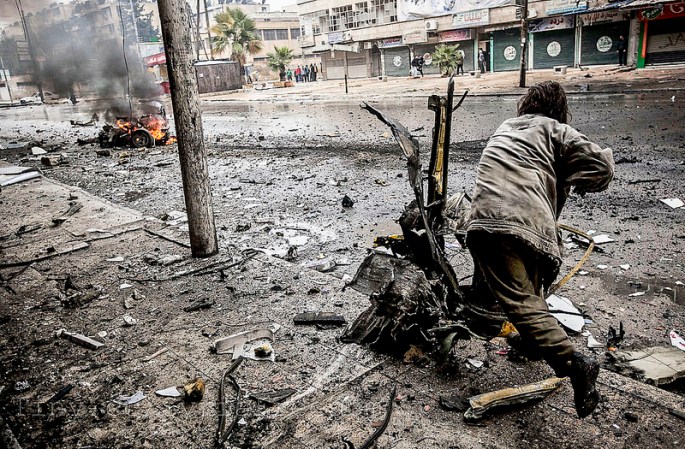
We know everyone’s talking about chemical weapons in Syria (ourselves included), and with President Obama now apparently set on unilateral (ugh) military action in the area, we wager everyone will continue to talk about Syria for a good while longer. We’re including Jeanne Guillemin’s review article because it’s a thorough overview of the storied history and political maneuverings of chemical weapons use. Read it and be an expert.
The Boston Review – “When the present crisis in Syria is resolved, as inevitably it will be, the CWC [Chemical Weapons Convention] must be made universal. It almost is: 188 states adhere to it; 7 are holdouts (Israel, Syria, Egypt, Myanmar, Angola, North Korea, and South Sudan). Syria must allow its chemical weapons to be identified, contained, and destroyed. It should have been done years ago. Israel and Egypt must also be persuaded to join the treaty and comply with it, before more chaos erupts. ‘Almost universal’ is simply not good enough.”
Eastern equine encephalitis threat level raised to ‘high’ in four communities
Ongoing detection of eastern equine encephalitis (EEE) in four communities in Massachusetts has prompted local health authorities to raise threat levels to “high”, encouraging residents to avoid outdoor evening activities until the end of the mosquito season. Although most cases of EEE are aysmptomatic, in severe cases the virus can cause permanent brain damage and death. We can’t remember if we already posted this, but here is an excellent Nature article explaining why it would actually be totally fine if we exterminated all mosquitoes.
Boston – “The EEE threat is high in Easton, Raynham, Taunton, and West Bridgewater. Residents in high-risk areas are urged to avoid evening outdoor events for the remainder of the mosquito season, said the statement from the Massachusetts Department of Public Health…There has been one human case of EEE this year, in a Norfolk County woman in her 80s, who died earlier this month. There were seven cases of EEE in 2012, including three deaths.Symptoms of EEE show up about 3 to 10 days after a person is bit by an infected mosquito and they include high fever, a stiff neck, headache, and lack of energy.”
Because People Will Ask: Measles-like virus may be cause of dolphin deaths on U.S. coast
Included so you can assure concerned friends and families that the virus, which is killing bottlenose dolphins up and down the East Coast, cannot be transmitted to humans. Since July, 333 dolphins – 10 times the normal number for the same period – have died from cetacean morbillivirus, a measles-like virus which is thought to cause immunosuppression. Virginia’s beaches have seen the highest number of strandings, at 174 n the last couple months. While the virus cannot be transmitted to humans, beach goers are advised not to approach any stranded dolphins, as they may carry other bacterial or fungal infections.
National Geographic – “‘Along the Atlantic seaboard, this [outbreak] is extraordinary,’ Rowles said. The last morbillivirus outbreak in the region occurred from June 1987 to May 1988, and resulted in the deaths of at least 900 bottlenose dolphins. Officials are unsure of how long the current outbreak will last. ‘Typically, outbreaks will last as long as there are susceptible animals,’ Rowles said. But if it plays out like the 1987-1988 outbreak, ‘we’re looking at mortality being higher and morbillivirus traveling southwards and continuing until May 2014,’ she added. Right now, experts think this current outbreak is probably due to a dip in herd immunity.”
(image credit: Jeff Kraus/Flickr)