
Welcome to this week’s Pandora Report! This issue examines the fallout from the UN General Assembly’s High-Level Meeting on Pandemic Prevention, Preparedness and Response, where Member States did not endorse a negotiated Political Declaration; questions surrounding the U.S. response to an H5N1 outbreak at a Utah mink farm; and calls to maintain U.S. support for the Organisation for the Prohibition of Chemical Weapons (OPCW).
📢 Interested in Graduate Study in Public Policy, Biodefense, or International Security?
The Schar School of Policy and Government is hosting a series of upcoming Faculty Information Sessions for prospective master’s and graduate certificate students. These interactive sessions offer a direct opportunity to learn about curriculum structure, career pathways in biodefense and policy, and the student experience at George Mason University.
- Information Sessions: Run from October 5 through 15, each at 12:00 PM ET.
- Biodefense MS Information Session on October 9 at 12:00 PM ET: Prospective students interested in the Biodefense MS program are invited to attend a virtual session with BIOD faculty and Program Director Greg Koblentz. The session will cover the program, application process, student experience, and graduate outcomes.
UNGA81: Pandemic Preparedness Takes Center Stage – But Declaration Stalls
At the UN General Assembly’s 81st session, pandemic preparedness and response (PPPR) remained a major focus amid the ongoing Ebola outbreak in the Democratic Republic of the Congo. On September 25, Member States convened the second UN High-Level Meeting on PPPR, where leaders discussed progress since the COVID-19 pandemic and the work still needed to strengthen global preparedness.
The Political Declaration negotiated ahead of the meeting was not endorsed at the High-Level Meeting, despite calls from the Friends of the HLM and others for Member States to adopt it. The President of the General Assembly said the declaration will instead move to the General Assembly for consideration, although a date has not yet been announced. The Independent Panel and Friends of the PPPR HLM are urging the President of the General Assembly and Member States to advance the declaration and move quickly to address remaining gaps in pandemic preparedness.
GMU Biodefense Student Represents G20 Youth (Y20) at UNGA81 Event
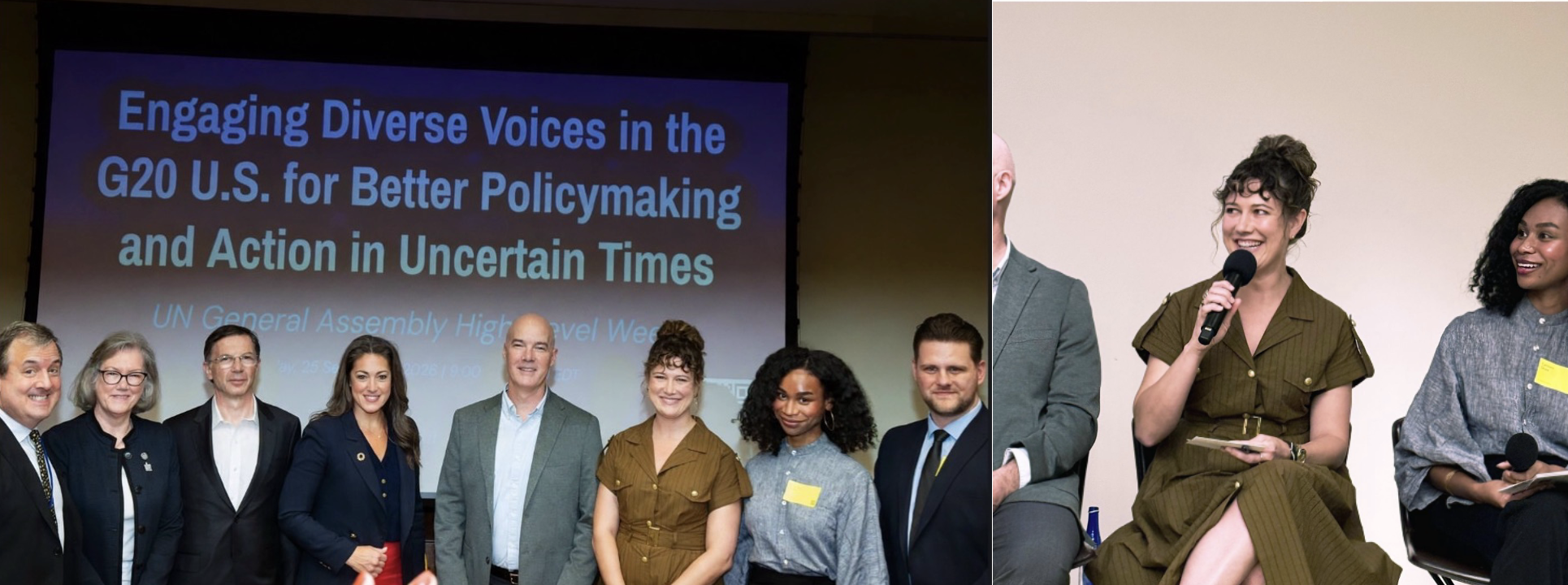
Carmen Shaw, PhD student in Biodefense at George Mason University, participated as the U.S. Head Delegate for the G20 Youth (Y20) Food Security and Global Health track at a UNGA81 event on Friday, September 25. The discussion, “Engaging Diverse Voices in the G20 U.S. for Better Policymaking and Action in Uncertain Times,” brought together representatives from the G20 engagement groups and senior officials to discuss global priorities ahead of the 2026 G20 Summit. Shaw joined representatives from the T20, W20, Labor20, Values20, and other engagement groups to discuss the digital divide, youth priorities, and what success should look like for the U.S. G20 presidency.
Questions Raised over Utah’s H5N1 Mink Outbreak Response
By Margeaux Malone, Pandora Report Associate Editor
In September, USDA confirmed highly pathogenic avian influenza H5N1 outbreaks in 13 commercial farms and seven backyard flocks, affecting a total of 600,000 birds. Over half of these birds (~338,000) were at commercial turkey facilities in Minnesota, but the largest individual outbreak involved nearly 80,000 birds at a Wisconsin turkey operation. Other states with confirmed cases included North and South Dakota, Idaho, and Iowa. Minnesota also recorded at least 40 detections in wild birds, including mallards, Canada geese, and bald eagles.
In other news, particular concern has centered on an H5N1 outbreak at a Utah mink farm, the first documented outbreak in captive mink in the U.S. Following confirmation of H5N1 on the farm in mid-August 2026, state records indicated that officials considered vaccination, depopulation, or continued monitoring. Without intervention, the farm owner expected to lose 80% of their mink to the outbreak. Utah officials placed the facility under a hold to restrict activity and notified state health authorities, but due to the relative novelty of H5N1 infection in farmed mink and a lack of defined protocols to follow, agriculture officials have been limited in their response capacity. An H5N1 vaccine approved for animals exists, but it cannot be used without authorization from USDA Secretary Brooke Rollins. However, no decision has been made.
Response to the situation has drawn sharp criticism from veterinary and animal-welfare organizations, who have called for authorities to disclose more information. Previous H5N1 detections on European mink and fur farms, including a 2022 outbreak in Spain and a 2023 outbreak in Finland, suggested mink-to-mink transmission and mutations associated with mammalian adaptation. Extensive investigation, culling, and surveillance occurred in response. In contrast, it has been over a month since the H5N1 detection in Utah, yet limited information has been communicated to the public, including even the county of the affected farm. Multiple groups have now called on federal and state authorities to disclose information about herd size, mortality, worker exposure, possible mink-to-mink transmission, the suspected source of infection, and viral sequencing. They argue that detailed sequencing and epidemiologic investigation of the Utah outbreak could help determine whether the cases resulted from independent animal exposures or transmission within the farm, information which could be critical to guide surveillance for other potential mammalian outbreaks as H5N1 continues to spread globally.
Further Reading:
- “Bird Flu Returns Early to Minnesota, Catching Poultry Industry Off Guard,” Global Agriculture
- “Canada’s first human bird flu case offers new clues for monitoring pandemic threats,” Brett Goldhawk, UBC News
- “Evidence for exposure to and infection with H5 clade 2.3.4.4b highly pathogenic avian influenza viruses among polar bears inhabiting Alaska,” Andrew M. Ramey, et al., ScienceDirect
Time to Fund the OPCW
The Trump Administration has refused to pay the United States’ assessed contribution to the Organization for the Prevention of Chemical Weapons (OPCW), the Nobel Peace Prize-winning organization responsible for preventing the proliferation and use of chemcial weapons. Professor Gregory Koblenz, director of the Biodefense Graduate Program and a member of the Center for Arms Control and Non-Proliferation’s Scientists Working Group on Biological and Chemical Security has written a letter, co-signed by 18 leading experts on chemical weapons and non-proliferation from across the political spectrum, on the importance of funding the OPCW. The OPCW has historically enjoyed strong bipartisan support in the United States. The 1993 Chemical Weapons Convention was drafted during the Ronald Reagan and George H.W. Bush administrations and ratified by the Republican-controlled Senate in 1997. This is no time to shortchange the OPCW. The global chemical weapon landscape remains complex and challenging. The OPCW is currently engaged in operations in Syria and Ukraine and new missions involving Sudan and Cambodia/Thailand are on the horizon. The letter urges the United States to pay its assessed contribution as soon as possible to avoid any disruption to the OPCW’s activities, which are vital to U.S. national security.
IN OTHER NEWS
AI, Biotechnology, and Biological Security
- “I worked on the CDC investigation of the anthrax letters. 25 years later, are we ready for the next biothreat?” Daniel Jernigan, StatNews
- “This Startup Is Using AI to Fight Off a Future AI Pandemic,” Georgia Wells, WSJ
- “Averting a darker biological weapons future,” UNIDR
- “AI is eroding the barriers that kept biological weapons rare,” Ashish K. Jha, StatNews
- “Trump-Xi Summit: Perception, Not Capability, May Drive AI-Bioweapons Risks,” Nathan A. Paxton, NTI
- “Bigger than CRISPR? A guide to the latest genome editors,” Heidi Ledford, Nature
- “Can Geneticists Fight Disease by Targeting ‘Nurture’ Instead of ‘Nature’?” Emily Baumgaertner Nunn, NY Times
- “Biosecurity Head Steps Down as Trump’s Pick Awaits Confirmation,” Bloomberg
- “Secret watermark labels proteins as ‘made by AI’,” Elie Dolgin, Nature
Pandemic Preparedness and Global Health
- “U.S. Rejects U.N. Declaration on Preparing for Future Pandemics,” Apoorva Mandavilli, NY Times
- “UN tries to build momentum on pandemic preparedness, but hits a speed bump,” Jennifer Peltz, AP News
- “UN Declaration on Pandemic Readiness May Head to General Assembly for Approval,” Elaine Ruth Fletcher, Health Policy Watch
- “Ebola in the Democratic Republic of Congo is the UN Pandemic Meeting’s Real Test,” Armand Mbanya and Luchuo Engelbert Bain, Think Global Health
- “Congo’s Ebola outbreak tops 8,000 confirmed cases as disease remains out of control,” AP News
- “U.S. pledges an additional $267 million to contain fast-spreading Ebola,” Rael Ombuor, WP
- “The Race to Develop an Ebola Bundibugyo Vaccine,” Katherine Leach-Kemon, Think Global Health
- “Five Ways to Deliver on the Pandemic Agreement’s Promises,” Summer Galloway and Stephanie Psaki, Think Global Health
- “‘Zombified’ C.D.C., Hobbled by Cuts, Struggles to Fulfill Scientific Mission,” Apoorva Mandavilli, NY Times
- “These 6 charts show how NIH research funding has been reshaped under Trump,” Joseph Kim, NPR
Chemical and Biological Weapons
- “Quebec City man plotted to poison Canadians with chemical weapon, RCMP alleges,” Montreal Gazette
- “Geneva rights conference calls for an investigation into allegations of chemical weapons use in Sudan,” Mohsin Osman, Modern Diplomacy
- “Apartheid’s covert operation that built and dismantled SA’s biological weapons programme,” Wilmot James, Brendan Beng and Andrea Uhlig, Daily Maverick
- “The Select Agent Regulations,” Catalyze
- “What does the failure to investigate Sudan tell us about international law?” Joshua Rozenberg, A Lawyer Writes
- “How apartheid biological weapons programme emerged from the dust of World War 2,” Wilmot James, Brendan Beng and Andrea Uhlig, Daily Maverick
What We’re Listening To:
- “Communicating About mRNA Flu Vaccines Amid Vaccine Hesitancy,” Jessica Malaty Rivera, The Public Good Projects

NEW: Cross-Sector Collaborations to Counter Deliberate Biothreats – A Webinar Series
From Asia Centre for Health Security (ACHS): “Deliberate biothreats present complex challenges that cannot be addressed by health or security sectors acting alone. Effective prevention, detection, and response to biological threats require sustained intersectoral coordination, including across public health, animal health, law enforcement, and defense. Mr. Trevor Smith will speak from his extensive experience with Global Affairs Canada’s Weapons Threat Reduction Program in international weapons of mass destruction (WMD) threat reduction initiatives. We will explore how partnerships across sectors and countries can strengthen resilient systems to counter current and emerging deliberate biothreats.”
This webinar will be held on October 22 from 8:00-9:00 pm Singapore Time (GMT+08:00). Learn more and register here.
NEW: AI, Biosecurity, and Pandemic Preparedness in the Global South
Medical Events Global is hosting a free 90-minute virtual workshop examining how artificial intelligence and emerging technologies are reshaping biological risk and what preparedness requires in the Global South. The panel will explore where biological risks are concentrated, the capabilities of AI-enabled biological design, operational preparedness, and approaches to governance. Confirmed speakers include Alex Kyabarongo, BIOD MS student at George Mason University and former member of the Biological Weapons Convention Implementation Support Unit (BWC ISU) and NTI bio team, along with Rahul Nagvekar of Stanford University’s Department of Genetics and Adam Abdullahi of the Institute of Human Virology Nigeria and Harvard T.H. Chan School of Public Health.
This virtual workshop will take place on Monday, November 2, from 8:00-9:30 AM ET. Learn more and register here.
Training Course on ‘Biotechnology Innovation and Biosecurity’
From the International Centre for Genetic Engineering and Biotechnology (ICGEB) and the Biological Weapons Convention Implementation Support Unit: “This training focuses on strengthening capacities in biosecurity, biosafety, and biological risk management in the context of rapid advances in biotechnology with an integrated, interdisciplinary approach to manage biothreats at the intersection of humans, animals, plants and the environment. It addresses the governance, technical, and operational dimensions of preventing, detecting, and responding to biological threats, while promoting responsible and peaceful scientific research and innovation in accordance with article X of the Biological Weapons Convention (BWC).”
This in-person event will be held from October 12-16 in New Delhi, India. Learn more and apply here.
Biomanufacturing for Defense & Security Summit
From Diversified Solutions Incorporated (DSI Groups): “This event will bring together senior thought leaders and stakeholders from across DoW, Military Research Labs, Federal Government, Commercial Industry, & Academia to discuss how each are advancing biomanufacturing to enhance national security objectives, produce critical materials for defense applications, and strengthen the overall U.S. bioindustrial manufacturing base. Biomanufacturing is crucial for U.S. national security because it enables domestic production of critical materials, medicines, and defense supplies, reducing reliance on foreign adversaries, which in turn creates resilient supply chains for the military and economy.”
This event will take place from October 27-28 at the National Harbor, MD. Learn more and register here.
Frontiers in Synthetic Biology: SpudCells, Mirror Life and Societal Implications
From the Consortium on Law and Values: “Advances in cell engineering and synthetic biology offer enormous potential benefits, while raising ethical and policy issues. SpudCell, the first synthetic cell that can grow and reproduce, built from non-living chemicals, was developed by a team at the University of Minnesota. Scientists have cautioned against creating organisms with molecules that are mirror images of the biological components of known life, as existing organisms would have no immune defenses. Join three experts on synthetic biology, biosecurity, and bioethics to explore how to realize the promise of synthetic biology while controlling potential risks.”
This webinar will take place on Thursday, October 29, at 3:00 PM ET. Learn more and register here.

NEW: Fellowship for Ending Bioweapons – Call for Applications
From the Council on Strategic Risks: “Whether biological threats arise naturally, by accident, or through a deliberate effort to weaponize pathogens, risks posed by biological threats are grave risks to international security and stability. The urgency for mitigating this area of catastrophic risks is driven home by the growing convergence of artificial intelligence and biological sciences, which may simplify pathways to the development of biological weapons and can spur the creation of novel pathogens.”
Learn more and submit your application by October 19 here.
Director, Global Biological Policy and Programs – Job Opening
From the Nuclear Threat Initiative (NTI): “NTI – a nonprofit, nonpartisan global security organization focused on reducing nuclear, biological, and emerging technology threats imperiling humanity – is seeking a Director to join the Global Biological Policy and Programs team. The NTI | bio team is focused on reducing catastrophic biological risks, and we are working toward this goal by strengthening biotechnology governance; bolstering biosecurity in countries around the world; strengthening international capabilities to uphold the norm against bioweapon development and use; driving progress in Global Health Security; and building the biosecurity field.”
Learn more and submit your application here.

