AMERICA’S WAR ON TERROR: DEMOCRACY IS NO PANACEA

America’s goal to democratize Afghanistan started haphazardly, no doubt buffeted by the chaos of the days immediately following 9/11. However, what began as a relative afterthought soon became the perceived cure-all for Islamic extremism—bring democracy to the Middle East and watch the underlying causes of terrorism erode away. As the Bush administration began developing that policy, a fair amount of scholarly research and intelligence (now declassified) was available to assist policymakers.

This is Part 2 of 4 of Erik Goepner‘s paper. Read Part 1 here

The pre-9/11 scholarly research

The pre-9/11 scholarly research could have helped answer two key questions:

  1. Would democracy be likely to succeed in Afghanistan and Iraq?
  2. Would a shift from autocracy to democracy in Afghanistan and Iraq help reduce the number of terrorists and terror attacks?

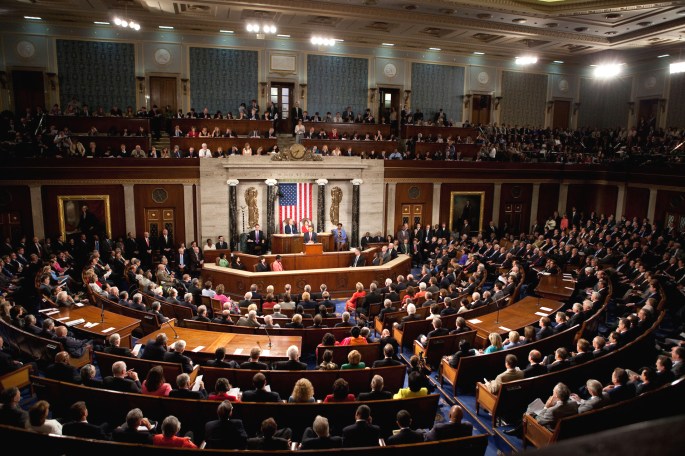
The research suggested that establishing a functioning democracy would be quite challenging in either country. Regarding democracy in Muslim states, ample research cautioned that many democracy enablers—cultural and institutional—could not be found within Islamic tradition.[1] Several notable scholars agreed obstacles existed, but they assessed them as surmountable.[2] Looking at democracy more broadly, the eminent democracy scholar, Seymour Martin Lipset, highlighted cultural factors as determinants of success, cautioning that culture is “extraordinarily difficult to manipulate.”[3] Seven years prior to 9/11, Lipset wrote that successful democracies in Muslim-majority countries were “doubtful.” He argued that an enduring democracy necessitated a connection between efficacy and legitimacy that could be observed by the population. Progress in either the political or economic arenas, he said, would build perceived legitimacy and help cement democracy.[4] With respect to Afghanistan in particular, Robert Barro observed that democracy was unlikely to take hold because of low education levels, the marginalization of women, and the patchwork of different ethnicities.[5] Fareed Zakaria stressed the potential problems associated with ethnic fractionalization and democracy, noting the chance of war could actually increase if democracy were introduced in a country that did not yet have a liberal culture or institutions.[6] Similarly, Amitai Etzioni, a former advisor to President Carter, noted the difficulties of a society jumping from “the Stone Age to even a relatively modern one.” He pointed to the failed experiences of the World Bank and U.S. foreign-aid programs, ultimately concluding that democratic failure would result in Afghanistan.[7] These observations highlight the tension between the legitimate aspirations of President Bush and his national security team and the numerous obstacles that the pre-9/11 research had already identified.

States in transition from autocracy to democracy have more political violence within their borders than do either strongly democratic or autocratic states. In terms of stable, entrenched democracies, the research is divided on whether democracy reduces terrorism more effectively than other forms of government or not. On the one hand, scholars like Rudy Rummel and Ted Gurr contend that democracies provide a system within which grievances can be non-violently addressed, whereas autocracies are much more prone to political violence because they deny their citizens alternate forms of political communication.[8] On the opposite side, researchers like Havard Hegre suggest that democracies are home to increased amounts of political expression, both non-violent and violent.[9] Empirical studies suggest developed and stable democracies do have lower levels of political violence, but so do harshly authoritarian states. Higher levels of political violence, however, tend to occur in intermediate regimes, such as infant democracies.[10]

Based on the pre-war intelligence

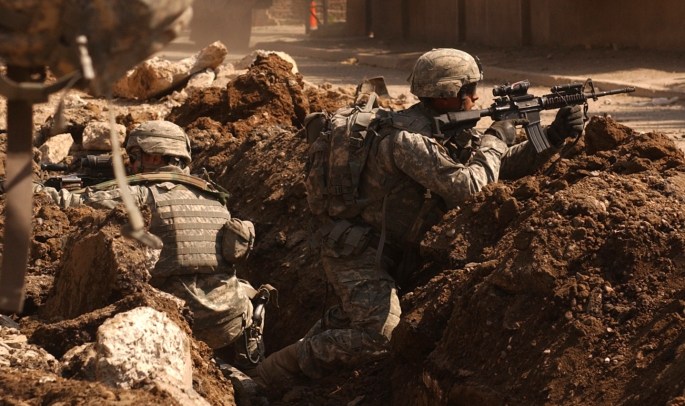
The Bush administration planned the Iraq War for more than a year, and authorities have declassified much of the pre-war intelligence. As a result, ample intelligence is now available to the public. Conversely, for the war in Afghanistan, essentially no intelligence regarding governance issues is available since the war came quickly after the 9/11 attacks and the military had no plans for Afghanistan until after September 11th (beyond tactical plans to attack bin Laden).[11] Much of the available intelligence regarding Afghanistan comes from the 9/11 Commission Report, but it does not include useful information for analyzing the decision to democratize. Therefore, only an analysis of the pre-war Iraq intelligence is provided.

The policy choice to promote democracy appears to have discounted significant portions of the pre-war intelligence. In August 2002, a CIA report noted that Iraqi culture has been “inhospitable to democracy.” The report went on to say that absent comprehensive and enduring US and Western support, the likelihood of achieving even “partial democratic successes” was “poor.”[12]

In late 2002, the CIA provided a slightly more optimistic assessment which said most Shia would conclude that a “secular and democratic Iraq served their interests.”[13] At the same time, though, a DIA report asserted that Shia preferences could not be accurately assessed because of the fear and repression they lived under.[14] Several months later, the CIA released another assessment indicating the potential for democratic stability would be “limited” over the next two years, but a US-led coalition “could” prepare the way for democracy in five to 10 years.[15]

Additionally, the National Intelligence Council (NIC) published two Intelligence Community Assessments in January 2003, which the Senate Select Committee on Intelligence described as the “best available ‘baseline’” of prewar assessments on postwar Iraq.[16] The reports described democratic concepts as “alien to most Arab Middle Eastern political cultures.”[17] The NIC also noted “Iraqi political culture does not foster liberalism or democracy.” As a result, they assessed the potential for the democratization of Iraq as a “long, difficult, and probably turbulent process.”[18] In a particularly prescient set of comments, the NIC assessed that “political transformation is the task…least susceptible to outside intervention and management.”[19]

Considerable scholarly research and intelligence were available to policymakers before the decision was made to aggressively pursue democracy in Afghanistan, Iraq, and the broader region. The numerous cautions contained in the intelligence and research, however, were either missed or ignored.

Next week, part 3 will examine the research published since 9/11 in light of the decision to pursue broad democratization. Erik Goepner’s full paper is available here.


[1] Alfred C. Stepan, “Religion, Democracy, and the ‘Twin Tolerations,’” Journal of Democracy 11, no. 4 (2000): 47.
[2] Niloofar Afari et al., “Psychological Trauma and Functional Somatic Syndromes: A Systematic Review and Meta-Analysis,” Psychosomatic Medicine 76, no. 1 (January 2014): 2–11; John Esposito and John Voll, Islam and Democracy (Oxford University Press, 1996).
[3] Seymour Martin Lipset, “The Centrality of Political Culture,” Journal of Democracy 1, no. 4 (1990): 82–3.
[4] Seymour Martin Lipset, “The Social Requisites of Democracy Revisited: 1993 Presidential Address,” American Sociological Review 59, no. 1 (February 1, 1994): 6, 17.
[5] Robert Barro, “Don’t Bank on Democracy in Afghanistan,” Business Week, January 21, 2002, 18.
[6] Fareed Zakaria, “The Rise of Illiberal Democracy,” Foreign Affairs, December 1997, 35.
[7] Amitai Etzioni, “USA Can’t Impose Democracy on Afghans,” USA Today, October 10, 2001.
[8] W. Eubank and L. Weinberg, “Terrorism and Democracy: Perpetrators and Victims,” Terrorism and Political Violence 13, no. 1 (March 1, 2001): 156.
[9] Eubank and Weinberg, “Terrorism and Democracy.”
[10] Håvard Hegre, Tanja Ellingsen, Scott Gates and Nils Petter Gleditsch, “Toward a Democratic Civil Peace? Democracy, Political Change, and Civil War, 1816-1992,” American Political Science Review, no. 01 (March 2001): 42; Daniel Byman, The Five Front War: The Better Way to Fight Global Jihad (Hoboken, N.J: John Wiley & Sons, 2008), 158–9.
[11] The 9/11 Commission Report, 135–7, 208, 332.
[12] United States Senate Select Committee on Intelligence, Report on Prewar Intelligence Assessments About Postwar Iraq (Washington, D.C., May 25, 2007), 103.
[13] U.S. Senate Select Committee on Intelligence, Report on Prewar Intelligence, 100.
[14] U.S. Senate Select Committee on Intelligence, Report on Prewar Intelligence, 93–4.
[15] U.S. Senate Select Committee on Intelligence, Report on Prewar Intelligence, 97.
[16] U.S. Senate Select Committee on Intelligence, Report on Prewar Intelligence, 4.
[17] National Intelligence Council, Regional Consequences of Regime Change in Iraq, January 2003, 30.
[18] National Intelligence Council, Principal Challenges in Post-Saddam Iraq, January 2003, 5.
[19] National Intelligence Council, Principal Challenges in Post-Saddam Iraq, 9.


Image Credit: Library of Congress
America’s War on Terror: Democracy is No Panacea

Nine days after the attacks of September 11, the President George W. Bush declared America’s war on terror had begun. Over time, the spread of freedom and democracy came to be seen as key objectives of the war. Freedom and democracy, it was thought, would be the solution to Islamic extremism.[1]

This is Part 1 of 4 of Erik Goepner‘s paper. 

Afghanistan

The goal of democratizing Afghanistan came haphazardly. As U.S. policymakers prepared to launch strikes to root out al Qaeda, they did not initially plan to conduct regime change in Afghanistan. Planning efforts left open the possibility that the Taliban might cooperate sufficiently and, therefore, be allowed to remain in power.[2] Soon after the CIA initiated covert operations, however, it became obvious regime change was coming. The first formal expression of regime change appears to have occurred at an October 3 meeting. At that meeting, Secretary of State Colin Powell said he wanted leadership in Kabul available to fill the void left by the removal of the Taliban, leadership that represented all of the Afghan people.[3] The U.S. launched its first airstrikes four days later.

The Taliban had to go, but what a future Afghan government might look like received scant attention early on. Part of the disconnect resulted from the rapid success of military operations. Within the first week of airstrikes, Pakistani and U.N. officials began pressuring the U.S. government to slow the Northern Alliance advance. They wanted an interim government in place before the Northern Alliance took Kabul.[4] Despite those attempts, the Northern Alliance did enter Kabul and establish a quasi-government before a broad-based, internationally recognized interim government could be appointed.

On November 10, President Bush spoke before the U.N. General Assembly, where he articulated his support of U.N.-led efforts to broker a post-Taliban government that would represent all Afghans.[5] A month later, the U.N.-brokered talks concluded in Bonn, Germany. The talks aimed to place the various Afghan groups front and center, with the U.N. and international community taking a supporting role.[6] Afghans would govern themselves, assisted by a light international footprint to help bolster their capacity.[7] The final agreement read, in part, “Acknowledging the right of the people of Afghanistan to freely determine their own political future in accordance with the principles of Islam, democracy, pluralism…”

Hamid Karzai took the oath as interim President of Afghanistan on December 22, 2001.

Iraq

Five years before the U.S. invaded Iraq, Congress and President Clinton enacted a law authorizing 97 million dollars for opposition forces who would remove Saddam from power and promote democracy in Iraq.[8] The Bush Administration, though, needed little encouragement. By this point in the War on Terror, buoyed by perceived success in Afghanistan, the President frequently spoke of America’s responsibility to free the oppressed.

In January 2003, the President Bush met with several Iraqi dissidents. They articulated a favorable picture of what a post-Saddam Iraq might look like. Each spoke optimistically regarding democracy’s future in Iraq, noting the technological skills of the citizenry while discounting what they perceived as overblown commentaries regarding the Sunni-Shia split. When the President asked about the possibility of the U.S. being seen as imposing its will, they had no response.[9]

On March 4, Doug Feith, the Under Secretary of Defense, briefed the President and the NSC on U.S. objectives in Iraq. Moving Iraq towards democracy was high on the list. Iraq, they hypothesized, would soon serve as a model for the region. U.S.-led coalition airstrikes began March 20, 2003.

Eight months after the invasion of Iraq, President Bush presented a “new policy, a forward strategy of freedom in the Middle East.”[10] The President’s lofty ambitions for the Middle East could be interpreted as politically motivated perhaps, but the consistency of his message and his passion on the subject suggest he truly did perceive a responsibility to liberate the oppressed. Whether feasible or not, whether politically motivated or not, President Bush appeared to believe that bringing freedom to other nations was the right, and necessary, thing to do.

In June 2004, the United States transferred power to an interim Iraqi government and elections were held in January 2005.[11]

After the Elections

After the first elections in Afghanistan and Iraq, President Bush intensified his calls for democracy in the Middle East. Promoting democracy became a cornerstone of his War on Terror strategy. [12] Mentions of freedom, liberty, and democracy can be found throughout his speeches during that time. His 2006 National Security Strategy celebrated the “extraordinary progress in the expansion of freedom, democracy, and human dignity” that had occurred in Iraq and Afghanistan.

The January 2006 elections that brought Hamas to power, however, may have had a tamping effect on the Bush Administration’s push for broader democratization in the region. The Hamas victory, along with electoral inroads by the Muslim Brotherhood and Hezbollah, brought a chorus of criticism against the President.[13]

Efforts to democratize Afghanistan started haphazardly, but what began as a relative afterthought in Afghanistan soon became the perceived cure-all for Islamic extremism.

Next week, part 2 will examine the decision to democratize in light of the intelligence and scholarly research available in the run up to both wars. Erik Goepner’s full paper is available here.


[1] Council on Global Terrorism, State of the Struggle: Report on the Battle against Global Terrorism, ed. Lee Hamilton and Justine A. Rosenthal (Washington, D.C: Council on Global Terrorism : Brooking Institution Press [distributor], 2006), 83.
[2] Bob Woodward, Bush at War (New York: Simon & Schuster, 2003), 130.
[3] Woodward, Bush at War, 191–2.
[4] Peter Baker, Molly Moore and Kamram Khan, and Washington Post Foreign Service, “Rebels Delay Move Against Kabul; Devising Plan for New Government in Afghanistan Becomes Priority,” The Washington Post, October 11, 2001, sec. A.
[5] George Bush (United Nations General Assembly, New York, November 10, 2001), http://georgewbush-whitehouse.archives.gov/news/releases/2001/11/20011110-3.html.
[6] Simon Chesterman, “Walking Softly in Afghanistan: The Future of UN State-Building,” Survival 44, no. 3 (September 2002): 39.
[7] Chesterman, “Walking Softly in Afghanistan,” 38.
[8] Bob Woodward, Plan of Attack: The Definitive Account of the Decision to Invade Iraq (New York: Simon & Schuster, 2004), 10.
[9] Woodward, Plan of Attack, 258–60.
[10] Mark N. Katz, Leaving without Losing: The War on Terror after Iraq and Afghanistan (Baltimore: Johns Hopkins University Press, 2012), 23–4.
[11] Dominic Johnson and Dominic Tierney, Failing to Win: Perceptions of Victory and Defeat in International Politics (Cambridge, Mass: Harvard University Press, 2006), 245.
[12] Raphael Perl, Combating Terrorism: The Challenge of Measuring Effectiveness, November 23, 2005, 4.
[13] Steven R. Weisman, “Bush Defends His Goal of Spreading Democracy to the Mideast,” The New York Times, January 27, 2006, sec. Washington, http://www.nytimes.com/2006/01/ 27/politics/27diplo.html.


Image Credit: U.S. Army

Islamic State Update

By Erik Goepner

The Battle for Tikrit

An estimated 20,000 to 30,000 pro-Iraqi government fighters appear poised to eject the remaining IS fighters from Tikrit, the birthplace of Saddam Hussein. Concerning on-going sectarian tensions, Shia militia reportedly constitute the vast majority of the pro-government fighting force, supported by approximately 3,000 Iraqi troops and a small group of Sunnis. No surprise, then, that U.S. officials expressed concerns over the potential for similar “sectarian alienation” between Sunnis and Shias, which left Iraq vulnerable to ISIS in the first place. In addition, Iranian advisors are participating, with the commander of Iran’s Revolutionary Guard Quds Force, General Qasem Soleimani, helping to lead the battle. Soleimani’s presence in Iraq appears to be in violation of a 2007 U.N.-imposed travel ban stemming from the terrorist support provided by the Quds force he commands. The U.S. is not taking part in the operation, with U.S. officials saying they were not asked by Iraq to participate.

~~~~~

Foreign fighters

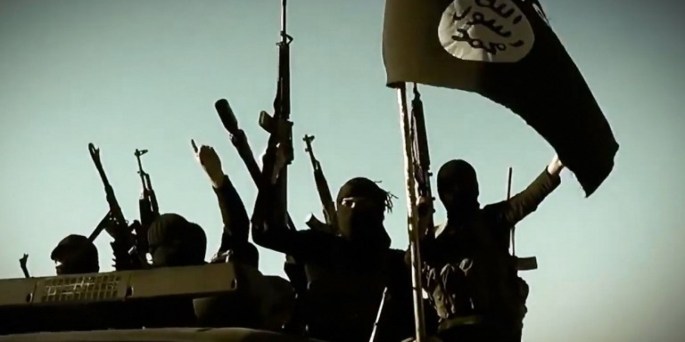
Twenty-thousand foreign fighters from 81 countries are estimated to have joined the Islamic State in Syria and Iraq, with a fifth coming from western European nations. For additional information see “Foreign Fighters in Syria” by Richard Barrett and the Munich Security Report 2015 (p. 38).

Image Credit: U.S. Army

Pandora Report 3.15.15

For those of us at Mason, Spring Break is nearing its end. For the rest of us, however, it’s business as usual. This week we’ve got stories about engineering nuclear worries in South Africa, the eradication of guinea worm, the lasting health impacts of Ebola, and other stories you may have missed.

Have a great week, enjoy the longer daylight hours, and we’ll see you back here next weekend!

U.S. Unease about Nuclear-Weapons Fuel Takes Aim at a South African Vault

Located in a former silver vault at a nuclear research center near Pretoria, South Africa, is enough nuclear weapons explosive to fuel half a dozen bombs. Roughly 485 pounds of highly enriched uranium exist as remnants of the apartheid regime’s nuclear weapons program. U.S. officials worry that not only does this stockpile give South Africa the theoretical ability to regain its status as a nuclear-weapons state, but the stockpile’s vulnerability makes it a target for terrorist thieves. This isn’t a far-fetched concept, because in November 2007 two teams of raiders breached the fences at the nuclear center, entered the site, and broke into the central alarm station. Obama has urged President Jacob Zuma to transform the nuclear explosives into benign reactor fuel—with U.S. assistance—to no avail.

The Washington Post—“‘The bottom line is that South Africa has a crime problem,” [arms control expert Jon] Wolfsthal said. “They have a facility that is holding onto material that they don’t need and a political chip on their shoulder about giving up that material. That has rightly concerned the United States, which is trying to get rid of any cache of HEU [highly enriched uranium] that is still out there.’”

Tug of War: On the Verge of the Greatest Public Health Triumph of the 21st Century

As people work around the world to eradicate Polio, another public health enemy is about to be eliminated first—guinea worm. This parasite, found in rivers and streams, enters the body in larval form through contaminated drinking water. The larvae mature inside the body and move towards the skin’s surface in the form of a burning blister. When the infected human puts water on the blister, the worm bursts out into water, continuing the source infection cycle. However, the number of cases of guinea worm is way down—from 3.5 million cases in 1986 to 126 cases in 2014—thanks to a simple nylon filter attached to a drinking straw. The weave on the nylon is tight enough to filter out the larvae from drinking water.

Slate—“Vanquishing guinea worm would be arguably the first great public health triumph of the 21st century. It would also give new life to the human disease eradication movement, which suffered through 35 mostly frustrating years following the conquest of smallpox in 1980. The victory would prove to governments and private foundations that we can still accomplish eradication.”

Ebola Could Cause Thousands More Deaths—By Ushering in Measles

As Liberia removed their Ebola crematorium—with the declaration that the outbreak is contained—new cases of the disease are still popping up in Sierra Leone and Guinea and have resulted in nearly a dozen American volunteers returning to U.S. facilities for treatment.  And this week, in Science, researchers from NIH and four universities have warned that Ebola’s interruption in other health services—like immunization campaigns—could result in epidemics of preventable diseases with larger fatality numbers than Ebola. Specifically, they warn that up to 100,000 cases of measles could result in 16,000 additional deaths.

Wired—“Measles is already present in West Africa, so the team is not arguing that Ebola will revive an eradicated disease — although, poignantly, hard work in the three countries had recently forced measles incidence way down. “Between 1994 and 2003, the countries reported — and this is just how many they reported, not necessarily how many occurred — about 100,000 cases of measles,” Lessler said. “Whereas in the last decade, they’ve only reported 7,000. So they’ve done an excellent job of controlling the virus compared to the previous (decade).’”

Stories You May Have Missed


Image Credit: FEMA

CIA Purchase of Iraqi CW: Background and Context

By Greg Mercer

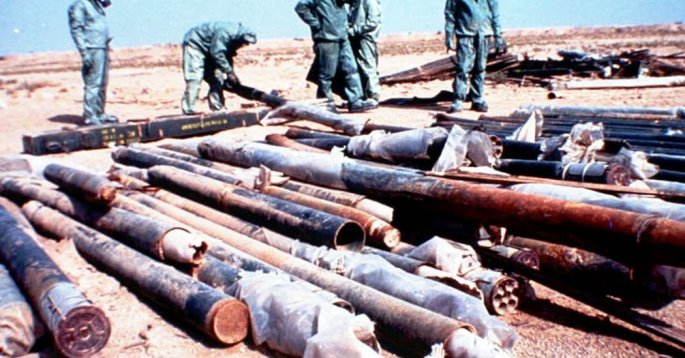
Recently, a CIA program to buy and destroy chemical weapons in Iraq has come to light.   The New York Times reports that from 2005 to 2006, Operation Avarice saw the purchase and destruction of 400 chemical weapon rockets originally developed by the Hussein regime in the 1980s.  Reports vary on the contents of the rockets, which may have contained either degraded chemical components or still-active sarin.  The Times article states that, in cooperation with the Army 203rd Military Intelligence Battalion, the CIA station in Baghdad made the purchase from a single Iraqi seller and destroyed the weapons.

These events notably fall outside of the findings of the Iraq Survey Group (ISG), the 2003 Department of Defense-led fact finding mission.  The ISG released a final report in 2004 detailing Iraqi WMD-related activities from 1991 to 2003. However, ongoing conflict in Iraq has led to further encounters with remnants of Hussein’s WMD programs.

An October 2014 article detailed claims made by veterans that military personnel had been exposed to sulfur mustard during the destruction of seized Iraqi chemical weapons near Taji.  The Times’ CJ Chivers places the number of service members exposed to chemical weapons at no fewer than 17, and asserts that they received inadequate healthcare.  His investigation led to the Pentagon acknowledging that hundreds of service members had been exposed to chemical weapons and had received insufficient treatment.

A May 2004 Fox News article reported that a 155mm artillery shell used as part of a roadside bomb in Iraq was found to have contained sarin, and two service members were treated for mild symptoms of exposure.  While the shell contained three liters of sarin, it was a binary system, where separate chemical compounds are mixed to form the weapon agent.  Due to its use as an improvised explosive and failure to combine, the agent was not potent enough to be lethal.  The article notes that a different shell containing mustard gas was found in a similar setup.  However, this shell also did not detonate, and the chemical agent was found by the ISG to be inactive due to improper storage.

In July 2004 the Washington Post reported that warheads found in Iraq by Polish forces, originally believed to be chemical weapons dating back to the Iran-Iraq war (which saw the use of chemical weapons by both sides), did not, in fact, contain chemical agents.  The warheads were reportedly purchased, not confiscated, rockets, though this point was disputed by an unnamed senior intelligence official, who said that the U.S. had been told that the rockets were found alongside other conventional weapons.  Chemical weapons or not, the episode demonstrates the severity with which international forces in Iraq treated claims of insurgents and terrorists possessing or seeking unsecured Hussein-era weapons.

It’s important to note that these brushes with chemical weapons involved agents dating to before 1991.

Chemical weapons were not the only illicit goods seized in Iraq.  In 2005, the Associated Press reported that 550 metric tons of yellowcake uranium had been sold to Canadian uranium producer Cameco Corp. for use as nuclear fuel.  The U.S. conducted a top-secret airlift operation of 37 flights to move the uranium from Baghdad to Montreal.  The uranium was a remnant of Hussein’s nascent nuclear weapons program.  Yellowcake uranium is an intermediate product of uranium processing, not weapons-grade material.  It can either be smelted into fuel rods for use in nuclear reactors for power production, or enriched into U-235 via gas centrifuge.  Low-enriched uranium (up to 20% U-235) is also used in nuclear reactors, but highly-enriched uranium (90%) is used in nuclear weapons.


Image Credit: The New York Times

The Islamic State as Insurgency: The Growing Strength of Salafi Jihadists

By Erik Goepner

Terrorists occupy the low-end of the power spectrum. They are weaker than guerrillas, who are weaker than insurgents, who are weaker than conventional armies, who are weaker than nuclear-equipped armies. That is a point made, more or less, by the Council of Foreign Relation’s Max Boot. Successful revolutionary, Mao Tse Tung,[1] made a similar point when he noted guerrillas are but a step towards total war and regular armies. Has the Islamic State, then, progressed the Salafi jihadist movement from the weak power position of terrorism to the mid-range power of insurgency?

RAND researcher, Seth Jones, defines a Salafi jihadist group as one that emphasizes the need to return to “pure” Islam during the time of the Salaf (“pious ancestors”) and believes that violent jihad is a duty of each member of the ummah, much like daily prayers, fasting during Ramadan, etc. Dr. Jones notes that between 2010 and 2013, the number of Salafi jihadist groups rose by 58%. Interestingly, the growth roughly coincided with the timing of U.S. surge operations in Afghanistan. At the end of that period, IS began seizing and holding terrain in Iraq and Syria, with some estimating they now control approximately 81,000 square miles, or the land mass equivalent of Great Britain. Professor Bruce Hoffman, author of the seminal work Inside Terrorism, suggests that while both insurgents and terrorists may use the same tactics, even for the same purposes, insurgents differ from terrorists in that they often operate as military units, seize and hold terrain, and include informational and psychological warfare in an effort to win over the population’s support.

If so, and if the Islamic State is winning over segments of the Iraqi and Syrian populations rather than just terrorizing them, then the problem set facing the U.S. would be substantially different. Terrorists can, in large measure, be defeated by police or military action, which the world’s premier military can accomplish unlike any other. If, however, IS now finds firm footing as an insurgency, broader issues must be tackled. Issues that can only be successfully resolved by the indigenous government—which we are not—or dictatorial occupiers—which we will not be.

Image Credit: NBC News


[1] See The Red Book of Guerrilla Warfare by Mao Zedong.

Pandora Report 2.1.15

No themed coverage this week, sadly. However, we’ve got stories covering the Federal fight against antibiotic resistance, ISIS airstrikes, and super mosquitoes in Florida. All this in addition to stories you may have missed.

Have a fun Super Bowl Sunday (go team!) and a safe and healthy week!

Obama Asking Congress to Nearly Double Funding to Fight Antibiotic Resistance to $1.2 Billion

One of The White House’s goals for 2015 was to combat growing antibiotic resistance through research into new antibiotics and efforts to prevent the over prescription of these vital drugs. President Obama is requesting that Congress add additional funding to this fight, bringing the total to $1.2 billion. The funding will be a start, but there are many other things that can happen in order to fight this extremely important problem.

U.S. News & World Report—“The Centers for Disease Control and Prevention says more than 23,000 Americans die every year from infections that can withstand some of the best antibiotics. The World Health Organization said last year that bacteria resistant to antibiotics have spread to every part of the world and might lead to a future where minor infections could kill.”

Air Strike Kills IS ‘Chemical Weapons Expert’

News came Saturday morning that U.S. airstrikes in Iraq last week killed a mid-level Islamic State militant who specialized in chemical weapons. Killed on January 24, Abu Malik had worked at Saddam Hussein’s Muthana chemical weapons production facility before joining Al-Qaeda in Iraq in 2005.

Radio Free Europe/Radio Liberty—“Officials say his death could “temporarily degrade” the group’s ability to produce and use chemical weapons. Coalition air strikes have pounded the Mosul area over the past week [and] The U.S.-led coalition has carried out more than 2,000 air raids against IS militants in Syria and Iraq since August 8.”

Millions of Genetically Modified Mosquitoes Could Fight Disease in Florida

On January 11, we had a small note about the possibility of genetically modified mosquitos controlling diseases like chikungunya and dengue, but this week coverage on this issue absolutely exploded! British biotech firm Oxitec plans to release millions of genetically modified mosquitos in Florida to control the existing population and help control the spread of these diseases. The A. Aegypti species of mosquito is extremely prevalent in Florida and recently has become resistant to most chemical pesticides. Residents, of course, are up in arms over the potential release of this “mutant mosquito”.

The Weather Channel—“Technology similar to this is already in use in Florida and other states, Entomology Today points out. Sterile Insect Technique (SIT) employs a similar technique, sterilizing insects so that when they mate, no offspring are produced. “Florida spends roughly $6 million a year using SIT to prevent Mediterranean fruit fly infestations, while California spends about $17 million a year,” Entomology Today wrote.”

Stories You May Have Missed

Image Credit: Wikimedia Commons

The Global War on Terror Redux

By Erik Goepner

Are we destroying the Islamic State or fighting a global war on terror?

In the past six months, the U.S. launched air strikes to neutralize the al Qaeda offshoot, Khorasan group, and the imminent threat they posed. Authorities in Ohio arrested a man—apparently self-radicalized—who was planning to target the U.S. Capitol. The Charlie Hebdo attackers reportedly received funding and guidance from Yemeni-based, al Qaeda in the Arabian Peninsula. The kosher market killer apparently had pledged allegiance to the Islamic State. Soon after, French, Belgian, and German authorities arrested more than a dozen suspected terrorists, some of whom had recently returned from Syria and allegedly may have ties to the Islamic State.

While the Islamic State dominates the headlines and Obama Administration officials repeat the defeat and destroy Daesh (nee ISIL) mantra, the President’s narrowly-named Special Envoy for the Global Coalition to Counter ISIL speaks of a decidedly broader end goal. General Allen recently acknowledged “Daesh” as the immediate threat, but noted, “more broadly we’re interested in the underlying factors that create these problems.” He went on to talk of the collective action needed to eliminate the social, ethnic, religious and economic problems that have combined in the Middle East. He noted that if we are successful, there will be a government in Syria that “reflects the will of the Syrian people,” which will have “the happy second and third order effect of assisting in the creation of stability more broadly in the region.”

In words reminiscent of President Bush, “Our war on terror begins with Al Qaeda, but it does not end there,” Secretary Kerry recently shared similar thoughts. In a speech at the Saban Forum, the Secretary observed that “even once Daesh is defeated and Syria is stabilized, our work is far from over.”

These are amazingly aspirational goals. Daesh defeated. Syria stabilized. A government in Syria reflecting the will of the people. And it would seem, a stabilized Iraq and Afghanistan, too.

Again, the similarities are evident. Also speaking at the Saban Forum, though years prior, President Bush outlined similar aspirations, “Our vision for the future: a Middle East where our friends are strengthened and the extremists are discredited, where economies are open and prosperity is widespread, and where all people enjoy the life of liberty…”

Times have changed, but the mission hasn’t. However passionately or half-heartedly we approach it, America continues to wage a global war on terror and seek the remaking of the Middle East.

Image Credit: Huffington Post

Defeating and Destroying the Islamic State: What the Wars in Afghanistan and Iraq Can Tell Us

By Erik Goepner 

Afghanistan Iraq Iraq & Syria
U.S. Goal Defeat & destroy al Qaida Eliminate Iraqi WMD, “central front on war on terror Defeat & destroy Islamic State
Date U.S. initiated operations October 2001 March 2003 August 2014
Name of operation Enduring Freedom Iraqi Freedom Inherent Resolve
# countries in coalition 50 34 62
# global terror attacks the year U.S. initiated operations 1,878 1,253 11,9521
# global terror attacks 5 years after U.S. initiated operations 2,728 4,780 TBD
# global terror attacks 10 years after U.S. initiated operations 5,007 11,952 TBD
White House assessment at      +3 months Our war on terror is well begun, but it is only begun mission accomplished

Iraq is free

We are making steady, measurable progress
White House assessment at      +5 years We have significantly degraded the al–Qaida network” “The success of democracy in Afghanistan is inspiring We have seen significant security gains…Less visible are the political and economic changes taking place…This progress isn’t glamorous, but it is important TBD
White House assessment at    +10 years We are meeting our goals…the light of a secure peace can be seen in the distance We’re leaving behind a sovereign, stable and self-reliant Iraq TBD
Cost: U.S. deaths 2,353 4,486 TBD
Cost: $ $686 billion2 $815 billion3 $5.6 billion4

Notes:

  1. Numbers are for 2013, 2014 not yet available.
  2. Does not account for future costs, such as FY15 funding or medical care for veterans.
  3. Does not account for future costs, such as medical care for veterans.
  4. Represents budget request for FY15.

Image Credit: Wikimedia Commons

Fighting the Islamic State: U.S. Objectives

By Erik Goepner

Our objective is clear:  We will degrade, and ultimately destroy, ISIL,” said President Obama during his national address on 10 September 2014. Since then, the destruction of the Islamic State has been echoed as an American objective by senior leaders across the executive branch.

Such an absolute and mammoth objective towards IS, while for years the U.S. has sought reconciliation and reintegration with much of the Taliban in Afghanistan? Destroy IS, and inadvertently relieve much of the pressure against Assad, a despot who has presided over a state in which 200,000 have been killed? Is the threat from IS so severe that they must rise to the top of America’s targeting list?

A compelling argument for such an all-encompassing national priority might have been expected during the President’s national address in September. Not so. Instead, he noted the threat IS poses to the people of Iraq and Syria, and the broader Middle East—including American citizens, personnel and facilities located there. Quite likely, that is why part of the American Embassy staff in Iraq was evacuated in June 2014, as also occurred in Yemen, South Sudan, and Libya last year. And the threat to Americans in America? “If left unchecked, these terrorists could pose a growing threat beyond that region, including to the United States,” offered the President.

Two months later, the White House repeated a similar threat assessment. Their fact sheet said IS “could pose a growing threat to the United States and others beyond the region.” The fact sheet also noted that IS posed an immediate threat to Iraq, Syria and U.S. allies throughout the region, as did numerous other groups per a State Department travel warning.

So, America will send 3,100 military members and spend $5.6 billion this year in an effort to destroy a group that could pose a threat beyond the Middle East?

That Iran and Syria will likely benefit if we succeed in destroying IS makes the U.S. choice of objectives all the more confusing. Both countries are on the State Department’s list of state sponsors of terrorism—since 1979 for Syria and 1984 for Iran. One of the most lethal killers of American service members in Iraq was the explosively formed penetrators (EFPs) provided by Iran.

At the UN, two years ago, the President said “the United States will do what we must to prevent Iran from obtaining a nuclear weapon.” It is difficult to see how the elimination of what appears to be the most capable Sunni fighting force in the Middle East will not strengthen Iran’s hand and further embolden them. The presence of American and Iranian military advisers in Iraq, and our common purpose there, appears to make achievement of Iran’s goals more likely and less costly.

As for Syria, President Obama had previously spoken of a red line regarding their use of chemical weapons and that Assad must step down, yet America now strikes Assad’s most lethal foe.


Image Credit: defense.gov