
This week’s Pandora Report discusses the recent mpox PHEIC declaration, updates on H5N1, and more.
World Health Organization Declares Mpox PHEIC
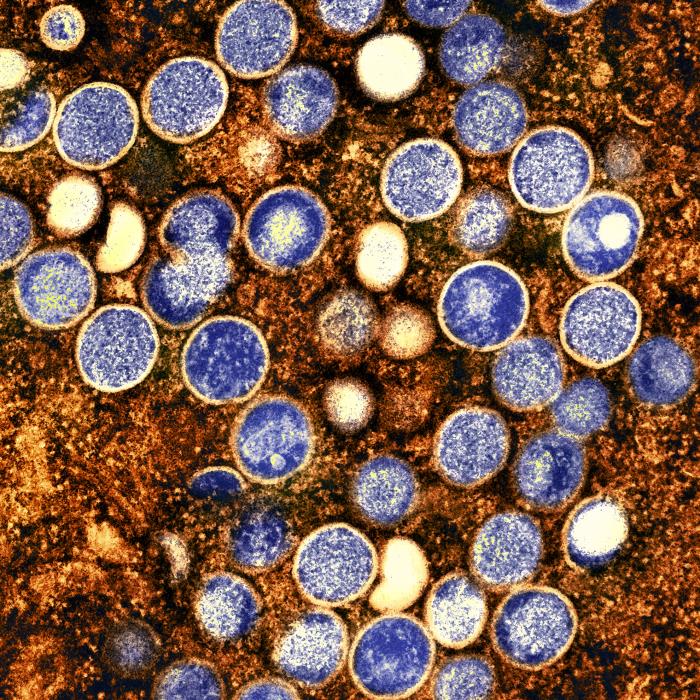
Mpox (formerly known as monkeypox) is a viral illness caused by the monkeypox virus, which is part of the genus Orthopoxvirus. Two clades exist (clade I and clade II). Clade IIb caused a global outbreak of mpox in 2022-23 that also resulted in a PHEIC (public health emergency of international concern) declaration. Now, the WHO has declared an outbreak of clade I mpox a PHEIC as case counts in the Democratic Republic of the Congo (DRC) and neighboring countries swell. 548 people have been killed by the disease in 2024, according to the DRC government.
WHO Director-General Tedros Adhanom Ghebreyesus made the declaration “on the advice of an IHR Emergency Committee of independent experts who met earlier in the day to review data presented by experts from WHO and affected countries. The Committee informed the Director-General that it considers the upsurge of mpox to be a PHEIC, with potential to spread further across countries in Africa and possibly outside the continent.”
Tedros said in a statement, “The emergence of a new clade of mpox, its rapid spread in eastern DRC, and the reporting of cases in several neighbouring countries are very worrying. On top of outbreaks of other mpox clades in DRC and other countries in Africa, it’s clear that a coordinated international response is needed to stop these outbreaks and save lives.”
According to WHO “The monkeypox virus was discovered in Denmark (1958) in monkeys kept for research and the first reported human case of mpox was a nine-month-old boy in the Democratic Republic of the Congo (DRC, 1970). Mpox can spread from person to person or occasionally from animals to people. Following eradication of smallpox in 1980 and the end of smallpox vaccination worldwide, mpox steadily emerged in central, east and west Africa.”
Sweden Reports First Clade I Case Outside Africa, ECDC Raises Risk Alert Level
The Public Health Agency of Sweden reported on Thursday that the country has recorded the first case of mpox caused by clade I outside of Africa. Health and Social Affairs Minister Jakob Forssmed said in a news conference, “We have now also during the afternoon had confirmation that we have one case in Sweden of the more grave type of mpox, the one called clade 1.” State Epidemiologist Masnus Gisslen said in an official statement that the patient was infected while visiting “the part of Africa where there is a major outbreak of mpox clade 1.”
Following Sweden’s announcement, the European Centre for Disease Prevention and Control (ECDC) raised its risk level for mpox from ‘low’ to ‘moderate,’ for sporadic cases appearing in the EU. The agency also asked countries to maintain high levels of awareness regarding those traveling from affected areas. The ECDC says the overall risk to the EU population has gone up from “very low” to “low” and that it expects there will be more imported cases in the coming weeks.
United States Announces Further $424 Million in Assistance for the DRC
This week the US, through the United States Agency for International Development, announced “…nearly $424 million in humanitarian and health assistance to address the ongoing catastrophe in the Democratic Republic of the Congo (DRC). This includes $414 million in humanitarian assistance to support people experiencing persistent humanitarian needs resulting from conflict and displacement. This announcement, made in Kinshasa by the U.S. Ambassador to the DRC Lucy Tamlyn and U.S. Representative to the United Nations Agencies for Food and Agriculture Jeffrey Prescott, also includes an additional $10 million in health assistance to respond to the current mpox outbreak in the DRC and in other affected countries in the region. USAID is also donating 50,000 mpox vaccines to the DRC, which is the country most impacted by this outbreak.”
The statement later explained that “The United States is the largest provider of humanitarian assistance to the DRC and the largest bilateral donor to DRC’s health sector. This Fiscal Year, the U.S. provided more than $256 million in health assistance through bilateral programs including the President’s Emergency Plan for AIDS Relief (PEPFAR), the President’s Malaria Initiative (PMI), and the Global Health Security program, which enabled more than seven million people to receive lifesaving treatment for diseases including TB, HIV, and malaria.”
European Commission Coordinates Procurement and Donation of 215,000 Bavarian Nordic Doses to Africa CDC
The European Commission’s Health Emergency Preparedness and Respons Authority (HERA) announced on Wednesday that it “will procure and donate 175,420 doses of the MVA-BN® vaccine, the only FDA and EMA-approved mpox vaccine, as an immediate response to the mpox outbreak in Africa. In addition, the pharmaceutical company Bavarian Nordic will donate 40,000 doses to HERA. The Africa CDC will distribute the vaccines according to regional needs.”
The announcement came in response to Africa CDC’s call for the international community to assist in mobilizing two million vaccines to stop this outbreak. The Commission said in its statement that “Through the Africa CDC, these vaccines will be distributed to affected countries. Furthermore, HERA is in collaboration with the Africa CDC with the aim to expand access to mpox diagnostics and sequencing in the region, with a €3.5 million grant foreseen for early autumn.”
Bavarian Nordic Wins $157 Million Contract to Replenish US JYNNEOS Vaccine Supply
The Biomedical Advanced Research and Development Authority (BARDA) has reached an agreement with the Danish company Bavarian Nordic to “partly replenish” its stockpile of JYNNEOS vaccine following the 2022 mpox outbreak. This $156.8 million deal follows a similar one made last year by the US government totaling $120 million.
Further Reading
- “To Avoid a New Pandemic, the GPMB Calls on the World to Ensure That Equity Is at the Center of the Collective Response to Mpox,” Global Preparedness Monitoring Board
- “Africa CDC Declares Mpox Emergency, Moving to Lead Response,” Linda Nordling, Think Global Health
- “Mpox Cases are Soaring in Africa – What Must be Done to Prevent a Global Pandemic,” Cheryl Walter, The Conversation
- “How We Got Here With Mpox,” Adam Kucharski, Understanding the Unseen
- “Bavarian Nordic Asks EU to Exten Mpox Shot License to Adolescents,” Helen Collis, Politico
H5N1 Threat Persists but Remains Low
Despite the renewed focus on mpox, concern still remains about the spread of avian influenza globally, particularly H5N1, which has infected thirteen farmworkers in the United States so far this year. Despite the relatively low risk, Seqirus has begun producing and storing doses of its new vaccine targeting H5N1 in its facility outside of Raleigh, NC. In total, the company has agreed to produce 4.8 million doses in exchange for $22 million from the federal government. The government has also given Moderna $176 million to develop mRNA vaccines for influenza, including H5N1.
The CDC explained in a recent summary about its Influenza Risk Assessment Tool that “The current overall individual and population health risk to the general public posed by the avian influenza A(H5N1) virus presently spreading in cows, poultry, and other mammals remains low. Systematic comparisons of data related to this avian influenza A(H5N1) virus using the Influenza Risk Assessment Tool (IRAT) to data from other influenza A viruses has scored this virus’s future pandemic potential as “moderate risk” based on information through June 26, 2024. This is similar to previous assessments of earlier avian influenza A(H5N1) viruses.”
Furthermore, the WHO released an updated assessment on recent H5N1 events in collaboration with the Food and Agriculture Organization of the United Nations and the World Organisation for Animal Health. The assessment found that “At the present time, based on available information, FAO-WHO-WOAH assess the global public health risk of influenza A(H5N1) viruses to be low, while the risk of infection for occupationally exposed persons is low to moderate depending on the risk mitigation measures in place. Transmission between animals continues to occur and, to date, a limited number of human infections have been reported. Although additional human infections associated with exposure to infected animals or contaminated environments are likely to continue to occur, the overall public health impact of such infections at a global level is minor.”
DOD, NNSA Inaugurate New Supercomputing System Dedicated to Biological Defense
Earlier this month, the Department of Defense (DOD) and the National Nuclear Security Administration (NNSA) announced a new supercomputing system that is dedicated to biological defense at Lawrence Livermore National Laboratory. According to DOD, the Department “…is working with NNSA to significantly increase the computing capability available to our national biodefense programs. The collaboration has enabled expanding systems of the same system architecture as LLNL’s upcoming exascale supercomputer, El Capitan, which is projected to be the world’s most powerful supercomputer when it becomes operational later this year.”
“The biodefense-focused system will provide unique capabilities for large-scale simulation and AI-based modeling for a variety of defensive activities, including bio surveillance, threat characterization, advanced materials development, and accelerated medical countermeasures. DoD and NNSA intend to allow the U.S. Government interagency, International Allies and partners, and academia and industry to access the supercomputing capability.”
Learn more here.
Schumer Pledges to Block Any Senate Effort to Significantly Cut CDC Budget
Senate Majority Leader Chuck Schumer (D-NY) told The Associated Press this week that he would block any legislation from passing the Senate that proposes significant cuts to the budget of the Centers for Disease Control and Prevention (CDC). Schumer further said that such cuts “would wreak havoc and chaos on food safety funding mechanisms and tracking operations at a core level.” As the AP explains, “Democrats said the proposal in a House bill includes a reduction of the CDC’s proposed budget by $1.8 billion, or about 22%, that would harm public health. The Republican-led effort also would mean a major cut in programs designed to address firearm injuries and opioid overdose prevention.”
The House Appropriations Committee passed the measure on a party-line vote last month.
“AIxBio: Opportunities to Strengthen Health Security”
Aurelia Attal-Juncqua, Anita Cicero, Alex Zhu, and Thomas Inglesby recently authored this published this preprint on SSRN: “Artificial Intelligence (AI) has the potential to revolutionize biosecurity, health security, biodefense, and pandemic preparedness by offering groundbreaking solutions for managing biological threats. This landscape review explores recent advancements in AI across these fields, drawing from both grey literature and peer-reviewed studies published between January 2019 and February 2024. AI has demonstrated potential in predicting viral mutations, which could enable earlier detection of outbreaks, and streamlining resource allocation by analyzing diverse data sources. It could also play a crucial role in accelerating the development and deployment of medical countermeasures, such as vaccines and therapeutics. Additionally, use of AI may enhance laboratory automation, reducing human error and increasing biosafety. Despite these promising advancements, significant challenges and risks related to the potential misuse of AI, data security, and privacy concerns necessitate careful implementation and robust governance. This paper highlights the rapid progress and vast potential of AI in biosecurity, and provides key recommendations for U.S. policymakers to effectively harness AI’s capabilities while ensuring safety and security. These recommendations include expanding access to advanced computing resources, fostering collaboration across sectors, and establishing clear regulatory frameworks to support the safe and ethical deployment of AI technologies.”
“Emerging Biosecurity Threats in the Age of AI”
Suryesh K Namdeo and Pawan Dhar recently published this piece with IndiaBioscience: “As artificial intelligence (AI) enables the transformation of biology into an engineering discipline, an effective governance model that uses threat forecasting, real-time evaluation, and response strategies is urgently needed to address accidental or deliberate misuse. This article talks about the risks at the interface of AI and biosecurity and what could India do to better prepare for potential AI-biorisks.”
“2023 Biorisks, Biosecurity and Biological Disarmament Conference Report”
From UNIDIR: “To facilitate multi-stakeholder engagement around biological risks, biological security and biological disarmament, the United Nations Institute for Disarmament Research (UNIDIR), the United Nations Office for Disarmament Affairs (UNODA) and the World Health Organization (WHO) co-organized a stakeholder conference designed to bring together actors from civil society, academia and industry, as well as diplomats, to stimulate the exchange of ideas and thinking around how to build biosecurity and bolster biological disarmament.”
“The Biorisks, Biosecurity and Biological Disarmament Conference took place in Geneva, Switzerland, on 4–5 July 2023. The event provided an opportunity to discuss ongoing diplomatic processes and current and upcoming issues in the areas of biorisk, biosecurity and biological disarmament.”
“More than 80 individuals from 30 countries, representing 60 institutions, participated in the discussion in person, and a further 334 individuals joined the discussion virtually from around the world. The participants included diplomats, public health professionals, security experts and scientists from a wide range of organizations.”
“The Conference consisted of seven substantive panels, which explored a range of topics, centred on advances in science and technology and their related risks and benefits, biosecurity implementation, dual-use governance, disease response, international cooperation, and verification technologies. The discussions that took place during all seven panels are summarized in this conference report.”
“Launching the Global Biosecurity Accelerator at the Helsinki Biosecurity Dialogue”
Christopher East covers the launch of the Global Biosecurity Accelerator in this post from the Council on Strategic Risks, writing in part “This is a core driver of why CSR launched the Global Biosecurity Accelerator, of which the Helsinki Biosecurity Dialogue was the first multinational convening. The Global Biosecurity Accelerator’s mission is to accelerate global resilience to the full spectrum of biological threats— natural, accidental, or deliberate. In addition to promoting strong biosecurity strategies across nations, Accelerator events will raise insights from the range of actions that nations take—from enhancing biodefense, to embedding biosecurity in a whole-of-society approach, to One Health initiatives. Designed with interoperability and depth of defense in mind, CSR aims for the Global Biosecurity Accelerator to help jumpstart a ‘whole-of-globe’ approach to resilience against biological threats.”
“Russian Influence in Eastern Europe is Aggravating HIV Epidemic, Say Experts”
The Guardian‘s Kat Lay discusses the role of Russian propaganda in deterring people in eastern Europe from accessing necessary healthcare as AIDS deaths are up 34% compared to 2010. Lay writes in part, “Efforts to improve treatment and prevent infections are being hampered by Russian-linked propaganda against targets including opioid replacement therapy services, which reduce the risk of HIV infection among people using drugs, and the LGBTQ+ community…Meanwhile, “foreign agent” laws in a number of countries, following a pattern established in Russia, require charities and organisations receiving overseas funding to register and impose onerous reporting requirements. This has forced some charities to withdraw, a media briefing at the 25th international Aids conference was told.”
“Ebola: Ten Years Later – Lessons Learned and Future Pandemic Preparedness”
Krutika Kuppalli recently authored this post for PLOS Global Public Health‘s Speaking of Medicine and Health blog, writing in part “In early December 2013, a 2-year-old boy in the remote village of Meliandou, Guinea fell ill with a mysterious disease and succumbed to the illness a few days later.1 The disease spread rapidly, resulting in 49 cases and 29 deaths before being identified as the Zaire strain of the Ebola virus and officially declared an outbreak on March 23, 2014.2 Over the ensuing months, the outbreak spread to neighboring Liberia and Sierra Leone, with cases also emerging in Senegal, Nigeria, Mali, the United States and Europe.3 On August 8, 2014, the World Health Organization (WHO) Director-General declared the outbreak a Public Health Emergency of International Concern (PHEIC), the highest global health alert, signifying the outbreak posed a public health risk to other Member States and necessitated a coordinated international response.4 Despite global efforts to control the outbreak, it lasted for over two years, resulting in over 28,000 cases and more than 11,000 deaths by the time it was declared over on June 9, 2016.3 This crisis exposed significant weaknesses in global health systems, prompting a re-evaluation of pandemic preparedness and response strategies. A decade later, it is essential to reflect on the lessons learned from the West Africa Ebola crisis and their impact on current and future pandemic preparedness efforts. These lessons are outlined using the Health Emergency Preparedness and Response (HEPR) architecture developed by WHO, focusing on strengthening five core health emergency components: collaborative surveillance, safe and scalable care, community protection, access to countermeasures, and emergency coordination.”
“Déjà Vu All Over Again — Refusing to Learn the Lessons of Covid-19”
Michael S. Sinha, Wendy E. Parmet, and Gregg S. Gonsalves recently published this perspective piece in the New England Journal of Medicine, in which they explain “The spread of H5N1 avian influenza among cattle and other farm animals as well as to agricultural workers in the United States has raised concerns about the potential for an influenza pandemic. Although the threat of pandemic H5N1 doesn’t appear to be imminent — this variant has yet to show the potential to be transmitted from human to human — the federal government’s initial response suggests that, rather than heeding the lessons from Covid-19, elected officials and other key decision makers may be relying on a dangerous type of revisionism that could lead to more deaths, should H5N1 cause a pandemic.”
“The World Is Not Ready for the Next Pandemic”
Michael Osterholm and Mark Olshaker call for greater government investment in new and better vaccines in this Foreign Affairs article: “It is impossible to know when a new pandemic will arise, or which specific pathogen will be its cause. H5N1 is just one of the viruses that could mutate into something that will start a pandemic. But eventually, one will happen. It is therefore time to move away from vague recommendations and best practices to a far larger-scale program aimed at producing new and better vaccines, antiviral drugs and other countermeasures, and building the infrastructure at the scale needed to protect entire populations. Although such efforts will be costly, failing to take these steps could be catastrophic.”
NEW: AI and the Evolution of Biological National Security Risks
“In the wake of a global pandemic and rapidly advancing AI technologies, scientists and government leaders from around the world have sounded alarms about a changing biothreat landscape. Between dire warnings of more widely accessible bioterrorism capabilities, novel superviruses, and next generation bioweapons, how should policymakers and weigh the impacts of AI on biosecurity? Where are risks really changing, and where have they been overblown? What actions need to be taken now, and what emerging capabilities need to be monitored for future threats?”
“Please join the Center for a New American Security on Wednesday, August 21, from 10:30–11:30 a.m. ET for a panel discussion on these questions and more. Bill Drexel, Fellow in CNAS’s Technology and National Security Team, will be joined by leading biosecurity experts inside and outside government grappling with the nexus of AI and emerging biotechnologies.”
“This panel is part of CNAS’s AI Safety and Stability project, which aims to better understand AI risks and identify specific steps to improve AI safety and stability in national security applications. The event will build upon the project’s new report, AI and the Evolution of Biological National Security Risks: Capabilities, Thresholds, and Interventions in which Bill Drexel and Caleb Withers provide a clear-eyed overview of the emerging effects of AI on the biothreat landscape and propose actionable solutions to avoid the worst outcomes.”
This panel will feature Sonia Ben Ouagrham-Gormley, Associate Professor and Deputy Director of George Mason’s Biodefense Graduate Program, who reviewed and provided interviews to the report’s authors.
NEW-Safeguarding the Food Supply: Integrating Diverse Risks, Connecting with Consumers, and Protecting Vulnerable Populations – A Workshop
From the National Academies: “On September 4-5, the Food Forum will host a workshop that explores the state of the science around hazard- and risk-based approaches to safeguarding both domestic and global food systems. Workshop presenters will examine nutrition, economic, and equity implications in food safety decision-making, and considerations and strategies for communicating hazard and risk across sectors. The workshop will also include national and international perspectives on risk assessment and tools to mitigate risk, as well as opportunities for the future of risk management and assessment, food safety, and public health.”
Learn more and register for this virtual event here.
Assessing and Navigating Biosecurity Concerns and Benefits of Artificial Intelligence Use in the Life Sciences – August Information Gathering Meeting
From the National Academies: “This is the first in-person meeting of the consensus study, Assessing and Navigating Biosecurity Concerns and Benefits of Artificial Intelligence Use in the Life Sciences. The open session of this information gathering meeting will include initial briefings containing information relevant to study issues. The committee will also meet in closed session for project planning and review of topics and speakers for remaining meetings.”
This event will take place on August 13 and 14. Learn more and register here.
Call for Experts-Enhancing the Resilience of Healthcare and Public Health Critical Infrastructure
From the National Academies: The National Academies Forum on Medical and Public Health Preparedness for Disasters and Emergencies is seeking experts to participate in an upcoming workshop that will examine strategies, policies, and innovative actions to improve the resilience of health care and public health critical infrastructure to impacts from disasters and other emergencies.
Approximately 8-10 volunteer experts are needed to serve on the workshop planning committee. Expertise in the following areas is desired:
- Healthcare operations and management
- Public health, emergency management, and environmental health
- IT, data science, and cybersecurity
- Infrastructure systems, engineering, and supply chain
- Risk assessment and mitigation
- Insurances, cost management, and health economics
- Community resilience and lived experience
- Public policy
We are also collecting information for potential speakers, participants, and peer reviewers for any publications resulting from the activity.
Please submit nominations by August 23, 2024. For any additional questions regarding the workshop, please view the project page or email Shalini Singaravelu at SSingaravelu@nas.edu.
Learn more and submit nominations here.
Call for Experts-Potential Research Priorities to Inform Readiness and Response to Highly Pathogenic Avian Influenza A (H5N1): A Workshop
From the National Academies: The National Academies is seeking suggestions for experts to participate in a new workshop exploring research priorities to inform readiness and response to the ongoing Highly Pathogenic Avian Influenza (HPAI) A (H5N1) outbreak in the United States. Recognizing the interconnection between people, animals, and their shared environment, the workshop will take a One Health approach to bring together federal government agencies, the academic community, and the private sector, as well as other relevant stakeholders across the health, agriculture, and food safety sectors and will focus primarily on basic science and research questions of specific concern.
Approximately 8-10 volunteer experts are needed to build a committee for a future workshop and any publications resulting from this activity. Expertise in the following areas is desired:
- One Health and emerging infectious diseases
- National, state, and/or local public health and medical readiness and response
- Epidemiology and surveillance
- Medical countermeasures (diagnostics, vaccines, therapeutics)
- Agricultural and veterinary health and sciences
- Food safety
- Social sciences, risk communication, and community engagement
- Modeling, risk assessment, and strategic foresight
- Regulatory issues
Please submit nominations by August 30, 2024. For any additional questions regarding the forum, please view the project page or email Shalini Singaravelu at SSingaravelu@nas.edu.
Learn more and submit nominations here.



 The Pandora Report