Pandora Report 5.16.14

There has been a lot on MERS this week as it continued to spread within the U.S. and Europe. The topic was so big that it was even covered on Buzzfeed (the web aggregator mostly known for quizzes and viral videos.) This made me think, “I wonder what sorts of biodefense topics are covered in traditional, mainstream news sources?” So, in celebration of the end of the Spring 2014 semester, this week I bring you just that!


We’ve got the U.S. Military’s defense plan for Zombies, measles and polio as a possible cancer cure, a photo essay about New York’s lost TB ward, and a doctor’s report from the Ebola fields of West Africa. Congrats to our newest graduates and have a wonderful weekend!

The Pentagon Has a Plan to Stop the Zombie Apocalypse. Seriously.

If you’re worried about the zombie apocalypse like I am (and let’s face it, you probably are since you’re here), here is one less thing to worry about. Like many other contingency plans, the Pentagon has one for dealing with the un-dead. Instead of using fictionalized versions of real countries, this scenario strings together a group of seemingly impossible scenarios that could never be mistaken for a real plan including “vegetarian zombies,” “chicken zombies,” and even (yes, this is not a joke) “evil magic zombies.”

Foreign Policy—“‘This plan fulfills fictional contingency planning guidance tasking for U.S. Strategic Command to develop a comprehensive [plan] to undertake military operations to preserve ‘non-zombie’ humans from the threats posed by a zombie horde,” CONOP 8888’s plan summary reads. “Because zombies pose a threat to all non-zombie human life, [Strategic Command] will be prepared to preserve the sanctity of human life and conduct operations in support of any human population — including traditional adversaries.’”

Can Measles or Polio be the Next Cure for Cancer?

Popular science speaks of viruses as something to be avoided, but what if injecting a person with large amounts of virus could actually cure cancer? That’s what researchers at the Mayo Clinic and Duke University Medical Center did when using measles virus to destroy cancer cells. The results? In very small patient trials the researchers saw significant successes including total remission!

Fox News—“This research is all part of a new medical field of oncolytic virotherapy.  The “proof of concept” studies stem from many years of animal research, analyzing how viruses can penetrate certain types of cancer cells.  A typical cancer cell moves very fast and replicates very rapidly.  Therefore, some viruses have an affinity to get into these cells and use them as incubators, so the viruses can multiply at a fast rate, as well.  But once these viruses are attached, the cancer cells essentially explode and release the virus into the body.”

The Mysterious New York City Island You’ve Never Heard Of

Those who have watched the History Channel’s Life After People or read Alan Weisman’s The World Without Us may find this story especially interesting. Photographer Christopher Payne, became aware of North Brother Island—which lies in the East River—and was allowed by the New York City Department of Parks and Recreation to conduct a photo survey of landscape. Used for a variety of purposes until its abandonment in the 1960s, between the 1880s and the 1930s, North Brother Island was the site of Riverside Hospital, where those suffering from infectious disease were treated in isolation.

Slate—“While Payne knew the island’s story, he often had trouble finding physical evidence of its past. “It was very hard for me to find the artifacts I expected to find. They really just didn’t exist. Most of the time you’re looking at the shell of a building, and it’s so far gone you can’t even tell what it was used for. It forced me to look closer, to see graffiti on the walls or to look on the floor,” he said. “A lot of it was detective work. It was like trying to invent a life for something, trying to find a shot or a view that suggested what it used to be.’”

Windsor Doctor Returns Home after Treating Deadly Ebola Outbreak

As the numbers of infected and deaths continue to rise in the Western Africa Ebola outbreak, one of the stories we haven’t heard often is from physicians working there. In this piece for The Windsor Star, Dr. Tim Jagatic, writes about his experience working for three weeks in Conakry, Guinea, as a member of Doctors without Borders.  He writes about the efforts of Doctors Without Borders and the WHO on stopping the spread of the virus as well as providing care for those infected. When not providing medical care, he reported that doctors would perform triage assessments or perform outreach looking for new patient cases.

The Windsor Star—“Jagatic and his fellow physicians would often encounter resistance to their efforts. “We have to work on demystifying the disease,” said Jagatic.“So many people who were infected with it, they were stigmatized. They were banished from their communities, their families, one thing I was really trying to push is that this is really just a virus, like the measles, like the flu, when you get it you treat it, you go home and you’re done. And you’re just like you were beforehand.’”


Image Credit: Christopher Payne

The Brain-Eating Amoeba and Summertime Activities: What You Need To Know

By Chris Healey

One of the most deadly known organisms on Earth could be lurking in a lake or freshwater source you’ll visit this summer.

Naegleria fowleri is a free-living amoeboflagellate found in warm bodies of water such as ponds, lakes, hot springs, and coastal waters. It is also found in soil, minimally-chlorinated swimming pools, industrial plant water discharge, and water heaters. N. fowleri grows best at temperatures up to 115 degrees Fahrenheit, and survives temperatures in excess of 115 degrees Fahrenheit for a short time.

N. fowleri causes primary amebic meningoencephalitis (PAM), an infection of the central nervous system characterized by brain destruction. The amoeba consumes brain tissue.

PAM occurs when N. fowleri enters the body through the nasal passages, typically when swimming or diving in contaminated freshwater. Once entered through the nose, the amoeba travels to the brain. Early symptoms of PAM are similar to bacterial meningitis and may begin approximately five days after infection.  Initial symptoms include headache, fever, nausea and vomiting. Later, symptoms can include stiff neck, confusion, lack of attention to people and surroundings, loss of balance, seizures, and hallucinations. After onset of initial symptoms, the disease rapidly progresses. Death invariably occurs approximately five days after onset of symptoms.

The fatality rate for an infected person is over 99%. Only 1 out of 128 known infected individuals in the United States between 1962 to 2012 survived infection. In 2011, a 9-year-old child in central Virginia died from the disease.

It is important to note you cannot become infected with N. fowleri by drinking contaminated water. Infection can only occur if ameba-contaminated water enters nasal passageways.

Precautions can be taken to reduce the risk of infection. Avoid swimming in bodies of freshwater during high-water temperatures and low-water levels. Also, refrain from digging in, or stirring up, sediment in shallow areas of freshwater bodies. Those planning on swimming in freshwater lakes should wear a nose plug, hold their nose before diving, or avoid submerging their head. Another effective method is to keep your head above water in freshwater, hot springs, or untreated thermal waters.

A novel infection route involving nasal irrigation was recently reported by the CDC. Those who use a neti-pot, or other nasal irrigation devices, should use discretion when filling their devices.  Water should be boiled for one minute, passed through a 1-micron sized filter, and distilled or sterilized before nasal irrigation use.


(Image Credit:  B A Bowen Photography, c/o Wikimedia Commons)

Image of the Day: MERS CoV!

mers cov orange

MERS CoV is in the mainstream news again (as if it ever went away) as reports of a second case in the U.S. have surfaced, this time, in Florida. An additional case has been diagnosed in the Netherlands as well, continuing the geographic spread of the virus.

The WHO has reiterated that NO cases of MERS have been reported through person-to-person transmission.


Game of Goons: Boko Haram & the War on Educated Girls

By Alena M. James

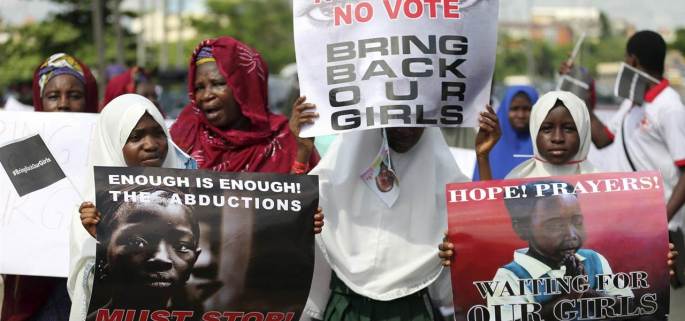
It has been nearly a month since the terrorist organization known as Boko Haram raided a secondary school located in Chibok—a Local Government Area located in Borno State, Nigeria. During the raid, the terrorist group abducted more than 200 girls and loaded them onto trucks. Many of the girls were tricked into believing the terrorists were soldiers. Some of the girls believed the men to be evil and managed to escape the village by jumping from the trucks to get away. The brave girls who escaped shared their horrific stories with loved ones and authorities who were startled by the event that had transpired.

The majority of the girls involved in the abduction campaign remain missing and social movements are taking place to spread awareness and rally support in efforts to find them. Malala Yousafzai, the young Pakistani girl who was targeted for assassination by the Taliban, spoke out against the abductions referring to the abductees as “her sisters” and condemned Boko Haram for their lack of understanding of Islam saying, “They should go and they should learn Islam, and I think that they should think of these girls as their own sisters. How can one imprison their own sisters and treat them in such a bad way?” Malala has helped to perpetuate the #BringBackOurGirls campaign to speak up for her sisters.

In an unsettling video message acquired by Nigerian authorities, the terrorist group’s leader, Abubaka Shekau, announced he intends to sell the 15-18 year old girls into the human trafficking market coercing the girls into marriages, forcing them into slavery, and having them sexually exploited.  The extremist leader declared, “I abducted a girl at a Western education school and you are disturbed. I said Western education should end. Western education should end. Girls, you should go and get married.”

Several countries have offered their support in the search for the missing girls. France, the United Kingdom, China, and the United States have deployed teams to aid in rescue efforts. Reports have suggested that the girls have been divided into groups and likely carried across Nigeria’s borders into the countries of Chad and Cameroon.

Boko Haram is an Islamic Extremist Group that was founded in 2002. Since then, the terrorist organization has fought against the Nigerian government which they view as advocates for the influence of Western Culture. The U.S. declared Boko Haram a terrorist organization in 2013 based on their suicide attack on a UN building in Abuja, the Nigerian capital, in 2011.


Following is a Terrorist Group profile on the organization.

Ideology

The group firmly adheres to Islam and believes that western influence does not belong in Nigeria.  The organization fights against Western societies and deems Western education as sinful. The group desires to make Nigeria an Islamist State and seeks to impose Sharia Law on the country. They also target “false Muslims.”

Leadership Style

The organization was first led by Mohammed Yusuf, a western educated Nigerian who considered Western Education to corrupt one’s belief in one God.  Analysts have described Yusuf as being both very wealthy and highly educated. Yusuf was killed trying to escape Nigerian police in 2009.  After Yusuf’s death, he was succeed by Abubakr Sheku.  Sheku has been described as a quiet theologian possessing an eidetic memory. He is fluent in the languages of Kanuri, Hausa, Arabic, and English. Reports indicate that Sheku lacks charisma and oratorical skills, but his ruthless actions makes him incredibly dangerous. The US placed a $7 million bounty on Sheku. The leader continually releases recorded video messages taking credit for its terrorist operations in Nigeria.

Demographics

Several reports have announced classified members of the Boko Haram as being individuals stemming from low social economic statuses. The group attracts individuals in need of wealth and is believed to be comprised of men from other countries such as Chad, Somalia, and Sudan.

Monetary Sources

It is unclear from where Boko Haram receives the monetary resources to fund its operations, but reports suggest the group relies on contributions from its members and possibly other Islamic militant groups.

Logistical & Tactical Resources

The group is suspected of having ties to Al Qaeda and to have received training in terrorist tactics such as carrying out explosion operations. The US reported in its 2011 National Strategy for Counterterrorism (page 16) that Boko Haram had ties to Al Qaeda in the Islamic Maghreb (AQIM). However, even Al Qaeda has expressed its opposition to the school girls’ abductions.

Targets

According to START’s Global Terrorism Database, the group has targeted numerous establishments over the years. Businesses, educational institutions, government facilities, military facilities, police stations, bus stations, private citizens, religious figures, and telecommunication establishments, among others. The group has targeted 52 educational facilities and 79 government buildings.

Weapon Types

Also, according to data collected from START’s Global Terrorism Database, the group relies heavily on explosives, firearms, and incendiary devices to carry out its operations. Armed assaults comprise the majority of the organization’s attacks. The database indicates that more than 320 armed assaults and 205 bombing/explosion attacks have been carried out by Boko Haram.


Much of the information collected in the profile above was obtained and summarized from circulating news sources, a report provided by the Anti-Defamation League published in 2012, an exposition provided by The Council on Foreign Relations, and the National Consortium for the Study of Terrorism and Responses to Terrorism’s Global Terrorism Database. Additional sources contributing information can be found via the links provided.


(Image Credit: NBC)

This Week in DC: Events

May 12, 2014

Morocco’s Approach to Countering Violent Extremism
Date: May 12, 12:00 pm
Location: Washington Institute for Near East Policy, 1828 L Street NW, Suite 1050, Washington DC 20036

Morocco’s traditionally strong counterterrorism efforts are now being challenged by the spread of terrorism to even the most stable parts of the region. At a time when al-Qaeda in the Islamic Maghreb is posing a formidable threat to the neighborhood, the crisis in Syria continues to serve as a magnet for aspiring jihadists, including Moroccans. Meanwhile, prisons in the region often facilitate radicalization rather than deter it, raising questions about how best to prevent and counter extremism and terrorism.

To discuss these and other aspects of Morocco’s threat environment, The Washington Institute is pleased to host a Policy Forum with Mohamed Salah Tamek who is the delegate-general of Morocco’s Penitentiary and Reintegration Administration. Previously, he served as governor of the Oued Eddahab province, chief of staff to the interior minister, ambassador to Norway, and head of the security portion of the U.S.-Morocco Strategic Dialogue.

Space is limited. RSVP here.

Meet the Syria Opposition
Date: May 12, 3:00 – 4:00 pm
Location: New America Foundation, 1899 L Street NW, Suite 400, Washington DC 20036

The Syrian conflict just entered its fourth year and according to some estimates the death toll is approaching 150,000 killed. A revolution that began peacefully has morphed into one of the most violent wars in recent memory, creating not just bloodshed but an unparalleled humanitarian crisis. “Victory” for any party remains elusive, the Geneva talks proved fruitless and the UN’s Syria envoy is preparing to leave the task for someone else. So what possible solutions exist for Syria? After years of fighting, a fractured society, unspeakable brutality and a lack of commitment from the international community, is Syria’s future anything but bleak?

Join us for a conversation with members of the Syrian opposition delegation currently visiting Washington, DC for meetings with senior U.S. officials. They will discuss the opposition’s vision for a new Syria and what solutions, if any, exist for the current impasse. In addition, they will address the growing global concern over the rising power of extremists and what efforts are currently underway to counter these trends. Finally, the delegation will provide the latest updates and developments from the field as well as a blueprint for the future.

RSVP here.

Ivory Towers and Palace Guards: The Disconnect between Outside Expertise and Policymaking
Date: May 12, 4:00 – 5:30 pm
Location: Woodrow Wilson International Center for Scholars, 1300 Pennsylvania Ave NW, Washington DC 20004

How does advice and information from outside experts and scholars reach top policymakers—or does it? Terms like “echo chamber” and “information bubble” are often employed to describe an environment where it is difficult for outside information to penetrate or influence the policy process. Author and consultant Suzanne Massie will share the inside story of her interactions with Ronald Reagan and how she provided him with an outside voice at a vital time. Reagan turned to Massie for her advice on understanding and dealing with Russians, and carried her suggestions — including the now famous Russian proverb, “trust but verify” — into his meetings with the new Russian leader, Mikhail Gorbachev. You can read about her latest book here.

RSVP here.

A Time to Attack: The Looming Iranian Nuclear Threat
Date: May 12, 5:00 – 7:00 pm
Location: Atlantic Council, 1030 15th Street NW, 12th Floor, Washington DC

As diplomats return to the negotiating table on May 13 in an attempt to negotiate a comprehensive nuclear deal with Iran, it is a propitious time to review the prospects for a negotiated settlement and our options for resolving the Iranian nuclear challenge if the talks do not succeed. President Obama has vowed that he is willing to do whatever it takes, including using military force, if necessary, to keep Tehran from the bomb. If not stopped, a nuclear-armed Iran would pose a grave threat to international peace and security, including the potential for a nuclear arms race in the region and around the world, and an increased risk of nuclear war, among other major threats.

In A Time to Attack: The Looming Iranian Nuclear Threat, Matthew Kroenig, internationally recognized as one of the world’s leading authorities on Iran’s nuclear program, explains why the United States must be prepared to conduct a limited strike on Iran’s key nuclear facilities if diplomacy fails to resolve the Iranian nuclear challenge.

Register here.

May 13, 2014

The Countdown Begins: All You Need to Know about an Iran Nuclear Deal
Date: May 13, 9:30 – 11:00 am
Location: U.S. Institute of Peace, 2301 Constitution Ave NW, Washington DC 20037

The clock is ticking on a nuclear deal with Iran. The deadline is July 20. An unprecedented coalition of eight Washington think tanks is hosting three discussions on the pivotal diplomacy to coincide with the last three rounds of talks. The first event—”The Rubik’s Cube of a Final Agreement”—on May 13 will explore the 10 disparate issues to be resolved and the many formulations for potential solutions.

The coalition includes the U.S. Institute of Peace, RAND, the Woodrow Wilson Center, the Arms Control Association, the Center for a New American Security, the Stimson Center, the Partnership for a Secure America, the Ploughshares Fund, and staff from the Brookings Institution and the Center for Non-Proliferation Studies.

RSVP here.

Pakistan’s Bilateral and Regional Trade Priorities
Date: May 13, 3:30 pm
Location: Atlantic Council, 1050 15th Street NW, 12th Floor, Washington DC

Economic issues are at the forefront of Pakistan’s priorities and regional connectivity is central in improving the business and economic environment there. Khurram Dastgir Khan, federal minister for commerce, has supported greater regional cooperation and led trade and commerce negotiations with India. Khan will share the government’s trade priorities, and progress made on improving regional economic connectivity and business and economic conditions in Pakistan.

The US-Pakistan Program is a comprehensive approach to US-Pakistan relations, focusing on the key areas of security, economic development, and public policy. The program will explore these issues and their relevance, in order to develop a long-term, continuous dialogue between the United States and Pakistan. This project is generously supported by the Carnegie Corporation of New York.

Register here.

Counterinsurgency and Counterterrorism in Pakistan
Date: May 13, 3:30 – 5:00 pm
Location: Carnegie Endowment for International Peace, 1779 Massachusetts Ave NW, Washington DC 20036

Pakistan is currently facing failed negotiations with the Taliban, increased jihadi terrorist attacks in its major cities, and an uncertain presidential transition in neighboring Afghanistan. While these developments have major implications for U.S. policy in the region, they pose near-existential threats to Pakistan, as well as fundamental challenges to the transition in Afghanistan. Samina Ahmed and Mark Schneider of the International Crisis Group will introduce a discussion on these challenges and what can be done to address them. Carnegie’s Frederic Grare will moderate.

Register here.

May 14, 2014

Disrupting Defense: Dynamic Security in an Age of New Technologies
Date: May 14, 8:00 am – 6:00 pm
Location: Atlantic Council, 1030 15th Street NW, 12th Floor, Washington DC

Please join the Atlantic Council’s Brent Scowcroft Center on International Security on May 14, when we will convene experts to discuss how the United States and its allies can manage the security-related challenges and possibilities of disruptive technologies.

This high-level event will focus on four topics:

  1. How emerging technologies already are disrupting geopolitics
  2. Defining a new US strategy to operate in this new environment
  3. How the US Department of Defense funds technological breakthroughs
  4. Leveraging the creativity of artists and screenwriters to envision future wars

The conference will conclude with live technology demonstrations and a reception in which participants will see first-hand examples of these disruptive technologies.

Register here.

New Terrorism Meets New Media
Date: May 14, 9:00 – 11:00 am
Location: Woodrow Wilson International Center for Scholars, 1300 Pennsylvania Ave NW, 6th Floor Boardroom, Washington DC

The Internet proves to be a useful instrument for modern terrorists who use it for a wide range of purposes – from recruitment, radicalization and propaganda to data-mining and online instruction and training. However, cyber-savvy terrorists found the need to update their online presence. There is a clear trend of terrorist “migration” to online social media, including YouTube, Twitter and Facebook. Moreover, this trend is expanding to the newest online platforms such as Instagram, Flickr, and others. Rephrasing von Clausewitz, the new media should be regarded as “an increasing continuation of war by other means.” This new arena of open and social systems presents new challenges and requires dramatic shifts in strategic thinking regarding national security and countering terrorism.

This event will not be audio or video recorded. RSVP here.

India, China, and Russia: Prospects for Cooperation
Date: May 14, 1:00 – 5:15 pm
Location: Carnegie Endowment for International Peace, 1779 Massachusetts Ave NW, Washington DC 20036

India, China, and Russia are all set to play a major role on the global stage throughout the rest of the twenty-first century. The relationships between the three nations are complex, however, with opportunities for cooperation in areas of convergent interests often being hamstrung by long-standing disputes and rivalries. This half-day conference will explore how New Delhi, Beijing, and Moscow are likely to cooperate—or clash—on major questions of international order, including energy security, defense cooperation, and regional dynamics. It will also consider the likely implications for the West.

Register here.

May 15, 2014

Ukraine Between East and West
Date: May 15, 11:00 am
Location: Woodrow Wilson International Center for Scholars, 1300 Pennsylvania Ave NW, 6th Floor Boardroom, Washington DC 20004

Ambassador Lamberto Zannier, Secretary General of the Organization for Security and Co-operation in Europe (OSCE) will discuss the unfolding crisis in Ukraine.

In recent weeks, Zannier has travelled to Kiev on numerous occasions, as well as to Moscow and other European capitals, to attempt to defuse the crisis. The Geneva Statement has called on the OSCE Special Monitoring Mission to Ukraine, which reports on security conditions throughout the country, to play a leading role in assisting Ukrainian authorities and local communities to implement de-escalation measures.

In a conversation with Wilson Center President Jane Harman, Zannier will present the OSCE’s priorities for restoring stability in Ukraine and discuss the impact of the crisis on European and Euro-Atlantic security.

RSVP here.

Meet Your 2014 Summer Program Faculty: Alexander Garza

In preparation for the GMU Summer Program in International Security, this week we will highlight the course directors. Remember, EARLY BIRD REGISTRATION ENDS MAY 15! Register by May 15 to save $300 on a three-day course and $200 on a two-day course. Use the links below for more details including registration.  Questions? Comment to this post or email spis@gmu.edu.


Alexander Garza, MD, MPH, FACEP

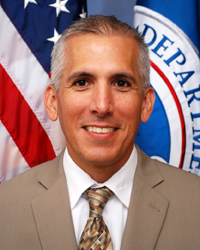
Dr. Alexander Garza, Associate Dean for Public Health Practice and Associate Professor of Epidemiology at St. Louis University in the College for Public Health and Social Justice, is the director for this summer’s Biosurveillance: National and International Levels course in the Summer Program in International Security. This course will run July 24-25.

Dr. Garza is a fellow in the American College of Emergency Physicians and a member of the American Public Health Association. He is a Senior Editor for the Oxford Handbook in Disaster Medicine and has authored numerous chapters in medical texts and published multiple articles and peer-reviewed publications.

Dr. Garza served as Assistant Secretary for Health Affairs and the Chief Medical Officer of the Department of Homeland Security from 2009-2013 and prior to that was a practicing physician and medical educator—serving as the Director of Military Programs at the ER One Institue at Washington Hospital Center, the Associate Medical Director of Emergency Medical Services for the State of New Mexico, and the Director of Emergency Medical Services The Kansas City, MO Health Department. He has served as a professor at Georgetown University, the University of New Mexico and the University of Missouri-Kansas City.

Dr. Garza served in the U.S. Army Reserve and was a battalion surgeon and public health team chief during Operation Flintlock in Dakar, Senegal. He also served as a public health team chief during Operation Iraqi Freedom and as a special investigator and medical expert for Major General Raymond Odierno. He holds a medical degree from the University of Missouri – Columbia School of Medicine, a Master of Public Health from the Saint Louis University School of Public Health and a Bachelor of Science in biology from the University of Missouri – Kansas City.

Click here to register for Biosurveillance: National and International Levels.

Pandora Report 5.9.14

The stories this week cover topics that I am especially interested in: avian flu in Antarctica, wild poliovirus, and the Russia biological weapons program. Have a great weekend!

Avian Influenza Present in Antarctic Penguins

A team of international researchers have discovered a new strain of avian influenza among Adelie penguin populations in Antarctica which has been identified as H11N2. Presence of this strain of influenza was found in eight penguins from a sample size of 301 swabbed penguins and 270 penguins who had had blood drawn. Though the six adult penguins and two chicks only represent 2.6% of the total group, approximately 16% of the samples contained antibodies for H11N2, indicating the virus has likely been present in the population for “some length of time.”

Guardian Liberty Voice—“There has already been a theory posited which might explain how the H11N2 virus was transmitted to the Antarctic region. Due to both the relatively small incidence of the virus in the sample population, and the region from which the sample size was drawn. Hurt has posited that the introduction of the virus into the Antarctic ecosystem was conducted by migratory birds from South America, such as the yellow-billed pintail duck. This conclusion has been supported by the fact that distant similarities between the H11N2 strain of the virus and South American AIVs, primarily from Brazil and Chile, do in fact exist.”

Wild Poliovirus Making a Comeback, WHO says

In a statement made on Monday, the WHO applauded worldwide efforts to eradicate polio while cautioning that the wild poliovirus is spreading and may negate the hard fought eradication efforts. They declared this spread of wild poliovirus a Public Health Emergency of International Concern and warned that if the spread remains unchecked “this situation could result in failure to eradicate globally one of the world’s most serious vaccine preventable diseases.” The WHO declared that Pakistan, Cameroon, and Syria pose the greatest risk of wild poliovirus exportation while Afghanistan, Guinea, Ethiopia, Iraq, Israel, Somalia and Nigeria are infected with wild poliovirus but are not exporting it.

National Geographic—“The effort is to break the chains of transmission. The WHO is recommending that countries currently infected with polio ensure that their people who are traveling outside the country get vaccinated. About 72 percent of the people who are infected with the polio virus have no symptoms, but they can still spread the disease. Polio is now in just a few countries. The concern is not to re-infect the countries that have gotten rid of polio.”

Lawmakers Mull Biological Weapons Threat from Russia

Providing an opportunity for me to majorly geek out, the U.S. House of Representatives held a committee hearing this week regarding the biological weapons threat from Russia and beyond. Witnesses included Dr. Christopher Davis, a biomedical weapons expert and former member of the U.K.’s Defense Intelligence Staff; Dr. Amy E. Smithson, a senior fellow at the James Martin Center for Nonproliferation Studies; Milton Leitenberg, a senior research scholar at the University of Maryland and author of The Soviet Biological Weapons Program; and Dr. David Franz, former Commander of USAMRIID.

Time—“Leitenberg said it’s almost impossible to evaluate the extent of the Russian biological weapons stockpile because three Russian laboratories remain closed to outside inspection. “We don’t know what they’re doing,” Leitenberg said. ‘They may or may not have an active offensive program—I presume they do. I do not believe that the U.S. government thinks they are producing and stockpiling agent any more, but we don’t know that.’”

A recording of the hearing is available here.


Image Credit: Andrew Mandemaker/ Wikimedia Commons

Meet Your 2014 Summer Program Faculty: Sonia ben Ouagrham-Gormley

In preparation for the GMU Summer Program in International Security, this week we will highlight the course directors. Remember, EARLY BIRD REGISTRATION ENDS MAY 15! Register by May 15 to save $300 on a three-day course and $200 on a two-day course. Use the links below for more details including registration.  Questions? Comment to this post or email spis@gmu.edu.


GormleyDr. Sonia ben Ouagrham-Gormley, Associate Professor of Government and International Affairs and member of the Biodefense faculty at George Mason University, is the director for this summer’s WMD Export Controls course in the Summer Program in International Security. This course will run July 10-11 and aims to increase participants’ awareness and understanding of WMD proliferation, export controls and trafficking of related materials.

Dr. Ouagrham-Gormley’s research and teaching focuses on WMD and proliferation issues. Her recent publications include “The social context shaping bioweapons (non) proliferation,” “An Unrealized Nexus? WMD-Related Trafficking, Terrorism and Organized Crime in the Former Soviet Union,” and “Banking on Nonproliferation: Improving the Implementation of Financial Sanctions.”  Her forthcoming book from Cornell University Press, Barriers to Bioweapons, extends on her article by the same name and provides the most detailed examination to date of how and why biological weapons programs succeed or fail.

Prior to joining George Mason, Dr. Ouagrham-Gormley served 10 years as a Senior Research Associate at the Monterey Institute of International Studies, Center for Nonproliferation Studies (CNS), and Editor-in-Chief of the International Export Control Observer, a monthly newsletter devoted to the analysis of WMD export control issues in the world. Dr. Ouagrham-Gormley was also an adjunct professor at the School of Advanced International Studies (SAIS), Johns Hopkins University, where she taught a course on WMD in the former Soviet Union (FSU). She received her Ph.D. in Economics of Development at the Advanced School of Social Sciences in Paris, France.

Click here to register for WMD Export Controls.

Antibiotic Anomaly: Disparity Between Lawmakers and Health Experts on Antibiotics

By Chris Healey

State lawmakers are working to protect doctors who prescribe antibiotics in excess of recommended guidelines. Those efforts come after the CDC declared antibiotic resistance from antibiotic overuse one of the greatest threats to public health.

The controversy stems from state lawmakers in northeastern states affected by Lyme disease, an amorphous bacterial illness transmitted through tick bites. The Infectious Disease Society of America endorses a four-week antibiotic regimen which they say cures most cases. However, some individuals claim their symptoms persist after the conclusion of antibiotic therapy, a condition called Post Lyme Disease Syndrome.

Individuals reporting Post Lyme Disease Syndrome often harangue doctors for further antibiotic treatment, believing previous treatment was ineffective or inadequate. However, studies on Post Lyme Disease Syndrome indicate persistent infection is unlikely. Instead, lingering perceptions of malaise are likely the result of lasting physiological damage from infection known as sequela. Doctors often resume antibiotic treatment at patient request despite research findings not supportive of continued treatment.

Antibiotics are not harmless therapeutics. They produce negative effects in patients and bacteria alike. Extended antibiotic treatments sometimes lead to severe physiological damage including mitochondrial impairment, aplastic anemia, and Stevens-Johnson syndrome. Unless absolutely necessary, antibiotics should be avoided.

Harm from lengthy antibiotic regimens extend beyond the patient. Prolonged antibiotic exposure allows more opportunity for bacterial selection of respective antibiotic resistance. Bacteria can pass resistance to posterity, complicating treatment in new patients.

A 2013 report released by the CDC served as a call to arms for the medical community concerning the growing threat of antibiotic resistance. The report lists four core actions to stymie resistance. One of the four is improved stewardship – commitment to antibiotic use within established guidelines. The CDC report, and other efforts to increase antibiotic resistance awareness, has placed pressure on health officials to conform to new standards of judicious antibiotic use.

Instead of allowing antibiotic conformity pressure to curb prescriptions, lawmakers have interpreted it as an occupational nuisance in need of remedy. An article in the Wall Street Journal discusses bills in the Vermont and New York state legislature to protect doctors from punishment for over prescribing antibiotics.

There is a clear disconnect between government health officials and state lawmakers. Misguided attempts to protect doctors from antibiotic reform pressures reflect a lack of antibiotic understanding. Health officials must improve efforts to communicate the importance and severity of antibiotic resistance.

Meet Your 2014 Summer Program Faculty: Gregory Koblentz

In preparation for the GMU Summer Program in International Security, this week we will highlight the course directors. Remember, EARLY BIRD REGISTRATION ENDS MAY 15! Register by May 15 to save $300 on a three-day course and $200 on a two-day course. Use the links below for more details including registration.  Questions? Comment to this post or email spis@gmu.edu.


Koblentz

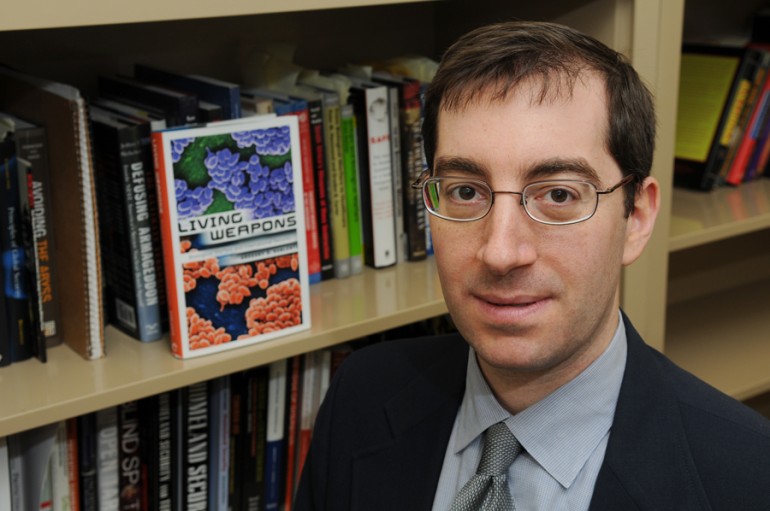
Dr. Greg Koblentz, Associate Professor of Government and International Affairs and Deputy Director of the Biodefense Program at George Mason University, is the course director for this summer’s short course: Pandemics, Bioterrorism, and International Security. The course will run July 21-23.

Dr. Koblentz’s research and teaching focus on international security, biosecurity, and weapons of mass destruction. His recent publications include “Biosecurity reconsidered: Calibrating biological threats and responses.” and “The threat of pandemic influenza: why today is not 1918.” His book, Living Weapons: Biological Warfare and International Security, remains one of the most influential publications in the field of biodefense since its publication in 2009. In fact, we often tell prospective students to read his book for a “one book version” of our Biodefense Master’s program. He is at work now on a book on nuclear proliferation.

Dr. Koblentz is also a Research Affiliate with the Security Studies Program at the Massachusetts Institute of Technology and a member of the Scientist Working Group on Chemical and Biological Weapons at the Center for Arms Control and Non-Proliferation in Washington, DC. He received his PhD in political science from the Massachusetts Institute of Technology, his Master in Public Policy from the John F. Kennedy School of Government at Harvard University, and his Bachelor of Arts from Brown University.

Click here to register for Pandemics, Bioterrorism, and International Security.