New from the Biodefense Faculty

While the GMU Biodefense students have been finishing their semester work, the GMU Biodefense faculty have been busy too! Below is an update of the latest published work from members of the faculty.


Dr. Trevor Thrall, Director of the Graduate Program in Biodefense, wrote a piece on ISIS’ strategies for U.S. News and World Report.

President Barack Obama declared the latest beheading by the Islamic State group – this one of American aid worker and former Army Ranger Peter Kassig – an act of “pure evil.” But as ugly as the act was, it was also an action taken with a strategic end in mind. The question we should be asking is: To what end? Why has the Islamic State group pursued a strategy of beheading Westerners, and specifically Americans?

The entire article is available here.


Dr. Gregory Koblentz, Deputy Director of the Biodefense Graduate Program, has been writing on nuclear issues including Op-Eds for the LA Times–“How to Keep Future Cold Wars Cold: Mind the Missiles“–and The National Interest–“The Silver Lining of an Extension of the P5+1 Nuclear Talks with Iran

Since the end of the Cold War, three challenges to strategic stability have emerged. The first is the increasing complexity of deterrence relations among the nuclear weapon states. Whereas the first nuclear age was shaped by the bipolar global ideological and military competition between the United States and Soviet Union, the second nuclear age has been marked by the emergence of a multipolar nuclear order composed of states linked by varying levels of cooperation and conflict. Rising nuclear powers such as China, India and Pakistan are not party to the web of treaties, regimes and relationships that girded strategic stability between the United States and Soviet Union (and now Russia).

Dr. Koblent’z full articles are linked above.

Fighting Terrorists & Unintended Consequences

By Erik Goepner

A retired Army general recently suggested that if U.S. military advisers can’t successfully train up nine Iraqi brigades within the next year, then either more U.S. forces must be deployed to Iraq or Americans will have to accept the Islamic State’s caliphate. The implicit assumption –that American effort is critical to stopping the Islamic State (or al Qaeda, or whatever similarly inspired group may follow) – is common. Yet, attempts to quantify the return on America’s investment of “effort” are rare. Typically, the debate seems influenced by either those who view any loss of life as unacceptable or those who say no 9/11 type of event has occurred since, so whatever the cost, keep it up. On the one side: We should never have invaded Iraq, on the other: If we had not left when we did, things there would be better.

A Rudimentary Assessment

One way to look at America’s effort is to tally the amount of money spent fighting terrorism and the number of military members who have been deployed to the fight. That effort could be compared to the number of terrorist events which have occurred. Recognizing efforts typically take time to have an impact, the money and manpower effort for this basic assessment lagged a year, so the impact of the 2001 effort was compared to the number of terrorist attacks in 2002. In 2001, the U.S. deployed approximately 17,500 military members to fight the global war on terror and the Department of Defense spent approximately $16.6 billion[1] to support those efforts. In the intervening 12 years, the number of service members deployed to fight the war on terror peaked above 200,000[2] before settling at nearly 67,000 in 2012. During the same time, spending peaked at $184.8 billion in 2008/9 before decreasing to $125.6 billion in 2012.[3]

Across those 11 years, America’s efforts to fight terror increased dramatically. Funding rose more than 600% and military personnel support rose by nearly 300%.[4] During that time, however, the number of terrorist attacks jumped 345%. Call it unintended consequences. Call it complex and nuanced. Either way, significant research is needed, as America’s efforts, albeit noble, do not appear to be delivering the desired results. Pouring forth money is one thing, but putting America’s sons and daughters in harm’s way is quite another. We need to ensure the efforts achieve the goal.


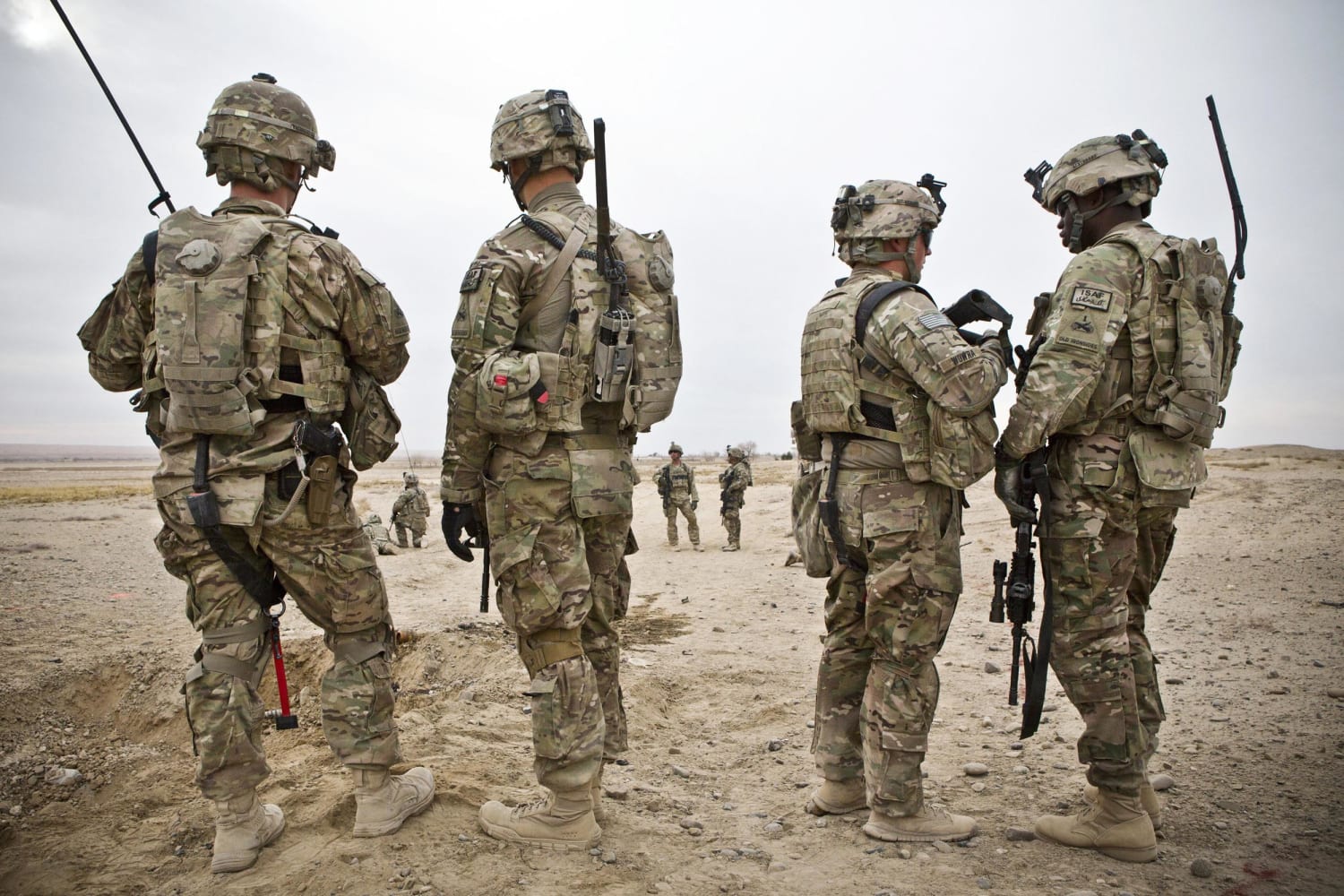
Image Credit: NBC News


[1] See “The Cost of Iraq, Afghanistan, and Other Global War on Terror Operations Since 9/11” by Amy Belasco (Congressional Research Service), March 29, 2011

[2] See chart on p. 25 in “Troop Levels in the Afghan and Iraq Wars, FY2001-FY2012: Cost and Other Potential Issues” by Amy Belasco (Congressional Research Service), July 2, 2009

[3] See p. 4, “U.S. Costs of Wars Through 2014” by Neta Crawford, 25 June 2014

[4] See Crawford and Belasco’s reports listed above.

Week In DC: Events

December 8, 2014 

A Strategic Approach to Malaria
Date: December 8, 8:45am
Location: Center for Strategic and International Studies, 1616 Rhode Island Ave NW, 2nd Floor Conference Room, Washington DC

On December 8, the CSIS Global Health Policy Center will host a major day-long conference on the future of global malaria efforts.  It will open with a high-level deliberation over the strategic long-term goal of elimination, highlighting the political, financial, and institutional requisites.  It will feature expert roundtables on drug and insecticide resistance, future technologies (vaccines, therapies, diagnostics), and financing. There will be a special focus on civilian-military cooperation in the Mekong Subregion.  On that day, CSIS will release five commissioned policy analyses.

RSVP here to attend in person or watch live online here.

Russia’s Global Self: Five Different Faces
Date: December 8, 10:00am
Location: Johns Hopkins School of Advanced International Studies, 1717 Massachusetts Ave NW, Room 500, Washington DC

Nina Belyaeva, professor and chair of the Public Policy Department at the Higher School of Economics in Moscow, will discuss that although the attention of the international community is preoccupied with the statements and behavior of the official power elites and their representatives, for the West to deal responsibly with Russia it is essential to monitor and understand five different social clusters in Russia, each with a distinct “face”: official power elites, business people, “patriots,” liberals, and the general public.

Register here.

Reflections on Ukraine’s Crisis
Date: December 8, 1:45pm
Location: Atlantic Council, 1030 15th Street NW, 12th Floor, West Tower, Washington DC

Please join the Atlantic Council’s Dinu Patriciu Eurasia Center for a public event featuring United States Ambassador to Ukraine Geoff Pyatt on Monday, December 8, 2014 from 1:45 to 2:45 p.m. at the Atlantic Council.

Ambassador Pyatt, the eighth US ambassador to Ukraine, arrived in Kyiv on August 3, 2013. Three months after his arrival, the Ukrainian capital witnessed eruption of massive civil protests against Yanukovych government’s decision not to enact the Association Agreement with the European Union.

A year and a half later, amidst Ukraine’s economic crisis, Russia’s violation of territorial integrity of Ukraine in the East and militarization of Crimea, the ambassador remains firm in supporting Ukrainian people’s pro-European and pro-democratic choice.

Ambassador Pyatt will share his insights into the ongoing crisis in Ukraine and will delineate future prospects for US-Ukraine relations going forward. This event is part of our Ukraine in Europe Initiative, in which we particularly focus on galvanizing the transatlantic community in order to help ensure Ukraine survives as an independent nation.

Register here to attend in person or watch live online here.

Book Release: Eurojihad by Angel Rabasa and Cheryl Benard
Date: December 8, 2:00pm
Location: Center for Strategic and International Studies, 1616 Rhode Island Ave NW, Concourse Level, Room C-115, Washington DC

Throughout history, factors of radicalization have involved social and economic conditions and issues of identity. Patterns of Islamist radicalization in Europe reflect the historical experience of European Muslim communities, particularly their links to their home countries, the prevalence of militant groups there, and the extent to which factors of radicalization in Muslim countries transfer to European Muslim diasporas.

Eurojihad (Cambridge University Press, 2014) examines the sources of radicalization in Muslim communities in Europe and the responses of European governments and societies. In an effort to understand the scope and dynamics of Islamist extremism and terrorism in Europe, this book takes into account recent developments, in particular the emergence of Syria as a major destination of European jihadists. Angel Rabasa and Cheryl Benard describe the history, methods, and evolution of jihadist networks in Europe with particular nuance, providing a useful primer for the layperson and a sophisticated analysis for the expert.

Register here.

Human Rights in North Korea and U.S. Policy
Date: December 8, 6:00pm
Location: Johns Hopkins School of Advanced International Studies, 1619 Massachusetts Ave NW, Rome Auditorium, Washington DC

Robert King, special envoy for North Korean Human Rights Issues at the US State Department; Greg Scarlatoiu, executive director at the Committee for Human Rights in North Korea (HRNK); and Daniel Aum, Donald Wilson Fellow at the RFK Center for Justice and Human Rights and author of the report, “Crimes Against Humanity in North Korea: The Case for US Leadership and Action,” will discuss the recent UN action on human rights abuses in North Korea and shed light on the United States’ policy options, potential challenges and appropriate response to recent developments.

Register here.

December 9, 2014

The Future of the Middle East: Regional Scenarios Beyond the Obama Years
Date: December 9, 12:30pm
Location: Hudson Institute, 1015 15th Street NW, 6th Floor, Washington DC

The Middle East is undergoing profound transformations. As borders shift, alliances form and dissolve, and Iran pursues its nuclear program, policymakers must look beyond the final two years of the Obama administration.

What happens if the U.S.-led coalition against the Islamic State fails, and IS continues to spread its tentacles across the Levant? How long will the Syrian civil war last? What if the Jordanian regime, a longtime U.S. and Israeli ally, is toppled? When will Israel again find itself at war against Hezbollah, Hamas, or directly with Iran?

On December 9th, Hudson Institute will host a panel featuring Shmuel Bar, Michael Doran, Hillel Fradkin, and Lee Smith to explore U.S. policy in the Middle East with respect to regional strategy for the next two, five, ten, and twenty-five years.

Register here.

Corruption: Security’s Invisible Enemy
Date: December 9, 4:00pm
Location: Carnegie Endowment for International Peace, 1779 Massachusetts Ave NW, Washington DC

Corruption undermines such longstanding U.S. foreign policy priorities as the promotion of economic growth and democratic accountability overseas. There is also a powerful nexus between severe, systemic corruption and international security challenges, including violent extremism, mass atrocities, and state failure.

Corruption is often misconstrued as an intractable problem, but there are multiple opportunities for curbing it. This event will provide a platform to discuss how the U.S. government is working together with civil society and the private sector—both within and outside affected countries—to creatively promote accountability and integrity.

Please join us on International Anti-Corruption Day for an address on these issues by U.S. Under Secretary of State Sarah Sewell. Carnegie’s Sarah Chayes will moderate the program, which will be followed by a light reception.

Register here.

At the Center of the Storm: Turkey between Europe & the Middle East
Date: December 9, 6:00pm
Location: German Marshall Fund, 1744 R Street NW, Washington DC

After eleven years under the leadership of Recep Tayyip Erdogan, Turkey finds itself at a major crossroads. With European Union membership negotiations ongoing and a bid for regional influence rejected by large swaths of the Middle East, Turkey is increasingly isolated. Its latest dispute with the United States over a proper response to the war in Syria has strained Turkey’s relations with NATO. In addition to regional concerns, the domestic situation in Turkey has also significantly deteriorated in the last year. What brought Turkish influence in Europe and the Middle East to its current low point? What is at stake for Turkey in the war in Syria and other parts of the Middle East? Where do we stand on potential Turkish membership in the European Union and what is the future of Turkish domestic politics? To help the Washington chapter of the Young Transatlantic Network decipher the answers to these and other questions about Turkey, GMF welcomes Ambassador Marc Grossman for a candid, off-the-record discussion.

December 10, 2014

How to Thwart the Government Insider Threat
Date: December 10, 8:00am
Location: Government Executive, 1300 Pennsylvania Ave NW, Rotunda, Washington DC

Today’s organizations and federal agencies have to protect their sensitive data from their own – it’s a simple fact of IT life these days. Thorough cybersecurity plans naturally protect an agency’s secret or sensitive information from outsiders, but it’s become all too obvious in recent years that federal cybersecurity efforts must also safeguard that vital data from trusted insiders.

Through malicious action or negligence, insiders with access to critical assets may wreak as much havoc as any outside adversary with as little as a few keystrokes. Modern cybersecurity plans need to include an insider threat protection strategy, but what does that actually look like for government? Our panelists will discuss how to assess and guard against insider threats and how to formulate a protection strategy that will keep your information where it is supposed to be.

Register here.

Ebola and Other Emerging Infectious Disease Threats: Prevention and Preparedness
Date: December 10, 8:30am
Location: Embassy of Italy, 3000 Whitehaven St NW, Washington DC

Infectious diseases such as Ebola travel rapidly across national borders. One out of four deaths annually worldwide are due to infectious illnesses and more than 40 new ones have emerged since 1972 alone. On December 10, 2014, the Embassy of Italy and New America will convene a conference on “Ebola and Other Emerging Infectious Disease Threats: Prevention and Preparedness.”

The conference will explore what is known about these infectious diseases, what must be done to prevent and contain their spread, and how science and technological innovations can play an innovative role in that regard. The goal of this event is to provide an insightful exchange of perspectives and knowledge about the status of current infectious disease outbreaks (Ebola, Marburg, Chikungunya), focusing on global public health preparedness to address these illnesses for humanitarian, economic, and national security purposes.

RSVP here.

Hearing: Countering ISIS: Are We Making Progress?
Date: December 10, 10:00am
Location: U.S. House Committee on Foreign Affairs, 2172 Rayburn House Office Building, Washington DC

Chairman Royce on the hearing: “It has been six months since the fall of Mosul, and ISIS continues to control roughly the same amount of territory in Iraq and Syria.  The countries in this region are being dangerously destabilized as millions of people have been displaced and thousands of others slaughtered by this terrorist army.  Meanwhile, ISIS has recruited thousands of foreign fighters and encourages sympathizers to carry-out attacks across the globe, including against civilians and military personnel here in the U.S. 

“This hearing will provide Committee members an opportunity to question the Obama Administration on the progress of the anti-ISIS effort, including the coalition air campaign, support of U.S. partners on the ground, policies toward hostile regimes, as well as the Administration’s plans to deal with a worsening humanitarian disaster across the region.”

Joint Subcommittee Hearing: After the Withdrawal: The Way Forward in Afghanistan and Pakistan (Part III)
Date: December 10, 2:00pm
Location: U.S. House Committee on Foreign Affairs, 2167 Rayburn House Office Building, Washington DC

Chairman Ros-Lehtinen on the hearing: “The next few months are pivotal for the future of Afghanistan’s stability. The United States cannot afford to make the same mistakes we did in Iraq by not leaving behind a sufficient U.S. presence to maintain the gains we’ve achieved over the past few years. As we’re seeing with the rise of ISIL in Iraq, our hasty withdrawal created a power vacuum that allowed the terror group to grow. The stakes are even higher in Afghanistan with the Taliban eager to reclaim lost territory and establish another safe haven for terrorists to thrive. Many challenges still remain, especially since Pakistan continues to host terrorist groups and remains complicit in their ability to operate. The Obama administration must have an honest conversation about its relationship with Pakistan and make the hard choices necessary to ensure Pakistan’s activities aren’t working against US interests.”

Chairman Chabot on the hearing: “Afghanistan has seen many changes this year—both promising and troubling.  While we now have a better sense of what the post-2014 U.S. presence will look like, many challenges remain, including political and economic instability, and an extensive Taliban threat. This is further exacerbated by its neighbor, Pakistan, which continues to play host to Islamist extremism and militancy groups who are given support inside Pakistan’s borders.  Pakistan’s role in combating these groups and stabilizing Afghanistan, however, is incredibly important, but due to its limited capacity, rampant corruption, and divergent interests, there is serious cause for concern. This hearing is a critical opportunity to evaluate ongoing challenges confronting the U.S.-Pakistan relationship, and how the Administration will address these concerns as we look toward a new post-2014 environment.”

Joint Subcommittee Hearing: Russian Arms Control Cheating and the Administration’s Responses
Date: December 10, 2:00pm
Location: U.S. House Committee on Foreign Affairs, 2172 Rayburn House Office Building, Washington DC

This hearing will be held jointly with the Subcommittee on Strategic Forces of the Armed Services Committee.

Chairman Poe on the hearing: “Russia’s clear violation of the INF Treaty and blatant disregard for international norms is the new status quo. Putin cannot be allowed to continue to violate landmark arms control treaties without severe consequences. I hope that we can move past the finger-wagging stage and finally show the Russians that their actions will have serious repercussions. I look forward to hearing what option this Administration has drawn up to punish Putin.”

Russia’s Break with the West: The Outlook for 2015
Date: December 10, 2:00pm
Location: Center on Global Interests, 1619 Massachusetts Ave NW, Rome Auditorium, Washington DC

In 2014, Putin led Russia in a direction that few would have predicted, most recently culminating in a call for the creation of a new international system and an end to the norms governing the world since the end of the Cold War. Looking ahead to 2015, our panel will explore the Russian leadership’s vision for a new global system, the future of the trans-Atlantic alliance, the relationship between Putin and Russian elites, and the role anti-Americanism plays in the Kremlin’s domestic strategy. Following the discussion the panel will take questions from the audience.

The U.S., Israel, and the Regional Dimensions of an Iran Nuclear Deal
Date: December 10, 3:00pm
Location: New America Foundation, 1899 L Street NW, Suite 400, Washington DC

Reaching an agreement on Iran’s nuclear program that ensures Iran will not obtain a nuclear weapon has been a top priority on President Obama’s foreign policy agenda. Despite deep and regular consultations with the Israeli government on this ongoing diplomatic effort, Israeli Prime Minister Netanyahu has consistently objected to any agreement that leaves any Iranian nuclear program in place.

Join New America as we bring together Shlomo Brom, Suzanne DiMaggio, Matthew Duss, and Ilan Goldenberg for a discussion on regional security dimensions of a nuclear deal, the extent of U.S.-Israel cooperation on the Iran issue, Israel’s concerns with the current negotiations, and whether and how those concerns can be fully addressed in any comprehensive deal between Iran and the U.S. and its partners.

RSVP here.

Forging a Transatlantic Strategy for Europe’s East
Date: December 10, 4:00pm
Location: Atlantic Council, 1030 15th Street NW, 12th Floor, West Tower, Washington DC

The vision of a Europe whole, free, and at peace achieved through a strategy of forging new partnerships with Russia, coupled with NATO and European Union (EU) enlargement, has guided the West through the post-Cold War era.  This strategy is no longer viable, underscored by Russian aggression in Ukraine.  As the leader of a NATO ally and EU member state on Europe’s eastern flank, Prime Minister Rõivas will share his assessment of the current situation in Europe’s East and the need for a renewed, sustainable, transatlantic strategy for the region.

Taavi Rõivas has served as the prime minister of the Republic of Estonia since March 2014. Prior to this, he was the minister of social affairs and served as a member of the Riigikogu, Estonia’s parliament.

Register here.

December 11, 2014

Can We Ultimately Defeat ISIL?
Date: December 11, 10:00am
Location: Woodrow Wilson International Center for Scholars, 1300 Pennsylvania Ave NW, 6th Floor, Washington DC

General John Allen, recently appointed Special Presidential Envoy for the Global Coalition to Counter ISIL, was selected by President Obama to coordinate the international effort against the Islamic State militant group. Allen, who had been serving as a security adviser to Secretary of State John Kerry, and was the former top U.S. commander in Afghanistan, is working with the nearly 60 nations around the world who have agreed to join the fight and respond to the ISIL threat.

Join us for General Allen’s first public discussion of the threat posed by the Islamic State.

RSVP here. 

The Threat of Global Health Emergencies to Food Security
Date: December 11, 3:00pm
Location: Aspen Institute, One Dupont Circle NW, Suite 700, Washington DC

Speakers:

  • Dr. Lynn Black, chair, board of directors, Last Mile Health and attending physician, Mass General Hospital
  • Christopher Kirchhoff, special assistant to the chairman of the Joint Chiefs of Staff
  • Rick Leach, CEO, World Food Program USA

Moderated by Dan Glickman, executive director, Aspen Congressional Program and former US Secretary of Agriculture

Register here.

Pandora Report 12.7.14

I hope all of you had a wonderful Thanksgiving! There were a lot of stories to consider for this extra long (extra late) week in review. We cover the AIDS pandemic, Avian Influenza, Polio in Pakistan, and, of course, Ebola. For those of you in school, I hope your papers and exams aren’t too overwhelming! For everyone else, have a wonderful week, hopefully paper and exam-free week!

AIDS Campaigners Say Pandemic Has Finally Reached Tipping Point

A report released by the ONE campaign to mark World AIDS Day on December 1 said that “the world has finally reached “the beginning of the end” of the AIDS pandemic that has infected and killed millions in the past 30 years.” What is the tipping point? The number of newly infected HIV patients is lower than the number of HIV positive patients who have access to retroviral medications that keep AIDS at bay. However, this doesn’t mean the fight is over.

Reuters—“‘We’ve passed the tipping point in the AIDS fight at the global level, but not all countries are there yet, and the gains made can easily stall or unravel,” said Erin Hohlfelder, ONE’s director of global health policy.”

FAO, OIE Warn of Avian Influenza’s Rapid Spread

The Food and Agriculture Organization of the United Nations and the World Organization for Animal Health have warned that the new avian flu strain detected in Europe is similar to those found in Asia and pose a significant threat to the poultry sector. Evidence of H5N8 has been found in Germany, the Netherlands, and the United Kingdom, as well as China, Japan, and South Korea. So far, it doesn’t appear this strain is infecting people, however, this week there were reported human cases and deaths from H5N1.

The Poultry Site—“The new virus strain provides a stark reminder to the world that avian influenza viruses continue to evolve and emerge with potential threats to public health, food security and nutrition, to the livelihoods of vulnerable poultry farmers, as well as to trade and national economies. Therefore extreme vigilance is strongly recommended while progressive control efforts must be sustained and financed.”

Pakistan Polio Outbreak ‘Will Probably be Fixed Next Year’ says WHO Official

So far this year there have been 262 cases of polio detected in Pakistan, which is the highest number of cases in 14 years. Pakistan is one of only three countries in the world, including Afghanistan and Nigeria, where the virus remains endemic. Despite these numbers, a WHO official in Pakistan says the disease will “most probably be fixed in the first half of 2015.” Military campaigns around the country have not only made vaccination more difficult but have faced tribal militants who banned all vaccinations.

The Guardian—“Persistent public awareness campaigns have not fully quashed popular fears that the drops given to children – a solution of highly weakened polio virus – are part of a western conspiracy to make Muslims infertile.

The Pakistani Taliban have attacked and killed health workers who conduct door-to-door campaigns, forcing the government to mount massive security operations during major vaccination drives.”

This Week in Ebola

We’ve got a lot of news from the last two weeks, so today, let’s start stateside.

The CDC says you can stop worrying because it is very unlikely that Ebola will become airborne, so you can stop cancelling your African safaris. Ebola anxiety has left the U.S. buying up all the PPEs leaving little for workers in West Africa, while the Director of the Harvard School of Public Health Emergency Preparedness has said that U.S. quarantine policy could discourage volunteers from going to help the outbreak. However, recently, no one has been caught in quarantines entering New York and New Jersey airports. 35 American hospitals have been designated as Ebola centers and already the U.S. government is looking past Ebola for the next health disaster. Meanwhile, the first human trial of an experimental vaccine for the virus has produced promising results.

Overseas, the German airline Lufthansa adapted an A340-300 to transport Ebola patients. In Liberia, the President has banned election rallies and mass gatherings under the reasoning that they risk worsening the spread of the virus and Ebola moves out of the cities, it is ‘pingponging’ into rural areas. In Sierra Leone there are approximately 80-100 new cases of Ebola daily, they are running out of beds, and in protest of non-payment, burial workers are dumping bodies in public in the city of Kenema. One piece of good news coming out of this outbreak that has affected more than 16,000 people is that female genital mutilation is on the decline. Also, a new 15-minute test for Ebola is being tested in Guinea, which, if it works, will help medical staff identify and isolate Ebola patients sooner.

The UN warns that the longer the disease is allowed to spread unchecked in West Africa, the more likely it is that Ebola will appear in new places in the world but EcoHealth journal notes that closer study of zoonotic diseases could help prevent Ebola and other diseases from affecting humans. Don’t worry though, according to North Korea Ebola isn’t a zoonotic disease, it is a bioweapon created by the U.S.

Stories You May Have Missed


Image Credit: Free Internet Pictures

Terrorist Attacks in a Democracy

By Erik Goepner

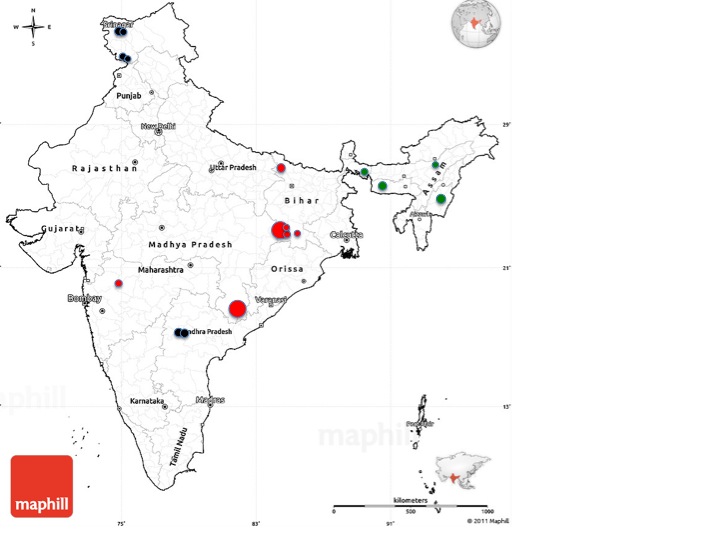
Terrorists executed nearly 690 attacks in India last year. For the second year in a row India ranked fourth in total number of terrorist attacks, behind only Iraq, Afghanistan and Pakistan. In fact, in each of the past six years, over 500 attacks per year have taken place in India.

Beyond the high volume of attacks, lies another story—the interesting hodgepodge of terrorist groups within India’s borders. To the north—where the world’s highest altitude conflict continues over Kashmir—Islamic extremist groups such as Lashkar-e-Taiba operate. As noted in the graphic below, these  groups have launched successful attacks in more populous and central areas of India, as well. To the west, Socialist and/or Communist groups like the United A’chik Liberation Army conduct attacks with the goal of seceding from India. Located more in the interior of the country, Communist organizations commit their atrocities in an effort to overthrow the Indian government.

Last year, seventeen of these terrorist events killed six or more people. As the graphic below shows, the Communist terrorists caused the most high-fatality events and also committed the two most destructive attacks, killing 17 and 15 people respectively.

India Picindia index


Perhaps even more disturbing than the terrorism numbers, the Center for Systemic Peace ranks India as the nation with the highest “interstate, societal, and communal warfare magnitude score” in the world. The score reflects the “total summed magnitude” of major episodes of political violence within a country’s borders and consists of civil violence and war, ethnic violence, and international violence and war. Based on the research conducted by the Center, India has had the highest magnitude score since 2002 (see Major Episodes of Political Violence, 1946-2013 dataset and accompanying Codebook at http://www.systemicpeace.org/inscrdata. html).


Map Credit; Image Credit

Week in DC: Events

December 1, 2014

Adapting Intelligence for New National Security Challenges
Date: December 1, 5:00pm
Location: Atlantic Council, 1030 15th Street NW, 12th Floor, West Tower, Washington DC

Intelligence analysis is pivotal to informing and sustaining all of our national security efforts. In the last few decades, the US intelligence community has helped thwart terrorists and chart out the impacts of key global trends but it has also had its shortfalls, such as projecting the rapid spread of the Islamic State of Iraq and al-Sham (ISIS). As technology evolves and proliferates, as nonstate actors build more sophisticated, complex networks, and entire regions are reshaped, the work of this community must adapt.

Please join us for the first public on-the-record discussion by Dr. Gregory F. Treverton in his new role as the chairman of the US National Intelligence Council to speak about the above issues and more.

Register here to attend in person or watch online here.

December 2, 2014

Breakthrough or Extension: Implications for US and European Relations with Iran
Date: December 2, 10:00am
Location: Atlantic Council, 1030 15th Street NW, 12th Floor, West Tower, Washington DC

Expectations are rising that Iran and the five permanent members of the United Nations Security Council plus Germany will reach an agreement on key elements of a comprehensive nuclear agreement trading long-term curbs on Iran’s nuclear program for phased relief of economic sanctions. A breakthrough could significantly improve the chances for US and European cooperation with Iran in dealing with other regional challenges, particularly the rise of the group calling itself the Islamic State of Iraq and al-Sham, and could also motivate Western businesses to sign new deals with Iran. Speakers will discuss the implications of a deal or a possible extension of negotiations for both political and economic relations with Iran. They will also comment on the possible ramifications of the midterm election results for an agreement with Iran and what impact it may have on the easing of sanctions.

The Iran Task Force, chaired by Ambassador Stuart E. Eizenstat, seeks to perform a comprehensive analysis of Iran’s internal political landscape, its role in the region and globally, and any basis for an improved relationship with the West. It is supported generously by the Ploughshares Fund.

Joint Subcommittee Hearing: ISIS and the Threat from Foreign Fighters
Date: December 2, 10:00am
Location: U.S. House Committee on Foreign Affairs, 2172 Rayburn House Office Building, Washington DC

The Subcommittee on Terrorism, Nonproliferation, and Trade, and the Subcommittee on the Middle East and North Africa will testimony from scheduled witnesses Robert Bradtke, Senior Advisor for Partner Engagement on Syria Foreign Fighters at the U.S. Department of State and Mr. Tom Warrick, Deputy Assistant Secretary for Counterterrorism Policy at the U.S. Department of Homeland Security.

Chairman Poe on the hearing: “More foreign fighters have gone to fight with radical Islamists like ISIS in Iraq and Syria in the last 2 years than we saw in the first 10 years of fighting in Iraq or Afghanistan. Dozens are Americans and many more hold passports that do not require a visa to get into the United States. This hearing will examine the danger of these foreign fighters and assess the Administration’s efforts to date at countering this threat.”

Chairman Ros-Lehtinen on the hearing: “Foreign fighters are joining ISIL by the tens of thousands, some of whom are Westerners, including Americans. These individuals represent an unprecedented threat to U.S. national security and it should not be taken lightly. Foreign fighters are further destabilizing an already fragile Middle East and are using Syria or Iraq as a training ground in order to commit terrorist attacks in their homeland or against U.S. interests. The administration has shown it still lacks a coherent and comprehensive strategy to combat ISIL and this hearing will examine what more needs to be done to address the foreign fighter threat inside and outside our borders and assess what is being done to stop their recruitment into Syria and Iraq.”

U.S. Fleet Cyber Command: Answering the Evolving Threat
Date: December 2, 10:00am
Location: Center for Strategic and International Studies, 1616 Rhode Island Ave NW, Washington DC

While much is in the news about the national mission and U.S. Cyber Command, the military services’ roles in supporting CYBERCOM as well as their own forces is often less understood. Please join us for a discussion with VADM Tighe about the evolution of the Navy’s Fleet Cyber Command to support strategic and operational missions to overcome the challenges of increasingly advanced cyber threats. The discussion will cover a range of technical and organizational approaches being advanced, and how they aid in 10th Fleet’s broad mission as the Navy’s operational authority for cyber, networks, cryptologic/signals intelligence, information operations, electronic warfare, and space capabilities.

Register here or watch the event live online here.

@War: The Rise of the Military-Internet Complex
Date: December 2, 12:15pm
Location: New America Foundation, 1899 L Street NW, Suite 400, Washington DC

The future of American warfare is already here.

From the NSA mining the digital data of tech giants such as Facebook and Google to hacker teams playing an integral role in counterinsurgency operations to foreign intelligence agencies launching daily web-based attacks against American corporations and government agencies, cyberspace has, irrefutably, become the “fifth domain” of global warfare.

But just how has the U.S. prepared—and not prepared—for this new global battlefield? And what does this new cybersecurity regime mean for all of us, whose daily lives—from the electric grid to banking to communications—are deeply bound to the Internet?

Join New America in conversation with Shane Harris, author of the new book@War: The Rise of the Military-Internet Complex, and Peter Bergen for a discussion about America’s military-Internet complex and its implications for our security and our privacy.

Follow the discussion online using #MilIntComplex and following @NewAmerica.

RSVP here to attend in person or watch online.

Hacking and Cyber Warfare: North Korea’s Expanding Threat
Date: December 2, 2:00pm
Location: Korea Economic Institute, 1800 K Street NW, Washington DC

North Korea has come a long way in developing credible cyber warfare capabilities which threaten some of the world’s most advanced nations–including the Republic of Korea, Japan, and the United States. These new developments have made the country capable of building military organizations tasked with cyber warfare missions and training cyber warriors.

What are the potential outcomes of a fully capable North Korea in the cyber sphere? What does North Korea hope to gain from their newly developed capabilities? How will cyber warfare change the face of security on the Korean peninsula?

Please join KEI as it hosts Dr. Alexandre Mansourov, Adjunct Professor of Korean Studies at the U.S.-Korea Institute at Johns Hopkins University SAIS, who will present his outline of policy recommendations for the US-ROK alliance on how to deal with the growing threat of North Korea’s cyber warfare capabilities.

Seating is limited, RSVPs are required. To RSVP, please click here.

Countering Violent Extremism Through Social Media
Date: December 2, 3:00pm
Location: American University School of International Service, Beacon Conference Room, SIS 300, 4400 Massachusetts Ave NW, Washington DC

Ambassador Alberto Fernandez from the State Department’s Center for Strategic Counterterrorism Communications will discuss using social media to combat violent extremism, a topic of particular relevance with the rise of ISIS and its use of social media.

The Political and Media Situation in Ukraine: A View from Inside
Date: December 2, 4:00pm
Location: The George Washington University, Elliott School for International Affairs, 1957 E Street NW, Room 602, Washington DC

Since the beginning of 2014, Ukraine has experienced a popular revolution to overthrow a corrupt leader, held presidential and parliamentary elections, and suffered an invasion by Russia. Yevgeny Kiselev, a leading journalist in Ukraine, will provide an overview of the situation there from his unique perspective. He will also share his observations on the media environment in Ukraine today and explain the challenges that journalists face as the country attempts to break with its Soviet past, while fending off a hostile neighbor.

RSVP here.

December 3, 2014

Russia’s New Course
Date: December 3, 9:30am
Location: Woodrow Wilson International Center for Scholars, 1300 Pennsylvania Ave NW, 5th Floor Conference Room, Washington DC

The game-changing events in Ukraine have exposed the fundamental disagreement between the West and Russia on the essential principles underpinning the modern international system. One year after the start of the crisis, is there any hope of a productive partnership with Russia? Nikolai Zlobin and Sergey Aleksashenko will discuss the difficulties facing Russia and its on-again, off-again relationship with the West.

Register here.

The Outcome of the Iran Talks and the Next Steps
Date: December 3, 9:30am
Location: Carnegie Endowment for International Peace, 1779 Massachusetts Ave NW, Washington DC

Negotiators from the P5+1 and Iran are racing toward a comprehensive agreement on Iran’s nuclear program by the November 24 deadline. Many issues, such as establishing a formula that verifiably limits Iran’s uranium-enrichment capacity, are still to be solved, but both sides of the negotiating table have stressed the need to reach an agreement.

The Arms Control Association and the Carnegie Endowment for International Peace invite you to attend a briefing with George Perkovich, Karim Sadjadpour, Daryl Kimball, and Elizabeth Rosenberg on the outcome of the negotiations and next steps. Kelsey Davenport will moderate.

For more information and to RSVP, click here.

Iran’s Policy in the South Caucasus: Has Rouhani Changed Anything?
Date: December 3, 12:00pm
Location: Georgetown University, McGhee Library, 37th and O Streets NW, Washington DC

The purportedly moderate government of Hasan Rouhani has tried to reset the relations with the West and close Iran’s nuclear dossier with maximal advantages for Iran. But Iran is not only a “nuclear dossier“ but also a rising regional power located between the Middle East, Central Asia and the South Caucasus. This talk examines how Iran’s policy in the South Caucasus represents new techniques in pursuit of an old strategy: to maintain and expand its influence among its neighbors.

Dr. Sevak Sarukhanyan is the deputy director for research at the Noravank Foundation – Armenia. His areas of expertise include energy policy in the Caucasus, Armenia’s energy security, and Iran-Armenia relations. He is also an author of three books: Modernity and Political Change in the Middle East (with V.Sergeev; MGIMO University Press, 2012);TheNuclear Factor in Russian-Iranian Relations (Middle East Institute Press, Moscow, 2007);Russia-Iran: Ten Years of Nuclear Cooperation (Noravank Foundation, 2006) and of 20 articles on energy security and regional cooperation in the South Caucasus.

Since October 2014, he has been a Fulbright visiting scholar at the Center for Eurasian, Russian and East European Studies (CERES) at Georgetown University

Register here.

Ebola: The Intersection of Cultural, Historical, and Political Dynamics in West Africa
Date: December 3, 12:30pm
Location: Johns Hopkins School of Advanced International Studies, Bernstein-Offit Building, Room 736, 1717 Massachusetts Ave NW, Washington DC

A SAIS African Studies discussion with Michael McGovern of the University of Michigan. This event is open to the public and media.

For information or to RSVP, email saisafrica@jhu.edu.

December 4, 2014

Freedom on the Net 2014
Date: December 4, 9:00am
Location: Google, 25 Massachusetts Ave NW, Suite 900, Washington DC

Freedom on the Net is Freedom House’s annual assessment of internet access, censorship, and internet user rights in 65 countries around the world. This year’s event will highlight the advances and setbacks in internet freedom over the past year, emerging threats to digital media, and the challenges these trends pose to U.S. foreign policy

RSVP here to attend in person, or Watch the event live.

Jihadism on the Rise in Europe: The Dutch Perspective
Date: December 4, 10:00am
Location: Washington Institute for Near East Policy

As Western countries grow increasingly worried about their citizens becoming radical Islamist militants, the Dutch General Intelligence and Security Service (AIVD) recently issued a report titled The Transformation of Jihadism in the Netherlands. Among other findings, the report concluded that Dutch jihadism has undergone a “sudden and explosive renewal” since 2010, spurred in part by the Syrian civil war. To discuss these findings and the wider issue of jihadism in Europe, The Washington Institute is pleased to host an on-the-record Policy Forum with Dutch intelligence chief Rob Bertholee. This event is part of the Institute’s Stein Counterterrorism Lecture Series.

Watch the live webcast here.

Media Matters: How Media, Connectivity, and an Open Internet are Changing the World
Date: December 4, 10:00am
Location: Center for Strategic and International Studies, 1616 Rhode Island Ave NW, Conference Room 212-C, Washington DC

Join us for a timely discussion on the power of media, connectivity, and the internet in promoting global advancement.  The panel will bring together experts from government, civil society, and international media to discuss the changing nature of mass communication. The conversation will focus on the growing role of media and information in creating platforms for informed civic debate, and will assess the potential for empowered local media to drive social and economic progress.

December 5, 2014

PeaceGame: Peacemaking in an Era of Violent Extremism
Date: December 5, 8:00am
Location: United States Institute of Peace, 2301 Constitution Ave NW, Washington DC

The U.S. Institute of Peace and the FP Group, publisher of Foreign Policy magazine and foreignpolicy.com, invite you to the next installment of PeaceGame on December 5, 2014.  This third biannual PeaceGame will examine peace keeping and peace making issues as they relate to the rise in global violent extremism. All attendees are invited to contribute to the conversation throughout the day with live, interactive polling and open mic questioning.

More information and the full schedule of events is available here.

RSVP here or watch the live webcast here.

The Project on Advanced Systems for Countering WMD (PASCC) Semi-Annual Workshop
Date: December 5, 8:30am
Location: Center for Strategic and International Studies, 1616 Rhode Island Ave NW, Washington DC

Please join us for the Project on Advanced Systems and Concepts for Countering WMD’s (PASCC) semi-annual workshop on nuclear, chemical, and biological threats. This half-day session will present findings from ongoing and recently completed research projects and workshops in the areas of strategic relations with nuclear-armed states, and countering chemical and biological threats.

Please RSVP here or via email at pascc@nps.edu.

The Russian Far East: A New Arena for Great Power Contests in the Asia Pacific?
Date: December 5, 9:00am
Location: Woodrow Wilson International Center for Scholars, 5th Floor, 1300 Pennsylvania Ave NW, Washington DC

Russia’s Far East (RFE), Northeast Asia’s geographic and strategic heartland, is crucial to an understanding of Asia-Pacific power games, and is a potential focal point of geopolitical competition. A region two-thirds the size of the United States, the RFE possesses enormous natural wealth and a vital strategic location on the north Pacific, where the interests of several major powers – China, Japan, the Koreas and the United States – intersect and interact. The RFE also fronts on the Arctic Ocean, another key theater of emerging geopolitical competition. The Ukraine crisis and the West’s economic disengagement from Russia seem likely to increase China’s influence in the RFE and in East Asia generally, with important potential consequences for the regional security balance.

RSVP here.

GMU Biodefense Faculty at the CFR

Since the end of the Cold War, a new nuclear order has emerged, shaped by rising nuclear states and military technologies that threaten stability, writes George Mason University’s Gregory Koblentz in a new Council on Foreign Relations report: Strategic Stability in the Second Nuclear Age.


During the Cold War, the potential for nuclear weapons to be used was determined largely by the United States and the Soviet Union. Now, with 16,300 weapons possessed by the seven established nuclear-armed states—China, France, India, Pakistan, Russia, the United Kingdom, and the United States—deterrence is increasingly complex. Since most of these countries face threats from a number of potential adversaries, “changes in one state’s nuclear policy can have a cascading effect on the other states.”


Though many states are downsizing their stockpiles, Asia is witnessing a buildup; Pakistan has the fastest-growing nuclear program in the world. By 2020, Pakistan could have a stockpile of fissile material that, if weaponized, could produce as many as two hundred nuclear devices. The author identifies South Asia as the region “most at risk of a breakdown in strategic stability due to an explosive mixture of unresolved territorial disputes, cross-border terrorism, and growing nuclear arsenals.”


Emerging technologies such as missile defenses, cyber and anti-satellite weapons, and conventional-precision strike weapons pose additional risks, Koblentz warns, and could potentially spur arms races and trigger crises.


“The United States has more to lose from a breakdown in strategic stability than any other country due to its position as a global leader, the interdependence of its economy, and the network of security commitments it has around the world,” he asserts. The United States and Russia still possess more than 90 percent of the world’s nuclear weapons. Despite the increasing chill in U.S.-Russia relations, Washington’s highest priority should be to maintain strategic efforts with Russia and China, the two states with the capability and potential intent to launch a nuclear attack on the American homeland.


The United States should work with other nuclear states to address sources of instability in the near term and establish processes for multilateral arms control efforts over the longer term, writes Koblentz. He urges the Obama administration to:
  • enhance initiatives that foster transparency, confidence-building, and restraint to mitigate the risk that emerging technologies will trigger arms races, threaten the survivability of nuclear forces, or undermine early warning and nuclear command and control systems;
  • deepen bilateral and multilateral dialogues with the other nuclear-armed states; and
  • create a forum for the seven established nuclear-armed states to discuss further steps to reduce the risk of deliberate, accidental, or unauthorized use of nuclear weapons.

Just in Time for Thanksgiving: Fowl Cholera

By Jonathon Marioneaux

Let’s finish the series on birds this week with one of the most ubiquitous diseases that affect our distinguished guests on Thanksgiving: fowl cholera.  First, we will look at what cholera is including a general overview of its structure and transmission.  We will then explore the clinical symptoms and if there are any treatments to protect birds.  We will then conclude with a farewell to our series on turkeys and introduce our next topic: plant diseases.

Pasteurella multocia was first characterized in the 1880’s by Louis Pasture as the causative agent of fowl cholera.  It was soon recognized that P. multocia had three distinct subspecies multocida, spetica, and gallicida with gallicida being the most common.  All birds are susceptible to cholera to varying degrees with waterfowl and turkeys being more susceptible than chickens or other land birds.  P. multocia is a gram negative coccobacillus that stains with Wright stain on its variable carbohydrate surface.  It resists phagocytosis by macrophages and neutrophils with a lipopolysaccraccharide capsule covering a highly hydrated polysaccharides cell wall (Chung et al. 2001). No single virulence toxin has been shown to cause virulence, however several proteins are suspected: capsule endotoxin, outer membrane proteins, iron binding systems, heat shock proteins, neuraminidase, antibody cleaving enzymes, and P. multocida exotoxin (Chung et al. 2001).  The bacterium is highly motile in water and can transfer hosts without direct contact when in close proximity.

The disease is spread primarily by feces or nasal fluids, however it can also be spread by contaminated water, food, bedding, humans (shoes and clothes), and other animals, primarily pigs.  P. multocia causes explosive greenish diarrhea and nasal and oral discharges that can directly infect new hosts (Overview, 2014).  Infected birds can also pass the bacterium by touching feed with open lesions, distended wattles and combs, and contaminated feathers.  Introducing new or wild birds that have not been properly quarantined can introduce the infection to otherwise healthy flocks.  Reservoirs such as pigs and dogs are known to harbor the pathogen as asymptomatic carriers and can spread it to flocks if allowed to mingle with the birds.  Transmission is also a problem with humans when moving between flocks because contaminated feces can stick to boots or other clothing and then be picked up by birds through open cuts or mucus membranes.  Finally, transmission is very common with asymptomatic carriers in large flocks such as factory farms and is less of a problem in free range birds because the bacterium is susceptible to heat and drying out (PM-Onveax,).

Cholera is known for its high morbidity and sudden mortality in large numbers of birds.  Symptoms of infection anorexia, ruffled feathers, oral and nasal discharge, and depression, so careful observation of animals should be carried out routinely.  Other signs might include fibrous contents in distended waddles and excessive red blood cells in livers in post mortem autopsies.  Treatments with penicillin and proactive bacteria can be effective against P. multocia, however caution should be used because antibiotic resistance has been shown to occur rapidly (Fowl cholera, 2014).  A new cholera vaccine is being developed using a highly pathogenic attenuated isolate while an established vaccine uses a mild variant administered under the wing (Hertman et al. 1979).

In conclusion, turkeys are susceptible to bacterial infections primarily by fecal-oral transfer and open lesions.  The most common treatment is oral penicillin or live attenuated vaccination injected under the wing.  With Thanksgiving tomorrow, remember to take extra care of our feathered friends—they can get sick just like us, but with the proper treatment we can take care of them.

This concludes our session on diseases that affect birds; birds are all around us and their diseases deserve to be studied more in-depth because they can teach us a lot about diseases that affect mammals.

Our next series will cover fungal plant diseases in preparation for the winter festivities.


Image Credit: Plainville Farms


Chung, J. (2001, January 1). Role of Capsule in the Pathogenesis of Fowl Cholera Caused by Pasteurella multocida Serogroup A. Retrieved November 22, 2014.

FOWL CHOLERA – Diseases of Poultry. (n.d.). Retrieved November 22, 2014, from http://www.thepoultrysite.com/publications/6/diseases-of-poultry/181/fowl-cholera

Hertman, I., Markenson, J., Michael, A., & Geier, E. (1979). Attenuated Live Fowl Cholera Vaccine I. Development of Vaccine Strain M3G of Pasteurella multocida. Avian Diseases, 24(4), 863-863. Retrieved November 22, 2014.

PM-ONEVAX-C®. (n.d.). Retrieved November 22, 2014, from http://www.merck-animal-health-usa.com/products/130_163369/productdetails_130_163757.aspx

Overview of Fowl Cholera. (n.d.). Retrieved November 22, 2014, from http://www.merckmanuals.com/vet/poultry/fowl_cholera/overview_of_fowl_cholera.html

Terrorism in 2013

By Erik Goepner

An estimated 61% more people perished from terrorist attacks in 2013[1] than did in 2012. As the Global Terrorism Index Report authors note, those 18,000 deaths far surpassed the 3,361 deaths from terrorist attacks in 2000. Drawing on data from the National Consortium for the Study of Terrorism and Responses to Terrorism’s Global Terrorism Database, the report and the data it contains have much to offer.

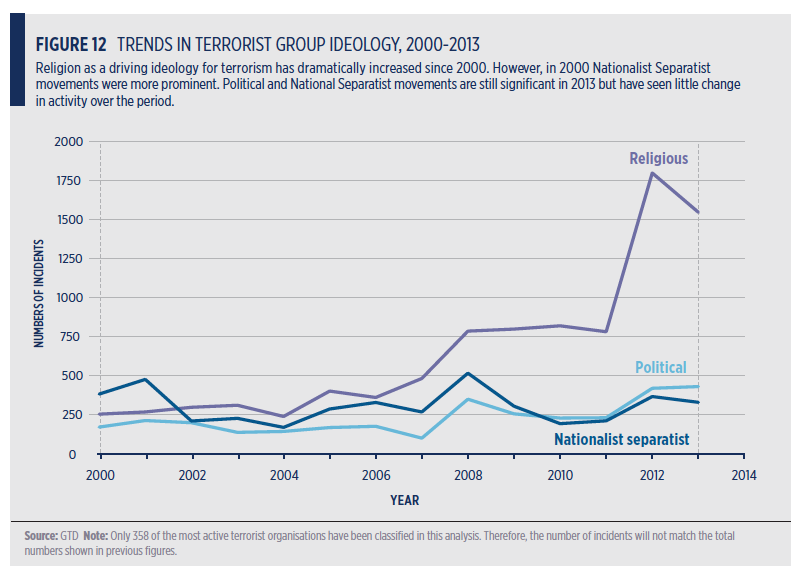
Interested in how terrorist group ideology has morphed over the past decade and a half? Check out the following graphic and observe how the religious-based groups have come to dominate terrorist activity.

Terrorism 2013(Source: Global Terrorism Index 2014, p. 31)

Who conducted the attacks? Two-thirds of the fatalities were caused by four groups: the Islamic State, Boko Haram, the Taliban, and al-Qaeda and its affiliates. As the report noted, “extreme interpretations of Wahhabi Islam” were the key commonality among the groups.

Unsurprisingly, more than 50% of the fatalities occurred in Iraq and Afghanistan. Pakistan, Nigeria and Syria accounted for another 30% of the fatalities.  In total, those five countries bore the brunt for 82% of terrorist-caused fatalities last year.

Looking at the details of the attacks, half of them resulted in no fatalities. Approximately 40% killed between one and five people, while 10% took the lives of six or more human beings. The most lethal form of attack was suicide bomber. While suicide attacks had the highest failure rate (56%), they caused an average of 11 fatalities per attack as compared to two fatalities for all other forms of terrorist attack.

Last year, suicide attacks only accounted for five percent of all terrorist attacks. Of concern, though, the Islamic State conducted 58 of the suicide attacks. By comparison, the two most prolific suicide attack groups over the past decade—al-Qaeda in Iraq and Tehrik-I-Taliban in Pakistan—have averaged 13 and 14 suicide attacks per year, respectively.

As a final note—perhaps for balance, perhaps to recognize the role of fear in terrorism—how might we understand the tragic loss of 18,000 lives to terrorism last year as compared to the 430,000[2] who were killed in homicides?


Image Credit: United Nations Office on Drugs and Crime and Terrorism Prevention


[1] The authors of the report note that the manner of data collection for the Global Terrorism Database became more automated in 2011. As a result, some events that may have been missed in prior years would now be collected, possibly inflating numbers for 2011 and following years. In response, they modeled three approaches. For example, their conservative model indicated the number of terrorist events rose by 475% since 2000, as compared to a 689% increase for the upper bounded model.

[2] See the Global Study on Homicide 2013 available at http://www.unodc.org/unodc/en/publications-by-date.html

Pandora Report 11.23.14

Thanksgiving is mere days away so it makes sense to look at some stories that can provide appropriate dinner discussion during those awkward lulls, right? These stories may provide that, though, I suppose that depends on who you eat your holiday dinner with (my family is very tolerant of my eccentricities.) With that said, this week we will look at plague in Madagascar, polio in Africa, antibiotic resistance in turkeys, and, of course, an Ebola update.

In observance of Thanksgiving there will not be a news wrap up next weekend. From all of us at the Pandora Report, we wish you a safe, warm, and delicious Thanksgiving!

Madagascar Plague Outbreak Kills 40, Says WHO

The World Health Organization has reported that an outbreak of plague in Madagascar has killed 40 and infected almost 80 others. The WHO warned that rapid spread of the disease could take place in the capital, Antananarivo. Humans usually develop the bubonic form of plague after being bitten by an infected flea carried by a rodent. This type, if diagnosed early, can be treated with antibiotics. However, 2% of the cases in Madagascar are pneumonic plague, which can be spread much more easily from person-to-person through coughing.

BBC—“Last year health experts warned that the island was facing a plague epidemic unless it slowed the spread of the disease. It said that inmates in Madagascar’s rat-infested jails were particularly at risk.”

Africa Nears Polio Eradication, CDC Says 

Maybe Ebola will be a topic of conversation at your Thanksgiving table. Maybe not. If you want to share some great news out of Africa, share this story. According to the Centers for Disease Control, wild polio virus has nearly been eradicated! The drop in cases in Africa has been attributed to successful vaccination campaigns in Nigeria.

Time—“No case of polio has been recorded on the continent since August, the report finds. There have been 22 cases of polio in Africa overall since the beginning of 2014, six of which were in Nigeria, one of the last three endemic nations alongside Pakistan and Afghanistan. The latest tally marked a drastic reduction from 49 cases in Nigeria the previous year.”

To Slow Down Drug Resistance in Health Care, Buy an Antibiotic-Free Turkey for Thanksgiving

We’ve seen, here at Pandora Report, that growing antibiotic resistance is a problem that spans countries and continents. Just in time for the best holiday, the Health Care without Harm nonprofit has suggested that health care workers (and, well, everyone else, too) can contribute to slowing the growth of antibiotic resistance by buying an antibiotic-free turkey for Thanksgiving. If you haven’t yet bought your turkey, maybe you’ll be motivated by what they say.

Wired—“Antibiotic resistance is a growing problem that more and more patients and providers are facing each day, and antibiotic overuse is a major contributor to this problem. While as many as 50% of antibiotic prescriptions may be overly broad or even unnecessary, animal agriculture uses four times the amount of antibiotics as human medicine, and mostly in healthy animals for growth promotion or disease prevention on crowded farms…

We are advocating for a broader concept of antimicrobial stewardship.”

This Week in Ebola

The doctor who was flown to Nebraska for treatment for Ebola died this week from a very advanced case of the disease. The need for hospitals in the U.S. and Africa that are qualified to deal with Ebola has not waned and there is an urgent need for the reinforcement of public health systems. In the meantime, New York Senator Chuck Schumer has called for New York City to be reimbursed for the costs it incurred to quarantine and treat Dr. Craig Spencer. In airport news, the Department of Homeland Security has said that they are adding additional screening for passengers arriving from Mali as there are signs of wider Ebola exposure in that country and officials in India have quarantined a man who recovered from Ebola after treatment in Liberia in September. And while UN officials have warned that the epidemic is “not even close to over” there is good news coming out of Liberia where CDC officials say that the spread of the disease has definitely slowed. Lastly, the Gates Foundation has pledged $5.7 million to test treatments for Ebola in Guinea and other countries in West Africa and Band Aid has put together a new recording of “Do They Know It’s Christmas?” with proceeds going to the Ebola fight. (There are two other amazing anti-Ebola songs, in this link, too!)

Stories You May Have Missed


Image Credit: Oregon Live