April 2014 Biodefense Policy Seminar

Title: NSABB, 1918 Flu, H5N1 and the New Botulinum Strain: Causes, Effects, and a Potential Way Forward
Speaker: Dr. David Franz
Date and Time: Wednesday, April 23, 7:20pm
Location: Mason Hall, Meese Conference Room

David FranzDr. Franz served in the U.S. Army Medical Research and Materiel Command for 23 of 27 years on active duty and retired as Colonel. He served as Commander of the U.S. Army Medical Research Institue of Infectious Diseased (USAMRIID) and as Deputy Commander of the Medical Research and Materiel Command. Prior to joining the Command, he served as Group Veterinarian for the 10th Special Forces Group (Airborne). Dr. Franz was the Chief Inspector on three United Nations Special Commission biological warfare inspection missions to Iraq and served as technical advisor on long-term monitoring. He also served as a member of the first two US-UK teams that visited Russia in support of the Trilateral Join Statement on Biological Weapons and as a member of the Trilateral Experts’ Committee for biological weapons negotiations. Dr. Franz was Technical Editor for the Textbook of Military Medicine on Medical Aspects of Chemical and Biological Warfare released in 1997. Current standing committee appointments include the National Academy of Sciences Committee on International Security and Arms Control, the National Research Council Board on Life Sciences, the Department of Health and Human Services National Science Advisory Board for Biosecurity and the Senior Technical Advisory Committee of the National Biodefense Countermeasures Analysis Center. He serves as a Senior Mentor to the Program for Emerging Leaders at the National Defense University. He also serves on the Board of Integrated Nano-Technologies, LLC. Dr. Franz holds and adjunct appointment as Professor for the Department of Diagnostic Medicine and Pathobiology at the College of Veterinary Medicine, Kansas State University. The current focus of his activities relates to the role of international engagement in life sciences as a component of global biosecurity policy. Dr. Franz holds a D.V.M. from Kansas State University and a Ph.D. in Physiology from Baylor College of Medicine.


Pandora Report 4.18.14

I think I was coming down with something yesterday. It manifested as a pretty debilitating headache, so I am pretty sure it wasn’t Ebola, but I also had no desire to drink water, so it might have been rabies. Either way, I’m feeling much better today, and am excited to bring you a Saturday issue of Pandora Report. In fact, I’m pretty sure there is nothing that is more fun on the weekend…so let’s get into it!


Highlights include Bird Flu in North Korea, a TB drug that may be the answer to drug resistance, a new strain of Ebola, MERS CoV’s spread to Asia, and Tamiflu’s real utility. Have a great weekend and see you here next Friday!

Highly Pathogenic Avian Influenza (HPAI) outbreak in North Korea

On April 16, the North Korean veterinary authority sent a notice to the World Organization for Animal Health (OIE) alerting them to two H5N1 outbreaks among poultry in the isolated nation. This is a surprisingly transparent move. The first outbreak occurred at the Hadang chicken factory in Hyongjesan starting on March 21. All 46,217 birds died. A second outbreak occurred on March 27 in the same region at the Sopo chicken factory where an unreported number of birds died in the same cage. The source of the infection remains unknown.

The Poultry Site—“Usual control measures have been put in place to control the spread of infection: quarantine, movement control inside the country, screening and disinfection of infected premises/establishment(s). There is no vaccination and no treatment of affected birds.”

Could a new TB drug be the answer to resistance?

A research study at the University of Illinois shows that a new drug under clinical trials for tuberculosis treatment—SQ109—may be the basis for an entirely new class of drugs that could act against bacterial, fungal, and parasite infection and yet evade resistance. Lead researcher, chemistry professor Eric Oldfield, believes that multiple-target drugs like SQ109 and its analogs hold the key to new antibiotic development in the era of drug resistance and “the rise of so-called ‘superbugs’.” His claim is bolstered by experiments with SQ109 and TB where no instances of resistance have been reported.

Science Codex—“’Drug resistance is a major public health threat,” Oldfield said. “We have to make new antibiotics, and we have to find ways to get around the resistance problem. And one way to do that is with multi-target drugs. Resistance in many cases arises because there’s a specific mutation in the target protein so the drug will no longer bind. Thus, one possible route to attacking the drug resistance problem will be to devise drugs that don’t have just one target, but two or three targets.’”

Outbreak in West Africa is caused by a new strain of Ebola virus

As the death toll from the Ebola outbreak in West Africa climbs above 120, scientists are reporting that the virus is not the same strain that has killed in other African nations.  While the source of the virus is still unknown, blood samples from Guinea victims has confirmed that it is not imported strains of Ebola Zaire—the original strain of the virus discovered in Democratic Republic of Congo (formerly known as Zaire.)

The Huffington Post—“‘It is not coming from the Democratic Republic of Congo. It has not been imported to Guinea” from that country or from Gabon, where Ebola also has occurred, [Dr. Stephan] Gunther [of the Bernhard Nocht Institute for Tropical Medicine in Hamburg, Germany] said.

Researchers think the Guinea and other strains evolved in parallel from a recent ancestor virus. The Guinea outbreak likely began last December or earlier and might have been smoldering for some time unrecognized. The investigation continues to try to identify “the presumed animal source.’”

MERS CoV leaves the Middle East and travels to Asia

Though the method of transmission of Middle East Respiratory Syndrome (MERS) remains unknown—a report last week from the CDC finds the virus can stay alive in Camel milk—and thankfully, transmission from human to human has been rare, the disease has now spread beyond the Middle East to Asia via an infection emerging in Malaysia. A Malaysian man returning from Mecca, in Saudi Arabia, tested positive for, and died from, MERS on April 13. So far, a reported 33 people who have travelled to the Middle East for the Haj have tested negative for presence of the virus in neighboring Singapore.

Today Online—“There is currently no advisory against travel to countries of the Arabian Peninsula, or to countries reporting imported cases of MERS-CoV (including Malaysia).

Frequent travellers to the Middle East and Umrah/Haj pilgrims have been advised to take precautions, such as being vaccinated against influenza and meningitis. Those aged 65 years and above or with chronic medical conditions should also get vaccinated against pneumococcal infections before travelling. Pilgrims with pre-existing chronic medical conditions like diabetes, chronic heart and lung conditions should consult a doctor before traveling, to assess whether they should make the pilgrimage.”

A closer look at Tamiflu

With seasonal flu season behind us in the U.S., maybe it is time to look at better treatment options. A study published last week in the British Medical Journal, calls into question the effectiveness of Oseltamivir—brand name, Tamiflu. The international team of researchers found that while Tamiflu can shorten flu symptoms it does not reduce hospital admissions or medical complications. The study also demonstrated that Tamiflu can also cause nausea and vomiting and increases the risk of headaches and renal and psychiatric symptoms.

Global Biodefense—“‘The trade-off between benefits and harms should be borne in mind when making decisions to use oseltamivir for treatment, prophylaxis, or stockpiling,” concludes the study authors from The Cochrane Collaboration, an independent global healthcare research network. “There is no credible way these drugs could prevent a pandemic,” Carl Heneghan, one of the lead investigators of the review and a professor at Oxford University, told reporters. “Remember, the idea of a drug is that the benefits should exceed the harms. So if you can’t find any benefits, that accentuates the harms.’”

(Image credit: Robert Sharp/Flickr)

Dirty Bombs: An Enigma of Identity and Non-use

By Chris Healey

Radioisotopes can be used to construct radiological weapons. The United Nations reported 140 cases of missing or illegally-used radioisotopes in 2013. Each instance represents a potential threat to safety and security.

Radiological dispersal devices, or dirty bombs, are mundane. They do not deserve the mystique commonly associated with the term. Dirty bombs require little technical expertise to assemble and detonate. Radioisotopes, the defining component in dirty bombs, are abundant. A radioisotope is any unstable element that releases matter or energy. They can be found in common occupational tools such as well-logging and medical diagnostic equipment, and in household items such as smoke detectors.

Components required to create dirty bombs consist of conventional explosives, detonation apparatuses, and radioactive isotopes. Design simplicity makes dirty bombs accessible to those with little or no technical knowledge. In contrast, biological and chemical agents require expertise to create viable weapons. Complexity serves to complicate production processes, thereby limiting creation success rates.

Simple construction and abundant components make dirty bombs an attractive attack method. Surprisingly, they are rare. According to data from the Radiological and Nuclear Non-State Adversaries Database, dirty bombs, and other radiological weapons, have only been used 19 times by non-state actors.

Radiological and nuclear weapons are often conflated. Nuclear weapons employ physical processes of fusion or fission to release massive amounts of energy. Fission is the process of splitting an atom. That process yields smaller atoms, neutrons, and energy. Fusion is the process of combining two atoms to create one, yielding energy. Both processes require extraordinary and precise conditions for realization. Fusion and fission expel devastating amounts of energy, tantamount to the detonation of thousands to millions of tons of TNT. Furthermore, both fission and fusion require rare radioactive isotopes, profound scientific expertise, and expensive equipment. The cost and technical nature associated with fusion or fission make device creation insurmountably difficult. Conditions to create fusion and fission contrast sharply with dirty bomb detonation requirements.

Conventional explosives spread radioisotopes upon detonation.  Radioisotopes retain radioactivity after blasts, contaminating surrounding areas with radiation. Conventional explosives are incapable of producing fusion and fission reactions. Nuclear weapons and dirty bombs share only the ability to spread radioactive material. However, destructive abilities of the two weapons cannot be compared; dirty bombs are exceedingly insignificant in comparison to nuclear weapons.

Other than the conventional explosive blast, inhalation of dispersed radioactive debris is the greatest health threat of dirty bombs. In almost all cases, radiation dispelled by dirty bombs will be stochastic instead of deterministic. Stochastic radiation damage does not immediately harm the individual, but may lead to carcinogenesis months to years later. In other words, the health effects of dirty bomb debris will manifest long after an attack. Deterministic damage, often associated with nuclear weapons, causes harm hours to weeks after radiation exposure. It is associated with deterioration of radiation-damaged organ tissue, not cancer.

Dirty bomb non-use cannot be explained. However, every effort must be made to improve radioisotope accountability. Restricting unauthorized radioisotope access will decrease radiological attack opportunities.


Image Credit

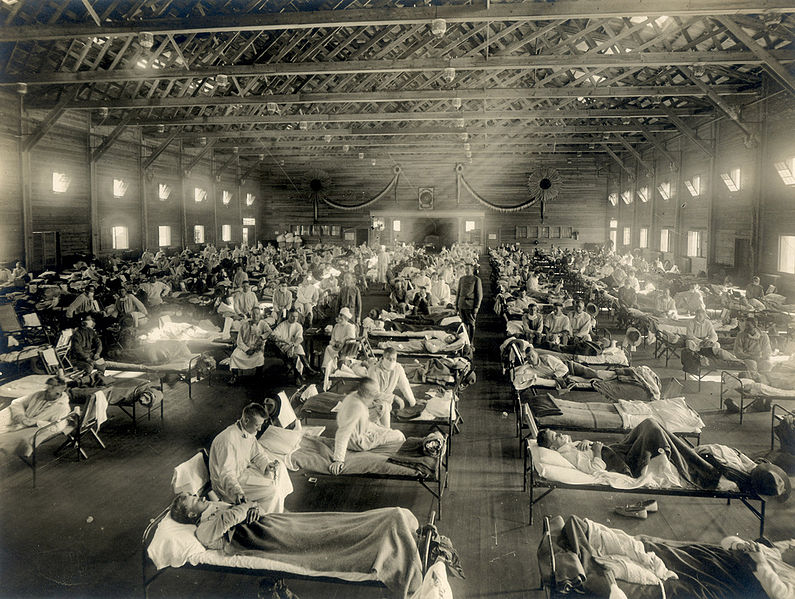
Image of the Day: Camp Funston

Camp Funston


This photo depicts an influenza ward at Camp Funston in Kansas during the 1918 Influenza Pandemic. This flu outbreak occurred between 1918 and 1920 and was one of the most deadly in history, infecting approximately 500 million people and killing 3-5% of the world population (50-100 million.)

That’s killed 3-5% of the entire world–not just infected 3-5% of the world!

Many historical resources cover this worldwise pandemic, also known as “Spanish Flu”, its effects, it causes, and the lasting legacy. Two include flu.gov and John M. Barry’s The Great Influenza.


Microbes: The 21st Century Astronauts

By Alena M. James

The Third Commercial Resupply (CRS-3) mission was scheduled for launch on Monday, April 14, 2014. Taking off from the Cape Canaveral Air Force Station in Florida, the CRS-3 mission was to head to the International Space Station (ISS) at 4:58pm. However due to a helium leak on the launch vehicle, the launch has been postponed for Friday, April 18 at 3:25 p.m.

If the repairs are made by Friday, the space pioneering company, Space X will be given the opportunity to test its Falcon 9 rocket and its unmanned Dragon cargo capsule in transporting materials and supplies to the ISS.  The Falcon 9 rocket is not the only equipment requiring repairs. A critical computer onboard the ISS also failed to activate last Friday.  Although NASA confirms that the ISS Crew was not any danger with the broken computer, a spacewalk to repair the system has been scheduled for April 22, 2014.

The mission cancelled on Monday will transport materials astronauts can use to repair the computer system, as well as 5,000 pounds of additional supplies. Among these supplies are materials used by astronauts to execute more than 150 scientific investigations. Such investigations include laser optics tests to explore information exchange from space to Earth and National Institutes of Health funded immune system research projects.

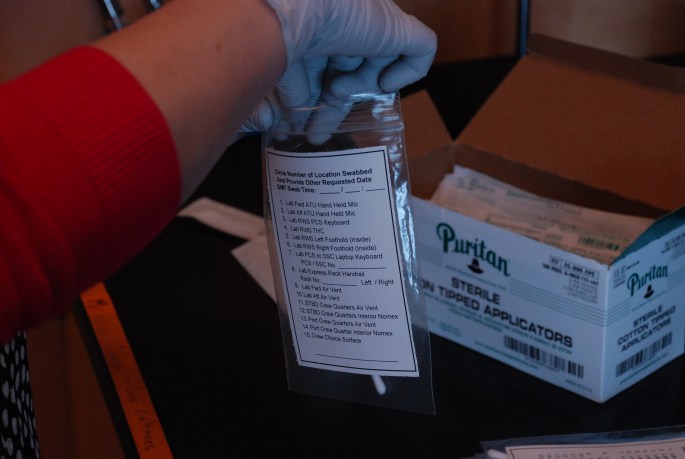
Also onboard the unmanned mission will be more than 48 different types of bacterial strands sponsored by Project MERCCURI, which stands for Microbial Ecology Research Combining Citizen and University Researchers on the International Space Station.  Under the project, microbial samples were collected from stadiums, monuments, museums, retired space crafts, and other public sources throughout the United States. The purpose of sending the different types of microbes into space is to determine how the bacteria will grow in the absence of gravity.  In addition to determining the effects of the absence of gravity on microbial growth, Astronauts on board the ISS will collect their own bacterial samples residing on fomites board the station. This study will help to establish the microbial flora of the ISS by identifying the different types of bacteria present.

The study of microbes at zero gravity conditions is nothing new. The National Aeronautics and Space Administration (NASA) has conducted previous studies primarily investigating the virulent nature of pathogenic organisms in space. A study carried out in 2006 revealed Salmonellato express a higher degree of virulence when grown in a zero gravity environment.  According to the study 167 genes and 73 proteins were found to have been altered in structure—the likely cause for the higher degree of virulency. Salmonella strains grown in space were brought back to Earth and their effects tested on mice. The studies showed that mice from the experimental groups were subject to illness at a faster rate than the control groups.  NASA has also completed studies evaluating the effects of antigravity conditions on the human immune system. Their investigations show that the absence of gravity has an adverse effect on the human body and weakens the immune system. In essence, pathogens become stronger in the absence of gravity; while the human immune system becomes weaker. This finding may have grave implications for individuals hoping to travel to space or to be a part of the MarsOne human settlement scheduled for 2024.

Contrary to NASA’s pathogenicity studies, Project MERCCURI’s research focuses on non-pathogenic bacteria and examination of their microbial growth properties. Findings of the study are likely to provide greater insight into the ubiquitous nature of bacteria and make actors in space exploration more cognizant about the bacterial environment around them.

If repairs to the Falcon 9 rocket are successful and the launch continues as planned for Friday, the Dragon space craft is expected to dock at the station for four weeks. After four weeks it will return to Earth bringing with it supplies and experiments performed on the ISS.


MERCCURI is a project made possible by the collaborative efforts of microBEnet/UC Davis with the Science Cheerleaders, Space Florida, NanoracksJPL-NASA, and SciStarter.com.

This Week in DC: Events

April 14, 2014

International CBRNe Response: Identifying Challenges to Delivering Capabilities in the Asia-Pacific
Date: April 14, 8:30am – 4:30pm
Location: The Capitol Hilton, Congressional Room, 1001 16th St NW, Washington DC 20036

The conference will identify challenges to delivering CBRNe (chemical, biological, radiological, nuclear, or high explosive) response capabilities in the Asia-Pacific. The program is designed to plan for future CBRNe events in the Asia-Pacific by distilling lessons learned from select historical cases and discussing obstacles and considerations for regional CBRNe response. Banyan Analytics is honored to feature a keynote by Charles A. Casto, Former Nuclear Regulatory Commission Regional Administrator, and Former Director of Site Operations in Japan after the Fukushima Daiichi nuclear power station disaster.

Lt. Gen. Chip Gregson (USMC, Ret.), Chairman of Banyan Analytics, will moderate a panel discussion on planning for future CBRNe events in the Asia-Pacific. Panelists will include Colonel Peter Ahern (USMC), Former CBIRF Commander, II Marine Expeditionary Force; Dr. James Schear, Former Deputy Assistant Secretary of Defense for Partnership Strategy and Stability Operations; and Richard Love, Esq., Senior Research Fellow at the Center for the Study of Weapons of Mass Destruction at National Defense University.

RSVP at Banyan.Analytics@anser.org

Working with Russia: Best Practices for Times of Conflict
Date: April 14, 12:30pm
Location: Center on Global Interests, 1050 Connecticut Avenue NW, Washington, D.C. 20036

Suzanne Massie, adviser on Russia to President Ronald Reagan and “the woman who ended the Cold War,” will discuss strategies for dialogue with Russia in times of conflict and explore potential next steps for constructive U.S.-Russia relations after the crisis in Ukraine.

Nikolai Zlobin, President of the Center on Global Interests, will moderate the discussion.

Space is limited. Guests must RSVP to keickholt@globalinterests.org

Challenges to Further Nuclear Arms Reduction
Date: April 14, 2:00 – 3:30pm
Location: The Brookings Institution, Saul/Zilkha Rooms, 1775 Massachusetts Ave NW, Washington DC 20036

Following signature of the New Strategic Arms Treaty (New START) in April 2010, President Obama called for negotiations on further nuclear arms reductions. Last June in Berlin, he proposed a one-third cut in the New START limit on deployed strategic warheads and called for bold reductions in tactical nuclear weapons. Russia to date has shown little enthusiasm for further nuclear reductions, citing concerns about missile defense, conventional Prompt Global Strike, the conventional forces arms control regime in Europe and third-country nuclear forces. Of course, the atmosphere for U.S.-Russian discussions of these issues has become more difficult following Russia’s military occupation of Crimea and increased East-West tensions.

On April 14, the Brookings Arms Control and Non-Proliferation Initiative and the Heinrich Böll Foundation North America will host a discussion on the challenges that inhibit further nuclear reductions. The panel will consist of Dennis Gormley, University of Pittsburgh; Götz Neuneck, University of Hamburg; and Nikolai Sokov, Vienna Center for Disarmament and Non-Proliferation. Brookings Senior Fellow Steven Pifer will moderate the discussion and questions from the audience. Copies of the recently released Heinrich Böll Foundation publication, “The Future of Arms Control,” will be available.

Register here.

Terrorism, Party Politics, and the US: Expectations of the Upcoming Iraqi Elections
Date: April 14, 12:30 – 2:00pm
Location: Johns Hopkins School of Advanced International Studies, Nitze Building—Room 517, 1740 Massachusetts Ave NW, Washington, D.C. 20036

Ahmed Ali, Iraq research analyst and Iraq team lead at the Institute for the Study of War, and Judith Yaphe, adjunct professor at the Elliott School of International Affairs at George Washington University, will discuss this topic.

RSVP here.

April 15, 2014

Putin’s Russia: Time for Containment?
Date: April 15, 5:00pm
Location: The Burke Theater at the Navy Memorial, 701 Pennsylvania Ave NW, Washington DC 20004

Under President Vladimir Putin, Russia has clamped down on democracy at home, while exerting increasing influence abroad. In 2008, it invaded Georgia. It supports Syria’s dictator Bashir al-Assad. Earlier this year, Russia invaded, occupied and annexed Crimea–with scarcely a shot fired. And in a speech to the Duma, he cited other territories and Russian-speaking peoples that are separated from the Russian homeland. Yet Russia is an oil-and-gas driven economy, with declining demographics and rampant corruption. Is Putin’s Russia on the wrong side of history, a weak power that will eventually succumb to the greater forces of the 21st Century?  Or is Putin making history, and intent to continue to do so unless he is stopped? It is time again to contain Russia?

RSVP here.

Dark Skies: Space Weapons, Planetary Geopolitics, and Whole Earth Security
Date: April 15, 5:00pm
Location: Johns Hopkins School of Advanced International Studies, The Rome Building, 1740 Massachusetts Ave NW, Washington, D.C. 20036

Daniel Deudney, associate professor in the Department of Political Science at Johns Hopkins University, and Scott Pace, professor of the practice of international affairs and director of the international science and technology program at the Elliott School of International Affairs at George Washington University, will discuss this topic.

RSVP here.

April 16, 2014

Crimea and Beyond: Security Implications for Romania, Moldova and Transnistria
Date: April 16, 12:00pm
Location: Elliot School of International Affairs

Mark Gitenstein, Ambassador of the U.S. to Romania
Dennis Deletant, Visiting Professor at Georgetown University
Moderated by Eliot Sorel, Professor of Global Health and Psychiatry, GW

Recent events in Crimea raise significant security concerns in Central and Eastern Europe, the European Union, and the United States. The territorial safety and integrity of nation states have been challenged and has become a topic debated at the United Nations Security Council, the US Congress, the G7, and the EU. Ambassador Mark Gitenstein and Professor Dennis Deletant will discuss the security implications for Romania, Moldova, and Transnistria in light of recent events in the region.

RSVP here.

Iran: Nuclear, Human Rights and Terrorism Challenges

Date: April 16, 12:00pm
Location: Heritage Foundation, Lehrman Auditorium, 214 Massachusetts Ave NE
Washington DC 20002-4999

Iran long has posed major challenges to the United States, its allies and Middle Eastern stability. In recent years, Iran’s drive for nuclear weapons has been a primary focus for concern, but that issue should not eclipse all other issues. Iran remains the world’s foremost state sponsor of terrorism and continues to commit widespread human rights abuses against its own people.

Join us as a panel of experts discusses the latest developments in the nuclear negotiations, Iran’s human rights situation and Iranian support for terrorism.

Security challenges and Scenarios for Central Asia
Date: April 16, 4:00 – 5:30pm
Location: George Washington University, 1957 E Street NW, Voesar Conference Room, Suite 412, Washington DC 20052

Erlan Karin will discuss the diverse security challenges, both external and internal, that the Central Asian countries currently face. He will explore the presidential successions, possible scenarios, and present four different prospects for Central Asia, its stability and its interaction within the wider region.

Dr. Erlan Karin leads the Council of Direction for the Center for Security Program in Kazakhstan. Prior to that he was Chair of the Presidential Administration’s Department of Internal Policy (2008), and Secretary of the Nur-Otan Party (2013). He has directed several analytical centers such as the Central Asian Agency for Political Research and the International Institute of Contemporary Policies. He works on security issues, terrorism, the role of security services and questions of political succession.

RSVP here.

April 17, 2014

Security Issues on the Korean Peninsula
Date: April 17, 12:00pm
Location: Korea Economic Institute, 1800 K Street NW, Suite 1010, Washington, DC 20006

The Annual Conference of The International Council on Korean Studies (ICKS) Luncheon and Luncheon Speech Sponsored by the Korea Economic Institute of America (KEI)   “Security Issues on the Korean Peninsula” General John H. Tilelli, Jr., USA (Retired), Co-Chairman Council on U.S.-Korean Security Studies (U.S. Council.)

RSVP here.


Coming Next Week…

Sabin Vaccine Institute 20th Anniversary Scientific Symposium

Date: April 25, 1:00pm
Location: Pan American Health Organization, Conference Room A (Ground Floor), 525 23rd Street NW, Washington, DC

In celebrating twenty years of advocating greater access to existing and new vaccines for the world’s poor, the Sabin Vaccine Institute will convene experts from around the world – leaders from industry, government, NGOs and academia – to examine key lessons from recent efforts to address pressing global health challenges and share insights on emerging immunization trends.

Full agenda available here. Register here.

Pandora Report 4.11.14

Ebola is still raging in West Africa and experts are planning for a long battle, however, every week can’t be about Ebola. So let’s jump into it!

Highlights include The START treaty, Chemical Weapons in Syria, H1N1 in otters and public outcry over Chilis (but not their baby back ribs.) Have a great weekend!

New START Data Show Russian Increase, US Decrease Of Deployed Warheads

With many Russia watchers nervously waiting to see if moves are made towards Ukraine, new data this week shows that Russia has actually increased their counted deployed strategic nuclear forces since September 2013 under the START treaty. Under the new treaty, by 2018, both Russia and the U.S. agree to no more than 1,550 strategic warheads on 700 deployed launchers. Russia has been under this limit since 2012—before the treaty was even signed—while the U.S. has yet to reduce below the treaty limits.

Federation of American Scientists– “Since the treaty was signed in 2010, the United States has reduced its counted strategic forces by 104 deployed launchers and 215 warheads; Russia has reduced its counted force by 23 launchers and  25 warheads. The reductions are modest compared with the two countries total inventories of nuclear warheads: Approximately 4,650 stockpiled warheads for the United States (with another 2,700 awaiting dismantlement) and 4,300 stockpiled warheads for Russia (with another 3,500 awaiting dismantlement).”

Another Chemical Weapons Attack in Syria?

 After Syria signed a chemical weapons dismantlement agreement in September 2013 (brokered by Russia, the U.S. and the UN), it appears they have reneged on their word. Reports from “credible” sources say that there have been chemical weapons attacks in the cities of Harasta and Jobar over the past couple weeks. With the eyes of the world on Russia and Ukraine, and U.S. naval destroyers loaded with tomahawk missiles departed from the Mediterranean, Assad may be benefitting from a lack of international oversight.

The Wall Street Journal-“There is no credible evidence to suggest that rebel groups in the Damascus area have acquired the materials or know-how to mount chemical weapons on conventional artillery pieces in their possession. It can therefore be concluded that unless the rebels theatrically fabricated the effects of a chemical attack, the Assad regime was likely responsible for carrying them out. Notably, on March 25, Syria’s U.N. Ambassador Bashar Ja’afari distributed a letter specifically warning that rebels would use chemical weapons in Jobar in order to blame the government. But if any party in the conflict would be prone to such conspiracy, it would be the Assad regime, whose decades of tutelage under the Russian KGB made their Mukhabarat (secret service) frighteningly efficient at false-flag tactics meant to smear the opposition.”

Swine Flu From 2009 Pandemic Also Struck Sea Otters

Turns out, the H1N1 pandemic from 2009 didn’t only affect humans…it affected otters! New research shows that otters off the Western coast of the United States were also infected with H1N1 as it affected people throughout the U.S. Seventy percent of the otters tested in 2011 showed antibodies (demonstrating previous infection) for H1N1. Previous research also showed that elephant seals living off the coast of California had been infected with H1N1 too.

U.S. News and World Report-“‘Our study shows that sea otters may be a newly identified animal host of influenza viruses,” study-co-author and USGS scientist Hon Ip said in a government news release. “We are unsure how these animals became infected,” lead author and CDC scientist Zhunan Li said in the news release. “This population of sea otters lives in a relatively remote environment and rarely comes into contact with humans.” The study was published in the May issue of the journal Emerging Infectious Diseases.”

Chili’s cancels fundraiser with National Autism Association

Last weekend, my favorite mid-range American restaurant, Chili’s announced that they would be partnering with the National Autism Association for a benefit on Monday, April 7. However, outcry over the NAA—and its anti-vaccination stance—forced Chili’s to change its mind (and continue to keep my business.) It is a striking demonstration of the power of consumers and social media and strikes a victory for those in favor of vaccinations and the good they bring to communities and herd immunity.

CNN-“The Chili’s spokeswoman said that the NAA was originally selected for the fundraiser “based on the percentage of donations that would go directly to providing financial assistance to families and supporting programs that aid the development and safety of children with autism.”

Chili’s, which is owned by Brinker International (EAT), went on to say, “While we remain committed to supporting the children and families affected by autism, we canceled Monday’s Give Back Event based on the feedback we heard from our guests.”’


(image courtesy of Wikimedia Commons/ Dave Bezaire & Susi Havens-Bezaire)

Bioscavengers: The Ultimate Defense Against Nerve Agents

By Chris Healey

Bioscavengers are naturally-occurring proteins capable of effective nerve agent elimination. They are currently theoretical or in the early stages of clinical trials. However, they have the potential to revolutionize the prevention of nerve agent poisoning.

Discovered by German chemists researching insecticides in the 1930s, nerve agents were quickly recognized as a potential weapon. Nerve agents were produced and stockpiled by the Germans during World War II but were never used. Their first use during wartime occurred during the Iraq-Iran conflict in the 1980s. Iraq reportedly released nerve agents against Iranian troops and later against members of its Kurdish population.Nerve agents were recently used during Aum Shinrikyo’s Tokyo subway attack in 1995, and again in 2013 by the Assad regime during the Syrian Civil War.

The nervous system controls muscle contraction through release of neurotransmitters into neuromuscular junctions, which are media between neurons and muscle fibers. Acetylcholine is the primary neurotransmitter involved in muscle contraction.

Nerve agents bind and inactivate acetylcholinesterase, a regulatory protein of acetylcholine within neuromuscular junctions, thus preventing acetylcholine dismissal. Acetylcholine accumulation leads to salivation, sweating, abdominal cramps, muscle twitching, and flaccid paralysis. Death occurs from inadequate respiratory function as a result of neuromuscular junction disruption in the diaphragm.

Distinguishing prophylaxis from pretreatment is important in nerve agent countermeasure discussion. Pretreatment is any therapy administered before poisoning so that treatment after poisoning can be more effective. Prophylaxis is pretreatment that does not require additional intervention. In other words, prophylaxis eliminates the need for treatment after poison exposure.

The necessity of pretreatment limits the efficacy of conventional nerve agent treatments. Nerve agents rapidly cause irreversible damage within neuromuscular junctions. The presence of a pretreatment such as pyridostigmine, an acetylcholinesterase inhibitor, helps minimize damage before post-exposure treatment can be administered.

Atropine and oximes—post-exposure treatments for nerve agents—have limited efficacy. They are toxic if administered in the absence of nerve agents. Furthermore, they must be administered very shortly after nerve agent exposure to have any therapeutic effect. If administered following a pretreatment, and in a timely manner after nerve agent exposure, atropine and oximes can prevent death. Incapacitation, convulsions, and long-term neurologic damage, however, are unavoidable despite treatment.

Bioscavengers function as a prophylaxis. Damage to neuromuscular junctions only occur in the presence of nerve agents. In other words, bioscavengers eliminate the need for atropine and oximes, while nullifying any chance of long-term neurologic damage.

Although everyone possesses trace amounts of bioscavengers in their bloodstream, innate levels are too minute to ward off physiologically-significant nerve agent quantities. Bioscavengers must be extracted from enormous amounts of human plasma and administered in a concentrated regimen to counter nerve agent exposure. Harvesting bioscavengers from plasma is costly, inefficient, and impractical as a means of production. More efficient production methods, such as harvesting molecules from the milk of transgenic goats, are currently under investigation.

Current bioscavengers are considered stoichiometric, meaning each bioscavenger molecule can only eliminate one nerve agent molecule. To be effective, there must be enough stoichiometric bioscavengers in the bloodstream to eliminate the amount of nerve agent concurrently present.

The prophylactic nature of bioscavengers, compounded with the rapid effect of nerve agents, render them useless if administered after nerve agent exposure. Strict use as a prophylaxis limits therapeutic utility. For example, it would be impossible to administer bioscavengers to victims of a terrorist attack involving nerve agents prior to the event. However, bioscavengers would be extremely valuable to first responders as they potentially expose themselves to nerve agents in that situation. Furthermore, soldiers and others in war zones anticipating a nerve agent attack could administer bioscavengers to proactively neutralize that threat.

A catalytic bioscavenger is a theoretical concept that improves upon stoichiometric limitations by exploiting enzymatic behavior. Instead of a one-to-one ratio, whereby a bioscavenger eliminates itself by binding to a nerve agent, catalytic bioscavengers would be capable of eliminating many nerve agents over time. In other words, catalytic bioscavengers would not only be able to eliminate large amounts of nerve agent during a single exposure, but would also maintain functionality through multiple exposures. Catalytic bioscavengers would eliminate therapeutic re-administration for continued nerve agent protection following initial exposure. While enzymatic utility may be frivolous for use in first responders, that function would be advantageous to those in situations involving multiple nerve agent attacks.

Methods to create catalytic bioscavengers are under investigation. Researchers are studying the protein structure of stoichiometric bioscavengers to see how it can be altered to form an enzyme. Once appropriate alterations to its chemical composition have been identified, genetic instructions can be created to produce desired results in a transgenic organism.

Image of the day: Infographic!

Everyone loves a good infographic, and the nice folks at SecurityDegreeHub.com sent this to me, as readers of the Pandora Report would likely find it interesting. Enjoy!

Bioterrorism
Source: SecurityDegreeHub.com

Increasing Refugees, Increased Risk of Communicable Diseases

by Alena M. James

Since the start of the Syrian crisis three years ago, refugees have fled to camps in Jordan, Iraq, Turkey, Egypt, and Lebanon. Last week the United Nations High Commissioner for Refugees (UNHCR) reported the number of refugees from Syria to Lebanon has passed one million.  According to the report, this influx has stretched Lebanon’s social and economic infrastructure thin in public services such as electricity, water, sanitation services, education, and the public health sector. Tourism, trade, and investment within the country has also decreased significantly. The increase in the population has led to decreased wages among competing workers.  Lebanese residents find themselves struggling financially; while the refugees find themselves struggling to build better lives.

The competition for depleting resources is not the only concern facing both residents and refugees.  A high influx of refugees into any state can lay the ground for increases risk of communicable diseases or outbreaks of emerging infectious diseases. With small Lebanese communities overwhelmed by the drastic increase in the population, public health services struggle to provide adequate health care, antibiotic treatments, immunizations, and other medical aid to those in need. Not only are critical public health services overextended, but the high volume of individuals seeking services creates the ideal transmission grounds for microbial organisms and viral agents.

In overcrowded populations with limited health resources, the risk of spreading diseases is incredibly high and transmission can occur in a variety of mediums. Direct or indirect contact, the release of respiratory droplets, ingestion of contaminated food and water sources, contact with mechanical  or biological vectors are all various modes by which pathogenic agents spread from person to person.

Direct contact occurs from direct exposure to the pathogenic source, for example, when a patient is bit by a rabid dog and develops rabies. Indirect contact occurs via exposure to septic fomites, for example, when an unsterilized syringe is used to dispense a treatment or drug intravenously into a patient.  Respiratory droplets allow illnesses like the common cold, influenza, and measles to spread at a rapid pace through sneezing or coughing on and around others. Ingestion of contaminated water and foods lead to major gastrointestinal complications and other illnesses. Mechanical vectors, like insect bodies, indirectly spread diseases. For example, flies feeding on fecal material can pick up and spread pathogens, via their feet, after landing on a patient’s untreated injury or open wound. Biological vectors like mosquitos transmit viral, bacterial, and other parasitic organisms to patients. The chances of these transmission modes being employed by pathogens remain high among densely packed populations lacking in substantial health care resources.

According to the U.S. Centers for Disease Control, there are several diseases that migrants to Lebanon are susceptible to if the proper vaccinations are not sought. Such diseases include Hepatitis A and B, Typhoid, Polio, and Rabies. Refugees from Syria also pose a dangerous risk of transmitting communicable diseases if they have not received proper immunizations before fleeing from their country. Malnourished refugees deprived of food and clean water are at risk of developing weakened immune systems which makes them even more susceptible to virulent pathogens.

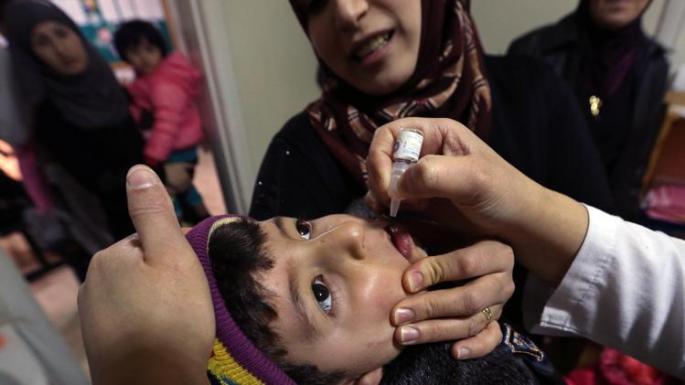
Despite the three-year Syrian conflict, many humanitarian workers continue to immunize children against preventable diseases. UNICEF in particular is actively working towards the vaccination of more than 20 million children against Poliomyelitis. Last October, the WHO confirmed at least 10 cases of children infected with Polio in Syria. This past weekend UNICEF re-launched its campaign to help control the spread of this virus among other states impacted by Syrian refugees.  Iraq, Turkey, Jordan also pledged to join the campaign due to the threat of incidences of the virus occurring in their countries.  So far Iraq has reported one case of the disease while the UN has reported 27 cases among Lebanese children.

Approximately 500,000 Syrian refugees to Lebanon have been children–who are at the greatest risk of acquiring polio if no vaccination has been administered. The war in Syria and the displacement of refugees has made it difficult for medical personal to provide vaccinations needed to control the spread of this and other communicable diseases.  The continued fighting in Syria is likely to lead to more bloodshed, the displacement of more refugees, the depletion of public service resources in several states, and the spread of more communicable diseases if efforts to resolve the conflict are not soon reached.


Image Credit: AP Photo/Bilal Hussein