Pandora Report 9.18.2015

What an interesting week! Ongoing salmonella cases, imported plague in Michigan, ISIS was found to be using chemical weapons, and a new prion disease was discovered. Pretty busy in the world of biodefense, I’d say. The Pandora Report is also fortunate to share with you a great piece by one of our graduate students, Greg Mercer, who tapped into Google Trends to look at ISIS nomenclature, and an upcoming book written by Dr. Brian Mazanec, regarding cyber warfare. So sit back and relax while we catch up on the week’s biodefense news.

US Confirmation of Islamic State Chemical Weapons
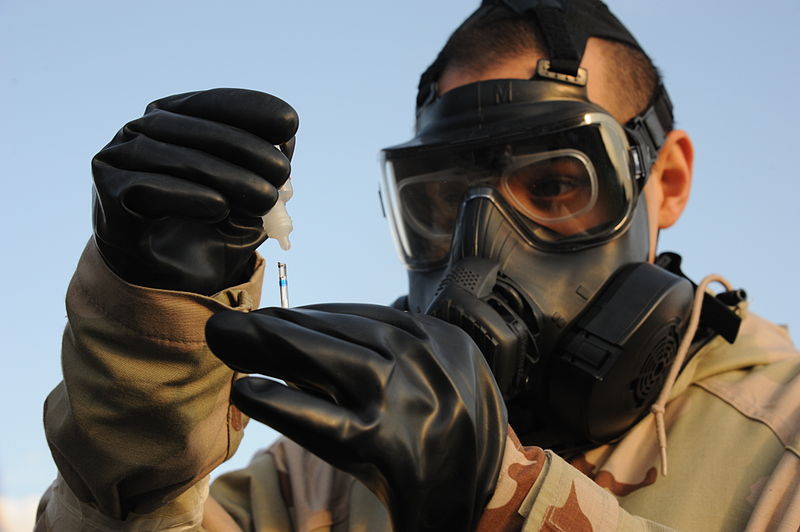
Operational_Readiness_Exercise_121014-F-LP903-827Sulfur mustard traces were found on fragments of ordnance used by the Islamic State, as well as on scraps of clothing from victims in Syria and Iraq. There have been several accounts by Kurdish officials that have claimed chemicals, like chlorine, were dispersed this summer, which is concerning for the ongoing use of these internationally banned substances. Testing done in the US was reported by officials on Friday, September 11, 2015, stating that, “there’s no doubt ISIS has used this,”. Officials have also said that the chemical residue recently found does not match known chemical ordinance that was used in the former Iraqi inventory. Overall, the use of chemical weapons is highly distressing and the method of acquisition, either manufacturing or from undeclared stocks, is under investigation.

Michigan Experiences Imported Plague Case

 A Michigan woman is the second case of bubonic plague that was traced back to the Little Rainbow area of Colorado. The Michigan resident was visiting family in Salida, CO during a music festival in late August. While her exact exposure hasn’t been established, she became ill after returning home and was hospitalized shortly thereafter. Lucky for the diagnosticians, she displayed textbook plague symptoms, leading to CDC involvement and antimicrobial treatment. Fortunately, she was released from the hospital and is beginning the long road to recovery, although it’s probably the last time she’ll attend that particular music festival or go hiking around it….

The So-Called Islamic State 2
By Greg Mercer

In February, I wrote about a topic that had been puzzling me- the contentious nomenclature of the Islamic State, or ISIS, or ISIL, or Daesh.  I decided to revisit this question now that the issue is a staple in the news, and that we’re probably saying it more frequently while thinking less about what we call it.  So I fired up my good friend Google Trends[1] again to take a look.  Google is a decent measure of public interest in a subject.  It’s the most popular search engine[2] in the world, with 66.78% of search volume worldwide as of August 2015.

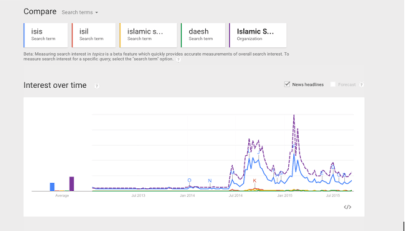
Last time, I found that ISIS was the most popular term by a fair amount.[3]  This seems to be true this time around too, which isn’t terribly surprising.  Here’s what I got:
Screen Shot 2015-09-17 at 6.24.26 PM


This time around, ISIS is still the most popular, but Google’s added a feature that tells us a little more.  While I suspected that the terrorist organization was driving most of the searches for ISIS before, it’s true that ISIS is the only of the names that has other popular uses, notably an Egyptian goddess, a think tank, and of course a fictional intelligence organization.  The new “topics” option in Google Trends lets us identify search volume for an entire subject.  The dotted purple line indicates all searches for the organization, regardless of naming specifics.  Since the searches for “ISIS” specifically and all of the searches for the organization are strongly correlated, it’s safe to say that mythology enthusiasts, nuclear scholars, and Archer fans aren’t skewing the trends.

It’s also still the case that search volumes for all of the names spike with major news events- no surprise there.

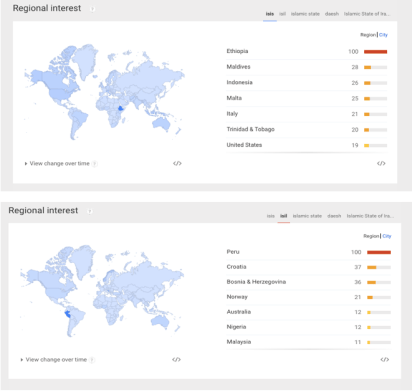
I also found the search trends by country interesting, here’s a look at the different terms and how they show up globally:
Screen Shot 2015-09-17 at 7.33.14 PM
Click on image to see Google Trend analysis and additional graphs


A couple of takeaways:  Looking at the organization as a whole, the two most interested parties (by Google search) are Iraq and Iran.  That’s not too surprising.  Iran is also #1 for “Daesh”, which is used in both Arabic and Farsi and is considered more a disparaging name.  In fact, the Iranian foreign minister told Iranian state media in January (fair warning, this links to Iran Daily) that he hates the term “Islamic State” and prefers “Daesh.”  In my earlier article, I noted that other foreign policy practitioners share this sentiment, and prefer a name that doesn’t recognize the organization as a state or representative of Islam.  This is also definitely the least popular name in mainstream American media.[4]  Ethiopia and Peru are the highest by volume for ISIS and ISIL, respectively, neither of which I would have expected offhand.

It’s interesting to see how these trends break down, and to look at a single massive political issue and international crisis with such a proliferation of terms.  I think the name that finally sticks remains to be seen.

[1] This links to the search parameters I used for this article, so you can play around with the data.
[2] This site is really cool if you’re into this sort of thing- you can see what site users choose based on browser, operating system, and device type.
[3] Personally, I tried ISIL in the name of accurate translation, but I tended to use ISIS when being flippant, and then it ended up sticking.
[4] To get anecdotal, the only person I’ve heard use it is my buddy who does Arabic translation and Middle East studies for a living.
The Evolution of Cyber War

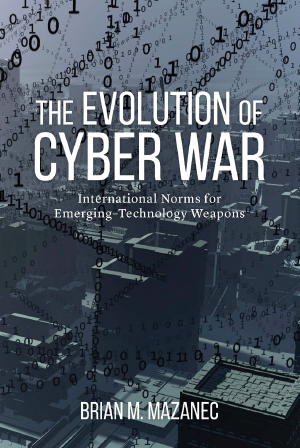
Screen Shot 2015-09-18 at 6.39.11 AMGMU’s very own, Dr. Brian Mazanec, delves into the world of cyber warfare and the reality of this threat. “Already, major cyber attacks have affected countries around the world: Estonia in 2007, Georgia in 2008, Iran in 2010, and most recently the United States. As with other methods of war, cyber technology can be used not only against military forces and facilities but also against civilian targets. Information technology has enabled a new method of warfare that is proving extremely difficult to combat, let alone defeat.” Available on November 1, 2015, we’re excited to share Brian’s phenomenal work!

Stories You May Have Missed:

  • Flu vaccination rates went up a bit for the 2014/2015 season, however, the efficacy was only 18% due to an antigenic drift. Fortunately, vaccination compliance for healthcare workers increased and overall rates showed that women were more likely than men to get vaccinated.
  • The Australian government will pass a new law, the “No Jab, No Pay Bill“, that will penalize parents who don’t vaccinate their children by withholding child care and other payments.
  • An additional 77 cases of Salmonella Poona were reported since September 9, 2015, related to the multi-state cucumber outbreak. The total infected is now 418 people across 31 states, with 91 hospitalizations.
  • A new prion disease has been identified by a team of scientists led by Stanley Prusiner. Their report outlines the discovery and the potentially infectious nature of this new prion.

Week In DC: Events

The World We Seek: Reigniting the Dialogue on Human Security – Johns Hopkins School of Advanced International Studies

Date: September 14, 2015, 9:30am-5:30ppm

Beijing by rediscovering the Universal Declaration of Human Rights as the foundation for global security and sustainable development. International Experts and a new generation of rights activists will share proven models for alleviating poverty, improving health and sanitation, and countering violent extremism. The program will feature poetry, music, and the Washington D.C. premiere of the WLP documentary film, Human Rights: The Unfinished Journey.

Johns Hopkins SAIS – Nitze Building1740 Massachusetts Ave., N.W., Washington, D.C. 20036 (map) Room: Kenney-Herter Auditorium    RSVP Here

The Iran Nuclear Deal and Its Implications – Johns Hopkins School of Advanced International Studies

Date: September 15, 2015, 5pm-7pm

Featuring: Robert Einhorn, Brookings Institution; former State Department Special Advisor; Shanta Devarajan, Middle East and North Africa, The World Bank; and Robin Wright, US Institute of Peace and the Woodrow Wilson Center

Location: Johns Hopkins SAIS – Rome Building1619 Massachusetts Ave., N.W., Washington, D.C. (map)
Room: Rome Auditorium

The Encryption Debate: Balancing Privacy and National Security – The Christian Science Monitor

Date: Tuesday, September 15, 2015, 8:30am-11:00am

Major American companies moved to ramp up security on their consumer devices to fight hackers and eavesdropping governments, in the wake of the Edward Snowden revelations about National Security Agency surveillance two summers ago. But senior law enforcement and intelligence officials say the new default protections prevent them from catching dangerous terrorists and criminals, and have called on companies such as Apple and Google to find a secure way for them to access consumers’ data with a warrant – which many technologists and privacy advocates claim is tantamount to building a “backdoor” into otherwise strong encryption.

What’s the right balance between protecting people’s personal privacy and the country’s security? How the Obama administration and Congress decide to proceed could impact US national security and foreign policy, the competitiveness of American businesses, and the future structure of the Internet. Join Passcode for a discussion with key figures in the debate between US law enforcement and the tech sector — doors open at 8:30 a.m. for coffee and networking

Location: St. Regis Hotel923 16th Street NW, Washington, D.C. (map), Carlton Ballroom

Arctic Transformation: Understanding Arctic Research and the Vital Role of Science – Center for Strategic and International Studies

Date: September 16, 2015,  8:30am-12:00pm

Following President Obama’s historic visit to the American Arctic, please join us for a timely conference on the vital role of science which seeks to better understand the profound and stunning changes that are occurring in the Arctic. Scientific research and collaboration informs our understanding on the impact of climate change on the most northern latitudes while also informing approaches to safely operating in and sustainably developing the economic potential of the region. Our keynote speakers will discuss the vital role of science leadership in the Arctic and will examine the most pressing gaps in our understanding of this dynamic region.

Location: Center for Strategic and International Studies1616 Rhode Island Ave NW, Washington, DC 20036 (map)

Anwar al-Awlaki, Yemen, and American Counterterrorism Policy – Brookings Institution

Date: September 17, 2015, 10:00am-11:30am

On September 30, 2011, the U.S.-born radical Islamic cleric, Anwar al-Awlaki, was killed by an American drone strike in Yemen, marking the first extra-judicial killing by the United States government against a U.S. citizen. Placed at the top of a CIA kill list in 2010 by the Obama administration, al-Awlaki was known for his intimate involvement in multiple al-Qaida terrorist plots against U.S. citizens, including the 2009 Christmas Day airline bombing attempt in Detroit and the 2010 plot to blow up U.S.-bound cargo planes. His calls for violent jihad remain prominent on the Internet, and his influence has turned up in many cases since his death, including the Boston Marathon bombing of 2013 and the Charlie Hebdo shootings in Paris early this year. In a new book, “Objective Troy: A Terrorist, A President, and the Rise of the Drone” (Crown, 2015), The New York Times national security reporter Scott Shane, drawing on in-depth field research in Yemen and interviews with U.S. government officials, charts the intimate details of the life and death of al-Awlaki, including his radicalization, his recruiting efforts for al-Qaida in the Arabian Peninsula, and the use of drone strikes by the United States to prosecute its counterterrorism goals.

On September 17, the Intelligence Project will host Shane to examine the roles played by al-Awlaki in al-Qaida plots against the United States, al-Awlaki’s continued influence on terrorism, and the current state of al-Qaida today. Brookings Senior Fellow Bruce Riedel, director of the Intelligence Project, will provide introductory remarks and moderate the discussion. Following their remarks, Riedel and Shane will take questions from the audience.

Location: Brookings Institution1775 Massachusetts Ave NW, Washington, DC 20036 (map)
Room: Falk Auditorium

Talks@Pulitzer: Untold Stories From The Front Lines of Ebola – Pulitzer Center on Crisis Reporting

Date: Thursday, September 17, 2015, 5:30pm

Join German filmmaker Carl Gierstorfer and science journalist Erika Check Hayden as they present their reporting on Ebola and the human toll of the deadly disease at our Talks @ Pulitzer on Thursday, September 17.
Gierstorfer shares the story of one community’s fight in Liberia for survival against Ebola and provides a preview of his latest film, while Check Hayden reveals the untold stories of heroism and hope from first responders in Sierra Leone.

Space is limited so reserve your seat today: rsvp@pulitzercenter.org—specify in subject line: “September 17 Talks @ Pulitzer.”

Location: Pulitzer Center on Crisis Reporting1779 Massachusetts Ave NW #615, Washington, DC 20036 (map), Room: 615

Pandora Report 9.11.15

Miss us? Good news – the Pandora Report weekly update is back! With a new school year comes new faces and some organizational change-up. Dr. Gregory Koblentz is now the Senior Editor of Pandora Report and Saskia Popescu (yours truly) will be taking over from Julia Homstad as the Managing Editor. I come from the world of epidemiology, public health, and infection control. Having just started in the GMU Biodefense PhD program, I look forward to venturing down the rabbit hole that is the Pandora Report!

There’s been some pretty fascinating news over the past few weeks, so let’s try and catch up…

Lab Safety Concerns Grow 

Our very own Dr. Gregory Koblentz, director of the GMU Biodefense program, was interviewed by USA Today regarding the lab security issues that now involve mislabeled samples of plague. “Since there are now concerns about the biosafety practices at multiple DoD labs there needs to be an independent review of the military’s biosafety policies and practices,” Koblentz said Thursday. He said the Critical Reagents Program is an important biodefense resource. “It’s crucial that all problems with handling and shipping inactivated samples be resolved quickly so the program can resume its important role in strengthening U.S. biopreparedness.”

Reviving a 30,000-Year-Old Virus…Isn’t This How the Zombie Apocalypse Starts?

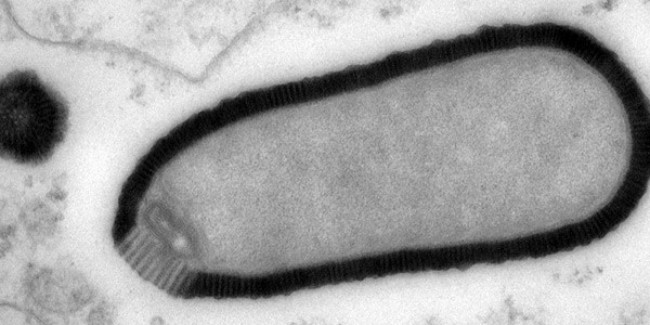
You may recall last year that French scientists stumbled across a 30,000-year-old virus frozen in the Siberian permafrost. Considered to be a “giant virus” (doesn’t that give you a warm, fuzzy feeling inside?), this is actually the fourth ancient, giant viral discovery since 2003. The new plan is to try to revive the virus in order to better study it.

Dr. Claverie told Agency France-Presse, “If we are not careful, and we industrialise these areas without putting safeguards in place, we run the risk of one day waking up viruses such as smallpox that we though were eradicated.” Given the recent concerns over biosafety lab specimen transport, we’re all curious to see how this new organism, coined “Frankenvirus”, turns out!

Cucumbers and A Multi-State Salmonella Outbreak

CDC updates regarding the Salmonella Poona outbreak reveal the brevity of the potentially contaminated product. As of September 9th, there have been two deaths, 70 hospitalizations, and 341 confirmed cases across 30 states. Perhaps the most worrisome is that 53% of affected individuals are children under the age of 18. While the produce company, Andrew & Williamson, issued a voluntary recall of their “slicer” or “American cucumber on September 4th, there have been 56 additional cases reported since then. Isolated samples from cucumbers in question were found in Arizona, California, Montana, and Nevada. The California Department of Public Health issued a warning and pictures of the affected cucumbers. 

Stories You May Have Missed:

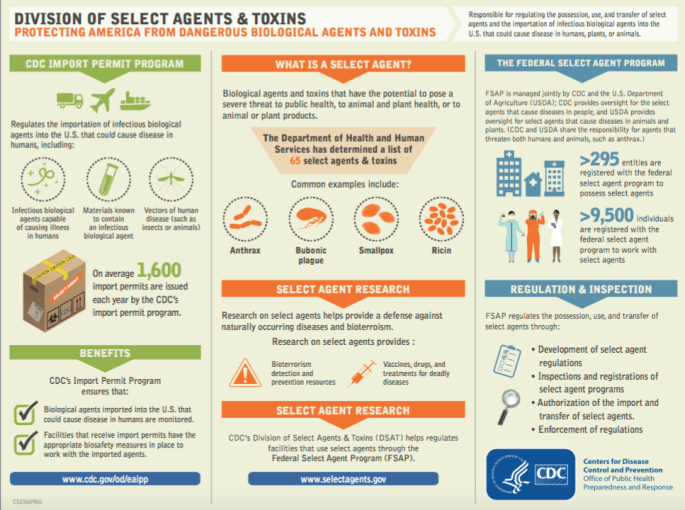
Image of the Week: Division of Select Agents & Toxins

Screen Shot 2016-07-08 at 1.11.08 PM


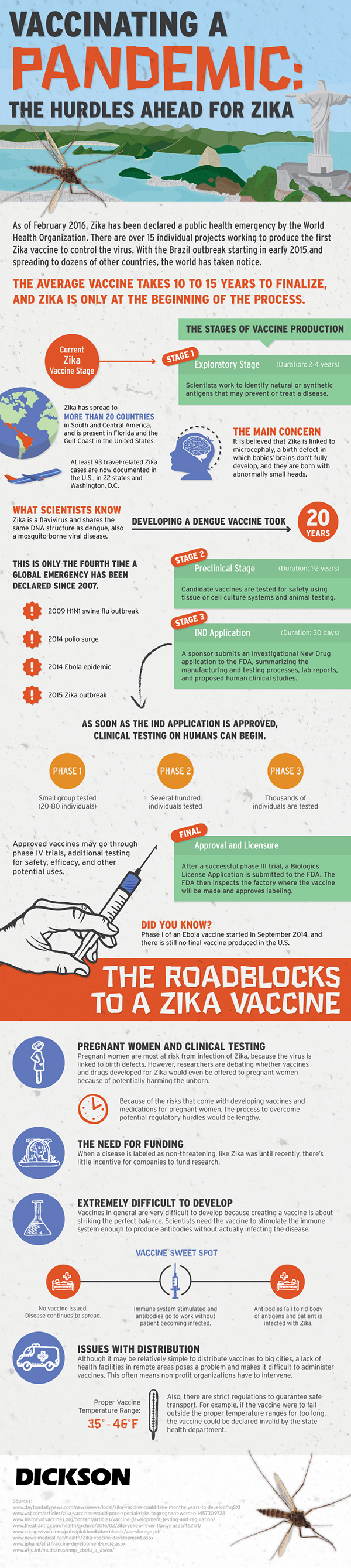
Apr19_2016_Dickson_ZikaVirus2076423019

Other Images You May Enjoy:
Learn more about the Centers for Disease Control & Prevention’s (CDC) efforts to combat infectious disease and global health security concerns.
global-disease-detection-infographic-12-14


Let’s talk about it…

By Jomana Musmar
Ms. Musmar is a PhD student in the Biodefense program at George Mason.

In a letter published on January 23, 2013, in Nature and Science, forty scientists announced an end to the self-imposed moratorium on research involving highly pathogenic avian influenza transmission. The moratorium was first triggered by the controversial publication of two H5N1 experiments in 2011.  In their letter, the scientists provide two major conclusions: that the aims of the moratorium have been reached, and that the benefits of conducting research on H5N1 outweigh the risks. They emphasize that scientists have a public health responsibility to conduct life-saving research, and that they are fully aware of the high risks involved in its potential misuse.  They also highlight that the moratorium helped foster robust global dialogue on the benefits and existing efforts to secure this research, in addition to the formal review of international policies.

Two such policies have been recently released by the US government (both available at http://www.phe.gov/s3/dualuse/Pages/default.aspx). The first is a White House proposed policy-update aimed at maximizing the benefits of life sciences research. The other is a US Department of Health and Human Services draft framework guiding funding decisions for conducting H5N1 research. The first of seven criteria in the draft framework to determine funding is that “the virus anticipated to be generated could be produced through a natural evolutionary process.”  This criterion echoes the final key point in the scientist’s letter in support of their conclusion–that the risks of an emerging H5N1 capable of mammalian transmission already exist in nature.

Although some may argue that the year-long moratorium has impeded the advancement of science and research related to influenza, I believe it has provided several benefits: (1) An opportunity for scientists to publicly voice their opinions and debate the topic on a global scale; (2) a chance for decision-makers to renew efforts at globally standardizing frameworks and guidelines related to research that present international security concerns; and (3) an increase in awareness on the public health benefits and security concerns of research in the life sciences.

In conclusion, the debate on the risks versus the benefits of controversial life science research is necessary to ensure that all stakeholders are participating in open dialogue, and that the frameworks drafted to help guide this sort of research are nimble enough to keep up with the pace of scientific advancements.

State Sponsored Nuclear Proliferation: Why States Share Nuclear Weapons Technology

Professor Greg Koblentz of the GMU Biodefense Program has a new piece in Global Studies Review:

State-sponsored nuclear proliferation, defined as a government’s intentional assistance to another state to acquire the means of producing nuclear weapons, including the transfer of weapons-grade fissile material, the technology to produce weapons-grade fissile material, or warhead design information, has had a crucial influence on the spread of nuclear weapons. The nuclear warhead design supplied to Libya by the Pakistani scientist A.Q. Khan was initially obtained from China which was itself the recipient of extensive nuclear assistance from the Soviet Union. Iraq, Libya, and Syria might have become members of the nuclear club thanks to sensitive nuclear assistance from other states if outside intervention had not stopped their programs. The current nuclear crises with Iran and North Korea were triggered by the transfer of uranium enrichment technology from Pakistan. Iran is now offering to engage in ostensibly peaceful nuclear cooperation with countries such as Algeria, Nigeria, Sudan, and Venezuela.

Link to the full piece is here.

National Strategy for Biosurveillance: Anything New?

Reviewed by Siddha Hover (GMU Biodefense PhD program)

The Obama administration published the National Strategy for Biosurveillance on July 31st of this year. The Strategy seeks to lay the foundation for the forthcoming biosurveillance strategic implementation plan, set to be published before the end of 2012.  The self-expressed goal of the Biosurveillance Strategy is to provide “a well-integrated national biosurveillance enterprise that saves lives by providing essential information for better decisionmaking at all levels”. Although official recognition of the need for effective biosurveillance is important, the strategy has two key flaws; a general lack of originality and an over-broadening of that which constitutes biosurveillance.

Before the flaws of the Biosurveillance Strategy can be examined, however, a cursory overview of its content is necessary. The Strategy employs rhetorical mechanisms of  “guiding principles”, “core functions” and “enablers” to present an introduction to US biosurveillance goals.  Emphasizing the use of “existing, multipurpose capabilities” the strategy presents four key national goals – discerning the environment, identifying essential information, alerting decision makers, and forecasting. These goals are enabled by the aptly titled “enablers”, which include the integration of capabilities, capacity building, encouraging innovation, and strengthening interactions across multiple sectors.

These concepts are indeed relevant. Cross-sector information sharing is indeed crucial to effective biosurveillance, as is innovation in detection technologies. However, these and similar suggestions have already been made reiteratively over the last decade, by almost all relevant stakeholders, in relation both to biological threats specifically and terrorism writ-large. Gregory Koblentz, in his book Living Weapons: Biological Warfare and International Security, published in 2009, calls explicitly for innovative “detection, protection, and treatment technologies”.  The 9/11 Commission Report, published in 2004, has entire sections dedicated to the need for increased cross-sector information sharing. The choice to pursue status-quo principles, core functions, and enablers of the Strategy is not a negative reflection on the content itself, and there is merit in the argument that these suggestions remain pertinent. However,  the lack of originality in the Strategy is nonetheless disheartening and concerning. Disheartening because the superficial treatment of the need for improvements in our national biosurveillance could be interpreted as official ambivalence. Concerning because the most virulent diseases, whether manufactured by terrorists or reassorted in pigs, are often characterized by a devastating aptitude for change.

The second flaw within the Strategy is the broadening of the concept of biosurveillance.  Biosurveillance is defined as “the process of gathering, integrating, interpreting, and communicating essential information related to all-hazard threats or disease activity affecting human, animal, or plant health…”, where all-hazard is associated with all chemical, biological, radiological and nuclear (CBRN) attacks.  This Strategy takes this definition of biosurveillance and broadens it to include “emerging infectious diseases, pandemics, agricultural threats, and food-borne illnesses”. By positing itself as a continuation of both the National Security Strategy and the National Strategy for Countering Biological Threats, the National Biosurveillance Strategy effectively securitizes all wide-scale health concerns.  This broadening is problematic for a number of reasons, the foremost being a dilution of that which constitutes a “threat” almost to the point of meaningless. Processing the vast amount of information  on intentional threats alone is already extremely challenging for the national security apparatus. The mandate to monitor all incidents of disease unnecessarily adds to this vast burden while expending limited security resources, leaving us less able to address immanent biological threats and exigencies.

The detrimental impact of this broadening is further visible when analyzing the Strategy’s policy suggestions. For instance, the aforementioned goal to “indentify and integrate essential information” encompasses within it the suggested development of a “discrete set of key questions to speed incident detection and awareness”. The 2001 anthrax letter attacks (Amerithrax) illustrate the difficulty in developing such a discreet set of questions. Despite occurring in the weeks following 9/11, and despite the staggered timing of the attacks, two of the latter Amerithrax victims still died due to misdiagnosis. Bacillus anthracis, like many of the other select agents, presents very similarly to pneumonia, making its initial diagnosis difficult. Thus, just as it remains difficult to synthesize a single set of questions to exclusively detect the symptoms of one, relatively uncommon disease, any set of questions which is expected to detect all potential effects from CBRN, emerging infectious diseases, pandemics, and food-bourne illnesses would be meaningless.

All criticisms aside, it should be kept in mind that the Biosurveillance Strategy is the first of its kind.  The lack of originality could be interpreted as a summation of past precedent. The broadening of the scope of biosurveillance  could be interpreted as recognition of the need for effective pandemic preparedness. As a first draft, then, while it definitely needs work, it’s very existence is a step in the right direction.

Book Review / The Soviet Biological Weapons Program: A History

The Soviet Biological Weapons Program: A History (Harvard University Press 2012)
Raymond Zilinskas and Milton Leitenberg
Hardcover. 960 pages. $55.00

Reviewed by Justin Ludgate (GMU Biodefense MS Program)

In researching one of the most closely guarded secrets of the Soviet Union, Raymond Zilinskas and Milton Leitenberg’s work on the history of the Soviet Union’s biological weapons program (BW) program is ambitious to say the least. The authors describe the current view of the Soviet Union’s BW program as being an incomplete picture cobbled together from precious few, often flawed, primary sources due to the compartmentalization and secrecy that veiled the program. Zilinskas and Leitenberg bring new research and analysis to the table and provide the most comprehensive examination to date of the Soviet BW program. The book itself is vast and covers everything about the program from research on weaponizing Francisella tularensis to Mikhail Gorbachev and Boris Yeltsin’s failures to end offensive BW research.

Overall, the tone of the book suggests future concerns regarding Russia’s failure to abide by international agreements, such as the Biological Weapons Convention, due to the ongoing concern of closed Russian Ministry of Defense (MOD) biological research facilities. Though not without criticism, the authors do note that U.S. efforts to prevent BW related proliferation of materials, technology, or personnel were largely successful thanks to programs such as the U.S. Department of Defense’s Cooperative Threat Reduction program and the Department of State’s International Science and Technology Center.

The book’s first goal is to describe the Soviet BW program as thoroughly as possible, as it was the largest of its kind in the world. The first chapter covers the program’s history between 1918 and 1972, or the “first generation” of the Soviet BW program. The Soviet BW program was initially influenced by the parallel needs of combating endemic diseases and preventing a recurrence of the high level of disease-related deaths suffered by the armed forces during World War I and the subsequent civil war. Prior to World War II, the military concentrated its efforts on weaponizing agents such as Bacillus anthracis, Yersinia pestis, and various types of Rickettsiae. All of these pathogens were endemic to the Soviet Union and defensive research efforts such as vaccine development often paralleled offensive research, creating a complicated dual-use relationship. The Soviet Union later exploited this dual-use relationship to establish cover stories for institutions dedicated to offensive BW research during the program’s second generation which ran from 1972 until 1992.

The authors credit the massive growth of the “modern” Soviet BW program experienced after 1970 to the machinations of a scientist named Yury A. Ovchinnikov, who convinced the MOD that biotechnology research could provide the Soviet Union with a potent weapon. At that time, scientists were dependent on the patronage of the Soviet government, as there were no private institutions capable of funding scientific projects. The MOD and the Military Industrial Commission (VPK) in particular were highly sought after patrons due to their deep pockets. However, the funding came with strings attached. Scientists interested in studying bacteria, viruses, and genetics were often obliged to conduct military research, whether they were aware of it or not. While Ovchinnikov was successful in securing funding from the MOD, the bargain ensured the continued militarization of biology in the Soviet Union for years to come.

By 1972, the 15th Directorate of the MOD was tasked with overseeing a network of BW research institutes, located in Kirov, Zagorsk, and Sverdlovsk. In 1973, a new network of offensive and defensive BW research institutes, named Biopreparat, was established. Officially reporting to a civilian authority, many aspects of offensive research were undertaken by military scientists and senior officials within the new organization held military rank. The book provides a host of details about the history, research, and current workings of former Biopreparat institutes such as Vector, the State Research Center for Applied Microbiology, and the Stepnogorsk Scientific Experimental-Industrial Base. This includes the dire economic situation these institutes found themselves in following the cessation of funds flowing from the Soviet state apparatus after the fall of the Soviet Union.

The second goal of the book is to ascertain whether the drastic loss of funding to BW institutes within Biopreparat and the MOD, following the end of the Soviet Union, caused a “brain drain” of former BW scientists to other nations or the proliferation and sale of BW-related material. The authors argue that U.S. threat reduction programs were largely successful in preventing the proliferation of BW research, materials, and personnel. However, a closed system of institutes with historic ties to the Soviet BW program still exists today. Worse, the authors argue that a regression has taken place in Putin’s Russia. The Russian government now refuses to admit that there ever was an offensive BW program and has reverted to the Soviet-era story that the 1979 anthrax outbreak in Sverdlovsk was caused by contaminated meat and not an accident at a military BW site.

In writing this book, the authors faced a daunting task. Compartmentalization within the Soviet BW program ensured that even high-level sources, such as Ken Alibek, Vladimir Pasechnik, and Igor Domaradsky, did not necessarily possess the full picture of the Soviet BW program. The authors interviewed various other scientists involved in Biopreparat, but their identities are largely kept anonymous due to a decree from the Russian government that criminalizes any discussion of former Soviet state secrets. The lack of sources within the MOD leads to significant gaps in the book regarding Soviet BW munitions, doctrine, and strategy.

Overall, the book is a comprehensive analysis of the Soviet BW program, including its origin, evolution, motivation, and accomplishments and failures. The Soviet Union’s BW program is a great topic for anyone studying biodefense as it offers both scientific and political insights.  The writing style is easy to follow, although readers with little scientific background may have to refer to the glossary during some of the more technical sections of the book. The acronyms and changing names of certain institutes involved in the BW program can be confusing, but that is to be expected given the sheer size and scope of the Soviet BW program. In synthesizing new and previously available sources, this book provides the most objective assessment of the Soviet Union’s BW program, as well as the implications of this program on the future of international security. That being said, the authors are careful to point out the limitations of their research and gaps in their knowledge of various aspects of the Soviet BW program, indicating that much remains to be learned about the largest and most advanced BW program in history.

Obama Nominates Mason Professor for NRC Seat

We are excited to spread the good word that Professor Allison Macfarlane, professor in Mason’s Environment Science and Policy and a member of the Biodefense faculty, has been nominated by President Obama to head the Nuclear Regulatory Commission, the nation’s lead nuclear safety agency.
Known to Biodefense students from her course, BIOD 760 National Security Technology & Policy, Professor Macfarlane recently served as a member of Obama’s Blue Ribbon Commission on America’s Nuclear Future. We are excited for her and look forward to hearing some great stories when she returns to Mason down the road.
Read more here

Book Review: The Viral Storm

Book Title: The Viral Storm: The Dawn of a New Pandemic Age (Times Books 2011)
Book Author: Nathan Wolfe
Reviewer: Kathleen Danskin, GMU M.S. in Biodefense Program

At first glance, the title of this book may bring to mind alarmist doomsday scenarios of a future filled with unstoppable global pandemics. However, the “new pandemic age” that Nathan Wolfe describes is instead one in which humans can anticipate pandemics and intervene in the early stages to prevent disaster. While the book does rely on a few of the standard ominous vignettes featuring H5N1, SARS, or bioterrorism to create a sense of fear and urgency, the overall message is one of optimism and confidence that these scenarios are not inevitable.

Continue reading “Book Review: The Viral Storm”