The Pandora Report 12.20.13

Highlights include more pneumonic plague in Madagascar, H1N1  in Texas, Chikungunya in the Caribbean, H7N9 in Hong Kong, and MERS in Saudi Arabia. Happy Friday, and a very happy holiday season to everyone.

Pneumonic Plague Cases Up in Madagascar
The latest numbers in the plague outbreak in Madagascar suggest as many as  17 of 43 cases may be pneumonic plague – the highly virulent, highly infectious, transmissible person-to-person form of the traditional bacteria. As we’ve mentioned before, the case fatality rate for pneumonic plague is 100% unless antibiotics are prescribed in the first 24 hours following infection. However, as the disease’s incubation period can be up to three days, and as it often presents initially with flu-like symptoms, timely detection can be very challenging. We’ll keep you posted.

Madagascar-Tribune (originally in French) – ” 43 suspected cases of pneumonic plague and bubonic plague were detected Mandritsara since 20 November until 5 December 2013. 17 suspected cases of pneumonic plague were detected Analanjirofo. 15 cases of bubonic plague have been recorded in the district of Ikongo. In the district of Tsiroanomandidy, 3 cases of bubonic plague have been suspected.”

Montgomery County, Texas: Mystery Illness Likely H1N1 Virus
A regional hospital in Texas has reported eight cases of an as yet diagnosed illness – of the eight, four patients have subsequently died. One of the remaining four patients has subsequently been diagnosed with H1N1The CDC is working with local health authorities to determine the pathogen in play.

Houston Chronicle – “Recent mystery deaths in Montgomery County could be attributed to the H1N1 virus. Conroe Regional Hospital this month reported eight cases of a mystery illness to the county’s public health department. Two of the patients tested negative for all flu viruses. Nichols-Contella said the 2013 influenza vaccine protects against the H1N1 virus. None of the patients who died had received a flu shot, the release said.”

Chikungunya Outbreak Grows In Caribbean
Chikungunya has struck the sunny Caribbean, with two cases reported to the WHO last week. Since the initial outbreak, a further 10 cases have emerged. Chikungunya is an Alphavirus, and is spread through arthropods, primarily mosquitoes. The outbreak on St. Martin signifies the first time the virus has appeared in the Western hemisphere. There was no international travel in the case histories of the patients involved. Fortunately, very few people understand better than epidemiologists the tendency of infectious diseases to spread with vigor, so surveillance systems are already in place.

NPR – “Except for a small number of imported cases each year, chikungunya has stayed out of the Americas until now. But U.S. health officials have been on the lookout for its arrival. The chikunguyna virus was discovered in 1955 by two scientists in Tanzania. ‘Microbes know no boundaries, and the appearance of chikungunya virus in the Western Hemisphere represents another threat to health security,’ CDC director Dr. Tom Frieden wrote in statement Wednesday. ‘CDC experts have predicted and prepared for its arrival for several years, and there are surveillance systems in place to help us track it.’ With about 9 million Americans traveling to the Caribbean each year, the CDC anticipates chikungunya will be a more frequent visitor to the U.S. in the next few years. One of the mosquitoes that carries the virus — the Asian tiger mosquito — is already a familiar pest in many parts of the U.S. during the summer.”

Two more H7N9 bird flu cases linked to Shenzhen’s Longgang district
Two individuals who lived or worked near the wet markets which tested positive for H7N9 last week have subsequently contracted the virus themselves. The two have been hospitalized and are in critical condition.  Again, the reemergence of the virus is consistent with expected seasonal patterns.

South China Morning Post – “Three patients who have contracted the H7N9 strain of bird flu had visited the Longgang district of Shenzhen, including the latest case announced yesterday, mainland health authorities said. A 38-year-old Shenzhen man was in critical condition after being diagnosed with the deadly strain of the flu, Shenzhen’s centre for disease control and prevention said. The patient is a migrant worker who lives and works in Nanwan Street, in Longgang district, near one of the infected markets where authorities found the H7N9 virus on December 11. A second patient, a 39-year-old man from Dongguan, commuted to the district. The pair follow Tri Mawarti, a domestic helper who was the first person in Hong Kong diagnosed with the virus. She is believed to have handled a live chicken at a flat in Nanwan Street before falling ill.”

WHO: Middle East respiratory syndrome coronavirus (MERS-CoV) – update
A further two cases of MERS-CoV have been confirmed in Saudi Arabia. The two patients are both female, aged 51 and 26 respectively. The former has no know exposure to the virus, whereas the latter had previously been exposed to an infected patient. Globally, there have been 165 cases to date, with 71 deaths.

WHO – “The first case is a 51 year-old female from Saudi Arabia, living in Jawf province with onset of symptoms on 20 November 2013. She has underlying chronic disease and was transferred to Riyadh for treatment in an intensive care unit. She had no reported contact with animals. The epidemiological investigation is ongoing. The second case is a 26 year-old female who is a non-Saudi healthcare worker in Riyadh. She is asymptomatic. She had reported contact with a 37 year-old male laboratory confirmed case that was reported to WHO on 21 November 2013.”

(image: Clavius66/Wikimedia)

Scientists Prove MERS in Camels

Scientists have finally been able to prove that the MERS-CoV also infects camels. Gene sequencing of the virus proved the existence of same strains in humans and three dromedary camels in Qatar.

Chicago Times – “The study, published in the Lancet Infectious Diseases journal on Tuesday, confirms preliminary findings released by Qatari health officials last month. Camels are used in the region for meat, milk, transport and racing. But the researchers cautioned it is too early to say whether the camels were definitely the source of the two human cases – in a 61-year-old man and then in a 23-year-old male employee of the farm – and more research is needed. ‘This is definitive proof that camels can be infected with MERS-CoV, but based on the current data we cannot conclude whether the humans on the farm were infected by the camels or vice versa,’ said Bart Haagmans of Rotterdam’s Erasmus Medical Centre, who led the study with other Dutch and Qatari scientists.”

Read more here.

The Pandora Report 12.13.13

Highlights include pneumonic plague in Madagascar, ricin as a biological weapon, H7N9 in live markets in Hong Kong, Myanmar’s ratifying the BWC, and destroying sarin at sea. Happy Friday!

Madagascar hit by ‘pneumonic and bubonic plague’

In addition to the death of approximately 20 villagers who died of bubonic plague last week, a further two cases of pneumonic plague have been discovered. Pneumonic plague can be spread via aerosol. It must be treated within 24 hours; any later and the fatality rate approaches 100%. Understandably, there is concern amongst health officials in Madagascar that the disease will spread to neighboring villages and towns.

BBC – “Pneumonic plague is caused by the same bacteria that occur in bubonic plague – the Black Death that killed an estimated 25 million people in Europe during the Middle Ages. But while bubonic plague is usually transmitted by flea bites and can be treated with antibiotics, pneumonic plague is easier to contract and if untreated, has a very high case-fatality ratio, experts say. Madagascar’s health ministry director-general Dr Herlyne Ramihantaniarivo confirmed to the BBC that two cases of the plague had been reported”

Texas woman pleads guilty to ricin letters sent to Obama, Bloomberg
A Texan woman has been charged in the case involving ricin-laced letters sent to President Obama and Mayor Bloomberg. We’ve discussed the debate surrounding the classification of  ricin as a weapon of mass destruction before, so we do think its interesting they’ve charged her with use of a biological weapon.

CNN – “A Texas woman pleaded guilty Tuesday to a biological weapons charge after she was accused of sending ricin-laced letters to President Barack Obama and New York City Mayor Michael Bloomberg, prosecutors announced. Shannon Guess Richardson, 35, pleaded guilty to possession of a toxin for use as a weapon, prosecutors said in a statement. She could be sentenced to up to life in prison. A sentencing date has not yet been scheduled. Richardson, an actress, was accused of sending the letters earlier this year.”

Shenzhen Finds H7N9 Flu Virus in Markets Near Hong Kong
Three of 70 samples taken from 13 of Guangdong’s  live poultry market have tested positive for H7N9. For some reason, one of the vendors whose stall tested positive for H7N9 was still allowed to sell chickens. China is usually extremely vigilant concerning containment and effective biosurveillance, so the hesitation to shut the live poultry markets is a little baffling.  However, the stalls are  apparently being disinfected daily.

Bloomberg Businessweek –  “The 12 live poultry stalls at the Hengan Paibang market in Longgan district, one of the markets where authorities found a positive sample, were open today. The stalls get their chickens from the Buji Poultry Wholesale Market in Longgan, according to the market’s manager. ‘There’s been no order yet to shut down,’ said Zhang Jinghui, manager of the Paibang market. ‘We need to wait for instructions from the village committee. We are disinfecting the stalls everyday.’ About 30 chickens, ducks, pigeons and geese were stored in metal cages at his stall, next to a shed for slaughtering the poultry and a metal-spinning vat for defeathering.”

Myanmar Prepares to Ratify Chemical, Biological Weapons Treaties
While Myanmar, formerly known as Burma, has signed both the Chemical Weapons Convention and the Biological Weapons Convention, it has yet to ratify either treaty. There is still some debate over whether the military junta previously in charge had used chemical weapons on the rebels. Myanmar has been cooperating with IAEA inspectors to increase overview of its nuclear program.

Radio Free Asia – “Myanmar’s government asserts the country has no chemical, biological, or nuclear weapons programs. But ethnic armed rebel groups including the Kachin Independence Army (KIA) have accused the Myanmar military of using chemical weapons as recently as last year in their long-running war in the country’s borderlands. In the 1980s and early 1990s, the U.S. government voiced suspicions of a possible chemical weapons program under the military junta in Myanmar, naming China and North Korea as possible suppliers. Since then the U.S. has been less vocal in its concern about the issue. According to global security nonprofit organization the Nuclear Threat Initiative, there is currently ‘no evidence’ to suggest Myanmar has a chemical weapons program.”

Scientists raise alarm over plan to destroy Syria’s chemical weapons at sea
The Department of Defense’s plan to neutralize Syria’s chemical weapons, through hydrolysis, at sea, is coming under sharp criticism. The use of the technology at sea is unprecedented, and requires a tremendous deal of very careful estimating. Of course, when dealing with agents like sarin and VX, very careful estimating is not always enough. News of the criticism comes at the same time as the UN confirmed the repeated use of chemical weapons in the Syrian conflict. 

Washington Times – “‘There’s no precedence. We’re all guessing. We’re all estimating,’ said Raymond Zilinskas, director of the Chemical and Biological Weapons Nonproliferation Program at the James Martin Center for Nonproliferation Studies, who worked as a U.N. biological weapons inspector in Iraq in 1994. ‘For example, you don’t know if the sarin is pure. The Iraqi sarin was rather impure, and had a lot of contaminants, and we don’t know if that’s amenable to hydrolysis,’ said Mr. Zilinskas, a professor at the Monterey Institute of International Studies at Middlebury College. Under the Pentagon plan, the toxic stockpile would be transported to the Syrian port of Latakia, loaded onto a non-U.S. vessel and shipped to a third country. From there, a U.S. cargo ship would take the arsenal to sea for destruction. Richard M. Lloyd, a warhead technology consultant at Tesla Laboratories Inc. who tracks weapons being used in Syria, said he has little confidence in the regime’s ability to transport the weapons safely.”

In case you missed it
Drug Resistant H7N9 Retains Pathogenicity

(image: Wmeinhart/wikimedia)

Drug-Resistant H7N9 Retains Pathogenicity

In a study published Wednesday in Nature Communications, researchers discovered that certain strains of  H7N9 have mutated to become “highly resistant” to antivirals like Tamiflu while maintaining high levels of pathogenicity. This is not normal. Normally when  a virus acquires drug-resistance through mutation, this mutation attenuates it, decreasing viral virulence or replication ability.  The study authors write, “in stark contrast to oseltamivir-resistant seasonal influenza A(H3N2) viruses, H7N9 virus replication and pathogenicity in these models are not substantially altered by the acquisition of high-level oseltamivir resistance”. Moreover, drug resistance in highly pathogenic avian influenza (HPAI) viruses is usually limited to amantadine resistance; infact, many influenza A and B strains are already resistant to amantadine. This means that in many cases, the only  effective antivirals are neuraminidase (NA) inhibitors. Luckily, resistance to NA inhibitors is rare. Unluckily, some strains of H7N9 appear to have it.

Read the full paper here.

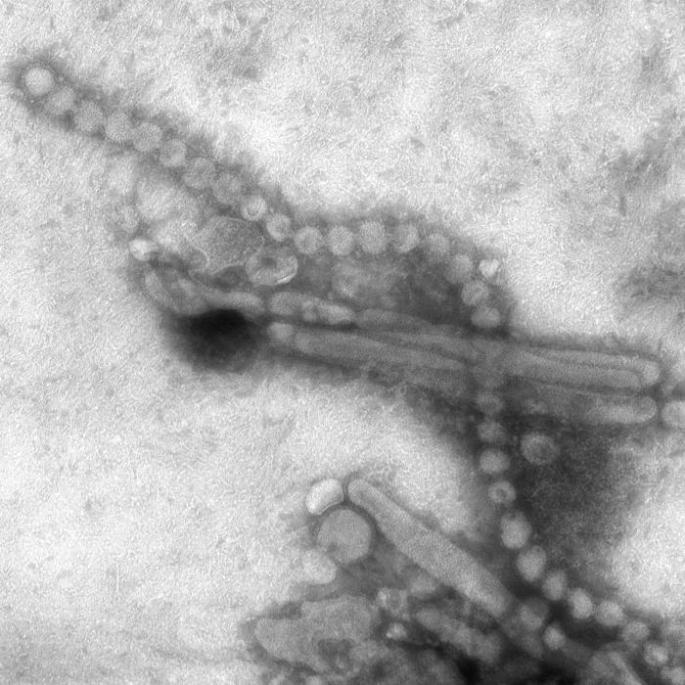
(image of H7N9: CDC/Cynthia S. Goldsmith and Thomas Rowe; false color added by author)

Bubonic Plague in Madagascar

In the latest outbreak of bubonic plague in the country, 20 people died from the disease last week in north-western Madagascar. Bubonic plague, caused by the bacteria Yersinia pestis, is endemic to the island nation, and resulted in 60 fatalities last year alone. The island’s prisoners are especially vulnerable, due to pervasive unsanitary conditions enabling a large rat population in local prisons. However, last week’s outbreak occurred in the relatively remote village of Mandritsara. Health authorities are currently investigating the outbreak.

Plague is spread to humans through infected fleas, often from rats. Bubonic plague is something we’ve written about extensively here on the Pandora Report, usually in a historical context. It’s easy to forgot that for many nations, outbreak of the disease remains a very real fear today.

(image: wikimedia commons)

Hong Kong Quarantines 19 people after 2nd H7N9 case

Health authorities in Hong Kong have quarantined 19 people who were thought to have come in contact with an 80-year-old man diagnosed with H7N9 earlier this week. This is the second case of the influenza A virus in the area. The man has subsequently stabilized – however, at least one person with whom he came in contact has symptoms of a “mild” respiratory infection. H7N9 emerged for the first time in humans earlier this year. Case numbers rose to 137 by the end of October, with 45 fatalities, and the newer cases are thought to result from the cooler temperatures. 

(Image caption: “This negatively-stained transmission electron micrograph (TEM) captured some of the ultrastructural details exhibited by the new influenza A (H7N9) virus.” CDC/Cynthia S. Goldsmith and Thomas Rowe)


The Pandora Report 12.6.13

Highlights this week include the second case of H7N9 in Hong Kong, WHO ramping up calls for increased surveillance for MERS, EEE in Vermont, why that one friend never gets sick, and the Philippines ramping up its biosecurity. Happy Friday!

Hong Kong sees second case of H7N9 bird flu in a week

Hong Kong has seen its second case of H7N9 in the last week. An 80-year old man with diabetes sought medical attention after experiencing minor heart failure, and within a couple days of hospitalization developed symptoms consistent with the flu virus strain. He has subsequently been isolated for further treatment – it remains unclear if he came into contact with poultry prior to his hospitalization. However, don’t freak out yet –  the two cases are consistent with expected resurgent flu numbers following the onset of winter. According to all literature and available case evidence,  the virus still cannot effectively transmit person-to-person.

South China Morning Post – “It was unclear whether the man had come into contact with birds and live poultry and which district in Shenzhen he lived in. The three family members coming with him to the city had been back in Shenzhen and the city had contacted the Shenzhen health authority for subsequent medical monitoring…Border checks have been stepped up after the first confirmed case, and three people, who stayed in the same ward as the helper but had had no symptoms, are being isolated at the Lady MacLehose Holiday Village in Sai Kung.”

WHO calls for action on Mers following death in Abu Dhabi

Earlier this week, a Jordanian woman infected with MERS died from the virus shortly after giving birth to her second child. Her eight-year old son and husband are both also infected, and are still under surveillance in Jordan. It is unclear if the newborn is also infected with the  virus. None of the family had any travel history, any prior contact with animals, or any contact with infected persons, further confounding public health officials trying to determine the virus’ vector. In response to the mother’s death, the WHO has strongly encouraged countries to ramp up their surveillance and monitoring efforts. To date, there have been 163 cases of the virus worldwide, with a case fatality rate of approximately 42% causing 70 deaths.

The National – “More must be done to stop the spread of the deadly Mers coronavirus, the World Health Organisation has warned. Countries must strengthen their surveillance, increase awareness and try to find out how people are infected, the WHO’s emergency committee said on Wednesday…But Mers-CoV is not yet considered an international public health emergency. ‘After discussion and deliberation on the information provided, the committee concluded that it saw no reason to change its previous advice to the director general,’ the WHO said. The 15-member committee, which includes the deputy health minister of Saudi Arabia, Ziad Memish, said the situation continued to be of concern, in view of new cases and of information about the presence of the virus in camels in Qatar last month. It called for more support for countries that are particularly vulnerable, such as Saudi Arabia – where most of the cases have been confirmed – and urged for more studies to investigate exactly how people become infected with Mers-CoV.”

Vt. testing deer samples to test for EEE virus

Biologists in Vermont have begun testing over 700 blood samples collected from local moose and deer in order to track the spread of Eastern Equine Encephalitis (EEE). The virus was first introduced to Vermont in 2011, following the importation of an emu flock. EEE is a zoonotic alphavirus virus which primarily affects horses. The virus’ natural reservoir is wading birds, and it is spread, like so many horrible diseases, by mosquitoes. Although in the US there are usually less than 15 human cases of EEE, the virus’ fatality rate can approach 60%. As an encephalitic virus, symptoms are typically nasty – first fever, splitting headaches, photophobia (aversion to light),  then irritability, coma, and death. Among those lucky enough to survive, the virus often causes permanent sequelae, including severe brain damage.

Seattle PI – “Biologists say that mapping where the virus is found will help broaden the state’s understanding of the spread of the virus — which killed two people in Vermont in 2012 and two horses this year. EEE antibodies detected in deer and moose have been found in every Vermont country. Biologists hope that by looking for antibodies in the deer and moose, they’ll be able to determine if infected animals are more commonly found near certain bodies of water or wetlands.”

A genetic defect protects mice from infection with Influenza viruses

Everyone has that one friend/relative/colleague who not only never gets sick, but also thinks the best time to discuss their fabulous immune system is when you’re knee deep in tissues and throat lozenges. It turns out there may be a genetic reason for their immunological smugness. According to a new study from researchers at the Helmholtz Centre for Infection Research (HZI) in Braunschweig, mice who possess a mutation in the gene which encodes for the Tmprss2 protease (a catalytic enzyme) are resistant to infection from the H1 influenza A viruses. While the virus still infects the mice, it is unable to produce mature, infectious virus particles, and the infection is quickly cleared from their symptoms. This opens up a potential new field for drug development, and by targeting the host system rather than the virus, concerns over drug-resistance fade.

Medical Express – “The virus uses haemagglutinin as a key to enter the host cell which is then captured to build new virus particles. To reach its final shape, the coating protein has to be cleaved by a molecular scissor. This is done by an enzyme of the infected host. Otherwise, the protein is not functional and the virus particles are not infectious. A variety of host enzymes, so-called proteases, that process the haemagglutinin have been identified using cell cultures. Scientists from the HZI have now been able to show how important those enzymes are for the progression of the infection. Mice with a mutation in the gene for the protease Tmprss2 do not become infected by flu viruses containing haemagglutinin type H1. They are resistant against H1N1, the pathogen responsible for seasonal influenza epidemics, the ‘swine flu’ and the ‘Spanish flu’, which caused an epidemic in 1918. ‘These mice do not lose weight and their lungs are almost not impacted,’ says Professor Klaus Schughart, head of the Department ‘Infection Genetics’ at the HZI.”

Philippine airports on alert for bird flu

The Philippines is on high alert for the H7N9 strain of avian influenza found in Hong Kong for the first time last week. Manilla has  banned the import of all Chinese poultry products, and  airports across the island nation already screen inbound travelers to prevent the virus’ spread. This is an interesting form of biosecurity, which is something we don’t often talk about on the PR, mostly because it’s not as much of a concern for us as our colleagues in say, Australia.In this instance, the human body itself is seen as the vector for pathogen movement, rather than a kiwi or tomato plant.

Xinhua – “The Philippine government has alerted airport authorities to ensure that the deadly bird flu H7N9 could not enter the country following the recent discovery of first case in Hong Kong, the Philippines’ Department of Health ( DOH) said Wednesday. To date there are 141 cases of bird flu and 47 deaths worldwide. Deaths were due to severe pneumonia with multi-organ failure. So far, two-thirds of bird flu H7N9 cases were males and two-thirds were more than 50 years old.”

(image via Hagerty Ryan, U.S. Fish and Wildlife Service)

H2N2 as a Potential Pandemic Threat

According to a new study published in the Journal of Virology, descendants of the H2N2 strain of avian influenza, last seen in humans in the 1950s, may still pose a significant threat to humans, particularly those under 50 years of age. According to the study, conducted by  St. Jude’s Children’s Research Hospital, the virus is still highly adapted to human respiratory cells. The last major outbreak occurred in 1957-58, and killed up to two million people globally. However, effective antivirals were absent at the time – should the virus, which has subsequently circulated in birds, re-emerge, it should be susceptible to modern antivirals. However, as the virus has not been seen in humans in over 50 years, anyone under the age of approximately 55 years would constitute a naive host, and as there are 230 million people in the US alone currently under the ages of 55, the size of this naive population is not insignificant. 

From Science Daily – “‘While these viruses genetically look very avian, this study shows they can behave like mammalian viruses and replicate in multiple mammalian models of flu,’ said the study’s first author, Jeremy Jones, Ph.D., a postdoctoral fellow in Webster’s laboratory. ‘That is troubling because some of the original H2N2 pandemic viruses looked avian when the pandemic began in 1957, but in a few short months, all of the isolated viruses had picked up the genetic signatures of adaptation to humans. Our results suggest the same could happen if the H2N2 viruses again crossed from birds into humans.’ Work is underway at St. Jude to identify other changes that are critical to the ability of avian flu viruses to infect and replicate in mammalian cells, Jones said.”

Read more here

(image via wikimedia commons)

H7N9 in Hong Kong

Hong Kong confirmed its first case of H7N9 yesterday, a 36-year old female who had previously travelled to mainland China and been in contact with poulty. The woman was admitted to Queen Mary’s Hospital last month, after falling ill. She remains in critical condition.

This is the second time the virus has popped up outside of mainland China, with a previous case in Taiwan early this year. Since February of this year, China has reported 137 cases of the avian flu, with 45 fatalities. However, it’s worth noting that while the virus does have pandemic potential, the majority of cases occurred last Spring, with less than ten cases total appearing over the summer and fall. Avian influenza viruses often behave similarly to seasonal flu viruses, with the majority of infections occurring in cooler months.

Prior to February, H7N9 had not infected humans. Labs in the US, UK, and Japan have all developed candidate vaccines.

(Image: James Jin/Flickr)

Delving Deeper: Living in the Post-Antibiotic Era

By Yong-Bee Lim

The Post-Antibiotic Era Problem: What are the Issues, and How Can Adaptive Clinical Trials Potentially Help?

Nostalgia is a powerful thing. When people get nostalgic, they are cognitively living in the past; in this constructed past, the past seems rosy, and often conceived of as more positive than the present. That said, even with rose-tinted glasses, it is hard to argue that life (if defined as survivability) was better before the introduction of antibiotics. For example, mortality rates from pneumococcal pneumonia were 30-35% in the pre-antibiotic era, with the therapy often being quarantining patients.[1] Antibiotics have allowed for both the morbidity and mortality rates of pneumococcal pneumonia to drop to nearly zero in developed countries.[2] Furthermore, antibiotics allow procedures that would have been impossible in a pre-antibiotic era; organ transplants, invasive procedures, and intensive care units would not be possible without effective antibiotics.

A recent piece of news to hit the public health radar involves a man in New Zealand named Henry Pool. Pool, while teaching English in Vietnam, was operated on following a brain hemorrhage. When flown following the operation to a Wellington hospital, it was discovered that he carried a bacteria strain identified as KPC-Oxa 48: a strain of bacteria that is resistant to every antibiotic currently available to man. To contain the possibility of the strain of bacteria getting out, Pool was forcibly quarantined for 6 months until he passed away. [3]

This recent death in New Zealand highlights a threat that looms ever closer in the public health horizon: the post-antibiotic era. Due to a number of factors, including over-prescription of antibiotics to patients and over-use of antibiotics in farming and animal cultivation, bacteria have undergone evolutionary pressures to resist and overcome the mechanisms of our current arsenal antibiotics; several adaptations include the production of enzymes to modify antibiotics, cell wall changes that prevent the ingress of antibiotics inside the bacterium, and the creation of pumps to transfer antibiotics outside of the cell before the antibiotic’s effects are actualized. Furthermore, evidence points to the fact that multiply-resistant bacteria are not staying confined to hospitals as they traditionally have; certain bacteria such as Streptococcus pneumonia and Staphylococcus aureus with partial/complete resistance to penicillin have been detected in community populations.[4]

The concept of antibiotic resistance is not a foreign one to scientists and individuals in the public health sector. Staphylococcus aureus was actually noted to have started developing antibiotic resistance to penicillin as early as the 1940s.[5] Despite this knowledge that antibiotic resistance could, and would, develop over time, very little is available in regards to innovative new antibiotics to counter the rising threat of antibiotic-resistant bacteria. There has been “no major classes of antibiotics introduced” between the years of 1962 and 2000;[6] furthermore, while representatives of novel antibacterial classes (linezolid: 2000, daptomycin: 2003, retapamulin: 2007) have been registered, the chemical classes from whence these representatives originate were patented or reported historically (oxazolidnones: 1978, acid lipopetides: 1987, pleuromutilins: 1952).[7]

If the threat is realized, then, why is there such paucity in the development and production of novel and effective antibacterial therapies? Part of the equation has to do with the society we live in; money is important to companies.  Over the past several decades, a number of large pharmaceutical companies have drastically cut funding and maintaining the internal capacity for R&D of antibacterial therapies. It is often argued that this decline is partially explained by the fact that pharmaceutical companies seek to shift R&D resources from antibacterial drug discovery programs to other, more profitable therapy areas such as musculoskeletal and central nervous system (CNS) drugs.[8],[9] The net effect of various economic barriers involved in the development of an antibiotic (if successful) is a net loss of $50 million dollars compared to a $1 billion gain for a new musculoskeletal drug at the time of discovery.[10] In addition, mergers and take-overs of pharmaceutical companies often result in a restructuring of priorities and personnel; these restructures have often included the loss of research groups with expertise in antibiotic drug discovery.[11]

So if part of the issue is economics, what can be done to better galvanize and incentivize pharmaceutical companies to come back and do R&D on antibacterial drugs? One area where companies often hemorrhage money is in the clinical trials necessary to prove both the safety and efficacy of a product. Oftentimes, the bulk of R&D funds are spent on clinical trials. Clinical trials (depending on the size of the sample needed to test the product, the cost of developing the product itself, and other factors) can run in the ballpark of $100 million dollars per trial; with a minimum of 3 phases of clinical trials (with a high probability of repeating at least one phase of a trial), it is easy to see a successful product would cost a minimum of $400 million dollars in clinical trials alone.[12]

Under the current model of clinical trials, trials are clearly demarcated between phases (Clinical Phase 1, Clinical Phase 2, and Clinical Phase 3) that must be done in a sequential fashion. Furthermore, these trials are rigid in the fact that parameters may not be changed during the course of a trial; all participants must be kept throughout the trial, dosages may not be altered, and trials (except under certain circumstances) must be completed until the end. Among a number of situations, this lock-step approach inflates costs when observations might indicate:

–          A certain subset is not responding to a dose (perhaps the dose is too low)

–          The entire sample is not responding to the product (at any dose)

Using innovative, high-level Bayesian biostatistics, a new avenue of clinical research design is being explored that may help alleviate some of the costs of clinical trials. Adaptive clinical trials are specifically designed studies that are meant to “adapt” as a clinical trial proceeds; these adaptations occur through an analysis of the accumulated results in a trial.[13] As opposed to the lock-step and rigid clinical trial structure that is currently used, adaptive clinical trials allow modifications to be introduced during the trial phase. These modifications could include, but are not limited to:

–          Sample size re-estimation: If the number of people for a trial is too small or too large, this can be adapted during the trial.

–          Early stopping of clinical trials: In the event that there is evidence that the product isn’t performing the way it is supposed to (lack of efficacy), trials can be shut down to save funds and resources.

–          Dropping suboptimal groups: In the event that there is evidence that the product isn’t effective in a subgroup of the trial sample (perhaps a group with a low dose is not presenting results), then the group could be dropped to save funds and resources.

–          Overlapping trials: Adaptive trials could overlap phases (the tail end of phase 1, for example, could overlap the beginning of phase 2), resulting in faster clinical trial completion and, hopefully, swifter licensure.

It should be noted that this type of approach is very new, and is only just garnering use in various areas that require clinical trials. For example, it has not been used, as of this post, for the development of Medical Countermeasures (MCMs). However, if it can be successfully executed, it holds possibilities in significantly cutting down both the temporal constraints, as well as the financial burdens, of attaining the novel and effective antibiotics that are necessary to help curb the growing antibiotic-resistant bacteria threat.

Perhaps the phraseology “post-antibiotic era” is too strong; it seems to evoke a sense of fear, and fails to address the idea that future innovations exist in the pipeline to potentially deal with issues of current levels of antibiotic resistance. However, what can be said is that we are starting to run out of options in our bag of tricks, and it will take more than a wave of a wand and an “abracadabra” to resolve this threat to the status quo: a public health era in which antibiotics work against bacteria to increase survivability. While there are multi-faceted issues contributing to this issue, the ability to help make antibacterial R&D more financially viable for pharmaceutical companies (through the use of innovations such as adaptive clinical trials) could help in dealing with this public health concern.
______________________________

Yong-Bee Lim is a PhD student in Biodefense at George Mason University. He holds a B.S. in Psychology and an M.S. in Biodefense from George Mason University as well. Contact him at ylim3@masonlive.gmu.edu or on Twitter @yblim3.


[1] Shai Ashkenazi. (2012). “Beginning and possibly the end of the antibiotic era,” Journal of Pediatrics and Child Health, 49 (3): pp. 179 – 182.

[2] RP Wenzel and MB Edmond. (2000). “Managing antibiotic resistance,” New England Journal of Medicine, 343: pp. 1961 – 1963

[3] “Kiwi dies with bug no drug could beat,” New Zealand Herald, accessed 11/23/2013: http://m.nzherald.co.nz/nz/news/article.cfm?c_id=1&objectid=11159413

[4] LF Chen, T Chopra, and KS Kaye. (2009). “Pathogens resistant to antimicrobial agents,” Infectious Disease Clinics of North America, 23: pp. 817 – 845

[5] “Methicillin-Resistant Staphylococcus aureus (MRSA),” National Institute of Allergy and Infectious Diseases, accessed 11/26/2013, http://www.niaid.nih.gov/topics/antimicrobialresistance/examples/mrsa/pages/history.aspx

[6] MA Fischbach and CT Walsh. (2009). “Antibiotics for emerging pathogens,” Science, 325: pp. 1089 – 1093

[7] Lynn L. Silver. (2011). “Challenges of antibacterial discovery,” Clinical Microbiology Reviews, 24 (1): pp.71 – 109

[8] S. Projan. (2003). “Why is big pharma getting out of antibacterial drug discovery?” Current Opinion in Microbiology, 6 (5): pp. 427 – 430

[9] R Finch and P Hunger. (2006). “Antibiotic resistance – action to promote new technologies,” Journal of Antimicrobial Chemotherapy, 58 (Suppl): pp. 3 – 22

[10] Priya Sharma and Adrian Towse. (2011). “New drugs to tackle antimicrobial resistance: Analysis of EU policy options.”

[11] I. Chopra. (2008). “Treatment of health-care-associated infections caused by Gram-negative bacteria: a consensus statement,” Lancet Infectious Diseases, 8: pp. 133 – 139

[12] “How the FDA Stifles New Cures, Part I: The Rising Cost of Clinical Trials,” Forbes, accessed 11/26/2013, http://www.forbes.com/sites/aroy/2012/04/24/how-the-fda-stifles-new-cures-part-i-the-rising-cost-of-clinical-trials/

[13] Donald A. Berry. (2010). “Adapative clinical trials: The promise and the caution,” American Society of Clinical Oncology, 29 (6): pp. 606 – 609