Looking for a great podcast? Check out the American Society for Microbiology’s Meet the Microbiologist – especially the latest episode on biopreparedness and biosecurity with Gigi Kwik Gronvall. From island emergency preparedness to antimicrobial resistance and monkeypox, we’ve got you covered for all things biodefense this week.
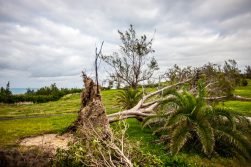 Top 5 Challenges in Emergency Preparedness: An Island Perspective
Imagine dealing with a natural disaster or health security threat like a major outbreak, but instead of being on mainland where you can rapidly get aid, you’re on an island. GMU Biodefense MS student Tara Hines provides unique insight into emergency preparedness for islands and how these efforts must overcome unusual challenges. From the health security perspective, there are always challenges, but what would be the biggest ones if you were on an island, like Bermuda? “The great part about biodefense is that it integrates public health, public safety, and basic science to provide health security. This interdisciplinary approach lets us tap into all of these areas to identify potential problems and suggest possible solutions, before a disaster strikes. Plus, biodefense work can be done anywhere and is crucial everywhere!” Tara addresses the challenges of not only collaboration and communication, but also military history and capacity, and several other factors that come into play. Make sure to read about her take on these response efforts and what it has been like responding to such events from an island.
Center for Health Security – ELBI Fellowship Application Now Open
If you’re looking to become an EBLI fellow with the Center for Health Security, good news – applications are now open! “The Emerging Leaders in Biosecurity Fellowship is an opportunity for talented career professionals to deepen their expertise, expand their network, and build their leadership skills through a series of sponsored events coordinated by the Johns Hopkins Center for Health Security.” The GMU Biodefense program is proud to have seen four students selected for this prestigious fellowship. For more insights into the ELBI fellowship, check out 2017 fellow and current GMU biodefense PhD student Saskia Popescu’s take on her ELBI experience. If you are a GMU biodefense student or alum looking to apply and hoping to get a golden ticket (aka letter of recommendation) from Dr. Koblentz – make sure to email him ASAP and make sure to send him your CV/resume/statement letter prior to December 4th.
Summit on Global Food Security and Health: “Integrating Global Food Security and National Security: Problems, Progress, and Challenges”
We’re excited to see this amazing summit on food security and national security is right around the corner. Don’t miss your chance to attend this November 15th event at the Schar School of Policy and Government, Founders Hall Auditorium. “The Fourth Annual Summit on Global Food Security and Health will take place George Mason University’s Schar School of Policy and Government on Wednesday, November 15, 2017 at our Arlington Campus from 9:00 am to 5:00 pm in the Founders Hall Auditorium at 3351 Fairfax Drive, Arlington, Va. The conference is co-sponsored by the Stimson Center, RTI International, and The Policy Studies Organization. Our focus this year is on the interrelationship between food security and national security, progress and challenges under Feed The Future (FTF) and the Global Food Security Act, and the growing importance of food security private-public partnerships, resilience, critical indigenous food security challenges, nutrition and health issues. Summit speakers will represent a wide array of government, international organization, NGO, private sector, and academic experts. Our Summit follows the issuance of a recent USAID Feed The Future 2017 Progress Report, the enactment of the July 2016 Global Food Security Act, the related completion of new USAID global food security and food aid strategies, and the issuance of USAID’s December 2016 Feed The Future Global Performance Evaluation. The Summit will follow the World Food Prize Conference in Des Moines, Iowa , October 18 – 20 which addresses opportunities for innovative agriculture to eliminate the scourge of global hunger and poverty. Our GMU Summit takes place during a particularly important period marked by protracted uncertainty about U.S. support for International food aid, global food security, and foreign aid.” The event is free, but make sure you RSVP!
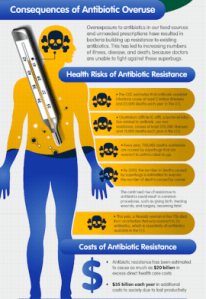 Antimicrobial Resistance, WHO Agriculture Recommendations, & USDA’s Not-So-Subtle Shade
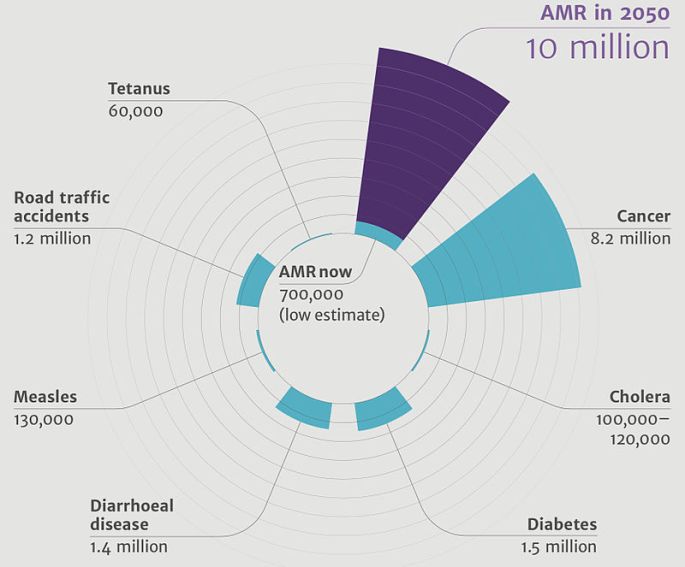
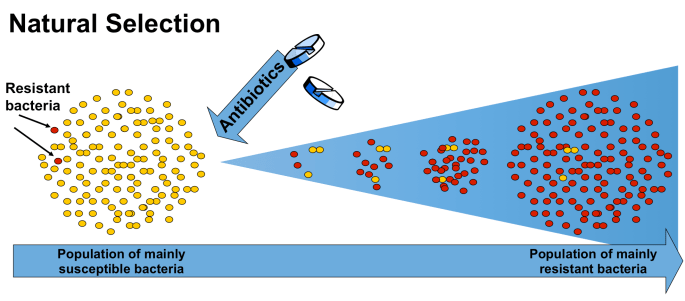
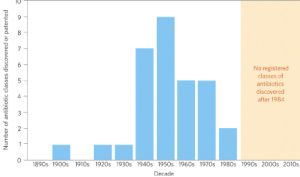
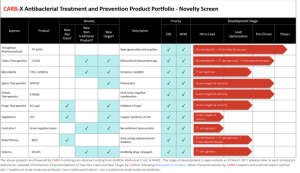
AMR is slowly becoming the “I told you so” of infectious disease threats. Even Alexander Fleming warned of a day when antibiotics would no longer be effective. “Back in 2013, the UK’s chief medical officer Dame Sally Davies started warning the world that antibiotic resistance posed a deadly threat to humanity. But, she believes, that her lack of hard data meant few people took her seriously. ‘One crucial thing that got the whole world to take climate change seriously was the Stern Review on the Economics of Climate Change back in 2006’ she explains. ‘So we launched our own Stern Review – and found superbugs will kill us before climate change does’.” Reports since then have also highlighted the millions that will die every year due to AMR, but we’re still struggling with incentives for drug discovery and development. “Superbugs are a classic example of market failure – Dame Sally gave a timeline and a point of no return that we have to solve or we’re FUBAR. Government is too linear, industry sees no profit, VC’s don’t see any capital, labs have other problems and NGOs struggle to innovate.” While efforts to invigorate industry are underway, the WHO’s new recommendations are addressing AMR from the agriculture angle. The latest report is calling for a reduction in antimicrobial use across the board in food-producing animals and the halting of use in healthy animals for growth. “The formal guidelines issued by the WHO further recommended that when animals are diagnosed with a bacterial infection, antibiotics that are considered critically important for human medicine should not be used for treatment or to prevent the spread of the infection within a herd or flock, unless tests indicate those drugs are the only treatment option. Instead, antibiotics used for the treatment of sick animals should be chosen from those the WHO considers least important to human health.” Responding to these new recommendations, the USDA has thrown some not-so-subtle shade in their recent press release. The USDA Acting Chief Scientist, Dr. Chavonda Jacobs-Yong, has stated that the WHO recommendations are “not in alignment with U.S. policy and are not supported by sound science. The recommendations erroneously conflate disease prevention with growth promotion in animals.” Fighting AMR is a like fighting a chimeric hydra – a multi-headed, regenerating beast made of different animals – all dangerous and different. What herculean effort will be required for us to win the battle of the superbug?
 Schar School Master’s Open House – Biodefense MS
It’s the last MS Open House of the season and you won’t want to miss this opportunity to learn about our biodefense graduate programs and talk to faculty. Next Wednesday, November 15th at 6:30pm at GMU’s Arlington campus, you can get the scoop on earning your master’s degree in biodefense on campus or remotely – don’t miss out!
Panel Discussion: Security in the New Era of Targeted Sanctions
Don’t miss the Fall 2017 Symposium hosted by the National Security Law Journal on November 13th at 11:30am! Hosted at GMU’s Founders Hall Auditorium, you can hear from a distinguished panel of attorneys and policy experts specializing in foreign policy, economics, and current events for this event, two of whom are George Mason professors. Dr. Gregory Koblentz, Dr. Mark Katz, and Dr. Adam Smith, will be panelists on this great symposium – infact, Dr. Koblentz will be speaking on the role of sanctions in responding to Syria’s use of chemical weapons. Mark sure to RSVP by emailing symposium@nslj.org.
Chasing a Killer – Hunting Monkeypox
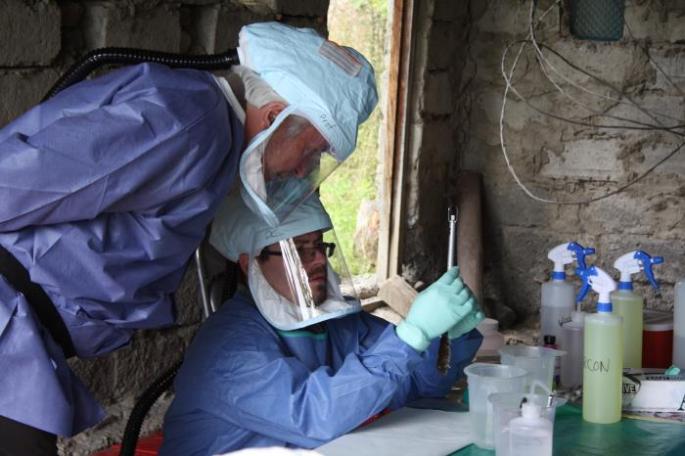
While we talk of pandemic flu and synthetic biology, it’s easy to forget some of the more mysterious, and yet, equally sinister natural outbreaks that are occurring. The Congo Republic is currently battling a surprising outbreak of monkeypox, which is a cousin of smallpox. “Over the past year, reports of monkeypox have flared alarmingly across Africa, one of several animal-borne diseases that have raised anxiety around the globe. The Congolese government invited CDC researchers here to track the disease and train local scientists. Understanding the virus and how it spreads during an outbreak is key to stopping it and protecting people from the deadly disease.” In fact, the U.S. has experienced its own monkeypox outbreak – in 2003 due to an exotic pet that was imported (sounds like the beginning of that movie Outbreak…). Zoonotic spillover is normally how these outbreaks begin and while monkeypox is not as deadly as smallpox or ebola (a mortality rate of around 10%), researchers are working to understand the ecology of monkeypox hosts and reservoirs. Take a minute to check out this article as there are some wonderful photos and maps that will take you along for this on-the-ground virus hunting expedition.
CBFP Biosciences Fellowship Program
CBFP welcomes applications from early to mid-career biological scientists working in government ministries, government-operated biological science laboratories, and/or research and diagnostic facilities with experience in laboratory operations, research, and diagnostics from Jordan, Lebanon, and Turkey. Only applications from these three countries will be considered. Selected fellows will conduct a science exchange fellowship of up to six months in duration to engage in research at a host institution including, but not limited to, the United States, Europe, and the Middle East beginning no earlier than September 2018. Applications are due December 17th, so make sure to apply here!
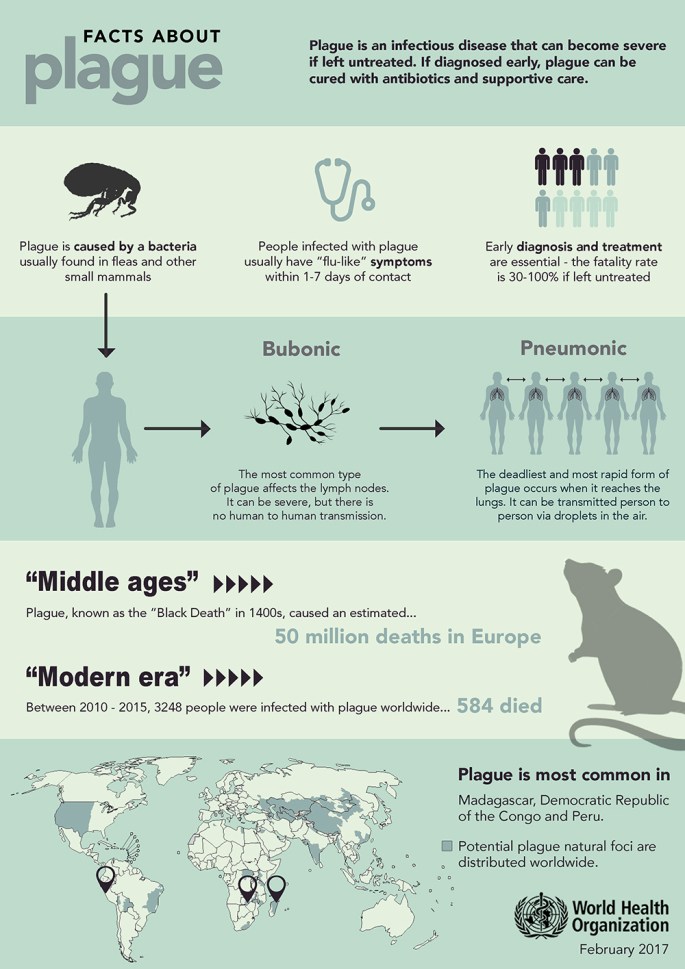
 Canada To Prioritize Biothreat Reduction During G7 Presidency In 2018, Canada will assume the G7 presidency role and Global Affairs Associate Deputy Minister Mark Gwozdecky has made it known that the country will prioritize biological threat reduction. “Infectious diseases have plagued mankind since the dawn of time. They’ve proven to be ruthless, persistent and all too adaptive and have been responsible for unparalleled death, suffering and economic loss,” Gwozdecky said.” He pointed to the recent outbreak of bubonic plague in Madagascar, which has infected more than 1,300 people, as an example of the ongoing challenges facing public health officials.” Efforts will also focus on the growing issue of antimicrobial resistance and the threat of biological weapons. Canada has continued to prioritize the full spectrum of biological threats and importance of biosecurity and biosafety within labs through its BSL4Znet network, which is a global information and resource sharing program to protect against biothreats. “While these threats, both natural and intentional are formidable, they are not beyond our means to overcome,” he said. “Key to this, however, will be enhanced cooperation, collaboration and collective effort.” “We look forward to engaging all of our partners to identify new ways, means and opportunities to strengthen global biological security,” Gwozdecky added.
The U.S. Government and Global Health Security
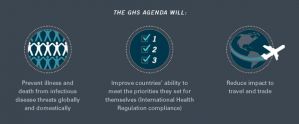
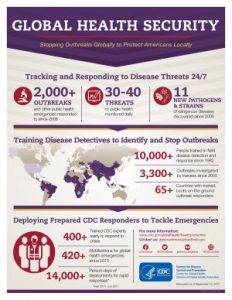
The Henry J. Kaiser Family Foundation’s latest issue brief focuses on the roe of the U.S. government and global health security. Ranging from a number of threats like Ebola, HIV, and SARS, global health security efforts are vital and must be as diverse and adaptable as the infectious diseases they thwart. “U.S. funding for its primary global health security programs –activities primarily carried out by the U.S. Agency for International Development (USAID), Centers for Disease Control and Prevention (CDC), and Department of Defense (DoD) – has remained relatively flat from FY 2006 ($390 million) through FY 2017 ($402 million), with episodic funding spikes through supplemental funding mechanisms reflecting specific outbreak events, including Ebola in FY 2015 ($1 billion) and Zika in FY 2016 ($145.5 million). The Administration has proposed reduced global health security funding for FY 2018 ($353 million).” This comprehensive report addresses the current global situation of infectious disease outbreaks and reviews U.S. government efforts and funding.
Stories You May Have Missed:
- Financial Misappropriations, Ebola, and The Red Cross – The Red Cross organization recently confirmed that nearly $6 million in donated funds were misappropriated during the 2014 Ebola outbreak. “The organisation’s own investigations uncovered evidence of fraud, with more than $2.1m (£1.6m) lost in Sierra Leone, probably stolen by staff in collusion with local bank officials, according to a statement. In Guinea, a mixture of fake and inflated customs bills cost it $1m.” Investigations found the prices of relief goods and payrolls were inflated and while this isn’t the first time corruption has been associated with humanitarian relief, the Red Cross has yet to issue an apology.
- Minnesota’s Drug-Resistant TB Outbreak– Minnesota’s Ramsey County is battling a deadly multi-drug resistant tuberculosis (MDR-TB) outbreak. “Six of the 17 have died, with three of those deaths being directly attributed to tuberculosis, said Kris Ehresmann, director for Infectious Disease at the Minnesota Department of Health, on Monday. Of the 17 cases, 14 were in the Hmong community and 10 are associated with individuals who participate in activities at a senior center, Ehresmann said.”
Thank you for reading the Pandora Report. If you would like to share any biodefense news, events, or stories, please contact our Editor Saskia Popescu (biodefense@gmu.edu) or via Twitter: @PandoraReport

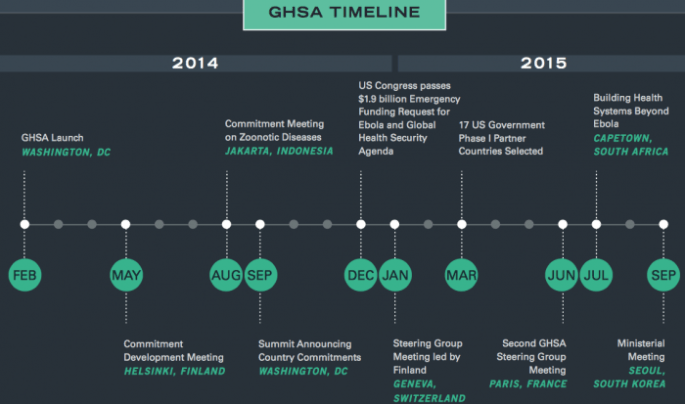
 GHSA Ministerial Meeting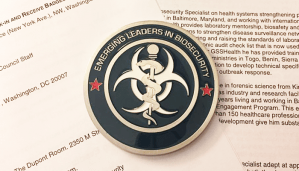

 The Good, The Bad, and The Ugly of Pandemic Prediction