The Revolving Door of Biosafety

By Scott McAlister

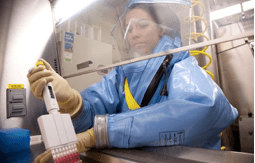
Have you ever seen a science fiction movie that starts with a lab accident? A scientist drops a vile with the biohazard label on it and next thing you know, boom, the zombie apocalypse is in full force.  In the real world, lab accidents probably won’t lead to a zombie outbreak, but the reality is still pretty concerning.  We have seen accidents in the last couple years that should lead to some uneasy feelings about the biosafety and biosecurity protocols and practices we have in this country.  In response to these incidents, the White House released issued a memorandum to highlight recommendations and implementation timelines to fix these problems.  This report, however, looks eerily similar to a report filed by the Trans-Federal Task Force on Optimizing Biosafety and Biocontainment Oversight in 2009.  The failure of the 2009 report to include concrete implementation made it all too easy to overlook.  Hopefully, the more prominent report released by the White House, including the implementation timelines, will be effective in curbing future lab accidents and improving biosafety.

Continue reading “The Revolving Door of Biosafety”

Pandora Report: 12.18.2015

Hungry, hungry anthrax hippos? If there’s one thing we love about the science community, it’s when a gem pops up in your inbox like this (thanks ProMed!). In Ebola news, public health officials are exploring the possibility that survivors may be a potential source of case surges. Fun history fact Friday: On December 18, 1620, the Mayflower docked at Plymouth Harbor and passengers began settlement and on December 14, 1980, the CIA issued a warning about Soviet arms sales to Third World nations. Take a break from holiday preparations with this week’s Pandora Report – we’re discussing everything from zombies to Bob Dylan lyrics!

Epidemiology of a Zombie Outbreak
Tara C Smith and the writers of The BMJ certainly know how to hook a biodefense nerd – epidemiology of zombie infections? Don’t mind if we do! Using historical tales and movie outbreaks, Smith takes us through several hypothetical zombie outbreaks we’ve experienced as viewers or readers for the past few decades. Tracing the origins of certain outbreaks and the transmission patterns via bite, this scientific approach to one of our favorite topics is fascinating.  Potential etiological considerations included weaponized Yersinia pestis, a mutation of bovine spongiform encephalopathy, or a genetically modified form of the Ebola virus that was tested on chimpanzees (that later escaped!). Last but not least, we can’t forget to consider the ethical implications of such an outbreak. How do we handle resource depletion or quarantine? All things to consider before the zombie apocalypse!

Risk & Benefit Analysis of Gain of Function Research 
With the National Science Advisory Board for Biosecurity (NSABB) meeting fast approaching (January 7-8, 2016!), we’re recapping the role of gain-of-function (GoF) research in biodefense. Earlier this year, Gryphon Scientific was awarded a NIH contract related to assessment of GoF research and the risk-versus-benefits that may impact future federal funding. With the intent to make future recommendations, the assessment had three major tasks: a risk analysis (RA) of accidents and natural disasters, a biosecurity RA, and a benefit assessment. Extensive review and analysis of data from the intelligence and law enforcement community reviewed potential gaps within security practices. “The biosecurity RA is delivered in two parts because risks posed by malicious acts targeting laboratories that conduct GoF required a different analytical approach than the assessment of the risk generated by the misuse of published GoF research.” GMU Biodefense alum and previous Pandora Report editor, Julia Homstad, is also the lead author on Chapter 11 (Risk of Loss of Trust in Science). Perhaps one of my favorite points from the report was that “this assessment requires the identification of scientific and non-scientific barriers to the realization of these benefits.” You can also find Michael Selgelid’s White Paper regarding the ethical implications of GoF research. While the 1,001 pages may seem a daunting task, this is not only a highly relevant report, but approaches GoF concerns and risks in an engaging and holistic manner.

Bob Dylan Lyrics in Medical Literature?
Have you ever read a scientific article and felt a complete unknown, like a rolling stone? Scientists at the Karolinska Institute in Sweden have been sneaking Bob Dylan song lyrics into their papers as part of a long-standing bet since 1997. “It all started in 1997 with a review in Nature Medicine entitled ‘Nitric oxide and inflammation: the answer is blowing in the wind.'” Carl Gornitzki and colleagues from The BMJ decided to do some additional digging in Medline and found that 213 of 727 found references were unequivocally citing Bob Dylan. Starting a few years after his musical debut, research papers included a variety of biomedical topics, like those of Hermanson et al., who managed to work “like a rolling stone” into their paper on epigenetics. The variety of lyrics found throughout the literature is certainly more than a simple twist of fate.

Outbreak Preparedness 2015 Report
Ever wonder how your state ranks in terms of emerging infectious disease preparedness? Trust for America’s Health and the Robert Wood Johnson Foundation recently published their 2015 report regarding state capabilities to protect against new infectious disease threats (MERS-CoV, multi-drug resistant organisms, etc.) and “resurging illnesses like whooping cough, tuberculosis, and gonorrhea.” The report found that over half of US states ranked at five or lower on a scale of ten. The five all-star states (scoring eight) were Delaware, Kentucky, Main, New York, and Virginia (go Virigina!). The report findings noted that “the nation must redouble efforts to protect Americans” and included points on healthcare-associated infections, flu vaccination rates, food safety, and superbugs. Check out the report to find where your state ranked!

Fighting Antibiotic Resistance in the United States18170_lores
On Thursday, the House Appropriations Committee presented the 2016 Omnibus Appropriations bill, which revealed discretionary funding plans for the federal government. Buried in new legislation, the FDA and NIH will receive part of this discretionary funding to help fight antibiotic resistant bacteria and “advance prevision medicine initiatives”. The FDA is set to receive $2.7 billion, which was over a $10 million increase from FY2015. Within the bill, there is “funding for the Combating Antibiotic Resistance Bacteria (CARB) initiative ($8,732,000), the precision medicine initiative ($2,392,000), and the Orphan Product Development Grants Program ($2,500,000). The NIH will receive an extra $2 billion for FY2016, which supported projects specially for Alzheimer’s diseases research, brain research, antibiotic resistance, the Precision Medicine Initiative, etc. Given last week’s report on the phantom menace CRE and growing cases of multi-drug resistant organisms, it’s extremely important antibiotic resistance be given more attention.

Stories You May Have Missed:

  • CDC Establishing Flu Vaccine Efficacy Lab Network – The CDC has provided funding for a network of US institutions to collect and analyze information related to annual flu vaccine effectiveness. “Participating institutions will coordinate enrollment of patients with acute respiratory illness, confirm influenza infection using a standardized reverse-transcription PCR (RT-PCR) assay, and estimate vaccine effectiveness.” The 30 million dollar funded project will run from July 2016-2021.
  • Avian Influenza in France – France has reported 30 outbreaks of avian influenza, specifically one of the highly pathogenic influenza. Unfortunately the strain in the most recent cases hasn’t been identified, but these outbreaks been attributed to one of the H5 strains.
  • Hawaiian Dengue Outbreak Update – Cases of dengue virus on Hawaii Island have now reached 157. There are 7 individuals considered still infectious and the Hawaii Department of Health (HDOH) continues their efforts to identify cases and reduce transmission. 140 of the cases are Hawaii Island residents, and 34 of the overall cases have been children under the age of 18.

Enjoying your weekly dose of the Pandora Report? Sign up to receive it every week so the fun never ends! 

Week in DC: Events 12.14-12.18.2015

Monday, December 14, 2015
The Wisdom Of A Grand Nuclear Bargain With Pakistan- Atlantic Council
Time: 3:30pm
Location: Atlantic Council1030 15th St NW, Washington, DC 20005 (map)
Room: 12th Floor (West Tower)
Earlier this year, various news outlets reported that the Obama administration was exploring a nuclear deal with Pakistan. The deal would work to better incorporate Pakistan into the global nuclear order, exchanging legitimacy for its accepting nuclear constraints. Many analysts believe Pakistan’s nuclear weapons program poses a substantial threat to international and South Asian security. One of four nuclear weapons states outside the normative and legal apparatus of the Nuclear Nonproliferation Treaty, Pakistan is assessed to have the fastest growing nuclear arsenal in the world.
The South Asia Center will convene a panel of experts including Dr. Toby Dalton, Co-Director of the Nuclear Policy Program at the Carnegie Endowment for International Peace, Dr. Sameer Lalwani, Deputy Director of Stimson’s South Asia Program, and Dr. Gaurav Kampani, Nonresident Senior Fellow at the Atlantic Council’s South Asia Center, to discuss policy options to address international concerns over Pakistan’s nuclear arsenal.

Political Transition In East-Central Europe And The End Of The Cold War, 1985–1991Woodrow Wilson International Center for Scholars
Time: 4-5:30pm
Location: Woodrow Wilson Center1300 Pennsylvania Ave., NW, Washington, D.C. 20004(map)
Csaba Békés argues that the eventual Soviet acceptance of internal political changes in East-Central Europe in 1989 by no means meant that Gorbachev was ready to give up the Soviet sphere of influence in the region as well.  His efforts to preserve control over the area were greatly facilitated by the fact that until the end of 1990 the Western powers, which welcomed the internal political transition,   contrary to the interpretation of mainstream literature  did not support the aspirations for independence of the states of the region, not even in the form of neutrality.

Tuesday, December 15, 2015
Reducing The Risk Of Nuclear War In The Nordic/Baltic Region The Stimson Center
Time: noon-1:30pm
Location: Stimson Center1211 Connecticut Ave NW, Washington, DC 20036 (map) Room: 8th Floor
RSVP HERE
Northern Europe is currently experiencing escalating political and military tensions that are rekindling fears of war between Russia and NATO. Any such conflict would inherently include a risk of nuclear weapons use. The Stimson Center, partnered with Project High Hopes, is examining the results of such nuclear exchanges and, more importantly, developing initiatives to avoid such catastrophes. Continue reading “Week in DC: Events 12.14-12.18.2015”

Pandora Report 12.11.2015

If you’re in Boston and enjoying a Chipotle burrito bowl, you may want to put the fork down. As many as 80 cases of norovirus were reported in association with a Boston Chipotle. The norovirus surge occurs just months after the multi-state Chipotle-linked E. coli 026 outbreak. This week we’re discussing superbugs Star Wars style, the decline of infectious disease specialists, Ebola lab stories from the field, and much more. Fun history fact Friday: on December 7, 1941, Pearl Harbor was bombed and on December 10, 1901, the first Nobel Prizes were awarded in Stockholm, Sweden 

“Phantom Menace” Superbug?
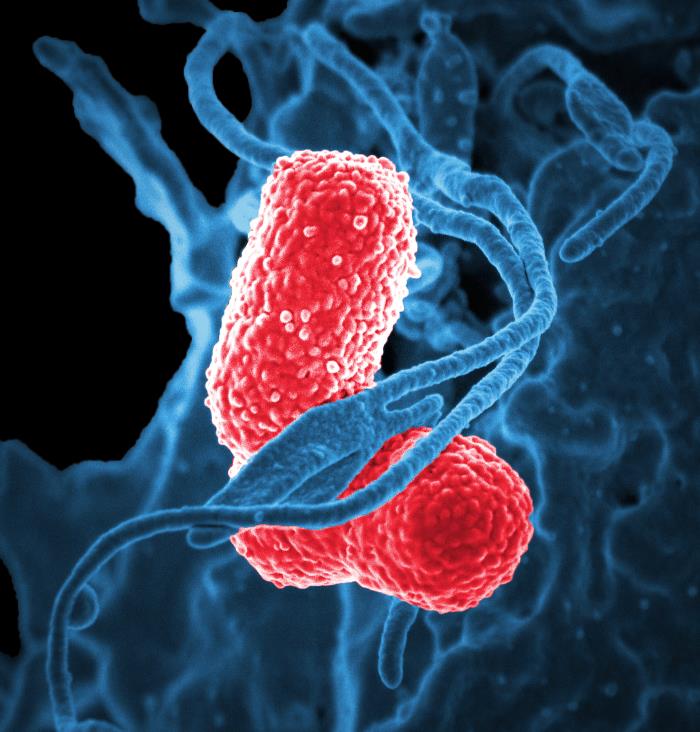
In a lab far, far away… How could we resist a Star Wars reference to antibiotic resistance? A recent CDC MMWR reported a growing incidence of a particularly concerning antibiotic-resistant organism. Carbapenem-resistant Enterobacteriaceae (CRE) are continuing to raise concerns due to cases related to endoscopic retrograde cholangiopancreatography (ERCP) scopes. Since it’s discovery, global health experts (including the CDC) have been keeping a close eye on CRE transmission and cases. A variant of CRE, called OXA-48-type carbapenemase, was seen in Enterobacteriaceae in Turkey in 2001. 52 isolates of CRE producing OXA-48-like carbapenemases were found in 43 patients in the US from June 2010-August 2015. A study in 2012 first referenced OXA-48-like carbapenemases as the phantom menace. The concerning issue with this particular CRE strain, aside from its known-resistance, is the growing emergence in the US. The difficulty in treatment and extreme care for isolation precautions makes patient care challenging. Interestingly, for those patients who provided a travel history, the majority (66%) had traveled internationally within the year before specimen collection and 55% were actually hospitalized outside the US for at least one night. The US cases involved several clusters and were spread across 19 states. Even more worrying, the laboratory diagnosis is tricky as “most U.S. clinical laboratories that test for CRE organisms wouldn’t identify this particular type of bacteria because it’s not part of standard testing.” The increase in cases and ease of hospital transmission are just a few more reasons why antimicrobial stewardship is so vital. May the force be with you!

Ebola Surveillance & Lab Response SeminarIMG_4700
In case you missed GMU’s seminar on global health security on Monday, 12/7, here’s a recap! Speakers included Dr. Matthew Lim (Senior Policy Advisor for Global Health Security, HHS, fmr Civil-Military Liaison Officer to WHO), Jeanette Coffin (Section Manager, Biosurveillance Division, MRIGlobal), and Phil Davis (Associate Scientist with MRIGlobal). Ms. Coffin and Mr. Davis discussed the operations, supported by the Defense Threat Reduction Agency’s (DTRA) Cooperative Biological Engagement Program (CBEP). The mobile lab was launched in December 2014. With only six weeks to train, prepare staff, acquire equipment, deliver, assemble, and much more, it’s a pretty impressive feat that this team pulled off. Ms. Coffin and Mr. Davis discussed how they were able to reduce much of the travel delay and time lag for Ebola testing results. Using equipment to perform RNA extraction and PCR’s, lab technicians were working in tight quarters in Moyamba and Lakka, Sierra Leone. To date, the DTRA-CBEP mobile lab operations tested 7,242 samples for Ebola. While they discussed many of the strengths like flexibility, relationship with vendors, and self-containment, there were also several challenges. Difficulties ranged from inadequate power and internet, to road reliability, food/water safety, haggling, and security issues related to petty theft and missing supply containers. Sustainability was heavily discussed as their expected withdrawal is June 2016 and the team hopes to provide education for ongoing surveillance. Next, Dr. Matthew Lim spoke of the history and impact this outbreak had on global health security. He emphasized “how much this has overturned the paradigm we have about health and security”. Dr. Lim’s discussion was fascinating in that he speaks from experience at both the WHO and HHS, pointing to the role of member states and how WHO funding cutbacks impacted outbreak response. He noted that the Global Health Security Agenda heavily emphasizes partnership of it’s 50 state members, NGO’s, and within the 11 action packages. He explained that global health affairs, in many ways, join foreign policy and health policy, highlighting the need for less siloing and more partnership to help encourage capacity measures. Overall, the standing-room-only seminar touched on both the operational struggles and the overarching role of global health security in both the Ebola outbreak, but also future preparedness efforts.

Daesh and Chem/Bioweapons?
The UK and France have moved to call ISIS, “Daesh”, to remove the association with Islam. Given Daesh’s use of mustard gas, is bioterrorism a stretch? Sandra Maksimovic-Sara of Outbreak News Today discusses their attempts to obtain biological and chemical weapons as a means of using non-conventional weapons to change their modus operandi. While she doesn’t mention tacit knowledge, Maksimovic-Sara notes that “for a biological and chemical terrorist attack, there must be some know-how and background and a professional approach, which is so far away from impatient aggressive Islamic terrorists gathered in Daesh. They want fast track acts and fast track results.” While preparedness efforts must account for a variety of attacks, it’s vital to remember technical limitations. As Dr. Sonia Ben Ouagrham-Gormley noted, tacit knowledge is a significant hurdle for non-state actors to overcome in their quest for bioweapons.

To Quarantine or Not To Quarantine? 
The fallout of the 2014 West Africa Ebola outbreak is still ongoing and while many US hospitals feel they are better prepared to handle cases, there are many that experienced negative treatment related to preparedness efforts. There have been several returned travelers from the affected countries that were put into quarantine upon arrival in their home country. While many were involved in patient care, there are several that had no interaction with patients and experienced what many would call, “fearbola“. While quarantine efforts are important for those that may have had patient interaction, risk assessments are vital. Sheri Fink of The New York Times notes that several states “have the legal authority to impose quarantines, often exceeded those guidelines, restricting the movements of returning health workers and others.” Many who were quarantined experienced public harassment, media scrutiny, and some have filed lawsuits for civil rights violations.

France’s Bioterrorism Preparedness
Given the November terrorist attacks in Paris, it’s not surprising that France is looking to ramp up their biodefense efforts. Following the arrival of a third generation vaccine, France has decided to revise its smallpox preparedness and response plans. Last revisited in 2006, the plan is to vaccinate first responders and healthcare professionals that are most likely to identify and care for smallpox cases. Smallpox has long been an organism of concern for bioweapon applications. In coordination with the Secrétariat Général de la Défense et la Security Nationale, (SGDSN- General Secretariat for Defense and National Security) these plans will include the new vaccine, Imvanex, that was developed by the Danish biotech company, Bavarian Nordic, “on behalf of the US under Bioshield”. While the new plan involves “circles” of people, the new transgenic vaccine has vastly decreased the side effects that were commonly associated with first and second generational variola vaccines. In the past, smallpox vaccines were associated with high volumes of side effects, which was a roadblock to previous mass-vaccination efforts as a biodefense strategy. France has several biopreparedness strategies that include a syndromic surveillance program, SurSaUD, a White Plan, and many other efforts to prevent, identify, and respond to health security threats. The updated French plans hope to “frustrate and deter terrorists” as well as respond to concerns of re-emerging infectious diseases. Elisande Nexon presents an overview of France’s biopreparedness efforts and the public health threats they may encounter. While the November attacks in Paris will most likely initiate additional changes to France’s biopreparedness, their existing methods are extensive and reveal national support for biodefense.

Stories You May Have Missed:

  • Infectious Disease Specialists on the Decline – The National Resident Matching Program (responsible for matching medical students with specialty training programs) announced that of the 335 infectious disease fellowship positions available, only 218 were filled. This is especially concerning as it follows several years of low matching for infectious disease positions. The Infectious Disease Society of America has even begun brainstorming recruiting tactics for what many consider a “thinking specialty” that may not have the glamor or pay that draws students into the field. Speaking from experience as an infection preventionist, the infectious disease physicians I have worked with were by far the most dedicated, intelligent, and passionate people. I think we can all safely agree that the world needs more infectious disease specialists, especially following outbreaks like those of Ebola and Zika virus.
  • USAMRIID Supported Study Traces Ebola Outbreak – a recent study lead by USAMRIID found that a majority of the Liberian Ebola cases “can be traced back to a form of the virus transmitted from Sierra Leone”. The sequencing of hundreds of isolates also supports the role of high-density neighborhoods as an accelerant for the outbreak. Interestingly, researchers found that the Ebola strain diversified in Liberia prior to being transmitted to cases in Guinea and Mali.
  • Yamuna River Harbors High Volume of Antibiotic-Resistant Organisms – Researchers found that the Yamuna river in Dehli, India, had an alarmingly high amount of resistant organisms. There were large quantities of several organisms found that showed resistance to many common antibiotics like ampicillin, streptomycin, etc.
  • MERS Was the Most 2015 Googled Word in Korea – also considered Korea’s “hottest” Twitter issue, MERS became the most searched topic after the first patient was confirmed on May 20th.

Week in DC: Events 12.7-12.11.2015

Monday, December 7, 2015
Ebola Surveillance & Laboratory Response – Lessons for Global Health SecurityScreen Shot 2015-12-03 at 9.34.57 AM
Time/Location:
Time: 4:30pm-6pm
Location: Robinson A-203 at George Mason University.
As the recently released Harvard-London School of Hygiene and Tropical Medicine Independent panel on the Global Response to Ebola indicates, the West African Ebola epidemic highlighted
many gaps in national and international health and response systems that are critical for protecting global health security.  Join leaders and experts who helped to lead the U.S. response for Ebola to discuss the international response to the epidemic, the importance of robust biosurveillance systems, and how the experience with Ebola influences our approach to Global Health Security. Speakers:

  • Dr. Matthew Lim, Senior Policy Advisor for Global Health Security, HHS, fmr Civil-Military Liaison Officer to WHO
  • May Chu, Ph.D. fmr Assistant Director for Public Health, Office of Science Technology and Policy, White House; Senior Science Advisor, CDC
  • Jeanette Coffin, Manager U.S. mobile laboratory deployment, MRIGlobal

Feeding Our Cities: Challenges To Urban Food SecuritySociety for International Development
Time: noon-1pm
Location: PwC1730 Pennsylvania Avenue NW, Suite 600 Washington, DC (map)
Thousands of people move into developing cities each day. Given the rapid urban expansion, cities must adapt to accommodate new urbanites, which often draws attention to the increased pressure on existing infrastructure, city services, housing, and other fundamental services. Perhaps the most fundamental of these services is the expectation for a city to facilitate access to food for its residents. As cities experience increasingly complex logistics due to infrastructure not built to accommodate rapid population growth, food security presents a significant challenge in many urban areas. The discussion aims to provide an overview of the urban food security challenges that developing cities face, focusing the role that strengthening urban supply chains play in creating more food secure cities.

Tuesday, December 8, 2015
Conflict Prevention And Resolution Forum: The Future Of Goal 16: Peace And Inclusion In The Sustainable Development Goals– Johns Hopkins School of Advanced International Studies
Time: 9:30-11am
Location: Johns Hopkins SAIS – Nitze Building1740 Massachusetts Ave., N.W., Washington, D.C. 20036 (map)
Room: Kenney-Herter Auditorium
The Sustainable Development Goals (SDGs) make a clear link between conflict and development, thanks to the powerful language about peace in the preamble to the along with the inclusion of Goal 16 on “peaceful and inclusive societies.” This emphasis recognizes that protracted conflict undermined the Millennium Development Goals (MDGs) in many countries, and it creates a new international focus on peacebuilding as one of the solutions to development challenges. How did the international community shift its thinking toward peace and inclusion in the SDGs, and where do we go from here? The inclusion of peace as a goal in the SDGs was not a foregone conclusion, and panelists will discuss both how advocacy helped ensure a role for peacebuilding in the SDGs and what that means for the next 15 years. They will also discuss the challenge that remains for governments, organizations, and individuals to implement and evaluate these global goals. Continue reading “Week in DC: Events 12.7-12.11.2015”

Pandora Report 12.4.2015

This week, Washington, DC hosted the Summit on Human Gene Editing, where the ethical and legal implications of gene editing technologies, like CRISPR-Cas9, were heavily discussed. In this week’s report, Greg Mercer works his magic, revealing the internet and social media trends following the shootdown of a Russian SU-24 on November 24th. We’re also reporting updates in the Zika virus and dengue fever outbreaks as well as the Harvard-LSHTM Panel Report on Global Response to Ebola. France is currently experiencing an increase of highly pathogenic avian influenza cases while a Black Angus beef cow in Alberta was discovered to have bovine spongiform encephalopathy (BSE). Fun history fact Friday – on December 3, 1967, the first human heart transplant was performed in Cape Town, South Africa and on December 4, 1945, the Senate approved US participation in the UN. Before we start our weekly roundup, make sure to mark your calendars to attend GMU’s seminar on Ebola surveillance and laboratory response this Monday, December 7th from 4:30-6pm at our Fairfax campus (details below!).

Zika Virus Outbreak – Updates
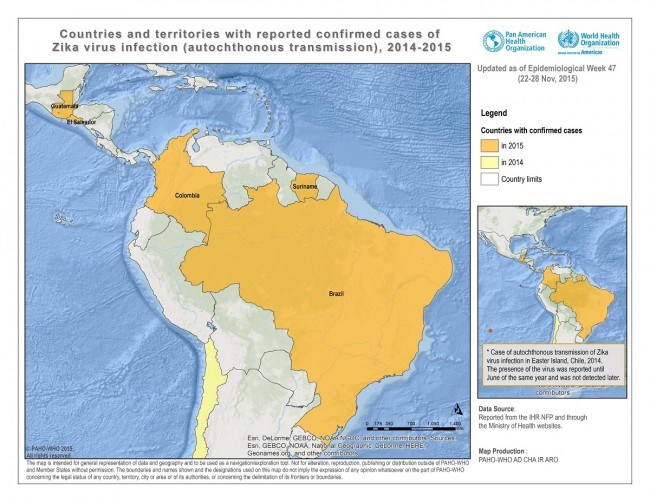
The growing outbreak of Zika virus has now seen locally acquired cases reach ten countries, causing the Pan American Health Organization (PAHO) to issue an alert, “urging countries in the region to be on the lookout for the disease and to watch for unusual patterns in newborn.” Brazil has been hit hard with a rise from 739 on November 27th, to 1,248 cases reported on November 30th. Six of the ten countries saw cases occur in November, hinting that the outbreak could just be starting. The growing concerns regarding the outbreak are also related to the newest evidence linking microcephaly and maternal cases. Zika virus genome was found in the amniotic fluid of two pregnant women and fetal diagnosis of microcephaly was performed via ultrasound. Even more so, French Polynesian health officials reported an unusual spike in nervous system malformations in babies that were born during a Zika virus outbreak in the region from 2014 to 2015. The concern regarding neurological conditions raises red flags as Brazilian health officials are reporting neurological complications, like that of Guillain-Barre syndrome, in Zika virus patients. The WHO reported 739 Brazilian microcephaly cases in newborns and while there is only ecological evidence linking the virus and microcephaly, investigations are ongoing. The outbreak first started in February 2014, on Easter Island (Chile) and has seen been identified in Colombia, Guatemala, Brazil, El Salvador, Mexico, Paraguay, Panama (confirmed cases as of December 4, 2015), Suriname, and Venezuela. Spread by Aedes mosquitoes, this vector-borne organism has similar symptoms to dengue fever and illness tends to last between four and seven days.

Event: Ebola Surveillance & Laboratory Response – Lessons for Global Health SecurityScreen Shot 2015-12-03 at 9.34.57 AM
Time/Location: Monday, December 7, 2015 from 4:30pm-6pm in Robinson A-203 at George Mason University.
As the recently released Harvard-London School of Hygiene and Tropical Medicine Independent panel on the Global Response to Ebola indicates, the West African Ebola epidemic highlighted
many gaps in national and international health and response systems that are critical for protecting global health security.  Join leaders and experts who helped to lead the U.S. response for Ebola to discuss the international response to the epidemic, the importance of robust biosurveillance systems, and how the experience with Ebola influences our approach to Global Health Security. Speakers:

  • Dr. Matthew Lim, Senior Policy Advisor for Global Health Security, HHS, fmr Civil-Military Liaison Officer to WHO
  • May Chu, Ph.D. fmr Assistant Director for Public Health, Office of Science Technology and Policy, White House; Senior Science Advisor, CDC
  • Jeanette Coffin, Manager U.S. mobile laboratory deployment, MRIGlobal

It’s Definitely Maybe World War 3
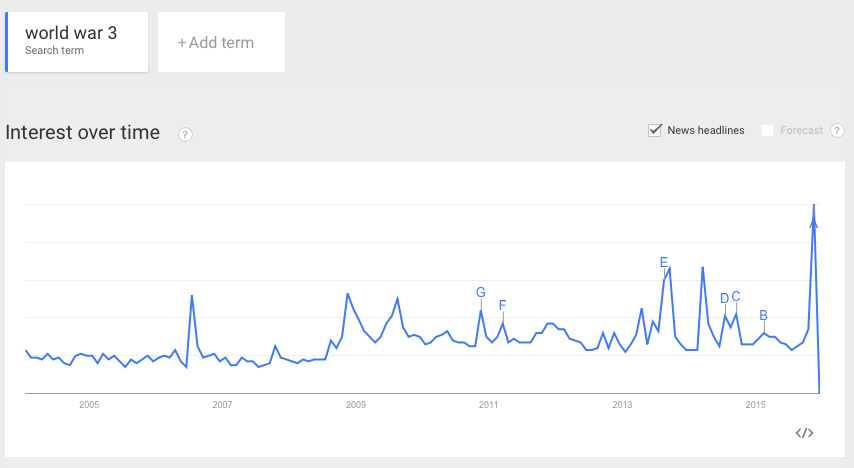
GMU’s Greg Mercer breaks down the November 24th Turkish shootdown of a Russian SU-24. Greg reviews the media attention following the event and the “immediate buzz about declarations of war, what exactly NATO owes Turkey vis-à-vis Russia, and the possibility of military confrontation between Russia and the West.” Through his use of google trends and Twitter, Greg shows just how much hype and concern the notion of WWIII got during this time. Take a look at his recap and debunking of the WWIII buzz and how quickly it caught like wild fire.

Reporting from the Panel on the Final Report of the Harvard-LSHTM Independent Review of the Global Response to Ebola
If you missed the Center for Strategic & International Studies (CSIS) Global Health Policy Center’s Launch of the final report of the Harvard-LSHTM Independent Panel on the Global Response to Ebola, don’t worry! I was fortunate to attend and a great deal of the report (we reported on last week) heavily emphasized “on the ground” capacity. Dr. Peter Piot, Director and Handa Professor of Global Health, London School of Hygiene and Tropical Medicine (LSHTM), joined via video link and started by saying that this would not be a WHO-bashing event. As one of the original researchers on Ebola during its 1976 discovery, he mentioned that the Democratic Republic of Congo (DRC) is a great example of local capacity in their success of ridding themselves of the disease within a few months of the outbreak starting. Dr. Piot heavily emphasized the work of several countries and how the WHO brought together multiple ethicists to review research during such a terrible outbreak. Lastly, Dr. Piot noted that “we risk focussing too much on global and not enough on local” in our future efforts. Dr. Suerie Moon, Research Director and Co-Chair of the Forum on Global Governance for Health at Harvard Global Health Institute, then spoke on the “weak coordination of global response” and how it severely aided the spread of Ebola. Dr. Moon highlighted the need for a global strategy to ensure adequate funding (external financing for the poorer countries and transparent tracking of financing) and the necessity for external assessment of country capacity. She pointed to the need for political and economic incentives and disincentives to not only report cases but also discourage the hiding of outbreaks. Reviewing each recommendation, the panel noted that “human health is a vital part of human security”. In one of her closing comments, Dr. Moon stated that “there are many unanswered questions regarding ebola response and we need to address a number of aspects that went wrong” and “a major theme is accountability at all levels, across all types of players.” Dr. Moon pointed out that the necessity of so many reforms shows just how much work is needed and that now is the time to see political support occur. Muhammad Pate, former Nigerian Minister of State for Health, expressed that “one of the lessons, at the national level, in terms of surveillance and accountability to respond, was missing and something that national leaders need to own up to is building their own public health systems.” Dr. Sophie Delaunay, Doctors Without Borders/MSF, then discussed the role of medical innovations and how the outbreak provided us with a unique opportunity to collect data. Dr. Delaunay said it will “be a complete nightmare to connect all the dots” in this outbreak and there is a desperate need for better R&D regarding disease outbreaks and response. “We ask for governments and policy makers to support collaboration on R&D to demonstrate their willingness to be more effective in the next outbreak” noted Dr. Delaunay. She heavily pushed for global financing efforts to facilitate investment in R&D and response. After the initial panel, there was a secondary group that shared their thoughts on the report, including Dr. Tom Frieden (CDC Director), Julie Gerberding (Exec. VP for Strategic Communications, Global Public Policy and Population Health, Merck) and Ron Klain (Former US Ebola Response Coordinator, White House and General Counsel, Revolution LLC). Ron Klain pointed to the failure of the WHO and “if institutions failed us, individuals shined. We did see extraordinary compassion from the rest of the world and tremendous outpouring of support. ” Mr. Klain mentioned that “the scariest thing about Ebola is the warning signs of how badly we failed this when the threat could’ve been worse and the epidemic we face could be much much more dangerous in the future.” Dr. Frieden emphasized the need of human resources management improvement at the WHO and how global outbreak response could work to support each other better. Lastly, Dr. Frieden emphasized a topic near and dear to my heart; infection control and it’s necessity in global disease prevention. Overall, the panel touched on several key points to the outbreak, emphasizing the need for the biggest players (including MSF) to lead by example via data sharing, etc. The push for political support on incentives and local capacity/accountability was perhaps one of the biggest recommendations and points emphasized from this event.

Gene Editing and CRISPR!
This was a busy week in the biotech world. The International Gene Editing Summit kicked off in Washington, DC. Bringing together experts from around the world, the summit touched on the newest technical innovations, ethical and legal concerns, and even social implications of genome editing advances. Genome Web has provided a great overview of the summit. Nature also published their Four Big Questions related to genome editing, touching on points related to editing the human germline and the ethical implications for technology that “researchers are still grappling with the known unknowns”. Recently, biologist, Emmanuelle Charpentier, discussed CRISPR-Cas9 and that it’s simply too early to begin gene editing as “the tools are not ready” and “as of today, I’m in favor of not having the manipulation of the human germlines. As long as they’re not perfect and ready, I think it’s good to have this ban against editing the germline.” Buzzfeed noted that over the course of the conference, there was a substantial push for a delay in the use of genetic engineering in fertility clinics due to the risk of making “designer babies”. Given the heavily debated nature of this topic it’s not surprising that the US National Academy of Sciences, Engineering and Medicine, the UK’s Royal Society, and the Chinese Academy of Science, all agreed that it “would be irresponsible to proceed with any clinical use of germline editing.” While the future is left open to gene editing on humans, there was heavy accentuation throughout the conference on the ethics and societal views of these scientific breakthroughs and the necessity to revisit their applications on a regular basis.

Dengue Fever Outbreak in Hawaii 
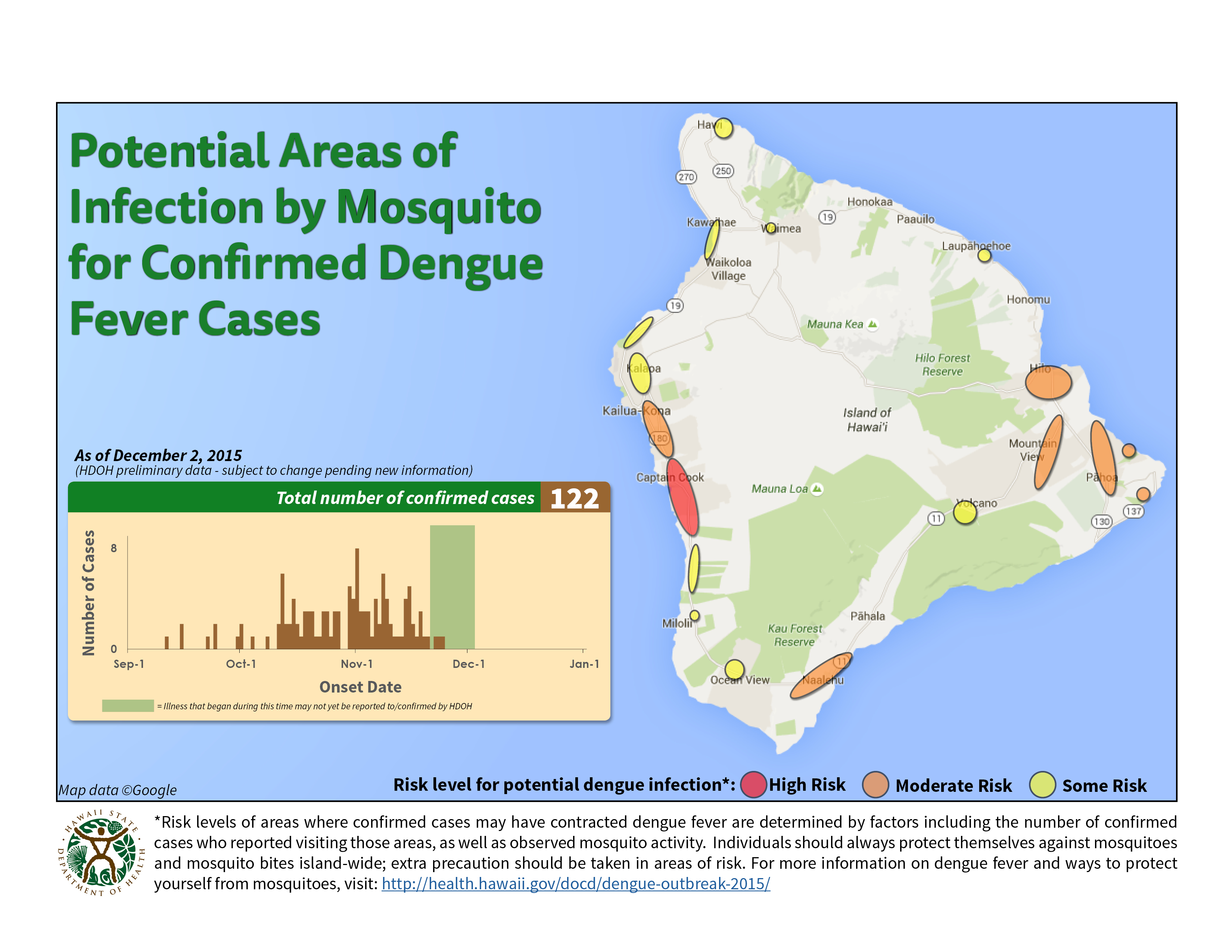
The Dengue fever outbreak on Hawaii Island is still growing. Now at 122 confirmed cases, this is one of the biggest outbreaks they’ve seen with local transmission. As of 12/2, the confirmed cases involved 106 Hawaii Island residents and 16 visitors. The Hawaii Department of Health (HDOH) has published information, hoping to aid prevention efforts, regarding the Aedes aegypti and Aedes albopictus mosquitos that are responsible for spreading the disease. There have been 313 reported potential cases and you can even find a map of the case distribution here!

Stories You May Have Missed:

  • 2015/2016 Flu Season- Where Are We?– The CDC 2015/2016 influenza activity showed a bit of a spike during the November 15-21 week. Influenza A (H3) is still the predominant species in laboratory confirmed cases. If you’re looking to keep an eye on seasonal flu, Google Flu Trends may no longer be operational, but you can still keep an eye on Flu Near You or the CDC’s page.
  • MERS-CoV Severity and Incubation Period– The CDC & Emerging Infectious Diseases published a report regarding the association of severe MERS-CoV illness and a shorter incubation period. Analyses of 170 patents in South Korea revealed a longer incubation period associated with a decreased risk for death while “patients who died had a shorter incubation period.” This mirrors the results of a previous study that had similar results with SARS coronavirus.
  • Salmonella Outbreak Associated With Recalled Nut Butters – The CDC is currently investigating 11 illnesses across nine states that may be linked to recalled nut butters. The Salmonella serotype is Paratyphoid B variant L (+) tatrate (+) (previously called Salmonella Java) and has caused illness in California, Colorado, Georgia, Hawaii, Idaho, Illinois, North Carolina, and New Jersey.
  • Taiwan CDC Holds Bioterrorism Drill – Involving 70 participants, the course utilized a subway union station to allow people to simulate first responders and real-life operations. “CDC bioterrorism teams are tasked with the investigation and identification of biological threats and attacks. Members take on containment and mitigation of damage for any individuals that are harmed during and as a result of an attack.” Go Taiwan!

Enjoying your weekly dose of the Pandora Report? Sign up to receive it every week so the fun never ends! 

It’s Definitely Maybe World War 3

It’s Definitely Maybe World War 3
By Greg Mercer

The Washington Post
The Washington Post

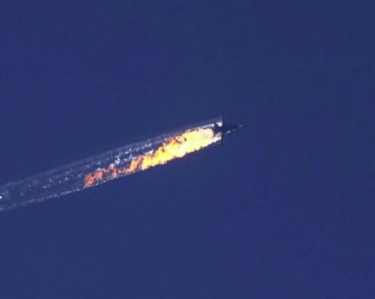
On November 24, Turkish F-16s shot down a Russian SU-24 bomber which had been flying over Syria, after an alleged violation of Turkish airspace.[1] Needless to say, the details are still emerging and the facts are still highly contested. The New York Times has an excellent comparison of claims made by Turkish and Russian officials, including the radar maps released by each country showing the airspace violation (or lack thereof).[2] Russian President Vladimir Putin called the shootdown a “stab in the back” and promised harsh consequences. Turkey called for an emergency meeting of NATO.

This incident and its bellicose rhetoric sparked immediate buzz about declarations of war, what exactly NATO owes Turkey vis-à-vis Russia[3], and the possibility of military confrontation between Russia and the West.  One particular phrase was cautioned against by reputable folks and seriously considered by less-than-stellar[4] sources: World War 3. I think this is really interesting, so I turned to good old search analytics to see how the internet reacted:
Screen Shot 2015-12-03 at 9.59.08 AM


Continue reading “It’s Definitely Maybe World War 3”

Week in DC: Events 11.30-12.4.2015

Monday, November 30, 2015
Renewed Violence In The Central African Republic: The Roots Of A Political CrisisUnited States Institute of Peace
Time: 12:30-2pm
Location: US Institute of Peace2301 Constitution Avenue NW, Washington, D.C. (map)
Leaders and citizens of the Central African Republic, with the support of the international community, are currently focusing resources and energy on laying the groundwork for a peaceful constitutional referendum and elections in the coming months. But sustained peace in in the country will require longer-term efforts as well, because the recent crisis is rooted in decades of poor governance and persistent insecurity. After the elections, Central African Republic policymakers and the international community will be challenged to lay the groundwork for the new government by addressing the longstanding grievances that contribute to the cyclical nature of the violence in CAR. The panel will bring together some of the foremost experts on the Central African Republic’s recent history of rebellion and instability, including the two most recent coups, international intervention efforts, the country’s political economy, and the ongoing series of United Nations and regional peacekeeping efforts. The experts will draw on their contributions to Making Sense of the Central African Republic, published by Zed Books, to make policy recommendations for the crucial remaining steps in CAR’s political transition and beyond. Pose questions for the panel on Twitter with #CARUSIP.

Tuesday, December 1, 2015
3-D Printing The Bomb? The Challenge For Nuclear NonproliferationCarnegie Endowment for International Peace
Time: 10:30am-12pm
Location: Carnegie Endowment for International Peace1779 Massachusetts Ave. NW, Washington, D.C. 20036 (map)
3-D printing has opened the world to a revolution in manufacturing. But this new technology may enable the most sensitive pieces of a nuclear weapons program to be more easily produced and transferred undetected around the globe. The United States should‬ ‪lead an international effort to prevent a 3-D printing-enabled cascade of nuclear weapons proliferation before it is too late.
Tristan Volpe and Matthew Kroenig will launch their new article, “3-D Printing the Bomb? The Nuclear Nonproliferation Challenge,” and explore how the United States can adopt both top-down and bottom-up strategies to combat this threat to international security‪. ‬Bruce Goodwin will moderate. Continue reading “Week in DC: Events 11.30-12.4.2015”

Pandora Report: 11.27.2015

We hope you’re having a lovely holiday week and recovering from a day of full of tryptophan overload! This week we’re starting off with a look at the Government Accountability Office’s review of the BioWatch program. We’re discussing another panel review of the WHO Ebola response efforts, the role of tacit knowledge in bioweapons development, and how the Beagle Brigade is fighting bioterrorism one belly-rub at a time. Fun history fact Friday: on November 26, 1940, President Franklin Roosevelt declared the government would bar strikes “at plants under government contract to provide war materials for the US military and its allies” and on November 25, 1915, Albert Einstein published his equations on the Theory of General Relativity!

Government Accountability Office Finds BioWatch Unreliable
The BioWatch program was introduced in 2003 to perform active environmental surveillance for potential bioweapon use. The struggle has been to accurately discern between organisms that are naturally occurring and those that are being intentionally released. With several false alarms, the program has been under heavy scrutiny. Timothy M. Persons, chief scientist of the Government Accountability Office (GAO), states that authorities “need to have assurance that when the system indicates a possible attack, it’s not crying wolf. You can’t claim it works”. DHS official Jim H. Crumpacker, points out that the system is used as an early warning and there is an inherent level of uncertainty and limitation. The report (published in October but not publicly released until November 23, 2015), which you can read here, states that from 2003-2014, BioWatch made 149 mistaken detections that were “false positives”. The report says that “GAO recommends DHS not pursue upgrades or enhancements for Gen-2 until it reliably establishes the system’s current capabilities.”

Expert Review of Ebola Outbreak Response
A 19 member review panel, convened by the Harvard Global Health Institute and the London School of Hygiene and Tropical Medicine, reviewed the Ebola outbreak response as a gateway to “public debates alongside reports on outbreak response and preparedness”. Led by Dr. Peter Piot, one of the scientists to discover Ebola in 1976, the group pointed to several issues needing attention on a global scale. Findings pushed for the WHO to reorganize their disease outbreak functions and streamline processes to “avoid political pressure, build country core capacities, and ensure adequate funding”. The ten suggested reforms heavily emphasize the importance of core capacities within countries to be able to detect and respond to outbreaks. Strengthening a country’s capacity to do surveillance, response, and prevention is crucial in reducing the risk of multi-national outbreaks that spread like wildfire. The report also suggests incentives for early outbreak reporting and more science-based justifications for economic impacts like travel restrictions, etc.

Tacit Knowledge and the Bioweapons Convention
GMU Biodefense Professor, Dr. Sonia Ben Ouagrham-Gormley, takes on the August 2015 Biological Weapons Convention and the exciting inclusion of tacit knowledge in bioweapons development. Dr. Ben Ouagrham-Gormley has contributed heavily to the field of biodefense, specifically on the role that tacit knowledge plays as a key determinant of bioweapons development. In past nonproliferation efforts, tacit knowledge has been widely neglected. Tacit knowledge “consists of unarticulated skills, know-how, or practices that cannot be easily translated into words, but are essential in the success of scientific endeavors.” Simply put, it takes more than a manual or YouTube video to truly perform a scientific experiment, etc. Tacit knowledge is seen in scientists that have spent years not only learning, but experiencing the quirks and challenges of performing experiments. The lessons of failed endeavors, teachings of fellow scientists, and instincts built by years of experience, are all components in tacit knowledge. Dr. Ben Ouagrham-Gormley points to the role tacit knowledge has played in the history of failed bioweapons programs (state and non-state). While some analysts believe the advancing biotechnologies will “de-skill” the field and lower the bar for bioweapons development, Dr. Ben Ouagrham-Gormley highlights that tacit knowledge is a massive roadblock. Pointing towards the new focus on tacit knowledge, she notes that this will only help “advance key mandates of the bioweapons convention, naming the assessment of new technologies, the improvement of national implementation, and the strengthening of cooperation among member states.”

The New Line of Biodefense: Adorable Dogs

Courtesy of BarkPost

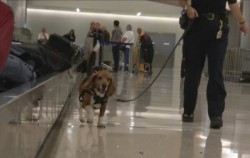
There are few times when I get to combine a love of rescue dogs and biodefense nerdom and fortunately, today is that day! The Beagle Brigade is a group of rescue beagles that have been specially trained “to sense for items used for bioterror which include contraband money, pests, and unlawful wildlife”. Even more, the Beagle Brigade is part of the USDA’s Animal and Plant Health Inspection Service (APHIS). They work in baggage-claim areas at international airports, wearing green jackets, to help identify any meat, animal byproducts, fruit, or vegetables that could be carrying any diseases or pests that have the potential to cause a devastating outbreak in the US. They’ve been specially trained to pick up “restricted” (fruit, vegetable, etc.) versus non-restricted items and have a 90% success rate! I think we can safely say the Beagle Brigade wins the award for “most adorable biodefense strategy”.

Genetically Engineered Mosquitoes Battle Malaria 
Recently published work shows how researchers used “a controversial method called ‘gene drive’ to ensure that an engineered mosquito would pass on its new resistance genes to nearly all of its offspring – not just half, as would normally be the case.” These “mutant mosquitoes” are engineered to resist the parasite that causes malaria infections. This particular work solves the issue that many were facing when it came to passing down resistant genes through a species. While this may mark the end of a long battle against malaria, many are pointing to the ethical and dual-use concerns of such work. The growing concern surrounds the high speed of such technological innovation and the lagging of regulatory and policy guidelines, especially regarding work in wild populations. The potential to alter an entire ecosystem has many concerned over the ramifications of such work. The research team is currently working to prepare mosquitoes for field tests, however they are non-native mosquitoes.

Stories You May Have Missed:

  • Stories From A Biodefense PhD Student- GMU Biodefense PhD student, Craig Wiener, discusses his journey from master’s student to PhD candidate. Craig explains what sparked his interest in not only biodefense, but GMU’s program, and how that’s translated into real-world experiences. “Mason has provided me the depth and breadth of knowledge that I needed to converse with senior policymakers, technologists, and scientists,” he says. “It bridged the gap between science and policy so I could be respected in both worlds because I knew what I was talking about.”
  • East Bronx Legionnaires’ Outbreak Traced to Psychiatric Center–  The New York City Health Department announced that the cooling tower at  the Bronx Psychiatric Centre was the likely source of the break that hit East Bronx earlier this fall. Samples from four cases matched those taken from the water tower. Remediation and disinfection is being performed on the water tower.
  • Liberia Reports Death of Boy – A boy who was part of the family cluster of Ebola cases in Liberia, has died of the disease. The 15-year-old boy was one of the three confirmed cases reported on November 20th, which marked the end of the Ebola-free period for Liberia since September 3rd. There are currently 153 contacts and 25 healthcare workers being monitored.

Week in DC: Events 11.23-11.27.2015

It’s a slow week in events – Enjoy your Thanksgiving!

Monday, November 23, 2015
The “Pitiless” War: A Strategy After The Paris Attacks– German Marshall Fund
Time: 10-11:15am
Location: The German Marshall Fund of the United States1744 R st. NW Washington, DC 20009 United States(map)
In the aftermath of the November 13 terrorist attacks in Paris committed by the self-proclaimed Islamic State group (ISIS), French President François Hollande declared that “….we are going to lead a war which will be pitiless.” What is the proper military, intelligence, and diplomatic response to counter to these recent brutal attacks against Western targets? What role will the United States play going forward? What does Europe need to do differently to meet this threat? What should the transatlantic alliance do about Syria and Iraq? With Hollande scheduled to meet U.S. President Barack Obama in Washington on November 24, and with these questions in mind, The German Marshall Fund of the Unites States (GMF) is pleased to invite you to an on-the-record discussion with three distinguished experts who all recently served in senior U.S. government positions and shaped current policies to address the ISIS threat.

Webinar: Understanding ISIS: Paris, Beirut, And U.S. Policy– Institute for Policy Studies
Time: 4-5pm
IPS Middle East expert Phyllis Bennis will discuss the new developments in Paris and Beirut, in the refugee crisis in Europe and the U.S., and discuss solutions that promote true diplomacy over military action. Terrorism survives wars, people don’t. Last week’s attacks in Paris left over 100 people dead. In Beirut, car bombs killed 43 people. Shortly before these attacks, President Obama defended his “war on terror” and said that ISIS was contained. As the civilian death toll rises and the refugee crisis grows, the U.S. global war on terror continues — and continues to fail, ultimately because you can’t bomb terrorism out of existence. In this 1-hour webinar, IPS Middle East expert Phyllis Bennis will discuss the new developments in Paris and Beirut, in the refugee crisis in Europe and the U.S., and discuss solutions that promote true diplomacy over military action.