Pandora Report 2.15.15

It’s the last holiday weekend before the summer and its too cold to go outside! Don’t worry, we’ve got some good reading while you’re staying warm inside: antibiotic resistance, U.S. Troops leaving West Africa, a new vaccine for polio and LOTS of stories you may have missed.

Enjoy your Monday holiday and have a safe and healthy week!

Rivers Can Be a Source of Antibiotic Resistance

As the U.S. Government increases its funding to fight growing antibiotic resistance, a study coming out of the University of Warwick’s School for Life Sciences and the University of Exeter Medical School points to rivers and streams as a major source of antibiotic resistance in the environment. The study of the Thames River found that greater numbers of resistant bacteria existed close to some wastewater treatment plants and that these plants are likely “to be responsible for at least half of the increase observed.”

R&D Magazine—“The team also found that several other factors affected the prevalence of antibiotic resistance, such as changes in rainfall and land cover. For example, heavy rainfall at a point surrounded by grassland raised resistance levels; whereas a heavy rainfall at a point surrounded by woodland reduced the levels seen.”

U.S. Bringing Home Almost All Troops Sent to Africa in Ebola Crisis

The U.S. military is bringing home nearly all troops that were sent to West Africa 10 months ago in order to fight the Ebola outbreak. This withdrawal comes at a time where 700 homes in Sierra Leone were put under quarantine after a new case was diagnosed in Freetown. Quarantine seems like a smart move, since researchers have now confirmed that the virus can remain contagious on a dead body for up to a week. Despite troops leaving, testing has begun in Liberia for two potential vaccine candidates.

CNN—“[Pentagon press secretary Rear Adm. John] Kirby said about 100 military service members will remain in West Africa to support the 10,000 civilian responders who remain. These service members will “build on a strong military partnership with the Armed Forces of Liberia to enhance their Ebola response efforts and provide disaster response training to the government of Liberia,” he said.”

Synthetic Vaccine Sought to Finally Eradicate Polio

While, after six months of no new cases, Africa is close to wiping out wild polio, a team of international scientists are working to create a wholly artificial vaccine to combat the disease. The Bill and Melinda Gates Foundation and the World Health Organization are providing a $647,000 grant to create an entirely synthetic approach that will address shortcomings in the existing vaccine. This new vaccine would be entirely virus free.

BBC—“…the existing oral vaccine uses a weakened version of the virus as its stimulus to provoke a response and protection in the patient. And in just a few particular individuals, this can set up an infection in the gut that then enables a reactivated virus to pass out of the body and spread to other, unvaccinated people.

But if the virus particle has no genetic machinery this transmission route is closed, and the World Health Organization and the Gates Foundation is to fund the scientists to engineer just such particle for use as a replacement vaccine.”

Stories You May Have Missed


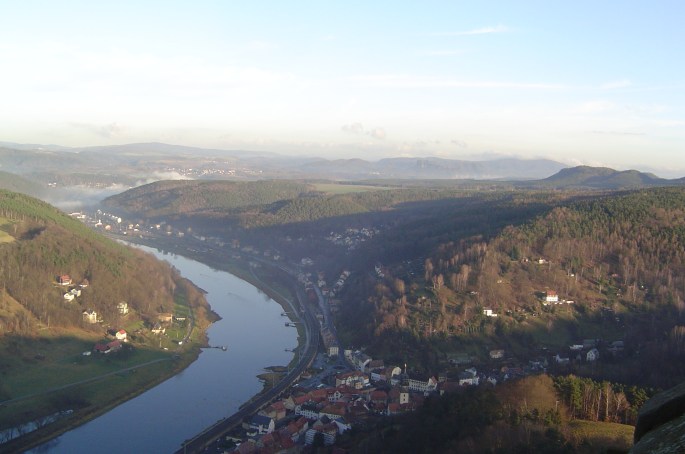
Image Credit: Wikimedia Commons

What threat does the Islamic State pose to America?

By Erik Goepner 

One way to assess the threat that IS poses to America is to see what the National Terrorism Advisory System (NTAS) says. To date, NTAS has issued no alerts regarding the terrorist threat from IS. Back in 2011, NTAS replaced DHS’ memorable color-coded system. It is also worth noting that in those intervening years, the NTS has apparently not issued any alerts about terrorist threats against the homeland.

Statements by government officials provide another way to assess the threat, and they do not appear to suggest IS presents a significant threat to America. The President’s National Security Strategy (NSS), published last week, notes that “the threat of catastrophic attacks against our homeland by terrorists has diminished but still persists.” The NSS goes on to refer to “an array of terrorist threats.” As for IS in particular, the NSS mentions them as one of several “regionally focused and globally connected groups” that “could” pose a threat to the homeland.

Rolling out the new NSS at the Brookings Institution last Friday, the National Security Advisor appeared concerned that threat concerns were being unnecessarily inflated by some. Ms. Rice cautioned, “We cannot afford to be buffeted by alarmism and an instantaneous news cycle,” as she characterized the threats as not existential.

Another estimate comes from the Department of Homeland Security Deputy Assistant Secretary for Counterterrorism Policy. This past December, he testified before a House subcommittee hearing on ISIS. His assessment? “At present, DHS is unaware of any specific, credible threat to the U.S. Homeland from ISIL.”

If Americans’ perception of the threat posed by the Islamic State substantially differs from the actual threat, our unconscious biases may have something to do with it. Ms. Rice potentially alluded to one—the availability bias—when she cautioned against alarmism and the instantaneous news cycle. The availability bias suggests people estimate the likelihood of an event based on how easily they can imagine it or remember a past occurrence. Since the sensational, yet uncommon, event is often of greater interest to the media, the public may hear more about unlikely events than they do common ones. In response, people overestimate the likelihood of rare events while underestimating the probability of common ones.[1]

Additionally, people tend to overstate threats they dread, even if the evidence indicates otherwise. The Islamic State’s gruesome videos of beheadings and the recent burning alive of the Jordanian pilot effectively evoke dread in many.

Potential biases notwithstanding, those responsible for assessing the threat and keeping the homeland safe indicate that the Islamic State could pose a threat to us, but at this time, IS does not pose a specific, credible or imminent threat.


Image Credit: The Knight Foundation


[1] See, for example, Morgan’s “Risk Assessment and Management.”

Pandora Report 2.7.15

Whatta week, right?! Let’s jump right in to the stories. We’ve got the Subway, flu forecasting, American chemical weapons, and stories you may have missed.

Have a great weekend and a safe and healthy week!

A Close Look at the Germs Crawling Around the Subway

Every single day I ride the metro to work, and every single day, the first thing I do when I get to the office is wash my hands. And, really, that’s what everyone should be doing. A research team from the Weill Cornell Medical College spent the summer of 2013 swabbing turnstiles, subway poles, kiosks, benches, and other “human penetrated surfaces” in all 466 NYC subway stations.

Gothamist—“And they found quite a few signs of life—15,152 types of DNA, in fact—nearly half of which they identified as bacteria. Shocking!

[They] did manage to find some scary stuff, with E. coli, Staphylococcus aureus (skin infections, respiratory disease and food poisoning), Bacillus anthracis (anthrax), and even Yersinia pestis, which is associated with the bubonic plague, popping up in some swabs. Nearly all the stations harbored an antibiotic resistant bacteria called Stenotrophomonas maltophilia, one that often causes respiratory infections in hospitals.”

Forecasts May Soon Predict Flu Patterns

What if we could predict the flu like we predict the weather? That is what teams of researchers are looking at; devising and testing methods to predict the start, peak, and end of flu season. How will they do this? By combining data from the present with knowledge of past patterns to project what might happen in the future.

The Boston Globe—“If the CDC had a flu-season preview in hand, the agency could better time messages on use of vaccines and flu-fighting drugs.

Hospitals could plan staffing for patient surges or make sure key personnel are not on vacation when it appears the epidemic will probably peak. Parents could even take flu forecasts into account in scheduling birthday parties and play dates.”

U.S. to Destroy Largest Remaining Chemical Weapons Cache

Syria isn’t the only country working on destruction of its chemical weapons cache. The Pueblo Chemical Depot, in Southern Colorado, will begin neutralization of 2,600 tons of aging mustard agent in March. This action moves towards American compliance with a 1997 treaty that banned all chemical weapons.

USA Today—“‘The start of Pueblo is an enormous step forward to a world free of chemical weapons,” said Paul Walker, who has tracked chemical warfare for more than 20 years, first as a U.S. House of Representatives staffer and currently with Green Cross International, which advocates on issues of security, poverty and the environment.”

Stories You May Have Missed


Image Credit: Wikimedia Commons

GMU Biodefense Published

Dr. Sonia Ben Ouagrham-Gormley, Associate Professor in the George Mason Graduate Program in Biodefense, has published a new book, Barriers to Bioweapons: The Challenges of Expertise and Organization for Weapons Development.

The New Scientist has reviewed it, and this is just one of the wonderful things they had to say:

Her fascinating book, Barriers to Bioweapons, also shows that anyone wanting to develop biological weapons faces a raft of other difficulties. Of the five main bioweapons programmes to date, their key feature has been their failures, not their successes. In a forensic and compelling analysis, she describes how the Soviet Union, the US, South Africa and the Japanese terrorist group Aum Shinrikyo, all fell well short, despite spending billions of dollars over decades

Click here to read the whole review or click here to purchase the book online.

Spring 2015 Biodefense Policy Seminar Line Up

The Biodefense Policy Seminars are monthly talks focused on biodefense and biosecurity broadly conceived. Free and open to the public, they feature leading figures within the academic, security, industry, and policy fields. Launched in the Spring of this year, the Seminars have been a tremendous success. Our Fall lineup features leaders from across the government and academic sectors, including Mahdi al-Jewari of the Iraq National Monitoring Authority, Dr. David Christian Hassell of the Department of Defense, and Dr. Gary Ackerman of the National Consortium for the Study of Terrorism and Responses to Terrorism (START).

Spring 2015 Biodefense Policy Seminars

February Seminar: Global Biorisk Management: The View from Iraq
Speaker: Mahdi al-Jewari, Head, Biology Department, Iraq National Monitoring Authority, Iraq Ministry of Science and Technology
Date: Thursday, February 19, 2015
Time: 6:00 – 7:30pm; complimentary food will be served at 5:30pm
Location: Merten Hall 1204, George Mason University, Fairfax, VA

Mr. al-Jewari currently serves as a Visiting Research Fellow in the Biodefense Program at George Mason University where he is conducting research on biorisk management policy and practice. He is on leave from the Iraqi National Monitoring Authority in the Ministry of Science and Technology where he is head of the Biological Department. The Iraqi National Monitoring Authority is responsible for overseeing Iraq’s implementation of its obligations under the Biological Weapons Convention and UN Security Council Resolution 1540. Mr. al-Jewari has served as the head of the Iraqi delegation to several BWC meetings. Mr. al-Jewari is the Ministry of Science and Technology’s representative to the National Biorisk Management Committee, an interagency effort to develop a comprehensive biosafety and biosecurity system for Iraq. Mr. Al-Jewari also serves as an expert for the UN Secretary-General’s mechanism for the investigation of alleged uses of chemical and biological weapons.

March Seminar: Combating Weapons of Mass Destruction – An Integrated Layered Approach
Speaker: Dr. David Christian Hassell, Deputy Assistant Secretary of Defense for Chemical and Biological Defense, Department of Defense
Date: Thursday, March 26, 2015
Time: 6:00 – 7:30pm; complimentary food will be served at 5:30pm
Location: The Hub Meeting Room 5, George Mason University, Fairfax, VA

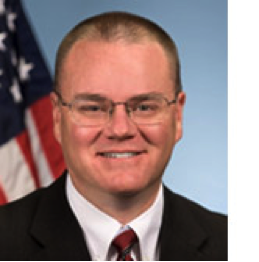
HassellDr. David Christian “Chris” Hassell was appointed Deputy Assistant Secretary of Defense for Chemical and Biological Defense in the Department of Defense in 2014. From 2008 until 2014, he served as an Assistant Director of the Federal Bureau of Investigation (FBI) and Director of the FBI Laboratory. During his tenure, he led major efforts to expand the Laboratory’s role in national security and intelligence, including the Terrorist Explosive Device Analytical Center (TEDAC) and other technical areas related to weapons of mass destruction. In addition, he strengthened and streamlined FBI programs in traditional forensics, particularly in such rapidly evolving areas as DNA, chemistry and the use of instrumentation to augment pattern-based forensic techniques (e.g., fingerprints, firearms, and documents). He also led many engagements with international counterparts, with focus on enhancing counterterrorism interactions with “Five-Eyes” partners, as well as new technical collaborations in Asia, Latin America and with such key multilateral groups as the International Atomic Energy Agency (IAEA) and INTERPOL.

Dr. Hassell joined the Bureau from the Oklahoma State University Multispectral Laboratories, where he led Research, Development, Testing and Evaluation. He previously served as Assistant Vice President for Science and Technology at Applied Marine Technologies Incorporated. Prior to that position, Dr. Hassell led programs in analytical chemistry, instrumentation development, and nuclear weapons forensics at Los Alamos National Laboratory. During this time, he also served as a subject matter expert for chemical and biological weapons with the Iraq Survey Group in Baghdad. Earlier in his career, Dr. Hassell was a Senior Research Chemist at DuPont, developing online analytical instrumentation for chemical and bioprocess facilities for both research and manufacturing.

Dr. Hassell received his PhD in analytical chemistry from the University of Texas at Austin. He is a Fellow of the Society for Applied Spectroscopy and a member of the American Chemical Society and the International Association of Chiefs of Police.

April Seminar: Unconventional Methods for Assessing Unconventional Threats
Speaker: Dr. Gary Ackerman, Director, Unconventional Weapons and Technology Division, National Consortium for the Study of Terrorism and Responses to Terrorism (START)
Speaker: Date: Thursday, April 16, 2014
Time: 6:00 – 7:30pm; complimentary food will be served at 5:30pm
Location: Merten Hall 1202, George Mason University, Fairfax, VA

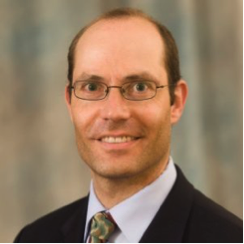
AckermanDr. Gary Ackerman is the Director of the Unconventional Weapons and Technology Division at the National Consortium for the Study of Terrorism and Responses to Terrorism (START). Prior to taking up his current position, he was Research Director and Special Projects Director at START and before that the Director of the Weapons of Mass Destruction Terrorism Research Program at the Center for Nonproliferation Studies in Monterey, California.  His research encompasses various areas relating to terrorism and counterterrorism, including terrorist threat assessment, radicalization, terrorist technologies and motivations for using chemical, biological, radiological, and nuclear (CBRN) weapons, and the modeling and simulation of terrorist behavior. He is the co-editor of Jihadists and Weapons of Mass Destruction (CRC Press, 2009), author of several articles on CBRN terrorism and has testified on terrorist motivations for using nuclear weapons before the Senate Committee on Homeland Security. Dr. Ackerman received an M.A. in International Relations from Yale University and a Ph.D. in War Studies from King’s College London.

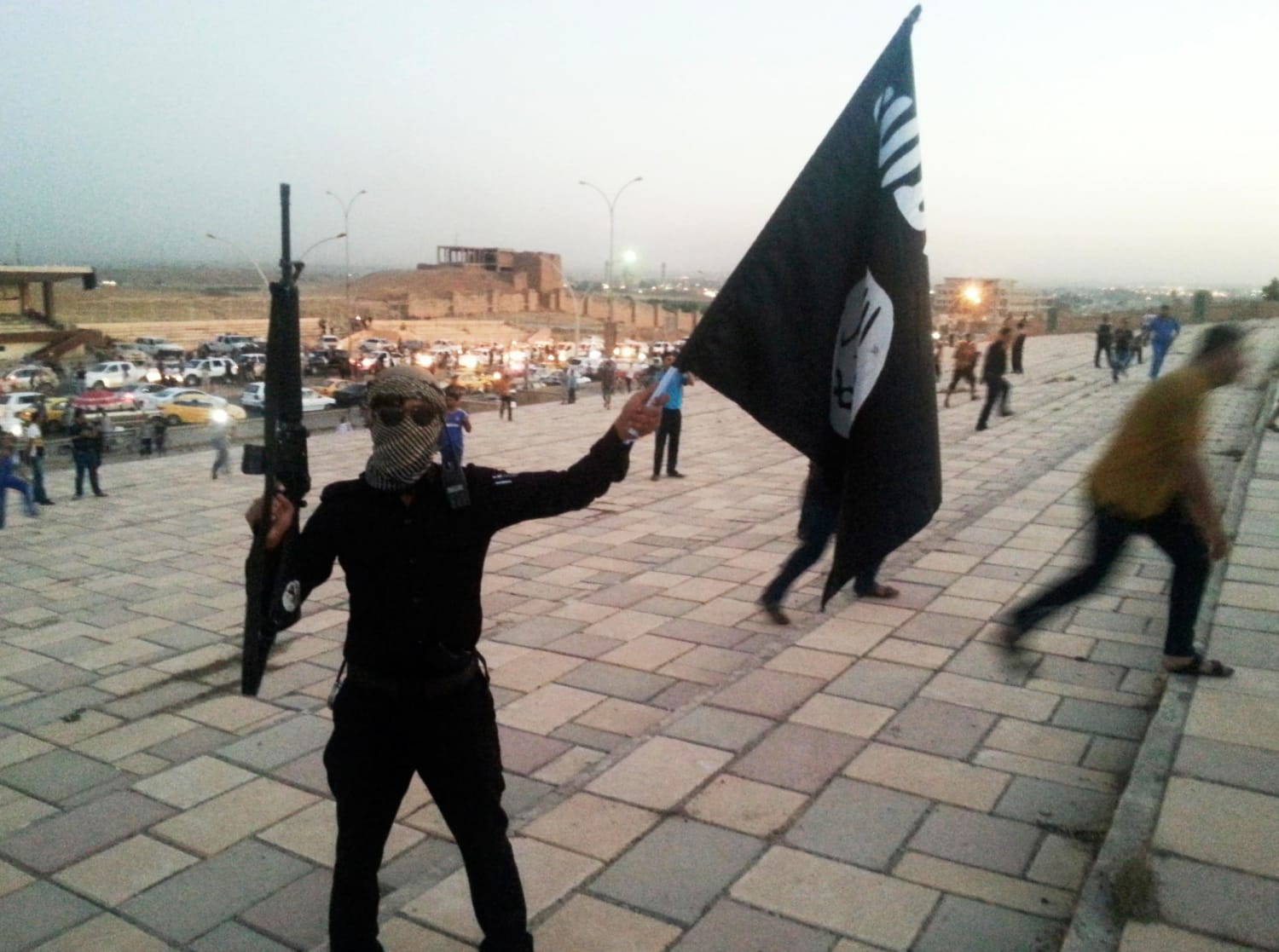
The Islamic State as Insurgency: The Growing Strength of Salafi Jihadists

By Erik Goepner

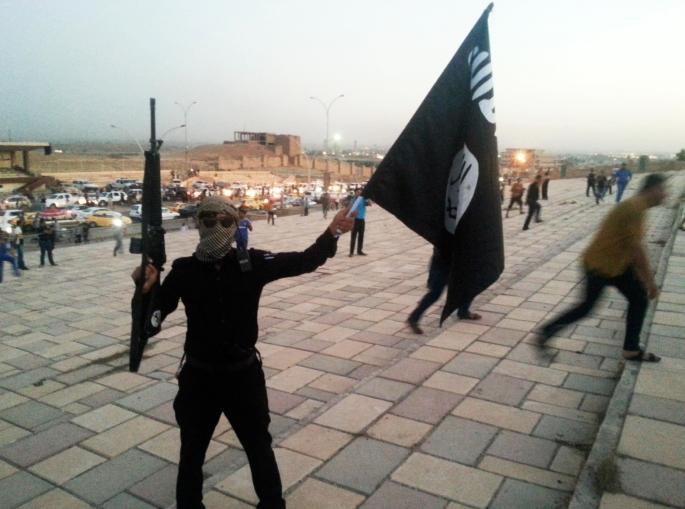
Terrorists occupy the low-end of the power spectrum. They are weaker than guerrillas, who are weaker than insurgents, who are weaker than conventional armies, who are weaker than nuclear-equipped armies. That is a point made, more or less, by the Council of Foreign Relation’s Max Boot. Successful revolutionary, Mao Tse Tung,[1] made a similar point when he noted guerrillas are but a step towards total war and regular armies. Has the Islamic State, then, progressed the Salafi jihadist movement from the weak power position of terrorism to the mid-range power of insurgency?

RAND researcher, Seth Jones, defines a Salafi jihadist group as one that emphasizes the need to return to “pure” Islam during the time of the Salaf (“pious ancestors”) and believes that violent jihad is a duty of each member of the ummah, much like daily prayers, fasting during Ramadan, etc. Dr. Jones notes that between 2010 and 2013, the number of Salafi jihadist groups rose by 58%. Interestingly, the growth roughly coincided with the timing of U.S. surge operations in Afghanistan. At the end of that period, IS began seizing and holding terrain in Iraq and Syria, with some estimating they now control approximately 81,000 square miles, or the land mass equivalent of Great Britain. Professor Bruce Hoffman, author of the seminal work Inside Terrorism, suggests that while both insurgents and terrorists may use the same tactics, even for the same purposes, insurgents differ from terrorists in that they often operate as military units, seize and hold terrain, and include informational and psychological warfare in an effort to win over the population’s support.

If so, and if the Islamic State is winning over segments of the Iraqi and Syrian populations rather than just terrorizing them, then the problem set facing the U.S. would be substantially different. Terrorists can, in large measure, be defeated by police or military action, which the world’s premier military can accomplish unlike any other. If, however, IS now finds firm footing as an insurgency, broader issues must be tackled. Issues that can only be successfully resolved by the indigenous government—which we are not—or dictatorial occupiers—which we will not be.

Image Credit: NBC News


[1] See The Red Book of Guerrilla Warfare by Mao Zedong.

Week in DC: Events

February 2, 2015

Cyber Threat Intelligence Summit & Training
Date: February 2, 8:00am
Location: The Dupont Circle Hotel, 1500 New Hampshire Ave NW, Washington DC

Conventional network defense tools such as intrusion detection systems and anti-virus focus on the vulnerability component of risk, and traditional incident response methodology presupposes a successful intrusion. An evolution in the goals and sophistication of computer network intrusions has rendered these approaches insufficient for the threats facing many modern networked organizations. Advanced adversaries accomplish their goals using advanced tools and techniques designed to circumvent most conventional computer network defense mechanisms and remain undetected in their intrusion efforts or presence on networks over long periods of time.

Network defense techniques which leverage knowledge about these adversaries – known as Cyber Threat Intelligence (CTI) – can enable defenders to establish a state of information superiority which decreases the adversary’s likelihood of success with each subsequent intrusion attempt. Threat intelligence can be a force multiplier as organizations look to update their security programs and defenses to deal with increasingly sophisticated advanced persistent threats. Security managers need accurate, timely and detailed information to continuously monitor new and evolving attacks, and methods to exploit this information in furtherance of an improved defensive posture. Make no mistake about it: contemporaneous computer network defense contains a strong element of intelligence and counterintelligence that analysts and managers alike must understand and leverage.

The goal of this summit will be to equip attendees with knowledge on the tools, methodologies and processes they need to move forward with cyber threat intelligence. The SANS What Works in Cyber Threat Intelligence Summit will bring attendees who are eager to hear this information and learn about tools, techniques, and solutions that can help address these needs.

The theme of the summit in 2015 focuses on specific analysis techniques and capabilities that can be used to properly create and maintain Cyber Threat Intelligence in your organization. Most organizations know what threat intelligence is, but have no real concept on how to create and produce proper intelligence. Attend this summit to learn and discuss directly with the experts who are doing the CTI analysis in their organizations. What you learn will help you detect and respond to some of the most sophisticated threats targeting your networks.

Please note, this is not a free event. Course and cost information can be found here.

The Ukraine Crisis: Withstand and Deter Russian Aggression
Date: February 2, 2:00pm
Location: Atlantic Council, 1030 15th Street NW, 12th Floor (West Tower), Washington DC

Waging an undeclared war in the Donbas region, Russia is pursuing a ruthless effort to destabilize Ukraine. Given the stakes for relations between Russia and the West, the outcome of the conflict is also likely to shape future developments in Europe and the world at large.

So how can the crisis be resolved?

Eight distinguished US foreign policy scholars and former practitioners, five of whom travelled to Ukraine and Brussels, have produced a report entitled “Preserving Ukraine’s Independence, Resisting Russian Aggression: What the United States and NATO Must Do.”

The working group included Ivo Daalder, President, Chicago Council on Global Affairs, Michele Flournoy, Chief Executive Officer, Center for a New American Security, John Herbst, Director, Dinu Patriciu Eurasia Center, Atlantic Council,Jan Lodal, Distinguished Fellow and Former President, Atlantic Council,Steven Pifer, Senior Fellow, Brookings Institution, James Stavridis, Dean, Fletcher School of Law and Diplomacy, Strobe Talbott, President, Brookings Institution, Charles Wald, Board Director, Atlantic Council.

In the report, the experts summarize what they heard in discussions at NATO and in Ukraine and offer specific recommendations for steps that Washington and NATO should take to strengthen Ukraine’s defenses and enhance its ability to deter further Kremlin aggression.

Register here to attend in person or watch live online here.

February 3, 2015

Fighting ISIS: News from the Front Lines in Kurdistan
Date: February 3, 10:00am
Location: Johns Hopkins School of Advanced International Studies, 1717 Massachusetts Ave NW, Room 500, Washington DC

Aziz Reda, senior advisor to the President of Kurdistan and Mousa Ahmed Agha, deputy head, Barzani Charity Foundation will discuss this topic.

Register here.

“Yemen—If this is a policy success, what does failure look like?” with Ambassador Barbara Bodine
Date: February 3, 12:30pm
Location: Georgetown University, Edward B. Bunn, S.J. Intercultural Center, #270, 37th and O St NW, Washington DC

Last September, in announcing military operations against ISIS/ISIL, President Obama referred to Yemen as a US policy success, to the bafflement of many within and outside the country at the time. The jury was still out on our drone-dependent security/CT operations, the economy was in disarray and the political transition – a relative bright spot – was dimming. Recent events call the September judgment into even more question. What is really happening, and what does it mean for the US, the region, and the Yemenis?

Register here.

European Energy Security Challenges and Transatlantic Cooperation in 2015
Date: February 3, 1:30pm
Location: Atlantic Council, 1030 15th Street NW, 12th Floor (West Tower), Washington DC

Please join the Atlantic Council’s Global Energy Center for a public event featuring the European Commissioner for Climate Action and Energy, Mr. Miguel Arias Cañete, on Tuesday, February 3 from 1:30 p.m. – 2:30 p.m. at the Atlantic Council.

Commissioner Cañete is responsible for promoting diversity in the European Union’s energy needs and supplies and is working to establish a European Energy Union. As part of this, he is also tasked with ensuring that the EU achieves its climate and energy goals and further developing renewable energy.

At the Atlantic Council, Commissioner Cañete will focus on Europe’s energy security in a global context, and transatlantic cooperation on energy and climate issues.

Commissioner Cañete will be introduced by the Atlantic Council’s President and CEO, Frederick Kempe. After the Commissioner’s keynote speech, a discussion will follow between Commissioner Cañete and Ambassador Richard Morningstar, Founding Director of the Council’s Global Energy Center. The discussion will be moderated by David Koranyi, Director of the Eurasian Energy Futures Initiative at the Atlantic Council.

Register here to attend in person or watch live online here.

February 4, 2015

U.S. Intelligence Community Surveillance One Year After President Obama’s Address
Date: February 4, 12:00pm
Location: Brookings Institution, 1775 Massachusetts Ave NW, Washington DC

In January 2014, President Obama delivered a closely-watched speech addressing reforms to the surveillance and intelligence-gathering practices of the U.S. intelligence community including the National Security Agency (NSA). Debate surrounding surveillance has continued amid further releases of documents by the media and the intelligence community itself. Meanwhile, the Administration has been working to carry out the President’s directives and legal authority for certain surveillance programs due to expire in 2015.

On February 4, Governance Studies at Brookings will examine what has been done to implement the directives announced in President Obama’s January 2014 speech and their subsequent implications on privacy, civil liberties, competitiveness, and security. The conversation will focus on questions raised by the implementation of these reforms and changes to how the U.S. intelligence community conducts surveillance.

After the program, speakers will take audience questions.

Register here to attend in person or register here to watch online.

Russia/Eurasia Forum: Back in the USSR
Date: February 4, 12:30pm
Location: Johns Hopkins School of Advanced International Studies

Michael David-Fox, professor at the School of Foreign Service at Georgetown University will discuss the continuities and discontinuities in contemporary Russian history.

To register, email here. 

Countering Violent Extremism: Improving Our Strategy for the Future
Date: February 4, 2:00pm
Location: Brookings Institution, Falk Auditorium, 1775 Massachusetts Ave NW, Washington DC

The recent deadly attacks on the Charlie Hebdo offices and the Jewish market in Paris were sharp reminders of the continuing threat of violent extremism in the West. With similar attacks in Ottawa and Sydney, and a concerning number of Westerners moved to fight in Syria, preventing acts of violence by extremists has become a top priority. To help the United States and its allies move forward, the White House announced that it will host a Summit on Countering Violent Extremism on February 18.

On February 4, the Brookings Institution will host a discussion on the state of U.S. efforts to counter violent extremism and possible counterterrorism strategies for the future. Bringing together a panel of experts on counterterrorism and radicalization, the conversation will raise questions about the efficacy of the current U.S. approach, successful practices of counterterrorism programs both domestically and abroad, and strategies for countering violent extremism going forward.

Following the discussion, the panelists will take questions from the audience.

Register here.

Separate and Divisible: North Korea’s Supreme Leader and the North Korean People
Date: February 4, 3:00pm
Location: Institute of World Politics, 1521 16th Street NW, Washington DC

Mr. Jang Jin-sung, former North Korean propaganda poet, will address the role of propaganda in North Korea’s statecraft. Mr. Jang will also provide instruction on how to interpret North Korean propaganda. His presentation will also address the role of official propaganda as a shield insulating ordinary people from North Korea’s leader, Kim Jong-un.

Register here.

February 6, 2015

2015 Transatlantic Policy Symposium: Beyond Tariffs: Trade Relations and the Transatlantic Relationship in the 21st Century
Date: February 6, 8:15am
Location: Georgetown University, Copley Formal Lounge, 3700 O Street, Washington DC

Mega-regional trade agreements have dominated the recent international trade discourse. While the discussion of trade impacts tends to focus on technical details and regulation, trade agreements can produce widespread, and often unforeseen, effects on domestic economies, international relations and politics, security, as well as culture and identity.

Join our graduate student and expert panelists as they discuss and explore the implications of trade relations between the U.S. and Europe.

Register here.

China’s Rise: Implications for U.S. National Security and the Defense Budget
Date: February 6, 10:00am
Location: Brookings Institution, Falk Auditorium, 1775 Massachusetts Ave NW, Washington DC

China’s rise constitutes one of the great historical events of our time, and its implications for U.S. national security strategy and the U.S. defense budget remain key issues in Washington, as they surely will well into the future. Critical areas to explore include progress that China has made and challenges it has encountered in its economic and military development, as well as the effects of its rise on the region. These changes will likely have ramifications for the United States and its military, as President Obama’s “rebalance” strategy moves into its fourth year.

On February 6, the Center for 21st Century Security and Intelligence (21CSI) will host a discussion comprised of a group with expertise ranging from regional security matters to U.S. military policy to China’s economy. Panelists include Brookings Center for East Asia Policy Studies Director Richard Bush, Bernard Cole of the National War College, and David Dollar, senior fellow in the John L. Thornton China Center at Brookings. Michael O’Hanlon, co-director of 21CSI, will moderate the discussion.

Following discussion, panelists will take audience questions.

Register here.

February 7, 2015

Inside Media: Journalists Under Threat
Date: February 7, 2:30pm
Location: Newseum, Knight TV Studio, 555 Pennsylvania Ave NW, Washington DC

Joel Simon, executive director of the Committee to Protect Journalists, talks about his new book, “The New Censorship: Inside the Global Battle for Media Freedom.”

The book examines how journalists are increasingly vulnerable to attack by authoritarian governments, militants, criminals and terrorists, who all seek to use technology, political pressure and violence to set the global information agenda.

Simon has written widely on press freedom issues for publications including The New York TimesThe Washington PostColumbia Journalism Review, The New York Review and Slate, and is featured regularly on NPR, BBC and CNN.

A book signing will follow the program.

Free with Newseum admission. Seating is on a space-available basis.

Pandora Report 2.1.15

No themed coverage this week, sadly. However, we’ve got stories covering the Federal fight against antibiotic resistance, ISIS airstrikes, and super mosquitoes in Florida. All this in addition to stories you may have missed.

Have a fun Super Bowl Sunday (go team!) and a safe and healthy week!

Obama Asking Congress to Nearly Double Funding to Fight Antibiotic Resistance to $1.2 Billion

One of The White House’s goals for 2015 was to combat growing antibiotic resistance through research into new antibiotics and efforts to prevent the over prescription of these vital drugs. President Obama is requesting that Congress add additional funding to this fight, bringing the total to $1.2 billion. The funding will be a start, but there are many other things that can happen in order to fight this extremely important problem.

U.S. News & World Report—“The Centers for Disease Control and Prevention says more than 23,000 Americans die every year from infections that can withstand some of the best antibiotics. The World Health Organization said last year that bacteria resistant to antibiotics have spread to every part of the world and might lead to a future where minor infections could kill.”

Air Strike Kills IS ‘Chemical Weapons Expert’

News came Saturday morning that U.S. airstrikes in Iraq last week killed a mid-level Islamic State militant who specialized in chemical weapons. Killed on January 24, Abu Malik had worked at Saddam Hussein’s Muthana chemical weapons production facility before joining Al-Qaeda in Iraq in 2005.

Radio Free Europe/Radio Liberty—“Officials say his death could “temporarily degrade” the group’s ability to produce and use chemical weapons. Coalition air strikes have pounded the Mosul area over the past week [and] The U.S.-led coalition has carried out more than 2,000 air raids against IS militants in Syria and Iraq since August 8.”

Millions of Genetically Modified Mosquitoes Could Fight Disease in Florida

On January 11, we had a small note about the possibility of genetically modified mosquitos controlling diseases like chikungunya and dengue, but this week coverage on this issue absolutely exploded! British biotech firm Oxitec plans to release millions of genetically modified mosquitos in Florida to control the existing population and help control the spread of these diseases. The A. Aegypti species of mosquito is extremely prevalent in Florida and recently has become resistant to most chemical pesticides. Residents, of course, are up in arms over the potential release of this “mutant mosquito”.

The Weather Channel—“Technology similar to this is already in use in Florida and other states, Entomology Today points out. Sterile Insect Technique (SIT) employs a similar technique, sterilizing insects so that when they mate, no offspring are produced. “Florida spends roughly $6 million a year using SIT to prevent Mediterranean fruit fly infestations, while California spends about $17 million a year,” Entomology Today wrote.”

Stories You May Have Missed

Image Credit: Wikimedia Commons

Week in DC: Events

January 28, 2015

Russia 2015: Economic Outlook
Date: January 28, 9:30am
Location: Johns Hopkins SAIS, Room 500, 1717 Massachusetts Ave NW, Washington DC

Russia’s economy has endured a tumultuous year: falling oil prices, international sanctions and a declining ruble have pressed the Kremlin to answer questions about the long-term sustainability of its current growth model. What opportunities and challenges face the Russian economy in 2015? What are the Kremlin’s economic priorities and how will it craft policy to reach these ends in the coming year? On Wednesday, January 28, CGI will host a half-day conference featuring top Russian and American experts to discuss the outlook for Russia’s economic future.

Full event agenda available here. Register here.

The Third U.S. Offset Strategy and its Implications for Partners and Allies
Date: January 28, 11:30am
Location: Willard InterContinental Hotel, 1401 Pennsylvania Ave NW, Washington DC

The Center for a New American Security and the NATO Allied Command Transformation is hosting Robert Work, Deputy Secretary of Defense, who will present his view for how the new U.S. Offset Strategy will impact U.S. alliances and partnerships, including NATO. Following his remarks, there will be a discussion moderated by Michèle Flournoy, Co-Founder and Chief Executive Officer at CNAS. She will be joined by distinguished guest, General Jean-Paul Paloméros, the NATO Supreme Allied Commander Transformation. An audience Q&A session will follow the panel.

RSVP here.

Australia and the Bomb
Date: January 28, 2:00pm
Location: Woodrow Wilson Center, 1300 Pennsylvania Ave NW, 6th Floor, Washington DC

Right up until 1973, Australia made serious efforts to acquire nuclear weapons, but it gave up these attempts once the Asia-Pacific became more stable. We are once again at a critical juncture in the Asia-Pacific, with major powers jockeying for power. Nuclear strategy, extended deterrence, and proliferation have risen to the top of the policy agenda in the region, generating sharp debate even in Australia. The historical origins of the Asian nuclear landscape have profound consequences for contemporary policy regarding US extended deterrence and proliferation by allies.

Join us at the Wilson Center as Christine Leah speaks on her new book, Australia and the Bomb, based on new archival material from the Australian National Archives and interviews with former and current senior defense officials.

RSVP here.

Department in Transition: Challenges and Opportunities Facing SecDef Nominee Ashton Carter
Date: January 28, 2:00pm
Location: Heritage Foundation, Lehrman Auditorium, 214 Massachusetts Ave NE, Washington DC

With President Obama nominating Ashton Carter, a former Deputy Secretary of Defense, for the top job at the Pentagon, the Department of Defense (DoD) is at a crossroads. Carter, slated to become President Obama’s fourth Secretary of Defense, will face a number of institutional and national security challenges – all of which will require him to draw from his vast experience in the department. Obvious objectives will include the formulation of a more effective strategy against ISIS, a determination on how to counter a revanchist Russia, tackling elements of defense reform, and the restoration of budgets that are consistent with the unpredictable strategic operating environment in which U.S. forces find themselves.

Join us for a discussion of the defense and foreign policy issues that Ashton Carter is sure to face as Secretary of Defense and what to look for during his confirmation hearing.

Register to attend in person or watch live online here.

Global Security and Gender – A Forum with Sweden’s Foreign Minister Margot Wallstrom
Date: January 28, 4:00pm
Location: United States Institute of Peace, 2301 Constitution Ave NW, Washington DC

The integration of gender perspectives as a core value in foreign policy is not just fundamental for establishing long-term peace and security; it is also crucial for reaching development goals and prosperity. Today’s security environment holds massive challenges for women and girls as a result of extremism, humanitarian crises, and conflict. At the same time, Beijing+20 and the post-2015 agenda provides an unprecedented opportunity to take a fresh look at how we can create a new, inclusive framework for global security and development.

In Sweden, Minister Wallström is reviewing how her nation’s foreign policy can be strengthened further with attention to gender perspectives. At the forum, Minister Wallström will present her government’s vision of how gender perspectives can inform foreign policy in the current security context.

Following her remarks, Minister Wallström will be joined by former U.S. Assistant Secretary of State for Africa Ambassador Johnnie Carson, a USIP senior advisor, who will moderate a discussion with the Minister, as well as U.S. Ambassador-at-Large for Global Women’s Issues Catherine Russell, and U.S. Ambassador Donald Steinberg (retired), a former deputy administrator at the U.S. Agency for International Development who now serves as President and CEO of World Learning. Join the conversation on Twitter with #GenderDiplomacy.

Register here.

January 29, 2015

Asia Pacific Forecast 2015
Date: January 29, 8:00am
Location: Center for Strategic and International Studies, 2nd Floor Conference Room, 1616 Rhode Island Ave NW, Washington DC

What should we expect from the U.S. strategic rebalance to Asia in 2015? What are the prospects for economic reform in China and Japan?  How should we interpret leadership changes in India and Indonesia?  Are new strategic alignments emerging in Asia as the United States focuses on crises elsewhere?

Join CSIS experts for a preview of political, security, and economic developments across Asia in 2015.

Register here.

Report Launch: “Scripts of Sovereignty: The Freezing of the Russia-Ukraine Crisis and Dilemmas of Governance in Eurasia”
Date: January 29, 10:00am
Location: Johns Hopkins SAIS, Room 500, 1717 Massachusetts Ave NW, Washington DC

With a possible frozen conflict developing in eastern Ukraine, Russia has begun to consolidate neighboring breakaway territories into a distinct group of semi-sovereign entities that frustrate Western efforts in the region. This Russian strategy, based on six identifiable “scripts of sovereignty,” has exposed a contradiction in the West’s own approach: that of promoting both Western integration and the preservation of existing borders in states that remain deeply divided on the issue. What steps can both sides take to turn the region into an area of cooperation – and will it require a new model for governance in Eurasia?

Please join us for a discussion with Alexander Cooley, Professor of Political Science at Barnard College and Deputy Director of the Harriman Institute at Columbia University, on the future of territorial arrangements in the post-Soviet space. The event will mark the release of Dr. Cooley’s report as the first publication for CGI’s After Ukraine program, which examines the long-term implications of the Ukrainian crisis. Thomas de Waal, Senior Associate for Russia and Eurasia at the Carnegie Endowment for International Peace, will join as the discussant. Konstantin Avramov, Program Director at CGI, will moderate the Q&A.

Register here.

Interrogation in the 21st Century
Date: January 29, 12:15pm
Location: New America Foundation, 1899 L Street NW, Suite 400, Washington DC

Ever since reports of abusive tactics surfaced in the early 2000s, the efficacy of interrogation methods used by the U.S. military and intelligence services has been an issue of contention. Over the past 15 years, the debate has focused largely on whether or not abusive tactics were necessary to elicit intelligence. The discussion has been largely among politicians, with little input from scientists who have relevant data, or from practitioners who can speak to the efficacy of ethical, science-based methods that treat detainees with respect. Until now.

New America is pleased to welcome Col. (ret.) Steven Kleinman, a career military intelligence officer with expertise in human intelligence and strategic interrogations; Mark Fallon, a national security consultant and former deputy assistant director of the Naval Criminal Investigative Service; Christian Meissner, a professor at Iowa State University who has coordinated a five-year research program for the High-Value Detainee Interrogation Group; and Melissa Russano, associate professor of criminal justice at Roger Williams University who has interviewed interrogators with experience of questioning high-value targets, for a discussion about the methods that are really used in these kinds of interrogations, and the value of the intelligence that they elicit.

RSVP here.

A New Foreign Policy Agenda: Looking Toward 2016
Date: January 29, 3:00pm
Location: Heritage Foundation, Lehrman Auditorium, 214 Massachusetts Ave NE, Washington DC

2014 seemed like a year of foreign policy crises – Ukraine, Russia, the Middle East. While most of these may have moved from the top of the news cycle, by no means have they been solved permanently. It is a little under two years before the next presidential election, but foreign policy might figure more prominently in the 2016 cycle than it has in recent elections. World events are deteriorating rapidly, and national security is more on people’s minds. There is widespread popular discontent with the conduct and outcome of current U.S. foreign policies. Democrats are raising significant questions about the direction of U.S. strategy. Republicans are searching for a consistent foreign policy vision. The time is ripe to begin thinking about what an alternative U.S. foreign policy should be and the principles behind its successful conduct.

Join us as Dr. Kim Holmes and Dr. William Inboden discuss their recent four-part series in Foreign Policy, outlining the way forward for a reinvigorated U.S. foreign policy.

Register to attend in person or watch live online here.

PS21 Event: Avoiding Disaster in a New Era of Superpower Tension
Date: January 29, 6:30pm
Location: FHI Conference Center, 8th Floor, 1825 Connecticut Ae NW, Washington DC

A quarter of a century after the end of the Berlin Wall, in both Europe and Asia great power tensions are on the rise again. With a joint event with Young Professionals in Foreign Policy, new global think tank the Project for Study of the 21st Century looks at the risks and the ways of avoiding a truly dangerous confrontation.

Register here.

January 30, 2015

Towards a Transatlantic Strategy for Europe’s East
Date: January 30, 8:30am
Location: Atlantic Council, 1030 15th Street NW, 12th Floor, West Tower, Washington DC

The Ukraine crisis and Russia’s renewed assertiveness in Europe’s eastern neighborhood have vast implications for the region. The situation in Ukraine underscores the need for a reinvigorated transatlantic strategy which effectively addresses the most pressing political, economic, and security challenges facing the countries that remain on the margins of democratic transformation in Europe’s East.

Organized in cooperation with the Ministry of Foreign Affairs of Latvia and anchored by Latvia’s Foreign Minister Edgars Rinkēvičs, this conference will also mark the beginning of Latvia’s 2015 EU Presidency and will help inform efforts to reassess the EU’s Eastern Partnership, shape the role of the United States in the region, and advance an effective neighborhood policy in advance of the May 2015 Eastern Partnership Summit in Riga.

In addition to Minister Rinkēvičs, prominent European Union officials and high-level US representatives will participate in the conference, including several other ministers of foreign affairs from the region and prominent architects of the Eastern Partnership policy.

Pandora Report 1.25.15

This week, we’re going to focus on stories revolving around disease eradication—or the lack thereof. We look at Measles in California, Polio in Pakistan, and TB in Britain. We’ve also got an Ebola update and (lots) of stories you may have missed.

Enjoy the rest of your weekend and have a safe and healthy week!

Melinda Gates Shames Anti-Vaxxers “Who Have Forgotten What Measles Death Looks Like”

At least 85 measles cases in seven states have been linked to an outbreak that started at Disneyland in Southern California. Reportedly, at least 28 affected people never received the measles vaccine. Melinda Gates, of the Bill and Melinda Gates Foundation, has long worked to help people in developing countries receive basic healthcare treatment, including vaccines, and she fired back at parents in the U.S. who have declined to take advantage of vaccines.

Mother Jones—“‘We take vaccines so for granted in the United States,” Gates explained during an appearance on HuffPost Live Thursday. “Women in the developing world know the power of [vaccines]. They will walk 10 kilometers in the heat with their child and line up to get a vaccine because they have seen death.” In detailing the struggle parents in the developing world endure to have their children vaccinated, Gates said Americans have simply “forgotten what measles death looks like.’”

A New Polio Case in Pakistan and an Unsolved Epidemic

The Gates Foundation has also worked on eradicating Polio. Despite their efforts, and the tireless efforts of others since 1988, polio remains endemic in three countries—Afghanistan, Pakistan, and Nigeria—with cases in seven others. In some good news, it has been nearly six months since a diagnosed case of polio in Nigeria. But Pakistan, who registered its first case of 2015, remains a concern due to strong, and sometimes violent, opposition to polio vaccination.

Wired—“Among the endemic countries, Pakistan is clearly now the major challenge — more of one than Nigeria was, even though Nigeria in its worst outbreaks had more cases. I say that because the barriers to vaccination in Nigeria depended on internal sectarian politics. The children who were not being vaccinated were always technically reachable by vaccinators, once local communities decided to let them in; and there was never a threat to the lives of the vaccination teams. In Pakistan, though, the conflict is bigger than one party versus another, and the areas where children are not being vaccinated are literal no-go zones.”

Europe’s Tuberculosis Hub in Britain Seeks to Wipe Out the Disease

Often thought of as a disease of the past, tuberculosis has stubbornly persisted in Britain. In fact, London is known as the continent’s “TB capital.” On Monday, health authorities launched a $17.4 million plan in order to tackle Britain’s persistent TB problem, in an effort to wipe out the extremely contagious lung disease all together. The plan involves working with the National Health Service (NHS) to target the most vulnerable, and improve access to screening, testing, treatment, and outreach services.

Fox News—“TB rates in the United Kingdom are nearly five times those in the United States. If current trends continue, England alone will have more TB cases than the whole of the U.S. in two years. “TB should be consigned to the past, and yet it is occurring in England at higher rates than most of Western Europe,” said Paul Cosford, a director at the government’s health agency, Public Health England (PHE). “This situation must be reversed.’”

This Week in Ebola

On Friday, the World Health Organization announced that the number of new cases of Ebola in West Africa have fallen to their lowest number in months. In fact, during the week of January 18, there were only 8 new cases in Liberia—compared to the 300 new cases per week in August and September—which has left the U.S. built treatment centers largely empty. There were many reports this week that Ebola clinical trials will soon begin in Liberia.  In Guinea, the number of cases of Ebola has also fallen off—only 42 cases the first week of January, the lowest total since mid-August—and the government has begun a new campaign: zero Ebola cases in 60 days.

So, maybe this will be the last Ebola update? Probably not. The stories keep coming, but they are now more focused on the long term effects or lessons from the outbreak. For example, Ebola has been more deadly for the great apes than it has for humans. Among gorillas the mortality rate is about 95% and for chimpanzees it is 77%–for humans it has been about 50%. There has also been analysis of the response, including an upcoming lecture by the President of the World Bank Group titled “Lessons from Ebola: A post-2015 Strategy for Pandemic Response” which will stream live online.

Stories You May Have Missed


Image Credit: Regional Center of Orange County