The Global War on Terror Redux

By Erik Goepner

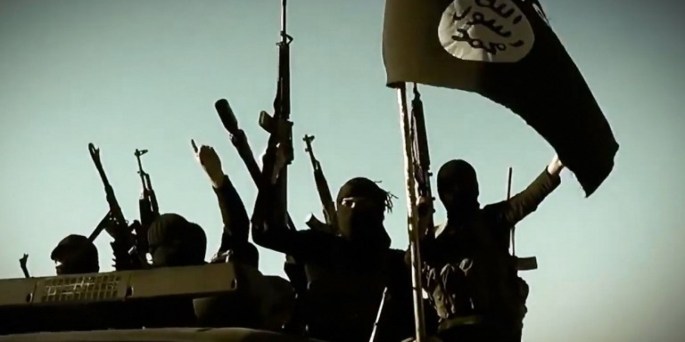
Are we destroying the Islamic State or fighting a global war on terror?

In the past six months, the U.S. launched air strikes to neutralize the al Qaeda offshoot, Khorasan group, and the imminent threat they posed. Authorities in Ohio arrested a man—apparently self-radicalized—who was planning to target the U.S. Capitol. The Charlie Hebdo attackers reportedly received funding and guidance from Yemeni-based, al Qaeda in the Arabian Peninsula. The kosher market killer apparently had pledged allegiance to the Islamic State. Soon after, French, Belgian, and German authorities arrested more than a dozen suspected terrorists, some of whom had recently returned from Syria and allegedly may have ties to the Islamic State.

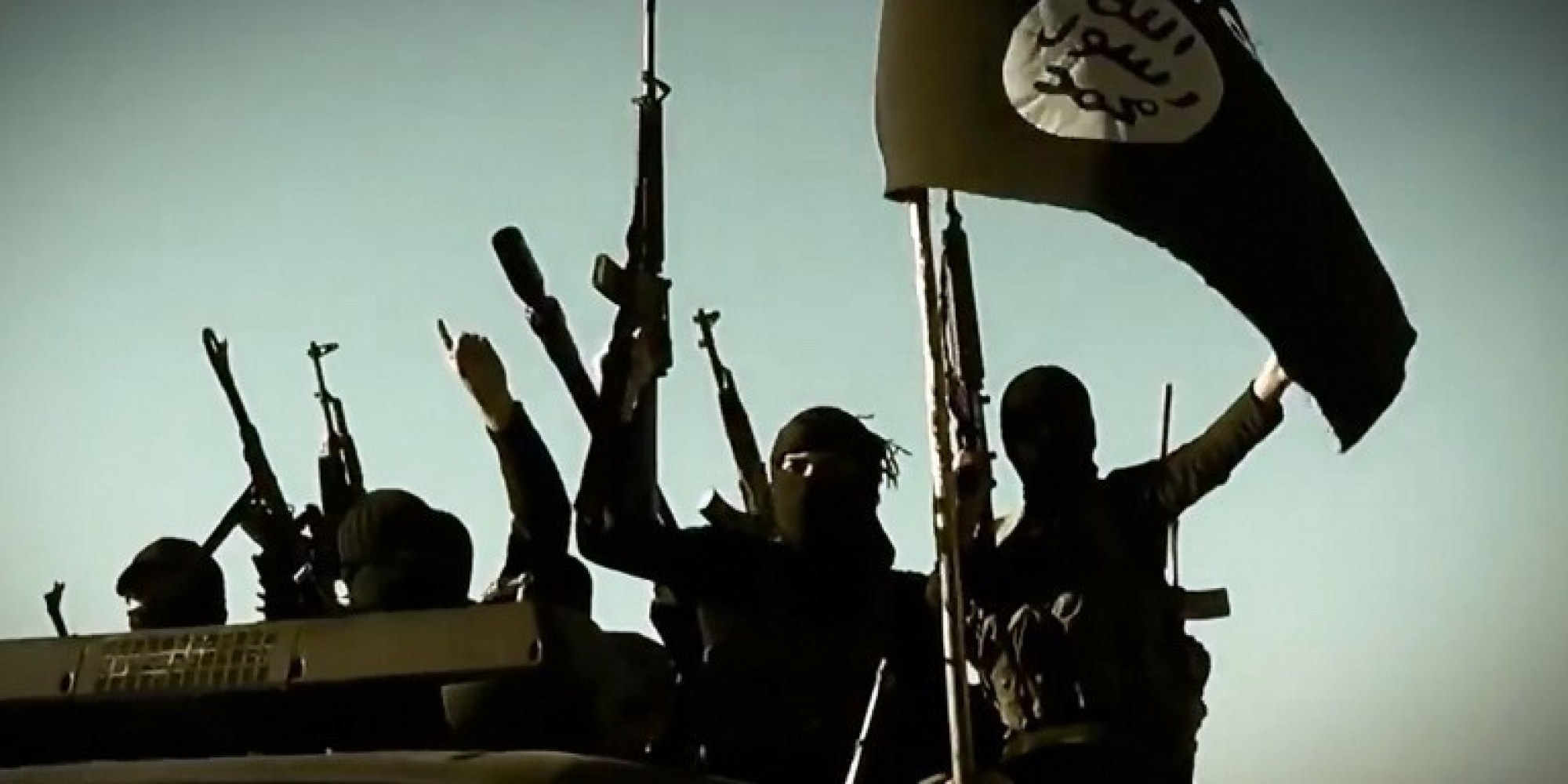
While the Islamic State dominates the headlines and Obama Administration officials repeat the defeat and destroy Daesh (nee ISIL) mantra, the President’s narrowly-named Special Envoy for the Global Coalition to Counter ISIL speaks of a decidedly broader end goal. General Allen recently acknowledged “Daesh” as the immediate threat, but noted, “more broadly we’re interested in the underlying factors that create these problems.” He went on to talk of the collective action needed to eliminate the social, ethnic, religious and economic problems that have combined in the Middle East. He noted that if we are successful, there will be a government in Syria that “reflects the will of the Syrian people,” which will have “the happy second and third order effect of assisting in the creation of stability more broadly in the region.”

In words reminiscent of President Bush, “Our war on terror begins with Al Qaeda, but it does not end there,” Secretary Kerry recently shared similar thoughts. In a speech at the Saban Forum, the Secretary observed that “even once Daesh is defeated and Syria is stabilized, our work is far from over.”

These are amazingly aspirational goals. Daesh defeated. Syria stabilized. A government in Syria reflecting the will of the people. And it would seem, a stabilized Iraq and Afghanistan, too.

Again, the similarities are evident. Also speaking at the Saban Forum, though years prior, President Bush outlined similar aspirations, “Our vision for the future: a Middle East where our friends are strengthened and the extremists are discredited, where economies are open and prosperity is widespread, and where all people enjoy the life of liberty…”

Times have changed, but the mission hasn’t. However passionately or half-heartedly we approach it, America continues to wage a global war on terror and seek the remaking of the Middle East.

Image Credit: Huffington Post

Week in DC: Events

January 20, 2015 

A View from Estonia: Russia and the Threats Posed to Transatlantic Security
Date: January 20, 10:00am
Location: Heritage Foundation, Lehrman Auditorium, 214 Massachusetts Ave NE, Washington DC

While Russia’s annexation of Crimea and further aggression against Ukraine in the Donbas came as a shock to many in Western Europe and the United States, these actions came as little surprise to those member states on NATO’s front lines – especially the Baltic states. Leveraging insights and experience from the nations in the Alliance that know Russia the best could prove a critical advantage as the U.S. and NATO develop a new strategy to deal with a resurgent Russia. Estonian Brigadier General Meelis Kiili, Commander of the Estonian Defence League, shares his insights on Russia. Join us to learn how energy, cyber, and information warfare are likely to factor into any potential future conflicts between Russia and the West.

Register to attend in person here or watch live online here.

Managing, Ending, and Avoiding Wars in the Middle East
Date: January 20, 1:00pm
Location: Rayburn House Office Building, Gold Room (2168), Washington DC

The Middle East Policy Council invites you and your colleagues to our 79th Capitol Hill Conference. Live streaming of this event will begin at approximately 1:00 pm on Tuesday, January 20th and conclude at 3:30pm. A curated questions-and-answers session will be held at the end of the proceedings. Refreshments will be served.

Watch live online here.

The Transatlantic Bond in an Age of Complexity
Date: January 20, 2:45pm
Location: Brookings Institution, Falk Auditorium, 1775 Massachusetts Ave NW, Washington DC

On January 20, the Center on the United States and Europe (CUSE) at Brookings and the German Marshall Fund of the United States (GMF) will host Federica Mogherini, EU high representative for foreign affairs and security policy, for a public address on the European Union’s foreign policy priorities. In her remarks, High Representative Mogherini will explore the value of the transatlantic relationship in a volatile and interdependent world.

Federica Mogherini became high representative of the EU in November 2014.  As the EU foreign policy chief, she represents the EU internationally, coordinates the work of all EU commissioners in charge of external relations portfolios, and chairs the monthly councils of EU foreign affairs ministers. Previously, HR/VP Mogherini was Italy’s minister for foreign affairs and a member of the Italian Parliament.

Brookings Vice President for Foreign Policy Martin Indyk will provide introductory remarks. Following High Representative Mogherini’s remarks, GMF President Karen Donfried will moderate a question and answer session.

Watch live online here.

January 21, 2015

Intelligence in a Dynamic World
Date: January 21, 10:15am
Location: Atlantic Council, 1030 15th Street NW, 12th Floor, West Tower, Washington DC

Please join the Atlantic Council’s Brent Scowcroft Center on International Security for a Commanders Series event with Dr. Michael G. Vickers, under secretary of defense for intelligence, to discuss the role of defense intelligence in tracking consistently morphing security threats at a time when technology has increased the ability of individuals and states to counter US intelligence methods.

The US intelligence collection system is increasingly challenged by a variety and dynamic set of threats. This year, Vickers said that “rapid technological change as well as political change” has led the US intelligence community to review the way it currently employs intelligence. What is the Department of Defense and the intelligence community doing to keep up with these changes to the global order? Will the United States stay ahead of these changes, or is the country falling behind in a turbulent 21st century? Dr. Vickers will speak to these and other questions.

Dr. Vickers is the under secretary of defense for intelligence, the principal intelligence adviser to the secretary of defense. Previously, he served as the first and only assistant secretary of defense for special operations/low-intensity and interdependences capabilities from 2007 to 2011. Before that, he held many positions as an Army special forces non-commissioned officer, a special forces officer, and a Central Intelligence Agency operations officer.

Register here to attend in person or watch live online here.

The Rise of Jihadist Attacks and the Fallacy of the “Lone Wolf” Terrorist
Date: January 21, 12:00pm
Location: Endowment for Middle East Truth, Rayburn House Office Building, Room B-369

This week’s tragic events in Paris have been a disturbing climax to a consistent trend of violent attacks from radical Islamic terrorists. Preceding the events in Paris was a string of violent actions in just the past few months which included the murder of a soldier in Canada, the hostage situation in Australia, and the beheading of a woman in Nebraska. The media and several counter-terror experts have since coined the term ‘lone wolf’ in reference to the supposed random and independent nature of these attacks. In October 2014, Patrick Poole in turn coined the term ‘known wolf’ to describe these attackers, pointing out the fact that many of them have been known by authorities to have ties to terror organizations and criminal behavior. Please join us as we host Mr. Poole for a seminar in which he explains why the perpetrators of these attacks are in fact ‘known wolves,’ and why it is important to change the way in which we think about these kinds of perpetrators.

RSVP here.

Cyber Risk Wednesday: Moving from Bad to Worse? Looking Back to 2014 and Implications for 2015
Date: January 21, 3:00pm
Location: Atlantic Council, 1030 15th Street NW, 12th Floor, West Tower, Washington DC

A year ago, cyber experts were calling 2013 “the year of the data breach” only to find 2014 had far worse in store. Not only did the year see massive intrusions at some of America’s most trusted companies, but critical vulnerabilities that had been undiscovered for years. Perhaps most dangerous of all, nations seem increasingly comfortable using cyber operations in the murky in-between space that lies between peace and war.

Join the Atlantic Council’s Cyber Statecraft Initiative on January 21 from 3:00 p.m. – 4:30 p.m. for a moderated discussion with Shane Harris, senior intelligence and national security correspondent for Daily Beast and Dmitri Alperovitch, the cofounder & CTO of CrowdStrike, for a discussion on Harris’ book @War: The Rise of the Military-Internet Complex, the trends in cybersecurity derived from breaches and incidents such as Target and Sony in 2014, and what we are likely to see (and suffer from) in 2015.

Register here to attend in person or watch live online here.

Ukraine’s Crisis through Ukrainian Eyes
Date: January 21, 4:15pm
Location: Elliot School of International Affairs, 1957 E Street NW, 7th Floor, Washington DC

What do Ukrainian citizens themselves think about the crisis that has engulfed their country since late 2013? This multidisciplinary panel brings together top research teams that have organized and carried out original survey research in Ukraine (including eastern Ukraine, western Ukraine, and Crimea) during 2014 to share their most interesting findings on the ongoing crisis. Topics will include what people think of the Euromaidan movement, why people join volunteer militias, how identity issues influence political preferences, whether Ukrainian elections have been free and fair, and what the patterns of support for the West, Russia, and their leaders are.

RSVP here.

January 22, 2015

Reflections from the Frontline of the Ebola Response in Liberia
Date: January 22, 1:30pm
Location: E.B. Williams Library, 5th Floor Atrium, Georgetown University Law Center, 111 G Street NW, Washington DC

The O’Neill Institute is privileged to launch our Spring Conversation Series with Daniel Lucey, MD, MPH as he shares his reflections on his time in West Africa combatting the Ebola epidemic. Dr. Lucey spent several weeks on the frontline of the Ebola crisis in West Africa. As a volunteer in both Sierra Leone and Liberia, he tirelessly treated patients and trained fellow health care workers in the proper use of personal protective equipment. Dr. Lucey explored new ways to encourage his patients, at times, the solution being as “simple as a straw.” He focused on increasing survivorship and bolstering hope despite the bleak circumstances.

Dr. Lucey is an adjunct professor of microbiology and immunology at Georgetown University Medical Center (GUMC) and is a Senior Scholar at the O’Neill Institute. A physician trained in infectious diseases and public health, he has taught for 11 years at Georgetown on global emerging infectious diseases. He completed his infectious disease training and MPH at Harvard and worked in the US Public Health Service at the National Institutes of Health. His infectious disease training and MPH were at Harvard 1985-1988, after medical residency at UCSF, and medical school and college at Dartmouth. After working at the NIH and Washington Hospital Center until 2002, he co-founded a graduate program on emerging infectious diseases and biohazardous threat agents at GUMC. He has traveled widely in Asia, Africa, and the Middle East to exchange information regarding infectious diseases such as SARS, influenza, Nipah, HIV, anthrax, and MERS. Dr. Lucey is an author on over 100 papers and book chapters.

Space is limited so please RSVP to Caroline Gould at ceg73@law.georgetown.edu.

January 23, 2015

Egypt’s Revolutions Four Years Later: Reflecting on the Past and Looking Ahead to the Future
Date: January 23, 10:00am
Location: Center for American Progress, 1333 H Street NW, 10th Floor, Washington DC

Four years after the first protests ousted former President Hosni Mubarak, Egypt remains in the midst of unfinished political and economic transitions at a time of new security threats across the Middle East. As the most populous Arab country, Egypt is central to achieving stability and progress in the Middle East.

On January 23, please join the Center for American Progress and The Century Foundation for a program reflecting on the past four years of Egypt’s transition, featuring a keynote address by retired U.S. Marine Corps Gen. James Mattis, former commander of the U.S. Central Command. The program will include an expert panel discussing the Center for American Progress’ new report “A New Anchor for U.S.-Egypt Relations: Looking to the Future and Learning from the Past Four Years of Egypt’s Transitions,” authored by Brian Katulis and Mokhtar Awad.

It will also feature a discussion on a new book by The Century Foundation’s Thanassis Cambanis’ new book Once Upon a Revolution: An Egyptian Story. In the book, Cambanis argues that after Egypt’s failed revolution, the country will face continued turmoil until its government begins to address the root economic and political grievances that drove the 2011 uprising and until the country’s opposition forces repair their own profound divisions. The book will be available for purchase at the event.

Register to attend here.

Global Oil and the Middle East Economic Outlook
Date: January 23, 12:00pm
Location: Carnegie Endowment for International Peace, 1779 Massachusetts Ave NW, Washington DC

The steady decline of global oil prices since June 2014 is shifting economic, political, and strategic calculations of key Middle East actors, and adding a new element of uncertainty at a time of increased regional conflict and polarization. Carnegie will host the International Monetary Fund (IMF) to discuss the 2015 update of the IMF’s Regional Economic Outlook for the Middle East and North Africa. The conversation will focus on the impact of both lower oil prices and slower demand growth on the region in the year ahead.

Masood Ahmed, along with Carnegie’s Uri Dadush and Deborah Gordon, will discuss the impact of fluctuating oil prices on regional economies, and the overall outlook for global markets and international economic relations. Carnegie’s Katherine Wilkens will moderate.

Register here.

Pandora Report 1.18.15

For those who’ve been reading for awhile, you’ve probably surmised that one of my personal health interests is seasonal and pandemic flu. There were plenty of stories about that this week, so that’s what we’ll focus on. We’ll also look at Ebola and other stories you may have missed. My apologies for posting delays this week, I’m dealing with some rotator cuff and carpal tunnel issues in my right arm, and let me tell you, it is HARD to type with your dominant arm in a sling!

Enjoy your holiday Monday (if you have one) and have a safe and healthy week!

Texas Health Experts Say Universal Flu Vaccine Could be a Reality

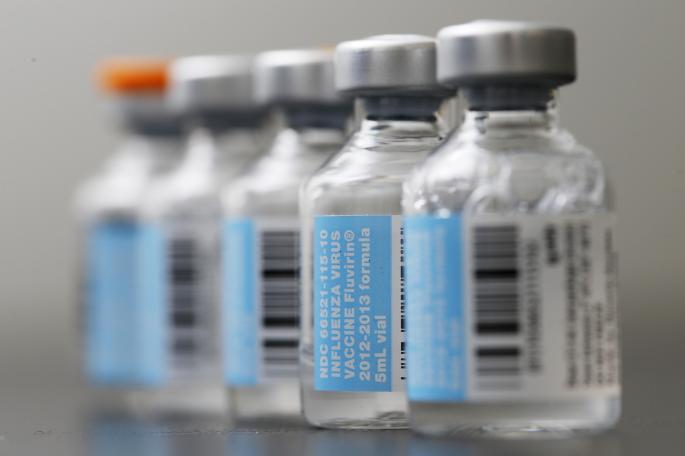
The CDC has said that this year’s seasonal flu vaccine was only 23% effective due to unanticipated antigenic drift—meaning the predicted strains in the vaccine didn’t match the dominant strains of the virus that are currently circulating. In order to combat this in the future, scientists at Mount Sinai health system in New York are in the process of testing a universal flu vaccine which will go into clinical trials this year.

KLTV.com—“‘There is work going on to see if, perhaps a different kind of vaccine could be developed maybe against a different part of the flu virus, one that is not so subject to this antigenic drift or to change as readily from one year to the next,” [Dr. Levin of UT Health Northeast] says.”

Scientists Find Brain Protein Aids Influenza Recovery

Scientists at Washington State University in Spokane have found a brain protein that boosts the healing power of sleep and speeds recovery from the flu in mice. Professor James M. Kruger said this discovery could lead to alternative treatments for flu and other infectious diseases by stimulating production of the brain protein called AcPb. This discovery comes at a time where avian influenza is prevalent in Taiwan, Japan, Nigeria, China, Egypt, Canada, the U.S. and Mexico.

Washington State University—“Krueger showed this recovery involves AcPb and an immune system signaling chemical called interleukin-1. AcPb links up with interleukin-1 to help regulate sleep in healthy animals. It also prompts infected animals to spend more time sleeping during an illness.

In the study, mice who lacked the gene for AcPb slept less after being infected with influenza virus. They also became chilled, grew sluggish, lost their normal circadian rhythms and ultimately died in higher numbers than the mice who slept longer.”

This Week in Ebola

As GMU students return to classes, so do students in Ebola affected Guinea. Schools in Guinea will re-open Monday, and schools in Liberia are set to re-open “next month.” No date has been set for schools in Sierra Leone. Despite this, the President of Sierra Leone has declared that there will be zero new confirmed Ebola cases by the end of March the country will be Ebola-free, by WHO standards, by May. These announcements come at a time when Dr. Thomas Frieden, Director of the CDC, has said he was “very confident we can get to zero cases in this epidemic if we continue the way we’re going and nothing unexpected happens” and the outbreak appears to be slowing down. Last week brought record low numbers—for Guinea, the lowest total since mid-August; for Liberia, the lowest total since the first week of June; for Sierra Leone the second week of declines and the lowest level since the end of August. However, there are still “at least 50 micro-outbreaks” underway throughout West Africa.

Pauline Cafferkey, the Scottish nurse infected with Ebola, is “showing signs of improvement” and an American soldier who was found dead in Texas after his deployment in West Africa reportedly showed no signs of Ebola leaving officials to remark that there was “no evidence of a public health threat.”

A seemingly large amount of good news this week left space for new ruminations on Ebola and outbreaks in general. Wired  had an interesting piece on Nanobiophysics and how it could stop future global pandemics while The Chicago Tribune looked at bats and their likely role in Ebola outbreaks and CNBC looked at the price of protection from global pandemics—would you believe $343.7 billion?

Stories You May Have Missed


Image Credit: NBC News

Defeating and Destroying the Islamic State: What the Wars in Afghanistan and Iraq Can Tell Us

By Erik Goepner 

Afghanistan Iraq Iraq & Syria
U.S. Goal Defeat & destroy al Qaida Eliminate Iraqi WMD, “central front on war on terror Defeat & destroy Islamic State
Date U.S. initiated operations October 2001 March 2003 August 2014
Name of operation Enduring Freedom Iraqi Freedom Inherent Resolve
# countries in coalition 50 34 62
# global terror attacks the year U.S. initiated operations 1,878 1,253 11,9521
# global terror attacks 5 years after U.S. initiated operations 2,728 4,780 TBD
# global terror attacks 10 years after U.S. initiated operations 5,007 11,952 TBD
White House assessment at      +3 months Our war on terror is well begun, but it is only begun mission accomplished

Iraq is free

We are making steady, measurable progress
White House assessment at      +5 years We have significantly degraded the al–Qaida network” “The success of democracy in Afghanistan is inspiring We have seen significant security gains…Less visible are the political and economic changes taking place…This progress isn’t glamorous, but it is important TBD
White House assessment at    +10 years We are meeting our goals…the light of a secure peace can be seen in the distance We’re leaving behind a sovereign, stable and self-reliant Iraq TBD
Cost: U.S. deaths 2,353 4,486 TBD
Cost: $ $686 billion2 $815 billion3 $5.6 billion4

Notes:

  1. Numbers are for 2013, 2014 not yet available.
  2. Does not account for future costs, such as FY15 funding or medical care for veterans.
  3. Does not account for future costs, such as medical care for veterans.
  4. Represents budget request for FY15.

Image Credit: Wikimedia Commons

Week in DC: Events

January 13, 2015

Too Damn Muslim to be Trusted: The War on Terror and the Muslim American Response
Date: January 13, 6:30pm
Location: Washington Peace Center, 1525 Newton Street NW, Washington DC

Dr. Maha Hilal in her dissertation research examined the relationship between policy design and implementation of War on Terror policies, and Muslim American political participation, alienation, and withdrawal.

Further, the data in this study shows that Muslim Americans across a range of backgrounds question the degree to which they are entitled to equity in both cultural and legal citizenship, including procedural justice.

Dr. Hilal recently earned her doctorate from the Department of Justice, Law and Society at American University in Washington, D.C. The title of her dissertation is “Too damn Muslim to be trusted”: The War on Terror and the Muslim American response. Her expertise and research interests are in the fields of conflict resolution, human rights, and public policy.

For more information, please click here.

January 14, 2015

The Thawing of U.S.-Cuban Relations: What Does it Really Mean for Trade?
Date: January 14, 9:00am
Location: The Washington International Trade Association, 1300 Pennsylvania Ave NW, Polaris Suite, Washington DC

Rapprochement with Cuba? Opening a U.S. Embassy in Havana? Lifting the Embargo? Long thought a distant possibility, normal commercial relations with Cuba may be a tangible reality in the near future. U.S. businesses may soon have the possibility of entering and investing into an untapped market with an array of different opportunities. However, policy makers must weigh the benefits of increased economic engagement against concerns about human rights, democracy, as well as consider the desires of the Cuban people and the Cuban-American community.

Join our featured speakers for a panel discussion to set the scene for the trade community on recent U.S.-Cuba developments and shed light on the commercial implications of the United States’ policy shift.

Register here.

Confronting Putin’s Imperial Ambitions: U.S. Policy Towards Russia After Crimea
Date: January 14, 1:00pm
Location: Heritage Foundation, Lehrman Auditorium, 214 Massachusetts Ave NE, Washington DC

With the collapse of the ruble and the Russian economy in dire straits, how has Putin’s position in Ukraine changed? At what inflection point will Russia decide that machinations against Ukraine have become too costly to pursue further? What energy policy should the United States be pursuing to provide Ukraine and her friends increased stability? What role should the new U.S. Congress play in bolstering transatlantic security? Has NATO fulfilled the pledges of the Wales Summit in bolstering defense? Join us as our panelists address these and other critical questions facing the U.S. relationship with Russia after Crimea.

Register here.

January 15, 2015

Examining the Crisis in Syria
Date: January 15, 8:30am
Location: FHI 360 Conference Center, 8th Floor, 1825 Connecticut Ave NW, Washington DC

Over the past three years, popular political protests in Syria led to mass state repression and the country’s descent into a devastating civil war. Over 190,000 people have been killed, countless more injured, and entire towns demolished. Nearly half of Syria’s 22 million people had fled their homes, either as refugees or internally displaced persons. The human cost of this conflict is extraordinary and the world’s great powers remain divided on coordinated international action, even as the situation has expanded to become a major regional conflict.

For some time, public U.S. debate and discussion on the Syrian crisis has been limited and presented in a binary fashion, as a choice between robust military action or marked disengagement. Then, in mid-2014, as the conflict significantly impacted Iraqi national security, the U.S. and a collection of allies began a series of focused military activities. The situation remains uncertain and there is a lack of consensus regarding U.S. policy objectives and strategy regarding the crisis in Syria.

This conference brings together experts on international law, the documentation of atrocities in Syria, reporting on the conflict, engaging social media, assessing the humanitarian and psychosocial impact of the war, and imagining more comprehensive solutions.

RSVP here.

The Future of USG Advising Missions
Date: January 15, 8:30am
Location: United States Institute of Peace, 2301 Constitution Ave NW, Washington DC

From Afghanistan to Iraq, Ukraine to Honduras, advising is a key U.S. strategy to address weak government capacity in sectors including finance, policing, education, agriculture, transportation, justice, and many others. Yet advising missions too often are hindered by challenges common across all U.S. government agencies. Please join us for a policy-level discussion about mission mandates for long-term, locally-owned solutions, the first in a series of conversations on advising as a means to provide foreign assistance and capacity building to partner countries.

Advising is increasingly understood to be the prevalent instrument for building long-term peace and stability. As U.S. government agencies deploy advisors to help build institutions and solve problems, mission plans become the foundation for effective capacity building.

USIP’s Academy for International Conflict Management and Peacebuilding has been at the forefront of the preparation of advisors for multifaceted missions in complex contexts. In early 2014 The Academy convened the Integrated Training for Advisors (ITAP) working group with the aim of increasing the effectiveness of USG advising missions . The working group has recently launched an initiative to discuss the future of USG advising missions in post-conflict environments. This event offers opportunities to U.S. agencies that deploy advisors to partner countries to reflect together with interagency colleagues on this very important and timely capability.

Register here.

Strategic Deterrence in the Twenty-First Century
Date: January 15, 9:30am
Location: Atlantic Council, 1030 15th Street NW, 12th Floor, West Tower, Washington DC

Please join the Atlantic Council’s Brent Scowcroft Center on International Security on January 15, 2014 from 9:30 a.m. to 10:45 a.m. for a Commanders Series event with Admiral Cecil Haney, commander of US Strategic Command, to discuss the role of strategic deterrence in an era of rapidly emerging threats and an increasingly tumultuous world.

Watch the event here or register to attend in person.

Top Priorities for Africa in 2015
Date: January 15, 10:00am
Location: Brookings Institution, Falk Auditorium, 1775 Massachusetts Ave NW, Washington DC

The year 2015 will be an eventful one for the more than one billion people living in Africa. China, Africa’s largest trading partner, will hold the Sixth Forum on China-Africa Cooperation; the Post-2015 Development Agenda will chart a new course for global responses to poverty; West Africa will begin its recovery from the devastating Ebola crisis; and the continent’s largest economy, Nigeria, will face a defining presidential election (along with more than 15 other countries). Many of these milestones will bring opportunities for Africa to redefine its relationships with global partners and strengthen its voice on the world stage. Others will present obstacles to the continent’s steady march towards peace, security, and economic and human development.

On January 15, the Africa Growth Initiative at Brookings will host a discussion with leading Africa experts on the most important challenges the continent will face in 2015. The panel of Brookings experts will offer their expertise on these pressing issues as well give recommendations to national governments, regional organizations, multilateral institutions and civil society on how to approach them in order to create a peaceful and prosperous 2015 for Africa.

Register here to attend or watch live online here.

Marshall Plan for the Mind: The CIA Covert Book Program During the Cold War
Date: January 15, 3:00pm
Location: Woodrow Wilson International Center for Scholars, 5th Floor Conference Room, 1300 Pennsylvania Ave NW, Washington DC

The information monopoly of Communist regimes in the Soviet Union and Eastern Europe was weakened by a covert CIA program to send books and other printed material behind the Iron Curtain.  The “book program” arranged for publication in the West of the first Russian-language edition of Boris Pasternak’s novel Doctor Zhivago. It distributed a wide range of Western literature, much non-political, to Soviet and East European elites —  both those identified with the regimes and dissidents — who were cut off from the intellectual and cultural life of the West. The book program aimed to keep a critical mass of intellectuals in Soviet bloc countries informed about the values and culture of the free world.   Books and periodicals were mailed to Eastern Europe under the cover of various sponsoring organizations, including publishing houses and universities. They were smuggled in by travelers.  Between 1958 and 1991, some 10 million books and periodicals were distributed to East European and Soviet citizens.

Watch live online here.

Syria: Should the United States Do More?
Date: January 15, 5:00pm
Location: U.S. Navy Memorial Heritage Center, 701 Pennsylvania Ave NW, Washington DC

In January 2013, the McCain Institute for International Leadership launched its Debate and Decision Series with an inaugural event entitled “Should the United States Save Syria?” A distinguished group of debaters tackled the topic during a live debate moderated by CNN’s Elise Labott at the U.S. Navy Memorial in Washington.

Two years later, the McCain Institute will revisit this issue – examining the current situation in Syria, the rise of ISIS and the expansion of the conflict into Iraq.

We look forward to a lively debate, as leading U.S. and Syria experts tackle the question: “Syria: Should the United States Do More?” the latest in our Debate and Decision Series events at the McCain Institute.

Watch live online here or register to attend in person here.

Pandora Report 1.11.15

Dirt is all around, I mean, truly, all around. We wash it off our produce, get it smashed into the soles of our shoes, and vacuum it out of our homes. But is dirt really that bad? The stories this week look at dirt as a source of antibiotics and a disposal method for chemical weapons. We also look at Ebola and other stories you may have missed.

Have a fabulous week!

DARPA Wants to Turn Chemical Weapons Into Dirt

DARPA has a new idea for eliminating chemical weapons—breaking them into safe compounds like oxides and earth metal salts, in other words, soil. Considering the drawbacks for current disposal methods, the agency’s Agnostic Compact Demilitarization of Chemical Weapons program has put out a call for proposals for a weapons-to-dirt plan.

Popular Mechanics—“The defense research agency is looking for a transportable system that can fit in a 40-foot-long shipping container and process at least 55 gallons of chemical weapons and precursor material every hour for a 48-hour period. Processing will be conducted near the chemical weapons storage site, use local materials (such as dirt of plant matter), and produce no hazardous waste.”

New Class of Antibiotic Found in Dirt Could Prove Resistant to Resistance

A study published this week in Nature looks at a new antibiotic, called Teixobactin, which could keep working for “longer than any other” before bacteria could develop resistance. It is still at least four years away from availability and can only treat gram-positive bacteria like staph, strep, and TB. And where was this new antimicrobial found? Dirt from a grassy field in Maine.

The Washington Post—“Most microbiologists only ever work with around 1 percent of microbes—the ones that will grow politely in the lab. But the rest refuse to grow on traditional growth media, like petri dishes. But there are potential antibiotics all over the world being created by plants, fungi, and microorganisms. Lewis and his colleagues sandwiched soil between two semi-permeable membranes, effectively tricking soil microbes into growing in a “natural” environment that was actually a lab culture.

Among the 10,000 organisms and 25 antibiotics they grew in this new type of culturing method is Teixobactin. It successfully obliterated MRSA and drug-resistant TB in cell cultures and in mice, and did so without any signs that the bacteria might become resistant to it.”

This Week in Ebola

Ebola has reached beyond health. Since the outbreak began, in Sierra Leone a combination of curfew, a ban on public gatherings, plummeting GDP, and inflation have fueled economic freefall. And remember when Texas nurse Amber Joy Vinson got on a plane to Ohio to shop for bridesmaid gowns for her own wedding? Well the store, announced it will be going out of business due to flagging sales and stigma of being the “Ebola” bridal store.  The pharmaceutical industry is chugging along in creation of and testing of possible vaccines for the Ebola virus; all of this comes at a time where the number of deaths is over 8,200 and the number of cases stands at over 20,000. The Economist has an amazing series of charts, maps, and graphs that look at the scope of the outbreak.

Meanwhile, the British nurse diagnosed with Ebola is in critical, but stable, condition, and an American health care worker was transported to the Nebraska Medical Center’s specialized biocontainment unit for observation. Travelers from Mali will no longer face enhanced screening when they arrive in the U.S., as the last case in Mali was December 5 and there are no active cases in the country.

Lastly, there were two interesting first-person stories from those who have returned from West Africa. First, an NPR correspondent in Washington DC writes about the terrifying moment when he woke up with a fever within 21 days of his return from Liberia. Then, an Australian MSF nurse wrote about the “sheer brutality” of the Ebola virus he experienced while in Liberia.

Stories You May Have Missed


Image Credit: United Nations University

Fighting the Islamic State: U.S. Objectives

By Erik Goepner

Our objective is clear:  We will degrade, and ultimately destroy, ISIL,” said President Obama during his national address on 10 September 2014. Since then, the destruction of the Islamic State has been echoed as an American objective by senior leaders across the executive branch.

Such an absolute and mammoth objective towards IS, while for years the U.S. has sought reconciliation and reintegration with much of the Taliban in Afghanistan? Destroy IS, and inadvertently relieve much of the pressure against Assad, a despot who has presided over a state in which 200,000 have been killed? Is the threat from IS so severe that they must rise to the top of America’s targeting list?

A compelling argument for such an all-encompassing national priority might have been expected during the President’s national address in September. Not so. Instead, he noted the threat IS poses to the people of Iraq and Syria, and the broader Middle East—including American citizens, personnel and facilities located there. Quite likely, that is why part of the American Embassy staff in Iraq was evacuated in June 2014, as also occurred in Yemen, South Sudan, and Libya last year. And the threat to Americans in America? “If left unchecked, these terrorists could pose a growing threat beyond that region, including to the United States,” offered the President.

Two months later, the White House repeated a similar threat assessment. Their fact sheet said IS “could pose a growing threat to the United States and others beyond the region.” The fact sheet also noted that IS posed an immediate threat to Iraq, Syria and U.S. allies throughout the region, as did numerous other groups per a State Department travel warning.

So, America will send 3,100 military members and spend $5.6 billion this year in an effort to destroy a group that could pose a threat beyond the Middle East?

That Iran and Syria will likely benefit if we succeed in destroying IS makes the U.S. choice of objectives all the more confusing. Both countries are on the State Department’s list of state sponsors of terrorism—since 1979 for Syria and 1984 for Iran. One of the most lethal killers of American service members in Iraq was the explosively formed penetrators (EFPs) provided by Iran.

At the UN, two years ago, the President said “the United States will do what we must to prevent Iran from obtaining a nuclear weapon.” It is difficult to see how the elimination of what appears to be the most capable Sunni fighting force in the Middle East will not strengthen Iran’s hand and further embolden them. The presence of American and Iranian military advisers in Iraq, and our common purpose there, appears to make achievement of Iran’s goals more likely and less costly.

As for Syria, President Obama had previously spoken of a red line regarding their use of chemical weapons and that Assad must step down, yet America now strikes Assad’s most lethal foe.


Image Credit: defense.gov

Pandora Report 1.4.15

Happy 2015! I hope all of you enjoyed a safe, happy, and healthy holiday season. As we get back into things, this week we will look at Seasonal Flu, 1980s Chemical Weapons, and, of course, Ebola. Please also enjoy a wrap up of other stories from the last two weeks in the Stories You May Have Missed section.

Have a fabulous week!

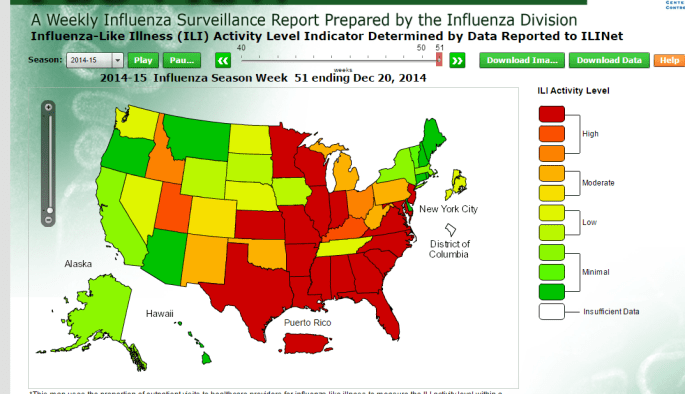
This Season’s Flu Activity Has Reached the Epidemic Threshold, the CDC Says

On the heels of the announcement that this year’s flu vaccine is not as effective as hoped, the Centers for Disease Control and Prevention has announced that they are seeing elevated activity in all their influenza surveillance systems and that this year’s seasonal flu has reached epidemic levels. The Virginia Department of Health has called the flu “widespread” in our state. The CDC urges it is still too early to determine if this season will be worse than others but preliminary data seems to reflect that it may be.

The Washington Post—“The influenza season reaches an epidemic level when the proportion of deaths attributed to pneumonia and influenza reaches a certain threshold: 6.8 percent. According to the CDC’s latest available information on the flu season, the percentage is currently at the threshold.”

Secret Papers: UK Studied Chemical Weapons Buildup in the 1980s

Newly released, formerly secret, documents show that in the early 1980s former Prime Minister Margaret Thatcher’s government considered rebuilding Britain’s chemical weapons arsenal in the face of a perceived looming threat of the Soviet Union. Thatcher’s defense chiefs were worried that the country would have only nuclear weapons in order to respond to a possible Soviet chemical attack.

ABC News—“In the papers, Thatcher states that it might be considered “negligent” of the government not to develop a credible response to a Soviet chemical attack short of using nuclear weaponry. She also suggests urging the Americans to modernize their chemical arsenal.

The lack of a chemical capacity was called a “major gap” in NATO’s military capacity by Defense Secretary Michael Heseltine in a secret 1984 document. He said the threat of a nuclear response lacked credibility.”

This Week in Ebola

While we were celebrating and enjoying the holidays, Ebola, of course, didn’t take a break. In the spirit of the season the UK’s Queen praised the selflessness of those fighting the ongoing epidemic in West Africa. And while Christmas gatherings were cancelled in Sierra Leone and Guinea, those in Liberia made sure their Christmas spirit was on full display. As 2014 came to an end, there were many looks back at the year in Ebola and the possible source of the start of the outbreak. The first case of Ebola was diagnosed in Britain by a nurse who contracted the disease in West Africa and there were reports of a possible lab error exposure to the virus at the CDC.

There are some reasons for optimism as 2015 begins, including survival rates increasing for cases in Sierra Leone and promising news on the vaccine front. Vaccines tested in Uganda against Ebola and the related filovirus Marburg have proven to be safe and effective in generating an immune response to the deadly viruses  and the U.S. Department of Health and Human Services has awarded contracts worth $43 million to develop two possible Ebola vaccines more quickly. According to the UN’s Anthony Banbury, 2015 should see the number of Ebola cases brought to zero by the end of the year and Al Jazeera America argues that this year should be focused on immunization and investment in West African health systems.

The last two Ebola updates are entirely unrelated and include the unverified possibility that ISIS militants have contracted Ebola and interesting coverage by NPR of how Ebola has affected love and sex.

Stories You May Have Missed


Image Credit: The Washington Post

The Right Choice?

By Erik Goepner

It has been eight years since the demise of Saddam Hussein. During his brutal reign, the dictator used chemical weapons against his own people, invaded an American ally, and went to war with one of our enemies. Across his 24-year rule, hundreds of thousands died. The intervening years since the 2003 invasion have resulted in more than 200,000 killed and the Islamic State now controls wide swaths of both Iraq and Iran. As a result, both American and Iranian forces are in Iraq fighting IS.

In the 1980s, Saddam was an ally of sorts, as the discomforting photo of him shaking hands with then-Special Envoy Donald Rumsfeld suggests. Only a few years earlier, Iran had overthrown the U.S.-backed Shah, taken U.S. citizens hostage and embarked on what seemed to be a radical path. In response, America supported Saddam’s war efforts against Iran.

But, then, power seemingly having corrupted absolutely, he invaded Kuwait. Regardless of what the Ambassador did or did not say, Saddam poorly estimated the global response and a decisive military victory against the battle hardened, fifth largest army of the world soon followed. Horrible repression of revolts, sanctions and no-fly zones ensued.

Then came 9/11. If it weren’t un-American, I’d tell you we were a bit scared. Assuredly, we wanted revenge and America was ready to prevent future attacks by all necessary means. Meanwhile, Saddam was posturing for his neighbors, dropping hints about having weapons of mass destruction, while violating U.N. resolutions.

And so, in early 2003, Desert Storm II kicked off. In less than three weeks Baghdad fell. In short order, the Iraqi Army and security forces were disbanded and the government was largely crippled through de-Baathification. Regrettable remarks such as “freedom is untidy” from the Secretary of Defense and others accompanied the beginnings of the civil war they refused to acknowledge.

Almost 12 years have passed. Two hundred thousand people have been killed, the United States has spent trillions, and a barbaric terrorist group—IS—dominates much of the Iraq. America finds itself working uncomfortably close with an avowed enemy (Iran), while local militias, to include those the U.S. fought against during the war, offer the best chance for success.

Are there times when tolerating an evil yields less tragedy than a noble, yet ill-informed, pursuit?


Image Credit: Daily Paul

Terrorist Groups Sharply Criticize Pakistani Taliban for School Attack

By Erik Goepner

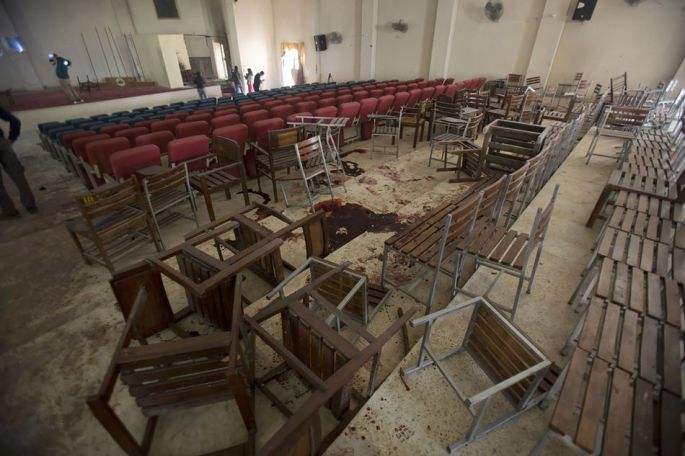
Fellow extremists quickly condemned Tehreek-i-Taliban Pakistan (TTP) for their brazen attack on Pakistani school children. The attack began the morning of December 16th as seven armed TTP gunmen entered the Army Public School and Degree College in Peshawar. They killed 148 during the eight-hour siege, including 132 children. All of the attackers died, either by detonating their suicide vests or during the fighting with Pakistani commandos.

Shortly after the attack, the Afghan Taliban called the actions un-Islamic and expressed their sympathies to the grieving families. The regional al Qaeda affiliate wrote of “hearts bursting with pain and grief” over the incident.

The noteworthy criticism from the Afghan Taliban raises the question: why would TTP specifically target children and risk pushing their allies away? TTP and the Afghan Taliban both align themselves under Mullah Omar. The TTP’s top commander, Mullah Fazlullah, fought in Afghanistan during the early 2000s and reportedly had quite favorable relations with the Afghan Taliban. Additionally, Mullah Fazlullah, as both cleric and scholar, enjoyed the respect of many fellow jihadists.

Much less is known about the regional TTP commander, Umar Mansoor (aka Umar Adizai), who apparently planned the attack. He is thought to be in his mid-30s and a father of three. According to the scant reports, he attended school in Islamabad before later entering a madrassa.

So, why might TTP have targeted the children and risked alienating allies?

Did the subordinate commander, Umar Mansoor, go rogue and disobey Fazlullah or, perhaps, fail to share his plans with the TTP leader?

While there is little reported on the relationship between Umar Mansoor and Fazlullah, what exists suggests their relationship is close. If those reports are true, it becomes more difficult to accept that Umar Mansoor acted on his own.

Was the attack related to the infighting within TTP?

Somewhat, perhaps. In 2013, Mullah Fazlullah took command of TTP. His assumption represented a significant shift in TTP leadership from that of the previous seven years, as he was neither a member of the Mehsud or Wazir tribes nor a resident of the Federally Administered Tribal Areas. Earlier this year, the factiousness bubbled over and the Mehsud tribe formally broke with TTP.

However, it is hard to see how Fazlullah would benefit from the attack. No doubt he was familiar with Mullah Omar’s previous admonitions to be discriminant in selecting targets and the application of force. Perhaps, though, the stress within TTP resulted in the horrific, and seemingly counterproductive decision.

The most likely reason, though, may just be the one given by TTP: an attack to avenge their losses, both adults and children, from sustained Pakistani military operations in the tribal areas home to many of them. Perhaps Pakistan has finally gotten serious about fighting the Taliban and other insurgent groups. When my team and I were in southern Afghanistan in 2010, Afghan government officials and village elders alike routinely criticized Pakistan and their security service for actively supporting the Taliban. Questions have long remained regarding the Pakistani government’s resolve to fight the Taliban, with many suggesting they secretly helped “good” Taliban fighting in Afghanistan, while providing an air of commitment in fighting the “bad” Taliban who conduct attacks in Pakistan. The TTP with approximately 900 attacks over the past seven years would seem to fit the bill of “bad” Taliban.

Time will tell, but perhaps Pakistan’s latest military offensive is really having an impact on the TTP. If so, the TTP may have targeted the children to both avenge their own losses and to show, in a distorted and tragic way, that their strength remains.

Image Credit: yowoto