Pandora Report 3.21.14

BREAKING NEWS

Positive Tests for Ricin at Georgetown University

Earlier this week, a white, powdery substance that tested positive for ricin, was found in a dorm room at Georgetown University. The 19 year-old student suspect who lived in the room reported that he made it and the Georgetown Voice spoke with a source who indicated the suspect possibly “intended to use the substance on another student.” Weapons-grade ricin is an extremely lethal toxin that has no available anti-toxin.

The Washington Post– “In an e-mail sent campus-wide, the university said there was no danger to the community. Law enforcement officials said they did not think that the case was connected to terrorism. School officials received no reports of anyone being exposed to the toxin, authorities said. D.C. health officials advised the school that symptoms of ricin exposure typically present themselves within 24 hours. “This window has passed and there are no reports consistent with ricin exposure,” the statement said.”


And now, our regularly scheduled Friday news…

Highlights include Polio-like virus in California, destruction of Syrian chemical weapons, the cost of Anti-Vaxxers, and domestic illness in pigs (or…the end of bacon?!) Happy Friday and have a great weekend!

Doctors continue the hunt for a Polio-like virus in California

Since September 2012, over two-dozen children in California have displayed symptoms of a rare Polio-like illness that has caused sudden paralysis, while doctors and health officials are still hunting for the cause. One possible suspect may be some sort of enterovirus, but more testing is required as the mystery continues.

San Francisco Chronicle—“Viruses can be difficult to detect after patients have been sick for a couple of weeks, and especially if they’ve already undergone treatment that can muddy test results. In the California cases, most children weren’t tested until many weeks or even months after they became sick. Waubant, a UCSF neurologist, said she is hoping to get funding to conduct immunoglobulin testing, which would determine whether the patients with polio-like illness have certain antibodies suggesting that they’d all been infected with the same virus.”

PEDv threatens future of pork industry

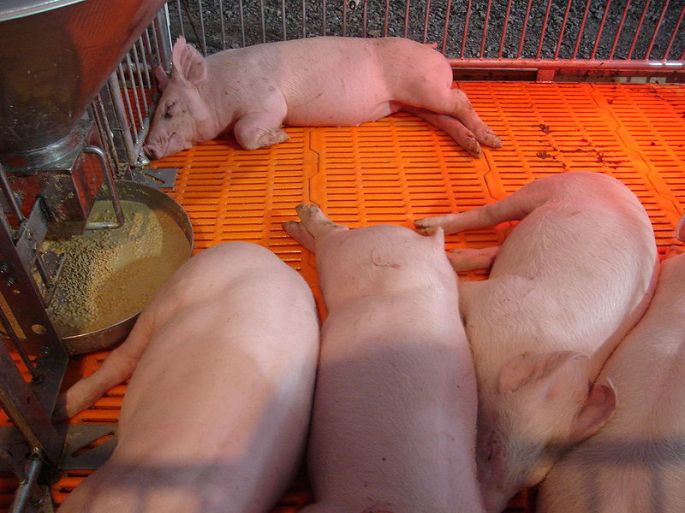
Are the days of available bacon coming to an end? A report coming out of the Dakotas paints a scary picture of the effect porcine epidemic diarrhea virus is having on the entire domestic pork industry. PEDv is a relatively new disease afflicting pigs but is has become widespread and with little known about the virus containment has become a top priority of both the pork industry and scientists.

Farm Forum—“‘PEDv has a significant economic impact,” Dr. Oedekoven, South Dakota State veterinarian said. “There is a high death rate in the naïve (newborn) population where 80 to 100 percent death losses are reported. The young piglets have no natural immunity and there is no vaccine. It’s a pretty terrible recipe. Biosecurity and sanitation are the tools being used in the industry to prevent the introduction of the disease into herds.’”

A Medical opinion on the anti-vaccination movement

With celebrities like Jenny McCarthy and Kristin Cavallari appearing in the media on an almost daily basis loudly championing the virtues of being “anti-vaxxer,” a medical doctor weighs in on the cost of that movement.

Forbes—“The result is an erosion in health gains, both individual and collective. And in some parts of the country, we are witnessing a reversal of what many believe is one of the greatest advances in medical science in the last century. And as a society, before we allow misinformation to threaten public health, we must recognize that vaccines today are safe and effective. Anything less is irresponsible. We owe it to our children and our communities to make vaccination universal.”

Will Syria meet the deadline for chemical weapon disarmament?

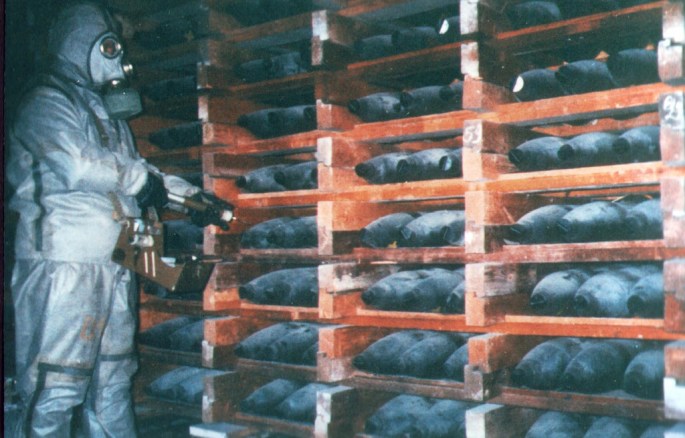
A deadline of June 30 has been set for Syria to hand over and destroy their chemical weapons arsenal. However, there are concerns that rocket strikes in Syria could delay this process and means the deadline will pass without completion.

Al Bawaba—“The Syrian government has repeatedly blamed security issues for its failure to meet the specified deadlines for removing its chemical weapon stockpile from the country. Damascus said last month that convoys carrying chemical weapons were subject to two attempted attacks while they attempted to transport the materials to Latakia.”

But, the U.S.-Russian brokered deal is not in danger, Russian authorities say.

ITAR/TASS—“‘We are not inclined to dramatize the fact that the milestone for their removal, February 5 this year, was not met, as it was planned by the decision of the Executive Council of the Organization for the Prohibition of Chemical Weapons (OPCW),” the ministry said. “It can be explained by the objective security situation around chemical weapons storage facilities and on the route of convoys’ movement, as well as by problems related to the logistical support of the operation. However, there is no reason at all to call into question the deadline for the liquidation of the Syrian chemical weapons potential – the first half of the current year.’”

(image courtesy of Wikimedia Commons)

Pandora Report 3.14.14

Editor’s note: As Managing Editor, I know my job is never done because the news never stops. As a social scientist, I know there is always more than one side to any story. As such, before we get into the news roundup for March 14, here are two follow up articles from our report last week.

Mount Sinai Scientists Discover How Marburg Virus Grows in Cells

Last week we learned about BCX4430, a drug that could possibly treat Marburg virus. This week, news coming out of Mount Sinai in New York outlines further research findings on the virus that can lead to greater understanding or possible development of virus inhibitors. The full findings of this research are available at Cell Reports.

Newswise — “A protein that normally protects cells from environmental stresses has been shown to interact Marburg virus VP24, allowing the deadly Marburg virus to live longer and replicate better, according to a cell culture study led by scientists at the Icahn School of Medicine at Mount Sinai. The investigators say that deciphering the molecular details of how Marburg virus and the host protein interact may help in developing inhibitors of the virus.”

Nazi Scientists May Have Plotted Malaria Mosquito Warfare (Redux)

As was pointed out by our eagle-eyed reader Jean Pascal Zanders, there, of course, is disagreement about the supposed Nazi insect weapons program. Jean writes about it on his blog, and GMU Biodefense’s own, Dr. Gregory Koblentz, is incredulous.

National Geographic – “‘Research to assess the threat posed by different biological agents and vectors, such as May’s research on mosquitoes and malaria, is especially hard to categorize as offensive or defensive,’ Koblentz says. ‘Even if May’s intent was offensive, it was very preliminary-many steps away from actually producing a viable insect-borne biological weapon.’”


And now for our regularly scheduled Friday news…

Highlights include Project BioShield, Destruction of Syrian chemical weapons, and  Clostridium difficile with antibiotics. Happy Friday!

The Only Thing Scarier Than Bio-Warfare is the Antidote

Should we be afraid of bio-terror or bio-error? In this massive, front-page Newsweek story, the author looks at the creation of the Project BioShield Act and its resulting effects including the Public Readiness and Emergency Preparedness Act and increased availability of biological threat agents used for scientific research. The Soviet bioweapons program, BSL-4 labs, and the intersection of science and government are also addressed.

Newsweek – “Though BioShield’s initial goals made sense when the threat of biological warfare seemed imminent, the act may have permanently undermined some of the essential protections against unsafe practices in at least one area of science research: the regulations that keep untested drugs off the market, and labs from leaking deadly biological agents into the environment.”

Greeks protest against Syria chemical weapon destruction at sea

Under the UN Security Council backed deal to deal to destroy Syria’s chemical weapon arsenal, provisions are included for this to happen aboard a U.S. cargo ship in the eastern Mediterranean Sea.  Under the plan, hydrolysis systems aboard the ship are to mix heated water and other chemicals to break down the lethal agents, resulting in a sludge equivalent to industrial toxic waste. This plan has prompted protests in Italy, Malta, and Greece despite assurances there will be no negative impact on the surrounding environments.

Agence France-Presse – “‘If this happens it will obliterate the island’s economy, will pollute the sea and will lead the people of the Mediterranean to a grim future.’ Pavlos Polakis, mayor of the city of Sfakia told AFP.”

Severe diarrheal illness in children linked to antibiotics prescribed in doctor’s offices

According to the CDC, an overwhelming percentage of cases of pediatric Clostridium difficileinfection occur in children who were prescribed antibiotics during the 12 weeks prior to illness for unrelated conditions—such as ear, sinus, or upper respiratory infections.  C. difficile is a bacteria that causes severe diarrhea and is potentially life threatening.

CDC – “Taking antibiotics is the most important risk factor for developing C. difficile infections for both adults and children.  When a person takes antibiotics, beneficial bacteria that protect against infection can be altered or even eliminated for several weeks to months. During this time, patients can get sick from C. difficile picked up from contaminated surfaces or spread from a health care provider’s hands.”


(image courtesy of CDC/James Gathany)

The Pandora Report 12.13.13

Highlights include pneumonic plague in Madagascar, ricin as a biological weapon, H7N9 in live markets in Hong Kong, Myanmar’s ratifying the BWC, and destroying sarin at sea. Happy Friday!

Madagascar hit by ‘pneumonic and bubonic plague’

In addition to the death of approximately 20 villagers who died of bubonic plague last week, a further two cases of pneumonic plague have been discovered. Pneumonic plague can be spread via aerosol. It must be treated within 24 hours; any later and the fatality rate approaches 100%. Understandably, there is concern amongst health officials in Madagascar that the disease will spread to neighboring villages and towns.

BBC – “Pneumonic plague is caused by the same bacteria that occur in bubonic plague – the Black Death that killed an estimated 25 million people in Europe during the Middle Ages. But while bubonic plague is usually transmitted by flea bites and can be treated with antibiotics, pneumonic plague is easier to contract and if untreated, has a very high case-fatality ratio, experts say. Madagascar’s health ministry director-general Dr Herlyne Ramihantaniarivo confirmed to the BBC that two cases of the plague had been reported”

Texas woman pleads guilty to ricin letters sent to Obama, Bloomberg
A Texan woman has been charged in the case involving ricin-laced letters sent to President Obama and Mayor Bloomberg. We’ve discussed the debate surrounding the classification of  ricin as a weapon of mass destruction before, so we do think its interesting they’ve charged her with use of a biological weapon.

CNN – “A Texas woman pleaded guilty Tuesday to a biological weapons charge after she was accused of sending ricin-laced letters to President Barack Obama and New York City Mayor Michael Bloomberg, prosecutors announced. Shannon Guess Richardson, 35, pleaded guilty to possession of a toxin for use as a weapon, prosecutors said in a statement. She could be sentenced to up to life in prison. A sentencing date has not yet been scheduled. Richardson, an actress, was accused of sending the letters earlier this year.”

Shenzhen Finds H7N9 Flu Virus in Markets Near Hong Kong
Three of 70 samples taken from 13 of Guangdong’s  live poultry market have tested positive for H7N9. For some reason, one of the vendors whose stall tested positive for H7N9 was still allowed to sell chickens. China is usually extremely vigilant concerning containment and effective biosurveillance, so the hesitation to shut the live poultry markets is a little baffling.  However, the stalls are  apparently being disinfected daily.

Bloomberg Businessweek –  “The 12 live poultry stalls at the Hengan Paibang market in Longgan district, one of the markets where authorities found a positive sample, were open today. The stalls get their chickens from the Buji Poultry Wholesale Market in Longgan, according to the market’s manager. ‘There’s been no order yet to shut down,’ said Zhang Jinghui, manager of the Paibang market. ‘We need to wait for instructions from the village committee. We are disinfecting the stalls everyday.’ About 30 chickens, ducks, pigeons and geese were stored in metal cages at his stall, next to a shed for slaughtering the poultry and a metal-spinning vat for defeathering.”

Myanmar Prepares to Ratify Chemical, Biological Weapons Treaties
While Myanmar, formerly known as Burma, has signed both the Chemical Weapons Convention and the Biological Weapons Convention, it has yet to ratify either treaty. There is still some debate over whether the military junta previously in charge had used chemical weapons on the rebels. Myanmar has been cooperating with IAEA inspectors to increase overview of its nuclear program.

Radio Free Asia – “Myanmar’s government asserts the country has no chemical, biological, or nuclear weapons programs. But ethnic armed rebel groups including the Kachin Independence Army (KIA) have accused the Myanmar military of using chemical weapons as recently as last year in their long-running war in the country’s borderlands. In the 1980s and early 1990s, the U.S. government voiced suspicions of a possible chemical weapons program under the military junta in Myanmar, naming China and North Korea as possible suppliers. Since then the U.S. has been less vocal in its concern about the issue. According to global security nonprofit organization the Nuclear Threat Initiative, there is currently ‘no evidence’ to suggest Myanmar has a chemical weapons program.”

Scientists raise alarm over plan to destroy Syria’s chemical weapons at sea
The Department of Defense’s plan to neutralize Syria’s chemical weapons, through hydrolysis, at sea, is coming under sharp criticism. The use of the technology at sea is unprecedented, and requires a tremendous deal of very careful estimating. Of course, when dealing with agents like sarin and VX, very careful estimating is not always enough. News of the criticism comes at the same time as the UN confirmed the repeated use of chemical weapons in the Syrian conflict. 

Washington Times – “‘There’s no precedence. We’re all guessing. We’re all estimating,’ said Raymond Zilinskas, director of the Chemical and Biological Weapons Nonproliferation Program at the James Martin Center for Nonproliferation Studies, who worked as a U.N. biological weapons inspector in Iraq in 1994. ‘For example, you don’t know if the sarin is pure. The Iraqi sarin was rather impure, and had a lot of contaminants, and we don’t know if that’s amenable to hydrolysis,’ said Mr. Zilinskas, a professor at the Monterey Institute of International Studies at Middlebury College. Under the Pentagon plan, the toxic stockpile would be transported to the Syrian port of Latakia, loaded onto a non-U.S. vessel and shipped to a third country. From there, a U.S. cargo ship would take the arsenal to sea for destruction. Richard M. Lloyd, a warhead technology consultant at Tesla Laboratories Inc. who tracks weapons being used in Syria, said he has little confidence in the regime’s ability to transport the weapons safely.”

In case you missed it
Drug Resistant H7N9 Retains Pathogenicity

(image: Wmeinhart/wikimedia)

The Pandora Report 11.15.13

Highlights include H7N9 vaccines, using bacterial toxins as antibiotics, updated numbers for the Mexican cholera outbreak, the dolphin morbillivirus, Albania refusing to host the Syrian CW arsenal, H6N1, and MERS in camels. Happy Friday!

Vaccines for H7N9 Ahead of Pandemic Fears
As the Northern Hemisphere braces for winter, fears of a resurgence of H7N9 cases are rising. Although the cooler weather has brought a few new cases, it’s still to early to tell whether another large-scale outbreak is imminent. Luckily, both Novartis and Novavax have developed vaccines capable of eliciting strong immune responses to H7N9. The Novavax vaccine generated a significant immune response in 81% of study participants, while the Novartis vaccine generated an 85% response. The real story is the time frame – it took both companies just a few months to have a viable vaccine in clinical trials, which is both impressive and encouraging should an outbreak occur.

Fierce Biotech – “Novartis and partners at the Craig Venter Institute in San Diego were able to launch a clinical trial in August after the virus was identified in March. The project was funded by BARDA. The H1N1 scare back in 2009 spurred a global, multibillion-dollar effort to stockpile vaccines. The campaign highlighted just how long it took to develop and manufacture new vaccines and then spurred a backlash after governments around the globe rushed to buy stockpiles only to see the threat evaporate. In Europe some health officials accused pharma companies of capitalizing on the fear of a lethal pandemic, and memories of the controversy will likely influence any new moves to guard against a new outbreak. This winter’s alarm may also fizzle, but these companies have demonstrated that new vaccines can be developed in record time.”

Bacterial Toxins Suggest New Antibiotic Targets
A group of researchers at MIT have found a bacterial toxin which may result in the development of novel antibiotics. The toxin, SocB, is used as a part of the toxin/antitoxin interplay by Caulobacter crescentu to check bacterial growth if necessary. It binds to a highly conserved protein, DnaN, suggesting the possibility of developing new, broad-spectrum antibiotics.

Bio-IT World – “To regulate their own growth and proliferation, bacteria maintain an intricate network of toxin-antitoxin (TA) systems, in which they produce a mix of toxins and targeted antitoxins that can skew toward a disruptive level of toxins in poor environmental conditions to limit growth. Some bacteria have been found to contain as many as 50 of these TA systems, all prepared to check bacterial growth should anything trigger a reduction in antitoxins…[SocB] inhibits replication in Caulobacter crescentus by binding to a protein that participates in numerous crucial reactions in the replisome, playing roles in mismatch repair, translesion synthesis, and especially DNA replication itself.”

WHO: Update on Cholera Outbreak in Mexico
The cholera outbreak which began in September is continuing apace in Mexico, with four cases in the last week bringing the total laboratory-confirmed case count to 180. The majority of the cases are concentrated within the state of Hidalgo, just north of Mexico City. This is the first outbreak of cholera in Mexico in over a decade. The strain is 95% identical to that of the Haitain outbreak, which was caused by an influx of infected UN aid workers following the 2010 Haitian earthquake. The Haitian outbreak, described as the “worst in recent history” by the CDC, is ongoing, with 684,085 cases to date.

WHO – “The health authorities of Mexico continue to strengthen outbreak investigation and surveillance at the national level and continue to ensure the availability and quality of care in medical units. Health professionals at different levels of the health care system are being trained in prevention and treatment of the disease. Measures are being implemented to ensure access to drinking water and basic sanitation at the community level. Awareness campaigns, particularly around safe water and food consumption are being carried out in Spanish and indigenous languages. An antimicrobial susceptibility test for Vibrio cholerae O1 Ogawa was conducted by the Institute of Epidemiological Diagnostics and Reference (InDRE) which demonstrated that the bacterium was susceptible to doxycycline and chloramphenicol, with reduced susceptibility to ciprofloxacin and resistance to trimethoprim/sulfamethoxazole.”

Dolphin-Killing Virus Spreads South, May Be Infecting Whales Too
There’s been a lot of coverage recently of the morbillivirus infecting dolphins, killing 753 of the animals since July.  The virus has subsequently spread to two species of whales, humpback and pygmy respectively. In humans, measles belongs to the genus Morbillivirus, but to date there have been no documented cases of strains of morbillivirus jumping from a dolphin or other marine mammal to a human, and the likelihood of it doing so remains very low. However, the virus may be able to infect dogs, so if you see a stranded dolphin, keep Fido away as you’re calling animal control.

Wired – “The outbreak began along the coast between New York and Virginia this summer. Now, carcasses are washing ashore in the Carolinas and Florida. Researchers have identified the cause as dolphin morbillivirus, a pathogen that’s related to human measles and canine distemper…The die-off has already been classified as an Unusual Mortality Event by the federal government – a designation that frees up resources and sends investigators and responders to the hardest-hit areas. It’s already exceeded the pace set by the last major morbillivirus outbreak on the East Coast, an event that lasted for 11 months, between June 1987 and May 1988, and ultimately claimed 742 dolphins.”

Albania shuns Syria chemical weapons destruction
How does one destroy a chemical weapon? It’s a question we’ve asked before here on the Pandora Report, and one which our October Biodefense Policy Seminar Speaker, Dr. Paul Walker, answered pretty clearly – very carefully (for a slightly more detailed answer, his full talk is available on our YouTube channel). According to the BBC, there has been a slight hiccup in the destruction of the Syrian arsenal. Following mass protests, the Albanians, who were supposed to host and destroy the materials, have flat out refused to do so. This has left the poor OPCW investigators scrambling to find a different destination for the weapons before the Friday deadline for submission of final plans lapses. Someone get these people (another) medal!

BBC – “The Balkan nation recently destroyed its own chemical stockpile, and the US had requested that it host the dismantling of Syria’s arsenal. Under the deal brokered by Russia to remove Syria’s chemical weapons, it was agreed that they should be destroyed outside the country if possible. Mr Rama attacked the Albanian opposition for having criticised the government’s willingness to consider the idea. A key meeting of the Organisation for the Prohibition of Chemical Weapons (OPCW) – the international watchdog supervising the destruction – had adjourned for several hours, awaiting Albania’s decision.”

In case you missed it:

First Human Infection with H6N1
MERS Confirmed Live in Camel

(image: Docklands Tony/Flickr)

Video: Dr. Paul Walker’s talk on Chemical Weapons Destruction

For those of you unable to attend our October Biodefense Policy Seminar last week, Dr. Paul Walker gave a very interesting and timely presentation on the challenges of chemical weapons destruction, both in Syria and globally. See the first part of his presentation below, and then head over to our YouTube channel to watch the rest. His slides are also included below.

Dr. Walker’s Slides: October Biodefense Policy Seminar_Dr. Paul Walker

Event: The Chemicals, The Conflict, & The Challenges in Syria

Speakers: Dr. Paul Walker, Green Cross International, Michael Moodie, International CBW Commentator, Dr. Chen Kane, Center for Nonproliferation Studies
Event Location: American Association for the Advancement of Science, 2nd Floor, 1200 New York Avenue NW, Washington DC 20005
Event Details:  October 23, 2013  5:00 – 6:30pm
Light refreshments to follow
RSVP

The use of chemical weapons by any nation constitutes a significant threat to international peace and security. Nevertheless, in 2013 chemical weapons were used in Syria, sparking international outrage and condemnation. With pressure from the U.S. and Russia, Syria acceded to the Chemical Weapons Convention in September 2013 and agreed to participate in an accelerated process to destroy the chemical weapons. While this has been received as an unexpected yet positive development, the implementation of such a process raises significant science and security issues.

On October 23, the American Association for the Advancement of Science’s Center for Science, Technology and Security Policy and the Federation of American Scientists are convening a panel to discuss the science and security involved in the implementation of the Chemical Weapons Convention and U.N. Security Council Resolution 2118 in Syria.

The speakers will explore the technical, political, and regional issues surrounding chemical weapons in Syria, including: the technical solutions and expertise required to ensure accelerated destruction of chemical weapons; the broader regional impact of Syria’s accession to the Chemical Weapons Convention; and the challenges involved in carrying out destruction in a civil war environment.

Walker, October Seminar Speaker, on Destroying Chemical Weapons

As destruction efforts in Syria seem to be continuing apace, the question many of us have asked ourselves is how does one destroy a chemical weapon? Dr. Paul Walker concisely addresses this in his recent Bulletin of Atomic Scientists piece, “How to destroy chemical weapons?”. To hear more, be sure to join us next Wednesday evening for our October Biodefense Policy Seminar featuring Dr. Walker, who will discuss efforts to destroy Syrian CW at length. For more information, please visit our events page.

Bulletin of Atomic Scientists – “The recent news that Syrian President Bashar al-Assad is willing to accede to the international Chemical Weapons Convention (CWC) has raised the question: How might one actually go about eliminating Syria’s chemical munitions?

The CWC entered into force in 1997. Seven CWC member countries have declared existing chemical weapons stockpiles—Albania, India, Iraq, Libya, Russia, South Korea, and the United States. Three of these—Albania, India, and South Korea—completed stockpile destruction in the last few years. Three more—Libya, Russia, and the US—expect to complete their destruction programs over the next decade. And Iraq, which joined the convention in 2009, is planning the destruction of its chemical weapons equipment and agents left from the 1991 Gulf War.

There are essentially three broad categories of destruction approaches, all used successfully in the above programs. These approaches can be mixed and matched, depending on the type, size, quantity, and condition of the agents, munitions, and containers…”

Read more here.

(image: Jen Spie/Flickr)

Bioweapons Alarmism in Syria

by Dr. Sonia Ben Ouagrham-Gormley, originally published in the Bulletin of Atomic Scientists

As Secretary of State John Kerry challenged Syrian President Bashar al-Assad to hand over Syria’s chemical weapons in early September, articles published in the Washington Post and National Interest argued that the current focus on Syria’s chemical weapons is distracting the international community from a much deadlier threat: Syria’s biological weapons. The sources for the Washington Post article (one of whom also happens to be a co-author of the National Interest piece) warn that Assad’s regime could use its biological weapons in retaliation against Western forces or its own population. Both articles assert that Syria has maintained a dormant program since the country last engaged in biological weapons developments in the 1970s and 1980s and could easily reactivate its program to produce, on short notice, the stockpile of agents required to retaliate against its enemies. This threat is real, the argument goes, because Syria could tap into its pharmaceutical and agricultural industries to support the effort. Finally, the articles warn that Syria might have retained a strain of smallpox from a 1972 outbreak, which could be used to develop a devastating biological weapon.

These two articles provide no tangible evidence to support their claims. More important, their speculations contradict extant empirical evidence on the difficulty of achieving the level of biological weapons capability that the articles claim Syria maintains or could reestablish. To avoid falling prey to the same biological weapons hysteria that led to the invasion of Iraq in 2003, it is important to look carefully at such claims. Close examination shows them to be exaggerated, at best.

To evaluate Syria’s ability to revive a dormant program, one would need to know what kind of research and production infrastructure the Syrian government currently possesses. There is, however, very little publicly available information on the scope of Syria’s bioweapons program, if any.

If Syria retains only a small research capability developed in its bioweapons program of the 1970s and ‘80s, the likelihood that it would be able to quickly produce sufficient amounts of bioweapons for retaliation is very slim. The country would first need to create the research, development, production, and weaponization infrastructure needed for a crash program, a process that may take several months to even years, particularly in a war zone. Assuming that the Syrians already have stocks of agents—and it is pure speculation to say they do— they will need to conduct exploratory research to determine which agent is the most promising as a bioweapon and develop a production process that will maintain the agent’s lethal characteristics during scale-up and storage. Creating this production capability is also neither easily or quickly achieved.

In the early 1980s, Iraq attempted to reactivate a biological weapons program that had been largely abandoned in the preceding decade; it took the Saddam Hussein regime three years—from 1983 to 1986—to conduct the needed exploratory research and identify the agents most desirable for bioweapons work. Even then, the Iraqis were able to develop only crude liquid agents that lost toxicity within six to eight months. They were also unable to develop a bioweapons-specific dissemination capability, relying instead on personnel from their chemical weapons program to adapt chemical bomb casings and warheads for bioweapons use. This strategy resulted in ineffective weapons that would have released agents upon impact, destroying most of the bio-agent in the process.

Even if Syria already has significant bioweapons infrastructure in place, reactivating it would not necessarily be a quick or simple process. When in the early 1980s Soviet-era authorities decided to activate the mobilization facility in Stepnogorsk, Kazakhstan in order to produce anthrax, it took about two years to launch production, even though the facility had been established for several years and had the equipment and minimum staff needed for its operation. The suggestion that Syria could swiftly launch a crash program from a long-dormant infrastructure and produce effectively weaponized agents in amounts sufficient for a retaliatory military attack seems a considerable stretch from likely reality.

Read the rest of the piece here.

(Image credit: Scott Montreal/Flickr)

Video of the Week: OPCW Weapons Inspectors Leaving for Syria

What does a chemical weapons inspector leaving to investigate chemical arsenals at a country in the middle of a raging civil war pack? Markers, apparently. The last thing they do before getting on said plane? You guessed it, fill out paperwork.  Meet some of the men and women helping keep us out of Syria below.

(credit: OPCW)

Chemical weapons team arrives in Syria; Blair on our options

In the last 48 hours, chemical weapons inspectors have crossed the border into Syria, reaching Damascus last night. The 19-member inspection team, sent from the Organization for the Prohibition of Chemical Weapons in the Hague, will be responsible for verifying and dismantling the 1,000 tonne Syrian chemical weapons arsenal. The team will have approximately nine months to conduct their investigation and help the Syrian government destroy their arsenal by the middle of next year.

Charles Blair, GMU adjunct professor and columnist at the Bulletin of Atomic Scientists, recently published a piece on the fundamental issue at stake here – will it make any difference?

“Regardless of how Lavrov-Kerry fares, the Obama administration faces a high-stakes dilemma. If the agreement is successful, the Syrian civil war still threatens to metastasize—further destabilizing the entire region and, due to the West’s dependence on oil from the Middle East, threatening the world economy. In short, even without a Syrian chemical arsenal, and apart from the normal winter ebb in fighting, the civil war shows no signs of slowing down.

“But failure to rid Syria of the stockpile could result in additional chemical weapons use by the Assad regime and hastens the day when extremists acquire these arms, too. If Syria does not abide by the agreement, the United States would likely resort to air strikes, amid strong calls for a redoubling of efforts to quickly arm opposition forces with more weaponry. Both actions are inherently risky. Indeed, significant sections of Syria could fall under the rule of violent Islamists armed with chemical weapons. As an authority on terrorism at the RAND Corporation, Michael Jenkins, recently wrote me, ‘the Syrian civil war has significantly raised the risk that its chemical weapons will fall into the hands of terrorists, creating a greater international crisis than the one we think we have just solved.’”

Read more at the Bulletin.

(image: Steven Damron/Flickr)