Pandora Report 1.11.15

Dirt is all around, I mean, truly, all around. We wash it off our produce, get it smashed into the soles of our shoes, and vacuum it out of our homes. But is dirt really that bad? The stories this week look at dirt as a source of antibiotics and a disposal method for chemical weapons. We also look at Ebola and other stories you may have missed.

Have a fabulous week!

DARPA Wants to Turn Chemical Weapons Into Dirt

DARPA has a new idea for eliminating chemical weapons—breaking them into safe compounds like oxides and earth metal salts, in other words, soil. Considering the drawbacks for current disposal methods, the agency’s Agnostic Compact Demilitarization of Chemical Weapons program has put out a call for proposals for a weapons-to-dirt plan.

Popular Mechanics—“The defense research agency is looking for a transportable system that can fit in a 40-foot-long shipping container and process at least 55 gallons of chemical weapons and precursor material every hour for a 48-hour period. Processing will be conducted near the chemical weapons storage site, use local materials (such as dirt of plant matter), and produce no hazardous waste.”

New Class of Antibiotic Found in Dirt Could Prove Resistant to Resistance

A study published this week in Nature looks at a new antibiotic, called Teixobactin, which could keep working for “longer than any other” before bacteria could develop resistance. It is still at least four years away from availability and can only treat gram-positive bacteria like staph, strep, and TB. And where was this new antimicrobial found? Dirt from a grassy field in Maine.

The Washington Post—“Most microbiologists only ever work with around 1 percent of microbes—the ones that will grow politely in the lab. But the rest refuse to grow on traditional growth media, like petri dishes. But there are potential antibiotics all over the world being created by plants, fungi, and microorganisms. Lewis and his colleagues sandwiched soil between two semi-permeable membranes, effectively tricking soil microbes into growing in a “natural” environment that was actually a lab culture.

Among the 10,000 organisms and 25 antibiotics they grew in this new type of culturing method is Teixobactin. It successfully obliterated MRSA and drug-resistant TB in cell cultures and in mice, and did so without any signs that the bacteria might become resistant to it.”

This Week in Ebola

Ebola has reached beyond health. Since the outbreak began, in Sierra Leone a combination of curfew, a ban on public gatherings, plummeting GDP, and inflation have fueled economic freefall. And remember when Texas nurse Amber Joy Vinson got on a plane to Ohio to shop for bridesmaid gowns for her own wedding? Well the store, announced it will be going out of business due to flagging sales and stigma of being the “Ebola” bridal store.  The pharmaceutical industry is chugging along in creation of and testing of possible vaccines for the Ebola virus; all of this comes at a time where the number of deaths is over 8,200 and the number of cases stands at over 20,000. The Economist has an amazing series of charts, maps, and graphs that look at the scope of the outbreak.

Meanwhile, the British nurse diagnosed with Ebola is in critical, but stable, condition, and an American health care worker was transported to the Nebraska Medical Center’s specialized biocontainment unit for observation. Travelers from Mali will no longer face enhanced screening when they arrive in the U.S., as the last case in Mali was December 5 and there are no active cases in the country.

Lastly, there were two interesting first-person stories from those who have returned from West Africa. First, an NPR correspondent in Washington DC writes about the terrifying moment when he woke up with a fever within 21 days of his return from Liberia. Then, an Australian MSF nurse wrote about the “sheer brutality” of the Ebola virus he experienced while in Liberia.

Stories You May Have Missed


Image Credit: United Nations University

Pandora Report 1.4.15

Happy 2015! I hope all of you enjoyed a safe, happy, and healthy holiday season. As we get back into things, this week we will look at Seasonal Flu, 1980s Chemical Weapons, and, of course, Ebola. Please also enjoy a wrap up of other stories from the last two weeks in the Stories You May Have Missed section.

Have a fabulous week!

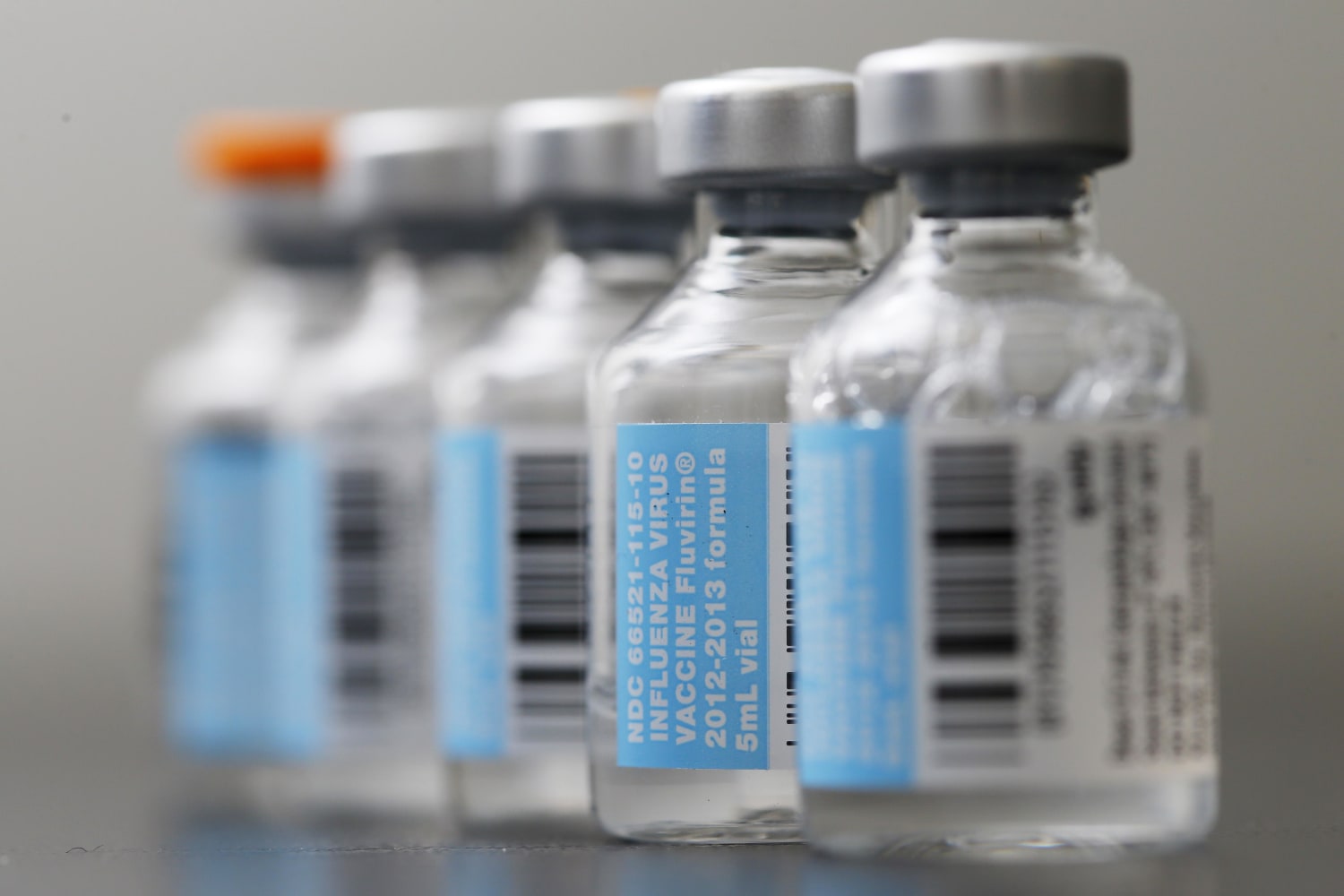
This Season’s Flu Activity Has Reached the Epidemic Threshold, the CDC Says

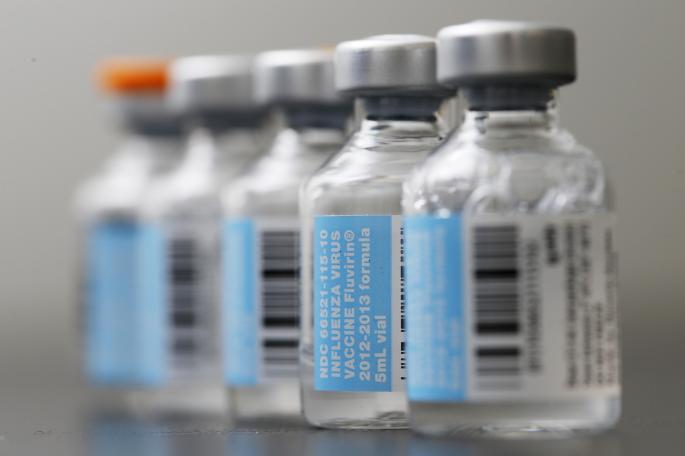
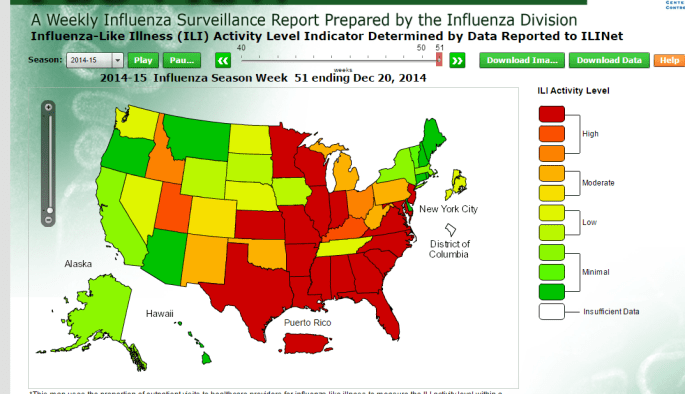
On the heels of the announcement that this year’s flu vaccine is not as effective as hoped, the Centers for Disease Control and Prevention has announced that they are seeing elevated activity in all their influenza surveillance systems and that this year’s seasonal flu has reached epidemic levels. The Virginia Department of Health has called the flu “widespread” in our state. The CDC urges it is still too early to determine if this season will be worse than others but preliminary data seems to reflect that it may be.

The Washington Post—“The influenza season reaches an epidemic level when the proportion of deaths attributed to pneumonia and influenza reaches a certain threshold: 6.8 percent. According to the CDC’s latest available information on the flu season, the percentage is currently at the threshold.”

Secret Papers: UK Studied Chemical Weapons Buildup in the 1980s

Newly released, formerly secret, documents show that in the early 1980s former Prime Minister Margaret Thatcher’s government considered rebuilding Britain’s chemical weapons arsenal in the face of a perceived looming threat of the Soviet Union. Thatcher’s defense chiefs were worried that the country would have only nuclear weapons in order to respond to a possible Soviet chemical attack.

ABC News—“In the papers, Thatcher states that it might be considered “negligent” of the government not to develop a credible response to a Soviet chemical attack short of using nuclear weaponry. She also suggests urging the Americans to modernize their chemical arsenal.

The lack of a chemical capacity was called a “major gap” in NATO’s military capacity by Defense Secretary Michael Heseltine in a secret 1984 document. He said the threat of a nuclear response lacked credibility.”

This Week in Ebola

While we were celebrating and enjoying the holidays, Ebola, of course, didn’t take a break. In the spirit of the season the UK’s Queen praised the selflessness of those fighting the ongoing epidemic in West Africa. And while Christmas gatherings were cancelled in Sierra Leone and Guinea, those in Liberia made sure their Christmas spirit was on full display. As 2014 came to an end, there were many looks back at the year in Ebola and the possible source of the start of the outbreak. The first case of Ebola was diagnosed in Britain by a nurse who contracted the disease in West Africa and there were reports of a possible lab error exposure to the virus at the CDC.

There are some reasons for optimism as 2015 begins, including survival rates increasing for cases in Sierra Leone and promising news on the vaccine front. Vaccines tested in Uganda against Ebola and the related filovirus Marburg have proven to be safe and effective in generating an immune response to the deadly viruses  and the U.S. Department of Health and Human Services has awarded contracts worth $43 million to develop two possible Ebola vaccines more quickly. According to the UN’s Anthony Banbury, 2015 should see the number of Ebola cases brought to zero by the end of the year and Al Jazeera America argues that this year should be focused on immunization and investment in West African health systems.

The last two Ebola updates are entirely unrelated and include the unverified possibility that ISIS militants have contracted Ebola and interesting coverage by NPR of how Ebola has affected love and sex.

Stories You May Have Missed


Image Credit: The Washington Post

Pandora Report 12.7.14

I hope all of you had a wonderful Thanksgiving! There were a lot of stories to consider for this extra long (extra late) week in review. We cover the AIDS pandemic, Avian Influenza, Polio in Pakistan, and, of course, Ebola. For those of you in school, I hope your papers and exams aren’t too overwhelming! For everyone else, have a wonderful week, hopefully paper and exam-free week!

AIDS Campaigners Say Pandemic Has Finally Reached Tipping Point

A report released by the ONE campaign to mark World AIDS Day on December 1 said that “the world has finally reached “the beginning of the end” of the AIDS pandemic that has infected and killed millions in the past 30 years.” What is the tipping point? The number of newly infected HIV patients is lower than the number of HIV positive patients who have access to retroviral medications that keep AIDS at bay. However, this doesn’t mean the fight is over.

Reuters—“‘We’ve passed the tipping point in the AIDS fight at the global level, but not all countries are there yet, and the gains made can easily stall or unravel,” said Erin Hohlfelder, ONE’s director of global health policy.”

FAO, OIE Warn of Avian Influenza’s Rapid Spread

The Food and Agriculture Organization of the United Nations and the World Organization for Animal Health have warned that the new avian flu strain detected in Europe is similar to those found in Asia and pose a significant threat to the poultry sector. Evidence of H5N8 has been found in Germany, the Netherlands, and the United Kingdom, as well as China, Japan, and South Korea. So far, it doesn’t appear this strain is infecting people, however, this week there were reported human cases and deaths from H5N1.

The Poultry Site—“The new virus strain provides a stark reminder to the world that avian influenza viruses continue to evolve and emerge with potential threats to public health, food security and nutrition, to the livelihoods of vulnerable poultry farmers, as well as to trade and national economies. Therefore extreme vigilance is strongly recommended while progressive control efforts must be sustained and financed.”

Pakistan Polio Outbreak ‘Will Probably be Fixed Next Year’ says WHO Official

So far this year there have been 262 cases of polio detected in Pakistan, which is the highest number of cases in 14 years. Pakistan is one of only three countries in the world, including Afghanistan and Nigeria, where the virus remains endemic. Despite these numbers, a WHO official in Pakistan says the disease will “most probably be fixed in the first half of 2015.” Military campaigns around the country have not only made vaccination more difficult but have faced tribal militants who banned all vaccinations.

The Guardian—“Persistent public awareness campaigns have not fully quashed popular fears that the drops given to children – a solution of highly weakened polio virus – are part of a western conspiracy to make Muslims infertile.

The Pakistani Taliban have attacked and killed health workers who conduct door-to-door campaigns, forcing the government to mount massive security operations during major vaccination drives.”

This Week in Ebola

We’ve got a lot of news from the last two weeks, so today, let’s start stateside.

The CDC says you can stop worrying because it is very unlikely that Ebola will become airborne, so you can stop cancelling your African safaris. Ebola anxiety has left the U.S. buying up all the PPEs leaving little for workers in West Africa, while the Director of the Harvard School of Public Health Emergency Preparedness has said that U.S. quarantine policy could discourage volunteers from going to help the outbreak. However, recently, no one has been caught in quarantines entering New York and New Jersey airports. 35 American hospitals have been designated as Ebola centers and already the U.S. government is looking past Ebola for the next health disaster. Meanwhile, the first human trial of an experimental vaccine for the virus has produced promising results.

Overseas, the German airline Lufthansa adapted an A340-300 to transport Ebola patients. In Liberia, the President has banned election rallies and mass gatherings under the reasoning that they risk worsening the spread of the virus and Ebola moves out of the cities, it is ‘pingponging’ into rural areas. In Sierra Leone there are approximately 80-100 new cases of Ebola daily, they are running out of beds, and in protest of non-payment, burial workers are dumping bodies in public in the city of Kenema. One piece of good news coming out of this outbreak that has affected more than 16,000 people is that female genital mutilation is on the decline. Also, a new 15-minute test for Ebola is being tested in Guinea, which, if it works, will help medical staff identify and isolate Ebola patients sooner.

The UN warns that the longer the disease is allowed to spread unchecked in West Africa, the more likely it is that Ebola will appear in new places in the world but EcoHealth journal notes that closer study of zoonotic diseases could help prevent Ebola and other diseases from affecting humans. Don’t worry though, according to North Korea Ebola isn’t a zoonotic disease, it is a bioweapon created by the U.S.

Stories You May Have Missed


Image Credit: Free Internet Pictures

Pandora Report 11.16.14

Its getting pretty cold outside, right? So what better way to spend your Sunday than catching up on all the best stories of the week! This week we’ve got Wikipedia as a predictive took for the spread of disease, a catchy new name for Chikungunya, MERS CoV in Saudi Arabia, some stories you may have missed, and, of course, an Ebola update.

How Wikipedia Reading Habits Can Successfully Predict the Spread of Disease

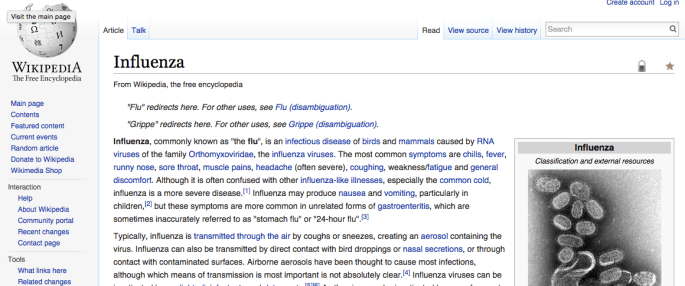
In my absolute favorite story of the week, researchers have identified a link between the spread of disease and the corresponding page hits of those diseases on Wikipedia. No, the Internet isn’t giving people E-bola, but page views seem to have a predictive effect on infectious disease spread. During the three-year study, looking at readers’ habits, the researchers could predict the spread of flu in the U.S., Poland, Thailand, and Japan, and dengue in Brazil and Thailand at least 28 days before those countries’ health ministries.

The Washington Post—“Official government data—usually released with a one- or two-week lag time—lagged four weeks behind Wikipedia reading habits, according to Del Valle; people, she said, are probably reading about the illnesses they have before heading to the doctor.”

The ‘Vacation Virus’

As Chikungunya makes it way through the Americas, awareness of the disease becomes more important—including the creation of a catchy nickname! The vector, transmissibility, and symptoms are similar to Dengue and with Chikungunya being relatively new to the western hemisphere, a story like this one may be helpful in putting a human face on a growing problem.

The Atlantic—“It might be parochial to call Chikungunya a “vacation virus”; however, as Americans prepare to hit the Caribbean beaches in the coming winter months, awareness campaigns are ramping up. Last week, the travel section of the New York Times ran a feature on Chikungunya highlighting how tourism agencies and organizations are both downplaying the scope of the outbreak and advising simple measures to deal with the virus. (Avoid mosquitos.)”

MERS Cases on the Rise in Saudi Arabia

Since September 5, there have been 38 new cases of MERS-CoV in Saudi Arabia, bringing the total number of cases in Saudi Arabia to 798. The WHO said that due to the non-specific symptoms of MERS, it is critical that health care facilities consistently apply standard precautions with all patients regardless of their initial diagnosis. Furthermore, until more is understood about MERS, immunocompromised individuals should practice general hygiene measures, like hand washing, and avoid close contact with sick animals. Nearly one third of the new cases were reported by patients who had recently had close contact with camels.

Outbreak News Today—“The continued increase in cases prompted Anees Sindi, deputy commander of the Command and Control Center (CCC) to say, “MERS-CoV is active and we need to be on full alert.” In addition, the Saudi Arabia Ministry of Health launched a new public information campaign in Taif in response to the recent spike in new cases of MERS-CoV in the region. Medical professionals will be made available at public locations with the aim of educating citizens on the need to avoid unprotected contact with camels because of the risk of infection with MERS-CoV, underlining the crucial role of the community in preventing the spread of the disease in the Kingdom.”

This Week in Ebola

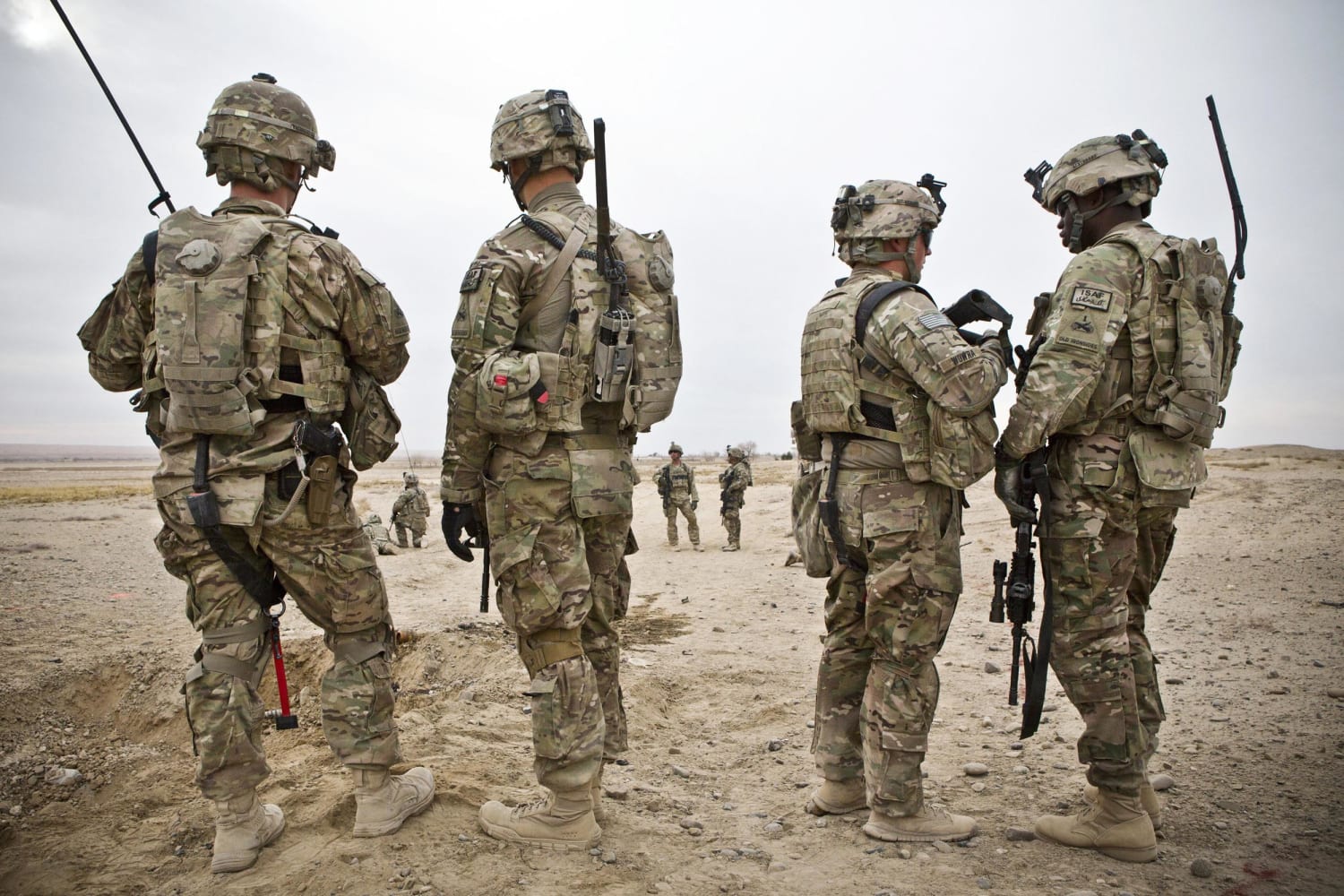
Ebola is on the rise again in Sierra Leone bringing the number of deaths to 5,147 and cases to 14,068. It appears that the virus is finding new pockets to inhabit including villages outside the Liberian capital and in Bamako, the capital of Mali (eclipsing earlier success in that country at containment.) Despite these new infections outside of Monrovia, Liberian President Ellen Johnson Sirleaf has ended the state of emergency in that country. Unsurprisingly, the epidemic has imposed a financial burden on the affected countries including losses in agricultural trade and the service industries. Elsewhere in Africa, Ugandan health officials have declared the country free of an Ebola-like Marburg virus. Stateside, a new report from the CDC outlines steps taken in Dallas to prevent further virus spread and a third Ebola patient headed to the bio containment unit at the Nebraska Medical Center for treatment. Finally, 80 U.S. Military personnel helping to fight Ebola in Liberia returned home this week, and though none are displaying symptoms, they will be monitored for 21 days at Joint Base Langley-Eustis in Virginia.

Stories You May Have Missed


Image Credit: Wikipedia

Pandora Report 11.9.14

We’ve got some timely stories this week: just in time for Veteran’s Day, we look at military exposure to chemical agents in Iraq, and at the beginning of flu season we look at the newest suspension of Yoshihiro Kawaoka’s H5N1 research. We’ve also got an Ebola update.

Have a great week!

More Than 600 Reported Chemical Exposure in Iraq, Pentagon Acknowledges

With Veteran’s Day on Tuesday, The New York Times uncovered an unfortunate military oversight that could affect over 600 service members. Originally, NYT found 17 soldiers who had been exposed to abandoned, damaged, or degraded chemical weapons in Iraq. Later 25 more came forward, and after a review of Pentagon records, Defense Secretary Chuck Hagel has said that hundreds of troops told the military they were exposed. The Pentagon says it will now expand outreach to veterans who believe they may have been exposed.

The New York Times—“Phillip Carter, who leads veterans programs at the Center for a New American Security, called the Pentagon’s failure to organize and follow up on the information “a stunning oversight.” Paul Rieckhoff, founder and executive director of Iraq and Afghanistan Veterans of America, said the military must restore trust by sharing information.”

Kawaoka’s Controversial Flu Research at UW-Madison On Hold Again

Once again, Yoshihiro Kawaoka has halted his research of H5N1 at the University of Wisconsin-Madison. Kawaoka created an altered version of the H5N1 flu virus to look at transmissibility between mammals. On October 17, the Obama administration said they would postpone federal funding for gain-of-function studies, including those involving flu, SARS and MERS. Roughly 50% of Kawaoka’s work involves gain of function, and he paused all experiments that “might enhance pathogenicity or transmissibility.”

Wisconsin State Journal—“The White House announcement comes in response to incidents this year involving anthrax, flu and smallpox at the Centers for Disease Control and Prevention and the Food and Drug Administration. “The incidents occurring at federal facilities this summer have underscored the importance of laboratory safety, and they also prompted calls for a reassessment of the risks and benefits that are associated with research involving dangerous pathogens,” Samuel Stanley, chairman of the National Science Advisory Board for Biosecurity, said during a meeting of the group Oct. 22.”

This Week in Ebola

The Ebola ‘outbreak’ in Texas is over and MSF has confirmed the decline of cases in Liberia, however, Ebola cases have risen ‘sharply’ in Sierra Leone. While Kari Hickox remained in the news explaining the reasons she fought against quarantine, it appears, as feared, that mandatory quarantine for volunteers returning from West Africa is causing some to re-consider their commitments. Meanwhile the U.S. Army has identified five possible bases for returning troop quarantine and the Pentagon has awarded a $9.5 million contract Profectus BioSciences, Inc. for development of an Ebola vaccine. President Obama asked Congress for $6 billion to fight Ebola in the U.S. and West Africa. NBC News reported that “The U.S. is keen to be seen as leading the international response to Ebola” but there is another country in the Americas contributing to the fight—Cuba. Also in the Americas, Canada’s policy of denying visas for people coming from West Africa is called into question, and five American airports are learning a lot about infection control. Back in West Africa, Nigeria’s success in fighting Ebola has been attributed to their fight against polio. Lastly, on the heels of Mark Zuckerberg’s $25 million donation to fight Ebola, he launched a button at the top the newsfeed that links users to places where they can donate, too.

Stories You May Have Missed


Image Credit: NBC News

Islamic State Goes Old School

By Erik Goepner

Recent reports suggest that IS has employed chlorine as a weapon.  Though currently unconfirmed, these reports suggest that IS is looking to bolster its inventory of tactics, techniques and procedures. In so doing, they’ve gone old school.

IS’ first use of chlorine as a weapon may have been in September against Iraqi security forces and Shiite militias north of Baghdad.  Reports indicate the chlorine was delivered via bombs.  No one died, but approximately 40 reported difficulty breathing and heavy coughing.  One source said IS had taken the chlorine from purification plants overtaken during their advance.

Additional reports suggest that IS employed toxic gas in Kobani on October 21. Patients reportedly sought medical care for trouble breathing, burning eyes, and blisters.  A doctor on-scene ruled out chlorine as the cause, while assessing the injuries as consistent with exposure to an as-of-yet unidentified chemical.  The Guardian noted, however, there was no consensus or confidence from experts regarding potential causes of these injuries.

Five days later, an Iraqi military commander said seven chlorine filled projectiles were fired into a residential area of Anbar province, though no casualties were reported.

According to the Organization for the Prohibition of Chemical Weapons (OPCW), though, this is not new.  The implementing body of the Chemical Weapons Convention reported chlorine was already used “systematically and repeatedly” in northern Syrian villages earlier this year.  Western government officials assert Assad’s forces had employed the chlorine, though it is unclear if other groups may also have been responsible.

Historically, perhaps the most heinous and deadly precedent for chlorine-as-weapon comes from World War I, when the Germans dispersed 168 tons of chlorine during the Second Battle of Ypres in Belgium.   Approximately half of the 10,000 allied soldiers in the affected area died.  Two days later, chlorine was again used, killing an additional 1,000 Allied service members.

What might the future hold?  The Nuclear Threat Initiative, writing in 2007 about chemical weapon fears in Iraq, noted that the worst industrial accident in history was the release of 40 metric tons of methyl isocyanate at a pesticide plant in Bhopal, India.  3,000 were killed and more than 100,000 were injured.  The author concluded that a “sufficiently large release of elemental chlorine may be capable of exacting a comparable toll, particularly if discharged in a highly populated civilian area.”  However, the author also noted chlorine is typically ineffective against a “prepared adversary” because its visible color and potent odor announce its arrival and the effects of chlorine can be mitigated with “simple countermeasures,” such as gas masks or wet cloths placed across the nose and mouth.

Image Credit: Stripes

Pandora Report 10.26.14

This late weekend Pandora Report covers antibiotics in fish, ISIS and chemical weapons, the UN and Cholera, and, of course, an Ebola update. Don’t forget to get your flu shot, and remember to protect yourself by washing your hands! Have a great week!

There Are Antibiotics in Your Fish

A study in the Journal of Hazardous Materials has found antibiotics present in both farmed and wild fish, including those labeled as ‘antibiotic free’. The good news for the food producers is that all traces of the drugs were within the legal limit for food. The bad news is twofold; one, for there to be any traces after processing and freezing means that at one point, there was a lot more antibiotics, and two, levels of antibiotics in the food we eat contributes to growing antibiotic resistance in humans.

Time—“Antibiotics are used in fish largely to treat and prevent disease, not to promote growth… They’re dispersed into the water in fish farms and are sometimes injected into fish directly. And once they get into the fish, they generally stay there, even though their concentration diminishes over time.”

Islamic State Accused of Using Chemical Weapons

Iraqi officials claim that ISIS fighters have used chemical weapons—chlorine bombs—during clashes last month in Duluiya and Balad, towns north of Baghdad. Approximately 40 troops were affected and were then treated at a hospital where they recovered quickly. Iraqi forces claim that two other chlorine gas attacks have taken place over recent months, as well.

Sky News—“‘These allegations are extremely serious and we are seeking additional information in order to be able to determine whether or not we can confirm it,’ John Kerry told reporters. ‘The use of any chemical weapons is an abhorrent act, it’s against international law, and these recent allegations underscore the importance of the work that we are currently engaged in.’”

U.S. Judge Considers Whether UN Can Be Sued

In 2010 an earthquake ravaged the island nation of Haiti. Shortly after United Nations peacekeepers arrived, the nation experienced one of the worst cholera epidemics in history. Last week, a lawyer representing the Institute for Justice and Democracy in Haiti presented an argument that the UN should be held responsible for the outbreak which led to the deaths of over 8,500 people. Lawyers from the U.S. government are representing the UN in this case. The judge will decide if the case can proceed to criminal trial.

China Central Television—“Evidence from the US Centers for Disease Control and Prevention later provided strong indication that UN peacekeepers were the source of the outbreak, but the UN has denied any links, and its own investigation into the cause was inconclusive.”

This Week in Ebola

Well, the number of Ebola cases this week reached over 10,000 with nearly 5,000 deaths including the first death in Mali. As the disease spreads within the U.S., Africa, and Europe, it might be a smart time to look at how SARS was stoppedChina is a good case study. After the diagnosis of an American health worker returned from West Africa, the states of New Jersey, New York and Illinois have moved to automatically quarantine health workers returning from the affected region. All this comes at a time when federal officials and the WHO say vaccine trials could begin in West Africa as early as January. Average Americans still have very little risk of catching Ebola, but that hasn’t stopped the culture of fear and concerns about state use of Ebola as a weapon. But don’t worry, National Geographic puts the Ebola epidemic in historical perspective. Still worried? You can blame Richard Preston.

Stories You May Have Missed

Image Credit: Wikimedia Commons
ISIS and Chemical Weapons

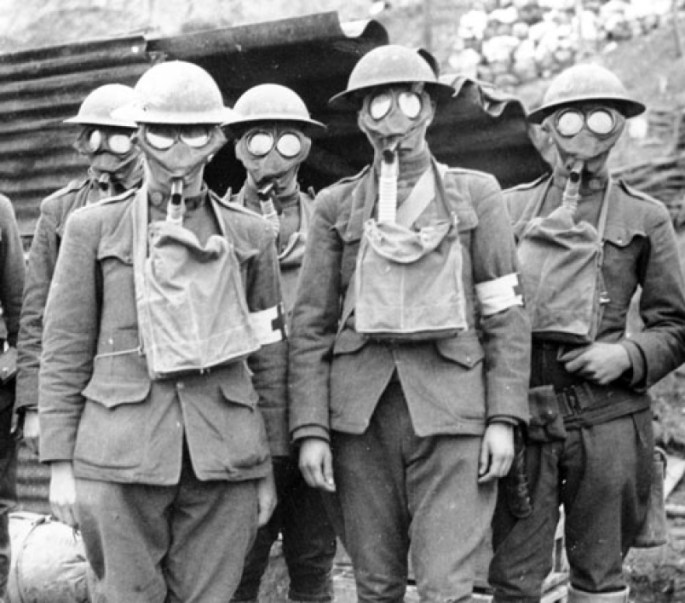
The Washington Post has reported that ISIS used an improvised chemical weapon containing chlorine to attack an Iraqi police patrol in Balad, north of Baghdad, in September, injuring 11 officers. Chlorine is readily available in Iraq given its widespread use for water treatment.

The good news is that ISIS’s use of chlorine indicates that it has not gained access to more toxic agents located at Muthanna, Iraq’s former chemical weapon production complex, which the group seized in June. That complex contains two bunkers with abandoned and degraded chemical agents and munitions that were sealed shut with concrete by UNSCOM almost twenty years ago. Breaching the bunkers to obtain the material inside would be extremely hazardous and would not likely yield readily usable agent or munitions given their age and storage conditions.

The bad news is that this attack is probably only the beginning. ISIS is the latest incarnation of the group Al-Qaeda in Iraq (AQI) which has had a long-standing interest in chemical weapons. AQI conducted a string of attacks in 2006 and 2007 that combined chlorine gas tanks and improvised explosive devices (IEDs). Due to the poor design of these improvised chemical weapons, most of the casualties were caused by the explosive component of the bomb, not the chlorine. AQI stopped using chlorine-laced IEDs due to their perceived ineffectiveness and a concerted effort by US intelligence and military forces to break up the network that had been constructing the weapons. ISIS, like AQI, has demonstrated a willingness to engage in extreme levels of violence, such as beheading captured fighters and civilians and conducting mass casualty attacks. The use of chlorine or other chemicals by ISIS fits this pattern of escalating violence and violation of norms to maximize the shock value of their actions.

Given the large swath of Syrian and Iraqi territory that ISIS now controls, the inability of local forces to launch offensive operations against ISIS, and the unwillingness of the Obama Administration to deploy even small numbers of U.S. soldiers in a combat role in Iraq, ISIS will likely be able to continue carrying out such attacks if they desire. Hopefully they will not learn any lessons from AQI’s previous experiments with this form of chemical terrorism.

Pandora Report 10.11.14

With so many stories being dedicated to Ebola, I was absolutely delighted to see coverage of influenza this week. We’ve also got stories about the proliferation of antibiotic resistant bugs in nursing homes, George Washington as the first father of vaccination, and of course, an Ebola update.

There will be no news round up next week, so I will see you all back here on October 25. Enjoy your weeks and don’t forget your flu shot!

Ebola’s Bad, but Flu’s Worse

With the coverage of the Ebola outbreak in media (and even on this blog) it may have inadvertently caused unreasonable panic in the American populace. The fact of the matter is one person in the U.S. has died from Ebola. Every year, according to the CDC, more than “226,000 Americans are hospitalized with flu and approximately 36,000 die from flu-related complications.” News outlets this week quietly reported on flu vs. Ebola and offered points of clarification about both diseases as well as tips for staying well. These include getting your flu vaccination, washing hands frequently especially after using the restroom and before eating or preparing food, and avoiding touching eyes, nose, or mouth to limit spread of germs.

Times Union—“‘The reality is there are vaccinations and treatment options available for the flu that are not available for Ebola. The reason for concern is there is no magic bullet to stop Ebola,’ said [Dr.Edward] Waltz [director of the Center for Public Health Preparedness at the University at Albany]. ‘I think the most important message to get is, take action on the things that you can control. We have so many things that affect our health that we can’t control, get yourself a vaccination if it is available.’”

Medical Superbugs: Antibiotic-resistant Bacteria Carried by More than a Third of Nursing Home Residents

A study out of Melbourne, Australia, reported that more than 1/3 of nursing home residents tested were carriers of antibiotic-resistant bacteria. And this problem isn’t just plaguing other countries. In fact, a report from the U.S. Centers for Medicare and Medicaid Services found rising rates of pneumonia, urinary tract infections, viral hepatitis and MRSA. The Australian study also found that more than half of the tested residents had received antibiotics within three months of being tested. Overuse of antibiotics can lead to higher rates of superbugs or other infections like C. difficile, which can be lethal in seniors. (On a personal note, my grandmother recently died from complications after a C. diff infection.)

ABC—“‘(Our concern is) that nursing homes are acting as a kind of reservoir, if you like, of antibiotic-resistant bacteria. We know these residents have fairly frequent movement in and out of acute care institutions, and this obviously poses risks to acute care hospitals for transmission. It could be transmitted to other patients in an acute care hospital, if the resident actually has an infection they might be infected with a more resistant bacteria – they’re the two main concerns.’”

George Washington, the First Vaxxer

This week, the Daily Beast provided an excerpt from historian Tom Shachtman’s new book, Gentlemen Scientists and Revolutionaries: The Founding Fathers in the Age of Enlightenment. At a time where people are choosing to forgo vaccinations and alarm over Ebola grows worldwide, it is amazing to see George Washington—Virginian, 1st President, Founding Father, serious boss, and old fashioned speller—decide that army immunization would not only save the lives of soldiers, but indirectly safeguard a young American nation. Shachtman recounts a February 1777 letter from Washington to John Hancock, President of the Continental Congress.

The Daily Beast—“‘The small pox has made such Head in every Quarter that I find it impossible to keep it from spreading thro’ the whole Army in the natural way. I have therefore determined, not only to innoculate all the Troops now here, that have not had it, but shall order Docr Shippen to innoculate the Recruits as fast as they come in to Philadelphia. They will lose no time, because they will go thro’ the disorder while their cloathing Arms and accoutrements are getting ready.’”

This Week in Ebola

The first (and only) patient with a domestically diagnosed case of Ebola died this week in Dallas, TX amid calls, and responses, about tightening airport screening and travel restrictions. Six major American international airports have enhanced screening for travellers arriving from West Africa while airline workers at LaGuardia have protested over what they say are inadequate protections from potential Ebola exposure. In other air travel related news, a passenger was removed from a US Airways flight after joking about being infected with Ebola and a sick passenger traveling from West Africa to Newark airport does not have Ebola. A nurse in Spain did get infected with the virus this week, as other European nations fear further spread inside their countries. American Ebola survivor Dr. Rick Sacra was hospitalized and treated this week for pneumonia and another American Ebola survivor, Dr. Kent Brantly donated his blood in order to help treat an infected NBC cameraman.

Evidently one fifth of Americans, according to a Gallup poll, are concerned about getting Ebola which is causing the ‘apocalypse business’ to boom. Meanwhile, West Africans living in the U.S. are taking action to spread information within their communities about the virus and there was a wonderful piece on how Nigeria beat Ebola. Finally, CDC director Dr. Tom Frieden spoke this week on how this Ebola outbreak is like the AIDS epidemic and why he doesn’t support a travel ban to combat the outbreak. All of this comes at a point in time where the number of deaths from the outbreak has reached over 4000.

Stories You May Have Missed

Image Credit: Immunize.ca

Pandora Report 10.4.14

This week the round up includes Russian bird flu, pregnancy and flu, ISIS threats to British troops, and of course, an Ebola update.

Have a great weekend, don’t forget your flu shot, and keep smart about your news!

Russia Reports First Cases of Deadly Bird Flu in Two Years

Domestic chicken, geese, and ducks in the Altai Krai region of Russia, near the border of Kazakhstan, were found to be infected with the H5N1 serotype of bird flu. These are the first cases of the highly pathogenic flu in this area in nearly two years.

Reuters—“The latest outbreaks in Russia, which led to the death or culling of 344 birds, were thought to have come from wild birds. “Probably, hunted ducks and geese trophies had been placed in backyards where mortality occurred later in domestic birds,” the farm ministry said in its report.”

Why is Flu Virus Higher Risk for Pregnant Women? 

While HHS continues to prepare for pandemic flu, which could kill 60 million people, researchers at Stanford University have looked at the effects flu has on pregnant women. A pregnant woman’s immune system is strongly suppressed, but researchers say this alone cannot explain vulnerability to influenza. Researchers looked at the proportion and behavior of natural killer cells and T cells, which in the presence of flu increased and changed in function. These findings offer a possible treatment path—changing inflammatory response rather than just fighting replication of the virus.

Star Tribune—“Women who get the flu while pregnant have a much higher risk of hospitalization and death and are four times more likely to deliver a premature baby. During the 1918 epidemic, in fact, the death rate among pregnant women was at least 28 times that of the general population.”

ISIS Threatens to Gas British Troops in Iraq: Soldiers Ordered to Carry Chemical Suits

British Special Forces training Kurdish Peshmerga fighters and identifying RAF bombing targets in Northern Iraq have started carrying chemical protection suits. Intelligence sources warned that ISIS fighters may have stolen poison gas from Syrian forces who withheld the agents from destruction. ISIS is thought to have stolen sarin and chlorine gases when they raided a Syrian Air Force base two months ago.

The Mirror—“The [British] soldiers now carry nuclear and biological warfare protection and respirators. All vehicles are being fitted with gas detectors and an RAF Regiment trained in chemical warfare is on standby to fly to the region.”

This Week in Ebola

Oh, Ebola. The big story this week is that the virus arrived on American shores, with the first confirmed case in Dallas and potential cases of Ebola in the DC area being ruled out, the CDC is using contact modeling to help track potential cases in Texas. Arrival in the U.S. has caused an absolute avalanche of news stories and opinion pieces throughout the media. They have ranged from fear mongering about an epidemic in the U.S. and how quarantines would be ineffective, to why you shouldn’t worry about Ebola as a bioweapon. We saw the White House urging calm (and making awesome infographics) and medical facilities saying the average American citizen has nothing to worry about. Meanwhile, there were reports that Ebola poses a greater risk than SARS and AIDS and Louis Farrakhan tweeted that Ebola is a bioweapon against Africans. Use of hyperbole and misinformation do a disservice to those trying to responsibly inform Americans. We saw a case of a doctor in Liberia who quarantined herself in order to keep others safe and another Liberian doctor who seems to have effectively treated Ebola using HIV drugs. And, of course, the biggest problem was that Ebola could affect the cocoa trade. Oh wait, no, that’s what we in “the biz” call a #champagneproblem.

Stories You May Have Missed


Image Credit: Pregnant In The City