Pandora Report 5.30.15

It was a slow-ish news week, this week with very few small stories but two huge ones about Chemical Weapons threats against airplanes and an inadvertent shipment of live Anthrax spores. We’ve also got a few stories you may have missed.

As a reminder, the Early Registration Deadline for the Pandemics, Bioterrorism, and International Security professional education course has been extended to June 15. For more information and registration, please click here.

Have a great weekend!!

U.S. Military Says It Mistakenly Shipped Live Anthrax Samples

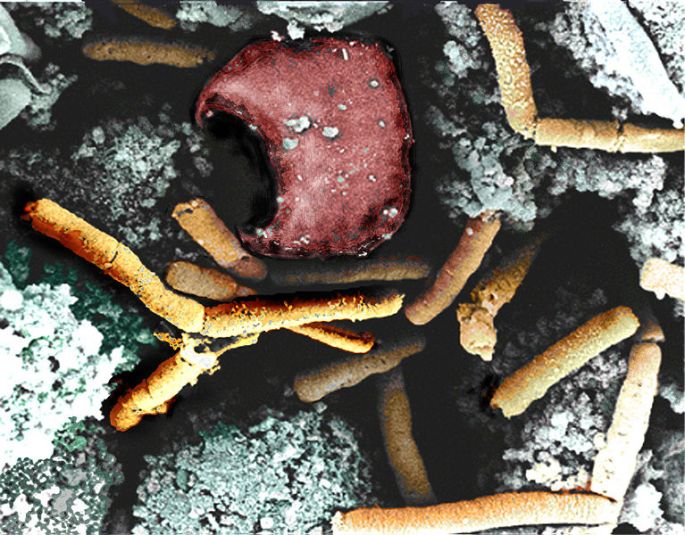
It was a big story this week when live anthrax spores were inadvertently shipped from Dugway Proving Ground—an army facility in Utah—to 19 military and civilian labs across as many as nine states and an overseas site. The shipments were supposed to contain dead spores. Army and CDC officials have emphasized that these shipments pose no risk to the public and there are no suspected or confirmed cases of anthrax infections among lab workers.

NBC New York—“The Defense Department, acting “out of an abundance of caution,” has halted “the shipment of this material from its labs pending completion of the investigation,” [Pentagon spokesman Col. Steve] Warren said.”

FBI Looking Into Chemical Weapons Threats Against Planes

While many of us had a day off from work on Memorial Day, the FBI was investigating threats made against at least 10 flights claiming that chemical weapons were aboard the planes. These included a Delta Airings flight from London Heathrow, a United Airlines flight from Edinburgh, Scotland, and an Air France flight into New York that was escorted to the ground safely by two F-15 fighter jets.

NBC News—“The threats are not deemed credible, but the information has been passed along to the airlines anyway, out of an abundance of caution.

The male caller made threats against at least 10 flights in a quick series of calls to local police around the country. All but three planes have landed with nothing of concern found.”

Stories You May Have Missed


Image Credit: United States Government

Pandora Report 5.24.15

Two quick updates before we get into the weekly wrap-up.

First, the Early Registration Deadline for the Pandemics, Bioterrorism, and International Security professional education course at the GMU Arlington Campus has been extended to June 15. For more information and registration, please click here.

Second, we here at Pandora Report wanted to let you know about a new website designed to provide resources for biosecurity professionals and practitioners and key stakeholders. The International Biosecurity Prevention Forum (IBPF) brings together the world’s leading experts from the health and security communities to share expertise on key biosecurity and bioterrorism prevention issues. Registering to join IBPF is free and easy. Go to http://www.ibpforum.organd click the “Request Membership” button to request an IBPF member account. Members get access to a discussion section and projects, resources, and best practices submitted by other members. Contact the IBPF support team at IBPForum@ic.fbi.gov if you have any questions or problems.

Now, onto the news. This weekend we have stories about British nuclear submarines, anti-vaccine legislation in California, the development of bird flu vaccines, and other stories you may have missed.

Enjoy your Memorial Day weekend!!

Britain Investigates Sailor’s Disaster Warning Over Nuclear Subs

Able Seaman William McNeilly—a weapons engineer who served aboard HMS Vanguard, one of the four British submarines carrying Trident missiles—wrote a “lengthy dossier” released on the internet which says that the “Trident nuclear defense system was vulnerable both to enemies and to potentially devastating accidents because of safety failures.” McNeilly has since gone AWOL and both police and naval officials are trying to locate him.

The Japan Times—“The Royal Navy said it totally disagreed with McNeilly’s “subjective and unsubstantiated personal views,” describing him as a “very junior sailor.” But it added it was investigating both his claims and the “unauthorized release” of his dossier. “The naval service operates its submarine fleet under the most stringent safety regime and submarines do not go to sea unless they are completely safe to do so,” a spokeswoman said.”

A Blow to Anti-Vaxxers: California Approves Forced Vaccination Bill

By now, we all know that the measles outbreak that started last winter at Disneyland was a result of unvaccinated individuals. In California, the State Senate has passed a bill which limits parent’s use of the “personal belief exemption” in order to get out of getting their children vaccinated. Under the bill, parents who don’t get their children vaccinated would not be able to send their kids to state-licensed schools, nurseries, or day care centers.

State Column—“Only children who have a medical reason for why they can’t be vaccinated would still be allowed to attend schools without receiving their vaccinations under Senate Bill 277, which was sponsored by a California Sen. Dr. Richard Pan (D-Sacremento), a pediatrician, and Ben Allen (D-Santa Monica), a former school board member and the son of a survivor of polio, according to a Forbes report.”

Vaccines Developed for H5N1, H7N9 Avian Flu

Findings appearing in the Journal of Virology indicate that the U.S. Department of Homeland Security’s Center of Excellence for Emerging and Zoonotic Animal Diseases have developed a vaccine for both H5N1 and H7N9—two strains of avian influenza which can be transmitted from poultry to humans. The vaccine was developed by cloning the Newcastle disease virus and transplanting a small section of the H5N1 virus into it; the same method was used for the H7N9 vaccine.

Toronto Sun—“‘We believe this Newcastle disease virus concept works very well for poultry because you kill two birds with one stone, metaphorically speaking,” Richt said. “You use only one vector to vaccinate and protect against a selected virus strain of avian influenza.’”

Stories You May Have Missed


Image Credit: UK Ministry of Defence

Pandora Report 05.17.15

Yowza! That’s another semester in the books for the GMU Biodefense students. Please excuse the sparse activity on the blog, but with the semester over, things should be getting back to normal.

This weekend we have a updates on Ebola and the bird flu outbreak in the U.S., plus other stories you may have missed.

Have a great week, (enjoy the Mad Men finale!) and see you back here next weekend!

Ebola is (still) living in an American doctor’s eye

As an update, Liberia has (finally) been declared Ebola free, the number of cases in Guinea continue to rise due to transmissions at funerals, and those in Sierra Leone are dying less from Ebola than from other diseases due to the collapse of the healthcare system. It’s been over a year and we are still learning things about Ebola and its persistence on hospital surfaces, sexual fluids, and now, according to a study in the New England Journal of Medicine, the eye. WHO volunteer Ian Crozier was diagnosed in Sierra Leone and transported to Emory University where he was treated. Months later he returned to the hospital with symptoms like blurred vision and acute pain in his left eye. The cause? Ebola.

The Washington Post—“Ebola may have found refuge in patients’ eyes because, researchers said, the eye is walled off from the immune system. As the New York Times put it: “The barriers are not fully understood, but they include tightly packed cells in minute blood vessels that keep out certain cells and molecules, along with unique biological properties that inhibit the immune system.” This phenomenon is called “immune privilege” — and it means the eye can harbor viruses.”

America’s $45 Billion Poultry Industry Has a (Really) Bad Case of Bird Flu

The title says it all, frankly. Since early December 2014 three strains of highly pathogenic avian influenza have been circulating in North America. A state of emergency has been declared in Iowa (one of the hardest hit states) and over 21 million birds have been killed to contain and prevent the spread of the virus. Beyond the culling of birds, the outbreak is having an affect on business—China, South Korea, and Mexico have banned imports of U.S. poultry (to protect their own industries.)

The Motley Fool—“Falling exports could hurt farmers, but it could also help to offset domestic price increases from less supply. Although, with tens of millions of bird deaths and no end in sight to the pandemic, domestic food prices could be the largest casualty in the end.”

Stories You May Have Missed


Image Credit: 8thstar

Pandora Report 3.21.15

This week we’ve got stories about pets and antibiotic resistance, a new Ebola patient in Liberia, rapid neutralization of chemical weapons, and other stories you may have missed.

Have a great week and see you back here next weekend!

Antibiotic Use in Pets Could Give Rise to Superbugs, Experts Warn

We all know that the overuse and over-prescription of antibiotics is leading to the end of antibiotic effectiveness and the rise of antibiotic resistant bacteria. According to Health Canada, this extends beyond humans to our furry friends, too. Many pet owners are purchasing the drugs at pet stores, but just like with humans, pets require monitored use of antibiotics and appropriate prescriptions for antibiotic treatment.

CBC News—“‘It might be cheaper, but it might cost you more in the long run if you don’t treat it right — if the dog gets another problem or needs a different antibiotic, or gets sicker, or dies because of inappropriate treatment. Or it might be that it builds up a resistance bacterium, then it gets an infection later that’s harder to treat or passes it to you and you get the disease,” said [Dr. Scott] Weese [infectious disease specialist at the Ontario Veterinary College at the University of Guelph].

Liberia Officials: New Patient Tests Positive for Ebola

This week, 16 Americans were flown from West Africa (via a really cool plane) back to the U.S. after exposure to Ebola from an infected Partners in Health co-worker. And lest those fighting the outbreak become too complacent, a new case of the virus has been diagnosed in Liberia. This news is especially devastating because the last patient with Ebola in Liberia was discharged on March 5 and the country was in the midst of the 42-day countdown that ensures the country is disease free. This new patient arrived in the emergency room of a Monrovia hospital on Thursday night, March 20.

Time—“She was identified as a suspected Ebola case and transferred to the hospital’s transit unit, where she could be isolated while awaiting test results. She is now at a treatment center. In a worrying sign, it is not clear where the woman became infected. She doesn’t seem to be linked to any of the people on an Ebola contacts list, [Dr. Francis]Kateh [acting head of Liberia’s Ebola Incident Management Team] said.”

A New Synthetic Compound Can Neutralize Chemical Weapons in Minutes 

A team of scientists from Northwestern University have developed a new compound that can deactivate chemical weapons in minutes. A naturally occurring enzyme usually produced by bacteria—called phosphotriesterases—can deactivate some pesticides, and nerve gases, in milliseconds. Researchers attempted to reproduce the same effects using a synthetic catalyst.

Gizmodo—“In tests published in Nature Materials, the team used their catalyst to deactivate a pesticide similar to nerve agents but safer to use in the lab. Experiments showed that the new compounds—known as NU-1000—deactivated half of the pesticide in 15 minutes. Further testing by U.S army facilities has shown that it neutralizes half of the nerve agent GD—more toxic than the well-known sarin—in just three minutes. The researchers claim that that’s 80 times faster than any previous compound has managed.”

Stories You May Have Missed

Image Credit: Lhixon

Pandora Report 3.15.15

For those of us at Mason, Spring Break is nearing its end. For the rest of us, however, it’s business as usual. This week we’ve got stories about engineering nuclear worries in South Africa, the eradication of guinea worm, the lasting health impacts of Ebola, and other stories you may have missed.

Have a great week, enjoy the longer daylight hours, and we’ll see you back here next weekend!

U.S. Unease about Nuclear-Weapons Fuel Takes Aim at a South African Vault

Located in a former silver vault at a nuclear research center near Pretoria, South Africa, is enough nuclear weapons explosive to fuel half a dozen bombs. Roughly 485 pounds of highly enriched uranium exist as remnants of the apartheid regime’s nuclear weapons program. U.S. officials worry that not only does this stockpile give South Africa the theoretical ability to regain its status as a nuclear-weapons state, but the stockpile’s vulnerability makes it a target for terrorist thieves. This isn’t a far-fetched concept, because in November 2007 two teams of raiders breached the fences at the nuclear center, entered the site, and broke into the central alarm station. Obama has urged President Jacob Zuma to transform the nuclear explosives into benign reactor fuel—with U.S. assistance—to no avail.

The Washington Post—“‘The bottom line is that South Africa has a crime problem,” [arms control expert Jon] Wolfsthal said. “They have a facility that is holding onto material that they don’t need and a political chip on their shoulder about giving up that material. That has rightly concerned the United States, which is trying to get rid of any cache of HEU [highly enriched uranium] that is still out there.’”

Tug of War: On the Verge of the Greatest Public Health Triumph of the 21st Century

As people work around the world to eradicate Polio, another public health enemy is about to be eliminated first—guinea worm. This parasite, found in rivers and streams, enters the body in larval form through contaminated drinking water. The larvae mature inside the body and move towards the skin’s surface in the form of a burning blister. When the infected human puts water on the blister, the worm bursts out into water, continuing the source infection cycle. However, the number of cases of guinea worm is way down—from 3.5 million cases in 1986 to 126 cases in 2014—thanks to a simple nylon filter attached to a drinking straw. The weave on the nylon is tight enough to filter out the larvae from drinking water.

Slate—“Vanquishing guinea worm would be arguably the first great public health triumph of the 21st century. It would also give new life to the human disease eradication movement, which suffered through 35 mostly frustrating years following the conquest of smallpox in 1980. The victory would prove to governments and private foundations that we can still accomplish eradication.”

Ebola Could Cause Thousands More Deaths—By Ushering in Measles

As Liberia removed their Ebola crematorium—with the declaration that the outbreak is contained—new cases of the disease are still popping up in Sierra Leone and Guinea and have resulted in nearly a dozen American volunteers returning to U.S. facilities for treatment.  And this week, in Science, researchers from NIH and four universities have warned that Ebola’s interruption in other health services—like immunization campaigns—could result in epidemics of preventable diseases with larger fatality numbers than Ebola. Specifically, they warn that up to 100,000 cases of measles could result in 16,000 additional deaths.

Wired—“Measles is already present in West Africa, so the team is not arguing that Ebola will revive an eradicated disease — although, poignantly, hard work in the three countries had recently forced measles incidence way down. “Between 1994 and 2003, the countries reported — and this is just how many they reported, not necessarily how many occurred — about 100,000 cases of measles,” Lessler said. “Whereas in the last decade, they’ve only reported 7,000. So they’ve done an excellent job of controlling the virus compared to the previous (decade).’”

Stories You May Have Missed


Image Credit: FEMA

CIA Purchase of Iraqi CW: Background and Context

By Greg Mercer

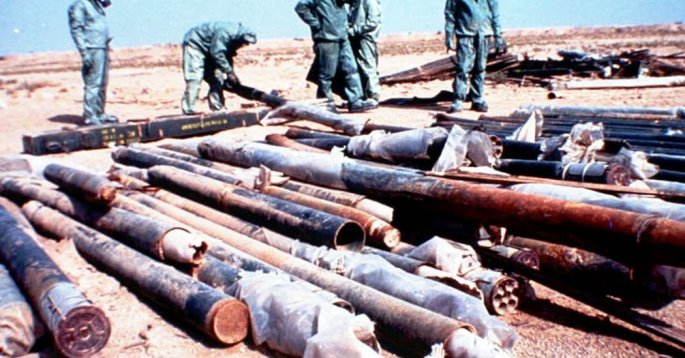
Recently, a CIA program to buy and destroy chemical weapons in Iraq has come to light.   The New York Times reports that from 2005 to 2006, Operation Avarice saw the purchase and destruction of 400 chemical weapon rockets originally developed by the Hussein regime in the 1980s.  Reports vary on the contents of the rockets, which may have contained either degraded chemical components or still-active sarin.  The Times article states that, in cooperation with the Army 203rd Military Intelligence Battalion, the CIA station in Baghdad made the purchase from a single Iraqi seller and destroyed the weapons.

These events notably fall outside of the findings of the Iraq Survey Group (ISG), the 2003 Department of Defense-led fact finding mission.  The ISG released a final report in 2004 detailing Iraqi WMD-related activities from 1991 to 2003. However, ongoing conflict in Iraq has led to further encounters with remnants of Hussein’s WMD programs.

An October 2014 article detailed claims made by veterans that military personnel had been exposed to sulfur mustard during the destruction of seized Iraqi chemical weapons near Taji.  The Times’ CJ Chivers places the number of service members exposed to chemical weapons at no fewer than 17, and asserts that they received inadequate healthcare.  His investigation led to the Pentagon acknowledging that hundreds of service members had been exposed to chemical weapons and had received insufficient treatment.

A May 2004 Fox News article reported that a 155mm artillery shell used as part of a roadside bomb in Iraq was found to have contained sarin, and two service members were treated for mild symptoms of exposure.  While the shell contained three liters of sarin, it was a binary system, where separate chemical compounds are mixed to form the weapon agent.  Due to its use as an improvised explosive and failure to combine, the agent was not potent enough to be lethal.  The article notes that a different shell containing mustard gas was found in a similar setup.  However, this shell also did not detonate, and the chemical agent was found by the ISG to be inactive due to improper storage.

In July 2004 the Washington Post reported that warheads found in Iraq by Polish forces, originally believed to be chemical weapons dating back to the Iran-Iraq war (which saw the use of chemical weapons by both sides), did not, in fact, contain chemical agents.  The warheads were reportedly purchased, not confiscated, rockets, though this point was disputed by an unnamed senior intelligence official, who said that the U.S. had been told that the rockets were found alongside other conventional weapons.  Chemical weapons or not, the episode demonstrates the severity with which international forces in Iraq treated claims of insurgents and terrorists possessing or seeking unsecured Hussein-era weapons.

It’s important to note that these brushes with chemical weapons involved agents dating to before 1991.

Chemical weapons were not the only illicit goods seized in Iraq.  In 2005, the Associated Press reported that 550 metric tons of yellowcake uranium had been sold to Canadian uranium producer Cameco Corp. for use as nuclear fuel.  The U.S. conducted a top-secret airlift operation of 37 flights to move the uranium from Baghdad to Montreal.  The uranium was a remnant of Hussein’s nascent nuclear weapons program.  Yellowcake uranium is an intermediate product of uranium processing, not weapons-grade material.  It can either be smelted into fuel rods for use in nuclear reactors for power production, or enriched into U-235 via gas centrifuge.  Low-enriched uranium (up to 20% U-235) is also used in nuclear reactors, but highly-enriched uranium (90%) is used in nuclear weapons.


Image Credit: The New York Times

Pandora Report 3.1.15

My apologies for no update last week, I had to make an unexpected, emergency, work-related trip to Dulles Airport, my old stomping grounds. But everything is under control and we’re back at it, covering stories from the past two weeks. Fittingly, we start off with airport screening, and also cover the Black Death, chemical weapons in Libya, Ebola, and other stories you may have missed.

Have a great week and stay safe in the weather out there!

Airport Screening for Viruses Misses Half of Infected Travelers

A team led by UCLA researchers has found that airport screening—for viruses like H1N1 and Ebola—misses at least half of infected travelers. The team found that no more than 25% of passengers answered honestly about their exposure to influenza in 2009 and that some may have been able to hide symptoms by taking over-the-counter drugs like acetaminophen. Timing of the screening may impact detection ability, too.

Science 2.0—“‘We found that for diseases with a long incubation period, such as Marburg and Ebola, taking passenger’s temperature to test for fever is particularly ineffective at the start of the epidemic but does pick up more cases as the epidemic stabilizes,” said Katelyn Gostic, a lead author of the study and a UCLA doctoral student in the laboratory of Professor James Lloyd-Smith. “With diseases such as swine flu, which take a shorter time to incubate, fever screening is the most effective method throughout an epidemic.’”

Plague Pandemic May Have Been Driven by Climate, Not Rats

Rats may have been incorrectly receiving centuries of blame for European plague, or Black Death. According to Nils Stenseth, of the University of Oslo, the introduction, and re-introduction, of the disease to Europe may have been caused by Asian climate events. Additionally, black rats where rare in Northern Europe, so the likely rodent culprit may have actually been gerbils. Moreover, the plague is not naturally found in Europe, but it is endemic in Asia in the rodents that live there. However, when the climate becomes warmer and wetter, rodent numbers drop and the fleas seek out alternative hosts, like domestic animals and humans.

Smithsonian—“The scientists will need more data to prove that Asian climate was responsible for all the reintroductions of plague to Europe. For instance, analysis of plague DNA from European victims who died at different time periods could strengthen the link between climate and outbreaks. “If our theory of climate-driven successive reintroductions is correct, we would expect to find great genetic bacterial variation between plague victims across time,” Stenseth explains. If the bacteria had instead come from a single introduction, there would be less genetic variation in the pathogen’s DNA, even when taken from victims from different times and locations.”

ISIS Chemical Weapons Libya: Military Warns Islamic State Might Have Mustard Gas, Sarin

Islamic State fighters in Libya have allegedly seized large amounts of chemical weapons including mustard gas and Sarin that reportedly belonged to the regime of Moammar Gadhafi. Last year, though, Libyan officials said they destroyed the last known stockpile from Gadhafi’s regime.

International Business Times—“The weapons are likely 10 years old and in a degraded state, but remain dangerous, former British Army officer Hamish de Bretton-Gordon told The Daily Mail Sunday. “While we don’t know how much IS has acquired, and though the Libyan Sarin dates back to the Gadhafi era, it would still have a toxicity and pose a danger,” he said. “Libya is virtually Europe and so the fear factor from a European perspective is huge. I should think the security forces will be watching this situation very closely.’”

This Week in Ebola

It’s been awhile since an Ebola update, but there was some good news worthy of coverage as schools re-opened in Liberia on February 16, as a sign that life is starting to return to normal. Countries are still keeping an eye out for the virus, including, inexplicably, North Korea, who has banned foreign runners from their April marathon (yes, that is actually a thing!) A piece appeared in the Journal of the American Society of Microbiology that indicated it is “very likely that at least some degree of Ebola virus transmission currently occurs via infectious aerosols generated from the gastrointestinal tract, the respiratory tract, or medical procedures.” However, there is some good news including a new product, similar to hand sanitizer, that can kill bacteria and viruses within 15 second of application and can work for up to six hours and a rapid diagnostic test for both Ebola and Dengue. Lastly, it wouldn’t be an Ebola update without a questionable article—this one is about a Baltimore wedding gown designer who went to New York Fashion with an Ebola suit. Sigh.

Stories You May Have Missed


Image Credit: Micah Sittig

Pandora Report 2.7.15

Whatta week, right?! Let’s jump right in to the stories. We’ve got the Subway, flu forecasting, American chemical weapons, and stories you may have missed.

Have a great weekend and a safe and healthy week!

A Close Look at the Germs Crawling Around the Subway

Every single day I ride the metro to work, and every single day, the first thing I do when I get to the office is wash my hands. And, really, that’s what everyone should be doing. A research team from the Weill Cornell Medical College spent the summer of 2013 swabbing turnstiles, subway poles, kiosks, benches, and other “human penetrated surfaces” in all 466 NYC subway stations.

Gothamist—“And they found quite a few signs of life—15,152 types of DNA, in fact—nearly half of which they identified as bacteria. Shocking!

[They] did manage to find some scary stuff, with E. coli, Staphylococcus aureus (skin infections, respiratory disease and food poisoning), Bacillus anthracis (anthrax), and even Yersinia pestis, which is associated with the bubonic plague, popping up in some swabs. Nearly all the stations harbored an antibiotic resistant bacteria called Stenotrophomonas maltophilia, one that often causes respiratory infections in hospitals.”

Forecasts May Soon Predict Flu Patterns

What if we could predict the flu like we predict the weather? That is what teams of researchers are looking at; devising and testing methods to predict the start, peak, and end of flu season. How will they do this? By combining data from the present with knowledge of past patterns to project what might happen in the future.

The Boston Globe—“If the CDC had a flu-season preview in hand, the agency could better time messages on use of vaccines and flu-fighting drugs.

Hospitals could plan staffing for patient surges or make sure key personnel are not on vacation when it appears the epidemic will probably peak. Parents could even take flu forecasts into account in scheduling birthday parties and play dates.”

U.S. to Destroy Largest Remaining Chemical Weapons Cache

Syria isn’t the only country working on destruction of its chemical weapons cache. The Pueblo Chemical Depot, in Southern Colorado, will begin neutralization of 2,600 tons of aging mustard agent in March. This action moves towards American compliance with a 1997 treaty that banned all chemical weapons.

USA Today—“‘The start of Pueblo is an enormous step forward to a world free of chemical weapons,” said Paul Walker, who has tracked chemical warfare for more than 20 years, first as a U.S. House of Representatives staffer and currently with Green Cross International, which advocates on issues of security, poverty and the environment.”

Stories You May Have Missed


Image Credit: Wikimedia Commons

Pandora Report 2.1.15

No themed coverage this week, sadly. However, we’ve got stories covering the Federal fight against antibiotic resistance, ISIS airstrikes, and super mosquitoes in Florida. All this in addition to stories you may have missed.

Have a fun Super Bowl Sunday (go team!) and a safe and healthy week!

Obama Asking Congress to Nearly Double Funding to Fight Antibiotic Resistance to $1.2 Billion

One of The White House’s goals for 2015 was to combat growing antibiotic resistance through research into new antibiotics and efforts to prevent the over prescription of these vital drugs. President Obama is requesting that Congress add additional funding to this fight, bringing the total to $1.2 billion. The funding will be a start, but there are many other things that can happen in order to fight this extremely important problem.

U.S. News & World Report—“The Centers for Disease Control and Prevention says more than 23,000 Americans die every year from infections that can withstand some of the best antibiotics. The World Health Organization said last year that bacteria resistant to antibiotics have spread to every part of the world and might lead to a future where minor infections could kill.”

Air Strike Kills IS ‘Chemical Weapons Expert’

News came Saturday morning that U.S. airstrikes in Iraq last week killed a mid-level Islamic State militant who specialized in chemical weapons. Killed on January 24, Abu Malik had worked at Saddam Hussein’s Muthana chemical weapons production facility before joining Al-Qaeda in Iraq in 2005.

Radio Free Europe/Radio Liberty—“Officials say his death could “temporarily degrade” the group’s ability to produce and use chemical weapons. Coalition air strikes have pounded the Mosul area over the past week [and] The U.S.-led coalition has carried out more than 2,000 air raids against IS militants in Syria and Iraq since August 8.”

Millions of Genetically Modified Mosquitoes Could Fight Disease in Florida

On January 11, we had a small note about the possibility of genetically modified mosquitos controlling diseases like chikungunya and dengue, but this week coverage on this issue absolutely exploded! British biotech firm Oxitec plans to release millions of genetically modified mosquitos in Florida to control the existing population and help control the spread of these diseases. The A. Aegypti species of mosquito is extremely prevalent in Florida and recently has become resistant to most chemical pesticides. Residents, of course, are up in arms over the potential release of this “mutant mosquito”.

The Weather Channel—“Technology similar to this is already in use in Florida and other states, Entomology Today points out. Sterile Insect Technique (SIT) employs a similar technique, sterilizing insects so that when they mate, no offspring are produced. “Florida spends roughly $6 million a year using SIT to prevent Mediterranean fruit fly infestations, while California spends about $17 million a year,” Entomology Today wrote.”

Stories You May Have Missed

Image Credit: Wikimedia Commons

Pandora Report 1.18.15

For those who’ve been reading for awhile, you’ve probably surmised that one of my personal health interests is seasonal and pandemic flu. There were plenty of stories about that this week, so that’s what we’ll focus on. We’ll also look at Ebola and other stories you may have missed. My apologies for posting delays this week, I’m dealing with some rotator cuff and carpal tunnel issues in my right arm, and let me tell you, it is HARD to type with your dominant arm in a sling!

Enjoy your holiday Monday (if you have one) and have a safe and healthy week!

Texas Health Experts Say Universal Flu Vaccine Could be a Reality

The CDC has said that this year’s seasonal flu vaccine was only 23% effective due to unanticipated antigenic drift—meaning the predicted strains in the vaccine didn’t match the dominant strains of the virus that are currently circulating. In order to combat this in the future, scientists at Mount Sinai health system in New York are in the process of testing a universal flu vaccine which will go into clinical trials this year.

KLTV.com—“‘There is work going on to see if, perhaps a different kind of vaccine could be developed maybe against a different part of the flu virus, one that is not so subject to this antigenic drift or to change as readily from one year to the next,” [Dr. Levin of UT Health Northeast] says.”

Scientists Find Brain Protein Aids Influenza Recovery

Scientists at Washington State University in Spokane have found a brain protein that boosts the healing power of sleep and speeds recovery from the flu in mice. Professor James M. Kruger said this discovery could lead to alternative treatments for flu and other infectious diseases by stimulating production of the brain protein called AcPb. This discovery comes at a time where avian influenza is prevalent in Taiwan, Japan, Nigeria, China, Egypt, Canada, the U.S. and Mexico.

Washington State University—“Krueger showed this recovery involves AcPb and an immune system signaling chemical called interleukin-1. AcPb links up with interleukin-1 to help regulate sleep in healthy animals. It also prompts infected animals to spend more time sleeping during an illness.

In the study, mice who lacked the gene for AcPb slept less after being infected with influenza virus. They also became chilled, grew sluggish, lost their normal circadian rhythms and ultimately died in higher numbers than the mice who slept longer.”

This Week in Ebola

As GMU students return to classes, so do students in Ebola affected Guinea. Schools in Guinea will re-open Monday, and schools in Liberia are set to re-open “next month.” No date has been set for schools in Sierra Leone. Despite this, the President of Sierra Leone has declared that there will be zero new confirmed Ebola cases by the end of March the country will be Ebola-free, by WHO standards, by May. These announcements come at a time when Dr. Thomas Frieden, Director of the CDC, has said he was “very confident we can get to zero cases in this epidemic if we continue the way we’re going and nothing unexpected happens” and the outbreak appears to be slowing down. Last week brought record low numbers—for Guinea, the lowest total since mid-August; for Liberia, the lowest total since the first week of June; for Sierra Leone the second week of declines and the lowest level since the end of August. However, there are still “at least 50 micro-outbreaks” underway throughout West Africa.

Pauline Cafferkey, the Scottish nurse infected with Ebola, is “showing signs of improvement” and an American soldier who was found dead in Texas after his deployment in West Africa reportedly showed no signs of Ebola leaving officials to remark that there was “no evidence of a public health threat.”

A seemingly large amount of good news this week left space for new ruminations on Ebola and outbreaks in general. Wired  had an interesting piece on Nanobiophysics and how it could stop future global pandemics while The Chicago Tribune looked at bats and their likely role in Ebola outbreaks and CNBC looked at the price of protection from global pandemics—would you believe $343.7 billion?

Stories You May Have Missed


Image Credit: NBC News