Pandora Report 4.5.2024

This week’s edition of the Pandora Report covers the United States’ second case of H5N1 in a human, HHS’ efforts to improve its cybersecurity resources and guidance for the healthcare sector, He Jiankui’s latest work, and more.

Texas Reports First Human Case of Avian Influenza

The Texas Department of State Health Services (DSHS) reported this week a human case of avian influenza a (H5N1), the second human case in the United States. The patient’s only symptom was eye inflammation, and they were tested late last week for influenza. CDC confirmatory testing was conducted over the weekend and the patient is now being treated with oseltamivir. Texas DSHS emphasized in its statement that the risk to the general public remains low, and cattle infections do not present a concern for the commercial milk supply. DSHS has issued a health alert that requests healthcare providers around affected facilities remain vigilant for possible human H5N1 cases.

The Texas Animal Health Commission announced the first cases of H5N1 in Texas Panhandle dairy cattle last month. The DSHS announcement explains that “DSHS is working with TAHC, CDC and other state and federal health agencies to investigate the human and animal cases and understand how the virus is spreading in order to protect livestock and people who work with it…DSHS is providing guidance to affected dairies about how to minimize workers’ exposure and how people who work with affected cattle can monitor for flu-like symptoms and get tested. Illnesses in people with H5N1 flu infections have ranged from mild, such as eye infection and upper respiratory symptoms, to severe, such as pneumonia and death.”

While there was a lull in spread between birds from 2016 to 2022, the recent spread from animal to animal and animal to human is concerning because there is an increased chance the virus will mutate to spread efficiently among humans. Since 2022, the US has been in its longest and largest outbreak that has spread from wild birds to domestic ones and mammals. While this is unsettling, there have yet to be key indicators that the general public is at risk.

USDA: Detections of Highly Pathogenic Avian Influenza in Mammals

HHS Aims to Create “One-Stop Shop” for Cyber

In the aftermath of the ransomware attack on Change Healthcare, part of UnitedHealth, the US Department of Health and Human Services announced that it is working to improve its healthcare cybersecurity resources and programs. In a March 29 webinar, Biodefense PhD Program alumnus Brian Mazanec, the current Deputy Director of HHS’ Administration for Strategic Preparedness and Response (ASPR), discussed these efforts, saying “We’re really establishing ASPR as that one-stop shop to manage this information sharing across the department, with our partners in industry, with the interagency.”

Read more about HHS’ role in healthcare cybersecurity risk management and ASPR’s efforts to improve in this area in this Federal News Network piece.

He Jiankui Out of Jail and Back in Lab

He Jiankui, a Chinese biophysicist known for creating the first gene-edited embryos in 2018, was released from prison in 2022, having served three years for his unauthorized work. He began trying to make a comeback last year, this time focused primarily on researching Duchenne muscular dystrophy, a currently uncurable genetic disease. Alongside his conviction, the Chinese government placed restrictions on He’s future work, banning him from doing anything “related to assisted human reproductive technology” while also limiting his work related to human genes.

He recently was interviewed by The Mainichi, during which he discussed his current work. As the paper explains, “After his release, he reportedly established three laboratories in China, including in Beijing and Wuhan, and resumed his research. “We will use discarded human embryos and comply with both domestic and international rules,” he explained, denying any current intent to produce more genome-edited babies.”

He continues to defend his infamous human embryo experiments, saying of the children that came from his 2018 work, “The results of analyzing their (the children’s) entire gene sequences show that there were no modifications to the genes other than for the medical objective, providing evidence that genome editing was safe. I’m proud to have helped families who wanted healthy children.”

He told the paper that he believes society will “eventually accept” human embryo gene editing “in the quest to find treatments for genetic diseases.”

Read about He’s initial controversy and the Chinese government’s handling of it in this article from Sonia Ben Ouagrham-Gormley and Kathleen M. Vogel.

“Exploring List-Based Approaches and Potential Threat Agnostic Applications in US Biodefense and Public Health – Toward a Hybrid Approach”

Yong-Bee Lim and Saskia Popescu, both alumni of the Biodefense PhD Program, recently published this article in Health Security. In it, they discuss the shortcomings of list-based approaches to prioritizing biological threats and challenges to leveraging threat agnostic approaches to these threats. They discuss these hurdles and how they might be overcome, writing in their conclusion “Threat agnostic strategies have the potential to address key vulnerabilities in current efforts and increasingly complex biological threats, but it is critical they are seen as complementary to pathogen-specific programs rather than replacements in order to successfully integrate, implement, and unlock threat agnostic activities to the best extent possible.”

“Emerging Technology and Risk Analysis: Artificial Intelligence and Critical Infrastructure”

Biodefense PhD alumnus and Schar School adjunct Daniel M. Gerstein recently co-authored this RAND Corporation research report with Erin N. Leidy: “This report is one in a series of analyses on the effects of emerging technologies on U.S. Department of Homeland Security (DHS) missions and capabilities. As part of this research, the authors were charged with developing a technology and risk assessment methodology for evaluating emerging technologies and understanding their implications within a homeland security context. The methodology and analyses provide a basis for DHS to better understand the emerging technologies and the risks they present.”

“This report focuses on artificial intelligence (AI), especially as it relates to critical infrastructure. The authors draw on the literature about smart cities and consider four attributes in assessing the technology: technology availability and risks and scenarios (which the authors divided into threat, vulnerability, and consequence). The risks and scenarios considered in this analysis pertain to AI use affecting critical infrastructure. The use cases could be either for monitoring and controlling critical infrastructure or for adversaries employing AI for use in illicit activities and nefarious acts directed at critical infrastructure. The risks and scenarios were provided by the DHS Science and Technology Directorate and the DHS Office of Policy. The authors compared these four attributes across three periods: short term (up to three years), medium term (three to five years), and long term (five to ten years) to assess the availability of and risks associated with AI-enabled critical infrastructure.”

“Inside Pentagon’s Shaky Efforts to Combat Russian Disinformation”

Bloomberg’s Jason Leopold discusses DTRA’s struggles to combat Russian disinformation targeting its work in Ukraine in recent years in this FOIA Files piece. He writes in part, “That’s what I found in the trove of acronym-heavy documents that I obtained from the Defense Threat Reduction Agency, also referred to as DTRA, the division that was singled out by Russia and accused of operating biowarfare labs in Ukraine. I filed a FOIA request with DTRA and asked for emails, memos, letters, reports, talking points – pretty much everything – to find out what happens when a government agency becomes the target of a disinformation campaign by a foreign adversary.”

“Report on New Security Challenges”
This new report from the State Department’s International Security Advisory Board identifies several new security challenges, including the emergence and spread of human, animal, and plant diseases. The report explains in part “Climate disruptions are likely to affect the frequency and severity of biological events, as changing rainfall patterns and temperatures shift the ranges of insects capable of transmitting diseases such as malaria and dengue fever, and lead to the growth and persistence of water and foodborne pathogens with the potential to cause outbreaks. In parallel, resource scarcity helps drive changing land use patterns and habitat alterations, creating new opportunities for the “spillover” of zoonotic diseases from wild animal populations to humans and their domesticated and companion animals. Once an infection occurs, the dynamic and complex flow of travel and trade can allow biological threats to spread rapidly within densely populated urban areas and across international borders, especially where weak governance and inadequate infrastructure complicate public health surveillance and response. Fear and uncertainty during infectious disease outbreaks can be exploited through the spread of disinformation and misinformation to undermine public trust in governments, institutions, and technical authorities.”

“Annotation of Functions of Sequences of Concern and Its Relevance to the New Biosecurity Regulatory Framework in the United States”

Gene D. Godbold and Matthew B. Scholz recently published this article in Applied Biosafety: “Introduction: Recent regulations from United States Government agencies reshape the screening of synthetic nucleic acids. These take a step away from categorizing hazard on the basis of “bad” taxa and invoke the function of the sequence in pathogenesis or intoxication. Ascertaining functions related to pathogenesis and distinguishing these from other molecular abilities that are unproblematic is not simple. Some have suggested that this information can be readily obtained from existing databases of pathogens.”

“Objectives: We evaluate how virulence factors are described in current databases of pathogens and their adequacy for biothreat data science. We discuss limitations of how virulence factors have been conceived and propose using the sequence of concern (SoC) term to distinguish sequences with biothreat from those without. We discuss ways in which databases of SoCs might be implemented for research and regulatory purposes. We describe ongoing work improving functional descriptions of SoCs.”

“Methods: We assess the adequacy of descriptions of virulence factors in pathogen databases following extensive engagement with the literature in microbial pathogenesis.”

“Results/Conclusions: Descriptions of virulence factors in pathogen databases are inadequate for understanding biothreats. Many are not biothreats and would not be concerning if transferred to another pathogen. New gene ontology terms have been authored, and those specific to pathogenic viral processes are being generalized to make them relevant to other pathogenic taxa. This allows better understanding by humans and better recognition by machines. A database of annotated functions of SoCs could benefit the evolving biosecurity regulatory framework in the United States.”

“Mapping America’s Biosurveillance”

Arielle D’Souza and Janika Schmitt recently created this tool for IFP that offers a comprehensive map to monitor which US federal government entities monitor biological threats. They explain in their discussion of the map that “Although the U.S. had invested ~$700M in pathogen early warning in 2019 across different federal bodies, the COVID-19 pandemic caught us off guard. It wasn’t until well into the pandemic that reliable data on infection levels across the country became available.”

“Today, biosurveillance and early warning in the federal government remain fragmented across jurisdictions. We’ve created a comprehensive visual map of the entities that monitor biological threats across the U.S. federal government. The map is a tool to understand the fragmented landscape of federal biosurveillance and early warning efforts.”

“As the map makes clear, surveillance is distributed across a wide range of federal bodies, including key players like the Department of Health and Human Services (HHS), the Department of Defense (DoD), and the Department of Homeland Security (DHS), but also lesser-known efforts within the Department of Energy, the Postal Service, and Fish and Wildlife. Efforts are often siloed, leading to gaps, duplication, and uncoordinated response strategies. New stakeholders like the Advanced Research Projects Agency for Health (ARPA-H) are expected to become part of this ecosystem, further increasing the need for coordination.”

“Biotech Matters: Great Data Competition and Interoperability with Allies and Partners”

Michelle Holko recently published this piece with CNAS, writing in her introduction “In the U.S.-China competition over biotechnology, America’s most powerful asset with untapped potential is data. Data are the foundation of discovery; data of adequate size, type, and diversity are necessary to realize the potential of artificial intelligence and machine learning (AI/ML), and to support the growing bioeconomy.1 In a world where natural resources are dwindling and current agricultural practices are at risk, using biotechnology to do things such as develop crops that can survive in a changing environment, and to make things that cannot otherwise be manufactured, will soon be essential for survival.2 Understanding and strengthening America’s biotechnology leadership requires exploring the limits of existing data relevant to the U.S. bioeconomy so that policymakers and the biotechnology community can promote data policies and practices that drive sustainability and interoperability, while preserving U.S. values, privacy, and security interests.”

“Chemical and Biological Terrorism and the Norms of the CBW Prohibition Regimes”

CBWNet recently published this working paper edited by Alexander Kelle that covers a workshop. Kelle explains in its introduction that “This workshop forms an important element in the implementation of the CBWNet work package on terrorism with chemical and biological weapons (CBW). In a nutshell, this work package seeks to analyze the emergence of CBW terrorism, assess its impact on the CBW prohibition regimes, and evaluate the measures taken to strengthen regime implementation.”

“Regulation of Toxins and Bioregulators Under the Chemical Weapons Convention and the Biological and Toxin Weapons Convention”

Michael Crowley and Malcolm Dando recently published this article in the Journal of Biosafety and Biosecurity: “In this paper we highlight how the apparent double coverage of toxins and bioregulators by both the Biological and Toxin Weapons Convention (BTWC) and the Chemical Weapons Convention (CWC) in fact masks a regulatory gap that has left such potentially dangerous agents neglected by both the control regimes during a period of rapid advances in relevant chemical, life and associated sciences and technologies. We first review what toxins, bioregulators and other mid-spectrum agents are and why they are of such concern and then examine how they are regulated under the BTWC and CWC. This paper then examines an illustrative range of contemporary chemical and life science research and associated activities of concern drawn from case study research on China, India, Iran, Russia and the United States, and assesses how the CWC and BTWC States Parties have inadequately addressed these threats. We then examine how both the CWC and BTWC Review Conferences failed to address these long-term challenges, and we end by providing a series of recommendations for how both regimes can be strengthened in this area.”

“Robust Scientific Advisory Mechanisms Future-Proof Disarmament Treaties”

Sarah Clapham and Peter J. Hotchkiss recently published this commentary piece with Nature. They argue that “The Chemical Weapons Convention has a unique Scientific Advisory Board that ensures it keeps pace with science, and its implementing body is prepared for future challenges. It is a model that could be usefully applied to other disarmament treaties.”

“Could AI Make the Next Pandemic Deadlier?”

Tom Ough interviews NTI’s Jaime Yassif in this piece for Prospect, writing in part “A report from NTI Bio, an American non-profit that develops policy-based solutions to pandemic risks, lays out how AI will, over the coming years, threaten global biosecurity. It will be central to great advances in biotechnology, but its large language models (LLMs) could democratise knowledge of how to assemble dangerous bacteria and viruses. Worse, it could plausibly be used to design and manufacture entirely new pathogens…These are troubling prospects, and I do not envy Dr Jaime Yassif her remit. Yassif, who co-authored the report I mentioned, oversees NTI Bio’s work on global health security. If there are such things as rock stars of pandemic prevention, she is one of them, appearing last year at a US House of Representatives hearing on America’s vulnerability to future pandemics. (Asked by Representative Debbie Dingell whether the US is indeed prepared, Yassif was blunt: “No.”)”

“The Evolutionary Drivers and Correlates of Viral Host Jumps”

Cedric C. S. Tan, Lucy van Dorp, and Francois Balloux recently published this article in Nature Ecology and Evolution: “Most emerging and re-emerging infectious diseases stem from viruses that naturally circulate in non-human vertebrates. When these viruses cross over into humans, they can cause disease outbreaks, epidemics and pandemics. While zoonotic host jumps have been extensively studied from an ecological perspective, little attention has gone into characterizing the evolutionary drivers and correlates underlying these events. To address this gap, we harnessed the entirety of publicly available viral genomic data, employing a comprehensive suite of network and phylogenetic analyses to investigate the evolutionary mechanisms underpinning recent viral host jumps. Surprisingly, we find that humans are as much a source as a sink for viral spillover events, insofar as we infer more viral host jumps from humans to other animals than from animals to humans. Moreover, we demonstrate heightened evolution in viral lineages that involve putative host jumps. We further observe that the extent of adaptation associated with a host jump is lower for viruses with broader host ranges. Finally, we show that the genomic targets of natural selection associated with host jumps vary across different viral families, with either structural or auxiliary genes being the prime targets of selection. Collectively, our results illuminate some of the evolutionary drivers underlying viral host jumps that may contribute to mitigating viral threats across species boundaries.”

“Eyes on Disease X: Ranking the Next Pandemic”

Jane Fieldhouse, David Wolking, Nistara Randhawa, Timothy Endy, and Angel Desai recently published this article with CFR’s Think Global Health. In it, they discuss UC Davis’ SpillOver tool and recent expansions made to it, writing in part “To direct resources toward the most high-consequence pathogens, it is paramount that leaders have an accurate concept of pandemic risk—for individual viruses as well as viral families. Several institutions are developing disease rankings at national and global levels, including the Priority Zoonotic Diseases Lists facilitated by the U.S. Centers for Disease Control and Prevention and the Research and Development (R&D) Blueprint created by the World Health Organization…Although important for informing global and national health priorities, disease-ranking initiatives are time intensive and costly processes, requiring ongoing updates as new data and pathogen discoveries emerge. To complement these efforts, the Coalition for Epidemic Preparedness Innovations (CEPI) has partnered with the University of California, Davis, to expand SpillOver, their viral risk ranking platform launched in 2021.”

“A Physician Travels to South Asia Seeking Enduring Lessons From the Eradication of Smallpox”

Céline Gounder recently published this KFF Health News commentary piece discussing her time in Bangladesh speaking with public health workers who aided in the fight to eradicate smallpox. She writes in part, “My field reporting began in summer 2022, when I traveled to India and Bangladesh — which had been the site of a grueling battle in the war on the disease. I tracked down aging smallpox workers, some now in their 80s and 90s, who had done the painstaking work of hunting down every last case of smallpox in the region and vaccinating everyone who had been exposed. Many of the smallpox campaign veterans had fallen out of touch with one another. Their friendships had been forged at a time when long-distance calls were expensive and telegrams were still used for urgent messages.”

“Another State Tries to Weaken School Vaccine Rules”

Matt Field discusses West Virginia lawmakers’ efforts to weaken the state’s school vaccine requirements in this piece for The Bulletin of the Atomic Scientists. He writes in part, “Every state in the country requires school children to be vaccinated against measles and other vaccine-preventable diseases. Those policies have been in place for decades, but during the COVID pandemic, a handful of states worked to weaken them—mainly by making it easier for individuals to claim exemptions. West Virginia lawmakers recently took the crusade against routine vaccinations a step further, passing a bill to allow private and parochial schools to set whatever rules they see fit.”

What We’re Listening To 🎧

The Security Circle-“EP 066 Dan Kaszeta: Chemical and Biological Defense Specialist, Ex-Pentagon, Ex-White House Staff, Ex-Secret Service….(and he made Chat GPT safer)”

“Dan Kaszeta is a specialist in defence against chemical, biological, and radiological weapons and warfare. Although he has lived in London since 2008, the first part of his career was in the United States. He earned a BA in Political Science and Russian language from Texas Christian University. After graduation, he was commissioned as an officer in the US Army in the small but highly skilled Chemical Corps. Dan was honour graduate of his lengthy training course at US Army Chemical School. After only brief active service, he was reassigned to the Army Reserve and spent over a decade in reserve and National Guard assignments while pursuing a civilian career.”

“He subsequently moved to Washington DC and was awarded an MA in International Affairs from George Washington University. The Tokyo Sarin attacks in 1995, combined with scarce chemical weapons expertise, meant that in early 1996 he took up the post of Disaster Preparedness Advisor at the White House Military Office, where he had responsibility for chemical and biological preparedness and training for the office of the President. After the 9/11 attacks and the anthrax terrorism, the responses to which he was heavily involved in, Dan transferred to the US Secret Service, where he joined the team protecting the President and the White House complex from chemical and biological threats.”

“In 2008, Dan relocated to London. From 2008 to 2011 he worked for Smiths Detection, managing their chemical warfare detection business in Central and Eastern Europe. Since 2011, he has been an independent security consultant and author.”

“He is the author of numerous articles and his recent publications include: ‘CBRN and Hazmat Incidents at Major Public Events: Planning and Response’ (Wiley, 1st ed 2012 2nd ed 2022), ‘Toxic: A History of Nerve Agents’ (Hurst, 2020) and ‘Forest Brotherhood: Baltic Resistance against the Nazis and Soviets’ (Hurst, 2023). Mr. Kaszeta has been selected as a Writer-in-Residence at Gladstone’s Library for 2024.”

Listen to this episode here.

NEW: Industry Summit 2024: Partners for a Resilient Future

From ASPR’s Office of Industrial Base Management and Supply Chain (IBMSC): “Join industry and government partners in exploring federal opportunities for industry engagement aligned with ASPR’s strategic vision and organizational priorities for industrial base management and the public health and health care supply chain.”

This in-person event will take place on April 22, in Washington, DC. Learn more and register here.

NEW: 3rd International Biosecurity Virtual Symposium

From ABSA: “The Symposium will bring together biosecurity professionals from a wide range of disciplines with varying expertise to share their experiences and knowledge on diverse biosecurity topics. The Symposium will offer attendees an opportunity to learn the latest in biosecurity and have thought-provoking conversations about real-world biosecurity issues, concerns, and scenarios.”

This symposium will take place May 7-8. Learn more and register here.

EBRC & NIST Sequence Screening Virtual Workshop #1

From ERBC: “Synthetic DNA enables life sciences research that can be applied to pressing societal challenges across many sectors, but could also be used in the development of biological parts, systems, or organisms that cause great harm to human, public, or environmental health. Many companies that produce and sell synthetic DNA screen ordered sequences to prevent customers from inappropriately accessing Sequences of Concern (SOCs). This project aims to improve DNA synthesis screening by enabling the development of better tools and mechanisms for screening performance evaluation.”

“This will be the first workshop in the series. Additional virtual workshops will be held over the next six months, with an in-person meeting to be held in the fall. More details to come.”

This event will take place on April 9 at 1 pm EST. Learn more and register here.

The Advancing Threat Agnostic Biodefense Webinar Series

From PNNL: “Join us as we welcome Patrick Chain, scientist at Los Alamos National Laboratory (LANL). His talk, titled “Toward Pathogen-Agnostic Detection: Advances and Challenges in Shotgun Sequencing-Based Biosurveillance” will be Tuesday, April 16, at noon PT.”

“Patrick Chain leads the Metagenomics Applications, Bioinformatics, and Analytics Teams in the Bioscience Division at LANL, while also co-managing the Division’s Genomics Program. His team pioneers innovative algorithms and methods in bioinformatics and metagenomics, applying them to various research areas such as organism detection, sample characterization, and fundamental research across different ‘biomes’. With a background including a B.Sc. and M.Sc. from McMaster University and a Ph.D. from Michigan State University, Chain brings a wealth of expertise to the field.”

“The Advancing Threat Agnostic Biodefense Webinar Series brings together like-minded science and policy members of the biodefense community to discuss relevant research activities as well as barriers and enablers of a threat agnostic approach. The webinar series is hosted by the Nuclear, Chemical, and Biological Technology Division.”

Register here.

Launch of the 2024 National Blueprint on Biodefense

From the Bipartisan Commission on Biodefense: “On the 10th anniversary of its inception, the Bipartisan Commission on Biodefense will release its 2024 National Blueprint on Biodefense: Immediate Action Needed to Defend Against Biological Threats.”

“Please join us for this momentous event at the Congressional Auditorium, Capitol Visitor Center, on April 17th at 4:30pm.”

“The Bipartisan Commission on Biodefense (formerly the Blue Ribbon Study Panel on Biodefense) was established in 2014 to provide a comprehensive assessment of the state of United States biodefense efforts and to issue recommendations that foster change.  Subsequently, the Commission has briefed White House Administrations (including then Vice President Biden); testified before Congress; convened numerous meetings with experts; released 12 reports; produced the graphic novel Germ Warfare; and mobilized biodefense conversations and actions in the private and public sectors.”

Learn more and register here.

Addressing the Challenges Posed by Chemical and Biological Weapons: Intensive Online Introductory Course for Students of Technical Disciplines

“SIPRI and the European Union Non-Proliferation and Disarmament Consortium (EUNPDC) invite graduate and postgraduate students of the technical or natural science disciplines to apply for an intensive online introductory course on chemical and biological weapons—their proliferation, the efforts to eliminate them, the various mechanisms used to control their spread—and endeavours underway to reduce the risk of chemical or biological agents in terrorist attacks. The course will take place online, during four half-days on 2831 May 2024, 14:00 to 18:00 Central European Summer Time (CEST).”

“The course will cover the fundamentals of chemical and biological weapons as well as of missiles and other means of delivery; the history of chemical and biological warfare; the evolution of international norms against these weapons; the threats associated with potential terrorist uses of chemical and biological material; bioweapons and other related scientific advances; the current challenges posed by chemical weapons; arms control treaties; and mechanisms to curb the spread of dangerous substances, including export controls.”

“The course will also discuss the role of the EU institutions and industry to address the challenges mentioned above. The course will be instructed by renowned experts on non-proliferation, arms control, disarmament, export controls, verification and related subjects from SIPRI, other European research centres, think tanks and international organizations.”

Learn more and apply here.

Registration for GHS 2024 Now Open

Registration is now open for the Global Health Security 2024 conference in Sydney, Australia. This iteration will take place 18-21 June, 2024. The call for abstracts is also still open. “The mission of the Global Health Security conference is to provide a forum where leaders, researchers, policy-makers, and representatives from government, international organisations, civil society, and private industry from around the world can engage with each other, review the latest research and policy innovations, and agree solutions for making the world safer and healthier. To that end, our mission is to help foster a genuinely multidisciplinary community of practice that is committed to working collaboratively to enhance global health security and eliminate disease, irrespective of its origin or source.”

SBA.3 International Synthetic Biology, and Biosecurity Conference in Africa

“Join us for the SBA.3 International Synthetic Biology and Biosecurity Conference in Africa, a groundbreaking event that brings together experts, researchers, and enthusiasts in the field of synthetic biology. This in-person conference will take place at the Laico Regency Hotel from Wed, Jul 17, 2024 to Friday, Jul 19, 2024.”

“Get ready to dive into the exciting world of synthetic biology and explore its potential applications in Africa. From cutting-edge research to innovative solutions, this conference offers a unique opportunity to learn, network, and collaborate with like-minded individuals.”

“Discover the latest advancements, trends, and challenges in synthetic biology through engaging keynote speeches, interactive workshops, and thought-provoking panel discussions. Immerse yourself in a vibrant atmosphere where ideas flow freely and new connections are made.”

“Whether you’re a seasoned professional or just starting your journey in synthetic biology, this conference provides a platform to expand your knowledge, exchange ideas, and contribute to the growth of the field in Africa.”

“Don’t miss out on this extraordinary event that promises to shape the future of synthetic biology and biosecurity in Africa. Mark your calendars and join us at the SBA.3 International Synthetic Biology and Biosecurity Conference in Africa!”

Learn more and register here.
Job Announcement: George Mason University, Research Faculty, Infectious Diseases

“The Institute for Biohealth Innovation harnesses the collective talent of more than 300 GMU faculty and staff and thousands of students across 34 academic departments. The IBI connects Mason researchers with potential collaborators, both within the university and externally, to take on some of biohealth’s biggest challenges.”

“The Biomedical Research Lab (BRL), is a core facility overseen by the Institute. The 52,000 square-foot regional biocontainment laboratory (RBL) was established in 2010 as one of 12 NIAID-funded RBLs to support infectious disease research and foster collaborations with other national and global laboratories. It operates as a central core facility to advance research and develop novel diagnostics, therapeutics, and vaccines against viral and bacterial infectious agents by a diverse population of internal and external investigators. The facility is capable of housing multiple species and has a variety of established animal models, with an emphasis on aerosolized exposures. The BRL is fully approved and licensed for work by the CDC and USDA and is accredited by AAALAC.”

“The research faculty will join a collaborative team that works on bacterial or viral pathogens relevant to human and animal disease. The research foci are within broad fields including but not limited to immunology and immunity in disease, host-pathogen interactions, cellular microbiology, biochemistry, animal imaging and pathology, aerobiology, and countermeasure development (diagnostics, vaccines, and therapeutics). The incumbent will work with a diverse team of internal and external investigators including faculty, postdoctoral fellows, undergraduate and graduate students, and industry professionals. The incumbent will be responsible for conducting research, providing training and mentorship, disseminating findings, and contributing to grant proposals to advance infectious disease research and countermeasure development.”

Learn more and apply here.

CEPI Calls for Experts to Join Its Scientific Advisory Committee

From CEPI: “CEPI’s call for new individuals to join its Scientific Advisory Committee, or SAC —an external expert group providing guidance and recommendations to CEPI on R&D programmes and broader outbreak response efforts—is now open through 9 April 2024.”

“CEPI is recruiting global health professionals with extensive experience across relevant scientific and product development disciplines to join its SAC, and is particularly interested in applicants from Latin America and Africa; female applicants are especially encouraged to apply.

“Successful applicants’ scientific input, guidance and challenge will be critical in the continued implementation of the CEPI 2.0 strategy, which aims to accelerate the development of vaccines and other biological countermeasures to tackle emerging infectious diseases and enhance global preparedness for future threats.”

“New members’ terms will last three years, starting in June 2024, with the first face-to-face meeting taking place in Rio de Janeiro from 31 July to 1 August. Virtual participation will be made available for anyone unable to travel at this time.”

“Interested individuals can apply using our online form linked here.

Pandora Report 3.22.2024

Happy Friday! This week’s Pandora Report covers progress on the ninth round of negotiations on a Pandemic Accord and proposed amendments to the International Health Regulations, Murthy v. Missouri and the evolving threat of health and medical misinformation, a recently launched Senate biodefense and life science research investigation, EPA’s warnings about cyberattacks against the United States’ water infrastructure and more.

Global Leaders Call for Urgent Agreement on a Pandemic Accord

More than 100 global leaders have made a call “to press for an urgent agreement from international negotiators on a Pandemic Accord, under the Constitution of the World Health Organization, to bolster the world’s collective preparedness and response to future pandemics,” according to a recent WHO press release. It comes as member states of the WHO look to finalize an agreement that would amend the 2005 International Health Regulations (IHR), which will be considered by the World Health Assembly in May. David P. Fidler explains what is at stake during this ninth round of deliberations in a recent piece for CFR’s Think Global Health, writing in part “WHO documents on the negotiations, along with commentary parsing the talks, indicate that WHO member states have much to do in a short period to deliver final drafts of a pandemic agreement and amended IHR to the World Health Assembly. Unresolved issues include problems that have long confounded global health governance, including equitable access to pharmaceutical products, financing for public health capacity-building, and government accountability. Even if the negotiations achieve breakthroughs on those problems, the task of turning reforms on paper into reality in practice confronts a world in which solidarity is increasingly in short supply.”

The letter challenges those who argue such amendments will harm national sovereignty, reading in part, “A new pandemic threat will emerge; there is no excuse not to be ready for it. It is thus imperative to build an effective, multisectoral, and multilateral approach to pandemic prevention, preparedness, and response. Given the unpredictable nature of public-health risks, a global strategy must embody a spirit of openness and inclusiveness. There is no time to waste, which is why we are calling on all national leaders to redouble their efforts to complete the accord by the May deadline.”

“Beyond protecting countless lives and livelihoods, the timely delivery of a global pandemic accord would send a powerful message: even in our fractured and fragmented world, international cooperation can still deliver global solutions to global problems.”

SCOTUS Hears Case Concerning Social Media Platforms, Pandemic Misinformation

The Supreme Court heard arguments this week in Murthy v. Missouri, a case concerning the First Amendment and whether the Biden administration violated the right to freedom of expression in its communications with social media companies regarding COVID-19-related misinformation. The lawsuit, one of 26 filed against the administration by former Missouri Attorney General Eric Schmitt, alleges that the Biden administration was “…working with social media giants such as Meta, Twitter, and YouTube to censor and suppress free speech, including truthful information, related to COVID-19, election integrity, and other topics, under the guise of combating ‘misinformation.”

NYT‘s Dani Blum explains how this has refocused attention on misinformation and its evolving nature, writing in part “Health hacks not backed by science have spread widely on social media platformsThe same kinds of conspiracy theories that helped to fuel vaccine hesitancy during the Covid-19 pandemic are now undermining trust in vaccines against other diseases, including measles, as more people have lost confidence in public health experts and institutions. And rapid developments in artificial intelligence have made it even harder for people to tell what’s true and what’s false online.”

Blum continues, writing “Misinformation commonly includes “fake experts,” according to Sander van der Linden, a professor of social psychology in society at Cambridge who researches misinformation. These are either people making health claims who do not have any medical credentials, or doctors making statements about topics that they are not experts in. “You wouldn’t want to go to an ear and nose doctor to do a heart operation,” he said. “Is this a vaccine expert, or is this a doctor who actually does no research and has no expertise on vaccinations?”’

The effects of this are being keenly felt by healthcare providers. Amanda Johnson, a primary care physician in New York City, told USA Today about her approach to working with patients who have fallen victim to such information, saying “(Frustration) doesn’t get us anywhere. I think those conversations are more likely to go poorly if you take it as a personal affront.”

The same article explains further that “She has talked about misinformation with patients, some of whom have even asked her to review social media posts they’ve seen. The most animated responses come from patients who believe they’re losing control or having something forced on them, said Johnson, who also leads NYC Health + Hospitals’ AfterCare program for New Yorkers recovering from COVID-19 or living with long COVID.”

“Many people are disparaging or dismissive when talking about people who believe misinformation, but it can happen to anyone, said Sedona Chinn, an assistant professor in the life sciences communication department at the University of Wisconsin-Madison.”

Senate Homeland Security and Governmental Affairs Committee Announces Bipartisan Biodefense and Life Science Research Investigation

In a statement this week, the Senate Homeland Security and Governmental Affairs Committee announced, “U.S. Senators Gary Peters (D-MI) and Rand Paul (R-KY), Chairman and Ranking Member of the Homeland Security and Governmental Affairs Committee, announced a joint investigation of national security threats posed by high-risk biological research and technology in the U.S. and abroad. Peters and Paul plan to hold hearings and conduct government-wide oversight on areas including high-risk life science research, biodefense, synthetic biology, biosafety and biosecurity lapses, early warning capabilities for emerging outbreaks or possible attacks, and potential origins of the COVID-19 pandemic. This bipartisan oversight effort will assess and identify measures to mitigate longstanding and emerging risks and threats that may result in serious biological incidents – whether deliberate, accidental, or natural. The investigation will also seek to increase transparency and strengthen oversight of taxpayer-funded life sciences research, laboratories in the U.S. and abroad, and detection of biological threats.”

This is likely to add fire to efforts to impose new restrictions on contracted Chinese research firms like WuXi AppTec, as highlighted by Axios. At the same time, this will likely further reveal partisan divides on the topic, particularly given Paul’s emphasis on the Biden administration’s alleged efforts to conceal critical information about the COVID-19 pandemic.

EPA Confirms China- and Iran-Backed Hackers Are Targeting US Drinking Water Systems

“The country’s water systems are being hit with an increasing number of nation-state cyberattacks, according to the US Environmental Protection Agency (EPA),” explains a recent news article. In a recent letter to governors from EPA Administrator Michael Regan and National Security Adviser Jake Sullivan, the pair wrote ‘“We need your support to ensure that all water systems in your state comprehensively assess their current cybersecurity practices.”’ They also emphasized that, in many cases, “even basic cybersecurity precautions, are not present at water treatment facilities, urging that this “can mean the difference between business as usual and a disruptive cyberattack.”

CNN reports that “The EPA will also set up a “task force” to “identify the most significant vulnerabilities of water systems to cyberattacks,” among other pressing issues, Regan and Sullivan said in their letter. The Biden officials invited state homeland security and environmental officials to a meeting to discuss cybersecurity improvements needed in the water sector.”

This comes after industrial equipment at multiple water facilities in the US was hacked late last year, displaying an anti-Israel message, according to US officials. The administration blamed the Iranian government for these attacks. Hackers backed by the Chinese state have also recently infiltrated US water facilities, in “…a hacking campaign that the Biden administration worries Beijing could use to disrupt critical infrastructure in the event of a conflict with the US. China denies the allegations.”

US Hosts Launch for New Foreign Ministry Channel for Global Health Security

Recently, the US Department of State announced that Ambassador John Nkengasong – U.S. Global AIDS Coordinator and Senior Bureau Official for Global Health Security and Diplomacy, overseeing the Department’s Bureau for Global Health Security and Diplomacy – hosted a day-long discussion program to help plan priorities and review lines of efforts for the recently created Foreign Ministry Channel for Global Health Security.

The Department’s press statement explains that “The Channel builds on the 2022-2023 COVID-19 Pandemic Prioritized Global Action Plan for Enhanced Engagement (GAP).  The meeting is the first in a series of regular engagements between senior officials within Ministries of Foreign Affairs to focus diplomatic attention and action on critical global health security priorities.  The foreign ministries, and participants from other ministries, will build on progress in this first meeting to elevate global health security issues as a national security imperative, enhance pandemic preparedness, and advance concrete global health security deliverables.  Participants will collaborate on global efforts to:

  • Strengthen pandemic prevention and early-warning capacities
  • Address misinformation and disinformation on health issues, and leverage emerging technologies to strengthen global health security
  • Mitigate the human health impacts of climate change utilizing the One Health approach, which recognizes the interconnectedness of human, animal, and environmental health
  • Enable sustainable medical countermeasures for health emergencies
  • Enhance diplomatic workforce capacity on health security.”

“‘Lab Leak’ Proponents at Rutgers Accused of Defaming and Intimidating COVID-19 Origin Researchers”

Jocelyn Kaiser covers a recent formal complaint filed with Rutgers University regarding the conduct of molecular biologist Richard Ebright and microbiologist Bryce Nickels, both employed by the university. Kaiser explains in the news piece for Science, “But now, their targets have had enough. A dozen scientists filed a formal complaint with Rutgers yesterday alleging that the two faculty members have violated the university’s policies on free expression by posting “provably false” comments that are often defamatory, and that some of their actions could even threaten scientists’ safety.”

Read more here.

“How to Better Research the Possible Threats Posed by AI-Driven Misuse of Biology”

Matthew E. Walsh recently authored this piece for The Bulletin of the Atomic Scientists, writing in part “Nonetheless, researchers have conducted experiments that aim to evaluate sub-components of biological threats—such as the ability to develop a plan for or obtain information that could enable misuse. Two recent efforts—by RAND Corporation and OpenAI—to understand how artificial intelligence could lower barriers to the development of biological weapons concluded that access to a large language model chatbot did not give users an edge in developing plans to misuse biology. But those findings are just one part of the story and should not be considered conclusive.”

“An Action Plan to Increase the Safety and Security of Advanced AI”

This action plan from Gladstone AI was completed following the release of an October 2022 State Department assessment of proliferation and security risks posed by weaponized and misaligned AI. The plan-“Defense in Depth: An Action Plan to Increase the Safety and Security of Advanced AI“-explains in part of its introduction that “This action plan is a blueprint for that intervention. Its aim is to increase the safety and security of advanced AI by countering catastrophic national security risks from AI weaponization and loss of control. It was developed over thirteen months, and informed by conversations with over two hundred stakeholders from across the U.S., U.K., and Canadian governments; major cloud providers; AI safety organizations; security and computing experts; and formal and informal contacts at the frontier AI labs themselves. The actions we propose follow a sequence that:
● Begins by establishing interim safeguards to stabilize advanced AI development,
including export controls on the advanced AI supply chain;
● Leverages the time gained to develop basic regulatory oversight and strengthen
U.S. government capacity for later stages;
● Transitions into a domestic legal regime of responsible AI development and
adoption, safeguarded by a new U.S. regulatory agency; and
● Extends that regime to the multilateral and international domains.”

“Government Commissioned Report: AI is Creating New Categories of Weapons of Mass Destruction”

This recent article in the Claims Journal covers the aforementioned report from the State Department focused on WMD threats and AI: “A U.S. State Department-commissioned report asserts that advanced artificial intelligence is creating entirely new categories of weapons of mass destruction-like (WMD-like) and WMD-enabling catastrophic…The risks associated with these developments are global, have deeply technical origins and are quickly evolving, leaving policymakers with diminishing opportunities to introduce safeguards to balance these considerations and ensure advanced AI is developed and adopted responsibly.”

Read more here.

“Why Are Large AI Models Being Red Teamed?”

Natasha Bajema covers AI red teaming in this piece for IEEE Spectrum, writing in part “In February, OpenAI announced the arrival of Sora, a stunning “text-to-video” tool. Simply enter a prompt, and Sora generates a realistic video within seconds. But it wasn’t immediately available to the public. Some of the delay is because OpenAI reportedly has a set of experts called a red team who, the company has said, will probe the model to understand its capacity for deepfake videos, misinformation, bias, and hateful content.”

“Red teaming, while having proved useful for cybersecurity applications, is a military tool that was never intended for widespread adoption by the private sector.”

‘“Done well, red teaming can identify and help address vulnerabilities in AI,” says Brian Chen, director of policy from the New York–based think tank Data & Society. “What it does not do is address the structural gap in regulating the technology in the public interest.”’

“Biodefense in the FY25 President’s Budget Request”

Lillian Parr and Dan Regan recently published this blog post with CSR’s Nolan Center in which they compare the FY25 budget request to the FY24 Continuing Resolution. They explain “On Monday, March 11, the Biden Administration released the President’s Budget Request (PBR) for Fiscal Year 2025. While the final budget appropriations bills enacted by Congress will likely differ substantially from this request, the PBR provides useful insight into the Administration’s priorities. This blog post will highlight a few notable funding lines and trends for biodefense-focused programs…The initial tranche of the PBR documents, namely the Budget of the United States Government and the budget-in-briefs from each agency, state the priority budget items and highlight significant changes in funding. This analysis is largely based on these highlights and the topline budget numbers available. Over the next several weeks the agencies will complete the release of their budget justification books, which contain the highest level of detail on budgetary resourcing. Once all of the final justification books are released, we’ll announce our updated CSR Biodefense Budget Breakdown.”

“Public Health Emergency Medical Countermeasures Enterprise Multiyear Budget: Fiscal Years 2023-2027”

ASPR recently released the Public Health Emergency Medical Countermeasure Enterprise (PHEMCE) Multiyear Budget (MYB) for fiscal years 2023-2027. “The report assesses funding needs to support medical countermeasure priorities, which would allow the U.S. Government to prepare for the next public health threat. The MYB projects an estimated overall funding need of $79.5 billion over the five-year period, an increase of $15.5 billion over the 2022-2026 report. The MYB is not a budget request and does not replace funding levels requested in the President’s Budget or accompanying documents.”

“The MYB forecasts to Congress and external stakeholders the funding required to fully prepare the country for a range of chemical, biological, radiological, and nuclear threats, without regard to the competing priorities considered in the President’s Budget. The MYB also illustrates the support needed for other key priorities — such as supporting innovative approaches to medical countermeasure (MCM) development and fostering clear, scientifically supported regulatory pathways for MCMs.”

“Ready or Not 2024: Protecting the Public’s Health from Diseases, Disasters, and Bioterrorism”

From Trust for America’s Health: “As the nation experiences an increasing number of infectious disease outbreaks and extreme weather events, TFAH’s Ready or Not 2024: Protecting the Public’s Health from Diseases, Disasters, and Bioterrorism report identifies key gaps in national and state preparedness to protect residents’ health during emergencies and makes recommendations to strengthen the nation’s public health system and improve emergency readiness.”

“Op-Ed: Proposed LDTs Rule Threatens Outbreak Containment”

Linoj Samuel and Erin Graf, Chair and Vice Chair of the American Society for Microbiology’s Clinical and Public Health Microbiology Committee respectively, recently authored this opinion piece discussing how federal regulations currently under consideration might harm the effectiveness of of laboratory-developed tests for fast-moving outbreaks. They write in part, “The Food and Drug Administration (FDA) recently proposed a rule that would require the same premarket approval for LDTs as it does for medical devices, such as prosthetic joints or pacemakers. The potential rule could bring significant harm to patients by limiting the clinical microbiology and public health laboratories that serve them. The medical device pathway under consideration is designed for commercially developed medical devices. It’s ill-suited to regulate LDTs, and it’s especially at odds with the realities of infectious disease testing. If adopted, the FDA’s rule will disincentivize clinical and public health labs from developing and deploying essential LDTs. It will create gaps in diagnosis and care, and it could potentially impact underserved communities the most.”

“Clinical, Biomarker, and Research Tests Among US Government Personnel and Their Family Members Involved in Anomalous Health Incidents”

Chan, Hallett, and Zalewski recently published this article in JAMA: “Questions  Do US government officials and their family members involved in anomalous health incidents (AHIs) differ from control participants with respect to clinical, biomarker, and research assessments?”

Findings  In this exploratory study that included 86 participants reporting AHIs and 30 vocationally matched control participants, there were no significant differences in most tests of auditory, vestibular, cognitive, visual function, or blood biomarkers between the groups. Participants with AHIs performed significantly worse on self-reported and objective measures of balance, and had significantly increased symptoms of fatigue, posttraumatic stress disorder, and depression compared with the control participants; 24 participants (28%) with AHIs presented with functional neurological disorders.”

Meaning  In this exploratory study, there were no significant differences between individuals reporting AHIs and matched control participants with respect to most clinical, research, and biomarker measures, except for self-reported and objective measures of imbalance; symptoms of fatigue, posttraumatic stress, and depression; and the development of functional neurological disorders in some.”

“Russia Appears to Be Using Chemical Weapons in Ukraine. And Admitting It.”

Matt Field covers the debate over the validity of Ukraine’s claims that Russia is using CW in the ongoing war in Ukraine for The Bulletin of the Atomic Scientists, writing in part “For Lennie Phillips, a former inspector for the Organisation for the Prohibition of Chemical Weapons (OPCW), which implements the Chemical Weapons Convention, some of Ukraine’s claims appear credible, including a segment on Russian state-controlled TV that included an interview with a man the US embassy in The Hague reports is a Russian soldier discussing the effectiveness of chemicals as weapons. “The piece on Russia’s Channel [One] alone makes the use of tear gas by the [Russian Federation] very credible,” Phillips, now a research fellow at the UK defense think tank RUSI, said.”

“The Centre for Chemistry and Technology and the Future of the OPCW”

Ian Anthony recently published this paper with the Stockholm International Peace Research Institute: “With the destruction of the final remaining stockpiles of declared chemical weapons in 2023, the Organisation for the Prohibition of Chemical Weapons (OPCW) must adjust to a new role. The inauguration of the OPCW’s Centre for Chemistry and Technology (CCT) in 2023 provides a new resource to assist the organization and the international community in reducing and eliminating the threat from chemical weapons.”

“Now that the CCT is operational, it is important to build momentum behind a substantive programme of work. Projects for the programme could be grouped into four thematic categories: understanding technological developments; chemical forensics; broadening geographical representation; and tailored training programmes.”

“The CCT should be led by a director, who should work with a newly established Office of Science and Technology to develop the centre’s strategic direction. To provide the CCT with stable and secure financing, a trust fund for the CCT should be established.”

Report Release Webinar: Future State of Smallpox Medical Countermeasures

From National Academies of Science and Medicine: “Join the Committee on Current State of Research, Development, and Stockpiling of Smallpox Medical Countermeasures as it discusses its newly released report Future State of Smallpox Medical Countermeasures on Tuesday, March 26, 2024.”

Learn more and join the discussion here.

Artificial Intelligence and Automated Laboratories for Biotechnology: Leveraging Opportunities and Mitigating Risks

From the National Academies’ Board on Life Sciences: “Please join us April 3-4, 2024 for a hybrid workshop on the opportunities and mitigation of risks of the use of artificial intelligence and automated laboratories (i.e., self-driving labs) for biotechnology.”

“The workshop will consider opportunities to leverage AI and laboratory automation capabilities for discovery and development, explore methods and approaches to identify, track, and forecast the domestic and international development of such technologies, and convene experts across sectors to highlight recent advances and explore implications for the development and use of these technologies.”

Learn more and register here.

Launch of the 2024 National Blueprint on Biodefense

From the Bipartisan Commission on Biodefense: “On the 10th anniversary of its inception, the Bipartisan Commission on Biodefense will release its 2024 National Blueprint on Biodefense: Immediate Action Needed to Defend Against Biological Threats.”

“Please join us for this momentous event at the Congressional Auditorium, Capitol Visitor Center, on April 17th at 4:30pm.”

“The Bipartisan Commission on Biodefense (formerly the Blue Ribbon Study Panel on Biodefense) was established in 2014 to provide a comprehensive assessment of the state of United States biodefense efforts and to issue recommendations that foster change.  Subsequently, the Commission has briefed White House Administrations (including then Vice President Biden); testified before Congress; convened numerous meetings with experts; released 12 reports; produced the graphic novel Germ Warfare; and mobilized biodefense conversations and actions in the private and public sectors.”

Learn more and register here.

Addressing the Challenges Posed by Chemical and Biological Weapons: Intensive Online Introductory Course for Students of Technical Disciplines

“SIPRI and the European Union Non-Proliferation and Disarmament Consortium (EUNPDC) invite graduate and postgraduate students of the technical or natural science disciplines to apply for an intensive online introductory course on chemical and biological weapons—their proliferation, the efforts to eliminate them, the various mechanisms used to control their spread—and endeavours underway to reduce the risk of chemical or biological agents in terrorist attacks. The course will take place online, during four half-days on 2831 May 2024, 14:00 to 18:00 Central European Summer Time (CEST).”

“The course will cover the fundamentals of chemical and biological weapons as well as of missiles and other means of delivery; the history of chemical and biological warfare; the evolution of international norms against these weapons; the threats associated with potential terrorist uses of chemical and biological material; bioweapons and other related scientific advances; the current challenges posed by chemical weapons; arms control treaties; and mechanisms to curb the spread of dangerous substances, including export controls.”

“The course will also discuss the role of the EU institutions and industry to address the challenges mentioned above. The course will be instructed by renowned experts on non-proliferation, arms control, disarmament, export controls, verification and related subjects from SIPRI, other European research centres, think tanks and international organizations.”

Learn more and apply here.

Registration for GHS 2024 Now Open

Registration is now open for the Global Health Security 2024 conference in Sydney, Australia. This iteration will take place 18-21 June, 2024. The call for abstracts is also still open. “The mission of the Global Health Security conference is to provide a forum where leaders, researchers, policy-makers, and representatives from government, international organisations, civil society, and private industry from around the world can engage with each other, review the latest research and policy innovations, and agree solutions for making the world safer and healthier. To that end, our mission is to help foster a genuinely multidisciplinary community of practice that is committed to working collaboratively to enhance global health security and eliminate disease, irrespective of its origin or source.”

SBA.3 International Synthetic Biology, and Biosecurity Conference in Africa

“Join us for the SBA.3 International Synthetic Biology and Biosecurity Conference in Africa, a groundbreaking event that brings together experts, researchers, and enthusiasts in the field of synthetic biology. This in-person conference will take place at the Laico Regency Hotel from Wed, Jul 17, 2024 to Friday, Jul 19, 2024.”

“Get ready to dive into the exciting world of synthetic biology and explore its potential applications in Africa. From cutting-edge research to innovative solutions, this conference offers a unique opportunity to learn, network, and collaborate with like-minded individuals.”

“Discover the latest advancements, trends, and challenges in synthetic biology through engaging keynote speeches, interactive workshops, and thought-provoking panel discussions. Immerse yourself in a vibrant atmosphere where ideas flow freely and new connections are made.”

“Whether you’re a seasoned professional or just starting your journey in synthetic biology, this conference provides a platform to expand your knowledge, exchange ideas, and contribute to the growth of the field in Africa.”

“Don’t miss out on this extraordinary event that promises to shape the future of synthetic biology and biosecurity in Africa. Mark your calendars and join us at the SBA.3 International Synthetic Biology and Biosecurity Conference in Africa!”

Learn more and register here.

Eighth Annual Next Generation for Biosecurity Competition Open for Applications

“The Eighth Annual Next Generation for Biosecurity Competition is now open. NTI | bio hosts this competition to provide a platform for the next generation of global leaders in biosecurity to develop original concepts and share them with the wider biosecurity community. This year’s co-sponsors include 80,000 Hoursthe Global Health Security Networkthe iGEM Foundation, the International Federation of Biosafety Associations, the Next Generation Global Health Security NetworkPandemic Action NetworkSynBio Africa, and Women of Color Advancing Peace, Security, and Conflict Transformation.

This year, the competition invites innovative and creative papers focused on how investments in biosecurity can both contribute to a more equitable society and reduce biological risks. The full prompt is provided below.”

“Winners of the Biosecurity Competition will be awarded the following:

  • Online publication of their paper on the NTI website
  • The opportunity to attend a high-profile international biosecurity event, such as the Biological Weapons Convention, and present their paper at a prestigious side event.”

Learn more here.

Nonproliferation Review and CNS Announce McElvany Award Winners

“The Nonproliferation Review and the James Martin Center for Nonproliferation Studies (CNS) are pleased to announce that an article examining the George W. Bush administration’s policies toward the nuclear programs of Iran and South Korea, “A tale of two fuel cycles: defining enrichment and reprocessing in the nonproliferation regime” by Sidra Hamidi and Chantell Murphy, has won the Doreen and Jim McElvany Nonproliferation Award’s grand prize.”

“In examining the Bush administration’s policies toward two states with advanced nuclear fuel cycles, Hamidi and Murphy’s article also explores the various US and international definitions of uranium enrichment and spent-fuel reprocessing. Its analysis draws on the concept of “technopolitics,” the study of the mutually reinforcing processes by which political priorities shape technological systems while technology also limits and creates new kinds of politics.”

Read more here.

Pandora Report: 2.17.2023

Happy Friday! This week we are tackling reporting on the WHO’s investigation into COVID-19’s origin, estimates that counter China’s official COVID-19 death count, new insight into the death of Pablo Neruda, and more. New publications listed in this issue include Rolf Ekéus’ book discussing his time leading UNSCOM and a recent CBWNet working paper authored by Ralf Trapp. New professional opportunities are also included in this week’s announcement section alongside our weekly trivia question.

Biodefense Alumnus Named 2023 Emerging Leader in Biosecurity Fellow

Matthew Ferreira (Biodefense MS ’22) was recently selected as a 2023 Emerging Leaders in Biosecurity Initiative (ELBI) fellow by the Center for Health Security at Johns Hopkins University. Ferreira joins a class of 31 fellows selected from a pool of more than 227 applicants. He told the Schar School, “I am so excited to be accepted into the ELBI Fellowship program…I am looking forward to meeting and connecting with the others in the Fellowship class as well as alumni of the program. Many of the professionals and scholars that I have had the pleasure to work with have participated in ELBI, so I’m honored to have the chance to meet and learn from this cohort of diverse and talented people in the coming year.”

Read more about Ferreira and his time in the Biodefense Graduate Program here.

Confusion Over Nature WHO COVID-19 Investigation Reporting

This week, Nature published a news article indicating the WHO had abandoned the planned second phase of its investigation into the origin of COVID-19. In it, Smriti Mallapaty began by writing “The World Health Organization (WHO) has quietly shelved the second phase of its much-anticipated scientific investigation into the origins of the COVID-19 pandemic, citing ongoing challenges over attempts to conduct crucial studies in China, Nature has learned. Researchers say they are disappointed that the investigation isn’t going ahead, because understanding how the coronavirus SARS-CoV-2 first infected people is important for preventing future outbreaks. But without access to China, there is little that the WHO can do to advance the studies, says Angela Rasmussen, a virologist at the University of Saskatchewan in Saskatoon, Canada. “Their hands are really tied.”

Naturally, this caused quite the ruckus. However, the WHO was quick to pushback and clarify that it has no plans to abandon this investigation. Dr. Maria Van Kerkhove released a statement denying the claims. In Nature‘s reporting, Van Kerkhove is quoted saying “There is no phase two,” to the investigation and that “the plan has changed,” as “The politics across the world of this really hampered progress on understanding the origins.” However, on Wednesday, she clarified-“I think we need to be perfectly clear that WHO has not abandoned studying the origins of Covid 19. We have not, and we will not.” As Health Policy Watch explains, she elaborated with “In a sense, phase two became the Scientific Advisory Group for the Origins of novel pathogens (SAGO),” she clarified. SAGO held its first meeting in November 2021 and was established as a permanent advisory group to work on drawing up a framework to understand the origins of not just COVID-19 but any future outbreaks. “So the creation of SAGO was in effect, our best effort to move this work forward.”

On issues with the PRC’s cooperation (or lack thereof), she added “Studies that were recommended from the March 2021-WHO report, from the June 2022-SAGO report and studies that we’ve been recommending at the animal human interface and markets, on farms need to be conducted in China. We need cooperation from our colleagues there to advance our understanding…”

The WHO is not the only one investigating COVID-19’s origin either, with House Republicans launching their investigation into whether the pandemic began with an accident at the Wuhan Institute of Virology. AP reports “The Republican chairmen of the House Oversight Committee and the Subcommittee on the Coronavirus Pandemic are seeking information, including from Dr. Anthony Fauci, concerning the idea that the coronavirus leaked accidentally from a Chinese lab.”

China-From CRISPR to COVID

China’s Post-Zero-COVID Wave

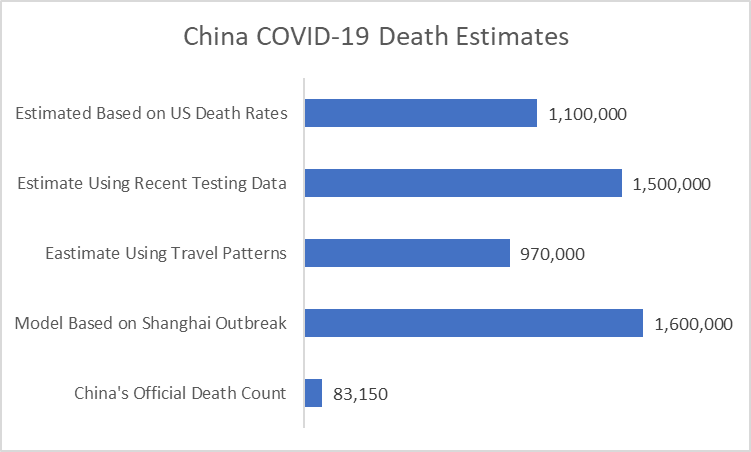
As China rolled back its Zero-COVID policies in early December, estimates and concerns about the deadly wave of infections the country faced abounded. This was particularly true as the new year travel season approached, as millions were set to travel from urban centers to their hometowns in rural areas across the country. Soon, reports of overflowing crematoriums and funeral parlors, sold out coffin makers, and sweeping infections coincided with continuously relaxing COVID-19 control policies. However, as of February 9, China has reported just 83,150 COVID-19 deaths, and leaders just declared a “decisive victory” against the virus. Of course, this is a number particularly difficult to believe in a country that has struggled so much with acquiring and delivering effective vaccines, relying instead on harsh lockdown and testing requirements.

As the New York Times explains, “The question of how many people died has enormous political relevance for the ruling Communist Party. Early in the pandemic, China’s harsh lockdowns largely kept the coronavirus at bay. Xi Jinping, the top leader, has portrayed that earlier success as evidence of China’s superiority over the West, a claim that would be hard to maintain with a high death toll.”

“The differences between China’s figures and researchers’ estimates are dramatic. The official numbers would give China the lowest death rate per capita of any major country over the entirety of the pandemic. But at the estimated levels of mortality, China would already have surpassed official rates of death in many Asian countries that never clamped down as long or as aggressively.”

So what gives? As we have discussed in the posts linked above, China is using much more narrow definitions of COVID-19 deaths, counting only those who died from respiratory failure and excluding those who died of liver, kidney, and even cardiac failure. Worse, the government quit counting COVID-19 deaths that occurred outside of hospitals which, coupled with the sudden absence of required testing and reporting, certainly had a major contribution to these suspicious numbers.

This piece from the New York Times discusses the numbers below and how experts at different institutions calculated them, including factors like China’s less effective vaccines, elderly populations, and more.

Source: The New York Times

The He Jiankui Saga Continues

Biodefense Graduate Program Associate Professor Dr. Sonia Ben Ouagrham-Gormley recently hosted an event along with her colleagues, titled “Looking Back into the Future: CRISPR and Social Values-BioGovernance Common’s Open Discussion with Chinese Academics.” Among other things, they highlight in their event summary that “We’ve exposed that there is little substance behind the ambitious Duchenne muscular dystrophy (DMD) gene therapy that Dr. Jiankui He, the scientist behind the illegal heritable human genome editing, has been boasting about to global patients. We were concerned that he might endanger another vulnerable population if his new venture remains unchecked,” and “Our event nudged Chinese media to publicly challenge Dr. He for the first time on his DMD research. As a result Dr. He has announced that he will prioritise research rather than social media promotion.”

Nature also covered the event, highlighting He’s refusal to discuss his past work and potential challenges this will create in understanding other important ethical issues. The article explains “On Saturday, He spoke at a virtual and in-person bioethics event that was promoted as “the first time that Dr. He has agreed to interact with Chinese bioethicists and other CRISPR scientists in a public event”. But during the talk, He did not discuss his past work and refused to answer questions from the audience, responding instead that questions should be sent to him by email.”

It continues later with “Some researchers worry that interest in He Jiankui is diverting attention away from more important ethical issues around heritable genome editing. “This event puts the spotlight on He Jiankui — Will he apologize? Is he displaying remorse?,” says Marcy Darnovsky, a public interest advocate on the social implications of human biotechnology at the Center for Genetics and Society in Oakland, California. Instead, she thinks researchers should focus on discussing whether there is a medical justification for heritable genome editing.”

He, who was recently released from prison and is now working in Beijing, garnered sharp criticism in 2018 when he announced that a woman had given birth after He implanted into her uterus two embryos he had used CRISPR-Cas9 to edit the CCR5 gene to make them resistant to HIV infection. It was later revealed that a second woman carried a third child whose genome He edited.

Was Pablo Neruda Murdered by a Physician Acting on Behalf of General Pinochet?

In late September 1973, the famed Chilean poet Pablo Neruda died in a clinic in Santiago, having checked out of a hospital earlier that day. The Nobel laureate was hospitalized with prostate cancer earlier that month, just as the coup d’état led by US-backed Augusto Pinochet ousted Chile’s socialist president, Salvador Allende. Neruda, a member of Chile’s Communist Party and close advisor to President Allende, checked out of the hospital after he claimed a physician injected him with an unknown substance. He reportedly died that evening of heart failure. In the decades since, his family and many members of the public have insisted he was murdered on the orders of Pinochet. This was spurred by reports from Manuel Araya, Neruda’s driver, that he witnessed Neruda tell his wife he believed the physician was ordered by Pinochet to kill him and the belief that Neruda was flying to Mexico to counter Pinochet in exile.

In 2013, a Chilean court ordered the launch of an investigation into Neruda’s death in light of these allegations and concerns. Neruda’s body was exhumed that same year, allowing scientists to test samples to better understand the poet’s death. This Wednesday, following a ten-year investigation by scientists in Chile, Canada, and Denmark, Chilean Judge Paola Plaza received the findings of an international report on the matter. The report indicates Pablo Neruda may have been killed by botulinum toxin-producing bacteria. The New York Times reports “The scientists found in Mr. Neruda’s body a potentially toxic type of bacteria that would not naturally occur there, and confirmed that it was in his system when he died, according to a two-page summary of the report shared with The New York Times. But they could not distinguish whether it was a toxic strain, and they could not conclude whether he was injected with the bacteria or if, instead, it came from contaminated food.”

The same article continues, “Yet the scientists conceded that other circumstantial evidence supported the theory of murder, including that in 1981, the military dictatorship poisoned political prisoners with bacteria possibly similar to the strain found in Mr. Neruda. (However, that method of poisoning stemmed from a chemical-weapons program the dictatorship began in 1976, three years after Mr. Neruda’s death.)”

While definitive answers remain out of reach in this case, Neruda’s is not the only contested death from this period. As the same article also explains “Yet Wednesday’s report and Ms. Plaza’s eventual conclusion may never sway some of the Chilean public. Karen Donoso, a Chilean historian, compared the uncertainty over Mr. Neruda’s death to some people’s lasting questions over the death of the leftist President Salvador Allende, who shot himself rather than fall into the hands of the military as it overthrew his government.”

“World’s Largest Collection of Viruses: Inside the Massive Biodefense Lab in Houston Area”

Houston’s ABC13 recently got an insider’s look at Galveston National Laboratory, located at the University of Texas Medical Branch. Their reporting offers an overview of the work that goes on at the facility, including in the BSL-4 area. As the station explains, “The Galveston National Laboratory is one of 14 U.S. facilities with BSL4 labs built by the National Institutes of Health in the years following the 2001 Anthrax attacks as a network of biodefense laboratories to “study viruses of pandemic potential and to develop medical countermeasures…The team is proud that in its 15 years, there has never been a “major laboratory incident resulting in the transmission of a disease” at the facility. This may be why most of us know little to nothing about their work.”

You can learn about the other 13 BSL-4 labs in the US and more around the world at globalbiolabs.org.

“Chemical and Microbiological Forensics in Investigations of Alleged Uses of Chemical and Biological Weapons – A Preliminary Analysis”

New from CBWNet: “In the latest CBWNet working paper, Ralf Trapp discusses the mechanisms for investigating the use of chemical and biological weapons and the development of scientific capacity for such investigations. The author highlights the importance of investigations in determining if a chemical or biological weapon was used, the type of agent used, and the origin of the weapon. The OPCW and the UN Secretary General’s Mechanism have set up systems with designated laboratories to investigate such allegations. However, there are still significant scientific challenges to be addressed, including validation of methods, agreed acceptance criteria, and distinguishing between natural and deliberate events. The paper emphasizes the need for continued investment and attention from governments to make progress in this field.”

“A Notorious Syria Conspiracy Theory is Definitively Debunked”

Brian Whitaker tackles the OPCW IIT’s newest report on the Assad regime’s use of CW in Douma and its debunking of disinformation surrounding the attack in this piece for New Lines Magazine. He writes in part, “The essence of the disinformation campaign was a refusal by its purveyors to accept that the Bashar al-Assad regime was conducting chemical warfare in Syria. Instead, they claimed all such attacks were “staged” by rebels to frame the regime and trigger a Western intervention. There was never any evidence for this, but it became the deniers’ standard response to reports of chemical attacks. The main reason the Douma attack in particular became a cause celebre for the deniers is it was one of only two chemical attacks (out of a total of over 300) that did in fact result in punitive airstrikes by Western powers. In addition, for the deniers, the emergence of two dissenters from within the OPCW and a series of leaked documents kept the issue alive longer than might otherwise have been expected. Meanwhile, Russia’s attempts to shield its Syrian ally led to political divisions in the OPCW, which threatened to undermine the global prohibition against chemical weapons.”

Iraq Disarmed: The Story Behind the Story of the Fall of Saddam

Rolf Ekéus, Chair of the UN Special Commission on Iraq from 1991-97, recently published his book covering his tenure and the organization’s struggles in disarming Iraq of its WMDs-Iraq Disarmed:

“The quest to disarm Iraq took place between two wars—one justified and right, the other a dreadful mistake, a violation of international law that led to hundreds of thousands of deaths.”  With these unvarnished words, Rolf Ekéus begins his political-thrilleresque story of the disarmament of Iraq—and the machinations that ultimately led to the fall of Saddam Hussein and the rise of ISIS.”

“After Saddam’s invasion of Kuwait and the war that followed, the UN Security Council ruled that Iraq must rid itself of all weapons of mass destruction. The difficult, politically sensitive, and dangerous task of accomplishing this rested with the UN Special Commission (UNSCOM), led by Ekéus, one of Sweden’s most seasoned diplomats. This was a radical experiment in UN governance—essentially conveying to one individual the power to conduct a disarmament program, with oversight only by the Security Council.”

“What followed were a succession of tense conversations with the Iraqi leadership, often-dangerous inspections, complex destruction processes, negotiations with Security Council representatives, and diplomatic maneuvering by world leaders. The recounting of these events lies at the heart of Ekéus’s personal narrative of disarmament history in the making, a narrative that adds substantially to the evidence that UNSCOM’s mission was successful and the 2003 war clearly illegal.”

“Crafted not in the interests of a political agenda, but rather for the sake of historical accuracy, Iraq Disarmed serves today as a sobering cautionary tale.”

“Private-Sector Research Could Pose a Pandemic Risk. Here’s What To Do About It”

Dr. Gerald Epstein, Distinguished Fellow at the Center for the Study of Weapons of Mass Destruction at the National Defense University, recently published this piece in the Bulletin of the Atomic Scientists. In it he discusses biosecurity issues in the private sector, using the 2018 synthesis of horsepox in a Canadian academic lab and Larry Wayne Harris’ attempt to order freeze-dried Y. pestis as touch points. He writes in his conclusion, “With the growth of the bioeconomy and increasing amounts of privately funded life sciences research, restricting biosecurity policy only to government-funded institutions creates an ever-growing gap. Even though research with enhanced potential pandemic pathogens constitutes an extremely small fraction of the overall life science and biotechnology enterprise—and the fraction of that work done with private funding even smaller—the potential global consequences of such work make it increasingly important to develop governance approaches that go beyond attaching strings to US government dollars. Closing this gap within the United States is not sufficient, given the global extent of the life science enterprise and the global consequences of any lab-caused pandemic—but it is a necessary start.”

Strategic Trade Review, Winter/Spring 2023

The 10th issue of the Strategic Trade Review covers a number of timely topics. Dr. Andrea Viski, Schar School Adjunct Professor and editor for the Review, writes in here introduction “The role of the Strategic Trade Review is to empower readers from all stakeholder communities with the powerful tool of rigorous and consummate scholarship from some of the top experts in the world on this and other questions. From discovering the ways that North Korean nuclear researchers acquire sensitive technology through international collaborations to how companies implement R&D compliance, this 10th issue of STR holds a mirror to today’s most important trade and security concerns.”

“MCMi Program Update”

“This newly released annual report provides an update on the US Food and Drug Administration’s work to support medical countermeasure-related public health preparedness and response efforts:

FDA plays a critical role in protecting the United States from chemical, biological, radiological, nuclear, and emerging infectious disease threats. FDA ensures that medical countermeasures (MCMs)—including drugs, vaccines and diagnostic tests—to counter these threats are safe, effective, and secure. FDA works closely with interagency partners through the U.S. Department of Health and Human Services (HHS) Public Health Emergency Medical Countermeasures Enterprise (PHEMCE, or Enterprise) to build and sustain the MCM programs necessary to effectively respond to public health emergencies. FDA also works closely with the U.S. Department of Defense (DoD) to facilitate the development and availability of MCMs to support the unique needs of American military personnel. The Pandemic and All-Hazards Preparedness Reauthorization Act of 2013 (PAHPRA), requires FDA to issue an annual report detailing its medical countermeasure activities. This report responds to that requirement for the latest fiscal year available.”

Personal Protective Equipment and Personal Protective Technology Product Standardization for a Resilient Public Health Supply Chain

“The National Academies will convene a public workshop, March 1-2, to examine standards gaps related to personal protective equipment (PPE) and personal protective technology (PPT). The event will explore innovative approaches and technologies needed to update and streamline the U.S. standardization system for PPE and PPT in support of supply chain resiliency. Policymakers, manufacturers, users, and relevant technical contributors will discuss ways to improve the effectiveness, safety, supply stability, and accessibility of PPE and PPT in health care settings and increase usage by critical infrastructure workers and the general public.” Learn more and register here.

Novel Applications of Science and Technology to Address Emerging Chemical and Biological Threats

For the first time since 2019, this Gordon Research Conference is back, this time in sunny Ventura, CA. “The Chemical and Biological Defense GRC is a premier, international scientific conference focused on advancing the frontiers of science through the presentation of cutting-edge and unpublished research, prioritizing time for discussion after each talk and fostering informal interactions among scientists of all career stages. The conference program includes a diverse range of speakers and discussion leaders from institutions and organizations worldwide, concentrating on the latest developments in the field. The conference is five days long and held in a remote location to increase the sense of camaraderie and create scientific communities, with lasting collaborations and friendships. In addition to premier talks, the conference has designated time for poster sessions from individuals of all career stages, and afternoon free time and communal meals allow for informal networking opportunities with leaders in the field.” The conference will be held March 19-24, 2023. Learn more and apply here by February 19.

Call for Applications: Fellowship for Ending Bioweapons (2023 – 2024)

From the Council on Strategic Risks: “In a time of rising geopolitical tensions and the continued emergence of biological events, the devastation that biological threats can cause is clearer than ever. Whether biological threats arise naturally, by accident, or through a deliberate effort to weaponize infectious diseases, they pose grave risks to international security and stability, and significantly impact the welfare and health of people around the globe. The urgency for mitigating this area of catastrophic risks is further driven home by Russia’s ongoing invasion of Ukraine and concerns that its leaders might consider using weapons of mass destruction in conflict, which includes biological weapons, and continued misinformation and disinformation related to biological weapons threats.”

“The Council on Strategic Risks (CSR) is continuing to develop and cultivate creative solutions to help address biological threats, including a particular focus on reducing risks of the deliberate weaponization of infectious diseases. As part of this work, CSR is announcing a call for applications for the 2023–2024 class of our Fellowship for Ending Bioweapons. Applications are due by 5pm Eastern Daylight Savings Time on March 24, 2023. Four to six Fellows will be selected.” Learn more and apply here.

IFBA Launches New Professional Certification in Cyberbiosecurity

From the International Federation of Biosafety Associations: “The IFBA is pleased to announce the launch of their new Professional Certification in Cyberbiosecurity which identifies individuals with demonstrated competencies in the mitigation of cybersecurity risks within biological laboratories. This includes Information Technology (IT) and Operational Technology (OT) risks in order to protect sensitive biological research, data, databases, and laboratory facilities and equipment against illicit or unauthorized access, theft, tampering, or other forms of misuse.” Read more here.

Weekly Trivia Question

You read the Pandora Report every week and now it’s time for you to show off what you know! The first person to send the correct answer to biodefense@gmu.edu will get a shout out in the following issue (first name last initial). For this week, our question is: This viral disease is primarily spread by Aedes aegypti mosquitoes and was first detected in humans through a serological survey conducted in Uganda in 1952. What is its name?

Shout out to Scott H. for winning last week’s trivia! The correct answer to “This disease, named for a Brazilian physician, is caused by the Trypanosoma cruzi parasite, and is commonly spread by kissing bugs. What is it?” is Chagas disease.

Pandora Report: 8.9.2019

From Legionella to the BWC, we’re the spot for all things biodefense. Did you know that China recently approved an ethics advisory group after the CRISPR-babies scandal? Welcome to your weekly dose of global health security news!

Launch of the 2019 Next Generation Biosecurity Competition
Are you a global health security and biosecurity student or professional? “NTI | bio is partnering with the Next Generation Global Health Security (GHS) Network to advance the biosecurity and biosafety-related targets of the Global Health Security Agenda (GHSA). Together, we are launching the third annual joint competition to foster a biosecurity professional track within the Next Generation GHS Network. The 2019 competition will spur next generation experts in health security to discuss catalytic actions that can be taken to reduce biological risks associated with advances in technology and promote biosecurity norms. For the 2019 Next Generation for Biosecurity Competition, we will publish creative and innovative papers that promote regional, multi-sectoral, and global collaboration.  Each team can include up to three people and should: 1) explore concrete collaborative actions that can be taken to build national, regional, and global norms for preventing deliberate and/or accidental biological events; and 2) promote cross-sectoral and cross-regional partnerships to advance biosecurity and biosafety. Papers should directly address the biosecurity targets included within the World Health Organization Joint External Evaluation and the GHSA Action Package on Biosecurity and Biosafety (APP3).” If you’re a GMU biodefense student or alum – you’re in luck as we’ve got a Next Generation Global Health Security Network chapter (membership is a requirement for the competition).

CSIS- Federal Funding for Biosafety Research is Critically Needed
The Center for Strategic & International Studies (CSIS) has just released their report on why we desperately need to provide funding for biosafety research in the face of new biotech and emerging infectious disease threats. “Currently, we lack the evidence basis to take new, needed measures to prevent accidents in biological laboratories, which, as mankind continues to expand its capabilities to manipulate life (including the viruses and bacteria that cause disease), leaves us more vulnerable to the accidental initiation of disease outbreaks with potentially dangerous consequences locally, regionally, and beyond. New biotechnologies are enabling scientists to design or modify life in ways not previously possible. These biotechnologies enable professional and amateur researchers to use simple life forms (e.g., bacteria and yeast) to create simple sensors and produce industrial chemicals, materials, and pharmaceuticals cheaply and from commonplace reagents. The manipulation of pathogens (the microbes that cause disease) fosters a better understanding of how these agents evolve and interact with the body, enabling the development of next generation cures. Despite the significant U.S. and global investment in biotechnology, concern has been voiced by scientists, policy experts, and members of the community  that scientists may be ill-equipped to handle novel, manipulated microbes safely, potentially resulting in accidental infection of themselves or their local communities, accidental release into the environment, or even the initiation of a global pandemic.”

Biological Weapons Convention Meeting of Experts – Updates and Deciding on Emergency Assistance in Cases of Bioweapons Use
If you’ve been missing the MXs, Richard Guthrie has you covered with his daily accounts of these meetings and events. Thursday was the closing day of MX4 and focused on the financial situation. “The Chair of the 2019 Meeting of States Parties (MSP), Ambassador Yann Hwang (France), held informal consultations with delegates from states parties to discuss the financial situation for the BWC which remains difficult. Non- payments of agreed assessments by a number of states parties continue to cause problems. While some of these eventually appear as late payments, the ongoing deficit is sufficiently large to put the MSP at risk. As the financial accounting period is the calendar year, the MSP at the end of the year is always going to be the most vulnerable activity if there is a financial shortfall. In 2018, some economies were made on the MSP by having one informal day of activities without interpretation, putting a number of delegates at a disadvantage. The government of France has a clearly stated position on multilingualism within multilateralism and so the MSP Chair would be extremely reluctant to implement a similar route to financial savings. The Working Capital Fund established by the 2018 MSP is specifically designed not to subsidise non-payment, but to smooth out cash flow during the year. Depleting the fund — which is not even close to its target value – in its first year to cover the costs of the MSP would render it useless for purposes of supporting core activities such as the ISU. There are also financial implications of decisions that will need to be taken in relation to the Ninth Review Conference to be held in 2021.” Dr. Jean Pascal Zanders was also in attendance and has reported out on discussions surrounding Article VII – “Being one of the more obscure provisions in the BTWC, Article VII only attracted state party attention over the past ten years or so. In follow-up to the decision of the 7th Review Conference (2011), parties to the convention looked for the first time more closely at the provision during the August 2014 Meeting of Experts (MX). As it happened, the gathering coincided with the expanding Ebola crisis in West Africa. The epidemic gave urgency to the concrete implementation of Article VII. The daily images of victims and fully protected medical staff broadcast around the world left lasting impressions of how a biological attack from another state or terrorist entity might affect societies anywhere. Operationalising Article VII has proven more complex than anticipated. The provision comprises several clauses that fit ill together upon closer inspection and hence obscure its originally intended goals. In addition, it contains no instructions about how a state party should trigger it or the global community respond after its invocation.”

CSIS Commission on Strengthening America’s Health Security Meeting
“On June 26, 2019, the CSIS Commission on Strengthening America’s Health Security convened for the third time since its launch in April 2018. The Commission’s core aim is to chart a dynamic and concrete vision for the future of U.S. leadership in global health security—at home and abroad.” “On June 26, Commission members—a diverse group of high-level opinion leaders who bridge security and health and the public and private sectors, including six members of Congress—met to discuss a proposed U.S. doctrine for global health security. Commission members deliberated and reached a broad consensus endorsing a doctrine of continuous prevention, protection, and resilience, which would protect the American people from the most pressing global health security threats we face today. The measures outlined in the paper are affordable, proven, and draw support from across the political spectrum. The time to act is now.” Participants called for Congress and the administration to take action across seven areas, including ensuring full and sustained, multi-year funding for the GHSA, ensuring ample and quick-disbursing finances, establishing a global health crises response corps, etc.

Combatting AMR Through Payment Shifts
In the battle against the resistant bug, sometimes you have to change tactics and bring in the big guns – like the Centers for Medicare and Medicaid Services (CMS). Developing antimicrobials has been a particular challenge, despite efforts to push and pull research and development. BARDA Director Rick A. Bright recently discussed this problem, but now a new CMS rule could help guide change. “Without payment reform, the antimicrobials marketplace will not survive. CMS Administrator Seema Verma understands this reality and the necessity for a strong marketplace for both public health and national security purposes. On Friday, August 2, CMS issued its fiscal year (FY) 2020 Hospital Inpatient Prospective Payment System (IPPS) Final Rule. Among other changes to the way CMS pays for Medicare services, CMS recognized the need for greater payment of newer, potentially safer and more effective antimicrobial drugs. The new rule will (1) change the severity level designation for multiple ICD-10 codes for antimicrobial drug resistance from ‘non-CC’ to ‘CC’ (which stands for complications or comorbidities) to increase payments to hospitals due to the added clinical complexity of treating patients with drug-resistant infections, (2) create an alternative pathway for the new technology add-on payment (NTAP) for qualified infectious disease products (QIDPs), under which these drugs would not have to meet the substantial clinical improvement criterion, and (3) increase the NTAP for QIDPs from 50 percent to 75 percent. This final rule lessens economic incentives to utilize older antimicrobial drugs such as colistin, and shift medical practice to employ more appropriate, newer generation antimicrobials. Payment more closely aligned with the value of these lifesaving medicines will shift the current market realities of these drugs for companies, investors, and patients. No single action will solve the antimicrobial resistance problem; however CMS’ efforts undoubtedly can improve the marketplace and re-catalyze innovation in basic science discovery, and research and development efforts. We appreciate and congratulate Administrator Verma for taking such bold leadership in this fight. ”

Ebola in the DRC
The latest WHO dashboard is showing that the outbreak has reached 2,787 cases. Seven cases were reported from the DRC ministry of health earlier this week and there is growing concern about the impact the outbreak is having on children in the area. “Last December UNICEF sounded the alarm about the high number of children infected in the outbreak, noting that one of every third people confirmed infected in the DRC’s outbreak was a child, unusual for Ebola epidemics. The agency noted that 1 in 10 children were under age 5 and that kids were more likely to die from the disease than adults. Save the Children said in its statement yesterday that around 737 children have been infected with Ebola in the DRC’s outbreak. And based on the latest numbers, the impact on kids has increased. In the first 6 months of the outbreak, which was declared on Aug 1, 2018, just under 100 deaths in children had been reported. However, in the 6 months that followed, over four times as many have died. Heather Kerr, Save the Children’s country director in the DRC, said, ‘This is another grim milestone in a crisis that is devastating children in its path, especially the youngest. Some 40% of children who have contracted the disease are under the age of five, and many of them have died.’ She also said the outbreak has had a wider impact on children because of the high overall fatality rate from the virus, with thousands losing at least one of their parents or separated from their families.”

SWP Comment- Why the Containment of Infectious Diseases Alone Is Not Enough
You can now access this commentary by Daniel Gulati and Maike Voss here, which discusses the current DRC Ebola outbreak and that in “crisis situations like these, the interdependencies between health and security are highly complex. Which population groups and which diseases are perceived as suspected health risks, and why, is a normative question for donor countries. It has political consequences above all for affected developing countries. Where health and security are common goals, it is not enough to contain infectious diseases in developing countries. Instead, resilient, well-functioning, and accessible health systems must be established. This fosters the implementation of the human right to health, creates trust in state structures, and takes into account the security interests of other states. In the United Nations (UN) Security Council, the German government could advocate for policies based on the narrative ‘stability through health’.” 

Stories You May Have Missed:

  • MERS and Healthcare Transmission– “Since its last update in June 2018, 219 cases were reported in four countries: Saudi Arabia (204), Oman (13), South Korea (1), and the United Kingdom (1). However, of the 97 secondary cases reported to the WHO, 52 were linked to transmission in hospitals, including 23 infections in healthcare workers. Since the virus was first detected in humans in 2012, 2,449 cases have been reported through Jun 30, 84% of them in Saudi Arabia. The virus is known to spread more easily in healthcare settings, and research is under way to better understand the factors that drive transmission. The WHO said awareness of the disease is still low, and the nonspecific early symptoms can make it difficult to identify cases. Gaps in infection prevention and control measures also contribute to disease spread. ‘Much more emphasis on improving standard IPC [infection prevention and control] practices in all health care facilities is required,’ the WHO said.”
  • Managing Measles: A Guide to Preventing Transmission in Health Care Setting– “Perhaps one of the most challenging aspects of this outbreak from a health care perspective is preparation. Although some may not consider this to be a concern, between 2001-2014, 6% of US measles cases (that were not imported) were transmitted within a health care setting. Sadly, I experienced this firsthand during a 2015 exposure at the health care facility I worked at, in which a health care worker was exposed to the virus while treating a patient and subsequently became infected. As a result of the health care worker’s infection, 380 individuals were exposed and the response efforts were extensive and significantly disruptive to the daily infection prevention duties. Due to the fact that hospitals can easily act as amplifiers for airborne diseases like measles, the CDC has provided interim infection prevention and control recommendations for measles in health care settings. At its core, this guidance focuses on health aspects of both the employee and the patient. For health workers, it is critical to ensure presumptive evidence of immunity to measles and manage exposed/ill health care workers properly. On the patient side, rapid identification and isolation of known or suspected cases and proper isolation maintenance is critical. “

Pandora Report: 8.2.2019

Greetings fellow biodefense friends! We hope your summer is winding down nicely and you’re ready for your weekly dose of all things health security. You might want to avoid pig ear dog treats as there’s currently an outbreak of multi-drug resistant Salmonella infections.

 Bioweapons Convention – Meeting of Experts
The BWC Meeting of Experts (MX) is currently under way and you can get detailed, daily reports via Richard Guthrie’s BioWeapons Prevention Project, which has been covering the BWC since 2006. Guthrie notes “The first Meeting of Experts (MX1) in the 2019 series opened on Monday morning with Ambassador Victor Dolidze (Georgia) in the Chair. Owing to refurbishment work in the Palais des Nations, MX1 opened in Room XX [renowned for its elaborately decorated ceiling] instead of the usual location for BWC meetings two floors below. One advantage of using Room XX is that the proceedings can be webcast via <<http://webtv.un.org/>&gt; After brief opening formalities, six sub-topics were covered during Monday, the full titles of which can be found in the agenda for MX1. There was a full day of activities which means that this report can only be a selective snapshot of proceedings. The background information document produced by the Implementation Support Unit (ISU) for the MX1 held in 2018 contains much information relevant to the discussions this year.” You can also find the Joint NGO Statements that were given here. “In her reflections on last year’s MX1, the Chair, Ambassador Almojuela of the Philippines, suggested several concrete proposals for further consideration at today’s meeting. These included: An action plan for Article X implementation; Guidelines on Article X reports; The creation of a BWC Cooperation and Assistance Officer position within the ISU; and An open-ended working group to monitor, coordinate and review activities of cooperation and assistance. These are all proposals that the NGO community strongly endorses, and which were also set out in our Position Paper last year. Ambassador Almojuela also proposed to further collaboration with INTERPOL, OIE and WHO; we would also wish to draw attention to the importance of further collaboration with non-governmental entities. We would also urge States Parties to facilitate regional S&T dialogues that are focused on regional BWC-related interests and problems, and that draw in regional and international expertise to share information and stimulate collaboration and cooperation.”

DRC Ebola Outbreak 
The outbreak has now hit the one year mark and it continues to worsen – with 41 new cases reported since the end of last week. “According to the World Health Organization’s (WHO’s) online Ebola dashboard, the outbreak total now stands at 2,671 cases. The dashboard also recorded a total of 1,782 deaths, an increase in 20 fatalities over the weekend. So far the DRC president’s office, which last week shifted outbreak response activities to its technical group, has not issued any detailed daily updates following the resignation of the country’s health minister.” A day later, the second case of Ebola was identified in the city of Goma. “Reports from DRC journalists and international media outlets said the case was announced at a media briefing where the head of a presidential expert committee, Jean Jacques Muyembe Tamfum, PhD, shared details about the development. The country’s president put the committee in charge of outbreak management on Jul 20, prompting the DRC’s health minister to resign. The infected man, a father of 10 children, is from Mongbwalu, about 43 miles from Bunia, the capital of Ituri province, according to a Tweet from DRC journalist Cedric Ebondo Mulumb. Goma and Bunia are about 347 miles apart, with road travel taking about 13 hours.” The WHO has recently noted how “relentless” this outbreak has been since it began one year ago.

 GMU Biodefense MS and PhD Open Houses
Have you been considering adding to your education and career through a graduate degree in biodefense? Check out one of our Schar School Open Houses to get a feel for what the MS and PhD programs are like – you can chat with faculty, students, and learn more about the coursework and application process. The Master’s Open House will be at 6:30pm on Thursday, September 12th, and the PhD Open House will be at 7pm on Thursday, September 19th – both will be held at our Arlington campus in Van Metre Hall.

MERS-CoV: Novel Zoonotic Disease Outbreak a Hard Lesson for Healthcare
“Middle East respiratory syndrome coronavirus (MERS-CoV) was first identified in 2012 and since then, sporadic but continued outbreaks have been occurring within the Arabian Peninsula. There have been 2,428 cases of the coronavirus since 2012, and 838 associated deaths. Reported across 27 countries, this has been a disease that seems to have found a stronghold and established itself as endemic. MERS-CoV challenges response in that while we have diagnostic testing now, there truly is not treatment outside of supportive measures. Spread through the respiratory secretions of infected individuals, there has also been transmission via close contact (i.e. caring or living with an infected person), and ongoing investigation into the role of camels in zoonotic transmission. The disease does circulate in dromedary camels in Africa, the Middle East, and southern Asia, but cases have tended to be related to healthcare exposures and household contacts, with some camel-to-human transmission occurring. Hospitals are encouraged to ensure adherence to Standard, Contact, and Airborne isolation precautions, meaning that the patient should be placed in a negative pressure isolation room and healthcare workers should wear a gown, gloves, eye protection, and N95 respirator. Given the need for these isolation precautions, it’s not surprising that exposures often come from delays in isolation and crowded emergency rooms.”

WHO Statement on Governance and Oversight of Human Genome Editing
The World Health Organization has released the statement from this expert advisory committee held in March of this year. “At this meeting the Committee in an interim recommendation to the WHO Director-general stated that ‘it would be irresponsible at this time for anyone to proceed with clinical applications of human germline genome editing.’ WHO supports this interim recommendation and advises regulatory or ethics authorities to refrain from issuing approvals concerning requests for clinical applications for work that involves human germline genome editing. ‘Human germline genome editing poses unique and unprecedented ethical and technical challenges,’ said WHO Director-General Dr Tedros Adhanom Ghebreyesus. ‘I have accepted the interim recommendations of WHO’s Expert Advisory Committee that regulatory authorities in all countries should not allow any further work in this area until its implications have been properly considered.’ WHO’s Expert Advisory Committee continues its consideration of this matter, and will, at its forthcoming meeting in Geneva on 26-28 August 2019. evaluate, inter alia, effective governance instruments to deter and prevent irresponsible and unacceptable uses of genome edited embryos to initiate human pregnancies.”

Breaking Down Resistant Rumors and C diff Disinfectants
GMU biodefense doctoral student and infection preventionist Saskia Popescu discusses how poor communication regarding resistant organisms can cause confusion and misleading headlines. A recent study noted resistance of Clostridioides difficile to disinfectants however, “The investigators sought to treat the gowns with disinfectant to test its efficacy and whether it would help with the bioburden. The research team found that after being treated with the 1000 ppm chlorine-based disinfectant for 10 minutes, the gowns still were able to pick up and hold the C diff spores. This concern over resistance sent shockwaves and many news outlets picked up on this as an indicator of what’s on the horizon. But an issue with the study was the disinfectant that was used. First and foremost, as an infection preventionist and the first to stand on my soapbox to shout about the perils of antimicrobial resistance, I know that the efficacy of our disinfectants will eventually fail. The issue with this study is that much of the media coverage speaks broadly of a chlorine-based disinfectant and goes into little detail about what exactly what used. For my infection prevention peers, you know that not all disinfectants are alike and, well, some just weren’t designed for combatting hardier bugs like C diff. This is the playbook we live by in health care.”

 Rinderpest, Smallpox, and the Imperative of Destruction
To destroy or not to destroy…that is indeed the question. “In June, The Pirbright Institute (UK) announced that it had destroyed its final archived stocks of rinderpest, the devastating viral disease of cattle that was declared eradicated in 2011. Rinderpest is only the second infection to be eradicated from the wild. The decision raises the question once again of what to do with the remaining stocks of the first eradicated virus—smallpox. The Pirbright Institute did not hold the final stocks of rinderpest in existence; samples are also known to be stored in a handful of facilities in China, Ethiopia, France, Japan, and the USA. Still, The Pirbright Institute is the World Reference Laboratory for rinderpest, previously storing more than 3000 viral samples. That it has taken the decision to destroy them represents a bold commitment to permanently ridding the world of the disease and should encourage others to do the same. France plans to destroy its remaining stocks, and discussions continue at other facilities.” The debate surrounding the survival and destruction of smallpox stocks has been ongoing for decades – some argue the risk of accidental or intentional release is too great, while others argue that destruction would remove the potential for research…however the Pirbright Institute’s practice countered this with their “sequence and destroy” policy, which is encouraging others to push for this policy regarding smallpox. “Smallpox stocks have been earmarked for destruction since eradication of the disease in 1980. Yet, successive meetings of the World Health Assembly have postponed making a final recommendation while the threat of re-emergence from elsewhere remains. At its last meeting in September, 2018, the Advisory Committee on Variola Virus Research told WHO that live virus is still needed for the development of new antivirals, with split opinion on whether it is needed for diagnostics. Huge strides have been made in these areas in recent years. New more advanced and safer vaccines have been developed; new diagnostic tests are in development; and the first specific antiviral for smallpox—tecovirimat—was approvedby the US Food and Drug Administration in June last year, after some innovative regulatory manoeuvres. The deliberations over smallpox stocks happen regularly, but the decisions are ad-hoc. For rinderpest, destruction seems only a matter of time. Smallpox stocks will also likely be destroyed once diagnostics are finalised and a second antiviral, with a different mode of action in case of resistance, is approved (many are in development).”

Stories You May Have Missed:

  • Surge in Drug-Resistant HIV Across Africa, Asia, and the Americas – “Surveys by the World Health Organization (WHO) reveal that, in the past 4 years, 12 countries in Africa, Asia and the Americas have surpassed acceptable levels of drug resistance against two drugs that constitute the backbone of HIV treatment: efavirenz and nevirapine. People living with HIV are routinely treated with a cocktail of drugs, known as antiretroviral therapy, but the virus can mutate into a resistant form. The WHO conducted surveys from 2014 to 2018 in randomly selected clinics in 18 countries, and examined the levels of resistance in people who had started HIV treatment during that period. More than 10% of adults with the virus have developed resistance to these drugs in 12 nations (see ‘Resistance rises’). Above this threshold, it’s not considered safe to prescribe the same HIV medicines to the rest of the population, because resistance could increase. Researchers published the findings this month in WHO report.”

Pandora Report 7.19.2019

Ebola Outbreak Updates- From PHEIC Declaration to Vaccines 
On Wednesday, the WHO declared the outbreak a PHEIC (Public Health Emergency of International Concern). “‘It is time for the world to take notice and redouble our efforts. We need to work together in solidarity with the DRC to end this outbreak and build a better health system,’ said Dr. Tedros. ‘Extraordinary work has been done for almost a year under the most difficult circumstances. We all owe it to these responders — coming from not just WHO but also government, partners and communities — to shoulder more of the burden.’ The declaration followed a meeting of the International Health Regulations Emergency Committee for EVD in the DRC. The Committee cited recent developments in the outbreak in making its recommendation, including the first confirmed case in Goma, a city of almost two million people on the border with Rwanda, and the gateway to the rest of DRC and the world.” A new case of Ebola has been identified in the city of Goma, which represents what the WHO is calling “a game-changer” since the city is a major transportation hub. On July 11th, it was announced that “the Democratic Republic of the Congo (DRC) ministry of health and government officials have agreed that Merck’s rVSV-ZEBOV is the only vaccine that will be used during the current, ever-growing Ebola outbreak in North Kivu and Ituri provinces. ‘Due to the lack of sufficient scientific evidence on the efficacy and safety of other vaccines as well as the risk of confusion among the population, it was decided that no clinical vaccine trials will be allowed throughout the country,’ the ministry said in its daily update yesterday. As of yesterday, a total of 158,830 people have been vaccinated with rVSV-ZEBOV, which clinical data suggest has as high as a 97.5% effectiveness rate against the virus.”

Trump Administration Gutting WMD Detection Programs
Despite 2017 pledges to secure, eliminate, and prevent the spread of WMD and related materials, a new investigation has found that such efforts through the Department of Homeland Security, have been drastically impacted. “Among the programs gutted since 2017, however, was an elite Homeland Security ‘red team,’ whose specialists conducted dozens of drills and assessments around the country each year to help federal, state and local officials detect such potential threats as an improvised nuclear device concealed in a suitcase, or a cargo ship carrying a radiation-spewing ‘dirty bomb.’ Another Homeland Security unit, the Operations Support Directorate, had helped lead up to 20 WMD-related training exercises each year with state and local authorities. The directorate participated in less than 10 such exercises last year and even fewer so far this year, according to internal Homeland Security documents.” The Homeland Security’s National Technical Nuclear Forensics Center has also seen a hit as their leadership is out and staffing has dropped from 14 to 3. “A separate Homeland Security component, the International Cooperation Division, which worked closely with foreign counterparts and the United Nations nuclear watchdog agency to track and stop the smuggling of dangerous nuclear materials overseas, has been disbanded.” “Homeland Security also has halted work to update a formal ‘strategic, integrated’ assessment of chemical, biological and nuclear-related risks.” The investigation also notes that more than 100 scientists and policy experts who specialize in radiological and nuclear threats, have either been reassigned or pushed into jobs that are wholly unrelated to their works. ‘The changes have undermined the U.S. government’s multi-agency commitment since 2006 to build and maintain a ‘global nuclear detection architecture,’ according to the present and former officials.”

 Weaponized Ticks, Lyme Disease, and the Smith Amendment
Remember that time a conspiracy-theory book triggered an investigation into whether the DoD ever weaponized ticks? Well here we are…. Earlier this week the US House of Representatives voted on the Smith Amendment on Bioweaponization of Ticks – and it passed. A lot of this stems from stories of Plum Island and the whispers that Lyme disease actually originated from the testing site and ticks were either intentionally or accidentally released into the surrounding areas…triggering the disease a few decades ago. Since the release of a book on the “secret history of Lyme disease and biological weapons”, there’s been a renewed interest in the bedtime story of the disease’s sinister origin story. Unfortunately, the proposed investigation really doesn’t hit the nail on the head. For one, it’s been widely known for years that ticks, among other vectors, were a part of the bioweapons and biodefense research. Two, the “smoking gun” within the book that’s been used to reinvigorate interest, claims an interview with Dr. Willy Durgdorfer (the researcher who identified Lyme disease) gave confirmation of the true origin of the disease….alas, this was reported post-mortem, when he was not able to confirm or deny such statements. Third, Lyme disease actually has some pretty old origins. Last, but not least, this new amendment doesn’t even touch on Lyme disease…but rather focuses on if the DoD did experiments with insects and vectors as disease delivery systems…which we already know to be true. Ultimately, this does a disservice to not only the people with Lyme disease, but also encourages conspiracy theories.

Using “Outbreak Science” to Strengthen Usage of Models in Epidemics
If you’ve been on the frontlines of an outbreak, you’ve likely heard of disease modeling…but sometimes it can be hard to actually apply this technology to drive change. A new article has created “outbreak science” as an inter-disciplinary field to apply epidemic modeling in a way that can really help. “Nevertheless, the integration of those analyses into the decision-making cycle for the Ebola 2014–2016 epidemic was not seamless, a pattern repeated across many recent outbreaks, including Zika. Reasons for this vary. Modeling and outbreak data analysis efforts typically occur in silos with limited communication of methods and data between model developers and end users. Modeling “cross talk” across stakeholders within and between countries is also typically limited, often occurring within a landscape of legal and ethical uncertainty. Specifically, the ethics of performing research using surveillance and health data, limited knowledge of what types of questions models can help inform, data sharing restrictions, and the incentive in academia to quickly publish modeling results in peer-reviewed journals contribute to a complex collaborative environment with different and sometimes conflicting stakeholder goals and priorities. To remedy these challenges, we propose the establishment of ‘outbreak science’ as an inter-disciplinary field to improve the implementation of models and critical data analyses in epidemic response. This new track of outbreak science describes the functional use of models, clinical knowledge, laboratory results, data science, statistics, and other advanced analytical methods to specifically support public health decision making between and during outbreak threats. Outbreak scientists work with decision makers to turn outbreak data into actionable information for decisions about how to anticipate the course of an outbreak, allocate scarce resources, and prioritize and implement public health interventions. Here, we make three specific recommendations to get the most out of modeling efforts during outbreaks and epidemics.” From establishing functional model capacity and fostering relationships before things happen to investing in functional model capabilities, this guide could be a game-changer for outbreak response.

Building a Case of (non?)compliance Concern
Looking for a new book? Check out this review of Biosecurity in Putin’s Russia – “In the early 1990s, the world was rocked when defectors from the Soviet Union revealed the existence of a massive civilian and military biological-weapons program that had employed more than 65,000 people from 1928 to 1992, directly contravening the 1972 Biological and Toxin Weapons Convention (BWC). In 2012, Raymond Zilinskas, a leading biological- weapons expert, coauthored with Milton Leitenberg a comprehensive account of the program, The Soviet Biological Weapons Program: A History, a reference source so thorough that it ran to nearly a thousand pages. Last year, Zilinskas, in collaboration with Philippe Mauger, produced Biosecurity in Putin’s Russia, a sequel of sorts in which the cautionary note that Zilinskas and Leitenberg sounded earlier—that Russia’s relationship with biological weapons remained complicated, and that the current status of its old programs could not be verified—proved to have been foreshadowing.”

Modeling the Complexities of the Gut for Biodefense Application
“The Nutritional Immunology and Molecular Medicine Laboratory (NIMML), with research funding assistance from the Defense Threat Reduction Agency (DTRA), has developed a high-resolution model of the gut immune system to help solve emerging and re-emerging infectious diseases and biodefense challenges. The advanced model predicts new emerging behaviors and responses to biological threats. The gut ecosystem includes trillions of interactions between host epithelial and immune cells, molecules (cytokines, chemokines and metabolites) and microbes is a massively and dynamically interacting network, like a multidimensional jigsaw puzzle with pieces that are constantly changing shape. These interactions with cooperativity and feedback lead to nonlinear dynamics and unforeseen emergent behaviors across spatiotemporal scales. The NIMML agent-based modeling (ABM) of the gut uses an array of HPC-driven advanced computational technologies such as the ENteric Immunity SImulator (ENISI) – multiscale modeling (MSM). These models and tools simulate cell phenotype changes, signaling pathways, immune responses, lesion formation, cytokine, chemokine and metabolite diffusions, and cell movements at the gut mucosa.”

Radiation Injury Treatment Network Meeting 
Are you attending this event later this month? If so, check out GMU Biodefense doctoral student Mary Sproull discussing Radiation Biodosimetry – A Mass Screening Tool for Radiological/Nuclear Events.

MERS-CoV Clusters
New WHO insight into 14 cases has identified 2 clusters that involved 4 of the infected people. “Of the 14 patients, 3 had been exposed to camels, a known risk factor for contracting the virus. Ten were men and four were women, and patient ages ranged from 22 to 80. Eleven had underlying health conditions, which is a risk factor for MERS. Ten were from Riyadh region, with other cases reported from Jeddah, Medina, Najran, and Al Qassim. One of the clusters involved two people living in the same household in Al Kharj in Riyadh region, a 22-year-old woman who had diabetes and epilepsy and a 44-year-old woman who had no underlying health conditions. The other cluster consisted of a 65-year-old male patient and a 23-year-old female healthcare worker in Riyadh. Five of the people died from their infections.”

CDC Announces E Coli Outbreak Linked to Ground Bison
Put down your bison burger and take a slow step back….”The US Centers for Disease Control and Prevention (CDC) and US Food and Drug Administration (FDA) have announced that they are collaborating with the Canadian Food Inspection Agency to investigate a multistate outbreak of E coli O103 and E coli O121 infections. Early epidemiologic and traceback information point to ground bison products as the likely source of the outbreak. As of July 12, 2019, there have been 21 individuals infected with E coli in this outbreak. In total, 6 individuals have been infected with the O103 strain, 13 cases of the O121 strain have been confirmed, and 2 individuals have been found to be infected with both strains.”

Stories You May Have Missed:

  • Polio in Pakistan – “The Global Polio Eradication Initiative (GPEI) today reported nine new cases of wild poliovirus type 1 (WPV1), and, for the first time in more than a year, China has confirmed a case of vaccine-derived poliovirus. In addition, Angola has a new circulating vaccine-derived poliovirus type 2 (cVDPV2) case. The Pakistan patients reported symptom onset on dates ranging from May 28 to Jun 20. The total number of WPV1 cases recorded in Pakistan this year is now 41; last year, the country recorded 12 cases over the entire year. Five of the nine cases originated in Bannu province, where health workers have been targeted by anti-vaccine extremists.”
  • Food Defense and Intentional Adulteration Rule Training – “The Food Protection and Defense Institute is hosting a Food Defense and Intentional Adulteration Rule training on August 20-21 in Minneapolis, MN. This two-day course provides the convenience and interaction of a single, in person class to more comprehensively learn the breadth and interconnections of IA Rule requirements including how to: Prepare a Food Defense Plan Conduct vulnerability assessments including the full FSPCA Intentional Adulteration, Conducting Vulnerability Assessment Course (IAVA) Identify and explain mitigation strategies, Conduct reanalysis”

Pandora Report: 7.12.2019

 Summer Workshop Welcomes New Instructor
We’re excited to announce that Nancy Connell will be joining us for the Summer Workshop on Pandemics, Bioterrorism, and Global Health Security next week. Dr. Connell “is a Senior Scholar at the Johns Hopkins Center for Health Security and a visiting Professor in the Department of Environmental Health and Engineering at the Johns Hopkins Bloomberg School of Public Health. She is a microbial geneticist by training. Dr. Connell’s work at the Center is focused on advances in life sciences and technology and their application to a number of developments in the areas of biosecurity, biosafety and biodefense.  Her research projects analyze novel biotechnologies that might impact the development of Global Catastrophic Biological Risks (GCBR) in ecosystems, and the development of surge capacity for medical countermeasure manufacturing and other response mechanisms in the event of a global pandemic or other global catastrophic event.  Dr. Connell is a member of the Board on Life Sciences and is a National Associate of the National Academies of Sciences, and she completed a six-month sabbatical as Visiting Scholar at the Board on Life Sciences.  Dr. Connell is a member of the US-CDC’s Biological Agent Containment Working Group in the Office of Public Health Preparedness and Response and was recently appointed the serve on the National Science Advisory Board for Biosecurity. Before joining the Center, Dr. Connell was Professor and Director of Research in the Division of Infectious Disease in the Department of Medicine at Rutgers New Jersey Medical School and the Rutgers Biomedical Health Sciences.  Dr. Connell’s major research focus was antibacterial drug discovery in respiratory pathogens such as M. tuberculosis and B. anthracis. Dr. Connell chaired the Institutional Biosafety Committee of Rutgers University and directed NJMS’s biosafety level three containment laboratory beginning in 1997. Her recent work focused on the use of predatory bacteria as novel therapeutics for treatment of Gram negative bacterial infections, including MDR strains and select agents. Dr. Connell was continuously funded by the NIH, the Department of Defense and DARPA, industry, and/or other sources from 1992 to 2018.  She received a PhD in microbial genetics from Harvard University.” If you’re not able to make the workshop next week, keep an eye on the @PandoraReport twitter for updates.

Is the U.S. Ready for A Tech War?
GMU Biodefense doctoral alum Daniel Gerstein discusses technological priorities and how the US invests in technological advances related to national security. “Today, important technology development changes are underway that could dramatically affect world order. The continued shift in global research and development spending highlights how far U.S. dominance has eroded. In 1960, when considering federal, industry and academia, the United States accounted for 69 percent of the global R&D. By 2016, the United States accounted for only 28 percent of the global R&D. With such a shift, it is no wonder that U.S. technology leadership and superiority can no longer be assured.” Gerstein notes that “the Trump administration should develop technology priorities, and technologies considered vital to U.S. economic and national security should receive investments to stimulate advances and promote U.S. leadership. The administration’s recent call to have greater industry investment in basic research, in lieu of government funding, seems shortsighted and should be reconsidered given the emerging tech war. A reevaluation of programs such as export controls, programs for approving foreign investment transactions, and intellectual property protections would also be useful to both protect and promote U.S. technology.”

Ebola Outbreak – Cases Surge with Violence – and How the CDC Made a Synthetic Ebola Virus to Test Treatments
Recently, the WHO Director General, Dr. Tedros, warned that instability in the DRC is fueling the Ebola outbreak. “In an interview with The Guardian, World Health Organization (WHO) Director-General Tedros Adhanom Ghebreyesus, PhD, said the political climate in the Democratic Republic of the Congo (DRC) is preventing an end to the current Ebola outbreak. ‘The root cause of the problem is lack of peace, the lack of a political solution. The incidence of Ebola, malaria and cholera is the symptom,’ Tedros told the British newspaper. ‘I know we can finish this Ebola outbreak…But at the same time it can come back because all the [political and security] conditions remain the same.’ The DRC outbreak expanded by 10 cases today, to 2,428 cases, according to the WHO’s online Ebola dashboard. Tedros’s comments come 1 day after the UK’s International Development Secretary, Rory Stewart, returned from a trip to the DRC and called on G7 world leaders to increase funding for outbreak response. ‘There is a real danger, that if we lose control of this outbreak, it could spread beyond DRC’s borders to the wider region and the wider world. Diseases like Ebola have no respect for borders and are a threat to us all,’ Stewart said in a Department for International Development (DID) news release.” Ebola has been challenging response efforts since 2013 and the CDC has been working to combat testing and treatment roadblocks through a unique strategy – a synthetic Ebola virus. Helen Branswell recently discussed how the CDC created a synthetic version of the Ebola virus to help guide diagnostic tests and experimental treatments…and it ended up working. “The research, conducted in the agency’s most secure laboratories — BSL4 — showed that even though the tests and two of the treatments being used in the field were developed based on earlier variation of Ebola viruses, they continue to be effective against the virus causing the current outbreak, the second largest on record. The results, reported Tuesday in the journal Lancet Infectious Diseases, are encouraging, but also raise questions about why outside research groups have not received direct access to viral specimens from the DRC and instead had to create a synthetic version. The paper noted that there have been no Ebola samples available to the scientific community from the past four outbreaks in the DRC. Those outbreaks occurred in 2014, 2017, and 2018.”

Mason Hosts Department of Homeland Security Centers of Excellence 2019 Summit 
“George Mason University will host Homeland Security Challenges: Evolving Threats and Dynamic Solutions, a Department of Homeland Security Centers of Excellence Summit, July 31-Aug. 1 at its Arlington Campus. The summit is an opportunity to gather some of the nation’s best academic, public, and private sector leaders to discuss strategies for advancing the DHS mission. Sponsored through the DHS Science and Technology Directorate Office of University Programs, the Department of Homeland Security Centers of Excellence network is a consortium of universities conducting groundbreaking research to address homeland security challenges by developing multidisciplinary, customer-driven, homeland security science and technology solutions and helping train the next generation of homeland security experts. The summit provides a platform for creating connections, fostering collaborations and inspiring new ideas to address homeland security challenges. It also provides an opportunity to highlight student research and innovative problem solving.”

ASPR Updates- the SNS and Biodefense Strategy Summit 
The Office of the Assistant Secretary for Preparedness and Response (ASPR) just released several good resources for the biodefense community. First, they’re celebrating the 20th anniversary of the Strategic National Stockpile (SNS) and you can find some great information on it here. “When state, local, tribal, and territorial responders request federal assistance to support their response efforts, the stockpile ensures that the right medicines and supplies get to those who need them most during an emergency. Organized for scalable response to a variety of public health threats, this repository contains enough supplies to respond to multiple large-scale emergencies simultaneously.” Next, ASPR provided the transcripts from the Biodefense Summit that occurred in April. “The Biodefense Summit, was held on April 17, 2019 in Washington, D.C.  The Summit aimed to engage the biodefense stakeholder community to inform national biodefense enterprise efforts to counter biological threats, reduce risk, prevent, prepare for, respond to, and recover from biological incidents. The Summit informed stakeholders of the implementation of the National Biodefense Strategy. “

Arizona Battles Hepatitis A
Arizona is working to contain an outbreak of hepatitis A and GMU biodefense doctoral student Saskia Popescu discusses how they’re incorporating healthcare providers into these efforts. “Despite making great strides in reducing the burden of HAV, Arizona is experiencing a growing outbreak that began in late 2018. Currently, there have been 424 cases and 3 deaths documented since November 2018, with a 79% hospitalization rate. The outbreak has spread to 7 counties within Arizona, including the largest—Maricopa. A total of 48% of Arizona’s HAV cases have occurred in those individuals who are homeless and report drug use, 25% of cases have been in those reporting using drugs (ie, no reported homelessness), and 22% of cases are in individuals with no identified risk factors. Public health investigators found that 28% of the cases have been in patients who are currently or were recently incarcerated. Five percent of the HAV cases in this ongoing Arizona outbreak have been reported in patients who report homelessness, but no drug use.  More recently, an employee at a restaurant in Maricopa County tested positive for HAV and may have exposed people visiting the restaurant over a 9-day period from late May to June. Public health officials are encouraging those patrons to get vaccinated against HAV to reduce the risk of transmission.”

Worldwide Reduction in MERS-CoV Cases Since 2016
In the latest CDC Morbidity and Mortality Weekly Report, they note the overall decline in MERS-CoV cases and mortality since 2016. “From 2012 through May 31, 2019, Middle East respiratory syndrome coronavirus (MERS-CoV) has infected 2,442 persons and killed 842 worldwide. MERS-CoV is currently circulating in dromedary camels in Africa, the Middle East, and southern Asia; however, most cases of human infection have been reported in the Arabian Peninsula. Large hospital outbreaks in 2014 and 2015 motivated affected countries to substantially invest in prevention and control activities. To estimate the potential number of MERS cases and deaths that might have been averted since 2016 had the risk levels of 2014–2015 continued, we analyzed case-based data on laboratory-confirmed human cases of MERS-CoV infections reported to the World Health Organization. We categorized cases as either secondary (human-to-human transmission) or community-acquired (presumed camel-to-human transmission). In addition, we used case-based data on date of onset (for symptomatic infections) or report (for asymptomatic infections), outcome (died/recovered), and dates and sizes of reported clusters of human-to-human–transmission cases”.

Self-destructing Mosquitoes and Sterilized Rodents: the Promise of Gene Drives
What might the consequences of this novel biotech be? In the face of potential eradication of disease and alteration of an entire animal population’s genome, researchers have very real concerns. “As soon as researchers began to make gene drives regularly in labs, animals developed resistance against them — accumulating mutations that prevented the drives from spreading. In tests of two drives inserted into fruit flies, for example, genetic variants conferring resistance formed frequently. Most commonly, mutations alter a sequence that CRISPR is set to recognize, preventing the gene from being edited. In experiments with caged mosquitoes, Crisanti and Target Malaria researcher Tony Nolan watched a gene drive gradually decrease in frequency over multiple generations owing to resistant mutations at the target gene. The results rocked the field. Would resistance render gene drives impotent? Not necessarily — if researchers select the right target. Some genes are highly conserved, meaning that any change is likely to kill their owners. Picking these genes as a drive target means fewer mutations and less resistance. In September 2018, Crisanti and his team crashed a population of caged Anopheles gambiae mosquitoes with 100% efficiency by making a drive that disrupts a fertility gene called doublesex. With the drive in place, female mosquitoes cannot bite and do not lay eggs; within 8–12 generations, the caged populations produced no eggs at all. And because it is crucial for procreation, doublesex is resistant to mutations, including those that would confer resistance to a drive construct.” “Before Kevin Esvelt ever built a single CRISPR-based gene drive, he’d wake up in cold sweats thinking about the ramifications. ‘I realized, oh hey, this isn’t just going to be about malaria, this is potentially going to be something any individual who can make a transgenic fruit fly could build to edit all the fruit flies.’”

Stories You May Have Missed:

  • UK Works to Test New Payment Model for Antibiotics – “In an effort to stimulate the development of new antibiotics, Britain’s National Health Service (NHS) yesterday announced the launch of a trial for a new pilot program that will pay drug companies for antibiotics using a subscription-style model. Under the program, NHS will pay pharmaceutical companies up front for access to effective antibiotics, rather than reimbursing them based on the quantity of antibiotics sold. The idea behind the program is to delink profit from the volume sold, pay for antibiotics based on their public health value, and encourage the development of new antibiotics.”

Pandora Report: 3.15.2019

TGIF or beware the Ides of March? Either way, we’ve got some health security news for you, so grab your Caesar salad and enjoy this weekly dose of all things biodefense.

Summer Workshop – Are You Registered?
We’re offering an early-bird discount for registration prior to May 1st – have you signed up? Threats to global health security continue to evolve due to the changing nature of conflict, advances in science and technology, globalization, and the growing threat posed by emerging infectious diseases and pandemics. Pandemics, Bioterrorism and Global Health Security: From Anthrax to Zika is a three and a half-day workshop, non-credit summer workshop designed to introduce participants to the challenges facing the world at the intersection of national security, public health, and the life sciences. The workshop faculty are internationally recognized experts from the government, private sector, and academia who have been extensively involved with research and policy-making on public health, biodefense, and national security issues. Don’t miss out on an additional discount if you’re a returning attendee, GMU employee/student, or are registering with a large group.

Germline Gene-Editing – Do We Need a Moratorium?
In the wake of He Jiankui’s gene-edited babies, many are calling for a moratorium on germline gene-editing. In fact, the Chinese health ministry released draft guidelines at stopping rogue efforts with unapproved biotech. This topic is so important that Nature published a call for a moratorium by several top ethicists and researchers. “Whether or not a moratorium receives more widespread support, several things need to be done to ensure that germline gene-editing studies, done for the purposes of research only, are on a safe and sensible path. As a starting point, proposals for all ethically vetted and approved basic research studies that use gene-editing tools in human embryos and gametes, including those aimed at assessing efficacy and safety, should be deposited in an open registry. Second, researchers need to develop a system that allows early recognition of any research that risks overstepping predefined boundaries. A useful model to follow could be the WHO guidance for regulating research with a potential biosecurity risk. The system should include a mechanism — perhaps affiliated with the open registry — that allows researchers to flag up potentially dangerous research. Analysing whether He’s work could have been prevented will help. It’s important to hammer out whether, how and to whom scientists and ethicists who became aware of the project could have voiced their concerns — and how they could do so more easily in future. Raising the alarm would require a change of practice for researchers who, for the sake of scientific independence, often do not intervene in the choice of research projects undertaken by their peers.” In the joint statement, the researchers noted that “By ‘global moratorium’, we do not mean a permanent ban. Rather, we call for the establishment of an international framework in which nations, while retaining the right to make their own decisions, voluntarily commit to not approve any use of clinical germline editing unless certain conditions are met.”

Taking A Step Back in Staph
This common skin bug is becoming increasingly resistant to not only intervention efforts, but also antimicrobials. Saskia Popescu, GMU biodefense doctoral student and infection preventionist, discusses the latest CDC report on the concerning state of Staphylococcus aureus infections, including MRSA. “Staph infections can either be methicillin-resistant or methicillin-sensitive (MSSA) but, overall, staph is the leading cause of infections in US hospitals. Infection preventionists have been zeroing in on MRSA for decades in the health care industry, working tirelessly to stop the spread. Unfortunately, according to the CDC, progress in curbing MRSA has slowed, and findings indicate that MSSA rates are also not declining. One theory is that the opioid crisis may be connected, as 9% of all serious staph infections in 2016 occurred in patients who used injection drugs, a statistic that represented an increase from 4% in 2011. Consider this—right now, nearly 1 in 10 staph infections that occur are in people who use intravenous drugs.”

 MERS-CoV Outbreak
Speaking of healthcare-associated infections…Saudi Arabia’s Ministry of Health reported two more cases in an ongoing outbreak in Wadi ad-Dawasir. Unfortunately, most of these cases are linked to healthcare exposures and a handful are related to contact with camels. One particular study assessed camel infections, noting that “The investigators focused on 53 studies published from 2013 to December 2018, of which 33 were from the Middle East, 13 from Africa, and 7 from Spain, Australia, Japan, Bangladesh, and Pakistan. The team reported its findings yesterday in the preprint server bioRxiv. The team said another group unknowingly carried out a similar review, which covered studies published from 2013 to April 2018 and was published Feb 21 in Epidemiology and Infection by a team from Qatar and the Netherlands. The authors of the bioRxiv said their study confirms and updates the findings of the other study.The authors of the new review found that MERS-CoV seroprevalence in camels increases with age, up to 80% to 100% in adult dromedaries, which the team says suggests that the virus is widely endemic in camels on the Arabian Peninsula and in African countries that export dromedaries. However, they note variable patterns within some countries. Also, the experts found a high prevalence of active infection in juvenile animals and at sites where the animals mix, such as livestock markets and slaughterhouses. Other findings from the longitudinal studies they examined include reinfection despite high MERS-CoV antibody titers.”

Improving Global Health Security Through One Health Platforms
Don’t miss out on this March 21st even at the National Press Club, hosted by the USAID -funded Preparedness and Response project. “Over the past four and a half years, the USAID-funded Preparedness & Response project has worked across 16 countries to spread the vision of a multisectoral One Health approach — where human, animal, and environmental health assets join forces — becoming the standard way to prevent, detect, and respond to emerging pandemic threats. As the project approaches the end of its tenure, please join us as we bring together the One Health community of practice to share key learning, demonstrate successful approaches to country ownership, and discuss the future of multisectoral coordination for preparedness and response.”

Biodefense MS and PhD Open Houses
Looking to improve your biodefense knowledge while obtaining a graduate degree? The Schar school Biodefense program is the place for it – from anthrax to Zika, we’ve got you covered. We’ve got two events coming up that you won’t want to miss if you’re looking to invest in your education. On Wednesday, March 20th you can attend a Master’s in Biodefense Webinar (online) at 12pm EST and at 7pm there will be a PhD Open House at the Arlington campus. These are great opportunities to hear about the biodefense programs, meet faculty and students, and learn how you can become a biodefense guru through our in-person and online programs.

Ebola Outbreak Updates and An Epidemic of Suspicion 
On Tuesday, two new cases were reported, as well as two new deaths, bringing the case counts to 925, including 584 deaths. Vinh-Kim Nguyen recently wrote in NEJM regarding the violence and turmoil surrounding outbreak response efforts in the DRC. “As a medical team leader for Médecins sans Frontières (MSF), I work halfway between Butembo and Goma, North Kivu’s capital city and a transport hub. In late January, five Ebola cases were identified in Kayna and Kanyabayonga; MSF opened a center in Kayna to isolate patients with suspected cases and test them for Ebola virus disease (EVD). I soon suspected that most patients would turn out to have diseases other than EVD. The standard “isolate and test” model often leads to expectant management for such patients — the tendency is to “cover” patients with antimalarials and broad-spectrum antibiotics, wait for EVD test results, and then discharge patients without Ebola. We instead took a more active approach, treating severe cerebral malaria, typhoid, sepsis, and even cholera. I have witnessed how such active clinical management for all patients, along with MSF’s long-term presence in North Kivu, has contributed to the community’s acceptance of our Ebola unit. Having patients emerge from isolation in improved health is powerful evidence that we aim to make everyone better, not just to stop Ebola’s spread.” Nguyen further discusses the labeling of attacks as “resistance” are fundamentally wrong and how they are actually a bigger issue – persons against prevention activities aimed at them and those orchestrated, armed attacks against symbols of the international response. “The mistrust of authority in the DRC also reflects a growing global mistrust of experts and science. Vaccine refusals are a growing problem worldwide, and they have already resulted in measles epidemics in the United States and France and in outbreaks elsewhere. Mistrust of public health authorities may thus be the new norm, and smoldering epidemics merely a symptom.”

 Ambitious American AIDS Initiatives & Cutting Foreign Aid Programs
In the February State of the Union, President Trump pledged to end the HIV epidemic by 2030. This re-invigoration of HIV efforts was shocking, but exciting. The official pledge of $291 million to help end transmission of HIV within the United States will hopefully bring us closer to that goal through initiatives that increase access to pre-exposure prophylaxis (PrEP). While Congress still needs to approve the 2019 budget, there is a concerning proposal within it. Beyond the cuts to Medicare and Medicaid ($845 billion and $241 billion respectively) which are deeply worrisome, the budget seeks to drop US contribution to the Global Fund to Fight AIDS, Tuberculosis, and Malaria by one billion. “The US will contribute $3.3bn between 2020 and 2023, a reduction on its previous contribution of $4.3bn. In a statement the global fund said: ‘The United States is the leading supporter of the Global Fund, and we are confident that the U.S. Congress will continue the strong funding that is urgently needed to improve global health security by ending epidemics. Various proposals are being considered and we look forward to final budget decisions taken by Congress in the coming months.’ The fund is looking for at least $14bn for the next year and, as the US donates around a third of the total, its contribution will mark a significant reduction on previous years. Mr Trump also proposes a $12.3bn cut to the State Department and USAID, marking a 23 per cent cut from the previous year. USAID, through the President’s Emergency Programme for Aids Relief, is a key player in the United Nations programme to eliminate HIV around the world.”

WHO Launches New Global Influenza Strategy
Influenza continues to be not only an annual issue, but the lack of preparedness for severe seasons and potentially pandemic strains is also an international issue. The WHO released their Global Influenza Strategy for 2019-2030. “The threat of pandemic influenza is ever-present.” said WHO Director-General Dr Tedros Adhanom Ghebreyesus. “The on-going risk of a new influenza virus transmitting from animals to humans and potentially causing a pandemic is real.   The question is not if we will have another pandemic, but when.  We must be vigilant and prepared – the cost of a major influenza outbreak will far outweigh the price of prevention.” This new strategies “is the most comprehensive and far-reaching that WHO has ever developed for influenza.  It outlines a path to protect populations every year and helps prepare for a pandemic through strengthening routine programmes. It has two overarching goals: 1. Build stronger country capacities for disease surveillance and response, prevention and control, and preparedness. To achieve this, it calls for every country to have a tailored influenza programme that contributes to national and global preparedness and health security. 2. Develop better tools to prevent, detect, control and treat influenza, such as more effective vaccines, antivirals and treatments, with the goal of making these accessible for all countries.”

How Africa Can Quell the Next Disease Outbreaks
How can African nations enable public health institutions (NPHIs) to help stop emerging and re-emerging infectious diseases from springing up and causing large outbreaks? Beyond waiting for outside intervention and emergency help from the West, John N. Nkengasong, head of the Africa Centre for Disease Control and Prevention, calls “on all 55 member states to establish or strengthen NPHIs. And I urge the private sector in Africa and worldwide, and bodies everywhere, to invest in these efforts. According to the World Bank, Africa needs between US$2 billion and $3.5 billion a year for epidemic preparedness; in 2015, 8 African nations received from various donors about $700 million for this cause.” Furthermore, he notes that “NPHIs should prioritize four broad areas. First, providing basic functions such as disease surveillance and coordinating emergency operations, even in remote areas. Second, creating lab networks that can quickly diagnose, track and pinpoint the origin of emerging infections. Third, developing a workforce to collect, assess, share and act on quality data, including advanced technologies such as genetic sequencing and informatics. Fourth, developing a strong capacity for social scientists to engage with communities and change behaviours. Sociologists and anthropologists were crucial in ending the Ebola outbreak in West Africa by, for example, promoting safe burials — which meant modifying long-standing traditions, such as washing the corpse of a loved one.”

Measles and the Threat of the Anti-vaccination Movement
From measles to polio, the threat of vaccine-preventable diseases is a real one that we’re slowly losing our headway in. “The anti-vaccination movement threatens to undo years of progress made against a range of preventable diseases. Mass immunization campaigns helped slash the number of measles deaths worldwide by 80 percent between 2000 and 2017, but that headway may now be stalling. Today, only 85 percent of the world’s infants receive the first dose of the treatment, and even fewer get the second dose. This is well short of the 95 percent vaccination rate that the WHO says is needed to prevent outbreaks. If the anti-vaccination movement continues to gain momentum, there could be more outbreaks in places such as the United States, where measles has been considered eliminated for nearly two decades. With more cases, there will be greater potential for measles to spread across borders. Until governments turn the tide of the anti-vaccination movement, health workers will face the dual challenge of containing measles in both countries where the disease is still endemic and those where it was thought long gone.”

Infectious Diseases Spike Amid Venezuela’s Political Turmoil
The crisis in Venezuela is leaving millions without clean water, access to hospitals,  safe food, and more. Unfortunately, it is also causing a spike in infectious diseases as public health and healthcare efforts have been all but decimated. “These so-called vector-borne diseases—transmitted by mosquitoes or other organisms—have increased by as much as 400 percent in Venezuela in the last decade, according to a review study published in The Lancet in February. Spiraling economic and political turmoil have worsened the situation, as has the government’s apparent hostility toward researchers who publish epidemiological data—with reports of pro-government paramilitary groups smashing labs and even stealing experimental mice. “’Last year we had more than 600,000 cases [of malaria] reported by the government,’ says study co-author Maria Eugenia Grillet, a tropical disease ecologist at Central University of Venezuela in Caracas. She and her co-authors estimated there were actually around 1.2 million cases, taking into account underreporting and disease relapses, Grillet notes. (Relapses occur when a patient has recovered but still carries the malaria-causing parasite and later suffers a recurrence of symptoms.) She blames the increase on a lack of antimalarial surveillance, treatment and control, partly due to funding cuts. ‘Research in our universities and laboratories is almost completely paralyzed because there are no financing programs that allow us to cover the basic needs to carry out our experiments or fieldwork,’ she says.”

Stories You May Have Missed:

  • New Vaccine Manufacturing Innovation Centre Bolsters Pandemic Preparedness – “The first dedicated Vaccines Manufacturing Innovation Centre (VMIC) is coming to the UK in 2022, addressing gaps in late-stage vaccine manufacturing for clinical trials and emergency preparedness for epidemic and pandemic threats. Led by the the University of Oxford’s Jenner Institute, the new centre has been awarded funding by UK Research and Innovation of £66 million ($86 million USD) through the UK Government’s Industrial Strategy Challenge Fund (ISCF) Medicines Manufacturing challenge. ‘This is an exceptional opportunity for the UK to lead in the provision of vaccines against a wide range of outbreak pathogens which threaten to cause major epidemics,’ said Adrian Hill, Jenner Institute Director. ‘The lack of commercial incentive to develop these has now led to this exceptional partnership of major academic and industrial players in the vaccine field, to accelerate a range of vaccines towards large-scale manufacture and stockpile provision for vulnerable populations. In parallel, the Centre will develop innovative manufacturing technologies with UK companies and Universities to support the next generation of life-saving preventive and therapeutic vaccines’.”

Pandora Report 7.6.2018


We hope you had a lovely holiday this week and are ready to get back into the world of biodefense! News is still unfolding regarding the two British citizens who were hospitalized after exposure to the nerve agent, Novichok, but we’ll keep you updated as more information becomes available.

Summer Biodefense Workshop – Pandemics, Bioterrorism, and Global Health Security
In less than two weeks the summer workshop on all things health security, from anthrax to Zika, will be taking place – are you registered? This three-day workshop will cover everything biodefense from the most recent Ebola outbreak, to DIY biohackers and vaccine development, and also the challenges of defending against biothreats. Speakers include experts in the field like David R. Franz, who was the chief inspector on three United Nations Special Commission biological warfare inspection missions to Iraq and served as technical advisor on long-term monitoring. His current standing committee appointments include the Department of Health and Human Services National Science Advisory Board for Biosecurity (NSABB), the National Academy of Sciences Committee on International Security and Arms Control, the National Research Council Board on Life Sciences, and the Senior Technical Advisory Committee of the National Biodefense Countermeasures Analysis Center. Jens H. Kuhn will also be speaking on filoviruses and what it was like to be the first western scientist with permission to work in a former Soviet biological warfare facility, SRCVB “Vektor” in Siberia, Russia, within the US Department of Defense’s Cooperative Threat Reduction (CTR) Program. These are just two of our speakers who will be leading discussions over the three days – come join the conversation at our workshop from July 18-20!

All Hands on Deck – U.S. Response to Ebola in West Africa
Princeton University’s Innovations for Successful Societies has just released their report on the quality of the U.S. response to Ebola. The case study is part of a series on Liberian response to the outbreak and includes great information on coordination, political response, and the challenges of international outbreak management. “Although the deployment, which scaled up earlier assistance, took place five months after the first reported cases and required extensive adaptation of standard practices, it succeeded in helping bring the epidemic under control: the total number of people infected—28,616—was well below the potential levels predicted by the CDC’s models. This US–focused case study highlights the challenges of making an interagency process work in the context of an infectious disease outbreak in areas where health systems are weak.”

Bats and Military Defense
Sure, your first inclination might be a vampire or Batman joke, but there’s actually a significant history regarding the U.S. military and utilization of these mammals. Historically, efforts focused on employing them as bombs in Japan but a more modern plan focuses on their uncanny ability to carry deadly diseases. “‘What we are trying to do is to study bat immunology, but that turned out to be a very difficult thing to do when starting from scratch,’ said Thomas Kepler, a professor of microbiology at Boston University. It took decades to create the reactive substances necessary to study human or mouse antibodies. With bats, he explained, they were starting from zero.” Battling potential Russian bioweapons means thinking outside of the box, right? The truth is that fruit bats have a pretty amazing weapon of their own – a super immunity that might just lend itself to curing Marburg and other devastating infections. “The Marburg virus is classed as a Category A bioterrorism agent by the Centers for Disease Control and Prevention, and Kepler’s study was supported by the Defense Threat Reduction Agency, a Defense Department division established during the Manhattan Project era to combat weapons of mass destruction. If the virus is ever deployed as biological warfare, the fruit bat’s super-immunity may hold the answer to preventing its spread. But it may also go some way toward redeeming the bat in the eyes of the U.S. military — and could even make the animal an unlikely hero.”

 NASPAA Pandemic Simulation
How would you handle a pandemic? GMU’s Schar School team qualified for the final round of the Network of Schools of Public Policy, Affairs, and Administration (NASPAA) pandemic simulation, in which student teams had to respond to a constantly evolving situation and make real-time decisions regarding quarantine, trade, etc. “‘The simulation is an especially valuable experience for the biodefense students since the pandemic crisis provided students with complex problems like those that they will tackle in their professional careers,’ said director of the Schar School’s biodefense graduate program, Gregory Koblentz. ‘These exercises also test the students’ ability to bridge the gap between the science and policy-making, a key goal of the biodefense programs’.”

Gene Editing – Last Week Tonight With John Oliver and How DARPA Wants to Boost Body Defense Through Gene Editing
This week’s episode of Last Week Tonight featured one of our favorite topics – gene editing! While there’s only so much you can cover in the span of 20 minutes, it was nice to see some of the complexities, personalities, and technical hurdles, covered by John Oliver. From biohackers to germline edits, Oliver mixed humor into a discussion on the very real issues surrounding gene editing technologies like CRISPR (although his version of the acronym is much more comical – Crunchy Rectums In Sassy Pink Ray-bans). Make sure to check out the episode to get a humorous overview on this gene-editing technology. Meanwhile, DARPA (the Defense Advanced Research Projects Agency) is actually working to harness gene editing to make your body’s natural defenses that much stronger through specific gene expressions. The project is called PREPARE (PReemptive Expression of Protective Alleles and Response Elements) and works to provide temporary boots to your natural defenses. “In contrast to recent gene-editing techniques, such as CRISPR, which focus on permanently changing the genome by cutting DNA and inserting new genes, the PREPARE program will concentrate on techniques that don’t make permanent changes to DNA. These techniques target the ‘epigenome,’ or the system that controls gene expression. Genes can be turned on or off by making external modifications to DNA, which don’t change the DNA sequence, but instead affect how cells ‘read’ genes. To start, the PREPARE program will focus on four key health challenges: influenza viral infection, opioid overdose, organophosphate poisoning (from chemicals in pesticides or nerve agents) and exposure to gamma radiation, the statement said.” While there are a lot of hurdles to overcome, the overall goal is to extend the platform to known and unknown threat application.

Improving Mass Casualty Management: The Role of Radiation Biodosimetry 
How would we handle the medical response of large-scale radiological exposure? GMU Biodefense PhD student Mary Sproull presented on this very topic and the work she and her team are doing, which is aimed at making testing more efficient and effective. “Drs. Sproull and Camphausen are working to make the medical management process more efficient and effective in the event of a mass casualty radiation exposure. Specifically, they are developing a dosimetry dose prediction model to determine how radiation biodosimetry diagnostics can help physicians estimate just how much radiation exposure a patient has experienced. (Radiation biodosimetry diagnostics estimate a person’s radiation exposure by measuring changes in biological markers that include cytogenic assays like dicentric chromosome assay.)”

Everything You Need to Know About Ricin
A few weeks back a Tunisian man was arrested by German police regarding suspected plans for a bioterrorism attack with ricin. German police were searching his residence in Cologne and found enough ricin for 1,000 toxic doses. During the fervor of the news, it was reported that such a a plot could have been more devastating than 9/11 – but what’s the reality behind ricin? Check out this comprehensive review of what ricin is (a naturally occurring biological poison), its history as a biological weapon and WMD, and more. “In summary, ricin’s status as a biological weapon is quite mixed. In terms of actual potential for harm, it is more at the level of knives than bombs. Its status as a WMD is a legal one, not so much a practical one. It would be useful to the public debate and our general social assessment of risk if the media could reflect this, rather than churn out hysterical reporting.”

Stories You May Have Missed:

  • VA Study Reveals Antibiotic Prescribing Habits – “A team of researchers establishing baseline data on antibiotic use by the Veterans Administration (VA) healthcare system in Pittsburgh found that about 75% of all antibiotic prescriptions were inappropriate, meaning they were either not indicated or were used for a duration that’s not recommended. The study, which took place over 12 months, looked at prescribing information, medical records, and charts of 40,734 patients, who were written 3,880 acute antibiotic prescriptions by 76 primary care providers (PCPs). The median antibiotic index was 84 antibiotic prescriptions per 1,000 patients per year.”
  • Drone Crashes Into French Nuclear Plant – “GREENPEACE activists say they have crashed a drone into a French nuclear plant to highlight the lack of security around the facility. The drone, which was decked out to resemble a tiny Superman, slammed into the tower in Bugey, 30 kilometers (20 miles) from the eastern city of Lyon, according to a video released Tuesday by Greenpeace. The environmental group says the drone was harmless but it showed the lax nuclear security in France, which is heavily dependent on nuclear power, using it for about 75 percent of its energy needs.”

Pandora Report – 5.4.2018

Happy Friday and May the Fourth Be With You!

Bill Gates Talks Universal Flu Vaccine, Pandemic Preparedness, and Bioterrorism
Bill Gates has been making the rounds this week discussing the slow progress that has been made in terms of pandemic preparedness. Gates recently spoke at the New England Journal of Medicine’s Shattuck Lecture, where he noted that “We are on the verge of eradicating polio. HIV is no longer a certain death sentence. And half the world is now malaria-free. So usually, I’m the super-optimist, pointing out that life keeps getting better for most people in the world.There is one area, though, where the world isn’t making much progress, and that’s pandemic preparedness. This should concern us all, because if history has taught us anything, it’s that there will be another deadly global pandemic. We can’t predict when. But given the continual emergence of new pathogens, the increasing risk of a bioterror attack, and how connected our world is through air travel, there is a significant probability of a large and lethal, modern-day pandemic occurring in our lifetimes.” You can find the full transcript here, but in his speech, Gates also underscores the risk of biological weapons, noting that “biological weapons of mass destruction become easier to create in the lab, there is an increasing risk of a bioterror attack. What the world needs – and what our safety, if not survival, demands – is a coordinated global approach. Specifically, we need better tools, an early detection system, and a global response system.” He also recently sat down with STAT News to discuss a new initiative he is supporting to facilitate the development of a universal flu vaccine, as well has his time in the Oval Office. “The Gates Foundation is offering $12 million in seed money for projects that would help the world develop a universal flu vaccine. Gates said he thinks that when a universal flu vaccine is developed, it will be made in one of the newer vaccine constructs attracting so much research attention these days.” Gates also noted that when meeting with President Trump, he discussed the need for a universal flu vaccine and sparked the president’s interest through the notion of inspiring American innovation. While Gates isn’t likely to take on a scientific advisor role, he continues to vocalize concerns about global health security and the gaps in preparedness/response efforts.

GMU Biodefense – Food Security 
Interested in biodefense and food security? GMU’s Biodefense graduate program is just the place, as we’re proud to announce that Philip Thomas will be teaching BIOD726 this fall. This course “analyzes threats to food security globally including those related to climate change and environmental degradation; animal and plant diseases; access to clean water; agricultural terrorism; and antimicrobial resistance. Explores the national and global health, economic, social, and ethical impacts of these disruptive forces. Examines strategies for enhancing the security of the global food production and supply systems.”

Avoiding Soviet-Era Disarmament Mistakes With North Korea’s Bioweapons Program
GMU Biodefense professor Sonia Ben Ouagrham-Gormley is trying to get the United States to avoid making the same mistakes when it comes to disarmament. Ouagrham-Gormley notes that with new talks between North Korea and the United States, it is important for the Trump administration to learn from our historical failures and previous disarmament talks. She points to the Cooperative Threat Reduction Program (CTR), which was launched in 1991 and worked to secure weapons, like nuclear and chemical, that were stored in former Soviet states. Unfortunately, the CTR program was only mildly effective in regards to biological weapons. Ouagrham-Gormley provides some “do’s and don’ts” for our bio-engagement with North Korea. Do engage as many facilities as possible. Don’t adopt a cookie-cutter approach to bio engagement – “Probably the greatest failure of the CTR program was its adoption of a one-size-fits-all approach that did not take into account the particular circumstances of the facilities and individuals engaged. For example, the CTR usually provided former Soviet facilities with biosafety equipment, which was much needed, as scientists sometimes worked with dangerous agents with no ventilation system to prevent the spread of disease should a laboratory accident occur.” She also notes that “without strategies to help scientists exit the bioweapons field and efforts to erode their expertise, a bio-engagement program in North Korea risks maintaining a bioweapons threat and possibly allowing resumption of the program in the future.”

Summer Workshop – Early Registration Discount Extended!
We’re happy to announced that the early registration discount for the Summer Workshop on Pandemics, Bioterrorism, and Global Health Security, has been extended to June 1st. Register before then get the reduced rate for this 3-day workshop on all things health security. Join the conversation with experts regarding pandemic preparedness policy, dual-use research oversight, CRISPR, protecting the bio-economy, and more.

15 Years of Hospital Preparedness
It’s interesting to think that the Hospital Preparedness Program (HPP) has been working to strengthen U.S. healthcare preparedness for 15 years now. Check out this infographic for some interesting facts – HPP is the only source of federal funding for health care delivery system readiness and 98% of those awarded funds have said that the funding was critical to their response and preparedness efforts. From Hurricane Katrina to the bombings at the Boston Marathon, to Ebola in Dallas, and Zika virus, there is an utter need for supporting healthcare response and preparedness efforts within the United States.

Maryland Branch ASM Annual Poster Session & Student Oral Presentation
Don’t miss out on this chance to attend the Maryland ASM branch meeting on Monday, June 4th from 5:30-8:30pm. This is a great opportunity for students to present posters, meet other ASM members, and learn more about the organization.

Trends in Reported Vectorborne Disease Cases
Mosquitos and ticks are major trouble-makers in the United States.  The threat of vectorborne diseases is becoming an increasing issue within the United States, according to a new CDC report. Researchers reviewed data reported through the National Notifiable Diseases Surveillance System for 16 notifiable vectorborne diseases (West Nile virus, Rocky Mountain Spotted Fever, etc.) from 2004 to 2016. “A total 642,602 cases were reported. The number of annual reports of tickborne bacterial and protozoan diseases more than doubled during this period, from >22,000 in 2004 to >48,000 in 2016. Lyme disease accounted for 82% of all tickborne disease reports during 2004–2016.” Tickborne diseases accounted for more than 75% of reports and West Nile virus was the most commonly transmitted mosquitoborne disease. “During 2004–2016, nine vectorborne human diseases were reported for the first time from the United States and U.S. territories. The discovery or introduction of novel vectorborne agents will be a continuing threat.”

Stories You May Have Missed:

  • FDA Recommends Approval for TPOXX– The FDA Advisory Committee recently voted unanimously to recommend approval for TPOXX for the treatment of smallpox. “While TPOXX is not yet approved as safe and effective by the U.S. Food & Drug Administration, it is a novel small-molecule drug of which 2 million courses have been delivered to the Strategic National Stockpile under Project BioShield.”
  • Biodefense World Summit– Don’t miss this June 27-29 event in Bethesda, MD! “Biodefense World Summit brings together leaders from government, academia, and industry for compelling discussions and comprehensive coverage on pathogen detection, point-of-care, biosurveillance, sample prep technologies, and bio recovery. Across three days of programming, attendees can expect exceptional networking opportunities in the exhibit hall, engaging panel discussions, and shared case studies with members of the biodefense community from technology providers to policy makers. The 2017 summit saw more than 250 participants with 35% of attendees titled as scientist/technologist, 30% as executive/director, and 11% as professor.”