Pandora Report: 11.13.2015

Given the auspicious nature of Friday, the 13th, how about we start the Easy-Bake Oven version of bioreactors? (insert evil genius laugh). Our report this week is rich in biosafety, GMU Open Houses, and updates on global outbreaks. Fun History Fact Friday – this week in 1989, the Berlin Wall came down! Before we venture down the rabbit hole, don’t forget to get your flu shot before the 2015/2016 influenza season hits too hard!

DIY Bioengineering 
If you’re in search of the perfect holiday gift for your favorite biodefense/bioengineer, you can thank the creators of Amino (personally, I think calling it the Easy-Bake Oven Bioreactor is just so much more fun). The kit starts at $700 and comes with all the essentials for your “recipe” (main bacterial culture, DNA, pipettes, incubators, agar plates and various sensors for monitoring microbial growth). Did I mention it comes in a nice color-coded, pleasing-to-the-eye plywood dashboard? MIT graduate, Julie Legault, is the master genius behind Amino, and uses the “apps” (step-by-step guides) to help make even the most science adverse individual capable of making DNA products. Liz Stinson points out that “they walk users through how to insert the DNA into untransformed bacteria cells, and how to incubate, grow, and maintain the altered microorganisms”. Just make sure your new gift comes with some information on dual-use research of concern and avoids any select agents…

Master’s Open House 
Make sure to swing by our GMU Master’s Open House on Wednesday, November 18th at 6:30pm to learn about all our different programs! Good news – you can virtually attend via this link and even ask questions live! We’ll be talking biodefense and all the ways you can use our MS degree (online or in person!). Whether its fighting food safety issues, pandemic influenza, or zombies, we’re passionately trying to make the world of global health security stronger and more diverse!

Biological Research: Rethink Biosafety 
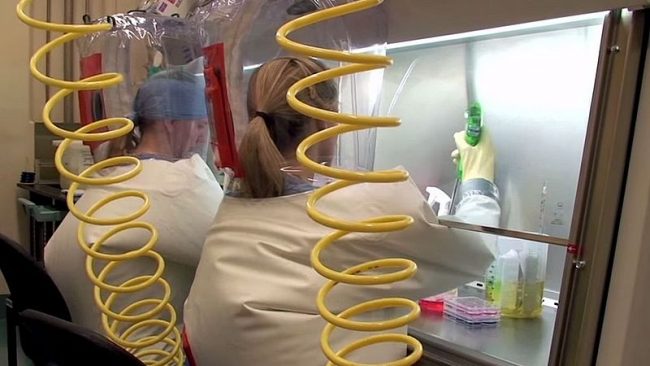
“Biology must move forward on safety and security. Let’s not reinvent the wheel, but learn from those doing safety better.” Tim Trevan’s comments echo the sentiments of many within the biosecurity field. The anthrax mishaps at Dugway and the CDC BSL-3 lab in Atlanta compound a growing concern over the handling of select agents and the lab safety practices and processes that seem to be failing. Trevan poses the question, “what are the prospects for managing the more intractable risks globally if measures to ensure the safe handling of dangerous pathogens are failing at the best-equipped facilities in the country with the most advanced biotechnology in the world?” In his words, Trevan has hit the nail on the head and summarized the realities of lab safety culture. So what’s to be done? Trevan makes the unexpected recommendation of  using nuclear security experts to advise on biosafety and biosecurity. This strategy utilizes a practice that is also common in healthcare – a culture of safety. By focussing on the prevention of failure, instead of maximizing output, safety becomes an engrained practice in all levels of an organization, transforming it into a “high-reliability organization” (HRO). By using examples within industries like offshore oil drilling, airlines, etc., Trevan points to the growing biotech capabilities that make biosecurity that much more imperative. In healthcare, I’ve seen organizations truly transform their practices by moving to a culture of safety (and utilizing “just culture” when it comes to patient safety) and while it’s not a wholly easy process, the foundations are already present in the existing teachings of patient care. Labs have the training and knowledge for safety, but as Trevan points out, it’s time to bring in those with the expertise to help move towards a culture of safety.

Screen Shot 2015-11-12 at 9.56.04 AM
Courtesy of HDOH

Dengue Fever Outbreak in Hawaii 
If you’re considering a winter retreat to Hawaii, make sure to grab some bug spray. Hawaii Island is currently experiencing a Dengue outbreak that has just reached 33 cases. Dengue is not endemic to Hawaii and while travelers have imported cases from time to time, this is marks the first big cluster of locally-acquired cases since 2011. The Hawaii Department of Health (HDOH) continues investigations and reports (as of 11/11)  25 Hawaii Island residents and 8 visitors have been laboratory confirmed with dengue fever. The HDOH has provided maps related to exposure areas to help people avoid high-risk locations or at least use preventative measures. If you’re traveling to Hawaii Island or an area where dengue is endemic, make sure to take steps to reduce the risk of mosquito bites and the potential for transmission!

Ebola Update
Guinea has reported no new cases in the last week. While they’re still on high alert after the cases surrounding a family, they are hopeful. Liberia and Sierra Leone have hit their 90-day enhanced surveillance period, meaning they have no new cases and are now working towards the WHO’s second objective (managing and responding to residual risks). Pauline Cafferkey has made a full recovery after her hospitalizations due to post-Ebola recovery complications. Researchers at Columbia University’s Mailman School of Public Health used a new statistical model to map the outbreak. Results will be published in the Journal of Royal Society Interface, which shows the development of the outbreak and role early detection and response plays.

Stories You May Have Missed: 

  • Joint Services Mask Leakage Tester (JSMLT) Contract – the DoD has announced that Air Techniques International, Inc. has been awarded a contract regarding the maintenance of the JSMLT. The JSMLT does quality control and ensures proper fitting (portably) on CBRN protective masks.
  • H7N9 Cases in China Rise– China has confirmed two more cases that occurred in October, bringing the total case count to four. Many in public health are noting that these cases bring about a fourth wave of infections (starting in October). The two new cases were a a 62-year-old woman from Shengzhou and a 51-year-old farmer from Hangzhou.
  • Boosting Biosecurity in Nigeria & Kenya– The Institute of Human Virology at the University of Maryland have announced two grants to help build biosecurity in Nigeria and Kenya. The first grant of $13 million will go to strengthen laboratory infrastructure in Kenya, and the second of $10 million will help those in Nigeria quickly detect and respond to emerging infectious diseases.

Enjoying your weekly dose of the Pandora Report? Sign up to receive it every week so the fun never ends! 

Pandora Report 11.6.2015

Happy Friday! The world of biodefense and global health security has been busy this week – between a growing outbreak of E. coli associated with Chipotle restaurants, to a review of Select Agent lab practices, and a recap of the Ebola outbreak in West Africa, there’s more than enough to keep you busy! Fun history fact Friday (it’s our version of “flashback Friday”), did you know that on November 6, 1971, the US Atomic Energy Commission tested the largest US underground hydrogen bomb (code name Cannikin) on Amchitka Island?

CDC/Select Agent List- 90 Day Internal Review
We’ve seen a lot of news lately regarding lab safety and biodefense reform/recommendations. With so much scrutiny regarding biosafety practices, it’s not surprising the CDC would do a deep dive into “how the agency inspects select agent labs” with a 90 day review. The review notes that while it didn’t duplicate the recommendations from Presidential Order 13546, it did find several areas for improvement, leading to nine observations and ten actionable recommendations. The categories for recommendations are inspections, incident reporting, and transparency. The findings point to several areas for improvement, ranging from the standardization of risk assessments to identify high risk activities, to the sharing of inspection data to better encourage public understanding of the work practices performed with these agents. The report highlights several areas for improvement that will hopefully lead to more stable biosecurity and public understanding of how we handle select agents. You can also check out the Federal Select Agent Program for a list of the agents and regulations involved.

2016 Presidential Candidates on Nonproliferation
GMU’s Greg Mercer is at it again with round three of his review on 2016 presidential candidates and their comments on nonproliferation. As of now, he’s reviewed the Republican candidates, but now he’s delving into the Democratic candidates. Greg reviews Hillary Clinton, Bernie Sanders, and Martin O’Malley, noting that ” in contrast to Republicans, most Democrats support the Iran deal, and generally tend to favor international arms control regimes.” With the race only heating up, stay tuned  for more of Greg’s candidate-by-candidate reviews on nonproliferation in the 2016 election.

GMU Master’s Open House and Application Deadlines!
Considering a master’s degree? Come check out the GMU School of Policy, Government, and International Affairs (SGPIA) Open House on Wednesday, November 18th, 6:30pm at our Arlington Campus in Founders Hall (Room 126). There’s even a pre-session for veterans and active duty military at 5:45pm! The Open House is a great way to learn about our different Master’s programs (Biodefense, International Security, Political Science, etc.) and ask real-time questions with faculty. Our Biodefense Program Director, Dr. Koblentz, will be there to discuss global health security and tell you about the pretty amazing things we get to do at GMU! If you’ve already attended or are planning to apply, just a friendly reminder that PhD program applications are due December 1st, and Biodefense Master’s Spring applications are due December 1st as well.

Zika Virus Outbreak in Colombia
Nine new cases have been identified in Sincelejo, Colombia, with an additional three being investigated in Barranquilla. Zika virus is a vectorborne disease that is transmitted through Aedes mosquitos. The CDC notes that vertical transmission (from mother to child) can occur if the mother is infected near her delivery and Zika can be spread through blood transfusion (although no cases have occurred this way) and sexual contact (one case of sexually transmitted Zika virus has occurred to date). Common signs and symptoms are fever, rash, joint pain, and red eyes that last several days to a week. In the past, transmission has occurred in tropical Africa, Southeast Asia, and the Pacific Islands, however, there have been cases in 2015 in Brazil and Colombia. We’ll keep you updated if transmission continues in South America!

There have also been cases of Chikungunya springing up throughout the Caribbean and Americas. The Pan American Health Organization (PAHO) initially reported just over 2,400 cases a few weeks ago, however a new report is showing 13,476 new cases. Initially starting in December 2013, this epidemic began with a single locally acquired case on St. Martin island, and is now totaling 1, 760,798 cases.

Chipotle E.coli Outbreak 
Just when you thought it was safe to go back to Chipotle (we reported that Minnesota  Chipotle customers experienced a Salmonella outbreak in August), an E. coli outbreak is making headlines in Washington and Oregon. Public health officials updated the case total to 41 people as of 11/4, with 6 patients requiring hospitalization. The source of the outbreak hasn’t been identified yet but as a precautionary measure, they’ve closed 14 restaurants. So far, the identified cases have been tied to five restaurants across six counties.

10759_lores

Stories you May Have Missed

  • CRISPR-Cas9 Utility Broadens – researchers at Massachusetts General Hospital have improved on the utility of CRISPR-Cas9 through application via bacterial sources. The team “reports evolving a variant of SaCas9 – the Cas9 enzyme from Streptococcus aureus bacteria – that recognizes a broader range of nucleotide sequences, allowing targeting of the genomic sites previously inaccessible to CRISPR-Cas9 technology.” The new application allows a more precise targeting within the genomic sequence, which may translate to therapeutic applications. CRISPR-Cas9 has been a hot topic within the science and biodefense community in relation to its potential labeling as dual use research of concern (DURC) and certain ethical debates.
  • Unvaccinated Babies Refused By Some Physicians– Vaccination status is something I’ve grappled with working in pediatrics and is one of the rare things that can turn a calm physician (or infection preventionist for that matter) red-faced and needing a breather. The Boston Globe reported on a recent survey from the American Academy of Pediatrics that touched on pediatricians dismissing families that refused vaccines. The study found that all pediatricians surveyed had encountered at least one parent refusing vaccination for their child and 20% of pediatricians “often” or “always” dismissed families who refuse one or more vaccine. Interestingly, researchers found that “doctors in private practice, those located in the South, and those in states without philosophical exemption laws were the most likely to dismiss families refusing to vaccinate their infant”.
  • Guinea Ebola Tranmission – Guinea continues to experience new cases. As we mentioned last week, the cluster of four patients from the Kondeyah village is being monitored by public health officials. An infected newborn, whose mother died from Ebola recently, is also under observation and care. The infant’s mother was a confirmed case prior to her delivery and died after giving birth. The WHO is currently monitoring 382 contacts in Guinea during this time.

Enjoying your weekly dose of the Pandora Report? Sign up to receive it every week so the fun never ends! 

Pandora Report 10.30.2015

The witching hour is upon us! Halloween is tomorrow and with that we must ask, how good are your zombie fighting skills? Good news if you’re in Arlington, VA, as it’s considered one of the top ten cities to survive the zombie apocalypse – good thing GMU has a campus there (we biodefense folks are the ultimate planners!). This week was busy with the release of the Blue Ribbon Study Panel on Biodefense’s National Report. I was able to attend the panel event, so read on for my comments and your weekly dose of biodefense news!

DSC_3586GMU Biodefense Program News & Alumni 
We’ve added a new page to salute our biodefense alumni and all that they do with their GMU education. GMU Biodefense students have a diverse background in their education, experiences, and interests, and we absolutely love getting to brag about all the amazing things they accomplish after their studies. Whether it’s a new publication or an award, we hope to pass along their accolades, so please check out our new page to see how GMU Biodefense alumni are contributing to the world of global health security!

12111966_10104338304988922_3051154411712634566_n-1Blue Ribbon Study Panel on Biodefense Releases Report– I had the pleasure of attending the Blue Ribbon panel on Wednesday, in which they reviewed their report, “A National Blueprint for Biodefense: Leadership and Major Reform Needed to Optimize Efforts”. The panel event saw Senator Joe Lieberman, former Governor Tom Ridge, and former Homeland Security Advisor, Kenneth L. Wainstein, discuss the challenges of biodefense, the report, and answer several questions regarding their findings. The report is comprised of 33 recommendations that range from unification of biodefense budgeting to optimizing the National Biosurveillance Integration System and to improving surveillance and planning for animal and zoonotic outbreaks. Along with these 33 recommendations, there are 100 action items. Perhaps one of the biggest take-aways from the report is the recommendation that the Office of the Vice President of the US assume authority over biodefense efforts. There is heavy emphasis on a unified budget and centralization to combat the redundancy and current siloing we see in existing programs.  Senator Lieberman discussed the role of the research and private sector’s involvement, with former Gov. Ridge noting that “we need to start thinking differently about how we incentivize the private sector.” The panel discussed that despite our past efforts, the Ebola outbreak in 2014 showed that the “threat is real, lets not wait for it to occur” and as former Gov. Ridge noted, “we don’t give bioweapon threats the attention they need. The threat is ahead of us.” Senator Lieberman commented on the Ebola situation,  noting that our response was dismal and despite 10 months of warning, basic human errors led to a failure in providing hospitals with general guidelines. Whether it is an intentional bioweapons attack, outbreak of an emerging infectious disease, or unintentional, accidental release due to lab safety errors, the panel’s goal of having centralized leadership reveals the complex nature of these challenges. Also, did I mention that they included infection control in their guidelines (#18)?! Overall, I found the event highly engaging and was pleased to hear the panel members approach these topics with not only a sense of urgency, but a holistic manner to meet the challenges of biodefense.

Jump Start – Accelerating Government Response to A National Biological Crisis
UPMC Center for Health Security has released their July 2015 report that “examines a scenario in which the US is suddenly faced with a newly emerged intentional biological threat that could produce catastrophic public health consequences and threaten our economy, government, and social structure.” The report reviews governance, public health response, medical countermeasures, healthcare system response, decontamination and remediation, and environmental detection, while making recommendations. Utilizing published literature and subject matter expert interviews, the Jump Start report scenario occurs in central Moscow subway stations and Red Square. It discusses responses in a post-Amerithrax world and highlights the need to stop the spread of infectious diseases while emphasizing that in a similar scenario, the US government should push out table-top exercises at a national level to test readiness to biothreats. The role of healthcare infrastructure and capacity comes into play, highlighting the limitations that diagnostic testing plays – even if the solutions aren’t available. I’d be curious to see a more detailed analysis of how we approach novel agents and the time-lag this can often cause in diagnosis. Also – what would be the ethical dilemmas regarding invasive medical treatments for a novel agent? Medical ethics became a very real issue during Ebola preparedness (perhaps not as well discussed in media circuits) as the invasive care capabilities of healthcare professionals in the US correlates with increasing risk for disease transmission.

White House Calls for Better Biosafety –  As fallout from several lab safety breaches, the White House issued recommendations that focus on labs that are registered to work with pathogens from the Select Agents list. Ranging from increased training to assessing the number of high containment labs we have in the US, this memo, with a deadline for the recommendations, sets the tone for change when it comes to biosafety.

Saudi Arabi MERS Cluster – reports from Saudi Arabi’s Ministry of Health have confirmed a healthcare-associated cluster of MERS-CoV cases that involved seven individuals. The initial patient was seen in the emergency department of Almana General Hospital, with five other patients exposed in the hospital, and an additional case that is believed to not have had a healthcare exposure. All patients are under observation in the King Fahad Hospital. One of the patients is reported to be a nurse. In previous weeks, there was a cluster of cases related to janitors living together in Riyadh.

Stories You May Have Missed:

  • The African Development Bank Group (AfDB) has approved a $33.3 million grant towards a Post Ebola Recovery Social Investment Fund (PERSIF) for efforts in Guinea, Liberia, and Sierra Leone. The US State Department is contributing a $5 million grant towards this to help support livelihood development for women, girls, and orphans from the affected countries. The goal is to build resilience in the affected countries and strengthen the economic systems while improving governance and communication.
  • Nigeria was just removed from the WHO’s list of polio-endemic countries! After halting the spread of wild poliovirus transmission during a 15 month period, Nigeria was declared free of the disease! The WHO is continuing to work on the remaining two polio-endemic countries; Afghanistan and Pakistan.
  • Three more cases of Ebola in Guinea were reported this week. The three patients are all family members, with one being a pregnant woman. Guinea experienced several cases last week while Liberia has been EVD-free since September 3rd and Sierra Leone just passed their six week mark without a new case.
  • The WHO announces that TB surpassed HIV as the leading cause of death from infectious disease in 2014. Better surveillance enabled global public health teams to identify new cases. In Indonesia alone, there were one million new cases reported this year. The WHO notes that while surveillance efforts are revealing new cases, progress is still insufficient, especially in regards to drug resistance.


Pandora Report 10.23.2015

Happy Infection Prevention Week! Make sure to give any infection preventionists you know a big hug or at least a hearty handshake (only clean hands though!). Not only do we get to celebrate National Infection Prevention week, but it’s also National Biosafety Stewardship Month, so get your party hand sanitizer ready to go and let the frivolity begin! Foodborne illness is the name of the game this week and we’ll be discussing outbreaks. Friendly reminder – the influenza vaccine is available in most offices/clinics now, so get your flu shot as there have already been cases springing up across the US. Fun fact – did you know that a report published this week identified Yersinia pestis in the tooth of a Bronze Age individual, which means there were plague infected humans 3,300 years earlier than we thought!

National Biosafety Stewardship Month – October is National Biosafety Stewardship Month (thanks NIH!) to celebrate and encourage people to focus on biosafety policies, practices, and procedures. Given the lab biosafety issues we’ve seen recently, I think we can all safely (or should I say, “biosafely”?) agree that a little extra attention to these issues and the promotion of better practices is a great thing. Institutions are encouraged to use more of a just culture approach to incident reporting and to promote public transparency. Happy National Biosafety Stewardship Month!

Water Quality for the Olympic Games in Rio De Janeiro, 2016
The 2016 Summer Olympics are fast approaching and with any large event, health issues become a main concern. The WHO is providing technical advice to the Brazilian national authorities regarding public health concerns, as well as to the International Olympic Committee and the Local Organizing Committee. Clean drinking water, sewage pollution, and a host of other health issues can become a nightmare during such a large-scale event. While there aren’t recommendations for specific viral testing of the water, the WHO does encourage additional testing in the event of an outbreak. Sanitary inspections and other preventative procedures are being recommended to avoid outbreaks and public health issues. As we get closer to the 2016 Olympics, it is very likely concerns over vector-borne diseases will be addressed through vector control and public health education.

CDC Launches Redesigned FOOD Tool for Foodborne Outbreaks 

Courtesy of CDC FOOD Tool

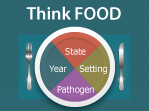
The CDC has updated their online foodborne illness outbreak investigation tool! The Foodborne Outbreak Online Database Tool (FOOD Tool) allows the user to search the outbreak database by state, food, ingredient, year, location of food preparation, and organism. The FOOD Tool also provides the case information related to the outbreak, so users can see the number of affected persons, hospitalizations, deaths and laboratory-confirmed organisms. This database pulls from CDC’s Foodborne Disease Outbreak Surveillance System (FDOSS) and allows users to not only look at data and trends over time, but also compare their cases to other outbreaks.

Syrian Refugee Resettlement and Why We Should Be Letting Them All In 
Dr. Trevor Thrall, one of our amazing GMU Biodefense professors, has written a piece for The Atlantic on the importance and benefits of taking in all Syrian refugees. Dr. Thrall discusses the limitations of addressing the root cause of the Syrian conflict and how the US and its European allies should take in refugees. Discussing the military alternatives to the Syrian crisis, he states, “going in militarily is not the answer, then. Instead, those civilians under threat should get out. Refugees typically receive support in the countries to which they flee, but the vast numbers involved in this case threaten to overwhelm Turkey, Jordan, and Lebanon, which have so far accommodated the vast majority of the outflow.” Dr. Thrall points out that while resettlement would cost a substantial amount of money, it would cost far less than military intervention and you simply can not ignore the moral superiority in aiding refugees.

Chipotle’s Bad Tomatoes Came From Nation’s Largest Field Producer
To our readers in Minnesota, did you happen to eat at a Chipotle in August? If so, we hope you weren’t one of the affected individuals that contracted Salmonella Newport as a result of contaminated tomatoes. The Minnesota Department of Health investigated the 64 cases resulting from this outbreak, however it was just released that the contaminated tomatoes were actually supplied by Six L’s Packing Co (doing business as Lipman Produce), which is actually one of the largest tomato suppliers in the US. Packing 15 million boxes of tomatoes this past year, Lipman was later dropped as a supplier by Chipotle after learning of the source of contaminated produce. The tomatoes were removed but it’s estimated that during the window of exposure, roughly 560,000 people consumed Chipotle. The good news is that we’re out of the incubation period, so if you happened to eat at a Minnesota Chipotle, you’re in the clear.

Stories You May Have Missed:

  • 80 Illnesses Linked to Shigella Outbreak; CA Seafood Restaurant Closed –  Mariscos San Juan in San Jose, CA is currently closed after the Santa Clara County Health Department connected a recent outbreak of Shigella to their food. While the exact source hasn’t been identified, over 93 people were sickened in relation to contaminated food at the restaurant.
  • Subway to Phase Out Poultry Products Raised With Antibiotics–  On Tuesday, Subway Restaurants announced that they will be transitioning to only serve poultry products that have been raised without antibiotics by early next year. Other chain restaurants, like Chick-fil-A and Chipotle, are jumping on the train to phase out chicken and turkey products that were raised with antibiotics.
  • Scottish Nurse and Ebola Complications – Pauline Cafferkey continues to battle post-Ebola complications. Reports last week noted neurological issues and it was recently reported that she has meningitis after the virus persisted in her brain and CSF after her initial recovery. Ongoing research is looking into the long-term effects of the disease as the West African outbreak was the largest in history and researchers have never had the opportunity to look at chronic issues associated with disease recovery.

Pandora Report 10.16.2015

What a busy week in the world of biodefense! First, let’s give a round of applause for Global Handwashing Day (and now, go wash your hands!). This week we saw a nurse from the UK experience Ebola-associated complications months after her recovery. The CDC released a report stating that 17 states exceeded their recommendations for Ebola screening/monitoring and a recent study discussed vaccination rates and herd immunity. Let’s not forget that we’ve got another segment on 2016 Presidential candidate chatter on nonproliferation, a call for papers, and an open house on GMU’s Master’s program. Grab your morning coffee/tea and let’s explore this week’s biodefense news!

Global Handwashing Day 
Global Handwashing Day was Thursday, October 15th, but really we should be celebrating it every day! It may seem like a simple thing but the truth is that hand hygiene is one of the most important things you can do to prevent the spread of infection. Whether it’s a hospital-acquired infection or avoiding illness in the workplace, hand hygiene is the first line of defense. The WHO estimates that hand hygiene, just in healthcare, saved millions of lives in the last years. The CDC even calls it the “do-it-yourself” vaccine – five simple steps (wet, lather, scrub, rinse, dry) to help prevent the spread of infections. Many people think it’s a small or “easy” thing, but coming from an infection preventionist, it’s the small things that make the biggest difference. You’d be surprised how many organisms we carry around on our hands and on fomites, so using alcohol-based hand sanitizer or washing with soap and water is the only way to get rid of those. University of Arizona professor, Dr. Gerba, (we lovingly referred to him as Dr. Germ – funny enough, he even gave one of his children the middle name of Escherichia!) has focussed much of his research on the household and public objects we may not realize are covered in germs. Perhaps the most important take-away from Global Handwashing Day isn’t just its importance in healthcare, but its role as an important part of disease prevention everywhere. In the U.S.  we’re fortunate to have access to the resources that allow us to have phenomenal hand hygiene practices however, it’s the behavior we tend to fall short on. From today forward, I encourage you to make a personal decision to be vigilant in hand hygiene.

Last Call for Papers – Women’s Health in Global Perspective!
Papers sought for a special issue and workshop of World Medical & Health Policy on “Women’s Health in Global Perspective,” to contribute to understanding and improve policy related to women’s health and wellbeing.  Forces ranging from the economic to the climactic have human repercussions whose genesis and solutions demand consideration of their global context.  A wealth of recent research and inquiry has considered the particular plight of women, who often suffer disproportionately from lack of education, compromised nutrition, poverty, violence and lack of job opportunities and personal freedom.  The Workshop on Women’s Health in Global Perspective will consider the broad ranging social determinants of health on a global scale that importantly influence health outcomes for women everywhere, which in turn has implications for economic, political and social development.
Abstract submission deadline (250 words): October 16, 2015 Contact: Bonnie Stabile, Deputy Editor, bstabile@gmu.edu
Notification of selected abstracts: November 13, 2015

Presidential Candidates on Nonproliferation Part II
GMU’s Greg Mercer has put together a wonderful second part to his series on one of our favorite topics (nonproliferation) and what the 2016 presidential candidates are saying about it. Check out Greg’s review of these candidates’ stance so we can track how they might change over the course of the election.

west-africa-distribution-map
Source: CDC

Updates and Mapping Ebola
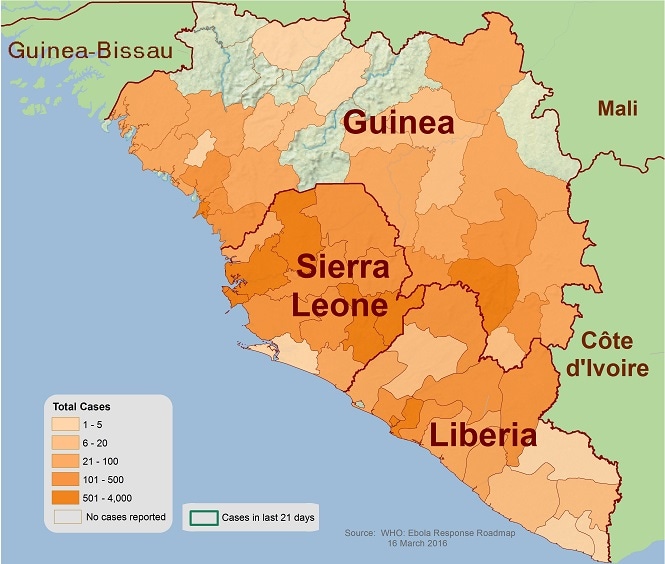
BBC recently published a nice overview of the Ebola outbreak in West Africa. Since the first case 18 months ago, it has been a whirlwind, in more ways than one, for those of us in the public health/global health security world. Cheerfully, the outbreak region has officially gone two weeks without a new case! Unfortunately, Pauline Cafferkey, the Scottish nurse who was treated and recovered from Ebola in December of 2014, is in critical condition due to a late Ebola-related complication. It was just released that her complications are neurological, including severe central nervous system (CNS) disorder and that the virus was detected in her spinal fluid. Scottish public health officials did identify 58 close contacts and offered them the SV-EBOV vaccine.

Master’s Open House
Learn more about the GMU School of Policy, Government, and International Affairs Masters’ programs on Wednesday, October 21, 2015 at 6:30pm at our Arlington Campus, Founders Hall, Room 126. This informational sessional will discuss our Master’s programs ranging from Public Administration, Biodefense, Political Science, Health and Medical Policy, etc.

Imported Measles and Need for Vaccination –This past week at the IDWeek 2015 meeting, scientists reported on a study reviewing measles vaccination rates in the US and susceptible children in relation to the number of measles cases that have occurred. They noted, “this analysis highlights the need for high measles vaccination coverage to support population-level immunity and prevent reestablishment of indigenous measles transmission in the United States.” The Daily Beast also incorporated this into an article on diminishing herd immunity and anti-vaxxers.

Avian Influenza Vaccine Added to National Veterinary Stockpile
APHIS (United States Department of Agriculture’s Animal and Plant Health Inspection Services) awarded contracts to two companies to ensure manufacturing of the vaccine for avian influenza. The goal is to strengthen the Agency National Veterinary Stockpile. “This action is being taken to develop the Agency’s National Veterinary Stockpile., and does not signal a decision to vaccinate for highly pathogenic avian influenza (HPAI). While APHIS has not approved the use of vaccine to respond to HPAI, the Agency is preparing to ensure that vaccine is available should the decision be made to use it during a future outbreak.”

Stories You May Have Missed:

  • International Infection Prevention Week is next week! October 18-24, 2015 will celebrate the importance of infection prevention and control in healthcare. Let’s celebrate by not just washing our hands, but also considering all the small ways we can prevent the spread of germs in our homes and workplaces!
  • Salmonella Cucumber Outbreak – The CDC has released new data on the Salmonella Poona outbreak related to imported Mexican cucumbers. As of October 14th, there have been 757 people infected across 36 states and 4 deaths related to the outbreak.
  • DHS Wants to Revive Terrorism Alert System – In wake of the attacks in Chattanooga, President Obama’s security officials are initiating a review of the nation’s terrorism alert system to support what many consider a growing threat of domestic attacks. DHS wishes to revise and restart the National Terrorism Alert System to better respond to these evolving attacks.

Pandora Report 10.9.15

Happy Friday! Since we’ve made it through Hurricane Joaquin, let’s celebrate with some biodefense news by way of air defense, Ebola, some amazing original work from the GMU Biodefense clan, and all the fun in between. Fun fact: On October 8, 2001, President George W. Bush established the Office of Homeland Security. Let’s start your weekend off right with some zombies, shall we?

Zombies & Air Defense?
With Halloween around the corner and The Walking Dead about to premiere, it’s time for some zombies – Pentagon style! Ever heard of JLENS? This $2.7 billion radar blimp was initially designed to act as an early warning system for low-flying weapons, drones, etc. Unfortunately, this system has been plagued with problems (pun intended) as it failed to detect the low-flying aircraft piloted by Florida postal worker, Douglas Hughes. We’ll let that slide since JLENS wasn’t deemed operational that day but that hasn’t stopped many from calling it a “zombie” program, meaning it’s “costly, ineffectual, and seemingly impossible to kill”. Check out the LA Times investigation into whether this defense technology is really “performing well right now” as claimed by Raytheon.

2016 Presidential Candidates on Nonproliferation- Part I

GMU’s Greg Mercer has churned out another fascinating commentary in a new series related to what 2016 presidential candidates are saying about nonproliferation. His series will pull together candidate stances and comments to take an in-depth look into the role nonproliferation is taking in this race. Greg notes, “Lucky for us though, there’s been a major nonproliferation news event to drive the foreign policy debate: the Iran nuclear deal.  So this is a rundown of what’s been said and being said about nonproliferation and WMD policy in the 2016 election.” This week we’ll be looking at the Republican Party, so make sure to check in over the next few months to see how everyone’s stance has changed or strengthened.

Crimean-Congo Hemorrhagic Fever Spike in Pakistan
Pakistan is currently seeing a spike in their cases of CCHF with the most recent death of a patient in Quetta at the Fatima Jinnah Chest and General Hospital. The death toll is now 3 in 3 days and a total of 15 patient mortalities this year. There are 9 other CCHF patients under observation and treatment at the regional hospitals. The WHO’s Diseases Early Warning System (DEWS) in Pakistan tracks these seasonal spikes in hopes to also prevent its spread. The concerning aspect is the high amount of deaths this year so far when compared to other years.

Iran’s Shifting Preference?
How lucky are we to have two amazing GMU Biodefense commentaries this week? Scott McAlister is discussing the Iranian nuclear deal and the potential consequences. He hammers out a topic we biodefense folks are all too familiar with – dual-use and the hiding-in-plain-sight reality of so many programs. Scott points out that, “the scary thing about biological and chemical weapons programs is their ability to hide in plain sight.  Due the dual use of much of today’s biotechnological advancements, an offensive weapons program can be disguised as a facility to create vaccines or research centers for diseases with minimal effort.” Take a look at his notes on nuclear weapon capabilities and Iranian perspective on biological weapons.

Tacit Knowledge & Biological Weapons Proliferation
On a scale of 1-10, having your research cited during a meeting of the State Parties to the Convention on the Prohibition of Biological Weapons, is pretty much a 12. What can we say, GMU Biodefense professor, Dr. Sonia Ben Ouagrham-Gormley, did just that! At the meeting of experts in August, the State parties met to discuss the field of science and technology while emphasizing tacit  knowledge in relation to bioweapon proliferation. When discussing tacit knowledge, the U.S. noted at the conference, “the concept of communal or collective tacit knowledge has been explored extensively, particularly in the work of Donald Mackenzie and Graham Spinardi, who examined its role in the context of nuclear weapons creation, and Kathleen Vogel and Sonia Ben Ouagrham- Gormley, who examined it with respect to biological weapons creation.” During this meeting, the role and relevance of tacit knowledge as a risk modulator was heavily discussed, pointing to its corresponding role of increasing the risk of bioweapon proliferation.

Bioweapons for Dummies?
Speaking of tacit knowledge and the rise of the biotechnology revolution… Zian Liu from the Bulletin of the Atomic Scientists goes through the five steps of building a biological weapon to address the barriers to weaponization. Broaching the topic of “biohacking”, Zian points to the concern within the biodefense industry related to synthetic biology and fourth generation bioweapons. From ordering the synthetic genes to recently published research that discusses the developments of genetic modification, this commentary hits on the very real barriers that a fourth-year bioengeneering undergraduate student identifies -even with the available tools. Between the need for increased regulations on synthetic DNA and the dual-use concerns, Zian notes that “novice biologists are not likely to construct advanced weapons any time soon.”

Screen Shot 2015-10-09 at 9.34.50 AM

Stories You May Have Missed:

  • Guinea outbreak region goes a full week without a new Ebola case! We’re all holding our breaths in hope this means the outbreak is nearing an end in this hard-hit region. Sierra Leone has reached 3 weeks (a full incubation period) of no new cases and the last healthcare worker infection was back in August. The WHO and local public health workers are still maintaining door-to-door case finding efforts and contact tracing.
  • PPD Awarded Contracts with US Army & BARDA – Pharmaceutical Product Development (PPD) was just awarded two US government contracts to address health outcomes in armed forces and test the efficacy of the national strategic stockpile’s supply of avian influenza vaccine.
  • Findings of the 7th WHO Ebola Emergency Committee Meeting – Last week this committee met to discuss the ongoing outbreak in West Africa. They provided updates and furthering advisement regarding the disease and international travel as 34 countries “continue to enact measures that are disproportionate to the risks posed.”

Pandora Report 10.2

All this rain and grey weather (at least in DC) makes us want to curl up with a good book and luckily, we’ve got just the reading list! This week we’re sharing some top-notch work by our phenomenal faculty and alumni for you to enjoy. Earlier this week, straight out of a James Bond movie, Elon Musk presented Tesla’s Model X and its Bioweapon Defense Mode. Google had its 2015 Science Fair and a pretty amazing high school student took home top honors for her work on Ebola. Did I mention Kansas is prepping for the zombie apocalypse? Needless to say, there was a lot going on this week in the world of biodefense, so let’s venture down the rabbit hole….

 Zombie Preparedness Month Starts for Kansas 
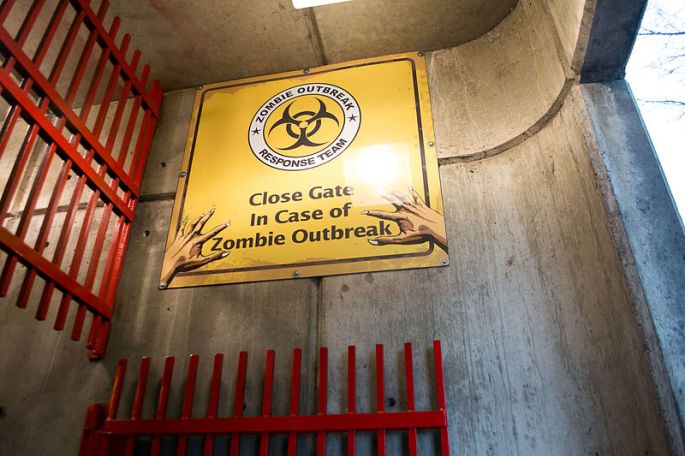
I’m thinking we may need to take a class trip to Kansas since Governor, Sam Brownback, will be signing a proclamation to officially designate October as “Zombie Preparedness Month”! Brownback’s rationale is to emphasize preparedness in any form, stating, “If you’re prepared for zombies, you’re prepared for anything. Although an actual zombie apocalypse will never happen, the preparation for such an event is the same as for any disaster: make a disaster kit, have a plan, and practice it.” During Zombie Preparedness Month, state emergency management services will have activities and information for residents to help get their preparedness on. They’ll also be using social media to engage people people on these topics. The one thing we’ve learned in biodefense, Gov. Brownback, is to never say never!

Connecticut Teen Wins Google Science Award By Developing Affordable Ebola Test
High school junior, Olivia Hallisey, just took home the Google Science Fair top prize for developing an affordable and easy Ebola test in her project, “Ebola Assay Card”, which quickly (we’re talking 30 minutes quick!) detects the virus and doesn’t require refrigeration. Each test only costs $25 and picks up antigens on photo paper. Hallisey summarizes, “In this new device, that is stable and stored at room temperature, 30µl drops of water were used to dissolve silk-embedded reagents, initiating a timed-flow towards a center detection zone, where a positive (colored) result confirmed the presence of 500pg/ml Ebola(+)control antigens in 30min, at a cost of $25,” Hallisey hopes this project will encourage other girls to pursue their passions in science. Hallisey is truly an inspiration and we tip our hats to her passion for solving world problems while encouraging her peers!

Let’s Talk Dual-Use!
Come listen and chat with Dr. David R. Franz, former commander of USAMRIID, about balancing research and regulations when it comes to dual-use!
Date & Time: Monday, October 5, 2015, 4:30-6pm
Location: Hanover Hall, L-003 George Mason University, Fairfax, VA, see map

​Dr. Franz was the Chief Inspector on three United Nations Special Commission biological warfare inspection missions to Iraq and served as technical advisor on long-term monitoring.  He also served as a member of the first two US-UK teams that visited Russia in support of the Trilateral Joint Statement on Biological Weapons and as a member of the Trilateral Experts’ Committee for biological weapons negotiations.  He previously served as member of the National Science Advisory Board for Biosecurity (NSABB). Dr. Franz currently serves on several committees including the National Academy of Sciences Committee on International Security and Arms Control and the National Research Council Board on Life Sciences. Dr. Franz is a leader in the areas of cooperative threat reduction and health security and an expert in the development of U.S. regulations for biological threat reduction and biological security.  Dr. Franz will discuss the history and current debates related to U.S. and international regulations for select agents, dual use research of concern, and gain-of-function experiments.

1977 H1N1 Influenza Reemergence Reveals Gain-of-Function Hazards
Dr. Martin Furmanski discusses the gain-of-function (GoF) research hazards in relation to the 1977 H1N1 strain and it’s laboratory origins. Highlighting a previous article on the GoF debate, Dr. Furmanski notes that “separating the risks of vaccine development from those of basic GoF research is inappropriate, because GoF research seeks to discover antigenic and genomic changes that facilitate human-to-human transmission and/or augment virulence, with the aim of preemptively producing vaccines.” He also notes that while the 1977 H1N1 epidemic originated in a lab and it’s release was unintentional, the culprit laboratory matters little in the GoF debate.

Define Acceptable Cyberspace Behavior
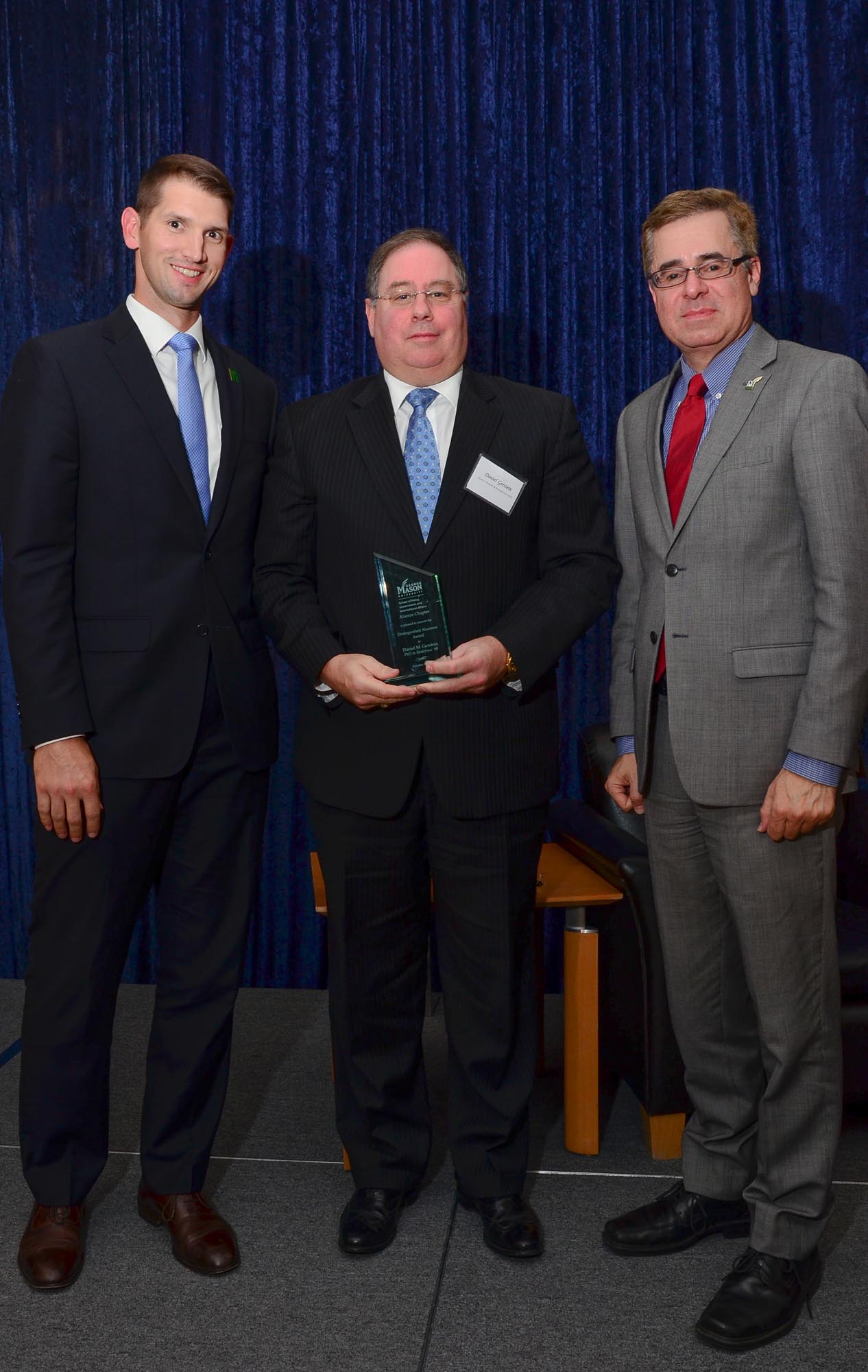
GMU Biodefense alum, Dr. Daniel M. Gerstein, discusses the US-China cybersecurity agreement and the Friday announcement between Chinese Premier Xi Jinping and President Barack Obama. The agreement highlights the mutual desire to prevent cybertheft of business secrets. Dr. Gerstein emphasizes that while this agreement is a step in the right direction, it points to larger preparedness and response capability gaps. He notes, “So while a U.S.-China agreement is a welcome step, it also underscores the greater issues facing the United States, and indeed the international community, in this largely ungoverned space.” Dr. Gerstein highlights the necessity to define cyberspace boundaries, especially as there are delays in DHS security system deployments while US vulnerabilities continue to develop.

Implementation for the US Government Policy for Institutional Oversight of Life Sciences Dual Use Research of Concern
As of September 24, 2015, all institutions and USG funded agencies are now required to comply with the policies. Agencies now must have “a mechanisms in place to evaluate research that is potentially Dual Use Research of Concern (DURC).” Institutions must also organize an Institutional Review Entity (IRE) to review and manage compliance with these requirements.

Dr. Sonia Ben Ouagrham-Gormley’s  new book, Barriers to Bioweapons, received glowing reviews in the latest issue of Perspective on Politics. Her work, which is a staple for biodefense courses, and particularly this text, focusses on the perception of risk and lethality of bioweapons while addressing the realities of these assumptions. Ouagrham-Gormley discusses the key role of tacit versus explicit knowledge in the development and dissemination barriers for bioweapons. “The author identifies important factors internal to a weapons-development program- talented individuals and cohesive groups, corporate culture, communities of practice, organization structure- as critical nodes or ‘reservoirs’ of knowledge that must be configured to optimize the sharing of ideas and information.” The case studies of Iraqi and South African programs, as well as Aum Shinrikyo, lay the foundation for her points on the role of internal and external variables that can hinder or help a bioweapons program. Whether you’re reading  it for class (GMU Biodefense folks, I’m looking at you!) or you’re looking to brush up on nonproliferation, this book is a well-written and captivating necessity to understand bioweapon development. Did I mention how awesome the cover is?
Our very own GMU Biodefense PhD alum, Dr. Denise N. Baken, has a wonderful new book being released – let’s check it out! Al Qaeda : The Transformation of Terrorism in the Middle East and North Africa examines violence and the way it is marketed by the global terrorism industry.  Authors Denise Baken and Ioannis Mantzikos frame the violence discussion through the prism of its use by Al Qaeda, Al Qaeda in the Arabian Peninsula (AQAP) and Islamic State of Iraq and Syria (ISIS).Baken and Mantzikos look at the business parameters of violence –its cost, return on investment, efficiency, and effectiveness; They propose a new approach to that violence. One that looks at violence as a controlled commodity that evolved from Al Qaeda’s initial presentation of future possibilities, AQAP exploited those possibilities and ISIS pushed the boundaries of usability.
Stories You May Have Missed:

Ebola 2014: The Infection Preventionist Perspective

By Saskia Popescu

Unlike many infectious diseases, especially ones with a relatively small number of occurrences, the Ebola outbreak that started in 2014 received a sensational amount of attention. While many in public health keep tabs on outbreaks (thanks ProMed!), it’s not uncommon for the rest of society to remain blissfully unaware unless the bug comes knocking on their front door. I’ve been captivated with Ebola (now called Ebola Virus Disease, or EVD) since a young age after Richard Preston’s sensational book, The Hot Zone got passed to me during a family vacation. The first whispers and later emails of the surging cases in West Africa were pretty astounding in early 2014. Usually these outbreaks occur in small blips and then die off a few weeks or months later. I was working in Infection Prevention & Control at a pediatric hospital at the time and, like many, didn’t think too much about the outbreak pertaining to the US and even if it did, our infection control practices should be able to handle an organism that required Contact/Droplet isolation. I put some updates in our monthly newsletter and continued to watch as West Africa became overwhelmed with EVD.

Like many public health issues, no one really starts hitting the panic button until a disease shows up and you’re scrambling (and trust me, most of the time, you find out retrospectively) to do damage control. The IP (infection prevention) world started to get worried in late July when Emory University Hospital accepted and began treatment the first two EVD patients transported into the US from their field assignments in West Africa. Questions about isolation and practices were asked, but again, no one really worried too much since these patients were flown directly to Emory due to their special infectious disease isolation unit. Suddenly, on September 30th, 2014 a media storm announced that a patient being treated at Texas Health Presbyterian Hospital in Dallas, Texas, was positive for EVD. I can personally tell you, this is when the proverbial crap hit the fan for just about every healthcare facility and IP in the US. A visiting your emergency department, being sent home, and then coming back with a highly infectious disease that few physicians know well enough to suspect, let alone diagnose or treat, is pretty much the equivalent of an IP nightmare. So what could we do?

First, I should say that every hospital with an IP team (most of them have at least one IP) experienced a massive level of panic, anxiety, and stress dedicated to avoiding this, so please, give them a pat on the back. I am fortunate that my IP team consists of not only enthusiastic, ridiculously talented and intelligent people, but they know how to respond to crisis in the flip of a switch. We quickly pulled together a committee to encompass all people that would play a role in the preparedness and response of an EVD patient. Fortunately, by this time, Emory had released an extremely helpful document that discussed their experiences and lessons learned. We met our committee (now filled with people from environmental services, facilities, nursing, medical staff, infectious disease, emergency preparedness, the emergency department, and many others) with this document and everything else the Centers for Disease Control and Prevention (CDC) had on EVD response. For many, the difficulty laid in where do we put this patient, what designated staff will care for them, and what will we do with the waste? You pretty much need to have a specific process for both your emergency department if there is a suspected case, but also a designated wing you can move patients out of and move this potential EVD patient into. Without going too much into detail, one of the trickier components became the PPE (personal protective equipment) and waste process of a potential patient. CDC PPE recommendations were changing almost daily (or at least that’s how it felt). Information was changing so rapidly it was a constant cycle of checking their website, talking with peers, and attempting to update instructional handouts and training tools for staff incase we happened to get a potential patient. Historically, EVD PPE recommendations came from outbreaks in Africa with little access to the equipment and capabilities we’re used to in the US. The ability to intubate a patient or insert a central line opened up a Pandora’s box of potential transmission scenarios, leading to difficulty in establishing a solid PPE process. Acquiring the PPE was another struggle. Our materials management team worked tirelessly to find the ever changing products we would need to not only have PPE kits in our emergency department and urgent cares, but also to sustain care for a patient for several days. The sustainability was a huge concern as staff were changing in and out of PPE every 45 minutes due to heat exhaustion and CO2 build-up from the N-95 masks. Once we were able to obtain the PPE, and this was a constantly changing cycle to follow CDC recommendations, training went into effect. One of the greatest struggles was training enough staff to have a proficient understanding of an extremely complex (and dangerous) process. The unique part about EVD PPE practices is that you utilize a buddy system with a checklist – something healthcare workers are not used to and something we had to remind them of (don’t try and memorize this)! We did several drills involving patients projecting a mixture of chocolate syrup and glitterbug to not only prepare healthcare staff, but also show their cross contamination when doffing the PPE.

Courtesy of USA Today

The PPE struggles were one small piece of this EVD pie. Many IP’s could probably write a novel about the struggles and random problems that came up during this time. Our ridiculously long days were filled with preparedness meetings, educational trainings, hospital-wide communication, worried calls from people and staff (the comical relief of people calling to ask for an EVD vaccine but refusing to get their flu shot showcases the ridiculousness of what we experienced), educating physicians on signs and symptoms, identifying routes for patient transportation, and coordinating surveillance mechanisms like electronic mandatory travel history (from the affected countries) questions and alerts in the intake process of patients from the emergency department or urgent cares. The simple truth is that the US became so panicked and so obsessed with a disease no one really worried about a few months before, the amount of preparedness that was initiated simply couldn’t be maintained for an extended period of time. Emergency departments and hospitals are comprised of some of the most hardworking and intelligent people you’ll ever meet, but I can honestly say, something like what happened in Dallas could’ve happened in any hospital. Healthcare is an imperfect system and while we struggle to make it better and more robust, it always comes down to overworked staff and communication gaps. My experiences as an IP during the EVD 2014 outbreak, while exhausting, were truly eye opening to the ability of our healthcare infrastructure to respond to such an event. It revealed a lot of gaps in our practices and the state of our preparedness, but overall, it highlighted the growing need for better disease surveillance, preparedness, and attention to biosecurity.


Pandora Report 9.11.15

Miss us? Good news – the Pandora Report weekly update is back! With a new school year comes new faces and some organizational change-up. Dr. Gregory Koblentz is now the Senior Editor of Pandora Report and Saskia Popescu (yours truly) will be taking over from Julia Homstad as the Managing Editor. I come from the world of epidemiology, public health, and infection control. Having just started in the GMU Biodefense PhD program, I look forward to venturing down the rabbit hole that is the Pandora Report!

There’s been some pretty fascinating news over the past few weeks, so let’s try and catch up…

Lab Safety Concerns Grow 

Our very own Dr. Gregory Koblentz, director of the GMU Biodefense program, was interviewed by USA Today regarding the lab security issues that now involve mislabeled samples of plague. “Since there are now concerns about the biosafety practices at multiple DoD labs there needs to be an independent review of the military’s biosafety policies and practices,” Koblentz said Thursday. He said the Critical Reagents Program is an important biodefense resource. “It’s crucial that all problems with handling and shipping inactivated samples be resolved quickly so the program can resume its important role in strengthening U.S. biopreparedness.”

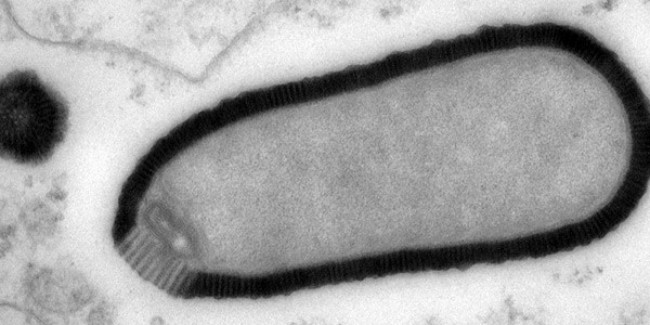
Reviving a 30,000-Year-Old Virus…Isn’t This How the Zombie Apocalypse Starts?

You may recall last year that French scientists stumbled across a 30,000-year-old virus frozen in the Siberian permafrost. Considered to be a “giant virus” (doesn’t that give you a warm, fuzzy feeling inside?), this is actually the fourth ancient, giant viral discovery since 2003. The new plan is to try to revive the virus in order to better study it.

Dr. Claverie told Agency France-Presse, “If we are not careful, and we industrialise these areas without putting safeguards in place, we run the risk of one day waking up viruses such as smallpox that we though were eradicated.” Given the recent concerns over biosafety lab specimen transport, we’re all curious to see how this new organism, coined “Frankenvirus”, turns out!

Cucumbers and A Multi-State Salmonella Outbreak

CDC updates regarding the Salmonella Poona outbreak reveal the brevity of the potentially contaminated product. As of September 9th, there have been two deaths, 70 hospitalizations, and 341 confirmed cases across 30 states. Perhaps the most worrisome is that 53% of affected individuals are children under the age of 18. While the produce company, Andrew & Williamson, issued a voluntary recall of their “slicer” or “American cucumber on September 4th, there have been 56 additional cases reported since then. Isolated samples from cucumbers in question were found in Arizona, California, Montana, and Nevada. The California Department of Public Health issued a warning and pictures of the affected cucumbers. 

Stories You May Have Missed:

Pandora Report 8.23.15

We’re starting this update with some big blog news, are you sitting down? This will actually be the last weekend update…at least for a while. We’re in discussion with how to proceed with the blog and social media for GMU Biodefense. Please check back at pandorareport.org and on twitter @PandoraReport for updates as they happen.

Looking back, there have been times since I’ve started as managing editor that the news has been sad, or, frankly, downright depressing. So, for this edition, lets focus on some of the good in the world. The first story comes from (probably the nicest human on the face of the Earth) Jimmy Carter. We’ve also got good news about Polio. Then, of course, we’ve got stories you may have missed.

Thank you for reading… and don’t forget to wash your hands!

Jimmy Carter Wants to See the Last Guinea Worm Die Before He Does

This week, former President Jimmy Carter announced that his cancer had spread to his brain. Though many members of his immediate family died from cancer, Carter said “I’m perfectly at ease with whatever comes.” Rather than fear or sadness over his diagnosis, Carter instead focused on meeting one of the long-term goals of his nonprofit organization—the Carter Center—the eradication of Guinea worm. In 1986 when the Carter Center began its work there were 3.5 million cases of across 21 countries. In 2014 there were 126 cases; today, there are 11.

The Huffington Post—“When Guinea worm has been eradicated, it will be only the second time in human history that a disease has been totally wiped out. The first, smallpox, was eradicated in 1977, according to the World Health Organization. Experts from the Centers for Disease Control and Prevention estimate that Guinea worm will meet the same fate — a final piece in Carter’s legacy.”

WHO Declares Africa Free of ‘Wild’ Cases of Polio

According to the World Health Organization, Africa has been free of wild cases of Polio since July. This doesn’t mean that there are no cases on the continent; there is still ongoing work in Somalia, Kenya, and Ethiopia, but transmission of the illness has been interrupted. The director of the Polio Global Eradication Initiative has said that even though Africa is now free of wild cases, there are still challenges when it comes to eradication, for example, surveillance of the disease.

io9—“The goal of the Initiative has been to interrupt the natural transmission (wild cases) of the virus, which seems to be the case so far. The next step, according to WHO, will be to continue to monitor the region for additional cases. If none appear in the next two years, the continent will be certified Polio-Free.”

Stories You May Have Missed


Image Credit: Commonwealth Club