Dr. Michael Smith at the September BPS Talk

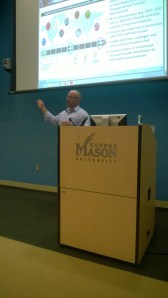
WP_20140917_004On Wednesday, September 17, Dr. Michael Smith, Director of the Department of Defense’s Critical Reagents Program (CRP) was the first speaker in the GMU Biodefense Program’s Biodefense Policy Seminars for Fall 2014. Dr. Smith’s spoke on the “Ebola Virus Epidemic 2014: Where the Rubber Met the Roadmap.”

Dr. Smith discussed the role of the Critical Reagents Program (CRP) in DoD’s biodefense program and its role in the West African Ebola outbreak. CRP is responsible for the characterization, production, and distribution of reagents and consumables employed on deployed diagnostic and detection platforms and those under development by other programs. The CRP provides standardized assays which can detect the presence of certain biological agents such as bacteria or viruses to the U.S. Government, companies with U.S. government contracts, and foreign governments. The CRP also maintains a large collection of microbial cultures, antibodies, and antigens for research and development purposes.

During the 2012 Ebola outbreak in Uganda and Democratic Republic of Congo, Dr. Smith and his team learned that the assay they had developed to test for the Ebola virus did not detect that specific strain of virus effectively. Learning this enabled the CRP to re-work their testing, which has been of great benefit during this 2014 outbreak. When Ebola virus emerged in Guinea—the first time the disease had appeared in West Africa—CRP was able to provide the new tests—free of charge—to neighboring Sierra Leone before the first case emerged in that country.

Given Sierra Leone’s almost complete lack of public health laboratory capacity, diagnosis and treatment had been based solely on clinical judgment. Since the initial stages of Ebola virus disease are similar to the early signs of other diseases such as malaria, basing diagnosis on clinical presentation is unreliable. The pre-positioning of advanced diagnostic systems in Sierra Leone enabled the country to identify patients much more quickly than during previous Ebola outbreaks.

While the use of the new assays has enabled real time confirmation of virus, Dr. Smith discussed other obstacles to getting the outbreak under control. The medical system in Sierra Leone relies on family members providing patients with food and supplies at hospitals that have no electricity or air conditioning. In situations like this, many patients may stay home rather than going to a clinic or isolation unit. Because of this, it is very possible that the numbers of infections and deaths could be significantly higher than estimated. According to reports cited by Dr. Smith, an estimated 1 in 3 individuals infected with Ebola are not seeking medical attention. In densely populated cities in West Africa, this provides an opportunity for the unchecked spread of the disease.

Despite these obstacles, however, the relationships that CRP has forged on the ground in Sierra Leone to improve laboratory capacity and the accuracy and timeliness of diagnostic tests has allowed CRP to expand its fight against Ebola. CRP has been granted access to clinical data and samples from patients who have survived the disease. CRP and its interagency partners hope that the blood and sera of those patients can be used to create new therapeutics or a vaccine for the Ebola virus.


The GMU Biodefense Policy Seminars are monthly talks that are free and open to the public and feature leading figures from the academic, security, industry and policy fields discussing critical issues in biodefense. For more information, please visit https://pandorareport.org/events/biodefense-policy-seminar-series/.
Dr. Gregory Koblentz discusses Ebola on CTV News

In case you haven’t watched the news today (or looked at a newspaper, or been on the internet), yesterday, President Obama pledged he would send 3,000 American military personnel to West Africa in order to help with the Ebola outbreak which is continues to ravage that region.

George Mason University Biodefense Deputy Director, Dr. Gregory Koblentz was on CTV News this morning to discuss the continuing outbreak and reaction to the President’s decision.

Watch Dr. Koblentz’s interview here

If you’re interested in learning more about the West African Ebola outbreak, join us tonight at 7:00 for the September Biodefense Policy Seminar featuring Dr. Michael Smith, of the Department of Defense, who will discuss, “Biosurveillance and the Atypical Epidemic: The 2014 West African Ebola Epidemic”. The talk will be held at the GMU Fairfax Campus in Research Hall room 163.

Pandora Report 9.13.14

This week we look at a report that claims DHS is not prepared for a pandemic and information about Chemical Weapons in Syria, still. We also have an Ebola update, and if you’re interested in learning more about the West African outbreak, join us Wednesday for our September Biodefense Policy Seminar!

Have a great weekend!

Homeland ill-prepared for Pandemic, Doesn’t Even Have Enough Drugs to Protect Secret Service

In a recently released report, the Office of the Inspector General claims that “the Department of Homeland Security may not be able to provide sufficient pandemic preparedness supplies to its employees to continue operations during a pandemic.” DHS, however, has disagreed with much of the report claiming it misrepresents the agency’s preparedness for an outbreak.

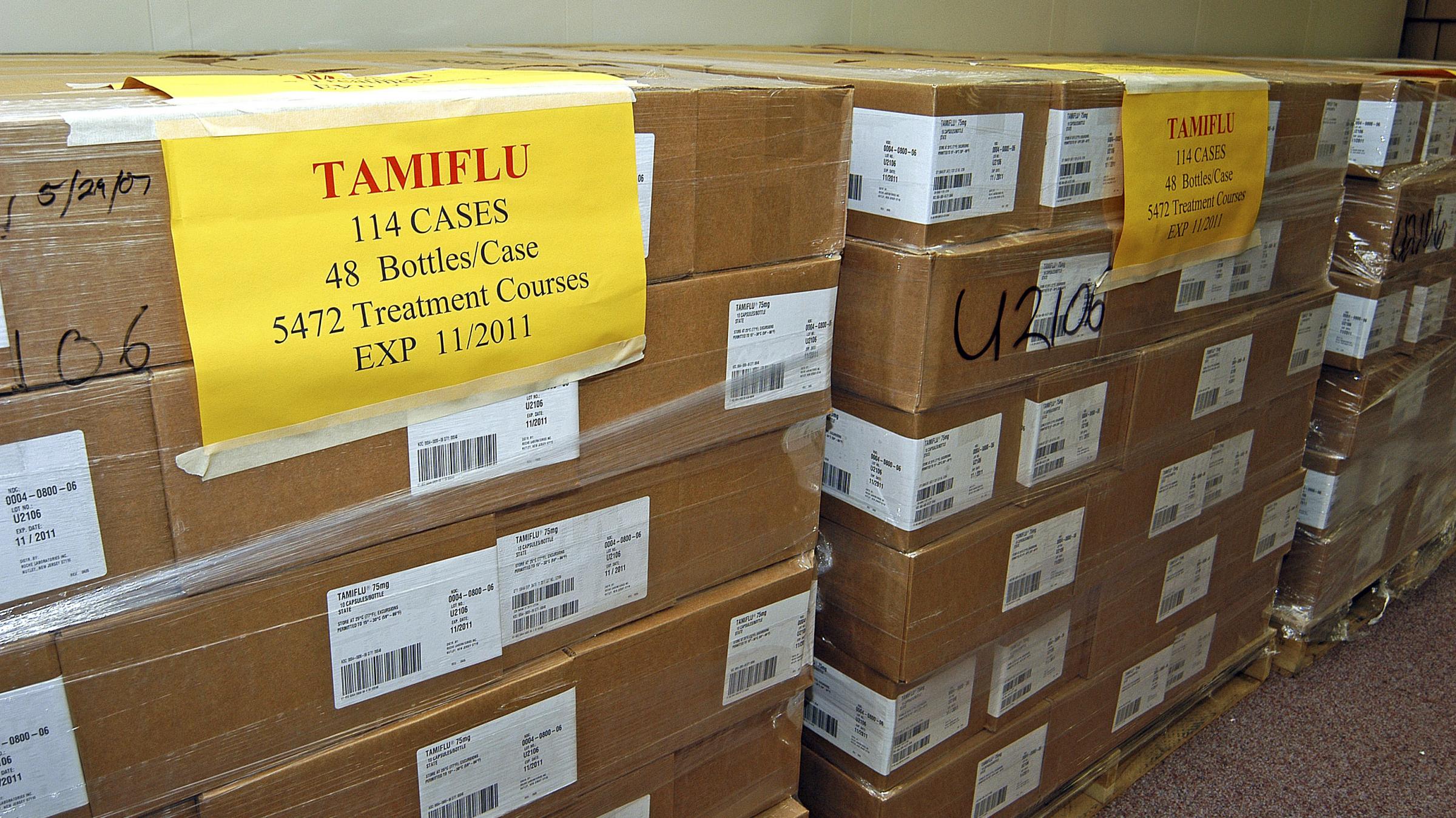
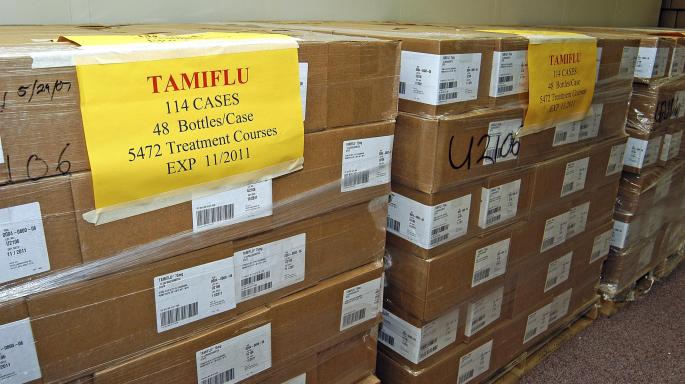
The Washington Times—“One of the biggest problems, investigators said, is that most of the stockpiles are of antiviral drugs that are expiring. By the end of 2015, the IG said that 81 percent of Homeland Security’s stockpiled antiviral medication will be past its shelf life. In addition, 84 percent of the agency’s stock of hand sanitizer has already expired, some batches by as long as four years, inspectors said.”

Watchdog Says Chlorine Gas Used as a Chemical Weapon in Syria

The Organization for the Prohibition of Chemical Weapons reports that chlorine gas was used “systematically and repeatedly” as a weapon in northern Syria earlier this year. U.S. officials say that the Assad regime is the only force capable of launching such an attack. Even after the destruction of Syria’s chemical weapons stockpiles, chlorine is not a forbidden substance under the CWC. However, the use of any chemical as a weapon is prohibited by the CWC. This news comes among concerns that any hidden weapons stockpiles may fall into the hands of terrorist or extremist groups, like ISIS

The Wall Street Journal—“The OPCW team traveled to the sites of attacks and interviewed victims, doctors and witnesses. According to the report, victims’ symptoms and the effect of the gas led the mission ‘to conclude with a high degree of confidence that chlorine, either pure or in mixture, is the toxic chemical in question.’”

This Week in Ebola

Another American Ebola patient was sent to Emory University in Atlanta for treatment and American Ebola survivor Dr. Kent Brantly donated blood to the American patient, Dr. Rick Sacra, who is being treated in Nebraska. The thought is that Dr. Brantly’s blood will help confer passive immunity to Dr. Sacra. On last Sunday’s Meet the Press, President Obama pledged U.S. military assistance in setting up isolation units and providing security for health workers in West Africa but House Republicans indicated they would provide less than half of the White House’s requested funding for fighting Ebola. The Bill and Melinda Gates Foundations has pledged to contribute $50 million to support emergency efforts to contain the outbreak in West Africa. There were reports this week of a U.S. air marshal who was injected with a syringe at the Lagos Airport in Nigeria. Though it appears that the syringe was not infected with Ebola, it has caused fears that Ebola could be used as a weapon. All of this comes at a time when disease modelers at Northeastern University predict that as many as 10,000 cases of Ebola could be detected by the end of the month and there have been 60 cases resulting in 35 deaths from the Ebola outbreak in Congo.

Image Credit: WGBH News

Pandora Report 9.6.14

This week we cover dengue in Japan, dog flu in NYC, more forgotten lethal specimens in government labs, and of course, an Ebola update.

Canine Influenza Cases Spreading in Manhattan

Flu season is rapidly approaching, and evidently, it doesn’t only affect humans. Veterinarians in Manhattan have reported cases throughout the borough. The cases are likely due to dogs playing with other infected dogs at parks and dog runs. Vets warn owners to watch for coughing dogs and if they are present to take their dog to another area. The good news is, just like their human counterparts, dogs, too, can receive a flu vaccine.

The Gothamist—“According to the ASPCA, symptoms include coughing, sneezing, difficulty breathing, fever, lethargy and loss of appetite; most dogs will recover within a month, but secondary infections like pneumonia can be problematic.”


New Cases of Dengue Fever Should be a Wake-Up Call for Japan

As many as 70 people in Japan have been infected with Dengue fever—traditionally, a disease found in tropical climates—the country’s first outbreak since 1945. The diagnoses prompted authorities to fumigate an area of Yoyogi Park in Tokyo’s Shibuya Ward, which was the apparent source of the infections. Dengue fever is transmitted by mosquitos and produces an extremely high fever and pain in the joints. The disease is not transmitted person to person.

The Asahi Shimbun—“The most effective way to deal with a global dengue epidemic is to step up the efforts to exterminate mosquitoes in countries with a large number of patients, especially in urban areas.”


Forgotten Vials of Ricin, Plague, and Botulism found in U.S. Government Lab 

A strong feeling of deja vu hit this week when we learned about yet another case of forgotten vials of dangerous pathogens at U.S. labs. In this case, the containers were discovered during an investigation of NIH facilities after scientists found vials of smallpox earlier this summer. This search discovered a century (!!) old bottle of ricin, as well as samples of tularemia and meliodosis. The FDA also reported they found an improperly stored sample of staphylococcus enterotoxin.

The Independent—“The NIH does have laboratories that are cleared to use select agents, and those pathogens are regularly inventoried, the director of research services Dr. Alfred Johnson said. However, these samples were allowed to be stored without regulation.”


This Week in Ebola

We learned that new cases of Ebola in Democratic Republic of Congo are genetically unrelated to the West African strain and that researchers from the Broad Institute and Harvard are working to sequence and analyze virus genomes from the West African outbreak. Senegal is working hard to manage contacts with the Guinean student who tested positive for the virus in the capital, Dakar. Human trials of an Ebola vaccine continued in the U.S. and are planned to take place in Mali, the U.K., and Gambia. A third American infected with Ebola will return to the U.S. and will be treated at a Nebraska medical containment unit which was built for the SARS outbreak. I read an article that hypothesized that Ebola may be able to be transmitted sexually which could account for a high number of cases, while the Washington Post pointed to the fact that the West Africa outbreak is drawing attention from diseases which are more widespread and kill more people—it’s the Kardashian of diseases. Lastly, CDC Director Dr. Thomas Frieden said that this outbreak of Ebola is “threatening the stability” of affected and neighboring countries, and Dr. Daniel Lucey, of the Georgetown University Medical Center, predicts that the current outbreak “will go on for more than a year, and will continue to spread unless a vaccine or other drugs that prevent or treat the disease are developed.”


Image Credit: Wikimedia Commons

Reston Ebola: NOVA’s Namesake Emerging Infectious Disease

By Chris Healey

Almost 25 years before the 2014 Ebola epidemic began spreading through West Africa – and the resulting treatment of two American Ebola patients on U.S. soil – public health officials responded to an Ebola outbreak inside the U.S.

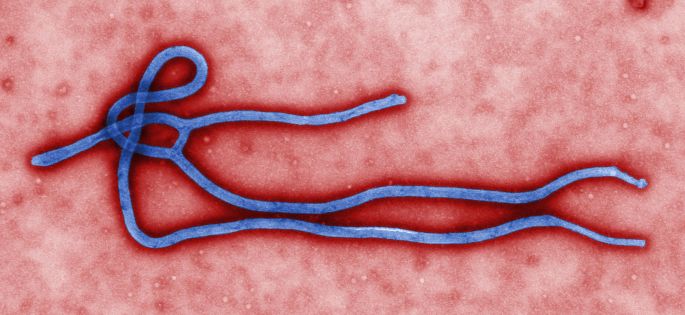
Reston Ebola is the name given to an Ebola species discovered among macaque monkeys in a pharmaceutical research company’s primate quarantine unit in Reston, VA.

In 1989, a veterinarian at Hazelton Research Products, a pharmaceutical research company, contacted the United States Army Institute of Infectious Diseases at Fort Detrick, MD, concerning an unusually high mortality rate among macaques in a shipment from the Philippines. The veterinarian wanted USAMRIID to confirm suspected simian hemorrhagic fever, a viral illness lethal to primates but innocuous to humans. Tests on macaque carcasses unexpectedly showed signs of a deadly filovirus infection – Ebola hemorrhagic fever virus.

Initially, Ebola species Zaire – with mortality rates as high as 90%, and the cause of the 2014 African Ebola epidemic – was implicated as the agent at work. Faced with an unprecedented public health threat, state and federal health agencies converged on the primate quarantine facility in Reston. The Centers for Disease Control and Prevention monitored quarantine facility employees for Ebola symptoms. USAMRIID euthanized primates and sterilized the quarantine facility.

Comprehensive tests later identified the Zaire species identification as an error – Reston Ebola was a new species incapable of infecting humans. However, the enormous public health response was not unwarranted.

Unlike other Ebola species, researchers suspected Reston Ebola demonstrated airborne transmission at the quarantine facility. The longer the virus remained in human presence, the longer it was given opportunities to adapt. If Reston Ebola were to adapt to humans with airborne communicability it would pose a catastrophic public health risk.

Although no quarantine facility employees demonstrated Ebola-like symptoms during the 1989 outbreak, six workers produced Reston Ebola antibodies, meaning the virus elicited an immune response. Reston Ebola’s quick eradication was paramount to ensure that the virus—with its suspected airborne communicability—did not adapt to humans.

Restriction of the 2014 African Ebola epidemic to only a few countries has been attributed to the limited means of Ebola virus transmission. All Ebola species which affect humans are communicable only through direct contact with an infected person or their bodily fluids. Airborne transmission would increase viral spread and undermine containment efforts.


Image Credit

Pandora Report 8.31.14

Fall classes at George Mason have already started and this Labor Day weekend marks the official end of summer. This week, we have stories covering a wide range of topics—an Ebola update (of course), a fascinating article on vaccinia infections acquired through shaving, Haj precautions, and the ISIS “laptop of doom.”

Best wishes for a safe and enjoyable holiday!

Ebola Virus Outbreak Could Hit 20,000 Within Nine Months, Warns WHO

There were many stories this week covering the continuing Ebola outbreak in West Africa. Senegal saw its first (imported) case of the virus this week and has banned flights to and from the affected countries while shutting its land border with Guinea and Nigeria saw its first death outside of the capital city of Lagos. In the Democratic Republic of Congo, where Ebola first emerged in 1976, there have been reported cases of a hemorrhagic gastroenteritis similar to Ebola. I read conflicting accounts this week of the “patient zero” for the Ebola outbreak—a young boy or an older traditional healer. There were reports of some U.S. universities screening students from West Africa for Ebola. There was coverage of a Toronto medical isolation unit ready for patients and information about GlaxoSmithKline’s experimental ebola vaccine which would be tested on humans in the next few weeks.

All of this news came among World Health Organization estimates that this West African outbreak could affect 20,000 people over the next nine months and that half a billion dollars would be needed to stop the spread of the disease.

The Wall Street Journal—“The WHO program will likely cost around $490 million and require contributions from national governments, some U.N. and non-governmental agencies, as well as humanitarian organizations, it said.”

First Reported Spread of Vaccinia Virus Through Shaving After Contact Transmission

This week, reports in the August issue of Medical Surveillance Monthly Report from the Armed Forces Health Surveillance Center covered vaccinia virus infection—the virus used for smallpox vaccinations—within the U.S. Air Force. The infections in the report occurred in June 2014, and affected four individuals.

Infection Control Today—“Over the past decade, most cases of contact vaccinia (i.e., spread of the virus from a vaccinated person to an unvaccinated person) have been traced to U.S. service members, who comprise the largest segment of the population vaccinated against smallpox. Most involve women or children who live in the same household and/or share a bed with a vaccinee or with a vaccinee’s contact. Of adult female cases, most are described as spouses or intimate partners of vaccinees or secondary contacts. Of adult male cases, most involve some type of recreational activity with physical contact, such as wrestling, grappling, sparring, football, or basketball. Household interactions (e.g., sharing towels or clothing) and “unspecified contact” are also implicated.”

Government to Keep Haj Infection-Free 

This week, the Saudi Arabian Ministry of Health announced mandatory measures for Haj and Umrah pilgrims coming from countries with active outbreaks or high rates of infectious diseases. The Health Ministry sent information to embassies outlining health requirements for those seeking pilgrim visas.

Arab News—“‘Although we do not issue Haj visas for pilgrims coming from endemic countries, we will still be monitoring pilgrims coming from other African countries for Ebola symptoms,’ said [Sami] Badawood [Jeddah Health Affairs director.]

He said the ministry would also focus on diseases such as yellow fever, meningitis, seasonal influenza, polio and food poisoning.”

Is the ISIS Laptop of Doom an Operational Threat?

Discovery of a laptop, which has been linked to ISIS, raises new questions about the organization’s plans relating to use of WMD—specifically chemical or biological weapons. Over 35,000 files on the laptop are being examined and has offered new insight into ISIS and their WMD aspirations.

Foreign Policy—“Most troubling is a document that discusses how to weaponize bubonic plague. But turning that knowledge into a working weapon requires particular expertise, and it’s not clear that the Islamic State has it.”


Image Credit: Wikimedia Commons

Pandora Report 8.22.14

Did you see that the destruction of Syria’s most lethal chemicals is now complete? Well, it is! Its good news among so many biodefense stories covering Ebola. I have no interest in making the Pandora Report the “All Ebola, All the Time” newsletter. As such, we will look at one Ebola story as well as stories covering new discoveries in tuberculosis and influenza.

Have a fabulous weekend, and students, enjoy your last one before classes start on Monday!

Tuberculosis is Newer Than Thought, Study Says

A recent study published in Nature reports that tuberculosis originated less than 6,000 years ago and was carried to the new world by seals. Seals! This new research contradicts original timeline and species genesis and some scientists think this study provides more questions than answers.

The New York Times—“In the new paper, the team proposes that humans acquired tuberculosis in Africa around 5,000 years ago. The disease spread to people across the Old World along trade routes. Meanwhile, Africans also spread the disease to animals such as cows and goats. Seals that hauled out onto African beaches to raise their pups became infected. The bacteria then spread through seal populations until reaching South America. Ancient hunters there became infected when they handled contaminated meat.”

Enzyme Holds the Door for Influenza

As the fall season and semester approach, the flu season travels with it. I was delighted to read that Walgreens, in addition to CVS, will now offer seasonal flu shots in their stores. More interesting news about flu came out of Vanderbilt University, too. Researches have investigated enzyme phospholipase D (PLD) and it ability to help the influenza virus escape immune response. Blocking PLD could assist in preventing the flu.

Bioscience Technology Online—“Normally the virus slips into its host cell in the epithelial lining of the lungs through internalized membrane compartments called endosomes. By delaying this process, the researchers propose, PLD2 inhibitors may give the cell’s innate immune response more time to destroy it.”

Patient Checked for Ebola Virus in Sacramento

Internationally, the good news is that quarantines have been set up in Liberia, in attempt to contain the spread of Ebola. The bad news is that they have become fairly violent. Stateside, this week Dr. Kent Brantly and Nancy Writebol were released from Emory University Hospital after recovering from Ebola infections acquired in West Africa.

There was news of a possible case in Northern California. With few details provided as to the patient and transmission route, we learned that there is a patient being tested for Ebola in Sacramento. California Department of Health reported that the cases is low risk but that testing is being done out of “abundance of caution.”

San Francisco Chronicle—“‘In order to protect our patients, staff and physicians, even though infection with the virus is unconfirmed, we are taking the actions recommended by the CDC as a precaution, just as we do for other patients with a suspected infectious disease,” said Dr. Stephen Parodi, an infectious disease specialist at Kaiser Permanente North California. “This includes isolation of the patient in a specially equipped negative pressure room and the use of personal protective equipment by trained staff, coordinated with infectious disease specialists.’”


Image Credit

Image of the Day: CDC Ebola Infographic!

Ebola Infographic CDCOne thing you may not know about me is that I absolutely LOVE CDC infographics!

After this weekend’s events in Liberia, when people were seen carrying out bloody and fluid filled mattresses and other bedding, let’s take a look at how Ebola is actually transferred.

Please post this through your social media connections so we can work on spreading the correct information about the virus.

Pandora Report 8.17.14

Another 12 hours at Dulles Airport on Friday and, fortunately, no new travel alerts. This week we look at TB detecting rats, an experimental Chikungunya vaccine, and the latest from West Africa.

Giant Rats Trained to Sniff Out Tuberculosis in Africa

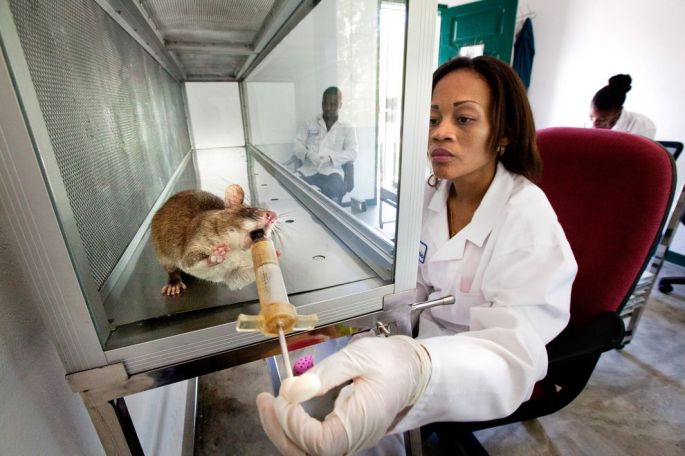
APOPO, the Belgian nonprofit organization known for using rats to sniff out land mines, has been training the African giant pouched rat to detect tuberculosis since 2008 in Tanzania and 2013 in Mozambique. The trained rats are used in medical centers in Dar es Salaam and Maputo to double check potential TB samples. The rats are unable to differentiate between standard and drug-resistant strains of the disease however, the cost of training and maintenance of the rats is significantly cheaper than the new GeneXpert rapid diagnostic tests.

National Geographic—“‘What the rats are trained to do is associate the smell of TB with a reward, so it’s what they call operative conditioning,’ [Emilio] Valverde [manager of the APOPO Mozambique TM Program] said.

It is the same principle applied to detecting land mines, only the rats are trained to recognize the scent of specific molecules that reflect the presence of the tuberculosis germ—not the explosive vapor associated with land mines.”

Experimental Chikungunya Vaccine Shows Promise

Chikungunya, of course, is one of the diseases included in the CDC’s travel alerts, and this week we learned of a promising vaccine for the disease that causes fever and intensely painful and severe arthritis. After the vaccine’s first human trials, the next step is to test in more people and more age groups, including populations where the virus is endemic. The trial leader said that it could be more than five years before a finished vaccine could be offered to the public.

CBS News—“‘This vaccine was safe and well-tolerated, and we believe that this vaccine makes a type of antibody that is effective against chikungunya,’ said trial leader Dr. Julie Ledgerwood, chief of the clinical trials program at the U.S. National Institute of Allergy and Infectious Diseases.”

WHO: Ebola Outbreak Vastly Underestimated

The news from West Africa seems to be getting worse and worse. Earlier in the week there was good news when a new quarantine center opened in Liberia. Then two days later, that same center was destroyed and looted. All of this comes, too, when the World Health Organization has said there is evidence that numbers of cases and deaths are far lower than the actual numbers and MSF has said that the outbreak will take at least six months to get under control.

Al Jazeera—“‘Staff at the outbreak sites see evidence that the numbers of reported cases and deaths vastly underestimate the magnitude of the outbreak,’ the organization said.

‘WHO is coordinating a massive scaling up of the international response, marshaling support from individual countries, disease control agencies, agencies within the United Nations system, and others.’”

Image Credit: James Pursey, APOPO

Ebola’s “Top-Secret” Serum: What Is It? Why Would It Be Kept Secret?

By Chris Healey

The deadliest and most pervasive Ebola outbreak in history is underway in Africa. As of August 8, the World Health Organization reported 1134 confirmed cases of Ebola in Guinea, Liberia, Nigeria, and Sierra Leone with 622 confirmed deaths.

Two Americans, Kent Brantly and Nancy Writebol, contracted Ebola while helping contain the epidemic in Africa. Both were flown to isolation units in Atlanta’s Emory University Hospital after receiving an experimental treatment called ZMapp. Brantly and Writebol’s condition is reportedly improving because of the drug.

ZMapp is the experimental brainchild of several pharmaceutical companies and their collaboration with the U.S. and Canadian governments. It is a combination of three antibodies determined to be the best components of two experimental Ebola treatments: MB-003 and ZMAb.

MB-003 is composed of a monoclonal antibody and an immune system stimulant. The monoclonal antibody binds to Ebola virus surface proteins to form a structure easily recognized as a threat by the host’s immune system. Mimicry allows the immune system stimulant to produce an inflammation-like response without causing tissue damage, serving to amplify immune response without damaging the host.

ZMAb, a combination of mouse-derived antibodies, inactivates Ebola virus surface proteins necessary for host cell entry. If Ebola virus cannot enter a host cell, it cannot cause illness. For higher efficacy, ZMAb antibodies target different parts of the surface proteins, making viral adaptation to the antibodies difficult.

ZMapp attracted much attention because it was used without being tested. Mapp Biopharmaceutical was preparing to enter Phase 1 clinical trials prior to the Ebola outbreak. Use of ZMapp in lieu of clinical trials is permitted by FDA regulations allowing drugs currently, or not at all, involved in clinical trials to be used in extenuating circumstances where no other pharmaceutical is appropriate.

ZMapp is not the first untested pharmaceutical to be used against Ebola in humans. In 2009, a researcher in Germany accidently exposed herself to Ebola virus when she pricked herself with an ebola-contaminated needle during a laboratory experiment. Within 48 hours, she was given an experimental Ebola vaccine never before used in humans. After 21 days, physicians prepared to discharge her from a Hamburg, Germany hospital because she had not developed any symptoms.

It is unclear if the vaccine prevented illness, or if the needle stick simply didn’t infect her with Ebola. Regardless, she produced Ebola virus antibodies after vaccine administration, indicating the vaccine produced an immune response.

When use of ZMapp was first reported, it was hailed in stories circulated by CNN as a “secret” and “top-secret” serum. However, current versions of the story now portray the serum as an “experimental drug.” It is unclear if the original reports of the serum’s secrecy were in error.

However, development of secret therapeutics is not farfetched. Classified treatments could conceivably serve national security interests.

State-sponsored bioweapon programs, for example, could use knowledge of existing therapeutics, such as those kept in the strategic national stockpile, to engineer biological agents resistant to available therapeutics. Such a tactic would cripple U.S. public health response to any weaponized agent. If ZMapp truly was classified, the U.S. may have been protecting the drug’s therapeutic mechanisms from those who would seek to overcome them.

Although withholding treatments would benefit the U.S., it raises ethical concerns. Some could argue treatment sequestration provides little benefit outside the U.S. A novel, effective treatment withheld in preparation for an attack –that may never occur– could be used in the present to treat the sick.

The merits of transparency must be weighed against interests of national security. For ZMapp, if it was classified, two American candidates for the drug were enough to bring it into the public domain.


Image Credit: International Business Times