Pandora Report 9.6.14

This week we cover dengue in Japan, dog flu in NYC, more forgotten lethal specimens in government labs, and of course, an Ebola update.

Canine Influenza Cases Spreading in Manhattan

Flu season is rapidly approaching, and evidently, it doesn’t only affect humans. Veterinarians in Manhattan have reported cases throughout the borough. The cases are likely due to dogs playing with other infected dogs at parks and dog runs. Vets warn owners to watch for coughing dogs and if they are present to take their dog to another area. The good news is, just like their human counterparts, dogs, too, can receive a flu vaccine.

The Gothamist—“According to the ASPCA, symptoms include coughing, sneezing, difficulty breathing, fever, lethargy and loss of appetite; most dogs will recover within a month, but secondary infections like pneumonia can be problematic.”


New Cases of Dengue Fever Should be a Wake-Up Call for Japan

As many as 70 people in Japan have been infected with Dengue fever—traditionally, a disease found in tropical climates—the country’s first outbreak since 1945. The diagnoses prompted authorities to fumigate an area of Yoyogi Park in Tokyo’s Shibuya Ward, which was the apparent source of the infections. Dengue fever is transmitted by mosquitos and produces an extremely high fever and pain in the joints. The disease is not transmitted person to person.

The Asahi Shimbun—“The most effective way to deal with a global dengue epidemic is to step up the efforts to exterminate mosquitoes in countries with a large number of patients, especially in urban areas.”


Forgotten Vials of Ricin, Plague, and Botulism found in U.S. Government Lab 

A strong feeling of deja vu hit this week when we learned about yet another case of forgotten vials of dangerous pathogens at U.S. labs. In this case, the containers were discovered during an investigation of NIH facilities after scientists found vials of smallpox earlier this summer. This search discovered a century (!!) old bottle of ricin, as well as samples of tularemia and meliodosis. The FDA also reported they found an improperly stored sample of staphylococcus enterotoxin.

The Independent—“The NIH does have laboratories that are cleared to use select agents, and those pathogens are regularly inventoried, the director of research services Dr. Alfred Johnson said. However, these samples were allowed to be stored without regulation.”


This Week in Ebola

We learned that new cases of Ebola in Democratic Republic of Congo are genetically unrelated to the West African strain and that researchers from the Broad Institute and Harvard are working to sequence and analyze virus genomes from the West African outbreak. Senegal is working hard to manage contacts with the Guinean student who tested positive for the virus in the capital, Dakar. Human trials of an Ebola vaccine continued in the U.S. and are planned to take place in Mali, the U.K., and Gambia. A third American infected with Ebola will return to the U.S. and will be treated at a Nebraska medical containment unit which was built for the SARS outbreak. I read an article that hypothesized that Ebola may be able to be transmitted sexually which could account for a high number of cases, while the Washington Post pointed to the fact that the West Africa outbreak is drawing attention from diseases which are more widespread and kill more people—it’s the Kardashian of diseases. Lastly, CDC Director Dr. Thomas Frieden said that this outbreak of Ebola is “threatening the stability” of affected and neighboring countries, and Dr. Daniel Lucey, of the Georgetown University Medical Center, predicts that the current outbreak “will go on for more than a year, and will continue to spread unless a vaccine or other drugs that prevent or treat the disease are developed.”


Image Credit: Wikimedia Commons

Pandora Report 8.22.14

Did you see that the destruction of Syria’s most lethal chemicals is now complete? Well, it is! Its good news among so many biodefense stories covering Ebola. I have no interest in making the Pandora Report the “All Ebola, All the Time” newsletter. As such, we will look at one Ebola story as well as stories covering new discoveries in tuberculosis and influenza.

Have a fabulous weekend, and students, enjoy your last one before classes start on Monday!

Tuberculosis is Newer Than Thought, Study Says

A recent study published in Nature reports that tuberculosis originated less than 6,000 years ago and was carried to the new world by seals. Seals! This new research contradicts original timeline and species genesis and some scientists think this study provides more questions than answers.

The New York Times—“In the new paper, the team proposes that humans acquired tuberculosis in Africa around 5,000 years ago. The disease spread to people across the Old World along trade routes. Meanwhile, Africans also spread the disease to animals such as cows and goats. Seals that hauled out onto African beaches to raise their pups became infected. The bacteria then spread through seal populations until reaching South America. Ancient hunters there became infected when they handled contaminated meat.”

Enzyme Holds the Door for Influenza

As the fall season and semester approach, the flu season travels with it. I was delighted to read that Walgreens, in addition to CVS, will now offer seasonal flu shots in their stores. More interesting news about flu came out of Vanderbilt University, too. Researches have investigated enzyme phospholipase D (PLD) and it ability to help the influenza virus escape immune response. Blocking PLD could assist in preventing the flu.

Bioscience Technology Online—“Normally the virus slips into its host cell in the epithelial lining of the lungs through internalized membrane compartments called endosomes. By delaying this process, the researchers propose, PLD2 inhibitors may give the cell’s innate immune response more time to destroy it.”

Patient Checked for Ebola Virus in Sacramento

Internationally, the good news is that quarantines have been set up in Liberia, in attempt to contain the spread of Ebola. The bad news is that they have become fairly violent. Stateside, this week Dr. Kent Brantly and Nancy Writebol were released from Emory University Hospital after recovering from Ebola infections acquired in West Africa.

There was news of a possible case in Northern California. With few details provided as to the patient and transmission route, we learned that there is a patient being tested for Ebola in Sacramento. California Department of Health reported that the cases is low risk but that testing is being done out of “abundance of caution.”

San Francisco Chronicle—“‘In order to protect our patients, staff and physicians, even though infection with the virus is unconfirmed, we are taking the actions recommended by the CDC as a precaution, just as we do for other patients with a suspected infectious disease,” said Dr. Stephen Parodi, an infectious disease specialist at Kaiser Permanente North California. “This includes isolation of the patient in a specially equipped negative pressure room and the use of personal protective equipment by trained staff, coordinated with infectious disease specialists.’”


Image Credit

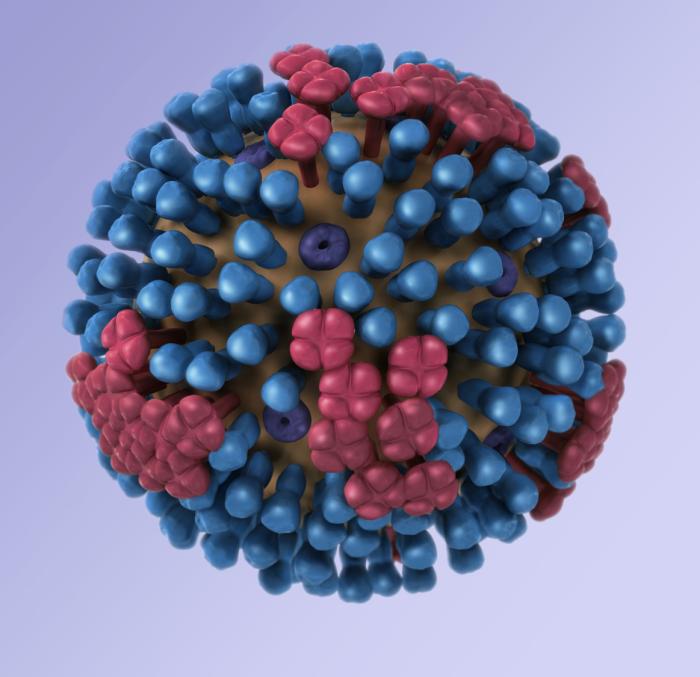
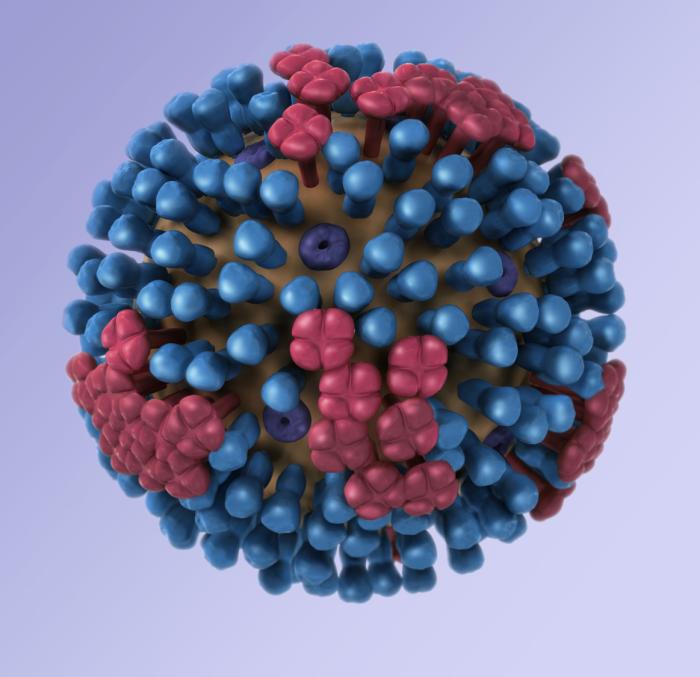
Image of the Week: Influenza!

11825_loresThis illustration provides a 3D graphical representation of a generic influenza virion’s ultrastructure, and is not specific to a seasonal, avian or 2009 H1N1 virus. 

There are three types of influenza viruses: A, B and C. Human influenza A and B viruses cause seasonal epidemics of disease almost every winter in the United States. The emergence of a new and very different influenza virus to infect people can cause an influenza pandemic. Influenza type C infections cause a mild respiratory illness and are not thought to cause epidemics.

Influenza A viruses are divided into subtypes based on two proteins on the surface of the virus: the hemagglutinin (H), and the neuraminidase (N). There are 16 different hemagglutinin subtypes and 9 different neuraminidase subtypes. Influenza A viruses can be further broken down into different strains. Current subtypes of influenza A viruses found in people are influenza A (H1N1) and influenza A (H3N2) viruses. In the spring of 2009, a new influenza A (H1N1) virus emerged to cause illness in people. This virus was very different from regular human influenza A (H1N1) viruses and the new virus has caused an influenza pandemic.

Influenza B viruses are not divided into subtypes, however, influenza B viruses also can be further broken down into different strains.


Image and Caption Credit: CDC

Pandora Report 6.14.14

Don’t forget, early registration for the Summer Program in International Security ends Sunday, June 15. 

Register today to save $200-$300!


News is a little light this week but highlights include antibiotic resistance in the grocery store and the reconstruction of the 1918 flu virus. There will be no news round up next week, so I’ll meet you back here in two weeks!

Bacteria Found in Squid Raises Concern About Spread of Antibiotic Resistance

For the first time, researchers in Canada have discovered one of the deadliest kinds of antibiotic-resistant bacteria in a food product. The organism was found in a package of imported frozen squid, which was purchased at a store in Saskatoon, Saskatchewan. The discovery of the bacteria in food is troubling because it provides an additional method of human acquisition of antibiotic resistance.

The Washington Post—“The bacterium found in the squid is a common environmental organism, present in dirt and water. But in this case, scientists found that it had a gene that made it resistant to antibiotics that are considered the last line of defense. Bacteria that have this capability are dangerous because if they are in a person’s body, they can share that gene or enzyme with other bacteria. And that makes those other bacteria also resistant to these last-resort antibiotics, known as carbapenems.”

A Flu Virus That Killed Millions in 1918 Has Now Been Recreated

Yoshihiro Kawaoka is in the news again after his research team at the University of Wisconsin-Madison, reverse engineered an influenza virus from a similar one found in birds, combining several strains to create one nearly identical to the virus that caused the 1918 outbreak. The team then mutated the genes to make it airborne in order to study how it spreads between animals. Kawaoka is not new to this sort of research—which some view as controversial and dangerous—he engineered a strain of H5N1 to pass airborne from ferret to ferret in 2011.

Vice News—“The research was funded by the National Institute of Health as a way to find out more about similar virus’ and their transmissibility from animals to humans. It was done in a lab that complied with full safety and security regulations, said Carole Heilman, director of the Division of Microbiology and Infectious Diseases, at National Institute of Allergy and Infectious Diseases (NIAD), a division of NIH. ‘It was an question of risk versus benefit,’ Heilman told VICE News. ‘We determined that the risk benefit ratio was adequate if we had this type of safety regulations.’”


Image Credit: Wikimedia Commons

Pandora Report 4.18.14

I think I was coming down with something yesterday. It manifested as a pretty debilitating headache, so I am pretty sure it wasn’t Ebola, but I also had no desire to drink water, so it might have been rabies. Either way, I’m feeling much better today, and am excited to bring you a Saturday issue of Pandora Report. In fact, I’m pretty sure there is nothing that is more fun on the weekend…so let’s get into it!


Highlights include Bird Flu in North Korea, a TB drug that may be the answer to drug resistance, a new strain of Ebola, MERS CoV’s spread to Asia, and Tamiflu’s real utility. Have a great weekend and see you here next Friday!

Highly Pathogenic Avian Influenza (HPAI) outbreak in North Korea

On April 16, the North Korean veterinary authority sent a notice to the World Organization for Animal Health (OIE) alerting them to two H5N1 outbreaks among poultry in the isolated nation. This is a surprisingly transparent move. The first outbreak occurred at the Hadang chicken factory in Hyongjesan starting on March 21. All 46,217 birds died. A second outbreak occurred on March 27 in the same region at the Sopo chicken factory where an unreported number of birds died in the same cage. The source of the infection remains unknown.

The Poultry Site—“Usual control measures have been put in place to control the spread of infection: quarantine, movement control inside the country, screening and disinfection of infected premises/establishment(s). There is no vaccination and no treatment of affected birds.”

Could a new TB drug be the answer to resistance?

A research study at the University of Illinois shows that a new drug under clinical trials for tuberculosis treatment—SQ109—may be the basis for an entirely new class of drugs that could act against bacterial, fungal, and parasite infection and yet evade resistance. Lead researcher, chemistry professor Eric Oldfield, believes that multiple-target drugs like SQ109 and its analogs hold the key to new antibiotic development in the era of drug resistance and “the rise of so-called ‘superbugs’.” His claim is bolstered by experiments with SQ109 and TB where no instances of resistance have been reported.

Science Codex—“’Drug resistance is a major public health threat,” Oldfield said. “We have to make new antibiotics, and we have to find ways to get around the resistance problem. And one way to do that is with multi-target drugs. Resistance in many cases arises because there’s a specific mutation in the target protein so the drug will no longer bind. Thus, one possible route to attacking the drug resistance problem will be to devise drugs that don’t have just one target, but two or three targets.’”

Outbreak in West Africa is caused by a new strain of Ebola virus

As the death toll from the Ebola outbreak in West Africa climbs above 120, scientists are reporting that the virus is not the same strain that has killed in other African nations.  While the source of the virus is still unknown, blood samples from Guinea victims has confirmed that it is not imported strains of Ebola Zaire—the original strain of the virus discovered in Democratic Republic of Congo (formerly known as Zaire.)

The Huffington Post—“‘It is not coming from the Democratic Republic of Congo. It has not been imported to Guinea” from that country or from Gabon, where Ebola also has occurred, [Dr. Stephan] Gunther [of the Bernhard Nocht Institute for Tropical Medicine in Hamburg, Germany] said.

Researchers think the Guinea and other strains evolved in parallel from a recent ancestor virus. The Guinea outbreak likely began last December or earlier and might have been smoldering for some time unrecognized. The investigation continues to try to identify “the presumed animal source.’”

MERS CoV leaves the Middle East and travels to Asia

Though the method of transmission of Middle East Respiratory Syndrome (MERS) remains unknown—a report last week from the CDC finds the virus can stay alive in Camel milk—and thankfully, transmission from human to human has been rare, the disease has now spread beyond the Middle East to Asia via an infection emerging in Malaysia. A Malaysian man returning from Mecca, in Saudi Arabia, tested positive for, and died from, MERS on April 13. So far, a reported 33 people who have travelled to the Middle East for the Haj have tested negative for presence of the virus in neighboring Singapore.

Today Online—“There is currently no advisory against travel to countries of the Arabian Peninsula, or to countries reporting imported cases of MERS-CoV (including Malaysia).

Frequent travellers to the Middle East and Umrah/Haj pilgrims have been advised to take precautions, such as being vaccinated against influenza and meningitis. Those aged 65 years and above or with chronic medical conditions should also get vaccinated against pneumococcal infections before travelling. Pilgrims with pre-existing chronic medical conditions like diabetes, chronic heart and lung conditions should consult a doctor before traveling, to assess whether they should make the pilgrimage.”

A closer look at Tamiflu

With seasonal flu season behind us in the U.S., maybe it is time to look at better treatment options. A study published last week in the British Medical Journal, calls into question the effectiveness of Oseltamivir—brand name, Tamiflu. The international team of researchers found that while Tamiflu can shorten flu symptoms it does not reduce hospital admissions or medical complications. The study also demonstrated that Tamiflu can also cause nausea and vomiting and increases the risk of headaches and renal and psychiatric symptoms.

Global Biodefense—“‘The trade-off between benefits and harms should be borne in mind when making decisions to use oseltamivir for treatment, prophylaxis, or stockpiling,” concludes the study authors from The Cochrane Collaboration, an independent global healthcare research network. “There is no credible way these drugs could prevent a pandemic,” Carl Heneghan, one of the lead investigators of the review and a professor at Oxford University, told reporters. “Remember, the idea of a drug is that the benefits should exceed the harms. So if you can’t find any benefits, that accentuates the harms.’”

(Image credit: Robert Sharp/Flickr)

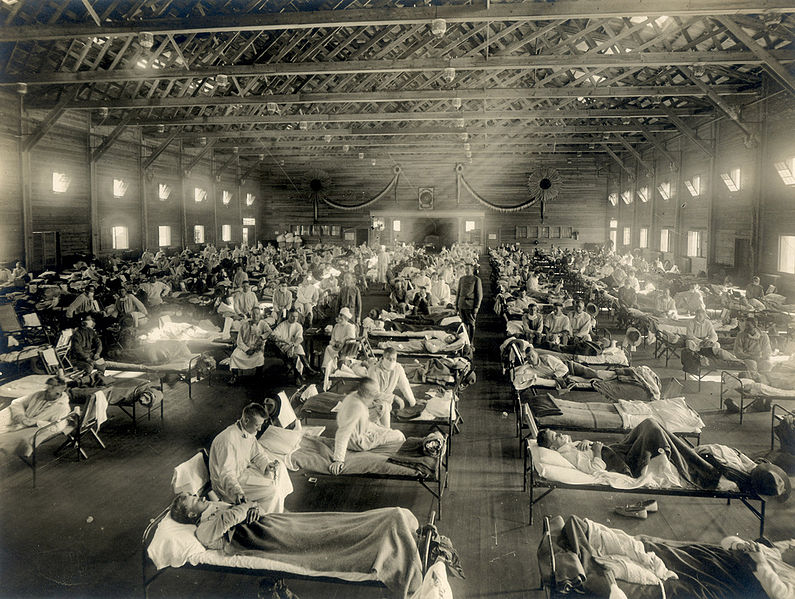
Image of the Day: Camp Funston

Camp Funston


This photo depicts an influenza ward at Camp Funston in Kansas during the 1918 Influenza Pandemic. This flu outbreak occurred between 1918 and 1920 and was one of the most deadly in history, infecting approximately 500 million people and killing 3-5% of the world population (50-100 million.)

That’s killed 3-5% of the entire world–not just infected 3-5% of the world!

Many historical resources cover this worldwise pandemic, also known as “Spanish Flu”, its effects, it causes, and the lasting legacy. Two include flu.gov and John M. Barry’s The Great Influenza.