Pandora Report 10.25.2024

Happy almost Halloween! This week’s Pandora Report includes news from the Biodefense Graduate Program and discussion of the Biden administration’s latest National Security Memorandum, a new multilateral effort from the US, Canada, and Mexico to improve regional health security, the WHO’s praise for Rwanda’s swift and effective Marburg response, and more.

Upcoming Virtual Information Sessions on the Biodefense Graduate Program

If you are interested in a career in biodefense or global health security or want to develop the knowledge and skills necessary to work at the nexus of health, science, and security, find out what the Schar School of Policy and Government has to offer. 

The Schar School PhD programs will be holding a virtual open house on Wednesday, October 30 from 6-7:30 PM. Please join Dr. Gregory Koblentz, director of the Biodefense Graduate Program, to learn more about the Biodefense PhD program and ask any questions you may have. Register here.

GMU Biodefense Students Tour Mason’s Biomedical Research Laboratory

Last week twelve Biodefense students had the opportunity to visit George Mason’s 52,000 square-foot Biomedical Research Laboratory (BRL) located on the SciTech campus in Manassas, Virginia. The BRL was inactive after being decontaminated for annual maintenance . The tour, led by the BRL’s Director of Research Operations, Rachel Pepin, provided students with a firsthand look at Mason’s Biosafety Level 3 (BSL-3) and supporting Biosafety Level 2 (BSL-2) labs. Among the many highlights was the BRL’s autoclaves and gloveboxes, which left students impressed.

The BRL is one of 12 Regional Biocontainment Labs in the United States funded by the National Institute of Allergy and Infectious Diseases NIAID. Constructed in 2010, it became an active “hot” lab in 2012. Fifteen Mason faculty members and thirty students at any time work within the facility on research pertaining to a variety of infectious diseases, new vaccines, diagnostics, and therapeutics. The stated mission of Mason’s BRL is to 1) advance pathogen biology, 2) train the future workforce to safely handle infectious agents and conduct innovative research in BSL-3 environments, 3) evaluate diagnostics, therapeutics and vaccines, and 4) serve as a resource in the event of a bioterrorism or infectious disease emergency. Overall, students gained an appreciation for the critical work and numerous safety controls in George Mason’s BSL-3 laboratory.

This write up was written by Biodefense MS Student Will MacDonald.

OPCW Workshop on Legislative and Regulatory Frameworks for Chemical Security
On October 21-22, 2024, Dr. Gregory Koblentz, director of the Biodefense Graduate Program, attended a meeting of chemical security experts sponsored by the Organization for the Prohibition of Chemical Weapons (OPCW) to discuss best practices for establishing legislative frameworks for chemical security. According to INTERPOL, from the records of 4,100 captured ISIS members, 109 of them have a background related to chemistry, science, technology, engineering, and mathematics. Meanwhile, across the word, the chemical industry and trade are rapidly growing, increasing the risk of toxic chemicals being misused, especially by non-state actors. Many countries are therefore seeking to strengthen their legal and regulatory regimes to address risks such as attacks on chemical facilities, the theft of toxic chemicals, or their release with malicious intent. Initial take-aways from the meeting included a recognition that there is an urgent need for robust national legislative frameworks for chemical security in many countries, that national threat assessments and risk analyses should be the basis for identifying legislative needs, and best practices are most useful if they can be adapted to country-specific contexts and resource setting. This meeting of an international group of chemical security experts kicks off a longer-term discussion on best practices for establishing legislative frameworks for chemical security sponsored by the Implementation Support Branch of the International Cooperation and Assistance Division at OPCW.
A Risky Review of Research
On September 25, 2024, Senator Rand Paul introduced a revised version of the Risky Research Review Act (S. 4667) which was voted out of the Senate Homeland Security and Government Affairs Committee by a vote of 8-1. In a recent OpEd in StatNews, Gregory Koblentz, director of the Biodefense Graduate Program, and David Gillum and Rebecca Moritz, past presidents of the American Biosafety Association (ABSA) wrote of the original bill: “this legislation threatens to cast a shadow over the future of life sciences research and slow it down.” While this revised bill contains some positive changes, it remains deeply flawed and does not represent a viable solution to the challenges posed by dual-use research. You can read their analysis of the good, the bad, and the ugly of the revised Risky Research Review Act here.
Russia Expanding Secret BSL-4 Lab at Sergiev Posad
The Washington Post has identified new construction activity at Sergiev Posad-6, part of the former Soviet and current Russian biological weapons program, consistent with the building of additional high containment laboratories, including BSL-4 lab suites. The construction started in 2022, shortly after Russia’s invasion of Ukraine which was accompanied by unfounded allegations that Ukraine was developing biological weapons with the help of the United States and other NATO countries. Dr. Gregory Koblentz, director of the Biodefense Graduate Program, is quoted in the article as saying, “I would not be surprised if some influential segment of the Russian national security community has drunk the Kool-Aid and really believes that the United States really is developing biological weapons.” Satellite imagery obtained and analyzed by the Washington Post has identified the construction of “10 new buildings, totaling more than 250,000 square feet, with several of them bearing hallmarks of biological labs designed to handle extremely dangerous pathogens.” The Global BioLabs Initiative identified Sergiev Posad-6 as having a BSL-4 lab in 2021. The existence of a BSL-4 lab at this site was confirmed by a 2017 scientific article co-authored by a researcher at the 48th Central Research Institute of the Ministry of Defense at Sergiev Posad. Russia has not declared the existence of a BSL-4 lab at this site on Form A of the confidence building measures that it submits to the Biological Weapons Convention. 

White House Releases New National Security Memorandum on Advancing AI Leadership

The Biden administration issued this week the first-ever National Security Memorandum (MSM) on AI. The NSM direct the federal government to take steps to 1) “ensure that the United States leads the world’s development of safe, secure, and trustworthy AI,” 2) “harness cutting-edge AI technologies to advance the U.S. Government’s national security mission,” and 3) “advance international consensus and governance around AI.”

The NSM directives are focused on actions to improve chip supply chain security and diversity, making collection on competitors’ operations against the US AI sector a top-tier intelligence priority, formally designating the AI Safety Institute, doubling down on the National AI Research Resource, directing “the National Economic Council to coordinate an economic assessment of the relative competitive advantage of the United States private sector AI ecosystem,” and more.

Among its other measures, the NSM also directs the creation of a Framework to Advance AI Governance and Risk Management in National Security, which was published alongside the NSM. This framework and any successor document will specify that each covered agency has a chief AI officer and guidance boards, offer guidance on AI activities that pose “unacceptable levels of risk and that shall be prohibited,” and more.

A fact sheet for the new NSM is available here.

US, Canada, and Mexico Announce Efforts to Improve Regional Health Security

This week, the US Departments of Health and Human Services, State, Agriculture, and Homeland Security, along with their counterparts in Canada and Mexico made good on commitments made at the 2021 and 2023 North American Leaders’ Summits in releasing the North American Preparedness for Animal and Human Pandemics Initiative (NAPAHPI). NAPAHPI is “…a flexible, scalable, and cross-sectoral platform to strengthen regional capacities for prevention, preparedness, and response to a broad range of health security threats that builds on lessons learned from COVID-19 and other health security events in the last decade. It is based on a long-standing trilateral collaboration under the 2007 North American Plan for Avian and Pandemic Influenza and the 2012 North American Plan for Animal and Pandemic Influenza. This initiative recognizes that the high degree of interconnectedness among our three countries of our critical infrastructure, supply chains, and societies means that disruptions affecting one country often impact the others. Only by working together can we protect the health security of our region.”

Learn more here.
Egypt Declared Malaria Free

Egypt was officially certified malaria-free by the World Health Organization this week. Following Morocco and the UAE, Egypt is just the third country in the WHO’s Eastern Mediterranean region to receive this certification. Globally, 44 countries and one territory currently have this designation.

“This certification of Egypt as malaria-free is truly historic, and a testament to the commitment of the people and government of Egypt to rid themselves of this ancient scourge,” said WHO Director-General Tedros Adhanom Ghebreyesus in a statement. “I congratulate Egypt on this achievement, which is an inspiration to other countries in the region, and shows what’s possible with the right resources and the right tools.”

WHO Praises Rwanda’s Marburg Response

WHO Director-General Tedros Adhanom Ghebreyesus praised Rwanda’s response to its Marburg virus outbreak, noting their success in treating patients infected with this especially deadly disease. As of earlier this week, Rwanda has made it a full week with no new cases, and its total number of patients still in treatment is down to just one. “Leadership from the highest levels of government is essential in any outbreak response, and that’s what we see here in Rwanda,” Tedros said during the press briefing. The Director-General also noted that multiple patients experiencing multiple organ failure were put on life support, intubated, and eventually extubated. “We believe this is the first time patients with Marburg virus have been extubated in Africa. These patients would have died in previous outbreaks,” Tedros explained. 

Burgers, Deli Meat, and Waffles-Oh My! US Responding to E. Coli and Listeria Outbreaks

It has been a rough couple of weeks for many major food suppliers in the United States amid headlines about recalls and reports of multiple cases of E. coli and listeria across the country. McDonald’s, KFC, Burger King, and other restaurant chains have pulled onions from their menus following an outbreak of E. coli traced back to McDonald’s Quarter Pounders. The CDC announced this week it is investigating 49 cases linked to “slivered onions used in the Quarter Pounder and sourced by a single supplier than serves three distribution centers.” One person is dead and ten more have been hospitalized. The supplier, Taylor Farms, has issued a recall on all of its peeled, diced, and whole peeled yellow onion packs due to potential contamination.

This comes amid multiple listeria outbreaks affecting several kinds of products, including deli meat, frozen waffles and pancakes, and even salmon. While these recalls are certainly nothing to ignore, they might not necessarily be happening more frequently than before as some have suggested. Dr. Céline Gounder, CBS News medical contributor and editor-at-large for public health at KFF Health News, told CBS this week that “Every step of food processing, there’s the opportunity for contamination. That’s number one. Consumers want ready-to-eat food, so of course, they’re more processed as a result.” She continued, saying “We have better tests. So it used to be we might not have been aware or known what made you sick. Now we can actually test, detect and tell you what made you sick.”
“Assessing the Burden of and Potential Strategies to Address Antimicrobial Resistance”

From NASEM: “Antimicrobial resistance (AMR) is linked to millions of deaths globally each year. As an evolving public health threat, there is a need to further develop methods to quantify AMR’s burden within medical practice and other sectors like food production. The National Academies Forum on Microbial Threats hosted a public workshop in March 2024 to explore the burden of AMR and discuss clinical, scientific, and policy strategies for addressing the growing AMR health threat across sectors.”

“This proceedings highlights the presentations and discussions that occurred at the workshop.”

“The Changing Face of Pandemic Risk: 2024 Report”

From GPMB: “The 21st century has seen a significant rise in global health threats. Epidemics and pandemics are now a constant danger rather than rare events. The 2024 GPMB reportThe changing face of pandemic risk, is a call to action for global leaders, policy-makers, health professionals, and communities to build a safer, more resilient future. It outlines the key drivers of pandemic risk and provides a roadmap for strengthening our defences.”

“Mpox: Neglect Has Led to a More Dangerous Virus Now Spreading Across Borders, Harming and Killing People. Leaders Must Take Action to Stop Mpox Now”

McNab et al. recently published this opinion article in PLOS Global Public Health, writing in part “In other words, mpox is an ever-growing regional health crisis in Africa, and without urgent action to stop the epidemics when and where they occur, it will continue to spread across borders and continents. The few tools we have that could help to stop the outbreaks have yet to become adequately available in the most affected low-income countries where they are urgently required, as is financing to support the public health response. Mpox cannot be allowed to continue spreading widely across the African continent or anywhere. The world cannot continue to simply ‘learn’, but not apply the costly lessons of neglecting disease outbreaks.”

“Are We Ready For A Bird Flu Vaccination Campaign?”

Ram Koppaka and Richard Hughes IV discuss the possibility of H5N1 human transmission and a hypothetical mass vaccination program against this virus in this piece for Health Affairs. They write in their conclusion, “The most recent pandemic clearly demonstrated the inadequacy of our existing level of vaccine preparedness. So far, we have failed to seize this moment and put in place the infrastructure to support immunization of both children and adults. Worse still, it indicates a failure to learn some of the pandemic’s hardest lessons. As a result, we are destined to once again endure the consequences, knowing that they had been largely avoidable…Or we can do it differently this time. We can act now to be truly ready and prepared to mount a mass vaccination campaign against the next pandemic threat—whenever it comes. We have risen to the occasion before, and we can do it again.”

“COVID, Mpox, Cholera: Is the World Prepared for Another Pandemic?”

Faras Ghani discusses recent outbreaks and infectious disease developments, alongside analysis of global lack of adequate access to essential healthcare services and an interview with Dr. Ahmed Ogwell, Vice President of Global Health Strategy at the UN Foundation, in this piece for Al Jazeera.

“Inside the Bungled Bird Flu Response, Where Profits Collide With Public Health”

Katherine Eban discusses the USDA’s action or lack thereof in responding to H5N1 cases in Texas dairy cattle in this Vanity Fair article, writing in her summary “When dairy cows in Texas began falling ill with H5N1, alarmed veterinarians expected a fierce response to contain an outbreak with pandemic-sparking potential. Then politics—and, critics say, a key agency’s mandate to protect dairy-industry revenues—intervened.”

“Combining AI Breakthroughs and Better Policy to Defeat Superbugs”

Akhila Kosaraju discusses the transformative opportunity AI poses in addressing AMR in this piece for the Stanford Social Innovation Review: “Superbugs may have met their match in generative AI, but to fully tackle the crisis of antimicrobial resistance, policy makers need to find new ways to help scientists and researchers overcome long-standing obstacles and revitalize a broken antibiotic market.”

“NTI | Bio Champions Effort to Enhance Transparency to Strengthen the Biological Weapons Convention”

From NTI: “From September 30 to October 2, 2024, NTI | bio convened more than 30 experts for a workshop on enhancing transparency for bioscience research and development and bolstering confidence in compliance with the Biological Weapons Convention (BWC). Held in Amsterdam, The Netherlands, the workshop gathered an international group of participants from 15 countries spread across five continents with expertise in biosecurity and biotechnology governance and international security, as well as previous experience working to establish a verification mechanism for the BWC and involvement in ongoing discussions to strengthen the Convention.”

“The meeting updated existing concepts and generated new ideas about options to enhance transparency in regard to BWC compliance. NTI helped frame these discussions by tabling a concept paper on this topic, and the group discussed approaches to advance these goals, including through scientific and technical measures for data collection and analysis, procedural approaches, and institutional structures to house such efforts. Dozens of approaches were discussed during the meeting which will inform NTI’s continued efforts to highlight and explore promising opportunities to further advance this work.”

Read more here.

“Preparing for Ecological Disruption: A Strategic Foresight Approach to Ecological Security”

Lily Boland recently authored this report for the Council on Strategic Risks: “This report leverages insights gained from the use of strategic foresight as an approach for better anticipating how risks to global security are heightened by ecological disruption. It offers a range of use-cases for applying the foresight toolkit to the field of ecological security and to establish a knowledge base to assist practitioners, governments, and institutions in enhancing their anticipatory decision-making and planning processes for addressing the security ramifications of large-scale destabilization and decline of the biosphere and ecosystems.”

“How Zombies and Vampires Help Me Grapple with Disaster”

Neil Vora, a physician who has served in the Epidemic Intelligence Service and now treats TB patients and works with Conservation International, discusses what many in this field know all too well-an obsession with works of horror, especially those about contagions and disasters. Vora explains in part, “To help manage my anxieties about the fate of the world, I often turn to scary stories about contagions and other doomsday scenarios. This may seem counterintuitive, but I find the horror genre to be a perfect sandbox to explore pressing societal problems without real-world repercussions. Horror allows me to navigate my fears to their extremes from the comforts of my living room.”

However, the author also cautions, “But while fictionalized catastrophes help me grapple with my worst fears, I’ve also come to realize that consuming them without a critical eye can lead to a paralyzing level of despair—a luxury we can’t afford at this pivotal moment in history.”

While you’re at it, check out this episode of the Poisons and Pestilence podcast guest starring Biodefense PhD Program alumna and faculty member Saskia Popescu reviewing the films, Contagion and Outbreak, and read about her intro to the field at just 9-years-old via Richard Preston’s book, The Hot Zone.

NEW: Vision for Health Forum

From Johns Hopkins: We hope you can join us in November for the Vision for Health Forum with collaboration between Johns Hopkins Howard County Medical Center and Johns Hopkins Applied Physics Laboratory. 

Panel Discussion 
Moderator:  
M. Shafeeq Ahmed, M.D., MBA, F.A.C.O.G
President, Johns Hopkins Howard County Medical Center

Topic: Partnership between JHHCMC and APL
Jeanette Nazarian, M.D., Vice President, Medical Affairs and Chief Medical Officer- Johns Hopkins Howard County Medical Center 

Topic: Revolutionizing Health through Science and Engineering
Sheri Lewis, MPH, Deputy Mission Area Executive, Global Health -Johns Hopkins Applied Physics Lab 

Topic: APL-HCMC Partnership for Project Firstline: Safeguarding Our Nation’s Frontline Healthcare Workers
Lucy Carruth, Ph.D, Assistant Program Manager- Johns Hopkins Applied Physics Lab 
Brian Damit, Ph.D, Project Manager- Johns Hopkins Applied Physic Lab 

This event will take place at the Johns Hopkins Applied Physics Laboratory on November 4 at 4:30 pm EST. Learn more here.

The Advancing Threat Agnostic Biodefense Webinar Series

From PNNL: “Please join us in welcoming Drs. Matthew Kasper and Lindsay Morton from the Department of Defense (DoD) Global Emerging Infections Surveillance (GEIS) program for their talk titled “Challenges and Opportunities in Pathogen Agnostic Sequencing for Public Health Surveillance: Lessons Learned From the Global Emerging Infections Surveillance Program.” This webinar will take place Tuesday, October 29th, at noon PT.”

Learn more and register here.

13th Annual Jonathan Tucker Symposium

“The James Martin Center for Nonproliferation Studies cordially invites you to the 13th annual Jonathan Tucker Symposium on chemical and biological weapons issues on November 13th and 14th, 2024.”

Among this year’s speakers are Dr. Yong-Bee Lim, an alumnus of the Biodefense PhD Program and Deputy Director of the Converging Risks Lab and Biosecurity Projects Manager at the Council on Strategic Risks, who will give a talk titled “Technology Democratization and its Implications for CBW Safety and Security: Lessons Learned from Engagement with Non-Traditional Communities.”

Learn more and register here.

One Health and the Politics of COVID-19 Book Launch

The Writer’s Center is hosting a book launch for Dr. Laura Kahn’s new book, One Health and the Politics of COVID-19 (blurb below) on November 23 at 2 pm EST in Bethesda, MD. Learn more and RSVP here.

One Health and the Politics of COVID-19 unpacks the mysteries of COVID-19’s origins to impart important lessons for future outbreaks. The One Health concept recognizes the interconnected links among the health of humans, animals, plants, and the environment. By comparing the history, science, and clinical presentations of three different coronaviruses—SARS-CoV-1, MERS, and SARS-CoV-2 (COVID-19)—Kahn uncovers insights with important repercussions for how to prepare and avoid future pandemics. The One Health approach provides a useful framework for examining the COVID-19 pandemic. Understanding the origins of this zoonotic disease requires investigating the environmental and molecular biological factors that allowed the virus to spread to humans. The book explores the many ways in which the wild animal trade, wet markets, and the camel industry contributed to the spread of the earlier SARS-CoV-1 and MERS coronaviruses. For SARS-CoV-2 (COVID-19), Kahn examines the biosafety, biosecurity, and bioethics implications of gain-of-function research on pandemic potential pathogens. This book is a must read to understand the geopolitics of the COVID-19 pandemic.”

2024 CBD S&T Conference

From DTRA: “The CBD S&T Conference brings together the most innovative and influential chemical and biological defense community members from around the globe to share insights and collaborate on the emerging chem-bio threats of tomorrow.”

“Join the Defense Threat Reduction Agency’s (DTRA) Chemical and Biological Technologies Department in its role as the Joint Science and Technology Office (JSTO) for Chemical and Biological Defense, an integral component of the Chemical and Biological Defense Program, as we Focus Forward to uncover novel concepts and examine groundbreaking discoveries within the chem-bio defense landscape.”

“The 2024 CBD S&T Conference will be held at the Broward County Convention Center, December 2–5, 2024.”

Learn more and register here.

BID2025 Stakeholder Input Request
“From BARDA: We are excited to host our next BARDA Industry Day (BID) conference on June 30 – July 1, 2025, in Washington, D.C.! BID2025 will delve into the critical intersection of health security and sustainability with experts from various sectors to discuss cutting-edge medical countermeasure (MCM) innovations and strategies.”

“We want to make sure that the event reflects the interests of our attendees. Your feedback will help us curate sessions, speakers, and topics that are relevant and engaging for you. This short questionnaire should take no more than three minutes to complete. Please share your thoughts on what you would like to see at the conference by October 30, 2024.

Share thoughts here.

US AI Safety Institute Issues RFI on Responsible Development of Chem-Bio Models

From AISI: “The U.S. Artificial Intelligence Safety Institute (U.S. AISI), housed within the U.S. Department of Commerce’s National Institute of Standards and Technology (NIST), released a Request for Information seeking insight from stakeholders regarding the responsible development and use of chemical and biological (chem-bio) AI models.”

“Input from a broad range of experts in this field will help the U.S. AISI to develop well-informed approaches to assess and mitigate the potential risks of chem-bio AI models, while enabling safe and responsible innovation.”

“Respondents are encouraged to provide concrete examples, best practices, case studies, and actionable recommendations where possible. The full RFI can be found here.”

“The comment period is now open and will close on December 3, 2024, at 11:59PM Eastern Time. Comments can be submitted online at www.regulations.gov, under docket no. 240920-0247.”

Pandora Report 10.4.2024

This week’s Pandora Report covers the recently-reported outbreak of Marburg virus disease in Rwanda, the recent discovery of four more Missouri healthcare workers who experienced respiratory symptoms after caring for a patient infected with H5 avian influenza, new human cases of bird flu in California, and more.

Upcoming Virtual Information Sessions on the Biodefense Graduate Program

If you are interested in a career in biodefense or global health security or want to develop the knowledge and skills necessary to work at the nexus of health, science, and security, find out what the Schar School of Policy and Government has to offer. 

A virtual open house for the MS in Biodefense will be held online on Thursday, October 17, 7 to 8 p.m. ET The Biodefense Program offers flexible part-time or full-time options that teach applicable, real-world skills for bridging the gap between science and policy.  The online session will provide an overview of the program, as well as the application process, student experience and graduate outcomes.  Register here.

The Schar School PhD programs will be holding a virtual open house on Wednesday, October 30 from 6-7:30 PM. Please join Dr. Gregory Koblentz, director of the Biodefense Graduate Program, to learn more about the Biodefense PhD program and ask any questions you may have. Register here.

Marburg Outbreak Confirmed in Rwanda

Last week, the Rwanda Ministry of Health announced that it had confirmed cases of Marburg virus disease (MVD) in the country. Blood samples taken from symptomatic people were tested using RT-PCR, and were found to be positive for Marburg virus. So far, there have been 36 confirmed cases and eleven deaths across at least seven of the country’s 30 districts. As of last week, over 70% of cases were in healthcare workers from two locations in Kigali, the nation’s capital. More than 300 contacts have been traced so far.

This is the first time MVD has been reported in the country, and the WHO has emphasized that it is likely the disease will spread to neighboring countries, many of which are currently struggling amid the mpox outbreak. There is currently no available treatment or vaccine for MVD. WHO has assessed the risk of this outbreak to be very high nationally, high regionally, and low globally.

MVD, formerly known as Marburg hemorrhagic fever, is severe, often fatal in humans, and is caused by a virus in the Filoviridae family, which also includes Ebola virus. Egyptian fruit bats are natural hosts of the virus; it is spread from them to people, and it then spreads further via human-to-human transmission. While the average MVD case fatality rate is about 50%, this has varied from 24% to 88% during past outbreaks. Early supportive care improves survival odds.

Experts are concerned as there were already more than two dozen confirmed cases by the time the Rwandan government announced the outbreak. It can take as long as 21 days between exposure and symptom onset with MVD. Furthermore, because Rwanda has never had an outbreak before, healthcare professionals may have not been suspicious of MVD and did not think to test for it. All of these are worrying signs that the disease may have been circulating in the country for a few weeks before the announcement.

The Centers for Disease Control and Prevention issued a Health Alert Network Health Advisory on Thursday to inform clinicians and health departments in the US about the outbreak and advise them to be aware of the potential for imported cases.

Read more:

World Leaders Announce Target of 10% Fewer Superbug Deaths by 2030

World leaders gathered during a meeting at the UN General Assembly announced a new political declaration on antimicrobial resistance (AMR) that was signed by 193 member states. Each year, AMR is linked to 4.7 million deaths, and that number is projected to reach 8.2 million by 2050. The declaration calls for increased action across sectors like farming, pharmaceutical manufacturing, environmental protection, and healthcare to combat AMR. Furthermore, it calls for financial support for poorer countries, who are most affected by this issue, and to commit to scaling up efforts in order to reduce AMR-related deaths by 10% by the end of the decade. The declaration also invites the Quadripartite organizations (WHO, UN Environment Programme, World Organisation for Animal Health, and the Food and Agriculture Organization of the UN) to create an independent panel to provide scientific evidence to support strategies to combat AMR. They will also update a global AMR action plan by 2026.

Avian Influenza Updates

Four More Missouri Healthcare Workers Develop Respiratory Symptoms After Contact with Bird Flu Patient

Four more healthcare workers who came into contact with a hospitalized bird flu patient in August are now confirmed to have later developed mild respiratory symptoms, bring the total to six. The Missouri patient had no contact with infected animals. One worker tested negative on a flu test, while the others’ symptoms were discovered too late to do testing. Missouri is continuing to investigate this situation with CDC’s assistance.

New Human Cases in California

CDC has confirmed two additional human cases of H5 bird flu from specimens submitted by California. Both cases are in people with occupational exposure to infected cattle. While California’s investigation is ongoing, there is no known link or contact between the two cases, which suggests these are two separate instances of animal-to-human spread of the virus. As the identification of H5 in people with exposure to infected animals is expected, CDC has not changed its risk assessment for the general public.

Read more:

ISC Announces Expert Group for the Biological Weapons Convention

The International Science Council (ISC) recently announced the formation of its Expert Group dedicated to enhancing the Biological Weapons Convention (BWC). In May, ISC and the UN Office for Disarmament Affairs were jointly awarded a grant by the Geneva Science Policy Interface to strengthen the BWC. In a statement, ISC said this “…initiative is a significant step toward integrating scientific advancements into the operations of the BWC, addressing the critical need for a structured mechanism to review relevant science and technology developments.”

It further explained that “The ISC project “Science-policy synergies for the Biological Weapons Convention” fosters collaboration between BWC delegates and scientific experts, developing methodologies that build mutual understanding and trust. By facilitating targeted discussions and creating tailored knowledge products, the initiative aims to equip delegates with tools to tackle current and future biological threats, enhancing the BWC’s effectiveness in global biosecurity.”

Learn more here.

“Inside HHS’ ‘One-Stop Shop’ for Health sector Cybersecurity”

Federal News Network’s Justin Doubleday interviews Biodefense PhD Program alumnus and Schar School adjunct professor Brian Mazanec in this article and accompanying Federal Drive episode. Mazanec is currently the deputy director of the Administration for Strategic Preparedness and Response’s Center for Preparedness. He discusses how his organization is responding to recent attacks like the Change Healthcare ransomware attacks and what HHS can offer health organizations recovering from major cyber incidents.

“Anonymous Answers: How Can We Manage Infohazards in Biosecurity?”

Anemone Franz and Tessa Alexanian discuss input from eleven experts on how to best manage infohazards in biosecurity in the third part of this series from 80,000 Hours. Answers focus on helping researchers use information responsibly, limiting secrecy to improve problem solving, considering the effects of withholding information, and more.

“Vanishing Workforce: An Antimicrobial Resistance Threat”

James Anderson, Chair of the AMR Industry Alliance, discusses the decline of the antimicrobial research and development field, its importance to the fight against AMR, and how this decline can be reversed, writing in his conclusion, “Ultimately, to meet the need for new antimicrobials that can stay ahead of the resistant bacteria, both the public and private sectors should invest in the people who are responsible for the discovery of antimicrobials to attract and retain the best scientists into the future.”

“Proceedings of Workshop: Mitigating Arboviral Threat and Strengthening Public Health Preparedness”

From NASEM: “Arboviruses, or viruses carried by arthropods like mosquitoes or ticks, are responsible for hundreds of thousands of deaths worldwide each year. As the climate changes globally, the geographic distribution of these diseases, including Zika, dengue, chikungunya, West Nile, and yellow fever, are steadily expanding. The National Academies Forum on Microbial Threats hosted a public workshop in December 2023 to explore avenues of threat reduction from known and emerging arboviral diseases in the context of public health preparedness and capacity building. The workshop featured talks from experts in entomology, public health, ecology, virology, immunology, disease modeling, and urban planning.”

“This proceedings highlights the presentations and discussions that occurred at the workshop.”

“WHO Technical Advisory Group on the Responsible Use of the Life Sciences and Dual-Use Research: Report of the Meeting, Geneva, Switzerland, 16-18 April 2024”

“The WHO Technical Advisory Group on the Responsible Use of the Life Sciences and Dual-Use Research (TAG-RULS DUR) was established to provide independent advice to WHO on the monitoring and mitigation of biorisks, the advances in the life sciences and related technologies, the governance of dual-use research and the responsible use of the life sciences. The first hybrid meeting of the group took place at WHO headquarters in Geneva, from 16 to 18 April 2024, in order to provide the opportunity for TAG-RULS DUR members to exchange on WHO and related advisory groups activities relevant to their areas of work; to discuss current and upcoming activities related to the implementation of the WHO Global Guidance Framework for the responsible Use of the Life Sciences and to provide technical guidance to WHO.”

Read the meeting report here.

“Exclusive: Sen. Todd Young on biosecurity, National Security Commission on Emerging Biotechnology (NSCEB)”

“Sen. Todd Young (R-IN) was recently named Chair of the National Security Commission on Emerging Biotechnology (NSCEB), established by Congress to recommend policy on biotech and national security. Bio.News spoke to him in an exclusive interview about the work of the commission, the BIOSECURE Act and PASTEUR Act, and more.”

1540 Compass Second Issue

“The second issue of the 1540 Compass explores the critical components of United Nations Security Council resolution 1540 (2004), with a focus on border and export control systems crucial for its full and effective implementation. This edition particularly underscores the significance of clauses in operative paragraph 3, highlighting the global commitment to securing a world where proliferation risks are minimized through robust domestic controls.”

“This issue offers a comprehensive look at the implementation, especially across Africa, examining the varied approaches to managing exports of biological weapons-related materials. It presents a range of contributions and in-depth interviews that delve into national efforts to develop voluntary action plans and regional collaborations.”

“Discussions also extend to the impact of emerging technologies, including artificial intelligence, on the resolution, especially concerning the need for end-user controls in exports. The edition further explores strategic trade controls with best practices from selected countries that have effectively implemented such measures.”

“A significant portion of this issue is dedicated to addressing the challenges of proliferation finance, providing insights into the complexities of this area without an official definition and offering practical recommendations for future approaches.”

“In recognizing the role of civil society in preventing weapons of mass destruction proliferation, the journal includes discussions on how various stakeholders can collaborate with governments and international organizations to ensure compliance with the resolution.”

“This issue also introduces a new Letters-to-the-Editor section, encouraging a thoughtful and nuanced discussion within the dedicated community towards enhancing global security through stringent border and export controls.”

“Reforming the Australia Group to Better Combat Biological Threats”

Kyle Wilgus discusses recent moves by the Department of Commerce’s Bureau of Industry and Security to remove export controls on biological materials and technologies for companies and individuals residing in nations participating in the Australia Group. He argues that this is an important step in strengthening biotechnology and broader technological innovation because it “…incentivized free, unburdened trade in biological materials and technologies among its members and showcased the potential impact of the Australia Group.” He argues that, in the future, the group should build on this progress by “reformulating and expanding to better mitigate the ever-evolving spectrum of biological threats.”

“Healthy Ecosystems, Healthy Humans”

Tomas Weber discusses how biodiversity acts as a barrier against disease as “Flourishing ecosystems safeguard humans from a panoply of zoonotic illnesses,” in this piece from Hopkins Bloomberg Public Health. He covers multiple drivers of biodiversity loss and research work that is being done to help combat these effects.

“‘He Began to Complain of Sharp Pain in the Stomach”: Official Documents Obtained by The Insider Confirm Navalny Was Poisoned in Prison”

Roman Dobrokhotov re-visits Navalny’s death in this piece, writing in part “The Insider has obtained access to hundreds of official documents related to Russian opposition leader Alexei Navalny’s death in the Polar Wolf penal colony in the Russian Far North on Feb. 16, 2024. Officially, Navalny’s death was attributed to natural causes, and Russia’s Investigative Committee stated in July that the case “does not have a criminal nature.” However, the contents of the documents in The Insider’s possession demonstrate that Russian authorities consistently removed references to symptoms Navalny was noted by prison doctors to have been suffering — symptoms that did not fit with the Russian state’s official cause of death. As medical experts confirm, these symptoms clearly indicate that Navalny was poisoned.”

“Chemical Terrorism Threat Perceptions”

 In his latest working paper, Alexander Kelle of the Arms Control and Emerging Technologies program at IFSH Hamburg examines the evolving salience of chemical terrorism within the CWC framework and the contribution of the OPCW. He finds that responses have been linked most often to the international cooperation and assistance norms, and regularly noted the work of the Open-Ended Working Group on Terrorism. Read the working paper here.

ICYMI: NTI|Bio Briefs Capitol Hill on Innovative Solutions to Biotechnology Risks

From NTI: “Against a backdrop of growing risks associated with advances in bioscience and biotechnology, NTI | bio and the Center for Arms Control and Non-Proliferation (CACNP) hosted a September 17 Congressional staff briefing on “Preventing Biological Catastrophe and Protecting the U.S. Bioeconomy.”’

“The event, which explored opportunities for Congress and the White House to mitigate the risks, featured a panel discussion on safeguarding evolving capabilities that arise from the combination of artificial intelligence with biotechnology and providing oversight of dual-use life science research of concern. Participants included:

Dr. Ryan Ritterson, specialist lead, Deloitte.

Mr. Daniel Gastfriend, director for Biodefense and Pandemic Preparedness, National Security Council

Dr. Gregory Koblentz, associate professor and director of the Biodefense Graduate Program, George Mason University”

Read more here.

NEW: Synthesis Screening Workshop 2-Securing Bioproduction Against an Evolving Threat Landscape

From AI for SynBio: “Advances in AI are changing the threat landscape in many fields, including in the field of biology. With AI assisted design tools, the complexity and obfuscation potential of the synthetic biological materials is expected to increase. Conversely, the same AI advances can be deployed to help screen DNA/RNA synthesis requests before they can be used for malicious purposes. This workshop seeks insight on current and future advances that will shape both the threat and countermeasure landscapes and prepare the community for the changing threat landscape. The workshop seeks perspectives from academia, industry, and government….The Fall Workshop will focus on the evolving landscape in the years beyond 2026 with an eye towards 2030.”

This hybrid event will take place on October 9. Learn more and register here.

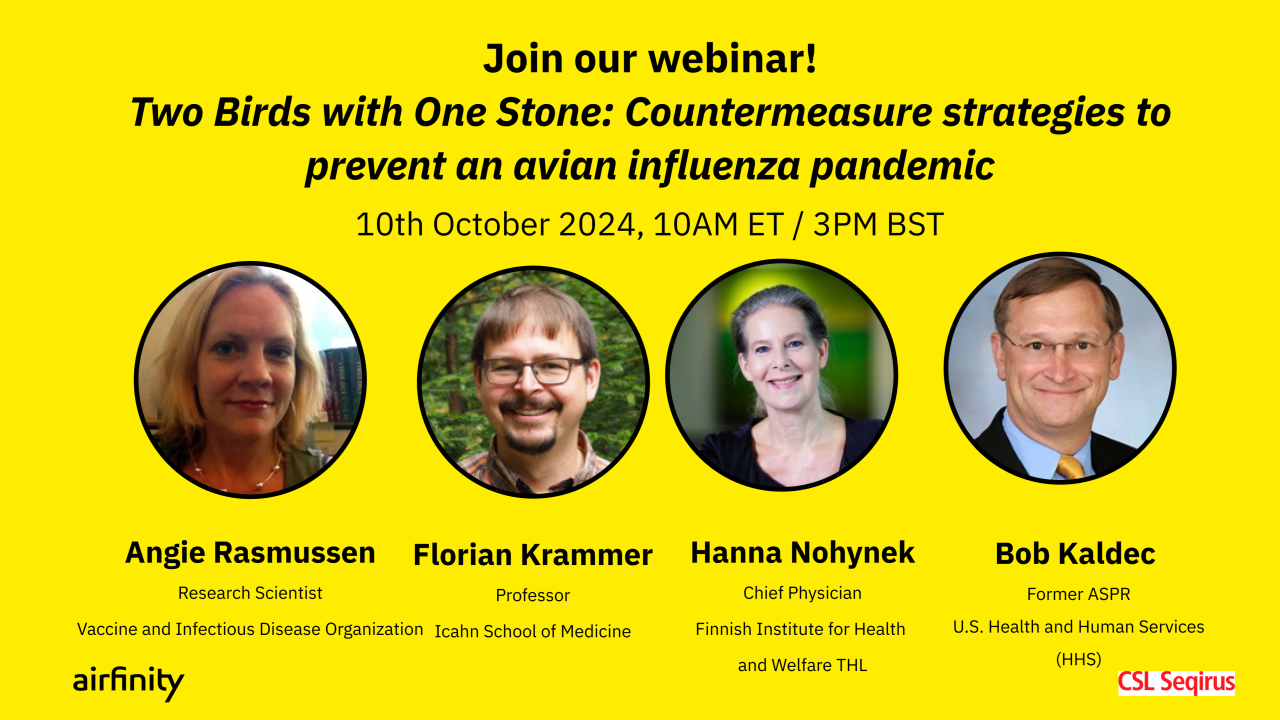
NEW: Airfinity Avian Influenza Webinar

“Join Airfinity and its expert panelists in a discussion of the current avian influenza outbreak. Key topics will include the evolution of the virus, the potential of a recombination event and the current state of pandemic preparedness.”

This event will take place on October 10 at 10 am ET. Learn more and join here.

NEW: Potential Research Priorities to Inform Readiness and Response to Highly Pathogenic Avian Influenza A (H5N1)

“The National Academies will host a 2-day virtual public workshop, October 22-23, to explore research priorities for the ongoing H5N1 outbreak in the U.S. Recognizing the interconnection between people, animals, and their shared environment, this workshop will take a One Health approach to bring together federal government agencies, the academic community, and the private sector, as well as other relevant stakeholders across the health, agriculture, and food safety sectors.”

“Workshop discussions will focus on basic science and research areas of concern and may help inform future research that could provide local, national, and global communities with information about virus transmission, mitigation of risks, and appropriate measures to prevent the spread of disease.”

Learn more and register here.

NEW: One Health and the Politics of COVID-19 Book Launch

The Writer’s Center is hosting a book launch for Dr. Laura Kahn’s new book, One Health and the Politics of COVID-19 (blurb below) on November 23 at 2 pm EST in Bethesda, MD. Learn more and RSVP here.

One Health and the Politics of COVID-19 unpacks the mysteries of COVID-19’s origins to impart important lessons for future outbreaks. The One Health concept recognizes the interconnected links among the health of humans, animals, plants, and the environment. By comparing the history, science, and clinical presentations of three different coronaviruses—SARS-CoV-1, MERS, and SARS-CoV-2 (COVID-19)—Kahn uncovers insights with important repercussions for how to prepare and avoid future pandemics. The One Health approach provides a useful framework for examining the COVID-19 pandemic. Understanding the origins of this zoonotic disease requires investigating the environmental and molecular biological factors that allowed the virus to spread to humans. The book explores the many ways in which the wild animal trade, wet markets, and the camel industry contributed to the spread of the earlier SARS-CoV-1 and MERS coronaviruses. For SARS-CoV-2 (COVID-19), Kahn examines the biosafety, biosecurity, and bioethics implications of gain-of-function research on pandemic potential pathogens. This book is a must read to understand the geopolitics of the COVID-19 pandemic.”

Responsible AI: Design, Development, and Use

Join the Mason Autonomy and Robotics Center (MARC) for this 3-day in-person course on Responsible AI: Design, Development, and Use!  As AI becomes increasingly pervasive across various domains, it is essential that we prioritize responsible principles, policies, and practices. Learn from top AI scholars and industry experts about ethical and safe AI deployment. You’ll also gain the critical skills to navigate the complexities of AI in business, healthcare, transportation and more.
Course Dates: October 15-17, 2024
Registration Deadline: October 8, 2024

FLUency: True Expertise and Effectiveness in the Battle Against Influenza

“This Commission meeting, FLUency: True Expertise and Effectiveness in the Battle Against Influenza, will be held on Tuesday, October 8th, in Washington, DC. The focus of this meeting will be to provide the Bipartisan Commission on Biodefense with a better understanding of: (1) national leadership to defend food and agriculture against influenza; (2) federal operational requirements for preparedness, coordination, and response; (3) biosurveillance, forecasting, and the need for diagnostic tests; and (4) front-line needs and partnerships in the fight against influenza.”

This event will take place in-person on October 8 from 9:20 am to 2 pm EST. Learn more and register here.

Register now: https://bit.ly/3zMvZOR

Bio and Beer (October 10)

From the Northern Virginia BioHub: Join us for a panel discussion with local investors as they share their funding priorities, insights on what’s ahead, and tips for meaningful engagement. Also, connect with our dynamic community of professionals from industry, academia, healthcare, investment, and government for a fun evening of networking!

Our panelists include:

  • Deborah Hemingway, Managing Partner, Ecphora Capital
  • Bibhash Mukhopadhyay, Managing Partner, Sound Bioventures
  • Kevin O’Connell, Senior Vice President, In-Q-Tel

Register to attend for free at: https://ibi.gmu.edu/event/october-2024-bio-beer/

Location: JLL Tysons Office, 1800 Tysons Boulevard, McLean, Virginia 22102

Hosted by: The Northern Virginia BioHub

Signature Sponsor: JLL

Additional Sponsors: Virginia Bio, the Prince William County Department of Economic Development, and George Mason University’s Institute for Biohealth Innovation

External Review of Ethical, Legal, Environmental, Safety, Security, and Societal Issues of Engineering Biology Research and Development

From NASEM: “Engineering biology holds significant potential to transform the U.S. and global economy, with promise to deliver innovative solutions in health, climate, energy, food and agriculture, and more. As research and development in engineering biology and other areas of the bioeconomy advance, addressing the societal issues related to these technologies is imperative. As requested by the CHIPS and Science Act, this study will conduct an evaluation of the ethical, legal, environmental, safety, security, and other societal issues related to engineering biology, and make recommendations on research needs related to these issues and means to effectively incorporate their consideration into research practice.”

“The National Academies of Sciences, Engineering, and Medicine (NASEM) will appoint an ad hoc committee to review and make recommendations on the ethical, legal, environmental, safety, security, and other appropriate societal issues related to engineering biology research and development. The committee will address the scholarship and practice of addressing these issues, focusing specifically on:

(1) An assessment of the current knowledge and practice on assessing and mitigating various societal issues including ethical, legal, environmental, safety, and security issues.
(2) A description of the gaps and needs relating to such issues, focusing on approaches for co-generation of assessment approaches and design of products, technologies, and services with users of engineering biology research and development
(3) Actionable recommendations on how the National Engineering Biology Research and Development Initiative, established by the CHIPS and Science Act, can address the identified gaps and needs.
(4) Actionable recommendations on how researchers across the range of disciplines engaged in engineering biology can best incorporate considerations of such societal issues into the development of research proposals and the conduct of research.”

“NASEM will produce a consensus report presenting the results of its work and offering its findings, conclusions, and recommendations.”

“We invite you to submit suggestions for experts to participate in this activity. The call for experts closes on October 16, 2024 at 11:59 (ET).”

Recommend an expert here.

DARPA Invites Proposals for AI Biotechnology Pitch Days Dec. 5-6

“DARPA funds the research and development of technologies with the potential for transformational impact, central to delivering on the agency’s mission to create and prevent strategic surprise for national security. The agency’s Biological Technologies Office focuses on the natural world to derive revolutionary capabilities centered on:

  • Foundational technologies that promote simulation and prediction of biological systems and outcomes, like simulation, foundational models, and data generation,
  • Warfighter readiness, health, and recovery, such as medical countermeasures, diagnostics, health IT and medical devices, and
  • Operational support of U.S. forces to enable their execution of missions across the spectrum, ranging from fibers for garments to distributed, point-of-need manufacturing.”

“To capitalize on these new opportunities and further accelerate the pace of scientific and technological discovery and development, DARPA looks to include targeted and limited-scope investments via an AI BTO solicitation seeking proposals on technologies focused at the intersection of artificial intelligence and biotechnology.”

‘“AI BTO seeks to fund proposals that catalyze the formation of future research projects by clarifying the opportunity space and de-risking technical barriers to achieving high impact,” said BTO Director Dr. Michael Koeris. “To this end, the office is providing $4.5 million to support up to 45 revolutionary catalyst projects and will be finalizing research agreements day of. We look forward to reviewing the novel biotechnology approaches to further our national security mission.”’

“BTO leadership is interested in engaging first-time or non-traditional proposers and seeks revolutionary approaches to emerging or anticipated Department of Defense challenges. During these events, BTO will introduce five new overarching topics that align with AI/ML applications:

  • Prediction and Health
  • Autonomous Science
  • Biomanufacturing/Synthetic Biology
  • Challenges with Scale
  • Exciting Frontiers”

Pitch Days

“DARPA will host AI BTO Pitch Days on December 5-6, 2024, in the Washington, DC, region to select and award AI BTO catalyst projects. To be considered for AI BTO Pitch Day participation, offerors must submit a short white paper consisting of a technical description of the proposer’s idea in response to one of the focus areas listed above.”

“DARPA will notify offerors if they are selected for further evaluation via an in-person Pitch Day presentation to a panel of BTO program managers at the AI BTO Pitch Day event.”

“If selected for award at Pitch Day, DARPA may issue a Research Other Transactions award for one of three award scenarios – $100,000, $200,000, or $300,000. The maximum amount of government funding given to any single proposer will be $300,000.”

“To submit a white paper, register at https://usg.valideval.com/teams/aibto_2024/signup. The deadline is Friday, October 9, 2024 by 4:00PM EDT. Late applications will not be accepted.”

“Additional information is available on SAM.gov.”

Call for Experts: Health-Security Interface Technical Advisory Group (HSI-TAG)

“The World Health Organization (WHO) is seeking two experts to serve as new members of the Health-Security Interface Technical Advisory Group (HSI-TAG). This “Call for experts” provides information about the advisory group in question, the expert profiles being sought, the process to express interest, and the process of selection.”

“The concept of Health-Security Interface (HSI) applies to those public health activities whose performance involves to some extent the security sector broadly understood (e.g. international and non-governmental organizations, civil defense, military health personnel, law enforcement and armed forces, defense-related research programmes), certain international organizations and other entities with a security relevant mandate. These activities may include protection of health from traditional and emerging infectious disease threats; deliberate events and investigation of alleged use of chemical and biological agents including non-permissive environments and conflict zones; and any health activities performed in collaboration with security actors.”

“The HSI-TAG is multidisciplinary, with members who have a range of technical knowledge, skills and experience relevant to the Health-Security Interface.”

“Considering the recent developments and global trends, the Secretariat realized that there was a need to strengthen the following areas of expertise/experience, hence welcomes expressions of interest from:

  • Bioterrorism experts (knowledge on pathogens of security concern, their microbiological characterization and application/modification for weaponization, diagnostics, countermeasures and containment measures),
  • Decision/policy makers with hands-on experience dealing with significant deliberate event(s) (biological/chemical) response at the local, regional, or national level.”

“For the improved geographical and gender representation of the HSI-TAG members, the WHO Secretariat encourages applications from the WHO African, Western Pacific, European, Eastern Mediterranean and Pan American Health Organization/Americas regions and female or non-male gender identities.”

Learn more about the HSI and express interest by October 7 here.

Pandora Report 4.21.2023

This week is another mixed bag highlighting recent alumni achievements and program happenings, discussing the release of annual State Department reports on global compliance with the NPT, CWC, and BWC, and Senate Republicans’ latest report on the origins of SARS-CoV-2. Several new publications and upcoming events are included, as well as open calls for experts and fellowship opportunities.

Fairfax County Health Department Recognizes Mason for Pandemic Response

Recently, “George Mason University was recognized by the Fairfax County Health Department (FCHD) for being an outstanding system partner in managing and operationalizing the university’s pandemic planning, response, and recovery. The partnership, which began long before the COVID-19 pandemic, has been vital in enhancing the health and well-being of the shared communities.”

The same piece announcing this interviewed a Biodefense PhD alumna, Julie Zobel, who is currently associate vice president of Safety, Emergency, and Enterprise Risk Management and Mason’s COVID director-“Julie Zobel…expressed her gratitude for the partnership between Mason and FCHD. “We are honored to have worked alongside the Fairfax County Health Department to serve our community during these challenging times,” said Zobel. “The success of our pandemic response would not have been possible without this partnership. We look forward to continuing our collaboration and commitment to public health”’

Pathogens Project Convenes Meeting in Geneva

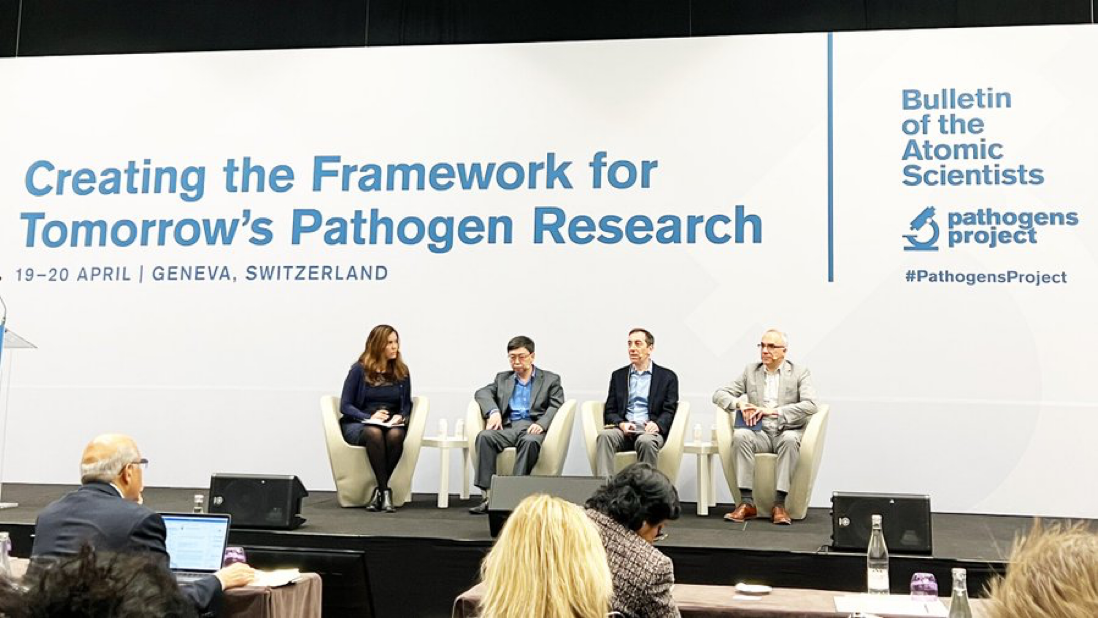
The initiative on “Creating the Framework for Tomorrow’s Pathogen Research” hosted a public meeting in Geneva, Switzerland this week. This conference included Pathogens Project taskforce members, policy leaders, journalists, scientists, and civic leaders, among others.

The conference featured both private and public (recorded) workshops. Furthermore, according to the Project’s site, “It will produce a final summary report with recommendations, along with individually prepared papers focused on risk assessment and mitigation of high-risk pathogen research. Conference papers will be published in a special edition of the Bulletin of the Atomic Scientists and made available on the Bulletin’s website.”

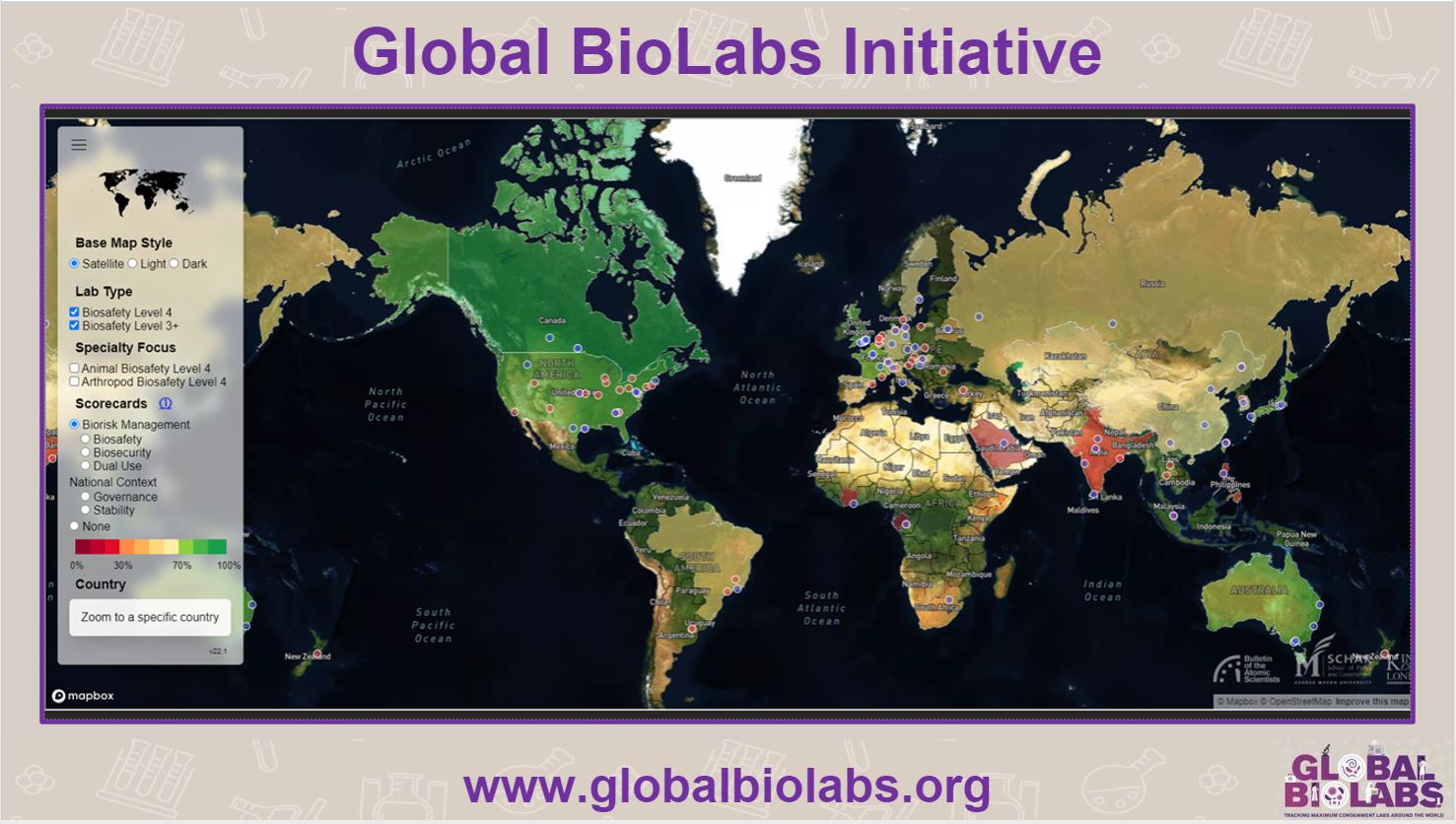
Biodefense Graduate Program Director Dr. Gregory Koblentz was on a panel at the event, “Empirical studies tracking risks”, alongside Dr. Rocco Casagrande (Founder and Chair of the Board, Gryphon Scientific), Dr. Weiwen Zhang (Distinguished Professor of Synthetic Biology and Biochemical Engineering, Tianjin University of China), and Dr. Sandra López-Vergès (Senior Health Researcher and Chief, Gorgas Memorial Institute of Health Sciences). Koblentz discussed ongoing work from the Global BioLabs project, which he co-leads with Dr. Filippa Lentzos of King’s College London. Global BioLabs offers an interactive map of BSL-4 and BSL-3+ facilities globally and recently released Global BioLabs Report 2023.

Biodfense Graduate Program Director Dr. Gregory Koblentz on the “Empirical studies tracking risks” panel
Visit https://www.globalbiolabs.org/ to access this interactive map feature

State Department Releases Arms Control, Nonproliferation, and Disarmament Compliance Reports

The State Department’s Bureau of Arms Control, Verification, and Compliance recently released the 2023 Annual Report on Compliance with the Chemical Weapons Convention (CWC) and the 2023 Adherence to and Compliance with Arms Control, Nonproliferation, and Disarmament Agreements and Commitments Report. The latter notes BWC compliance issues in the People’s Republic of China, Islamic Republic of Iran, Democratic People’s Republic of Korea, and the Russian Federation. This includes discussion of the lack of information needed to assess if China has eliminated its BW program, concerns about Iran’s ability to produce lethal BW agents, knowledge of North Korea’s BW program, and Russia’s violations of Articles I and II of the BWC.

The report also notes concerns about lack of transparency in Myanmar’s nuclear work (though evidence does not indicate that the country violated the NPT). The appended report on CWC compliance discusses further concerns with Myanmar and other countries’ compliance with the treaty. The report explains that “Four States Parties – Burma, Iran, Russia, and Syria – are certified in non-compliance with the CWC. Russia and Syria were first certified in non-compliance in April 2018. Iran was first certified in non-compliance in November 2018. Burma was first certified in non-compliance in 2019. Additional information is available in the 2023 classified Condition (10)(C) Reports. The United States also cannot certify the People’s Republic of China’s compliance, which was first reported in 2021.”

Dr. Gregory Koblentz and Madeline Roty (Biodefense MS ’21) authored a piece in the Bulletin of the Atomic Scientists in 2020 discussing Myanmar’s past with CW and US efforts to get the country to reconcile and come into compliance with the CWC. Following the 2021 coup d’état and the ouster of Aung San Suu Kyi, Myanmar is unlikely to meet the requirements needed to be in compliance, despite the progress outlined by Koblentz and Roty.

Senate Republicans Release COVID Origins Report

Senate Republicans have released their report exploring the origins of the COVID-19 pandemic, building on the short interim report released in October 2022. Two documents titled “Muddy Waters: The Origins of COVID-19” were released; one by the Muddy Waters Group and another prepared by Senator Roger Marshall alongside Dr. Bob Kadlec, Bob Foster, and members of the 117th GOP Health, Education, Labor & Pensions (HELP) Committee’s staff. The report was a product of the work of former Senator Richard Burr of North Carolina, who commissioned the report and oversaw the release of the October HELP committee interim report. Readers may recall the controversy that accompanied the release of that interim report, which coincided with the release of articles by Vanity Fair and ProPublica that were widely criticized for poor quality translations and other inaccuracies we discussed in November.

That troubled trend seems to continue in this new report, with admitted circumstantial evidence used to find that “The preponderance of information affirms the plausibility of a research-related incident that was likely unintentional resulting from failures of biosafety containment during vaccine-related research.”

Axios explains that the report “…argues that scientists haven’t found any naturally occurring viruses with the same composition of the coronavirus, and that there’s evidence the virus was circulating in Wuhan before the first known cases connected to the wet market were reported…It also argues that it appears Chinese researchers began development of at least two COVID vaccines in November 2019, including at the WIV, which “means SARS-CoV-2 would have been present at the WIV before the known outbreak of the pandemic,” and “It also documents numerous instances of lab safety concerns throughout 2019, including around the time when the virus may have first appeared.”

Much of this, however, relies on the same previously disputed points made in the interim report and the accompanying ProPublica and Vanity Fair pieces. Furthermore, as Caitlin Owens highlights in another piece for Axios, the reports rely on circumstantial evidence which means “The absence of evidence pointing, for example, to a precise transmission route from animals to humans will lead to very different interpretations of the same information.”

Dr. Angela Rasmussen, a virologist who has worked on high-profile studies supporting the idea of a natural origin of SARS-CoV-2 told Owens that the report “…demonstrates, in my view, a political agenda that’s meant to bolster the idea that the lab leak hypothesis is more supported than it is. But also it is so full of just factual errors.” Rasmussen also counters a number of key assertions made in the new report, including those such as the presence of a furin cleavage site on SARS-CoV-2’s spike protein is in itself suspicious and that the Wuhan Institute of Virology was dealing with substantial biosafety problems that Party leadership was concerned about.

All told, this report seems unlikely to change much or anything in this ongoing public debate.

Understanding Cyber-Warfare: Politics, Policy and Strategy

Chris Whyte and Brian Mazanec (a Biodefense PhD alumnus) are pleased to announce the publication of the second edition of their textbook Understanding Cyber-Warfare: Politics, Policy and Strategy (Routledge, 2023).  This second edition of their popular textbook offers an accessible introduction to the historical, technical, and strategic context of global cyber conflict. The second edition has been revised and updated throughout, with three new chapters, to include coverage of the role of cyber in the war in Ukraine as well as a discussion of the role of emerging information technologies like artificial intelligence and quantum computing in shaping the dynamics of global cyber conflict.  The second edition has recieved positive reviews. For example James R. Clapper, the former Director of National Intelligence, called it “an authoritative tutorial on the arcane complexities of cyber warfare” and said this edition “updates a previous version and makes the book more contemporary. It is a must-read for those who are serious about mastering this unique medium of combat, in all its dimensions.”  More details can be found here.

“Artificial Intelligence and Machine Learning for Bioenergy Research: Opportunities and Challenge”

New from the US Department of Energy’s Genomic Science Program: “The integration of artificial intelligence and machine learning (AI/ML) with automated experimentation, genomics, biosystems design, and bioprocessing represents a new data-driven research paradigm poised to revolutionize scientific investigation and, particularly, bioenergy research. To identify the opportunities and challenges in this emerging research area, the U.S. Department of Energy’s (DOE) Biological and Environmental Research program (BER) and Bioenergy Technologies Office (BETO) held a joint virtual workshop on AI/ML for Bioenergy Research (AMBER) on August 23–25, 2022.”

“Approximately 50 scientists with various expertise from academia, industry, and DOE national laboratories met to assess the current and future potential for AI/ML and laboratory automation to advance biological understanding and engineering. They particularly examined how integrating AI/ML tools with laboratory automation could accelerate biosystems design and optimize biomanufacturing for a variety of DOE mission needs in energy and the environment.”

The report describing the workshop findings is now available here.

“The Making of a Biosafety Officer”

David Gillum discusses the roles of biosafety professionals in this piece for Issues in Science and Technology, writing in part “The question of how the biosafety community generates and transmits knowledge is interesting in itself, but it is also an urgent issue. The need for biosafety workers is growing just as current professionals are skewing older: an estimated 54% are over 50 and one of the few surveys of the field suggests there are six times as many biosafety officers over 70 as there are under 30. Preparing more of us—and keeping the public safe as the complexity of biological research, health, and manufacturing projects burgeons—is made more difficult by the importance of tacit knowledge in our education. Methods for understanding, communicating, and mitigating risk are difficult to transfer to others. To enhance public health and safety, people in my line of work should ease this transfer by considering how the profession might be standardized and formalized.”

“Viral Families and Disease X: A Framework for U.S. Pandemic Preparedness Policy”

In this policy brief for the Center for Security and Emerging Technology, Schuerger et al. explain that “Pandemic threats are increasing as globalization, urbanization, and encroachment on animal habitats cause infectious outbreaks to become more frequent and severe. It is imperative that the United States build a pipeline of medical countermeasure development, beginning with basic scientific research and culminating in approved therapies. This report assesses preparedness for families of viral pathogens of pandemic potential and offers recommendations for steps the U.S. government can take to prepare for future pandemics.”

“Integrating Public and Ecosystem Health to Foster Resilience: Proceedings of a Workshop”

“Ecosystems form the foundation upon which society can survive and thrive, providing food, water, air, materials, and recreation. The connections between people and their environments are under stress from human-driven climate change, pollution, resource exploitation, and other actions that may have implications for public health. Existing intellectual frameworks including One Health, Planetary Health, ecosystem services, and nature-based solutions help to connect different elements related to the resilience of public health and ecological health systems. However, because of the breadth of this issue, many implications regarding public health are not well characterized, leading to gaps in understanding the interconnections between public health and ecosystem health systems and how ecosystem resiliency may affect public health.”

“The National Academies of Sciences, Engineering, and Medicine held a workshop in September 2022 focused on the integration of public and ecosystem health to foster resilience. This workshop was designed to inform the development of a research agenda aimed at bridging the knowledge-to-action gap and spur a move from research to policy and practice. Participants included a broad range of interdisciplinary researchers and practitioners from the public health, natural resource management, and environmental protection communities. The workshop provided a forum for the exchange of knowledge, discussion of critical gaps in understanding and practice, and identification of promising research that could support the development of domestic and international policy and practice.”

“The proceedings summarizing the workshop is now available for free download, and a public webinar exploring the workshop topics will take place virtually in early May. Click below to download the proceedings, register for the webinar, and visit the project page to more about this publication.”

“The Right People and the Right Question: Getting Chemical Weapons Out of Syria”

In this recent video story for the Stanley Center for Peace and Security, Tom Countryman discusses his tenure as the Assistant Secretary of State for Non-Proliferation as the Department navigated concerns about Syria’s chemical weapons. He highlights key lessons learned in doing this, including the need to mind the political context one is operating in, the importance of knowing who the right people are and being able to motivate and mobilize them, appropriately identifying goals and what is needed to achieve them, and, finally, not allowing the difficulties of political relationships to overshadow common interests.

“Reducing the Problem: Eliminating Syria’s Chemical Weapons”

Andy Weber discusses elimination of the Syrian CW stockpile in this video story for the Stanley Center. He covers how he came to be the Assistant Secretary of Defense for Nuclear, Chemical, and Biological Defense Programs and more, saying in part “Sometimes, whether it’s Gaddafi in Libya, or Assad in Syria, it’s unsavory characters, who have these horrific weapons. And you have to work with them sometimes, and it’s hard, and it’s challenging, and you have to keep your eyes open. You need to make sure you’re not indirectly helping them in another area. But that’s where good oversight comes in, and you have to think about the objective of all these programs. The objective is to save lives, to prevent mass casualties in any country, anywhere in the world. These are global programs that improve global security.”

“Armed Conflict and Nuclear Security: Implications for Europe”
Muhammed Ali Alkiş discusses the efficacy of the traditional approach to nuclear security in this recent publication for SIPRI: “The traditional approach to nuclear security is unlikely to be effective against the full spectrum of current threats, including those posed by state actors. The lessons learned from the Russian occupation of Ukrainian nuclear power plants, the potential radiological consequences of armed attacks against nuclear facilities and the potential increase in the number of nuclear power states in the future underscore the need for a strong international framework to address nuclear security challenges.”

“The European Union (EU) is committed to implementing the highest international standards for nuclear security and may therefore be in a position to lead efforts to address threats of armed attacks against nuclear installations. This paper provides a range of potential policy recommendations and actionable steps that the EU and its member states could take at legal, institutional and operational levels to minimize the nuclear security threats posed by armed conflict in the future. While they may appear politically challenging or even unrealistic at present, the conflict in Ukraine highlights the very real need for the types of actions recommended by this paper.”

“Technology Primer: Artificial Intelligence & Machine Learning”

Checkout this new report from the Harvard Belfer Center: “Artificial Intelligence (AI), can be defined as the theory and application of machines—especially computer programs—to perform tasks that typically require human intelligence, such as image captioning and generation, speech recognition and synthesis, natural language understanding and production, tool assembly and utilization, as well as various other perception-action based engagements. AI, in its current technological state, is being applied in various industries and domains, such as online advertising, financial trading, healthcare, pharmaceutical, and robotics. The lucrative market opportunities offered by AI applications have attracted investments from tech giants like Alphabet, Apple, Meta, Amazon, and Microsoft, as well as research universities and startups.”

“Machine Learning (ML), commonly categorized as a subfield of AI, is a field of study concerning the automatic discovery of historical patterns in data using statistical algorithms. ML’s driving principle is that historical patterns are likely to reappear in the future. The discovered historical patterns can therefore be leveraged to make accurate predictions on data that has not been seen before. Once an algorithm is trained, it can be applied to new, larger streams of data. ML is already an integral component of many deployed commercial applications, such as content generation (e.g., text, image, audio, video generation), virtual assistants, social media feed ranking, content recommendation systems, financial market prediction, and healthcare screening and diagnostic tools, as well as administrative applications. In addition, ML is foundational in various other emerging technologies, such as autonomous vehicles and next-generation cybersecurity.”

“Currently, United States policy with regards to AI often derives from interpretations of various pre-existing legislations and legal precedents. However, with the increased awareness of AI-related risks (e.g., bias, accountability, misuse, etc.), and the potential size of their impact, over the last decade, the number of proposed bills containing AI provisions significantly increased at both the state and federal levels (i.e., from two bills in 2012 to 131 in 2021), with 2% of them becoming law at the federal level and 20% of them becoming law at the state level. Similarly, policies and regulatory frameworks are being crafted to guide the development and application of AI in other continents too, with Europe and Asia leading the process. Acknowledging the potential impact of this technology on human life and societal dynamics, there is a pressing need for U.S. legislators and policymakers to remain engaged in the ethical and practical development of artificial intelligence.”

Lessons From the COVID War: An Investigative Report

The independent, nonpartisan Covid Crisis Group has spent two years investigating the causes and consequences of the COVID-19 pandemic. The Schar School of Policy and Government and Biodefense Graduate Program are proud to host two members of the group, Andrew Kilianski and Melissa Harvey, for an in-depth discussion of the group’s long-awaited report on what went wrong—and right—with America’s response to the pandemic: Lessons from the Covid War: An Investigative Report (Public Affairs, 2023).

The Covid Crisis Group is a remarkable group of 34 distinguished practitioners and scholars from a variety of backgrounds who came together determined to learn and share the most valuable lessons from the worst peacetime catastrophe of modern times. Lessons from the Covid War is plain-spoken and clear-sighted. It cuts through the jumble of information to make some sense of it all and answer: What just happened to us, and why? And crucially, how, next time, could we do better? Because there will be a next time.

Register here: https://gmu.universitytickets.com/w/event.aspx?id=1471 

Book Event: Open Source Investigations in the Age of Google 

From the Center for Strategic and International Studies: “How did a journalist find out who was responsible for bombing hospitals in Syria without leaving his desk in New York? How can South Sudanese activists safely track and detail the weapons in their communities, and make sure that global audiences take notice? What are policy makers, lawyers, and intelligence agencies doing to keep up with and make use of these activities? A team of authors tackle these questions in their new book “Open Source Investigations in the Age of Google.”‘ 

“This new interdisciplinary book seeks to answer these questions and more, with contributions by prize-winning practitioners, experts, and rising stars from across the open source investigation community. Painting a comprehensive picture of the digital information space today, it explores the manner and methods in which current open source investigations are conducted, as well as examines the opportunities and challenges they present to salient issues to the information environment such as trust and transparency, accountability, justice, amongst others.”‘

“Please join CSIS virtually on April 24, 1-2 pm EDT for a panel discussion on open-source investigations moderated by Diane Cooke, visiting fellow with the International Security Program. The conversation will include Hans Kristensen, Director of the Nuclear Information Project, Federation of American Scientists; Christiaan Triebert, journalist on the New York Times Visual Investigation Team; and Henrietta Wilson, Senior Analyst for the Strategic Concept for the Removal of Arms and Proliferation, SOAS University of London & King’s College London.”

Register here.

Online Event: Civil Society at the 5th CWC Review Conference

From the CWC Coalition: “The Fifth Five-Year Review Conference (RC-5) for the 1997 Chemical Weapons Convention will be held in the Hague from May 15-19, 2023.”

“At the CWC RevCon, member states and the broader chemical weapons disarmament community will gather to assess past achievements, treaty implementation and compliance, and discuss plans to strengthen the CWC in the years ahead.”

“You are invited to join a virtual discussion on the upcoming Fifth Five-Year CWC Review Conference (RC-5), major issues to be addressed, and the role of civil society and non-governmental organizations.”

“We will be joined by Elisabeth Waechter, Head of Public Affairs at the OPCW. Paul Walker, the Chair of the CWC Coalition, will moderate.”

This event will take place on April 26 at 10 am EST. Register here.

National Biodefense Science Board Public Meeting

The NBSB will meet virtually on May 4 at 2 pm EST to discuss lessons from COVID-19 and will present recommendations on several topics, including collection, analysis, and sharing of operational health data, uses of virtual healthcare during disaster response, and disaster response challenges specific to rural and underserved communities. Register here.

Virtual Workshop: Prioritizing Actions for Epidemic and Pandemic Preparedness

From the National Academies: “Please join us May 4 & 18, 2023 from 8 a.m. to 12 p.m. ET for a virtual symposium examining how to strengthen the evidence-based prioritization of epidemic and pandemic preparedness and response capabilities.

The symposium will convene global health planning stakeholders, including those in government and academia, and across health- and non-health sectors to:

  • Review assessment tools and how, independently and together, they relate to national action planning.
  • Gain insight into how countries and organizations currently select priorities in funding for epidemic prevention, detection, and response.
  • Assess evidence for effective prioritization approaches to building disease surveillance and risk communication capabilities.
  • Identify governance structures that can support robust and reliable systems for epidemic and pandemic preparedness and response investments.

This symposium is in collaboration with the Division on Earth and Life Studies. Learn more about this workshop by visiting the event webpage.”

Nobel Prize Summit-Truth, Trust and Hope

Taking place May 24-26 this year in DC and virtually, this Nobel Prize Summit asks “How can we build trust in truth, facts and scientific evidence so that we can create a hopeful future for all?”

“Misinformation is eroding our trust in science and runs the risk of becoming one of the greatest threats to our society today.”

“Join us at this years’ Nobel Prize Summit which brings together laureates, leading experts and you in a conversation on how we can combat misinformation, restore trust in science and create a hopeful future.”

Learn more and register here.

CSWMD 2023 Annual Symposium: WMD in the Decisive Decade

“The National Defense University’s Center for the Study of Weapons of Mass Destruction (CSWMD) invites you to join us on 14 June 2023 for the virtual Annual CSWMD Symposium, titled WMD in the Decisive Decade.”

“This year’s symposium will explore the cognitive impacts WMD has on strategic decision making and the challenges associated with operating in an environment where WMD has been employed. It will be an opportunity for the WMD community to engage with officials and thought leaders on current WMD challenges at the unclassified level, including keynote addresses by Richard Johnson, Deputy Assistant Secretary of Defense for Nuclear and CWMD Policy and Rebecca Hersman, Director of the Defense Threat Reduction Agency.”

“For more information and to register for this event click here. Please RSVP by 9 JUNE 2023.”

“We look forward to hosting you for the event. For more information about the WMD Center and reference our research, please visit our website at https://wmdcenter.ndu.edu/ and follow us on Twitter and on LinkedIn.”

Gordon Research Conference: Cross-Cutting Science Facilitating Collaboration Across the Threat-Science Research Community

“The Nonproliferation, Counterproliferation and Disarmament Science GRC is a premier, international scientific conference focused on advancing the frontiers of science through the presentation of cutting-edge and unpublished research, prioritizing time for discussion after each talk and fostering informal interactions among scientists of all career stages. The conference program includes a diverse range of speakers and discussion leaders from institutions and organizations worldwide, concentrating on the latest developments in the field. The conference is five days long and held in a remote location to increase the sense of camaraderie and create scientific communities, with lasting collaborations and friendships. In addition to premier talks, the conference has designated time for poster sessions from individuals of all career stages, and afternoon free time and communal meals allow for informal networking opportunities with leaders in the field.”

This conference will take place July 9-14 in Ventura, CA. Learn more and register here.

Call for Applications: Early-Career Fellowship for Reducing Nuclear Weapons Risks

The Council on Strategic Risks “is announcing a continuation of its Early-Career Fellowship for Reducing Nuclear Weapons Risks. Through this six-month program, early-career professionals will work with leading experts from CSR’s team and network to develop a better understanding of practical risk reduction concepts and to generate new ideas regarding:

  • Nuclear strategic stability
  • Strengthening norms against nuclear weapons threats and use
  • Avoiding miscalculations and preventing accidents/incidents
  • Preventing and addressing nuclear proliferation
  • Responsibilities of nuclear weapons-capable states”

Learn more and apply here.

Seeking Subject Matter Expert(s) (SMEs) with Experience Educating Global Audiences on the Importance of Securing Emerging Technologies

“CRDF Global is seeking subject matter expert(s) (SMEs) to engage and educate global audiences. The expert(s) will work on deliverables relating to building a culture of security in the private sector. These deliverables will include the development of an online asynchronous course and four hybrid hackathons, which will take place at local incubator hubs in several countries.”

“The expert(s) will design and develop an asynchronous course to counter misuse and raise awareness of emerging technologies with potential weapons of mass destruction (WMD)-related applications by state and non-state actors. The audience for this course will be individuals in the private sector (particularly in start-ups, innovation hubs, and incubator spaces) in various countries globally. This asynchronous course should train key stakeholders on how to develop and foster a culture of security.”

Learn more here.

Weekly Trivia Question

You read the Pandora Report every week and now it’s time for you to show off what you know! The first person to send the correct answer to biodefense@gmu.edu will get a shout out in the following issue (first name last initial). Our question this week is: “In 1984, what group spread Salmonella enterica at restaurants and shops in Dulles, Oregon in an attempt to influence local elections?”

Last week, our question was: “In the 2011 film Contagion, Dr. Erin Mears (played by Kate Winslet) is an officer in which CDC program?” The answer is the Epidemic Intelligence Service.

Pandora Report 4.7.2023

Happy Friday! This week includes updates from our program, discussion of an upcoming hearing on the death of Dawn Sturgess, ASPR’s new National Health Security Strategy, and more. We also have several recent publications, upcoming events, and professional opportunities as well, including a publication from a Biodefense PhD student and a fellowship opportunity at CDC.

Biodefense PhD Program Alumnus Named Rodel Federal Executive Fellow

Biodefense PhD alumnus and Schar School adjunct faculty member Dr. Brian Mazanec was recently selected as a member of the Class of 2023 cohort of the Rodel Federal Executive Fellowship. Mazanec is currently the Deputy Assistant Secretary and Director, Office of Security, Intelligence, and Information Management, Administration for Strategic Preparedness and Response, US Department of Health and Human Services.

The Rodel Federal Executive Fellowship is an intellectual and leadership professional development fellowship for senior-level career civil servants across the federal government’s executive branch agencies. For each cohort, the program selects 20 to 24 exceptional members of the Senior Executive Service (SES), Senior Foreign Service (SFS), GS-15’s, and equivalent positions from across the federal government to come together for a series of three multi-day seminars. Working with expert moderators, the Fellows study and discuss challenging texts on leadership and innovation in large organizations, the nature of democracies, emerging technologies, the American economy, and the changing geopolitical landscape. They also engage in practical, relevant leadership training focused on promoting innovation within the context of large government bureaucracies.”

Hearing Covering Death of Dawn Sturgess Set for October 14

Dawn Sturgess was a Wiltshire woman who died after her and her partner, Charlie Rowley, found a fake perfume bottle containing a Novichok agent. This incident happened months after the targeted attack against the Skripals in Salisbury in 2018 and, though former Home Secretary Priti Patel announced the hearing in November 2021, Sturgess’s family has pushed for the process to finally move forward. According to the Guardian, “At a preliminary hearing last month, lawyers for the UK government defended delays in disclosing documents, claiming that substantial redactions were needed to protect sensitive information from the “hostile state that is Russia”…The UK government has blamed the Russian state for the novichok attack, and the British police have identified three suspects wanted over the poisonings.”

ASPR Releases National Health Security Strategy

“Every four years, ASPR develops the National Health Security Strategy (NHSS) to establish a strategic approach to enhance the security of the nation’s health in times of crisis. The NHSS provides a roadmap to strengthen and adapt health care, public health, and emergency preparedness and response no matter the threat. This includes emphasis on equitable access to post-disaster health services and meeting the needs of at-risk individuals and underserved communities. The 2023-2026 NHSS includes an enhanced focus on several health care and public health challenges exacerbated during COVID-19 and other public health emergencies, including supply chain resiliency, health care and public health workforce capacity, risk communication, and health equity.”

“The 2023-2026 NHSS Implementation Plan builds on the goals and objectives of the NHSS; guides federal actions for desired outcomes; and recommends implementation activities for state, local, tribal, and territorial partners; the health care industry; public health professionals; pharmaceutical manufacturers; communities; and other stakeholders. The NHSS Evaluation of Progress examines the actions taken by the United States between 2019 and 2022. The 2023-2026 NHSS builds on the progress made between 2019 and 2022 to provide a strategic direction that can be used to better protect people in communities nationwide from health security threats in the years to come.”

This NHSS includes three overarching strategic goals: Strengthen health care and public health systems to prepare for and respond to concurrent health emergencies, including those that arise from unknown threats; Improve capabilities to safeguard and protect against an array of health security threats, including emerging and re-emerging infectious diseases, especially zoonotic diseases; Ensure a resilient and sustainable public health industrial base and supply chain that can rapidly develop and deploy safe medical countermeasures (MCMs).

Read the strategy, implementation plan, evaluations, and FAQs here.

You-Whippee-Ki-Yay, UIPE is Getting a Facelift Already!

JPEO-CBRND made a very important announcement this week:

Other interesting ideas included revamping the 66P legacy system to include mesh panels to improve breathability. 😉 Learn more about UIPE (“you-whip-ee”) here.

“The Analytic Challenges of Shifting to Domestic Terrorism”

Biodefense PhD student Chris Quillen recently published an article in the Journal of Policing, Intelligence, and Counter Terrorism.  After many years of fighting the Global War on Terrorism, the U.S. Intelligence Community is increasingly focusing on the issue of domestic terrorism.  This shift in analytic effort raises intriguing questions about the most appropriate tools needed to combat this growing threat.  This article addresses the historical approach and possible solutions from similar countries and organizations before proposing a broader focus on extremist movements over designated terrorist groups. 

“The Origin of SARS-CoV-2: Animal Transmission or Lab Leak?”

Johns Hopkins’ Dr. Gigi Kwik Gronvall breaks down publicly available evidence of the start of the COVID-19 pandemic in this piece for Lawfare. She writes in part, “While the scientific evidence points to a “natural” emergence, it is decidedly not natural to have the conditions in place that led to this spillover event, or the very similar circumstances that led to the SARS epidemic in 2003. (In that epidemic, the market was not immediately cleared out, and samples could be taken from the civet cats and other animals sold there.) There is plenty of guidance available for how to sell and butcher animals safely, regulate markets, and crack down on the illegal wildlife trade—a global phenomenon that has a great deal of overlap with other criminal activities, including human trafficking, money laundering, and the illegal drug trade. Further research could also help improve these standards and better prepare for other viruses that could emerge in similar settings. There are many scientific knowledge gaps that need to be filled about viral evolution and bats, and more undetermined infections that might turn out to be the next pandemic need to be investigated so that researchers and policymakers can do more, earlier and better.”

“Surveillance of SARS-CoV-2 at the Huanan Seafood Market”

The much anticipated China CDC article was made available by Nature this week. Its abstract reads: “SARS-CoV-2, the causative agent of COVID-19, emerged in December 2019. Its origins remain uncertain. It has been reported that a number of the early human cases had a history of contact with the Huanan Seafood Market. Here we present the results of surveillance for SARS-CoV-2 within the market. From January 1st 2020, after closure of the market, 923 samples were collected from the environment. From 18th January, 457 samples were collected from 18 species of animals, comprising of unsold contents of refrigerators and freezers, swabs from stray animals, and the contents of a fish tank. Using RT-qPCR, SARS-CoV-2 was detected in 73 environmental samples, but none of the animal samples. Three live viruses were successfully isolated. The viruses from the market shared nucleotide identity of 99.99% to 100% with the human isolate HCoV-19/Wuhan/IVDC-HB-01/2019. SARS-CoV-2 lineage A (8782T and 28144C) was found in an environmental sample. RNA-seq analysis of SARS-CoV-2 positive and negative environmental samples showed an abundance of different vertebrate genera at the market. In summary, this study provides information about the distribution and prevalence of SARS-CoV-2 in the Huanan Seafood Market during the early stages of the COVID-19 outbreak.”

Dr. Angela Rasmussen breaks down issues and concerns with this article, including flaws in its metagenomic analysis, in this thread.

“What Happened When WMD Experts Tried to Make the GPT-4 AI Do Bad Things”

In this piece for the Bulletin of the Atomic Scientists, Thomas Gaulkin covers an open letter recently written and signed by hundreds of leaders in industry, policy, and academia calling for “…an immediate moratorium on the development of artificial intelligence “more powerful than GPT-4,” the large language model (LLM) released this month by OpenAI, an AI research and deployment firm. The letter proposes the creation of shared protocols and independent oversight to ensure that AI systems are “safe beyond a reasonable doubt.”’

He explains that “The letter’s call for a temporary halt on AI development may not be entirely at odds with OpenAI’s own recent representations of its outlook on the issue. The company’s CEO, Sam Altman, recently said “we are a little bit scared of this” and has himself called for greater regulation of AI technologies. And even before the world reacted to GPT-4 and ChatGPT’s release, OpenAI’s creators appear to have been sufficiently concerned about the risks of misuse that they organized months of testing dedicated to identifying the worst things that the AI might be used for—including the proliferation of weapons of mass destruction. 

“Ready or Not: Protecting the Public’s Health from Diseases, Disasters, and Bioterrorism”

From Trust for America’s Health: “Ready or Not: Protecting the Public’s Health from Diseases, Disasters, and Bioterrorism, has tracked the nation’s public health emergency preparedness since 2003. This twentieth edition of the report is as critical to policymakers now as it has ever been. The report is designed to give policymakers at all levels of government actionable data and recommendations with which they can target policies and spending to strengthen their jurisdiction’s emergency preparedness. The report’s 10 key public health preparedness indicators give state officials benchmarks for progress, point out gaps within their states’ all-hazards preparedness, and provide data to compare states’ performances against similar jurisdictions.”

Lessons From the COVID War: An Investigative Report

Beyond the Pandemic: Addressing Attacks on Researchers and Health Professionals

From the National Academies: “Last fall, the Committee on Human Rights (CHR) held a webcast series, Silencing Scientists and Health Workers during the Pandemic, which examined threats and attacks against science and health professionals connected to their work to combat the spread of COVID-19, as well as related implications for internationally-protected human rights.”

“On April 11 (3:00-4:15 pm ET), the CHR will host a webcast to mark the launch of the webcast series’ Proceedings-in Brief.  This event will gather experts to explore practical steps that scientists, researchers, and health professionals are taking to protect themselves and their colleagues from targeting—including violence, harassment, and other attacks.”

Learn more and register here.

Brain-Computer Interfaces Webinar Series, Part 2: BCIs in the Context of International Security: Military Uses, Applications and Risks

From UNIDIR: “Brain-computer interfaces (BCIs) are technical means and systems that provide direct links and communication between the brain and external devices. BCIs have been used for decades in the medical field, mainly in rehabilitation, including by the armed forces to support the recovery of injured servicemembers. Increasingly, however, the interest in the uses of BCIs has grown in scope, with novel applications exploring ways to enhance physical and cognitive functions in soldiers and weapon systems operators. Research areas include leveraging BCIs to monitor cognitive workload and performance, to enhance learning, to improve training, sensory and decision-making skills, as well as to enable remote direct control of weapon systems. Other areas of research explore convergences with the field of artificial intelligence, including using information and signal from the brain to train artificial intelligence systems.”

“BCIs can have a highly disruptive impact for the future of warfare, with significant legal and ethical consequences that deserve closer analysis.”

“UNIDIR is organizing a webinar series to unpack emerging questions related to the uses of brain-computer interfaces in the context of warfare and international security.”

This event will take place virtually on April 12 from 2-3 pm CEST. Register here.

Nobel Prize Summit-Truth, Trust and Hope

Taking place May 24-26 this year in DC and virtually, this Nobel Prize Summit asks “How can we build trust in truth, facts and scientific evidence so that we can create a hopeful future for all?”

“Misinformation is eroding our trust in science and runs the risk of becoming one of the greatest threats to our society today.”

“Join us at this years’ Nobel Prize Summit which brings together laureates, leading experts and you in a conversation on how we can combat misinformation, restore trust in science and create a hopeful future.”

Learn more and register here.

Gordon Research Conference: Cross-Cutting Science Facilitating Collaboration Across the Threat-Science Research Community

“The Nonproliferation, Counterproliferation and Disarmament Science GRC is a premier, international scientific conference focused on advancing the frontiers of science through the presentation of cutting-edge and unpublished research, prioritizing time for discussion after each talk and fostering informal interactions among scientists of all career stages. The conference program includes a diverse range of speakers and discussion leaders from institutions and organizations worldwide, concentrating on the latest developments in the field. The conference is five days long and held in a remote location to increase the sense of camaraderie and create scientific communities, with lasting collaborations and friendships. In addition to premier talks, the conference has designated time for poster sessions from individuals of all career stages, and afternoon free time and communal meals allow for informal networking opportunities with leaders in the field.”

This conference will take place July 9-14 in Ventura, CA. Learn more and register here.

CDC Laboratory Leadership Service Application Open

The CDC’s Laboratory Leadership Services (LLS) program is currently accepting applications through June 1. Designed as a companion to the Epidemic Intelligence Service, this service was launched in 2015 and aims to train lab-oriented public health professionals. “The LLS fellowship provides a one-of-a-kind training experience for laboratory scientists who are ready to apply their expertise inside and outside of the lab, ultimately preparing them to be the next generation of public health laboratory leaders who work to protect public health. Fellows conduct cutting-edge research, support rapid response to disasters and disease outbreaks, help investigate emerging health threats, and enhance the laboratory systems and practices that are essential for public health. LLS seeks laboratory scientists looking to take their careers to the next level while doing work that delivers real benefits to communities across the country.” Learn more and apply here.

Call for Papers: “Training Programmes To Counter Current And Emerging Biological And Chemical Proliferation Risks: Themes, Practices, And Lessons Learnt”

From the Journal of Strategic Trade Control: “The purpose of this call for papers is to facilitate inter-disciplinary exchange regarding the implementation of training to counter emerging chemical and biological proliferation challenges. In particular, the call welcomes contributions in the form of JOSTC articles on the processes, mechanisms, and tools for creating awareness of the following topics:

– Cross-border movement (e.g. transport, shipment) of chemical and biological materials and equipment.
– Cross-border movement of genetically modified organisms (GMOs).
– Trade in sensitive and dual-use chemical, biological, radiological, and nuclear (CBRN) materials and equipment.
– Strategic trade control regimes of relevance to disarmament and non-proliferation.
– Information security, data sharing, and cybersecurity challenges to CBRN non-proliferation.
– Due diligence and risk management initiatives to safeguard global supply chains against misuse and diversion.

Information about this call is available on the JoSTC webpage and the full description of the call can be accessed here. The deadline for paper submission is 2 October 2023.”

Weekly Trivia Question

You read the Pandora Report every week and now it’s time for you to show off what you know! The first person to send the correct answer to biodefense@gmu.edu will get a shout out in the following issue (first name last initial). Our question this week is: “The Forced Evolutionary Virus was developed by the the West Tek Corporation’s NBC Division in what popular video game franchise?”

Shout out to Daniel G. for correctly answering last week’s trivia. Our question was: “This well-known Irish-born American cook is thought to have infected as many as 122 people with typhoid fever and was the first person in the US identified as an asymptomatic carrier of the bacteria that cause the disease-Salmonella typhi. What was her legal name?” The answer is Mary Mallon, who became popularly known as Typhoid Mary.

Pandora Report: 2.17.2023

Happy Friday! This week we are tackling reporting on the WHO’s investigation into COVID-19’s origin, estimates that counter China’s official COVID-19 death count, new insight into the death of Pablo Neruda, and more. New publications listed in this issue include Rolf Ekéus’ book discussing his time leading UNSCOM and a recent CBWNet working paper authored by Ralf Trapp. New professional opportunities are also included in this week’s announcement section alongside our weekly trivia question.

Biodefense Alumnus Named 2023 Emerging Leader in Biosecurity Fellow

Matthew Ferreira (Biodefense MS ’22) was recently selected as a 2023 Emerging Leaders in Biosecurity Initiative (ELBI) fellow by the Center for Health Security at Johns Hopkins University. Ferreira joins a class of 31 fellows selected from a pool of more than 227 applicants. He told the Schar School, “I am so excited to be accepted into the ELBI Fellowship program…I am looking forward to meeting and connecting with the others in the Fellowship class as well as alumni of the program. Many of the professionals and scholars that I have had the pleasure to work with have participated in ELBI, so I’m honored to have the chance to meet and learn from this cohort of diverse and talented people in the coming year.”

Read more about Ferreira and his time in the Biodefense Graduate Program here.

Confusion Over Nature WHO COVID-19 Investigation Reporting

This week, Nature published a news article indicating the WHO had abandoned the planned second phase of its investigation into the origin of COVID-19. In it, Smriti Mallapaty began by writing “The World Health Organization (WHO) has quietly shelved the second phase of its much-anticipated scientific investigation into the origins of the COVID-19 pandemic, citing ongoing challenges over attempts to conduct crucial studies in China, Nature has learned. Researchers say they are disappointed that the investigation isn’t going ahead, because understanding how the coronavirus SARS-CoV-2 first infected people is important for preventing future outbreaks. But without access to China, there is little that the WHO can do to advance the studies, says Angela Rasmussen, a virologist at the University of Saskatchewan in Saskatoon, Canada. “Their hands are really tied.”

Naturally, this caused quite the ruckus. However, the WHO was quick to pushback and clarify that it has no plans to abandon this investigation. Dr. Maria Van Kerkhove released a statement denying the claims. In Nature‘s reporting, Van Kerkhove is quoted saying “There is no phase two,” to the investigation and that “the plan has changed,” as “The politics across the world of this really hampered progress on understanding the origins.” However, on Wednesday, she clarified-“I think we need to be perfectly clear that WHO has not abandoned studying the origins of Covid 19. We have not, and we will not.” As Health Policy Watch explains, she elaborated with “In a sense, phase two became the Scientific Advisory Group for the Origins of novel pathogens (SAGO),” she clarified. SAGO held its first meeting in November 2021 and was established as a permanent advisory group to work on drawing up a framework to understand the origins of not just COVID-19 but any future outbreaks. “So the creation of SAGO was in effect, our best effort to move this work forward.”

On issues with the PRC’s cooperation (or lack thereof), she added “Studies that were recommended from the March 2021-WHO report, from the June 2022-SAGO report and studies that we’ve been recommending at the animal human interface and markets, on farms need to be conducted in China. We need cooperation from our colleagues there to advance our understanding…”

The WHO is not the only one investigating COVID-19’s origin either, with House Republicans launching their investigation into whether the pandemic began with an accident at the Wuhan Institute of Virology. AP reports “The Republican chairmen of the House Oversight Committee and the Subcommittee on the Coronavirus Pandemic are seeking information, including from Dr. Anthony Fauci, concerning the idea that the coronavirus leaked accidentally from a Chinese lab.”

China-From CRISPR to COVID

China’s Post-Zero-COVID Wave

As China rolled back its Zero-COVID policies in early December, estimates and concerns about the deadly wave of infections the country faced abounded. This was particularly true as the new year travel season approached, as millions were set to travel from urban centers to their hometowns in rural areas across the country. Soon, reports of overflowing crematoriums and funeral parlors, sold out coffin makers, and sweeping infections coincided with continuously relaxing COVID-19 control policies. However, as of February 9, China has reported just 83,150 COVID-19 deaths, and leaders just declared a “decisive victory” against the virus. Of course, this is a number particularly difficult to believe in a country that has struggled so much with acquiring and delivering effective vaccines, relying instead on harsh lockdown and testing requirements.

As the New York Times explains, “The question of how many people died has enormous political relevance for the ruling Communist Party. Early in the pandemic, China’s harsh lockdowns largely kept the coronavirus at bay. Xi Jinping, the top leader, has portrayed that earlier success as evidence of China’s superiority over the West, a claim that would be hard to maintain with a high death toll.”

“The differences between China’s figures and researchers’ estimates are dramatic. The official numbers would give China the lowest death rate per capita of any major country over the entirety of the pandemic. But at the estimated levels of mortality, China would already have surpassed official rates of death in many Asian countries that never clamped down as long or as aggressively.”

So what gives? As we have discussed in the posts linked above, China is using much more narrow definitions of COVID-19 deaths, counting only those who died from respiratory failure and excluding those who died of liver, kidney, and even cardiac failure. Worse, the government quit counting COVID-19 deaths that occurred outside of hospitals which, coupled with the sudden absence of required testing and reporting, certainly had a major contribution to these suspicious numbers.

This piece from the New York Times discusses the numbers below and how experts at different institutions calculated them, including factors like China’s less effective vaccines, elderly populations, and more.

Source: The New York Times

The He Jiankui Saga Continues

Biodefense Graduate Program Associate Professor Dr. Sonia Ben Ouagrham-Gormley recently hosted an event along with her colleagues, titled “Looking Back into the Future: CRISPR and Social Values-BioGovernance Common’s Open Discussion with Chinese Academics.” Among other things, they highlight in their event summary that “We’ve exposed that there is little substance behind the ambitious Duchenne muscular dystrophy (DMD) gene therapy that Dr. Jiankui He, the scientist behind the illegal heritable human genome editing, has been boasting about to global patients. We were concerned that he might endanger another vulnerable population if his new venture remains unchecked,” and “Our event nudged Chinese media to publicly challenge Dr. He for the first time on his DMD research. As a result Dr. He has announced that he will prioritise research rather than social media promotion.”

Nature also covered the event, highlighting He’s refusal to discuss his past work and potential challenges this will create in understanding other important ethical issues. The article explains “On Saturday, He spoke at a virtual and in-person bioethics event that was promoted as “the first time that Dr. He has agreed to interact with Chinese bioethicists and other CRISPR scientists in a public event”. But during the talk, He did not discuss his past work and refused to answer questions from the audience, responding instead that questions should be sent to him by email.”

It continues later with “Some researchers worry that interest in He Jiankui is diverting attention away from more important ethical issues around heritable genome editing. “This event puts the spotlight on He Jiankui — Will he apologize? Is he displaying remorse?,” says Marcy Darnovsky, a public interest advocate on the social implications of human biotechnology at the Center for Genetics and Society in Oakland, California. Instead, she thinks researchers should focus on discussing whether there is a medical justification for heritable genome editing.”

He, who was recently released from prison and is now working in Beijing, garnered sharp criticism in 2018 when he announced that a woman had given birth after He implanted into her uterus two embryos he had used CRISPR-Cas9 to edit the CCR5 gene to make them resistant to HIV infection. It was later revealed that a second woman carried a third child whose genome He edited.

Was Pablo Neruda Murdered by a Physician Acting on Behalf of General Pinochet?

In late September 1973, the famed Chilean poet Pablo Neruda died in a clinic in Santiago, having checked out of a hospital earlier that day. The Nobel laureate was hospitalized with prostate cancer earlier that month, just as the coup d’état led by US-backed Augusto Pinochet ousted Chile’s socialist president, Salvador Allende. Neruda, a member of Chile’s Communist Party and close advisor to President Allende, checked out of the hospital after he claimed a physician injected him with an unknown substance. He reportedly died that evening of heart failure. In the decades since, his family and many members of the public have insisted he was murdered on the orders of Pinochet. This was spurred by reports from Manuel Araya, Neruda’s driver, that he witnessed Neruda tell his wife he believed the physician was ordered by Pinochet to kill him and the belief that Neruda was flying to Mexico to counter Pinochet in exile.

In 2013, a Chilean court ordered the launch of an investigation into Neruda’s death in light of these allegations and concerns. Neruda’s body was exhumed that same year, allowing scientists to test samples to better understand the poet’s death. This Wednesday, following a ten-year investigation by scientists in Chile, Canada, and Denmark, Chilean Judge Paola Plaza received the findings of an international report on the matter. The report indicates Pablo Neruda may have been killed by botulinum toxin-producing bacteria. The New York Times reports “The scientists found in Mr. Neruda’s body a potentially toxic type of bacteria that would not naturally occur there, and confirmed that it was in his system when he died, according to a two-page summary of the report shared with The New York Times. But they could not distinguish whether it was a toxic strain, and they could not conclude whether he was injected with the bacteria or if, instead, it came from contaminated food.”

The same article continues, “Yet the scientists conceded that other circumstantial evidence supported the theory of murder, including that in 1981, the military dictatorship poisoned political prisoners with bacteria possibly similar to the strain found in Mr. Neruda. (However, that method of poisoning stemmed from a chemical-weapons program the dictatorship began in 1976, three years after Mr. Neruda’s death.)”

While definitive answers remain out of reach in this case, Neruda’s is not the only contested death from this period. As the same article also explains “Yet Wednesday’s report and Ms. Plaza’s eventual conclusion may never sway some of the Chilean public. Karen Donoso, a Chilean historian, compared the uncertainty over Mr. Neruda’s death to some people’s lasting questions over the death of the leftist President Salvador Allende, who shot himself rather than fall into the hands of the military as it overthrew his government.”

“World’s Largest Collection of Viruses: Inside the Massive Biodefense Lab in Houston Area”

Houston’s ABC13 recently got an insider’s look at Galveston National Laboratory, located at the University of Texas Medical Branch. Their reporting offers an overview of the work that goes on at the facility, including in the BSL-4 area. As the station explains, “The Galveston National Laboratory is one of 14 U.S. facilities with BSL4 labs built by the National Institutes of Health in the years following the 2001 Anthrax attacks as a network of biodefense laboratories to “study viruses of pandemic potential and to develop medical countermeasures…The team is proud that in its 15 years, there has never been a “major laboratory incident resulting in the transmission of a disease” at the facility. This may be why most of us know little to nothing about their work.”

You can learn about the other 13 BSL-4 labs in the US and more around the world at globalbiolabs.org.

“Chemical and Microbiological Forensics in Investigations of Alleged Uses of Chemical and Biological Weapons – A Preliminary Analysis”

New from CBWNet: “In the latest CBWNet working paper, Ralf Trapp discusses the mechanisms for investigating the use of chemical and biological weapons and the development of scientific capacity for such investigations. The author highlights the importance of investigations in determining if a chemical or biological weapon was used, the type of agent used, and the origin of the weapon. The OPCW and the UN Secretary General’s Mechanism have set up systems with designated laboratories to investigate such allegations. However, there are still significant scientific challenges to be addressed, including validation of methods, agreed acceptance criteria, and distinguishing between natural and deliberate events. The paper emphasizes the need for continued investment and attention from governments to make progress in this field.”

“A Notorious Syria Conspiracy Theory is Definitively Debunked”

Brian Whitaker tackles the OPCW IIT’s newest report on the Assad regime’s use of CW in Douma and its debunking of disinformation surrounding the attack in this piece for New Lines Magazine. He writes in part, “The essence of the disinformation campaign was a refusal by its purveyors to accept that the Bashar al-Assad regime was conducting chemical warfare in Syria. Instead, they claimed all such attacks were “staged” by rebels to frame the regime and trigger a Western intervention. There was never any evidence for this, but it became the deniers’ standard response to reports of chemical attacks. The main reason the Douma attack in particular became a cause celebre for the deniers is it was one of only two chemical attacks (out of a total of over 300) that did in fact result in punitive airstrikes by Western powers. In addition, for the deniers, the emergence of two dissenters from within the OPCW and a series of leaked documents kept the issue alive longer than might otherwise have been expected. Meanwhile, Russia’s attempts to shield its Syrian ally led to political divisions in the OPCW, which threatened to undermine the global prohibition against chemical weapons.”

Iraq Disarmed: The Story Behind the Story of the Fall of Saddam

Rolf Ekéus, Chair of the UN Special Commission on Iraq from 1991-97, recently published his book covering his tenure and the organization’s struggles in disarming Iraq of its WMDs-Iraq Disarmed:

“The quest to disarm Iraq took place between two wars—one justified and right, the other a dreadful mistake, a violation of international law that led to hundreds of thousands of deaths.”  With these unvarnished words, Rolf Ekéus begins his political-thrilleresque story of the disarmament of Iraq—and the machinations that ultimately led to the fall of Saddam Hussein and the rise of ISIS.”

“After Saddam’s invasion of Kuwait and the war that followed, the UN Security Council ruled that Iraq must rid itself of all weapons of mass destruction. The difficult, politically sensitive, and dangerous task of accomplishing this rested with the UN Special Commission (UNSCOM), led by Ekéus, one of Sweden’s most seasoned diplomats. This was a radical experiment in UN governance—essentially conveying to one individual the power to conduct a disarmament program, with oversight only by the Security Council.”

“What followed were a succession of tense conversations with the Iraqi leadership, often-dangerous inspections, complex destruction processes, negotiations with Security Council representatives, and diplomatic maneuvering by world leaders. The recounting of these events lies at the heart of Ekéus’s personal narrative of disarmament history in the making, a narrative that adds substantially to the evidence that UNSCOM’s mission was successful and the 2003 war clearly illegal.”

“Crafted not in the interests of a political agenda, but rather for the sake of historical accuracy, Iraq Disarmed serves today as a sobering cautionary tale.”

“Private-Sector Research Could Pose a Pandemic Risk. Here’s What To Do About It”

Dr. Gerald Epstein, Distinguished Fellow at the Center for the Study of Weapons of Mass Destruction at the National Defense University, recently published this piece in the Bulletin of the Atomic Scientists. In it he discusses biosecurity issues in the private sector, using the 2018 synthesis of horsepox in a Canadian academic lab and Larry Wayne Harris’ attempt to order freeze-dried Y. pestis as touch points. He writes in his conclusion, “With the growth of the bioeconomy and increasing amounts of privately funded life sciences research, restricting biosecurity policy only to government-funded institutions creates an ever-growing gap. Even though research with enhanced potential pandemic pathogens constitutes an extremely small fraction of the overall life science and biotechnology enterprise—and the fraction of that work done with private funding even smaller—the potential global consequences of such work make it increasingly important to develop governance approaches that go beyond attaching strings to US government dollars. Closing this gap within the United States is not sufficient, given the global extent of the life science enterprise and the global consequences of any lab-caused pandemic—but it is a necessary start.”

Strategic Trade Review, Winter/Spring 2023

The 10th issue of the Strategic Trade Review covers a number of timely topics. Dr. Andrea Viski, Schar School Adjunct Professor and editor for the Review, writes in here introduction “The role of the Strategic Trade Review is to empower readers from all stakeholder communities with the powerful tool of rigorous and consummate scholarship from some of the top experts in the world on this and other questions. From discovering the ways that North Korean nuclear researchers acquire sensitive technology through international collaborations to how companies implement R&D compliance, this 10th issue of STR holds a mirror to today’s most important trade and security concerns.”

“MCMi Program Update”

“This newly released annual report provides an update on the US Food and Drug Administration’s work to support medical countermeasure-related public health preparedness and response efforts:

FDA plays a critical role in protecting the United States from chemical, biological, radiological, nuclear, and emerging infectious disease threats. FDA ensures that medical countermeasures (MCMs)—including drugs, vaccines and diagnostic tests—to counter these threats are safe, effective, and secure. FDA works closely with interagency partners through the U.S. Department of Health and Human Services (HHS) Public Health Emergency Medical Countermeasures Enterprise (PHEMCE, or Enterprise) to build and sustain the MCM programs necessary to effectively respond to public health emergencies. FDA also works closely with the U.S. Department of Defense (DoD) to facilitate the development and availability of MCMs to support the unique needs of American military personnel. The Pandemic and All-Hazards Preparedness Reauthorization Act of 2013 (PAHPRA), requires FDA to issue an annual report detailing its medical countermeasure activities. This report responds to that requirement for the latest fiscal year available.”

Personal Protective Equipment and Personal Protective Technology Product Standardization for a Resilient Public Health Supply Chain

“The National Academies will convene a public workshop, March 1-2, to examine standards gaps related to personal protective equipment (PPE) and personal protective technology (PPT). The event will explore innovative approaches and technologies needed to update and streamline the U.S. standardization system for PPE and PPT in support of supply chain resiliency. Policymakers, manufacturers, users, and relevant technical contributors will discuss ways to improve the effectiveness, safety, supply stability, and accessibility of PPE and PPT in health care settings and increase usage by critical infrastructure workers and the general public.” Learn more and register here.

Novel Applications of Science and Technology to Address Emerging Chemical and Biological Threats

For the first time since 2019, this Gordon Research Conference is back, this time in sunny Ventura, CA. “The Chemical and Biological Defense GRC is a premier, international scientific conference focused on advancing the frontiers of science through the presentation of cutting-edge and unpublished research, prioritizing time for discussion after each talk and fostering informal interactions among scientists of all career stages. The conference program includes a diverse range of speakers and discussion leaders from institutions and organizations worldwide, concentrating on the latest developments in the field. The conference is five days long and held in a remote location to increase the sense of camaraderie and create scientific communities, with lasting collaborations and friendships. In addition to premier talks, the conference has designated time for poster sessions from individuals of all career stages, and afternoon free time and communal meals allow for informal networking opportunities with leaders in the field.” The conference will be held March 19-24, 2023. Learn more and apply here by February 19.

Call for Applications: Fellowship for Ending Bioweapons (2023 – 2024)

From the Council on Strategic Risks: “In a time of rising geopolitical tensions and the continued emergence of biological events, the devastation that biological threats can cause is clearer than ever. Whether biological threats arise naturally, by accident, or through a deliberate effort to weaponize infectious diseases, they pose grave risks to international security and stability, and significantly impact the welfare and health of people around the globe. The urgency for mitigating this area of catastrophic risks is further driven home by Russia’s ongoing invasion of Ukraine and concerns that its leaders might consider using weapons of mass destruction in conflict, which includes biological weapons, and continued misinformation and disinformation related to biological weapons threats.”

“The Council on Strategic Risks (CSR) is continuing to develop and cultivate creative solutions to help address biological threats, including a particular focus on reducing risks of the deliberate weaponization of infectious diseases. As part of this work, CSR is announcing a call for applications for the 2023–2024 class of our Fellowship for Ending Bioweapons. Applications are due by 5pm Eastern Daylight Savings Time on March 24, 2023. Four to six Fellows will be selected.” Learn more and apply here.

IFBA Launches New Professional Certification in Cyberbiosecurity

From the International Federation of Biosafety Associations: “The IFBA is pleased to announce the launch of their new Professional Certification in Cyberbiosecurity which identifies individuals with demonstrated competencies in the mitigation of cybersecurity risks within biological laboratories. This includes Information Technology (IT) and Operational Technology (OT) risks in order to protect sensitive biological research, data, databases, and laboratory facilities and equipment against illicit or unauthorized access, theft, tampering, or other forms of misuse.” Read more here.

Weekly Trivia Question

You read the Pandora Report every week and now it’s time for you to show off what you know! The first person to send the correct answer to biodefense@gmu.edu will get a shout out in the following issue (first name last initial). For this week, our question is: This viral disease is primarily spread by Aedes aegypti mosquitoes and was first detected in humans through a serological survey conducted in Uganda in 1952. What is its name?

Shout out to Scott H. for winning last week’s trivia! The correct answer to “This disease, named for a Brazilian physician, is caused by the Trypanosoma cruzi parasite, and is commonly spread by kissing bugs. What is it?” is Chagas disease.

Pandora Report: 7.22.2022

Happy Friday and the end to a sweltering week across the world! This week we discuss monkeypox as the WHO reconsiders a PHEIC declaration, a case of polio in New York, and BA.5’s spread in our third summer dealing with the pandemic. We also feature a Biodefense MS student’s recent work that is available on the Terrorism, Transnational Crime and Corruption Center’s website, the launch of One Health Workforce Academies, and new resources and discussion of how Canada is handling Russian disinformation. Stay cool and safe this weekend and we will see you next week!

Monkeypox Cases Break 15,000, WHO Reconsiders PHEIC Declaration

The growing monkeypox threat has started to hit much closer to home for many of us, as the global case count surpasses 15,000. Cases are still primarily in men who have sex with men, which WHO Director-General Tedros Adhanom Ghebreyesus explains offers both an opportunity and great cause for concern. “There is a very real concern that men who have sex with men could be stigmatised or blamed for the outbreak, making the outbreak much harder to track, and to stop,” said Tedros. “This transmission pattern represents both an opportunity to implement targeted public health interventions, and a challenge because in some countries, the communities affected face life-threatening discrimination.” With cases climbing, the WHO is meeting once again to determine if monkeypox is now a public health emergency of international concern, having opted not to do so last month.

In Europe, the epicenter of the global outbreak, a Dutch child was found to have the disease despite having no known exposure, according to a report in Eurosurveillance. The boy traveled to Turkey for a week in June and, upon returning home, developed facial lesions that later spread across his body. The authors explain that, “Indirect transmission routes have been described, such as respiratory transmission through droplets or contaminated materials such as bedding and towels, ” the authors explained. “Therefore, it is possible that the child was in close contact with an infectious person or contaminated object that was not recognised as such.” CIDRAP also notes, “Upon further investigation, the child was also diagnosed as having an immunoglobulin A (IgA) deficiency, which would make him more vulnerable to respiratory infections.”

US Announces Polio Case in New York

New York State Health Department officials announced this week that an unvaccinated man was diagnosed with polio, the first US case in nearly a decade. The man is reported to have developed paralysis, with his symptoms starting nearly a month ago despite not traveling outside the country. AP reports, “It appears the patient had a vaccine-derived strain of the virus, perhaps from someone who got live vaccine — available in other countries, but not the U.S. — and spread it, officials said. The person is no longer deemed contagious, but investigators are trying to figure out how the infection occurred and whether other people were exposed to the virus.” Polio primarily affects children under the age of five and, while there is not a cure, it is vaccine preventable with the CDC reporting that people who are vaccinated “are most likely protected for many years after a complete series of [vaccines]”.

The Hot(test) COVID Summer Yet?

Amid record-breaking temperatures and swelling case counts, many are turning their attention again to issues in masking and the uneasy “peace” there currently is with COVID-19, even as public fears about frequent reinfection with BA.5 loom. President Biden also tested positive this week, another in a long string of world leaders who have caught the disease over the last couple of years. However, as debates continue to rage about masking, it is important to remember the serious risks the extreme heat poses. Biodefense Program faculty member, Dr. Saskia Popescu, posted this reminder on Twitter:

“Illicit Trade and Biological Risk”

Biodefense MS student, Michelle Grundahl, recently was featured on the Schar School’s Terrorism, Transnational Crime and Corruption Center’s website along with her paper discussing the often overlooked global health and BW proliferation risks illicit trade carries. Her paper covers biosecurity risks, illicit or unregulated animal trade, deliberately-made biological risks, and policy solutions, concluding “Holistic approaches are required for the prevention and control of emerging and resurging diseases. The complex (and sometimes illicit) interconnections among humans, domestic animals, and wildlife can share threats of disease – to individuals, food supplies, economies, and the functioning ecosystems that support all the species on Earth.”

This Podcast Will Kill You: “Episode 100 Monkeypox: Here We Go Again?”

Need a one-stop shop for information and context about monkeypox? The Erins are back, discussing the history, biology, and epidemiology of this disease in their latest episode of This Podcast Will Kill You.

Virtual Course: Combating Transnational Organized Crime and Illicit Trade: A Focus on the Americas

The Schar School’s Terrorism, Transnational Crime and Corruption Center is partnering with UPEACE to offer this week-long course. The course aims to improve students’ comprehension of the dynamics of transnational organized crime, focusing on money laundering, corruption, illicit trade, security, free trade zones, state fragility, and the UN Sustainable Development Goals (Agenda 2030).

The main objective of the course is to identify how different types of crime impact the capacity of the state to manage and mitigate internal and external threats. The course will also push participants to think about organized crime from a more nuanced perspective, specifically as an aspect of social conflict, emphasizing that the challenges for promoting peace are embedded in local, regional, and global contexts.

The 1-week innovative certificate course will take place virtually from the 22nd to the 26th of August 2022 and has a fee of $200 USD. Learn more and register here.

International One Health Conference- A Systemic Approach to Managing Urban and Natural Resources

The University of Catania is hosting this conference on September 27-28, 2022. The conference will be held in hybrid form, with 1/2 days to share and debate on experiences of systemic approaches to One Health and visions for a better systemic approach to managing urban and natural resources. “The conference aims to activate synergic dialogues among disciplinary research fields and action domains among researchers, experts and students. The One Health conceptual framework and the possible contribution from the One Health approach in the urban resilience capacities enhancement will be the core of the congress dialogues.” Learn more and register here.

One Health Workforce Academies Launches

One Health Workforce Academies (OHWA), a program backed by USAID, UC Berkeley, Eco Health Alliance, and more recently launched its website that will soon offer online training in a number of topics and even One Health certification. It will also soon offer a career board and a number of pages for students looking to become involved in the movement.

Biointelligence and Biosecurity for the Intelligence Community Seedling Research Topic – Broad Agency Announcement

ODNI’s Intelligence Advanced Research Projects Activity (IARPA) recently announced Naval Information Warfare Center, Pacific, on behalf of IARPA, is soliciting proposals under a broad agency announcement for the Biointelligence and Biosecurity for the Intelligence Community (B24IC) program’s Seedling Research Topic. The B24IC program “…seeks to develop new capabilities, matching the wider synthetic biology and biotechnology fields, ensuring the Intelligence Community’s (IC’s) capability to meet the biointelligence and biosecurity threats of the 21st century.” Learn more about the solicitation on SAM.gov.

Russian WMD Disinformation Resources

We are currently working on creating a searchable collection of resources on Russian WMD disinformation on the Pandora Report site. The page is a work in progress, and currently just lists resources we have highlighted in the past. In the meantime, here are some recent updates and works on the topic:

“Canada’s Efforts to Counter Disinformation – Russian Invasion of Ukraine”

Our neighbor to the north is cracking down on Russian disinformation, having recently launched their own government website debunking and outlining Russian attempts to influence narratives abroad in recent years in the wake of Foreign Affairs Minister Mélanie Joly’s announcement of a new round of sanctions against the Kremlin. It is also increasingly clear that right-wing Canadians are also struggling with Russian disinformation, as discussed by a team of scholars from Toronto Metropolitan University recently in The Conversation. Their article, “Russian Propaganda is Making Inroads with Right-Wing Canadians,” reads in part, “Slightly over half of Canadians (51 per cent) reported encountering at least one persistent, false claim about the Russia-Ukraine war on social media pushed by the Kremlin and pro-Kremlin accounts.”

“Fact Sheet on WMD Threat Reduction Efforts with Ukraine, Russia and Other Former Soviet Union Countries”

The Department of Defense recently released this fact sheet covering the history and accomplishments of US collaboration with the international community to reduce WMD threats in Ukraine, Russia, and other countries who were formerly part of the USSR. It provides a comprehensive yet concise timeline of efforts, including the Nunn-Lugar CTR program, and discusses efforts by Russia and China to undermine these immense accomplishments today to further their agendas.

Pandora Report: 7.15.2022

It’s Friday and we are bringing you updates on new recommendations to improve US Government DURC and ePPPs oversight, a recent GAO report on CDC’s data system’s faults, ISIS plans to use chemical weapons in Europe, and new US legislation that could ban NIH and CDC funds from being used to support Chinese researchers. We also have the usual slate of new publications and upcoming events in addition to announcements and updates to our running list of information on Russia’s WMD disinformation campaign.

Experts Propose Strengthening US Government’s Enhanced Potential Pandemic Pathogen Framework and Dual Use Research of Concern Policies

A group of scientists and experts in public health and policy have submitted recommendations “…intended to strengthen the oversight of research involving enhanced potential pandemic pathogens (ePPPs) and life sciences dual-use research of concern to the White House National Security Council and Office of Science and Technology Policy, the US National Institutes of Health (NIH), and the National Science Advisory Board on Biosecurity (NSABB). The US government is currently reviewing its policies that provide governance and guidance for this realm of research.” Their recommendations include actions like “Modify and expand the scope of pathogens to be governed by the ePPP Framework,” “Clarify and restructure processes of review, communication, biosafety and biosecurity, and transparency,” and “Revise the USG DURC Policy to expand its scope and clarify requirements.” Dr. Gregory Koblentz endorsed the recommendations. Read more about them here.

Audit Finds the CDC is Unprepared to Quickly Respond to Disease Threats Posed by International Travel

A new Report to Congressional Addressees from the Government Accountability Office, “Contact Tracing for Air Travel: CDC’s Data System Needs Substantial Improvement,” found that “…limitations in how CDC collects and manages air passengers’ contact information—including CDC’s use of an outdated data management system— hinder the agency’s ability to monitor public health risks and facilitate contact
tracing.” It continues on to explain that, “The data management system—developed in the mid-2000s—was not designed for rapid assessment or aggregation of public health data across individual cases. For example, CDC is unable to quickly and accurately identify the number of passengers exposed to a specific infected passenger on a flight. Nor does the system contain the necessary data fields to assess the quality of air passenger information CDC receives, such as a field to determine the timeliness of airlines’ responses to CDC’s request. Consequently, CDC is not positioned to efficiently analyze and disseminate data to inform public health policies and respond to disease threats. Nor is it positioned to evaluate its performance in collecting and sharing quality passenger information.”

ISIS Planned Chemical Weapons Attacks in Europe

Joby Warrick, author of Black Flags, writes in The Washington Post about the results of a UN investigation into the terrorist group’s plans to use chemical weapons in Europe, writing “New insights also are emerging from a U.N. investigation that is combing through millions of pages of Islamic State records as it seeks evidence of the group’s war crimes. In addition, several current and former U.S. officials in interviews with The Post spoke for the first time in detail about an urgently planned military operation, conducted in 2015 by U.S. Special Operations forces with assistance from Kurdish Peshmerga operatives, to kill Sabawi and crush the weapons program before it reached maturity.” Salih al-Sabawi, an Iraqi CW expert later known in ISIS as Abu Malik, had the intention to “create a large stockpile consisting of multiple types of chemical and biological agents to be used in military campaigns as well as in terrorist attacks against the major cities of Europe,” according to US officials.

Dr. Gregory Koblentz was quoted in the article as well, saying: “If Abu Malik had survived, his experience working for Saddam’s program would have made the threat of the Islamic State’s chemical weapons much higher,” said Gregory Koblentz, an expert on chemical and biological weapons and director of the Biodefense Graduate Program at the Schar School of Policy and Government at George Mason University. “It is pretty horrifying to think of what could have happened if the Islamic State had used a chemical weapon, instead of guns and bombs, to conduct one of their attacks in a major European city.”

Bill Proposes Ban on NIH and CDC Funding for Chinese Research Laboratories

The debate over US support for Chinese research facilities continues as lawmakers consider a ban that would bar funds from the CDC and NIH from being used to support institutions in certain countries. The ban is part of a 2023 spending bill that passed the House of Representatives Committee on Appropriations in late June that grew out of suspicions about the Wuhan Institute of Virology, according to Science. Jocelyn Kaiser writes, “Specifically, the measure would bar the Department of Health and Human Services (the parent agency of NIH and CDC) from funding WIV or “any other laboratory” in China, Russia, or any country the U.S. government has designated a foreign adversary, a list that currently includes Iran and North Korea.” She continues, explaining “Some scientific organizations are concerned by the proposal’s expansive scope. “It seems a bit extreme,” says Eva Maciejewski, spokesperson for the Foundation for Biomedical Research, which advocates for animal research. “In theory it’s good to have oversight over biosafety and animal welfare, but in practice there may be better ways than blocking all NIH funding to foreign countries.”

There are also concerns for how this could impact patient recruitment and international research teams, Maciejewski explains. “Projects that do not involve laboratory work—such as a long-running NIH-funded survey on health and retirement in China—could be spared. But many others would likely be vulnerable, including three projects headed by Chinese investigators studying influenza and the mosquito-borne diseases dengue and malaria, and dozens of subawards to Chinese groups participating in clinical trials of drugs, studies of the health effects of heavy metals, and neuroscience research. The U.S. leader of one clinical trial in Shanghai—who asked for anonymity—said his Chinese partner is a former trainee and “close collaborator,” and it would not be possible to recruit enough patients at a single site in the United States.”

CDC Special Report-“COVID-19 U.S. Impact on Antimicrobial Resistance”

CDC’s new report discusses changes in healthcare settings and other consequences of the pandemic that have worsened antimicrobial resistance in the US. The report focuses on COVID-19’s impacts on tracking and data, preventing infections, antibiotic use, environment and sanitation, and vaccines, diagnostics, and therapeutics. It finds that there was an increase of at least 15% from 2019 to 2020 in resistant infections starting during hospitalization, also noting that “Because of pandemic impacts, 2020 data are delayed or unavailable for 9 of the 18 antimicrobial resistance threats.” It also provides an outlook and recommendations for the future of building public health capacity for antimicrobial resistance.

“Germany Prioritizes Biosecurity for Global Partnership”

Kelsey Davenport writes in the latest edition of Arms Control Today that, “Germany plans to prioritize biological security during its year-long presidency of the Global Partnership Against the Proliferation of Weapons of Mass Destruction.” Her article explains recent presidents’ efforts and priorities while leading the Global Partnership and how Rüdiger Bohn, the German deputy commissioner for arms control and disarmament, plans to tackle major challenges moving forward.

CBRNe World June Issue

The latest edition of CBRNe World includes a number of interesting articles, including “Lies, Damned Lies and Russia Statistics: Robert Petersen on the Disinformation Campaign,” “Crimes Against History: Historical CW Crimes in Soviet Russia,” “The Monkeypox Prophecy: Zoe Rutherford on the Current Epidemic,” and “Quality of Life: Dr Faraidoun Moradi on Life After Sarin.” A free basic subscription to the magazine is available on its website.

“Strengthening the Global Bioeconomy to Sidestep the Next Pandemic”

Wilmot James and Lewis Rubin-Thomspon write in BusinessDay about what it will take to overhaul the bioeconomy and improve pandemic preparedness, writing “In a world that feels increasingly post-pandemic, the reality is that another pathogen more deadly and infectious than Sars-CoV-2 could arise at any time. To break a historic cycle of “panic-and-neglect” in health security, the time to bolster our ability to detect and respond to such biological threats is now.” They argue that the results of a poorly functioning global bioeconomy were on display early in the pandemic as countries failed to use or lacked existing laboratory and healthcare infrastructure, and that “…decades of progress in biotechnology and the streamlining of R&D processes helped compensate for early shortcomings of the global response, demonstrating the importance of investment in preventive infrastructure.”

Virtual Course: Combating Transnational Organized Crime and Illicit Trade: A Focus on the Americas

The Schar School’s Terrorism, Transnational Crime and Corruption Center is partnering with UPEACE to offer this week-long course. The course aims to improve students’ comprehension of the dynamics of transnational organized crime, focusing on money laundering, corruption, illicit trade, security, free trade zones, state fragility, and the UN Sustainable Development Goals (Agenda 2030).

The main objective of the course is to identify how different types of crime impact the capacity of the state to manage and mitigate internal and external threats. The course will also push participants to think about organized crime from a more nuanced perspective, specifically as an aspect of social conflict, emphasizing that the challenges for promoting peace are embedded in local, regional, and global contexts.

The 1-week innovative certificate course will take place virtually from the 22nd to the 26th of August 2022 and has a fee of $200 USD. Learn more and register here.

International One Health Conference- A Systemic Approach to Managing Urban and Natural Resources

The University of Catania is hosting this conference on September 27-28, 2022. The conference will be held in hybrid form, with 1/2 days to share and debate on experiences of systemic approaches to One Health and visions for a better systemic approach to managing urban and natural resources. “The conference aims to activate synergic dialogues among disciplinary research fields and action domains among researchers, experts and students. The One Health conceptual framework and the possible contribution from the One Health approach in the urban resilience capacities enhancement will be the core of the congress dialogues.” Learn more and register here.

Strengthening Private Public Partnerships in Pandemic Preparedness for National Security and Economic Competitiveness

Join the Capitol Hill Steering Committee on Pandemic Preparedness and Health Security for a webinar, Strengthening Private Public Partnerships in Pandemic Preparedness for National Security and Economic Competitiveness, on Wednesday, July 20, at 12pm (ET). Register here.

The country’s response to the COVID-19 pandemic led to new public-private partnerships (PPPs) that drove the development of new medical countermeasures and bolstered domestic manufacturing capacity for medical products. This session will highlight the key components of what is necessary to incentivize, facilitate, and sustain effective PPPs for innovation to bolster pandemic prevention, preparedness, and response; what Congress can do to support and leverage such partnerships, the role of the appropriations process; and how the US can be better positioned in the global economy through increased investments in PPPs in the areas of health security and advanced life science.

The Mold That Changed the World– Popular UK Play Comes to the US Fall 2022

The Mould That Changed the World, a UK show that tells the story of the discovery of antibiotics and the risks of antibiotic use, is headed to Washington DC and Atlanta this fall, appropriately re-titled “The Mold That Changed the World” for us Americans. Learn more, buy tickets, and even audition here.

Biointelligence and Biosecurity for the Intelligence Community Seedling Research Topic – Broad Agency Announcement

ODNI’s Intelligence Advanced Research Projects Activity (IARPA) recently announced Naval Information Warfare Center, Pacific, on behalf of IARPA, is soliciting proposals under a broad agency announcement for the Biointelligence and Biosecurity for the Intelligence Community (B24IC) program’s Seedling Research Topic. The B24IC program “…seeks to develop new capabilities, matching the wider synthetic biology and biotechnology fields, ensuring the Intelligence Community’s (IC’s) capability to meet the biointelligence and biosecurity threats of the 21st century.” Learn more about the solicitation on SAM.gov.

Russian WMD Disinformation Resources

We are currently working on creating a searchable collection of resources on Russian WMD disinformation on the Pandora Report site. The page is a work in progress, and currently just lists resources we have highlighted in the past. In the meantime, here are some recent updates and works on the topic:

Russia Finds Another Stage for the Ukraine “Biolabs” Disinformation Show”

Dr. Filippa Lentzos and Jez Littlewood discuss Russia’s triggering of Article V of the BWC, forcing the 184 member states to hold a special summer session to hear Russia’s claims about illegal US “biolabs” and the United States’ response. Read more on the Bulletin of the Atomic Scientists.

“Lies, Damned Lies and Russian Statistics”

Robert Petersen, an analyst at Denmark’s Centre for Biosecurity and Biopreparedness, authored this piece for CBRNe World comparing and discussing Russia’s historical and current disinformation campaigns, arguing that the current effort has utterly failed “to sow discord among US allies, prevent support to Ukraine and legitimise the Russian invasion.” However, he also writes, “On the other hand, the campaign has managed to persuade a quarter of the American public that the US military has been developing biological weapons across Ukraine”

“Fact Sheet on WMD Threat Reduction Efforts with Ukraine, Russia and Other Former Soviet Union Countries”

The Department of Defense recently released this fact sheet covering the history and accomplishments of US collaboration with the international community to reduce WMD threats in Ukraine, Russia, and other countries who were formerly part of the USSR. It provides a comprehensive yet concise timeline of efforts, including the Nunn-Lugar CTR program, and discusses efforts by Russia and China to undermine these immense accomplishments today to further their agendas.

Schar School Applications Open- Deadline July 15

The Biodefense program is accepting Fall 2022 applications for our MS and graduate certificate program through July 15. Learn more about our admissions process and apply here.

Pandora Report: 7.8.2022

This week starts with some exciting updates from our faculty and alumni, including new legislation in the Senate and a faculty award. We also include updates on COVID-19 in North Korea, suspected Marburg cases in Ghana, and NATO’s new CBRN defense policy. As always, there are plenty of new publications and upcoming events included too. Happy Friday and end to what has been a very interesting week globally!

Bipartisan Offices of Countering Weapons of Mass Destruction and Health Security Act Introduced in Senate

US Senators Rob Portman and Gary Peters have introduced the bipartisan Offices of Countering Weapons of Mass Destruction and Health Security Act to “significantly enhance the federal government’s ability to detect, recognize, and evaluate threats from weapons of mass destruction, which include chemical, biological, radiological, and nuclear (CBRN) weapons. The bill would reauthorize the Countering Weapons of Mass Destruction (CWMD) office, which leads the Department of Homeland Security’s (DHS) effort to safeguard the country from CBRN threats. The legislation would also authorize the new Office of Health Security (OHS) that ensures DHS can better address public health and medical related security threats across the Department – including assisting with medical care in the event of potential attacks from CBRN weapons.” 

Biodefense Program faculty member Dr. Ashley Grant, a lead biotechnologist at the MITRE Corporation and Brooking LEGIS Congressional Fellow, helped produce this bill.

Biodefense Program Alumnus Wins Faculty Award

Dr. Keith Ludwick (Biodefense PhD, 2016) recently received American Military University’s 2022 Graduate Excellence in Teaching Award. Dr. Ludwick currently serves as an Associate professor at American Military University teaching a variety of courses surrounding technology, intelligence, and national security in their Doctorate of Strategic Studies Program.  In addition, he serves on several dissertation committees.

USCG Academy Offers Soon-to-Be Ensigns CBRN Training

The US Coast Guard Academy recently offered senior cadets “Chemical, Biological, Radiological and Nuclear (CBRN) training as part of a pilot program organized by the Coast Guard Countering Weapons of Mass Destruction (CWMD) Program in the Office of Specialized Capabilities (CG-721). This training was the inaugural offering to senior class cadets before they enter the fleet to their first assignments as commissioned officers. The cadets participated in online training and then underwent a practical training scenario offered by the Special Missions Training Center (SMTC). As the threat of CBRN incidents increase, it is critical to train and raise awareness for our future leaders.”  

Dr. Jennifer Osetek, a Biodefense PhD alumna working as the Office of Specialized Capabilities CWMD Program’s biological and chemical weapons SME, wrote this blog post on the training.

North Korea Blames “Alien Things” and Balloons for Introducing COVID-19 in the Country

Rodong Sinmun, the official paper of the Central Committee of the Workers’ Party of Korea, recently claimed that COVID-19 spread into North Korea via “alien things coming by wind” and “other climate phenomena and balloons,” first infecting a soldier and young student near the border with South Korea. KCNA and other outlets referenced these balloons and, though they did not explicitly name North Korean defectors and other activist groups in the South in doing so, these are the groups that normally send balloons over the border into North Korea. The first time they did so this year was in April, well before the North admitted it was in the midst of an outbreak in mid-May. NK News writes, “The country’s epidemic headquarters called for officials to “strengthen the all-people supervision and report system in which anyone notifies of alien things instantly after seeing them, and tighten such anti-epidemic measures as making the emergency anti-epidemic teams strictly remove those things.” North Korea is currently reporting nearly 5 million cases with just 74 deaths. South Korea’s Ministry of Unification rejected this claim entirely.

Rodong Sinmun reports 1,630 “fever” cases and 2,060 recoveries today. It says the country’s total sits at 4,763,360 cases with 4,760,170 (99.933%) recoveries and 3,110 (0.065%) receiving medical treatment.

On a related note – In early June, officials in Dandong, a Chinese city near the border with North Korea that was locked down at the time, were unable to determine where an outbreak came from and announced they believed COVID-19 blew over the border into the city. China also claimed that the Omicron variant entered the country via a piece of Canadian mail early this year, so there is no shortage of far-fetched claims in this region either.

NATO Updates CBRN Defense Policy

The North Atlantic Treaty Organization recently updated its CBRN defense policy, replacing the Comprehensive, Strategic-Level Policy for Preventing the Proliferation of Weapons of Mass Destruction (WMD) and Defending against Chemical, Biological, Radiological and Nuclear (CBRN) Threats with its Chemical, Biological, Radiological and Nuclear (CBRN) Defence Policy. The latter now supersedes the former and reads in part, “NATO’s security environment has grown more complex and challenging since 2009, when Allies agreed NATO’s Comprehensive, Strategic-Level Policy for Preventing the Proliferation of Weapons of Mass Destruction (WMD) and Defending against Chemical, Biological, Radiological and Nuclear (CBRN) Threats. That Policy has served as a cornerstone of Allied security and stability for thirteen years. Today, we face a world in which the potential use of CBRN materials or WMD by state and non-state actors remains a central and evolving threat to Allied security. It is a world in which NATO increasingly cannot assume that the international norms and institutions related to the proliferation or use of Weapons of Mass Destruction (WMD) will ensure our security, and in which scientific and technological innovation and other emerging trends have accentuated CBRN risks to the Alliance.”

Suspected Marburg Cases Reported in Ghana

Ghana has reported its first ever cases of Marburg virus disease, according to the WHO, in two patients in the Ashanti region. The patients are now deceased and were unrelated. Their samples were taken by Noguchi Memorial Institute for Medical Research and were provided to the Institut Pasteur in Senegal, a World Health Organization (WHO) Collaborating Centre for confirmation. According to WHO, “WHO is deploying experts to support Ghana’s health authorities by bolstering disease surveillance, testing, tracing contacts, preparing to treat patients and working with communities to alert and educate them about the risks and dangers of the disease and to collaborate with the emergency response teams.”

World Bank Board Approves New Fund for Pandemic Prevention, Preparedness and Response (PPR)

The World Bank’s Board of Executive Directors announced recently the “…establishment of a financial intermediary fund (FIF) that will finance critical investments to strengthen pandemic PPR capacities at national, regional, and global levels, with a focus on low- and middle-income countries. The fund will bring additional, dedicated resources for PPR, incentivize countries to increase investments, enhance coordination among partners, and serve as a platform for advocacy. The FIF will complement the financing and technical support provided by the World Bank, leverage the strong technical expertise of WHO, and engage other key organizations.” Read more about this FIF on the World Bank’s fact sheet for it, including the potential for use to support One Health activities.

Countering WMD Journal Spring/Summer 2022 Edition Out

The US Army Nuclear and Countering WMD Agency’s newest edition of the Countering WMD Journal is available online now. This issue includes articles ranging from “The Army’s Place on the Nuclear Battlefield” to “Targeting Al Shifa: Explaining an Intelligence Failure” and “The Unknown Unknowns of Paleovirus Hunting”.

“A World Emerging from Pandemic: Implications for Intelligence and National Security”

This paper from the US National Intelligence University and DoD’s Strategic Multilayer Assessment program was recently released and is available here.

“This edited volume explores how the COVID pandemic has impacted—and will continue to impact—the US Intelligence Community. Authors from multiple disciplines probe the ways in which pandemic-associated conditions interact with national security problem sets. This work presents evidence-based, qualitative, quantitative, and mixed-methods analyses so their projections can be tested against future conditions. This project is the result of a cooperative effort between National Intelligence University and the Pentagon’s Joint Staff Strategic Multilayer Assessment office.”

“The G7 Summit’s Geopolitical Pivot Signals a Difficult Future for Global Health”

David P. Fidler’s article in Think Global Health discusses how war in Europe and shifts in the global power balance overshadowed global health at this year’s G7, despite pre-summit meetings and the leaders’ communique identifying numerous global health threats. Fidler also discusses issues like G7 countries’ being “…unlikely to generate ideological benefits by providing climate adaptation assistance because they bear great responsibility for causing climate change.” He writes, “China and Russia turned the geopolitical tables on democracies despite decades of global health leadership by G7 countries. That reality sends a warning that such leadership does not produce balance-of-power or ideological benefits for democracies. Nor did those decades of global health leadership make the G7 democracies reliable partners concerning the two greatest transnational threats to global health—pandemics and climate change.”

“NTI-WEF Technical Consortium for DNA Synthesis Screening Comments on Revised U.S. Government Guidance”

The Technical Consortium for DNA Synthesis Screening, convened by the Nuclear Threat Initiative and the World Economic Forum, recently responded to the US government’s request for comment on its Revised Screening Framework Guidance for Providers and Users of Synthetic Oligonucleotides—fragments of DNA or RNA. The government’s Revised Guidance was published in April 2022 as an update to the influential guidance initially established in 2010 that set standards for screening customers and DNA sequences for synthetic DNA orders. NTI explains, “The Technical Consortium’s comment—signed by leading technical and policy experts from biotechnology industry, the academic research community, and the biosecurity community—expresses support for many aspects of the Revised Guidance, noting “[we] applaud the U.S. government for releasing this Revised Guidance and opening an important, valuable discussion on these challenging topics.” The comment recommends a dual-track strategy to expand biosecurity screening practices to providers who don’t currently screen and improve such practices among responsible providers.”

“Healthier Ecosystem and Food Systems in East Asia and Pacific Can Reduce Global Pandemic Risks”

Benoît Bosquet, Sitaramachandra Machiraju, and Daniel Mira-salama recently authored this World Bank blog post discussing One Health and how improvements in food system practices can help prevent future pandemics. They write, “East Asia and Southeast Asia have large and densely concentrated human settlements, high livestock populations, and abundant wildlife. Rapid urbanization and agricultural expansion are leading to encroachment into wilderness areas, increasing the likelihood of pathogen spillover between humans and wild animals. These factors along with climate change are increasing the possibility of transmission of both zoonotic and vector-borne diseases. Consequently, many EAP countries are at a high risk of zoonotic outbreaks. Increasing domestic and wildlife trade in the region, deforestation and ecosystem degradation, together with inadequate livestock biosecurity and food hygiene practices, represent additional risk factors.”

The blog post accompanies two report, “From Reacting to Preventing Pandemics: Building Animal Health and Wildlife Systems in East Asia and Pacific” and “Reducing pandemic risks at source: Wildlife, Environment and One Health Foundations in East and South Asia“.

“How Pfizer Won the Pandemic, Reaping Outsize Profit and Influence”

Arthur Allen discusses how Pfizer came to gain substantial weigh in determining US health policy in developing COVID-19 vaccines and antivirals in this new article in Kaiser Health News. He writes in part, “Pfizer’s terms in the contracts exclude many taxpayer protections. They deny the government any intellectual property rights and say that federal spending played no role in the vaccine’s development — even though National Institutes of Health scientists invented a key feature of Pfizer’s vaccine, said Robin Feldman, a patent law expert at the University of California.” He also explains that, “Pfizer’s 2021 revenue was $81.3 billion, roughly double its revenue in 2020, when its top sellers were a pneumonia vaccine, the cancer drug Ibrance, and the fibromyalgia treatment Lyrica, which had gone off-patent. Now its mRNA vaccine holds 70% of the U.S. and European markets. And its antiviral Paxlovid is the pill of choice to treat early symptoms of covid. This year, the company expects to rake in more than $50 billion in global revenue from the two medications alone.”

TEXGHS: Monkeypox and the Western Media’s Portrayal of Infectious Disease

Join TEXGHS for their free monthly lecture series, featuring public health physician & global health thought leader Dr. Ifeanyi Nsofor on July 12 at 12 pm CDT. Global health is colonial in its origin. This colonial nature is reflected in skewed leadership of global health organizations favoring the global north. It is also reflected in the way some western media outlets paint the African continent: as a disease-ridden continent (or country) incapable of helping itself. This bias reporting must stop in the interest of both global north and global south.

Strengthening Private Public Partnerships in Pandemic Preparedness for National Security and Economic Competitiveness

Join the Capitol Hill Steering Committee on Pandemic Preparedness and Health Security for a webinar, Strengthening Private Public Partnerships in Pandemic Preparedness for National Security and Economic Competitiveness, on Wednesday, July 20, at 12pm (ET). Register here.

The country’s response to the COVID-19 pandemic led to new public-private partnerships (PPPs) that drove the development of new medical countermeasures and bolstered domestic manufacturing capacity for medical products. This session will highlight the key components of what is necessary to incentivize, facilitate, and sustain effective PPPs for innovation to bolster pandemic prevention, preparedness, and response; what Congress can do to support and leverage such partnerships, the role of the appropriations process; and how the US can be better positioned in the global economy through increased investments in PPPs in the areas of health security and advanced life science.

Russian WMD Disinformation Resources

We are currently working on creating a searchable collection of resources on Russian WMD disinformation on the Pandora Report site. The page is a work in progress, and currently just lists resources we have highlighted in the past. In the meantime, here are some recent updates and works on the topic:

“Russian Disinformation Finds Fertile Ground in the West”

Ilya Yablokov’s June article in Nature Human Behaviour discusses potential methods for tackling Russian disinformation in the West. 

Recording- The History and Future of Planetary Threats | Biological Risks and Hazards in the World Today- with Special Focus on Russia and Ukraine

A panel of experts, including our own Dr. Gregory Koblentz, discussed evolving biological risks, the health security environment in post-Soviet states, and the biological risks posed by Russia’s invasion of Ukraine- including those associated with Russia’s disinformation campaign at this event in May! Access the event recording here.

“A Perspective on Russian Cyberattacks and Disinformation”

Glenn Gerstell, a senior advisor at the Center for Strategic and International Studies and former general counsel of the National Security Agency, was interviewed at a Wall Street Journal event in San Francisco in front of a live audience. The discussion focused on Russian cyberattacks against Ukraine and Russia’s use of disinformation. Highlights of the discussion are available here.

“Fact Sheet on WMD Threat Reduction Efforts with Ukraine, Russia and Other Former Soviet Union Countries”

The Department of Defense recently released this fact sheet covering the history and accomplishments of US collaboration with the international community to reduce WMD threats in Ukraine, Russia, and other countries who were formerly part of the USSR. It provides a comprehensive yet concise timeline of efforts, including the Nunn-Lugar CTR program, and discusses efforts by Russia and China to undermine these immense accomplishments today to further their agendas.

Schar School Applications Open- Deadline July 15

The Biodefense program is accepting Fall 2022 applications for our MS and graduate certificate program through July 15. Learn more about our admissions process and apply here.

Pandora Report 3.7.14

Editor’s note: Greetings Pandora Report subscribers! I hope you enjoyed that goofy video last week. For my first official Pandora Report, I rounded up some great stories (including a look back at history. As a social scientist, I really couldn’t help myself!)

Highlights include Botulism research and development, CDC antibiotic warning, the Nazi insect weapons program, and Marburg. Happy Friday!

Hawaii Biotech awarded $5.5M contract to develop anti-botulism drugs

Hawaii Biotech Inc. received a $5.5 million contract from the Department of Defense to continue development of drugs to treat botulinum toxin—a life threatening disease which currently has no known treatment. This grant was in addition to an existing $7.4 million grant held by Hawaii Biotech to develop anti-anthrax drugs.

Pacific Business News – “Under the contract, Hawaii Biotech will be working to improve its current anti-botulinum toxin inhibitor drug candidates that have demonstrated activity in pre-clinical testing with the goal of enhancing the stability, bioavailability and safety of these drug candidates so they can be used in humans.”

CDC: Antibiotic Overuse Can Be Lethal

The Centers for Disease Control and Prevention released a report Tuesday criticizing the overuse of antibiotics in hospitals and the consequences of these actions. Though prescribing practices vary between hospitals and doctors, the report highlights discrepancies across patients with similar symptoms and illnesses and urges caution in use of powerful antibiotics.

The Wall Street Journal – “Overprescribing antibiotics is making many of these drugs less effective because superbugs resistant to them are developing so fast. The practice also can sicken patients, by making them vulnerable to other types of infections such as Clostridium difficile, a bacterial infection.”

Nazi scientists planned to use mosquitoes as biological weapon

In 1942, Heinrich Himmler, head of the SS, ordered the creation of an entomological institute at the Dachau concentration camp. But why? Supposedly it was to study lice, fleas, and similar pests that were causing problems for German soldiers. However, a recent report offers an additional answer.

The Guardian – “In 1944, scientists examined different types of mosquitoes for their life spans in order to establish whether they could be kept alive long enough to be transported from a breeding lab to a drop-off point. At the end of the trials, the director of the institute recommended a particular type of anopheles mosquito, a genus well-known for its capacity to transmit malaria to humans.

With Germany having signed up to the 1925 Geneva protocol, Adolf Hitler had officially ruled out the use of biological and chemical weapons during the Second World War, as had allied forces. Research into the mosquito project had to be carried out in secret.”

Army one step closer to treatment against deadly Marburg virus

Exciting news, this week, regarding the development of a drug which may be able to prevent Marburg hemorrhagic fever virus from replicating in animals. The drug, BCX4430, was developed in partnership with BioCryst Pharmaceuticals Inc. through a grant from the National Institute of Allergy and Infectious Diseases (NIAID).

The Frederick News-Post – “‘The drug works by using a compound that “tricks” the virus during the RNA replication process by mimicking it,’ said Travis Warren, [a principal researcher at the U.S. Army Medical Research Institute of Infectious Diseases at Fort Detrick.] ‘Once the virus incorporates BCX4430 into its RNA, the virus is forced to end further replication. If the virus can’t effectively replicate its RNA genome, it can’t produce more infectious virus. It has no other options than to end that replication cycle.’”

(image courtesy of CDC/ James Gathany)

The Pandora Report 9.27.13

Highlights include MERS, more MERS, Marburg & Ebola, chemical weapons antidotes, universal vaccine. Happy Friday!

Saudi Efforts to Stop MERS Virus Faulted

Saudi Arabia is being accused both of withholding information and conducting incomplete epidemiological investigations on MERS. While health officials have been careful to collect as much information as possible from infected individuals, they have been accused of neglecting to interview healthy contacts of infected patients. Such interviews are critical to determining possible routes of transmission. Saudi officials have vehemently denied these accusations, arguing it’s impossible to withhold what they don’t know.

Wall Street Journal – “‘It’s very difficult to give all the details to the people when we don’t know all the details,’ Ziad Memish, the deputy health minister, said last week at his office in Riyadh, the Saudi capital. ‘”Where’s it coming from? We don’t know. How is it transmitted? We don’t know.'”

Middle Eastern Respiratory Syndrome Update

Speaking of MERS, the CDC has updated its epi information on the virus. According to this week’s Morbidity and Mortality Weekly Report, there are now 130 cases, of which 45% of were fatal. While cases have occured in eight countries, all infected patients had recently visited or resided in just four countries – Jordan, Qatar, Saudi Arabia, and the UAE. Also of note, just over a fifth of cases (21%) were asymptomatic. No new information on mvectors, reservoirs, or route of infection.

CDC –  “To date, the largest, most complete clinical case series published included 47 patients; most had fever (98%), cough (83%), and shortness of breath (72%). Many also had gastrointestinal symptoms (26% had diarrhea, and 21% had vomiting). All but two patients (96%) had one or more chronic medical conditions, including diabetes (68%), hypertension (34%), heart disease (28%), and kidney disease (49%). Thirty-four (72%) had more than one chronic condition (7). Nearly half the patients in this series were part of a health-care–associated outbreak in Al-Ahsa, Saudi Arabia (i.e., a population that would be expected to have high rates of underlying conditions) (8). Also, the prevalence of diabetes in persons aged ≥50 years in Saudi Arabia has been reported to be nearly 63% (9). It remains unclear whether persons with specific conditions are disproportionately infected with MERS-CoV or have more severe disease.”

New Marburg & Ebola Theraputics?

Tekmira Pharmaceuticals Corporation has developed a Marburg treatment which protects non-human primates from the virus completely (100%), even if administered 24 hours after post infection. This is very exciting. The company has also received funding to undertake a similar Ebola treatment, with Phase I clinical trials set to begin early next year.

Street Insider – “In a presentation entitled ‘Medical Countermeasures for Filovirus Infection: Development of siRNA Therapeutics Under the Animal Rule’ data were presented that showed successful anti-viral therapy with the application of Tekmira’s LNP technology to hemorrhagic fever viruses, including multiple strains of the Ebola and Marburg viruses. Newly presented data resulting from a collaboration between Tekmira and the University of Texas Medical Branch (UTMB) showed 100% survival in non-human primates infected with the Angola strain of the Marburg virus in two separate studies. In the first study, 100% survival was achieved when dosing at 0.5 mg/kg TKM-Marburg began one hour after infection with otherwise lethal quantities of the virus. Dosing then continued once daily for seven days. In the second study, 100% survival was achieved even though treatment did not begin until 24 hours after infection.

Scientists at UNC-Chapel Hill, Wake Forest work on antidotes to nerve gas

The Defense Threat Reduction Agency has awareded UNC-Chapel Hill a $4.47 million grant to develop antidotes to nerve gas. While the timing of the award may seem a little reactionary, apparently discussions on the project began over a year ago. Researchers are hoping to create an adhesive bandage, pre-loaded with the antidote which would be administered through tiny needles in the bandage itself. The advantage of a bandage over an injected serum is self-administration – no medical professional would be needed to administer it.

Charlotte Observer – “‘We can load them up with antidotes to nerve agent, including enzymes that combat nerve agent,’DeSimone [a professor of chemistry at UNC-CH and chemical engineering] said. ‘The idea was to put them directly into a dissolvable microneedle that’s painless – just a patch – and rapidly get them into the bloodstream’ Such a device could be used by the military or civilians during an attack, when poison gas can kill within minutes. The patch could be easily disseminated and transported, DeSimone said, and would have a long shelf life.

Researchers Move Step Closer to Universal Seasonal Flu Vaccine

It’s nearly flu season again, and for many of us that means shots. For scientists, it means hoping their predictions as to which strain of flu will strike are right, and that the vaccine in the shots is actually useful. Making things easier for everyone, scientists at the Imperial College of London have determined a “blueprint” for a single vaccine against all types of influenza. Scientists there have found that by boosting CD8 killer T cells, rather than trying to trigger antibody production, the vaccines are significantly more effective.

Voice of America – “’Such a vaccine would induce T cells that would be able to recognize new viruses that have not even been identified yet. In other words, future pandemic strains. In that sense, it’s a universal vaccine. And it will be different to existing vaccination where currently every year a new vaccine has to be developed, which is why we are always one step behind…'”

(image courtesy of CIDRAP)