Week in DC: Events

June 1, 2015

“Putin. War:” The Making of the Nemtsov Report
Date: June 1, 5:30 pm
Location: Human Rights Campaign, Equality Forum, 1640 Rhode Island Ave NW, Washington DC

On February 27, 2015, the Russian opposition leader Boris Nemtsov was assassinated in view of the Moscow Kremlin. Two days prior, he had approached his friend Ilya Yashin to ask for his assistance on a sensitive investigation: tracking Russia’s secret military involvement in Ukraine. After the murder of the former deputy prime minister, Yashin led a group of opposition activists and journalists to piece together Nemtsov’s findings and publish the report in Russia and abroad.

How was the information compiled? What pressures did Yashin and his colleagues face when trying to bring the report to publication? And how do they hope the report will change the tide of Russian politics, and Putin’s actions in Ukraine?

Please join CGI and the Free Russia Foundation for an inside look at the creation of “Putin. War” with Ilya Yashin. Following a May 28 English-language release at the Atlantic Council, this discussion will allow the audience to engage in an intimate discussion with the report’s leading organizer through an open Q&A format.

This discussion is on the record and open to the public. A wine reception will follow. RSVP here.

June 2, 2015

Combatting Extremism’s Contagion: Creating a Counter Strategy and Stemming the Tide of Foreign Fighters
Date: June 2, 8:30 am
Location: United States Institute of Peace, 2301 Constitution Ave NW, Washington DC

The U.S Institute of Peace and the FP Group, publisher of Foreign Policy magazine and foreignpolicy.com, invite you to the next installment of PeaceGame on Tuesday, June 2, 2015. The fourth biannual PeaceGame will tackle one of the and most challenging of issues confronted by the U.S. government and stakeholders worldwide: the global rise of radical groups and violent extremism.

This event is now at capacity, but will be live streamed. Journalists requesting credentials should contact Allison Sturma.

Lasers, Railguns, and Unmanned Systems: Navy Secretary Ray Mabus on the Future of the Navy and Marine Corps
Date: June 2, 9:00 am
Location: American Enterprise Institute, 12th Floor, 1150 17th Street NW, Washington DC

The US Navy and Marine Corps serve as the forward edge of American power, influence, and aid by reassuring allies and deterring would-be adversaries. Through the dedication of their sailors and marines, the Navy and Marines have met increased global demand for their services — from disaster relief in the Philippines to presence missions in East Asia to the deterrence of Iranian aggression in the Persian Gulf — but not without cost, including longer deployments and deferred fleet maintenance.

How does the Department of the Navy plan to maintain forward presence and meet requirements as demands rise and resources remain constant? How will new technologies such as unmanned aviation, undersea systems, and directed-energy weapons change the way the Navy and Marines deploy and fight?

Please join us at AEI as Secretary of the Navy Ray Mabus discusses the future of the US Navy and Marines.

RSVP here.

Rethinking Cuba: New Opportunities for Development
Date: June 2, 9:00 am
Location: Brookings Institution, Saul/ Zilkha Rooms, 1775 Massachusetts Ave NW, Washington DC

On December 17, 2014, President Barack Obama and President Raúl Castro announced that the United States and Cuba would seek to reestablish diplomatic relations. Since then, the two countries have engaged in bilateral negotiations in Havana and Washington, the United States has made several unilateral policy changes to facilitate greater trade and travel between the two countries, and bipartisan legislation has been introduced in the U.S. Congress to lift the travel ban. Meanwhile, conversations are ongoing about ending the 50-plus-year embargo and Cuba has continued the process of updating its economic system, including establishing new rules for foreign investment and the emerging private sector.

In light of the significant shifts underway in the U.S.-Cuba relationship, new questions arise about Cuba’s development model, and its economic relations with the region and the world. On Tuesday, June 2, the Latin America Initiative at Brookings will host a series of panel discussions with various experts including economists, lawyers, academics, and practitioners to examine opportunities and challenges facing Cuba in this new context. Panels will examine macroeconomic changes underway in Cuba, how to finance Cuba’s growth, the emerging private sector, and themes related to much-needed foreign investment. Throughout the program, the panelists will take questions from the audience.

Register here.

Iran’s Missile Program
Date: June 2, 10:15 am
Location: Hudson Institute, 1015 15th Street NW, 6th Floor, Washington DC

The Islamic Republic of Iran has the largest and most diverse missile arsenal in the Middle East. Missiles—whether conventional or potentially armed with chemical, biological, or nuclear warheads—enable Iran to pose an asymmetric threat to countries with much more sophisticated militaries. Despite U.N. resolutions forbidding the development and testing of nuclear delivery systems, Iran has continued its missile program unabated. The most recent unclassified government report suggests that Iran, with foreign assistance, could soon flight-test an ICBM capable of reaching the United States.

On June 2nd, Hudson Institute will host a conversation with Representative Ron DeSantis (R-FL), Dr. David Cooper, Michael Eisenstadt, and Dr. Thomas Karako on the extent of Iran’s missile program and its relationship to Iran’s nuclear program. Hudson Adjunct Fellow Rebeccah Heinrichs will moderate the event.

Register here.

June 3, 2015

Korea Going Forward
Date: June 3, 9:00 am
Location: Center for Strategic and International Studies, 2nd Floor Conference Room, 1616 Rhode Island Ave NW, Washington DC

Please join us for an international public conference, co-hosted by CSIS and the Korea Foundation, with senior opinion makers, policy makers, and officials to frame the agenda for U.S.-ROK relations going forward in advance of the visit by President Park Geun-hye to the United States.

The distinguished panels will look at the broadening scope of U.S.-ROK cooperation around the globe as well as the challenges on the peninsula and in the region with an unprecedented gathering of experts.

This conference is by RSVP only and all remarks are on-the-record.

Weighing Concerns and Assurances about a Nuclear Deal with Iran
Date: June 3, 12:00 pm
Location: Woodrow Wilson International Center for Scholars, 6th Floor Conference Room, 1300 Pennsylvania Ave NW, Washington DC

The Iran Project’s new report, Weighing Concerns and Assurances about a Nuclear Deal with Iran, is designed to encourage a balanced bipartisan discussion on emerging arguments for and against a P5+1 deal with Iran on its nuclear program.

Light refreshments will be served at 11:30am. Register here.

What Do Moscow’s Proposed Security Arrangements Mean for Central Asia and the Caucasus?
Date: June 3, 5:00 pm
Location: Johns Hopkins School of Advanced International Studies, Rome Auditorium, 1619 Massachusetts Ave NW, Washington DC

Moscow is aggressively demanding that the West accept a new security architecture that would take account the new “realities on the ground” created by Russia’s de-facto occupation of two Georgian regions, annexation of Crimea, and attempt to create new separatist statelet in Eastern Ukraine.  Our speakers will examine these demands against the death of the Conventional Forces in Europe (CFE) treaty and the dysfunctionality of OSCE and other elements of the security umbrella that were supposed to maintain peace in the Caucasus and Eastern Europe.  Speakers will also consider the West’s possible responses.

Register here.

June 4, 2015

A Conversation with Pakistan’s Foreign Secretary Ambassador Aizaz Ahmad Chaudhry
Date: June 4, 9:30 am
Location: Atlantic Council, 1030 15th Street NW, 12th Floor, West Tower, Washington DC

Since Prime Minister Nawaz Sharif assumed office, Pakistan has embarked on a proactive campaign to reach out to its neighbors as part of a larger vision for a peaceful neighborhood. Today, increased high-level exchanges with its neighbors reflect this important policy shift designed to secure Pakistan internally and externally. Building on this momentum, Pakistan is pursuing a number of regional economic connectivity projects, such as the Turkmenistan-Afghanistan-Pakistan-India gas pipeline, the Iran-Pakistan gas pipeline, the China-Pakistan economic corridor, and the Central Asia and South Asia electricity project. Pakistan’s Foreign Secretary Ambassador Aizaz Ahmad Chaudhry will discuss how Pakistan is positioning itself in its quest for regional peace, security, and enduring development.

Register here.

June 5, 2015

Recent Developments in the US-India Relationship
Date: June 5, 11:00 am
Location: Center for Strategic and International Studies, 2nd Floor Conference Center, 1616 Rhode Island Ave NW, Washington DC

Ambassador Richard Verma, who took charge as U.S. envoy to India in January, will provide a status update on the U.S.-India relationship and focus his remarks on the progress made in key areas over the past year as well as the challenges that remain. This event will be on the record.

Register here.

Pandora Report 5.30.15

It was a slow-ish news week, this week with very few small stories but two huge ones about Chemical Weapons threats against airplanes and an inadvertent shipment of live Anthrax spores. We’ve also got a few stories you may have missed.

As a reminder, the Early Registration Deadline for the Pandemics, Bioterrorism, and International Security professional education course has been extended to June 15. For more information and registration, please click here.

Have a great weekend!!

U.S. Military Says It Mistakenly Shipped Live Anthrax Samples

It was a big story this week when live anthrax spores were inadvertently shipped from Dugway Proving Ground—an army facility in Utah—to 19 military and civilian labs across as many as nine states and an overseas site. The shipments were supposed to contain dead spores. Army and CDC officials have emphasized that these shipments pose no risk to the public and there are no suspected or confirmed cases of anthrax infections among lab workers.

NBC New York—“The Defense Department, acting “out of an abundance of caution,” has halted “the shipment of this material from its labs pending completion of the investigation,” [Pentagon spokesman Col. Steve] Warren said.”

FBI Looking Into Chemical Weapons Threats Against Planes

While many of us had a day off from work on Memorial Day, the FBI was investigating threats made against at least 10 flights claiming that chemical weapons were aboard the planes. These included a Delta Airings flight from London Heathrow, a United Airlines flight from Edinburgh, Scotland, and an Air France flight into New York that was escorted to the ground safely by two F-15 fighter jets.

NBC News—“The threats are not deemed credible, but the information has been passed along to the airlines anyway, out of an abundance of caution.

The male caller made threats against at least 10 flights in a quick series of calls to local police around the country. All but three planes have landed with nothing of concern found.”

Stories You May Have Missed


Image Credit: United States Government

New from the Biodefense Faculty

On this #FacultyFriday, we’ve got a recent publication from Dr. Trevor Thrall and Pandora Report staff writer Erik Goepner on the fall of Ramadi. They say,

Though a city of moderate strategic value considering its proximity to Fallujah and Baghdad, Ramadi does not spell victory for ISIS anymore than Iraq’s retaking of Tikrit from the insurgents spelled defeat for ISIS (despite suggestions to the contrary from the Obama administration). The battle for Iraq will depend on the ability of the Iraqi government to mobilize enough effective fighting power to stop the ISIS expansion. Unfortunately for Iraq, despite over a decade of U.S. investment in training and equipment, Iraq’s military appears incapable of mustering consistent fighting effectiveness to deal a decisive blow to ISIS on the battlefield.

Their entire piece is available on The National Review, here.

AMERICA’S WAR ON TERROR: DEMOCRACY IS NO PANACEA

America’s goal to democratize Afghanistan started haphazardly, no doubt buffeted by the chaos of the days immediately following 9/11. However, what began as a relative afterthought soon became the perceived cure-all for Islamic extremism—bring democracy to the Middle East and watch the underlying causes of terrorism erode away. As the Bush administration began developing that policy, a fair amount of scholarly research and intelligence (now declassified) was available to assist policymakers.

This is Part 2 of 4 of Erik Goepner‘s paper. Read Part 1 here

The pre-9/11 scholarly research

The pre-9/11 scholarly research could have helped answer two key questions:

  1. Would democracy be likely to succeed in Afghanistan and Iraq?
  2. Would a shift from autocracy to democracy in Afghanistan and Iraq help reduce the number of terrorists and terror attacks?

The research suggested that establishing a functioning democracy would be quite challenging in either country. Regarding democracy in Muslim states, ample research cautioned that many democracy enablers—cultural and institutional—could not be found within Islamic tradition.[1] Several notable scholars agreed obstacles existed, but they assessed them as surmountable.[2] Looking at democracy more broadly, the eminent democracy scholar, Seymour Martin Lipset, highlighted cultural factors as determinants of success, cautioning that culture is “extraordinarily difficult to manipulate.”[3] Seven years prior to 9/11, Lipset wrote that successful democracies in Muslim-majority countries were “doubtful.” He argued that an enduring democracy necessitated a connection between efficacy and legitimacy that could be observed by the population. Progress in either the political or economic arenas, he said, would build perceived legitimacy and help cement democracy.[4] With respect to Afghanistan in particular, Robert Barro observed that democracy was unlikely to take hold because of low education levels, the marginalization of women, and the patchwork of different ethnicities.[5] Fareed Zakaria stressed the potential problems associated with ethnic fractionalization and democracy, noting the chance of war could actually increase if democracy were introduced in a country that did not yet have a liberal culture or institutions.[6] Similarly, Amitai Etzioni, a former advisor to President Carter, noted the difficulties of a society jumping from “the Stone Age to even a relatively modern one.” He pointed to the failed experiences of the World Bank and U.S. foreign-aid programs, ultimately concluding that democratic failure would result in Afghanistan.[7] These observations highlight the tension between the legitimate aspirations of President Bush and his national security team and the numerous obstacles that the pre-9/11 research had already identified.

States in transition from autocracy to democracy have more political violence within their borders than do either strongly democratic or autocratic states. In terms of stable, entrenched democracies, the research is divided on whether democracy reduces terrorism more effectively than other forms of government or not. On the one hand, scholars like Rudy Rummel and Ted Gurr contend that democracies provide a system within which grievances can be non-violently addressed, whereas autocracies are much more prone to political violence because they deny their citizens alternate forms of political communication.[8] On the opposite side, researchers like Havard Hegre suggest that democracies are home to increased amounts of political expression, both non-violent and violent.[9] Empirical studies suggest developed and stable democracies do have lower levels of political violence, but so do harshly authoritarian states. Higher levels of political violence, however, tend to occur in intermediate regimes, such as infant democracies.[10]

Based on the pre-war intelligence

The Bush administration planned the Iraq War for more than a year, and authorities have declassified much of the pre-war intelligence. As a result, ample intelligence is now available to the public. Conversely, for the war in Afghanistan, essentially no intelligence regarding governance issues is available since the war came quickly after the 9/11 attacks and the military had no plans for Afghanistan until after September 11th (beyond tactical plans to attack bin Laden).[11] Much of the available intelligence regarding Afghanistan comes from the 9/11 Commission Report, but it does not include useful information for analyzing the decision to democratize. Therefore, only an analysis of the pre-war Iraq intelligence is provided.

The policy choice to promote democracy appears to have discounted significant portions of the pre-war intelligence. In August 2002, a CIA report noted that Iraqi culture has been “inhospitable to democracy.” The report went on to say that absent comprehensive and enduring US and Western support, the likelihood of achieving even “partial democratic successes” was “poor.”[12]

In late 2002, the CIA provided a slightly more optimistic assessment which said most Shia would conclude that a “secular and democratic Iraq served their interests.”[13] At the same time, though, a DIA report asserted that Shia preferences could not be accurately assessed because of the fear and repression they lived under.[14] Several months later, the CIA released another assessment indicating the potential for democratic stability would be “limited” over the next two years, but a US-led coalition “could” prepare the way for democracy in five to 10 years.[15]

Additionally, the National Intelligence Council (NIC) published two Intelligence Community Assessments in January 2003, which the Senate Select Committee on Intelligence described as the “best available ‘baseline’” of prewar assessments on postwar Iraq.[16] The reports described democratic concepts as “alien to most Arab Middle Eastern political cultures.”[17] The NIC also noted “Iraqi political culture does not foster liberalism or democracy.” As a result, they assessed the potential for the democratization of Iraq as a “long, difficult, and probably turbulent process.”[18] In a particularly prescient set of comments, the NIC assessed that “political transformation is the task…least susceptible to outside intervention and management.”[19]

Considerable scholarly research and intelligence were available to policymakers before the decision was made to aggressively pursue democracy in Afghanistan, Iraq, and the broader region. The numerous cautions contained in the intelligence and research, however, were either missed or ignored.

Next week, part 3 will examine the research published since 9/11 in light of the decision to pursue broad democratization. Erik Goepner’s full paper is available here.


[1] Alfred C. Stepan, “Religion, Democracy, and the ‘Twin Tolerations,’” Journal of Democracy 11, no. 4 (2000): 47.
[2] Niloofar Afari et al., “Psychological Trauma and Functional Somatic Syndromes: A Systematic Review and Meta-Analysis,” Psychosomatic Medicine 76, no. 1 (January 2014): 2–11; John Esposito and John Voll, Islam and Democracy (Oxford University Press, 1996).
[3] Seymour Martin Lipset, “The Centrality of Political Culture,” Journal of Democracy 1, no. 4 (1990): 82–3.
[4] Seymour Martin Lipset, “The Social Requisites of Democracy Revisited: 1993 Presidential Address,” American Sociological Review 59, no. 1 (February 1, 1994): 6, 17.
[5] Robert Barro, “Don’t Bank on Democracy in Afghanistan,” Business Week, January 21, 2002, 18.
[6] Fareed Zakaria, “The Rise of Illiberal Democracy,” Foreign Affairs, December 1997, 35.
[7] Amitai Etzioni, “USA Can’t Impose Democracy on Afghans,” USA Today, October 10, 2001.
[8] W. Eubank and L. Weinberg, “Terrorism and Democracy: Perpetrators and Victims,” Terrorism and Political Violence 13, no. 1 (March 1, 2001): 156.
[9] Eubank and Weinberg, “Terrorism and Democracy.”
[10] Håvard Hegre, Tanja Ellingsen, Scott Gates and Nils Petter Gleditsch, “Toward a Democratic Civil Peace? Democracy, Political Change, and Civil War, 1816-1992,” American Political Science Review, no. 01 (March 2001): 42; Daniel Byman, The Five Front War: The Better Way to Fight Global Jihad (Hoboken, N.J: John Wiley & Sons, 2008), 158–9.
[11] The 9/11 Commission Report, 135–7, 208, 332.
[12] United States Senate Select Committee on Intelligence, Report on Prewar Intelligence Assessments About Postwar Iraq (Washington, D.C., May 25, 2007), 103.
[13] U.S. Senate Select Committee on Intelligence, Report on Prewar Intelligence, 100.
[14] U.S. Senate Select Committee on Intelligence, Report on Prewar Intelligence, 93–4.
[15] U.S. Senate Select Committee on Intelligence, Report on Prewar Intelligence, 97.
[16] U.S. Senate Select Committee on Intelligence, Report on Prewar Intelligence, 4.
[17] National Intelligence Council, Regional Consequences of Regime Change in Iraq, January 2003, 30.
[18] National Intelligence Council, Principal Challenges in Post-Saddam Iraq, January 2003, 5.
[19] National Intelligence Council, Principal Challenges in Post-Saddam Iraq, 9.


Image Credit: Library of Congress

Week in DC: Events

May 26, 2015

Europe and the Iran Nuclear Deal
Date: May 26, 10:00 am
Location: Atlantic Council, 1030 15th Street NW, 12th Floor, West Tower, Washington DC

The Atlantic Council’s Iran Task Force invites you to a discussion with the Ambassadors of Britain, France and Germany about the role of the “E-3” in negotiating a nuclear agreement with Iran, and the implications of a comprehensive long-term deal for European relations with Iran.

Iran and the five permanent members of the UN Security Council plus Germany (P5+1) appear to be on track to reach a comprehensive nuclear agreement by a June 30 deadline. If negotiations succeed, they will reflect the role of three European countries – Britain, France and Germany – which began engaging Iran about its nuclear program more than a decade ago. The E-3 ambassadors in Washington will discuss the history of the talks, the role their countries played, and the outlook beyond June 30.

The Iran Task Force, chaired by Ambassador Stuart E. Eizenstat, seeks to perform a comprehensive analysis of Iran’s internal political landscape, its role in the region and globally, and any basis for an improved relationship with the West. It is supported generously by the Ploughshares Fund.

Register here.

Next Generation Dialogue on Industry and Defense: Rethinking Research and Development for the Department of Defense
Date: May 26, 10:00 am
Location: Center for Strategic and International Studies, 2nd Floor Conference Center, 1616 Rhode Island Ave NW, Washington DC

The Defense-Industrial Initiatives Group at CSIS is leading a series – the Next Generation Dialogue on Industry and Defense – to reinvigorate the dialogue between the DoD and industry on significant shifts underway in the defense sector.

This event will focus on the major challenges and opportunities that confront the research and development enterprise serving DoD.

Register here.

The Consequences of the Emerging American-Iranian Nuclear Deal
Date: May 26, 12:00 pm
Location: Hudson Institute, 1015 15th Street NW, 6th Floor, Washington DC

Since the Obama administration’s announcement of a nuclear framework with Iran, America’s allies in the Middle East have voiced concerns that the deal offers far-reaching economic concessions to Tehran while doing little to reduce that regime’s basic nuclear infrastructure and capabilities. Israel and Saudi Arabia, in particular, question the wisdom of providing billions of dollars in near-term sanctions relief to an expansionist neighbor that already exerts effective control over four Arab capitals. And third-party governments throughout the region are obviously nervous about a plan whose best-case scenario involves the removal of all nuclear sanctions against Iran within 15 years — at most. What will be the consequences should such a plan take effect?

Will Middle Eastern powers like Saudi Arabia and Turkey feel impelled to initiate nuclear weapons programs of their own? With the borders of this turbulent region already in flux, how might the accord reconfigure the strategic map and domestic political dynamics of the Middle East? Will a further-empowered Iran improve — or restrict — America’s effectiveness as an honest regional broker and security guarantor in the future?

On Tuesday, May 26th, Hudson Institute and the Rabin Chair Forum of George Washington University will host a lunchtime discussion about these and related questions surrounding the U.S.-Iranian “Joint Comprehensive Plan of Action” (JCPOA) — which the White House is expected to sign in late June — with Senior Fellow Lee Smith and Efraim Inbar, director of Bar-Ilan University’s Begin-Sadat Center for Strategic Studies.

Register here.

Pakistan: The Citizens’ Fight for a Voice
Date: May 26, 12:00 pm
Location: Atlantic Council, 1030 15th Street NW, 12th Floor, West Tower, Washington DC

From school children to rights activists, individuals from all walks of life have become targets of violence in Pakistan. With the attack on the Army Public School in Peshawar to most recently the murder of leading human rights activist Sabeen Mahmud, Director of The Second Floor (T2F) in Karachi, those trying to give a voice to the voiceless are being silenced. Despite facing Taliban threats and potential arrest, Mohammad Jibran Nasir is leading a citizen’s movement against terrorism. He believes growing religious strife in Pakistan is part of a global phenomenon, and can be countered through a persistent and shared effort. Nasir will discuss the roles and responsibilities of government, non-state actors, and citizens in countering religious intolerance, sectarian violence, and terrorism, and how finding solutions in Pakistan could lead the way for a global citizen’s movement against the violent extremist narrative for the twenty-first century.

Register here.

May 28, 2015

What a Conservative Victory Means for Economic Policy in the United Kingdom
Date: May 28, 11:00 am
Location: Heritage Foundation, Lehrman Auditorium, 214 Massachusetts Ave NE, Washington DC

The recent Conservative Party victory in the United Kingdom’s General Election could have major implications for economic policy across the Atlantic. No longer in coalition, how will the Tories change their legislative economic program? Which policy priorities will expand and which will be scrapped? What does the future hold for UK-EU relations? Has austerity helped or hurt Britain’s economic recovery? Is London’s financial industry waxing or waning?

Join us as we discuss the implications of a new government for Europe’s second-largest economy.

Register here.

Hiding in Plain Sight: Putin’s War in Ukraine and Boris Nemtsov’s Putin. War.
Date: May 28, 2:00 pm
Location: Atlantic Council, 1030 15th Street NW, 12th Floor, West Tower, Washington DC

Russia is at war with Ukraine. The war’s toll—more than 6,000 dead, tens of thousands wounded, and nearly 1.3 million displaced persons—is the direct result of Russian President Vladimir Putin’s efforts to establish control over Ukraine. Putin continues to deny Russia’s military involvement, though the evidence that the Kremlin is directing the war is overwhelming.

Please join the Atlantic Council and the Free Russia Foundation for the release of two independently produced reports: Hiding in Plain Sight: Putin’s War in Ukraine and the English language release of Boris Nemtsov’s, Putin. War., onThursday, May 28, 2015, from 2:00 p.m. to 3:30 p.m. at the Atlantic Council (1030 15th St. NW, 12th Floor, Washington, DC, 20005).

The Atlantic Council report, Hiding in Plain Sight: Putin’s War in Ukraine, provides irrefutable evidence exposing the breadth and depth of Russian military involvement in Ukraine’s east. Drawing upon publicly available information, the report documents the movement of Russian troops from training camps into Ukraine. It also demonstrates that many artillery strikes on Ukraine originate in Russia and examines the wide array of Russian military equipment in the hands of so-called separatist forces.

Boris Nemtsov, the Russian opposition leader murdered in view of the Kremlin in Moscow on February 27, 2015, reached the same conclusion: Putin’s war is being fought in Ukraine at the cost of Russian lives. Published posthumously in Russian, Nemtsov’s report, Putin. War., will be released for the first time in English by the Free Russia Foundation.

Citizen journalism has been vital in documenting Putin’s illegal actions in Ukraine. The Atlantic Council encourages anyone that may have found their own evidence hiding in plain sight to post it on Twitter under #PutinAtWar.

A panel discussion will follow the report presentations.

Register here.

May 29, 2015

Saudi Arabia’s Leadership Changes: Implications for Stability and Energy Markets
Date: May 29, 10:00 am
Location: Atlantic Council, 1030 15th Street NW, 12th Floor, West Tower, Washington DC

Last month, Saudi Arabia’s King Salman reshuffled his cabinet and appointed a new line of succession in a major reorganization of the top echelons of power in the kingdom. Following the announcement, reports indicated that the state-owned oil giant, Saudi Aramco, would be restructured to operate independently from the Saudi oil industry. Coupled with low oil prices, geopolitical instability in the region, and distrust over Iran’s nuclear program and regional ambitions, the kingdom’s new geopolitical reality raises several important questions: What impacts will the recent leadership changes in Saudi Arabia have on the global energy order and regional stability and security? Is the restructuring of Saudi Aramco indicative of future changes within Saudi Arabia’s energy sector? How will the outcomes of the Camp David meeting between President Obama and Gulf Cooperation Council (GCC) leaders and a potential June P5+1 agreement with Iran influence Saudi actions in the region?

Please join us on Friday, May 29, 2015 from 10:00 a.m. to 11:30 a.m. for a discussion on these critical issues. Panelists include Dr. Anthony H. Cordesman, the Arleigh A. Burke Chair in Strategy at the Center for Strategic and International Studies, The Hon. Francis Ricciardone, Vice President and Director of the Atlantic Council’s Rafik Hariri Center for the Middle East, and Dr. Jean-François Seznec, Visiting Associate Professor at Georgetown University’s Center for Contemporary Arab Studies. David Goldwyn, President of Goldwyn Global Strategies and Chair of the Atlantic Council Energy Advisory Board, will moderate the discussion and The Hon. Richard Morningstar, Founding Director of the Atlantic Council’s Global Energy Center, will deliver welcome remarks.

Register here.

Pandora Report 5.24.15

Two quick updates before we get into the weekly wrap-up.

First, the Early Registration Deadline for the Pandemics, Bioterrorism, and International Security professional education course at the GMU Arlington Campus has been extended to June 15. For more information and registration, please click here.

Second, we here at Pandora Report wanted to let you know about a new website designed to provide resources for biosecurity professionals and practitioners and key stakeholders. The International Biosecurity Prevention Forum (IBPF) brings together the world’s leading experts from the health and security communities to share expertise on key biosecurity and bioterrorism prevention issues. Registering to join IBPF is free and easy. Go to http://www.ibpforum.organd click the “Request Membership” button to request an IBPF member account. Members get access to a discussion section and projects, resources, and best practices submitted by other members. Contact the IBPF support team at IBPForum@ic.fbi.gov if you have any questions or problems.

Now, onto the news. This weekend we have stories about British nuclear submarines, anti-vaccine legislation in California, the development of bird flu vaccines, and other stories you may have missed.

Enjoy your Memorial Day weekend!!

Britain Investigates Sailor’s Disaster Warning Over Nuclear Subs

Able Seaman William McNeilly—a weapons engineer who served aboard HMS Vanguard, one of the four British submarines carrying Trident missiles—wrote a “lengthy dossier” released on the internet which says that the “Trident nuclear defense system was vulnerable both to enemies and to potentially devastating accidents because of safety failures.” McNeilly has since gone AWOL and both police and naval officials are trying to locate him.

The Japan Times—“The Royal Navy said it totally disagreed with McNeilly’s “subjective and unsubstantiated personal views,” describing him as a “very junior sailor.” But it added it was investigating both his claims and the “unauthorized release” of his dossier. “The naval service operates its submarine fleet under the most stringent safety regime and submarines do not go to sea unless they are completely safe to do so,” a spokeswoman said.”

A Blow to Anti-Vaxxers: California Approves Forced Vaccination Bill

By now, we all know that the measles outbreak that started last winter at Disneyland was a result of unvaccinated individuals. In California, the State Senate has passed a bill which limits parent’s use of the “personal belief exemption” in order to get out of getting their children vaccinated. Under the bill, parents who don’t get their children vaccinated would not be able to send their kids to state-licensed schools, nurseries, or day care centers.

State Column—“Only children who have a medical reason for why they can’t be vaccinated would still be allowed to attend schools without receiving their vaccinations under Senate Bill 277, which was sponsored by a California Sen. Dr. Richard Pan (D-Sacremento), a pediatrician, and Ben Allen (D-Santa Monica), a former school board member and the son of a survivor of polio, according to a Forbes report.”

Vaccines Developed for H5N1, H7N9 Avian Flu

Findings appearing in the Journal of Virology indicate that the U.S. Department of Homeland Security’s Center of Excellence for Emerging and Zoonotic Animal Diseases have developed a vaccine for both H5N1 and H7N9—two strains of avian influenza which can be transmitted from poultry to humans. The vaccine was developed by cloning the Newcastle disease virus and transplanting a small section of the H5N1 virus into it; the same method was used for the H7N9 vaccine.

Toronto Sun—“‘We believe this Newcastle disease virus concept works very well for poultry because you kill two birds with one stone, metaphorically speaking,” Richt said. “You use only one vector to vaccinate and protect against a selected virus strain of avian influenza.’”

Stories You May Have Missed


Image Credit: UK Ministry of Defence

NDAA Update: The House Says Keep the A-10

By Greg Mercer

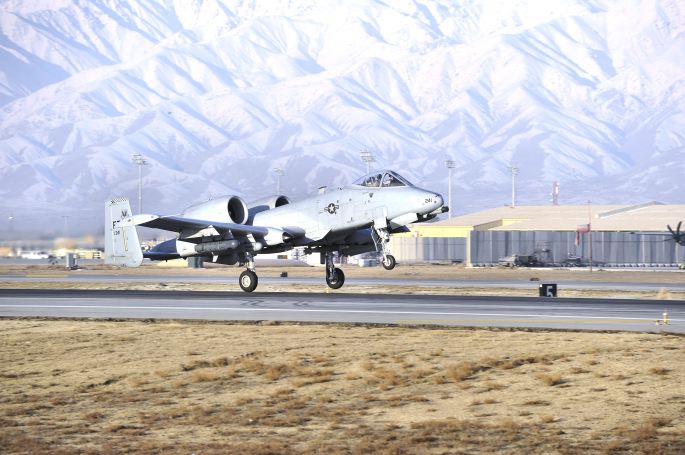
There are many fights and quirks intertwined with the National Defense Authorization Act.  One of them is the A-10 Thunderbolt II (sometimes called the “Warthog”) close support aircraft.  A lot has been made of this particular aircraft, given the Air Force’s desire to phase it out of combat and eventually replace it.  Congress, however, appears to have different plans.

An amendment to the NDAA introduced by Martha McSally (R-AZ-2) in the House Armed Services Committee prohibits the Air Force from using appropriated funds to retire, store, or replace any A-10 aircraft—effectively mandating that the Air Force maintain at least its current stock of 171 A-10s.  Planes, of course, need pilots (well, most of them do), so the amendment also requires that the Air Force not “make significant reductions to manning levels with respect to any A-10 aircraft squadrons or divisions.”  This means that not only does the Air Force have to keep the planes, it has to keep flying them too.  The Air Force has warned that maintaining the A-10 will mean cuts to other programs.

This isn’t an indefinite measure, though.  The amendment calls for an outside study commissioned by the Department of Defense to explore options for retiring and replacing the aircraft.  The Air Force can continue to explore retirement of the A-10—a clearly articulated goal—but it must do so on Congress’s terms.

What, then, motivates Congress?  While mandating the continued operation of the A-10, seemingly against the wishes of the Air Force, might paint Congress as a backwards facing, wasteful organization in contrast to the Air Force’s progressive, cost-saving efforts, this definitely isn’t a fair take on the relationship.  After all, the Air Force also recently asked for 1000 more Air-Launched Cruise Missiles at a cost of $9 billion.  So, it’s not as if the Air Force is desperate to save money at every turn.

Two possible Congressional motivations stand out: First, the A-10 is currently operated by 16 Air Force, Air National Guard, and Air Force Reserve Command squadrons throughout the United States—those are plenty of constituent jobs.  Second, members of Congress were likely impressed by the A-10’s record in Iraq and Afghanistan, where its close support role was used to support troops in combat.  While this might not represent a statistical study of its effectiveness, the A-10 has an obvious reputation of saving lives.  Thus, Congress likely views A-10 retirement as something that isn’t yet broken, and doesn’t need fixing.  The Air Force disagrees.

It’s a frustrating situation, but it also calls out the need for checks and balances in military priority setting.  We’ll find out more about the fate of the A-10 when the House NDAA is voted on and reconciled with the Senate version.

Image Credit: U.S. Air Force

America’s War on Terror: Democracy is No Panacea

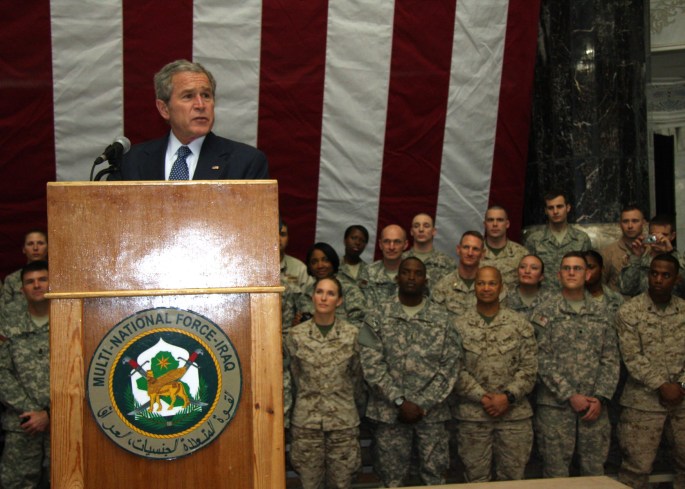
Nine days after the attacks of September 11, the President George W. Bush declared America’s war on terror had begun. Over time, the spread of freedom and democracy came to be seen as key objectives of the war. Freedom and democracy, it was thought, would be the solution to Islamic extremism.[1]

This is Part 1 of 4 of Erik Goepner‘s paper. 

Afghanistan

The goal of democratizing Afghanistan came haphazardly. As U.S. policymakers prepared to launch strikes to root out al Qaeda, they did not initially plan to conduct regime change in Afghanistan. Planning efforts left open the possibility that the Taliban might cooperate sufficiently and, therefore, be allowed to remain in power.[2] Soon after the CIA initiated covert operations, however, it became obvious regime change was coming. The first formal expression of regime change appears to have occurred at an October 3 meeting. At that meeting, Secretary of State Colin Powell said he wanted leadership in Kabul available to fill the void left by the removal of the Taliban, leadership that represented all of the Afghan people.[3] The U.S. launched its first airstrikes four days later.

The Taliban had to go, but what a future Afghan government might look like received scant attention early on. Part of the disconnect resulted from the rapid success of military operations. Within the first week of airstrikes, Pakistani and U.N. officials began pressuring the U.S. government to slow the Northern Alliance advance. They wanted an interim government in place before the Northern Alliance took Kabul.[4] Despite those attempts, the Northern Alliance did enter Kabul and establish a quasi-government before a broad-based, internationally recognized interim government could be appointed.

On November 10, President Bush spoke before the U.N. General Assembly, where he articulated his support of U.N.-led efforts to broker a post-Taliban government that would represent all Afghans.[5] A month later, the U.N.-brokered talks concluded in Bonn, Germany. The talks aimed to place the various Afghan groups front and center, with the U.N. and international community taking a supporting role.[6] Afghans would govern themselves, assisted by a light international footprint to help bolster their capacity.[7] The final agreement read, in part, “Acknowledging the right of the people of Afghanistan to freely determine their own political future in accordance with the principles of Islam, democracy, pluralism…”

Hamid Karzai took the oath as interim President of Afghanistan on December 22, 2001.

Iraq

Five years before the U.S. invaded Iraq, Congress and President Clinton enacted a law authorizing 97 million dollars for opposition forces who would remove Saddam from power and promote democracy in Iraq.[8] The Bush Administration, though, needed little encouragement. By this point in the War on Terror, buoyed by perceived success in Afghanistan, the President frequently spoke of America’s responsibility to free the oppressed.

In January 2003, the President Bush met with several Iraqi dissidents. They articulated a favorable picture of what a post-Saddam Iraq might look like. Each spoke optimistically regarding democracy’s future in Iraq, noting the technological skills of the citizenry while discounting what they perceived as overblown commentaries regarding the Sunni-Shia split. When the President asked about the possibility of the U.S. being seen as imposing its will, they had no response.[9]

On March 4, Doug Feith, the Under Secretary of Defense, briefed the President and the NSC on U.S. objectives in Iraq. Moving Iraq towards democracy was high on the list. Iraq, they hypothesized, would soon serve as a model for the region. U.S.-led coalition airstrikes began March 20, 2003.

Eight months after the invasion of Iraq, President Bush presented a “new policy, a forward strategy of freedom in the Middle East.”[10] The President’s lofty ambitions for the Middle East could be interpreted as politically motivated perhaps, but the consistency of his message and his passion on the subject suggest he truly did perceive a responsibility to liberate the oppressed. Whether feasible or not, whether politically motivated or not, President Bush appeared to believe that bringing freedom to other nations was the right, and necessary, thing to do.

In June 2004, the United States transferred power to an interim Iraqi government and elections were held in January 2005.[11]

After the Elections

After the first elections in Afghanistan and Iraq, President Bush intensified his calls for democracy in the Middle East. Promoting democracy became a cornerstone of his War on Terror strategy. [12] Mentions of freedom, liberty, and democracy can be found throughout his speeches during that time. His 2006 National Security Strategy celebrated the “extraordinary progress in the expansion of freedom, democracy, and human dignity” that had occurred in Iraq and Afghanistan.

The January 2006 elections that brought Hamas to power, however, may have had a tamping effect on the Bush Administration’s push for broader democratization in the region. The Hamas victory, along with electoral inroads by the Muslim Brotherhood and Hezbollah, brought a chorus of criticism against the President.[13]

Efforts to democratize Afghanistan started haphazardly, but what began as a relative afterthought in Afghanistan soon became the perceived cure-all for Islamic extremism.

Next week, part 2 will examine the decision to democratize in light of the intelligence and scholarly research available in the run up to both wars. Erik Goepner’s full paper is available here.


[1] Council on Global Terrorism, State of the Struggle: Report on the Battle against Global Terrorism, ed. Lee Hamilton and Justine A. Rosenthal (Washington, D.C: Council on Global Terrorism : Brooking Institution Press [distributor], 2006), 83.
[2] Bob Woodward, Bush at War (New York: Simon & Schuster, 2003), 130.
[3] Woodward, Bush at War, 191–2.
[4] Peter Baker, Molly Moore and Kamram Khan, and Washington Post Foreign Service, “Rebels Delay Move Against Kabul; Devising Plan for New Government in Afghanistan Becomes Priority,” The Washington Post, October 11, 2001, sec. A.
[5] George Bush (United Nations General Assembly, New York, November 10, 2001), http://georgewbush-whitehouse.archives.gov/news/releases/2001/11/20011110-3.html.
[6] Simon Chesterman, “Walking Softly in Afghanistan: The Future of UN State-Building,” Survival 44, no. 3 (September 2002): 39.
[7] Chesterman, “Walking Softly in Afghanistan,” 38.
[8] Bob Woodward, Plan of Attack: The Definitive Account of the Decision to Invade Iraq (New York: Simon & Schuster, 2004), 10.
[9] Woodward, Plan of Attack, 258–60.
[10] Mark N. Katz, Leaving without Losing: The War on Terror after Iraq and Afghanistan (Baltimore: Johns Hopkins University Press, 2012), 23–4.
[11] Dominic Johnson and Dominic Tierney, Failing to Win: Perceptions of Victory and Defeat in International Politics (Cambridge, Mass: Harvard University Press, 2006), 245.
[12] Raphael Perl, Combating Terrorism: The Challenge of Measuring Effectiveness, November 23, 2005, 4.
[13] Steven R. Weisman, “Bush Defends His Goal of Spreading Democracy to the Mideast,” The New York Times, January 27, 2006, sec. Washington, http://www.nytimes.com/2006/01/ 27/politics/27diplo.html.


Image Credit: U.S. Army

Week in DC: Events

May 18, 2015

Former CIA Deputy Director to Discuss Agency’s Counterterrorism Success and Failures
Date: May 18, 10:00 am
Location: National Press Club, 529 14th Street NW, 13th Floor, Washington DC

Former CIA deputy director Michael Morell will offer his assessment of the agency’s counterterrorism successes and failures of the last 20 years at a National Press Club Newsmaker on Monday, May 18 at 10 a.m. in the club’s Bloomberg Room.

Morrell will argue that the threat of terrorism did not die with bin Laden and will illuminate new and growing threats from terrorist groups that could leave this country vulnerable to attacks much larger than 9/11 if not addressed. These insights are discussed in his new book, The Great War of Our Time: The CIA’s Fight Against Terrorism From al Qa’ida to ISIS.

Morell is one of this country’s most prominent national security professionals, with extensive experience in intelligence and foreign policy. Mr. Morell was a top CIA officer for over 30 years who played a critical role in the most important counterterrorism events of the past two decades.

Like all Newsmaker events, this news conference is open to credentialed press and NPC club members, free of charge. No advance registration is required.

Contact Keith Hill, Newsmaker Host, khill@bna.com.

From Cooperation to Competition—The Future of U.S.-Russian Relations
Date: May 18, 10:00 am
Location: Center for Strategic and International Studies, 1616 Rhode Island Ave NW, Washington DC

Russian aggression in 2014 caught U.S. policy and strategy off guard, forcing reactive measures and reevaluation of U.S. policies towards Russia. Russia used nonlinear approaches and operated just beneath traditional thresholds of conflict to take full advantage of U.S. and NATO policy limitations. In light of this strategic problem, members of the Carlisle Scholars Program at the U.S. Army War College (USAWC) conducted a wargame which revealed four key considerations for future policy and strategy.  This panel presentation will present the findings from that wargame.  The views presented by the panelist are their own and should not be implied to be those of their sponsoring service, the U.S. Army or the U.S. Army War College.

Register here.

Fighting for the Final Frontier? Conflict in Space During the Late 21st Century
Date: May 18, 1:00 pm
Location: Atlantic Council, 1030 15th Street NW, 12th Floor, West Tower, Washington DC

Discussions about the future of warfare are often limited by necessity to the next two or three decades. Not on May 18, when the Atlantic Council’s Brent Scowcroft Center on International Security Art of Future Warfare project will travel the farthest yet into the future to consider conflict in space during the final decade of the 21st Century. Join best-selling science fiction writer David Brin and other experts to discuss whether the struggles over power and resources on Earth will extend off world, and how they might play out.

This event will also feature the winner of the project’s latest short story creative challenge that focused on conflict in space during the last decade of the 21st Century. As part of its mission to explore the role that artists can have in the national security community, the project works to showcase not only particular visions of the future but also the methodologies employed by the creative community in order to help better prepare for, and prevent, future conflict.

Like the recent Art of Future Warfare “Great War” creative challenge, this contest will showcase the value of creative thinking in the national security realm.

Register here to attend in person or here to watch live online.

Bursting the Plutonium Bubble: How Utopian Communities Made Dystopian Nuclear Landscapes
Date: May 18, 4:00 pm
Location: Woodrow Wilson International Center for Scholars, 1300 Pennsylvania Ave NW, 6th Floor Conference Room, Washington DC

Historian Kate Brown draws on official records and dozens of interviews to tell the extraordinary stories of Richland, Washington and Ozersk, Russia – the first two cities in the world to produce plutonium. To contain secrets, American and Soviet leaders created plutopias – communities of nuclear families living in highly-subsidized, limited-access atomic cities. Brown shows that the plants’ segregation of permanent and temporary workers and of nuclear and non-nuclear zones created a bubble of immunity, where dumps and accidents were glossed over and plant managers freely embezzled and polluted. Drawing plutonium curtain around production sites and promoting ‘nuclear villages’ with healthy nuclear families has left a lasting legacy.

Kate Brown lives in Washington, DC and is Professor of History at UMBC.  Brown, a 2009 Guggenheim Fellow, is the author of two award-winning books: Plutopia: Nuclear Families in Atomic Cities and the Great Soviet and American Plutonium Disasters (Oxford 2013) and A Biography of No Place: From Ethnic Borderland to Soviet Heartland (Harvard 2004). Brown’s most recent book Dispatches from Dystopia: History of Places Not Yet Forgotten will appear in 2015 with the University of Chicago Press.

This final meeting in the Washington History Seminar Spring 2015 series is co-sponsored by the George Washington University Elliott School of International Affairs Nuclear Policy Talks.

RSVP here.

Xi to Pakistan, Modi to China: What it Means for the West
Date: May 18, 5:30 pm
Location: German Marshall Fund, 1744 R Street NW, Washington DC

The geopolitics of Asia are on full display thanks to visits by Chinese President Xi Jinping to Pakistan and Indian Prime Minister Narendra Modi to China. What do these trips tell us about diplomatic relations in Asia and why should it matter to the West? Experts Tanvi Madan, Daniel Markey, and Andrew Small will address these and other questions during this timely event. Following the discussion, there will be a drinks reception to celebrate the release of Small’s new book The China-Pakistan Axis.

RSVP here.

Crafting a National Security Strategy
Date: May 18, 6:30 pm
Location: Embassy of France, 4101 Reservoir Road NW, Washington DC

On Monday, May 18th, join the NxGen International Security Network (NxGen ISN) for an exclusive opportunity to engage with the National Security Council Director for Strategic Planning, Colonel Troy Thomas, on the U.S. National Security Strategy at the French Embassy. Following the off-the-record discussion, a cocktail reception featuring French wine and cheese will be served.

NxGen ISN is a peer-based network that curates and empowers emerging leaders by linking them with influential practitioners through thematic cycles and public and private events.

Register here.

May 19, 2015

Renewing the Section 123 Nuclear Agreement with China: Implications for U.S.-China Relations
Date: May 19, 9:00 am
Location: Brookings Institution, Falk Auditorium, 1775 Massachusetts Ave NW, Washington DC

As China moves to decrease greenhouse gas emissions in order to meet its 2030 climate change targets, nuclear energy is likely to play a major role in China’s future energy mix. Nearly 30 years ago, the United States and China developed a Section 123 agreement, which has allowed China to use U.S. technology to build up its nuclear fleet. This agreement has provided a strong foundation for Sino-U.S. cooperation and has significantly benefited the United States’ economy by allowing U.S. firms to export nuclear technology worth billions of dollars, which has generated tens of thousands of U.S. jobs. As the current Section 123 agreement is set to expire on December 30, 2015, the United States needs to decide this year whether or not to extend its terms.

On May 19, the Energy Security and Climate Initiative (ESCI) at Brookings will host a discussion on the future of the Section 123 agreement with China. Panelists will present an overview of the Section 123 agreement, including a discussion of how it has been implemented, its broader geopolitical context, its implications on the U.S. economy, and its importance in achieving U.S.-China climate emission reductions. Speakers will also address the implications of China’s program on nuclear nonproliferation and Sino-U.S. relations. ESCI Senior Fellow Charles Ebinger will moderate the discussion and audience Q&A.

Register here.

Missile Defense and U.S. National Strategy
Date: May 19, 10:00 am
Location: Center for Strategic and International Studies, 1616 Rhode Island Ave NW, Washington DC

Please join us for a discussion with Admiral Winnefeld on the past, present, and future of missile defense.

Featuring:Admiral James A. Winnefeld, Jr., Vice Chairman of the Joint Chiefs of Staff

Introduction by: Dr. John J. Hamre, President and CEO, Pritzker Chair, and Director, Brzezinski Institute, CSIS

Moderated by: Dr. Thomas Karako, Senior Fellow, International Security Program, CSIS

Register here.

The Future of U.S. Defense Cooperation in Latin America
Date: May 19, 4:30 pm
Location: Atlantic Council, 1030 15th Street NW, 12th Floor, West Tower, Washington DC

Please join the Atlantic Council’s Brent Scowcroft Center on International Security for a Commanders Series event with General John F. Kelly, Commander of US Southern Command, to discuss the future of US defense cooperation in Latin America.

Latin America is of increasing strategic importance to the United States. In an age of the rebalance to Asia, continued engagement in the Middle East, and the emergence of an aggressive Russia, Latin America has received comparatively little attention from the US national security community. Slowly, this is starting to change, especially with the recent crisis of unaccompanied children migrants fleeing poverty and violence in Central America. How will these and other developments affect US defense strategy and cooperation in the region, and how will this strategy help the United States best deal with this important region? General Kelly will come to the Atlantic Council to discuss these and other questions.

Since 2012, General Kelly has been the Commander of US Southern Command, which is responsible for all Department of Defense security cooperation in the forty-five nations and territories of Central and South America and the Caribbean Sea, an area of 16 million square miles. Before his current position he served as the Senior Military Assistant to the Secretary of Defense from March 2011 to October 2012. Kelly also commanded Marine Forces Reserve and Marine Forces North in Iraq from October 2009 to March 2011.

Register here to attend in person or watch live online here.

May 20, 2015

Crisis in Libya: European and Libyan Views
Date: May 20, 12:00 pm
Location: Atlantic Council, 1030 15th Street NW, 12th Floor, West Tower, Washington DC

Since the 2011 uprising against Muammar Qaddafi, Libya’s transition to democracy has been severely derailed, culminating over the course of the last twelve months in political and armed clashes between two main factions. The United Nations and Western states support a negotiated solution, but hardliners increasingly call the shots. With regional states lending support to the rival sides, options for breaking the impasse are few.

Meanwhile, security threats to neighboring states and Europe are on the rise as the political vacuum in Libya provides a haven for extremist militants, including the self-proclaimed Islamic State. Please join the Atlantic Council for a discussion exploring how Libyans view the devolution of their country, the current debate among European policymakers, and viable options for the international community to bolster chances for successful peace talks.

Register here.

Efficient Cybersecurity Regulation: Ensuring the Cure Isn’t Worse than the Disease
Date: May 20, 12:00 pm
Location: Heritage Foundation, 214 Massachusetts Ave NE, Lehrman Auditorium, Washington DC

A wave of data breaches at American companies has once again highlighted just how insecure consumer data is. Apple, Target, Sony, and recently Anthem (a Blue Cross and Blue Shield company) are some high profile examples. In response, various consumer advocates and regulatory agencies have begun to explore ways to encourage data-sharing between businesses, as well as with the government, and to encourage the development of data security standards. Can and should industry self-regulate? Is there a government agency equipped to regulate? What should data security standards look like, and could those standards open the door to unscrupulous tort litigation? Join us as our panelists discuss the competing risks of cyber-attack and overregulation.

Register here.

U.S.-Russia Relations Beyond Ukraine: Realities and Recommendations
Date: May 20, 12:00 pm
Location: George Washington University, Lindner Commons (6th Floor), 1957 E Street NW, Washington DC

The Russian-American relationship has reached its lowest point since the end of the Cold War. While the Ukrainian crisis has been the catalyst for pushing tensions over the edge, a number of more pervasive issues, such as disagreements over bilateral arms control, European security, and crises in the Middle East continue to drive Moscow and Washington apart.

What role have domestic factors played in shaping the present situation, and how has each side crafted its respective policies toward the other? What channels of cooperation remain, and where are U.S-Russia relations moving beyond Ukraine?

Please join CGI and the Institute for Eurasian, Russian, and East European Studies at GWU for a discussion with Richard Weitz, Senior Fellow and Director of the Center for Political-Military Analysis at Hudson Institute, on the future of the U.S.-Russian relationship. The event will mark the release of Dr. Weitz’s forthcoming report for CGI, “The United States and Russia: Realities and Recommendations Moving Forward.” Fiona Hill of the Brookings Institution will join as the discussant. Konstantin Avramov, Program Director at CGI, will moderate the Q&A.

RSVP here.

Cyber Risk Wednesday: How Will Our Cyber Future Be Different from Today?
Date: May 20, 4:00 pm
Location: Atlantic Council, 1030 15th Street NW, 12th Floor, West Tower, Washington DC

The Internet and related technologies have been safe, secure, and resilient enough for the past three decades of their existence to reshape nearly every industry, create a hyper-connected world, and transform the global economy. Perhaps this will continue indefinitely, with the future holding yet more wonders. However, the increasingly pervasive Internet brings with it growing dependence on a shared, stunningly complex system-of-systems. This has critically exposed companies and governments to systemic cyber risks, where a series of local failures might turn into a global shock similar to the 2008 financial crisis.

What is more, while cyberspace has been continuously evolving through changes in usage and available technologies, most of the current cybersecurity trends now point to a darker future: every year we face more data breaches, critical vulnerabilities, and nations building and using offensive cyber capabilities. Will the accumulated downside risks of dependence on a sometimes rickety and untrustworthy digital infrastructure soon start outpacing the upside opportunities of global interconnectedness? Or will cyberspace head in a direction that is unlike anything ever experienced or envisioned? What game-changing discontinuities could transform the future of cyber conflict and cooperation?

The moderated panel discussion will assess these tensions between risks and opportunities rooted in cyberspace and discuss potential cyber futures that could take shape over the next decade.

This event is part of the Atlantic Council project with Zurich Insurance Group and the University of Denver’s Pardee Center for International Futures focusing on assessing the balance between risks and opportunities in cyberspace. In the first year, using quantitative and qualitative frameworks, the group is assessing the impact of accumulated downside cyber risks on upside opportunities for economic growth. In the second year, the team will evaluate the impacts of geopolitical and demographic risks.

Register here to attend in person or here to watch live online.

May 21, 2015

The Convergence of Marine Science and Geopolitics in the South China Sea
Date: May 21, 10:00 am
Location: Center for Strategic and International Studies, 1616 Rhode Island Ave NW, Washington DC

The CSIS Sumitro Chair for Southeast Asia Studies is pleased to host a discussion with James Borton, former correspondent for theWashington Times; John McManus, professor of marine biology and fisheries and director of the National Center for Coral Reef Research at the University of Miami; and Kathleen Walsh, associate professor of national security affairs at the U.S. Naval War College. They will discuss the convergence of marine science and geopolitics in the South China Sea.

Borton teaches writing in the English and Marine Science Departments at Coastal Carolina University. He is a former foreign correspondent for the Washington Timesand has interviewed top leaders throughout Southeast Asia. He recently edited The South China Sea: Challenges and Promises.

McManus chaired the five-year review of the National Oceanic and Atmospheric Administration’s Coral Reef Conservation Program. As the former leader of the Aquatic Environments Program of the WorldFish Center in Southeast Asia he was the founder of ReefBase, the Global Coral Reef Database, and the International Coral Reef Action Network.

Walsh teaches policy analysis at the U.S. Naval War College (NWC). She has also co-taught electives on China’s national security and on the history of technology. Walsh is also an affiliate of the China Maritime Studies Institute and participates in the NWC’s Asia Pacific Studies Group.

Register here.

The Federal Budget & Appropriations: Democracy & Human Rights in the Middle East
Date: May 21, 10:00 am
Location: Russell Senate Office Building, Room 485, 2 Constitution Ave NE, Washington DC

POMED and the Heinrich Böll Foundation of North America are pleased to invite you to attend a public panel discussion to release an annual publication, The Federal Budget and Appropriations for Fiscal Year 2016: Democracy, Governance, and Human Rights in the Middle East. This report, authored by POMED’s Executive Director Stephen McInerney and Advocacy Director Cole Bockenfeld, offers a detailed look at U.S. funding and assistance for democracy and governance in the Middle East, the congressional appropriations process, and implications for U.S. policy in the Middle East during a turbulent time. As the region is mired in multiple conflicts—protracted civil wars in Syria and Libya, the rise of the Islamic State, and surges of conflict and violence in Yemen—why and how should the United States continue to invest in democracy and governance?

This publication focuses on several key questions: How have the Obama administration and Congress responded to dramatic changes in the region since 2011? How have deteriorating political situations and escalating violence affected U.S. policy and funding in the region? How has the United States responded to Tunisia’s relative success in democratization? What are the most significant changes in U.S. funding and appropriations when compared to previous years? And what might we expect from Congress during its ongoing appropriations process?

RSVP required. RSVP here.

Counterterrorism and State-Building in Somalia: Progress of More of the Same?
Date: May 21, 2:00 pm
Location: Brookings Institution, Falk Auditorium, 1775 Massachusetts Ave NW, Washington DC

For years, the war-torn and famine-ravaged Somalia has been a haven for international terrorism, as demonstrated again in the recent horrific attack in Garissa, Kenya. International counterterrorism efforts – ranging from air strikes to proxy wars to the deployment of African Union forces – have provided limited results at best. International efforts to build more inclusive and less corrupt state institutions in Somalia have similarly struggled. While Somalia has set goals to reform its government and revise its constitution by 2016, most of these commitments remain in grave doubt. And as Somalia prepares for national elections in the year ahead, insecurity within the country continues to rise.

On May 21, the Africa Security Initiative, part of Brookings Center for 21st Century Security and Intelligence, will host a discussion on the current state of Somalia, its path to reform and increased stability, and its upcoming elections. Senior Fellow Vanda Felbab-Brown, who has recently returned from Somalia, will focus on the political and military developments in the country and region, as well as the latest on extremist activity. Michael O’Hanlon, co-director of the Center for 21st Century Security and Intelligence will moderate.

Following discussion, the panelists will take audience questions.

Register here.

May 22, 2015

Implications of Leadership Changes in Saudi Arabia
Date: May 22, 9:00 am
Location: Rayburn House Office Building, Room B-369, 45 Independence Ave SW, Washington DC

On May 22, 2015, the National Council on U.S.-Arab Relations and the U.S.-GCC Corporate Cooperation Committee are hosting a public affairs briefing titled “Leadership Changes in Saudi Arabia: What Implications for the Kingdom, the Region, and the U.S.?”

The featured specialist will be Mr. Nawaf Obaid, Visiting Fellow, Belfer Center for Science and International Affairs, Harvard University; Lecturer, London Academy of Diplomacy, Stirling University; and Senior Fellow, King Faisal Center for Research and Islamic Studies. Serving as moderator and facilitator will be Dr. John Duke Anthony, Founding President and CEO, National Council on U.S.-Arab Relations; and Member, U.S. Department of State Advisory Committee on International Economic Policy and Subcommittee on Sanctions.

RSVP here.

Pandora Report 05.17.15

Yowza! That’s another semester in the books for the GMU Biodefense students. Please excuse the sparse activity on the blog, but with the semester over, things should be getting back to normal.

This weekend we have a updates on Ebola and the bird flu outbreak in the U.S., plus other stories you may have missed.

Have a great week, (enjoy the Mad Men finale!) and see you back here next weekend!

Ebola is (still) living in an American doctor’s eye

As an update, Liberia has (finally) been declared Ebola free, the number of cases in Guinea continue to rise due to transmissions at funerals, and those in Sierra Leone are dying less from Ebola than from other diseases due to the collapse of the healthcare system. It’s been over a year and we are still learning things about Ebola and its persistence on hospital surfaces, sexual fluids, and now, according to a study in the New England Journal of Medicine, the eye. WHO volunteer Ian Crozier was diagnosed in Sierra Leone and transported to Emory University where he was treated. Months later he returned to the hospital with symptoms like blurred vision and acute pain in his left eye. The cause? Ebola.

The Washington Post—“Ebola may have found refuge in patients’ eyes because, researchers said, the eye is walled off from the immune system. As the New York Times put it: “The barriers are not fully understood, but they include tightly packed cells in minute blood vessels that keep out certain cells and molecules, along with unique biological properties that inhibit the immune system.” This phenomenon is called “immune privilege” — and it means the eye can harbor viruses.”

America’s $45 Billion Poultry Industry Has a (Really) Bad Case of Bird Flu

The title says it all, frankly. Since early December 2014 three strains of highly pathogenic avian influenza have been circulating in North America. A state of emergency has been declared in Iowa (one of the hardest hit states) and over 21 million birds have been killed to contain and prevent the spread of the virus. Beyond the culling of birds, the outbreak is having an affect on business—China, South Korea, and Mexico have banned imports of U.S. poultry (to protect their own industries.)

The Motley Fool—“Falling exports could hurt farmers, but it could also help to offset domestic price increases from less supply. Although, with tens of millions of bird deaths and no end in sight to the pandemic, domestic food prices could be the largest casualty in the end.”

Stories You May Have Missed


Image Credit: 8thstar