Week in DC Events: 9/28-10/2

EU-U.S. Science Technology and Innovation (STI) Cooperation Forum: NEW FRONTIERS IN SCIENCE DIPLOMACY- Opportunities for U.S.-EU Cooperation
Johns Hopkins School of Advanced International Studies
Date & Time: Monday, September 28, 2015, 8:30am
Location: Johns Hopkins SAIS – Nitze Building1740 Massachusetts Ave., N.W., Washington, D.C. 20036 (map)

The EU-funded project BILAT USA 2.0 will organize a conference on Science Diplomacy on 28 September in the Johns Hopkins University in Washington D.C. This conference will gather major EU and US stakeholders as well as active researchers and innovators to answer, among others, the following key questions: How to advance “science in diplomacy”, “diplomacy for science” and “science for diplomacy” Where can the EU and the US learn from each other’s approaches with regard to Science Diplomacy? Where are potentials for cooperation? How similar / different are the motivations and approaches of different countries / regions – here in particular the EU and US – in science diplomacy? What are some of the key differences? The promotion of scientific cooperation is an essential element of foreign policy. Research and innovation cooperation between countries can help solve common problems, address grand societal challenges and build constructive international partnerships. Many countries integrate science as an important part into their international agendas utilizing the term ‘Science Diplomacy’ to describe international cooperation in research and innovation cooperation, even in times of crisis. Although experts may use a variety of definitions for science diplomacy, the term now has become an established approach that encompasses a variety of formal and informal technical, research-based, academic or engineering exchanges.

Meeting the Challenges of Global Polio Eradication 
Center for Strategic and International Studies
Date and Time: Monday, September 28, 2015, 8:30am-2:30pm
Location: Center for Strategic and International Studies1616 Rhode Island Ave NW, Washington, DC 20036 (map)

The number of wild poliovirus cases worldwide is significantly reduced compared to last year, as Pakistan improves its immunization reach and Africa goes more than a year since its last reported case. Nonetheless, substantial challenges remain to global eradication, including newly reported cases of vaccine-derived poliovirus in Ukraine and Mali. Join the CSIS Global Health Policy Center on September 28 as it welcomes keynote speakers Dr. Thomas Frieden, Director of the U.S. Centers for Disease Control and Prevention and Chair of the global Polio Oversight Board, and Sir Liam Donaldson, Chair of the Global Polio Eradication Initiative’s Independent Monitoring Board. They and other top experts will discuss current and future eradication challenges, including the ambitious vaccine switch needed to address vaccine-derived polio cases. Panelists also will explore plans to transition polio-related assets and knowledge to national health systems and other health priorities as well as measures to address political instability and insecurity hampering vaccination efforts.

George Pataki Speaks on Domestic & Foreign Policy
George Mason University
Date & Time: Tuesday, September 29, 2015, 4pm
Location: 113 Founders Hall, George Mason University, 3351 Fairfax Dr, Arlington, VA 22201

Please join the Financial Times and the Center for Politics & Foreign Relations for a speech on domestic and foreign policy featuring Republican Presidential Candidate George Pataki.  Seating is limited.  Please RSVP to Robert Guttman, rguttman@gmu.edu.


The Syrian refugee crisis: Challenges for Syria’s neighbors and the international community
Brookings Institution
Date & Time: Tuesday, September 29, 2015, 10:30am-12pm
Location: Brookings Institution1775 Massachusetts Ave, NW, Washington, D.C. 20036 (map)

In the last five years, more than four million Syrian refugees have crossed into neighboring countries seeking safety from the unending civil war. Providing protection and public services for the refugees has taxed the capacities of host countries, with hospitality wearing thin and many refugees despairing about their futures. In recent months, the European dimension of the Syrian refugee crisis has finally drawn global public attention to the catastrophe and the need to increase burden-sharing with neighboring host countries. Does the international community have the political will and the resources to respond, and if so, how will it address the challenge? How is the crisis affecting Syria’s neighboring countries that still bear the brunt of the refugees? Why is burden-sharing so important? On September 29, the Center on the United States and Europe (CUSE) at Brookings will host a panel discussion to explore the international response to the Syrian refugee crisis. Brookings Senior Fellow Elizabeth Ferris and Brookings TÜSİAD Senior Fellow and CUSE Turkey Project Director Kemal Kirişci will present their new study, “Not Likely to Go Home”, an examination of  the challenges that Jordan, Lebanon, and Turkey face in providing protection and humanitarian assistance to Syrian refugees. They will also reflect on what these conclusions mean for the wider international community. Following their presentations, Simon Henshaw of the U.S. State Department, Gregory Maniatis of the Migration Policy Institute, and Alar Olljum of Brookings and the European External Action Service will provide remarks. Elizabeth Ferris will moderate the event and offer opening remarks.

Does Putin’s Move on Syria Make Russia the New Middle East Power Broker?
Hudson Institute
Time & Date: Tuesday, September 29, 2015, 11:45am-1:30pm
Location: Hudson Institute1015 15th Street, N.W. 6th Floor, Washington, D.C. 20005 (map)

In coordination with Iran, Russia has been steadily building up its position inside of Syria. President Vladimir Putin has sent combat planes, ships, technicians, engineers, marines, and special forces units. Although American policymakers have suggested that the Russians are there to fight the Islamic State, Moscow has made its intentions clear—they are there to defend Syrian president Bashar al-Assad. And by building an air force base and expanding its current naval facility at Tartus, Putin’s larger purpose appears to challenge the United States as the Middle East’s power broker.
How will Russia’s incursion into Syria shape the ongoing conflict? How will it affect the three American allies on Syria’s borders, Israel, Jordan, and Turkey? Does Putin’s increasingly assertive behavior signal the erosion of American influence in the Middle East? If so, how would the next White House change course?
On September 29th, Hudson Institute will host a timely discussion of these issues with an expert panel moderated by Lee Smith and featuring Michael Doran, Hannah Thoburn, and Tony Badran.
Subcommittee Hearing: Ridding Central Africa of Joseph Kony: Continuing U.S. Support
U.S. House Committee on Foreign Affairs
Time & Date: Wednesday, September 30, 2015, 2-5pm

Location: Rayburn House Office Building45 Independence Ave SW, Washington, DC 20515 (map)
Room: 217

Panel I

The Honorable Robert P. Jackson
Principal Deputy Assistant Secretary
Bureau of African Affairs
U.S. Department of State

Panel II

Mr. Paul Ronan
Co-Founder and Project Director
The Resolve LRA Crisis Initiative

Mr. Sasha Lezhnev
Associate Director of Policy
Enough Project

The State of Transatlantic Relations: A Conversation with former Secretary of State Madeleine Albright and former Latvian President Vaira Vīķe-Freiberga
German Marshall Fund
Date & Time: Wednesday, September 30, 2015
Location: German Marshall Fund1744 R st NW Washington, DC 20009 United States (map)

With conflict persisting in Europe’s east and to Europe’s south, a migration crisis in Europe, and continuing economic uncertainty, the transatlantic community is facing the most difficult set of challenges in 25 years. These crises have exposed rifts in the post-1989 political and security architecture, while also serving to unify transatlantic partners. Given these realities, GMF is pleased to invite you to a conversation with former U.S. Secretary of State Madeleine Albright and former Latvian President Vaira Vike Freiberga on the current state of transatlantic relations and what is required to confront the regional and global challenges facing the partnership.

Cybersecurity Summit
Washington Post Live
Date & Time: Thursday, October 1, 2015, 8:30am-11:30am
Location: The Washington Post1150 15th St NW, Washington, DC 20005 (map)

Recent cyber attacks have wreaked havoc on companies and millions of people. Business leaders, lawmakers and security experts will discuss and debate the newest tools for cyber defense and policies to better protect companies, consumers and citizens.

Engaged Scholarship Brown Bag Lunch Talks: Dr. Denise Brennan, “Trafficking, Migrant Exploitation, and Moral Panics: Doing Research on Spectacularized Issues”
Georgetown University
Date & Time: Friday, October 2, 2015, 12:30-1:30pm
Location:  Georgetown University37 St NW and O St NW, Washington, DC (map)

Dr. Brennan (Anthropology) will talk about her research with a specific focus on her methods and data collection. Direct questions and requests for accommodations to Dr. Andria Wisler at akw28 or 7-2859.
Pandora Report 9.25.2015

You didn’t think a Papal visit would slow us down, did you? Even in the event of a zombie apocalypse, we GMU Biodefense folks would still find a way to get out the weekly report – perhaps pigeon carrier? Until that happens, don’t forget to check us out on Twitter! This week saw a lot of great focus on collaborations to fight public health threats like antimicrobial resistance and epidemics. Schools in Chicago were closed for concerns over Legionnaires’ disease, yours truly provided a piece on Ebola infection prevention, and we have a wonderful opportunity to contribute to World Medical & Health Policy regarding women’s health on a global stage.

Learned Lessons from Ebola in the US
Sylvia Burwell, Secretary of Health & Human Services, discusses the clinical complexity and reality that “our clinical approach to treating Ebola in a hospital setting posed different challenges.” Several key US health experts weighed in on the pivotal first patient, Thomas Duncan, to unknowingly bring Ebola to the US. The implications for healthcare and preparedness sent a tidal wave of response across US hospitals. Dr. Tom Frieden, director of the Centers for Diseases Control and Prevention (CDC), also highlights three main lessons from not only the cases in Dallas, but also the Ebola epidemic as a whole. He points to the necessity of a strong surveillance and response system, need for rapid international aid, and better infection control in hospitals….which segues beautifully into our next story.

The Infection Prevention Angle of the 2014 Ebola Crisis
Reports and analyses from a range of responders to the crisis have been trickling out for several months now, but there’s a constant in all of them – infection control. Given my background and experiences in this field, I wanted to take our readers down the rabbit hole of what exactly it was like to be an Infection Preventionist during this time. A hopeful start to a series of pieces on this subject, it will give you a taste of not only the daily struggles, but the brevity of what potential Ebola patients meant for US healthcare preparedness.

Partnerships to Support Antibiotic Development
564px-Penicillin_Past,_Present_and_Future-_the_Development_and_Production_of_Penicillin,_England,_1943_D16963The ASPR’s (Office of the Assistant Secretary for Preparedness and Response) Biomedical Advanced Research and Development Authority (BARDA) is part of a larger initiative to use Other Transaction Authority (OTA – flexible advanced research and development funding instruments) to start developing business relationships between government and private industry. The relationships are mutually beneficial, allowing both parties to invest and develop products for biodefense and the growing threat of antibiotic resistance. Given the slowing of new antibiotic development, this joint agreement comes at a pivotal time for antimicrobial resistance efforts.

Three Chicago-area Schools Close in Response to Legionnaires’ Disease Concerns
Three schools in the Illinois U-46 district were shut down on Wednesday and Thursday after cooling tower test results showed “higher than normal levels of Legionella bacteria”. The OSHA recommended threshold is no higher than 1,000 CFU/ml (colony-forming units per milliliter) and with the outbreak among residents of the Illinois Veteran’s Home, it’s not surprising to see many water towers being frequently tested, etc. The important thing to note is that Legionella pneumophila infections are a result of the intensity of the exposure and the immune status of the exposed person. Legionella can’t be totally eradicated from the water supply and a majority cooling towers will contain some amount of growth.

Call for Papers – Women’s Health in Global Perspective
Papers sought for a special issue and workshop of World Medical & Health Policy on “Women’s Health in Global Perspective,” to contribute to understanding and improve policy related to women’s health and wellbeing.  Forces ranging from the economic to the climactic have human repercussions whose genesis and solutions demand consideration of their global context.  A wealth of recent research and inquiry has considered the particular plight of women, who often suffer disproportionately from lack of education, compromised nutrition, poverty, violence and lack of job opportunities and personal freedom.  The Workshop on Women’s Health in Global Perspective will consider the broad ranging social determinants of health on a global scale that importantly influence health outcomes for women everywhere, which in turn has implications for economic, political and social development.
Abstract submission deadline (250 words): October 16, 2015 
Contact: Bonnie Stabile, Deputy Editor, bstabile@gmu.edu
Notification of selected abstracts: November 13, 2015
Workshop March 3rd, 2016
Completed papers due: March 11, 2016

Stories You May Have Missed:

  • Personal Microbial Cloud – researchers found that a person’s microbiome form a cloud around them, allowing scientists to identify a specific person just by sampling their microbial cloud. Food for thought: would this be our microbial cloud version of a fingerprint?
  • C. Difficile Drug Success – Researchers at Stanford University School of Medicine were successful in their ability to get rid of the deadly gastrointestinal toxin via a drug that didn’t focus on the organism, Clostridium difficile, but rather the toxin itself. C. difficile is responsible for 250,000 hospitalizations and 15,000 deaths per year while costing the US more than $4 billion in healthcare expenses. Yay for successful treatments!
  • EC, EU, and WHO Work To Better Share Private Drug Data – The European Commission, European Medicines Agency, and World Health Organization are working to “step up coordination” on EU medicines regarding safety, quality, and efficacy of new drug candidates. The first step in solving a problem is recognizing you have one, right? The new focus on global public health threats is one we can all appreciate!
  • WHO Makes Changes to Southern Hemisphere Flu Vaccine – The WHO committee recommended changes for two of the three trivalent influenza vaccines for the Southern Hemisphere next year due to changes in the circulating viral strains. They suggested using H1N1, H3N2 an A/Hong Hong/4801/2014-like virus, and for influenza B, the Brisbane/60/2008-like virus. In the quadrivalent vaccine, they recommended adding the influenza B Yamagata lineage component, with the A/H1N1 strain staying.

Ebola 2014: The Infection Preventionist Perspective

By Saskia Popescu

Unlike many infectious diseases, especially ones with a relatively small number of occurrences, the Ebola outbreak that started in 2014 received a sensational amount of attention. While many in public health keep tabs on outbreaks (thanks ProMed!), it’s not uncommon for the rest of society to remain blissfully unaware unless the bug comes knocking on their front door. I’ve been captivated with Ebola (now called Ebola Virus Disease, or EVD) since a young age after Richard Preston’s sensational book, The Hot Zone got passed to me during a family vacation. The first whispers and later emails of the surging cases in West Africa were pretty astounding in early 2014. Usually these outbreaks occur in small blips and then die off a few weeks or months later. I was working in Infection Prevention & Control at a pediatric hospital at the time and, like many, didn’t think too much about the outbreak pertaining to the US and even if it did, our infection control practices should be able to handle an organism that required Contact/Droplet isolation. I put some updates in our monthly newsletter and continued to watch as West Africa became overwhelmed with EVD.

Like many public health issues, no one really starts hitting the panic button until a disease shows up and you’re scrambling (and trust me, most of the time, you find out retrospectively) to do damage control. The IP (infection prevention) world started to get worried in late July when Emory University Hospital accepted and began treatment the first two EVD patients transported into the US from their field assignments in West Africa. Questions about isolation and practices were asked, but again, no one really worried too much since these patients were flown directly to Emory due to their special infectious disease isolation unit. Suddenly, on September 30th, 2014 a media storm announced that a patient being treated at Texas Health Presbyterian Hospital in Dallas, Texas, was positive for EVD. I can personally tell you, this is when the proverbial crap hit the fan for just about every healthcare facility and IP in the US. A visiting your emergency department, being sent home, and then coming back with a highly infectious disease that few physicians know well enough to suspect, let alone diagnose or treat, is pretty much the equivalent of an IP nightmare. So what could we do?

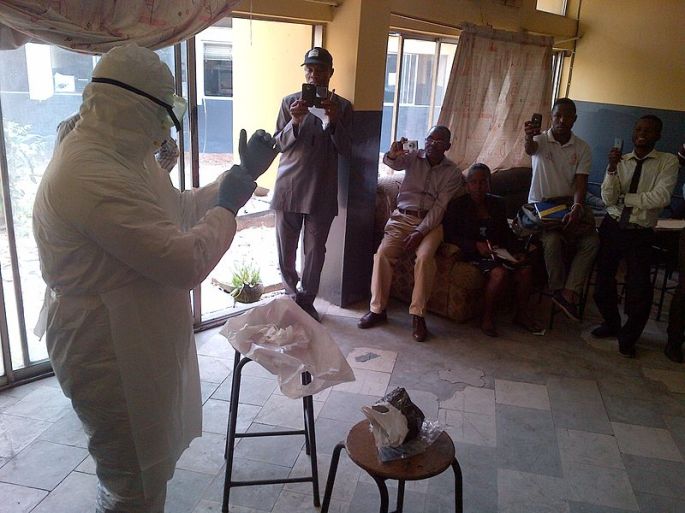
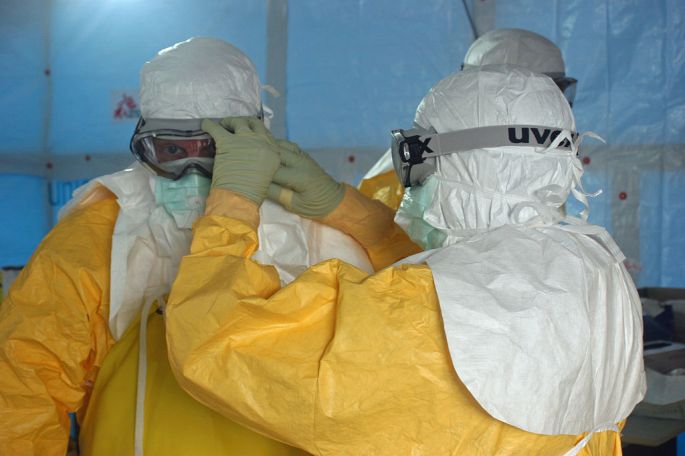
First, I should say that every hospital with an IP team (most of them have at least one IP) experienced a massive level of panic, anxiety, and stress dedicated to avoiding this, so please, give them a pat on the back. I am fortunate that my IP team consists of not only enthusiastic, ridiculously talented and intelligent people, but they know how to respond to crisis in the flip of a switch. We quickly pulled together a committee to encompass all people that would play a role in the preparedness and response of an EVD patient. Fortunately, by this time, Emory had released an extremely helpful document that discussed their experiences and lessons learned. We met our committee (now filled with people from environmental services, facilities, nursing, medical staff, infectious disease, emergency preparedness, the emergency department, and many others) with this document and everything else the Centers for Disease Control and Prevention (CDC) had on EVD response. For many, the difficulty laid in where do we put this patient, what designated staff will care for them, and what will we do with the waste? You pretty much need to have a specific process for both your emergency department if there is a suspected case, but also a designated wing you can move patients out of and move this potential EVD patient into. Without going too much into detail, one of the trickier components became the PPE (personal protective equipment) and waste process of a potential patient. CDC PPE recommendations were changing almost daily (or at least that’s how it felt). Information was changing so rapidly it was a constant cycle of checking their website, talking with peers, and attempting to update instructional handouts and training tools for staff incase we happened to get a potential patient. Historically, EVD PPE recommendations came from outbreaks in Africa with little access to the equipment and capabilities we’re used to in the US. The ability to intubate a patient or insert a central line opened up a Pandora’s box of potential transmission scenarios, leading to difficulty in establishing a solid PPE process. Acquiring the PPE was another struggle. Our materials management team worked tirelessly to find the ever changing products we would need to not only have PPE kits in our emergency department and urgent cares, but also to sustain care for a patient for several days. The sustainability was a huge concern as staff were changing in and out of PPE every 45 minutes due to heat exhaustion and CO2 build-up from the N-95 masks. Once we were able to obtain the PPE, and this was a constantly changing cycle to follow CDC recommendations, training went into effect. One of the greatest struggles was training enough staff to have a proficient understanding of an extremely complex (and dangerous) process. The unique part about EVD PPE practices is that you utilize a buddy system with a checklist – something healthcare workers are not used to and something we had to remind them of (don’t try and memorize this)! We did several drills involving patients projecting a mixture of chocolate syrup and glitterbug to not only prepare healthcare staff, but also show their cross contamination when doffing the PPE.

Courtesy of USA Today

The PPE struggles were one small piece of this EVD pie. Many IP’s could probably write a novel about the struggles and random problems that came up during this time. Our ridiculously long days were filled with preparedness meetings, educational trainings, hospital-wide communication, worried calls from people and staff (the comical relief of people calling to ask for an EVD vaccine but refusing to get their flu shot showcases the ridiculousness of what we experienced), educating physicians on signs and symptoms, identifying routes for patient transportation, and coordinating surveillance mechanisms like electronic mandatory travel history (from the affected countries) questions and alerts in the intake process of patients from the emergency department or urgent cares. The simple truth is that the US became so panicked and so obsessed with a disease no one really worried about a few months before, the amount of preparedness that was initiated simply couldn’t be maintained for an extended period of time. Emergency departments and hospitals are comprised of some of the most hardworking and intelligent people you’ll ever meet, but I can honestly say, something like what happened in Dallas could’ve happened in any hospital. Healthcare is an imperfect system and while we struggle to make it better and more robust, it always comes down to overworked staff and communication gaps. My experiences as an IP during the EVD 2014 outbreak, while exhausting, were truly eye opening to the ability of our healthcare infrastructure to respond to such an event. It revealed a lot of gaps in our practices and the state of our preparedness, but overall, it highlighted the growing need for better disease surveillance, preparedness, and attention to biosecurity.


Week in DC: Events 9/21-9/25!

U.S. Policy against ISIS: Minorities in the Middle East -Syrian American Council and Muslim Public Affairs Council
Date: Monday, September 21, 2015, 11am-1pm
Location: Rayburn House Office Building45 Independence Ave SW, Washington, DC 20515 (map) Room: 2325

Since March 2011, religious and ethnic minorities in Syria have been brutally oppressed under the Assad regime and at the hands of ISIS. Join this discussion about the future of Christians and minorities in Syria, the role of the Assad regime in fanning the flames of sectarianism, and recommendations for US policymakers.

A Post-Iran Deal Security Agenda: Containment, Cooperation, or Both? 
New American Foundation
Date: Monday, September 21, 2015, 9am-0:30am
Location: New America Foundation1899 L St., N.W., Suite 400, Washington, D.C. 20036 (map)

Debate on the terms of the nuclear deal with Iran is over, but in the U.S. and in the region, debate on what’s next for security is only beginning. Inside Iran, some voices are calling for reduced engagement — but others seek to reinforce Iranian patterns of influence. In Washington, an influential group of legislators is pushing new legislation with provisions Iran has said would constitute a breach of the deal. Attention is also turning to the extent of Iran’s ties to Houthi rebels in Yemen, as U.S. allies seek military assistance to alter the regional balance. At the same time, some voices suggest Iran could be central to effectively rolling back ISIS and ending Bashar Assad’s reign of terror in Syria.

RSVP Here

The ISIS Apocalypse: the history, strategy and doomsday vision of the Islamic State
Brookings Institute
Date: Tuesday September 22, 2015, 10am-11am
Location: Brookings Institution1775 Massachusetts Avenue, N.W., Washington, DC (map)
Room: Falk Auditorium

In “The ISIS Apocalypse” (St. Martin’s Press, 2015), Will McCants examines the Islamic State’s tactics and goals, and the many ways in which it is more ruthless, more apocalyptic, and more devoted to state-building than any of its predecessors or current competitors. Based almost entirely on primary sources in Arabic—including ancient religious texts and secret al-Qaida and Islamic State letters that few have seen—“The ISIS Apocalypse” explores how religious fervor, strategic calculation, and doomsday prophecy shaped the Islamic State’s past and foreshadow its dark future.

Looking Towards the Future of the U.S.-Japan Relationship: One Mansfield Foundation Fellow’s Perspective
Elliott School of International Affairs
Date: Wednesday September 23, 2015, 2pm-4pm
Location: Elliott School of International Affairs1957 E Street, NW, Washington, D.C. 20052 (map)

PISA proudly invites you to attend a presentation by Mr. Ariel Wyckoff, an Elliott School graduate and former PISA Program Assistant. Mr. Wyckoff will discuss his experience as one of ten Fellows from the Mansfield Fellowship’s 19th class (2014-2015). The Mike Mansfield Fellowship Program (MFP) was established by the U.S. Congress in 1994 to build a corps of U.S. federal government employees with proficiency in Japanese language and firsthand knowledge about Japan and its government. Alumni Fellows have direct responsibility for a wide variety of Japan issues, provide counsel to their home agencies on Japan-related matters, and tend to stay involved with Japan-related issues long after the end of the Fellowship year.

Getting With It: Putting Momentum behind the U.S.-India Nuclear Deal
Johns Hopkins School of Advanced International Studies
Date: Thursday September 24, 2015, 12:30pm-2pm
Location: Johns Hopkins SAIS – Rome Building1619 Massachusetts Ave., N.W., Washington, D.C. (map) Room 806

Vijay Sazawal, nuclear industry expert, and Paul Murphy, Special Counsel at Milbank, Tweed, Hadley & McCloy will speak on this subject. Walter Andersen, Director of South Asia Studies will moderate.

Welcome to Washington: Policy Players and Creative Networking
Cato Institute
Date: Thursday, September 24, 2015, 6-8pm
Location:vCato Institute 1000 Massachusetts Avenue, N.W., Washington, D.C. 20001 (map)

Each year, thousands of young professionals descend on Washington with the hope of landing the perfect job at a think tank, on Capitol Hill, or in related fields. With so many bright, talented interns and recent graduates vying for the same opportunities, how can you distinguish yourself from the pack?

Join the Cato Institute and America’s Future Foundation for a crash course in creative networking and career advancement — an event specifically designed for young professionals. Speakers will discuss topics related to post-graduate professional success, with a special focus on policy research and analysis, and the role of ideas generated within the nonprofit network in the broad public policy debate.

If you can’t make it to the event, you can watch it live online at www.cato.org/live and join the conversation on Twitter using #CatoEvents. Follow @CatoEvents on Twitter to get future event updates, live streams, and videos from the Cato Institute.

Iran’s Deadly Ambition: The Islamic Republic’s Quest for Global Power
Heritage Foundation
Date: Friday, September 25, 2015, 12pm-1pm
Location: Heritage Foundation214 Massachusetts Ave NE, Washington, D.C. 20002 (map)

Conventional wisdom certainly seems to believe we are on the cusp of détente with Iran. In the aftermath of the interim nuclear deal struck in November 2013 hopes are now running high for a historic reconciliation between Iran’s clerical regime and the West. Yet there is ample reason for skepticism that the United States and Europe can truly curb Iran’s nuclear ambitions by diplomatic means. Moreover, the current focus on Iran’s nuclear program on the part of the Western governments is deeply dangerous, because it fails to recognize – let alone address – Iran’s other international activities or its foreign policy ambitions. Those objectives, argues Ilan Berman, are global in scope and growing.

Iran’s Deadly Ambition explains how America’s retraction from the Middle East has created significant breathing room for a regime that not long ago was on the political ropes. Economically, the Islamic Republic is “out of the box” that was erected over the past decade-and-a-half by Western sanctions, thanks to the nuclear deal just concluded by Iran and the P5+1 powers. As a result, Iran’s leaders are again thinking big about their country and its place in the world. America faces stark choices: to confront Iran’s nuclear ambitions and global activities, or to accept and accommodate the region’s newest hegemon, with all that that portends for American security and the safety of its allies.

Pandora Report 9.18.2015

What an interesting week! Ongoing salmonella cases, imported plague in Michigan, ISIS was found to be using chemical weapons, and a new prion disease was discovered. Pretty busy in the world of biodefense, I’d say. The Pandora Report is also fortunate to share with you a great piece by one of our graduate students, Greg Mercer, who tapped into Google Trends to look at ISIS nomenclature, and an upcoming book written by Dr. Brian Mazanec, regarding cyber warfare. So sit back and relax while we catch up on the week’s biodefense news.

US Confirmation of Islamic State Chemical Weapons

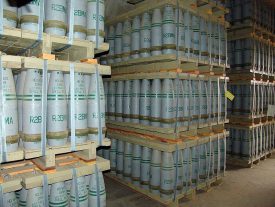
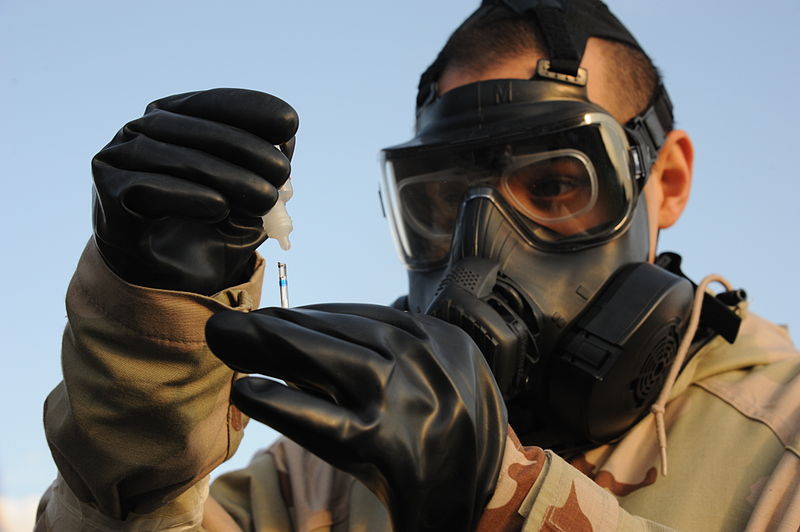
Operational_Readiness_Exercise_121014-F-LP903-827Sulfur mustard traces were found on fragments of ordnance used by the Islamic State, as well as on scraps of clothing from victims in Syria and Iraq. There have been several accounts by Kurdish officials that have claimed chemicals, like chlorine, were dispersed this summer, which is concerning for the ongoing use of these internationally banned substances. Testing done in the US was reported by officials on Friday, September 11, 2015, stating that, “there’s no doubt ISIS has used this,”. Officials have also said that the chemical residue recently found does not match known chemical ordinance that was used in the former Iraqi inventory. Overall, the use of chemical weapons is highly distressing and the method of acquisition, either manufacturing or from undeclared stocks, is under investigation.

Michigan Experiences Imported Plague Case

 A Michigan woman is the second case of bubonic plague that was traced back to the Little Rainbow area of Colorado. The Michigan resident was visiting family in Salida, CO during a music festival in late August. While her exact exposure hasn’t been established, she became ill after returning home and was hospitalized shortly thereafter. Lucky for the diagnosticians, she displayed textbook plague symptoms, leading to CDC involvement and antimicrobial treatment. Fortunately, she was released from the hospital and is beginning the long road to recovery, although it’s probably the last time she’ll attend that particular music festival or go hiking around it….

The So-Called Islamic State 2
By Greg Mercer

In February, I wrote about a topic that had been puzzling me- the contentious nomenclature of the Islamic State, or ISIS, or ISIL, or Daesh.  I decided to revisit this question now that the issue is a staple in the news, and that we’re probably saying it more frequently while thinking less about what we call it.  So I fired up my good friend Google Trends[1] again to take a look.  Google is a decent measure of public interest in a subject.  It’s the most popular search engine[2] in the world, with 66.78% of search volume worldwide as of August 2015.

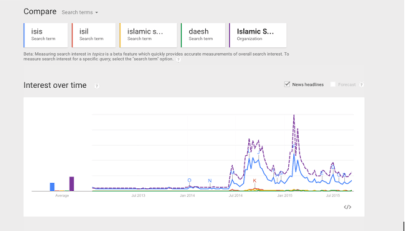
Last time, I found that ISIS was the most popular term by a fair amount.[3]  This seems to be true this time around too, which isn’t terribly surprising.  Here’s what I got:
Screen Shot 2015-09-17 at 6.24.26 PM


This time around, ISIS is still the most popular, but Google’s added a feature that tells us a little more.  While I suspected that the terrorist organization was driving most of the searches for ISIS before, it’s true that ISIS is the only of the names that has other popular uses, notably an Egyptian goddess, a think tank, and of course a fictional intelligence organization.  The new “topics” option in Google Trends lets us identify search volume for an entire subject.  The dotted purple line indicates all searches for the organization, regardless of naming specifics.  Since the searches for “ISIS” specifically and all of the searches for the organization are strongly correlated, it’s safe to say that mythology enthusiasts, nuclear scholars, and Archer fans aren’t skewing the trends.

It’s also still the case that search volumes for all of the names spike with major news events- no surprise there.

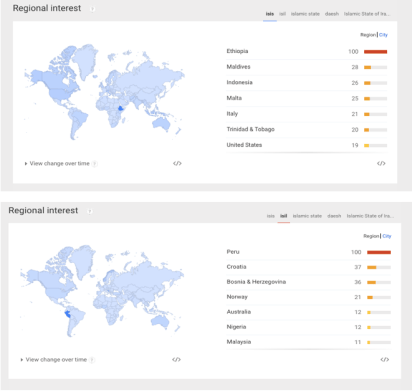
I also found the search trends by country interesting, here’s a look at the different terms and how they show up globally:

Screen Shot 2015-09-17 at 7.33.14 PM
Click on image to see Google Trend analysis and additional graphs


A couple of takeaways:  Looking at the organization as a whole, the two most interested parties (by Google search) are Iraq and Iran.  That’s not too surprising.  Iran is also #1 for “Daesh”, which is used in both Arabic and Farsi and is considered more a disparaging name.  In fact, the Iranian foreign minister told Iranian state media in January (fair warning, this links to Iran Daily) that he hates the term “Islamic State” and prefers “Daesh.”  In my earlier article, I noted that other foreign policy practitioners share this sentiment, and prefer a name that doesn’t recognize the organization as a state or representative of Islam.  This is also definitely the least popular name in mainstream American media.[4]  Ethiopia and Peru are the highest by volume for ISIS and ISIL, respectively, neither of which I would have expected offhand.

It’s interesting to see how these trends break down, and to look at a single massive political issue and international crisis with such a proliferation of terms.  I think the name that finally sticks remains to be seen.

[1] This links to the search parameters I used for this article, so you can play around with the data.
[2] This site is really cool if you’re into this sort of thing- you can see what site users choose based on browser, operating system, and device type.
[3] Personally, I tried ISIL in the name of accurate translation, but I tended to use ISIS when being flippant, and then it ended up sticking.
[4] To get anecdotal, the only person I’ve heard use it is my buddy who does Arabic translation and Middle East studies for a living.

The Evolution of Cyber War

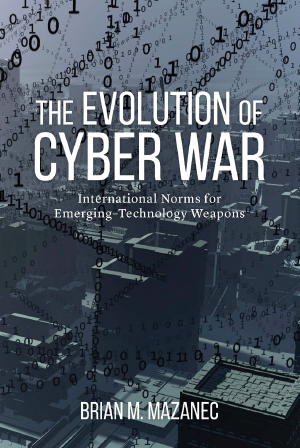
Screen Shot 2015-09-18 at 6.39.11 AMGMU’s very own, Dr. Brian Mazanec, delves into the world of cyber warfare and the reality of this threat. “Already, major cyber attacks have affected countries around the world: Estonia in 2007, Georgia in 2008, Iran in 2010, and most recently the United States. As with other methods of war, cyber technology can be used not only against military forces and facilities but also against civilian targets. Information technology has enabled a new method of warfare that is proving extremely difficult to combat, let alone defeat.” Available on November 1, 2015, we’re excited to share Brian’s phenomenal work!

Stories You May Have Missed:

  • Flu vaccination rates went up a bit for the 2014/2015 season, however, the efficacy was only 18% due to an antigenic drift. Fortunately, vaccination compliance for healthcare workers increased and overall rates showed that women were more likely than men to get vaccinated.
  • The Australian government will pass a new law, the “No Jab, No Pay Bill“, that will penalize parents who don’t vaccinate their children by withholding child care and other payments.
  • An additional 77 cases of Salmonella Poona were reported since September 9, 2015, related to the multi-state cucumber outbreak. The total infected is now 418 people across 31 states, with 91 hospitalizations.
  • A new prion disease has been identified by a team of scientists led by Stanley Prusiner. Their report outlines the discovery and the potentially infectious nature of this new prion.

Week In DC: Events

The World We Seek: Reigniting the Dialogue on Human Security – Johns Hopkins School of Advanced International Studies

Date: September 14, 2015, 9:30am-5:30ppm

Beijing by rediscovering the Universal Declaration of Human Rights as the foundation for global security and sustainable development. International Experts and a new generation of rights activists will share proven models for alleviating poverty, improving health and sanitation, and countering violent extremism. The program will feature poetry, music, and the Washington D.C. premiere of the WLP documentary film, Human Rights: The Unfinished Journey.

Johns Hopkins SAIS – Nitze Building1740 Massachusetts Ave., N.W., Washington, D.C. 20036 (map) Room: Kenney-Herter Auditorium    RSVP Here

The Iran Nuclear Deal and Its Implications – Johns Hopkins School of Advanced International Studies

Date: September 15, 2015, 5pm-7pm

Featuring: Robert Einhorn, Brookings Institution; former State Department Special Advisor; Shanta Devarajan, Middle East and North Africa, The World Bank; and Robin Wright, US Institute of Peace and the Woodrow Wilson Center

Location: Johns Hopkins SAIS – Rome Building1619 Massachusetts Ave., N.W., Washington, D.C. (map)
Room: Rome Auditorium

The Encryption Debate: Balancing Privacy and National Security – The Christian Science Monitor

Date: Tuesday, September 15, 2015, 8:30am-11:00am

Major American companies moved to ramp up security on their consumer devices to fight hackers and eavesdropping governments, in the wake of the Edward Snowden revelations about National Security Agency surveillance two summers ago. But senior law enforcement and intelligence officials say the new default protections prevent them from catching dangerous terrorists and criminals, and have called on companies such as Apple and Google to find a secure way for them to access consumers’ data with a warrant – which many technologists and privacy advocates claim is tantamount to building a “backdoor” into otherwise strong encryption.

What’s the right balance between protecting people’s personal privacy and the country’s security? How the Obama administration and Congress decide to proceed could impact US national security and foreign policy, the competitiveness of American businesses, and the future structure of the Internet. Join Passcode for a discussion with key figures in the debate between US law enforcement and the tech sector — doors open at 8:30 a.m. for coffee and networking

Location: St. Regis Hotel923 16th Street NW, Washington, D.C. (map), Carlton Ballroom

Arctic Transformation: Understanding Arctic Research and the Vital Role of Science – Center for Strategic and International Studies

Date: September 16, 2015,  8:30am-12:00pm

Following President Obama’s historic visit to the American Arctic, please join us for a timely conference on the vital role of science which seeks to better understand the profound and stunning changes that are occurring in the Arctic. Scientific research and collaboration informs our understanding on the impact of climate change on the most northern latitudes while also informing approaches to safely operating in and sustainably developing the economic potential of the region. Our keynote speakers will discuss the vital role of science leadership in the Arctic and will examine the most pressing gaps in our understanding of this dynamic region.

Location: Center for Strategic and International Studies1616 Rhode Island Ave NW, Washington, DC 20036 (map)

Anwar al-Awlaki, Yemen, and American Counterterrorism Policy – Brookings Institution

Date: September 17, 2015, 10:00am-11:30am

On September 30, 2011, the U.S.-born radical Islamic cleric, Anwar al-Awlaki, was killed by an American drone strike in Yemen, marking the first extra-judicial killing by the United States government against a U.S. citizen. Placed at the top of a CIA kill list in 2010 by the Obama administration, al-Awlaki was known for his intimate involvement in multiple al-Qaida terrorist plots against U.S. citizens, including the 2009 Christmas Day airline bombing attempt in Detroit and the 2010 plot to blow up U.S.-bound cargo planes. His calls for violent jihad remain prominent on the Internet, and his influence has turned up in many cases since his death, including the Boston Marathon bombing of 2013 and the Charlie Hebdo shootings in Paris early this year. In a new book, “Objective Troy: A Terrorist, A President, and the Rise of the Drone” (Crown, 2015), The New York Times national security reporter Scott Shane, drawing on in-depth field research in Yemen and interviews with U.S. government officials, charts the intimate details of the life and death of al-Awlaki, including his radicalization, his recruiting efforts for al-Qaida in the Arabian Peninsula, and the use of drone strikes by the United States to prosecute its counterterrorism goals.

On September 17, the Intelligence Project will host Shane to examine the roles played by al-Awlaki in al-Qaida plots against the United States, al-Awlaki’s continued influence on terrorism, and the current state of al-Qaida today. Brookings Senior Fellow Bruce Riedel, director of the Intelligence Project, will provide introductory remarks and moderate the discussion. Following their remarks, Riedel and Shane will take questions from the audience.

Location: Brookings Institution1775 Massachusetts Ave NW, Washington, DC 20036 (map)
Room: Falk Auditorium

Talks@Pulitzer: Untold Stories From The Front Lines of Ebola – Pulitzer Center on Crisis Reporting

Date: Thursday, September 17, 2015, 5:30pm

Join German filmmaker Carl Gierstorfer and science journalist Erika Check Hayden as they present their reporting on Ebola and the human toll of the deadly disease at our Talks @ Pulitzer on Thursday, September 17.
Gierstorfer shares the story of one community’s fight in Liberia for survival against Ebola and provides a preview of his latest film, while Check Hayden reveals the untold stories of heroism and hope from first responders in Sierra Leone.

Space is limited so reserve your seat today: rsvp@pulitzercenter.org—specify in subject line: “September 17 Talks @ Pulitzer.”

Location: Pulitzer Center on Crisis Reporting1779 Massachusetts Ave NW #615, Washington, DC 20036 (map), Room: 615

Pandora Report 9.11.15

Miss us? Good news – the Pandora Report weekly update is back! With a new school year comes new faces and some organizational change-up. Dr. Gregory Koblentz is now the Senior Editor of Pandora Report and Saskia Popescu (yours truly) will be taking over from Julia Homstad as the Managing Editor. I come from the world of epidemiology, public health, and infection control. Having just started in the GMU Biodefense PhD program, I look forward to venturing down the rabbit hole that is the Pandora Report!

There’s been some pretty fascinating news over the past few weeks, so let’s try and catch up…

Lab Safety Concerns Grow 

Our very own Dr. Gregory Koblentz, director of the GMU Biodefense program, was interviewed by USA Today regarding the lab security issues that now involve mislabeled samples of plague. “Since there are now concerns about the biosafety practices at multiple DoD labs there needs to be an independent review of the military’s biosafety policies and practices,” Koblentz said Thursday. He said the Critical Reagents Program is an important biodefense resource. “It’s crucial that all problems with handling and shipping inactivated samples be resolved quickly so the program can resume its important role in strengthening U.S. biopreparedness.”

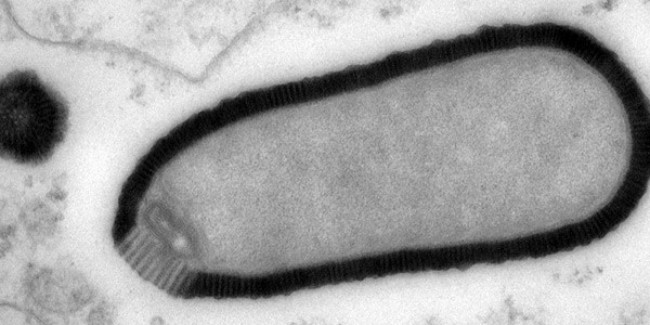
Reviving a 30,000-Year-Old Virus…Isn’t This How the Zombie Apocalypse Starts?

You may recall last year that French scientists stumbled across a 30,000-year-old virus frozen in the Siberian permafrost. Considered to be a “giant virus” (doesn’t that give you a warm, fuzzy feeling inside?), this is actually the fourth ancient, giant viral discovery since 2003. The new plan is to try to revive the virus in order to better study it.

Dr. Claverie told Agency France-Presse, “If we are not careful, and we industrialise these areas without putting safeguards in place, we run the risk of one day waking up viruses such as smallpox that we though were eradicated.” Given the recent concerns over biosafety lab specimen transport, we’re all curious to see how this new organism, coined “Frankenvirus”, turns out!

Cucumbers and A Multi-State Salmonella Outbreak

CDC updates regarding the Salmonella Poona outbreak reveal the brevity of the potentially contaminated product. As of September 9th, there have been two deaths, 70 hospitalizations, and 341 confirmed cases across 30 states. Perhaps the most worrisome is that 53% of affected individuals are children under the age of 18. While the produce company, Andrew & Williamson, issued a voluntary recall of their “slicer” or “American cucumber on September 4th, there have been 56 additional cases reported since then. Isolated samples from cucumbers in question were found in Arizona, California, Montana, and Nevada. The California Department of Public Health issued a warning and pictures of the affected cucumbers. 

Stories You May Have Missed: