
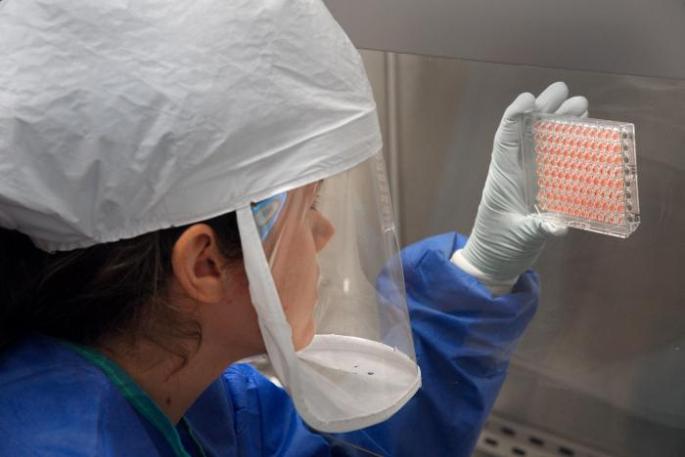
TGIF! Before we begin our weekly dose of all things biodefense, have you ever wondered the traits that predict animal or host spillover?
What Does A Post-Polio World Look Like?
Decades of battling diseases in eradication efforts has been a struggle throughout public health history, but what happens when you finally reach the finish line? Donors around the world have worked to eliminate polio and in the final stretch and last ditch efforts, many are asking what will happen when polio is eradicated and the donors are gone? The truth is that many polio eradication programs (which include vaccination and surveillance campaigns) actually form the foundation of public health for many countries and rural areas. These programs have been the backbone of establishing some semblance of public health for areas that many not receive it otherwise. “If and when polio is gone, however, much of the transition may fall to national governments. International funding stands to shrink dramatically. About 27 percent of WHO’s $587 million in spending in 2016 went to polio eradication efforts. The African region would also be particularly hard hit. Forty-four percent of WHO spending there went to polio efforts, and about 90 percent of all immunization staff and infrastructure on the continent are funded through the WHO’s Global Polio Eradication Initiative.” We haven’t really considered what it means to eradicate a disease like polio and how the withdrawing of funds and personnel might impact countries. Moreover, many of the polio eradication programs are closely tied to other vaccination programs (measles, tetanus, pertussis, etc.) and if funds are lost because polio is eradicated, these other vaccination programs could take a hit. Aside from vaccination initiatives, if stable public health programs are not established prior to eradicating polio, there is also a risk for loss of disease surveillance. Current polio eradication programs highlight the role of surveillance, which is also used to facilitate laboratory development, all of which could impact pandemic preparedness and global health security. It is vital that efforts to eradicate polio are also met with work from political leadership to ensure a transition occurs that maintains public health efforts. “The transition as polio is eradicated will be complex, and needs to be carefully managed, country specific and country led. Polio surveillance systems can provide an important foundation, and are tremendous assets to health care systems, said Irene Koek, the deputy assistant administrator of global health at the United States Agency for International Development. Civil society organizations will have a role to play in advocating to keep local governments and ministries on target, said John Lange, the United Nations Foundation‘s senior fellow for global health diplomacy.”
 Instructor Spotlight – Summer Workshop on Pandemics, Bioterrorism, and Global Health Security
We’re getting closer to the July 17th start date for our workshop (and the July 1st early registration discount expiration!) and this week we’re excited to show off one of our very own GMU Biodefense professors, Dr. Sonia Ben Ouagrham-Gormley. An economics and defense expert, biodefense guru, and world traveler, Dr. Ouagrham-Gormley is the kind of professor whose class you spend the entire time on the edge of your seat. Sonia Ben Ouagrham-Gormley, PhD, is an Associate Professor in the Schar School of Policy and Government at George Mason University. She holds affiliations with GMU’s Biodefense Program, Center for Global Studies, and the Department of History and Art History’s Master of Arts in Interdisciplinary Studies (MAIS) program. Prior to joining the faculty at George Mason in 2008, Professor Ben Ouagrham-Gormley was a Senior Research Associate with the Monterey Institute of International Studies’ James Martin Center for Nonproliferation Studies (CNS). While at CNS, she spent two years at the CNS Almaty office in Kazakhstan, where she served as Director of Research. She also was the founding Editor-in-Chief of the International Export Control Observer, a monthly publication focusing on proliferation developments and export controls around the globe. From 2004 to 2008, she was an adjunct professor at Johns Hopkins’ School of Advanced International Studies in Washington, D.C. She is the author of Barriers to Bioweapons: The Challenges of Expertise and Organization for Weapons Development (Cornell University Press, 2014). She received her PhD in Development Economics from the Ecoles des Hautes Etudes en Sciences Sociales (EHESS) in Paris; a graduate degree in Strategy and Defense Policy from the Ecoles des Hautes Etudes Internationales in Paris; a master’s degree in Applied Foreign Languages (triple major in economics, law, and foreign languages —Russian, and English) from the University of Paris X-Nanterre, and a dual undergraduate degree in Applied Foreign Languages and English Literature from the University of Paris X-Nanterre. She is fluent in French, English, Russian, and spoken Arabic, and possesses beginner competence in Kazakh. For more information, visit https://schar.gmu.edu/about/faculty-directory/sonia-ben-ouagrham-gormley
President’s Budget Would Leave U.S. Vulnerable to Global Health Security Threats and Why We Need An Emergency Fund For Future Outbreaks
Cuts to public health, health research, and international aid have some pretty far-reaching implications and faculty from the Johns Hopkins Center for Health Security are pointing to the inherent vulnerability that would come from Trump’s proposed budget. Health security incorporates several programs and the reality is that an epidemic anywhere means an epidemic everywhere – simply put, the outbreaks that could pose a threat to the U.S. commonly begin abroad. “The proposed budget would cut $76 million from CDC’s Global Health programs, including cuts to Global Disease Detection and other programs that train and prepare countries to diagnose and respond to emerging diseases, and to the Global Immunization Program. It would reduce by $65 million CDC’s Emerging and Zoonotic Infectious Diseases programs, which aim to prevent and control outbreaks of diseases such as Zika. It cuts by $136 million the CDC Preparedness and Response Capability budget, which includes the funding for CDC’s Emergency Operations Center and the deployment of its people abroad to emergencies such as the Ebola epidemic in West Africa.” The CDC, among other agencies with biodefense positions, has a significant volume of vacancies that haven’t been filled. More over, the authors point to the gap within the president’s budget regarding the future work of the GHSA, which is a vital multi-lateral effort to strengthen global health security. The budget has many worried because together, these cuts paint a bleak future for health security efforts – impacting surveillance, preparedness, and response efforts across the board. Global health security is simply not an investment we can afford to ignore. Did I mention that co-author Jennifer Nuzzo is also an adjunct professor at GMU’s biodefense program? Even if you’re not worried about the impact of the budget on health security, Ebola and Zika revealed just how necessary an emergency fund for outbreaks really is. “Creating a similar ‘rainy day’ fund—and providing the Centers for Disease Control and Prevention with permission to use it in advance—could save lives and money, both at home and overseas. The idea behind an emergency fund is not to displace efforts to combat infectious disease but to ramp them up to meet a crushing temporary need. During an outbreak the CDC can call on many doctors and nurses to work without pay, but the costs of transportation, medical supplies and protective equipment still have to be covered.” While the president’s 2018 budget includes such a fund, it fails to give a specific dollar figure and is already cutting into public health funding, which may be counterintuitive. “Lawmakers need to follow through by approving one or both of the proposed measures for the president to sign to ensure that the money will be there when the next public health emergency strikes.”
North Korea & A Sea of Sarin
The threat of nuclear-armed ballistic missiles from North Korea is a growing concern and while many focus on their nuclear and ballistic missile ambition, Reid Kirby is examining North Korean chemical weapons. Looking at the Terminal High Altitude Area Defense (THAAD) missile system and South Korean capital of Seoul, which houses more than 10 million people, many worry about North Korea’s ongoing vague threats. “Proponents of preemptive military action against North Korea’s nuclear program, along the lines of Israel’s 1981 Operation Opera against Iraq’s nuclear program, typically ignore North Korea’s history of asymmetrical responses. But North Korea’s capacity to inflict mass chemical casualties on the Seoul area in a ‘sea of sarin’ attack rivals its capacity for nuclear destruction.” In 2010, it was estimated that North Korea possessed 2,500-5,000 tons of chemical weapons (mostly sarin and VX) and maintains roughly eight manufacturing facilities, which could ramp up production to 12,000 tons. Kirby addresses estimates of rounds per minute and calculations of how much sarin Seoul might receive in such an attack, noting that “a heuristic approach to estimating the total quantity of sarin required to inflict 25 percent casualties on a city such as Seoul under the specified conditions simplifies the problem into a box model of 600 square kilometers, with casualty rates integrated by area to find the necessary quantity. Using this approach, a ‘sea of sarin’ attack on Seoul would require about 400 kilograms of sarin per square kilometer”. He highlights the consequences of a 240-ton sarin attack on Seoul, noting that it would kill around 6.5% (higher lethal dosage) or potentially 25% of the population (if lower lethal dosage assumed). “If publicly stated intelligence estimates are to be believed, North Korea’s chemical arsenal represents a credible and present threat. How North Korea could apply this threat as a deterrent is speculative. But the destructive potential of the threat should give reasonable cause to hesitate regarding preemptive military options against North Korea’s nuclear weapons ambitions.”
Pandemic Flu Plan – A New Approach
The US Department of Health and Human Services (DHHS) just released their updates to pandemic flu plans. “The original plan was geared toward a more severe scenario and set a goal of delivering pandemic vaccine within 6 months of a pandemic declaration. The new document incorporates lessons learned from the 2009 H1N1 pandemic, which resulted in a less severe event. It also spells out the goal of having the first vaccine doses ready within 3 months of pandemic strain emergence, along with approved broad-spectrum antivirals.” Within the plan there are now seven domains of focus, which include objectives, goals, and key steps. The domains are: surveillance, epidemiology, and lab activities, community mitigation measures, medical countermeasures, healthcare system preparedness and response, communications and public outreach, scientific infrastructure and preparedness, domestic and international response policy, incident response, and global partnerships. You can read the plan here, in which HHS notes that they are exploring several innovative approaches to pandemic flu preparedness like re-conceptualizing respiratory protection, accelerating vaccine and antiviral development, building on emerging technologies for innovative diagnostic and diagnostic testing, etc. “Taken together, the updated domains reflect an end-to-end systems approach to improving the way preparedness and response are integrated across sectors and disciplines, while remaining flexible for the conditions surrounding a specific pandemic. This more-nuanced and contemporary approach recognizes the interdependence of domain areas, which should lead to a better understanding of how the system functions as a whole.” The updated HHS pandemic plan emphasizes that while the nature of influenza and pandemics may change, the importance of planning and strengthening critical infrastructure will always be necessary.
DoD Tick-Borne Disease Research Program
There’s been increasing attention to the threat of tick-borne diseases and the DoD is ramping up research efforts. Their Tick-Borne Disease Research Program (TBDRP) looks to help increase not only treatment efforts, but also diagnostic capacity. Created in 2016, the TBDRP works to fill the gaps within tick-borne disease research through programs like the Idea Award which encourages and supports investigators in the early stages of their career. The New Investigator aspect of this award aims at those postdoctoral fellows working to develop independent research and in the early stages of faculty appointments. “There are currently at least 16 known tick-borne illnesses, with emerging diseases being discovered all the time. In the United States, the yearly cases of Lyme disease and other tick-borne diseases, including spotted fever rickettsiosis, anaplasmosis, and ehrlichiosis, have been increasing steadily for years, currently totaling tens of thousands of people diagnosed annually, with more likely undiagnosed. Globally, the US Military prioritizes tick-borne Crimean-Congo hemorrhagic fever as an operational threat abroad. The FY17 TBDRP intends to support conceptually innovative, high-risk/potentially high-reward research in the early stages of development that could lead to critical discoveries or major advancements that will accelerate progress in improving outcomes for individuals affected by Lyme disease and/or other tick-borne illnesses.”
Health Sector Resilience Checklist for High- Consequence Infectious Diseases
Johns Hopkins Center for Health Security and the CDC jointed together to take the lessons learned from Ebola and build a checklist to strengthen the U.S. in the event of such high-consequence outbreaks. This checklist focused on high-consequence infectious diseases (HCIDs), which are novel, moderate to highly contagious, moderate to highly lethal, not easily controllable by MCM or non-pharmaceutical intervention, and cause exception public concern (think Ebola, MERS, H5N1, etc.). “The principal aim of this project was to develop evidence-based recommendations to enable communities to build health sector resilience to events involving HCIDs based on the domestic response to confirmed cases of EVD in the United States.” Aside from the checklist, their findings highlight issues with governance and coordination, communication, public health issues, health-care specific issues, EMS, and laboratories. The general checklist itself includes sections on preparedness, leadership, creative flexibility, command structure, public trust, managing uncertainty, and crisis and emergency risk communication. There are also checklists for public health, healthcare, EMS, and elected officials, which includes things like a collaborative relationship with partners at other healthcare facilities and awareness of resources related to public health law expertise.
Stories You May Have Missed:
- Anthrax: DoD Develops Biological Select Agents & Toxins Surrogate Solution – “The Defense Biological Product Assurance Office (DBPAO), a component of the Joint Program Executive Office for Chemical and Biological Defense, has announced the development of a Biological Select Agents and Toxins (BSAT) surrogate solution that will mitigate the risks associated with shipment and use of Bacillus anthracis. In addition to risk mitigation for Department of Defense (DoD) stakeholders and the community at large, this product demonstrates DBPAO’s commitment to providing quality reagents to the DoD and to the biodefense community. To accomplish this task, the DBPAO developed a Bacillus anthracis surrogate strain named Recombinant Bacillus anthracis with Assay Targets (rBaSwAT) using a recombinant DNA approach to create a BSL-2-level genetically modified organism that will allow continuation of operations with reduced risk. The strain is built in a novel, non-virulent Bacillus anthracis background and carries a comprehensive complement of anthrax specific molecular and immunological markers.”
- Bioviolence- Matt Watson from Johns Hopkins Center for Health Security, is taking us through the history of bioviolence aka using infectious diseases for violent purposes. While not everyone truly sees the immediate threat of biological agents, Watson highlights the newer threats like synbio and biotechnologis that have growing potential for misuse. He also takes care to highlight the history of bioweapons to truly show the range of their application. “Of all the scourges of mankind, plagues and warfare are almost certainly the most dreaded and dangerous. Several times throughout history—and more frequently than most people are aware of—there have been attempts by individuals, organizations, and nation-states to harness the former in service of the latter.” If you want a brief overview of historical biological weapons and to truly understand the future of biothreats, don’t miss out on this great op-ed.
- New York City Legionnares’ Cluster – Health officials are scrambling to investigate the source of a NYC Legionnaires’ cluster in Manhattan. “In a Jun 16 statement, the New York City Department of Health and Mental Hygiene (DOHMH) said seven illnesses have been confirmed over the past 11 days. Four people are recovering in the hospital, two have been discharged, and one person in his or her 90s with underlying health conditions has died. Authorities are sampling and testing all cooling tower systems within a half-kilometer radius of the affected area of Lennox Hill. The health department is urging New Yorkers who have respiratory symptoms such as fever, cough, and chills to promptly seek medical care. In a typical year, about 200 to 400 Legionnaires’ cases are reported in New York City.” Legionnaires’ can be deadly for immunocompromised patients and is often a result of water treatment issues or poor disinfecting processes with spas, hot tubs, humidifiers, condensers, etc.
 Chemical Weapons & ISIS
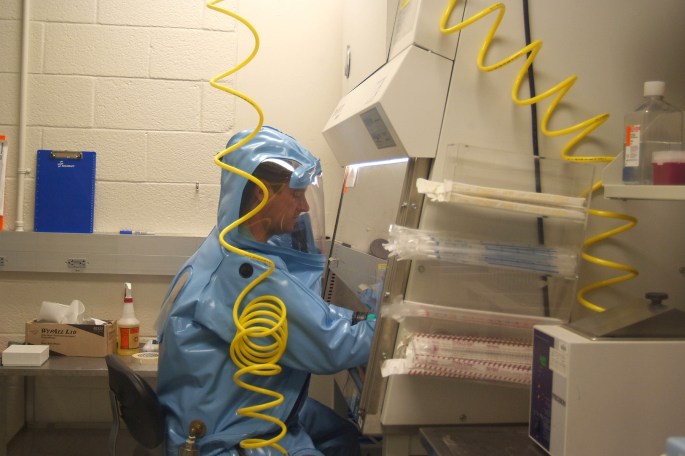
 Pandemics, Bioterrorism, & Global Health Security Workshop Instructor Spotlight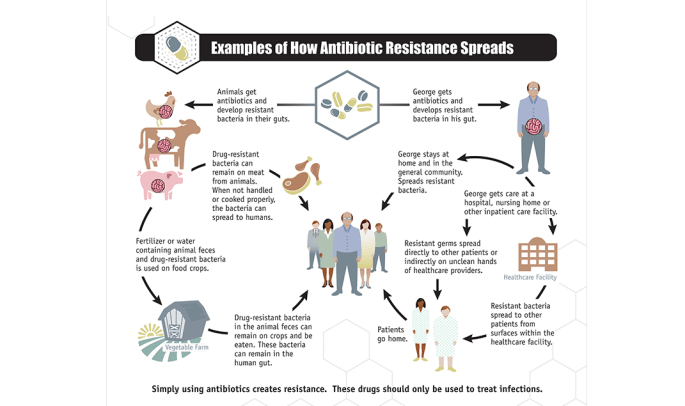
 Our instructor spotlight this week will shine on FBI Supervisory Special Agent Edward You. Mr. You is like the action hero of the biological countermeasures world (ok, that might be a tad of an exaggeration, but wait until you read about all the amazing things he does with the FBI!). Mr. You is responsible for creating programs and activities to coordinate and improve FBI and interagency efforts to identify, assess, and respond to biological threats or incidents. These efforts include expanding FBI outreach to the Life Sciences community to address biosecurity. Before being promoted to the Weapons of Mass Destruction Directorate, Mr. You was a member of the FBI Los Angeles Field Office Joint Terrorism Task Force and served on the FBI Hazardous Evidence Response Team. Mr. You has also been directly involved in policy-making efforts with a focus on biosecurity. He is an active Working Group member of the National Security Council Interagency Policy Committee on Countering Biological Threats and an Ex Officio member of the NIH National Science Advisory Board for Biosecurity. He also serves on two committees for the National Academies of Sciences, the Institute of Medicine’s Forum on Microbial Threats and the Committee on Science, Technology, and Law’s Forum on Synthetic Biology. Prior to joining the FBI, Mr. You worked for six years in graduate research focusing on retrovirology and human gene therapy at the University of Southern California, Keck School of Medicine. He subsequently worked for three years at the biotechnology firm AMGEN Inc. in cancer research. Special Agent You works to keep the communication channels open between the synthetic biology community and law enforcement to help identify threats and strengthen relations with the biohacker community. Don’t miss the opportunity to learn from Mr. You and pick his brain during our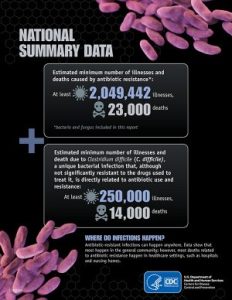
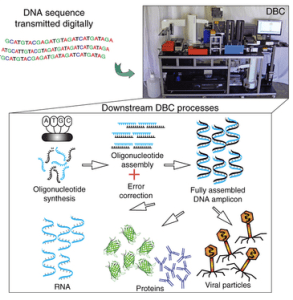 Digital-to-Biological Converter
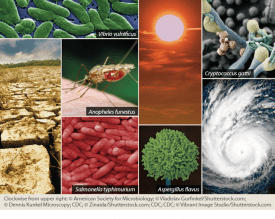 Financial Cuts to Biodefense – Are We Digging Our Own Grave?
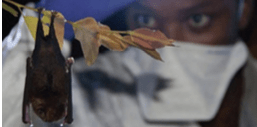 Virus Hunters
 Congrats GMU Biodefense Graduates
  Payton, Dana Saft, Colleen Tangney, and Anupama Varma. Earning their PhD in biodefense, we’re celebrating Keith W. Ludwick (Dissertation title: The Legend of the Lone Wolf: Categorizing Singular and Small Group Terrorism), Nereyda Sevilla (
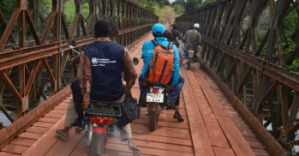 Ebola in the DRC – Updates
 Double-edged Sword Research
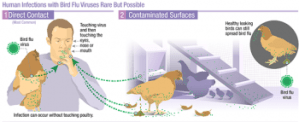 GAO Report: U.S. Needs To Do More To Prevent Possible Bird Flu Pandemic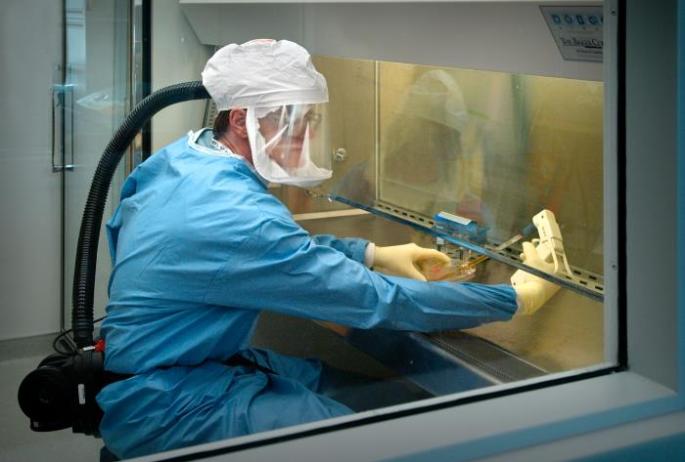
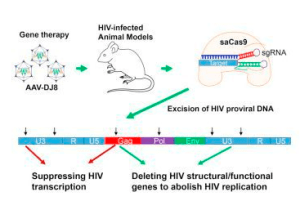 Scientists Take On HIV By Using CRISPR
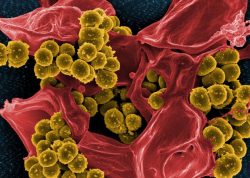 The Battle of the Resistant Bug
 Welcome to your weekly dose of all things biodefense. We hope you’ll celebrate
  Why Are We More at Risk Than Ever for a Global Pandemic?
 This past Saturday (Earth Day), cities around the world saw hoards of scientists and supporters of research marching to both celebrate science, but also push for the preservation of funded and publicly communicated research. “The March for Science is a celebration of science. It’s not only about scientists and politicians; it is about the very real role that science plays in each of our lives and the need to respect and encourage research that gives us insight into the world. Nevertheless, the march has generated a great deal of conversation around whether or not scientists should involve themselves in politics. In the face of an alarming trend toward discrediting scientific consensus and restricting scientific discovery, we might ask instead: can we afford not to speak out in its defense?” Cities like Chicago saw 40,000 participating in the march, armed with lab coats, pink knit brain hats, and
 A Scope, A Resistant Germ, and Missing Data Walk into a Bar
 Synthetic Bioterrorism – US Developing Medical Response
