Pandora Report 4.15.2016

It’s been a big week in the world of biodefense – today is International Biomedical Laboratory Science Day! Biomedical Laboratory Scientists work hard to ensure procedures and patient care happens in a safe environment and that patient safety comes first! April 10th marked the anniversary of the Biological Weapons Convention opening for signature in London, Moscow, and Washington in 1972. The U.S. Geological Society also just released evidence that Alaska remains a “hot spot” for avian influenza to enter North America.

GMU Participation in UNSCR 1540 Civil Society Forum
IMG_3260This week our GMU Biodefense Professor and Graduate Program Director, Dr. Koblentz, participated in the UN’s 1540 Civil Society Forum – A Dialogue with Academia and Civil Society. Dr. Koblentz presented a paper on the role of academia in implementing and strengthening Resolution 1540, as well as moderating a panel regarding academic outreach. Resolution 1540 (2004) “imposes binding obligations on all States to adopt legislation to prevent the proliferation of nuclear, chemical and biological weapons, and their means of delivery, and  establish appropriate domestic controls over related materials to prevent their illicit trafficking. It also encourages enhanced international cooperation on such efforts.” Dr. Koblentz’s  work with the UNSCR 1540 Civil Society Forum addresses the evolution of WMD proliferation threats related to non-state actors, 1540 obligations that pertain to the academic community, and the importance of academia in these efforts. The forum also focussed on how to enhance review and analysis of 1540 implementation via communication between civil society, national governments, and the 1540 Committee.

Written Testimony for April 14 Senate Committee on Homeland Security & Governmental Affairs Hearing – “The Federal Perspective on the State of Our Nation’s Biodefense”
You can now catch up on the written testimony from this hearing on biodefense within the U.S. Pointing to the evolution of threats to include more emerging infectious diseases and the role of DHS in biodefense, this overview gives insight into the current biodefense situation within the U.S. The hearing addressed the National Biosurveillance Integration Center (NBIC), BioWatch Program, Public Health Emergency Medical Countermeasures Enterprise, and state and local responder engagement. “In the wake of these growing threats, the Department of Homeland Security (DHS) remains fully engaged and proactive in attempting to characterize the threat, providing warning of emerging and imminent threats, and coordinating whole of government response. During the most recent Ebola Virus Disease outbreak in West Africa, DHS provided intelligence analysis to the interagency, state and local governments, and first responders, and it directed research to better characterize the threat and fill gaps in public health and operational responses.” You can read the testimony before the Committee on Homeland Security and Governmental Affairs, “The Nation Faces Multiple Challenges Building and Maintaining Biodefense and Biosurveillance” here.

Preparing for the Next Zika
Kendall Hoyt and Richard Hatchett are tackling the struggle of U.S. preparedness efforts for future infectious disease outbreaks. “The development of new biomedical countermeasures—vaccines, therapies and diagnostic—requires the coordination of a wide number of institutional and industry actors to succeed. We argue here that international efforts to develop countermeasures for emerging infectious diseases should build on lessons learned from US programs to develop closely related biodefense products.” While the WHO declaration of Zika virus as a public health emergency has pushed for the rapid development of a vaccine, Hoyt and Hatchett highlight the empirical delay that comes with vaccine development. Overall, they emphasize that lessons from the U.S. biodefense program should inform international efforts to build and strengthen medical countermeasures for emerging infectious diseases. If you enjoyed their article, you can also hear from the experts, in person, at GMU’s Pandemics, Bioterrorism, and Global Health Security summer program. Dr. Hoyt will be one of the instructors for our professional education course this summer (information will be made available shortly), so don’t miss out on getting to chat with experts in the field about all things biodefense.

GMU SPGIA PhD Information Session
Considering a PhD? Check out GMU’S School of Policy, Government, and International Affairs PhD Informational Session on Thursday, April 21, 7-8:30pm at our Arlington Campus, Founders Hall, Room 126. Dr. Koblentz will be discussing the Biodefense program and available to answer questions!

Lab Safety Tracking Website – Improving Select Agent Lab Oversight
In response to ongoing scrutiny and biosafety failures, federal regulators have launched a new website that will allow them to track their progress “improving oversight of safety and security at facilities working with bioterror pathogens such as anthrax and Ebola.” While still a work in progress, many are pointing to this site being a step in the right direction towards transparency. The CDC released their Federal Select Agent Program (FSAP) report card to look more closely at biosafety and security issues surrounding this work. Unfortunately, some note that the report card still fails to meet the requested details on labs violations and incidents at specific labs. The increased scrutiny and attention to lab safety failures has brought attention from the White House, initiating a push for more transparency regarding the research and incidents in labs working with bioterror agents.

HIV Fights Off CRISPR
Just when you thought CRISPR-Cas9 could do just about anything, HIV brings its A-game. Since its creation, many researchers have attempted to use CRISPR to combat HIV. Unfortunately, the virus has been skilled at fending off these efforts. “The very act of editing—involving snipping at the virus’s genome—may introduce mutations that help it to resist attack.” There are a handful of strategies for using CRISPR gene editing technologies against HIV – editing the T helper cells to avoid the virus from getting in or aiding the T cells with the capabilities to seek out and destroy any HIV that infects them. “When HIV infects a T cell, its genome is inserted into the cell’s DNA and hijacks its DNA-replicating machinery to churn out more copies of the virus. But a T cell equipped with a DNA-shearing enzyme called Cas9, together with customized pieces of RNA that guide the enzyme to a particular sequence in the HIV genome, could find, cut and cripple the invader’s genome.” Sounds like a good plan, right? Unfortunately, a team from McGill University found that the newly equipped T cells were, within two weeks, churning out virus particle copies that had avoided the CRISPR attack. The team performed DNA sequencing to get a closer look at what exactly what going on – they found that the virus had actually “developed mutations near the sequence that the CRISPR-Cas9 enzyme that been programmed to cut.” The team believes that it’s not actually the copying error-caused mutations that helped beat CRISPR, but rather that things went wrong when Cas9 cut the viral DNA. A team at the University of Amsterdam experienced similar results and both groups agree that this problem can be overcome and there is still a possibility for a CRISPR-Cas9-based HIV treatment.

All Things Zika
On 4/13, the CDC formally concluded that Zika virus causes microcephaly and other birth defects. Zika virus may now also be tied to another brain disease. The American Academy of Neurology published a report regarding a study that was released on April 10th, in which “Zika virus may be associated with an autoimmune disorder that attacks the brain’s myelin similar to multiple sclerosis”. While it’s a small study, these findings point to the neurological effects Zika virus is capable of causing and the need for further research. Experts are warning governments in Latin American to “fill a shortfall of investment to prevent further human tragedies” despite economists denying that there will be major impact from the virus. These experts are pointing to the already weakened economies that are plagued with “chronic underinvestment in water and sanitation”, which can aid in the spread of such diseases. On Monday, April 11th, the White House said that the released funds for Zika virus won’t be enough to combat the growing threat. Dr. Fauci of the National Institute of Allergy and Infectious Diseases highlighted that the more information that is gathered on Zika virus, the more worrisome it becomes. “One big problem, Fauci said, is that pharmaceutical companies could be reluctant to work with the federal government if they don’t have confidence that there will be a stable source of money.” A recent study published in PLOS Neglected Tropical Diseases, suggests that the virus may have been brought to Latin America via the 6th World Sprint Championship Canoe Race in August 2014.  USAID has put out a call for problem solvers to share groundbreaking ideas to help combat Zika virus. The Combating Zika and Future Threats Grand Challenge will invest up to $30 million in solutions. As of April 13th, the CDC has reported 358 travel-associated and 7 sexually transmitted cases of Zika in the U.S. You can also get the full WHO Zika situation report here.

Predicting and Evaluating the Epidemic Trend of Ebola in the 2014/2015 Outbreak and the Effects of Intervention Measures Screen Shot 2016-04-11 at 9.41.51 AM
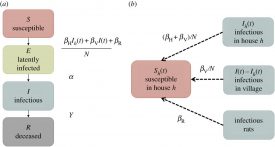
Researchers developed several transmission models for Ebola to predict epidemic trends and evaluate just how efficient and effective the intervention methods were following the 2014 outbreak. Accounting for effective vaccination rates, a basic reproductive number as an intermediate variable, and fluctuations of diseases transmission based on a SIR model, this study evaluates the effects of control and prevention measures. “Measures that reduced the spread of EVD included: early diagnosis, treatment in isolation, isolating/monitoring close contacts, timely corpse removal, post-recovery condom use, and preventing or quarantining imported cases. EVD may re-emerge within two decades without control and prevention measures.”

Stories You May Have Missed:

  • National Science Advisory Board for Biosecurity (NSAAB) Meeting – Don’t miss out on the NSAAB meeting on May 24, 2016! Agenda items include: (1) Finalization of NSABB findings and recommendations on a conceptual approach to evaluating proposed gain-of-function (GOF) studies; (2) discussion of next steps for U.S. government policy development regarding GOF studies; and (3) other business of the Board. The meeting will also be webcast here at the time of the event!
  • BMBL Virtual Town Hall and Workshop – The National Academies of Science, Engineering, and Medicine presents an opportunity for stakeholders to provide input for a revision of “Biosafety in Microbiological and Biomedical Laboratories”. This is a virtual town hall that is open for comments from April 4-May 13th. There will also be a workshop on May 12th in Washington, DC that you can register for here.
  • DARPA INTERCEPT Program for Biodefense Countermeasures – The Defense Advanced Research Project Agency (DARPA)’s Biological Technologies Office (BTO) is hosting a Proposers Day for the INTERfering and Co-Evolving Prevention and Therapy (INTERCEPT) program. “The goal of the INTERCEPT program is to explore and develop a new therapeutic platform to outpace fast-evolving viral pathogens, based upon virus-based therapeutic particles that interfere with viral infection and co-evolve with viral targets.”
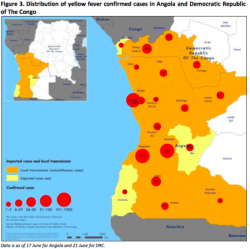
  • Angola Yellow Fever Outbreak – The WHO has reported that as of April 10th, there have been 1,751 suspected cases and 242 deaths associated with the yellow fever outbreak. 582 of the cases were laboratory confirmed, of which 406 were from the Luanda province.

Enjoying your weekly dose of the Pandora Report? Sign up to receive it every week so the fun never ends! 

Pandora Report: 4.8.2016

Happy National Public Health Week! The American Public Health Association is celebrating the importance of public health partnerships with a full week dedicated to increasing awareness and participation. Enjoy some vaccine history by taking a trip down memory lane with this great infographic. Before we get started, researchers have found a possible pathway for the emergence of zoonotic malaria.

GMU Master’s and PhD Open Houses!
Whether you’re looking to get a Master’s Degree (we have both online or in-person programs!) or a PhD in Biodefense, we’ve got you covered. Come check out the GMU’s School of Policy, Government, and International Affairs (SPGIA) open houses. The Master’s Open House is on Thursday, April 14, 2016 at 6:30pm in our Arlington Campus, Founders Hall, room 126. GMU Biodefense professor and graduate program director, Dr. Koblentz, will be there to answer questions and then lead a biodefense break-out (or should I say outbreak?) session afterwards. If you can’t attend in person, we’re offering the biodefense info session virtually around 7pm (give or take a few minutes) that night. The PhD informational session will be Thursday, April 21, 7-8pm in our Arlington Campus, Founders Hall, room 126. 

MSF Ebola Research
Medecins Sans Frontières (MSF) has released their report on the research they undertook throughout the Ebola outbreak in 2014. MSF was perhaps the strongest and most well coordinated response team on the ground during this outbreak. While their work heavily focused on medical care, they also performed a wide variety of research that ranges from public health to anthropology, and much more. “MSF carried out research in a number of areas including epidemiology (describing the disease and its spread), vulnerable patient groups, clinical trials for new treatments, community views of Ebola, operational issues and effects of the outbreak on general healthcare.” Their report ties together their research with the six pillars of Ebola control – isolation of cases and supportive medical and mental health care in dedicated ETC’s, contact tracing, awareness raising in the community, a functioning surveillance and alert system, safe burials and house spraying, and maintaining healthcare for non-Ebola patients. MSF research on vulnerable groups and community response to returned survivors is both fascinating and important for better response in future outbreaks.

Islamic State Hijacks Mosul University Chemistry Lab to Make Bombs
Having gained control of the “well-stocked university chemistry lab” in Mosul, Iraq, ISIS has been working for the past year to build “a new generation of explosive devices and train militants to make them”. General Hatem Magsosi, Iraq’s top explosives officers, notes that gaining control of this lab has highly strengthened the Islamic State’s capabilities. “They have found ‘peroxide-based chemical bombs and suicide bomb vests like the ones used in the Brussels attacks and by at least some of the Paris attackers.’ The lab also contained ‘nitrate-based explosives and chemical weapons.”

GMU Biodefense Student Awarded ASIS Scholarship
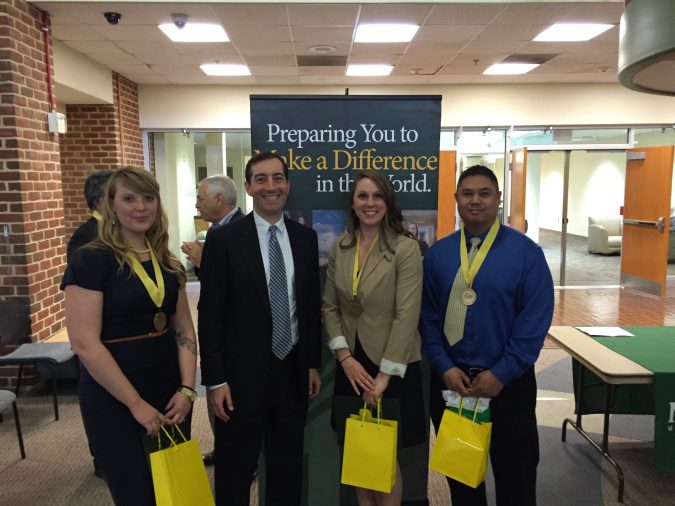
Congrats to Biodefense MS student, Rebecca Earnhardt for receiving the ASIS National Capital Chapter Scholarship! The ASIS scholarship helps support and encourage students to follow a career in the security field. We love getting to celebrate the awesome work and achievements of our biodefense students, and between her dedication to the global health security field, scholarship, and work at START, we’re so happy to have her apart of the GMU Biodefense program!

Leaked UN Report Highlights Poor Sanitation at Haiti Bases

Courtesy of The Haitian Times
Courtesy of Haitian Times

Despite consistent denial regarding their role in the cholera outbreak during the 2010 recovery efforts in Haiti, recent documents have supported the UN’s responsibility. “The report, which was commissioned a month into the cholera crisis in November 2010, found a series of alarming problems in several UN peacekeeping bases including sewage being dumped in the open as well as a lack of toilets and soap.” The authors of the report also alerted UN leadership regarding the ramifications of the sewage disposal failures and “and the poor oversight of contractors carrying out this work has left the mission vulnerable to allegations of disease propagation and environmental contamination.” The recently released report will not only add pressure upon the UN to admit internal failures, but also support the recent lawsuit that was brought forth from 1,500 Haitians. Sadly, the UN has maintained a steadfast refusal to accept liability, despite growing data to support their responsibility for the outbreak. The lawsuit focusses on UN failure to screen the peacekeepers from Nepal for cholera and how a UN-hired contractor neglected to ensure “sanitary conditions and adequate infrastructure” for the UN camps.

Your Weekly Dose of Zika
On Wednesday, it was announced that federal funds left over from Ebola response will be moved to fight Zika virus. $589 million will be provided to aid in research and help limit the spread of the disease. The use of unspent funds was planned for helping to implement the GHSA, however now the focus will now be on Zika virus R&D. For many, the greatest concern is reaching women in their child-bearing years. The WHO is highlighting a case study in Martinique, specifically their first case of Zika-related microcephaly.  You can read the letter here, but the goals of such case-studies are to help researchers better understand the infection, especially the high-risks associated with infection during pregnancy. Following the CDC Zika Summit, some are wondering if the U.S. can coordinate response efforts and cope with the impending advance of mosquitoes.  The Aedes aegypti mosquitoes require a unique approach to vector elimination due to their propensity to live in and around homes.  “CDC Director Dr. Thomas Frieden said health departments need to take a ‘four corners approach,’ targeting the Aedes aegypti mosquitoes indoors and outdoors as well as focusing on killing both larvae and adult insects.” As of March 7, there have been 346 travel-associated cases in the U.S.

Ebola vs. Zika- Why Did the WHO Respond So Differently?
Many have wondered, why was the WHO so quick with Zika, but so slow with Ebola? Interestingly, political science and the workings of international organizations are helping Amy Patterson from The Washington Post, ask these very questions. Firstly, it starts with an outbreak being declared a Public Health Emergency of International Concern (PHEIC). The WHO was slow to call Ebola a PHEIC, especially since it had only used the designation twice before. While the WHO blames the delayed response on budget cuts and poor communication between the ground teams and the WHO headquarters, it has also said that the quick response for Zika was due to a “need for greater scientific knowledge”, not to mention trying to repair their reputation from the slow Ebola response. “Political scientists would argue that the story is still more complicated. In ‘Rules for the World,’ Michael Barnett and Martha Finnemore show that international organizations’ internal workings and technical expertise influence their actions in ways that are sometimes at odds with the goals of the countries that set up these organizations to work on their behalf.” Patterson notes several factors – the WHO has six autonomous regional offices that behave differently, the WHO cares about its reputation among powerful countries, and the message matters. This last point drives home the role of health issue framing and the way messages are conveyed for audiences and policymakers. “What’s more, Ebola aligned with what Priscilla Wald terms the “outbreak narrative.” That’s the conventional view that poor countries have disease outbreaks, and that powerful states only care about those outbreaks when their spread threatens those states. Zika hit far closer to powerful countries — and hit “threat perception” level before Ebola.”

Stories You May Have Missed:

  • Global Health Impacts of Vector-Borne Diseases – The resurgence of vector-borne diseases in new locations and with new organisms has shown devastating global impacts. “Domestic and international capabilities to detect, identify, and effectively respond to vector-borne diseases are limited. Few vaccines have been developed against vector-borne pathogens.”
  • Angola Battles Yellow Fever – Over 450 people have been infected in the worst yellow fever outbreak Angola has seen in 30 years. There have been 178 deaths and the global shortage of yellow fever vaccine is alarming many in the world health community. There have also been imported, travel-associated cases in China and Kenya.
  • FDA Releases Final Rule to Ensure Food Safety During Transport- a new food safety rule was finalized by the FDA under the Food Safety Modernization Act (FSMA). The new rule “will help to prevent food contamination during transportation. The rule will require those involved in transporting human and animal food by motor or rail vehicle to follow recognized best practices for sanitary transportation, such as properly refrigerating food, adequately cleaning vehicles between loads and properly protecting food during transportation.”

Enjoying your weekly dose of the Pandora Report? Sign up to receive it every week so the fun never ends! 

Pandora Report 4.1.2016

Happy Friday! We’re excited to give you some great updates on the world of global health security. Firstly, a recent cluster of what some are calling “rabies” has claimed the lives of 12 individuals. Officials are concerned as transmission seems to be spread through biting and the affected individuals do not appear to be experiencing pain or concern over decaying skin. Just kidding – April Fools’ Day! The zombie apocalypse hasn’t started (that I know of….), but the European Centre for Disease Prevention and Control (ECDC) has issued a warning about Yellow Fever in Angola. The ECDC is stressing the role of vaccination in travelers as a means to prevent the disease from traveling to susceptible populations. Researchers from the University of Sydney’s Charles Perkins Centre recently published their analysis regarding the barriers and facilitators for pathogens to jump species. They reviewed 203 human viruses to look at biological factors that may give us predictors as to which viruses are likely to emerge in human populations.

Mapping the Global Health Security Agenda
Raad Fadaak discusses the Global Health Security Agenda (GHSA) and its set of 11 Action Packages, working to better “prevent, detect, and respond to both human and animal infectious diseases threats.” Fighting an uphill war with organizational and political challenges, the GHSA has won some battles in the fight against global health security threats. In the midst of their MERS outbreak last year, South Korea looked to GHSA “to invest both diplomatic commitment as well as approximately $10 billion US dollars—in addition to graciously hosting the annual GHSA Ministerial High-Level Meeting.” Perhaps a challenging component to getting the GHSA and its Action Packages running smoothly is the vast array of partnerships and projects. Raad uses several wonderful spatial graphics to show timelines, participating countries, commitments, and much more in his analysis of GHSA. “Speaking more generally, it is important to not take the ‘global’ in ‘global health security’ for granted. These maps are a first step in helping to identify and isolate the unique scope and reach of US Governmental activity under GHSA programs – and the production of a specific kind of scalar policy through the GHSA.” In the midst of the Zika outbreak, now will be a telling time to see how the US will meet its commitments to the GHSA through the CDC and USAID.

Medical Rant & Response
Medical experiences tend to be low on the totem pole for “things I’d like to do with my day”. No one enjoys sitting in a busy emergency department waiting area, dealing with miscommunications, or waiting on lab results. Dallas, TX experienced first-hand the serious ramifications of medical frustrations when they had an Ebola patient stroll into their ED and then get discharged a few hours later. What happens when your symptoms are stumping physicians or the delivery of care is delayed? Researchers discuss an experience by a U.S. patient and “responses offered by several experts from various perspectives of the healthcare system.” As you read this article, consider your own healthcare experiences. Take it a step further and consider the global health security implications regarding some of these experiences…

How to (Make Chemical Weapons) Disappear Completely
GMU Biodefense MS student, Greg Mercer, is at it again! In this week’s commentary he’s discussing how chemical weapons are actually destroyed. Incineration and neutralization are the two most common practices employed by the US and Greg is breaking each technique down. Unfortunately, these methods aren’t aways perfect and can easily result in human and environmental damage. “Chemical weapons weren’t always disposed of so carefully, though. The James Martin Center for Nonproliferation Studies (CNS) cites at least 74 instances of the U.S. dumping chemical weapons at sea from 1918 to 1970.”

Ebola: We May have Won the Battle, But We Haven’t Won the War
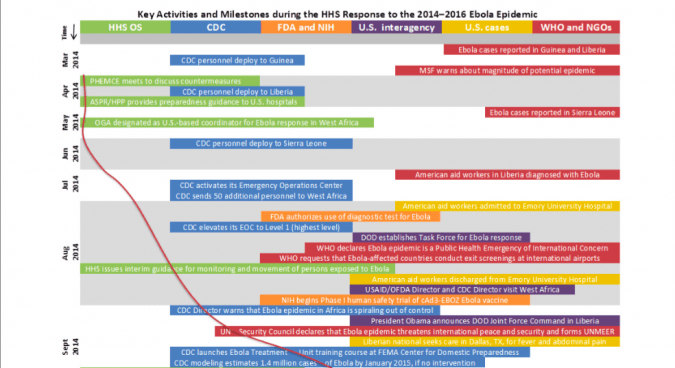
It’s been two years since the first Ebola cases were identified in Guinea. Since then, you’ve surely read articles upon articles about the outbreak, how it spiraled out of control, and how we should’ve seen it coming. Why read more? History. Plain and simple – if we fail to study this outbreak and learn from all our mistakes, we’re doomed to repeat them. Ranging from infection and prevention control measures (music to my ears) to addressing the needs of Ebola survivors and social mobilization, there’s host of things we can learn. “And even when international partners responded, they often arrived too late. It took about three months from the time the United States announced in September 2014 it would send troops to Liberia to build Ebola treatment units (ETUs) to the time those were built. By then, the epidemic was already waning, and nine out of the eleven centers built never saw a patient.” What about fear? Fear became an issue not just on the ground in West Africa, but also in the U.S. after we started treating imported cases and the initial Dallas, TX case. “But I think we did most poorly when we let fear dictate the quality of the clinical care we provided to patients. ‘What if,’ Dr. Paul Farmer provokingly asked, ‘the fatality rate isn’t the virulence of the disease but the mediocrity of the medical delivery?’ Of course lack of staff, supplies and space, combined with an overwhelming patient load didn’t help.” Coordination, communication, and engagement. You may see these repeated several times whenever you read an after action report about this outbreak, and yet I’m not quite sure we’ve really let it sink in. Zika? Let’s just hope we can learn from the lessons of public health history before another outbreak sneaks up on us again. Update: two more cases have been identified in the now nine person cluster in Guinea. A young woman has died of Ebola in Liberia today, marking their first case in months.

Where Are We With Zika?

Screen Shot 2016-03-31 at 11.11.34 AM US knowledge gaps are the name of the game this week. 1/3 of Americans polled in a recent survey believed that Zika virus can be transmitted from coughing and sneezing. This same survey, conducted by a team from the Harvard T.H Chan School of Public Health and the National Public Health Information Coalition (NPHIC), found that people in households not affected by pregnancy issues held the most misconceptions about the virus. 39% thought that a non-pregnant woman’s illness could pose a threat to future birth defects. Brazil’s Health Ministry reported that the number of confirmed and suspected cases of microcephaly associated with Zika virus in the country have grown to 5,235 cases. The ministry also reported 19 infant deaths related to the virus. Revised estimates and a map released by the CDC now show that a larger percentage of the US population could be exposed to the virus as the mosquito season approaches . The University of Texas Medical Branch, Galveston (UTMB) has developed the first Zika animal model since the recent outbreak. “Several research institutions and companies have vaccine and drug candidates nearly ready to test, but until now a mouse model – a critical stage in preclinical testing – has not been available. The study, published this week in the American Journal of Tropical Medicine and Hygiene (AJTMH), removes a major bottleneck that was delaying treatment screening.” There is also concern regarding the ability for ultrasounds to fully detect brain damage and microcephaly in pregnant women with or exposed to Zika virus. If you’re looking to get your Zika on, attend the Zika Innovation Hack-a-thon April 2-3, 2016! As of March 30, 2016, there were 312 travel-associated Zika cases in the US.

Stories You May Have Missed:

  • Ancient Malaria Roots – researchers from Oregon State University are suggesting that the origins of malaria may have actually begun 100 million years ago. The protozoa genus, Plasmodium, has ancestral forms that may have used different insects during its evolution. “Scientists have argued and disagreed for a long time about how malaria evolved and how old it is,” Poinar said. “I think the fossil evidence shows that modern malaria vectored by mosquitoes is at least 20 million years old, and earlier forms of the disease, carried by biting midges, are at least 100 million years old and probably much older.”
  • Ebola Is No Longer A Public Health Emergency of International Concern – On Tuesday, March 29th, 2016, the WHO Emergency Committee met, noting that since its last meeting, all three countries met criteria for interruption of original transmission chains. The WHO Direct General, Margaret Chan, stated that any trade and travel restrictions initiated during the outbreak should be lifted.
  • Ethiopia Drought Emergency – Ethiopia is currently experiencing the worst drought it’s had in 50 years, causing water and food security issues. As of March 2016, over 10.2 million people need food assistance. Food security issues and poor access to water are severely impacting the agricultural industry as well as human health.

Enjoying your weekly dose of the Pandora Report? Sign up to receive it every week so the fun never ends! 

Pandora Report: 3.25.2016

Happy Friday! Ready for some global health security news? Down the rabbit hole we go….the FDA has just approved ANTHIM injection, a new treatment for inhalation anthrax in adults and children. Researchers are considering the possibility that the highly virulent E. coli O104:H4 strain that hit Germany in 2011 may have been an intentional act. “The sudden and unexplainable emerging of a fast increasing number of cases and deaths from bloody diarrhea and HUS might have been caused naturally, accidentally, or intentionally,” a Serbian-German research team writes in the European Journal of Public Health Advance Access for April 15.

The Finances of A Pandemic
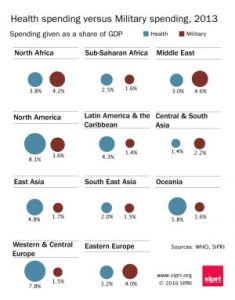
From SARS to Ebola and now Zika, the growing threat of emerging infectious diseases doesn’t seem to be slowing down. Has this become our new normal? Will we learn from these outbreaks and start putting the resources and support into prevention? “Ebola has infected almost 30,000 people, killed more than 11,000 and cost more than $2 billion in lost output in the three hardest-hit countries. SARS infected 8,000 and killed 800; because it hit richer places, it cost more than $40 billion. Predicting these losses is hard, but a recent report on global health risks puts the expected economic losses from potential pandemics at around $60 billion a year.” So how do we defend against these international security threats? America’s National Academy of Medicine recently made the suggestion that $4.5 billion a year solely dedicated to pandemic preparedness and defense could halt this impending reality. Even more interesting? This estimate accounts to roughly 3% of what “rich countries spend on development aid”, while the world spends about $2 trillion annually on defense.

U.S. Biothreat Defense Inadequate
American response to Ebola and now Zika reveals a startling trend of slow response, inadequate supplies, and poor cooperation and coordination between agencies. Director of National Intelligence, James Clapper states that “Gaps in disease surveillance and reporting, limited health care resources, and other factors contributed to the outpacing of the international community’s response in West Africa,”. The National Biosurveillance Integration Center (NBIC) is one such agency that was developed in 2007 in attempts to “be a hub of information and coordination for federal agencies tracking disease and biological threats”, however it has been frustrated by poor relationships and sharing from other agencies like the CDC. In essence, agencies that are developed for global health security, like NBIC, suffer from poor cooperation that then trickles into their reputation and capabilities in the eyes of their federal partners. “Congress has put forth a potential legislative fix. The CBRNE Defense Act of 2015 would create a new office within DHS, the Chemical, Biological, Radiological, Nuclear, and Explosives Office, which would place both NBIC and BioWatch under integrated new management.” Just as we reported from the Blue Ribbon Study Panel, federal biodefense efforts and resources need to be better organized and developed.

Rare Blood Infection Outbreak
Elizabethkingiam is currently causing dozens of cases in Wisconsin and now a Michigan resident is suffering from the bloodstream infection. The bacteria that causes the infection, Elizabethkingia meningoseptica, is commonly found in soil but has also caused infections in hospitals. Typical infections have resulted in bacteremia and neonatal meningitis related to the gram-negative bacillus, although it is naturally found in soil, fresh water, and salt water. Most of the 54 cases in Wisconsin have been in patients 65 years and older, of which 17 have died. Public health officials are working to identify the source of the outbreak and the links between the Michigan case and those in Wisconsin. The concerning aspects of this rising outbreak is also the difficulty in treating the organism and prevalence of multi-drug resistant organisms in seniors.

Complex Engineering by Violent Non-State Actors
Check out this special issue on complex engineering by violent non-state actors (VSNAs). “Why and how different VNSAs remain low-level and localized or undertake and achieve complex engineering tasks in pursuit of their objectives are at the heart of understanding the threat environment faced by states.” The authors address several terrorist groups like Aum Shinrikyo (the chapter was actually co-authored by GMU Biodefense Alum Benjamin Ash!), Hamas (also co-authored by GMU Biodefense Alum Alena James!), the Provisional Irish Republican Army (PIRA), etc.  “The approach of this collection moves beyond weapons and embraces facilitating or logistical aspects that support the operations and objectives of the various actors”. This special edition, with an introduction by Jez Littlewood, reviews these organizations and their resources and strategies. The authors also consider the attitudes of leadership regarding innovation in detail to assess the role of complex engineering by VSNAs. Through this close look into the VSNA use of complex engineering, further research and preparedness can occur to understand the threats posed by these actors.

All Roads Lead to Zika 
Now that Spring has officially begun, the impending summer rains are right around the corner, and with those – mosquitoes. Many worry about the potential for local transmission in countries where imported cases have already been identified. The US isn’t immune to these concerns as the CDC reports 273 travel-related cases. Dr. Nabel mirrors the sentiments of Sanofi’s global R&D head, Dr. Elias Zherouni, who emphasizes the need for changes in global public health outbreak response. He notes that “we just run from one crisis to another. It’s not an optimal way to respond. Not when the stakes are so high and when so many people can either lose their lives or have their whole lives changed because of one five-day infection. That’s no way to protect the world’s population. We have to step back and we have to say, ‘Is there a more systematic way to gather the intelligence that we have about these viruses, recognize where they stand in terms of the threat level, and then develop a systematic program where, when the next Ebola outbreak occurs, it’s not that we haven’t done anything since the last outbreak, that we’ve actually moved things forward?’ That’s all possible. It’s just that we have not had the collective will to do it.” Panama has also announced their first case of microcephaly linked to Zika virus outside of Brazil. Chris Mooney from The Washington Post discusses why Zika virus, among other diseases, could disproportionally impact America’s poorer populations.  He notes that scientists have found that more mosquitoes are found in lower-income neighborhoods due to persistent trash and abandoned buildings, which creates a ripe environment for standing water and thus mosquito breeding. Researchers found that when compared to wealthier neighborhoods in New Jersey, “poverty was positively correlated with number of [Asian tiger mosquitoes] captured and accounted for over half the variation”. Many are saying that the “U.S. is botching the Zika fight” due to the problems within the FDA and the Agriculture Department regarding turf. “A genetically tweaked mosquito could stop the illness, but regulators won’t test it. Why would that be?” The combination of worrying reasons, like “budgetary concerns and antagonism to genetic engineering among some senior USDA officials”, leave many feeling that instead of getting ahead of the outbreak, “the U.S. is falling behind, solely because of bureaucratic muddle.” On the other hand, on Friday, the WHO rallied for pilot projects on two projects that would involve genetically modified mosquitoes to help stop the spread of Zika virus. In the meantime, the FDA gave emergency approval for a 3-in-1 test for Zika, Chikungunya, and Dengue.

Syria and the Future of the Chemical Weapons Taboo 

Courtesy of E-International Relations

Brett Edwards and Mattia Cacciatori tackle the responses that the international security community has taken regarding the use of chemical weapons in Syria and the resulting reinforcement of “a long standing prohibition norm.” The authors discuss the characteristics of chemical weapons taboo and and the significance that the international community gives to these weapons. “This alone does not support the claim episode has strengthened the global norm against chemical weapons. In this piece we have highlighted how this is not immediately apparent due to the fact that problem cases tend to be externalized from dominant institutional discourses, often justified in terms of the need to protect the sanctity of the chemical weapon norm, as well as those institution’s which embody the norm – especially the OPCW.” Overall, the more problematic cases, like those of incapacitating chemical agents, will grow to alter the existing foundation of chemical weapons norms if left ignored or unchecked.

New Ebola Flare Up
The west African Ebola outbreak is like a campfire that wasn’t put out properly – everyone thinks the flames are extinguished, but those hidden embers lurking in the ash end up causing a spark that leads to a massive forest fire. A fifth person has died from the recent flare in Guinea. The most recent death occurred in a man 200k from the initial four cases. Prior to this death, a young girl died from the village of Korokpara following her hospitalization in an Ebola treatment facility in Nzerekore. It’s still not clear how this specific surge began, but many worry about the lingering traces of the virus in the eyes, CNS, and bodily fluids. In response to the fifth death, Liberia has partially shut its bordersEmergency meetings are now underway and the WHO is sending specialist teams in to try and stop the outbreak before it grows beyond the 11,300 mortality count. On a positive note, Sierra Leone has gone two incubations periods (42 days) without a case, which means they’re Ebola-free since their last flare up.

GMU SPGIA Gettysburg Trip
GMU students interested in learning more about the battle of Gettysburg- the Center for Security Policy Studies (CSPS) will be hosting an informational session on April 6th from 4:30-6pm in Merten Hall 1203 regarding the April 9th trip! GMU students and staff will walk the battlefield, discussing the factors that caused the battle to unfold as it did. They will also link the battle into larger discussions about the causes of war and grand strategy.  The cost for the trip will be $35.  Bus transportation will be provided, and will pick up participants from both the Fairfax and Arlington campuses.

Stories You May Have Missed:

  • U.N. Sued Over Haiti Cholera Outbreak– starting in October of 2014, Haiti was hit with an intense wave of cholera that is believed to have started with U.N. peacekeepers. “Poor sanitation at a U.N. camp for peacekeepers allowed cholera-contaminated sewage to enter a tributary of Haiti’s largest river, the Artibonite. Within days, hundreds of people downstream, like Jean-Clair Desir and his mother, were falling ill. The disease subsequently spread to the entire country.” The case is currently being reviewed in US courts and the lawsuit was brought forth by the Institute for Justice in Democracy, asking that the U.N. “end cholera by installing a national water and sanitation system; pay reparations to cholera victims and their families; and publicly apologize for bringing cholera to Haiti.”
  • Exploiting the Challenges to Bioweapons Development – Janne E. Nolan discusses GMU Biodefense Professor, Dr. Sonia Ben Ouagrham-Gormley’s book, Barriers to Bioweapons, in regards to the misleading and often exaggerated notion of easy WMD development. Nolan discusses that understanding both the internal and external factors that impact BW program success would allow the international community to “devise better ways to realistically stem BW proliferation”. He notes that “Ben Ouagrham-Gormley s book is a fascinating study of the phenomenology of scientific knowledge, providing a compelling analysis of how knowledge is acquired, developed, transmitted, and, at the same time, diluted or lost as a result of organizational, social, economic, political, and ultimately very human factors that vary widely within countries and over time.” You can also access it here: Nolan final
  • Five Outbreaks That Stump Epidemiologists– As much as I’d love to say that all outbreaks are investigated and solved, the truth is that epidemiologists are often left with the nagging of an unresolved case. Outbreaks are squirrelly at best, often challenging even the best teams with confounders and biases. Here are some that have stumped public health teams over the years.
  • Lassa Fever Outbreak– Three people are suspected of having the viral infection after coming into contact with an infected American. The initial case was a medical director of a missionary hospital in Togo, who died last month. While there are conflicting reports of disease confirmation, several sources are saying the three contacts of this initial case have been diagnosed and are under observation. The outbreak in Nigeria and Benin has continued to grow, resulting in CDC travel warnings. In Nigeria there have been 254 cases and Benin has seen 71.

Enjoying your weekly dose of the Pandora Report? Sign up to receive it every week so the fun never ends! 

Pandora Report: 3.18.2016

Spring is upon us! Whether you’re suffering from allergies or enjoying the bloom of the cherry blossoms, we’ve got you covered from the biodefense side. Don’t forget to add our GMU SPGIA Master’s Open House to your calendar next week (Wednesday, March 23rd at 6:30pm at our Arlington Campus). We’ll also be hosting a biodefense breakout session at 7pm with Dr. Koblentz (bonus: you can attend virtually! Extra bonus: our MS program is offered online, so you can learn to be a biodefense guru from anywhere in the world!). Bioarchaeologists are at it again in their quest to determine the fall of ancient Rome (hint: Yersinia pestis may have played a larger role than you’d think). Here’s hoping that with the announcement of the new Indiana Jones movie we’ll see Indy doing some bioarchaeology on ancient biowarfare!

The Real Lessons of Ebola and Zika 
Emerging infectious diseases are not a new concept for global public health, so why did Zika and Ebola catch us so off guard? Where was prevention – the backbone of public health- in this fight? After the pledging of billions of dollars and deployment of countless health professionals, the reality of reaction versus proactive prevention was never more apparent than during the Ebola outbreak. As the old saying goes, “an ounce of prevention is worth a pound of cure”. Now, as we trudge our way through the Zika virus outbreak, many wonder why the Aedes mosquitoes are continuing to cause devastation when their role in outbreaks is so well known. “Controlling this mosquito would by itself ameliorate all these disease threats. Ironically, in South America, control of Aedes aegypti was largely successful earlier in the 20th century (with great expenditure of effort), only to be abandoned once the immediate threat receded.” So again, we must ask ourselves, why public health prevention measures are so frequently ignored. Inexpensive in comparison to the cost of an outbreak, these tools (surveillance, diagnostics, worldwide communication, etc.) are increasingly becoming stronger and more available. Zika and Ebola have proven the efficacy of these strategies and the damage of failing to use them, so what more will it take to get global public health measures a seat at the cool kids’ table? A recent study addressed the biosocial approaches to the Ebola outbreak, concluding that “biomedical and culturalist claims of causality have helped obscure the role of human rights failings (colonial legacies, structural adjustment, exploitative mining companies, enabled civil war, rural poverty, and the near absence of quality health care to name but a few) in the genesis of the 2013-16 pandemic.” Globally, we’re still struggling to recover from the outbreak – whether you’re on the the ground in the affected countries or in the public health agencies that attempted to help. In many ways, the lessons from this pandemic will continue to be identified and understood for years to come. The CDC has also just released an article regarding the perspectives on the outbreak here, where they discuss the factors that delayed disease detection, the role of civil instability, and the impact of historically limited ebola experience.

GMU Biodefense Alumni Career Services
Are you a GMU Biodefense alum? Don’t forget to sign up for the SPGIA CareersNow so you can get updates on job postings that are right up your alley! GMU has close ties within the biodefense industry and we love joining students with employers, so please make sure to sign up and utilize this great resource!

ISIS Chemical Weapons Attack
Officials are reporting on that on Saturday, terrorists linked to ISIS fired rockets into a residential part of Taza, a northern Iraqi town. These rockets are reported to have contained unspecified chemical substances that caused numerous deaths and injuries related to burns, dehydration, and suffocation. An American special forces team previously captured the lead ISIS chemical weapons engineer, however, “his capture has not stopped alleged chemical attacks by ISIS or other terrorists associated with the Islamist militant group. Earlier this week, for instance, officials in Iraq’s Kirkuk province claimed that around 100 people were injured in suspected chemical attack, also in Taza.” The attacks are recently reported to have injured 600 people and killed a 3-year-old girl. Many are now asking, where is ISIS getting their chemical weapons from?

Preventing “A Virological Hiroshima”: Cold War Press Coverage of Biological Weapons Disarmament
Since we’re in the middle of an election year, it has become even more apparent the massive role media plays in not just politics, but also security. A recent analysis was published utilizing written pieces from the US New York Times, UK Times, and the Guardian, during the period of the Biological Weapons Convention negotiation in 1972. Representations of biological weapons during this time not only reflect the societal ideologies, but the the high-stakes environment that the journalists were experiencing. “We argue that a conventional discourse can be found wherein biological weapons are portrayed as morally offensive, yet highly effective and militarily attractive. Interwoven with this discourse, however, is a secondary register which depicts biological weapons as ineffective, unpredictable and of questionable value for the military.” Interestingly, at the time of these news reports, journalists only knew of WMD’s via nuclear and chemical weapons. According to the authors, no biological attacks had been documented and the state sponsored programs were still buried in the depths of secrecy. Biological weapons could only be considered in terms of historical pandemics like the Black Death and the 1918 Influenza pandemic. The authors note that “this negative portrayal of biological weapons as unpredictable and ineffective was certainly flagged in the context of downplaying the significance or value of the BWC. But where it was put to more nuanced use, exemplified in the interview with Matthew Meselson in the wake of the Nixon decision to abandon the US offensive programme, biological weapons were indeed portrayed as useless, not because they were innocuous but because they were redundant: the USA already had access to the horrific, indiscriminate means to annihilate entire cities.”

A Little Bit of Zika Goes A Long Way
Recent CDC data reports 258 travel-associated cases within the US. Laura Beil with the New York Times describes the worry that pregnant women are now facing after they traveled to affected regions and later were found to have Zika. You can also find a timeline and map of the outbreak here. Here’s a spot of good news though – the European Commission announced on Tuesday that the European Union released $11.1 million for Zika virus research. Rob Stein from NPR discusses the unique cry of babies with Zika-associated birth defects and the stories from the pediatricians and health professionals that are working to help the affected families. “It’s not just that they cry more easily, and longer — which they do. There’s also something strange — harsher and more pained — about the cries of many of these babies.Screen Shot 2016-03-17 at 1.02.48 PM The realization that they even cry differently than normal babies drove home how many mysteries the world is facing because of the Zika virus.” Not surprisingly, ticket sales for the 2016 Summer Olympics have dropped since the announcement of the outbreak. Olympic-related event ticket revenues dropped 56.4% since mid-January. A new research article was just published regarding the seasonal occurrence and abundance of the Aedes mosquito and it’s role in potential Zika transmission within the US – specifically in regards to local transmission. Here’s a great map regarding the estimated risk of transmission within the US. 

Stories You May Have Missed:

  • Use of Microbial Forensics in the Middle East/North Africa Region – The Federation of American Scientists (FSA) prepared a report for the Department of State Bureau of Arms Control and Verification regarding the use of microbial forensics as a means of combating biosecurity challenges. Whether naturally occurring or man-made, biological threats can pose a major challenge. Source recognition is “the key pre-condition that determines how a country will respond to a biological event, or take action in order to interrupt a potential emerging threat, ultimately centers around the ability to properly attribute the culpable sources (pathogens); in other words, governments need to determine the return address of the culpable microbe(s), be they from countries, individuals, or nature itself.”
  • Rice Krispies Food Safety Attack? An employee was recorded urinating on the production line for the cereal manufacturing company in 2014. Kellogg is now under investigation regarding the criminal activity and potential impact of the employee’s actions. I wonder, would you consider this a small-time biological attack?
  • Determinants and Drivers of Infectious Disease Threat Events in Europe – Researchers identified 17 drivers of infectious diseases threat events (IDTEs), categorizing them into 3 groups: globalization and environment, sociodemographic, and public health systems. They found that a combination of two or more drivers was responsible for most of the IDTEs and the driver “category of globalization and environment contributed to 61% of individual IDTEs, and the top 5 individual drivers of of all IDTEs were travel and tourism, food and water quality, natural environment, global trade, and climate.”

Enjoying your weekly dose of the Pandora Report? Sign up to receive it every week so the fun never ends! 

Pandora Report 3.11.2016

TGIF! We’ve got loads of global health security updates to keep you busy why you enjoy the warm spring weather. American special forces recently captured the chief ISIS chemical weapons engineer and you may want to avoid Wonderful Co. pistachios for a bit as they’re being linked to a salmonella outbreak.

The Smallpox Battlegrounds – Laboratories and Virtual RealityScreen Shot 2016-03-07 at 10.49.30 AM
Video game fans will be excited to hear about the new Tom Clancy game, The Division, released on March 8th. This isn’t your normal action-packed video game, but rather it has something more sinister about its premiseThe Division focusses on a biochem attack involving a take over by a group called the Strategic Homeland Division aka “The Division”. The Division is compromised of sleeper agents that “act independently in the interest of restoring order after a mass event”. Now here’s where it gets spooky, the game’s premise involves a scenario that may give deja vu to many in the biodefense world- Operation Dark Winter. Operation Dark Winter was a June 2001 exercise/senior-level war game put on by the Center for Strategic and International Studies, the Johns Hopkins Center for Civilian Biodefense Studies, the ANSER Institute for Homeland Security, and the Oklahoma City National Memorial Institute for the Prevention of Terrorism. The scenario focussed on the impact and response of a smallpox outbreak coupled with tensions in the Taiwan Straits and additional crises. In a nutshell, the scenario found that “current organizational structures and capabilities are not well suited for the management of a BW attack”, media management would be challenging for the government, containment and infection prevention would present several issues, and we’d pretty much be in a whirlwind of trouble. If you’re more of a purest and The Division doesn’t appeal to you, there’s also The Collapse, which is an internet-based game that lets you simulate a smallpox outbreak. Unlike other games where the player designs the outbreak, this one is from the viewpoint of the patient. You’re patient zero with a weaponized strain of smallpox and your decisions carry with them a world of outcomes involving the spread of the disease and rate of infection. I spent some time playing The Collapse (starting at GMU for sheer irony) and found it to be very detail oriented and enjoyed the decision making components like which pharmacy I would go to, my travel destination, etc. If you’re not much of a gamer, here’s the recent WHO report on the deliberations regarding the destruction of variola virus stocks. To destroy smallpox or not to destroy smallpox, that is the question.

GMU Course Sampler & Open Houses
Looking to study and work with people that share your love of biodefense? Come check out our March 23rd GMU SPGIA Open House at 6:30pm, in Founders Hall, room 126 at our Arlington Campus! Not only will you be able to chat biodefense, but we’ll have an informational session afterward (7pm) with Dr. Koblentz (you can check out the 2/25 one here). Each session allows us to discuss global health security and answer questions related to our program and the growing field of biodefense. Can’t attend in person? Enjoy our 3/23 biodefense breakout session virtually! If you happened to miss our biodefense course sampler from 3/2, check out the recording from Dr. Koblentz’s talk on Biosecurity as a Wicked Problem.

Chinese Admission of False Korean War Allegations Involving US BW Use
Biodefense expert, Milton Leitenberg, discusses the allegations by North Korea, China, and the Soviet Union, that the US used bioweapons during the Korean War. While the Soviet Central Committee declared the allegations fraudulent in 1998, China and North Korea continued to maintain that bioweapons were used. The recent publication by Wu Zhili (previously the director of the Chinese People’s Volunteer Army Health Division during the Korean War) refutes these claims. Published posthumously, Wu’s testimonial is critical in dismantling the claims as he was “critically involved in the Chinese government’s manipulations that produced the Korean War BW allegations.” The initial allegations claimed that the US was testing bioweapons (specifically plague) on native Inuit peoples of Alaska and then was spreading smallpox in North Korea between December 1950- January 1951. The major allegation campaign began on February 22, 1952 though, as “the North Korean Foreign Minister again issued an official statement addressed to the United Nations Secretariat, charging that in January and February the US had made multiple air drops over North Korea, littering the earth with insects infected with the microorganisms that caused plague, cholera, and other diseases.” Leitenberg discusses these allegations and the Soviet admission of being “misled” and their claims that “the accusations against the Americans were fictitious…Soviet workers responsible for participation in the fabrication of the so-called ‘proof’ of the use of bacteriological weapons will receive severe punishment.” He goes on to discuss Wu’s publication and explanation of the tasks that were carried out to further the belief in US bioweapon applications.

Gain of Function Research
Researchers, Dr. Lipsitch, Dr. Relman, and Dr. Ingelsby, have joined together to discuss the realistic future for research that seeks to alter pathogens. Pointing to the National Academy of Sciences (NAS) meeting, they note that it “marks a turning point in a year-and-a-half-long policy process to consider the risks, benefits, oversight, and regulation of experiments that are designed to create influenza and other viruses that are simultaneously highly virulent and readily transmissible by respiratory droplets between mammals.” Focus has traditionally been on the pros and cons of gain-of-function (GOF) projects however, as time passes, a narrowing of concern seems to be focussed on experiments that seek to build chimeric viruses that are highly dangerous and transmissible. They recommend the following policy approach: lift the moratorium on GOFoc, seek international consensus, secure national and international agreement to restrict the performance of GOFoc studies, design a board, establish clear red lines for GOFoc research, and require the purchase by research institutions of specific liability insurance policies. You can also read the interview with the researchers regarding the implications of such research censorships. Dr. Filippa also discusses engineering a super flu here, noting that “the debate is really about risk assessment of this gain of function work and about who should be making those assessments. Should it just be scientists, should it be their institutions, should it be funders, should it be publishers or, much more broadly, should it be regulators, vaccine manufacturers, ethicists? ”

Zika Updates
CDC and NIAID officials are becoming frustrated as they feel Congress is blocking key efforts to fight the outbreak. A recently published report on research priorities to inform public health and medical practice for domestic Zika virus can be found here. The report emphasizes the growing spread of infection and subsequent need for additional research related to transmission, infection during pregnancy, and disease characteristics . The recent WHO stakeholders meeting provided updates on the most urgently needed tools to fight the growing pandemic. The roadmap includes diagnostic tests, inactivated vaccines targeted to childbearing-aged women, and new vector control mechanisms.  As of March 9th, there were 193 confirmed travel-associated Zika cases in the U.S.  A recent study found that 42% of questioned Americans believe the virus has high mortality rates. Aedes mosquitoes are also developing resistance to the go-to insecticide.

7 Sources for Understanding Epidemics
Feeling like all this Zika news has you needing to catch up on your outbreak cliff notes? The Washington Post has put together a nice list of seven books and movies you can enjoy to help ramp up your knowledge regarding the world of pandemics. This list is a great way to understand the different viewpoints of outbreaks and pandemics from social, medical, political, and scientific viewpoints. If you find yourself wanting more, here are some additional recommendations I’m throwing in: Spillover by David Quammen, Pandemic: Tracking Contagions, from Cholera to Ebola and Beyond by Sonia Shah, and The Coming Plague by Laurie Garrett. Feeling like something a little bit more dramatic? Check out Richard Preston’s The Hot Zone or Demon in the Freezer, or the movies Outbreak or World War Z. With the success of Contagion, I’m still hoping Hollywood will continue to back scientifically grounded films about pandemics (between ebola and Zika virus, they’ve got enough material!).

Stories You May Have Missed:

  • Why Are Mosquitoes Just So Good At Spreading Disease? Mosquitoes have been causing outbreaks since the days of ancient Rome and yet we’re still battling them in the fight against Zika, dengue, chikungunya, and more. “According to Janet McAllister, an entomologist with the U.S. Centers for Disease Control and Prevention (CDC), not all mosquitoes are good at transmitting disease, but the ones that are have evolved to live closer to humans.”
  • Global Health Security Agenda– GHSA was launched in 2014 as a multilateral approach to help protect the world from infectious disease threats. Endorsed by the G7, this agenda facilitates a “partnership of nearly 50 nations, international organizations, and non-governmental stakeholders, GHSA is facilitating collaborative, capacity-building efforts to achieve specific and measurable targets around biological threats, while accelerating achievement of the core capacities required by the World Health Organization’s (WHO’s) International Health Regulations (IHR), the World Organization of Animal Health’s (OIE) Performance of Veterinary Services Pathway, and other relevant global health security frameworks.”
  • Fumbling Ebola– The San Francisco-based epidemiology company, Metabiota, is being charged with making several mistakes according to the Associated Press (AP). Recovered communication reveals that the company fueled an already chaotic situation via misdiagnoses, adding to confusion, and poor sample tracking.
  • Guidelines for Ebola Survivor Care– The WHO has published guidelines on the management and care of patients who were previously infected with Ebola. Since there are roughly 10,000 ebola survivors and several have required hospitalization for complications, these recommendations are extremely prudent. The report includes counseling, considerations for special patient populations, and common sequelae and management recommendations.

Enjoying your weekly dose of the Pandora Report? Sign up to receive it every week so the fun never ends! 

Pandora Report: 3.4.2016

Dirty bombs, Zika virus, and biosecurity in Iraq? That’s just a taste of the biodefense news we’ve got in store for you this week. While norovirus hits the East Coast (thanks, oysters!) and an additional three cases were confirmed in the seven-month-long Listeria outbreak associated with Dole salads, it’s no wonder there’s been work to build a new US food safety system. Next month the CDC will be working with state and local officials to establish plans in the most hard-hit Zika areas.

Assessing America’s Soft Underbelly and The Threat of Agroterrorism
The House Committee on Homeland Security’s Emergency Preparedness, Response, and Communications Subcommittee held a hearing on Friday in which they discussed and reviewed the risk of agroterrorism or natural agro-disasters. Disruption to the agriculture infrastructure and economy could be devastating to the US. Regardless if it’s private or public sectors, preparedness is vital to reduce calamitous damage. “US food and agriculture accounts for roughly one-fifth of the nation’s economic activity, contributed $835 billion to the US gross domestic product in 2014, and is responsible for one out of every 12 US jobs, according to Subcommittee Chairman Martha McSally (R-AZ).” Consider the impact of bovine spongiform encephalopathy (BSE) or Highly Pathogenic Avian Influenza (HPAI) on their respective sectors and country economies. Some of the highlighted vulnerabilities and challenges were insufficient quantity of Foot and Mouth Disease (FMD) vaccine, gaps in US biosecurity, traceability, gaps in detection, data sharing for regulated disease, and more.

Strengthening Biosecurity in Iraq: Development of a National Biorisk Management SystemScreen Shot 2016-03-04 at 10.02.47 AM
GMU Biodefense director and professor, Dr. Gregory Koblentz, and Mahdi al-Jewari, director of the biology department for the Iraqi National Monitoring Authority in the Iraq Ministry of Science of Technology, have joined together to discuss the furthering of Iraqi biosecurity. Mahdi al-Jewari visited GMU in early 2015 to speak on global biorisk management, hosted by the GMU School of Policy, Government, and International Affairs. In their research, Dr. Koblentz and Mr. al-Jewari discuss Iraq’s implementation of its non-proliferation commitments, highlighting that since 2004 “Iraq has taken a series of practical steps to implement its obligations under international non-proliferation treaties to prevent the proliferation of weapons of mass destruction and their means of delivery to states and non-state actors.” The Iraqi National Monitoring Authority, established in 2012, strives to strengthen their biosecurity program through three primary functions: compliance, monitoring of dual-use materials, and capacity building. The National Biorisk Management System has also highlighted four priorities to “counter biological threats: establishing a national pathogen list, building laboratory capacity, developing the capability to conduct joint law enforcement–public health investigations, and establishing a biorisk management law. The NBMC has established sub-committees charged with developing new policies and programs to achieve these four objectives.” While sustainability will be the most challenging hurdle for Iraq, commitment to investments  in infrastructure, IT, biosecurity, and biosurveillance systems can help them overcome these difficulties.

Just How Far Down the Zika Rabbit Hole Are We So Far?
It seems like every week we’re learning new things about Zika virus and how much work needs to be done. I wonder, how far have we made it down the rabbit hole for Zika and how much more do we have to go? While the Aedes mosquito is the reigning king of Zika virus infections, what about animals? The CDC recently released information regarding the concerns over zoonotic cases. Originally discovered in a monkey in the Zika Forest in 1940’s Uganda , the CDC maintains that “at this time, animals do not appear to be involved in the spread” and that there is no evidence of zoonotic transmission. “Nonhuman primates (apes and monkeys) have shown the ability to become infected with Zika virus; but, only a few naturally and experimentally infected monkeys and apes have had any signs of illness at all, and then it was only a mild, transient fever without any other symptoms.” As international public health teams descend upon the outbreak regions, we will surely be learning more about this outbreak. Perhaps the most challenging issue is the dissemination of information, especially in regions of high transmission. University of Arizona Mel & Enid Zuckerman College of Public Health infectious disease professor, Dr. Kacey Ernst, is one of the top vector-borne researchers and she recently explained: “The Zika virus pandemic, thought to be primarily caused by transmission of the virus through Ae. aegypti requires urgent action to determine the role of the virus in neurological sequalea, including microcephaly as well as the relative transmission potential of Ae. albopictus. Given the important role of communities in preventing the proliferation of the peridomestic, anthropophilic Ae. aegypti, communication between the scientific communities and the public must be heightened to ensure timely dissemination of surveillance information. While much of the United States is currently too cold to allow high densities of the primary vector of Zika virus, Ae. aegypti, the growing evidence surrounding the role of sexual transmission in the spread of Zika could imply that outbreaks of disease are possible even when transmission by the mosquito is not. More research is needed to delineate the two modes of transmission and the role that sexual transmission may be playing in the explosive spread of Zika across Latin America and the Caribbean.” In more Zika updates, blood samples from French Polynesia patients with Guillain-Barré syndrome (GBS) during their Zika virus outbreak are revealing the first look into the reality that Zika may actually cause GBS. The CDC is also urging pregnant women to avoid the summer Olympics in Brazil due to the outbreak. The FDA also just issued their Emergency Use Authorization for a Zika diagnostic tool for qualified countries. As of March 2nd, the CDC has reported 153 travel-associated Zika virus cases within the US.

Education Gaps on Dirty Bombs
David Ropeik from Scientific American discusses the impact that poor education and fear regarding dirty bombs can pose during an emergency. “The prospect of such a bomb seems terrifying, but anyone who knows the basic science of radiation biology knows that it wouldn’t cause much health damage, because the dose of radioactivity to which most people might be exposed would be very low. And experts know, based on the 65 year Life Span Study of the survivors of atomic bomb explosions in Japan, that even at extraordinarily high doses, ionizing radiation only raises lifetime cancer mortality rates a little bit—just two thirds of one percent for survivors who were within three kilometers of ground zero.” Few people know that low doses from a dirty bomb exposure pose little (not zero, but minimal) health risks, but rather people tend to hear “radioactive” or “nuclear radiation” and run screaming to the hills like a zombie hoard is approaching. While Ropeik points out that there will of course be devastation and economic damage, the resulting stress, fear, and public outcry for retaliation can be just as damaging. So what can we do? He points to the US Nuclear Regulatory Commission (NRC) and CDC educational sites, but emphasizes that in the end, a communication campaign to combat fear would “take at least some power of a dirty bomb to terrorize us out of the hands of the terrorists”.

Stories You May Have Missed:

  • Biosurviellance Ecosystem- The DoD and DHS are currently working on a new system that would allow epidemiologists to “scan the planet for anomalies in human and animal disease prevalence, warn of coming pandemics, and protect warfighters and others worldwide.” The Biosurveillance Ecosystem (BSVE) is a brain child that would allow epidemiologists to customize and collaborate – better yet, it’s being developed using open-source software and works “as a dashboard-like service from the cloud, accessible through an Internet browser”.
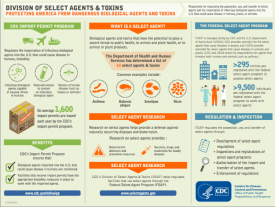
  • Select Agent Guidance– The Federal Select Agent Program (FSAP) is asking for community members to submit comments regarding the Guidance for Nonviable Select Agents and Nonfunctional Select Toxins. If you’re a member of the regulated community, help the FSAP become more transparent and strengthen biosecurity efforts! Comments will be accepted through March 14, 2016.
  • Giant Virus Secret Weapon: An Immune System – Whether it’s Frankenvirus or one of the other hundreds of giant viruses researchers have been finding, they’re teaching us a lot about secret weapons within the virus arsenal. Researchers working with a few of the giant viruses reported on Monday that some of the genes actually provide an immune system. Even crazier? The immune system “works a lot like the CRISPR system in bacteria that scientists have co-opted as a powerful gene editing tool.”

Pandora Report: 2.26.2016

It’s been quite a week for global health security. Even the X-Files covered worldwide pandemics (that’s right, multiple diseases), CRISPR-Cas9, and military vaccination programs. Measles is hitting Nigeria hard as Lagos state officials announced the deaths of 20 children related to the outbreak. A recent study released by the University of Pennsylvania’s Annenberg Public Policy Center found that more than one third of participants believed Zika virus was a conspiracy theory related to genetically modified mosquitoes. Maybe they were also watching the X-Files? Before we begin, meningitis vaccine efforts were celebrated at the Meningitis Vaccine Project (MVP) conference, due to success within Africa’s meningitis belt.

GMU Biodefense Students Awarded UPMC Biosecurity Fellowship
We’re happy to announce that two GMU Biodefense students have been selected as Fellows for the UPMC Emerging Leaders in Biosecurity Initiative (ELBI)! Congrats to biodefense MS alum Francisco Cruz, and PhD candidate Siddha Hover! “The Emerging Leaders in Biosecurity Initiative is a competitive fellowship program designed to create and sustain an energetic, multidisciplinary, and intergenerational biosecurity community made up of motivated young professionals as well as current leaders. UPMC has selected 28 US and international emerging leaders in biosecurity from a wide array of backgrounds, including biological science, medicine, policy, the military, law, public health and the private sector.” Siddha Hover works for BAI, Inc. as an embedded contractor with the Department of Homeland Security, where she serves as DHS’s sole treaty analyst. In her role, she is responsible for reviewing all relevant DHS-sponsored research and activites for compliance with applicable arms control agreements. Siddha is currently pursuing her PhD in Biodefense. She holds a MSc in Biodefense from George Mason University and a MSc in International Relations from the London School of Economics. Siddha notes that, “the GMU Biodefense program provided me with the foundational knowledge necessary to confidently begin a career in biodefense and enabled me to successfully apply for the ELBI Fellowship.” Francisco is a biologist in the Field Operations Branch of the U.S. Environmental Protection Agency’s (EPA) Chemical, Biological, Radiological, and Nuclear Consequence Management Advisory Division (CBRN CMAD). As CBRN CMAD’s Biologist, Francisco provides operational guidance to federal, state, and local responders in the areas of decontamination and emergency response related to biological incidents. Francisco holds a B.A. in Biological Sciences from the University of Delaware. During his time at GMU, Francisco earned a Graduate Certificate in Critical Analysis and Strategic Responses to Terrorism, and earned his M.S. in Biodefense in December 2015. Congrats to Siddha and Francisco in their work furthering the field of global health security and representing GMU Biodefense in the ELBI program!

GMU Biodefense Course Sampler- “Biosecurity as a Wicked Problem”
If you’re on the fence about going back to school, curious about our program, or just want to hear what a class in biodefense would be like, check out our course sampler on Wednesday, March 2nd, at 7pm, in our Arlington Campus in Founders Hall, Room 502. “The United States and the world face unprecedented threats to global biosecurity, including emerging infectious diseases, pandemics, natural disasters, bioterrorism, and laboratory accidents. Find out about the challenges posed by these threats and strategies for enhancing global health security.” How many times can you sample a course from not only an expert in the field, but also the director of the program? Dr. Koblentz will be your host for this evening lecture on biodefense, dual-use research, CRISPR-Cas9, biosecurity, and much more. Can’t attend in person? Don’t worry – we’re also live-streaming here. Come join us for a look behind the curtain of not only our GMU graduate programs, but also the world of global health security.

CRISPR and The Battle of Genetically Modified Mosquitoes 
CRISPR-Cas9 technology has been a hot topic since it was discovered and things have only ramped up since a Chinese research team announced last Spring that they successfully edited human embryo genes. While many raised concerns over “designer babies” and genetically modified livestock, the case for genetically modified mosquitoes has also been discussed. What if science could modify mosquito capabilities to carry disease? CRISPR-Cas9 research is getting much closer to making this a reality with the help of two research teams. “The first group, led by Valentino Gantz and Ethan Bier at the University of California–San Diego, and Anthony James at the University of California–Irvine, engineered a gene drive carrying a pair of genes designed to kill the malaria parasite inside the mosquito.The second group, led by Nikolai Windbichler, Andrea Cristanti, and Tony Nolan at the Imperial College London, developed a more brute force approach, building a gene drive that breaks an important mosquito gene and renders the females sterile—a strategy designed to decimate a mosquito population. Both groups reported that, when the genetically modified insects were crossed with wild ones, as much as 99 percent of the offspring carried the modified genes, a clear sign that the gene drives were working.” While field tests are still necessary to establish efficacy, it’s important to note the researchers are taking great strides to ensure public buy-in given the sensitivity of such work. Gene drive is becoming more accessible and the applications appear limitless however, ethical use of this pioneering innovation is crucial for future work.

Climate Change & Zika Virus – What’s the Link?
Somewhere between reporting on CRISPR-Cas9 mosquitoes and Zika updates, it seems like a perfect place to discuss what kind of impact climate change is having on infectious diseases…especially Zika virus. GMU Biodefense MS student and one of our contributors, Greg Mercer elaborates on the role climate change may have on the growing geographical distribution of mosquitoes that pose some of the biggest threats. Greg points out that “exactly how climate change drives the spread of Zika and other diseases is hard to define. In 2013, researchers at the University of Arizona published a paper examining the effect of climate factors on dengue and its Aedes vectors. Their conclusion highlighted just how far scientists still have to go in understanding the climate-disease link: ‘Climate influences dengue ecology by affecting vector dynamics, agent development, and mosquito/human interactions,’ they wrote, but ‘although these relationships are known, the impact climate change will have on transmission is unclear.’ Climate change introduces additional complications into an already complex system, the study authors explained: It’s difficult enough to understand how weather, climate, human interaction, or mosquito behavior contribute to the spread of a virus.” Researchers are now comparing the global distribution of Aedes mosquitoes and the spread of Zika, which leaves many to wonder if the threat of global disease will evolve with that of global climate change.

BARDA Seeks Advanced Public Health Consequence Modeling
The Biomedical Advanced Research and Development Authority (BARDA) is currently working to find partners that can aid in the development of a modeling system that would support federal decision makers in their planning and response to CBRN events. “The tools developed under this acquisition will assist Federal decision makers with medical and public health decision making for the advanced development and implementation of an integrated National medical countermeasures infrastructure (e.g., vaccines, therapeutics, diagnostics, and medical devices).” They’re hoping to build partnerships to establish a network for medical consequence modeling, simulation, visualization, and decision support. BARDA plans to include two functional areas within the network, 1- decision support, reach back, analysis, and modeling (DREAM), and 2- professional services and systems integration (PSSI). “These activities include assisting government decisions makers during the development of preparedness plans, the implementation of response strategies, and communications with a wide variety of stakeholders, both during day to day operations and in the course of declared public health emergencies as part of the BARDA Modeling Coordination Group.” Each functional area will have multiple Indefinite Delivery/Indefinite Quantity (IDIQ) awards that can be earned and they are encouraging interested stakeholders to submit proposals.

To Zika and Back 

Courtesy of the Council on Foreign Relations

As Zika virus continues to spread and South Africa reports the first of their cases, many are wondering how these outbreaks tend to go from 0-60 in a hot minute. NIAID director, Anthony Fauci, discusses the reality of disease surveillance and revealed this slide during an interview, of which you can see the global examples of emerging and re-emerging infectious diseases. Dr. Fauci points to the unpredictable nature that is public health and global health security. Global public health is still reeling from the effects and imperfect response of Ebola 2014, coupled with the scrutiny of a response to H1N1 that was considered too zealous. I’ve always considered public health and disease prevention to be the kind of work where few realize when you’ve done your job correctly but when you fail, it’s something you’ll be hearing about for decades. Global health security is challenging on a good day and public health tends to get little funding, especially in the countries that need it most. After the devastation of Ebola and all the after-action reports, many are wondering how did we miss the rise of Zika virus? Dr. Ken Stuart, director of the Center for Infectious Disease Research in Seattle, says, “We were unaware of the severity of the disease … [and] were unaware this virus had the capability for getting distributed so rapidly.” Regarding the funding issues that often plague infectious disease efforts, he noted that “this really goes back to funding priorities. Much of the funding devoted to infectious disease today is in reaction to outbreaks. Therefore, we’re not generally prepared to respond quickly. In other cases there are diseases that are very rare but they have an advocacy group that generates research activities. In the case of diseases like Zika, which were isolated in remote areas of the world where that population had no resources or advocacy group, there was no push to do research.We’re not stuck with what we’ve got. There are conversations between federal funding agencies and private organizations to try to prioritize the utilization of their resources, and I would say the NIH has been a leader in supporting the fundamental research that actually, probably positions us best to be prepared to respond to these disease outbreaks.” In other Zika news, a CDC team just arrived in Brazil to study the associated birth defects and the White House is urging Congress to provide emergency funds to support Zika response efforts, rather than just re-directing funds from Ebola-related projects. You can also see a map tracing the spread of Zika and some background here. As of February 24, the CDC has reported 107 travel-associated cases in the U.S.

The Rise of Chikungunya
I always thought it sounded like the name of a monster and in some ways, that’s pretty spot on. The Pan American Health Organization (PAHO) reported 16,668 confirmed and suspected cases of Chikungunya in 2016 so far. Colombia shouldered the majority of 2016 disease burden, with a spike of 1,189 new cases added to their previous count of 5,752. The PAHO is still playing catch-up on their year-end reporting for 2015, but it looks like 28,722 additional infections were added to their 2015 data. These updates mean that this region experienced 726,478 cases in 2015, and with the the new cases reported as of February 19, this current outbreak has been responsible for 1.89 million infections. Starting in 2013, this outbreak began on St. Martin and has been gaining traction ever since. Hopefully with the mosquito-control efforts related to Zika virus, the mosquito population also responsible for Chikungunya will begin to decline.

Stories You May Have Missed:

  • Breaking Down the Barriers of MDRO’s:  Scientists in the UK have discovered how drug-resistant bacteria create and maintain their defensive wall. Using the Diamond Light Source machine to “investigate in tiny detail a class of bugs known as Gram-negative bacteria”, they were able to find a defensive wall and it’s assembly beta-barrel machinery (BAM). This new research means that future treatments can aim at preventing bacteria from building these defense measures versus just attempting to attack the bacteria itself.
  • Melbourne Measles Outbreak – 14 cases have already been confirmed in the suburb of Brunswick, of which 2 were children from a primary school. Students that attend the same school and are not fully immunized were instructed to stay home to avoid exposure.
  • E. coli Outbreak in Raw Milk – Not surprisingly, a recall has been issued related to unpasteurized raw milk from a local dairy farm in Fresno, CA. 10 people have been confirmed with Shiga-toxin producing E. coli 0157:H7. Thankfully the shelf-life of the product has passed and public health officials, while stating that the investigation is on going, have confirmed that no health alert was issued since the product is believed to no longer be within the marketplace. Moral of the story – avoid raw, unpasteurized milk.

Enjoying your weekly dose of the Pandora Report? Sign up to receive it every week so the fun never ends! 

Pandora Report: 2.19.2016

TGIF! We hope you had a lovely week while avoiding RAW Meal Organic Shake and Meal Replacement products. The FDA recently reported an outbreak of Salmonella Virchow linked to the moringa powder within these products. 11 people across nine states were impacted by the outbreak, leading to an expanded recall due to the contamination. In this week’s Pandora Report, we’re covering Zika virus, CRISPR, GMU’s Biodefense Open House, ISIS use of chemical weapons, and much more. Before we begin, you’ll be happy to hear that as of today, airline passengers flying from Guinea to the US will no longer have to fly through designated airports and undergo screening for Ebola.

Zika Response Plans 
The WHO just released their Zika Strategic Response Framework & Joint Operations Plan for January-June 2016. Within the report, readers can find a timeline of the outbreak, a current situation report (sitrep) and the three objectives, which include surveillance, response, and research. Response strategies include community engagement, control efforts for the Aedes mosquito, and efforts to support and guide “the potential impact on women of childbearing age and those who are pregnant, as well as families with children affected by Zika virus.” The WHO estimates that the community engagement components requires $15.4 million, 10 partners, and will involve public health risk communication, community engagement, and health care personnel. Overall, the WHO estimates that to “kickstart” the international response, it will take $56 million. Fortunately, the World Bank announced it’s commitment of $150 million to combat the growing epidemic. The FDA just released blood donation recommendations related to the outbreak to mitigate risk of contamination. They are recommending that “those at risk of having been infected with the Zika virus should not donate blood for four weeks. These include those who have had Zika virus symptoms or sexual contact with people who have traveled to countries known to have ongoing transmissions.” According to the CDC, as of February 10th, there have been 52 travel-associated Zika virus associated cases in the US. On Thursday, Pope Francis suggested that women could justifiably use contraception to avoid pregnancy in Zika affected countries.

Upcoming Events: SPGIA Master’s Open House and Biodefense Seminar!Biodefense_320x180
Interested in furthering your education and getting to study topics like bioweapons, disease outbreaks, and terrorism? Check out the GMU Master’s Open House on Thursday, February 25th, 6:30pm at our Arlington Campus in Founder’s Hall, Room 126. Dr. Koblentz, GMU biodefense program director and one of our amazing professors, will also be holding an informational session at 7pm. You can even virtually attend if you’re looking to get more details on the biodefense graduate program and what kinds of adventures it entails. Once you’ve gotten your feet wet by attending one of the Open Houses, try our Biodefense Course Sampler on Wednesday, March 2nd, at 7pm in Founders Hall (GMU Arlington Campus), room 502. Dr. Koblentz will be hosting the event to discuss the unique challenges the US faces when it comes to global health security. Ranging from biosafety to natural disasters, and even zombies, this is a great way to get a taste of the GMU Biodefense program! Make sure to RSVP though, since space is limited.

Workshop on Women’s Health in Global Perspective
GMU’s School of Policy, Government, and International Affairs will be hosting this engaging and informational workshop on March 3, 2016 (8:45am-4:45pm), at our Arlington campus, in Founders Hall 111 and 1113. The keynote address will be from Dr. Nancy Lee, director of the Office of Women’s Health in the Department of Health and Human Services. Panels will discuss contraception and prenatal care, violence against women, dealing with disease, cross border concerns, and the role of gender disparities in women’s health outcomes. Lunch will be provided and while this event is free and open to the public, you’ll need to register here.

ISIS Use of Chemical Weapons
On Friday, CIA director John Brennan, confirmed that ISIS fighters have not only utilized chemical weapons, but also have the means and capabilities to make them. Reports indicate that ISIS is capable of making small quantities of chlorine and mustard gas. Brennan also pointed to potential exportation of chemical weapon to the West for financial incentives, noting that “there’s always a potential for that. This is why it’s so important to cut off the various transportation routes and smuggling routes they have used.” Confirmatory lab results from the Organization for the Prohibition of Chemical Weapons (OPCW) established the definitive presence of mustard gas in the attacks on Kurdish forces last year. “The OPCW will not identify who used the chemical agent. But the diplomat, speaking on condition of anonymity because the findings have not yet been released, said the result confirmed that chemical weapons had been used by Islamic State fighters. The samples were taken after the soldiers became ill during fighting against Islamic State militants southwest of Erbil, capital of Iraq’s autonomous Kurdish region.” Given their successful use of mustard gas and growing concerns over development capabilities, Brennan noted that “US intelligence is actively involved in being part of the efforts to destroy ISIS and to get as much insight into what they have on the ground inside Syria and Iraq.”

Ongoing Challenges and Future Considerations for DHS Biosurveillance Efforts 
The US Government Accountability Office (GAO) recently published their findings regarding the Department of Homeland Security’s (DHS) biosurveillance efforts, specifically the National Biosurveillance Integration Center (NBIC) and the BioWatch program. Initial findings in 2009 found that NBIC wasn’t “fully equipped to carry out its mission because it lacked key resources—data and personnel—from its partner agencies, which may have been at least partially the result of collaboration challenges it faced.” Recommendations were made and then in August 2012, NBIC released its Strategic Plan in response to the deficiencies, of which focal points included clarification of its mission and efforts to fulfill its roles of analyzer, coordinator, and innovator. Since 2012 though, GAO has noted several challenges DHS has faced in attempts to justify the BioWatch program. In 2015, “GAO found that DHS lacks reliable information about the current system’s technical capabilities to detect a biological attack, in part because in the 12 years since BioWatch’s initial deployment, DHS has not developed technical performance requirements for the system. GAO reported in September 2015 that DHS commissioned tests of the current system’s technical performance characteristics, but without performance requirements, DHS cannot interpret the test results and draw conclusions about the system’s ability to detect attacks.” Based off their findings, GAO recommended DHS not pursue the upgrades it was considering to the program. Some of the changes NBIC will be pursuing include its modification to the Daily Monitoring List  and better integration of projections and forecasts. You can find the report here, which also includes a table regarding benefits and challenges for structural changes within NBIC. Coincidentally, there was a webinar this week on “Defending Against Bioterror with Improved BioWatch Standards”. During the webinar, the presenters (Dr. Georges Benjamin and Dr. Bruce Budowle) emphasized that BioWatch is an integrated system that “needs to be used with care and caution, but it’s really a marvelous piece of technology.” They also spent time discussing how PCR results may pose problematic for end users and how BioWatch “is a good investment that should continue”.

Mental Health Challenges in Ebola Fighters
The 2014 outbreak left untold damages upon the affected countries. Unfortunately, mental health is one that may have gone unnoticed. While doctors and nurses raced to respond to the outbreak, the response to mental health was given little thought. Fighters in the Ebola battle are now fighting personal struggles with alcoholism, depression, and drug addiction. In countries that have even fewer mental health professionals than medical doctors, many are in desperate need. Some of these include young men that signed up to bury the bodies of Ebola patients in the grassy mud within Liberia. Drew Hinshaw discusses how these “burial boys” found themselves digging graves for their own children and are now left struggling to find work and are suffering from severe PTSD and the emotional effects of such an ordeal. “Liberia has just one psychiatrist for a population of four million, according to the health ministry. Sierra Leone, home to seven million, also has only one. The mental-health wing of the Liberian health ministry has just two staffers on payroll.” The truth is simple- the impact of an outbreak of this magnitude, especially within impoverished countries, has rippling effects that go on for years. Perhaps future outbreak response and preparedness models should include mental health support during and following the outbreak?

Stories You May Have Missed:

  • Future of CRISPR– CRISPR technology has been making headlines since it’s initial discovery, especially with Science naming it the Breakthrough of the Year. Its ease of use has raised many red flags for those within the science and biosecurity community. One of its discoverers, Jennifer Doudna, worked to answer questions and dispel concerns regarding mis-use, stating that “she considers it one of her responsibilities as a researcher to ensure that she educates people about the technology and listens to their questions and concerns about its use. She says one of her biggest fears is “waking up one morning and reading about the first CRISPR baby, and having that create a public backlash where people ban or regulators shut this down, and I think that could be very detrimental to the progress of the field.”
  • UK Parliament Report – Lesson Learned from Ebola – The UK Parliament has released their findings on the 2014 Ebola outbreak and the UK’s response efforts. Pointing to the necessity of strong and reliable communication, they emphasized that research must be started swiftly during such events. “The willingness of Government agencies, third sector organisations, health and aid workers, universities, and pharmaceutical companies to go above and beyond to help tackle the outbreak was phenomenal. The swift pace at which clinical trials were approved and conducted particularly stood out.” For updates on the outbreak, you can see the WHO sitrep here.
  • MERS-CoV Updates – A new report from Emerging Infectious Diseases discusses the infection of alpacas in a region where MERS-CoV is endemic. Given the susceptibility of alpacas, this could broaden the geographical distribution of potential cases. Walter Reed Army Institute of Research (WRAIR) has started a Phase 1 clinical trial (the first to be tested in humans) for a MERS-CoV vaccine.

Enjoying your weekly dose of the Pandora Report? Sign up to receive it every week so the fun never ends! 

Pandora Report 2.12.2016

This week we saw a lot of movement on the Zika response front – from increased funding to research teams prepping for field work, the outbreak hype is picking up traction as the horrors of Ebola are still fresh. Natural outbreaks aren’t the only thing drawing concern this week, as James Clapper, Director of US National Intelligence, added gene editing to the list of dangers posed by “weapons of mass destruction and proliferation.” The annual worldwide threat assessment report stated that, “research in genome editing conducted by countries with different regulatory or ethical standards than those of Western countries probably increases the risk of the creation of potentially harmful biological agents or products,”. Good news for hospital preparedness, the US Department of Health and Human Services Office of the Assistant Secretary for Preparedness and Response and the CDC have announced continued funding for the Hospital Preparedness Program (HPP). The HPP supports critical healthcare preparedness efforts in order to reduce the “supplemental state and federal resources during emergencies, and enables rapid recovery.” If you’re trying to work some biodefense into your Valentine’s Day, you’ve got a few options via Jane Austen-inspired zombie adventures in Pride and Prejudice and Zombies or episodes of The Walking Dead. Whichever zombie adventure you choose, just remember to avoid cuddling with any armadillos (read on to find out why). Happy Friday!

Lassa Fever Outbreak Grows
The Lassa fever outbreak that began hitting Nigeria in August 2015 has continued to spread, worrying many health officials. 101 people have already died from the infection and roughly 175 people have become infected. The Nigeria Centre for Disease Control (NCDC) stated, “As of today, 19 [including Abuja] states are currently following up contacts, or have suspected cases with laboratory results pending or laboratory confirmed cases.” Annually, Lassa fever causes 100,000-300,000 infections and 5,000 deaths in west Africa. Nigeria’s neighbor, Benin, is also seeing an increase in cases, in which seventeen have died and fifty have been infected.

Back Down the Zika Rabbit Hole
In response to the growing threat of Zika virus, the Obama administration announced on Monday that it would formally be requesting an emergency funding of $1.8 billion to combat the outbreak. The Department of Health and Human Services (including the CDC) would obtain the majority of the funds ($1.48 billion). CDC efforts will be ramped up as its emergency operations center was moved to a level 1 (the highest level) and teams are being coordinated to study the microcephaly-infection links. You can also check out the White House press release here. The WHO will be working to prioritize and fast-track research and development projects, of which Zika virus will be included. You can also find a great timeline here. According to the CDC, as of February 3, 2016, there were 35 travel-associated cases in the US. The Lancet also just released this piece discussing the labeling of Zika virus as a public health issue of concern.  On February 16, 2016, The National Academies of Sciences, Engineering, and Medicine are holding a workshop on research priorities to inform public health and medical practice for domestic Zika virus cases.

ASM-BiodefenseScreen Shot 2016-02-10 at 11.49.22 PM 
The 2016 American Society for Microbiology Biodefense and Emerging Diseases Research Meeting took place this week in Arlington, VA. For a biodefense fan, this was a pretty amazing three-day experience. Conference attendees were treated to presentations on antimicrobial resistance, applied biodefense, medical countermeasure developments, agroterrorism, and much more. Did I mention the keynote speaker was Dr. Tom Frieden, director of the CDC? I’m not even a little ashamed to admit how great it was to see Dr. Frieden emphasize that “nature is unpredictable but what is predictable is that we can be better prepared.” He also noted that “Zika is a rapidly changing situation” and the CDC would be sending a team within the next week to start a case-control study related to infection and microcephaly. Some highlights included getting to listen to Dr. Raymond Zilinskas discuss Russian biodefense efforts and how CBR training exercises increased in 2015. Dr. Jens Kuhn from the NIH wins the award for most humor during his fascinating presentation on Marburg and Ebola research within the Soviet bioweapons program. The infection preventionist in me greatly appreciated the session on antibiotic resistance and the role of medical tourism as an exposure for patients to CRE, not to mention how travel assists global clonal expansion. The Mayo Clinic’s Dr Tosh pointed out the short term (isolation of patients, hand hygiene, etc.), medium term (new microbial therapeutics, new diagnostics, etc.), and long term (specific pathogen therapy, decolonization, and immunologic therapy) response and control mechanisms for drug resistance. Last but not least, one of the biggest objectives from the applied biodefense presentations was the need for scientists to help inform policymakers about their work to drive the best policies. I would highly encourage anyone interested in the biodefense field to attend future conferences, as it was a wonderful learning experience and the poster/exhibitor sessions were an excellent way to learn about new research and network.

Lessons Learned: Using North Korea’s History to Better Understand Iran’s Nuclear Program
GMU biodefense professors, Dr. Thrall and Dr. Koblentz, discuss the use of North Korean nuclear history as a teaching tool regarding Iran’s nuclear program. By comparing and contrasting these two countries and their propensity for nuclear weapons, they look to similarities like the fact that both countries “are located in historically dangerous neighborhoods and face militarily superior adversaries. In North Korea’s case, South Korea and the United States; in Iran’s case, a Middle East full of Sunni Arabs and a nuclear-armed Israel. From a national security perspective, both countries have obvious reasons for pursuing a nuclear capability.” Given that both countries tend to be immune towards coercion, continued engagement and confrontation is vital. Using North Korea as a model for behavior, vigilant deterrence will be necessary to prevent Iran from cheating on the nuclear deal.

Managing Emerging Health Security Threats Since 9/11: The Role of Intelligence
Dr. Patrick F. Walsh, Associate Professor of Intelligence and Security Studies at Charles Sturt University in Australia, discusses the role of intelligence throughout the evolution of biosecurity since the 9/11 attacks. Dr. Walsh calls attention to the difficulties in defining biosecurity and that “cross-disciplinary focus is both a strength and weakness to understanding biosecurity threats. It is a weakness in that the presence of multiple players in the biosecurity field can result in a more fragmented understanding and operational response to various biosecurity threats. But it is also a strength in that, if intelligence systems are optimal, a multi-disciplinary approach allows a combination of expertise to assess and manage the bio-threat or risk.” Dr. Walsh presents the role of dual-use research, stolen biological agents, and the growing concern among biosecurity regulators and national security intelligence groups regarding the dwindling role of tacit knowledge and availability of equipment and technology. Dr. Walsh points out that the character of intelligence varies depending on the issue and one must account for the role of decision making. Lastly, he reminds us that “to conceptualize the role of intelligence in improving early warning of biosecurity threats is to examine how it can provide warning through various stages of the intelligence cycle, which includes the following stages—direction, collection, analysis, and dissemination.” While the role of intelligence will continue to evolve with biosecurity threats, Dr. Walsh emphasizes that strategic early warning capabilities are dependent upon the efficacy of intelligence framework. Improving these two facets of biodefense will allow critical infrastructure to not only respond to threats of bioterrorism and emerging infectious diseases, but also the growing threats of microbial resistance and dual-use research. You can also find the article here (2016 Walsh Health Security and Intelligence Jan).

Biosecurity in the Age of Big Data: A Conversation with the FBI
Advances in life science and technology can solve many health issues, but they can also pose a threat if used within the wrong context. Dual-use research of concern, CRISPR, and biotechnologies have led to some remarkable revolutionary advances, however, where do these fit within the FBI’s security concerns for bioweapons? Keith Kozminski of Molecular Biology of the Cell met with FBI Supervisory Special Agent (SSA) and head of the Biological Countermeasures Unit at their Washington, DC headquarters, Edward You, to discuss the security implications of Big Data. SSA You detailed his work with the American Association for the Advancement of Science and the United Nations Interregional Crime and Justice Research Institute to identify the security issues associated with Big Data when it comes to biology. Whether collaborating with companies like Amazon and IBM or government agencies like the CDC, SSA You has worked to identify potential vulnerabilities and how they can be addressed without halting innovation. SSA You states that “Over the last two years, we have had the issues with regard to the Centers for Disease Control and Prevention (CDC) and Department of Defense (DoD). A lot of discussion also came when the J. Craig Venter Institute synthesized that bacterial genome. There were a lot of calls and discussions about the scientific community needing more ethics training and the need to develop a greater culture of responsibility. From a law enforcement perspective those are necessary but not sufficient. What has been lacking is the scientific community being provided security awareness—something that augments how they approach the life sciences.” While there are vulnerabilities across the board, SSA You emphasized the need for partnership between biologists and WMD coordinators to not only safeguard science, but reduce threats.

UN- Protecting Humanity from Future Health Crises: Report of the High-level on the Global Response to Health Crises 
The UN has released an advanced copy of their report regarding global health safety. Highlighting the efforts and failures within the Ebola outbreak, this report emphasizes the global burden of communicable diseases and how better response and preparedness is needed. The report points out that only a third of the 196 State Parties have fully implemented the International Health Regulations (IHR, 2005) and there has been little global investment in R&D for emerging infectious diseases. 27 recommendations were made to address issues at the national, regional, and international levels, of which one of the first was for the WHO to build a new Centre for Emergency Preparedness and Response. The report also states that “all countries must meet the full obligations of the IHR” and “appropriate financing is required. Assistance should be provided to countries requiring additional support for IHR compliance, while WHO and the new Centre for Emergency Preparedness and Response must be resourced to meet global needs.” Overall, the use of the 2014 Ebola outbreak as a case study for health security recommendations echoes the sentiment that Dr. Frieden once noted– “a disease outbreak somewhere is a risk anywhere”

Stories You May Have Missed:

  • Vaccines & Therapeutic Conference– Mark your calendars for the 14th annual conference from May 17-19, 2016, in Washington DC, that covers biodefense, antimicrobial resistance, and emerging infectious diseases. Given the recent push for emergency funding for Zika virus research, this conference will be a great resource for up and coming research.
  • Quality Training for BSL-4 Biocontainment Laboratories– Interested in BSL-4 lab training? The FDA and University of Texas Medical Branch, Galveston National Medical Branch, will host training April 25-29, 2016. Held in Bethesda, MD, the course will include faculty and subject matter experts from the FDA, academia, and more.
  • Leprosy Spike in Florida– Florida has seen an increase in leprosy cases this year. Five cases have been reported in 2016 so far and 27 were reported in 2015. The spike in cases is suspected to be a result of armadillo transmission. If you find yourself traveling in Florida, you may want to avoid armadillo cuddling.