Pandora Report 4.18.14

I think I was coming down with something yesterday. It manifested as a pretty debilitating headache, so I am pretty sure it wasn’t Ebola, but I also had no desire to drink water, so it might have been rabies. Either way, I’m feeling much better today, and am excited to bring you a Saturday issue of Pandora Report. In fact, I’m pretty sure there is nothing that is more fun on the weekend…so let’s get into it!


Highlights include Bird Flu in North Korea, a TB drug that may be the answer to drug resistance, a new strain of Ebola, MERS CoV’s spread to Asia, and Tamiflu’s real utility. Have a great weekend and see you here next Friday!

Highly Pathogenic Avian Influenza (HPAI) outbreak in North Korea

On April 16, the North Korean veterinary authority sent a notice to the World Organization for Animal Health (OIE) alerting them to two H5N1 outbreaks among poultry in the isolated nation. This is a surprisingly transparent move. The first outbreak occurred at the Hadang chicken factory in Hyongjesan starting on March 21. All 46,217 birds died. A second outbreak occurred on March 27 in the same region at the Sopo chicken factory where an unreported number of birds died in the same cage. The source of the infection remains unknown.

The Poultry Site—“Usual control measures have been put in place to control the spread of infection: quarantine, movement control inside the country, screening and disinfection of infected premises/establishment(s). There is no vaccination and no treatment of affected birds.”

Could a new TB drug be the answer to resistance?

A research study at the University of Illinois shows that a new drug under clinical trials for tuberculosis treatment—SQ109—may be the basis for an entirely new class of drugs that could act against bacterial, fungal, and parasite infection and yet evade resistance. Lead researcher, chemistry professor Eric Oldfield, believes that multiple-target drugs like SQ109 and its analogs hold the key to new antibiotic development in the era of drug resistance and “the rise of so-called ‘superbugs’.” His claim is bolstered by experiments with SQ109 and TB where no instances of resistance have been reported.

Science Codex—“’Drug resistance is a major public health threat,” Oldfield said. “We have to make new antibiotics, and we have to find ways to get around the resistance problem. And one way to do that is with multi-target drugs. Resistance in many cases arises because there’s a specific mutation in the target protein so the drug will no longer bind. Thus, one possible route to attacking the drug resistance problem will be to devise drugs that don’t have just one target, but two or three targets.’”

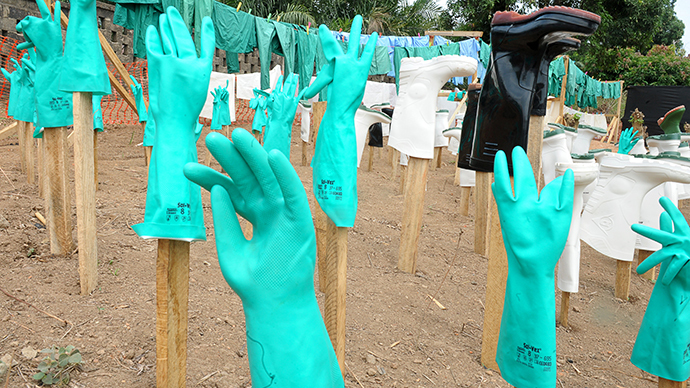
Outbreak in West Africa is caused by a new strain of Ebola virus

As the death toll from the Ebola outbreak in West Africa climbs above 120, scientists are reporting that the virus is not the same strain that has killed in other African nations.  While the source of the virus is still unknown, blood samples from Guinea victims has confirmed that it is not imported strains of Ebola Zaire—the original strain of the virus discovered in Democratic Republic of Congo (formerly known as Zaire.)

The Huffington Post—“‘It is not coming from the Democratic Republic of Congo. It has not been imported to Guinea” from that country or from Gabon, where Ebola also has occurred, [Dr. Stephan] Gunther [of the Bernhard Nocht Institute for Tropical Medicine in Hamburg, Germany] said.

Researchers think the Guinea and other strains evolved in parallel from a recent ancestor virus. The Guinea outbreak likely began last December or earlier and might have been smoldering for some time unrecognized. The investigation continues to try to identify “the presumed animal source.’”

MERS CoV leaves the Middle East and travels to Asia

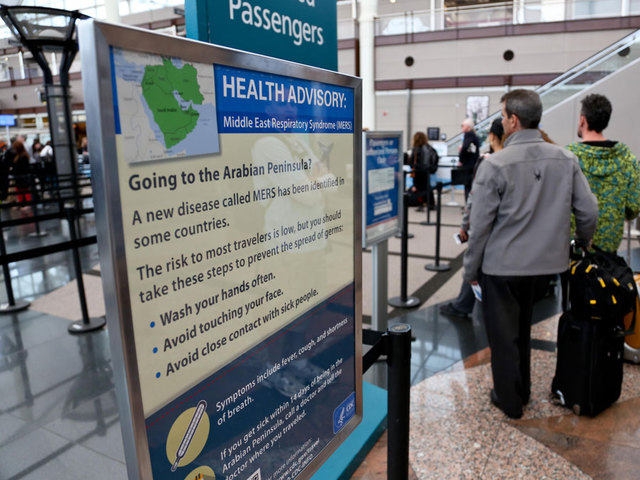
Though the method of transmission of Middle East Respiratory Syndrome (MERS) remains unknown—a report last week from the CDC finds the virus can stay alive in Camel milk—and thankfully, transmission from human to human has been rare, the disease has now spread beyond the Middle East to Asia via an infection emerging in Malaysia. A Malaysian man returning from Mecca, in Saudi Arabia, tested positive for, and died from, MERS on April 13. So far, a reported 33 people who have travelled to the Middle East for the Haj have tested negative for presence of the virus in neighboring Singapore.

Today Online—“There is currently no advisory against travel to countries of the Arabian Peninsula, or to countries reporting imported cases of MERS-CoV (including Malaysia).

Frequent travellers to the Middle East and Umrah/Haj pilgrims have been advised to take precautions, such as being vaccinated against influenza and meningitis. Those aged 65 years and above or with chronic medical conditions should also get vaccinated against pneumococcal infections before travelling. Pilgrims with pre-existing chronic medical conditions like diabetes, chronic heart and lung conditions should consult a doctor before traveling, to assess whether they should make the pilgrimage.”

A closer look at Tamiflu

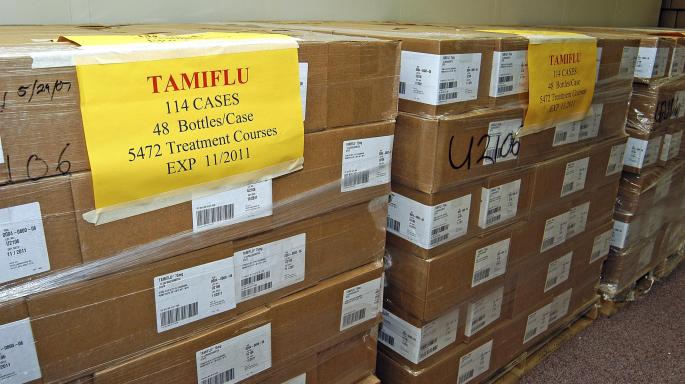
With seasonal flu season behind us in the U.S., maybe it is time to look at better treatment options. A study published last week in the British Medical Journal, calls into question the effectiveness of Oseltamivir—brand name, Tamiflu. The international team of researchers found that while Tamiflu can shorten flu symptoms it does not reduce hospital admissions or medical complications. The study also demonstrated that Tamiflu can also cause nausea and vomiting and increases the risk of headaches and renal and psychiatric symptoms.

Global Biodefense—“‘The trade-off between benefits and harms should be borne in mind when making decisions to use oseltamivir for treatment, prophylaxis, or stockpiling,” concludes the study authors from The Cochrane Collaboration, an independent global healthcare research network. “There is no credible way these drugs could prevent a pandemic,” Carl Heneghan, one of the lead investigators of the review and a professor at Oxford University, told reporters. “Remember, the idea of a drug is that the benefits should exceed the harms. So if you can’t find any benefits, that accentuates the harms.’”

(Image credit: Robert Sharp/Flickr)

Pandora Report 4.11.14

Ebola is still raging in West Africa and experts are planning for a long battle, however, every week can’t be about Ebola. So let’s jump into it!

Highlights include The START treaty, Chemical Weapons in Syria, H1N1 in otters and public outcry over Chilis (but not their baby back ribs.) Have a great weekend!

New START Data Show Russian Increase, US Decrease Of Deployed Warheads

With many Russia watchers nervously waiting to see if moves are made towards Ukraine, new data this week shows that Russia has actually increased their counted deployed strategic nuclear forces since September 2013 under the START treaty. Under the new treaty, by 2018, both Russia and the U.S. agree to no more than 1,550 strategic warheads on 700 deployed launchers. Russia has been under this limit since 2012—before the treaty was even signed—while the U.S. has yet to reduce below the treaty limits.

Federation of American Scientists– “Since the treaty was signed in 2010, the United States has reduced its counted strategic forces by 104 deployed launchers and 215 warheads; Russia has reduced its counted force by 23 launchers and  25 warheads. The reductions are modest compared with the two countries total inventories of nuclear warheads: Approximately 4,650 stockpiled warheads for the United States (with another 2,700 awaiting dismantlement) and 4,300 stockpiled warheads for Russia (with another 3,500 awaiting dismantlement).”

Another Chemical Weapons Attack in Syria?

 After Syria signed a chemical weapons dismantlement agreement in September 2013 (brokered by Russia, the U.S. and the UN), it appears they have reneged on their word. Reports from “credible” sources say that there have been chemical weapons attacks in the cities of Harasta and Jobar over the past couple weeks. With the eyes of the world on Russia and Ukraine, and U.S. naval destroyers loaded with tomahawk missiles departed from the Mediterranean, Assad may be benefitting from a lack of international oversight.

The Wall Street Journal-“There is no credible evidence to suggest that rebel groups in the Damascus area have acquired the materials or know-how to mount chemical weapons on conventional artillery pieces in their possession. It can therefore be concluded that unless the rebels theatrically fabricated the effects of a chemical attack, the Assad regime was likely responsible for carrying them out. Notably, on March 25, Syria’s U.N. Ambassador Bashar Ja’afari distributed a letter specifically warning that rebels would use chemical weapons in Jobar in order to blame the government. But if any party in the conflict would be prone to such conspiracy, it would be the Assad regime, whose decades of tutelage under the Russian KGB made their Mukhabarat (secret service) frighteningly efficient at false-flag tactics meant to smear the opposition.”

Swine Flu From 2009 Pandemic Also Struck Sea Otters

Turns out, the H1N1 pandemic from 2009 didn’t only affect humans…it affected otters! New research shows that otters off the Western coast of the United States were also infected with H1N1 as it affected people throughout the U.S. Seventy percent of the otters tested in 2011 showed antibodies (demonstrating previous infection) for H1N1. Previous research also showed that elephant seals living off the coast of California had been infected with H1N1 too.

U.S. News and World Report-“‘Our study shows that sea otters may be a newly identified animal host of influenza viruses,” study-co-author and USGS scientist Hon Ip said in a government news release. “We are unsure how these animals became infected,” lead author and CDC scientist Zhunan Li said in the news release. “This population of sea otters lives in a relatively remote environment and rarely comes into contact with humans.” The study was published in the May issue of the journal Emerging Infectious Diseases.”

Chili’s cancels fundraiser with National Autism Association

Last weekend, my favorite mid-range American restaurant, Chili’s announced that they would be partnering with the National Autism Association for a benefit on Monday, April 7. However, outcry over the NAA—and its anti-vaccination stance—forced Chili’s to change its mind (and continue to keep my business.) It is a striking demonstration of the power of consumers and social media and strikes a victory for those in favor of vaccinations and the good they bring to communities and herd immunity.

CNN-“The Chili’s spokeswoman said that the NAA was originally selected for the fundraiser “based on the percentage of donations that would go directly to providing financial assistance to families and supporting programs that aid the development and safety of children with autism.”

Chili’s, which is owned by Brinker International (EAT), went on to say, “While we remain committed to supporting the children and families affected by autism, we canceled Monday’s Give Back Event based on the feedback we heard from our guests.”’


(image courtesy of Wikimedia Commons/ Dave Bezaire & Susi Havens-Bezaire)

Pandora Report 4.4.14

It’s been a busy week in the biodefense world, between the continuing outbreak of Ebola in Western Africa and the realization that the Black Death may actually have been pneumonic plague rather than bubonic plague, so let’s take a moment this Friday to slow things down.


Highlights include Ebola travel restrictions, a possible source for the Ebola outbreak, and how to protect yourself during the most serious pandemic of all—the zombie pandemic. Have a great weekend!

When planning your vacation to Guinea, keep this in mind…

As of April 1, the number of suspect Ebola cases in Guinea has risen to 127 with 83 deaths (for a case fatality rate of 65%) according to the WHO. Liberia now has eight suspected cases with five deaths. Sierra Leone has had only two deaths after two bodies were repatriated after dying from Ebola. In neighboring Mali, the government has instituted thermal scans for those travelling to Mali as well as restricting movement within the capital city of Bamako. Meanwhile, Senegal has closed their border with Guinea and Saudi Arabia has suspended visas for Muslim pilgrims coming from Guinea and Liberia. Despite all of this, the WHO does not recommend travel restrictions.

Philippine Daily Inquirer—“The international health agency said there was not enough reason to push for the imposition of travel restrictions in response to the Ebola outbreak. “WHO does not recommend that any travel or trade restrictions be applied with respect to this event,” it said in a statement.”

And while on vacation, here are some foods to avoid…

In another response to the Ebola outbreak in Guinea, officials have taken an unusual step of banning the consumption of bats as food—including grilled bat, bat soup and “other local delicacies.” It has long been suspected that bats are somehow instrumental in the spread of Ebola either as a vector or a reservoir for the disease.

CBS News—“‘We discovered the vector [infectious] agent of the Ebola virus is the bat,” Remy Lamah, the country’s [Guinea] health minister, told Bloomberg News. “We sent messages everywhere to announce the ban. People must even avoid consumption of rats and monkeys. They are very dangerous animals.’”

The good news is, in the event of a serious pandemic, you may have new protection!

Just in time for the Walking Dead finale last weekend, the American Chemical Society released new research related to the chemistry of death, and how that chemistry can shield us from the flesh and brain eating horde of zombies.

Science is a serious subject and pandemic possibilities are crises in the making…but that doesn’t mean science can’t be fun for a general audience!

Zombie Apocalypse Survival Chemistry: Death Cologne

Pandora Report 3.28.14

It’s been a busy week between Ebola and Ricin! Friday highlights include a Polio-free India, tuberculosis transmission from cat to human, and mandatory vaccines in Croatia. Have a great weekend!

India is Polio-Free after 3 years of no new cases

On March 27, 2014, India was declared Polio-Free by the World Health Organization after three years of no new cases. The last case of polio in India was Rukhsar Khatoon, a 4 year old girl who became ill as a baby when her parents forgot to vaccinate her.

The Huffington Post—“Being declared polio-free once was considered all but impossible in a nation hobbled by corruption, poor sanitation and profound poverty. Although the disease could return, eradicating it is a landmark public health achievement.

This is “a day that we have dreamt about,” said Poonam Khetrpal Singh, a WHO official at a ceremony in New Delhi to declare the entire Southeast Asian region free of the disease. Singh described it as ‘a day that all countries fought hard for, and a day when all stakeholders come together to celebrate the victory of mankind over a dreaded disease.’”

Pet cats infect two people with TB

Two people in England have contracted tuberculosis from a house cat infected with Mycobacterium bovis—a form of tuberculosis normally found in cattle. Nine cats in the Berkshire and Hampshire areas have tested positive for M.bovis which is extremely uncommon in cats and usually affects livestock.

BBC—“‘These are the first documented cases of cat-to-human transmission, and so although PHE has assessed the risk of people catching this infection from infected cats as being very low, we are recommending that household and close contacts of cats with confirmed M. bovis infection should be assessed and receive public health advice’ said Dr. Dilys Morgan, head of gastrointestinal, emerging and zoonotic diseases department at Public Health England.”

Thank You, Croatia: All Hail Mandatory Vaccinations

This week, the Constitutional Court of Croatia passed a law that mandates all children must receive childhood vaccinations for diphtheria, pertussis, measles, polio and others. This decision comes at a time when lively debate rages, in the U.S. and abroad, about vaccination and its importance or harm. This step by Croatia, in the words of the court, is a victory for children’s health over parents (wrong) choices.

The Daily Beast—“… public health imperatives and individual rights are often at odds: a country like the U.S. that values the rights of the individual always has trouble with laws that remind us that not everything is a choice. Kids must go to school. People must pay taxes. Children must be vaccinated. It is called living in modern society.”


Image Credit: Dwight Sipler/ Wikimedia Commons

Pandora Report 3.21.14

BREAKING NEWS

Positive Tests for Ricin at Georgetown University

Earlier this week, a white, powdery substance that tested positive for ricin, was found in a dorm room at Georgetown University. The 19 year-old student suspect who lived in the room reported that he made it and the Georgetown Voice spoke with a source who indicated the suspect possibly “intended to use the substance on another student.” Weapons-grade ricin is an extremely lethal toxin that has no available anti-toxin.

The Washington Post– “In an e-mail sent campus-wide, the university said there was no danger to the community. Law enforcement officials said they did not think that the case was connected to terrorism. School officials received no reports of anyone being exposed to the toxin, authorities said. D.C. health officials advised the school that symptoms of ricin exposure typically present themselves within 24 hours. “This window has passed and there are no reports consistent with ricin exposure,” the statement said.”


And now, our regularly scheduled Friday news…

Highlights include Polio-like virus in California, destruction of Syrian chemical weapons, the cost of Anti-Vaxxers, and domestic illness in pigs (or…the end of bacon?!) Happy Friday and have a great weekend!

Doctors continue the hunt for a Polio-like virus in California

Since September 2012, over two-dozen children in California have displayed symptoms of a rare Polio-like illness that has caused sudden paralysis, while doctors and health officials are still hunting for the cause. One possible suspect may be some sort of enterovirus, but more testing is required as the mystery continues.

San Francisco Chronicle—“Viruses can be difficult to detect after patients have been sick for a couple of weeks, and especially if they’ve already undergone treatment that can muddy test results. In the California cases, most children weren’t tested until many weeks or even months after they became sick. Waubant, a UCSF neurologist, said she is hoping to get funding to conduct immunoglobulin testing, which would determine whether the patients with polio-like illness have certain antibodies suggesting that they’d all been infected with the same virus.”

PEDv threatens future of pork industry

Are the days of available bacon coming to an end? A report coming out of the Dakotas paints a scary picture of the effect porcine epidemic diarrhea virus is having on the entire domestic pork industry. PEDv is a relatively new disease afflicting pigs but is has become widespread and with little known about the virus containment has become a top priority of both the pork industry and scientists.

Farm Forum—“‘PEDv has a significant economic impact,” Dr. Oedekoven, South Dakota State veterinarian said. “There is a high death rate in the naïve (newborn) population where 80 to 100 percent death losses are reported. The young piglets have no natural immunity and there is no vaccine. It’s a pretty terrible recipe. Biosecurity and sanitation are the tools being used in the industry to prevent the introduction of the disease into herds.’”

A Medical opinion on the anti-vaccination movement

With celebrities like Jenny McCarthy and Kristin Cavallari appearing in the media on an almost daily basis loudly championing the virtues of being “anti-vaxxer,” a medical doctor weighs in on the cost of that movement.

Forbes—“The result is an erosion in health gains, both individual and collective. And in some parts of the country, we are witnessing a reversal of what many believe is one of the greatest advances in medical science in the last century. And as a society, before we allow misinformation to threaten public health, we must recognize that vaccines today are safe and effective. Anything less is irresponsible. We owe it to our children and our communities to make vaccination universal.”

Will Syria meet the deadline for chemical weapon disarmament?

A deadline of June 30 has been set for Syria to hand over and destroy their chemical weapons arsenal. However, there are concerns that rocket strikes in Syria could delay this process and means the deadline will pass without completion.

Al Bawaba—“The Syrian government has repeatedly blamed security issues for its failure to meet the specified deadlines for removing its chemical weapon stockpile from the country. Damascus said last month that convoys carrying chemical weapons were subject to two attempted attacks while they attempted to transport the materials to Latakia.”

But, the U.S.-Russian brokered deal is not in danger, Russian authorities say.

ITAR/TASS—“‘We are not inclined to dramatize the fact that the milestone for their removal, February 5 this year, was not met, as it was planned by the decision of the Executive Council of the Organization for the Prohibition of Chemical Weapons (OPCW),” the ministry said. “It can be explained by the objective security situation around chemical weapons storage facilities and on the route of convoys’ movement, as well as by problems related to the logistical support of the operation. However, there is no reason at all to call into question the deadline for the liquidation of the Syrian chemical weapons potential – the first half of the current year.’”

(image courtesy of Wikimedia Commons)

Pandora Report 3.14.14

Editor’s note: As Managing Editor, I know my job is never done because the news never stops. As a social scientist, I know there is always more than one side to any story. As such, before we get into the news roundup for March 14, here are two follow up articles from our report last week.

Mount Sinai Scientists Discover How Marburg Virus Grows in Cells

Last week we learned about BCX4430, a drug that could possibly treat Marburg virus. This week, news coming out of Mount Sinai in New York outlines further research findings on the virus that can lead to greater understanding or possible development of virus inhibitors. The full findings of this research are available at Cell Reports.

Newswise — “A protein that normally protects cells from environmental stresses has been shown to interact Marburg virus VP24, allowing the deadly Marburg virus to live longer and replicate better, according to a cell culture study led by scientists at the Icahn School of Medicine at Mount Sinai. The investigators say that deciphering the molecular details of how Marburg virus and the host protein interact may help in developing inhibitors of the virus.”

Nazi Scientists May Have Plotted Malaria Mosquito Warfare (Redux)

As was pointed out by our eagle-eyed reader Jean Pascal Zanders, there, of course, is disagreement about the supposed Nazi insect weapons program. Jean writes about it on his blog, and GMU Biodefense’s own, Dr. Gregory Koblentz, is incredulous.

National Geographic – “‘Research to assess the threat posed by different biological agents and vectors, such as May’s research on mosquitoes and malaria, is especially hard to categorize as offensive or defensive,’ Koblentz says. ‘Even if May’s intent was offensive, it was very preliminary-many steps away from actually producing a viable insect-borne biological weapon.’”


And now for our regularly scheduled Friday news…

Highlights include Project BioShield, Destruction of Syrian chemical weapons, and  Clostridium difficile with antibiotics. Happy Friday!

The Only Thing Scarier Than Bio-Warfare is the Antidote

Should we be afraid of bio-terror or bio-error? In this massive, front-page Newsweek story, the author looks at the creation of the Project BioShield Act and its resulting effects including the Public Readiness and Emergency Preparedness Act and increased availability of biological threat agents used for scientific research. The Soviet bioweapons program, BSL-4 labs, and the intersection of science and government are also addressed.

Newsweek – “Though BioShield’s initial goals made sense when the threat of biological warfare seemed imminent, the act may have permanently undermined some of the essential protections against unsafe practices in at least one area of science research: the regulations that keep untested drugs off the market, and labs from leaking deadly biological agents into the environment.”

Greeks protest against Syria chemical weapon destruction at sea

Under the UN Security Council backed deal to deal to destroy Syria’s chemical weapon arsenal, provisions are included for this to happen aboard a U.S. cargo ship in the eastern Mediterranean Sea.  Under the plan, hydrolysis systems aboard the ship are to mix heated water and other chemicals to break down the lethal agents, resulting in a sludge equivalent to industrial toxic waste. This plan has prompted protests in Italy, Malta, and Greece despite assurances there will be no negative impact on the surrounding environments.

Agence France-Presse – “‘If this happens it will obliterate the island’s economy, will pollute the sea and will lead the people of the Mediterranean to a grim future.’ Pavlos Polakis, mayor of the city of Sfakia told AFP.”

Severe diarrheal illness in children linked to antibiotics prescribed in doctor’s offices

According to the CDC, an overwhelming percentage of cases of pediatric Clostridium difficileinfection occur in children who were prescribed antibiotics during the 12 weeks prior to illness for unrelated conditions—such as ear, sinus, or upper respiratory infections.  C. difficile is a bacteria that causes severe diarrhea and is potentially life threatening.

CDC – “Taking antibiotics is the most important risk factor for developing C. difficile infections for both adults and children.  When a person takes antibiotics, beneficial bacteria that protect against infection can be altered or even eliminated for several weeks to months. During this time, patients can get sick from C. difficile picked up from contaminated surfaces or spread from a health care provider’s hands.”


(image courtesy of CDC/James Gathany)

Pandora Report 3.7.14

Editor’s note: Greetings Pandora Report subscribers! I hope you enjoyed that goofy video last week. For my first official Pandora Report, I rounded up some great stories (including a look back at history. As a social scientist, I really couldn’t help myself!)

Highlights include Botulism research and development, CDC antibiotic warning, the Nazi insect weapons program, and Marburg. Happy Friday!

Hawaii Biotech awarded $5.5M contract to develop anti-botulism drugs

Hawaii Biotech Inc. received a $5.5 million contract from the Department of Defense to continue development of drugs to treat botulinum toxin—a life threatening disease which currently has no known treatment. This grant was in addition to an existing $7.4 million grant held by Hawaii Biotech to develop anti-anthrax drugs.

Pacific Business News – “Under the contract, Hawaii Biotech will be working to improve its current anti-botulinum toxin inhibitor drug candidates that have demonstrated activity in pre-clinical testing with the goal of enhancing the stability, bioavailability and safety of these drug candidates so they can be used in humans.”

CDC: Antibiotic Overuse Can Be Lethal

The Centers for Disease Control and Prevention released a report Tuesday criticizing the overuse of antibiotics in hospitals and the consequences of these actions. Though prescribing practices vary between hospitals and doctors, the report highlights discrepancies across patients with similar symptoms and illnesses and urges caution in use of powerful antibiotics.

The Wall Street Journal – “Overprescribing antibiotics is making many of these drugs less effective because superbugs resistant to them are developing so fast. The practice also can sicken patients, by making them vulnerable to other types of infections such as Clostridium difficile, a bacterial infection.”

Nazi scientists planned to use mosquitoes as biological weapon

In 1942, Heinrich Himmler, head of the SS, ordered the creation of an entomological institute at the Dachau concentration camp. But why? Supposedly it was to study lice, fleas, and similar pests that were causing problems for German soldiers. However, a recent report offers an additional answer.

The Guardian – “In 1944, scientists examined different types of mosquitoes for their life spans in order to establish whether they could be kept alive long enough to be transported from a breeding lab to a drop-off point. At the end of the trials, the director of the institute recommended a particular type of anopheles mosquito, a genus well-known for its capacity to transmit malaria to humans.

With Germany having signed up to the 1925 Geneva protocol, Adolf Hitler had officially ruled out the use of biological and chemical weapons during the Second World War, as had allied forces. Research into the mosquito project had to be carried out in secret.”

Army one step closer to treatment against deadly Marburg virus

Exciting news, this week, regarding the development of a drug which may be able to prevent Marburg hemorrhagic fever virus from replicating in animals. The drug, BCX4430, was developed in partnership with BioCryst Pharmaceuticals Inc. through a grant from the National Institute of Allergy and Infectious Diseases (NIAID).

The Frederick News-Post – “‘The drug works by using a compound that “tricks” the virus during the RNA replication process by mimicking it,’ said Travis Warren, [a principal researcher at the U.S. Army Medical Research Institute of Infectious Diseases at Fort Detrick.] ‘Once the virus incorporates BCX4430 into its RNA, the virus is forced to end further replication. If the virus can’t effectively replicate its RNA genome, it can’t produce more infectious virus. It has no other options than to end that replication cycle.’”

(image courtesy of CDC/ James Gathany)

The Pandora Report 2.21.14

Editor’s note: Hello all Pandora Report subscribers! This is unfortunately my last week as author of the Pandora Report. It’s been such a pleasure having the opportunity to write the Pandora Report, and I would like to thank all of you for taking the time to subscribe and read it. I leave you all in the trusty hands of the new Pandora Report team – goodbye, thank you, and remember to stay away from the bats.

Highlights include PEDv, 1918 Spanish Flu, MERS-CoV, and Ebola. Happy Friday!

As deadly pig virus spreads, USDA warns of impact on hog supply

Porcine epidemic diarrhea virus (PEDv)has spread to a further two states, with Montana and Idaho reporting cases for the first time. The virus, which has a fatality rate approaching 100% in piglets, has swept across the country, with 3,528 cases in 25 states. Contaminated feed was recently put forth as a potential source of the virus’ spread. Before you start autoclaving your pork products, remember that the virus poses no threat to humans.

Chicago Tribune – “PEDv causes diarrhea, vomiting and severe dehydration in pigs. Research by the U.S. hog industry determined it is spread orally through infected pig manure, and can be carried by trucks, boots, clothes and water. But feed containing porcine by-products, including but not limited to plasma, recently came into focus as a means of transmission. The Canadian Food Inspection Agency (CFIA) found the virus in samples of U.S.-origin plasma from a third-party manufacturer for Grand Valley Fortifiers, a livestock feed company based in the province of Ontario. The company recalled the feed.”

Study revives bird origin for 1918 flu pandemic

According to a new study published in Nature, the 1918 (H1N1) Spanish flu virus originated not from reassortment in pigs, but from domestic water and shore birds. This most recent study contradicts finding in a persuasive 2009 study which found the virus to have circulated in humans and pigs for up to 15 years prior to the pandemic. Historical epidemiology is critical to better understanding, and therefore predicting, emerging  pandemic threats.

Nature – “The virus that caused the 1918 influenza pandemic probably sprang from North American domestic and wild birds, not from the mixing of human and swine viruses. A study published today in Nature1 reconstructs the origins of influenza A virus and traces its evolution and flow through different animal hosts over two centuries. ‘The methods we’ve been using for years and years, and which are crucial to figuring out the origins of gene sequences and the timing of those events, are all flawed’, says lead author Michael Worobey, an ecologist and evolutionary biologist at the University of Arizona in Tucson. Worobey and his colleagues analysed more than 80,000 gene sequences from flu viruses isolated from humans, birds, horses, pigs and bats using a model they developed to map evolutionary relationships between viruses from different host species. The branched tree that resulted showed that the genes of the deadly 1918 pandemic virus are of avian origin.”

Saudi Arabia’s MERS Death Toll Reaches 60

The sixtieth MERS-CoV fatality in Saudi Arabia was a 22-year old male with previously existing conditions. The young man was also battling cancer. There have been 182 cases of the virus globally, of which 165 have been in Saudi Arabia. All but nineteen of the fatalities have been in Saudi Arabia. No word yet on whether he had previous contact with camels.

Gulf Business – “The virus, which first appeared in 2012, has affected around 182 people globally and has resulted in 79 deaths till date, according to World Health Organisation (WHO). MERS, a deadly but less transmissible virus than SARS, has symptoms such as coughing, fever and pneumonia. Although the worldwide number of MERS infections is fairly small, the high death rate among confirmed cases and the spread of the virus beyond the Middle East is keeping scientists and public health officials on alert. Cases have been reported in Saudi Arabia, Qatar, Kuwait, Jordan, UAE, Oman and Tunisia as well as in several countries in Europe.”

Man steals phone from Ebola patient, gets infected

As this is my last Pandora Report, it is only appropriate Ebola is mentioned at least once. This story is making the rounds again following it’s use in a promotional AARP blog post (bold move, AARP, bold move). Its moral? Don’t steal things from hospitals. Especially things located in a hospital’s active quarantine zone. Especially things located in a hospital’s active quarantine zone during an Ebola outbreak.

The Daily Monitor (Uganda) – “Security and medical officials in Kibaale District have registered a case in which a man allegedly went in an isolation ward at Kagadi Hospital and stole a cellular phone from one of the Ebola patients…Police detectives began tracking him after he apparently began communicating to his friends using the phone. But as police zeroed in on him, he developed symptoms similar to those of Ebola and sought medication at the hospital…In his confession made to the police, the suspect, now patient, claimed he had visited the isolation ward to give them comfort although he confessed to knowing none in person.”

(image courtesy of NIAID)

The Pandora Report 2.14.14

Highlights include H7N9 in Hong Kong, H5N1, a new case of MERS, and a new global initiative to counter infectious diseases. Happy Friday, stay warm, and Happy Valentine’s day!

Hong Kong Reports Fifth H7N9 Bird Flu Case

We wrote earlier this week about the H7N9 case in Malaysia, in which a Chinese tourist brought the virus to Malaysia. Hong Kong has since reported its fifth case of the virus. The patient is a 65 year old male with underlying medical conditions.  Tensions are understandably running high in the area, with Chinese authorities recently arresting a man for spreading false rumors about the virus.

Naharnet – “Preliminary investigations showed the man had traveled to the neighboring Chinese province of Guangdong from January 24 to February 9, and had purchased a slaughtered chicken in the village near his residence on January 29. Seven family members had remained asymptomatic, with five classified as close contacts to be admitted to hospital for observation and testing. Hong Kong late last month slaughtered 20,000 chickens after the deadly H7N9 bird flu virus was found in poultry imported from Guangdong. Fears over avian flu have grown following the deaths of three men from the H7N9 strain in the city. All had recently returned from mainland China.”

Canadian who died from H5N1 flu might have caught it in illegal bird market
It is thought the Canadian who contracted H5N1 became infected after passing through an illegal live poultry market in Beijing. Such markets have been banned in the city since 2005 – local demand for fresh poultry, however, has caused a thriving illicit industry to spring up.

CBC – “The source of the woman’s infection has been a mystery; she spent her entire trip in Beijing, where H5N1 reportedly hasn’t been discovered for some time, and her travelling companion said she did not have contact with live birds while there. But scientists from Beijing’s Centre for Disease Prevention and Control are hypothesizing that illegal live bird markets may have been the source of the woman’s infection.”

Camel-owner in Abu Dhabi in intensive care after contracting MERS virus
A camel-owner in the UAE has presented with MERS, giving further credence to the theory of camels as potential hosts. The 67-year old man had previously existing medical conditions, becoming symptomatic on January 20th.  There have been 182 laboratory-confirmed cases of the virus to date, with 79 deaths.

The National – “A camel owner in the emirate has become the latest person to be infected with the Mers coronavirus. The Emirati, 66, is in intensive care after complaining of respiratory problems and was found to have contracted the virus, it was confirmed on Thursday…He owns camels in the UAE and had recently travelled to Oman where he was in contact with other beasts, the World Health Organisation says.”

U.S. launches new global initiative to prevent infectious disease threats
Working with WHO, the Food and Agriculture Organization, and the World Organization for Animal Health, the US launched a new global initiative to help countering emerging infectious diseases. Speaking about the threat of emergent infectious diseases, Health and Human Services Secretary Kathleen , “A threat anywhere is indeed a threat everywhere”.

Washington Post – “Faced with what they describe as a perfect storm of converging threats from infectious-disease epidemics, U.S. officials launched a global effort Thursday with more than two dozen countries and international organizations to prevent deadly outbreaks from spreading. The goal is to prevent, detect and respond to infectious-disease threats where they start. That’s more effective and less costly than treating sick people after diseases spread. The new initiative is intended to bolster security at infectious-disease laboratories, streng-then immunization programs and set up emergency-response centers that can react to outbreaks within two hours.”

The Pandora Report 2.6.14

Highlights include H10N8, H7N9’s second wave, MERS-CoV update, and a Burholderia antrimicrobial. Happy Friday!

New China bird flu a reminder of mutant virus risk

We covered this story when it first came out, but the emergence of a novel strain of highly pathogenic avian influenza (HPAI) is noteworthy enough to mention twice.  It’s H10N8 everyone and it’s in humans. There have been just two cases since the virus jumped from birds to humans in December of 2013, including one fatality. There are a couple things about H10N8 which is troubling scientists. The first is that it’s jumped host, and in the process, opened up a completely naive population (us) to infection. The second is that it’s thought to be reassorted – a mix of a couple other strains of avian flu. Reassortment scares everyone – if it can mutate once to be able to infect humans, it can mutate twice to become readily transmissible person-t0-person. Still, we’re novel hosts, which means the virus isn’t yet well-adapted to us. It’s also worth mentioning here that H7N9 also made the jump from poultry to person, and it remains poorly suited to human hosts.

Reuters – “The death of a woman in China from a strain of bird flu previously unknown in humans is a reminder of the ever-present potential pandemic threat from mutating animal viruses, scientists said on Wednesday. The new strain, called H10N8, has so far infected only two people – a fatal case in a 73-year-old and another in a woman who is critically ill in hospital. But the fact it has jumped from birds to humans is an important warning, they said. ‘We should always be worried when viruses cross the species barrier from birds or animals to humans, as it is very unlikely that we will have prior immunity to protect us’, said Jeremy Farrar, director of Wellcome Trust and an expert on flu.”

China reports 11 new H7N9 human cases

Chinese health authorities have reported a further 11 laboratory-confirmed cases of H7N9, bringing the number of second wave infections up to 181, and the total number of cases up to 317. The majority of the cases are coming from just two Chinese provinces, Guandong and Zhejiang. While the influx of cases in Hong Kong are all thought to originate from poultry imports, there has been no evidence to indicate the virus has been transmitted internationally. Also, aside from one cluster, there has been no evidence of sustained person-to-person transmission.

Xinhua – “Eleven Chinese people were confirmed to be infected with the H7N9 bird flu on Wednesday in four regions, with 8 in critical condition, according to local health authorities. The southern province of Guangdong reported 4 new cases, including a 5-year-old girl and a 42-year-old man in Zhaoqing City, a 49-year-old man in Foshan City and a 56-year-old man in Shenzhen City, said the provincial health and family planning commission. The girl and the man from Foshan are in stable condition while the other two remain in critical condition, according to the commission. The eastern province of Zhejiang, the region hit hardest by the H7N9 virus, confirmed four new human cases on Wednesday, bringing the total number of affected cases to 69 in the province so far this year, said the provincial health and family planning commission.”

Middle East respiratory syndrome coronavirus (MERS-CoV) – update

With H7N9 picking up and H10N8 emerging, MERS-CoV has been flying under the comparative radar. Speaking anecdotally, the number of cases seems to be declining, with just one new case in the last two weeks. Globally, there have been 181 cases to date. While camels remain the likely culprit, no vector or reservoir has been confirmed.

WHO – “The case is a 60-year-old man from Riyadh who became ill on 19 January and who had underlying medical conditions. He was hospitalized on 24 January and died on 28 January. Respiratory specimens were collected and sent to the central laboratory in Riyadh and confirmed positive for MERS-CoV on 28 January. Details of his possible contact with animals are unknown, and he has no history of contact with a laboratory-confirmed case. WHO has also been informed by the United Arab Emirates of the death on 16 January of a previously reported case of a 33 year-old male healthcare worker from Dubai (see Disease Outbreak News update from 3 January 2014).”

U.S. Eyes $90 Million Contract for Bioterror Treatments

The Department of Health and Human Services (HHS) awarded a $19.8 million dollar contract to a company working on  antimicrobials against the agents Burkholderia mallei, the causative agent of glanders,  and B. pseudomallei, the causative agent of melioidosis, respectively.  B. mallei, it should be noted, may have been used during WWI by the Germans, in an ill-fated attempt to use infected horses to spread the disease across the Russian front lines. While B. mallei does cause serious disease in horses and donkeys, cases of human infection are rare.

NTI – “The contract award marked a new investment in ‘broad-spectrum antimicrobials’ by the federal agency’s Biomedical Advanced Research and Development Authority. Such treatments are designed to be of use in responding to a potential biological strike, as well as for handling other health threats. ‘Antibiotic resistance adversely impacts our nation’s ability to respond effectively to a bioterrorism attack and to everyday public health threats,’ BARDA Director Robin Robinson said in a statement. ‘By partnering with industry to develop novel antimicrobial drugs against biothreats that also treat drug-resistant bacteria, we can address health security and public health needs efficiently.’

(image: James Jin/Flickr)