Pandora Report 4.11.14

Ebola is still raging in West Africa and experts are planning for a long battle, however, every week can’t be about Ebola. So let’s jump into it!

Highlights include The START treaty, Chemical Weapons in Syria, H1N1 in otters and public outcry over Chilis (but not their baby back ribs.) Have a great weekend!

New START Data Show Russian Increase, US Decrease Of Deployed Warheads

With many Russia watchers nervously waiting to see if moves are made towards Ukraine, new data this week shows that Russia has actually increased their counted deployed strategic nuclear forces since September 2013 under the START treaty. Under the new treaty, by 2018, both Russia and the U.S. agree to no more than 1,550 strategic warheads on 700 deployed launchers. Russia has been under this limit since 2012—before the treaty was even signed—while the U.S. has yet to reduce below the treaty limits.

Federation of American Scientists– “Since the treaty was signed in 2010, the United States has reduced its counted strategic forces by 104 deployed launchers and 215 warheads; Russia has reduced its counted force by 23 launchers and  25 warheads. The reductions are modest compared with the two countries total inventories of nuclear warheads: Approximately 4,650 stockpiled warheads for the United States (with another 2,700 awaiting dismantlement) and 4,300 stockpiled warheads for Russia (with another 3,500 awaiting dismantlement).”

Another Chemical Weapons Attack in Syria?

 After Syria signed a chemical weapons dismantlement agreement in September 2013 (brokered by Russia, the U.S. and the UN), it appears they have reneged on their word. Reports from “credible” sources say that there have been chemical weapons attacks in the cities of Harasta and Jobar over the past couple weeks. With the eyes of the world on Russia and Ukraine, and U.S. naval destroyers loaded with tomahawk missiles departed from the Mediterranean, Assad may be benefitting from a lack of international oversight.

The Wall Street Journal-“There is no credible evidence to suggest that rebel groups in the Damascus area have acquired the materials or know-how to mount chemical weapons on conventional artillery pieces in their possession. It can therefore be concluded that unless the rebels theatrically fabricated the effects of a chemical attack, the Assad regime was likely responsible for carrying them out. Notably, on March 25, Syria’s U.N. Ambassador Bashar Ja’afari distributed a letter specifically warning that rebels would use chemical weapons in Jobar in order to blame the government. But if any party in the conflict would be prone to such conspiracy, it would be the Assad regime, whose decades of tutelage under the Russian KGB made their Mukhabarat (secret service) frighteningly efficient at false-flag tactics meant to smear the opposition.”

Swine Flu From 2009 Pandemic Also Struck Sea Otters

Turns out, the H1N1 pandemic from 2009 didn’t only affect humans…it affected otters! New research shows that otters off the Western coast of the United States were also infected with H1N1 as it affected people throughout the U.S. Seventy percent of the otters tested in 2011 showed antibodies (demonstrating previous infection) for H1N1. Previous research also showed that elephant seals living off the coast of California had been infected with H1N1 too.

U.S. News and World Report-“‘Our study shows that sea otters may be a newly identified animal host of influenza viruses,” study-co-author and USGS scientist Hon Ip said in a government news release. “We are unsure how these animals became infected,” lead author and CDC scientist Zhunan Li said in the news release. “This population of sea otters lives in a relatively remote environment and rarely comes into contact with humans.” The study was published in the May issue of the journal Emerging Infectious Diseases.”

Chili’s cancels fundraiser with National Autism Association

Last weekend, my favorite mid-range American restaurant, Chili’s announced that they would be partnering with the National Autism Association for a benefit on Monday, April 7. However, outcry over the NAA—and its anti-vaccination stance—forced Chili’s to change its mind (and continue to keep my business.) It is a striking demonstration of the power of consumers and social media and strikes a victory for those in favor of vaccinations and the good they bring to communities and herd immunity.

CNN-“The Chili’s spokeswoman said that the NAA was originally selected for the fundraiser “based on the percentage of donations that would go directly to providing financial assistance to families and supporting programs that aid the development and safety of children with autism.”

Chili’s, which is owned by Brinker International (EAT), went on to say, “While we remain committed to supporting the children and families affected by autism, we canceled Monday’s Give Back Event based on the feedback we heard from our guests.”’


(image courtesy of Wikimedia Commons/ Dave Bezaire & Susi Havens-Bezaire)

Bioscavengers: The Ultimate Defense Against Nerve Agents

By Chris Healey

Bioscavengers are naturally-occurring proteins capable of effective nerve agent elimination. They are currently theoretical or in the early stages of clinical trials. However, they have the potential to revolutionize the prevention of nerve agent poisoning.

Discovered by German chemists researching insecticides in the 1930s, nerve agents were quickly recognized as a potential weapon. Nerve agents were produced and stockpiled by the Germans during World War II but were never used. Their first use during wartime occurred during the Iraq-Iran conflict in the 1980s. Iraq reportedly released nerve agents against Iranian troops and later against members of its Kurdish population.Nerve agents were recently used during Aum Shinrikyo’s Tokyo subway attack in 1995, and again in 2013 by the Assad regime during the Syrian Civil War.

The nervous system controls muscle contraction through release of neurotransmitters into neuromuscular junctions, which are media between neurons and muscle fibers. Acetylcholine is the primary neurotransmitter involved in muscle contraction.

Nerve agents bind and inactivate acetylcholinesterase, a regulatory protein of acetylcholine within neuromuscular junctions, thus preventing acetylcholine dismissal. Acetylcholine accumulation leads to salivation, sweating, abdominal cramps, muscle twitching, and flaccid paralysis. Death occurs from inadequate respiratory function as a result of neuromuscular junction disruption in the diaphragm.

Distinguishing prophylaxis from pretreatment is important in nerve agent countermeasure discussion. Pretreatment is any therapy administered before poisoning so that treatment after poisoning can be more effective. Prophylaxis is pretreatment that does not require additional intervention. In other words, prophylaxis eliminates the need for treatment after poison exposure.

The necessity of pretreatment limits the efficacy of conventional nerve agent treatments. Nerve agents rapidly cause irreversible damage within neuromuscular junctions. The presence of a pretreatment such as pyridostigmine, an acetylcholinesterase inhibitor, helps minimize damage before post-exposure treatment can be administered.

Atropine and oximes—post-exposure treatments for nerve agents—have limited efficacy. They are toxic if administered in the absence of nerve agents. Furthermore, they must be administered very shortly after nerve agent exposure to have any therapeutic effect. If administered following a pretreatment, and in a timely manner after nerve agent exposure, atropine and oximes can prevent death. Incapacitation, convulsions, and long-term neurologic damage, however, are unavoidable despite treatment.

Bioscavengers function as a prophylaxis. Damage to neuromuscular junctions only occur in the presence of nerve agents. In other words, bioscavengers eliminate the need for atropine and oximes, while nullifying any chance of long-term neurologic damage.

Although everyone possesses trace amounts of bioscavengers in their bloodstream, innate levels are too minute to ward off physiologically-significant nerve agent quantities. Bioscavengers must be extracted from enormous amounts of human plasma and administered in a concentrated regimen to counter nerve agent exposure. Harvesting bioscavengers from plasma is costly, inefficient, and impractical as a means of production. More efficient production methods, such as harvesting molecules from the milk of transgenic goats, are currently under investigation.

Current bioscavengers are considered stoichiometric, meaning each bioscavenger molecule can only eliminate one nerve agent molecule. To be effective, there must be enough stoichiometric bioscavengers in the bloodstream to eliminate the amount of nerve agent concurrently present.

The prophylactic nature of bioscavengers, compounded with the rapid effect of nerve agents, render them useless if administered after nerve agent exposure. Strict use as a prophylaxis limits therapeutic utility. For example, it would be impossible to administer bioscavengers to victims of a terrorist attack involving nerve agents prior to the event. However, bioscavengers would be extremely valuable to first responders as they potentially expose themselves to nerve agents in that situation. Furthermore, soldiers and others in war zones anticipating a nerve agent attack could administer bioscavengers to proactively neutralize that threat.

A catalytic bioscavenger is a theoretical concept that improves upon stoichiometric limitations by exploiting enzymatic behavior. Instead of a one-to-one ratio, whereby a bioscavenger eliminates itself by binding to a nerve agent, catalytic bioscavengers would be capable of eliminating many nerve agents over time. In other words, catalytic bioscavengers would not only be able to eliminate large amounts of nerve agent during a single exposure, but would also maintain functionality through multiple exposures. Catalytic bioscavengers would eliminate therapeutic re-administration for continued nerve agent protection following initial exposure. While enzymatic utility may be frivolous for use in first responders, that function would be advantageous to those in situations involving multiple nerve agent attacks.

Methods to create catalytic bioscavengers are under investigation. Researchers are studying the protein structure of stoichiometric bioscavengers to see how it can be altered to form an enzyme. Once appropriate alterations to its chemical composition have been identified, genetic instructions can be created to produce desired results in a transgenic organism.

Image of the day: Infographic!

Everyone loves a good infographic, and the nice folks at SecurityDegreeHub.com sent this to me, as readers of the Pandora Report would likely find it interesting. Enjoy!

Bioterrorism
Source: SecurityDegreeHub.com

Increasing Refugees, Increased Risk of Communicable Diseases

by Alena M. James

Since the start of the Syrian crisis three years ago, refugees have fled to camps in Jordan, Iraq, Turkey, Egypt, and Lebanon. Last week the United Nations High Commissioner for Refugees (UNHCR) reported the number of refugees from Syria to Lebanon has passed one million.  According to the report, this influx has stretched Lebanon’s social and economic infrastructure thin in public services such as electricity, water, sanitation services, education, and the public health sector. Tourism, trade, and investment within the country has also decreased significantly. The increase in the population has led to decreased wages among competing workers.  Lebanese residents find themselves struggling financially; while the refugees find themselves struggling to build better lives.

The competition for depleting resources is not the only concern facing both residents and refugees.  A high influx of refugees into any state can lay the ground for increases risk of communicable diseases or outbreaks of emerging infectious diseases. With small Lebanese communities overwhelmed by the drastic increase in the population, public health services struggle to provide adequate health care, antibiotic treatments, immunizations, and other medical aid to those in need. Not only are critical public health services overextended, but the high volume of individuals seeking services creates the ideal transmission grounds for microbial organisms and viral agents.

In overcrowded populations with limited health resources, the risk of spreading diseases is incredibly high and transmission can occur in a variety of mediums. Direct or indirect contact, the release of respiratory droplets, ingestion of contaminated food and water sources, contact with mechanical  or biological vectors are all various modes by which pathogenic agents spread from person to person.

Direct contact occurs from direct exposure to the pathogenic source, for example, when a patient is bit by a rabid dog and develops rabies. Indirect contact occurs via exposure to septic fomites, for example, when an unsterilized syringe is used to dispense a treatment or drug intravenously into a patient.  Respiratory droplets allow illnesses like the common cold, influenza, and measles to spread at a rapid pace through sneezing or coughing on and around others. Ingestion of contaminated water and foods lead to major gastrointestinal complications and other illnesses. Mechanical vectors, like insect bodies, indirectly spread diseases. For example, flies feeding on fecal material can pick up and spread pathogens, via their feet, after landing on a patient’s untreated injury or open wound. Biological vectors like mosquitos transmit viral, bacterial, and other parasitic organisms to patients. The chances of these transmission modes being employed by pathogens remain high among densely packed populations lacking in substantial health care resources.

According to the U.S. Centers for Disease Control, there are several diseases that migrants to Lebanon are susceptible to if the proper vaccinations are not sought. Such diseases include Hepatitis A and B, Typhoid, Polio, and Rabies. Refugees from Syria also pose a dangerous risk of transmitting communicable diseases if they have not received proper immunizations before fleeing from their country. Malnourished refugees deprived of food and clean water are at risk of developing weakened immune systems which makes them even more susceptible to virulent pathogens.

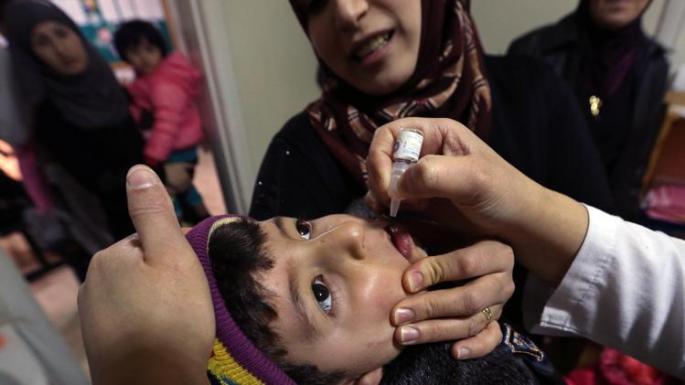
Despite the three-year Syrian conflict, many humanitarian workers continue to immunize children against preventable diseases. UNICEF in particular is actively working towards the vaccination of more than 20 million children against Poliomyelitis. Last October, the WHO confirmed at least 10 cases of children infected with Polio in Syria. This past weekend UNICEF re-launched its campaign to help control the spread of this virus among other states impacted by Syrian refugees.  Iraq, Turkey, Jordan also pledged to join the campaign due to the threat of incidences of the virus occurring in their countries.  So far Iraq has reported one case of the disease while the UN has reported 27 cases among Lebanese children.

Approximately 500,000 Syrian refugees to Lebanon have been children–who are at the greatest risk of acquiring polio if no vaccination has been administered. The war in Syria and the displacement of refugees has made it difficult for medical personal to provide vaccinations needed to control the spread of this and other communicable diseases.  The continued fighting in Syria is likely to lead to more bloodshed, the displacement of more refugees, the depletion of public service resources in several states, and the spread of more communicable diseases if efforts to resolve the conflict are not soon reached.


Image Credit: AP Photo/Bilal Hussein

This Week in DC: Events

April 7, 2014

Afghan Elections: What’s at Stake?
Date: April 7, 10:00 – 11:00 am
Location: Woodrow Wilson International Center for Scholars

On April 5, Afghans head to the polls as the country attempts its first-ever peaceful and democratic transfer of power. The election comes at a critical time for Afghanistan, which is struggling to fight a Taliban insurgency amid the withdrawal of international military forces. The Taliban has repeatedly threatened to disrupt the election process, and in recent days has launched a series of attacks on election facilities and foreign nationals, including the deaths of 2 Western journalists. Many international election monitors have left the country, and Afghan officials have announced that nearly 750 polling centers will be closed on election day. Yet many Afghans have vowed to defy the threats and vote anyway.

Join this conversation by phone, while scholars and professionals discuss the election results—to the extent that they are known—and their implications with three on-the-ground experts.

Toll-Free Conference Line: 888-947-9018
Conference Line: 1-517-308-9006
Passcode: 13304

April 8, 2014

National Security and Foreign Policy Priorities in the FY 2015 International Affairs Budget
Date: April 8, 10:00am
Location: U.S. Senate Committee on Foreign Relations, Dirksen Senate Office Building 419, Washington DC 20515

Witness, the Honorable John F. Kerry, the U.S. Secretary of State, will present testimony at this committee meeting chaired by Sen. Menendez.

Financing Global Health in an Era of Austerity
Date: April 8, 12:00pm
Location: Center for Strategic and International Studies, 1616 Rhode Island Ave NW, Washington DC 20036

Please join us for the launch of the University of Washington’s Institute for Health Metrics and Evaluation (IHME)’s Financing Global Health 2013 report, to be held on Tuesday April 8, 12:00-2:00 PM at CSIS (1616 Rhode Island Ave NW).

Dr. Christopher Murray, Director of the Institute for Health Metrics and Evaluation (IHME), will lead off with a presentation of findings from IHME’s newest report, Financing Global Health 2013: Transition in an Age of Austerity and a new journal article on health financing in Health Affairs. Dr. Murray will highlight how some donors have scaled back their funding while others have been increasingly generous. Using data from the latest Global Burden of Disease study, he will also compare current funding allocations to disease patterns around the world.

Following Dr. Murray’s presentation, there will be a roundtable discussion, moderated by Dr. J. Stephen Morrison, Senior Vice President and Director of the Global Health Policy Center at CSIS that will feature Dr. Christopher Murray and Dr. Ariel Pablos-Mendez, Assistant Administrator for Global Health at USAID. The roundtable discussion will be focused on the policy implications of IHME’s report.

Lunch will be served from 12:00-12:30pm. Register here.

Subcommittee Hearing: Is al-Qaeda Winning? Grading the Administration’s Counterterrorism Policy

Date: April 8, 10:00am
Location: U.S. House Committee on Foreign Affairs, 2172 Rayburn House Office Building Washington, DC 20515

The following witnesses will testify on the subject of al-Qaeda and the administration’s policy on counterterrorism:

Panel I:

The Honorable Joseph Lieberman, Former United States Senator

The Honorable Jane Harman, Director, President, and Chief Executive Officer, The Woodrow Wilson International Center for Scholars, Former Member of Congress

Panel II:

Seth Jones, Ph.D., Associate Director, International Security and Defense Policy Center, RAND Corporation

Frederick W. Kagan, Ph.D., Christopher DeMuth Chair and Director, Critical Threats Project, American Enterprise Institute for Public Policy Research

Mr. Benjamin Wittes, Senior Fellow, Governance Studies, The Brookings Institution

China’s Hypersonic Weapons Development

Date: April 8, 12:30- 2:00pm
Location: Carnegie Endowment for International Peace, 1779 Massachusetts Ave NW, Washington DC 20036

China tested a hypersonic gliding weapon for the first time on January 9. Although details of the test are murky, it confirms a long-suspected Chinese interest in developing hypersonic weapons. The United States is interested in similar technologies and conducted its first successful boost-glide test in November 2011. What are the implications of the Chinese test for U.S. security? How should the United States respond? Could a new arms race in hypersonic technology emerge? And, if so, can anything be done to prevent it? James M. Acton, Michael D. Swaine, Phillip C. Saunders, and Lora Saalman will discuss these questions. Michael McDevitt will moderate.

Register here.

April 9, 2014

New Avian Influenzas in East Asia: Global Health Security and Policy
Date: April 9, 8:30 – 11:30am
Location: Georgetown University, ICC Auditorium, Washington DC 220057

The SFS Asian Studies Program, as part of its Public Health in Asia Initiative, is teaming up with the Georgetown Medical Center’s Department of Microbiology and Immunology to host a panel discussion with regional, policy, and health experts on the new avian influenzas in East Asia and their global health policy implications.

Full event schedule and registration information available here.

April 10, 2014

International Humanitarian Action: Changing Responses to Conflict and Crisis
Date: April 10, 10:00 – 11:00am
Location: Woodrow Wilson International Center for Scholars

From South Sudan to Syria, armed conflict throughout the globe has led to massive humanitarian needs. During a crisis, food relief, critical medical care, and access to safe water and basic sanitation facilities all require a humanitarian as well as a diplomatic response. No one is better placed to help us understand these complex shifts than Peter Maurer, President of the International Committee of the Red Cross.

Please join us as he talks with Jane Harman, President of the Wilson Center to give a first-hand update on the key challenges the ICRC faces.

RSVP here.

Pandora Report 4.4.14

It’s been a busy week in the biodefense world, between the continuing outbreak of Ebola in Western Africa and the realization that the Black Death may actually have been pneumonic plague rather than bubonic plague, so let’s take a moment this Friday to slow things down.


Highlights include Ebola travel restrictions, a possible source for the Ebola outbreak, and how to protect yourself during the most serious pandemic of all—the zombie pandemic. Have a great weekend!

When planning your vacation to Guinea, keep this in mind…

As of April 1, the number of suspect Ebola cases in Guinea has risen to 127 with 83 deaths (for a case fatality rate of 65%) according to the WHO. Liberia now has eight suspected cases with five deaths. Sierra Leone has had only two deaths after two bodies were repatriated after dying from Ebola. In neighboring Mali, the government has instituted thermal scans for those travelling to Mali as well as restricting movement within the capital city of Bamako. Meanwhile, Senegal has closed their border with Guinea and Saudi Arabia has suspended visas for Muslim pilgrims coming from Guinea and Liberia. Despite all of this, the WHO does not recommend travel restrictions.

Philippine Daily Inquirer—“The international health agency said there was not enough reason to push for the imposition of travel restrictions in response to the Ebola outbreak. “WHO does not recommend that any travel or trade restrictions be applied with respect to this event,” it said in a statement.”

And while on vacation, here are some foods to avoid…

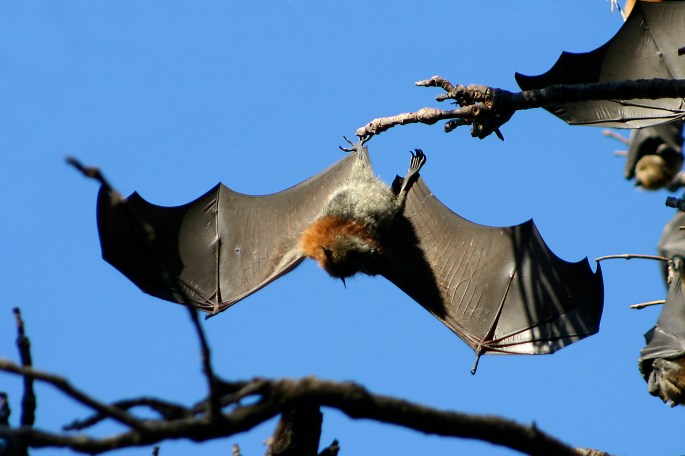
In another response to the Ebola outbreak in Guinea, officials have taken an unusual step of banning the consumption of bats as food—including grilled bat, bat soup and “other local delicacies.” It has long been suspected that bats are somehow instrumental in the spread of Ebola either as a vector or a reservoir for the disease.

CBS News—“‘We discovered the vector [infectious] agent of the Ebola virus is the bat,” Remy Lamah, the country’s [Guinea] health minister, told Bloomberg News. “We sent messages everywhere to announce the ban. People must even avoid consumption of rats and monkeys. They are very dangerous animals.’”

The good news is, in the event of a serious pandemic, you may have new protection!

Just in time for the Walking Dead finale last weekend, the American Chemical Society released new research related to the chemistry of death, and how that chemistry can shield us from the flesh and brain eating horde of zombies.

Science is a serious subject and pandemic possibilities are crises in the making…but that doesn’t mean science can’t be fun for a general audience!

Zombie Apocalypse Survival Chemistry: Death Cologne

Dana Perkins @ George Mason University


On Monday, March 31, 2014, Dana Perkins was the featured speaker at the George Mason University Biodefense Policy Seminar.

Ms. Perkins’ full biography is available here.

Ebola: a pandemic of misconception

By Chris Healey

An  Ebola hemorrhagic fever outbreak in the Republic of Guinea has raised concerns about the illness and its spread to countries outside Africa.

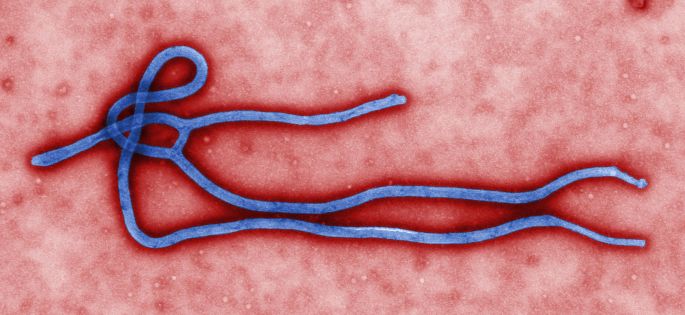
Ebola is a virus in the filoviridae family. Of the five Ebola species, only Zaire, Sudan and Bundibugyo species have caused outbreaks in humans.

Ebola appears to be an incidental host of humans from a natural cycle involving bats and nonhuman primates. Humans enter the cycle after contact with blood and tissue from nonhuman primates, often after instances of butchering and animal cruelty. Transmission routes from bats to humans are possible but currently unknown.

The first confirmed outbreak of Ebola occurred in 1976 in Nzara, a small town in southern Sudan. Workers from a local cotton factory spread the disease to their relatives and others in the community. The outbreak lasted several months. Of the 284 cases in that outbreak, 151 died.

Ebola causes Ebola hemorrhagic fever, a severely debilitating illness affecting multiple organ systems. Ironically, hemorrhage is an uncommon symptom reported in fewer than half of all cases. Death typically occurs due to shock from fluid loss and organ failure.

Mortality rate is species dependent. Bundibugyo has a 36% fatality rate, Sudan 55%, and Zaire 90%. There is no cure, but administration of an experimental vaccine that targeted a viral protein used for attachment and entry to the host cell was attributed to the survival of an accidentally-exposed laboratory researcher in Germany.

Ebola has been the inspiration for fictional literature and film. The Hot Zone by Richard Preston provides an overview of Ebola and other filoviruses before focusing on the discovery of Reston Ebola, a species known to only sicken nonhuman primates, in Reston, Virginia. The 1995 movie Outbreak featured an Ebola-like virus as the primary plot device.

Both works exaggerate Ebola hemorrhagic fever’s morbidity and hemorrhagic symptoms to inflate pathogenicity and pandemic potential. While there is no denying the severity of Ebola hemorrhagic fever illness, it is an ineffective cause of pandemics.

Perhaps the most misunderstood characteristic of Ebola is its method of transmission. Direct physical contact with infected persons or their bodily fluids is required to transmit the illness. There is no evidence of airborne transmission among Ebola species known to affect humans. Ebola rapidly becomes nonviable outside the host when aerosolized in uncontrolled, non-laboratory settings.

Ebola has an incubation period of 4 to 10 days. Rapid onset allows healthcare providers to quickly identify affected individuals. Only symptomatic individuals can spread the disease. In other words, the disease cannot be transmitted during incubation or through non-symptomatic cases. A short, non-communicable incubation period limits Ebola’s pandemic potential.

Limitations of direct person-to-person spread can assist public health response efforts in the event of an Ebola hemorrhagic fever outbreak. Quarantine procedures are effective in restricting the illness shortly after detection. Due to the lack of airborne transmission, direct contacts with sickened individuals can be traced and contained, arresting illness progression. Ebola hemorrhagic fever rarely escalates past a localized outbreak if adequate public health infrastructure is present.

Media consumers should be wary of fictional or exaggerated portrayals of illness. The media’s tendency to misuse and dramatize information can breed undue fear in the event of a public health crisis.

Image of the Week: Zombie Intubation!

Image of the Week: Zombie Intubation

As if the zombie apocalypse wasn’t enough, during Season 4 of AMC‘s the Walking Dead (which had it’s finale on Sunday) the survivors had to deal with an unspecified, likely zoonotic, disease outbreak in the prison.

In this photo, one of the survivors who had to be intubated died and thus, we have zombie intubation!

Image Credit: AMC

Bubonic Plague: An Airborne Toxic Event

by Alena M. James

Yersinia pestisis a gram negative, bacillus shaped bacteria that prefers to reside in an environment lacking oxygen (anaerobic). It is typically an organism that uses the process of fermentation to break down complex organic molecules to metabolize.  However, the organism is commonly referred to as being a facultative anaerobe, because it can live in the presence of oxygen and undergo respiration to generate energy for its cell. Its facultative capability is one reasons the organism can induce infection in highly oxygenated lung tissue.

This organism, primarily a zoonotic pathogen, has been held responsible for causing the bubonic form of plague responsible for the Black Death, the 14th century event that lead to the death of millions of Europeans. For years, the cause of the Black Death Plague pandemic has been linked to fleas. In much of Europe at this time, unsanitary living conditions provided the perfect breeding grounds for flea infested rats to flourish; while the fleas served as the perfect arthropod vector for Y. pestis to flourish.

The route of transmission of Y.pestis, from fleas to humans, was thought to occur via the urban cycle—when an urban rat becomes infected with fleas from a wild animal. Crowding in cities, poor hygiene, and unsanitary living conditions attracts large rat populations to the area. When a flea carrying Y.pestis bites a rat, the rat becomes sick and dies. No longer able to parasitize the rat, the flea moves from the rat to a new host. In crowded cities, the fleas from the dead rat will jump to humans to feed. When the flea bites the human it releases Y. pestis into the human’s cardiovascular system. Once in the cardiovascular system, the bacterial organism makes its way to the lymph nodes.  There it replicates and spreads throughout the body causing septicemia. As Y. pestis proliferates within the lymph nodes it also forms hemorrhagic necrosis throughout the body.  Painful swelling arises and the definitive painful symptom, the bubo,appears.  After infection, a patient develops a high fever and the organism can target specific organs of the body like the lungs, liver, and spleen. Without treatment, a patient has a 75% mortality rate.


Last week, British scientists performed comparative DNA analysis on bacterial samples collected from 25 excavated skeletons found in the Clerkenwell area of London. These remains dating back to the 14th century contained samples of Yersinia pestis, the bacteria responsible for the Black Death. In an attempt to evaluate the virulent nature of the pathogen, the Y. pestis DNA collected from these remains were compared to DNA from the Y. pestis responsible for the deaths of more than 30 people in Madagascar back in December 2013. Researchers concluded that the DNA of both organisms revealed a high percentage of similarity and that the pathogenic nature of the 14th century Y. pestis is no more powerful than the Y.pestsis responsible for the Madagascar killings.

After considering this information and examining the plausible death of the skeletons, scientists believe that the fast-acting killing capabilities of Y.pestis are only likely to take place through airborne transmission. This conclusion undermines the urban cycle transmission method and suggests that the Black Death was mostly caused by pneumonic plague and not bubonic. British scientists are determined to examine more modern cases to confirm this new hypothesis. If confirmed, we may see pneumonic plague identified as the causative agent for the 14th century plague pandemic thus altering our historical account of the Black Death.

For British scientists, the transmission of Y. pestsis through respiratory droplets is a much more likely scenario for achieving rapid kills versus the urban cycle transmission method. Bubonic plague is not infectious and there is no human to human transmission from the buboes that form.  However, pneumonic plague can be caused by bubonic plague if the Y. pestis pathogen makes its way via the lymph nodes to the lungs inducing infection. While in the lungs, the organisms are caught in respiratory droplets and are then disseminated into the air when an infected person sneezes or coughs. This quickly makes the host very infectious and a threat to those not yet infected.  The mortality rate for patients suffering from pneumonic plaque without treatment is 100%.


Image Credit: crossrail.co.uk