Ben Ouagrham-Gormley on Bioweapons Proliferation

GMU Biodefense’s Dr. Sonia Ben Ouagrham-Gormley evaluates the effect of increased state efforts to deter bioweapons threat in her recent article, ” Dissuading Biological Weapons Proliferation”. Check out the abstract below, and look for the full article in this month’s issue of Contemporary Security Policy.

Abstract – “The terrorist and anthrax attacks of 2001 spurred many countries to raise defences against a possible biological weapon attack, and potentially dissuade state and non-state actors from developing these weapons. Yet these programmes’ dissuasive value – creating strong barriers to entry – has never been analysed. This article argues that current biodefence efforts are counterproductive and more persuasive than dissuasive, because they rest on a biological threat narrative that emphasizes the benefits of bioweapons rather than their problematic development and use, and they fail to impose a high cost of entry in the bioweapons field. The dominant biological weapons narrative perpetuates several misconceptions, including that there are no barriers to biological weapons development, that expertise is easily acquired from scientific documents, and that new technologies are black boxes with de-skilling effects. The net result is popularization of a cost/benefit analysis in favour of bioweapons development. To remedy the situation, I suggest correcting these misconceptions by reshaping the biological threat narrative, and recommend policies to achieve a greater dissuasive impact, stressing the role of the Biological Weapons Convention, preventing access to tacit biological weapons skills, and criminalizing bioweapons proliferation by making the development and use of biological weapons a crime against humanity.”

The full journal article is available here (access required).

(Image: a single Bacillus anthracis colony, credit CDC/J. Todd Parker; PhD and Luis Lowe; MS; MPH)

Image of the Week: GMU Biodefense’s New Mascot

Our image of the week is brought to everyone from GMU Biodefense doctoral candidate, Jennifer Osetek. In today’s competitive environment, one can never start educating children too earlier, and in the niche field of Biodefense, all advantages are necessary. Luckily, Jen has an astute and willing scholar in her son, Alex. He’s clearly already a master of that well known PhD study technique, osmosis.

2012-10-26 23.06.44

Scientists Prove MERS in Camels

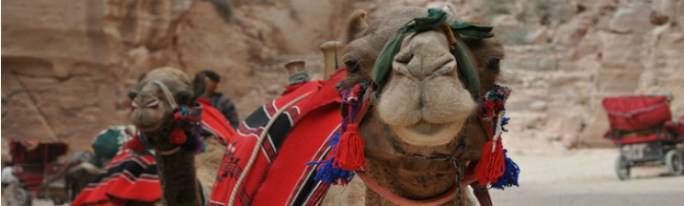
Scientists have finally been able to prove that the MERS-CoV also infects camels. Gene sequencing of the virus proved the existence of same strains in humans and three dromedary camels in Qatar.

Chicago Times – “The study, published in the Lancet Infectious Diseases journal on Tuesday, confirms preliminary findings released by Qatari health officials last month. Camels are used in the region for meat, milk, transport and racing. But the researchers cautioned it is too early to say whether the camels were definitely the source of the two human cases – in a 61-year-old man and then in a 23-year-old male employee of the farm – and more research is needed. ‘This is definitive proof that camels can be infected with MERS-CoV, but based on the current data we cannot conclude whether the humans on the farm were infected by the camels or vice versa,’ said Bart Haagmans of Rotterdam’s Erasmus Medical Centre, who led the study with other Dutch and Qatari scientists.”

Read more here.

This Week in DC: Events 12.16.13

Monday, December 16th, 2013
From Incitement to Violence to Conflict Mitigation
Elliot School
9:30 AM

Please join The Elliott School’s International Development Studies Program and Internews, the international media development NGO, for a panel discussion to consider the role of media in conflict: How do we know when atrocities are imminent for a country facing conflict? Does media have the potential to provide early warning of mass violence? Are there media interventions that can work to prevent violence?

Tuesday, December 17th
The al-Shabab Threat After Westgate
Carnegie Endowment
12:00PM

The Somali terrorist group al-Shabab catapulted onto the international stage after its September attack on the Westgate shopping mall in Nairobi. The group remains a dynamic and adaptive threat that has confounded efforts to eliminate its influence. A panel of experts on al-Shabab will examine the evolving threat in Somalia and beyond, identifying policy prescriptions for African governments, the United States, and the international community.

Wednesday, December 18th
Iran, Oil, and the Geneva Agreement
Atlantic Council
9:00AM

With the signing of an interim accord providing limited sanctions relief in return for restraints on Iran’s nuclear program, attention has focused on whether Iran will be able to increase its currently depressed oil and natural gas exports and whether multinational oil companies will again be willing to invest in Iran’s energy sector. Meanwhile, the President Hassan Rouhani’s administration is altering Iran’s energy policies in an effort to attract new buyers and investment. The panel will discuss the impact of these changes on Iran’s economy and on world oil supplies and prices.

China’s Re-emergence as a Great Power and Its Role in Regional Security
Brookings
1:00PM

During his recent visit to Beijing, U.S. Vice President Joseph Biden noted that “as China’s economy grows, its stake in regional peace and stability will continue to grow,” and that “China will bear increasing responsibility to contribute positively to peace and security.” While this perspective is not new, it is moving toward the center of other countries’ considerations of China as economic stakes increase and potential sources of instability continue to simmer. On December 18, the Center for East Asia Policy Studies (CEAP) will host a panel discussion featuring Visiting Fellows from China, Japan, and Korea to examine the increasing importance of China in Northeast Asian security, and ways that it might make positive contributions to the region. The discussion will focus on the Korean Peninsula, maritime issues, and perceptions of regional security in China, Japan, Korea, and the United States. After the panel, the speakers will take audience questions.

Webcast: December Cyber Risk Wednesday – Risks and Resilience of the Electrical Sector
Atlantic Council
3:00PM

Please join the Atlantic Council’s Cyber Statecraft Initiative for the next Cyber Risk Wednesday on December 18, 2013 from 3:00 p.m. – 5:00 p.m. A moderated discussion featuring: Tom Parker, Chief Technology Officer, FusionX; Neal Pollard, Senior Fellow, Cyber Statecraft Initiative, Brent Scowcroft Center on International Security, Atlantic Council; Gib Sorebo, Chief Cybersecurity Technologist, Leidos.

Friday, December 20th
The U.S. and Saudi Arabia: Is a 70-Year Strategic Alliance on the Rocks?
Hudson Institute
10:00AM

The Obama administration’s outreach to Iran over its alleged nuclear program has Washington’s traditional Middle East allies concerned—perhaps the Kingdom of Saudi Arabia above all. An alliance that began in 1944 when President Roosevelt met with the founder of modern Saudi Arabia, King Ibn Saud, the U.S.-Saudi partnership, despite many ups and downs, has remained a cornerstone interest of both countries for nearly 70 years. Now, however, this bilateral relationship appears suddenly troubled—if if not outright endangered. The White House and the Kingdom have diverged on several key Middle East policies—Syria, Egypt, and most importantly Iran—leading Riyadh to consider other strategic options. Will the partnership survive? Or is it merely taking a new shape, long overdue?

(image: Dell/Flickr)

The Pandora Report 12.13.13

Highlights include pneumonic plague in Madagascar, ricin as a biological weapon, H7N9 in live markets in Hong Kong, Myanmar’s ratifying the BWC, and destroying sarin at sea. Happy Friday!

Madagascar hit by ‘pneumonic and bubonic plague’

In addition to the death of approximately 20 villagers who died of bubonic plague last week, a further two cases of pneumonic plague have been discovered. Pneumonic plague can be spread via aerosol. It must be treated within 24 hours; any later and the fatality rate approaches 100%. Understandably, there is concern amongst health officials in Madagascar that the disease will spread to neighboring villages and towns.

BBC – “Pneumonic plague is caused by the same bacteria that occur in bubonic plague – the Black Death that killed an estimated 25 million people in Europe during the Middle Ages. But while bubonic plague is usually transmitted by flea bites and can be treated with antibiotics, pneumonic plague is easier to contract and if untreated, has a very high case-fatality ratio, experts say. Madagascar’s health ministry director-general Dr Herlyne Ramihantaniarivo confirmed to the BBC that two cases of the plague had been reported”

Texas woman pleads guilty to ricin letters sent to Obama, Bloomberg
A Texan woman has been charged in the case involving ricin-laced letters sent to President Obama and Mayor Bloomberg. We’ve discussed the debate surrounding the classification of  ricin as a weapon of mass destruction before, so we do think its interesting they’ve charged her with use of a biological weapon.

CNN – “A Texas woman pleaded guilty Tuesday to a biological weapons charge after she was accused of sending ricin-laced letters to President Barack Obama and New York City Mayor Michael Bloomberg, prosecutors announced. Shannon Guess Richardson, 35, pleaded guilty to possession of a toxin for use as a weapon, prosecutors said in a statement. She could be sentenced to up to life in prison. A sentencing date has not yet been scheduled. Richardson, an actress, was accused of sending the letters earlier this year.”

Shenzhen Finds H7N9 Flu Virus in Markets Near Hong Kong
Three of 70 samples taken from 13 of Guangdong’s  live poultry market have tested positive for H7N9. For some reason, one of the vendors whose stall tested positive for H7N9 was still allowed to sell chickens. China is usually extremely vigilant concerning containment and effective biosurveillance, so the hesitation to shut the live poultry markets is a little baffling.  However, the stalls are  apparently being disinfected daily.

Bloomberg Businessweek –  “The 12 live poultry stalls at the Hengan Paibang market in Longgan district, one of the markets where authorities found a positive sample, were open today. The stalls get their chickens from the Buji Poultry Wholesale Market in Longgan, according to the market’s manager. ‘There’s been no order yet to shut down,’ said Zhang Jinghui, manager of the Paibang market. ‘We need to wait for instructions from the village committee. We are disinfecting the stalls everyday.’ About 30 chickens, ducks, pigeons and geese were stored in metal cages at his stall, next to a shed for slaughtering the poultry and a metal-spinning vat for defeathering.”

Myanmar Prepares to Ratify Chemical, Biological Weapons Treaties
While Myanmar, formerly known as Burma, has signed both the Chemical Weapons Convention and the Biological Weapons Convention, it has yet to ratify either treaty. There is still some debate over whether the military junta previously in charge had used chemical weapons on the rebels. Myanmar has been cooperating with IAEA inspectors to increase overview of its nuclear program.

Radio Free Asia – “Myanmar’s government asserts the country has no chemical, biological, or nuclear weapons programs. But ethnic armed rebel groups including the Kachin Independence Army (KIA) have accused the Myanmar military of using chemical weapons as recently as last year in their long-running war in the country’s borderlands. In the 1980s and early 1990s, the U.S. government voiced suspicions of a possible chemical weapons program under the military junta in Myanmar, naming China and North Korea as possible suppliers. Since then the U.S. has been less vocal in its concern about the issue. According to global security nonprofit organization the Nuclear Threat Initiative, there is currently ‘no evidence’ to suggest Myanmar has a chemical weapons program.”

Scientists raise alarm over plan to destroy Syria’s chemical weapons at sea
The Department of Defense’s plan to neutralize Syria’s chemical weapons, through hydrolysis, at sea, is coming under sharp criticism. The use of the technology at sea is unprecedented, and requires a tremendous deal of very careful estimating. Of course, when dealing with agents like sarin and VX, very careful estimating is not always enough. News of the criticism comes at the same time as the UN confirmed the repeated use of chemical weapons in the Syrian conflict. 

Washington Times – “‘There’s no precedence. We’re all guessing. We’re all estimating,’ said Raymond Zilinskas, director of the Chemical and Biological Weapons Nonproliferation Program at the James Martin Center for Nonproliferation Studies, who worked as a U.N. biological weapons inspector in Iraq in 1994. ‘For example, you don’t know if the sarin is pure. The Iraqi sarin was rather impure, and had a lot of contaminants, and we don’t know if that’s amenable to hydrolysis,’ said Mr. Zilinskas, a professor at the Monterey Institute of International Studies at Middlebury College. Under the Pentagon plan, the toxic stockpile would be transported to the Syrian port of Latakia, loaded onto a non-U.S. vessel and shipped to a third country. From there, a U.S. cargo ship would take the arsenal to sea for destruction. Richard M. Lloyd, a warhead technology consultant at Tesla Laboratories Inc. who tracks weapons being used in Syria, said he has little confidence in the regime’s ability to transport the weapons safely.”

In case you missed it
– Drug Resistant H7N9 Retains Pathogenicity

(image: Wmeinhart/wikimedia)

Drug-Resistant H7N9 Retains Pathogenicity

In a study published Wednesday in Nature Communications, researchers discovered that certain strains of  H7N9 have mutated to become “highly resistant” to antivirals like Tamiflu while maintaining high levels of pathogenicity. This is not normal. Normally when  a virus acquires drug-resistance through mutation, this mutation attenuates it, decreasing viral virulence or replication ability.  The study authors write, “in stark contrast to oseltamivir-resistant seasonal influenza A(H3N2) viruses, H7N9 virus replication and pathogenicity in these models are not substantially altered by the acquisition of high-level oseltamivir resistance”. Moreover, drug resistance in highly pathogenic avian influenza (HPAI) viruses is usually limited to amantadine resistance; infact, many influenza A and B strains are already resistant to amantadine. This means that in many cases, the only  effective antivirals are neuraminidase (NA) inhibitors. Luckily, resistance to NA inhibitors is rare. Unluckily, some strains of H7N9 appear to have it.

Read the full paper here.

(image of H7N9: CDC/Cynthia S. Goldsmith and Thomas Rowe; false color added by author)

Image of the Week: Cholera

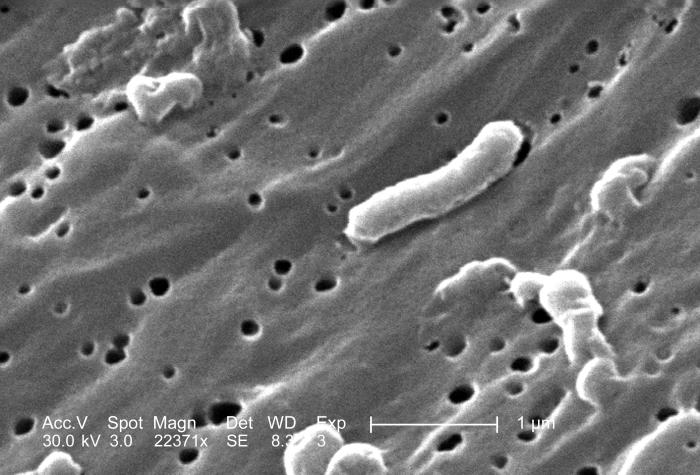
This week’s image is of Vibrio cholerae, the gram-negative bacteria which causes the disease cholera. Cholera affects up to five million people globally each year, and causes as many as 120,000 deaths. The disease is not contagious, but is spread through ingestion of contaminated food or water, the latter often due to poor sanitation. Haiti is currently experiencing an unrelenting cholera outbreak; between October of 2010 and October of 2013, there have been over 680,000 cases.

cholera(image: CDC)

Bubonic Plague in Madagascar

In the latest outbreak of bubonic plague in the country, 20 people died from the disease last week in north-western Madagascar. Bubonic plague, caused by the bacteria Yersinia pestis, is endemic to the island nation, and resulted in 60 fatalities last year alone. The island’s prisoners are especially vulnerable, due to pervasive unsanitary conditions enabling a large rat population in local prisons. However, last week’s outbreak occurred in the relatively remote village of Mandritsara. Health authorities are currently investigating the outbreak.

Plague is spread to humans through infected fleas, often from rats. Bubonic plague is something we’ve written about extensively here on the Pandora Report, usually in a historical context. It’s easy to forgot that for many nations, outbreak of the disease remains a very real fear today.

(image: wikimedia commons)

Hong Kong Quarantines 19 people after 2nd H7N9 case

Health authorities in Hong Kong have quarantined 19 people who were thought to have come in contact with an 80-year-old man diagnosed with H7N9 earlier this week. This is the second case of the influenza A virus in the area. The man has subsequently stabilized – however, at least one person with whom he came in contact has symptoms of a “mild” respiratory infection. H7N9 emerged for the first time in humans earlier this year. Case numbers rose to 137 by the end of October, with 45 fatalities, and the newer cases are thought to result from the cooler temperatures. 

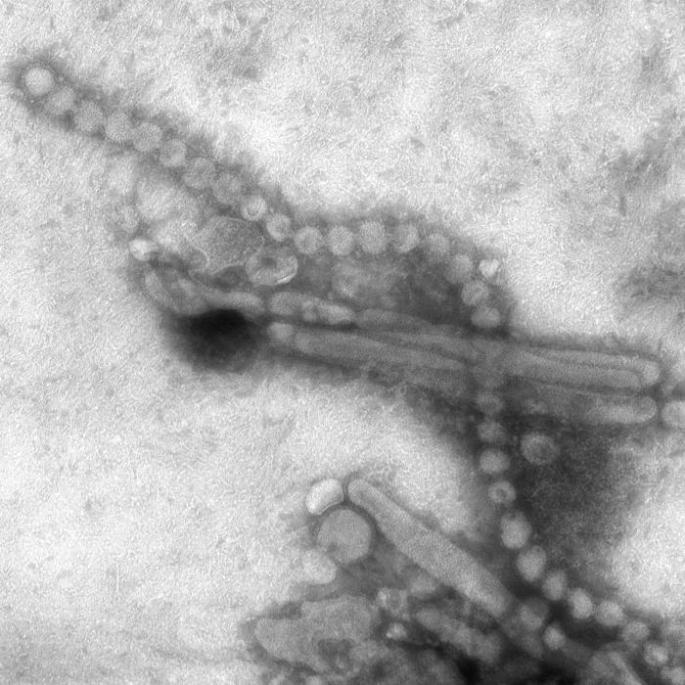
(Image caption: “This negatively-stained transmission electron micrograph (TEM) captured some of the ultrastructural details exhibited by the new influenza A (H7N9) virus.” CDC/Cynthia S. Goldsmith and Thomas Rowe)


This Week in DC: Events

A few events scheduled for today may be postponed due to the weekend snow – be sure to check event websites before heading out!

Monday, December 9, 2013
PeaceGame
US Institute for Peace
All day Monday – Tuesday afternoon

Governments around the world regularly devote enormous resources to conducting “war games.” On December 9 and 10, the U.S. Institute of Peace (USIP) and The FP Group (FP) will conduct the inaugural PeaceGame, with a focus on “the best possible peace for Syria.” With one game in the U.S. and another in the Middle East, the semi-annual PeaceGames will bring together the leading minds in national security policy, international affairs, academia, business, and media to “game” out how we can achieve peace in Syria. USIP and FP intend for the game to redefine how leaders think about conflict resolution and the possibility of peace.

Tuesday, December 10
Strengthening National Laboratory Commercialization
Information Technology and Innovation Foundation
10:00 AM

Post-World War II era U.S. science, technology, and innovation policy has been defined by a linear approach to public investment in basic research. For many decades, this worked because the United States was one of the few countries with the technological capabilities to translate research into new products and services. But in today’s intensely competitive global economy where nations are fiercely competing for innovation advantage, this paradigm is no longer tenable. Robust public investments in basic research remain critical, but equally as important are investments and institutional reforms to commercialize new ideas from the laboratory into the marketplace. To advance the debate on potential policy reforms, the House Technology Transfer Caucus, Co-Chairs Rep. Gus Bilirakis (R-FL) and Rep. Ben Ray Luján (D-NM), the Information Technology & Innovation Foundation, and Innovation Associates are convening a series of Capitol Hill briefings featuring leading experts in innovation policy.

Hearing: The Iran Nuclear Deal: Does It Further U.S. National Security?
House Committee on Foreign Affairs
1:00PM

Chairman Royce on the hearing: “I continue to have serious concerns that the agreement the Obama Administration negotiated does not meet the standards necessary to protect the United States and our allies. The deal does not roll back Iran’s nuclear program, but instead allows Tehran to keep in place the key elements of its nuclear weapons-making capability. Under the agreement, the international community relieves the sanctions pressure on Iran while its centrifuges continue to enrich uranium. This hearing will be an opportunity for Committee Members of both parties to press Secretary Kerry to explain why the Obama Administration believes this sanctions-easing agreement is the right course.“

The Transition in Afghanistan
Senate Foreign Relations
2:30PM

Witnesses: Ambassador James Dobbins, Special Representative for Afghanistan and Pakistan, U.S. Department of State; Mr. Donald L. Sampler, Jr. Acting Assistant to the Administrator, Office of Afghanistan and Pakistan Affairs U.S. Agency for International Development (USAID)

Wednesday, December 11
Squaring the circle: General Mark Welsh III on American military strategy in a time of declining resources
American Enterprise Institute
8:00 AM

With sequestration likely to remain law throughout this year and beyond, the US Air Force finds itself in a “ready today” versus a “modern tomorrow” dilemma. How will the Air Force balance capability, capacity, and readiness in the coming years? What is the future of key modernization initiatives such as the F-35 Joint Strike Fighter, the KC-46 aerial refueling tanker, and the long-range strike bomber? Moreover, what lessons has the Air Force learned from past debates that will influence upcoming budget proposals? In the concluding session of its series with the Joint Chiefs of Staff, AEI’s Marilyn Ware Center for Security Studies will host General Mark Welsh III, Chief of Staff of the US Air Force, to address these questions and more.

World Health Organization: Global media launch of the World Malaria Report 2013
National Press Club
9:30 AM

Malaria is one of the world’s most serious diseases, causing over 200 million infections and more than 600,000 deaths each year, mainly in children under five in sub-Saharan Africa. An estimated 3.4 billion people are at risk of the disease in almost one hundred countries, and need access to life-saving prevention tools, such as mosquito nets, and effective treatment. One week after the replenishment conference for the Global Fund to Fight AIDS, Tuberculosis and Malaria, during which international donors pledged 12 billion USD for the Fund, the World Health Organization (WHO) will launch its latest comprehensive report on the global effort to control and eliminate malaria. An annual scorecard, the World Malaria Report 2013 includes an assessment of trends in the scale-up of mosquito control tools, preventive therapies, diagnostic testing and treatment. It also reviews the global funding situation, the double threat of drug and insecticide resistance, as well as progress towards global targets set for 2015. WHO’s Dr Robert Newman will be joined by leading experts to discuss key findings of the report. The event will be moderated by former CNN journalist Jeanne Meserve.

Thursday, December 12
Critical Mass: Nuclear Proliferation in the Middle East
Center for Strategic and Budgetary Assessments
10:00 AM

At the briefing, the report’s author Dr. Andrew Krepinevich will provide his assessment of key security issues that may emerge in the event Iran acquires a nuclear capability, to include: the dynamics of a bipolar regional nuclear competition between Israel and Iran; the prospects for (and potential consequences of) a Middle East proliferation “cascade” involving other states in the region; the potential for a “Nuclear Great Game;” and the overarching challenges associated with preserving crisis stability and avoiding regional nuclear conflict. Dr. Krepinevich will also address why Cold War deterrence models may not apply to the nuclear competition in the Middle East, and why missile defenses may prove both destabilizing and cost-ineffective in this environment.

Joint Subcommittee Hearing: The Resurgence of al-Qaeda in Iraq
House Committee on Foreign Affairs
1:00PM

Witnesses: Kenneth M. Pollack, Ph.D., Senior Fellow, Saban Center for Middle East Policy, The Brookings Institution; Ms. Jessica D. Lewis, Research Director, Institute for the Study of War; Michael Knights, Ph.D., Lafer Fellow, The Washington Institute for Near East Policy; Daniel L. Byman, Ph.D., Professor, Security Studies Program, Georgetown University.

Friday, December 13
New Nuclear Suppliers
CSIS
9:00AM

Nuclear power is shifting East, and so too may nuclear suppliers. Nuclear energy long has been dominated by the West and by advanced economies, but this is likely to change in the next thirty years. While Japan’s nuclear industry is still reeling from the Fukushima accident, China, India, and South Korea have ambitious plans for nuclear energy at home and abroad. All three countries face capacity, regulation and financing challenges and all three have relatively little experience in export control harmonization. CSIS, with partners in India, South Korea, and China, explored the contours of responsible nuclear supply with key technical, official, and industry experts. Please join us for a discussion of our findings, and the results of our workshops in Delhi, Seoul and Beijing, with a distinguished panel of experts.

(image courtesy of Dell)