There is a Pattern Here: The Case to Integrate Environmental Security into Homeland Security Strategy

By Jonathon Marioneaux

Recent reports of extreme weather related events, massive industrial catastrophes with hazardous materials, and critical resource shortages have begun to highlight the need to incorporate climate change as part of the national security strategy and its effects on emergency preparedness.  In their article, Dr. Ramsay and Dr. O’Sullivan argue that changing climate and human influences are becoming more important to homeland security and must be increasingly factored into national and international security assessments. The authors argue that the term ‘Environmental Security’ should be placed among homeland security factors because of its immense reach and potential impact upon the nation and its infrastructure.  However, the role of environmental security is not simply localized to a region or country; the global impact of climate change, resource scarcity, and certain industrial disasters have global impacts that will disproportionately affect less developed nations who are not able to cope as quickly or efficiently.  Finally, these impacts must be incorporated into strategic planning more effectively in order to cope with future global security challenges.

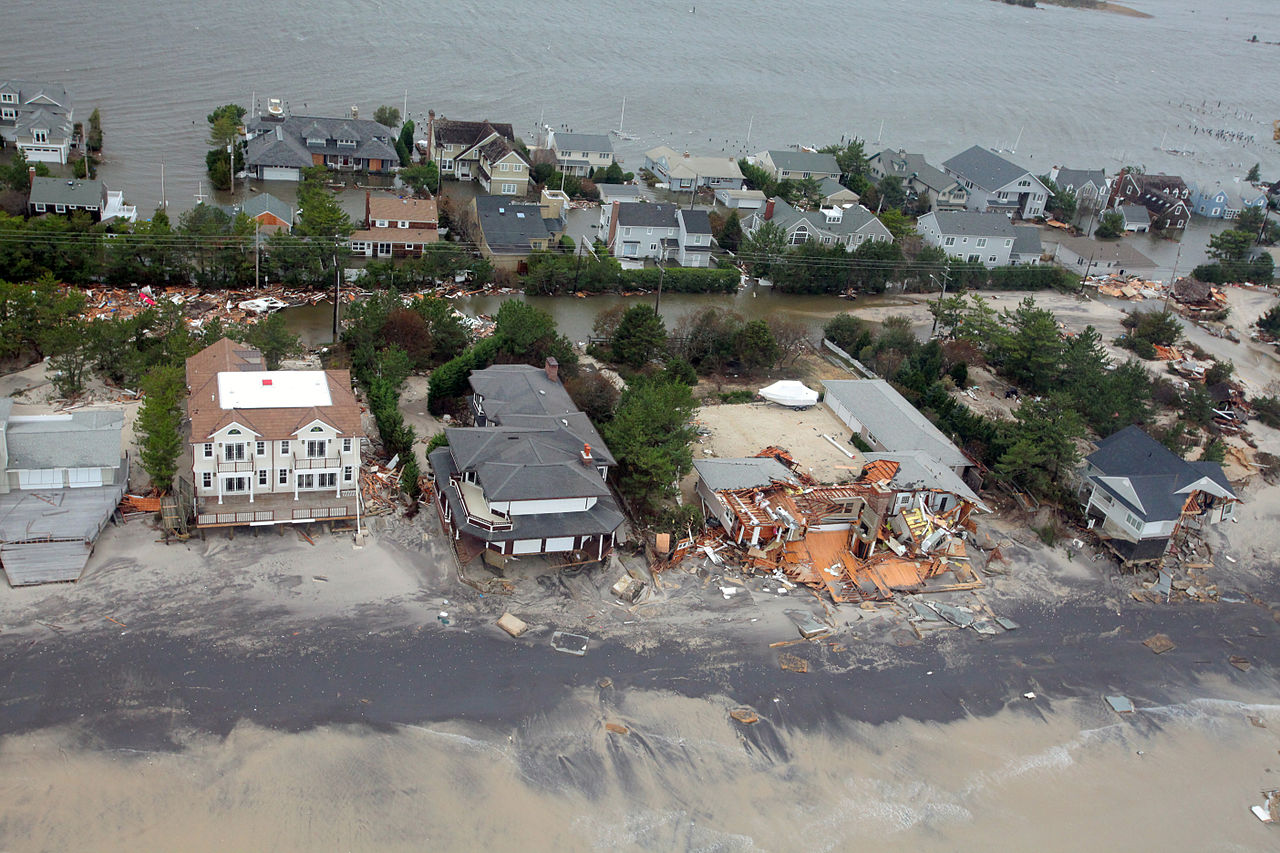
The authors begin by laying out the factors that might impact regional security such as rising sea levels, increased storm intensity, increased droughts and floods, and increased spread of disease and explain why they are a security threat.  For example, the authors state that global sea level rise has increased from 0.02 inches per year from 1950 to 2009, however it has increased 0.08 inches per year along the Atlantic Coast.  This is a security concern as large numbers of people and pieces of critical infrastructure are located in close proximity to coastlines with little to no protection.  To provide further evidence, hurricane Sandy smashed into the Northeast and the above discussed increased sea level helped make it the most expensive natural disaster in modern history. A second example is drought that has plagued the Southeast and Western parts of the nation pushing water resources to record lows.  The result has been increased State and Municipal tensions over increasingly scarce water supplies in regions with rapidly growing populations. The resulting experiences have shown the need to increase local, regional, and federal preparedness to weather related disasters, which will continue to worsen in the future.

The authors also explain why industrial accidents and resource shortages should be factored into the national security equation.  Certain industrial accidents—such as the BP New Horizon spill in the Gulf of Mexico—have the power to influence the economy and, by extension, the physical security of regions or nations by rendering an area inhabitable or economically unsustainable. Increased resource scarcity has already been identified as a factor for political instability and will continue to be so in the future.  The authors referenced food scarcity that triggered some Arab Spring revolutions in certain Middle Eastern countries and pushed existing politicians from power and installed new regimes. Finally, increasing environmental concerns have the potential to lead to increasing levels of regional instability and failed states that will only be exacerbated by continuing climate change.

Some steps are already being taken to address these issues such as the Quadrennial Defense Review and intelligence assessments; however more still needs to be done to fully implement environmental security into the national security apparatus. Recent events have shown that increasing environmental security is imperative to increasing both national and international security because global climate changes are not limited by borders and neither are the outcomes.

Image Credit: Wikimedia Commons


Ramsay, J., & O’Sullivan, T. (2013). There’s a Pattern Here: The Case to Integrate Environmental Security into Homeland Security Strategy. Homeland Security Affairs, 9(6).

Is the Islamic State the Biggest Threat Facing the U.S.?

By Erik Goepner

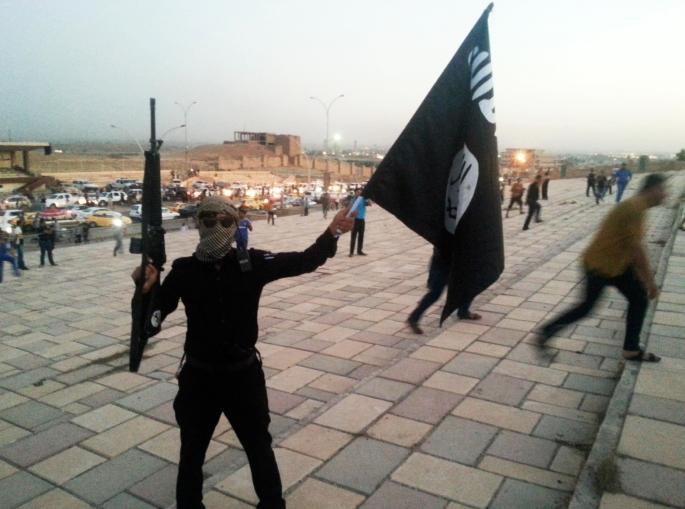
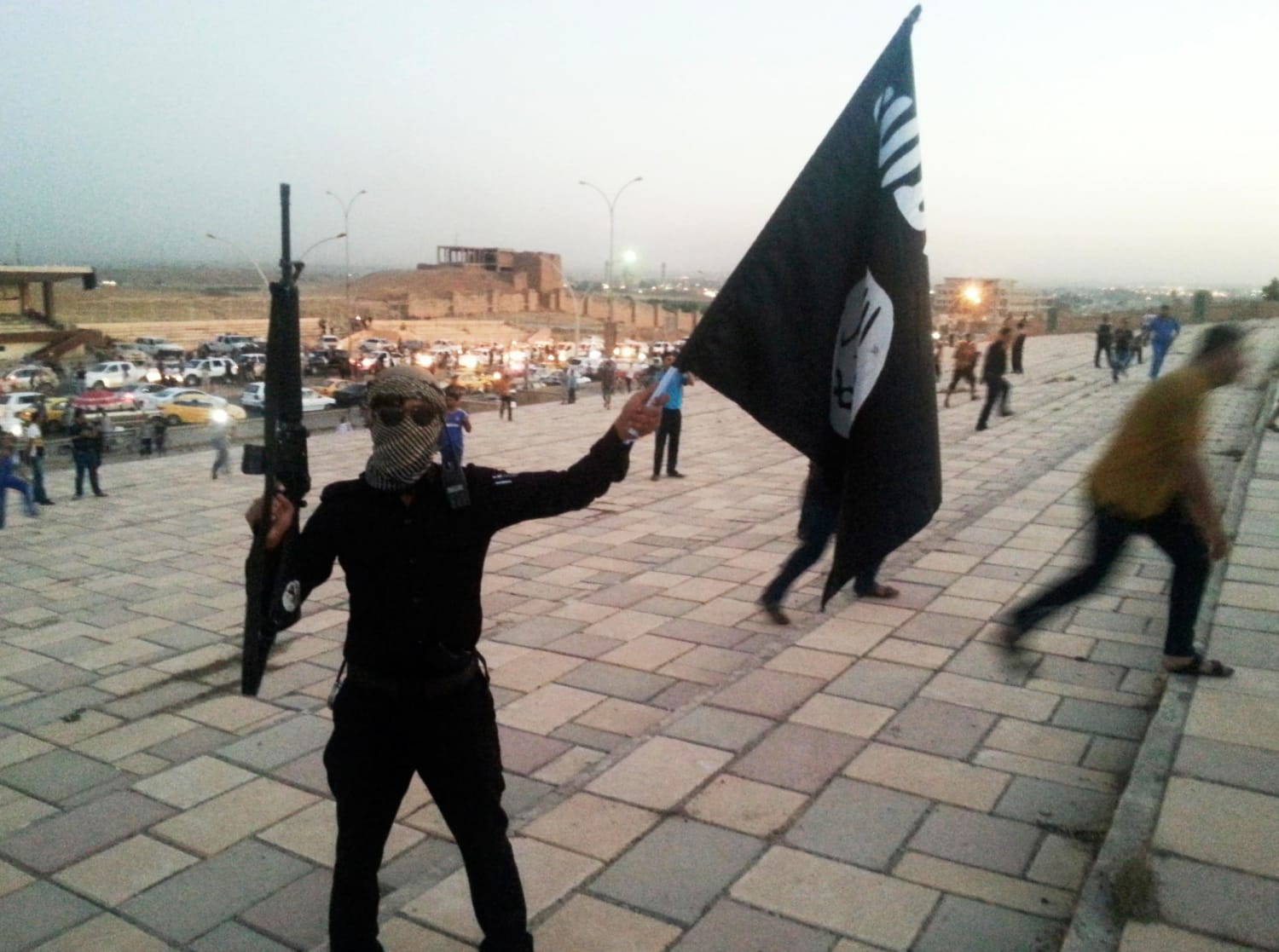
While the situation on the ground today remains largely unchanged to that of October last year, Americans assessing the IS threat as extremely important or critical has jumped from 36% to 84%. Might their grotesque killings and the free media advertising they receive in response explain much of the difference in threat perceptions?

Looking at the numbers, since September 10, 2001 three thousand forty-eight people have been killed by terrorists in America’s borders. If you exclude 9/11, that number drops to 51. In the 14 years before 9/11, 223 lost their lives at the hands of terrorists in the homeland.[1]

Though precisely determining the threat posed by the Islamic State is impossible, we can be more precise in defining why the threat concerns us. For many, the concern is death, more specifically a horrific death that comes as a surprise and leaves its victim feeling powerless. There is, however, no concern that the Islamic State could one day invade the U.S. or otherwise pretend to have a military force even remotely comparable to ours. They will always be Pop Warner to America’s Super Bowl winner. In the end, the concern is death.

One way, then, to compare the threat posed by the Islamic State with other threats is to look at what kills Americans. Including 9/11 and all terrorist attacks within the homeland since, an average of 234 lives have been lost per year. During the same time period, approximately 16,000 Americans have been murdered each year, 34,000 took their own lives, and more than 500,000 died annually from cancer. If you lengthen the timeframe to fifty years, the likelihood of being killed by terrorists in America roughly equates to the likelihood of being killed by a lightning strike or an allergic reaction to peanuts.[2]

Looking at the broader geo-political landscape provides another way to help place the threat of IS within the range of threats facing America. Perhaps Iran sits atop that list. On the Department of State’s list as a state sponsor of terrorism since 1984, their latest report, from 2013, notes Iran has “increased its presence in Africa and attempted to smuggle arms to Houthi separatists in Yemen.” These are the same separatists who recently overthrew the Yemeni government. Additionally, Iran is pursuing a nuclear program, peaceful or otherwise. Russia presents another potential threat.  In 2008, they invaded Georgia and in 2014 they annexed portions of Ukraine. Might a NATO country be next, such as Latvia, Estonia, or Lithuania? Other potential threats include China as it asserts its presence in the South China Sea and elsewhere, North Korea, or even America’s rising debt which may increasingly constrain future U.S. options.

Image Credit: Wikimedia Commons


[1] See UMD’s Global Terrorism Database.
[2] John Mueller, Overblown, see “The Limited Destructiveness of Terrorism” chapter.

Week in DC: Events

February 17, 2015 

Asia Conference: China in the Middle East
Date: February 17, 9:00am
Location: United States Institute of Peace, 2301 Constitution Ave NW, Washington DC

Some regional leaders and scholars express concern about the implications of greater Chinese influence while others argue for a greater Chinese contribution to regional stability. China could leverage its significant soft power to help resolve conflicts, for example. A recent Pew global poll found that China’s favorability rating in the region was higher than that of the United States. Beijing also maintains working relationships with a number of important governments that the United States shuns, such as Syria and Iran, and might consider contributing to the campaign to degrade and destroy ISIS in Iraq and Syria, given its own interests in combating Islamic terrorism.

This conference on China in the Middle East will evaluate China’s nascent regional role, implications for regional security, the reactions of other regional actors, and the impact on U.S. policy. Join the conversation on Twitter with #ChinaMidEast.

The conference is co-sponsored by the U.S. Institute of Peace and the Georgetown University Center for Security Studies, and made possible in part through the generosity of the Philip and Patricia Bilden Asian Security Studies Fund. (PDF Agenda)

RSVP here.

America’s Role in the World
Date: February 17, 11:30am
Location: Atlantic Council, 1030 15th Street NW, 12th Floor, West Tower, Washington DC

The United States faces unprecedented international challenges that together pose significant risks to global security and prosperity. Russia’s invasion of Ukraine, China’s coercive actions in the western Pacific, ISIS’ broadening reign of terror, and other simmering crises all point to the need for reinvigorated US and transatlantic leadership in the world. The demand for vigorous and sustained leadership across all of these fronts requires an effective articulation of a strategic vision, especially on America’s purposes and how it should seek to exercise its role in the world.

On February 17, the Atlantic Council will formally launch its new Strategy Initiative through the Brent Scowcroft Center on International Security. The Council is undertaking efforts to help the United States work with its closest allies and partners to lead in an increasingly complex and turbulent world. These projects will address strategic issues related to US leadership in the world and help catalyze a national debate on American strategy.

Former United States National Security Advisor General James L. Jones, Jr., USMC (Ret.) will provide keynote addresses on the importance of defining, articulating, and assessing America’s role in the world. The keynote address will be followed by a discussion with The Hon. James N. Miller and Mr. Stephen E. Biegun, moderated by Atlantic Council President and CEO Mr. Frederick Kempe. The discussants will address the range of views on America’s role in the world within the Democrat and Republican parties.

Watch live online here or register here to attend in person.

Conflict in Ukraine
Date: February 17, 12:00pm
Location: Carnegie Endowment for International Peace, 1779 Massachusetts Ave NW, Washington DC

The current conflict in Ukraine has spawned the most serious crisis between Russia and the West since the end of the Cold War. It has undermined European security, raised questions about NATO’s future, and put an end to one of the most ambitious projects of U.S. foreign policy—building a partnership with Russia. It also threatens to undermine U.S. diplomatic efforts on issues ranging from terrorism to nuclear proliferation. And in the absence of direct negotiations, each side is betting that political and economic pressure will force the other to blink first. Caught in this dangerous standoff, the West cannot afford to lose sight of the importance of stable relations with Russia. In Conflict in Ukraine, Rajan Menon and Eugene Rumer put the conflict in historical perspective by examining the evolution of the crisis and assessing its implications both for Ukraine and for Russia’s relations with the West.

Please join us for a conversation with the book’s authors, moderated by David Hoffman.  Conflict in Ukraine will be available to purchase, and a book signing will take place at the conclusion of the event. Lunch will be served.

Register here.

Countering Violent Extremism: What to Expect From the White House Summit
Date: February 17, 3:30pm
Location: The National Press Club, 529 14th Street NW, 13th Floor, Washington DC

Over a decade ago, the 9/11 Commission Report warned that, to counter terrorism, “our strategy must match our means to two ends: dismantling the al Qaeda network and prevailing in the longer term over the ideology that gives rise to Islamist terrorism.” The recent spate of terrorist attacks in Ottawa, Sydney, Peshawar and Paris, as well as the Islamic State’s brutal execution of several hostages, make clear that the ideology that spawned the 9/11 attacks continues to incite violence today.

To address this issue, the White House is hosting a Summit on Countering Violent Extremism. Join us for a preview of the summit and a discussion of what more can be done to prevent the spread of violent extremism.
Register here.

The Future of the Fight Against ISIL
Date: February 17, 4:00pm
Location: Atlantic Council, 1030 15th Street NW, 12th Floor, West Tower

Please join the Atlantic Council’s Brent Scowcroft Center on International Security for a special event with General John Allen, USMC (Ret.), the Special Presidential Envoy for the Global Coalition to Counter ISIL, to discuss what may lie ahead in the US-led fight against the Islamist group that straddles Iraqi and Syrian territory.

Ever since General Allen’s appointment in September, he has sought to “help build and sustain the coalition so it can operate across multiple lines of effort in order to degrade and ultimately destroy ISIL.” The coalition of over sixty countries currently contributes in “various capacities…in Iraq, the region, and beyond,” to achieve the stated strategy. How will the Coalition sustain the fight against the terrorist group? What role will the United States play as the Coalition broadens and deepens its efforts? Can the fight be ultimately won? And if so, how does the Coalition define success? To answer these and other questions, General Allen will join Atlantic Council President and CEO Fred Kempe on stage. This event will be on the record and open to press.

General John Allen is the Special Presidential Envoy for the Global Coalition to Counter ISIL. He was appointed September 16, 2014 by President Barack Obama. Allen is a retired US Marine four-star General and former Commander of the NATO International Security Assistance Force and US Forces in Afghanistan from July 2011 to February 2013. Upon his retirement from the US Marine Corps, he was appointed as the Senior Adviser to the Secretary of Defense on Middle East Security.
Register here to attend in person or watch live online here.

February 18, 2015

Yemen and Libya: The Middle East’s Other Civil Wars
Date: February 18, 9:00am
Location: Brookings Institution, 1775 Massachusetts Ave NW, Falk Auditorium, Washington DC

The conflicts raging in Syria and Iraq consume most of Washington and the international community’s attention, but civil wars in Yemen and Libya have brought both countries near total collapse. Houthi rebels continue to gain ground in Yemen and the security situation continues to deteriorate in Libya. Thousands have died, and terrorist groups are gaining strength. The United States and its allies have not stemmed this instability even as the violence spreads.

On February 18, the Center for Middle East Policy at Brookings will host a panel discussion examining the escalating violence in Yemen and Libya. Bringing together a panel of experts on Yemen, Libya and the neighboring region, the conversation will raise questions about what can be done to stem the violence and what counterterrorism implementations can be made.

After the program, the panelists will take audience questions.

Register here.

The Struggle for Iraq’s Future: Is it a Lost Cause?
Date: February 18, 9:00am
Location: American Enterprise Institute, 1150 17th Street NW, Washington DC

Reports on Iraq in recent months have been less than encouraging; the advance of ISIS, sectarian violence, and falling oil prices are just a few problems Baghdad faces today. But what exactly is happening on the ground? Is the situation in Iraq as grim as some report?

We welcome you to join AEI and the Institute for the Study of War for an event featuring experts who have just returned from meetings with government and military officials in Iraq. Panelists will provide their assessment of the situation and discuss whether there is an opportunity for the United States to revise its existing policy toward Iraq.

Register here to RSVP.

The Escalating Shi’a-Sunni Conflict: Assessing Arab Public Attitudes
Date: February 18, 9:30am
Location: The Stimson Center, 1211 Connecticut Ave NW, 8th Floor, Washington DC

Sectarianism has been a driving force of conflict in the Middle East for many years. From Iraq to Yemen, Syria, and Bahrain, conflict and confrontations between Shi’a and Sunni Muslims are on the rise. The emergence of extremist groups such as Al Nusra Front and the Islamic State has further deepened this divide. Each of these groups claims to offer the correct interpretation of Islam. In this tense climate, how do Shi’a and Sunni Muslims in the Arab world view each other?

The panelists will discuss the differences in beliefs and practices between the Shi’a and Sunnis globally and the extent to which members of each group accept the other as “Muslims.” The discussion will also examine differences in political opinions between the Shi’a and Sunnis.

Part of the conversation will present findings on religious tolerance, views toward the current governments, and the role religion should play in politics and international relations based on polling in Iraq, Yemen, and Lebanon.

RSVP here.

Russia/Eurasia Forum: Fiona Hill
Date: February 18, 12:30pm
Location: Johns Hopkins School of Advanced International Studies, The Rome Building, Room 535, 1740 Massachusetts Ave NW, Washington DC

Join the European and Eurasian Studies program for a discussion with Fiona Hill, director of the Center on the United States and Europe and senior fellow in the Foreign Policy program at the Brookings Institution, as she discusses the newest edition of her book (co-authored with Clifford Gaddy), “Mr. Putin: Operative in the Kremlin.”

RSVP here.

Pakistan’s Interior Minister on New Plans to Counter Terrorism
Date: February 18, 2:00pm
Location: United States Institute of Peace, 2301 Constitution Ave NW, Washington DC

Since the Peshawar school attack, which killed more than 150 people, including 134 children, the Pakistani government has pledged to make this the turning point, targeting terrorists of all types. A number of major steps have already been taken.

The country’s federal interior ministry, which has responsibility for addressing domestic terrorism, last year produced Pakistan’s first National Internal Security Policy. The new National Action Plan sets out further ambitious goals to curtail terrorist financing; coordinate intelligence sharing across federal, provincial, and military police and security agencies; and create dedicated counterterrorism forces, among other steps.

Will Pakistan be able to act upon these policy decisions, and will it be able to turn the corner in this long and bloody fight against terrorism? Interior Minister Chaudhry Nisar Ali Khan will assess Pakistan’s counterterrorism efforts and the challenges ahead.

RSVP here.

Mr. Putin: Operative in the Kremlin (and Abroad)
Date: February 18, 2:30pm
Location: Brookings Institution, Falk Auditorium, 1775 Massachusetts Ave NW, Washington DC

With recent events in Ukraine and beyond, many policymakers and foreign policy analysts are asking what motivates Russian President Vladimir Putin. What shapes his policy decisions and how he views the outside world?   Most importantly, officials in Washington and European capitals are left asking what Putin wants and how far is he willing to go. The great lesson of the outbreak of World War I in 1914 was the danger of misreading the statements, actions, and intentions of the adversary. Today, Vladimir Putin has become the greatest challenge to European security and the global world order in decades. Russia’s 8,000 nuclear weapons underscore the huge risks of not understanding who Putin is and what his aspirations are for himself and the people of Russia.

On February 18, the Center on the United States and Europe (CUSE) at Brookings will host a discussion with Fiona Hill and Clifford G. Gaddy, authors of the new and expanded edition of Mr. Putin: Operative in the Kremlin (Brookings Press, 2015). The authors will explore Putin’s motivations and methods and will dispel potentially dangerous misconceptions about Putin.

Thomas Wright, director of the Project on International Order and Strategy at Brookings will provide introductory remarks. Jill Dougherty, public policy scholar at the Woodrow Wilson International Center for Scholars, will moderate the discussion.  After the program, the authors will take audience questions and will be available to sign books following the event.  Join the conversation on Twitter at #MrPutin.

Register here.

Breaking the Cyber Information Sharing Logjam
Date: February 18, 3:00pm
Location: Atlantic Council, 1030 15th Street NW, 12th Floor, West Tower, Washington DC

Cybersecurity information-sharing has been stuck for years.  Anything more than narrow gains have proven elusive. However, the community involved in these efforts might be at the beginning of a new phase of cooperation.  Not only is Congress examining new legislation, but the White House has placed information-sharing on the top of the agenda for securing cyberspace.

Join the Atlantic Council’s Cyber Statecraft Initiative on February 18 from 3:00 p.m. – 4:30 p.m. for a moderated discussion on challenges and solutions for information-sharing, the Administration’s recent proposals for better practices between the private sector and government, and goal-directed approaches to sharing.

The event will be accompanied by the release of a report, which examines the challenges of information-sharing, the Administration’s emerging proposals, along with solutions to breaking the current logjam.

Register here to attend in person or watch live online here.

February 19, 2015

Examining the Syrian Perspectives on Local Ceasefires and Reconciliation Initiatives
Date: February 19, 12:00pm
Location: Johns Hopkins University-SAIS, 1619 Massachusetts Ave NW, Rome Building Auditorium, Washington DC

In the year since the Geneva II talks failed to deliver any discernible progress towards a resolution of the conflict, the humanitarian and security situation in Syria has further deteriorated. With a recalcitrant regime, growing extremism, and a faltering moderate opposition, support among Syrians for a broad-based, internationally negotiated settlement to the crisis has diminished significantly. Increasingly, Syrians only envision the conflict ending once their own side prevails. However, if there are any openings for negotiations, Syrians of all political persuasions and ethno-religious backgrounds tend to favor locally-based conflict resolution initiatives that could eventually lead to a Syrian-led national resolution.

On February 19th at noon, the Syria Justice and Accountability Centre (SJAC) and the Conflict Management Program at Johns Hopkins University School of Advanced International Studies (SAIS) invite you to attend the launch of a new report detailing Syrian perspectives on locally-based conflict resolution initiatives at the SAIS campus in Washington, D.C. “Maybe We Can Reach a Solution”: Syrian Perspectives on the Conflict and Local Initiatives for Peace, Justice, and Reconciliation marks the second phase of a comprehensive research initiative launched by SJAC to investigate the opinions of a diverse group of Syrians on the transitional justice process.  It supplements the findings of last year’s He Who Did Wrong Should Be Accountable: Syrian Perspectives on Transitional Justice report, and could shed valuable light on proposals such as the Aleppo ceasefire plan sponsored by UN Special Envoy for Syria Staffan De Mistura.

An accompanying panel discussion will highlight the opinions of ordinary Syrians regarding locally-brokered ceasefire and reconciliation efforts while providing an in-depth analysis of Syrian perspectives on conflict resolution since the collapse of Geneva II.  Copies of “Maybe We Can Reach a Solution” will be available for attendees upon conclusion of the event.

RSVP here.

The Trade-Security Nexus: Key Regulatory Cooperation Issues for 2015
Date: February 19, 2:30pm
Location: The Stimson Center, 1211 Connecticut Ave NW, 8th Floor, Washington DC

Governments increasingly see an opportunity — and an imperative — to advance national security and economic competitiveness as complementary goals. In its new National Security Strategy, the Obama administration pledges to “make it easier for businesses of all sizes to expand their reach” through a range of regulatory cooperation initiatives pursued with private sector and international stakeholders. Join us for a discussion on current efforts and potential next steps to make good on that pledge, both in North America and through agreements such as the Transatlantic Trade and Investment Partnership (T-TIP) and Trans-Pacific Partnership (TPP).

RSVP here.

Je Suis Charlie? Free Expression in the Aftermath of Paris
Date: February 19, 6:30pm
Location: New York University, Abramson Family Auditorium, 1307 L Street NW, Washington DC

On January 7, 2015 an attack on the Charlie Hebdo headquarters in Paris led to the death of twelve people. Following the attack, people from around the world united in defense of free speech, the foundation of democracy. The actions of a few have ignited discussions about how free societies can share different points of views, without fear of violence. Recently, in the United States, we have seen similar fractures in Ferguson and New York. How can integrated societies work through difference of opinions without resorting to violence, while ensuring the individual’s right to express their point-of-view. Are there limitations to freedom of speech?

RSVP here.

February 20, 2015

Commission of Inquiry on Human Rights in the Democratic People’s Republic of Korea: Lessons Learned
Date: February 20, 12:00pm
Location: Center for Human Rights and Humanitarian Law, 4801 Massachusetts Ave NW, Washington DC

Join the Center for Human Rights & Humanitarian Law for a panel discussion with the Honorable Michael Kirby and Ms. Sonja Biserko, esteemed members of the UN Commission of Inquiry on the Democratic People’s Republic of Korea (DPRK).

Appointed to serve on the Commission by the UN Human Rights Council in March 2013, Mr. Kirby and Ms. Biserko, along with their colleague Mr. Marzuki Darusman, investigated the systematic, widespread, and grave violations of human rights in North Korea, with a view to ensuring full accountability. The historic report, which was presented to the UN Human Rights Council in March 2014, documents wide-ranging and ongoing crimes against humanity.

Please join us in welcoming members of the Commission for a discussion about lessons learned based on their ground-breaking findings.

Pandora Report 2.15.15

It’s the last holiday weekend before the summer and its too cold to go outside! Don’t worry, we’ve got some good reading while you’re staying warm inside: antibiotic resistance, U.S. Troops leaving West Africa, a new vaccine for polio and LOTS of stories you may have missed.

Enjoy your Monday holiday and have a safe and healthy week!

Rivers Can Be a Source of Antibiotic Resistance

As the U.S. Government increases its funding to fight growing antibiotic resistance, a study coming out of the University of Warwick’s School for Life Sciences and the University of Exeter Medical School points to rivers and streams as a major source of antibiotic resistance in the environment. The study of the Thames River found that greater numbers of resistant bacteria existed close to some wastewater treatment plants and that these plants are likely “to be responsible for at least half of the increase observed.”

R&D Magazine—“The team also found that several other factors affected the prevalence of antibiotic resistance, such as changes in rainfall and land cover. For example, heavy rainfall at a point surrounded by grassland raised resistance levels; whereas a heavy rainfall at a point surrounded by woodland reduced the levels seen.”

U.S. Bringing Home Almost All Troops Sent to Africa in Ebola Crisis

The U.S. military is bringing home nearly all troops that were sent to West Africa 10 months ago in order to fight the Ebola outbreak. This withdrawal comes at a time where 700 homes in Sierra Leone were put under quarantine after a new case was diagnosed in Freetown. Quarantine seems like a smart move, since researchers have now confirmed that the virus can remain contagious on a dead body for up to a week. Despite troops leaving, testing has begun in Liberia for two potential vaccine candidates.

CNN—“[Pentagon press secretary Rear Adm. John] Kirby said about 100 military service members will remain in West Africa to support the 10,000 civilian responders who remain. These service members will “build on a strong military partnership with the Armed Forces of Liberia to enhance their Ebola response efforts and provide disaster response training to the government of Liberia,” he said.”

Synthetic Vaccine Sought to Finally Eradicate Polio

While, after six months of no new cases, Africa is close to wiping out wild polio, a team of international scientists are working to create a wholly artificial vaccine to combat the disease. The Bill and Melinda Gates Foundation and the World Health Organization are providing a $647,000 grant to create an entirely synthetic approach that will address shortcomings in the existing vaccine. This new vaccine would be entirely virus free.

BBC—“…the existing oral vaccine uses a weakened version of the virus as its stimulus to provoke a response and protection in the patient. And in just a few particular individuals, this can set up an infection in the gut that then enables a reactivated virus to pass out of the body and spread to other, unvaccinated people.

But if the virus particle has no genetic machinery this transmission route is closed, and the World Health Organization and the Gates Foundation is to fund the scientists to engineer just such particle for use as a replacement vaccine.”

Stories You May Have Missed


Image Credit: Wikimedia Commons

What threat does the Islamic State pose to America?

By Erik Goepner 

One way to assess the threat that IS poses to America is to see what the National Terrorism Advisory System (NTAS) says. To date, NTAS has issued no alerts regarding the terrorist threat from IS. Back in 2011, NTAS replaced DHS’ memorable color-coded system. It is also worth noting that in those intervening years, the NTS has apparently not issued any alerts about terrorist threats against the homeland.

Statements by government officials provide another way to assess the threat, and they do not appear to suggest IS presents a significant threat to America. The President’s National Security Strategy (NSS), published last week, notes that “the threat of catastrophic attacks against our homeland by terrorists has diminished but still persists.” The NSS goes on to refer to “an array of terrorist threats.” As for IS in particular, the NSS mentions them as one of several “regionally focused and globally connected groups” that “could” pose a threat to the homeland.

Rolling out the new NSS at the Brookings Institution last Friday, the National Security Advisor appeared concerned that threat concerns were being unnecessarily inflated by some. Ms. Rice cautioned, “We cannot afford to be buffeted by alarmism and an instantaneous news cycle,” as she characterized the threats as not existential.

Another estimate comes from the Department of Homeland Security Deputy Assistant Secretary for Counterterrorism Policy. This past December, he testified before a House subcommittee hearing on ISIS. His assessment? “At present, DHS is unaware of any specific, credible threat to the U.S. Homeland from ISIL.”

If Americans’ perception of the threat posed by the Islamic State substantially differs from the actual threat, our unconscious biases may have something to do with it. Ms. Rice potentially alluded to one—the availability bias—when she cautioned against alarmism and the instantaneous news cycle. The availability bias suggests people estimate the likelihood of an event based on how easily they can imagine it or remember a past occurrence. Since the sensational, yet uncommon, event is often of greater interest to the media, the public may hear more about unlikely events than they do common ones. In response, people overestimate the likelihood of rare events while underestimating the probability of common ones.[1]

Additionally, people tend to overstate threats they dread, even if the evidence indicates otherwise. The Islamic State’s gruesome videos of beheadings and the recent burning alive of the Jordanian pilot effectively evoke dread in many.

Potential biases notwithstanding, those responsible for assessing the threat and keeping the homeland safe indicate that the Islamic State could pose a threat to us, but at this time, IS does not pose a specific, credible or imminent threat.


Image Credit: The Knight Foundation


[1] See, for example, Morgan’s “Risk Assessment and Management.”

Pandora Report 2.7.15

Whatta week, right?! Let’s jump right in to the stories. We’ve got the Subway, flu forecasting, American chemical weapons, and stories you may have missed.

Have a great weekend and a safe and healthy week!

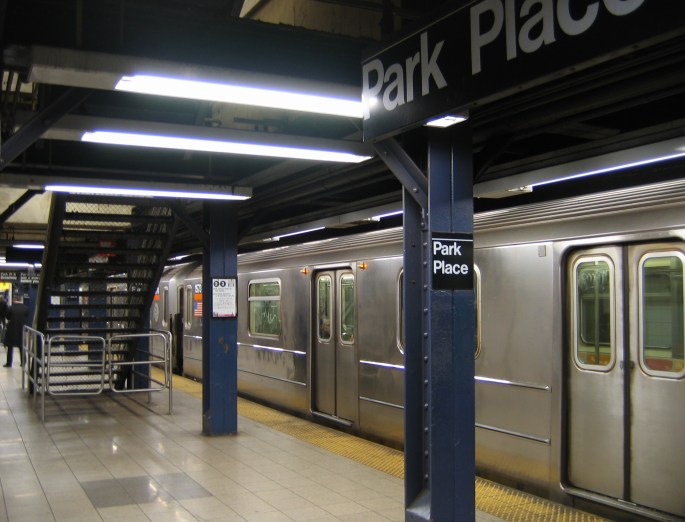
A Close Look at the Germs Crawling Around the Subway

Every single day I ride the metro to work, and every single day, the first thing I do when I get to the office is wash my hands. And, really, that’s what everyone should be doing. A research team from the Weill Cornell Medical College spent the summer of 2013 swabbing turnstiles, subway poles, kiosks, benches, and other “human penetrated surfaces” in all 466 NYC subway stations.

Gothamist—“And they found quite a few signs of life—15,152 types of DNA, in fact—nearly half of which they identified as bacteria. Shocking!

[They] did manage to find some scary stuff, with E. coli, Staphylococcus aureus (skin infections, respiratory disease and food poisoning), Bacillus anthracis (anthrax), and even Yersinia pestis, which is associated with the bubonic plague, popping up in some swabs. Nearly all the stations harbored an antibiotic resistant bacteria called Stenotrophomonas maltophilia, one that often causes respiratory infections in hospitals.”

Forecasts May Soon Predict Flu Patterns

What if we could predict the flu like we predict the weather? That is what teams of researchers are looking at; devising and testing methods to predict the start, peak, and end of flu season. How will they do this? By combining data from the present with knowledge of past patterns to project what might happen in the future.

The Boston Globe—“If the CDC had a flu-season preview in hand, the agency could better time messages on use of vaccines and flu-fighting drugs.

Hospitals could plan staffing for patient surges or make sure key personnel are not on vacation when it appears the epidemic will probably peak. Parents could even take flu forecasts into account in scheduling birthday parties and play dates.”

U.S. to Destroy Largest Remaining Chemical Weapons Cache

Syria isn’t the only country working on destruction of its chemical weapons cache. The Pueblo Chemical Depot, in Southern Colorado, will begin neutralization of 2,600 tons of aging mustard agent in March. This action moves towards American compliance with a 1997 treaty that banned all chemical weapons.

USA Today—“‘The start of Pueblo is an enormous step forward to a world free of chemical weapons,” said Paul Walker, who has tracked chemical warfare for more than 20 years, first as a U.S. House of Representatives staffer and currently with Green Cross International, which advocates on issues of security, poverty and the environment.”

Stories You May Have Missed


Image Credit: Wikimedia Commons

GMU Biodefense Published

Dr. Sonia Ben Ouagrham-Gormley, Associate Professor in the George Mason Graduate Program in Biodefense, has published a new book, Barriers to Bioweapons: The Challenges of Expertise and Organization for Weapons Development.

The New Scientist has reviewed it, and this is just one of the wonderful things they had to say:

Her fascinating book, Barriers to Bioweapons, also shows that anyone wanting to develop biological weapons faces a raft of other difficulties. Of the five main bioweapons programmes to date, their key feature has been their failures, not their successes. In a forensic and compelling analysis, she describes how the Soviet Union, the US, South Africa and the Japanese terrorist group Aum Shinrikyo, all fell well short, despite spending billions of dollars over decades

Click here to read the whole review or click here to purchase the book online.

Spring 2015 Biodefense Policy Seminar Line Up

The Biodefense Policy Seminars are monthly talks focused on biodefense and biosecurity broadly conceived. Free and open to the public, they feature leading figures within the academic, security, industry, and policy fields. Launched in the Spring of this year, the Seminars have been a tremendous success. Our Fall lineup features leaders from across the government and academic sectors, including Mahdi al-Jewari of the Iraq National Monitoring Authority, Dr. David Christian Hassell of the Department of Defense, and Dr. Gary Ackerman of the National Consortium for the Study of Terrorism and Responses to Terrorism (START).

Spring 2015 Biodefense Policy Seminars

February Seminar: Global Biorisk Management: The View from Iraq
Speaker: Mahdi al-Jewari, Head, Biology Department, Iraq National Monitoring Authority, Iraq Ministry of Science and Technology
Date: Thursday, February 19, 2015
Time: 6:00 – 7:30pm; complimentary food will be served at 5:30pm
Location: Merten Hall 1204, George Mason University, Fairfax, VA

Mr. al-Jewari currently serves as a Visiting Research Fellow in the Biodefense Program at George Mason University where he is conducting research on biorisk management policy and practice. He is on leave from the Iraqi National Monitoring Authority in the Ministry of Science and Technology where he is head of the Biological Department. The Iraqi National Monitoring Authority is responsible for overseeing Iraq’s implementation of its obligations under the Biological Weapons Convention and UN Security Council Resolution 1540. Mr. al-Jewari has served as the head of the Iraqi delegation to several BWC meetings. Mr. al-Jewari is the Ministry of Science and Technology’s representative to the National Biorisk Management Committee, an interagency effort to develop a comprehensive biosafety and biosecurity system for Iraq. Mr. Al-Jewari also serves as an expert for the UN Secretary-General’s mechanism for the investigation of alleged uses of chemical and biological weapons.

March Seminar: Combating Weapons of Mass Destruction – An Integrated Layered Approach
Speaker: Dr. David Christian Hassell, Deputy Assistant Secretary of Defense for Chemical and Biological Defense, Department of Defense
Date: Thursday, March 26, 2015
Time: 6:00 – 7:30pm; complimentary food will be served at 5:30pm
Location: The Hub Meeting Room 5, George Mason University, Fairfax, VA

HassellDr. David Christian “Chris” Hassell was appointed Deputy Assistant Secretary of Defense for Chemical and Biological Defense in the Department of Defense in 2014. From 2008 until 2014, he served as an Assistant Director of the Federal Bureau of Investigation (FBI) and Director of the FBI Laboratory. During his tenure, he led major efforts to expand the Laboratory’s role in national security and intelligence, including the Terrorist Explosive Device Analytical Center (TEDAC) and other technical areas related to weapons of mass destruction. In addition, he strengthened and streamlined FBI programs in traditional forensics, particularly in such rapidly evolving areas as DNA, chemistry and the use of instrumentation to augment pattern-based forensic techniques (e.g., fingerprints, firearms, and documents). He also led many engagements with international counterparts, with focus on enhancing counterterrorism interactions with “Five-Eyes” partners, as well as new technical collaborations in Asia, Latin America and with such key multilateral groups as the International Atomic Energy Agency (IAEA) and INTERPOL.

Dr. Hassell joined the Bureau from the Oklahoma State University Multispectral Laboratories, where he led Research, Development, Testing and Evaluation. He previously served as Assistant Vice President for Science and Technology at Applied Marine Technologies Incorporated. Prior to that position, Dr. Hassell led programs in analytical chemistry, instrumentation development, and nuclear weapons forensics at Los Alamos National Laboratory. During this time, he also served as a subject matter expert for chemical and biological weapons with the Iraq Survey Group in Baghdad. Earlier in his career, Dr. Hassell was a Senior Research Chemist at DuPont, developing online analytical instrumentation for chemical and bioprocess facilities for both research and manufacturing.

Dr. Hassell received his PhD in analytical chemistry from the University of Texas at Austin. He is a Fellow of the Society for Applied Spectroscopy and a member of the American Chemical Society and the International Association of Chiefs of Police.

April Seminar: Unconventional Methods for Assessing Unconventional Threats
Speaker: Dr. Gary Ackerman, Director, Unconventional Weapons and Technology Division, National Consortium for the Study of Terrorism and Responses to Terrorism (START)
Speaker: Date: Thursday, April 16, 2014
Time: 6:00 – 7:30pm; complimentary food will be served at 5:30pm
Location: Merten Hall 1202, George Mason University, Fairfax, VA

AckermanDr. Gary Ackerman is the Director of the Unconventional Weapons and Technology Division at the National Consortium for the Study of Terrorism and Responses to Terrorism (START). Prior to taking up his current position, he was Research Director and Special Projects Director at START and before that the Director of the Weapons of Mass Destruction Terrorism Research Program at the Center for Nonproliferation Studies in Monterey, California.  His research encompasses various areas relating to terrorism and counterterrorism, including terrorist threat assessment, radicalization, terrorist technologies and motivations for using chemical, biological, radiological, and nuclear (CBRN) weapons, and the modeling and simulation of terrorist behavior. He is the co-editor of Jihadists and Weapons of Mass Destruction (CRC Press, 2009), author of several articles on CBRN terrorism and has testified on terrorist motivations for using nuclear weapons before the Senate Committee on Homeland Security. Dr. Ackerman received an M.A. in International Relations from Yale University and a Ph.D. in War Studies from King’s College London.

The Islamic State as Insurgency: The Growing Strength of Salafi Jihadists

By Erik Goepner

Terrorists occupy the low-end of the power spectrum. They are weaker than guerrillas, who are weaker than insurgents, who are weaker than conventional armies, who are weaker than nuclear-equipped armies. That is a point made, more or less, by the Council of Foreign Relation’s Max Boot. Successful revolutionary, Mao Tse Tung,[1] made a similar point when he noted guerrillas are but a step towards total war and regular armies. Has the Islamic State, then, progressed the Salafi jihadist movement from the weak power position of terrorism to the mid-range power of insurgency?

RAND researcher, Seth Jones, defines a Salafi jihadist group as one that emphasizes the need to return to “pure” Islam during the time of the Salaf (“pious ancestors”) and believes that violent jihad is a duty of each member of the ummah, much like daily prayers, fasting during Ramadan, etc. Dr. Jones notes that between 2010 and 2013, the number of Salafi jihadist groups rose by 58%. Interestingly, the growth roughly coincided with the timing of U.S. surge operations in Afghanistan. At the end of that period, IS began seizing and holding terrain in Iraq and Syria, with some estimating they now control approximately 81,000 square miles, or the land mass equivalent of Great Britain. Professor Bruce Hoffman, author of the seminal work Inside Terrorism, suggests that while both insurgents and terrorists may use the same tactics, even for the same purposes, insurgents differ from terrorists in that they often operate as military units, seize and hold terrain, and include informational and psychological warfare in an effort to win over the population’s support.

If so, and if the Islamic State is winning over segments of the Iraqi and Syrian populations rather than just terrorizing them, then the problem set facing the U.S. would be substantially different. Terrorists can, in large measure, be defeated by police or military action, which the world’s premier military can accomplish unlike any other. If, however, IS now finds firm footing as an insurgency, broader issues must be tackled. Issues that can only be successfully resolved by the indigenous government—which we are not—or dictatorial occupiers—which we will not be.

Image Credit: NBC News


[1] See The Red Book of Guerrilla Warfare by Mao Zedong.

Week in DC: Events

February 2, 2015

Cyber Threat Intelligence Summit & Training
Date: February 2, 8:00am
Location: The Dupont Circle Hotel, 1500 New Hampshire Ave NW, Washington DC

Conventional network defense tools such as intrusion detection systems and anti-virus focus on the vulnerability component of risk, and traditional incident response methodology presupposes a successful intrusion. An evolution in the goals and sophistication of computer network intrusions has rendered these approaches insufficient for the threats facing many modern networked organizations. Advanced adversaries accomplish their goals using advanced tools and techniques designed to circumvent most conventional computer network defense mechanisms and remain undetected in their intrusion efforts or presence on networks over long periods of time.

Network defense techniques which leverage knowledge about these adversaries – known as Cyber Threat Intelligence (CTI) – can enable defenders to establish a state of information superiority which decreases the adversary’s likelihood of success with each subsequent intrusion attempt. Threat intelligence can be a force multiplier as organizations look to update their security programs and defenses to deal with increasingly sophisticated advanced persistent threats. Security managers need accurate, timely and detailed information to continuously monitor new and evolving attacks, and methods to exploit this information in furtherance of an improved defensive posture. Make no mistake about it: contemporaneous computer network defense contains a strong element of intelligence and counterintelligence that analysts and managers alike must understand and leverage.

The goal of this summit will be to equip attendees with knowledge on the tools, methodologies and processes they need to move forward with cyber threat intelligence. The SANS What Works in Cyber Threat Intelligence Summit will bring attendees who are eager to hear this information and learn about tools, techniques, and solutions that can help address these needs.

The theme of the summit in 2015 focuses on specific analysis techniques and capabilities that can be used to properly create and maintain Cyber Threat Intelligence in your organization. Most organizations know what threat intelligence is, but have no real concept on how to create and produce proper intelligence. Attend this summit to learn and discuss directly with the experts who are doing the CTI analysis in their organizations. What you learn will help you detect and respond to some of the most sophisticated threats targeting your networks.

Please note, this is not a free event. Course and cost information can be found here.

The Ukraine Crisis: Withstand and Deter Russian Aggression
Date: February 2, 2:00pm
Location: Atlantic Council, 1030 15th Street NW, 12th Floor (West Tower), Washington DC

Waging an undeclared war in the Donbas region, Russia is pursuing a ruthless effort to destabilize Ukraine. Given the stakes for relations between Russia and the West, the outcome of the conflict is also likely to shape future developments in Europe and the world at large.

So how can the crisis be resolved?

Eight distinguished US foreign policy scholars and former practitioners, five of whom travelled to Ukraine and Brussels, have produced a report entitled “Preserving Ukraine’s Independence, Resisting Russian Aggression: What the United States and NATO Must Do.”

The working group included Ivo Daalder, President, Chicago Council on Global Affairs, Michele Flournoy, Chief Executive Officer, Center for a New American Security, John Herbst, Director, Dinu Patriciu Eurasia Center, Atlantic Council,Jan Lodal, Distinguished Fellow and Former President, Atlantic Council,Steven Pifer, Senior Fellow, Brookings Institution, James Stavridis, Dean, Fletcher School of Law and Diplomacy, Strobe Talbott, President, Brookings Institution, Charles Wald, Board Director, Atlantic Council.

In the report, the experts summarize what they heard in discussions at NATO and in Ukraine and offer specific recommendations for steps that Washington and NATO should take to strengthen Ukraine’s defenses and enhance its ability to deter further Kremlin aggression.

Register here to attend in person or watch live online here.

February 3, 2015

Fighting ISIS: News from the Front Lines in Kurdistan
Date: February 3, 10:00am
Location: Johns Hopkins School of Advanced International Studies, 1717 Massachusetts Ave NW, Room 500, Washington DC

Aziz Reda, senior advisor to the President of Kurdistan and Mousa Ahmed Agha, deputy head, Barzani Charity Foundation will discuss this topic.

Register here.

“Yemen—If this is a policy success, what does failure look like?” with Ambassador Barbara Bodine
Date: February 3, 12:30pm
Location: Georgetown University, Edward B. Bunn, S.J. Intercultural Center, #270, 37th and O St NW, Washington DC

Last September, in announcing military operations against ISIS/ISIL, President Obama referred to Yemen as a US policy success, to the bafflement of many within and outside the country at the time. The jury was still out on our drone-dependent security/CT operations, the economy was in disarray and the political transition – a relative bright spot – was dimming. Recent events call the September judgment into even more question. What is really happening, and what does it mean for the US, the region, and the Yemenis?

Register here.

European Energy Security Challenges and Transatlantic Cooperation in 2015
Date: February 3, 1:30pm
Location: Atlantic Council, 1030 15th Street NW, 12th Floor (West Tower), Washington DC

Please join the Atlantic Council’s Global Energy Center for a public event featuring the European Commissioner for Climate Action and Energy, Mr. Miguel Arias Cañete, on Tuesday, February 3 from 1:30 p.m. – 2:30 p.m. at the Atlantic Council.

Commissioner Cañete is responsible for promoting diversity in the European Union’s energy needs and supplies and is working to establish a European Energy Union. As part of this, he is also tasked with ensuring that the EU achieves its climate and energy goals and further developing renewable energy.

At the Atlantic Council, Commissioner Cañete will focus on Europe’s energy security in a global context, and transatlantic cooperation on energy and climate issues.

Commissioner Cañete will be introduced by the Atlantic Council’s President and CEO, Frederick Kempe. After the Commissioner’s keynote speech, a discussion will follow between Commissioner Cañete and Ambassador Richard Morningstar, Founding Director of the Council’s Global Energy Center. The discussion will be moderated by David Koranyi, Director of the Eurasian Energy Futures Initiative at the Atlantic Council.

Register here to attend in person or watch live online here.

February 4, 2015

U.S. Intelligence Community Surveillance One Year After President Obama’s Address
Date: February 4, 12:00pm
Location: Brookings Institution, 1775 Massachusetts Ave NW, Washington DC

In January 2014, President Obama delivered a closely-watched speech addressing reforms to the surveillance and intelligence-gathering practices of the U.S. intelligence community including the National Security Agency (NSA). Debate surrounding surveillance has continued amid further releases of documents by the media and the intelligence community itself. Meanwhile, the Administration has been working to carry out the President’s directives and legal authority for certain surveillance programs due to expire in 2015.

On February 4, Governance Studies at Brookings will examine what has been done to implement the directives announced in President Obama’s January 2014 speech and their subsequent implications on privacy, civil liberties, competitiveness, and security. The conversation will focus on questions raised by the implementation of these reforms and changes to how the U.S. intelligence community conducts surveillance.

After the program, speakers will take audience questions.

Register here to attend in person or register here to watch online.

Russia/Eurasia Forum: Back in the USSR
Date: February 4, 12:30pm
Location: Johns Hopkins School of Advanced International Studies

Michael David-Fox, professor at the School of Foreign Service at Georgetown University will discuss the continuities and discontinuities in contemporary Russian history.

To register, email here. 

Countering Violent Extremism: Improving Our Strategy for the Future
Date: February 4, 2:00pm
Location: Brookings Institution, Falk Auditorium, 1775 Massachusetts Ave NW, Washington DC

The recent deadly attacks on the Charlie Hebdo offices and the Jewish market in Paris were sharp reminders of the continuing threat of violent extremism in the West. With similar attacks in Ottawa and Sydney, and a concerning number of Westerners moved to fight in Syria, preventing acts of violence by extremists has become a top priority. To help the United States and its allies move forward, the White House announced that it will host a Summit on Countering Violent Extremism on February 18.

On February 4, the Brookings Institution will host a discussion on the state of U.S. efforts to counter violent extremism and possible counterterrorism strategies for the future. Bringing together a panel of experts on counterterrorism and radicalization, the conversation will raise questions about the efficacy of the current U.S. approach, successful practices of counterterrorism programs both domestically and abroad, and strategies for countering violent extremism going forward.

Following the discussion, the panelists will take questions from the audience.

Register here.

Separate and Divisible: North Korea’s Supreme Leader and the North Korean People
Date: February 4, 3:00pm
Location: Institute of World Politics, 1521 16th Street NW, Washington DC

Mr. Jang Jin-sung, former North Korean propaganda poet, will address the role of propaganda in North Korea’s statecraft. Mr. Jang will also provide instruction on how to interpret North Korean propaganda. His presentation will also address the role of official propaganda as a shield insulating ordinary people from North Korea’s leader, Kim Jong-un.

Register here.

February 6, 2015

2015 Transatlantic Policy Symposium: Beyond Tariffs: Trade Relations and the Transatlantic Relationship in the 21st Century
Date: February 6, 8:15am
Location: Georgetown University, Copley Formal Lounge, 3700 O Street, Washington DC

Mega-regional trade agreements have dominated the recent international trade discourse. While the discussion of trade impacts tends to focus on technical details and regulation, trade agreements can produce widespread, and often unforeseen, effects on domestic economies, international relations and politics, security, as well as culture and identity.

Join our graduate student and expert panelists as they discuss and explore the implications of trade relations between the U.S. and Europe.

Register here.

China’s Rise: Implications for U.S. National Security and the Defense Budget
Date: February 6, 10:00am
Location: Brookings Institution, Falk Auditorium, 1775 Massachusetts Ave NW, Washington DC

China’s rise constitutes one of the great historical events of our time, and its implications for U.S. national security strategy and the U.S. defense budget remain key issues in Washington, as they surely will well into the future. Critical areas to explore include progress that China has made and challenges it has encountered in its economic and military development, as well as the effects of its rise on the region. These changes will likely have ramifications for the United States and its military, as President Obama’s “rebalance” strategy moves into its fourth year.

On February 6, the Center for 21st Century Security and Intelligence (21CSI) will host a discussion comprised of a group with expertise ranging from regional security matters to U.S. military policy to China’s economy. Panelists include Brookings Center for East Asia Policy Studies Director Richard Bush, Bernard Cole of the National War College, and David Dollar, senior fellow in the John L. Thornton China Center at Brookings. Michael O’Hanlon, co-director of 21CSI, will moderate the discussion.

Following discussion, panelists will take audience questions.

Register here.

February 7, 2015

Inside Media: Journalists Under Threat
Date: February 7, 2:30pm
Location: Newseum, Knight TV Studio, 555 Pennsylvania Ave NW, Washington DC

Joel Simon, executive director of the Committee to Protect Journalists, talks about his new book, “The New Censorship: Inside the Global Battle for Media Freedom.”

The book examines how journalists are increasingly vulnerable to attack by authoritarian governments, militants, criminals and terrorists, who all seek to use technology, political pressure and violence to set the global information agenda.

Simon has written widely on press freedom issues for publications including The New York TimesThe Washington PostColumbia Journalism Review, The New York Review and Slate, and is featured regularly on NPR, BBC and CNN.

A book signing will follow the program.

Free with Newseum admission. Seating is on a space-available basis.