Pandora Report 8.16.2024

This week’s Pandora Report discusses the recent mpox PHEIC declaration, updates on H5N1, and more.

World Health Organization Declares Mpox PHEIC

Mpox (formerly known as monkeypox) is a viral illness caused by the monkeypox virus, which is part of the genus Orthopoxvirus. Two clades exist (clade I and clade II). Clade IIb caused a global outbreak of mpox in 2022-23 that also resulted in a PHEIC (public health emergency of international concern) declaration. Now, the WHO has declared an outbreak of clade I mpox a PHEIC as case counts in the Democratic Republic of the Congo (DRC) and neighboring countries swell. 548 people have been killed by the disease in 2024, according to the DRC government.

WHO Director-General Tedros Adhanom Ghebreyesus made the declaration “on the advice of an IHR Emergency Committee of independent experts who met earlier in the day to review data presented by experts from WHO and affected countries. The Committee informed the Director-General that it considers the upsurge of mpox to be a PHEIC, with potential to spread further across countries in Africa and possibly outside the continent.”

Tedros said in a statement, “The emergence of a new clade of mpox, its rapid spread in eastern DRC, and the reporting of cases in several neighbouring countries are very worrying. On top of outbreaks of other mpox clades in DRC and other countries in Africa, it’s clear that a coordinated international response is needed to stop these outbreaks and save lives.”

According to WHO “The monkeypox virus was discovered in Denmark (1958) in monkeys kept for research and the first reported human case of mpox was a nine-month-old boy in the Democratic Republic of the Congo (DRC, 1970). Mpox can spread from person to person or occasionally from animals to people. Following eradication of smallpox in 1980 and the end of smallpox vaccination worldwide, mpox steadily emerged in central, east and west Africa.”
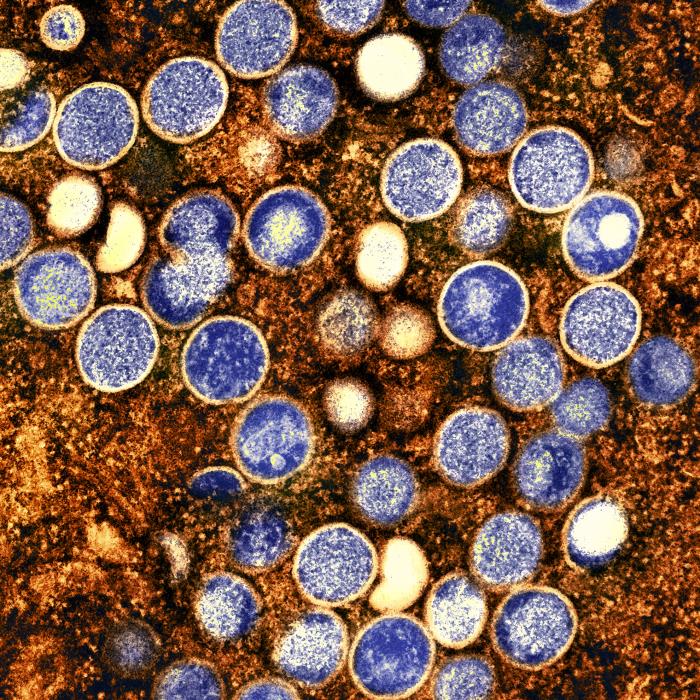
Image Credit: CDC PHIL| “This is a colorized transmission electron microscopic image of mpox virus particles (purple), which were found within an infected cell (brown), having been cultured in the laboratory. The image was captured and color-enhanced at the National Institute of Allergy and Infectious Diseases (NIAID), Integrated Research Facility (IRF), located in Fort Detrick, Maryland.”

Sweden Reports First Clade I Case Outside Africa, ECDC Raises Risk Alert Level

The Public Health Agency of Sweden reported on Thursday that the country has recorded the first case of mpox caused by clade I outside of Africa. Health and Social Affairs Minister Jakob Forssmed said in a news conference, “We have now also during the afternoon had confirmation that we have one case in Sweden of the more grave type of mpox, the one called clade 1.” State Epidemiologist Masnus Gisslen said in an official statement that the patient was infected while visiting “the part of Africa where there is a major outbreak of mpox clade 1.”

Following Sweden’s announcement, the European Centre for Disease Prevention and Control (ECDC) raised its risk level for mpox from ‘low’ to ‘moderate,’ for sporadic cases appearing in the EU. The agency also asked countries to maintain high levels of awareness regarding those traveling from affected areas. The ECDC says the overall risk to the EU population has gone up from “very low” to “low” and that it expects there will be more imported cases in the coming weeks.

United States Announces Further $424 Million in Assistance for the DRC

This week the US, through the United States Agency for International Development, announced “…nearly $424 million in humanitarian and health assistance to address the ongoing catastrophe in the Democratic Republic of the Congo (DRC). This includes $414 million in humanitarian assistance to support people experiencing persistent humanitarian needs resulting from conflict and displacement. This announcement, made in Kinshasa by the U.S. Ambassador to the DRC Lucy Tamlyn and U.S. Representative to the United Nations Agencies for Food and Agriculture Jeffrey Prescott, also includes an additional $10 million in health assistance to respond to the current mpox outbreak in the DRC and in other affected countries in the region. USAID is also donating 50,000 mpox vaccines to the DRC, which is the country most impacted by this outbreak.”

The statement later explained that “The United States is the largest provider of humanitarian assistance to the DRC and the largest bilateral donor to DRC’s health sector. This Fiscal Year, the U.S. provided more than $256 million in health assistance through bilateral programs including the President’s Emergency Plan for AIDS Relief (PEPFAR), the President’s Malaria Initiative (PMI), and the Global Health Security program, which enabled more than seven million people to receive lifesaving treatment for diseases including TB, HIV, and malaria.”

European Commission Coordinates Procurement and Donation of 215,000 Bavarian Nordic Doses to Africa CDC

The European Commission’s Health Emergency Preparedness and Respons Authority (HERA) announced on Wednesday that it “will procure and donate 175,420 doses of the MVA-BN® vaccine, the only FDA and EMA-approved mpox vaccine, as an immediate response to the mpox outbreak in Africa. In addition, the pharmaceutical company Bavarian Nordic will donate 40,000 doses to HERA. The Africa CDC will distribute the vaccines according to regional needs.”

The announcement came in response to Africa CDC’s call for the international community to assist in mobilizing two million vaccines to stop this outbreak. The Commission said in its statement that “Through the Africa CDC, these vaccines will be distributed to affected countries. Furthermore, HERA is in collaboration with the Africa CDC with the aim to expand access to mpox diagnostics and sequencing in the region, with a €3.5 million grant foreseen for early autumn.”

Bavarian Nordic Wins $157 Million Contract to Replenish US JYNNEOS Vaccine Supply

The Biomedical Advanced Research and Development Authority (BARDA) has reached an agreement with the Danish company Bavarian Nordic to “partly replenish” its stockpile of JYNNEOS vaccine following the 2022 mpox outbreak. This $156.8 million deal follows a similar one made last year by the US government totaling $120 million.

Further Reading

H5N1 Threat Persists but Remains Low

Despite the renewed focus on mpox, concern still remains about the spread of avian influenza globally, particularly H5N1, which has infected thirteen farmworkers in the United States so far this year. Despite the relatively low risk, Seqirus has begun producing and storing doses of its new vaccine targeting H5N1 in its facility outside of Raleigh, NC. In total, the company has agreed to produce 4.8 million doses in exchange for $22 million from the federal government. The government has also given Moderna $176 million to develop mRNA vaccines for influenza, including H5N1.

The CDC explained in a recent summary about its Influenza Risk Assessment Tool that “The current overall individual and population health risk to the general public posed by the avian influenza A(H5N1) virus presently spreading in cows, poultry, and other mammals remains low. Systematic comparisons of data related to this avian influenza A(H5N1) virus using the Influenza Risk Assessment Tool (IRAT) to data from other influenza A viruses has scored this virus’s future pandemic potential as “moderate risk” based on information through June 26, 2024. This is similar to previous assessments of earlier avian influenza A(H5N1) viruses.”

Furthermore, the WHO released an updated assessment on recent H5N1 events in collaboration with the Food and Agriculture Organization of the United Nations and the World Organisation for Animal Health. The assessment found that “At the present time, based on available information, FAO-WHO-WOAH assess the global public health risk of influenza A(H5N1) viruses to be low, while the risk of infection for occupationally exposed persons is low to moderate depending on the risk mitigation measures in place. Transmission between animals continues to occur and, to date, a limited number of human infections have been reported. Although additional human infections associated with exposure to infected animals or contaminated environments are likely to continue to occur, the overall public health impact of such infections at a global level is minor.”

DOD, NNSA Inaugurate New Supercomputing System Dedicated to Biological Defense

Earlier this month, the Department of Defense (DOD) and the National Nuclear Security Administration (NNSA) announced a new supercomputing system that is dedicated to biological defense at Lawrence Livermore National Laboratory. According to DOD, the Department “…is working with NNSA to significantly increase the computing capability available to our national biodefense programs. The collaboration has enabled expanding systems of the same system architecture as LLNL’s upcoming exascale supercomputer, El Capitan, which is projected to be the world’s most powerful supercomputer when it becomes operational later this year.”

“The biodefense-focused system will provide unique capabilities for large-scale simulation and AI-based modeling for a variety of defensive activities, including bio surveillance, threat characterization, advanced materials development, and accelerated medical countermeasures. DoD and NNSA intend to allow the U.S. Government interagency, International Allies and partners, and academia and industry to access the supercomputing capability.”

Learn more here.

Schumer Pledges to Block Any Senate Effort to Significantly Cut CDC Budget

Senate Majority Leader Chuck Schumer (D-NY) told The Associated Press this week that he would block any legislation from passing the Senate that proposes significant cuts to the budget of the Centers for Disease Control and Prevention (CDC). Schumer further said that such cuts “would wreak havoc and chaos on food safety funding mechanisms and tracking operations at a core level.” As the AP explains, “Democrats said the proposal in a House bill includes a reduction of the CDC’s proposed budget by $1.8 billion, or about 22%, that would harm public health. The Republican-led effort also would mean a major cut in programs designed to address firearm injuries and opioid overdose prevention.”

The House Appropriations Committee passed the measure on a party-line vote last month.
“AIxBio: Opportunities to Strengthen Health Security”

Aurelia Attal-Juncqua, Anita Cicero, Alex Zhu, and Thomas Inglesby recently authored this published this preprint on SSRN: “Artificial Intelligence (AI) has the potential to revolutionize biosecurity, health security, biodefense, and pandemic preparedness by offering groundbreaking solutions for managing biological threats. This landscape review explores recent advancements in AI across these fields, drawing from both grey literature and peer-reviewed studies published between January 2019 and February 2024. AI has demonstrated potential in predicting viral mutations, which could enable earlier detection of outbreaks, and streamlining resource allocation by analyzing diverse data sources. It could also play a crucial role in accelerating the development and deployment of medical countermeasures, such as vaccines and therapeutics. Additionally, use of AI may enhance laboratory automation, reducing human error and increasing biosafety. Despite these promising advancements, significant challenges and risks related to the potential misuse of AI, data security, and privacy concerns necessitate careful implementation and robust governance. This paper highlights the rapid progress and vast potential of AI in biosecurity, and provides key recommendations for U.S. policymakers to effectively harness AI’s capabilities while ensuring safety and security. These recommendations include expanding access to advanced computing resources, fostering collaboration across sectors, and establishing clear regulatory frameworks to support the safe and ethical deployment of AI technologies.”

“Emerging Biosecurity Threats in the Age of AI”

Suryesh K Namdeo and Pawan Dhar recently published this piece with IndiaBioscience: “As artificial intelligence (AI) enables the transformation of biology into an engineering discipline, an effective governance model that uses threat forecasting, real-time evaluation, and response strategies is urgently needed to address accidental or deliberate misuse. This article talks about the risks at the interface of AI and biosecurity and what could India do to better prepare for potential AI-biorisks.”

“2023 Biorisks, Biosecurity and Biological Disarmament Conference Report”

From UNIDIR: “To facilitate multi-stakeholder engagement around biological risks, biological security and biological disarmament, the United Nations Institute for Disarmament Research (UNIDIR), the United Nations Office for Disarmament Affairs (UNODA) and the World Health Organization (WHO) co-organized a stakeholder conference designed to bring together actors from civil society, academia and industry, as well as diplomats, to stimulate the exchange of ideas and thinking around how to build biosecurity and bolster biological disarmament.”

“The Biorisks, Biosecurity and Biological Disarmament Conference took place in Geneva, Switzerland, on 4–5 July 2023. The event provided an opportunity to discuss ongoing diplomatic processes and current and upcoming issues in the areas of biorisk, biosecurity and biological disarmament.”

“More than 80 individuals from 30 countries, representing 60 institutions, participated in the discussion in person, and a further 334 individuals joined the discussion virtually from around the world. The participants included diplomats, public health professionals, security experts and scientists from a wide range of organizations.”

“The Conference consisted of seven substantive panels, which explored a range of topics, centred on advances in science and technology and their related risks and benefits, biosecurity implementation, dual-use governance, disease response, international cooperation, and verification technologies. The discussions that took place during all seven panels are summarized in this conference report.”

“Launching the Global Biosecurity Accelerator at the Helsinki Biosecurity Dialogue”

Christopher East covers the launch of the Global Biosecurity Accelerator in this post from the Council on Strategic Risks, writing in part “This is a core driver of why CSR launched the Global Biosecurity Accelerator, of which the Helsinki Biosecurity Dialogue was the first multinational convening. The Global Biosecurity Accelerator’s mission is to accelerate global resilience to the full spectrum of biological threats— natural, accidental, or deliberate. In addition to promoting strong biosecurity strategies across nations, Accelerator events will raise insights from the range of actions that nations take—from enhancing biodefense, to embedding biosecurity in a whole-of-society approach, to One Health initiatives. Designed with interoperability and depth of defense in mind, CSR aims for the Global Biosecurity Accelerator to help jumpstart a ‘whole-of-globe’ approach to resilience against biological threats.”

“Russian Influence in Eastern Europe is Aggravating HIV Epidemic, Say Experts”

The Guardian‘s Kat Lay discusses the role of Russian propaganda in deterring people in eastern Europe from accessing necessary healthcare as AIDS deaths are up 34% compared to 2010. Lay writes in part, “Efforts to improve treatment and prevent infections are being hampered by Russian-linked propaganda against targets including opioid replacement therapy services, which reduce the risk of HIV infection among people using drugs, and the LGBTQ+ community…Meanwhile, “foreign agent” laws in a number of countries, following a pattern established in Russia, require charities and organisations receiving overseas funding to register and impose onerous reporting requirements. This has forced some charities to withdraw, a media briefing at the 25th international Aids conference was told.”

“Ebola: Ten Years Later – Lessons Learned and Future Pandemic Preparedness”

Krutika Kuppalli recently authored this post for PLOS Global Public Health‘s Speaking of Medicine and Health blog, writing in part “In early December 2013, a 2-year-old boy in the remote village of Meliandou, Guinea fell ill with a mysterious disease and succumbed to the illness a few days later.1 The disease spread rapidly, resulting in 49 cases and 29 deaths before being identified as the Zaire strain of the Ebola virus and officially declared an outbreak on March 23, 2014.2 Over the ensuing months, the outbreak spread to neighboring Liberia and Sierra Leone, with cases also emerging in Senegal, Nigeria, Mali, the United States and Europe.3 On August 8, 2014, the World Health Organization (WHO) Director-General declared the outbreak a Public Health Emergency of International Concern (PHEIC), the highest global health alert, signifying the outbreak posed a public health risk to other Member States and necessitated a coordinated international response.4 Despite global efforts to control the outbreak, it lasted for over two years, resulting in over 28,000 cases and more than 11,000 deaths by the time it was declared over on June 9, 2016.3 This crisis exposed significant weaknesses in global health systems, prompting a re-evaluation of pandemic preparedness and response strategies. A decade later, it is essential to reflect on the lessons learned from the West Africa Ebola crisis and their impact on current and future pandemic preparedness efforts. These lessons are outlined using the Health Emergency Preparedness and Response (HEPR) architecture developed by WHO, focusing on strengthening five core health emergency components: collaborative surveillance, safe and scalable care, community protection, access to countermeasures, and emergency coordination.”

“Déjà Vu All Over Again — Refusing to Learn the Lessons of Covid-19”

Michael S. Sinha, Wendy E. Parmet, and Gregg S. Gonsalves recently published this perspective piece in the New England Journal of Medicine, in which they explain “The spread of H5N1 avian influenza among cattle and other farm animals as well as to agricultural workers in the United States has raised concerns about the potential for an influenza pandemic. Although the threat of pandemic H5N1 doesn’t appear to be imminent — this variant has yet to show the potential to be transmitted from human to human — the federal government’s initial response suggests that, rather than heeding the lessons from Covid-19, elected officials and other key decision makers may be relying on a dangerous type of revisionism that could lead to more deaths, should H5N1 cause a pandemic.”

“The World Is Not Ready for the Next Pandemic”

Michael Osterholm and Mark Olshaker call for greater government investment in new and better vaccines in this Foreign Affairs article: “It is impossible to know when a new pandemic will arise, or which specific pathogen will be its cause. H5N1 is just one of the viruses that could mutate into something that will start a pandemic. But eventually, one will happen. It is therefore time to move away from vague recommendations and best practices to a far larger-scale program aimed at producing new and better vaccines, antiviral drugs and other countermeasures, and building the infrastructure at the scale needed to protect entire populations. Although such efforts will be costly, failing to take these steps could be catastrophic.”
NEW: AI and the Evolution of Biological National Security Risks

“In the wake of a global pandemic and rapidly advancing AI technologies, scientists and government leaders from around the world have sounded alarms about a changing biothreat landscape. Between dire warnings of more widely accessible bioterrorism capabilities, novel superviruses, and next generation bioweapons, how should policymakers and weigh the impacts of AI on biosecurity? Where are risks really changing, and where have they been overblown? What actions need to be taken now, and what emerging capabilities need to be monitored for future threats?”

“Please join the Center for a New American Security on Wednesday, August 21, from 10:30–11:30 a.m. ET for a panel discussion on these questions and more. Bill Drexel, Fellow in CNAS’s Technology and National Security Team, will be joined by leading biosecurity experts inside and outside government grappling with the nexus of AI and emerging biotechnologies.”

“This panel is part of CNAS’s AI Safety and Stability project, which aims to better understand AI risks and identify specific steps to improve AI safety and stability in national security applications. The event will build upon the project’s new report, AI and the Evolution of Biological National Security Risks: Capabilities, Thresholds, and Interventions in which Bill Drexel and Caleb Withers provide a clear-eyed overview of the emerging effects of AI on the biothreat landscape and propose actionable solutions to avoid the worst outcomes.”

This panel will feature Sonia Ben Ouagrham-Gormley, Associate Professor and Deputy Director of George Mason’s Biodefense Graduate Program, who reviewed and provided interviews to the report’s authors.

NEW-Safeguarding the Food Supply: Integrating Diverse Risks, Connecting with Consumers, and Protecting Vulnerable Populations – A Workshop

From the National Academies: “On September 4-5, the Food Forum will host a workshop that explores the state of the science around hazard- and risk-based approaches to safeguarding both domestic and global food systems. Workshop presenters will examine nutrition, economic, and equity implications in food safety decision-making, and considerations and strategies for communicating hazard and risk across sectors. The workshop will also include national and international perspectives on risk assessment and tools to mitigate risk, as well as opportunities for the future of risk management and assessment, food safety, and public health.”

Learn more and register for this virtual event here.

Assessing and Navigating Biosecurity Concerns and Benefits of Artificial Intelligence Use in the Life Sciences – August Information Gathering Meeting
From the National Academies: “This is the first in-person meeting of the consensus study, Assessing and Navigating Biosecurity Concerns and Benefits of Artificial Intelligence Use in the Life Sciences. The open session of this information gathering meeting will include initial briefings containing information relevant to study issues. The committee will also meet in closed session for project planning and review of topics and speakers for remaining meetings.”

This event will take place on August 13 and 14. Learn more and register here.
Call for Experts-Enhancing the Resilience of Healthcare and Public Health Critical Infrastructure

From the National Academies: The National Academies Forum on Medical and Public Health Preparedness for Disasters and Emergencies is seeking experts to participate in an upcoming workshop that will examine strategies, policies, and innovative actions to improve the resilience of health care and public health critical infrastructure to impacts from disasters and other emergencies.

Approximately 8-10 volunteer experts are needed to serve on the workshop planning committee. Expertise in the following areas is desired:

  • Healthcare operations and management
  • Public health, emergency management, and environmental health
  • IT, data science, and cybersecurity
  • Infrastructure systems, engineering, and supply chain
  • Risk assessment and mitigation
  • Insurances, cost management, and health economics
  • Community resilience and lived experience
  • Public policy

We are also collecting information for potential speakers, participants, and peer reviewers for any publications resulting from the activity.

Please submit nominations by August 23, 2024. For any additional questions regarding the workshop, please view the project page or email Shalini Singaravelu at SSingaravelu@nas.edu.

Learn more and submit nominations here.

Call for Experts-Potential Research Priorities to Inform Readiness and Response to Highly Pathogenic Avian Influenza A (H5N1): A Workshop

From the National Academies: The National Academies is seeking suggestions for experts to participate in a new workshop exploring research priorities to inform readiness and response to the ongoing Highly Pathogenic Avian Influenza (HPAI) A (H5N1) outbreak in the United States. Recognizing the interconnection between people, animals, and their shared environment, the workshop will take a One Health approach to bring together federal government agencies, the academic community, and the private sector, as well as other relevant stakeholders across the health, agriculture, and food safety sectors and will focus primarily on basic science and research questions of specific concern. 

Approximately 8-10 volunteer experts are needed to build a committee for a future workshop and any publications resulting from this activity. Expertise in the following areas is desired:

  • One Health and emerging infectious diseases
  • National, state, and/or local public health and medical readiness and response
  • Epidemiology and surveillance
  • Medical countermeasures (diagnostics, vaccines, therapeutics)
  • Agricultural and veterinary health and sciences
  • Food safety
  • Social sciences, risk communication, and community engagement
  • Modeling, risk assessment, and strategic foresight
  • Regulatory issues

Please submit nominations by August 30, 2024. For any additional questions regarding the forum, please view the project page or email Shalini Singaravelu at SSingaravelu@nas.edu.

Learn more and submit nominations here.

Pandora Report 12.15.2023

This week covers the FDA’s ongoing investigation into contaminated applesauce, the passing of Gao Yaojie-an activist responsible for bringing to light the extent of China’s AIDS epidemic-, and more.

Biodefense MS Graduates Riley Flynn and Sophie Hirshfield at GMU’s 2023 Winter Commencement Ceremony

FDA Leadership Says Tainted Applesauce Pouches May Have Been Intentionally Contaminated

Cinnamon applesauce pouches available Weis, WanaBanana, and Schnucks have been pulled from shelves after they were found to be contaminated with lead. Dozens of children in the United States have been sickened by the tainted products. Now, the FDA’s Deputy Commissioner for Human Foods, Jim Jones, says they may have been intentionally contaminated.

In an interview with Politico, Jones said “We’re still in the midst of our investigation. But so far all of the signals we’re getting lead to an intentional act on the part of someone in the supply chain and we’re trying to sort of figure that out.” All of the pouches in question were linked to a manufacturing facility in Ecuador that the FDA is currently inspecting.

‘“My instinct is they didn’t think this product was going to end up in a country with a robust regulatory process,” Jones said. “They thought it was going to end up in places that did not have the ability to detect something like this.”’

Politico further explained that “The FDA continues to investigate a number of theories for how the pouches became contaminated, and has not drawn any conclusions about the way the lead was added, why or by whom. The FDA says it currently believes the adulteration is “economically motivated.” That generally refers to ingredients being altered in order to make products appear higher in value, often so companies can produce a cheaper item and sell it at an elevated price.”

“The agency and the Centers for Disease Control and Prevention have collaborated with state and local health authorities as well as Ecuadorian authorities to trace the origin of the cinnamon in the applesauce pouches, which is believed to be the source of the lead contamination. More than 60 U.S. children under the age of 6 have tested positive for lead poisoning after consuming the pouches — some at levels more than 500 times the acceptable threshold for lead, according to The Washington Post.”

Gao Yaojie, Chinese Physician and Self-Exiled AIDS Activist, Dead at 95

Gao Yaojie, a gynecologist and well-known AIDS activist, died on December 10 in New York City. Gao, formerly based in China’s Henan province, was famous for her work to expose the outbreak of HIV/AIDS in the country in the 1990s and 2000s. The outbreak was large in scale and primarily driven by the country’s Plasma Economy, which arose because of restrictions on foreign imports of blood products in the 1990s. This resulted in blood plasma donation becoming a way for rural populations to make money in government-supported plasma donation centers. However, unsafe practices like repeated use of unsterilized needles and pooling multiple donors’ blood during the plasmapheresis allowed HIV to spread widely.

Because of the Chinese government’s efforts to suppress reporting on this epidemic, poor rural populations were left largely unaware of the dangers of plasma donation and the public in general was unaware of the severity of the crisis. Gao was one of the first to speak publicly about the outbreak, helping draw the attention of media outlets. She later told documentary filmmakers about her motivations for doing this, saying, “My driving thought is: how can I save more people from dying of this disease? We each only live one life.”

It is estimated that at least one million Chinese were infected with HIV during this epidemic, highlighting the importance of Gao’s and others’ bravery. For this, she garnered praise from the United Nations, several Western organizations, and even Hillary Clinton. This rising fame led to her being placed under house arrest in 2007, with about 50 police preventing her from traveling to the United States to accept an award recognizing her work. In response to this, she told NPR “I think they feel I got in the way of their political achievements and their official careers…Otherwise, why would they put me under house arrest? What law did I break to warrant mobilizing all these police?”

NPR further explained her activities later in life in their article on her passing, writing: “Despite pressure from Henan provincial authorities to stop publicizing the AIDS crisis, she continued her work, using all the proceeds from her books and pamphlets to support AIDS families, especially children orphaned by the disease or the many suicides that it caused.”

“Restrictions on her movement began hindering in work in China, however, and in 2009, she abruptly fled to the US, after fearing she would be put under house arrest again. Many admirers continued to visit her apartment in West Harlem, including a group of young Chinese students who kept her company in the loneliness of exile.”

‘”Many Chinese regarded her as a hero, and when they came to New York, if they didn’t know how to contact her , [sic] they would ask me. I would ask them for an email written in Chinese and would forward it to her. So far as I know, she always wrote back to those people and welcomed them to come visit,” remembers Andrew Nathan, a political science professor at Columbia University who handled much of Gao’s affairs in New York.”

“The Biological and Toxin Weapons Convention in 2023: Glimmers of Progress Set Against a Troubled Geopolitical Landscape”

Experts at CSR’s Nolan Center, including Biodefense PhD Program alumna and current faculty member Saskia Popescu, recently authored this blog post focused on the BWC’s potential for success in verification, universalization and effective implementation in Africa, and the creation of an International Agency for Biological Safety. They explain in their introduction: “For nearly two decades, efforts to strengthen the Biological and Toxin Weapons Convention (BWC) were in stasis, with opportunities missed and States Parties unable to agree to definite action. States Parties arrived at the Review Conference last year facing a growing biological weapons threat—augmented by rapidly converging complimentary technologies—coupled with a status quo in the BWC that was insufficient for the task. Yet nations drove a breakthrough: the consensus achieved at last year’s Review Conference proved that action is still possible despite the challenging international security environment.”

“In a world in which biological threats and vulnerabilities are exceedingly complex, there is a critical need to reinforce relationships among global experts, national governments, and civil society. Over the past two weeks, these stakeholders have met to identify, examine, and develop specific and effective measures to strengthen the Convention. An unwavering theme throughout the Meeting of States Parties underscored that preparedness and resilience are investments, rather than costs, reinforcing the deterrence by denial efforts CSR continues to promote. Although the challenging international security environment continues to hinder progress there are glimmers of genuine progress across several fronts…”

“Biosecurity in the Americas: Regional Threat Assessment”

A new from UMD’s START, co-authored by Biodefense MS Program alumna Alexandra Williams: “This publication, currently available in Spanish, provides a breadth and depth of focuses as a high-level assessment of the Central and South America regions and introduction to key topics as:

  1. The needed expansion of understanding of the differences and areas of collaboration between the concepts of biosafety and biosecurity,
  2. Existing international obligations to biosecurity through the BWC and UNSC Resolution 1540,
  3. How biosecurity applies to and may differ in application across a variety of facility types that engage in biological research or production, whether private or public laboratories, agricultural or university-based facilities,
  4. Biosecurity risks that include proliferation, bioterrorism, agroterrorism, and biocrime,
  5. The five pillars and mechanisms of biosecurity,
  6. Lastly, the application of biosecurity in the Central and South American regions.”

“NTI|Bio Convenes Workshop on Disincentivizing State Bioweapons Development and Use”

From NTI: “A week ahead of the Biological Weapons Convention (BWC) Working Group meetings in Geneva, Switzerland, NTI | bio convened a workshop on “Disincentivizing State Bioweapons Development and Use.” This two-day workshop on November 29 and 30 brought together academics, diplomats, biosecurity experts, and government policy makers to begin developing a cross-disciplinary thought and practice community to explore and develop potential disincentivizing solutions. Current thinking and policy on disincentivizing bioweapons acquisition and use is underdeveloped—especially by comparison with the nuclear security field.”

‘“We launched this effort because we see the need for more rigorous thinking on effective approaches to making bioweapons unattractive to nation-states,” said NTI | bio Vice President Jaime Yassif. “NTI’s goal is to bridge theory and practical policy-relevant approaches to develop new ideas that can invigorate international efforts to reduce biological threats.”’

Biodefense Graduate Program Director Gregory Koblentz and Associate Professor Sonia Ben Ouagrham-Gormley both participated in this workshop. Read more about it here.

“Great Powers and the Norms of the BW Prohibition Regime”

A new working paper from CBWNet: “The United States of America and the Soviet Union were instrumental in creating the biological weapons prohibition regime more than 50 years ago. This has left the regime with a big gap in its normative structure related to the verification of treaty compliance. The working paper by Alexander Kelle and Eva Siegmann analyses great power involvement in several areas of regime implementation and concludes that none of the great powers, including China, has supported the addition of declaration and inspection norms. While recent US and Chinese initiatives could still lead to a strengthening of the regime in different areas, Russian policies, most notably false accusations against the US and others, threaten to undermine the regime.”

“AI and Biorisk: An Explainer”

A new explainer from Georgetown’s CSET: “Recent government directives, international conferences, and media headlines reflect growing concern that artificial intelligence could exacerbate biological threats. When it comes to biorisk, AI tools are cited as enablers that lower information barriers, enhance novel biothreat design, or otherwise increase a malicious actor’s capabilities. In this explainer, CSET Biorisk Research Fellow Steph Batalis summarizes the state of the biorisk landscape with and without AI.”

“Bio X AI: Policy Recommendations For A New Frontier”

Jeffrey et al. discuss the work of the Federation of American Scientists’ Bio x AI Policy Development Sprint in this piece, explaining in their introduction: “Artificial intelligence (AI) is likely to yield tremendous advances in our basic understanding of biological systems, as well as significant benefits for health, agriculture, and the broader bioeconomy. However, AI tools, if misused or developed irresponsibly, can also pose risks to biosecurity. The landscape of biosecurity risks related to AI is complex and rapidly changing, and understanding the range of issues requires diverse perspectives and expertise. To better understand and address these challenges, FAS initiated the Bio x AI Policy Development Sprint to solicit creative recommendations from subject matter experts in the life sciences, biosecurity, and governance of emerging technologies. Through a competitive selection process, FAS identified six promising ideas and, over the course of seven weeks, worked closely with the authors to develop them into the recommendations included here. These recommendations cover a diverse range of topics to match the diversity of challenges that AI poses in the life sciences. We believe that these will help inform policy development on these topics, including the work of the National Security Commission on Emerging Biotechnologies.”

“Push to Improve Biosecurity in the Age of Genetic Engineering”

Wilmot James recently authored this opinion piece for Business Day, explaining in part “The possibility of using AI to develop bioweapons raises additional concerns, and remains uncharted territory. While the intersection of AI and biotechnology holds immense potential for positive applications in healthcare, research and diagnostics, it also poses risks if misused. AI algorithms could be employed to analyse vast genetic data sets and identify specific sequences for manipulation. This could accelerate the process of genetic engineering, allowing for the creation of more efficient and potentially harmful pathogens…To safeguard against such threats, multilateral and public-private sector agreements and regulations to govern the ethical use of AI in science, emphasising the prohibition of bioweapon development, should be established, with strong oversight committees responsible for assessing the ethical implications at the intersection of AI and biotechnology. These committees should include experts in AI, virology, bioethics and global health security.”

“Sounding the Alarm on Anti-Science”

Margaret Winchester provides background and overview of Peter Hotez’s latest book-The Deadly Rise of Anti-Science-in this piece for Health Affairs: “In his book, The Deadly Rise of Anti-Science, Hotez, professor and dean of the National School of Tropical Medicine at Baylor College of Medicine, and co-director of the Center for Vaccine Development at Texas Children’s Hospital, paints a bleak picture of public science denial during the pandemic, embedded in historic context. He tells the story of systematic anti-science efforts from his view in the trenches—and as a personal target for anti-science activists. This book, and his commentary in our December issue of Health Affairs on global lessons from COVID-19, highlight the very real effects of this movement, including lives lost, undermined public health efforts, foregone vaccinations, social schisms, and more, that will be felt for generations to come. As he writes, “anti-science now kills more Americans than global terrorism, or other deadly societal forces and social determinants.” Drawing from multiple sources, he estimates that approximately 200,000 people needlessly died in the US after COVID-19 vaccines became widely available.”

EU vs Disinfo Disinformation Review

The most recent edition of EU vs Disinfo’s Disinformation Review is now available and features multiple sections focused on Russia’s continued use of alleged US biological weapons laboratories as a bogeyman. Be sure to check it out for fantastic lines such as “If the only tool that you have is a hammer, everything looks like a biolab,” and “At a staged event, Putin mumbled out an announcement to veterans and the wider public that his regime would continue to rule over Russia after an orchestrated ritual not to be confused with an event known as an ‘election’ in the free world.”

2023 State of the Bioeconomy

From BIOISAC: “We have a lot to celebrate as we close 2023 and just over 12 months since the Executive Order calling for a safe, secure bioeconomy. Join us as we recap the activity, publications, outcomes, and – we will of course share a glimpse of the “behind the scenes” conversations from our 3 regional events and our one-day “Closing the Knowledge Gaps” event, our two-day table top training and the resulting “Going Viral: Bioeconomy Defense TTX” report, and, of course, the industry-demanded outputs from our hardware/software device security workgroup report and supplements, “Fortifying the Bioeconomy” as well as the Bioeconomy Security Questionnaire and Instrument Disposal Guide. We also have a lot left to do! We plan to share a few of our goals for 2024 and our upcoming regional events schedule.”

“Join us December 19th at 2pm Eastern-US for a live discussion.” Register here.

Presidential Advisory Council on Combating Antibiotic-Resistant Bacteria (PACCARB) Virtual Meeting

“The Presidential Advisory Council on Combating Antibiotic-Resistant Bacteria (PACCARB) provides advice, information, and recommendations to the U.S. Secretary of Health and Human Services (HHS Secretary). The council supports and evaluates U.S. government activities focused on fighting antimicrobial resistance (AMR) in human health, animal health, and environmental health. Using this One Health approach, members of the PACCARB have expertise from a range of backgrounds, including academia, industry, public health, advocacy, veterinary, and agricultural production.”

“The PACCARB was established under Executive Order 13676 and included in the Pandemic and All-Hazards Preparedness and Advancing Innovation Act of 2019 (PAHPAIA). Since 2019, the President has given authority to the HHS Secretary as the primary recipient of PACCARB recommendations. Additional information on the authority and activities of the PACCARB can be found on the About Us page in the charter.”

“As a federal advisory committee, the PACCARB looks to engage with the public and all AMR stakeholders. The council holds several public meetings every year both in-person and live streamed on the HHS.gov website. These meetings are open to anyone with an interest in combating AMR. See how to get involved!”

This virtual meeting will take place on December 20 from 9-4 EST. Learn more here.

61st ISODARCO Course: Nuclear Order and International Security after Ukraine

“The war in Ukraine has had an enormous impact on global security, reviving nuclear fears, undermining the prospects for arms control, and shattering many of the norms and constraints that were the foundation of European security.  ISODARCO 2024 will examine the global nuclear order in light of the Ukraine war, focusing on the states, the policies and the technologies that will shape the future in a much more difficult environment.  How will we cope with this more dangerous world?”

This course will take place January 7-14, 2024, at the University of Trento. Learn more and register here.

International Conference, CBRNE Research & Innovation

“The last 40 years have demonstrated that both military and civilian populations could be exposed to highly hazardous CBRNE agents following conflicts, natural outbreaks and disasters, industrial incidents or terrorist attacks.”

“Worldwide, researchers, responders and industrial capacities have been commited to provide adapted response to these challenges.”

“Building on the success of the first 5 International Conferences « CBRNE Research and Innovation » which took place in Antibes (2015), Lyon (2017), Nantes (2019), on line (2021) and Lille (2022), we want to give you a new opportunity to build up or strengthen collaborative networks in Strabourg (March 19th – 21rst 2024).”

“The CBRNE R&I Conference is specifically devoted to scientific updates, responders’ feedbacks and expression of needs. It also includes workshops and demonstrations of innovative materials, technologies and procedures, according to the following themes: DETECTION – IDENTIFICATION, PROTECTION – DECONTAMINATION, MEDICAL COUNTERMEASURES, RISKS & CRISIS MANAGEMENT.”

“Looking forward to your proposals for communication and to welcoming you at Strasbourg in March 2024!”

Learn more here.

Registration for GHS 2024 Now Open

Registration is now open for the Global Health Security 2024 conference in Sydney, Australia. This iteration will take place 18-21 June, 2024. The call for abstracts is also still open. “The mission of the Global Health Security conference is to provide a forum where leaders, researchers, policy-makers, and representatives from government, international organisations, civil society, and private industry from around the world can engage with each other, review the latest research and policy innovations, and agree solutions for making the world safer and healthier. To that end, our mission is to help foster a genuinely multidisciplinary community of practice that is committed to working collaboratively to enhance global health security and eliminate disease, irrespective of its origin or source.”

WHO Announces Proposed Members of Technical Advisory Group on Response Use of the Life Sciences and Dual-Use Research

The WHO recently announced its proposed membership of its Technical Advisory Group on Responsible use of the life sciences and dual-use research (TAG-RULS DUR). According to WHO, “As per WHO processes, there will be now a two-week public consultation period for WHO to receive feedback on the proposed TAG-RULS DUR members and set in place the modalities for the TAG-RULS DUR’s first meeting, which is planned to take place following this consultation period…The final membership to the TAG-RULS DUR is subject to the above-mentioned public consultation period and relevant WHO practices and procedures.”

The proposed membership and instructions for providing commentary on the individuals included are both available here.

Vote: 2023 Arms Control Person(s) of the Year Nominees

“Since 2007, the independent, nongovernmental Arms Control Association has nominated individuals and institutions that have, in the previous 12 months, advanced effective arms control, nonproliferation, and disarmament solutions and raised awareness of the threats posed by mass casualty weapons.”

“In a field that is often focused on grave threats and negative developments, the Arms Control Person(s) of the Year contest aims to highlight several positive initiatives—some at the grassroots level, some on the international scale—designed to advance disarmament, nuclear security, and international peace, security, and justice.”

Voting will take place between Dec. 8, 2023, and Jan. 11, 2024. The results will be announced on Jan. 12, 2024. Follow the discussion on social media using the hashtag #ACPOY2023.”

Learn about the nominees and vote here.

Pandora Report 12.7.14

I hope all of you had a wonderful Thanksgiving! There were a lot of stories to consider for this extra long (extra late) week in review. We cover the AIDS pandemic, Avian Influenza, Polio in Pakistan, and, of course, Ebola. For those of you in school, I hope your papers and exams aren’t too overwhelming! For everyone else, have a wonderful week, hopefully paper and exam-free week!

AIDS Campaigners Say Pandemic Has Finally Reached Tipping Point

A report released by the ONE campaign to mark World AIDS Day on December 1 said that “the world has finally reached “the beginning of the end” of the AIDS pandemic that has infected and killed millions in the past 30 years.” What is the tipping point? The number of newly infected HIV patients is lower than the number of HIV positive patients who have access to retroviral medications that keep AIDS at bay. However, this doesn’t mean the fight is over.

Reuters—“‘We’ve passed the tipping point in the AIDS fight at the global level, but not all countries are there yet, and the gains made can easily stall or unravel,” said Erin Hohlfelder, ONE’s director of global health policy.”

FAO, OIE Warn of Avian Influenza’s Rapid Spread

The Food and Agriculture Organization of the United Nations and the World Organization for Animal Health have warned that the new avian flu strain detected in Europe is similar to those found in Asia and pose a significant threat to the poultry sector. Evidence of H5N8 has been found in Germany, the Netherlands, and the United Kingdom, as well as China, Japan, and South Korea. So far, it doesn’t appear this strain is infecting people, however, this week there were reported human cases and deaths from H5N1.

The Poultry Site—“The new virus strain provides a stark reminder to the world that avian influenza viruses continue to evolve and emerge with potential threats to public health, food security and nutrition, to the livelihoods of vulnerable poultry farmers, as well as to trade and national economies. Therefore extreme vigilance is strongly recommended while progressive control efforts must be sustained and financed.”

Pakistan Polio Outbreak ‘Will Probably be Fixed Next Year’ says WHO Official

So far this year there have been 262 cases of polio detected in Pakistan, which is the highest number of cases in 14 years. Pakistan is one of only three countries in the world, including Afghanistan and Nigeria, where the virus remains endemic. Despite these numbers, a WHO official in Pakistan says the disease will “most probably be fixed in the first half of 2015.” Military campaigns around the country have not only made vaccination more difficult but have faced tribal militants who banned all vaccinations.

The Guardian—“Persistent public awareness campaigns have not fully quashed popular fears that the drops given to children – a solution of highly weakened polio virus – are part of a western conspiracy to make Muslims infertile.

The Pakistani Taliban have attacked and killed health workers who conduct door-to-door campaigns, forcing the government to mount massive security operations during major vaccination drives.”

This Week in Ebola

We’ve got a lot of news from the last two weeks, so today, let’s start stateside.

The CDC says you can stop worrying because it is very unlikely that Ebola will become airborne, so you can stop cancelling your African safaris. Ebola anxiety has left the U.S. buying up all the PPEs leaving little for workers in West Africa, while the Director of the Harvard School of Public Health Emergency Preparedness has said that U.S. quarantine policy could discourage volunteers from going to help the outbreak. However, recently, no one has been caught in quarantines entering New York and New Jersey airports. 35 American hospitals have been designated as Ebola centers and already the U.S. government is looking past Ebola for the next health disaster. Meanwhile, the first human trial of an experimental vaccine for the virus has produced promising results.

Overseas, the German airline Lufthansa adapted an A340-300 to transport Ebola patients. In Liberia, the President has banned election rallies and mass gatherings under the reasoning that they risk worsening the spread of the virus and Ebola moves out of the cities, it is ‘pingponging’ into rural areas. In Sierra Leone there are approximately 80-100 new cases of Ebola daily, they are running out of beds, and in protest of non-payment, burial workers are dumping bodies in public in the city of Kenema. One piece of good news coming out of this outbreak that has affected more than 16,000 people is that female genital mutilation is on the decline. Also, a new 15-minute test for Ebola is being tested in Guinea, which, if it works, will help medical staff identify and isolate Ebola patients sooner.

The UN warns that the longer the disease is allowed to spread unchecked in West Africa, the more likely it is that Ebola will appear in new places in the world but EcoHealth journal notes that closer study of zoonotic diseases could help prevent Ebola and other diseases from affecting humans. Don’t worry though, according to North Korea Ebola isn’t a zoonotic disease, it is a bioweapon created by the U.S.

Stories You May Have Missed


Image Credit: Free Internet Pictures