Pandora Report 5.6.2016

May has arrived, summer is upon us, and we’ve got your weekly biodefense scoop..Thursday was Hand Hygiene Day – don’t forget that clean hands save lives! Check out these wonderful infographics on the impact of vaccines on battling infectious diseases in the 20th century. A recent study published in the Journal of the American Medical Association (JAMA) found that 30% of oral antibiotics prescribed in U.S. outpatient healthcare facilities (urgent cares, etc.) are unnecessary. Hocking a loogie may now be a diagnostic method as researchers have found that people have saliva fingerprints. The study revealed that this new analysis could lead to non-invasive methods of disease detection. Think you know your chem-bio weapons? Take a quiz to see if your knowledge is expert level or if you need a review from anthrax to Zika. 

Potential Anthrax Attack Foiled in Kenya 
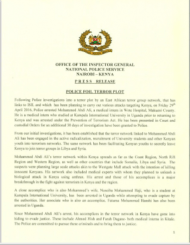
Screen Shot 2016-05-04 at 7.07.53 AM Kenyan police are claiming to have foiled a “large-scale” bioterrorism attack using anthrax. Three individuals associated with a terrorist group with links to ISIS were arrested. The terrorist group was not named but was noted to have a presence in Kenya, Somalia, Libya, and Syria. Police stated that “Mohammed Abdi Ali, a medical intern at a Kenyan hospital, was in charge of a ‘terror network… planning large-scale attacks akin to the Westgate Mall attack‘ in which 67 people were killed in 2013 in Kenya’s capital, Nairobi.” Mr. Ali is said to have a network that includes medical professionals who would have the tacit knowledge to develop anthrax bioweapons. The Kenyan police chief, Joseph Boinnet, posted the official documents on his Twitter. While there has been no additional information on the terrorist group or the details of their planned bioweapons attack, we’ll continue to keep you updated as more information is released.

Let Loose Your Inner Epi With EpiCore
Ramp up your epidemiology game with the EpiCore community. EpiCore is a joint effort from Skoll Global Threats Fund, HealthMap, ProMED, and TEPHINET. EpiCore is a virtual community that brings together epidemiologists using new surveillance methods. It’s “a new system that is finding and reporting outbreaks faster than traditional disease surveillance methods alone. EpiCore enables faster global outbreak detection and reporting by linking a worldwide member network of health experts through a secure online reporting platform.”

Whole Foods Salad Bar Attack
The FBI has recently arrested a man in Ann Arbor, Michigan, who poured a liquid onto items in the prepared foods bars. Reminiscent of the Rajneeshee attack in 1984, investigators are taking the situation very seriously. Authorities found that the man was spraying mouse poison in fresh foods at three Ann Arbor grocery stores. “According to the FBI, an investigation points to the man spraying a mixture of what is believed to be mouse poison, hand cleaner, and water on open food bars in three stores in the town over the last couple of weeks.” The FBI has also noted that the suspect had visited other grocery stores in recent months and they are currently investigating if those other stores were involved in the poisoning. Would you consider him a bioterrorist or prankster?

Is Texas A New Hot Zone?
Between Ebola and Zika, Texas hasn’t been able to catch a break from emerging infectious diseases (EID’s). The Center for  Strategic & International Studies (CSIS) discusses that the EID attraction to the Lone Star State really began back in 2003 with the first urban dengue fever epidemic in decades. Texas is also “now an epicenter of Chagas disease and leishmaniasis transmission in the United States (parasitic infections transmitted by kissing bugs and sandflies, respectively), as well as murine typhus (transmitted by fleas) and West Nile virus infection.” Many are wondering, why Texas? What makes Texas such a nexus for infectious diseases? CSIS points to several factors – poverty (large population + poverty rate around 16% = ranking one or two in terms of having the largest volume of people below the poverty line), urbanization (when combined with poverty, this rapid growth means the crowded poor neighborhoods are perfect for opportunistic disease), being a global commercial and migration hub (coastal gateway ports), and climate change. These four qualities have created the perfect blend for both emerging and neglected infectious disease presence in Texas. Fortunately, Texas has a strong emergency management system and heightened public health department investment and resources. While Ebola and Zika have surely reinforced preparedness practices in Texas, are they enough? You may remember in December, we recounted the Trust for America’s Health report on state specific preparedness for preventing, detecting, diagnosing, and responding to outbreaks. States were graded on a scale of 1-10 (10 being the best score). Interestingly, Texas was ranked right in the middle with a score of 5. Despite all their recent EID events, I’m surprised Texas is not ranked higher (Delaware, Kentucky, Maine, New York, and Virginia ranked highest with a score of 8). If Texas is the new epicenter of emerging and neglected infectious diseases, let’s hope their capabilities and capacity to respond to such diseases improves in the future.

Lessons Learned from TV/Movie Outbreaks
The CW recently began their new miniseries, Containment. While any show or movie on an outbreak instantly captures my interest, this one is particularly captivating for the same reasons as Outbreak – it’s so bad, it’s good. A recent ranking of the most plausible pathogen and zombie virus outbreaks in movies points to our affinity for outbreak movies with poor scientific backing. I’m a fan of watching these movies, and now Containment on Tuesday evenings, to see not just how wrong people can get outbreak response, but what they think the general public wants to see when it comes to a dramatic epidemic depiction. Did I mention the plethora of epidemiology/infection control faux pas? We’ve all watched a movie or show with a disease outbreak and picked out some ridiculous (and usually hilarious) blunders. The Pandora Report is now starting a list of ways the show demonstrates how NOT to stop/prevent an outbreak. We’re hoping to publish the list after the season ends and would love to include anything YOU find while watching it. Whether it’s the ridiculous infection prevention habits, over-the-top quarantine practices, or SWAT house calls, we want to know what you find while watching the show. Please email (spopesc2@gmu.edu) or tweet with #GMUBiodefense and we’ll incorporate them into our overall list.

Zika Updates
The WHO has released a one-year overview of the outbreak, pointing to the reasons why “an obscure disease became a global health emergency.” They emphasized the potential staying power of the virus and the challenges of diagnostic testing in the field. Many experts are predicting that once there is local transmission in the U.S., Zika virus will become endemic and a “constant low-level threat” requiring annual vaccination. The FDA has issued Emergency Use Authorization to approve the first commercial U.S. Zika virus test. “The Zika Virus RNA Qualitative Real-Time RT-PCR test from Focus Diagnostics, a Quest Diagnostics wholly-owned subsidiary, is a proprietary molecular test is intended for the qualitative detection of RNA from the Zika virus in human serum specimens.” Prior to this, all testing was done at specific laborites designated by the CDC and had limited availability to physicians. The availability of a rapid test will allow for more accurate and timely surveillance and diagnoses. Brazil has reported roughly 1,300 Zika-linked microcephaly cases.  Researchers are finding that mosquitoes infected with the bacterium, Wolbachia, may help stop the spread of Zika. “We are pretty sure that mosquitoes carrying Wolbachia will have a great impact on Zika transmission in the field,” said Luciano A. Moreira, a biologist at the Oswaldo Cruz Foundation in Belo Horizonte, Brazil, and the lead author of a new report on the researchers’ findings, published on Wednesday in the journal Cell Host & Microbe. There is also a growing concern about the potential impact the virus may have in the U.S. as researchers have found Zika in Asian tiger (Aedes albopictus) mosquitoes. This particular mosquito has a larger range within the U.S. and travels farther north. As of May 4, 2016, the CDC has reported 472 travel-associated cases in the U.S.

Stories You May Have Missed:

  • Ebola Survivor Household Contacts At Higher Risk – a recent study in Sierra Leone found that nearly half of household contacts of Ebola survivors contracted the illness. The risk of infection was correlated with level of exposure, but researchers also found that it varied by age. “The adjusted risk also varied by age: 43% for children under 2 years, 30% for those 5 to 14 years; 41% for those 15 to 19, 51% for adults 20 to 29 years, and more than 60% for adults over 30.”
  • Ebola Re-Emergence Involves Virus With Reduced Evolutionary Rate – A recent study found that the mutational rate has waned a bit in the Ebola virus that re-emerged in Liberia. Performing genomic comparisons of the virus in flare-ups, the research “team saw declining genetic divergence in the flare-up strains, perhaps due to diminished evolutionary rates in individuals with persistent infection. Still, the sequence data supported the notion that the flare-ups involved strains related to those in the main outbreak, ruling out re-introduction from a reservoir animal or transmission of distinct strains from active infections elsewhere”.
  • Chinese Espionage and Traded Nuclear Information –  a former Florida Power & Light manager is accused of trading nuclear information for cash to aid a Chinese nuclear power company. He was “recruited by Szuhsiung Ho, also known as Allen Ho, to help China General Nuclear Power Co. develop special nuclear material in China, according to the grand jury indictment.”


Enjoying your weekly dose of the Pandora Report? Sign up to receive it every week so the fun never ends! 

Pandora Report 1.22.2016

In anticipation of the impending snow apocalypse (that may be a tad dramatic, but coming from this Arizona import, this snow business is quite harrowing), we’re serving up a warm cup of global health security news. While you’re staying inside, check out the upcoming book from Sonia ShawPandemic: Tracking Contagions from Cholera to Ebola and Beyond, which travels through time to investigate the impact of emerging diseases. Dreaming of warmer temperatures? You may want to avoid some tropic locations as imported cases of Zika virus are cropping up in the US, and the CDC issued warnings for pregnant women to postpone travel to Mexico, Puerto Rico, and other affected countries. Fun History Fact Friday: as we learned last week, on January 19, 1900 the bubonic plague reached Australia’s shores and on January 20, 1981, the Iran hostage crisis ended.

Dugway Insights Raise New(-ish?) Biosafety Concerns
Dugway Proving Ground is one of the largest Army biodefense labs and while lab biosafety issues are becoming a more prevalent headline, new findings point to the severity of these failures. GMU Biodefense professor and graduate program director (and all around biodefense-guru), Dr. Gregory Koblentz, noted that “the systemic disregard for biosafety at Dugway as revealed by the investigative report is appalling and alarming. Without strong leadership, an organizational culture that prizes safety and security, a well-trained staff, and a robust oversight mechanism, we can expect more such accidents to occur in the future.” Lacking accountability and oversight, Dugway is another in the laundry list of labs that became complacent (or as Dr. Richard Ebright stated, their actions are that of “criminal negligence”). It seems that the time of calling these biosafety failures, “serious mistakes”, has passed and we’re sadly moving more into an era of habitual practice. Dugway is a hotspot (pun intended) for chemical and biological defense work however, findings within the report note improper qualification of certain employees, erroneous environmental sampling of labs, etc. Brigadier General William E. King IV oversaw Dugway from 2009-2011 and was directly called out in the report – “Colonel King repeatedly deflected blame and minimized the severity of incidents – even now, Brigadier General King lacks introspection and fails to recognize the scope and severity of the incidents that occurred during his command at (Dugway).” If you have around 26 minutes to spare, you can also watch the Army media brief on the investigations here.

food-production-chain-650pxFarmers Markets and Food Safety
Farmers markets are often a great place to find local, organic vegetables and fruits. Growing in popularity, it’s not surprising that concerns over food-borne illness and safety issues would be raised. Researchers (applied economists in this case) are reporting preliminary data regarding the potential association between farmers markets and food-borne illness. Reviewing data from 2004-2011, they found “a positive relationship between the number of farmers markets per capita on the one hand, and on the other hand, the number of reported outbreaks of food borne-illness, cases of food borne-illness, outbreaks and cases of Campylobacter jejuni. Our estimates indicate that a 1% increase in the number of farmers is associated with a 0.7% (3.9%) increase in the total number of reported outbreaks of food-borne illness (Campylobacter jejuni), and a 3.9% (2.1%) increase in the total number of reported cases of food-borne illness (Campylobacter jejuni) in the average state-year.” While these correlations were found, there wasn’t a statistically significant relationship between farmers markets and reported outbreaks or cases of salmonella, E. coli, or staph. Given the recent Chipotle outbreaks, there has been increasing attention to the concerns over farm-to-table food safety. While some illness can be related to farm safety practices, a lot of food-borne illness is related to improper handling or cooking of food.

Retaking Ramadi and the “Afghan Model”
GMU Biodefense student, Greg Mercer, has mined through the internet to provide some commentary on the recapturing of Ramadi from ISIS control. In his recap, Greg points to works in the New York Times, via authors Phil Ewing and Stephen Biddle, and several other security studies gurus. Greg notes, “many questions remain about the conflict- where it will go, how it will resolve, the political effort it will require from intervening forces, and ultimately what kind of conflict this is.”

Ebola Updates- Quarantines After Sierra Leone Death 
The day after the WHO declared the three hardest-hit countries Ebola free, a death in Sierra Leone hit the panic button for public health officials. As of January 21, 2016, a second case was reported in an individual that cared for this initial case. Over 100 people archive been quarantined after coming into contact with the woman who died of Ebola last week. During the course of her illness, she is reported to have stayed in a house with 22 other people. Five people later helped to wash and prepare her body for burial. Many homes of those high-risk patients under quarantine were attacked, pointing to increasing frustration. Close observation is being maintained on the 100+ people involved in this exposure.

Stories You May Have Missed:

  • The Neglected Dimension of Global Security – The National Academies Press will soon be releasing this hard-copy publication as a Framework to Counter Infectious Disease Crises, but the good news is that you can download it today for free! Authored by the Commission on a Global Health Risk Framework for the Future; National Academy of Medicine, Secretariat, it discusses the Ebola outbreak’s far-reaching consequences that range from human rights to transportation and commerce disruption.
  • CBRN Crimes & The Sordid History of Litvinenko – GMU Biodefense PhD alum, Dr. Daniel Gerstein, discusses the recently released Owen Report and the details surrounding the finding of radioactive polonium-210 in Russian agent, Alexander Litvinenko’s body following his death. The troubling details surrounding the report “highlights the links between Litvinenko and the Russian government, even pointing the finger at President Vladimir Putin himself as likely having approved the alleged murder.” While CBRN weapons are not a new concept, these new details may shine light on the realistic applications and threats they pose.
  • ISIS Tularemia Plans – Recent Turkish intelligence reports revealed that that the group had plans to use biological weapons. Aimed at Turkish water supplies, the report noted that the main bioweapon discussed was Francisella tularensis, which causes tularemia.
  • Lassa Fever Hits Nigeria – 30 confirmed, 140 suspected, and 53 deaths have been reported in the outbreak of Lassa viral hemorrhagic fever hitting 14 states within Nigeria. The case fatality rate is being reported at 37.9%.
  • Online Drama in the CRISPR Universe – a recent perspective article by Eric Lander (president of the Broad Institute) in Cell noted the heroes in CRISPR but failed to account for a potential conflict of interest. Needless to say, the Twitterverse erupted in a scientific outcry with many also calling out Lander’s failure to include several key contributors to the biotechnology.

Enjoying your weekly dose of the Pandora Report? Sign up to receive it every week so the fun never ends! 

Iran’s Shifting Preference?

By Scott McAlister

With the possible passage of the Iranian nuclear deal looming, it is important to look to possible consequences of the deal.  By taking away Iran’s ability to manufacture a nuclear weapon in the near future, how does that affect their overall desire to possess weapons of mass destruction?  In the world of WMD’s, the big three are nuclear, biological, and chemical weapons.  It can be argued that nuclear weapons are far above the other two, as they are the only one to cause enormous amounts of damage to a victim’s infrastructure and population.  It is true, a biological or chemical weapons attack isn’t going to take down buildings or level cities, but does that mean they don’t deserve to be feared?  Biological weapons can introduce susceptible populations to deadly pathogens, and can cause mass hysteria when released.  Biological weapons programs are also much easier to hide.  While having a nuclear reactor isn’t a dead give away for building a nuclear bomb, if you are enriching uranium past a certain point, it might send up some red flags (normal enrichment for energy is 3-5%, weapons grade is above 75%, records show Iran had enriched uranium past 20%.)  The scary thing about biological and chemical weapons programs is their ability to hide in plain sight.  Due the dual use of much of today’s biotechnological advancements, an offensive weapons program can be disguised as a facility to create vaccines or research centers for diseases with minimal effort.

This brings us to Iran.  If the deal passes, Iran will realistically be unable to produce a nuclear weapon for at least the next 10 years, loosing a vast majority of its nuclear fuel, decommissioning a majority of its centrifuges, and subjected to thorough inspections.  The question now is, does their inability to produce a nuclear weapon influence them to switch routes and invest in an offensive biological weapons program?  While some hold that nuclear weapons are a class above biological and chemical weapons, to others it’s the notion of possessing a WMD of any form that holds clout.  Does Iran view biological weapons as an equally effective way to convey their message to the outside world? Continue reading “Iran’s Shifting Preference?”

Pandora Report 7.26.15

Mason students are working through their summer courses and I’m happy to say mine is OVER! Let the summer begin (two months late)! This week we’ve got great news about Polio in Nigeria and a somber anniversary in Japan. We’ve also got other stories you may have missed.

Enjoy the rest of your weekend and have a great week!

A-Bomb Victims Remembered in Potsdam, Where Truman Ordered Nuclear Strikes

Coming up on the 70th anniversary of the atomic bombs being dropped on Hiroshima and Nagasaki, German and Japanese citizens in the city of Potsdam held a remembrance ceremony for both the victims that died in the blast and the future. Japan has become, according to the former President of the International Court of Justice, the world’s conscience against nuclear weapons and power. Why? Japan is “the only country in the world to have been the victim of both military and civilian nuclear energy, having experienced the crazy danger of the atom, both in its military applications, destruction of life and its beneficial civilian use, which has now turned into a nightmare with the serious incidents of Fukushima.”

Japan Times—“The Potsdam Conference was held between July 17 and Aug. 2 in 1945. The United States dropped an atomic bomb on Hiroshima on Aug. 6 and another bomb on Nagasaki three days later. On Aug. 15 that year, Emperor Hirohito announced to the nation that Japan had accepted the Potsdam Declaration, in which the United States, Britain and China demanded the nation’s unconditional surrender.”

Nigeria Beats Polio

Very, very, very exciting news: Nigeria has not had a case of polio in a year. A year! This makes Nigeria polio free and the last country in Africa to eliminate the disease. The achievement was possible with contributions from the Nigerian government (where elimination of the disease was a point of “national pride”), UNICEF, the WHO, the CDC, the Bill and Melinda Gates Foundation, Rotary International, and other organizations. With Nigeria’s accomplishment, there are only two other countries in the world where polio still exists—Afghanistan and Pakistan.

Voice of America—“Carol Pandek heads Rotary International’s polio program. She told VOA via Skype that a year being polio-free is a milestone for Nigeria, but noted that it is not over. “Now they need to continue to do high quality immunization campaigns for the next several years,” she said, as well as have a strong surveillance system so, should there be any new cases, they can be identified as soon as possible.”

Stories You May Have Missed


Image Credit: Fg2

Pandora Report 6.14.15

I’ve got brunch reservations this morning so the big story about the coming egg shortage is hitting close to home. We’ve also got a story about ISIS’ WMD and a bunch of stories you may have missed.

As a final reminder, the Early Registration Deadline for the Pandemics, Bioterrorism, and International Security is tomorrow, Monday, June 15. For more information and registration, please click here.

Enjoy the rest of your weekend!

Egg Shortage Scrambles U.S. Food Industries

The unprecedented outbreak of avian influenza in the U.S. has meant massive losses in the domestic poultry industry which has left experts warning that U.S. consumers are very likely to see an increase in egg prices. Cases of avian flu have been reported in 15 states, with Iowa and Minnesota being some of the hardest hit. “In Minnesota, the number of lost turkeys represent about 11 percent of our total turkey production…of the chickens we’ve lost that are laying eggs, 32 percent… have been affected by this” In Iowa, about 40 percent of the state’s egg-laying chickens and 11 percent of its turkeys have been affected. All these losses will mean a shortage of whole eggs and other egg-based products.

U.S. News and World Report—“Consumers haven’t felt the pinch too much just yet, but they are unlikely to emerge with their pocketbooks unscathed, [Rick] Brown [Senior VP at Urner Barry, a food commodity research and analysis firm]. He says two-thirds of all eggs produced in the U.S. remain in a shell, many of which are placed in cartons and sold in grocery stores. This stock of eggs has been hit significantly less by the avian flu outbreak than those used in the egg products industry, which Brown says encompasses “everything from mayonnaise to salad dressings to cake mixes to pasta to bread.”

Australian Official Warns of Islamic State Weapons of Mass Destruction

You may have already seen this, since this story was everywhere this week. Julie Bishop, Australia’s Minister for Foreign Affairs, said the Islamic State (ISIS) already has and is already using chemical weapons. Bishop made these comments in an address to the Australia Group—a coalition of 40 countries seeking to limit the spread of biological and chemical weapons. In a follow-up interview, Bishop also said that NATO was concerned about the theft of radioactive material and what that could mean for nuclear weapons proliferation.

The Washington Post—“‘The use of chlorine by Da’ish, and its recruitment of highly technically trained professionals, including from the West, have revealed far more seriou­s efforts in chemical weapons development,” Bishop said, using an alternate name for the Islamic State in a speech reported by the Australian. She did not specify the source of her information.  “… Da’ish is likely to have amongst its tens of thousands of recruits the technical expertise necessary to further refine precursor materials and build chemical weapons.’”

Stories You May Have Missed


Image Credit: Hannahdownes

Pandora Report 5.30.15

It was a slow-ish news week, this week with very few small stories but two huge ones about Chemical Weapons threats against airplanes and an inadvertent shipment of live Anthrax spores. We’ve also got a few stories you may have missed.

As a reminder, the Early Registration Deadline for the Pandemics, Bioterrorism, and International Security professional education course has been extended to June 15. For more information and registration, please click here.

Have a great weekend!!

U.S. Military Says It Mistakenly Shipped Live Anthrax Samples

It was a big story this week when live anthrax spores were inadvertently shipped from Dugway Proving Ground—an army facility in Utah—to 19 military and civilian labs across as many as nine states and an overseas site. The shipments were supposed to contain dead spores. Army and CDC officials have emphasized that these shipments pose no risk to the public and there are no suspected or confirmed cases of anthrax infections among lab workers.

NBC New York—“The Defense Department, acting “out of an abundance of caution,” has halted “the shipment of this material from its labs pending completion of the investigation,” [Pentagon spokesman Col. Steve] Warren said.”

FBI Looking Into Chemical Weapons Threats Against Planes

While many of us had a day off from work on Memorial Day, the FBI was investigating threats made against at least 10 flights claiming that chemical weapons were aboard the planes. These included a Delta Airings flight from London Heathrow, a United Airlines flight from Edinburgh, Scotland, and an Air France flight into New York that was escorted to the ground safely by two F-15 fighter jets.

NBC News—“The threats are not deemed credible, but the information has been passed along to the airlines anyway, out of an abundance of caution.

The male caller made threats against at least 10 flights in a quick series of calls to local police around the country. All but three planes have landed with nothing of concern found.”

Stories You May Have Missed


Image Credit: United States Government

Pandora Report 3.28.15

This week we’re covering a new treatment for inhalation anthrax, Russian nuclear threats, chlorine accelerating antibiotic resistance and other stories you may have missed.

Have a great week and see you back here next weekend!

FDA Approves Emergent BioSolutions’ Inhaled Anthrax Treatment

Considered one of the most likely agents to be used in biological warfare, Anthrax now has a new enemy—Anthrasil. This treatment, developed by Emergent BioSolutions Inc., neutralizes toxins of Bacillus anthracis and requires only two doses to confer immunity, versus the three of BioThrax (the current treatment for inhaled anthrax).

Reuters—“The company developed the treatment, Anthrasil, as part of a $160 million contract it signed in 2005 with the Biomedical Advanced Research and Development Authority (BARDA), a part of the HHS. Anthrasil, which is approved in combination with other antibacterials, is already being stored in the U.S. Strategic National Stockpile, the company said on Wednesday. The drug is made using plasma from healthy, screened donors who have been immunized with Emergent Bio’s Anthrax vaccine, BioThrax, the only FDA-licensed vaccine for the disease. Anthrasil has an orphan drug designation and qualifies for seven years of market exclusivity.”

Russia Threatens to Aim Nuclear Missiles at Denmark Ships if it Joins NATO Shield

Denmark has said that in August it will contribute radar capacity on some of its warships to NATO’s missile defense system. Russia has now threatened to aim nuclear missiles at Danish warships if Copenhagen goes through with its actions. Moscow opposes the system arguing that it reduces the effectiveness of the Russian nuclear arsenal and could lead to a new Cold War-style arms race.

The World Post—“‘We have made clear that NATO’s ballistic missile defense is not directed at Russia or any country, but is meant to defend against missile threats. This decision was taken a long time ago, so we are surprised at the timing, tone and content of the statements made by Russia’s ambassador to Denmark,” [NATO spokeswoman Oana Lungescu] said. “Such statements do not inspire confidence or contribute to predictability, peace or stability.’”

Chlorine Treatment Can Accelerate Antibiotic Resistance, Study Says

Research presented at the American Chemical Society meeting last week shows that chlorine treatment of wastewater may actually encourage the formation of new antibiotics—rather than eliminating the drug residues. While scientists are looking for new antibiotics, this isn’t good news. ACS says that upon re-entering the environment, the new drugs—in theory—can promote the growth of antibiotic resistant bacteria. In a test, doxycycline was exposed to chlorine; the results are described below.

Gizmodo—“The study evaluated the changes in the antibacterial activity of the products that form in the reaction between doxycycline and chlorine using antibiotic resistance assays. The results showed that some of the transformation products have antibiotic properties. The products of chlorination were also examined…and several chlorinated products were detected. These transformation products may still select for antibiotic resistant micro-organisms in the environment even in the absence of the parent doxycycline molecule. This suggests that re-evaluation of wastewater disinfection practices may be needed.”

Stories You May Have Missed

Image Credit: The U.S. Food and Drug Administration

Bio-error and Insider Threats: A Two-Pronged Hazard of Biodefense Research

By Chris Healey

Researchers may have been exposed to live anthrax bacteria during a laboratory procedure at the CDC in Atlanta sometime between June 6 and 13. A CDC statement said established safety practices were not followed in that incident.

A follow-up statement by the CDC said risk assessment evaluations have determined anthrax exposure was unlikely. Most of the CDC employees involved have been advised to stop antibiotic and vaccine administration.

This scare marks the second anthrax mishap in little over a decade. In 2004, Scientists at Southern Research Institute in Frederick, Maryland inadvertently shipped live anthrax to colleagues in California who were expecting dead specimens.

Laboratory mistakes involving pathogens, dubbed “bio-error,” has recently acquired much media attention. To date, there have been no confirmed instances of bio-error causing illness outside the laboratory. However, another laboratory threat has materialized, one which resulted in infection and several deaths outside the laboratory almost 14 years ago.

Insider threats, or the potential for laboratory workers to exploit the dangerous material they work with to harm others, present a precarious laboratory safety problem.

Laboratory insider threats became salient after the FBI’s investigation of Bruce Ivins, a microbiologist with the United States Army Medical Research Institute for Infectious Diseases at Fort Detrick, Maryland, as the suspect of the 2001 Anthrax letter attacks. Ivins worked with the anthrax strain he allegedly mailed across the United States.

Researchers working with select agents must register with the FBI and maintain a security clearance. The same requirement stood when Ivins began his work on live anthrax.

Following Ivins’ implication, a U.S. National Research Council committee and the National Science Advisory Board for Biosecurity reviewed researcher fidelity protocols and determined revision was unnecessary. No changes to the rigor or frequency of character and fitness standards for those who work with select agents were made.

Researchers working on nuclear and radiological material are subjected to more stringent evaluations. In addition to FBI registration and security clearance maintenance, random drug testing, observations of off-duty behavior, video monitoring of laboratory activity, and annual psychological assessments are required.

Those additional fidelity evaluations have contributed to the lack of incidents among nuclear and radiological researchers. There is no known instance of a nuclear or radiological research insider causing public harm.


Image Credit: CDC

Pandora Report 7.4.14

I have to offer my apologies and my thanks. Please let me apologize for the lack of Pandora Report and the light coverage on the blog over these past two weeks. The month of June was absolutely insane between work and summer courses. Fortunately, all that craziness is finally over, so let me thank you most sincerely for your patience and understanding. With this special July 4th edition of Pandora Report, please consider things around here back to normal.

Now, onto the news!  Highlights include Syrian chemical weapon disarmament, the arrival of Chikungunya to the U.S., an anthrax incident at the CDC, an Etihad Airlines based polio campaign, and Ebola devastation in West Africa.


Syrian Chemical Weapons Transfer Complete

Earlier this week, the Pentagon reported that the transfer of Syrian chemical weapons, from a Danish cargo ship to the U.S. vessel that will neutralize and destroy the weapons, is complete. The weapons and associated materials were transferred to the Cape Ray, which will travel from Italy into international waters where the weapons will be dismantled and neutralized. The Pentagon press secretary Rear Admiral John Kirby reported that the process should take several weeks to complete.

Al Arabiya News—“The disposal process marks the culmination of a program to rid Syria of its chemical weapons stockpile after the outcry that followed chemical attacks by the Bashar al-Assad regime in the suburbs of Damascus on August 23 last year, that may have killed as many as 1,400 people.”

Polio Awareness Videos to be Shown on Flights to Pakistan

Much of my month of June was spent at Dulles airport, so I might be more excited about this story than your average person, but get ready for the coolest news story you have likely ever read about an airline! United Arab Emirates based Etihad Airlines, in response to the polio epidemic in Pakistan, will show a short in-flight movie on all their flights to Pakistan. Etihad said that the goal of the movie, titled “Leap of Faith,” is to raise awareness about “this crippling and potentially fatal disease among thousands of Pakistani workers returning home to visit their families.”

Business Standard—“‘By showing this engaging story on board our flights, Etihad Airways is supporting the efforts of the UAE in helping to eradicate polio in Pakistan,” said James Hogan, President and Chief Executive Officer of Etihad Airways.

Asif Durrani, Pakistan Ambassador to the UAE, said, “With approximately 1.25 million expatriate Pakistanis in the UAE, this is a perfect opportunity to educate our people during their journey home and ultimately help in the overall eradication of this terrible disease in our country.’”

CDC Reassigns Director of Lab Behind Anthrax Blunder 

According to the Centers for Disease Control and Prevention, sometime between June 6 and 13, up to 84 lab employees at the headquarters in Altanta, were possibly exposed to anthrax. The possible exposure, which was caused by technicians not following laboratory protocol, resulted not only in employees taking powerful antibiotics as prophylactics but also in the reassignment of the head of the Bioterror Rapid Response and Advanced Technology Laboratory, Michael Farrell, while the incident is investigated.

Reuters—“CDC spokesman Skinner on Sunday said the bioterror lab sent the anthrax bacteria to other labs in closed tubes. The recipients agitated the tubes and then removed the lids, raising concerns that live anthrax could have been released into the air.”

Mosquitos Carry Painful Chikungunya Virus to Americas

Chikungunya, a viral disease spread by the same mosquitos that spread Dengue fever, has made its way to the Americas. Fortunately, the type of mosquito that spreads the viruse, the Aedes aegypti, is not native to the United States. However, its close breed “cousin” Aedes albo, lives as far north as Chicago and is believed to be able to spread Chikungunya.

National Geographic—“There is no vaccine or medication that can change the course of the disease, though patients are given painkillers and told to drink a lot of fluids….To avoid getting chikungunya while staying in affected areas, take the usual precautions against mosquitoes: Wear long sleeves, use repellents, and keep outside areas free of standing water where mosquitoes can breed.”

West Africa Ebola Epidemic is ‘Out of Control’

With a current death count of 467, the Ebola outbreak affecting Guinea, Sierra Leone, and Liberia has become dire. Doctors without Borders’ (MSF) Director of Operations said “the epidemic is out of control.” He continued, “we have reached our limits. Despite the human resources and equipment deployed by MSF in the three affected countries, we are no longer able to send teams to the new outbreak sites.”

The Huffington Post—“The outbreak of the deadly disease is already the largest and deadliest ever, according to the WHO, which previously put the death toll at 399 as of June 23, out of 635 cases. The 17 percent rise in deaths and 20 percent jump in cases in the space of a week will add urgency to an emergency meeting of 11 West African health ministers in Accra, Ghana on Wednesday and Thursday, which aims to coordinate a regional response.”


Image Credit: Wikimedia Commons


From the Pandora Report and all of us at the George Mason Biodefense program, we wish you a happy and safe Independence Day!!

Breaking News

The news never stops, not even on the weekend.

We’re covering two breaking stories about two extremely serious biological threat agents: ricin and ebola.


Ebola in West Africa

In early February 2014, health agents began tracking a case of viral hemorrhagic fever in Guinea, in Western Africa.  On March 21, Drs. Sylvain Baize and Delphine Pannetier from the National Reference Center for Viral Hemorrhagic Fevers at the Pasteur Institue in Lyon, France were able to identify the Ebola virus, subtype Zaire, in 6 of 7 clinical case samples from the outbreak. Since February 9, there have been 59 deaths from 80 reported cases of Ebola Zaire virus.

Over this weekend there has been growing concern that the virus may have crossed over into neighboring Sierra Leone. “Sierra Leone’s Chief Medical Officer Dr. Brima Kargbo said authorities were investigating the case of a 14-year-old boy who died in the town of Buedu in the eastern Kailahun District. The boy had travelled to Guinea to attend the funeral of one of the outbreak’s earlier victims.”

Ricin in Pennsylvania

A 19 year old Pennsylvania man was arrested last week and charged with attempted murder and risking catastrophe for allegedly sending a scratch-and-sniff birthday card laced with ricin to a man now dating his ex-girlfriend. Bucks County District Attorney David Heckler stressed that the toxin was extremely potent.

When the suspect was initially questioned about the card in early March, he told police he had coated the card with sodium hydroxide because it resembles Anthrax toxin. It was during lab testing that the card tested positive for ricin toxin. The man is being held without bail in Bucks County, PA.

For more on Ricin, check out Dr. Alexander Garza’s backgrounder.