Bio-error and Insider Threats: A Two-Pronged Hazard of Biodefense Research

By Chris Healey

Researchers may have been exposed to live anthrax bacteria during a laboratory procedure at the CDC in Atlanta sometime between June 6 and 13. A CDC statement said established safety practices were not followed in that incident.

A follow-up statement by the CDC said risk assessment evaluations have determined anthrax exposure was unlikely. Most of the CDC employees involved have been advised to stop antibiotic and vaccine administration.

This scare marks the second anthrax mishap in little over a decade. In 2004, Scientists at Southern Research Institute in Frederick, Maryland inadvertently shipped live anthrax to colleagues in California who were expecting dead specimens.

Laboratory mistakes involving pathogens, dubbed “bio-error,” has recently acquired much media attention. To date, there have been no confirmed instances of bio-error causing illness outside the laboratory. However, another laboratory threat has materialized, one which resulted in infection and several deaths outside the laboratory almost 14 years ago.

Insider threats, or the potential for laboratory workers to exploit the dangerous material they work with to harm others, present a precarious laboratory safety problem.

Laboratory insider threats became salient after the FBI’s investigation of Bruce Ivins, a microbiologist with the United States Army Medical Research Institute for Infectious Diseases at Fort Detrick, Maryland, as the suspect of the 2001 Anthrax letter attacks. Ivins worked with the anthrax strain he allegedly mailed across the United States.

Researchers working with select agents must register with the FBI and maintain a security clearance. The same requirement stood when Ivins began his work on live anthrax.

Following Ivins’ implication, a U.S. National Research Council committee and the National Science Advisory Board for Biosecurity reviewed researcher fidelity protocols and determined revision was unnecessary. No changes to the rigor or frequency of character and fitness standards for those who work with select agents were made.

Researchers working on nuclear and radiological material are subjected to more stringent evaluations. In addition to FBI registration and security clearance maintenance, random drug testing, observations of off-duty behavior, video monitoring of laboratory activity, and annual psychological assessments are required.

Those additional fidelity evaluations have contributed to the lack of incidents among nuclear and radiological researchers. There is no known instance of a nuclear or radiological research insider causing public harm.


Image Credit: CDC

Pandora Report 7.4.14

I have to offer my apologies and my thanks. Please let me apologize for the lack of Pandora Report and the light coverage on the blog over these past two weeks. The month of June was absolutely insane between work and summer courses. Fortunately, all that craziness is finally over, so let me thank you most sincerely for your patience and understanding. With this special July 4th edition of Pandora Report, please consider things around here back to normal.

Now, onto the news!  Highlights include Syrian chemical weapon disarmament, the arrival of Chikungunya to the U.S., an anthrax incident at the CDC, an Etihad Airlines based polio campaign, and Ebola devastation in West Africa.


Syrian Chemical Weapons Transfer Complete

Earlier this week, the Pentagon reported that the transfer of Syrian chemical weapons, from a Danish cargo ship to the U.S. vessel that will neutralize and destroy the weapons, is complete. The weapons and associated materials were transferred to the Cape Ray, which will travel from Italy into international waters where the weapons will be dismantled and neutralized. The Pentagon press secretary Rear Admiral John Kirby reported that the process should take several weeks to complete.

Al Arabiya News—“The disposal process marks the culmination of a program to rid Syria of its chemical weapons stockpile after the outcry that followed chemical attacks by the Bashar al-Assad regime in the suburbs of Damascus on August 23 last year, that may have killed as many as 1,400 people.”

Polio Awareness Videos to be Shown on Flights to Pakistan

Much of my month of June was spent at Dulles airport, so I might be more excited about this story than your average person, but get ready for the coolest news story you have likely ever read about an airline! United Arab Emirates based Etihad Airlines, in response to the polio epidemic in Pakistan, will show a short in-flight movie on all their flights to Pakistan. Etihad said that the goal of the movie, titled “Leap of Faith,” is to raise awareness about “this crippling and potentially fatal disease among thousands of Pakistani workers returning home to visit their families.”

Business Standard—“‘By showing this engaging story on board our flights, Etihad Airways is supporting the efforts of the UAE in helping to eradicate polio in Pakistan,” said James Hogan, President and Chief Executive Officer of Etihad Airways.

Asif Durrani, Pakistan Ambassador to the UAE, said, “With approximately 1.25 million expatriate Pakistanis in the UAE, this is a perfect opportunity to educate our people during their journey home and ultimately help in the overall eradication of this terrible disease in our country.’”

CDC Reassigns Director of Lab Behind Anthrax Blunder 

According to the Centers for Disease Control and Prevention, sometime between June 6 and 13, up to 84 lab employees at the headquarters in Altanta, were possibly exposed to anthrax. The possible exposure, which was caused by technicians not following laboratory protocol, resulted not only in employees taking powerful antibiotics as prophylactics but also in the reassignment of the head of the Bioterror Rapid Response and Advanced Technology Laboratory, Michael Farrell, while the incident is investigated.

Reuters—“CDC spokesman Skinner on Sunday said the bioterror lab sent the anthrax bacteria to other labs in closed tubes. The recipients agitated the tubes and then removed the lids, raising concerns that live anthrax could have been released into the air.”

Mosquitos Carry Painful Chikungunya Virus to Americas

Chikungunya, a viral disease spread by the same mosquitos that spread Dengue fever, has made its way to the Americas. Fortunately, the type of mosquito that spreads the viruse, the Aedes aegypti, is not native to the United States. However, its close breed “cousin” Aedes albo, lives as far north as Chicago and is believed to be able to spread Chikungunya.

National Geographic—“There is no vaccine or medication that can change the course of the disease, though patients are given painkillers and told to drink a lot of fluids….To avoid getting chikungunya while staying in affected areas, take the usual precautions against mosquitoes: Wear long sleeves, use repellents, and keep outside areas free of standing water where mosquitoes can breed.”

West Africa Ebola Epidemic is ‘Out of Control’

With a current death count of 467, the Ebola outbreak affecting Guinea, Sierra Leone, and Liberia has become dire. Doctors without Borders’ (MSF) Director of Operations said “the epidemic is out of control.” He continued, “we have reached our limits. Despite the human resources and equipment deployed by MSF in the three affected countries, we are no longer able to send teams to the new outbreak sites.”

The Huffington Post—“The outbreak of the deadly disease is already the largest and deadliest ever, according to the WHO, which previously put the death toll at 399 as of June 23, out of 635 cases. The 17 percent rise in deaths and 20 percent jump in cases in the space of a week will add urgency to an emergency meeting of 11 West African health ministers in Accra, Ghana on Wednesday and Thursday, which aims to coordinate a regional response.”


Image Credit: Wikimedia Commons


From the Pandora Report and all of us at the George Mason Biodefense program, we wish you a happy and safe Independence Day!!

Pandora Report 3.14.14

Editor’s note: As Managing Editor, I know my job is never done because the news never stops. As a social scientist, I know there is always more than one side to any story. As such, before we get into the news roundup for March 14, here are two follow up articles from our report last week.

Mount Sinai Scientists Discover How Marburg Virus Grows in Cells

Last week we learned about BCX4430, a drug that could possibly treat Marburg virus. This week, news coming out of Mount Sinai in New York outlines further research findings on the virus that can lead to greater understanding or possible development of virus inhibitors. The full findings of this research are available at Cell Reports.

Newswise — “A protein that normally protects cells from environmental stresses has been shown to interact Marburg virus VP24, allowing the deadly Marburg virus to live longer and replicate better, according to a cell culture study led by scientists at the Icahn School of Medicine at Mount Sinai. The investigators say that deciphering the molecular details of how Marburg virus and the host protein interact may help in developing inhibitors of the virus.”

Nazi Scientists May Have Plotted Malaria Mosquito Warfare (Redux)

As was pointed out by our eagle-eyed reader Jean Pascal Zanders, there, of course, is disagreement about the supposed Nazi insect weapons program. Jean writes about it on his blog, and GMU Biodefense’s own, Dr. Gregory Koblentz, is incredulous.

National Geographic – “‘Research to assess the threat posed by different biological agents and vectors, such as May’s research on mosquitoes and malaria, is especially hard to categorize as offensive or defensive,’ Koblentz says. ‘Even if May’s intent was offensive, it was very preliminary-many steps away from actually producing a viable insect-borne biological weapon.’”


And now for our regularly scheduled Friday news…

Highlights include Project BioShield, Destruction of Syrian chemical weapons, and  Clostridium difficile with antibiotics. Happy Friday!

The Only Thing Scarier Than Bio-Warfare is the Antidote

Should we be afraid of bio-terror or bio-error? In this massive, front-page Newsweek story, the author looks at the creation of the Project BioShield Act and its resulting effects including the Public Readiness and Emergency Preparedness Act and increased availability of biological threat agents used for scientific research. The Soviet bioweapons program, BSL-4 labs, and the intersection of science and government are also addressed.

Newsweek – “Though BioShield’s initial goals made sense when the threat of biological warfare seemed imminent, the act may have permanently undermined some of the essential protections against unsafe practices in at least one area of science research: the regulations that keep untested drugs off the market, and labs from leaking deadly biological agents into the environment.”

Greeks protest against Syria chemical weapon destruction at sea

Under the UN Security Council backed deal to deal to destroy Syria’s chemical weapon arsenal, provisions are included for this to happen aboard a U.S. cargo ship in the eastern Mediterranean Sea.  Under the plan, hydrolysis systems aboard the ship are to mix heated water and other chemicals to break down the lethal agents, resulting in a sludge equivalent to industrial toxic waste. This plan has prompted protests in Italy, Malta, and Greece despite assurances there will be no negative impact on the surrounding environments.

Agence France-Presse – “‘If this happens it will obliterate the island’s economy, will pollute the sea and will lead the people of the Mediterranean to a grim future.’ Pavlos Polakis, mayor of the city of Sfakia told AFP.”

Severe diarrheal illness in children linked to antibiotics prescribed in doctor’s offices

According to the CDC, an overwhelming percentage of cases of pediatric Clostridium difficileinfection occur in children who were prescribed antibiotics during the 12 weeks prior to illness for unrelated conditions—such as ear, sinus, or upper respiratory infections.  C. difficile is a bacteria that causes severe diarrhea and is potentially life threatening.

CDC – “Taking antibiotics is the most important risk factor for developing C. difficile infections for both adults and children.  When a person takes antibiotics, beneficial bacteria that protect against infection can be altered or even eliminated for several weeks to months. During this time, patients can get sick from C. difficile picked up from contaminated surfaces or spread from a health care provider’s hands.”


(image courtesy of CDC/James Gathany)

The Pandora Report 10.4.13

Highlights include our shutdown soapbox, more rumors of Syrian BW, the WHO’s pandemic influenza preparedness plans, Boston’s BSL-4 lab, and a real-life zombie apocalypse. Happy Friday!

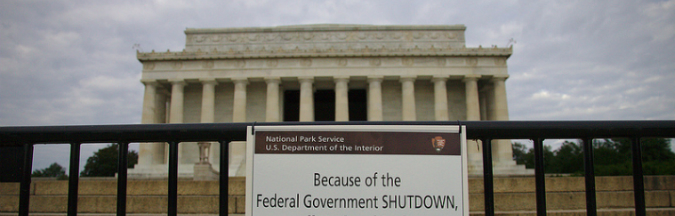
CDC Director: ‘Microbes Didn’t Shut Down’

As we wrap up our first week of the shutdown, we thought we’d take a second to assess the damage. Many critical biomedical experiments are hemorrhaging money. Health and Human Services has furloughed 52% of its employees. DHS has furloughed over 31,000 employees. The number that concerns us most, however, involves the CDC. We tweeted earlier this week that the CDC has had to furlough 8, 754 people, or 68% of its staff. This means that flu season is starting, and no one is watching. If we’re hit with a novel strain, a mutated strain, a particularly virulent strain,  we’d have no idea. This giant blind-spot isn’t limited to the US – CDC employees are some of the world’s top epidemiologists, often helping with investigations at outbreak hotspots globally. What are we currently very worried about in the Middle East? MERS. Hajj is around the corner, which means an influx of millions of people from around the world to the virus’ epicenter. Is it inconceivable that a pilgrim travels from New York to Mecca, picks up the virus and brings it back? Absolutely not. What’s inconceivable is that because of the shutdown, we might not know.

Wall Street Journal – “The CDC won’t be able to conduct routine inspections of high security labs around the nation that work with ‘select agent’ pathogens that pose severe threats to human and animal health such as Marburg virus or hemorrhagic fevers, said spokeswoman Barbara Reynolds. Most of the CDC’s own lab work has been stopped. The agency is not conducting surveillance for flu outbreaks. Only one CDC staffer is tracking reports of dangerous foodborne pathogens rather than the usual six staff – not a lot given that 48 million Americans develop foodborne illnesses every year.”

The World Hasn’t Tackled Syria’s Real WMD Nightmare

Foreign Policy has a piece out discussing Syria’s alleged biological weapons program. “Forget the nerve gas,” the byline states, “It’s Assad’s bioweapons program that should keep you up at night.” We disagree. For the many, clearly elucidated reasons why, please see Dr. Ben Ouagrham-Gormley’s excellent piece, “On Not Falling Prey to Biological Weapons Alarmism in Syria” here.

Foreign Policy – “A recent U.N. report on chemical weapons use in Syria has strengthened claims that the regime killed more than a thousand innocent Syrians, including hundreds of children, with the nerve agent sarin. Video images after the Aug. 21 attacks showed victims frothing at the mouth, convulsing, and suffering tortured deaths. But the effects of a chemical attack, horrible as they are, can be minuscule compared with a worst-case assault with a biological weapon.”

WHO Group To Discuss Plan For Industry Use Of Pandemic Flu Viruses

A group of WHO experts is meeting next week to work on a plan, Pandemic Influenza Preparedness, for companies to pay for use of flu virus strains in development of patented treatments.  The meetings will include members of a special WHO Advisory Group, as well as key industry stakeholders. The funds gathered would then be used primarily for pandemic preparendess (70%), with the remaining funds used for global response efforts.

Intellectual Property Watch – “The focus of the three-day meeting will be to discuss the draft implementation plan for the use of Partnership Contribution funds through the end of 2016, a WHO source said. WHO is aiming for final completion of the process by year’s end. The second day of the meeting will be dedicated to consultations with industry and other stakeholders, the source said. Other issues to be discussed include the status of SMTA-2 negotiations (Standard Material Transfer Agreement), and ‘technical matters’ in the PIP Framework, the source said.”

Federal judge OKs Boston U disease research lab

Boston University’s proposed BSL-4 lab has cleared another hurdle to construction, with a federal judge dismissing the case against the lab’s construction. Residents of Boston’s South End have obstructed the lab’s construction for years, citing fears of exposure to pathogens like Ebola. While we can sympathize with any and all fears of Ebola exposure, in this case we think the judge was right. The research conducted in BSL-4 labs are critical to helping us detect, prevent, and treat some of the world’s most dangerous pathogens.

Seattle PI – “A Boston University laboratory built to study some of the world’s most dangerous diseases is one step closer to opening following a federal judge’s decision issued this week that it poses little risk to the public…The lab now only needs a final review from the Boston Public Health Commission. Some portions of the 192,000-square foot building have already opened to study less dangerous germs. The court’s decision “affirms our view that this type of research can be done safely in Boston,” BU spokesman Steve Burgay told The Boston Globe.”

Our Puff Piece of the Week: Scientists Discuss The Reality Of A Zombie Apocalypse

RedOrbit reached out to a bunch of microbiologists and asked them to imagine what a “real” zombie virus might look like. We approve.

In case you missed it:

Dr. Paul Walker, October Biodefense Seminar Speaker, Wins Prestigious Rights Livelihood Award
– Chemical Weapons Team Arrive in Syria: Blair on Why the End in Not Nigh
DTRA’s New, Highly Sensitive Bio-agent Detector
– Using an Army of Fish to Fight Dengue

(image: Rich Renomeron/Flickr)