
Welcome to this week’s Pandora Report! This issue examines the renewed H5N1 activity as the fall season begins, the continuing Ebola outbreak in the Democratic Republic of the Congo (DRC), and emerging challenges shaping biosecurity and public health developments.
Bird Flu Cases Climb Across the Upper Midwest
By Margeaux Malone, Pandora Report Associate Editor
Since September 1, federal animal health officials have recorded seven H5N1 highly pathogenic avian influenza (HPAI) detections in commercial poultry, concentrated in turkey operations across the Dakotas, Minnesota, and Idaho. Over the past month, roughly 360,000 birds have been affected nationwide, though this total largely reflects the mandatory culling of entire flocks required once a single case is confirmed, not mass die-offs from illness itself. The increase in detections aligns with the autumn uptick in waterfowl migration, when wild birds most often introduce the virus into commercial barns. Separately, two Idaho dairy cow herds were also confirmed infected. Fortunately, human risk still remains low. The CDC has recorded 71 cases nationally since 2024, nearly all among agricultural workers with direct animal contact, and no sustained person-to-person spread has been detected.
A Different Kind of Risk: AI and Pathogen Research
Although the current HPAI outbreak is primarily an animal-health issue, a recent Anthropic safety report offered a stark reminder that avian influenza remains high on the list of pathogens with pandemic potential. Some worry this risk could be compounded by AI assistance, though not all experts are as concerned. Anthropic disclosed that researchers attempted to use its Claude models to plan experiments that would make mutations in HPAI to help it adapt to mammals and transmit more easily. This was one of three pathogen-related cases the company flagged, which also included chikungunya virus and an unspecified orthopoxvirus. Two additional cases involved toxins. The researchers disguised their access through VPNs, intermediate servers, and disguised accounts, which Anthropic treated as a red flag.
Some security experts called the cases seriously alarming, though others disagreed. Virologist Kristian Andersen argued that much of the work resembled ordinary virology using mutations already found in nature rather than novel dangerous engineering. George Mason University’s own biosecurity expert Gregory Koblentz was similarly untroubled, noting that researchers using VPNs or other workarounds to access AI models is unsurprising given how indispensable these tools have become across scientific fields. He also was not surprised that the research was done at state institutions or labs with ties to the military, pointing out that the U.S. military itself “conducts and sponsors research on a range of infectious diseases that pose a potential risk to our troops.” Despite the mixed reactions, it is clear that Anthropic’s disclosure has value, as it shows how AI models are actually being used in biological research and provides real-world evidence about biosecurity risks that have until now been mostly hypothetical. Even skeptics of the report’s framing agree that it points to a risk that will need regulation down the road.
Further Reading:
- “First H5 bird flu death of endangered Australian sea lion recorded amid fears for small population,” Cait Kelly and Lisa Cox, The Guardian
- “Fresh Bird Flu Outbreak Hits America’s Biggest Turkey-Producing Region,” Jordan King, Newsweek
- “New Antibody Test Detects H5N1 Exposure Across Birds, Cattle, and Humans With a Single Assay,” Global Biodefense
Ebola Outbreak in DRC Surpasses 7,000 Cases
The Ebola outbreak in the Democratic Republic of the Congo (DRC) has surpassed 7,000 confirmed cases and nearly 3,500 deaths for the first time since the epidemic began in May. The outbreak, which has now spread to a province in the northwest of Congolese territory, has become the country’s largest in recent years, prompting an intensified response involving disease surveillance, contact tracing, vaccination, and community engagement. Although health officials have reported signs that transmission is slowing, the World Health Organization (WHO) has cautioned that the outbreak remains far from over and that continued vigilance is needed to prevent further spread.
WHO Launches New Tool for Biorisk and Dual-Use Research Governance
The World Health Organization (WHO) has launched the Biorisk Implementation and Evaluation Tool (BRIET), a new resource to help countries and institutions strengthen governance of biorisks and dual-use research of concern (DUR/DURC). BRIET operationalizes the WHO Global Guidance Framework for the Responsible Use of the Life Sciences: Mitigating Biorisks and Governing Dual-Use Research by providing a structured, action-oriented approach to evaluating existing governance capacities, identifying strengths and gaps, prioritizing areas for improvement, and supporting ongoing capacity development. The tool generates capacity assessments, risk scores, and tailored key actions to inform decision-making and implementation efforts.
U.S. Public Health Is Under Strain
Last week, Trust for America’s Health (TFAH) released Underfunded and Under Strain: The State of America’s Public Health System, a new report examining how longstanding funding disruptions, severe workforce reductions, and institutional uncertainty during 2025 and 2026, have critically weakened the public health system’s capacity across the United States. The report emphasizes that maintaining appropriations alone does not guarantee that public health programs can operate effectively, particularly when agencies also face staffing shortages, reduced institutional expertise, and administrative disruptions. The report features interviews with state and local health officials illustrating how federal funding and operational uncertainty complicate planning and compromise community response on the front lines. Click here for a fact sheet on the report.
BioGovernance Commons and China’s Role in Global Risk Governance
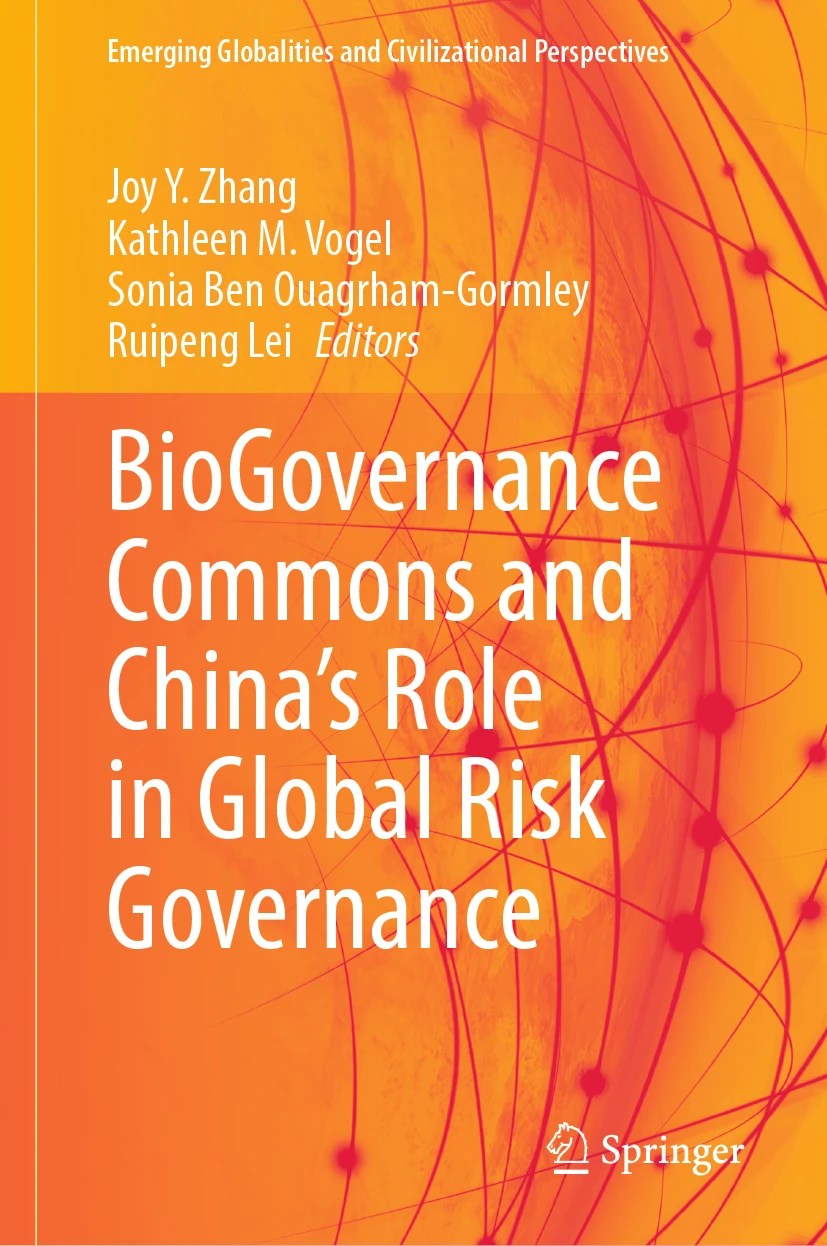
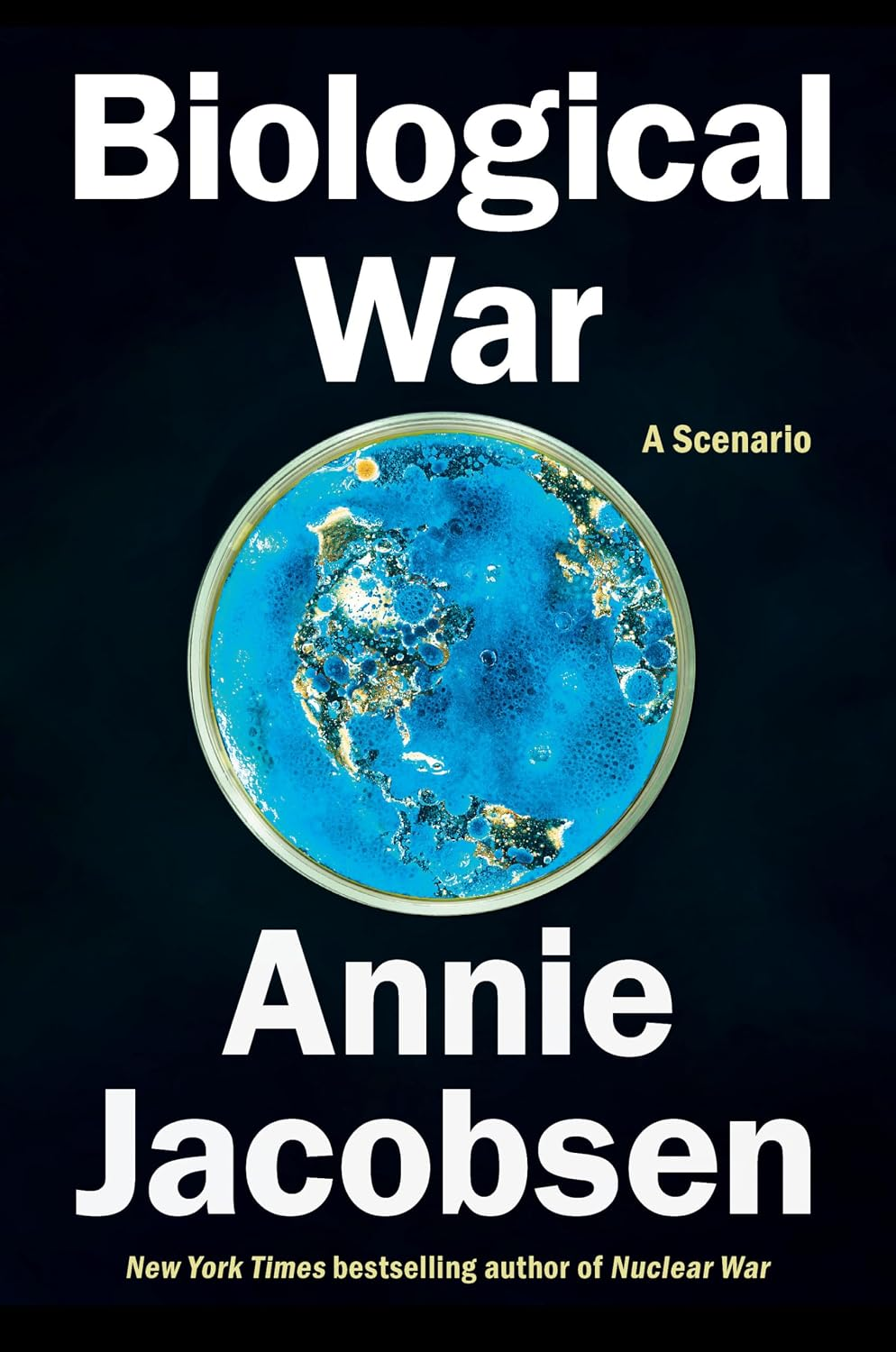
In this new volume, the authors address the critical question of how scientific collaboration can remain possible in an era of deepening geopolitical tension. Co-edited by Dr. Sonia Ouagrham-Gormley, Professor at George Mason University Schar School of Policy and Government, examines how scientific collaboration can persist amid growing geopolitical tensions.
Drawing on real transnational dialogue on biogovernance commons among scientists, ethicists, lawyers, and policy scholars, the book explores governance challenges of the life sciences spanning genetic data, biobanking, biosecurity, CRISPR, and global health, with particular attention to research cultures and regulatory dynamics in the United States, the United Kingdom, China, and beyond. The volume is available for pre-order now and is scheduled to be published on October 29, 2026.
IN OTHER NEWS
AI, Biotechnology and Biological Security
- “Anthropic report: could AI + synthetic biology = bioweapons?” Dr. Céline Gounder, Underlying Conditions
- “‘Chilling’ warning or overreaction? AI bioweapons report divides experts,” Jocelyn Kaiser, Science
- “People Are Trying to Misuse AI. That’s Exactly Why Safeguards Matter.” David Stiefel, NTI
- “The AI Pandemic Isn’t On Its Way,” Katherine J. Wu, The Atlantic
- “A.I. Queries From Abroad Raise Fears of a Biological Weapons Race,” Carl Zimmer, NY Times
- “OpenAI backs bipartisan push to address AI biothreats,” Aaron Mak, Politico
- “Open-Weight AI Models May Increase Biological Misuse Risks: Assessing Anti-Refusal Tampering, Capability Enhancement, and Publicly Available Uncensored Models,” Sunishchal Dev, Casey O. Barkan, Anthony Hakim, Brooke Hollister, Jeffrey Lee, Alyssa Worland, Dawid Maciorowski, Steph Guerra, RAND
- “Artificial Intelligence and Biosecurity Issues,” Congressional Research Service
- “Biosecurity Partners Co-Sign Letter Urging Congress to Fully Reauthorize PAHPA,” Johns Hopkins Bloomberg School of Public Health, Center for Health Security
- “Forum on Microbial Threats: Annual Report 2024–2025,” National Academies of Sciences, Engineering, and Medicine
Chemical Weapons and Weapons of Mass Destruction (WMD) Security
- “Experts Warn Sudan Chemical Weapons Claims Cannot Go Uninvestigated,” Maria Lindqvist, Global Reporters
- “Cambodia files OPCW complaint over allegations Thai forces employed chemical weapons,” Raksmey Hong, The Phnom Penh Post
- “‘All I see are dead bodies’: The survivors of Syria’s chemical massacres,” Susan Schulman, The Telegraph
U.S. Military Biodefense and Preparedness
- “2026 Army Biodefense Strategy,” U.S. Army Nuclear and Countering Weapons of Mass Destruction Agency (USANCA)
- “Army sets new biodefense plan to counter pandemic, adversary threats,” Carley Welch, Breaking Defense
- “AI-powered biowarfare is coming; the Army lays plans to ‘fight through’ it,” Patrick Tucker, Defense One
- “USANCA’s Fever Dream to Manage Biodefense,” Al Mauroni, Substack
Outbreaks, Emerging Infectious Diseases and Biological Preparedness
- “FBI investigates suspected ricin exposure at Southwest Michigan apartment complex, hospital,” DeJanay Booth-Singleton, CBS News
- “The State of the Humanitarian System (SOHS) Report 2026,” ALNAP
- “Notes from the Field: Clinical Characteristics of Patients with Ebola Disease Caused by Bundibugyo Virus — Uganda, 2026,” Morbidity and Mortality Weekly Report (MMWR)
- “Notes from the Field: The First 100 Days of Five Ebola Outbreaks — Democratic Republic of the Congo, Uganda, and West Africa, 2007–2026,” Morbidity and Mortality Weekly Report (MMWR)
- “Can an ancient virus be brought back to life? What 500‑year‑old smallpox DNA reveals,” Aris Katzourakis, The Conversation
- “Meet the 2026 Ig Nobel Prize winners,” Jennifer Ouellette, ARS Technica

NEW: How do we Prevent Future Health Emergencies and Pandemics?
The Independent Panel for Pandemic Preparedness and Response will participate in several events during the 81st United Nations General Assembly (UNGA81), including discussions on pandemic prevention, preparedness, response, financing, and global health resilience. This event will bring together global health leaders and experts to examine persistent gaps between scientific knowledge and political action on pandemic prevention.
This event will take place on September 21 from 4:00-5:30 PM ET. Learn more and register for the in-person event here or follow the live stream here.
America’s Ebola Response: Travel Restrictions, Quarantines, and Citizen Rights
From The Pandemic Center: “As part of the U.S. response to the still-ongoing Ebola outbreak in the Democratic Republic of Congo (DRC), the Trump administration took unprecedented steps to block American citizens in the DRC from returning to the U.S., placing them on a “do-not-board” list until they spend at least 21 days in a third country. These travel restrictions, the quarantining and detainment of US citizens, and the construction of the facility in Kenya have spurred ethical concerns and even legal challenges.”
This webinar will take place on Friday, September 18 at 12:00 PM ET. Learn more and register here.
Bioeconomy Summit
The Bioeconomy Summit, hosted by TechConnect, will bring together industry leaders, investors, federal officials, and experts to examine how the United States can strengthen and scale its bioeconomy. The summit will focus on aligning capital, policy, infrastructure, procurement, and industrial capacity; addressing vulnerabilities in biomanufacturing supply chains; and accelerating the deployment of bioindustrial technologies.
The summit will take place on Monday-Tuesday, September 21-22, at the National Harbor in Maryland. Learn more and register here.
Science of Evaluation of Artificial Intelligence for Life Sciences and Biotechnology Conference
From the National Academies: “This meeting brings together researchers and practitioners across various fields to define the emerging scientific method for artificial intelligence, focusing on benchmarks, leaderboards, challenges, and the evidence needed to trust systems that reason, act, discover, and operate in high-stakes domains, including the life sciences and biotechnology sectors.”
This conference will take place on Tuesday-Wednesday, September 22-23. Learn more and register here.
Data and Situational Awareness for Medical and Public Health Preparedness and Response: A Workshop Series
From the National Academies: “The Forum on Medical and Public Health Preparedness for Disasters and Emergencies workshop series will explore how medical, public health, emergency management, and critical infrastructure data are collected, integrated, analyzed, and translated into real-time information to support timely, coordinated decision-making before, during, and after disasters and emergencies.”
This workshop series will take place on September 23. Learn more and register here.
The Second Bio-Responsibility Policy Lecture: “From Lab Safety to Bio-Responsibility: Building the Human Infrastructure for Safe and Secure Science.”
From organizers: “Advances in the life sciences are creating new opportunities for health, biotechnology, and economic development while also presenting increasingly complex biosafety and biosecurity challenges. The lecture will examine how institutions can develop practical, risk-based biorisk management systems, with a focus on the trained professionals and institutional capacity needed to translate policy into practice. It will also explore approaches to expanding biorisk management capacity through scalable training, competency development, and institutional support, including in resource-constrained settings.”
The virtual lecture will take place on Thursday, September 24, 8:00 AM – 9:15 AM ET. Learn more and register here.
International Bio-Responsibility Conference 2027
Organized under the Bio-Responsibility Initiative at the Centre for Society and Policy (CSP), the conference brings together people to advance dialogue, build partnerships, and promote safe, secure, and responsible life science research, development, and innovation. The conference will host experts, policymakers, and practitioners around the world to discuss emerging biological risks and ways to strengthen responsible governance.
The deadline to register is September 30. Learn more and register here.
Training Course on ‘Biotechnology Innovation and Biosecurity’
From the International Centre for Genetic Engineering and Biotechnology (ICGEB) and the Biological Weapons Convention Implementation Support Unit: “This training focuses on strengthening capacities in biosecurity, biosafety, and biological risk management in the context of rapid advances in biotechnology with an integrated, interdisciplinary approach to manage biothreats at the intersection of humans, animals, plants and the environment. It addresses the governance, technical, and operational dimensions of preventing, detecting, and responding to biological threats, while promoting responsible and peaceful scientific research and innovation in accordance with article X of the Biological Weapons Convention (BWC).”
This in-person event will be held from October 12-16 in New Delhi, India. Learn more and apply here.
Biomanufacturing for Defense & Security Summit
From Diversified Solutions Incorporated (DSI Groups): “This event will bring together senior thought leaders and stakeholders from across DoW, Military Research Labs, Federal Government, Commercial Industry, & Academia to discuss how each are advancing biomanufacturing to enhance national security objectives, produce critical materials for defense applications, and strengthen the overall U.S. bioindustrial manufacturing base. Biomanufacturing is crucial for U.S. national security because it enables domestic production of critical materials, medicines, and defense supplies, reducing reliance on foreign adversaries, which in turn creates resilient supply chains for the military and economy.”
This event will take place from October 27-28 at the National Harbor, MD. Learn more and register here.
Frontiers in Synthetic Biology: SpudCells, Mirror Life and Societal Implications
From the Consortium on Law and Values: “Advances in cell engineering and synthetic biology offer enormous potential benefits, while raising ethical and policy issues. SpudCell, the first synthetic cell that can grow and reproduce, built from non-living chemicals, was developed by a team at the University of Minnesota. Scientists have cautioned against creating organisms with molecules that are mirror images of the biological components of known life, as existing organisms would have no immune defenses. Join three experts on synthetic biology, biosecurity, and bioethics to explore how to realize the promise of synthetic biology while controlling potential risks.”
This webinar will take place on Thursday, October 29, at 3:00 PM ET. Learn more and register here.





 The Pandora Report