Week in DC: Events 9/21-9/25!

U.S. Policy against ISIS: Minorities in the Middle East -Syrian American Council and Muslim Public Affairs Council
Date: Monday, September 21, 2015, 11am-1pm
Location: Rayburn House Office Building45 Independence Ave SW, Washington, DC 20515 (map) Room: 2325

Since March 2011, religious and ethnic minorities in Syria have been brutally oppressed under the Assad regime and at the hands of ISIS. Join this discussion about the future of Christians and minorities in Syria, the role of the Assad regime in fanning the flames of sectarianism, and recommendations for US policymakers.

A Post-Iran Deal Security Agenda: Containment, Cooperation, or Both? 
New American Foundation
Date: Monday, September 21, 2015, 9am-0:30am
Location: New America Foundation1899 L St., N.W., Suite 400, Washington, D.C. 20036 (map)

Debate on the terms of the nuclear deal with Iran is over, but in the U.S. and in the region, debate on what’s next for security is only beginning. Inside Iran, some voices are calling for reduced engagement — but others seek to reinforce Iranian patterns of influence. In Washington, an influential group of legislators is pushing new legislation with provisions Iran has said would constitute a breach of the deal. Attention is also turning to the extent of Iran’s ties to Houthi rebels in Yemen, as U.S. allies seek military assistance to alter the regional balance. At the same time, some voices suggest Iran could be central to effectively rolling back ISIS and ending Bashar Assad’s reign of terror in Syria.

RSVP Here

The ISIS Apocalypse: the history, strategy and doomsday vision of the Islamic State
Brookings Institute
Date: Tuesday September 22, 2015, 10am-11am
Location: Brookings Institution1775 Massachusetts Avenue, N.W., Washington, DC (map)
Room: Falk Auditorium

In “The ISIS Apocalypse” (St. Martin’s Press, 2015), Will McCants examines the Islamic State’s tactics and goals, and the many ways in which it is more ruthless, more apocalyptic, and more devoted to state-building than any of its predecessors or current competitors. Based almost entirely on primary sources in Arabic—including ancient religious texts and secret al-Qaida and Islamic State letters that few have seen—“The ISIS Apocalypse” explores how religious fervor, strategic calculation, and doomsday prophecy shaped the Islamic State’s past and foreshadow its dark future.

Looking Towards the Future of the U.S.-Japan Relationship: One Mansfield Foundation Fellow’s Perspective
Elliott School of International Affairs
Date: Wednesday September 23, 2015, 2pm-4pm
Location: Elliott School of International Affairs1957 E Street, NW, Washington, D.C. 20052 (map)

PISA proudly invites you to attend a presentation by Mr. Ariel Wyckoff, an Elliott School graduate and former PISA Program Assistant. Mr. Wyckoff will discuss his experience as one of ten Fellows from the Mansfield Fellowship’s 19th class (2014-2015). The Mike Mansfield Fellowship Program (MFP) was established by the U.S. Congress in 1994 to build a corps of U.S. federal government employees with proficiency in Japanese language and firsthand knowledge about Japan and its government. Alumni Fellows have direct responsibility for a wide variety of Japan issues, provide counsel to their home agencies on Japan-related matters, and tend to stay involved with Japan-related issues long after the end of the Fellowship year.

Getting With It: Putting Momentum behind the U.S.-India Nuclear Deal
Johns Hopkins School of Advanced International Studies
Date: Thursday September 24, 2015, 12:30pm-2pm
Location: Johns Hopkins SAIS – Rome Building1619 Massachusetts Ave., N.W., Washington, D.C. (map) Room 806

Vijay Sazawal, nuclear industry expert, and Paul Murphy, Special Counsel at Milbank, Tweed, Hadley & McCloy will speak on this subject. Walter Andersen, Director of South Asia Studies will moderate.

Welcome to Washington: Policy Players and Creative Networking
Cato Institute
Date: Thursday, September 24, 2015, 6-8pm
Location:vCato Institute 1000 Massachusetts Avenue, N.W., Washington, D.C. 20001 (map)

Each year, thousands of young professionals descend on Washington with the hope of landing the perfect job at a think tank, on Capitol Hill, or in related fields. With so many bright, talented interns and recent graduates vying for the same opportunities, how can you distinguish yourself from the pack?

Join the Cato Institute and America’s Future Foundation for a crash course in creative networking and career advancement — an event specifically designed for young professionals. Speakers will discuss topics related to post-graduate professional success, with a special focus on policy research and analysis, and the role of ideas generated within the nonprofit network in the broad public policy debate.

If you can’t make it to the event, you can watch it live online at www.cato.org/live and join the conversation on Twitter using #CatoEvents. Follow @CatoEvents on Twitter to get future event updates, live streams, and videos from the Cato Institute.

Iran’s Deadly Ambition: The Islamic Republic’s Quest for Global Power
Heritage Foundation
Date: Friday, September 25, 2015, 12pm-1pm
Location: Heritage Foundation214 Massachusetts Ave NE, Washington, D.C. 20002 (map)

Conventional wisdom certainly seems to believe we are on the cusp of détente with Iran. In the aftermath of the interim nuclear deal struck in November 2013 hopes are now running high for a historic reconciliation between Iran’s clerical regime and the West. Yet there is ample reason for skepticism that the United States and Europe can truly curb Iran’s nuclear ambitions by diplomatic means. Moreover, the current focus on Iran’s nuclear program on the part of the Western governments is deeply dangerous, because it fails to recognize – let alone address – Iran’s other international activities or its foreign policy ambitions. Those objectives, argues Ilan Berman, are global in scope and growing.

Iran’s Deadly Ambition explains how America’s retraction from the Middle East has created significant breathing room for a regime that not long ago was on the political ropes. Economically, the Islamic Republic is “out of the box” that was erected over the past decade-and-a-half by Western sanctions, thanks to the nuclear deal just concluded by Iran and the P5+1 powers. As a result, Iran’s leaders are again thinking big about their country and its place in the world. America faces stark choices: to confront Iran’s nuclear ambitions and global activities, or to accept and accommodate the region’s newest hegemon, with all that that portends for American security and the safety of its allies.
Pandora Report 9.18.2015

What an interesting week! Ongoing salmonella cases, imported plague in Michigan, ISIS was found to be using chemical weapons, and a new prion disease was discovered. Pretty busy in the world of biodefense, I’d say. The Pandora Report is also fortunate to share with you a great piece by one of our graduate students, Greg Mercer, who tapped into Google Trends to look at ISIS nomenclature, and an upcoming book written by Dr. Brian Mazanec, regarding cyber warfare. So sit back and relax while we catch up on the week’s biodefense news.

US Confirmation of Islamic State Chemical Weapons

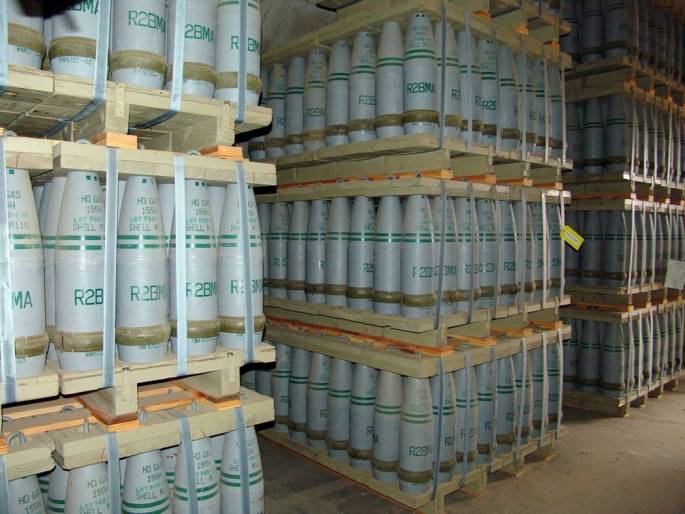
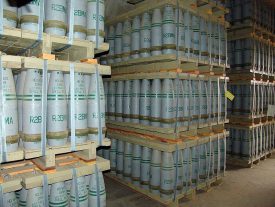
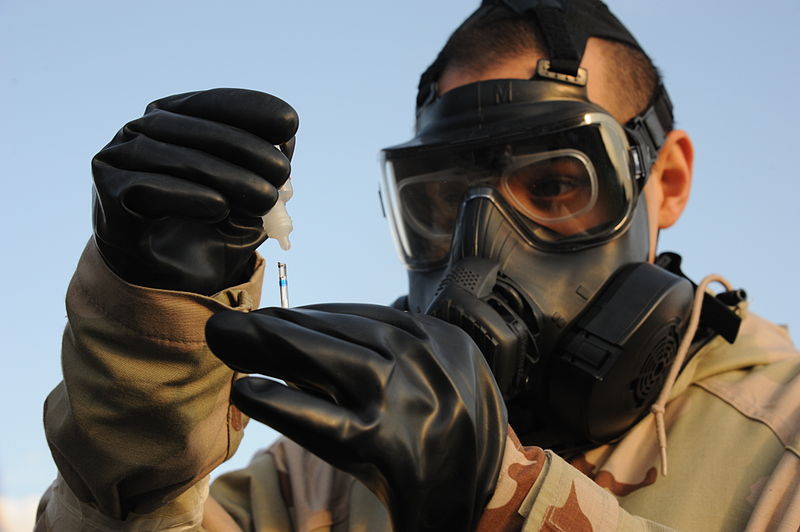
Operational_Readiness_Exercise_121014-F-LP903-827Sulfur mustard traces were found on fragments of ordnance used by the Islamic State, as well as on scraps of clothing from victims in Syria and Iraq. There have been several accounts by Kurdish officials that have claimed chemicals, like chlorine, were dispersed this summer, which is concerning for the ongoing use of these internationally banned substances. Testing done in the US was reported by officials on Friday, September 11, 2015, stating that, “there’s no doubt ISIS has used this,”. Officials have also said that the chemical residue recently found does not match known chemical ordinance that was used in the former Iraqi inventory. Overall, the use of chemical weapons is highly distressing and the method of acquisition, either manufacturing or from undeclared stocks, is under investigation.

Michigan Experiences Imported Plague Case

 A Michigan woman is the second case of bubonic plague that was traced back to the Little Rainbow area of Colorado. The Michigan resident was visiting family in Salida, CO during a music festival in late August. While her exact exposure hasn’t been established, she became ill after returning home and was hospitalized shortly thereafter. Lucky for the diagnosticians, she displayed textbook plague symptoms, leading to CDC involvement and antimicrobial treatment. Fortunately, she was released from the hospital and is beginning the long road to recovery, although it’s probably the last time she’ll attend that particular music festival or go hiking around it….

The So-Called Islamic State 2
By Greg Mercer

In February, I wrote about a topic that had been puzzling me- the contentious nomenclature of the Islamic State, or ISIS, or ISIL, or Daesh.  I decided to revisit this question now that the issue is a staple in the news, and that we’re probably saying it more frequently while thinking less about what we call it.  So I fired up my good friend Google Trends[1] again to take a look.  Google is a decent measure of public interest in a subject.  It’s the most popular search engine[2] in the world, with 66.78% of search volume worldwide as of August 2015.

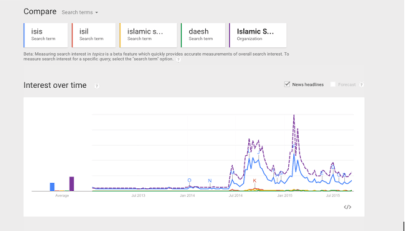
Last time, I found that ISIS was the most popular term by a fair amount.[3]  This seems to be true this time around too, which isn’t terribly surprising.  Here’s what I got:
Screen Shot 2015-09-17 at 6.24.26 PM


This time around, ISIS is still the most popular, but Google’s added a feature that tells us a little more.  While I suspected that the terrorist organization was driving most of the searches for ISIS before, it’s true that ISIS is the only of the names that has other popular uses, notably an Egyptian goddess, a think tank, and of course a fictional intelligence organization.  The new “topics” option in Google Trends lets us identify search volume for an entire subject.  The dotted purple line indicates all searches for the organization, regardless of naming specifics.  Since the searches for “ISIS” specifically and all of the searches for the organization are strongly correlated, it’s safe to say that mythology enthusiasts, nuclear scholars, and Archer fans aren’t skewing the trends.

It’s also still the case that search volumes for all of the names spike with major news events- no surprise there.

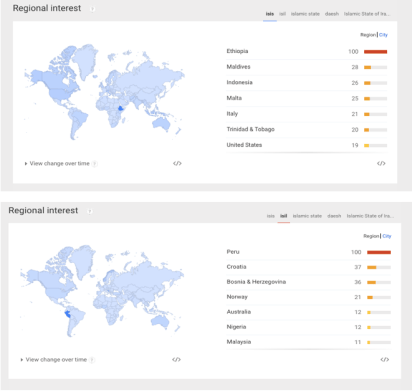
I also found the search trends by country interesting, here’s a look at the different terms and how they show up globally:

Screen Shot 2015-09-17 at 7.33.14 PM
Click on image to see Google Trend analysis and additional graphs


A couple of takeaways:  Looking at the organization as a whole, the two most interested parties (by Google search) are Iraq and Iran.  That’s not too surprising.  Iran is also #1 for “Daesh”, which is used in both Arabic and Farsi and is considered more a disparaging name.  In fact, the Iranian foreign minister told Iranian state media in January (fair warning, this links to Iran Daily) that he hates the term “Islamic State” and prefers “Daesh.”  In my earlier article, I noted that other foreign policy practitioners share this sentiment, and prefer a name that doesn’t recognize the organization as a state or representative of Islam.  This is also definitely the least popular name in mainstream American media.[4]  Ethiopia and Peru are the highest by volume for ISIS and ISIL, respectively, neither of which I would have expected offhand.

It’s interesting to see how these trends break down, and to look at a single massive political issue and international crisis with such a proliferation of terms.  I think the name that finally sticks remains to be seen.

[1] This links to the search parameters I used for this article, so you can play around with the data.
[2] This site is really cool if you’re into this sort of thing- you can see what site users choose based on browser, operating system, and device type.
[3] Personally, I tried ISIL in the name of accurate translation, but I tended to use ISIS when being flippant, and then it ended up sticking.
[4] To get anecdotal, the only person I’ve heard use it is my buddy who does Arabic translation and Middle East studies for a living.

The Evolution of Cyber War

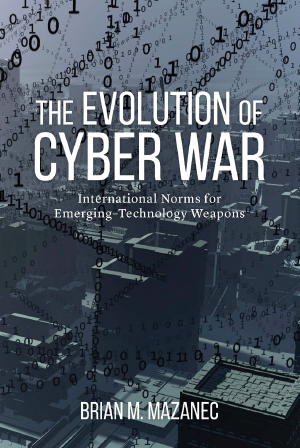
Screen Shot 2015-09-18 at 6.39.11 AMGMU’s very own, Dr. Brian Mazanec, delves into the world of cyber warfare and the reality of this threat. “Already, major cyber attacks have affected countries around the world: Estonia in 2007, Georgia in 2008, Iran in 2010, and most recently the United States. As with other methods of war, cyber technology can be used not only against military forces and facilities but also against civilian targets. Information technology has enabled a new method of warfare that is proving extremely difficult to combat, let alone defeat.” Available on November 1, 2015, we’re excited to share Brian’s phenomenal work!

Stories You May Have Missed:

  • Flu vaccination rates went up a bit for the 2014/2015 season, however, the efficacy was only 18% due to an antigenic drift. Fortunately, vaccination compliance for healthcare workers increased and overall rates showed that women were more likely than men to get vaccinated.
  • The Australian government will pass a new law, the “No Jab, No Pay Bill“, that will penalize parents who don’t vaccinate their children by withholding child care and other payments.
  • An additional 77 cases of Salmonella Poona were reported since September 9, 2015, related to the multi-state cucumber outbreak. The total infected is now 418 people across 31 states, with 91 hospitalizations.
  • A new prion disease has been identified by a team of scientists led by Stanley Prusiner. Their report outlines the discovery and the potentially infectious nature of this new prion.

Week In DC: Events

The World We Seek: Reigniting the Dialogue on Human Security – Johns Hopkins School of Advanced International Studies

Date: September 14, 2015, 9:30am-5:30ppm

Beijing by rediscovering the Universal Declaration of Human Rights as the foundation for global security and sustainable development. International Experts and a new generation of rights activists will share proven models for alleviating poverty, improving health and sanitation, and countering violent extremism. The program will feature poetry, music, and the Washington D.C. premiere of the WLP documentary film, Human Rights: The Unfinished Journey.

Johns Hopkins SAIS – Nitze Building1740 Massachusetts Ave., N.W., Washington, D.C. 20036 (map) Room: Kenney-Herter Auditorium    RSVP Here

The Iran Nuclear Deal and Its Implications – Johns Hopkins School of Advanced International Studies

Date: September 15, 2015, 5pm-7pm

Featuring: Robert Einhorn, Brookings Institution; former State Department Special Advisor; Shanta Devarajan, Middle East and North Africa, The World Bank; and Robin Wright, US Institute of Peace and the Woodrow Wilson Center

Location: Johns Hopkins SAIS – Rome Building1619 Massachusetts Ave., N.W., Washington, D.C. (map)
Room: Rome Auditorium

The Encryption Debate: Balancing Privacy and National Security – The Christian Science Monitor

Date: Tuesday, September 15, 2015, 8:30am-11:00am

Major American companies moved to ramp up security on their consumer devices to fight hackers and eavesdropping governments, in the wake of the Edward Snowden revelations about National Security Agency surveillance two summers ago. But senior law enforcement and intelligence officials say the new default protections prevent them from catching dangerous terrorists and criminals, and have called on companies such as Apple and Google to find a secure way for them to access consumers’ data with a warrant – which many technologists and privacy advocates claim is tantamount to building a “backdoor” into otherwise strong encryption.

What’s the right balance between protecting people’s personal privacy and the country’s security? How the Obama administration and Congress decide to proceed could impact US national security and foreign policy, the competitiveness of American businesses, and the future structure of the Internet. Join Passcode for a discussion with key figures in the debate between US law enforcement and the tech sector — doors open at 8:30 a.m. for coffee and networking

Location: St. Regis Hotel923 16th Street NW, Washington, D.C. (map), Carlton Ballroom

Arctic Transformation: Understanding Arctic Research and the Vital Role of Science – Center for Strategic and International Studies

Date: September 16, 2015,  8:30am-12:00pm

Following President Obama’s historic visit to the American Arctic, please join us for a timely conference on the vital role of science which seeks to better understand the profound and stunning changes that are occurring in the Arctic. Scientific research and collaboration informs our understanding on the impact of climate change on the most northern latitudes while also informing approaches to safely operating in and sustainably developing the economic potential of the region. Our keynote speakers will discuss the vital role of science leadership in the Arctic and will examine the most pressing gaps in our understanding of this dynamic region.

Location: Center for Strategic and International Studies1616 Rhode Island Ave NW, Washington, DC 20036 (map)

Anwar al-Awlaki, Yemen, and American Counterterrorism Policy – Brookings Institution

Date: September 17, 2015, 10:00am-11:30am

On September 30, 2011, the U.S.-born radical Islamic cleric, Anwar al-Awlaki, was killed by an American drone strike in Yemen, marking the first extra-judicial killing by the United States government against a U.S. citizen. Placed at the top of a CIA kill list in 2010 by the Obama administration, al-Awlaki was known for his intimate involvement in multiple al-Qaida terrorist plots against U.S. citizens, including the 2009 Christmas Day airline bombing attempt in Detroit and the 2010 plot to blow up U.S.-bound cargo planes. His calls for violent jihad remain prominent on the Internet, and his influence has turned up in many cases since his death, including the Boston Marathon bombing of 2013 and the Charlie Hebdo shootings in Paris early this year. In a new book, “Objective Troy: A Terrorist, A President, and the Rise of the Drone” (Crown, 2015), The New York Times national security reporter Scott Shane, drawing on in-depth field research in Yemen and interviews with U.S. government officials, charts the intimate details of the life and death of al-Awlaki, including his radicalization, his recruiting efforts for al-Qaida in the Arabian Peninsula, and the use of drone strikes by the United States to prosecute its counterterrorism goals.

On September 17, the Intelligence Project will host Shane to examine the roles played by al-Awlaki in al-Qaida plots against the United States, al-Awlaki’s continued influence on terrorism, and the current state of al-Qaida today. Brookings Senior Fellow Bruce Riedel, director of the Intelligence Project, will provide introductory remarks and moderate the discussion. Following their remarks, Riedel and Shane will take questions from the audience.

Location: Brookings Institution1775 Massachusetts Ave NW, Washington, DC 20036 (map)
Room: Falk Auditorium

Talks@Pulitzer: Untold Stories From The Front Lines of Ebola – Pulitzer Center on Crisis Reporting

Date: Thursday, September 17, 2015, 5:30pm

Join German filmmaker Carl Gierstorfer and science journalist Erika Check Hayden as they present their reporting on Ebola and the human toll of the deadly disease at our Talks @ Pulitzer on Thursday, September 17.
Gierstorfer shares the story of one community’s fight in Liberia for survival against Ebola and provides a preview of his latest film, while Check Hayden reveals the untold stories of heroism and hope from first responders in Sierra Leone.

Space is limited so reserve your seat today: rsvp@pulitzercenter.org—specify in subject line: “September 17 Talks @ Pulitzer.”

Location: Pulitzer Center on Crisis Reporting1779 Massachusetts Ave NW #615, Washington, DC 20036 (map), Room: 615

Pandora Report 9.11.15

Miss us? Good news – the Pandora Report weekly update is back! With a new school year comes new faces and some organizational change-up. Dr. Gregory Koblentz is now the Senior Editor of Pandora Report and Saskia Popescu (yours truly) will be taking over from Julia Homstad as the Managing Editor. I come from the world of epidemiology, public health, and infection control. Having just started in the GMU Biodefense PhD program, I look forward to venturing down the rabbit hole that is the Pandora Report!

There’s been some pretty fascinating news over the past few weeks, so let’s try and catch up…

Lab Safety Concerns Grow 

Our very own Dr. Gregory Koblentz, director of the GMU Biodefense program, was interviewed by USA Today regarding the lab security issues that now involve mislabeled samples of plague. “Since there are now concerns about the biosafety practices at multiple DoD labs there needs to be an independent review of the military’s biosafety policies and practices,” Koblentz said Thursday. He said the Critical Reagents Program is an important biodefense resource. “It’s crucial that all problems with handling and shipping inactivated samples be resolved quickly so the program can resume its important role in strengthening U.S. biopreparedness.”

Reviving a 30,000-Year-Old Virus…Isn’t This How the Zombie Apocalypse Starts?

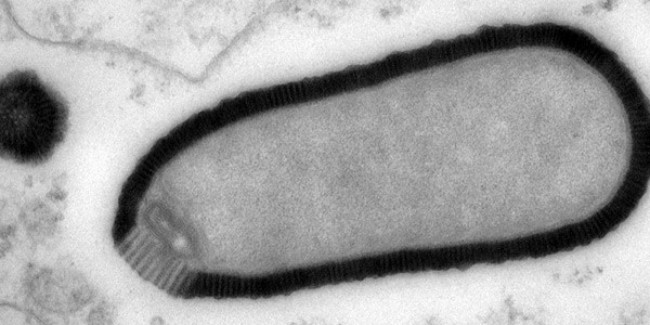
You may recall last year that French scientists stumbled across a 30,000-year-old virus frozen in the Siberian permafrost. Considered to be a “giant virus” (doesn’t that give you a warm, fuzzy feeling inside?), this is actually the fourth ancient, giant viral discovery since 2003. The new plan is to try to revive the virus in order to better study it.

Dr. Claverie told Agency France-Presse, “If we are not careful, and we industrialise these areas without putting safeguards in place, we run the risk of one day waking up viruses such as smallpox that we though were eradicated.” Given the recent concerns over biosafety lab specimen transport, we’re all curious to see how this new organism, coined “Frankenvirus”, turns out!

Cucumbers and A Multi-State Salmonella Outbreak

CDC updates regarding the Salmonella Poona outbreak reveal the brevity of the potentially contaminated product. As of September 9th, there have been two deaths, 70 hospitalizations, and 341 confirmed cases across 30 states. Perhaps the most worrisome is that 53% of affected individuals are children under the age of 18. While the produce company, Andrew & Williamson, issued a voluntary recall of their “slicer” or “American cucumber on September 4th, there have been 56 additional cases reported since then. Isolated samples from cucumbers in question were found in Arizona, California, Montana, and Nevada. The California Department of Public Health issued a warning and pictures of the affected cucumbers. 

Stories You May Have Missed:

Pandora Report 8.23.15

We’re starting this update with some big blog news, are you sitting down? This will actually be the last weekend update…at least for a while. We’re in discussion with how to proceed with the blog and social media for GMU Biodefense. Please check back at pandorareport.org and on twitter @PandoraReport for updates as they happen.

Looking back, there have been times since I’ve started as managing editor that the news has been sad, or, frankly, downright depressing. So, for this edition, lets focus on some of the good in the world. The first story comes from (probably the nicest human on the face of the Earth) Jimmy Carter. We’ve also got good news about Polio. Then, of course, we’ve got stories you may have missed.

Thank you for reading… and don’t forget to wash your hands!

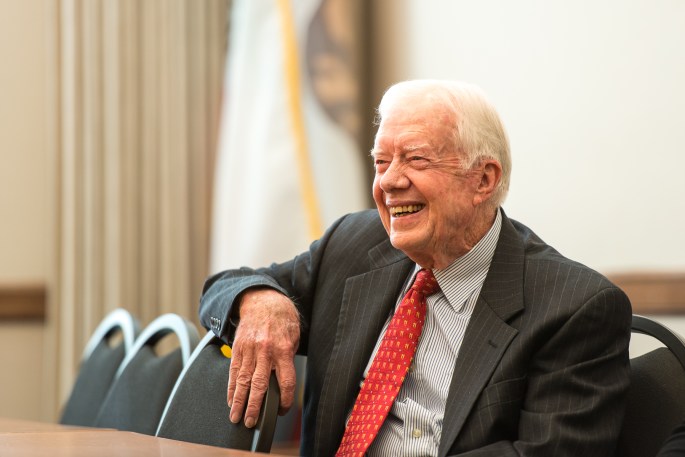
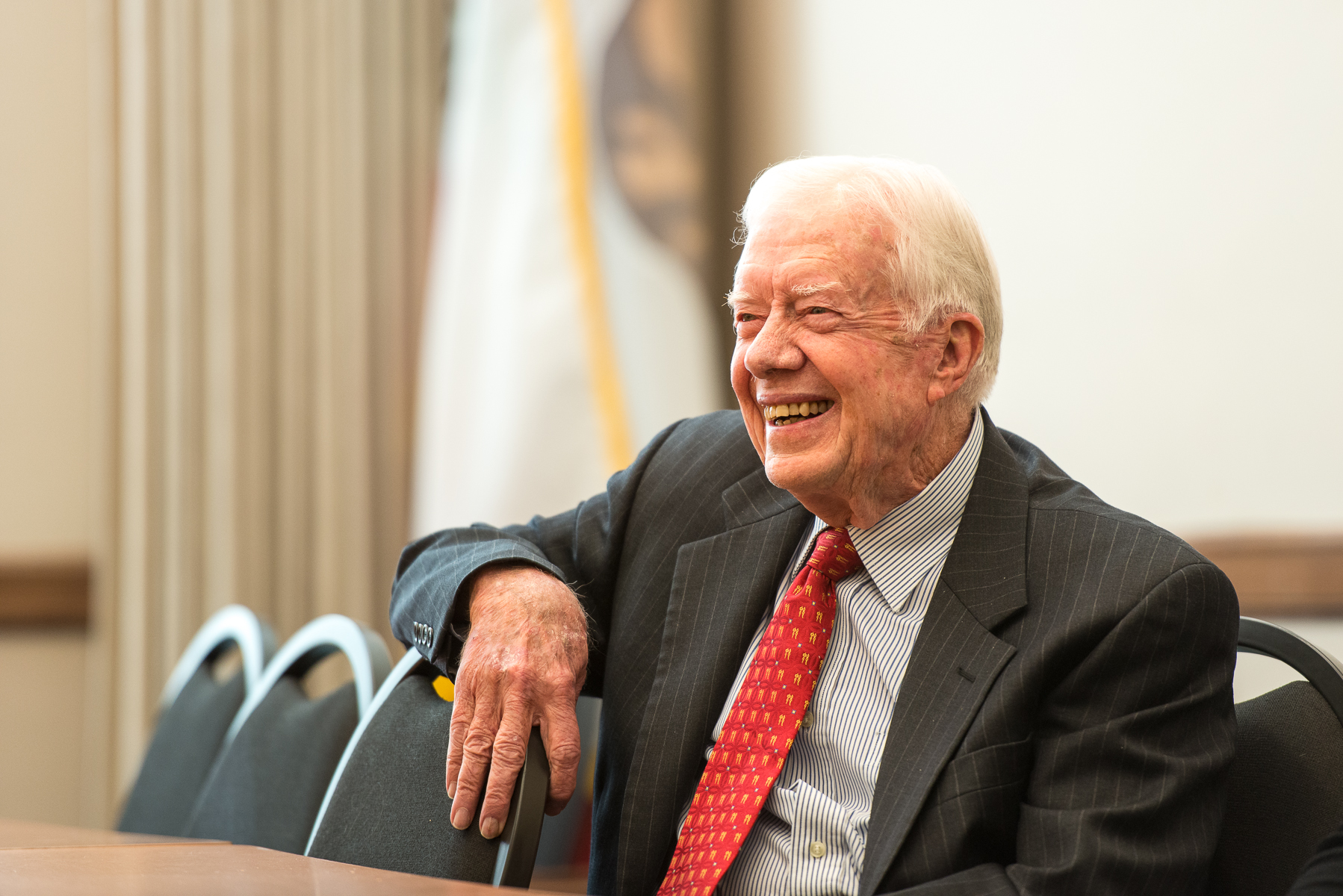
Jimmy Carter Wants to See the Last Guinea Worm Die Before He Does

This week, former President Jimmy Carter announced that his cancer had spread to his brain. Though many members of his immediate family died from cancer, Carter said “I’m perfectly at ease with whatever comes.” Rather than fear or sadness over his diagnosis, Carter instead focused on meeting one of the long-term goals of his nonprofit organization—the Carter Center—the eradication of Guinea worm. In 1986 when the Carter Center began its work there were 3.5 million cases of across 21 countries. In 2014 there were 126 cases; today, there are 11.

The Huffington Post—“When Guinea worm has been eradicated, it will be only the second time in human history that a disease has been totally wiped out. The first, smallpox, was eradicated in 1977, according to the World Health Organization. Experts from the Centers for Disease Control and Prevention estimate that Guinea worm will meet the same fate — a final piece in Carter’s legacy.”

WHO Declares Africa Free of ‘Wild’ Cases of Polio

According to the World Health Organization, Africa has been free of wild cases of Polio since July. This doesn’t mean that there are no cases on the continent; there is still ongoing work in Somalia, Kenya, and Ethiopia, but transmission of the illness has been interrupted. The director of the Polio Global Eradication Initiative has said that even though Africa is now free of wild cases, there are still challenges when it comes to eradication, for example, surveillance of the disease.

io9—“The goal of the Initiative has been to interrupt the natural transmission (wild cases) of the virus, which seems to be the case so far. The next step, according to WHO, will be to continue to monitor the region for additional cases. If none appear in the next two years, the continent will be certified Polio-Free.”

Stories You May Have Missed


Image Credit: Commonwealth Club

The Ebola Vaccine and the Ethics of Drug Trials

By Greg Mercer

The World Health Organization recently announced that a trial of the VSV-EBOV Ebola virus vaccine in Guinea has been “highly effective,” and that randomization in the trial would be stopped to allow for expansion of the range of subjects and protection of more people against the virus.  The trial began in March, and until recently, randomized subjects so that some received the vaccine immediately, while others received it later, after the virus’ gestation period.

A paper published in The Lancet details the study, and finds that the vaccine is highly effective and likely safe to use in the affected population.  The “recombinant, replication-competent vesicular stomatitis virus-based” vaccine is administered in a single dose via the deltoid muscle.  4,123 people received the vaccination immediately, while 3,528 people received the delayed vaccination (more on the study methodology in a moment). The researchers found that no subjects developed a case of Ebola after receiving the immediate or delayed vaccination, meaning that the vaccine proved 100% effective (with p=0.0036 at 95% CI).  These findings are excellent news for researchers, government officials, and those in the affected counties, and are fascinating from a scientific standpoint.

At The New Republic, Timothy Lahey, of Dartmouth, argues that these results, while promising, aren’t necessarily confirmed.  He notes that the lack of a placebo (because of the study’s particular methodology) makes it difficult to determine effectiveness, the vaccine could have failed to protect subjects from infection in a way that the study didn’t detect, and that a statistical aberration could mean that while the vaccine is not actually 100 % effective.  Regardless of whether these potential pitfalls affected the study or not, Lahey raises an important issue in drug testing for a disease like Ebola.  He is concerned that a lower standard for vaccines could mean that lower-income countries might not receive drugs of the same quality as rich countries, and points to past failed vaccines to illustrate the fallacy of believing that all vaccines work as intended.

The ethical dilemmas of drug testing have been front and center in the Ebola crisis.  Back in November, 2014, Nature reported on public health officials weighing the question of whether to use control groups when testing treatments for a disease with 70% mortality.  At the time, some advocated for applying experimental treatments (like the ZMapp antiviral cocktail, which had been used in patients but whose effectiveness was not entirely determined) to all patients, while others argued that these treatments might not be more effective than standard care, and that randomized trials guard against harmful side effects and provide a clearer picture of a drug’s effectiveness.

The VSV-EBOV vaccine was tested in the “ring” method that was previously used in the eradication of Smallpox.  This method eschews the double-blind placebo treatments commonly associated with drug trials.  Instead, this method creates a “ring” around new cases.  Contacts and contacts of contacts were identified by Guinea’s tracking system, and eligible adults were entered into randomization blocks, and received either the immediate or delayed vaccination.  This way, all of the subjects received the treatment, but in varying circumstances to establish effectiveness.  The full study is available via The Lancet.

Ethical drug testing is a crucial consideration, and has an imperfect past.  The National Institutes of Health’s own ethics guide cites a study that led to the United States’ ethics rules: a study that withheld syphilis treatment from 400 African-American men.  And for many, there’s good reason to be concerned about the actions of international organizations and multinational corporations.  In 1996, Pfizer conducted a study of an experimental drug on children with meningitis in Nigeria. While Pfizer maintained that the study was philanthropic, allegations arose from Nigerians and international organizations that children and parents were not informed that they were part of a study, and that Pfizer withheld treatment without consent or administered dangerous drugs.  The incident spawned a series of lawsuits and a panel of Nigerian medial experts condemned Pfizer’s actions in 2006, as reported by The Washington Post.

Epidemics and drug testing present a multitude of practical and ethical concerns, but careful consideration of the issues and sound methodology can, as they did in Guinea, produce exciting scientific and humanitarian results.

Image Credit: Psychonaught

Pandora Report 8.16.15

It looks like the blog isn’t the only place with a lull during the summer. This week was oddly slow for news; maybe it’s an August thing? For our top stories we’ve got ISIS with chemical weapons and, from our neighbor to the north, a disease diagnosing fabric. We’ve even got a few stories you may have missed.

Have a great week!

U.S. Investigating ‘Credible’ Reports that ISIS Used Chemical Weapons

The U.S. is investigating what it believes are credible reports that ISIS fighters used mustard agent against Kurdish Peshmerga fighters in Makhmour in Northern Iraq. ISIS posted about the attack on social media, but American officials have stated they have independent information that left them believing that a chemical weapon was used. A German Ministry of Defense spokesman echoed that they cannot confirm or rule out that a chemical weapons attack occurred. The major question for U.S. officials is to determine if it was mustard gas, and if so, how ISIS came to possess it.

CNN—“Blake Narenda, a spokesperson for the State Department’s Arms Control, Verification and Compliance Bureau, said, “We continue to take these and all allegations of chemical weapons use very seriously. As in previous instances of alleged ISIL use of chemicals as weapons, we are aware of the reports and are seeking additional information. We continue to monitor these reports closely, and would further stress that use of any chemicals or biological material as a weapon is completely inconsistent with international standards and norms regarding such capabilities.”

CNN has previously reported claims from monitoring groups that ISIS used chlorine weapons against Kurdish forces.”

Halifax Scientist Develops High-Tech Fabric that Helps Diagnose Diseases

Yes, you read that right. Christa Brosseau, an analytical chemist at Saint Mary’s University in Halifax, Nova Scotia, is working on the development of a chemical sensor which can be built into fabric and can detect diseases like tuberculosis, malaria, and HIV/AIDS.  How is this even possible? First the scientists make Nanoparticles, then aggregate those particles which ends up as a silver Nanoparticle paste. That paste can be placed on a fabric chip and it then ready to use. The fabric chip interacts with bodily fluids like sweat, saliva, or urine, and is then scanned for information.

CTV—“The technology picks up disease biomarkers and the scientists are able to get results in approximately 30 seconds, by using hand held units, the size of a TV remote control, to scan the samples. The size of the units makes them convenient for working in the field.

Eventually, the scientists hope to see the technology deployed in exercise headbands, or cloth inserts in infant diapers, to better monitor the state of health.”

Stories You May Have Missed

Image Credit: U.S. Army

Week in DC: Events

August 12, 2015

Naval Aviation
Date: August 12, 9:00 am
Location: Center for Strategic and International Studies, 1616 Rhode Island Ave NW, Washington DC

Please join CSIS and USNI for a discussion with Lieutenant General Jon Davis, Deputy Commandant for Aviation and Vice Admiral Mike Shoemaker, Commander, Naval Air Forces moderated by Admiral Joseph Pureher, USN, Ret. The discussion will focus on the state of the current fleet in terms of personnel and equipment as well as what the future holds for the Naval Aviation community.

Register here.

August 13, 2015

Assessing the Iran Nuclear Agreement: Placing Sanctions in Context
Date: August 13, 2:00 pm
Location: Heritage Foundation, Lehrman Auditorium, 214 Massachusetts Ave NE, Washington DC

Sanctions are what convinced Iran to begin negotiations with the United States. However, the mechanics behind lifting sanctions and the differences among international, U.S. and European Union sanctions are complicated. All beg the question of how effective the Iran deal really is. This program will explore the role of sanctions in the Iran Deal. Our panelists will examine the structure of the sanctions regime, debate its various implications, and explore what we can do about it. Among the questions to be addressed are: What sanctions are currently in place on Iran? What is the difference between multi-lateral oil sanctions and unilateral sanctions imposed by the United States on Iran? Is it really possible for the sanctions to be “snapped back” if Iran violates the agreement? Would the sanctions regime really disband if there was no agreement?

Join us as our panel discusses Iran’s new sanctions regime and what it means for the future.

RSVP here.

2018 FIFA World Cup Russia: Political, Economic, and Social Implications
Date: August 13, 10:00 am
Location: George Washington University, Lindner Commons, Room 602, 1957 E Street NW, Washington DC

Please join the Center on Global Interests and the Institute for European, Russian, and Eurasian Studies (IERES) at George Washington University for a discussion on the political, economic, and social implications of Russia hosting the 2018 FIFA World Cup. This event marks the beginning of a joint CGI-Futbolgrad project on the World Cup that will continue this discussion through various panels, publications, and digital journalism leading up to the event.

Register here.

The Iran Deal: Key Issues and Controversies
Date: August 13, 2:00 pm
Location: Center for Strategic and International Studies, 2nd Floor Conference Center, 1616 Rhode Island Ave NW, Washington DC

Please join us for a discussion with Dr. Colin Kahl and other members of the administration on key elements of the Iran nuclear deal and its specific implications for the international community.

Register here.

Pandora Report 8.9.15

My apologies for lack of update last weekend…but that means a SUPER UPDATE this weekend! This week marked the 70th anniversary of atomic bombs being dropped in Japan. Rather than find an insufficient story that attempted to address the gravity of that event, we’re focusing on a successful Ebola vaccine trial, UN consensus on Syrian chemical weapons, and airplane bathrooms (because I can’t help myself when I see a story like that!) We’ve also got stories you may have missed.

Have a great week!

Vaccine Success Holds Hope for End to Deadly Scourge of Ebola

Some great news from West Africa: an Ebola vaccine trial in Guinea has returned results that are 100% effective. 4,000 people who had been in close contact with a confirmed Ebola case showed complete protection after ten days. A ring vaccination strategy—where those who have close contact with an infected person—was used, and after success was demonstrated, the vaccine is now being extended to 13-17 year olds, and possibly 6-12 year old children.

Reuters—“The success of the Guinea trial is a big relief for researchers, many of whom feared a sharp decline in cases this year would scupper their hopes of proving a vaccine could work. Another major trial in Liberia, which had aimed to recruit some 28,000 subjects, had to stop enrolling after only reaching its mid-stage target of 1,500 participants. Plans for testing in Sierra Leone were also scaled back. That left the study in Guinea, where Ebola is still infecting new victims, as the only real hope for demonstrating the efficacy of a vaccine.”

U.N. Approves Resolution on Syria Chemical Weapons

The UN Security Council unanimously—yes, even Russia—adopted a resolution aimed at identifying those responsible for the use of chemical weapons in Syria over the past two years. The resolution established an investigative body that would assign blame for the attacks “so that the perpetrators can be brought to justice.”

Salt Lake Tribune—“‘Pointing a finger matters,” U.S. Ambassador Samantha Power told the council. “This sends a clear and powerful message to all those involved in chemical weapons attacks in Syria that the [new investigative body] will identify you if you gas people.” But she added that prosecuting perpetrators will take time because there is still no tribunal to investigate alleged crimes during the war in Syria, which has killed at least 250,000 people since it began in March 2011, according to the U.N.”

Airplane Toilets Can Help Researchers Find Disease Outbreaks

A recent study in Scientific Reports finds that researchers can tell what continent you’re from and give early indication of disease outbreaks, all from the poop left in airplanes. (I think this is the first time I’ve been able to say “poop” here on the blog.) The researchers gathered samples from 18 airplanes that departed from nine cities and landed in Copenhagen and were able to identify continental trends. Microbes from Southeast Asia had higher incidence of antibiotic resistance; food transmitted microbes were also more frequent in the Southeast Asian samples; and C. diff was much more common in the North American samples.

Popular Science—“These findings led the researchers to believe that they could start to create a typical microbiome for each continent. And any big shifts that happen in their makeup—say, the concentration of C. diff rises dramatically in samples from Southeast Asia—could indicate a growing public health issue. If it’s caught early enough, public health officials could take preventative action.”

Stories You May Have Missed


Image Credit: CDC Global

Week in DC: Events

July 27, 2015

Chemical Safety and Security: TSCA Legislation and Terrorist Attacks
Date: July 27, 2:00 pm
Location: Center for Strategic and International Studies, Room 212 B, 1616 Rhode Island Ave NW, Washington DC

Chemical safety and security is one of the fundamental pillars of the Chemical Weapons Convention (CWC), but the recent and ongoing use of dual-use chemicals such as chlorine in the Syrian conflict, several recent chemical accidents in the US, and congressional updating of the Toxic Substances Control Act (TSCA) have all raised these goals to a much higher level. This seminar will address three related safety and security issues: (1) new TSCA legislation in the House and Senate; (2) the Chemical Facility Anti-Terrorism Standards (CFATS); and (3) Global Partnership efforts to improve chemical safety and security of industry and transportation.

The Proliferation Prevention Program will co-host this event with Green Cross International and International Center for Chemical Safety and Security (ICCSS).

Register here.

July 28, 2015

Hearing: Iran Nuclear Agreement: The Administration’s Case
Date: July 28, 10:00 am
Location: U.S. House Committee on Foreign Affairs, 2172 Rayburn House Office Building, Washington DC 20515

Chairman Ed Royce (R-CA) on the hearing:  “This Iran deal is one of the most important in decades.  It reverses decades of bipartisan nonproliferation and regional policy, has several shortcomings, and demands the closest scrutiny.  Secretary Kerry and the other Administration officials will face tough questions before the Committee, as we continue our comprehensive review of the Iran deal and the Administration’s overall regional policy.”

Ranking Member Eliot Engel (D-NY) on the hearing:  “I look forward to hearing from Secretaries Kerry, Lew, and Moniz to discuss the Iran agreement. I have serious questions and concerns about this deal, and input from the Administration will be critical as Congress reviews the proposal.”

Watch live online here.

Developing an Approval Pathway for Limited-Population Antibacterial Drugs
Date: July 28, 10:30 am
Location: Dirksen Senate Office Building, Constitution Ave and 1st Street NE, Washington DC

Please join us on July 28th for a briefing with a panel of antibacterial drug experts and stakeholders, including Center for Drug Evaluation and Research Director Janet Woodcock, MD, to discuss the development of a limited-population antibacterial drug (LPAD) approval pathway.  Bipartisan legislation has been approved by the House of Representatives and introduced in the Senate–the Promise for Antibiotics and Therapeutics for Health (PATH) Act, S. 185.

The LPAD pathway would provide for the approval of new antibiotics that target serious or life-threatening drug-resistant infections in patients who have few or no suitable treatment options. The pathway could help bring critical new drugs to such patients, while maintaining standards of safety and efficacy, limiting use to targeted populations, and requiring post-market surveillance.

You are invited to hear presentations, discussion, and participate in an interactive question and answer session with a panel featuring:

  • Janet Woodcock, MD, Director, FDA’s Center for Drug Evaluation and Research
  • Helen Boucher, MD, Associate Professor, Tufts University School of Medicine; Member, IDSA Antimicrobial Resistance Committee
  • Prabhavathi Fernandes, PhD, President and Chief Executive Officer, Cempra Pharmaceuticals
  • Allan Coukell, Senior Director for Health Programs, the Pew Charitable Trusts (moderator)

Register here.

Can the P5+1’s Vienna Deal Prevent an Iranian Nuclear Breakout?
Date: July 28, 11:45 am
Location: Hudson Institute, 1015 15th Street NW, 6th Floor, Washington DC

The Joint Comprehensive Plan of Action (JCPOA) signed earlier this month in Vienna is the culmination of a longstanding Obama administration effort to resolve the international community’s nuclear standoff with Iran through diplomatic means. A host of serious questions surround the agreement, including the complexities of international law and politics necessary to enact its provisions, and the strategic calculations that Iran’s regional rivals will make in its aftermath. But the key question remains the most practical one: Will theJCPOA, advanced by its proponents as a far-reaching and robust arms agreement, actually prevent Iran from acquiring a nuclear weapon?

Can the JCPOA’s inspection and verification regime, which allows Iran a 24-day window to prepare – or “sanitize”—any suspected site for on-site review, provide an effective guarantee against violations? What will it mean when the JCPOA expires in 15 years under the “sunset clause” and Iran becomes a “normal” nuclear power? And how, in the meantime, will the deal’s removal of existing sanctions against currently designated terrorists and terror-connected entities – like the Iranian Revolutionary Guard Corps (IRGC) and Qassem Suleimani, commander of IRGC’s expeditionary unit, the Quds Force – complicate efforts to constrain Sunni Arab states from pursuing nuclear arms programs of their own?

Please join us on July 28 for a timely conversation with Senator Tom Cotton and a panel of leading experts including William Tobey of Harvard University’s Belfer Center for Science and International Affairs and Hudson Senior Fellows Michael Doran, Hillel Fradkin, and Lee Smith.

Register here.

Joint Subcommittee Hearing: The Iran-North Korea Strategic Alliance
Date: July 28, 3:00 pm
Location: U.S. House Committee on Foreign Affairs, 2172 Rayburn House Office Building, Washington DC

The Subcommittee on Asia and the Pacific, the Subcommittee on Terrorism, Nonproliferation, and Trade, and the Subcommittee on the Middle East and North Africa will meet to discuss the Iran-North Korea Strategic Alliance. Witnesses include Mr. Ilan Berman, Vice President at the American Foreign Policy Council; Ms. Claudia Rosett, Journalist-in-Residence at the Foundation for Defense of Democracies; Larry Niksch, Ph.D., Senior Associate at the Center for Strategic and International Studies; and Jim Walsh, Ph.D., Research Associate in the Security Studies Program at the Massachusetts Institute of Technology.

Watch live online here.

July 29, 2015 

Hearing: Women Under ISIS Rule: From Brutality to Recruitment
Date: July 29, 10:00 am
Location: U.S. House Committee on Foreign Affairs, 2172 Rayburn House Office Building, Washington DC

The Committee on Foreign Affairs, Edward R. Royce (R-CA), Chairman, will hold an open hearing to discuss women under ISIS rule. Witnesses include Ms. Sasha Havlicek, Chief Executive Officer at the Institute for Strategic Dialogue; Ariel Ahram, Ph.D., Assistant Professor at the Virginia Tech School of Public and International Affairs; Mr. Edward Watts, Director and Producer of Escaping ISIS; and Kathleen Kuehnast, Ph.D., Director of Gender and Peacebuilding Center for Governance, Law and Society at the United States Institute of Peace.

Watch live online here.

Examining Regional Implications of the Iran Deal
Date: July 29, 11:00 am
Location: The Stimson Center, 1211 Connecticut Ave NW, 8th Floor, Washington DC

After more than 20 months of careful negotiations, the United States and its international partners have reached a landmark nuclear deal with Iran, designed to prevent Iran from becoming a nuclear weapons-capable state. The deal has implications that extend beyond Iran’s borders and could affect the already turbulent Middle East. Some critics of the deal claim that Iran will use the influx of capital it will receive once sanctions are lifted to fund destabilizing groups such as Hezbollah and the Assad regime. Others worry that countries such as Saudi Arabia will see Iran’s successful posturing and be emboldened to begin pursing a non-peaceful nuclear program themselves. The Stimson Center invites you to join us for an in-depth discussion of the regional implications of the Iran deal.

RSVP here.

Panel: Scorecard for the Final Deal with Iran
Date: July 29, 12:00 pm
Location: JINSA, 1307 New York Ave NW, Washington DC

JINSA’s Gemunder Center for Defense and Strategy invites you to an exclusive lunch panel briefing to release our new Iran Task Force report:

In Vienna on July 14, the P5+1 and Iran agreed on a final deal, formally known as the Joint Comprehensive Plan of Action (JCPA). This report will analyze whether the JCPA addresses the Task Force’s questions and concerns about the framework agreement. Overall, the JCPA rolls back Iran’s breakout time and allows for broader verification, but only in exchange for key restrictions being removed in 8-15 years, R&D on advanced centrifuges, front-loaded sanctions relief – including up to $150 billion in unfrozen assets – with no automatic “snapback” mechanism, an end to the U.N. arms embargo against Iran and no anytime, anywhere inspections.

Register here.

Cyber Risk Wednesday: Rethinking Commercial Espionage
Date: July 29, 4:00 pm
Location: Atlantic Council, 1030 15th Street NW, 12th Floor West Tower, Washington DC

The United States is nearly alone in professing that states should not spy for the private sector’s commercial benefit. As Gen. Michael Hayden (Ret.), former Director of National Security Agency and the Central Intelligence Agency, puts it: “I’ve conducted espionage. I went after state secrets and I actually think we’re pretty good at it. Where I object is where you have state power being used against private enterprise for commercial purposes.” Instead, the United States has strongly promoted innovation and intellectual property, publicly berating or punishing countries that engage in the systematic theft of technology, trade secrets, and proprietary information.

However, as indictments and advances in cyber defense have proven insufficient to secure commercial secrets, it is now time to consider alternative policy options to defend the private sector. Perhaps to save the principles behind banning commercial espionage, we must first embrace it. Could the United States reach better economic and national security outcomes if it joined its adversaries in spying for profit? Could like-minded nations create bilateral no-spy agreements, slowly expanding these into a global institution? Or would experimenting with economic espionage erode the West’s credibility and moral high-ground, leaving us worse off than before?

The panelists will debate whether the United States should continue to abstain from economic espionage, or whether these challenges demand innovative, even radical solutions.

Register here to attend in person or here to watch live online.

From Ocean of War to Ocean of Prosperity
Date: July 29, 4:15 pm
Location: Carnegie Endowment for International Peace, 1779 Massachusetts Ave NW, Washington DC

Over the past two hundred years, the Western Pacific has been the stage for war, peace, development, modernization, and prosperity. Its rich resources and vital shipping lanes are essential to the well-being of all countries within its bounds. Admiral Tomohisa Takei, chief of staff for the Japan Maritime Self-Defense Force, will discuss the development of the U.S.-Japan relationship, Japan’s role in the region, and the future of a rules-based international order in the Indo-Pacific. Carnegie’s vice president for studies, Thomas Carothers, will moderate.

Register here.

July 30, 2015 

Threat of ISIS in Iraq: Views from the Ground
Date: July 30, 10:30 am
Location: The Stimson Center, 1211 Connecticut Ave, 8th Floor, Washington DC

From enflaming sectarian tensions to undermining governance and economic development, the expansion of ISIS continues to pose grave risks to Iraq and the broader Middle East. Stimson and the American University of Iraq, Sulaimani (AUIS) invite you to join us for a discussion featuring views and perspectives from AUIS scholars and students examining the nature of the ISIS threat, and the related territorial, demographic and socio-economic consequences. Students from Kurdistan and other parts of Iraq will join us through video links.

Register here.