Pandora Report 12.13.2024

This week’s Pandora Report covers the rush to find the former Assad regime’s hidden chemical weapons, a recent study on H5N1’s potential to become an efficient human pathogen, Nobel laureates’ call for the Senate to block RFK Jr. from becoming HHS Secretary, and more.

Assad Regime Falls

On Sunday, Syrian rebels continued their advance, taking the capital city of Damascus and forcing the country’s long-time leader, President Bashar al-Assad, to flee to Moscow. This ended the country’s 13-year-long civil war and toppled a brutal dictatorship known to have, among other things, used chemical weapons against its own civilians. Now, the country is strapped for cash and being led by opposition forces with limited experience in governance.

Adding to the chaos is the mad dash to locate the former Assad regime’s chemical weapons it hid from inspectors. Among the list of missing weapons are more than 360 tons of mustard gas that the Assad regime admitted to making, but never fully accounted for. There are also five missing tons of precursors for sarin that the Assad regime claimed were “Lost during transportation, due to traffic accidents.”

The OPCW said it is monitoring the situation, reaffirming its commitment to “clarifying gaps, discrepancies, and inconsistencies in Syrian chemical weapons declaration amidst political transition.” Rebels in the south of the country have reached out to the OPCW for support in safely disposing of a cache of CW they found. One US official told the press the US is working with other countries in the Middle East to prevent these weapons from falling into the wrong hands. Meanwhile, Israel reported that it has destroyed CW and other weapons caches while seizing areas along its shared border with the country it claims are part of a demilitarized buffer zone.

Further Reading and Listening:

New Study Finds Single Mutation in Bovine Influenza H5N1 Hemagglutinin Switches Specificity to Human Receptors

A recent study in Science found that a single glutamine to leucine mutation in clade 2.3.4.4b-an H5N1 virus widespread in US dairy cattle that has caused a few mild human cases-at residue 226 of the virus hemagglutinin “was sufficient to enact the change from avian to human specificity.” This means that this virus that currently cannot infect humans very easily could be just one mutation away from being able to do so much more effectively. This finding alone does not mean that this mutation in nature would be guaranteed to make this virus an efficient human pathogen, but it might mean that this version of the virus has a higher zoonotic potential than other H5N1 viruses.

Further Reading:

Investigation Launched into Queensland Lab Incident

An investigation has been launched by Australian authorities into the “major breach” of biosafety protocols that occurred at a state-run laboratory in Queensland in 2021. It was revealed that 323 virus samples-nearly 100 of which were live samples of Hendra virus-were missing. According to Health Minister Tim Nicholls, the incident was only discovered in August of 2023, and the lab is unable to confirm whether the materials were removed or destroyed, though there is no suggestion that they were taken or stolen from the lab.

Top Wuhan Virologist Says WIV Holds No Close Relatives to SARS-CoV-2

Shi Zhengli, the virologist leading coronavirus research at the Wuhan Institute of Virology (WIV) when the COVID-19 pandemic began, presented data on dozens of new coronaviruses collected from bats in southern China at a conference in Japan last week. Shi has said repeatedly that SARS-CoV-2 was never seen nor studied in her lab, but some have continued to insist that one of the bat coronaviruses collected by her team was closely related to it. As a result, Shi promised to sequence the genomes of the viruses stored in her freezers and release the resulting data.

The analysis presented at the conference has not been peer reviewed and includes data from the whole genomes of 56 new betacoronaviruses in addition to some partial sequences. All of these viruses were collected between 2004 and 2021. Shi explained at the conference that none of the viruses she has sequenced are the most recent ancestors of SARS-CoV-2 and that “We didn’t find any new sequences which are more closely related to SARS-CoV-1 and SARS-CoV-2.”

The known viruses that are closest to SARS-CoV-2 were found in bats in Laos and southern China. However, years (or decades) have passed since these viruses split from their common ancestor with SARS-CoV-2. Shi has long since collaborated with EcoHealth Alliance, which previously received US federal funding that was suspended because of inadequate oversight of research activities at the WIV. This collaboration has produced a larger analysis of more than 230 sequences that EcoHealth Alliance’s Peter Daszak says will be submitted for peer review and publication in the coming weeks.

Further Reading: “PLA Looks into China-US Collaboration in Biosecurity Research,” Stephen Chen, SCMP

75+ Nobel Laureates Urge Senate Not to Confirm RFK Jr.

77 winners of the Nobel Prize in Medicine, Chemistry, Physics, and Economics have signed a letter (below) urging the Senate not to confirm President-Elect Trump’s pick to lead HHS-Robert F. Kennedy Jr.. This is a rare example of Nobel laureates coming together against a US Cabinet choice, according to Sir Richard Roberts, winner of the 1993 Nobel Prize in Medicine and a drafter of the letter. The letter criticizes Kennedy’s lack of experience in public health in addition to his widely criticized opinions on topics like drinking water fluoridation and vaccines for measles and polio. The letter reads in part, “In view of his record, placing Mr. Kennedy in charge of DHHS would put the public’s health in jeopardy and undermine America’s global leadership in the health sciences, in both the public and commercial sectors…We strongly urge you to vote against the confirmation of his appointment as Secretary of the DHHS.”

Further Reading:

“2024 ABSA Conference Summary”

Biodefense MS Student Lena Kropke discusses her experience at the 67th Annual Biosafety and Biosecurity Conference in this Pandora Report event summary, writing in part “Attending this conference not only reaffirmed that biosafety and biosecurity are vital components of international security, but also showcased the incredible dedication of professionals who work tirelessly toward this mission. Moreover, it offered an introduction to an amazing network of biosafety and security professionals.”

Read more about Lena’s time attending the conference in Phoenix here.

“Disincentivizing Bioweapons: Theory and Policy Approaches”

This NTI essay collection is “…designed to encourage the exploration and identification of potential solutions to disincentivize states from developing or using biological weapons,” and aims to “bridge theory and practical policy-relevant approaches to develop new approaches to invigorate international efforts to reduce biological threats.” Its fifth essay, “Two Competing Bioweapons Nonproliferation Policies: Deterrence by Denial and Discussion,” was authored by Sonia Ben Ouagrham-Gormley, Associate Professor at the Schar School.

Mitigating Arboviral Threat and Strengthening Public Health Preparedness: Proceedings of a Workshop

From NASEM: “Arboviruses, or viruses carried by arthropods like mosquitoes or ticks, are responsible for hundreds of thousands of deaths worldwide each year. As the climate changes globally, the geographic distribution of these diseases, including Zika, dengue, chikungunya, West Nile, and yellow fever, are steadily expanding. The National Academies Forum on Microbial Threats hosted a public workshop in December 2023 to explore avenues of threat reduction from known and emerging arboviral diseases in the context of public health preparedness and capacity building. The workshop featured talks from experts in entomology, public health, ecology, virology, immunology, disease modeling, and urban planning.”

Read this Proceedings of a Workshop for free here.

“The Current Pathogenicity and Potential Risk Assessment of Nipah Virus as Potential Cause of “Disease X”: A Narrative Review”

Mehnaz et al. recently published this article in Health Science Reports: “Background and Aims…The World Health Organization (WHO) recognized the potential for a severe international epidemic and introduced the term “Disease X” to classify pathogens that not yet identified. The Nipah virus (NiV) is highly dangerous due to its zoonotic nature, high mortality rate, and ability to cause severe clinical symptoms in humans. In this review, we gather the latest information on the NiV and its potential to become a significant candidate for Disease X.”

“Methods…We performed a thorough review of articles published in PubMed, Scopus, and Google Scholar using appropriate MeSH terms and keywords. Studies reported NiV infection were considered for this review.”

“Results…The NiV exhibits different epidemiological patterns in different countries that calls for customized prevention and control strategies. Genetic analysis highlights NiV’s ability to mutate that alters possible treatment options. Transmission typically involves bats as the primary reservoir, with humans becoming infected either through intermediate hosts or food. This shows NiV’s complex nature, including its ability to reach the central nervous system through the olfactory nerve. Promising treatment options, such as monoclonal antibodies, antivirals, and ongoing vaccine research, provide hope. However, the virus’s adaptability, human-to-human transmission, and the lack of specific antiviral therapy raise concerns about its potential to cause a global pandemic. The interconnection between animals, humans, and the environment stresses the need for a One Health approach to tackle emerging infectious disease by NiV.”

“Conclusion…Global collaboration, surveillance, and research investments are imperative for the preparation of future pandemics. The ongoing COVID-19 challenges underscoring the critical need for sustained scientific endeavors, global leadership, and recognition of the prominence of NiV as a candidate for the potential Disease X.”

“Engineering Biology Public Trust Survey Findings”

From the UK’s Department for Science, Innovation and Technology, these findings are the result of a survey on public perceptions of engineering biology in relation to five application areas: health, agriculture and food, low carbon fuels, chemicals and materials, and waste and environment. Key findings from this survey include “The majority of respondents felt comfortable with using new and emerging technologies on a day-to-day basis, but relatively few could explain what engineering biology is,” “There was a strong belief amongst respondents that applications of engineering biology could be useful. Similarly, the majority were comfortable with each of the specific applications and believe that they will be positive for society,” “There was broad agreement that the government is well placed to make decisions about the use of engineering biology but the public should also be involved in decision making,” and more.

“CSR Biodefense Scorecard: Winter 2024 Update”

From the Council on Strategic Risks: “In the fall of 2023, we kicked off our Biodefense Scorecard series to help inform the public on the progress and implementation status of past CSR recommendations on reducing biological risks. This update captures several areas of sustained positive action across pathogen early warning, diplomacy, and biomanufacturing.”

“Ignoring the Real Biowarfare Threat”

David Heslop and Joel Keep discuss the potential implications of recent renovations at Sergiev Posad-6 in this piece from the Lowy Institute, writing in part “While much attention has been paid to nuclear arms, Washington and Moscow must also address biological weapons, which both nations claimed to renounce many years ago. The fate of such programs is not only a matter for Russia and the United States, but for global health security at large.”

“Instrumentalising Biological Weapons-Related Allegations: Russia’s Compliance Politics and the Norms Against Biological Weapons”

Una Jakob recently published this working paper with CBWNet discussing Russia’s use of BWC compliance procedures and their effect on norms against BW. Jakob explains in part of the paper’s executive summary, “Seen in this light, the Russian activities may counterintuitively have contributed to strengthening the norms against biological weapons at the discursive level, as no actor has called them into question and as their validity has been reaffirmed repeatedly in the process, including by Russia itself. This stands in contrast, however, to Russia’s policy which may contest biological weapons norms at the action level. This discrepancy between the discursive and practical level and its implications for norm strength merit further theoretical attention. On a policy level, it will be important to increase transparency, counter disinformation, and strengthen the means to demonstrate, verify and enhance confidence in compliance with the BWC. This would also strengthen the possibilities to address biological weapons-related allegations, including those made in bad faith, and help sustain the norms against biological weapons comprehensively and in the long term.”

“Workshop on S&T Developments with Relevance for the CWC and BWC”

Anna Krin and Gunnar Jeremias edited this CBWNet working paper detailing a workshop hosted in June at Hamburg University focused on challenges and opportunities facing biological and chemical arms control. Jeremias explains in the introduction, “Throughout the workshop, four panels delved into key topics: the general concept and application of scientific and technological advice in arms control in general and particularly in chemical and biological arms control; current developments in science and technology that may necessitate attention; potential frameworks for organizing verification under the CWC and the prospects for institution building for S&T advice and verification within the BWC; and the technologies and governance methods that could be employed to enhance the efficacy of arms control measures…The insights gathered during these discussions aim to contribute to the ongoing discourse on arms control, ensuring that both the BWC and CWC remain vital in a landscape marked by rapid scientific change. This compendium encapsulates the collaborative efforts and perspectives of workshop participants, reflecting a shared commitment to advancing arms control in an increasingly complex world.”

“High-Impact, Low-Probability: NATO-EUROPOL Cooperation in Countering the CBRN Terrorist Threat to Europe”

This JCBRN Defence COE report by Mathias Katsuya “…draws on secondary-source research and insights provided by JCBRN Defence COE personnel as well as Europol’s CBRN-E Team Leader. An initial threat assessment is followed by a review of Europol’s CBRN capabilities, centring on the role of its European Counter-Terrorism Centre and inhouse CBRN-E Team as key nodes in law enforcement information-sharing, capacity-building, and operational coordination. Having identified key doctrinal and capability overlaps with NATO in addition to a stated commitment by Europol’s CBRN-E Team to enhance its civil-military relations, the report outlines a three-pillar approach to deepening connections between NATO and Europol: short-term measures to foster staff-level contacts in both organisations, a formalised relationship between Europol’s CBRN-E Team and NATO’s JCBRN Defence COE, and deeper institutional linkages to effectively confront current and emerging CBRN threats.”

“Hybrid Threats in the CBRN Environment: Challenges and Implications”

This JCBRN Defence COE paper by Paulina Frederike Gogacz discusses hybrid CBRN threats and their use by actors like Russia. Gogacz explains in the paper’s summary that “An analysis of the six strategic enablers outlined in NATO’s Chemical, Biological, Radiological and Nuclear (CBRN) Defence Policy (2022) indicates important steps to ameliorate current defences and prepare NATO and its member states for future hybrid CBRN threats, thereby increasing overall resilience. They include important aspects: robust intelligence-sharing mechanisms to ensure timely and accurate threat information; comprehensive exercises to simulate and prepare for various CBRN scenarios; strong partnerships both within the alliance and with external entities to foster cooperation and resource sharing; effective strategic communication to manage information and public perception; collaborative scientific research to advance technological capabilities and countermeasures; and the resilience of medical infrastructure to ensure a rapid and effective response to CBRN incidents. These steps collectively aim to bolster NATO’s preparedness and adaptability in the face of evolving hybrid CBRN threats.”

“Securing a Strategic Advantage in Biosecurity for NATO”

Max Breet and Lauren Ross recently authored this commentary for RUSI, writing in their summary “NATO should recognise the importance of biosecurity by understanding it as a new domain. This would allow the Alliance to more effectively leverage existing structures to defend itself against hybrid biological threats.”

“The Rise of Mpox in a Post-Smallpox World”

McQuiston et al. recently published this article in Emerging Infectious Diseases: “Reports of mpox are rising in Africa where the disease is endemic and in new countries where the disease has not been previously seen. The 2022 global outbreak of clade II mpox and an ongoing outbreak of the more lethal clade I mpox highlight the pandemic potential for monkeypox virus. Waning population immunity after the cessation of routine immunization for smallpox plays a key role in the changing epidemiologic patterns of mpox. Sustained human-to-human transmission of mpox is occurring widely in the context of insufficient population immunity, fueling genetic mutations that affect the accuracy of some diagnostic tests and that could lead to changing virulence. Additional research should address complex challenges for control of mpox, including improved diagnostics and medical countermeasures. The availability of vaccines should be expanded not only for outbreak response but also for broader routine use for persons in mpox-endemic countries.”

“Confronting Risks of Mirror Life”

Adamala et al. recently published this Science Policy Forum piece, writing in part, “All known life is homochiral. DNA and RNA are made from “right-handed” nucleotides, and proteins are made from “left-handed” amino acids. Driven by curiosity and plausible applications, some researchers had begun work toward creating lifeforms composed entirely of mirror-image biological molecules. Such mirror organisms would constitute a radical departure from known life, and their creation warrants careful consideration. The capability to create mirror life is likely at least a decade away and would require large investments and major technical advances; we thus have an opportunity to consider and preempt risks before they are realized. Here, we draw on an in-depth analysis of current technical barriers, how they might be eroded by technological progress, and what we deem to be unprecedented and largely overlooked risks (1). We call for broader discussion among the global research community, policy-makers, research funders, industry, civil society, and the public to chart an appropriate path forward.”

Bonus: Read Carl Zimmer’s discussion of this warning in The New York Times here.

NEW: OneLab Network Webinar

“Clinical laboratories must be alert for unusual and potentially infectious agents and immediately notify their Laboratory Response Network (LRN) reference laboratory if routine diagnostic testing results in the potential identification of rare and unusual infectious agents that may be used in a bioterrorist attack or other bio-agent incident. This webinar will describe the LRN and highlight the clinical laboratory’s role and responsibilities in initiating contact with their LRN. Join us as we share an example of a response, new tools, and valuable resources to aid in the clinical laboratory’s response.”

This event will take place on December 17 at 12 pm ET. Register for this event here.

NEW: Understanding the Introduction of Pathogens into Humans- Preventing Patient Zero: A Workshop

“The past few decades have seen the emergence of several diseases with drastic public health and economic consequences. Understanding routes of pathogen emergence and transmission is critical to preventing and mitigating disease spillover and amplification. The National Academies Forum on Microbial Threats will host a hybrid public workshop to address gaps in understanding of disease emergence, with a focus on human-animal interaction and laboratory biosafety. The workshop will explore how applications of existing policy structures, emerging technologies, and actionable research can improve biosecurity measures and prevention of future disease emergence.”

This event will take place on January 15 and 16. Learn more and register here.

NEW: Rise of the Zombie Bugs: The Surprising Science of Parasitic Mind-Control

Johns Hopkins APL’s colloquium will feature Mindy Weisberger, author of the upcoming book Rise of the Zombie Bugs: The Surprising Science of Parasitic Mind-Control: “Zombies are all around us—insect zombies, that is. In Rise of the Zombie Bugs, Mindy Weisberger explores the eerie yet fascinating phenomenon of real-life zombification in the insect class and among other invertebrates. Zombifying parasites reproduce by rewriting their victims’ neurochemistry, transforming them into the “walking dead”: armies of cicadas, spiders, and other hosts that helplessly follow a zombifier’s commands, living only to serve the parasite’s needs until death’s sweet release (and often beyond).”

Learn more about this January 31 event here.

How to Avoid Human-Made Pandemics

From the Asia Centre for Health Security: “Studying viruses that could potentially cause outbreaks is one of the most effective ways to reduce the risk of pandemics. However, this type of research—especially when it involves collecting samples from the field and manipulating pathogens—can unintentionally lead to a pandemic if not managed carefully. Dr Lentzos will discuss her findings from the Pathogen Project, which brought together an international taskforce of scientists, biosecurity and public health experts, ethicists, and civil society leaders to seek consensus on this question: Can we agree on ways to manage research that carries pandemic risk as safely, securely and responsibly as possible?”

This event will take place on January 23 at 8 pm (GMT +8:00) via Zoom. RSVP here.

Preparedness in Rural Communities: National and State/Local Perspectives and Plans

From Penn State: “The COVID-19 pandemic and recent hurricanes have thrust the preparedness of rural communities into the national spotlight. At the federal level, the Administration for Strategic Preparedness and Response and the Centers for Disease Control and Prevention have recently released national goals and plans for preparedness of rural communities. The overall objective of this virtual, 2-day mini-symposium is to identify opportunities in public health and agricultural preparedness and response in rural communities. The mini-symposium will focus upon national perspectives on Thursday, January 30 and the state/local perspectives on Friday, January 31. Speakers include representatives of the Administration for Strategic Preparedness and Response, the Department of Homeland Security, US Department of Agriculture, the USA Center for Rural Public Health Preparedness, and state/local leaders.”

This event will take place on January 30 and 31, from 11 am to 2 pm ET each day. Learn more and register here.

Cyberbiosecurity Summit

From Johns Hopkins APL and Bio-ISAC: “Advancements in biomanufacturing and biotechnology drive the science we need to thrive, everything from apples to vaccines. The Cyberbiosecurity Summit 2025 convenes leading experts in biotechnology, biosecurity, and cybersecurity to explore the intersection of these fields and discuss the strategies to create a safe, secure future for us all.”
This event will take place February 25-26 in Laurel, MD. Register here and review the call for sessions here (closes 12/12).

NEW: The Independent Panel Solicits Views and Insights on Pandemic Prevention, and Response Efforts

The Independent Panel for Pandemic Preparedness and Response, co-chaired by HE Ellen Johnson Sirleaf and RH Helen Clark, welcomes you to share your insights and expertise on the status of international and regional pandemic-related reform processes and initiatives, and how progress can be continued and accelerated in the months and years ahead.”

Learn more about this survey and submit by December 20 here.
Pandora Report 1.26.2024

This week covers the updated Doomsday Clock time, new HHS cybersecurity performance goals for the health sector, a podcast episode with our own Sonia Ben Ouagrham-Gormley covering her work on barriers to biological weapons, new publications, and more!

Bulletin of the Atomic Scientists Science and Security Board Leaves Doomsday Clock at 90 Seconds to Midnight

The Bulletin of the Atomic Scientists Science and Security Board recently announced that it left the Doomsday Clock at 90 seconds to midnight this year, based on threats like nuclear risk, climate change, biological threats, and disruptive technologies. In its statement, the board said in part “Ominous trends continue to point the world toward global catastrophe. The war in Ukraine and the widespread and growing reliance on nuclear weapons increase the risk of nuclear escalation. China, Russia, and the United States are all spending huge sums to expand or modernize their nuclear arsenals, adding to the ever-present danger of nuclear war through mistake or miscalculation.”

“In 2023, Earth experienced its hottest year on record, and massive floods, wildfires, and other climate-related disasters affected millions of people around the world. Meanwhile, rapid and worrisome developments in the life sciences and other disruptive technologies accelerated, while governments made only feeble efforts to control them.”

In its in-depth explanation of biological risks that factored into this decision, the board explains that “The revolution in the life sciences and associated technologies continues to accelerate and expand in scope, enabling an increasing number of individuals, in groups and alone, to pose threats arising from both accidental and deliberate misuse. During the past six months, the potential for artificial intelligence tools to empower individuals to misuse biology has become far more apparent.”

The same sidebar also explains that “Two other types of biological risks remain causes for concern: accidental release of organisms from laboratories and naturally occurring infectious diseases, especially those with pandemic potential. Deforestation, urbanization, and climate change continue to destabilize microbe-host relationships and facilitate the emergence of infectious diseases. Meanwhile, high-biosafety-level laboratories have proliferated around the world, as has risky research motivated by interests in controlling these diseases. Despite the importance of understanding and countering naturally occurring biological threats, it isn’t clear that all of these high-biosafety-level laboratories or high-risk experiments are needed for achieving these goals. As the number of laboratories and amount of risky research increases, and the failure to standardize safe laboratory practices and to institute adequate research oversight persists, the risk of accidental release of dangerous pathogens worsens.”

HHS Announces New Voluntary Performance Goals, Resources for Health Sector Cybersecurity

This week, the Department of Health and Human Services announced via the Administration for Strategic Preparedness and Response (ASPR) that it is releasing “voluntary health care specific cybersecurity performance goals (CPGs) and a new gateway website to help Health Care and Public Health (HPH) sector organizations implement these high-impact cybersecurity practices and ease access to the plethora of cybersecurity resources HHS and other federal partners offer.”

The statement further explained “As outlined in the recent HHS Health Care Sector Cybersecurity concept paper, HHS is publishing the CPGs to help health care organizations, and health care delivery organizations in particular, prioritize implementation of high-impact cybersecurity practices. The HPH CPGs are designed to better protect the healthcare sector from cyberattacks, improve response when events occur, and minimize residual risk. HPH CPGs include both essential goals to outline minimum foundational practices for cybersecurity performance and enhanced goals to encourage adoption of more advanced practices.”

Read more here.

“Sonia Ben Ouagrham-Gormley on Barriers to Bioweapons”

From Hear This Idea: “Sonia Ben Ouagrham-Gormley is an associate professor at George Mason University and the deputy director of their biodefense program. Sonia has written extensively on the proliferation and non-proliferation of bioweapons, being one of the key voices to have emphasized the challenges that organizations, tacit knowledge, and other factors have caused for states and terrorists that have attempted to acquire weapons of mass destruction.”

“In this episode we talk about:

  • Misconceptions around the ease of bioweapon production — how and why bioweapons programs face unique challenges compared to nuclear weapons programs
  • The crucial role of tacit knowledge in bioweapons production
  • Will AI make bioweapons much easier to develop, or will human expertise remain a major bottleneck?
  • Case studies of bioweapons programs, illustrating the practical difficulties and failures encountered even by well-resourced state actors.
  • (How) has Biological Weapons Convention prevented bioweapon proliferation?
  • Do global political trends point towards proliferation, even without AI?”

“How Reliable is ISIS’s Claiming Responsibility for Deadly Attacks in Iran?”

Schar School associate professor Mahmut Cengiz recently authored this piece for Homeland Security Today, in which he writes in part “These discrepancies related to the twin blasts bring up a question of how reliable ISIS is when the group claims responsibility for terrorist attacks. Terrorist groups aim to take credit when a group spokesperson, on behalf of the organization,  states that the group is the perpetrator of the attack. They tend to claim responsibility for attacks—targeting state institutions and the military rather than civilians— when they aim to gain publicity and when the backlash from the government is not likely. As opposed to terrorist attacks that claimed most responsibility in the 1980s and 1990s, every one of seven attacks has been recorded claiming responsibility since 2018. According to the Global Terrorism and Trends Analysis Center (GTTAC) Records of Incidents Database (GRID), the attacks by ISIS and its affiliated organizations steadily increased from 2018 to 2022. They conducted 873 attacks in the first ten months of 2023. Contrary to increasing attacks, its attacks of claiming responsibility slightly increased between 2018 and 2020 and dropped in 2021 and 2022. ISIS groups claimed responsibility in its 161 attacks. “

“Beyond Borders, Beyond Biases: Building a Biosecure Future with Diverse Voices”

Aparupa Sengupta, Senior Program Officer for Global Biological Policy and Programs at NTI, discusses the importance of diversity and inclusion in biosafety and biosecurity governance in this piece for NTI. She writes in part “At NTI, we believe the greatest risk of these catastrophic effects is from the accidental or intentional misuse of a bio-engineered agent. Therefore, we focus on developing stronger biosafety and biosecurity policies and practices to protect against these manmade risks. This work requires global cooperation and shared responsibility, and an understanding that diverse perspectives and experiences are essential. Without them, we will face widening knowledge gaps and international resentment, ultimately sabotaging our ability to collectively address bio threats.”

“Recently, the Center for Security and International Studies (CSIS) published a report recommending actions to strengthen global biosafety and biosecurity. As someone with more than 15 years of experience working in the interface of science, technology, and biosafety/security, I endorse all eight recommendations in the report but suggest adding a ninth one to the list: “Prioritize diversity and inclusion for effective global biosafety and biosecurity governance.”’

“Did China Keep the COVID Virus Sequence Secret for Weeks?”

Matt Field breaks down questions surrounding China’s sharing of the SARS-CoV-2 genetic sequence in the early days of COVID-19 in this piece for the Bulletin of the Atomic Scientists: “In outbreak response, speed is critical as authorities seek to quickly determine the cause of a disease and prevent it from spreading. A new report is now raising fresh questions about China’s early response to COVID-19. The Wall Street Journal revealed Wednesday that a researcher in Beijing attempted to upload the genetic sequence SARS-CoV-2, the virus that causes COVID, to a US-based public database about two weeks before the Chinese government publicized the pathogen’s sequence, a lag that potentially robbed scientists and health officials of valuable time.”

“Investigating the Potential Strategic Implications of COVID-19 for Biological Weapons Pursuit: A New Expert Simulation”

Ackerman et al. recently published this article in Health Security: “To investigate the impact of the COVID-19 pandemic on the strategic decisionmaking of leaders with respect to biological weapons, this study employed a prospective simulation technique called Asynchronous Strategic Dynamics Red Teaming. Using an immersive, multimedia simulation conducted remotely and asynchronously, the effort engaged 240 carefully selected and curated expert participants in either biological weapons or the countries of interest (as well as 60 naïve participants). Across our sample of 30 countries, simulated interest in pursuing some type of biological weapons program (defensive or offensive) remained low to moderate. While such interest increased after the simulated onset of the COVID-19 pandemic, it was limited overall, with only a handful of states showing salient increases in offensive biological weapon interest. When directly referencing why their countries might have changed their post-COVID-19 interest in biological weapons, the most commonly cited reasons were: (1) COVID-19 demonstrated the power of biological weapons to disrupt societies and cause large-scale economic harm, and (2) the pandemic revealed either the state’s own or its rivals’ vulnerability to diseases like COVID-19, as well as an inability to efficiently respond and contain such diseases. In sum, despite a global pandemic with massive consequences, the simulation revealed that most states are not likely to dramatically change their strategic posture regarding pursuit of offensive biological weapons.”

“Catalogue of Civil Society Assistance for BWC States Parties”

From the Stimson Center: “The Catalogue of Civil Society Assistance to States Parties annually highlights the contributions of civil society to the BWC and States Parties and to the enhancement of biological safety and security. From Ottawa to Hamburg, there are civil society assistance programs across the world that are available to support the implementation of the BWC. The catalogue includes organization and project descriptions and points of contact for each program, which aims to facilitate stronger connections between civil society and State Parties in need of assistance.”

“The Operational Risks of AI in Large-Scale Biological Attacks”

New from RAND: “The rapid advancement of artificial intelligence (AI) has far-reaching implications across multiple domains, including concern regarding the potential development of biological weapons. This potential application of AI raises particular concerns because it is accessible to nonstate actors and individuals. The speed at which AI technologies are evolving often surpasses the capacity of government regulatory oversight, leading to a potential gap in existing policies and regulations.”

“In this report, the authors share final results of a study of the potential risks of using large language models (LLMs) in the context of biological weapon attacks. They conducted an expert exercise in which teams of researchers role-playing as malign nonstate actors were assigned to realistic scenarios and tasked with planning a biological attack; some teams had access to an LLM along with the internet, and others were provided only access to the internet. The authors sought to identify potential risks posed by LLM misuse, generate policy insights to mitigate any risks, and contribute to responsible LLM development. The findings indicate that using the existing generation of LLMs did not measurably change the operational risk of such an attack.”

“Implementing The Bioeconomy Executive Order: Lessons Learned And Future Considerations”

Nazish Jeffrey breaks down the Federations of American Scientists’ Bioeconomy EO Tracker in this piece, writing “With the U.S. bioeconomy valued at over $950 billion and predicted to steadily increase, the potential for significant economic impact is unmistakable. To leverage this economic opportunity, the 2022 Bioeconomy Executive Order (EO) took a significant step towards addressing the complexities of the bioeconomy and creating a whole-of-government approach. The scope of the EO was vast, assigning around 40 tasks to many different federal agencies, in order to create a national framework to leverage bio-based innovations for sustainable economic growth.”

“To track the numerous tasks assigned by the EO, the Federation of American Scientists have put together a living Bioeconomy EO tracker to monitor the progress of these tasks, enhance accountability and to allow stakeholders to stay informed on the state of the U.S. bioeconomy as it evolves. This FAS tracker was inspired by the initial tracker created by Stanford University when the EO was first published.”

“Public Health Preparedness: HHS Emergency Agency Needs to Strengthen Workforce Planning”

In this new Government Accountability Office report, GAO recommends that “ASPR (1) establish specific goals and performance measures to use for its new hiring office once it is fully operational, (2) develop tailored strategies for recruiting and hiring human capital staff for the new office, (3) identify the critical areas that need workforce assessments and develop plans to implement them, and (4) conduct an agency-wide workforce assessment. HHS neither agreed nor disagreed with the first two recommendations and agreed with the last two recommendations. GAO believes actions are needed to address all of the recommendations.”

Read more here.

“Dissecting Pandemic-Prone Viral Families Volume 2: The Paramyxoviridae”

Amesh A. Adalja covers the Paramyxoviridae family in this volume of Johns Hopkins Center for Health Security’s Dissecting Pandemic-Prone Viral Families,” writing in part “Paramyxoviridae is a large viral family that contains many once common and wellknown human pathogens, such as measles and mumps, as well as other pathogens that pose concerns for their potential to cause epidemic or pandemic disease.1″

“This family of viruses infects a wide variety of species, ranging from reptiles to rodents and fish to birds. While diseases such as measles and mumps cause little morbidity and mortality in advanced societies today—because of high levels of vaccine-induced immunity—other members of this viral family have considerable burdens of infection with attendant morbidity and mortality risks. Also, within this family, there is one genus of consequence – Henipavirus – that has already been responsible for a number of serious emerging infectious diseases. The table below summarizes key genera and viruses of this family.1”

“The Overlooked Bacterial Pandemic”

Moriel et al. recently published this work in Seminars in Immunopathology: “The COVID-19 pandemic had a significant economic and health impact worldwide. It also reinforced the misperception that only viruses can pose a threat to human existence, overlooking that bacteria (e.g., plague and cholera) have severely haunted and shaped the course of human civilization. While the world is preparing for the next viral pandemic, it is again overlooking a silent one: antimicrobial resistance (AMR). This review proposes to show the impact of bacterial infections on civilization to remind the pandemic potential. The work will also discuss a few examples of how bacteria can mutate risking global spread and devastating outcomes, the effect on the global burden, and the prophylactic and therapeutic measures. Indeed, AMR is dramatically increasing and if the trend is not reversed, it has the potential to quickly turn into the most important health problem worldwide.”

“Etymologia: Ring Vaccination”

Sharma et al. recently published this short piece covering ring vaccination’s etymology in Emerging Infectious Diseases: “Ring Vaccination [rɪŋ-væk-sɪ′-neɪ-ʃn] Ring vaccination (expanding ring, surveillance and containment) is a public health measure designed to prevent spread of disease from infected persons to others. This approach targets persons who have had close contact with confirmed or suspected cases and are at a higher risk of infection by vaccinating them first (Figure).”

Read more here.

“Russian Military Thought and Doctrine Related to Non-strategic Nuclear Weapons: Change and Continuity”

William Alberque tackles Russian nuclear doctrine in this report for the International Institute for Strategic Studies: “Russian nuclear doctrine, especially regarding its large stockpile of non-strategic nuclear weapons, has become one of the most pressing issues in Euro-Atlantic security. This report aims to build an understanding of Russia’s strategic nuclear weapons doctrine through empirical research, including by examining the continuities and discontinuities in doctrine across time, through the Cold War, to the collapse of the Soviet Union, to Russia’s annexation of Crimea, and in Russia’s ongoing war on Ukraine.”

Global Partnership Against the Spread of Weapons and Materials of Mass Destruction Newsletter

The Global Partnership Against the Spread of Weapons and Materials of Mass Destruction’s newsletter is published quarterly and is available for subscription here. This quarter’s edition focuses on Italy’s upcoming Global Partnership presidency, the Partnership’s 2023 Programming Annex, featured articles, community updates, and more.

“UNITAD – Key Investigations as UN Mechanism Reaches Its Final Reporting Year”

Sam Biden covers the work of the UN Investigate Team to Promote Accountability  Crimes Committed by Da’esh/ISIL (UNITAD), providing an overview of its key investigations in the last two years in this piece for the Human Security Centre. This includes UNITAD’s work on biological and chemical weapons, under which Biden explains in part, “2023 marked a significant stride in the relentless pursuit of accountability for ISIL’s chemical and biological weapons program. The investigation during this reporting period yielded substantial evidence from earlier inquiries strategies regarding the production and delivery of the weapons themselves. These key lines of inquiry harnessed new collaborations with technical experts, including those from the Mine Action Service, provided essential insights into a wide array of attacks. UNITADs work extended to collecting and preserving evidence linked to 12 attacks yet continued to focus on gathering further evidence from the 2016 attack on Tazah Khurmatu. This ultimately led to the collection of new battlefield evidence and files, shedding light on ISIL’s operations in Kirkuk and implicating specific persons of interest. A comprehensive report focused on the 2016 attack on Tazah Khurmatu was shared with the Iraqi judiciary, encapsulating critical findings from the ongoing investigation.”

ICYMI-“Event Summary: U.S.–UK Strategic Dialogue on Biosecurity”

“On January 16, the Council on Strategic Risks (CSR) hosted senior government leaders for the launch of the U.S.–UK Strategic Dialogue on Biosecurity at the historic National Academy of Sciences Building in Washington, D.C.”

“Building upon decades of partnership between the two countries, the Strategic Dialogue is a core component of the Atlantic Declaration—the new bilateral economic partnership established in 2023 to adapt, reinforce, and reimagine the U.S.-UK alliance for the challenges of the twenty-first century. Following the event, the U.S. National Security Council and the UK Cabinet Office released a joint statement outlining the Strategic Dialogue’s intent, including coordination to uphold global norms and commitments to lead on innovation in biotechnology and biosecurity.”

Read more here.

NEW: AI Rewards, Risks, and the Future of Biosecurity by Design (Pandemic Center Webinar)

From the Brown School of Public Health: “On January 24th at 1:00 PM EST the Pandemic Center will host a webinar titled AI Rewards, Risks, and the Future of Biosecurity by Design.”

“This event will bring together experts in biosecurity, global health, and pandemic prevention and response. Together, they will discuss the relationship between AI and biosecurity, with a focus on benefits, risks, and pragmatic solutions.”

“This event will be hosted and moderated by Beth Cameron, PhD, Professor of the Practice and Senior Advisor to the Pandemic Center.”

Learn more and register here.

NEW: Kazakhstan’s Actions to Address Nuclear and Biological Risks

From the Cargenie Endowment for International Peace: “Upon the 1991 collapse of the Soviet Union, Kazakhstan found itself in possession of the world’s fourth-largest nuclear weapons stockpile and the former union’s most significant biological weapons factory. Kazakhstan’s subsequent decision to return and dismantle these weapons has solidified its position as a leader in nuclear and biological risk reduction. For the last thirty years, Kazakhstan’s actions have served as a core model for regional and international security.”

“Please join the Carnegie Endowment and the Council on Strategic Risks for a hybrid panel on Kazakhstan’s increasingly global role in the changing threat landscape of weapons of mass destruction. The discussion will feature Kazakhstan’s Ambassador to the United States of America Yerzhan Ashikbayev, the Honorable Andrew Weber, and Dr. Toghzan Kassenova. It will be moderated by Shannon Green, senior fellow at the Council on Strategic Risks.”

This event will take place on January 30 at 1:30 pm EST. Learn more and RSVP here.

NEW: WEBINAR: State Department 2023 Global Terrorism Data: Trends & Warnings

From Homeland Security Today: “Join HSToday for a Law Enforcement-only analysis of global terrorism trends from 2023 and threat forecasts for 2024. The Department of State’s yearly Annex of Statistical Information Reports uses The Global Terrorism Trends and Analysis Center (GTTAC) database.”

“Dr. Mahmut Cengiz, a senior data analyst at GTTAC since 2018, will discuss terrorism trends from 2023 and areas of concern for law enforcement in the United States (US). More specifically, his analyses will focus on HAMAS and Iran-backed terror groups targeting American facilities in the Middle East, Al Qaeda- and ISIS-affiliated organizations actively involved in terrorist attacks worldwide, increasing far-right terrorism and emerging lone actor threats in the US and Europe. The Terrorism, Transnational Crime and Corruption Center (TraCCC) is the first center in the United States devoted to understanding the links among terrorism, transnational crime and corruption, and to teach, research, train and help formulate policy on these critical issues. TraCCC is a research center within the Schar School of Policy and Government at George Mason University. TraCCC also houses the innovative and highly-respected Anti-Illicit Trade Institute (AITI).”

This event will take place on February 8 at 2 pm EST. Learn more and register here.

AI Executive Order Report Card Reviewing the First 90 Days

“On October 30, 2023, the Biden Administration issued a call to action outlining a host of requirements and deliverables for U.S. government agencies on artificial intelligence. The executive order touched on a range of AI-relevant issues, including testing and evaluation of new AI systems, developing a healthy and capable U.S. AI workforce, and ensuring U.S. competitiveness in the years to come.”

“Join CSET researchers on January 31, 2024, for a discussion of what the U.S. Government has accomplished so far, what have we learned, and what’s left to do to complete the EO’s ambitious goals.”

This online event will begin at 12 pm EST. Learn more and register here.

GP Nonproliferation and Strategic Trade Hub Virtual Launch & Demo  

“The Strategic Trade Research Institute (STRI) invites you to participate in the Global Partnership Nonproliferation and Strategic Trade Hub Virtual Launch and Demo event taking place on February 27, 2024, from 9:00-10:00 am EST.”

“Please join us to learn about the main features of the Hub, how to use it, and how it can be useful and impactful for nonproliferation and export control professionals. The event will feature Andrea Viski, Director of STRI, as well as introductory remarks from the Hub’s sponsor, the United Kingdom’s Counter-proliferation and Arms Control Center (CPACC).”

Learn more and register here.

International Conference, CBRNE Research & Innovation

“The last 40 years have demonstrated that both military and civilian populations could be exposed to highly hazardous CBRNE agents following conflicts, natural outbreaks and disasters, industrial incidents or terrorist attacks.”

“Worldwide, researchers, responders and industrial capacities have been commited to provide adapted response to these challenges.”

“Building on the success of the first 5 International Conferences « CBRNE Research and Innovation » which took place in Antibes (2015), Lyon (2017), Nantes (2019), on line (2021) and Lille (2022), we want to give you a new opportunity to build up or strengthen collaborative networks in Strabourg (March 19th – 21rst 2024).”

“The CBRNE R&I Conference is specifically devoted to scientific updates, responders’ feedbacks and expression of needs. It also includes workshops and demonstrations of innovative materials, technologies and procedures, according to the following themes: DETECTION – IDENTIFICATION, PROTECTION – DECONTAMINATION, MEDICAL COUNTERMEASURES, RISKS & CRISIS MANAGEMENT.”

“Looking forward to your proposals for communication and to welcoming you at Strasbourg in March 2024!”

Learn more here.

Registration for GHS 2024 Now Open

Registration is now open for the Global Health Security 2024 conference in Sydney, Australia. This iteration will take place 18-21 June, 2024. The call for abstracts is also still open. “The mission of the Global Health Security conference is to provide a forum where leaders, researchers, policy-makers, and representatives from government, international organisations, civil society, and private industry from around the world can engage with each other, review the latest research and policy innovations, and agree solutions for making the world safer and healthier. To that end, our mission is to help foster a genuinely multidisciplinary community of practice that is committed to working collaboratively to enhance global health security and eliminate disease, irrespective of its origin or source.”

Pandora Report 12.22.2023

Happy first day of winter! This week we are covering updates on Russia’s actions in Ukraine, anthrax outbreaks in parts of Africa, efforts to get the Pandemic and All-Hazards Preparedness Act reauthorized, and OpenAI’s plan to manage threats posed by its AI platforms. This is the last issue of the Pandora Report for 2023. We will see you next year but, until then, have a happy rest of the holiday season!

Russia Tear Gases Ukrainian Forces

Recent reporting from CNN explained that, in addition to using wave after wave of convicts-turned-recruits, Russia has increasingly begun to use CS gas on Ukrainian forces: “Those fighting in besieged Ukrainian trenches say they now face another threat: the use of gas as a weapon. Nine incidents have been recorded in recent weeks in this area, one Ukrainian combat medic told CNN, in which a caustic and flammable gas had been dropped by drones onto Ukrainian lines, causing one fatality. The gas is used to cause panic and followed by conventional shelling or drone attacks, soldiers impacted said…A Ukrainian intelligence official told CNN the substance deployed by the Russians was a form of CS gas.”

CS (chlorobenzylidenemalononitrile) gas, commonly referred to colloquially as tear gas, is used as a riot control agent. According to the CDC, these agents “…are chemical compounds that temporarily make people unable to function by causing irritation to the eyes, mouth, throat, lungs, and skin.” Use of these agents in war is prohibited under the Chemical Weapons Convention.

The same CNN report later explained that “Two soldiers who survived a gas attack showed CNN medical reports indicating they had been poisoned. “At first I saw smoke,” one told CNN. “We ran out from the trench and the gas suddenly caught fire. The trench was in flames. This gas burns, blinds you, you can’t breathe, shoots down your throat immediately. We didn’t even have a second.”‘

“The alleged use of chemical agents on the battlefield marks another sign of the brutality and mendacity of Russia’s renewed fight for the terrain it lost. Ukraine had hoped for greater advances during the summer toward the Azov Sea, yet now must defend its minor gains.”

Russian Troops Reportedly Dying from “Mouse Fever”

Russian troops in Ukraine’s Kharkiv region are reportedly suffering an outbreak of “mouse fever,” a hemorrhagic fever. Ukraine’s Main Directorate of Intelligence of the Ministry of Defence of Ukraine (HUR) recently reported that “dissatisfaction is growing in the units of the Russian occupation army due to inadequate provision of winter clothing and a complete lack of medical care,” likely contributing to the rapid spread of this disease.

The Kyiv Post also explained that HUR reports that complaints about the outbreak on the front lines fell on deaf ears, with Russian leadership viewing them as “…another manifestation of attempts to avoid combat operations.” HUR has also reported that the disease initially presents with flu-like symptoms, and that it is a viral disease transmitted to humans from rodents via contact with bodily fluids. As the same Kyiv Post article explains, “Symptoms of mouse fever include severe headache, fever up to 40 degrees, rashes and redness, low blood pressure, hemorrhages in the eyes, nausea, and vomiting several times a day. The disease also affects the kidneys, a person infected with mouse fever experiences intense low back pain and will have serious difficulty urinating.”

HUR’s reporting on the outbreak did not identify a specific pathogen, though it did suggest this could be hemorrhagic fever with renal syndrome (HFRS), driving online speculation that this outbreak was caused by a hantavirus despite some outlets reporting it was caused by the bacterial rat-bite fever. The WHO explains that HFRS is “…an acute interstitial nephropathy characterized by high fever and varying degrees of renal insufficiency and hemorrhage. HFRS is caused by viruses belonging to the old world lineage of the Hantavirus genus of the family Bunyaviridae.”

The WHO further explains that “Various haemorrhagic fevers with a very similar syndrome have been reported throughout Europe and Asia, notably HFRS in the former Soviet Union, Songo fever in China, epidemic nephritis or epidemic haemorrhagic fever in Eastern Europe and Japan, and Hantaan virus in Korea. Several rodents and other small mammals harbor hantaviruses, and in urban areas, where rodent control is feasible, efforts can be made to reduce contact between humans and rodent excreta.”

Regardless of what is causing this outbreak, this is a tale as old as time. War and disease go hand-in-hand, highlighting the importance of maintaining sanitary practices, particularly when turning to trench warfare. Russia’s military has historically struggled with maintaining sanitary conditions, as noted by Amnesty International in the late 1990s and Russia’s own inspectors in the early 2010s, all of which has conicided with persistent challenges in professionalizing the military and maintaining supply lines during the current conflict.

Five African Countries Report Anthrax Outbreaks

The WHO has confirmed that five countries in eastern and southern Africa are experiencing outbreaks of anthrax, with at least 20 related deaths reported since the start of 2023. There are currently over 1,160 presumed anthrax cases in Kenya, Malawi, Uganda, Zambia, and Zimbabwe, though only 35 have been confirmed by laboratory testing. Zambia is currently fighting its largest anthrax outbreak since 2011, with nine of its ten provinces impacted. Though experts say this all is not unusual nor unreasonable, it is notable that, in Uganda, many of the presumed cases have tested negative for anthrax, potentially indicating a different disease is circulating.

The WHO explained in its December 11 press release on the matter that, “The outbreaks are presenting varied patterns in the affected countries. In Kenya, three deaths have been reported this year compared with zero fatalities from over 200 suspected cases in 2022. While the disease is endemic in animals in Malawi, the country reported its first ever human case this year. Human anthrax cases have been reported in three districts in Uganda, with 13 deaths compared with two deaths in 2022. The high case fatality ratio is due to patients reporting late to health facilities. In Zimbabwe, human cases have been reported every year since 2019, underscoring the need for stronger preventive actions.”

“Joint multidisciplinary teams have deployed at country level to support assessments, identify gaps and take measures to strengthen the outbreak response. WHO is also working closely with the Food and Agriculture Organization of the United Nations (FAO), United Nations Environment Programme and World Organisation for Animal Health to coordinate response in the affected countries leveraging the One Health Platforms…The outbreaks are likely being driven by multiple factors, including climatic shocks, food insecurity, low risk perception and exposure to the disease through handling the meat of infected animals.”

115 Organizations Urge Congress to Reauthorize PAHPA

A list of 115 organizations is formally calling on Congress to reauthorize the bipartisan Pandemic and All-Hazards Preparedness Act (PAHPA), according to a press release from the Senate Health, Education, Labor and Pensions (HELP) Committee. PAHPA expired on September 30 and has yet to be reauthorized by Congress, though the HELP Committee did pass legislation to reauthorize it in a 17-3 vote this summer.

The HELP Committee explained in its statement “Congress first enacted PAHPA in 2006, largely to address the failures of the federal response following Hurricane Katrina. The legislation sought to support states, local governments, and hospitals so they would be better prepared for future emergencies. It established the Office of the Assistant Secretary for Preparedness and Response (ASPR) and the Biomedical Advanced Research and Development Authority (BARDA). It also made improvements to the National Disaster Medical System and other resources to improve medical surge capacity during an emergency. PAHPA was previously reauthorized on a bipartisan basis in 2013 and 2019.”

A list of the 115 organizations involved is available at the link above.

OpenAI Unveils Plan for Managing AI Dangers

OpenAI, the company perhaps most famous for its ChatGPT chatbot, recently announced how it plans to prepare for what it believes to be potential threats posed by the technology it develops. A recent article from The Washington Post explains the plan, reading “OpenAI’s “Preparedness” team, led by MIT AI professor Aleksander Madry, will hire AI researchers, computer scientists, national security experts and policy professionals to monitor the tech, continually test it and warn the company if it believes any of its AI capabilities are becoming dangerous. The team sits between OpenAI’s “Safety Systems” team, which works on such existing problems as infusing racist biases intoAI, and the company’s “Superalignment” team, which researches how to ensure AI doesn’t harm humans in an imagined future where the tech has outstripped human intelligence completely.”

“The preparedness team is hiring national security experts from outside the AI world who can help OpenAI understand how to deal with big risks. It is beginning discussions with organizations, including the National Nuclear Security Administration, which oversees nuclear technology in the United States, to ensure the company can appropriately study the risks of AI, Madry said.”

“The team will monitor how and when OpenAI’s tech can instruct people to hack computers or build dangerous chemical, biological and nuclear weapons, beyond what people can find online through regular research. Madry is looking for people who “really think, ‘How can I mess with this set of rules? How can I be most ingenious in my evilness?’”

“Dr. Jomana Musmar, MS, PhD – Designated Federal Officer and Executive Director – PACCARB”

Check out this conversation with Biodefense PhD Program alumna Jomana Musmar on the Progress, Potential, and Possibilities YouTube channel: “Dr. Jomana Musmar, MS, PhD, is the Designated Federal Officer and Executive Director of the Presidential Advisory Council on Combating Antibiotic Resistant Bacteria ( https://www.hhs.gov/ash/advisory-comm… ), and Senior Public Health Advisor within the Office of Infectious Diseases and HIV/AIDS Policy ( https://www.hhs.gov/oidp/index.html ), at the U.S. Department of Health and Human Services (HHS).”

“The Presidential Advisory Council on Combating Antibiotic-Resistant Bacteria ( PACCARB – https://www.hhs.gov/ash/advisory-comm… ) is a US federal advisory committee that provides advice, information, and recommendations to the U.S. Secretary of Health and Human Services (HHS Secretary). The council supports and evaluates U.S. government activities focused on fighting antimicrobial resistance (AMR) in human health, animal health, and environmental health. Using this One Health approach, members of the PACCARB have expertise from a range of backgrounds, including academia, industry, public health, advocacy, veterinary, and agricultural production.”

“Dr. Musmar has been managing the PACCARB since its establishment in 2015, during which time she has hosted 24 public meetings and overseen the development of seven reports providing recommendations on a range of issues related to antimicrobial-resistance (AMR) for both human and animal health.”

“Dr. Musmar has over 10 years of Federal Advisory Committee experience, with a focus on the areas of public health, biodefense, and AMR. Her graduate degrees include a Master’s in Biomedical Science Policy from Georgetown University School of Medicine and a Doctorate in Biodefense and Homeland Security from George Mason University.”

“The Health Security Outcomes of APEC and the Biden-Xi Dialogue”

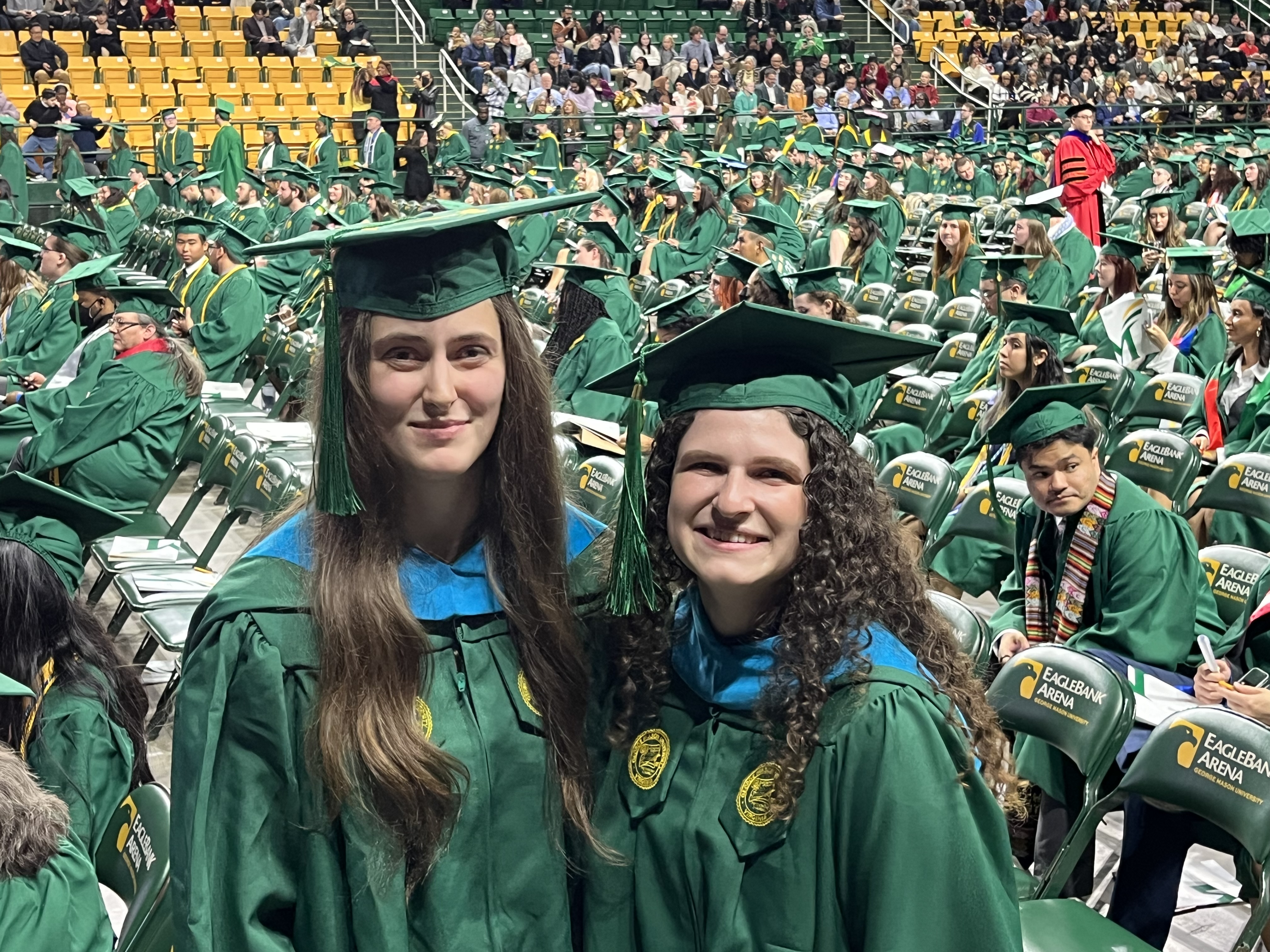
Recent Biodefense MS grad Sophie Hirshfield just published this piece for CSIS, addressing key global health questions following the APEC summit and Biden-Xi meeting. She explains in her introduction, “From November 14 to 16, leaders from the 21-member Asia-Pacific Economic Cooperation (APEC) group met in San Francisco to discuss promoting trade and economic growth across the Pacific region. On the sidelines of the forum, Presidents Joe Biden and Xi Jinping convened for their first in-person meeting in a year. While the meetings provided an opportunity to keep public health priorities on the diplomatic agenda, they led to few meaningful new commitments on U.S.-China health security cooperation.”

“Public Health Agencies Are Using AI Chatbots to Ease Workloads. Is It a Good Idea?”

Biodefense PhD Student Kimberly Ma recently published this piece with The Bulletin of the Atomic Scientists. In it, she explains in part, “There’s a real risk that large-language models like ChatGPT contribute to online disinformation and misinformation. In a call earlier this year for the safe and ethical use of AI, the World Health Organization (WHO) worried that AI responses “can appear authoritative and plausible to an end user” but be “completely incorrect or contain serious errors, especially for health-related” matters. Similarly, the organization warned AI may be “misused to generate and disseminate highly convincing disinformation in the form of text, audio or video content that is difficult for the public to differentiate from reliable health content.” Just as media organizations have been caught publishing AI-generated content riddled with inaccuracies, public health workers need to ensure they are not accidentally producing well-intentioned deliverables with critical errors. And in an environment when adversarial countries, antivaxxers, and politicians operate individually or in networks to spread disinformation online, public health agencies will be up against bad actors with the same technology they have.”

“Preparing for the Next Pandemic Response Through Strengthened Collaboration”

Donnel Harvin, a member of the Schar School faculty, recently co-authored this white paper for NEMA: “This report synthesizes the insights from the National Emergency Management Association (NEMA) Pandemic Workshop hosted in June of 2023. The Centers for Disease Control and Prevention (CDC) funded the project. The workshop brought together emergency management directors and state public health officers from eight states to discuss their collaborative response to the COVID-19 pandemic in the very early phases of the response, January 2020 – January 2022. The particular focus was on the identification of friction points, successes, and opportunities for increased collaboration. Federal partners were invited to discuss issues with federal integration into state COVID-19 response efforts. The discussions highlighted a range of complex issues encompassing roles and authorities, data collection and sharing, equity concerns, and communication, with an emphasis on state and local levels as well as rural and urban experiences.”

“Advancing Governance Models for Frontier for AIxBIO: Key Takeaways and Action Items from the Johns Hopkins Center for Health Security Metting with Industry, Government, and NGOs, 29 November 2023”

Johns Hopkins Center for Health Security recently published a “…summary of high-level findings that identify concrete next steps needed following its recent convening of leading AI labs, executive branch officials, and biosecurity experts…” that “was informed by discussions during a not-for-attribution meeting hosted by the Center. The meeting was attended by around 50 participants, including those from 6 different leading AI companies as well as government officials from the White House and several government agencies with responsibility for managing potential AIxBio risks.”

The report calls for “…the creation of an ongoing public-private forum to facilitate the sharing of important information related to biosecurity risks; a regulatory framework that defines mandatory practices, reporting, and oversight of highly capable AI models; and a legal accountability framework to incentivize developers and deployers of models to adequately address emergent risks.”

“Generative AI and Weapons of Mass Destruction: Will AI Lead to Proliferation?”

Ian Stewart unpacks potential proliferation threats posed by LLMs in this Medium post, writing in part “Large Language Models (LLMs) caught popular attention in 2023 through their ability to generate text based on prompts entered by the user. LLMs have also proven capable of generating code, summarizing text, and adding structure to unstructured text, among others. There remain questions around the real-world usefulness of LLMs in many domains, particularly given some of the difficulties in solving limitations of LLMs such as hallucination. Nonetheless, some have raised concerns about the ability of LLMs to contribute to nuclear, chemical and biological weapons proliferation (CBRN). Put simply, could a person learn enough through an interaction with an LLM to produce a weapon? And if so, would this differ from what the individual could learn by scouring the internet?”

“Poll: Voters Support Bringing EU-Style AI Regulations to the US, Prioritizing Safety Over Speed in Research”

New from the Artificial Intelligence Policy Institute: “A new poll conducted by the Artificial Intelligence Policy Institute (AIPI) shows that the American public supports the passage of the European Union’s AI Act by nearly a 4:1 margin, and 64% support similar regulation in the United States.”

“The survey showed strong public support for a slowdown of AI research and skepticism of tech companies; respondents decisively back federal regulation that curbs rapid AI research and development by private companies. By a 2:1 margin, respondents agree that it is the role of the government to make sure companies don’t go too fast when developing AI models. 75% say the government should restrict what private companies can do when training AI models.”

“AIPI also surveyed public opinion on risky research initiatives across AI development and dangerous virus research—particularly relevant as scientists and the federal government look to revise guidelines on potential pandemic pathogens. 83% of the public is in agreement that the federal government should implement renewed oversight protocols on research experiments using dangerous viruses. When prompted about AI being in such research, 68% say that we should be concerned that bad actors could use AI to create biological weapons.”

“Shaping the Future US Bioeconomy Through Safety, Security, Sustainability, and Social Responsibility”

Attal-Juncqua et al. recently published this article in Trends in Biotechnology: “Biomanufacturing practitioners and researchers describe the norms that should govern the growing, global field, to include safety, security, sustainability, and social responsibility. These ‘4S Principles’ should be broadly adopted so that the future of the field may provide the greatest benefits to society.”

“Stability of Pathogens on Banknotes and Coins: A Narrative Review”

Meister et al. recently published this article in the Journal of Medical Virology: “For the prevention of infectious diseases, knowledge about potential transmission routes is essential. Pathogens can be transmitted directly (i.e. respiratory droplets, hand-to-hand contact) or indirectly via contaminated surfaces (fomites). In particular, frequently touched objects/surfaces may serve as transmission vehicles for different clinically relevant bacterial, fungal, and viral pathogens. Banknotes and coins offer ample surface area and are frequently exchanged between individuals. Consequently, many concerns have been raised in the recent past, that banknotes and coins could serve as vectors for the transmission of disease-causing microorganisms. This review summarizes the latest research on the potential of paper currency and coins to serve as sources of pathogenic viral, bacterial, and fungal agents. In contrast to the current perception of banknotes and coins as important transmission vehicles, current evidence suggests, that banknotes and coins do not pose a particular risk of pathogen infection for the public.”

What We’re Watching 🍿

The Biological Weapons Convention and the Need for a Compliance and Verification Mechanism

New from the Geneva Center for Security Policy: “The GCSP’s Head of Arms Control and Disarmament speaks to three experts on biological security from King’s College London about the start of discussions by the States Parties to the Biological Weapons Convention (BWC) on compliance and verification. They discuss why a compliance and verification mechanism is needed, what can be learned from the previous verification efforts in other contexts, and what has changed in how verification is done since this was last discussed in the BWC framework over 20 years ago. The experts also discuss what the key elements of any mechanism will need to be, what are the most important bio security incidents, and how countries are working on their preparedness to respond to such incidents. The GCSP will be following the discussions in the BWC closely and stands ready to be a platform to bring together all stakeholders to generate new thinking to strengthen the BWC to respond to today’s bio security challenges.”

What We’re Listening To 🎧

PODCAST | Rethinking Our Defense Against Unknown Biothreats

“Dr. Harshini Mukundan, Program Manager and Scientist for Chemical and Biological Technologies at the Office of National and Homeland Security, Lawrence Berkeley National Laboratory, and visiting Scientist at Los Alamos National Laboratory sat down with host and AAAS STPF fellow Adejare (Jay) Atanda to discuss her research on pathogen agnostic disease detection and diagnostics, why this is important for biodefense against unknown biothreats, the role of technological innovations in pathogen agnostic detection and diagnostics, limitations of existing technological tools, and the vital importance of public-private partnerships in transforming this field. This conversation also covered the challenges women, people of color and immigrants face as scientists, the importance of mentorship in mitigating these challenges and her own mentorship and advocacy work to educate young girls about STEM careers as a AAAS IF/THEN STEM Ambassador and guest on CBS’s “Mission Unstoppable” among other efforts.”

Listen here.

Poisons and Pestilence: 20 Bonus Episode: No Fire No Thunder with Alastair Hay

Check out this episode with Alastair Hay, discussing his work as a toxicologist as it relates to the prohibition of chemical weapons.

61st ISODARCO Course: Nuclear Order and International Security after Ukraine

“The war in Ukraine has had an enormous impact on global security, reviving nuclear fears, undermining the prospects for arms control, and shattering many of the norms and constraints that were the foundation of European security.  ISODARCO 2024 will examine the global nuclear order in light of the Ukraine war, focusing on the states, the policies and the technologies that will shape the future in a much more difficult environment.  How will we cope with this more dangerous world?”

This course will take place January 7-14, 2024, at the University of Trento. Learn more and register here.

International Conference, CBRNE Research & Innovation

“The last 40 years have demonstrated that both military and civilian populations could be exposed to highly hazardous CBRNE agents following conflicts, natural outbreaks and disasters, industrial incidents or terrorist attacks.”

“Worldwide, researchers, responders and industrial capacities have been commited to provide adapted response to these challenges.”

“Building on the success of the first 5 International Conferences « CBRNE Research and Innovation » which took place in Antibes (2015), Lyon (2017), Nantes (2019), on line (2021) and Lille (2022), we want to give you a new opportunity to build up or strengthen collaborative networks in Strabourg (March 19th – 21rst 2024).”

“The CBRNE R&I Conference is specifically devoted to scientific updates, responders’ feedbacks and expression of needs. It also includes workshops and demonstrations of innovative materials, technologies and procedures, according to the following themes: DETECTION – IDENTIFICATION, PROTECTION – DECONTAMINATION, MEDICAL COUNTERMEASURES, RISKS & CRISIS MANAGEMENT.”

“Looking forward to your proposals for communication and to welcoming you at Strasbourg in March 2024!”

Learn more here.

Registration for GHS 2024 Now Open

Registration is now open for the Global Health Security 2024 conference in Sydney, Australia. This iteration will take place 18-21 June, 2024. The call for abstracts is also still open. “The mission of the Global Health Security conference is to provide a forum where leaders, researchers, policy-makers, and representatives from government, international organisations, civil society, and private industry from around the world can engage with each other, review the latest research and policy innovations, and agree solutions for making the world safer and healthier. To that end, our mission is to help foster a genuinely multidisciplinary community of practice that is committed to working collaboratively to enhance global health security and eliminate disease, irrespective of its origin or source.”

Vote: 2023 Arms Control Person(s) of the Year Nominees

“Since 2007, the independent, nongovernmental Arms Control Association has nominated individuals and institutions that have, in the previous 12 months, advanced effective arms control, nonproliferation, and disarmament solutions and raised awareness of the threats posed by mass casualty weapons.”

“In a field that is often focused on grave threats and negative developments, the Arms Control Person(s) of the Year contest aims to highlight several positive initiatives—some at the grassroots level, some on the international scale—designed to advance disarmament, nuclear security, and international peace, security, and justice.”

“Voting will take place between Dec. 8, 2023, and Jan. 11, 2024. The results will be announced on Jan. 12, 2024. Follow the discussion on social media using the hashtag #ACPOY2023.”

Learn about the nominees and vote here.

Pandora Report 12.15.2023

This week covers the FDA’s ongoing investigation into contaminated applesauce, the passing of Gao Yaojie-an activist responsible for bringing to light the extent of China’s AIDS epidemic-, and more.

Biodefense MS Graduates Riley Flynn and Sophie Hirshfield at GMU’s 2023 Winter Commencement Ceremony

FDA Leadership Says Tainted Applesauce Pouches May Have Been Intentionally Contaminated

Cinnamon applesauce pouches available Weis, WanaBanana, and Schnucks have been pulled from shelves after they were found to be contaminated with lead. Dozens of children in the United States have been sickened by the tainted products. Now, the FDA’s Deputy Commissioner for Human Foods, Jim Jones, says they may have been intentionally contaminated.

In an interview with Politico, Jones said “We’re still in the midst of our investigation. But so far all of the signals we’re getting lead to an intentional act on the part of someone in the supply chain and we’re trying to sort of figure that out.” All of the pouches in question were linked to a manufacturing facility in Ecuador that the FDA is currently inspecting.

‘“My instinct is they didn’t think this product was going to end up in a country with a robust regulatory process,” Jones said. “They thought it was going to end up in places that did not have the ability to detect something like this.”’

Politico further explained that “The FDA continues to investigate a number of theories for how the pouches became contaminated, and has not drawn any conclusions about the way the lead was added, why or by whom. The FDA says it currently believes the adulteration is “economically motivated.” That generally refers to ingredients being altered in order to make products appear higher in value, often so companies can produce a cheaper item and sell it at an elevated price.”

“The agency and the Centers for Disease Control and Prevention have collaborated with state and local health authorities as well as Ecuadorian authorities to trace the origin of the cinnamon in the applesauce pouches, which is believed to be the source of the lead contamination. More than 60 U.S. children under the age of 6 have tested positive for lead poisoning after consuming the pouches — some at levels more than 500 times the acceptable threshold for lead, according to The Washington Post.”

Gao Yaojie, Chinese Physician and Self-Exiled AIDS Activist, Dead at 95

Gao Yaojie, a gynecologist and well-known AIDS activist, died on December 10 in New York City. Gao, formerly based in China’s Henan province, was famous for her work to expose the outbreak of HIV/AIDS in the country in the 1990s and 2000s. The outbreak was large in scale and primarily driven by the country’s Plasma Economy, which arose because of restrictions on foreign imports of blood products in the 1990s. This resulted in blood plasma donation becoming a way for rural populations to make money in government-supported plasma donation centers. However, unsafe practices like repeated use of unsterilized needles and pooling multiple donors’ blood during the plasmapheresis allowed HIV to spread widely.

Because of the Chinese government’s efforts to suppress reporting on this epidemic, poor rural populations were left largely unaware of the dangers of plasma donation and the public in general was unaware of the severity of the crisis. Gao was one of the first to speak publicly about the outbreak, helping draw the attention of media outlets. She later told documentary filmmakers about her motivations for doing this, saying, “My driving thought is: how can I save more people from dying of this disease? We each only live one life.”

It is estimated that at least one million Chinese were infected with HIV during this epidemic, highlighting the importance of Gao’s and others’ bravery. For this, she garnered praise from the United Nations, several Western organizations, and even Hillary Clinton. This rising fame led to her being placed under house arrest in 2007, with about 50 police preventing her from traveling to the United States to accept an award recognizing her work. In response to this, she told NPR “I think they feel I got in the way of their political achievements and their official careers…Otherwise, why would they put me under house arrest? What law did I break to warrant mobilizing all these police?”

NPR further explained her activities later in life in their article on her passing, writing: “Despite pressure from Henan provincial authorities to stop publicizing the AIDS crisis, she continued her work, using all the proceeds from her books and pamphlets to support AIDS families, especially children orphaned by the disease or the many suicides that it caused.”

“Restrictions on her movement began hindering in work in China, however, and in 2009, she abruptly fled to the US, after fearing she would be put under house arrest again. Many admirers continued to visit her apartment in West Harlem, including a group of young Chinese students who kept her company in the loneliness of exile.”

‘”Many Chinese regarded her as a hero, and when they came to New York, if they didn’t know how to contact her , [sic] they would ask me. I would ask them for an email written in Chinese and would forward it to her. So far as I know, she always wrote back to those people and welcomed them to come visit,” remembers Andrew Nathan, a political science professor at Columbia University who handled much of Gao’s affairs in New York.”

“The Biological and Toxin Weapons Convention in 2023: Glimmers of Progress Set Against a Troubled Geopolitical Landscape”

Experts at CSR’s Nolan Center, including Biodefense PhD Program alumna and current faculty member Saskia Popescu, recently authored this blog post focused on the BWC’s potential for success in verification, universalization and effective implementation in Africa, and the creation of an International Agency for Biological Safety. They explain in their introduction: “For nearly two decades, efforts to strengthen the Biological and Toxin Weapons Convention (BWC) were in stasis, with opportunities missed and States Parties unable to agree to definite action. States Parties arrived at the Review Conference last year facing a growing biological weapons threat—augmented by rapidly converging complimentary technologies—coupled with a status quo in the BWC that was insufficient for the task. Yet nations drove a breakthrough: the consensus achieved at last year’s Review Conference proved that action is still possible despite the challenging international security environment.”

“In a world in which biological threats and vulnerabilities are exceedingly complex, there is a critical need to reinforce relationships among global experts, national governments, and civil society. Over the past two weeks, these stakeholders have met to identify, examine, and develop specific and effective measures to strengthen the Convention. An unwavering theme throughout the Meeting of States Parties underscored that preparedness and resilience are investments, rather than costs, reinforcing the deterrence by denial efforts CSR continues to promote. Although the challenging international security environment continues to hinder progress there are glimmers of genuine progress across several fronts…”

“Biosecurity in the Americas: Regional Threat Assessment”

A new from UMD’s START, co-authored by Biodefense MS Program alumna Alexandra Williams: “This publication, currently available in Spanish, provides a breadth and depth of focuses as a high-level assessment of the Central and South America regions and introduction to key topics as:

  1. The needed expansion of understanding of the differences and areas of collaboration between the concepts of biosafety and biosecurity,
  2. Existing international obligations to biosecurity through the BWC and UNSC Resolution 1540,
  3. How biosecurity applies to and may differ in application across a variety of facility types that engage in biological research or production, whether private or public laboratories, agricultural or university-based facilities,
  4. Biosecurity risks that include proliferation, bioterrorism, agroterrorism, and biocrime,
  5. The five pillars and mechanisms of biosecurity,
  6. Lastly, the application of biosecurity in the Central and South American regions.”

“NTI|Bio Convenes Workshop on Disincentivizing State Bioweapons Development and Use”

From NTI: “A week ahead of the Biological Weapons Convention (BWC) Working Group meetings in Geneva, Switzerland, NTI | bio convened a workshop on “Disincentivizing State Bioweapons Development and Use.” This two-day workshop on November 29 and 30 brought together academics, diplomats, biosecurity experts, and government policy makers to begin developing a cross-disciplinary thought and practice community to explore and develop potential disincentivizing solutions. Current thinking and policy on disincentivizing bioweapons acquisition and use is underdeveloped—especially by comparison with the nuclear security field.”

‘“We launched this effort because we see the need for more rigorous thinking on effective approaches to making bioweapons unattractive to nation-states,” said NTI | bio Vice President Jaime Yassif. “NTI’s goal is to bridge theory and practical policy-relevant approaches to develop new ideas that can invigorate international efforts to reduce biological threats.”’

Biodefense Graduate Program Director Gregory Koblentz and Associate Professor Sonia Ben Ouagrham-Gormley both participated in this workshop. Read more about it here.

“Great Powers and the Norms of the BW Prohibition Regime”

A new working paper from CBWNet: “The United States of America and the Soviet Union were instrumental in creating the biological weapons prohibition regime more than 50 years ago. This has left the regime with a big gap in its normative structure related to the verification of treaty compliance. The working paper by Alexander Kelle and Eva Siegmann analyses great power involvement in several areas of regime implementation and concludes that none of the great powers, including China, has supported the addition of declaration and inspection norms. While recent US and Chinese initiatives could still lead to a strengthening of the regime in different areas, Russian policies, most notably false accusations against the US and others, threaten to undermine the regime.”

“AI and Biorisk: An Explainer”

A new explainer from Georgetown’s CSET: “Recent government directives, international conferences, and media headlines reflect growing concern that artificial intelligence could exacerbate biological threats. When it comes to biorisk, AI tools are cited as enablers that lower information barriers, enhance novel biothreat design, or otherwise increase a malicious actor’s capabilities. In this explainer, CSET Biorisk Research Fellow Steph Batalis summarizes the state of the biorisk landscape with and without AI.”

“Bio X AI: Policy Recommendations For A New Frontier”

Jeffrey et al. discuss the work of the Federation of American Scientists’ Bio x AI Policy Development Sprint in this piece, explaining in their introduction: “Artificial intelligence (AI) is likely to yield tremendous advances in our basic understanding of biological systems, as well as significant benefits for health, agriculture, and the broader bioeconomy. However, AI tools, if misused or developed irresponsibly, can also pose risks to biosecurity. The landscape of biosecurity risks related to AI is complex and rapidly changing, and understanding the range of issues requires diverse perspectives and expertise. To better understand and address these challenges, FAS initiated the Bio x AI Policy Development Sprint to solicit creative recommendations from subject matter experts in the life sciences, biosecurity, and governance of emerging technologies. Through a competitive selection process, FAS identified six promising ideas and, over the course of seven weeks, worked closely with the authors to develop them into the recommendations included here. These recommendations cover a diverse range of topics to match the diversity of challenges that AI poses in the life sciences. We believe that these will help inform policy development on these topics, including the work of the National Security Commission on Emerging Biotechnologies.”

“Push to Improve Biosecurity in the Age of Genetic Engineering”

Wilmot James recently authored this opinion piece for Business Day, explaining in part “The possibility of using AI to develop bioweapons raises additional concerns, and remains uncharted territory. While the intersection of AI and biotechnology holds immense potential for positive applications in healthcare, research and diagnostics, it also poses risks if misused. AI algorithms could be employed to analyse vast genetic data sets and identify specific sequences for manipulation. This could accelerate the process of genetic engineering, allowing for the creation of more efficient and potentially harmful pathogens…To safeguard against such threats, multilateral and public-private sector agreements and regulations to govern the ethical use of AI in science, emphasising the prohibition of bioweapon development, should be established, with strong oversight committees responsible for assessing the ethical implications at the intersection of AI and biotechnology. These committees should include experts in AI, virology, bioethics and global health security.”

“Sounding the Alarm on Anti-Science”

Margaret Winchester provides background and overview of Peter Hotez’s latest book-The Deadly Rise of Anti-Science-in this piece for Health Affairs: “In his book, The Deadly Rise of Anti-Science, Hotez, professor and dean of the National School of Tropical Medicine at Baylor College of Medicine, and co-director of the Center for Vaccine Development at Texas Children’s Hospital, paints a bleak picture of public science denial during the pandemic, embedded in historic context. He tells the story of systematic anti-science efforts from his view in the trenches—and as a personal target for anti-science activists. This book, and his commentary in our December issue of Health Affairs on global lessons from COVID-19, highlight the very real effects of this movement, including lives lost, undermined public health efforts, foregone vaccinations, social schisms, and more, that will be felt for generations to come. As he writes, “anti-science now kills more Americans than global terrorism, or other deadly societal forces and social determinants.” Drawing from multiple sources, he estimates that approximately 200,000 people needlessly died in the US after COVID-19 vaccines became widely available.”

EU vs Disinfo Disinformation Review

The most recent edition of EU vs Disinfo’s Disinformation Review is now available and features multiple sections focused on Russia’s continued use of alleged US biological weapons laboratories as a bogeyman. Be sure to check it out for fantastic lines such as “If the only tool that you have is a hammer, everything looks like a biolab,” and “At a staged event, Putin mumbled out an announcement to veterans and the wider public that his regime would continue to rule over Russia after an orchestrated ritual not to be confused with an event known as an ‘election’ in the free world.”

2023 State of the Bioeconomy

From BIOISAC: “We have a lot to celebrate as we close 2023 and just over 12 months since the Executive Order calling for a safe, secure bioeconomy. Join us as we recap the activity, publications, outcomes, and – we will of course share a glimpse of the “behind the scenes” conversations from our 3 regional events and our one-day “Closing the Knowledge Gaps” event, our two-day table top training and the resulting “Going Viral: Bioeconomy Defense TTX” report, and, of course, the industry-demanded outputs from our hardware/software device security workgroup report and supplements, “Fortifying the Bioeconomy” as well as the Bioeconomy Security Questionnaire and Instrument Disposal Guide. We also have a lot left to do! We plan to share a few of our goals for 2024 and our upcoming regional events schedule.”

“Join us December 19th at 2pm Eastern-US for a live discussion.” Register here.

Presidential Advisory Council on Combating Antibiotic-Resistant Bacteria (PACCARB) Virtual Meeting

“The Presidential Advisory Council on Combating Antibiotic-Resistant Bacteria (PACCARB) provides advice, information, and recommendations to the U.S. Secretary of Health and Human Services (HHS Secretary). The council supports and evaluates U.S. government activities focused on fighting antimicrobial resistance (AMR) in human health, animal health, and environmental health. Using this One Health approach, members of the PACCARB have expertise from a range of backgrounds, including academia, industry, public health, advocacy, veterinary, and agricultural production.”

“The PACCARB was established under Executive Order 13676 and included in the Pandemic and All-Hazards Preparedness and Advancing Innovation Act of 2019 (PAHPAIA). Since 2019, the President has given authority to the HHS Secretary as the primary recipient of PACCARB recommendations. Additional information on the authority and activities of the PACCARB can be found on the About Us page in the charter.”

“As a federal advisory committee, the PACCARB looks to engage with the public and all AMR stakeholders. The council holds several public meetings every year both in-person and live streamed on the HHS.gov website. These meetings are open to anyone with an interest in combating AMR. See how to get involved!”

This virtual meeting will take place on December 20 from 9-4 EST. Learn more here.

61st ISODARCO Course: Nuclear Order and International Security after Ukraine

“The war in Ukraine has had an enormous impact on global security, reviving nuclear fears, undermining the prospects for arms control, and shattering many of the norms and constraints that were the foundation of European security.  ISODARCO 2024 will examine the global nuclear order in light of the Ukraine war, focusing on the states, the policies and the technologies that will shape the future in a much more difficult environment.  How will we cope with this more dangerous world?”

This course will take place January 7-14, 2024, at the University of Trento. Learn more and register here.

International Conference, CBRNE Research & Innovation

“The last 40 years have demonstrated that both military and civilian populations could be exposed to highly hazardous CBRNE agents following conflicts, natural outbreaks and disasters, industrial incidents or terrorist attacks.”

“Worldwide, researchers, responders and industrial capacities have been commited to provide adapted response to these challenges.”

“Building on the success of the first 5 International Conferences « CBRNE Research and Innovation » which took place in Antibes (2015), Lyon (2017), Nantes (2019), on line (2021) and Lille (2022), we want to give you a new opportunity to build up or strengthen collaborative networks in Strabourg (March 19th – 21rst 2024).”

“The CBRNE R&I Conference is specifically devoted to scientific updates, responders’ feedbacks and expression of needs. It also includes workshops and demonstrations of innovative materials, technologies and procedures, according to the following themes: DETECTION – IDENTIFICATION, PROTECTION – DECONTAMINATION, MEDICAL COUNTERMEASURES, RISKS & CRISIS MANAGEMENT.”

“Looking forward to your proposals for communication and to welcoming you at Strasbourg in March 2024!”

Learn more here.

Registration for GHS 2024 Now Open

Registration is now open for the Global Health Security 2024 conference in Sydney, Australia. This iteration will take place 18-21 June, 2024. The call for abstracts is also still open. “The mission of the Global Health Security conference is to provide a forum where leaders, researchers, policy-makers, and representatives from government, international organisations, civil society, and private industry from around the world can engage with each other, review the latest research and policy innovations, and agree solutions for making the world safer and healthier. To that end, our mission is to help foster a genuinely multidisciplinary community of practice that is committed to working collaboratively to enhance global health security and eliminate disease, irrespective of its origin or source.”

WHO Announces Proposed Members of Technical Advisory Group on Response Use of the Life Sciences and Dual-Use Research

The WHO recently announced its proposed membership of its Technical Advisory Group on Responsible use of the life sciences and dual-use research (TAG-RULS DUR). According to WHO, “As per WHO processes, there will be now a two-week public consultation period for WHO to receive feedback on the proposed TAG-RULS DUR members and set in place the modalities for the TAG-RULS DUR’s first meeting, which is planned to take place following this consultation period…The final membership to the TAG-RULS DUR is subject to the above-mentioned public consultation period and relevant WHO practices and procedures.”

The proposed membership and instructions for providing commentary on the individuals included are both available here.

Vote: 2023 Arms Control Person(s) of the Year Nominees

“Since 2007, the independent, nongovernmental Arms Control Association has nominated individuals and institutions that have, in the previous 12 months, advanced effective arms control, nonproliferation, and disarmament solutions and raised awareness of the threats posed by mass casualty weapons.”

“In a field that is often focused on grave threats and negative developments, the Arms Control Person(s) of the Year contest aims to highlight several positive initiatives—some at the grassroots level, some on the international scale—designed to advance disarmament, nuclear security, and international peace, security, and justice.”

Voting will take place between Dec. 8, 2023, and Jan. 11, 2024. The results will be announced on Jan. 12, 2024. Follow the discussion on social media using the hashtag #ACPOY2023.”

Learn about the nominees and vote here.

Pandora Report: 1.27.2023

The year of the rabbit is off to one heck of a start. This week we cover COVID-19’s spread in China as the Party increasingly cracks down on Zero-COVID protesters, growing concern amount H5N1 in mammals, new insight into the history of the plague, and more. Several new publications are listed, including a fresh book from Ed Regis about the history of the Pacific Ocean Biological Survey Program and multiple works on misinformation’s impact on COVID-19 responses. As always, we round out with events and announcements, including multiple great upcoming professional opportunities. Happy Friday!

COVID-19 Multiplying Like Rabbits in China

China’s CDC claimed this week that cases of critically ill COVID-19 patients are down 72% from a peak earlier this month in the country, with daily deaths of hospitalized COVID-19 patients down 79% as well. This comes as Wu Zunyou, Chief Epidemiologist at China CDC, claims that 80% of the country’s 1.4 billion people have already been infected. This seems like an effort to indicate that a rebound is unlikely in the coming months amid concerns that the new year travel season will cause further spread and deaths. Just last week, China claimed to have 60,000 COVID-19 deaths in the month since it rolled back its notorious Zero-COVID policies, a number far below the one million some models estimated the country will suffer this winter.

However, CNBC notes, “…some experts said that figure probably vastly undercounts the full impact, as it excludes those who die at home, and because many doctors have said they are discouraged from citing Covid as a cause of death.” This understanding better aligns with reports of over-crowded funeral homes and crematoriums, and reports of coffin makers and funeral decoration companies repeatedly selling out of their products amid the spread. Because of these discrepancies, many are doubtful of the government’s official statistics.

At the same time, reports of Zero-COVID protesters being arrested or intimidated are mounting. Four women in Beijing are known to have been arrested in connection with these protests, seemingly in retaliation for their role in what has been described as “the boldest challenge to the Communist Party’s rule in decades and an embarrassing affront to its leader, Xi Jinping.” The New York Times explains the Party’s need to do this, writing “The party seems determined to warn off anyone who may have been emboldened by the remarkable outburst of public discontent, which was followed just days later by Beijing’s abrupt decision to abandon Covid restrictions. Since then, domestic challenges have mounted: Youth unemployment is high, the economy is slowing, and Covid infections and deaths have accelerated.”

The same piece continues, “The party is also working to discredit the protesters by casting them as tools of malevolent foreign powers. Beijing has long dismissed dissent at home — from calls for women’s rights to pro-democracy activism to ethnic unrest — as the result of Western-backed subversion. The protests against “zero Covid” were no exception: One Chinese diplomat suggested that some of the demonstrators had been “bought by external forces.”

Chunyun, the Lunar New Year travel period in China, typically lasts from mid-January through late-February, meaning opportunities for spread in rural parts of the country are far from over, despite China CDC’s apparent claims to the contrary. The continued supply of highly suspect statistics and crackdowns on Zero-COVID protesters presents a troubling situation and indicates that the Party has done anything but change its ways.

Thinking of Offering a Nice Egg in This Trying Time? Mink Again

US egg prices skyrocketed in price by more than 137% between December 2021 and December 2022, leaving many in constant sticker shock at the grocery store as this once reliably cheap staple becomes increasingly expensive. Much of this is attributed to outbreaks of highly pathogenic avian influenza (HPAI) A(H5N1), which has been spreading in US flocks since January 2022, resulting in cullings of over 57 million birds across industrial and backyard flocks. However, over the past year, this virus has also demonstrated its ability to spread from birds to mammals, with infections found in several species in the US so far, including raccoons, foxes, seals, grizzly bears, and, most recently, minks. Naturally, this had led to increased concern about potential spread into other mammal populations.

“Transmission electron microscopic image of two Influenza A (H5N1) virions, a type of bird flu virus Note the glycoprotein spikes along the surface of the virion and as a stippled appearance of the viral envelope encasing each virion.” Credit: CDC PHIL

Nature covered this story this week, writing “Until this particular outbreak, all mammalian infections could be attributed to direct contact with virus-contaminated material, says Hualan Chen, a virologist at the Harbin Veterinary Research Institute in China. For example, animals that ingest wild-bird droppings, or that prey on infected animals, can develop the disease. But its spread between mammals “implies that this H5N1 virus may pose a higher risk to public health”, Chen says.”

A new article in Eurosurveillance discusses the alarming spread of HPAI A(H5N1) at an American mink farm in Galicia, Spain in October 2022. In it, Agüero et al. explain that the farm experienced an acute increase in its mortality rate (.77% versus an expected range of .2-.3%), prompting the facility’s clinical veterinarian to collect samples from affected animals. These animals tested positive for H5N1, and “Post-mortem examination revealed haemorrhagic pneumonia or red hepatisation of the lungs as the most notable lesions”

The authors further explain the set-up of the farm, which housed 51,986 minks, writing “The minks were housed in wire netting cages placed in rows and situated in a series of over 30 partially open barns, which provided overhead protection but not total shelter of their sides. The minks were fed with raw fish and poultry by-products, cereals and blood meal. Poultry farms and avian slaughterhouses supplying the poultry by-products were located in Galicia. Up to 10 January 2023, H5N1 poultry outbreaks have not been reported from this region.”

The outbreak soon peaked, with a weekly mortality rate of 4.3% documented between October 17 and 23. Culling measures were ordered quickly, and all minks from infected pens were culled by November 17, along with destruction of all carcasses, fomites, and waste. Of the farm’s 12 workers, 11 were in contact with infected and culled animals, though none of them tested positive and they all completed quarantine without any problems. However, as the authors note in their abstract, “The identified viruses belong to clade 2.3.4.4b, which is responsible of the ongoing epizootic in Europe. An uncommon mutation (T271A) in the PB2 gene with potential public health implications was found. Our investigations indicate onward mink transmission of the virus may have occurred in the affected farm.”

While the mink farm seems to have been thorough in its efforts to stop this outbreak, there are concerns that this new variant may be circulating in wild bird populations. Nature writes, “But Puryear thinks that because the new variant contains genetic material from gull flu, it’s likely that at least some of its genetic changes arose in gulls before entering the mink farm. This means that a strain containing those mutations is probably still circulating in the bird population. But for human populations, the outlook is still good: if the new strain did start to infect people, health authorities could probably produce a vaccine quickly, and the antiviral drug Tamiflu (oseltamivir) can reduce the severity of the disease.”

The Nature news piece concludes with, “The potential risk to wild animals is greater. Bird flu has consistently caused high levels of sickness and death among wild birds and mammals over the past year, and how the new variant will affect that trend remains to be seen. “We just simply don’t know,” says Puryear.”

Shake Ups and Mess Ups at the Department of Health and Human Services

CDC Takes Major Steps in Revamp

CDC Director Dr. Rochelle Walensky announced a number of high-level changes to her agency this week, including the creation of the Office of Health Equity and the Office of Public Health Data, Surveillance, and Technology. These are steps taken in light of last year’s internal review that found, among other things, that the agency struggled with appropriately and rapidly sharing scientific findings, communications in general, and that it needed to strengthen relationships with federal, state, and local partners. Furthermore, most of the organizations under CDC will now report directly to the Office of the Director, moving away from what has been described as a “Community of Practice structure”.

MedPage Today explained this leadership re-structuring, writing “Today, additional details about that leadership structure became clear. There will be a centralized leadership team of experts housed within the director’s office, which will include the director of the CDC/Agency for Toxic Substances and Disease Registry; the principal deputy director; the deputy director for program and science/chief medical officer; the deputy director for policy, communications, and legislative affairs/chief strategy officer; the deputy director for global health; the chief operating officer; and the chief of staff.”

“These changes will improve efficiency, speed decision-making, and strengthen the communication of scientific information to the American public, ensuring CDC’s science reaches the public in an understandable, accessible, and implementable manner as quickly as possible,” an unnamed staffer told The Hill.

OIG Report Finds NIH and EcoHealth Alliance Fell Short in Monitoring and Oversight

The Office of Inspector General (OIG) at HHS released this week the findings of its audit of the National Institutes of Health’s grants to the EcoHealth Alliance. This audit was initiated because of concerns over NIH’s grant awards to EcoHealth as well as EcoHealth’s subawards to foreign entities. OIG aimed to “…determine whether NIH monitored grants to EcoHealth in accordance with Federal requirements, and whether EcoHealth used and managed its NIH grant funds in accordance with Federal requirements.”

The Office found that, “Despite identifying potential risks associated with research being performed under the EcoHealth awards, we found that NIH did not effectively monitor or take timely action to address EcoHealth’s compliance with some requirements. Although NIH and EcoHealth had established monitoring procedures, we found deficiencies in complying with those procedures limited NIH and EcoHealth’s ability to effectively monitor Federal grant awards and subawards to understand the nature of the research conducted, identify potential problem areas, and take corrective action. Using its discretion, NIH did not refer the research to HHS for an outside review for enhanced potential pandemic pathogens (ePPPs) because it determined the research did not involve and was not reasonably anticipated to create, use, or transfer an ePPP. However, NIH added a special term and condition in EcoHealth’s awards and provided limited guidance on how EcoHealth should comply with that requirement. We found that NIH was only able to conclude that research resulted in virus growth that met specified benchmarks based on a late progress report from EcoHealth that NIH failed to follow up on until nearly 2 years after its due date. Based on these findings, we conclude that NIH missed opportunities to more effectively monitor research. With improved oversight, NIH may have been able to take more timely corrective actions to mitigate the inherent risks associated with this type of research.”

Biodefense Graduate Program Director Dr. Gregory Koblentz was quoted in the New York Timespiece on this report, saying “Although concerns were identified by NIAID staff, the proposal was not referred to NIAID’s review committee for further consideration.” He continued, saying “On paper, NIAID staff were encouraged to ‘err on the side of caution’ in identifying and referring such proposals…but in practice it looks like they erred on the side of complacency.” 

Woman Pleads Guilty to Mailing Ricin Letters in 2020

Pascale Cecile Veronique Ferrier pleaded guilty this week in a US District Court “…to sending a threatening letter containing homemade ricin to then-President Donald J. Trump at the White House in September 2020, and eight similar letters, each containing ricin, to Texas State law enforcement officials.” Ferrier, a dual French-Canadian national, holds a French engineering degree and admitted in her plea agreements that she made ricin in her Quebec home in September 2020. According to the FBI, “Ferrier placed the ricin in envelopes containing letters she wrote to then-President Trump at the White House and to eight Texas State law enforcement officials.”

“Ferrier was detained in the State of Texas for around 10 weeks in the spring of 2019, and she believed that the law enforcement officials were connected to her period of detention. In early September 2020, Ferrier used the Twitter social media service to propose that someone should “please shoot [T]rump in the face.” The letters in the envelopes contained threatening language, and the letter addressed to then-President Trump instructed him to “[g]ive up and remove [his] application for this election.” Ferrier mailed each of the threatening ricin letters from Canada to the United States. Ferrier then drove a car from Canada to the Peace Bridge Border Crossing in Buffalo, New York, on Sept. 20, 2020, where border patrol officials found her in possession of a loaded firearm, hundreds of rounds of ammunition and other weapons.”

Ferrier is scheduled for sentencing on April 26. She faces 262 months imprisonment if her plea agreements are accepted.

An Oldie, But a (Not So) Goodie: Y. Pestis Strains May Have Been Around Centuries Before Outbreaks

A new article in Communications Biology discusses how Yersinia pestis spread globally over longer periods of time than previously estimated. Eaton et al. estimate that the strain of Y. pestis responsible for the Black Death in the mid-14th century diverged from the ancestral strain as early as 1214, while the one responsible for the Plague of Justinian may have cropped up between 272 and 465–up to nearly 270 years before the epidemic began in 541. “‘It shows that each major plague pandemic has likely emerged many decades to centuries earlier than what the historical record suggests,” study coauthor and evolutionary geneticist Hendrik Poinar, director of McMaster University’s Ancient DNA Centre in Canada,” said in a statement to CNN.

The authors write in their abstract: “Plague has an enigmatic history as a zoonotic pathogen. This infectious disease will unexpectedly appear in human populations and disappear just as suddenly. As a result, a long-standing line of inquiry has been to estimate when and where plague appeared in the past. However, there have been significant disparities between phylogenetic studies of the causative bacterium, Yersinia pestis, regarding the timing and geographic origins of its reemergence. Here, we curate and contextualize an updated phylogeny of Y. pestis using 601 genome sequences sampled globally. Through a detailed Bayesian evaluation of temporal signal in subsets of these data we demonstrate that a Y. pestis-wide molecular clock is unstable. To resolve this, we developed a new approach in which each Y. pestis population was assessed independently, enabling us to recover substantial temporal signal in five populations, including the ancient pandemic lineages which we now estimate may have emerged decades, or even centuries, before a pandemic was historically documented from European sources. Despite this methodological advancement, we only obtain robust divergence dates from populations sampled over a period of at least 90 years, indicating that genetic evidence alone is insufficient for accurately reconstructing the timing and spread of short-term plague epidemics.”

Read the entire article here.

“Produced by the National Institute of Allergy and Infectious Diseases (NIAID), this digitally colorized scanning electron microscopic (SEM) image depicts a number of yellow-colored, Yersinia pestis bacteria, that had gathered on the proventricular spines of a Xenopsylla cheopis flea. These spines line the interior of the proventriculus, a part of the flea’s digestive system. The Y. pestis bacterium is the pathogen that causes bubonic plague.” Credit: CDC PHIL

It’s 90 Seconds to Midnight (That’s Not Good)

“This year, the Science and Security Board of the Bulletin of the Atomic Scientists moves the hands of the Doomsday Clock forward, largely (though not exclusively) because of the mounting dangers of the war in Ukraine. The Clock now stands at 90 seconds to midnight—the closest to global catastrophe it has ever been.” Read the Bulletin’s statement here (also available in РУССКИЙ and УКРАЇНСЬКА).

Say “Hello” to the International Biosecurity and Biosafety Initiative for Science

The Nuclear Threat Initiative recently announced the creation of the International Biosecurity and Biosafety Initiative for Science (IBBIS), an organization “trying to prevent dramatic advances in bioscience from unleashing engineered pathogens from the lab, and wants research funders, scientists and journals to help.” NTI explains: “NTI is working with international stakeholders to establish the International Biosecurity and Biosafety Initiative for Science (IBBIS), an independent organization dedicated to reducing emerging biological risks associated with technology advances. A core element of the IBBIS mission will be to strengthen international biosecurity norms and develop innovative, practical tools and incentives to uphold them. IBBIS has a broadly defined mission, but initially it will focus on preventing the misuse of DNA synthesis technology—with the understanding that it will expand its remit over time.”

“IBBIS will collaborate with stakeholders across the global bioscience and biotechnology enterprise including academia, industry, the public health community, governments and philanthropy. These activities will complement the important work of the World Health Organization, the United Nations Office of Disarmament Affairs, and other national, regional, and international organizations. NTI’s work to establish IBBIS is rooted in the vision of a world in which bioscience and biotechnology flourish, with safeguards against deliberate or accidental misuse with potentially catastrophic consequences.”

David Matthews discusses IBBIS in-depth, including the fraught geopolitical situation it faces, in this piece for Science Business.

The Lancet Series on One Health and Global Health Security

Check out this recent series from the Lancet: “Following the 2014-2016 Ebola outbreak in West Africa, and the on-going global COVID-19 pandemic, the One Health approach (bridging the Animal-Environmental-Human Health interface)  has rapidly gained political and financial support, particularly in regional and transcontinental initiatives to improve Global Health Security, including through recently established institutions like Africa CDC and other multidisciplinary consortia. This four-paper Lancet Series explores the adoption of One Health approaches to improve health security and include an analysis of the current landscape of preventive, surveillance, and response measures in outbreak situations of emerging and re-emerging zoonotic infectious diseases with epidemic potential as well as other potential public health emergencies such as neglected endemic diseases, antimicrobial resistance, environmental and chemical hazards and natural disasters.”

“Combating Misinformation as a Core Function of Public Health”

Knudsen et al. discuss the New York City Department of Health and Mental Hygiene’s role in countering misinformation in this New England Journal of Medicine Catalyst piece: “The New York City Department of Health and Mental Hygiene determined that the spread of misinformation about Covid-19 was having a harmful health impact, particularly on communities of color with low vaccination rates. It established a dedicated Misinformation Response Unit to monitor messages containing dangerous misinformation presented on multiple media platforms, including social media, non-English media, and international sites, and proliferating in community forums. The Misinformation Response Unit and the Health Department collaborated with more than 100 community partners to tailor culturally appropriate, scientifically accurate messages to different populations. The Health Department and its partners were able to rapidly identify messages containing inaccurate information about Covid-19 vaccines, treatment, and other issues and to support the delivery of accurate information to various populations. Although the harms of misinformation and benefits of addressing the problem require additional evaluation, internal and external interviews suggested that the Misinformation Response Unit helped the Health Department counter misinformation and disseminate accurate scientific information to the community, thus improving health and vaccine equity during the Covid-19 pandemic.”

“Fault Lines: The Expert Panel on the Socioeconomic Impacts of Science and Health Misinformation”

This new report from the Council of Canadian Academies includes a number of important findings, including that COVID-19 misinformation cost at least 2,800 Canadian lives and CAD 300 million in hospital expenses over a period of just nine months. “Fault Lines details how science and health misinformation can proliferate and its impacts on individuals, communities, and society. It explores what makes us susceptible to misinformation and how we might use these insights to improve societal resilience to it. The report includes a model of the impacts of COVID‑19 misinformation on vaccination rates in Canada, producing quantitative estimates of its impacts on our health and the economy, and situating these within a broader context of societal and economic harms.”

“Battling Biological Threats: Complacency, Progress, or Both?”

“As 2023 opens, there is apprehension that partisan divisions and politicized health security approaches may worsen as the United States moves into a divided government of ultra-thin margins. But over the course of 2022, several important new national security directives and policies and bipartisan legislative actions significantly advanced thinking on health security and what is required to better protect Americans—proving that progress remains in reach, despite tough odds. Global health security, including biodefense, has been elevated to new prominence in U.S. national security thinking. The Biodefense Posture Review, expected to be released in early 2023, is mandated to unify and modernize DOD’s broad, comprehensive biodefense capabilities, and synchronize these efforts with those of other federal departments in line with the recently released National Defense and Biodefense Strategies. The United States must be resolute and clear, leaning forward not backwards, investing in new capabilities sustained over many years to protect Americans and the larger world against future dangerous pathogens. In a new commentary, Thomas R. Cullison and J. Stephen Morrison argue that it remains possible to bridge divides and make measurable progress to prepare the United States for inevitable future biological threats.” Read this CSIS report here.

“The Pentagon’s Chemical and Biological Defense Program Moves Towards Modernization, Yet Congress Slashes Funding”

Dan Regan discusses DoD’s seemingly mismatched objectives and funding decisions in this piece for the Council on Strategic Risks. He writes, “To achieve its mission set, including investing in emerging biotechnologies and bolstering industrial capacity to scale MCMs to novel threats, developing and investing in stand-off pathogen early warning detection, and advancing protective equipment for the Joint Force, the CBDP budget requires a nearly two-fold increase from the President’s request of $1.32 billion in FY23 to $3 billion for FY24. However, Congress unfortunately just dealt a 7% cut to chemical and biodefense programs with the FY23 omnibus spending bill, following years of declining funds for CBDP. As the FY24 Presidential Budget Request is being drafted, the Biden Administration and Congress should consider significant increases to CBDP’s budget, along with the other biodefense and global health security priorities outlined in the 10 + 10 over 10 strategy, to combat biological threats.”

“Virology Under the Microscope–a Call for Rational Discourse”

In this commentary in mBio, more than 130 authors call for a return to rational discourse about virology and its role in modern issues like pandemic response and debates over GoF research. “Viruses have brought humanity many challenges: respiratory infection, cancer, neurological impairment and immunosuppression to name a few. Virology research over the last 60+ years has responded to reduce this disease burden with vaccines and antivirals. Despite this long history, the COVID-19 pandemic has brought unprecedented attention to the field of virology. Some of this attention is focused on concern about the safe conduct of research with human pathogens. A small but vocal group of individuals has seized upon these concerns – conflating legitimate questions about safely conducting virus-related research with uncertainties over the origins of SARS-CoV-2. The result has fueled public confusion and, in many instances, ill-informed condemnation of virology. With this article, we seek to promote a return to rational discourse. We explain the use of gain-of-function approaches in science, discuss the possible origins of SARS-CoV-2 and outline current regulatory structures that provide oversight for virological research in the United States. By offering our expertise, we – a broad group of working virologists – seek to aid policy makers in navigating these controversial issues. Balanced, evidence-based discourse is essential to addressing public concern while maintaining and expanding much-needed research in virology.”

“CRISPR Technology: A Decade of Genome Editing is Only the Beginning”

Wang and Doudna discuss the first decade of CRISPR in Science: “In the decade since the publication of CRISPR-Cas9 as a genome-editing technology, the CRISPR toolbox and its applications have profoundly changed basic and applied biological research. Wang and Doudna now review the origins and utility of CRISPR-based genome editing, the successes and current limitations of the technology, and where innovation and engineering are needed. The authors describe important advances in the development of CRISPR genome-editing technology and make predictions about where the field is headed. They also highlight specific examples in medicine and agriculture that show how CRISPR is already affecting society, with exciting opportunities for the future. —DJ”

“Zombie Viruses from the Arctic”

Jean-Michel Claverie’s new piece in Think Global Health discusses the threat global warming poses to global health by threatening Earth’s permafrost, potentially releasing ancient microbes. Claverie explains the evolution of this threat and how it may evolve throughout the piece, writing in part “This science fiction scenario became more realistic in 2015 when an international research team succeeded in resurrecting several viruses isolated from permafrost dating back 30,000 years. Following additional experiments, it is now clear that a significant proportion of prehistorical viruses can remain infectious for even longer periods of time. This article reviews the reality of the risks that their release might represent for the future.”

Science, Secrecy, and the Smithsonian

New from Ed Regis, author of The Biology of Doom, is this book, Science, Secrecy, and the Smithsonian:

“This is the story of how the Smithsonian Institute became intertwined in a secret biological warfare project.”

“During the 1960s, the Smithsonian Institution undertook a large-scale biological survey of a group of uninhabited tropical islands in the Pacific. It was one of the largest and most sweeping biological survey programs of all time, a six-year-long enterprise during which Smithsonian personnel banded 1.8 million birds, captured live specimens and took blood samples, and catalogued the avian, mammalian, reptile, and plant life of 48 Pacific islands.”

“But there was a twist. The study had been initiated, funded, and was overseen by the U.S. Biological Laboratories at Fort Detrick, Maryland. The home of the American biological warfare program. In signing the contract to perform the survey, the Smithsonian became a literal subcontractor to a secret biological warfare project. And by participating in the survey, the Smithsonian scientists were paving the way for top-secret biological warfare tests in the Pacific.”

“Critics charged the Smithsonian with having entered into a Faustian bargain that made the institution complicit in the sordid business of biological warfare, a form of combat which, if it were ever put into practice and used against human populations, could cause mass disease, suffering, and death. The Smithsonian had no proper role in any such activities, said the critics, and should never have undertaken the survey.”

Science, Secrecy, and the Smithsonian: The Strange History of the Pacific Ocean Biological Survey Program explores the workings of the survey program, places it in its historical context, describes the military tests that followed, and evaluates the critical objections to the Smithsonian’s participation in the project.”

Jonathan Tucker CBW Symposium

“The James Martin Center for Nonproliferation Studies cordially invites you to the 11th annual Jonathan Tucker Symposium on chemical and biological weapons issues on February 9th and 10th, 2023.” BW topics include “Revisiting the Siege of Caffa & Catapulting Cadavers” and “Governance of Dual-Use Biological Research,” the latter of which will be moderated by Dr. Gregory Koblentz. CW topics include “Lessons learned from the U.S. Chemical Weapons Destruction Program” and “The 2023 CWC Review Conference”. Learn more and register for the virtual events here.

Novel Applications of Science and Technology to Address Emerging Chemical and Biological Threats

For the first time since 2019, this Gordon Research Conference is back, this time in sunny Ventura, CA. “The Chemical and Biological Defense GRC is a premier, international scientific conference focused on advancing the frontiers of science through the presentation of cutting-edge and unpublished research, prioritizing time for discussion after each talk and fostering informal interactions among scientists of all career stages. The conference program includes a diverse range of speakers and discussion leaders from institutions and organizations worldwide, concentrating on the latest developments in the field. The conference is five days long and held in a remote location to increase the sense of camaraderie and create scientific communities, with lasting collaborations and friendships. In addition to premier talks, the conference has designated time for poster sessions from individuals of all career stages, and afternoon free time and communal meals allow for informal networking opportunities with leaders in the field.” The conference will be held March 19-24, 2023. Learn more and apply here by February 19.

High School and College Student Internship: Data Analytics for Elite Young Scholars – Biology and Medical Science Experience

“This Young Scholars Research Program is designed for Elite High School Students and Undergrad Students, who are interested in pursuing their study and/or career in the fields of biology or medical science with emphasis on advanced data analytics. You will work with our esteemed George Mason University faculty members on a specific team project. The team will consist of about three to four members of both high school and undergraduate students. The project will be assigned to the students at the beginning of the program based on the preference indicated by the students prior to the program. Two outputs will be expected from each team at the end of the programs: i) a final paper which will be published on the Center for Biomedical Science and Policy website as well as a special issue of World Medical & Health Policy; and ii) Team presentation at a symposium at which students compete for prizes.”

“During this program, students will be participating in a research project applying some of the following methods, including but not limited to biostatistics using R or Stata, data visualization using QGIS or ArcGIS, and network visualization using Gephi.”

“During this program, students will be participating in a research project applying some of the following methods, including but not limited to biostatistics using R or Stata, data visualization using QGIS or ArcGIS, and network visualization using Gephi.”

Special Call for Papers-Journal of Science Policy & Governance

The Journal of Science Policy & Governance recently announced a special call for papers “and competition to provide policymakers with a new perspective on how scientific expertise could be useful to the complex brew of 21st foreign policy and national security challenges, resulting in a special issue on Policy and Governance on Science, Technology and Global Security.” The journal invites “students, post-doctoral researchers, policy fellows, early career researchers and young professionals from around the world to submit op-eds, policy position papers and other articles addressing foreign policy and national security challenges. These include concerns about the use of nuclear or radiological weapons driven by the war in the Ukraine, hypersonic weapons, immigration driven by climate change, and emerging threats in cybersecurity and biosecurity.” The deadline for submission is April 30.

Additionally, there will be a science policy writing workshop on January 30 in addition to two webinars on February 20 and March 30 (one on Policy and Governance on Science and Technology and one on Foreign Policy and National Security, respectively) to help prospective authors prepare their submissions. Learn more about these events and register here.

Weekly Trivia Question

You read the Pandora Report every week and now it’s time for you to show off what you know! The first person to send the correct answer to biodefense@gmu.edu will get a shout out in the following issue (first name last initial). For this week, our question is “On April 22, 1915, the German Army infamously unleashed more than 160 tons of chlorine gas on French trenches near which Belgian city?”

Shout out to Morgan M. for winning last week’s trivia! The correct answer to “In 1985, an American extremist group’s compound was raided by more than 300 law enforcement officers from several federal, state, and local agencies following a three-day standoff. Among other items, officers seized about thirty gallons of potassium cyanide the group intended to use to poison water supplies of several cities. What was the name of this group?” is the Covenant, the Sword and the Arm of the Lord.

Pandora Report: 1.20.2023

Happy (almost) Lunar New Year! This week we are covering several updates, including China’s COVID-19 cases and fatalities, a new GAO report on HHS’ oversight of high-risk research, and more. We also have several new publications this week, an interesting podcast episode on PPE, and plenty of newly-launched resources and open opportunities later on in the issue.

China Calims 60K COVID-19 Deaths as Lunar New Year Travel Surges

This week, China said it has recorded nearly 60,000 deaths linked to COVID-19 since lifting Zero COVID restrictions last month, up from the 37 it previously claimed had died since December 7. Previously, the country had reported just over 5,000 COVID-19 deaths in total since the initial outbreak of the disease in Wuhan in late 2019. The New York Times explains this, writing “Until Saturday, China had reported a total of just 5,272 Covid deaths since the pandemic began in the city of Wuhan in late 2019. That measure was narrowly defined as deaths from pneumonia or respiratory failure caused by Covid. The new figure released Saturday included those who had Covid, but also died from other underlying illnesses.”

Reuters explains this figure further, writing “China recorded 59,938 Covid-related deaths from Dec. 8 to Jan. 12, Jiao Yahui, an official with China’s National Health Commission, said at a news conference in Beijing. That figure included 5,503 people who died of respiratory failure directly caused by Covid. Another 54,435 fatalities were linked to other underlying illnesses, Ms. Jiao said.” Reuters also notes that Jiao claims China was unable to release this information sooner because it “required a comprehensive examination of hospital reporting.”

It remains unclear whether or not China has changed the way it counts COVID-19 deaths so that it includes those with underlying conditions that contributed to their death from COVID-19. Furthermore, many are still skeptical of these numbers, and concerns about a further spike amid holiday travel persist. Combined with other factors like the economic impact this has had in China, and attempts to stamp out online discourse about the Party’s handling of the pandemic by blocking “fake information” that would cause a “gloomy sentiment”, this troubling situation is continuing to evolve.

Russia Announces Criminal Case Against Unnamed US Citizen Accused of Espionage Related to “Biological Topics”

Russia’s Federal Security Service (FSB) announced this week it has opened a case against a US citizen, citing allegations of “…engaging in “espionage” related to “biological topics.” According to The Guardian, ““The American is suspected of collecting intelligence information in the biological sphere, directed against the security of the Russian Federation,” it added, without any further details.” Reuters reports that “The U.S. State Department said it was aware of the “unconfirmed reports” that Russia has opened a criminal case against a U.S. citizen on suspicion of espionage.” Reuters continued, writing “We’re looking into this matter and we’ll continue to monitor,” State Department deputy spokesperson Vedant Patel told reporters on Thursday….Patel added Russia does not generally abide by obligations to provide timely notification of the detention of U.S. citizens in Russia.”

New GAO Report–“Public Health Preparedness: HHS Could Improve Oversight of Research Involving Enhanced Potential Pandemic Pathogens

The Government Accountability Office (GAO) recently released this report discussing its study reviewing the Department of Health and Human Services’ (HHS) oversight policies and programs (“the Framework”). The report indicates that “GAO found that HHS’s Framework does not fully meet the key elements of effective oversight identified in past work. For example, the Framework does not provide a standard to help funding agencies interpret what “reasonably anticipated” means. Until HHS develops and documents such a standard, the Framework allows for subjective and potentially inconsistent interpretations of the requirement—leaving HHS without assurance the department is reviewing all necessary research proposals.”

The report, available here, discusses the GAO study and findings at length. It concludes with three recommendations–1) “The Secretary of Health and Human Services should work with HHS funding agencies to develop and document a standard for “reasonably anticipated” to ensure consistency in identifying research for departmental review that is “reasonably anticipated to create, transfer or use enhanced potential pandemic pathogens,”; 2) “The Secretary of Health and Human Services should work with HHS funding agencies to identify and share non-sensitive information with researchers, Congress, and the public about the departmental review process for research involving enhanced potential pandemic pathogens, including information on composition and expertise of those involved in the review process and how the evaluation criteria are applied,” and 3) “As HHS and CDC deliberate any changes to the DSAT program, the Director of the Centers for Disease Control and Prevention should assess and document the risk posed by the limitations of the existing DSAT exemptions for public health emergencies and seek legislative authority as needed.”

“This photograph depicts a microbiologist in what had been the Influenza Branch at the Centers for Disease Control and Prevention (CDC), while she was conducting an experiment inside a negatively-pressurized biological safety cabinet (BSC) within the Biosafety Level 3-enhanced laboratory. The airflow into the BSC helps prevent any airborne virus particles from escaping the confines of the cabinet, and as part of her personal protective equipment (PPE), she was wearing a powered air purifying respirator (PAPR), which was filtering the air that she was breathing.”| Credit: CDC PHIL

No More Biowordscramble–NIST Releases Bioeconomy Lexicon

Biosecurity, bioenergy, bioinspired, biorisk…If you have ever started to feel like the new trend in security jargon is adding “bio” to an already existing word, this one is for you. The National Institute of Standards and Technology (NIST) recently released its bioeconomy lexicon as directed in the Executive Order on Advancing Biotechnology and Biomanufacturing Innovation for a Sustainable, Safe, and Secure American Bioeconomy. NIST explains the need for this, writing “Biotechnology and biomanufacturing are increasingly vital to the global economy, including in the health care, food and agriculture, and energy sectors. Accordingly, there is a need for standardized terms and definitions to ensure a common understanding of the concepts, data, technical developments, and workforce opportunities as the bioeconomy grows both domestically and internationally.”

They continue by explaining the creation of the lexicon: “This initial lexicon was developed by NIST in consultation with an interagency working group consisting of several U.S. government departments and agencies as directed in the Executive Order noted above, and reflects consideration of relevant domestic and international definitions as well as those from private sector stakeholders. The lexicon harmonizes a base set of terms and definitions with the goal of helping to enable the development of measurements and measurement methods for the bioeconomy that support uses such as economic measurement, risk assessments, and the application of machine learning and other artificial intelligence tools. This lexicon is intended to be a living document, and NIST intends to periodically engage with government and private sector stakeholders to inform future updates to the lexicon terms and definitions as appropriate.”

“Assessing the Trajectory of Biological Research and Development in the Russian Federation”

In this piece for Joint Forces Quarterly, Dr. Gigi Kwik Gronvall and Aurelia Attal-Juncqua offer an overview of the Soviet and Russian biological weapons programs and insight into concerns about current Russian research today. Using information from a two-round Delphi study, they discuss their findings related to “Concerns About Management, Biosecurity, and Biosafety of Dual-Use Research of Concern in the Russian Federation” and “Current State of Biotech and Biological R&D in the Russian Federation.” They conclude with a number of observations and recommendations, including insight into how science diplomacy with Russia may be harmed, writing “Historically, science diplomacy has been a useful tool to keep communication lines open when security relations are fraught and has led to positive outcomes for both science and national security. However, Russia’s invasion of the sovereign Ukrainian nation makes any bilateral engagements between the United States and Russia unconscionable at this time. These actions are unlikely to be forgotten or forgiven swiftly, and sanctions are likely to persist for some time. Eventually, at an undetermined point in the future, such engagements will certainly again prove to be important for national security and scientific advancement.”

“The Myth of the “Poor Man’s Atomic Bomb”: Knowledge, Method, and Ideology in the Study of Chemical, Biological, and Nuclear Weapons”

Check out Biejan Poor Toulabi’s interesting recent article in the Journal of Global Security Studies. Abstract: “Chemical and biological weapons (CBWs) have often been characterized as a “poor man’s atomic bomb”: a cheap and easy to acquire alternative to nuclear weapons that is particularly appealing to so-called Third World states. This idea is also reflected in Western government and expert estimates that have long exaggerated the spread of CBWs, especially among states in the Global South. In this article, I break down the ways in which the idea that the spread of CBWs is prevalent and that it primarily happens among states in the Global South has come to exist and persist. By dissecting an oft-cited dataset on CBW spread, I unravel frequently occurring methodological flaws—such as conceptual confusion, misinterpretation of sources, and a bias toward proliferation charges originating from the US government—that breed and sustain inflated estimates and faulty allegations. Subsequently, I show that a dominant cognitive framework that centers on the metaphorical use of the terms “proliferation” and “poor man’s atomic bomb” primes analysts and policymakers to interpret the history and future of chemical, biological, and nuclear weapons as being characterized by inevitable spread, particularly among the non-Western “Other.” In conclusion, I offer ways to counter the orthodoxies of this ideology in teaching, research, and policy.”

RevCon Reports 16 and 17

CBW Events’ BioWeapons Prevention Project recently released its RevCon Report 16 and RevCon Report 17, concluding their coverage of the recent BWC Review Conference. Report 16 discusses the final day of the conference and offers reflections on RevCon as a whole. Report 17 provides an outline and discussion of the content of the Final Document. Richard Guthrie also includes discussion of what the Final Document lacks, writing “As well as what would normally be part II of the Final Document, noted above, there were a number of other elements missing. Perhaps the most significant is any substance on the processes that will be established for the review of S&T developments and the promotion of international cooperation under Article X. Other aspects which have had broad support ended up being removed in an attempt to reach consensus included creation of an Article VII database, endorsement of the Tianjin Guidelines, and any reference to gender issues.”

“118th Congress: Bioeconomy and Health Security”

In this piece for the Federation of American Scientists,  Michael A. Fisher, Sruthi Katakam and Maeve Skelly discuss opportunities the 118th Congress has to adopt policies that “help drive U.S. biotech and biomanufacturing to grow regional prosperity, deliver on conservation goals, and improve U.S. competitiveness and resilience.” They offer several ideas for improving competitiveness in the bioeconomy, safeguarding the country against biological threats, and several recommendations for appropriations. An especially interesting portion is that which is dedicated to countering global malnutrition to enhance US security, in which they write “Due to the COVID-19 pandemic, environmental impacts, and conflicts like the war in Ukraine, global rates of malnutrition are at eight percent and are forecast to become even worse. Providing life-saving treatment around the world serves a core American value of humanitarianism, and a priority for U.S. national security – the newly released National Security Strategy dedicates an entire section to food insecurity.”

In 2021 legislation, Congress directed USAID to advance programs to prevent and treat malnutrition around the world and develop a Global Nutrition Coordination Plan. That legislation also directed USAID to create the Nutrition Leadership Council, which can help elevate nutrition programs across U.S. global health interventions and foster collaboration with other sectors, development agencies, partner governments, and local actors. These are important steps to create a centralized food security program with harmonized funding – a system to deploy a more effective response to end global malnutrition and improve U.S. national security.”

“Congress should work with the Administration to begin scaling up global malnutrition assistance in FY 2024, in accord with the 2021 legislation.”

“‘Shot In The Arm’ Shows How Disinformation Can Be Deadly”

Dr. Lipi Roy discusses Shot in the Arm, a film that recently premiered at the Palm Spring International Film Festival, in this piece for Forbes. In it, she covers core elements of the film and how it contributes to the broader conversation surrounding vaccine hesitancy and disinformation going on today, consulting experts like Dr. Peter Hotez along the way. She writes in part, “Health-related misinformation can be deadly, and we must actively combat it. Healthcare professionals need to partner with finance, fashion, sports, media and entertainment industries to promote vaccines and science in general. Celebs like Hugh Jackman, Gayle King and Julia Roberts proudly – and publicly – promoted their Covid-19 vaccinations. I also believe that a politicized problem needs a political response: elected officials – guided by health experts – need to create policies to protect the public, as they did with seatbelts, air bags and bike helmets. Lastly, people who actively promote lies about science and medicine need to be held accountable. As a physician, if I lied to patients and withheld lifesaving treatments for their thyroid cancer or lupus, I would lose my medical license. Similar punitive action must be applied to people who actively propagate egregious lies about YOUR health and safety. Shot in the Arm is really the kick in the pants we ALL need to preserve the sanctity of science and protect the most vulnerable among us. Go see this film.”

What We’re Listening To 🎧

PPE Breaches: Understanding the Risks and How to Respond 

“On the podcast episode “NETEC Guidance on Breach of PPE,” five NETEC [National Emerging Special Pathogens Training and Education Center] experts in personal protective equipment (PPE) talked about breaches in PPE and the importance of preparing health care workers to assess the risks and safely respond to a breach.”

One Health Approach for Effective Biodefense and Global Health Security

“The National Academy of Engineering’s Government-University-Industry Research Roundtable will convene a webinar on January 24 from 1-2 P.M. ET to discuss the latest National Biodefense Strategy and Implementation Plan. Discussions will focus on the collaborative and transdisciplinary ‘One Health’ approach, per the Plan, for effective biodefense and global health security. Speakers (below) will explore the role of cross-sectoral partnerships as well as innovative approaches to achieve the goals and objectives outlined in the Strategy.” Learn more and register here.

National Science Advisory Board for Biosecurity (NSABB) Meeting

The next NSABB meeting will take place virtually on January 27 at 1 pm EST. This meeting will cover “Draft Findings: Ensuring Biosecurity Oversight Frameworks Keep Pace with the Future of Science.” Learn more and register here.

Special Call for Papers-Journal of Science Policy & Governance

The Journal of Science Policy & Governance recently announced a special call for papers “and competition to provide policymakers with a new perspective on how scientific expertise could be useful to the complex brew of 21st foreign policy and national security challenges, resulting in a special issue on Policy and Governance on Science, Technology and Global Security.” The journal invites “students, post-doctoral researchers, policy fellows, early career researchers and young professionals from around the world to submit op-eds, policy position papers and other articles addressing foreign policy and national security challenges. These include concerns about the use of nuclear or radiological weapons driven by the war in the Ukraine, hypersonic weapons, immigration driven by climate change, and emerging threats in cybersecurity and biosecurity.” The deadline for submission is April 30.

Additionally, there will be a science policy writing workshop on January 30 in addition to two webinars on February 20 and March 30 (one on Policy and Governance on Science and Technology and one on Foreign Policy and National Security, respectively) to help prospective authors prepare their submissions. Learn more about these events and register here.

Closing the Knowledge Gaps

“BIO-ISAC, in partnership with the Department of Homeland Security and Johns Hopkins Applied Physics Laboratory, will host a one-day event (with remote participation available) on January 24, 2023.”

“This gathering of thought leaders across the industry and its partners will address knowledge gaps about the bioeconomy itself. The event is expected to deliver recommendations that demonstrate the scope and breadth of industry impacts, identify specific safety needs and goals, and carve the path forward for a secure future.” Learn more and register here.

Novel Applications of Science and Technology to Address Emerging Chemical and Biological Threats

For the first time since 2019, this Gordon Research Conference is back, this time in sunny Ventura, CA. “The Chemical and Biological Defense GRC is a premier, international scientific conference focused on advancing the frontiers of science through the presentation of cutting-edge and unpublished research, prioritizing time for discussion after each talk and fostering informal interactions among scientists of all career stages. The conference program includes a diverse range of speakers and discussion leaders from institutions and organizations worldwide, concentrating on the latest developments in the field. The conference is five days long and held in a remote location to increase the sense of camaraderie and create scientific communities, with lasting collaborations and friendships. In addition to premier talks, the conference has designated time for poster sessions from individuals of all career stages, and afternoon free time and communal meals allow for informal networking opportunities with leaders in the field.” The conference will be held March 19-24, 2023. Learn more and apply here by February 19.

Call for Participants: Assess Biosafety and Biosecurity Oversight of Dual Use Research of Concern and Pathogens of Pandemic Potential

Kathleen Vogel and David Gillum of Arizona State University are conducting a research project to “…understand how dual use research of concern and pathogens of pandemic potential are regulated and how biosafety and biosecurity of this work is implemented, and if there are opportunities to improve the long-term benefits and minimize risks associated with this scientific work.” Their study includes a survey on this topic, which is accepting responses through January 27. Learn more and take the 20-25 minute survey here.

Notice of Funding Opportunity: Evidence-based Approaches to Implementing Biosafety in Diagnostic and Research Laboratories

This opportunity is offered by the Elizabeth R. Griffin Program at Georgetown University’s Center for Global Health Science and Security. Stakeholders can review this funding opportunity and submit applications here. Applications are due February 28.

Wilson Center Launches International Cooperation for Pandemic Preparedness Website

“As the COVID-19 pandemic enters its fourth year, the Wilson Center’s Science and Technology Innovation Program and the O’Neill Institute for National and Global Health Law at Georgetown University Law Center launched a new website today to address the changing paradigms in international health law and the critical need for strengthening global health security for the future.”

“This dynamic website, International Cooperation for Pandemic Preparedness, features renowned international health experts who break down eight critical issues the pandemic exacerbated, revealed, or created. Through video interviews and written analyses, the interactive examines what can happen at the international level when countries and international organizations work together to find needed solutions. In light of heightened demands for a pandemic treaty under the World Health Organization, expert advice on what is achievable at the international level has never been more critical to combating future COVID-19 variants and future pandemics.”

Weekly Trivia Question

You read the Pandora Report every week and now it’s time for you to show off what you know! The first person to send the correct answer to biodefense@gmu.edu will get a shout out in the following issue (first name last initial). For this week, our question is “In 1985, an American extremist group’s compound was raided by more than 300 law enforcement officers from several federal, state, and local agencies following a three-day standoff. Among other items, officers seized about thirty gallons of potassium cyanide the group intended to use to poison water supplies of several cities. What was the name of this group?”

Shout out to Tracy S. for winning last week’s trivia! The correct answer to “In 1980, a Frenchman entered a cave while visiting Mount Elgon National Park, Kenya. A week later he became seriously ill, eventually dying in a Nairobi hospital. Which cave did he enter and what disease killed him?” is Kitum Cave and Marburg virus disease.

Pandora Report: 5.15.2020

The Coronavirus Chronicles
We recently introduced our new series,The Coronavirus Chronicles, which is a collection of stories, based on the personal and professional experiences of the faculty, students, and alumni of the Biodefense Graduate Program, about life during the pandemic. From lab safety to parenting and even healthcare work, The Coronavirus Chronicles have detailed the lives of so many of our students and alumni working in COVID-19 response. We hope these stories help the public better understand the challenges posed by COVID-19 and how current and former members of the Biodefense Graduate Program have responded to these challenges and contributed to the pandemic response at the local, national, and international levels. This week, we’re launching a new story by biodefense doctoral alum Jomana Musmar, who shares how she’s responding to COVID-19 with HHS while multitasking as a mother and spouse to an ED physician. Jomana’s experiences provide insight into the challenges we’re facing in terms of pandemic response and lesson we can all take away, noting that “Another important lesson learned is the need for everyone—from households to corporations to governments—to have a Plan B for continuity of operations for every aspect of life. Our reliance on the internet, laptops, and mobile phones has shown how pivotal a role this technology plays in being able to survive.”

COVID-19 Reopening and Recovery: Proposed Plans for the US
GMU biodefense doctoral student and Pandora Report associate editor Rachel-Paige Casey is breaking down the recovery plans to help get the U.S. back from COVID-19. “Throughout April, strategies regarding the reopening of the US economy and its associated public health factors were published by the White House with the Centers for Disease Control and Prevention (CDC), the Center for Health Security at Johns Hopkins University, the Rockefeller Foundation, and the Edmond J Safra Center for Ethics at Harvard University. The four strategies discussed here either outline phases for resuming activity or describe systems to enable and assist safe reopening.” Casey details the four strategies, their phases, and provides a risk assessment in this detailed review of what experts are suggesting for COVID-19 recovery. Read more here.

Schar School Event- Public Policy in the Pandemic Age: How COVID-19 is Reshaping our Government, Economy, and Society
Join the Schar School Faculty, Alumni, Schar Alumni Chapter, and Dean Mark Rozell for an engaging virtual panel on the future of public policy post COVID-19 – COVID-19: How the Pandemic is Reshaping our Government, Economy, and Society. This virtual event will be moderated by Biodefense Graduate Program director Dr. Gregory Koblentz, and will be held from 2-3:30pm EST on Wednesday, May 20, 2020. The COVID-19 pandemic is presenting unprecedented challenges to the United States and the rest of the world. Not since the “Spanish Flu” of 1918 have we experienced a pandemic of this scale and severity. Aside from the steep and growing human toll of the outbreak, virtually every aspect of our personal and professional lives are being affected. The sheer breadth of issues impacted by COVID-19 is overwhelming: public health, medicine, government, the economy, international trade, education, national security, politics, and technology, to name just a few. The effects of the pandemic are also magnified by existing cleavages within our society ranging from hyperpartisanship to racial disparities to socioeconomic inequalities. You can read more about our distinguished panel members and register for the event here.

The Future Bioweapons Threat: Lessons from the COVID-19 Pandemic
Looking for a webinar to discuss lessons learned from COVID-19 and the implications for bioweapons threat analysis? The Council on Strategic Risks (CSR) is thrilled to present its first LIVE webinar on May 28 from 3:00-4:30pm EST, which will examine the future bioweapons threat from the perspective of the COVID-19 pandemic. Panelists include Max Brooks, author of World War Z and Devolution, Nonresident Fellow at The Modern War Institute and Atlantic Council, Honorable Andrew C. “Andy” Weber, Senior Fellow at Council on Strategic Risks, former Assistant Secretary of Defense for Nuclear, Chemical, and Biological Defense Programs at the Pentagon, GMU Biodefense alum Dr. Saskia Popescu, Epidemiologist and Senior Infection Preventionist, HonorHealth, and Dr. Alexander Titus, Chief Strategy Officer, Advanced Regenerative Manufacturing Institute and Senior Fellow at Council on Strategic Risks. Register for event here.

 Social Distancing During Pandemics According to the GAO
The US Government Accountability Office (GAO) released a brief report about the science behind social distancing to curb the spread of COVID-19. Based on historical studies, the Centers for Disease Control and Prevention (CDC) asserts that the area of highest risk is within 3 feet of an infected individual, but a buffer radius of 6 feet is recommended. These recommendations are founded on studies in the fields such as fluid mechanics, epidemiology, and microbiology. Other studies found that infectious droplets can travel beyond 6 feet, but the degree of infectivity of particles that travel relatively long distances is uncertain. The distance that an infectious droplet can travel depends on several factors such droplet size, humidity level, and air currents. For instance, the smaller the droplet, the farther it can potentially travel. The goal of social distancing (keeping a personal bubble with a 6-foot radius) is to reduce the rate of transmission; however, it is not a perfect non-medical countermeasure. The speeds and distances of viral particle travel from coughing or sneezing are difficult to determine with absolute precision. Additional challenges beyond the science and calculations are related to the difficulty in application: the psychological impacts of social distancing and isolation are yet to be fully realized. Read the full two-page here.

DHS S&T Launches Indoor Predictive Modeling Tool for Coronavirus Stability
This week, the Science and Technology Directorate (S&T) of the Department of Homeland Security (DHS) released a predictive modeling tool that estimates the natural decay of SARS-CoV-2 based on temperature within the 70-95°F range and relative humidity between 20-60%. The current iteration of the model is for stainless steel or ABS plastic surface types; nitrile (a compound used in disposable gloves) surface type will be available soon. For example, on a stainless steel or ABS plastic surface with a temperature of 77°F/25°C and relative humidity of 33%, the half-life of the virus is 11.52 hours, or 0.48 days. This model was developed to inform response efforts regarding the persistence of the virus on certain surfaces (fomites) and under specific combinations of conditions. Additional enhancements in the pipeline for this model include droplets in the air vs. on a surface, expanded temperature and humidity ranges, different surfaces. The model can be found here.

Pandemic dispatch: An infection-prevention expert on shortages, misinformation, and health worker strain on the coronavirus front line
GMU Biodefense doctoral alum and infection prevention epidemiologist Saskia Popescu discusses her experiences on the frontlines during the COVID-19 pandemic. “For the past four months, I’ve had a front row seat to the coronavirus pandemic. Working in a major hospital system, I’ve seen first-hand the issues that have come to define the crisis: the concerns about supplies, the torrent of misinformation, and the critical problem of health care worker exposure to COVID-19. Infection preventionists such as myself work in hospitals to stop the spread of infections among patients, staff, and visitors alike. Despite our training, the coronavirus has tested hospital programs like mine, forcing us to drastically change our daily practices.” Read more here.

News of the Weird: Pajama Sales in a Pandemic
Though many industries are struggling to survive as sales have plummeted during the response to COVID-19. Pajamas, however, are in high demand as many of us remain at home; pajama sales have soared by 143%since lockdown. Real pants are optional when working from home.   According to CNN Business, eCommerce sales were up almost 50% in April, because in-person retail shopping is currently limited, if not impossible. Other items with growing demand include beer and liquor and creative audio equipment like sound mixers.

News of the Weird: Cocktail-Friendly Face Masks
Artist Ellen Macomber designed an unconventional face mask that sports a small hole fit for a straw that allows the wearer to enjoy cocktails in Covid-19. Macomber is based in the Big Easy, also called New Orleans, a city known for its round-the-clock party life. These bedazzled and flamboyant face masks run $60 a pop. She does admit that the masks are not the “best form of prevention” given its opening right into the mouth.

Biosecurity Is the Lesson We Need to Learn from the Coronavirus Pandemic
Dr. Daniel Gerstein, graduate of the Biodefense PhD program, and Dr. James Giordano wrote in The National Interest about the biosecurity lessons we need to learn from the coronavirus pandemic. Though there is no scientific evidence that the novel coronavirus was human-made, humans do bear some the blame for this pandemic. Humans disrupt and destroy the environment and its habitats, mix species as bush meat in wet markets, and experiment with dangerous pathogens. The COVID-19 pandemic and the human behavior that encouraged it signal the need to develop a new approach to biosafety and biosecurity that “addresses the full range of biological threats that humankind and the global environment will face in the future.” As humans continue to intrude into natural habitats, the risk of zoonotic disease spillover continues to increase. Over the last thirty years, 30 new human pathogens have been found, most of which originated in animals. Gerstein and Giordano encourage the expansion of biosafety and biosecurity to include consideration of the global biological ecosystem. Read the full article here.

WHO Announces the Launch of New Informational Apps
The World Health Organization (WHO) launched two COVID-19 apps for smartphones. One is for healthcare workers and the other is for the general public. For healthcare workers, the WHO Academy app provides information on COVID-19 resources, guidance, training, and virtual workshops. For the general public, the WHO Info app provides access to the latest COVID-19 news and developments. Both apps can be downloaded for free from the Google Play Store and the Apple App Store.


Pandora Report: 2.28.2020

Welcome to your favorite weekly source for all things biodefense! We’ll be doing a shorter, slightly delayed newsletter next week, but rest assured, your source for global health security news will be back in full force on March 13th. Fortunately, we’ve got a registration page for you to reserve a spot (with an early-bird registration discount!) for the 2020 workshop on Pandemics, Bioterrorism, and Global Health Security: From Anthrax to Zika.

Experts Examine COVID-19 and an Unsettling Response by the Chinese Government
Missed the Coronavirus and Its International Ramifications February 21st event at GMU? Here’s a great recap. While the lively discussion was even-tempered, the information imparted about the global health crisis was often staggering. No less than a longtime veteran of international health emergencies—including investigating Japan’s nuclear reactor crisis—is alarmed. “This is an astonishing outbreak,” said senior vice president of the Center for Strategic and International Studies Stephen Morrison, director of the center’s Global Health Policy Center. “What we think we know today could change tomorrow.”

International Security Crisis Reader
This week’s International Security Crisis Reader covers biosecurity and the global Covid-19 pandemic. An article by our own Dr. Gregory Koblentz, Director of the Biodefense Graduate Program at GMU, is a featured piece. Koblentz’s Spring 2010 article, “Biosecurity Reconsidered: Calibrating Biological Threats and Responses,” describes how biosecurity arose as a critical component of the international security agenda, scrutinizes the contending definitions and conceptualizations of biosecurity, and outlines a taxonomy of naturally-occurring and human-made biological threats to international security. Other featured articles cover HIV/AIDS amidst the conflict in Africa, globalization and biosecurity, and intelligence assessments for biosecurity threats. The Crisis Reader can be found here.

SARS-CoV-2/COVID-19 Pandemic Updates
This week has been non-stop in terms of COVID-19 news and cases. From possible community spread in California, and  8,400 people being monitored, to a state of emergency being called in certain counties, there’s been a lot going on. On Thursday evening, the CDC revised the criteria to guide evaluation of patients under investigation for COVID-19 – this now expands to those with symptoms and travel to an affected area (China, Iran, Italy, Japan, and South Korea), as well as those with severe acute respiratory illness requiring hospitalization without a source of exposure. A whistle blower recently came forward and “is seeking federal protection after complaining that more than a dozen workers who received the first Americans evacuated from Wuhan, China, lacked proper training or protective gear for coronavirus infection control.” On Wednesday President Trump gave a press conference on the pandemic, breaking from what senior public health officials have said about the likelihood for additional cases in the United States. Vice President Pence has also been tasked with leading the COVID-19 response in the U.S., however there was concern on Thursday regarding the communication channels that are now being put in place. Shortages and communication gaps within response has been problematic in recent weeks, with comments of disruption being left to air without more guidance. Many are wondering how they can prepare though and experts have worked to dispel fear but also encourage general preparedness measures. GMU biodefense alum Saskia Popescu recently spoke on this, noting that “‘A lot of preparedness is planning ahead of time,”’ Popescu said.’“Practice makes permanent. If I have a plan, that means I don’t have to panic.’ ‘The most important thing right now is to remain calm,’ she said. ‘Remember, we don’t have that many cases in the U.S., and prevention strategies for this coronavirus are not new. We’ve been doing them for years’.” You can also hear her speak on NPR’s On Point with Jeremy Konyndyk regarding preparedness in the United States. Cases have continued to grow outside of China as Italy, South Korea, and Iran all report many infections. As COVID-19 cases spring up more and more outside of China, thoughts of containment have moved to mitigation. There has been increasing attention to the economic impact of the pandemic, and the UBS Chief Investment Office recently noted “While the situation in China appears to be improving, the next two weeks will be important in determining whether the authorities in Europe and elsewhere can quickly contain the outbreak, or whether there is a further rapid spread of the virus.The full impact on economic activity from the COVID-19 epidemic remains in a state of flux.” Moreover, they note that “In a risk case where containment in China takes much longer or the spread abroad significantly worsens, further reductions to growth would have to be made.” Realistically, how does one keep China’s economy running with 750 million in quarantine? Public trust has been hard hit and overstressed public health/healthcare systems aren’t helping. “The good news for Xi and the party at the moment is a decline in reported new cases and deaths nationwide (the vast majority in Hubei). The bad news, however, is that Hubei’s horrors have tarnished the trust many Chinese had in their officials’ ability to safeguard citizens’ lives and livelihoods.” Realistically, this also calls into attention the travel bans that despite continued use, fail to be truly effective. From discouraging transparency to the realistic issues in focusing on symptoms during respiratory virus season, these efforts appear more taxing than helpful. The economic impact of the outbreak will continue to be a topic of conversation though, as President Trump scrambles to downplay the stock market losses this week.

Synthetic Biology Surprise: Synthesis of Vaccinia Virus
Dr. Gregory D Koblentz, the Director of the Biodefense Graduate Program at Schar School of Policy and Government at George Mason University, published an article this week in the Bulletin of the Atomic Scientists about a frightening feat in biotechnology that remains unnoticed amidst the chaos of Covid-19. In January, Tonix Pharmaceuticals discreetly announced that it had successfully synthesized the vaccinia, the virus used for the smallpox vaccine, in a press release about a poster it presented at an American Society for Microbiology conference. Tonix’s “achievement” was sought after despite serious concerns from several biosecurity experts, many of whom raised criticism of the firm’s synthesis of horsepox virus in 2017. Of grave concern is the utility of synthesized vaccinia as the benefits do not outweigh the risks. In fact, synthesis is unnecessary for researching vaccinia as samples are widely available.  Any claims that Tonix’s work was intended to help develop an improved or safer smallpox vaccine are undercut by the recently licensed JYNNEOS vaccine, a 3rd generation smallpox vaccine developed by Bavaria Nordic. The resources and skills needed to synthesize even complicated viruses are becoming more readily available as synthetic biology and the flourishing bioeconomy lower costs and simplify processes. Unfortunately, the lack of regulations and oversight for DNA synthesis, whether in the name of peaceful research or otherwise, is not matching pace with its accessibility to scientists and DIY bio-users. This is yet another example of the possibilities – both beneficial and detrimental – made reality by synthetic biology, and the risks of puny safeguards for its tools and data.

Upcoming Event: The Story of Technology by Daniel Gerstein, PhD
On 4 March 2020, the CSPS Speaker Series is hosting Dr. Daniel Gerstein, a GMU Biodefense PhD alumnus, to discuss his new book, The Story of Technology: How We Got Here and What the Future Holds. The book examines the rapid proliferation and pervasive influence of technology in human societies. Dr. Gerstein is a senior policy researcher at the RAND Corporation, and he has served in the Department of Homeland Security as Under Secretary (Acting) and Deputy Under Secretary in the Science and Technology Directorate. Dr. Gerstein will be joined by Ellen Laipson, Director of the Master’s in International Security program and CSPS, and Dr. Gregory Koblentz, Director of the Biodefense Program. The event will take place at Noon in Room 113 of Van Metre Hall. Drinks and cookies will be provided. Register here.

Opportunities with the GHSA Next Gen Network
The Global Health Security Agenda’s Next Generation Network just announced its 2020 theme: Inclusive Expansion. Toward that, applications for the Next Gen Mentorship Program are open until 18 March and matches will be announced on 2 April. Apply here for the Mentorship Program. Additionally, leadership positions are available as regional coordinators; apply here. Other opportunities include helping to translate documents into multiple languages. To assist, email your name and language proficiencies to the coordinator at nextgenghsa@gmail.com. For more information on the Global Health Security Agenda click here and for more information on the GHSA Next Generation Network click here.

Covering COVID-19: What do you need to know?
Don’t miss this March 10th event hosted by the Association of Health Care Journalists. The COVID-19 outbreak story is evolving quickly and there are many unknowns about the epidemic, including how contagious the virus is, its mortality rate and whether there is undetected spread occurring outside of China. Providing accurate information to the public is more important than ever in this moment of uncertainty. Hear a panel of infectious disease experts and a journalist explain what is known, what to watch out for, where to find trusted resources and how to combat misinformation and confusion. Speakers include: Maryn McKenna, independent journalist, author; Senior Fellow of the Center for the Study of Human Health at Emory University. Michael Osterholm, Ph.D., M.P.A., director, Center for Infectious Disease Research and Policy. Saskia Popescu, senior infection preventionist at Honor Health, ELBI Fellow, and managing editor of Pandora Report.

Pandora Report: 2.21.2020

Happy Friday Biodefense Gurus! We have a packed edition of the Pandora Report this week, but before we begin – don’t forget to register and reserve your spot for the “Coronavirus & International Security” panel event this evening in Arlington, VA. The CSPS Distinguished Speaker Series event will be at 5pm and you can find more information and register here.

GMU Biodefense Summer Workshop on Pandemics, Bioterrorism, and Global Health Security
We’re excited to announce the summer dates for the workshop: Pandemics, Bioterrorism, and Global Health Security: From Anthrax to Zika. This three and a half-day workshop will be held in Arlington, VA, from July 13-16, 2020. Registration links and speaker information will be provided in the coming weeks. We hope you’ll join us for this immersive and engaging workshop with some of the top minds in the biodefense world, where we’ll discuss everything from synthetic biology to MCM, antibiotic resistance, and the current outbreak of COVID-19.

CW Use in Syria – Atrocities and Accountability 
We’ve got the scoop on a brand new article by GMU Biodefense graduate program director and professor Dr. Gregory Koblentz in Nonproliferation Review regarding Assad regime use of chemical weapons. International efforts to hold the government of President Bashar al-Assad accountable for the use of chemical weapons in the Syrian civil war have entered a new phase. For the first time, the Organization for the Prohibition of Chemical Weapons (OPCW), the international organization responsible for implementing the 1993 Chemical Weapons Convention, has been empowered to identify the perpetrators of chemical attacks in Syria. The Investigation and Identification Team (IIT), which was formed to conduct the OPCW’s new attribution mission, has announced its intention to investigate and identify the perpetrators of nine chemical attacks in Syria, including the April 7, 2018, attack in Douma. This article reviews recent efforts to attribute chemical attacks in Syria, describes what we know about the nine incidents to be investigated, discusses what to expect during the next phase of the attribution process, and offers insights into how the international community can move beyond attribution to accountability. An annex to the article summarizes what is known about the Syrian government officials, military commanders, and chemical-warfare scientists suspected of being responsible for these attacks. As Koblentz notes, “Without attribution, there can be no accountability. Without accountability, the atrocities will continue: if not by the hand of Assad, then by others emboldened by his ability to use outlawed weapons to hold onto power.” You can read the article here, which builds upon his previous research on Syria’s chain of command for the use of chemical weapons and international efforts to hold the regime accountable for these attacks.

Reaping What You Sow: The Case for Better Agroterrorism Preparedness
GMU Biodefense MS student Stevie Kiesel is pulling back the curtain on this all too forgotten aspect of biodefense – agroterrorism. “An attack on the food supply gives the perpetrating group several benefits. First, the psychological and economic effect of targeting food supplies would be substantial. Such an effect could have a powerful pull with a group such as al Qaeda, who has shown interest in biological weapons and in targeting US economic strength. Second, and related, this type of attack would be relatively low cost when compared to the economic effects it could cause. Third, similar to other forms of terrorism, agroterrorism can allow a weaker group to lessen the power imbalance between themselves and the state they are targeting. Fourth, some groups may turn to agroterrorist tactics because these attacks ‘do not harm humans directly and may therefore be more easily justified’.” Read more of Stevie’s highly engaging and relevant article here.

SARS-CoV-2/COVID-19 Outbreak Updates
As of Thursday evening, there have been 76,214 cases and 2,247 deaths related to COVID-19. From the realm of synthetic biology, many are rushing to recreate SARS-CoV-2 from its DNA code. Since it only took a few weeks to get the genetic sequence of the virus, many researchers are hoping to start ordering copies of genes to build it for efforts like diagnostic testing and vaccine development. On another front, one of the biggest topics has been that of cruise ships…One in particular, the MS Westerdam, finally docked and passengers/crew disembarked in Cambodia. Unfortunately, following the release of passengers, one was later found to have the disease, which has prompted concern as people have begun their travels home. The other, the Diamond Princess ship, finally saw its passengers allowed to leave the controversial ship-based quarantine. 621 (20% of the people onboard) of those on the ship tested positive for the virus. “Those passengers who have been declared free of the virus and are leaving the ship for the first time in two weeks face a confusing array of circumstances. Many will be forced to undergo a 14-day quarantine upon their return home — reflecting a lack of trust in the effectiveness of the ship’s quarantine. Others can remain in Japan under their own recognizance but are still barred from returning home for two weeks.” Here is a good timeline of the outbreak onboard and how the ship was initially placed into quarantine on February 4th after 10 people onboard tested positive. Passengers being flown back to the U.S. have been sharing their account of the experience, but as these two cruise ships provide unique examples of outbreak response, it sheds light on the limitations of quarantine and challenges of public health efforts during the COVID-19 outbreak. “Based on what is known so far, Cambodia’s approach is preferable to quarantining people aboard a ship where the virus is spreading, said Saskia V. Popescu, GMU Biodefense alum and senior infection prevention epidemiologist for HonorHealth, a hospital system in Phoenix. But that requires educating passengers about reporting symptoms and self-isolating if necessary, and having public health authorities in home countries closely monitor those who have returned. It includes quickly tracing the contacts of anyone who develops the infection. ‘I think we can say if you’re going to quarantine people, doing it on a cruise ship is not the best place,’ Popescu said.” In the face of these exhaustive efforts to respond to the disease, conspiracy theories have been a frustrating distraction – Chinese labs have noted that these often hurt efforts to curb the virus and scientists around the world have been working to condemn rumors and conspiracy theories regarding the origin of the virus. “A group of 27 prominent public health scientists from outside China is pushing back against a steady stream of stories and even a scientific paper suggesting a laboratory in Wuhan, China, may be the origin of the outbreak of COVID-19.” Senator Tom Cotton continues to push such conspiracy theories. The Federation of American Scientists (FAS) has a new initiative regarding the outbreak, known as the Coronavirus Project. The project focuses on debunking misinformation and providing accurate information from qualified researchers and scientists. “Since late 2019, information about the infectious Coronavirus has been trickling out from sources around the web. But not all information is created equal. Some of this information comes from science and medical professionals, who have years of experience in epidemiology. Some comes from unreliable anonymous internet accounts, bad actors, and hoaxers.” Despite these distractions, a paper in The Lancet recently emphasized the support for scientists, public health professionals, and medical professionals in China combatting the disease. “We have watched as the scientists, public health professionals, and medical professionals of China, in particular, have worked diligently and effectively to rapidly identify the pathogen behind this outbreak, put in place significant measures to reduce its impact, and share their results transparently with the global health community. This effort has been remarkable.” In times like these, the global health security community truly comes together to address common vulnerabilities and enhance strengths.

The Economic Impacts of COVID-19
The ongoing outbreak of coronavirus has already infected over 75,000 people and taken over 2,000 lives. The newly dubbed COVID-19 outbreak originated and remains strongest in China, but the economic effects of the it is already rippling across the globe. As an outbreak disseminates and intensifies, the labor force shrinks (at least temporarily), supply chains fracture, international mobility of persons and products decelerates or ceases altogether, and spending and investment decline. Though the full magnitude of economic effects from the outbreak can only be speculated upon at this point, the downward economic trends have begun. The sectors most impacted and at highest risk, thus far, are technology, oil, apparel, retail, tourism, and automobiles. The losses in production from Chinese manufacturing of key inputs and final products are critical drivers of the losses we are seeing and will continue to see across the globe. These items include iron, steel, aluminum, textiles, cement, chemicals, toys, electronics, and many more. According to the latest Statista Infographics Bulletin, global shipments of various tech products are expected to fall by 4.5 to 16% in this first quarter of the year. China is the world’s primary producer and exporter of textiles, so the fall in Chinese textile production will impact the global apparel and retail markets. Global oil demand is falling for the first time in over a decade as global transit drops from diminished trade and travel. Travel bans are, of course, squelching international tourism and costing travel hot spots to lose revenue. This is compounded as major events that attract troves of visitors are cancelled in response to COVID-19 fears. For instance, projections from the UN’s International Civil Aviation Organization expect Japan to lose $1.3 billion and Thailand to lose $1.2 billion in tourism revenue just in this first quarter. Due to the travel bans and the general disinclination to travel at the moment, US tourism from Chinese visitors will take a compounding hit in addition to the losses from the ongoing trade war with China. Relatedly, global airline revenues are predicted to drop by $4-5 billion in the first quarter of 2020 due to flight cancellations. Automobile makers are closing plants in China as the much-needed inputs such as steel and aluminum are shrinking the availability of parts. As ground zero, China is suffering the most so far. China’s growth rate is expected to drop from 6% to 4.5% in the first quarter of 2020. As the infection sweeps through the Chinese labor force, factories are shutting down or lowering output capacity, slowing the flow of parts and final products from China. Virtually all countries are and will be impacted by the break in the supply chain as a result of reduced output from China. The absence of a single small component may render a final product unachievable.  As supply falters across various sectors and products reliant on Chinese manufacturing, we should anticipate a rise in those prices. On the other hand, China is one of the largest markets for US products, especially Apple electronics and fashion items, so we should anticipate a significant decline in demand from that large consumer base as spending shrinks among the Chinese population. The Severe Acute Respiratory Syndrome (SARS) outbreak in China in 2003 provides a rough analogue on which to base predictions of the economic impacts of COVID-19. Virulence was highest from November 2002 to July 2003, and that nine month period was all the time needed for the disease to infect almost  8,500 people and kill over 800 people globally. Lee and McKibbin estimate the total economic cost of the 2003 SARS epidemic to be around $40 billion. The geographic dissemination of COVID-19 is currently akin to that of 2003 SARS with cases concentrated in China and small clusters popping up in Asia, Australia, Europe, and North America. The COVID-19 mortality rate is much lower at 2% versus 10%; however, the total number of coronavirus cases after just a couple months greatly surpasses the total case count for SARS at over 75,000. Though the loss of life may, thankfully, be much less severe with COVID-19, the adverse economic impacts of this outbreak may greatly surpass that of SARS. In 2020, we are more of a global economy than in 2003 and supply chains for a cornucopia of products are spread across nations and even continents, so a kink in one place catalyzes a domino effect across borders and industries. Unfortunately, there is no end in sight for COVID-19 as we approach March; therefore, the hits to the global economy will continue to spread across sectors and countries, as well as grow in severity. Only time will tell the full scale and spectrum of adverse economic effects instigated by COVID-19.

The 2021 Nuclear Weapons National Security Budget Proposal
The 2021 budget proposal exemplifies the continuing shift in the US nuclear posture toward a renewed nuclear arms race. This month, President Trump sent Congress a proposed Fiscal Year 2021 budget request of $740.5 billion for national security, 95% of which is for the Department of Defense. The clear priority of the proposed budget is the expansion of investment in and capabilities of US nuclear weapons. The proposal requests almost $29 billion, a 16% increase from the previous year, for the modernization of the US nuclear weapons arsenal. In addition to the $29 billion for modernization, the proposal includes other related items that would bring the total nuclear weapons budget to about $50 billion. The bump in nuclear weapons investment comes at the cost of shrinking most other security and defense programs. This should come as no surprise given Trump’s proclivity for nuclear strength as evidence by his late 2016 tweet, “must greatly strengthen and expand its nuclear capability until such time as the world comes to its senses regarding nukes.” Despite recommendations that DOD dedicate more resources on challenges from strategic rivals, namely China and Russia, the proposal outlines cuts to such programs. For example, the Navy is preparing for a significant reduction in funding for new warships. Lawrence J Korb, former Assistant Secretary of Defense for Logistics and Materiel Readiness, recommends that the administration extend the New Strategic Arms Reduction Treaty (START) with the Russians and resume negotiations. This would renew efforts toward reducing nuclear arsenals and enable the allocation of limited resources to programs that make our country and the world safer.

GAO Report – National Biodefense Strategy
The Government Accountability Office (GAO) has released a new report – “National Biodefense Strategy: Additional Efforts Would Enhance Likelihood of Effective Information”. You can access it here, but the report notes that “There are a number of challenges, however, that could limit long-term implementation success. Among other things, there was no documented methodology or guidance for how data are to be analyzed to help the enterprise identify gaps and opportunities to leverage resources, including no guidance on how nonfederal capabilities are to be accounted for in the analysis. Many of the resources that compose national capabilities are not federal, so enterprise-wide assessment efforts should account for nonfederal capabilities.” Moreover, the report points out that agency officials struggled to identify how decisions were made and there generally lacked a clear process or series of roles for joint-decision making, “As a result, questions remain about how this first-year effort to catalogue all existing activities will result in a decision-making approach that involves jointly defining and managing risk at the enterprise level.”

Pandemics and Podcasts
There are a lot of great podcasts in the infectious disease and biodefense world, so we’ll be spotlighting a few from time to time. Our first is the Next Generation GHS episode from last week, in which GMU Biodefense MS alum Jessica Smrekar sat down to discuss COVID-19. You can listen to it here. Jessica noted that “It was great sitting down with Jono and Taylor to hash out this rapidly developing COVD-19 outbreak in light of Jono’s book, The End of Epidemics: The Looming Threat to Humanity and How To Stop It. We discussed at length the weak links in local, national, and international health structures that leave us vulnerable to disease outbreaks and how we can remedy these in the future. Jono’s book outlines 7 specific actions that, if taken, could reduce these gaps and allow us to create a safer world. We explored the problems we face in developing strong, resilient health systems and how these actions work to solve those problems. Though the COVID-19 outbreak really highlights that we are not where we should be to keep our world safe, Jono expressed ‘the NextGen Group and your leadership and the fact we have such a mobilized network worldwide makes me optimistic. I think we’re building a really powerful network, both internationally and at the national level. And it’s that network of capable, informed, engaged people, who really do care about having a safer world, I think that’s what makes me feel optimistic’.”

News of the Weird
Video games and outbreaks – apparently they go hand in hand. Virus games are growing in popularity right now, in the middle of the COVID-19 outbreak, especially that of Plague, Inc. “Plague Inc. and Pandemic may have a certain morbid appeal in the time of the coronavirus. But they have more than that to offer, many experts and players agree. ‘I can certainly understand the hesitation around this — no one wants to trivialize the very real human suffering that this coronavirus has brought with it,’ said Leacock, Pandemic’s creator. ‘But the reality is that playing helps us process the world around us, and people may be turning to these games now for that reason’.”

Outbreak Dashboard 
Qatar has reported a new MERS-CoV case, marking the fourth case since December. The DRC outbreak of Ebola has now reached 3,443 cases with over 330 suspected cases under investigation.

Pandora Report: 2.14.2020

To our amazing readers, we hope you’re having a lovely Friday and a happy Valentine’s Day! Did you know the CDC estimates that every year in the United States, more than 300,000 people cope with Trypanosoma cruzi infections (Chagas disease) due to those pesky kissing bugs.

The Coronavirus and Its International Ramifications
Don’t miss this February 21st event at GMU’s Van Metre Hall in Arlington, VA at 5pm -The CSPS Distinguished Speaker Series Presents: Coronavirus & International Security featuring: Steve Morrison, Ashely Grant, and Ketian Zhang. Join CSPS for a panel discussion on the broad implications of the coronavirus crisis, the role of the international community in global health management, and the implications for China, US-China relations, and East Asian security. The panel will be moderated by Ellen Laipson, CSPS Director. The event is free to the public but please register here to reserve your spot.

2019-nCoV/COVID-19 Outbreak Updates
The outbreak of COVID-19 has been quite the whirlwind so far. Case counts are changing so rapidly, that on Wednesday evening, over 60,000 cases were reported and by Thursday, it was well over 64,000. In quite possibly some of the worst timing, the HHS Budget in Brief was released this week, which revealed proposed funding cuts to CDC’s Public Health Preparedness and Response program by $25 million, as well as ASPR’s Hospital Preparedness Program. The CDC’s Global Health Security efforts might get an extra $50 million, which might not feel like much as their Emerging Zoonotic Infectious Disease programs and funding for the Epidemiology and Laboratory Capacity program are taking a huge hit.  While many were concerned about the rapid spike in cases as China sacked a senior city health official, the rise was due to a change in reporting definition, which was broadened to account for those without lab confirmation but meeting clinical definition. The United States now has 14 confirmed cases. The second case of the novel coronavirus among the U.S. evacuees from Wuhan, China, was also confirmed on Wednesday in the San Diego quarantine site. Earlier this week, the World Health Organization (WHO) announced the naming of the disease – COVID-19. The virus, previously known as 2019-nCoV, will be referred to as SARS-CoV-2 per the International Committee on Taxonomy of Viruses, meaning that SARS-CoV-2 is the virus that causes the COVID-19 illness/disease in humans. The role of healthcare transmission has been increasingly brought up, as roughly 500 healthcare workers were diagnosed by mid-January in Wuhan. The JAMA study recently released found that 41% of the 138 hospitalized cases they studied in Wuhan, were related to healthcare transmission. As the world struggles with personal protective equipment (PPE) supplies, the CDC has provided guidance to hospitals regarding the shortages that impact healthcare worker safety. GMU Biodefense doctoral alum Saskia Popescu recently wrote on the U.S. healthcare system’s readiness during this time – “For hospital officials, preparing for cases of coronavirus infection means not only ensuring they have adequate supplies, but also the right processes put in place for the rapid identification and isolation of potential patients—which can be challenging during a patient surge.” More concerning, the CDC announced that their rollout of the COVID-19 diagnostic tests will be delayed across the U.S. Also, the cruise ship that has been quarantined for what’s felt like weeks now is finally being allowed to dock and its passengers to disembark in Cambodia.

Bipartisan Commission on Biodefense- Next Evolution: Overhauling Key Elements of Biodefense 
The Bipartisan Commission on Biodefense is hosting this March 18, 2020 event “to inform our continuing assessment of biodefense programs with structural challenges that impede the government’s ability to safeguard the Nation. Topics to be discussed at this meeting include the: Select Agent Programs, BioWatch Program, and Hospital Preparedness Program.” RSVP here by March 13. Registration is required and attendance is free. This event will also be webcast (registration for webcast is encouraged). Lunch and refreshments will be provided. WEBCAST WILL GO LIVE just before 10:00 a.m. on March 18.

News of the Weird
Have you ever wondered what an authentic plague mask looked like? Now you can get a glimpse via the German Museum of Medical History as they are showing off a 16th century plague doctor mask here. “The mask had glass openings in the eyes and a curved beak shaped like a bird’s beak with straps that held the beak in front of the doctor’s nose. The mask had two small nose holes and was a type of respirator which contained aromatic items. The beak could hold dried flowers (including roses and carnations), herbs (including mint), spices, camphor, or a vinegar sponge. The purpose of the mask was to keep away bad smells, known as miasma, which were thought to be the principal cause of the disease, before it was disproved by germ theory.”

Center for Health Security Announces New ELBI Fellows
The Johns Hopkins Center for Health Security has announced the new class of fellows for the Emerging Leaders in Biosecurity Initiative (ELBI).  “As the current novel coronavirus epidemic shows, preparing for and responding to biological threats requires talented people from a range of fields working together to take on many complicated challenges,” said Tom Inglesby, MD, director of the Center. “Our 2020 Emerging Leaders fellows are the rising leaders who will be part of preparing for and responding to biological threats in our future, and we are very excited to work with them in the year ahead.”

“The Present and Future Promise of Synthetic Biology” at CSIS
Last week, the Center for Strategic and International Studies (CSIS) launched its Synthetic Biology: The Ongoing Technology Revolution Series with an inaugural forum. The speakers included Dr. Diane DiEuliis, Senior Research Fellow at National Defense University; Dr. Gigi Gronvall, Senior Scholar and Associate Professor at Johns Hopkins Center for Health Security; and Dr. Jason Kelly, Founder of Ginkgo Bioworks. Synthetic biology, SynBio for short, encompasses the concepts, methods, and tools that enable the creation or modification of biological organisms; it traverses the fields of biology, chemistry, engineering, and computer science. Several emerging technologies, such as artificial intelligence and CRISPR, along with emerging technology companies, such as SynLogic and Evolva, were discussed as boons for a variety of sectors. Further, the exponential improvement in computers, especially in programming, bolsters other technologies and efficiencies in the field. SynBio is growing for industrial, military, personal, and amateur uses. The methods by which a variety of products – medicines, tires, makeup, and more – are made is updating to use more efficient and less extractive means thanks to these tools. Some defense specific technologies mentioned were the LALO tactical boot made from Susterra propanediol, BioBricks made from algae, and structural composite materials derived from a polymer resin matrix. Personalized medicine, such as CAR-T cell therapy cancer treatment, caters to the specific and unique set of characteristics of a patient and her/his health needs. There are a number of advantages to SynBio, but the risks cannot be ignored. As these tools and methods become more available and accessible to more people and groups, the risk of dual-use research of concern (DURC) swells. Specifically, we now must recognize that the misuse and abuse of emerging technologies is no longer limited to states and large groups as DIY biology enables virtually any individual capable of creating or modifying an organism. The sticky situation created by DURC is the continued and encouraged advancement of synthetic biology while also discontinuing and discouraging its misuse and abuse. But, how do we quantify the benefits versus the risks of a new or improved technology? And, by whom? These are questions with currently elusive answers; however, the field of SynBio will not slow so that policy can catch up. There exist some barriers and bottlenecks to the safe and appropriate use of the outputs of SynBio. There is often some level of strategic confusion around a new output, especially given that lack of a one-to-one replacement of old for new. This means that a new technology may not comprehensively replace an old one. Relatedly, best practices are yet to arise and a set of international standards and norms remains unclear. Additionally, the bioeconomy remains largely unmeasured, leaderless, and underappreciated in risk assessment and mitigation. The lack of regulatory standards for any new and incomparable product or process can cripple its advancement and adoption, a current problem for SynBio as well as the bioeconomy in general. On the bright side, there are solutions to these barriers and bottlenecks. Investments in early stage R&D for cutting-edge programming, like that for the Human Genome Project, would provide widespread support to new biotechnologies. Of the same vein, we should target investment in particularly promising innovations like advanced materials and distributed manufacturing. Most importantly, expanding the openness in the life sciences as a whole will gain us more in security than we will lose. A recording of the forum can be accessed here.

2019-2020 Flu Season: CDC Preliminary Burden Estimate
While much attention has been to COVID-19, the CDC just released their preliminary estimate for this flu season and it’s no wonder hospitals are feeling overwhelmed. 22-31 million flu illnesses, 10-15 million flu medical visits, between 210,000-370,000 flu hospitalizations, and 12,000-30,000 flu-related deaths. This data provides a good reminder for why vaccination is so important and basic infection control measures -hand hygiene, staying home when you’re sick, cough etiquette, etc.

Rogue Scientists and Deadly Pathogens?
It’s not surprising that the current COVID-19 outbreak is bringing about questions related to synbio and screening gaps that leave potentially damning vulnerabilities. What would happen if you asked a lab to send you the genetic code to the influenza strain that caused the 1918/1919 pandemic? “What if I sent them the instructions for a new disease that I have reason to believe is dangerous? What if I was doing legitimate research, but my lab didn’t adhere to modern safety standards? The answer is that a few DNA synthesis companies will send me what I asked for, with no screening to check whether they’re sending out a pathogen that ought to be carefully controlled. (Synthetic DNA is not a live virus, of course; I’d have to be a talented biologist with specialized knowledge, lots of resources, and access to expensive tools to use it maliciously.)” Screening though, presents its own challenges as DNA is a dual-use technology and tool, and we have existing policies set in place to avoid potentially dangerous events. “So new screening — and new regulations backing the international use of that screening — is needed. The aim of a new screening regime should be to ensure that requests for DNA are checked to determine whether they contain prohibited, dangerous sequences, without adding too much to the expense of screening and without slowing down legitimate researchers, who should be able to access DNA for their projects cheaply and quickly.”