Pandora Report 11.2.14

For this edition of the Pandora Report we look at Jonas Salk, avian influenza in China, TB and diabetes as a co-epidemic, and, of course, an Ebola update. As the weather is turning cooler, don’t forget to get your flu shot, and remember to protect yourself by washing your hands!

Have a great week!

On Jonas Salk’s 100th Birthday, A Celebration of his Polio Vaccine

If you visited Google.com on Tuesday you may have seen one of their famous doodles dedicated to Jonas Salk. Salk’s polo vaccine was declared safe and effective in 1955 and was, interestingly enough, never patented. “The notion handed down to us is that Salk decided not to patent the vaccine as a noble act of self-abnegation.”

The Los Angeles Times—“But the more important reason the vaccine went unpatented, as related by David M. Oshinsky in his 2005 book, “Polio: An American Story,” is that legally it was thought to be unpatentable. The National Foundation and the University of Pittsburgh, where much of the work was done, had looked into patenting the vaccine. They were dissuaded by Salk, who informed them that his techniques weren’t novel and his work had been based on years of prior work by others.”

Five Strains of H5 Avian Flu Reported Across China 

The Chinese veterinary authority reported outbreaks of five different subtypes of Highly Pathogenic Avian Influenza (HPAI) to the World Organization of Animal Health (OIE) on October 24. There were a total of 51 positive findings of the following strains; H5N3, H5N8, H5N2, H5N6, and H5N1. A map of all strain outbreaks is available here.

CIDRAP—“Two of the strains—H5N8 and H5N3—have not been reported by China to the OIE before. Two outbreaks of the former were reported in September, each involving one bird (a duck and an unspecified bird) sampled during a national surveillance plan. One was at a slaughterhouse and the other in a wetland area; both were in Liaoning province in the northeast.”

Unlikely Marriage of Diseases: TB and Diabetes Form a ‘Co-Epidemic’

A white paper presented on Wednesday at the 45th Union World Conference on Lung Health in Barcelona, Spain, warns, “diabetes is fueling the spread of TB.” The paper warns that having diabetes increases the risk that a person will become sick with TB will make TB more difficult to manage, adding that a patient with both diseases is more likely to have complications that do not exist when only one disease is present.

NPR—“The TB/diabetes double-whammy has at least two important differences from the TB/HIV co-epidemic. [1.] It involves the interaction of an infectious disease (TB is the world’s second-deadliest, next to HIV/AIDS) and a non-communicable chronic disease, rather than two infections. [2.] It has potentially more global impact. The TB/HIV co-epidemic was concentrated in sub-Saharan Africa, where 18 countries saw TB rates quadruple because of HIV. Many more countries have high rates of TB and, increasingly, of diabetes.”

This Week in Ebola

Not sure if it was because of Halloween or what, but it seemed to me there were fewer Ebola stories this week. Dallas nurse Amber Vinson, was finally released from Emory Hospital, free of the Ebola virus. Many other stories this week focused on quarantine. Kaci Hickox, the nurse who worked treating patients in Sierra Leone, first protested over her isolation in New Jersey, and then broke her quarantine in Maine, was reportedly ‘humbled’ when a judge in her home state of Maine ruled she can come and go as she pleases. She was still in this news this weekend as it was reported that her roommate in Africa tested positive for Ebola and there was a skit about her on SNL. President Obama has said that quarantines may dissuade doctors and nurses from traveling to West Africa, while Secretary of Defense Chuck Hagel has said that U.S. military personnel returning from West Africa will be subject to a 21-day quarantine. The WHO reported that Ebola infections are slowing in Liberia, and the New England Journal of Medicine says they have a suspect zero for this whole outbreak.

Stories You May Have Missed


Image Credit: Google

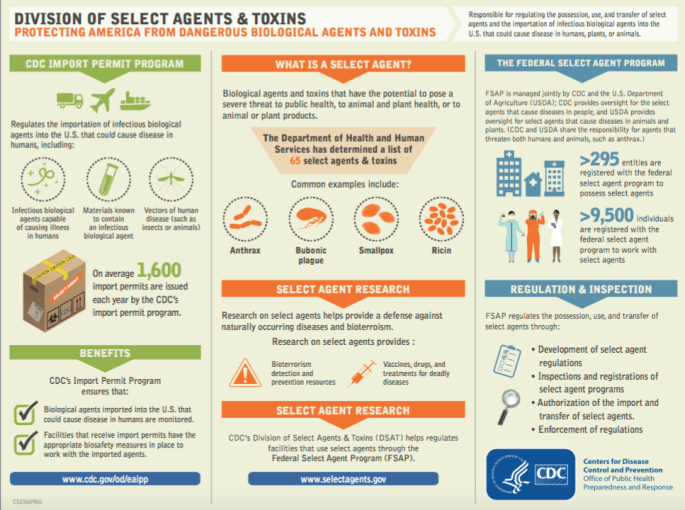
Image of the Week: Division of Select Agents & Toxins

Screen Shot 2016-07-08 at 1.11.08 PM


Apr19_2016_Dickson_ZikaVirus2076423019

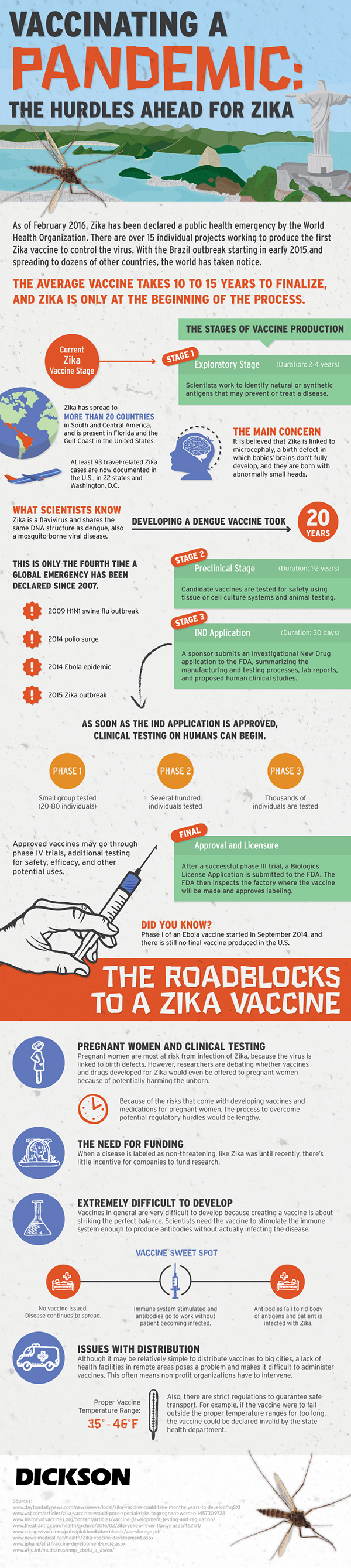
Other Images You May Enjoy:
Learn more about the Centers for Disease Control & Prevention’s (CDC) efforts to combat infectious disease and global health security concerns.
global-disease-detection-infographic-12-14


Pandora Report 10.26.14

This late weekend Pandora Report covers antibiotics in fish, ISIS and chemical weapons, the UN and Cholera, and, of course, an Ebola update. Don’t forget to get your flu shot, and remember to protect yourself by washing your hands! Have a great week!

There Are Antibiotics in Your Fish

A study in the Journal of Hazardous Materials has found antibiotics present in both farmed and wild fish, including those labeled as ‘antibiotic free’. The good news for the food producers is that all traces of the drugs were within the legal limit for food. The bad news is twofold; one, for there to be any traces after processing and freezing means that at one point, there was a lot more antibiotics, and two, levels of antibiotics in the food we eat contributes to growing antibiotic resistance in humans.

Time—“Antibiotics are used in fish largely to treat and prevent disease, not to promote growth… They’re dispersed into the water in fish farms and are sometimes injected into fish directly. And once they get into the fish, they generally stay there, even though their concentration diminishes over time.”

Islamic State Accused of Using Chemical Weapons

Iraqi officials claim that ISIS fighters have used chemical weapons—chlorine bombs—during clashes last month in Duluiya and Balad, towns north of Baghdad. Approximately 40 troops were affected and were then treated at a hospital where they recovered quickly. Iraqi forces claim that two other chlorine gas attacks have taken place over recent months, as well.

Sky News—“‘These allegations are extremely serious and we are seeking additional information in order to be able to determine whether or not we can confirm it,’ John Kerry told reporters. ‘The use of any chemical weapons is an abhorrent act, it’s against international law, and these recent allegations underscore the importance of the work that we are currently engaged in.’”

U.S. Judge Considers Whether UN Can Be Sued

In 2010 an earthquake ravaged the island nation of Haiti. Shortly after United Nations peacekeepers arrived, the nation experienced one of the worst cholera epidemics in history. Last week, a lawyer representing the Institute for Justice and Democracy in Haiti presented an argument that the UN should be held responsible for the outbreak which led to the deaths of over 8,500 people. Lawyers from the U.S. government are representing the UN in this case. The judge will decide if the case can proceed to criminal trial.

China Central Television—“Evidence from the US Centers for Disease Control and Prevention later provided strong indication that UN peacekeepers were the source of the outbreak, but the UN has denied any links, and its own investigation into the cause was inconclusive.”

This Week in Ebola

Well, the number of Ebola cases this week reached over 10,000 with nearly 5,000 deaths including the first death in Mali. As the disease spreads within the U.S., Africa, and Europe, it might be a smart time to look at how SARS was stoppedChina is a good case study. After the diagnosis of an American health worker returned from West Africa, the states of New Jersey, New York and Illinois have moved to automatically quarantine health workers returning from the affected region. All this comes at a time when federal officials and the WHO say vaccine trials could begin in West Africa as early as January. Average Americans still have very little risk of catching Ebola, but that hasn’t stopped the culture of fear and concerns about state use of Ebola as a weapon. But don’t worry, National Geographic puts the Ebola epidemic in historical perspective. Still worried? You can blame Richard Preston.

Stories You May Have Missed

Image Credit: Wikimedia Commons

Biodefense Image of the Week: Select Agents & Toxins

Screen Shot 2016-07-08 at 1.11.08 PM


wakawaka ebola


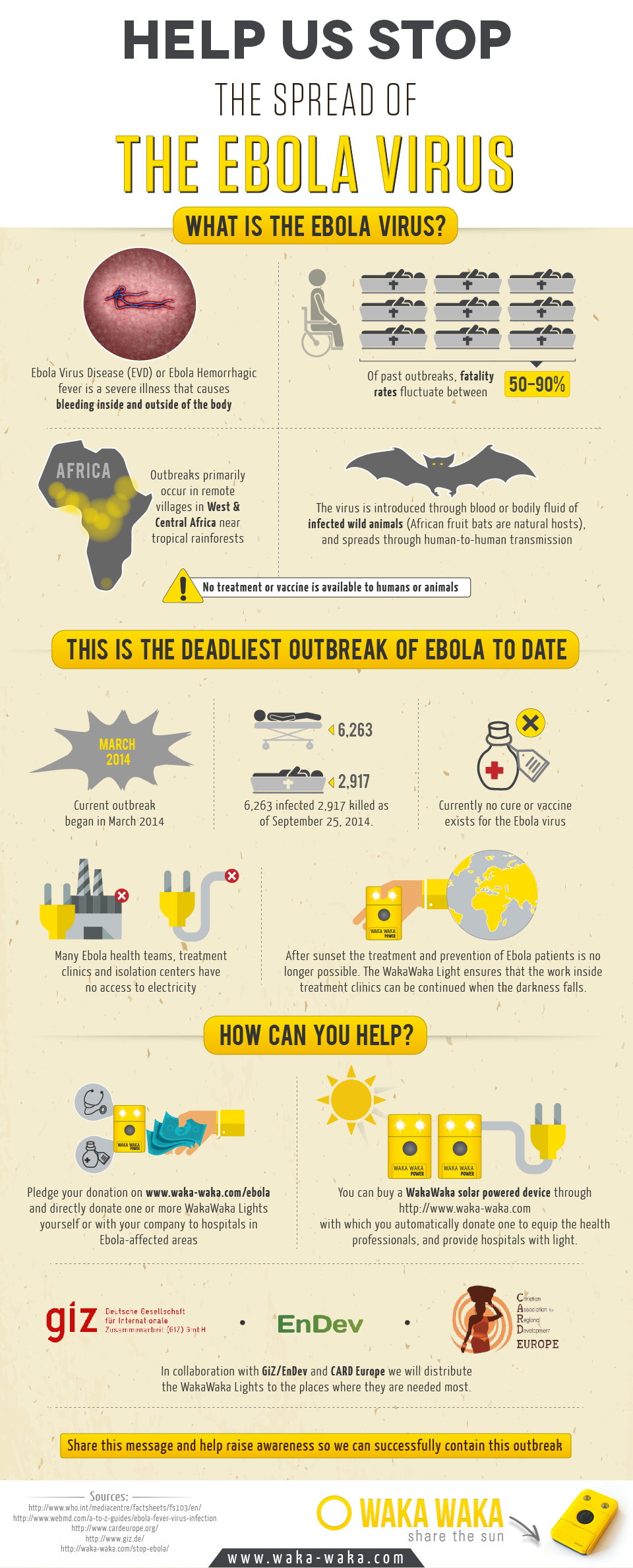
If you love infographics as much as I do (and I’m sure you do) you’ll appreciate this one created by Waka Waka. Forward and share with friends and colleagues, because remember, sharing is caring and knowledge is power!

GMU Biodfense faculty in the Washington Post

This week, GMU Biodefense Deputy Director Gregory Koblentz contributed to and Director Trevor Thrall was quoted this week in the Washington Post article titled “If news media had covered Ebola sooner, could latest outbreak have been contained?” Read the whole article here.

“Some of the American media’s indifference to the story may have reflected entrenched attitudes toward Africa, said A. Trevor Thrall, the director of George Mason’s biodefense graduate program. “Thanks to low public interest in Africa and the fact that very few U.S. news organizations have any footprint in Africa, Africa is more or less invisible in the U.S. media most of the time,” he said. “With a few exceptions, Africa shows up only when something happens that directly affects Americans or when the U.S. government takes some kind of action.”’

Pandora Report 10.11.14

With so many stories being dedicated to Ebola, I was absolutely delighted to see coverage of influenza this week. We’ve also got stories about the proliferation of antibiotic resistant bugs in nursing homes, George Washington as the first father of vaccination, and of course, an Ebola update.

There will be no news round up next week, so I will see you all back here on October 25. Enjoy your weeks and don’t forget your flu shot!

Ebola’s Bad, but Flu’s Worse

With the coverage of the Ebola outbreak in media (and even on this blog) it may have inadvertently caused unreasonable panic in the American populace. The fact of the matter is one person in the U.S. has died from Ebola. Every year, according to the CDC, more than “226,000 Americans are hospitalized with flu and approximately 36,000 die from flu-related complications.” News outlets this week quietly reported on flu vs. Ebola and offered points of clarification about both diseases as well as tips for staying well. These include getting your flu vaccination, washing hands frequently especially after using the restroom and before eating or preparing food, and avoiding touching eyes, nose, or mouth to limit spread of germs.

Times Union—“‘The reality is there are vaccinations and treatment options available for the flu that are not available for Ebola. The reason for concern is there is no magic bullet to stop Ebola,’ said [Dr.Edward] Waltz [director of the Center for Public Health Preparedness at the University at Albany]. ‘I think the most important message to get is, take action on the things that you can control. We have so many things that affect our health that we can’t control, get yourself a vaccination if it is available.’”

Medical Superbugs: Antibiotic-resistant Bacteria Carried by More than a Third of Nursing Home Residents

A study out of Melbourne, Australia, reported that more than 1/3 of nursing home residents tested were carriers of antibiotic-resistant bacteria. And this problem isn’t just plaguing other countries. In fact, a report from the U.S. Centers for Medicare and Medicaid Services found rising rates of pneumonia, urinary tract infections, viral hepatitis and MRSA. The Australian study also found that more than half of the tested residents had received antibiotics within three months of being tested. Overuse of antibiotics can lead to higher rates of superbugs or other infections like C. difficile, which can be lethal in seniors. (On a personal note, my grandmother recently died from complications after a C. diff infection.)

ABC—“‘(Our concern is) that nursing homes are acting as a kind of reservoir, if you like, of antibiotic-resistant bacteria. We know these residents have fairly frequent movement in and out of acute care institutions, and this obviously poses risks to acute care hospitals for transmission. It could be transmitted to other patients in an acute care hospital, if the resident actually has an infection they might be infected with a more resistant bacteria – they’re the two main concerns.’”

George Washington, the First Vaxxer

This week, the Daily Beast provided an excerpt from historian Tom Shachtman’s new book, Gentlemen Scientists and Revolutionaries: The Founding Fathers in the Age of Enlightenment. At a time where people are choosing to forgo vaccinations and alarm over Ebola grows worldwide, it is amazing to see George Washington—Virginian, 1st President, Founding Father, serious boss, and old fashioned speller—decide that army immunization would not only save the lives of soldiers, but indirectly safeguard a young American nation. Shachtman recounts a February 1777 letter from Washington to John Hancock, President of the Continental Congress.

The Daily Beast—“‘The small pox has made such Head in every Quarter that I find it impossible to keep it from spreading thro’ the whole Army in the natural way. I have therefore determined, not only to innoculate all the Troops now here, that have not had it, but shall order Docr Shippen to innoculate the Recruits as fast as they come in to Philadelphia. They will lose no time, because they will go thro’ the disorder while their cloathing Arms and accoutrements are getting ready.’”

This Week in Ebola

The first (and only) patient with a domestically diagnosed case of Ebola died this week in Dallas, TX amid calls, and responses, about tightening airport screening and travel restrictions. Six major American international airports have enhanced screening for travellers arriving from West Africa while airline workers at LaGuardia have protested over what they say are inadequate protections from potential Ebola exposure. In other air travel related news, a passenger was removed from a US Airways flight after joking about being infected with Ebola and a sick passenger traveling from West Africa to Newark airport does not have Ebola. A nurse in Spain did get infected with the virus this week, as other European nations fear further spread inside their countries. American Ebola survivor Dr. Rick Sacra was hospitalized and treated this week for pneumonia and another American Ebola survivor, Dr. Kent Brantly donated his blood in order to help treat an infected NBC cameraman.

Evidently one fifth of Americans, according to a Gallup poll, are concerned about getting Ebola which is causing the ‘apocalypse business’ to boom. Meanwhile, West Africans living in the U.S. are taking action to spread information within their communities about the virus and there was a wonderful piece on how Nigeria beat Ebola. Finally, CDC director Dr. Tom Frieden spoke this week on how this Ebola outbreak is like the AIDS epidemic and why he doesn’t support a travel ban to combat the outbreak. All of this comes at a point in time where the number of deaths from the outbreak has reached over 4000.

Stories You May Have Missed

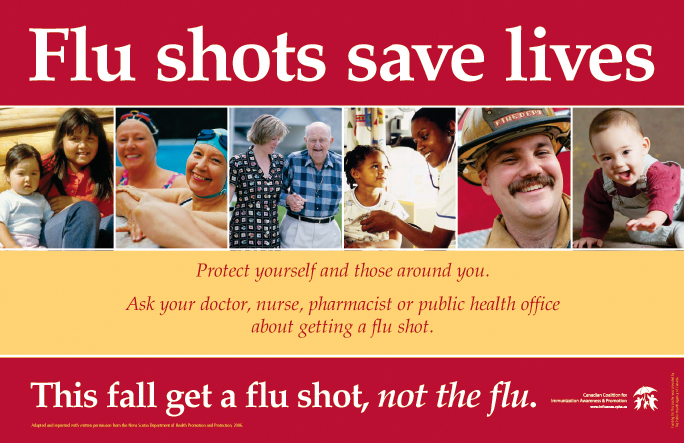
Image Credit: Immunize.ca

Pandora Report 10.4.14

This week the round up includes Russian bird flu, pregnancy and flu, ISIS threats to British troops, and of course, an Ebola update.

Have a great weekend, don’t forget your flu shot, and keep smart about your news!

Russia Reports First Cases of Deadly Bird Flu in Two Years

Domestic chicken, geese, and ducks in the Altai Krai region of Russia, near the border of Kazakhstan, were found to be infected with the H5N1 serotype of bird flu. These are the first cases of the highly pathogenic flu in this area in nearly two years.

Reuters—“The latest outbreaks in Russia, which led to the death or culling of 344 birds, were thought to have come from wild birds. “Probably, hunted ducks and geese trophies had been placed in backyards where mortality occurred later in domestic birds,” the farm ministry said in its report.”

Why is Flu Virus Higher Risk for Pregnant Women? 

While HHS continues to prepare for pandemic flu, which could kill 60 million people, researchers at Stanford University have looked at the effects flu has on pregnant women. A pregnant woman’s immune system is strongly suppressed, but researchers say this alone cannot explain vulnerability to influenza. Researchers looked at the proportion and behavior of natural killer cells and T cells, which in the presence of flu increased and changed in function. These findings offer a possible treatment path—changing inflammatory response rather than just fighting replication of the virus.

Star Tribune—“Women who get the flu while pregnant have a much higher risk of hospitalization and death and are four times more likely to deliver a premature baby. During the 1918 epidemic, in fact, the death rate among pregnant women was at least 28 times that of the general population.”

ISIS Threatens to Gas British Troops in Iraq: Soldiers Ordered to Carry Chemical Suits

British Special Forces training Kurdish Peshmerga fighters and identifying RAF bombing targets in Northern Iraq have started carrying chemical protection suits. Intelligence sources warned that ISIS fighters may have stolen poison gas from Syrian forces who withheld the agents from destruction. ISIS is thought to have stolen sarin and chlorine gases when they raided a Syrian Air Force base two months ago.

The Mirror—“The [British] soldiers now carry nuclear and biological warfare protection and respirators. All vehicles are being fitted with gas detectors and an RAF Regiment trained in chemical warfare is on standby to fly to the region.”

This Week in Ebola

Oh, Ebola. The big story this week is that the virus arrived on American shores, with the first confirmed case in Dallas and potential cases of Ebola in the DC area being ruled out, the CDC is using contact modeling to help track potential cases in Texas. Arrival in the U.S. has caused an absolute avalanche of news stories and opinion pieces throughout the media. They have ranged from fear mongering about an epidemic in the U.S. and how quarantines would be ineffective, to why you shouldn’t worry about Ebola as a bioweapon. We saw the White House urging calm (and making awesome infographics) and medical facilities saying the average American citizen has nothing to worry about. Meanwhile, there were reports that Ebola poses a greater risk than SARS and AIDS and Louis Farrakhan tweeted that Ebola is a bioweapon against Africans. Use of hyperbole and misinformation do a disservice to those trying to responsibly inform Americans. We saw a case of a doctor in Liberia who quarantined herself in order to keep others safe and another Liberian doctor who seems to have effectively treated Ebola using HIV drugs. And, of course, the biggest problem was that Ebola could affect the cocoa trade. Oh wait, no, that’s what we in “the biz” call a #champagneproblem.

Stories You May Have Missed


Image Credit: Pregnant In The City

Pandora Report 9.27.14

This week the round up includes concern of growing antibiotic resistance, MERS CoV transmission, and of course, an Ebola update.

Have a great weekend (and don’t forget to get your flu shot)!

White House Orders Plan for Antibiotic Resistance

On Thursday, President Obama signed an executive order to form a government task force and presidential advisory council to address antibiotic-resistant germs. The order calls for new regulations of antibiotic use in hospitals and urges the development of new antibiotics. Scientists at MIT are looking at creating a new class of antibiotic that targets and destroys resistance genes within bacteria.

WTOP—“According to the Centers for Disease Control and Prevention, antibiotic-resistant infections are linked to 23,000 deaths and 2 million illnesses in the United States annually. The impact to the U.S. economy is as high as $20 billion, the White House said, or more, if you count lost productivity from those who are sickened. And the problem is worsening.”

Camels are Primary Source of MERS-CoV Transmission 

A study designed by scientists from Colorado State University and NIH’s National Institute of Allergy and Infectious Disease has transmitted a strain of MERS CoV from human patient to camels. The camels developed a respiratory infection and showed high levels of virus in nasal secretions for up to a week after the infection. Though the camels recovered quickly, the nasal secretions could be the source of transmission to people who handle these animals.

Business Standard—“The researchers theorized that vaccinating camels could reduce the risk of MERS-CoV transmission to people and other camels; NIAID and others are supporting research to develop candidate vaccines for potential use in people and camels.”

This Week in Ebola

This week, the CDC estimated that there could be 500,000 to 1.4 million cases of Ebola by January if the outbreak continues unchecked. Meanwhile, a professor teaching at Delaware State University is telling Liberians that the U.S. Department of Defense, among others, has manufactured Ebola and warns them that doctors are not actually trying to treat them. Claims like this make it even more difficult for those on the ground to relay accurate information about the virus. However, a reverend in Monrovia is working to spread awareness of proper hand washing and social distancing within his congregation and alumni from a State Department funded exchange program help to spread news of the virus throughout neighborhoods. Unsurprisingly, the Ebola outbreak has essentially crippled the fragile Liberian health system which means people are dying from routine medical problems.

Stories You May Have Missed


Image Credit: Wikimedia

Dr. Gregory Koblentz on Background Briefing with Ian Masters

KoblentzLast week, Dr. Gregory Koblentz, Deputy Directory of the GMU Biodefense Program was interviewed on Background Briefing with Ian Masters to discuss the ongoing Ebola outbreak in West Africa. He covers the role of the Pentagon in combating the disease in Liberia and the virulence of Ebola that was weaponized as a biological weapon in the former Soviet Union.

You can listen to the interview here.

Pandora Report 9.20.14

We are introducing a new feature for the news round up—“Stories You May Have Missed.” This final section consists of fascinating articles I’ve found throughout the week that couldn’t fit in the report. This week the round up includes the UN Security Council’s resolution about Ebola, ISIS using chemical weapons in Iraq, a surprising source to combat antibiotic resistance, and of course, an Ebola update.

Lastly, you know what time of year it is, flu season is starting…don’t forget to get your flu shot!

Have a great weekend!

With Spread of Ebola Outpacing Response, Security Council Adopts Resolution 2177

On Thursday, the United Nations Security Council met to discuss the Ebola outbreak in West Africa and unanimously adopted resolution 2177 (2014). 2177 established the United Nations Mission for Ebola Emergency Response (UNMEER) and calls on Liberia, Sierra Leone, and Guinea to speed up establishment of national mechanisms to deal with this outbreak and to coordinate efficient utilization of international assistance, including health workers and relief supplies. The resolution also calls on other countries to lift their border and travel restrictions saying that isolation of the affected countries could undermine efforts to respond to the outbreak.

The United Nations—“United Nations Secretary-General Ban Ki-Moon said that the Ebola crisis had evolved into a complex emergency, with significant political, social, economic, humanitarian and security dimensions.  The number of cases was doubling every three weeks, and the suffering and spillover effects in the region and beyond demanded the attention of the entire world.  “Ebola matters to us all,” he said.”

ISIS Uses Chemical Weapons Against Army in Iraq

There were reports this week that the IS terrorist group has used chemical weapons in an attack on the Iraqi army in Saladin province. The reported attack took place Wednesday and Thursday in Dhuluiya, which has been under control of the group for more than two months. The attack affected approximately a dozen people.

One India—“Iraq’s Ambassador to the UN, Mohamed Ali Alhakim said in a letter that remnants of 2,500 chemical rockets filled with the deadly nerve agent sarin were kept along with other chemical warfare agents in a facility 55 km northwest of Baghdad. He added that the site’s surveillance system showed that some equipment had been looted after “armed terrorist groups” penetrated the site June 11.”

Vaginas May be the Answer to the Fight Against Drug-Resistant Bacteria

A naturally occurring bacterium found by scientists from the University of California, San Francisco, School of Pharmacy might be the key to addressing the threat of a post antibiotic future. Found in the female vagina, Lactobacillus gasseri is the basis for Lactocilin, a possible antibiotic alternative. This discovery comes at a time where the WHO has declared antimicrobial resistance as “an increasingly serious threat to global public health.”

Medical Daily—“This isn’t the only implication for the L. gasseri bacteria. Researchers are also hopeful to find similar-acting bacteria in different parts of the human body. “We think they still have bacteria producing the same drug, but it’s just a different bacterial species that lives in the mouth and has not yet been isolated,” lead researcher Micheal Fischbach told HuffPost. Even though the bacteria were harvested in females, researchers are confident it will have equal results when used in men.”

This Week in Ebola

It was a terrible week for Ebola, absolutely terrible. Above, we already learned that the UN Security Council declared the virus a threat to international peace and security, but that wasn’t all that happened. President Obama pledged 3,000 troops to fight Ebola in West Africa. The WHO said that the number of Ebola cases could begin doubling every three weeks and expressed concern about the black market trade of Ebola survivors’ blood. Eight aid workers and journalists were murdered in Guinea leaving many to fear that violence could stymy relief efforts and in Sierra Leone, the government instituted a three-day lockdown in order to help health care workers find and isolate patients.

Stories You May Have Missed


Image Credit: Wikimedia