Pandora Report 08.09.14

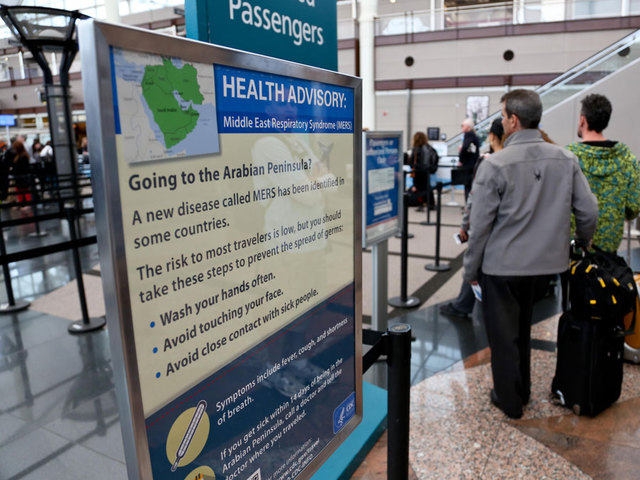
I spent about 12 hours at Dulles Airport yesterday. I didn’t fly anywhere, but I was ensuring that 120 international students were able to get from Washington DC to their host families all over the country. You may have noticed that in the security areas of Dulles Airport they have televisions that go over proper security screening procedures. On these same screens, they also show CDC travel alerts.

In June (when I was ensuring that 450 students were able to get back to their home countries), the alerts were for MERS and mosquito borne diseases like dengue and Chikungunya. Yesterday, Ebola was on alert for travelers to West Africa.

Last week we looked at the fever pitch of Ebola, today, lets look at the diseases designated by the CDCs travel alerts at Dulles.


Zika Virus: Another Threat from the Asian Tiger Mosquito

Travel alerts from the CDC often include Chickungunya and Dengue fever, but another disease from the same vector—the tiger mosquit0—is receiving alerts as well. Zika Fever, was isolated in humans in the 1970s, but has relatively few documented cases. In 2007, the virus demonstrated epidemic capacity with 5,000 cases in Micronesia. In 2013 there were 55,000 cases in Polynesia. Today the CDC has issued Watch Level 1 alerts for Zika in Easter Island, French Polynesia, and the Cook Islands and urges travelers to practice usual precautions.

Entomology Today—“Originally from Asia, the tiger mosquito was introduced to Africa in 1991 and detected in Gabon in 2007, where its arrival undoubtedly contributed to the emergence of dengue, chikungunya, and as shown by this new study, zika. The rapid geographic expansion of this invasive species in Africa, Europe, and America allows for a risk of propagation of zika fever around the world.”


Ramadan pilgrimage season in Saudi Arabia mostly free from MERS

Saudi Arabia reported only ten new cases of MERS from June 28- July 28 during the month of Ramadan. In April and May of 2014, hundreds of people were infected by MERS, which raised concerns about infection rates during Ramadan and during the Hajj, which will take place in October, when millions of pilgrims will travel to Mecca. Since 2012, Saudi Arabia has confirmed over 700 cases of infection resulting in nearly 300 deaths. The CDC designates the Hajj as an Alert Level 2, and urges U.S. residents to practice enhanced precautions.

Al Arabiya—“Saudi Arabia and the World Health Organization have said they are imposing no travel or other restrictions due to MERS during the Hajj, but have encouraged very young or old pilgrims, and those suffering from chronic disease, not to come this year.”


WHO: Ebola ‘an international emergency’

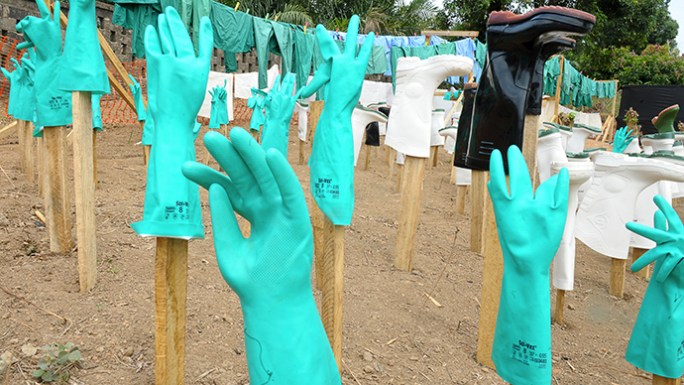
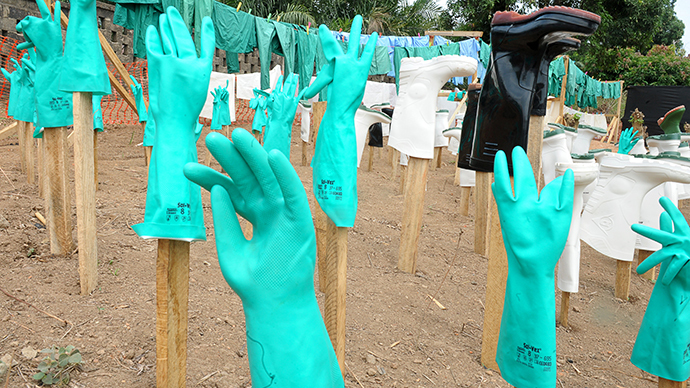
This week, the World Health Organization declared that the spread of Ebola in West Africa is an international health emergency. They urged coordinated response in order to keep the spread of the virus under control. Though no travel or trade bans have been enacted, the WHO recommends that Ebola cases or contacts should not travel internationally. This comes at a time when states of emergency have been declared in Liberia, Guinea, and Sierra Leone and the number of total cases has reached nearly 1,800 with over 950 deaths. The CDC designates outbreaks in these countries as a Warning Level 3, and urges U.S. residents to avoid non-essential travel.

BBC—“WHO director-general Dr. Margaret Chan appealed for help for the countries hit by the ‘most complex outbreak in the four decades of this disease.’

The decision by the WHO to declare Ebola a public health emergency is, by its own definition, an ‘extraordinary event’ which marks ‘a public health risk to other states through the international spread of disease’.”


Image Credit: The Denver Channel
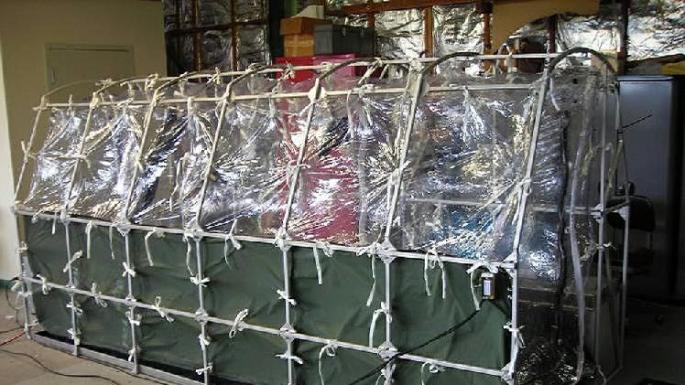
Category A Bioterrorism Agent Lands in the U.S.

By Alena James

It has been one seriously scary and depressing summer with the multitude of cataclysmic events taking place all around the globe.  Much like the thousands of immigrant children whose futures are still being debated by the U.S. and Mexico, many of these crises have remained outside of U.S. soil. However, one potential crisis has been willingly brought to the U.S.

A few days ago a protocol was established to send medical evacuation planes to Liberia to bring back two missionary American health care workers suffering from the Ebola virus.  The decision to bring the patients back to the U.S. raised great alarm among many Americans that there is a chance of a major outbreak occurring with a disease that the U.S. is not prepared to fight

This past week, the Director of the CDC, Dr. Thomas Frieden, continually claimed that the necessary precautions were being taken to ensure the safety of the public from being exposed to the virus. According to Frieden, the chances of an outbreak taking place in the U.S. are minimal. Ebola is a virus that is not airborne and is not acquired through casual contact with an infected patient. For individuals to be infected they must have direct contact with bodily fluids septic (contaminated) with the virus.

During a CNN interview, Frieden explained that the decision to bring the Americans back to the U.S. was made by Samaritan’s Purse, the organization to which the two infected Americans, Dr. Kent Brantly and Nancy Writebol, belong. The role of the CDC will be to help assist in the transport and supportive care of the patients upon arrival at Emory University Hospital in Atlanta, Georgia.

The plane that transported Dr. Kent Brantly on Saturday was fitted with an Aeromedical Biological Containment System. In this system, a tent like structure was set up on board a modified Gulfstream III aircraft and used to isolate Brantly from the rest of the people onboard.

During an aeromedical evacuation, a patient undergoes medical assessment and evaluation before transport. This is to ensure the patient’s survival during the course of the trip. According to a study conducted by the U.S. Army Medical Research Institute of Infectious Diseases in Fort Detrick, Maryland, the physiologic effects of altitude, effect of confinement on patient-care delivery, and psychological effect of confinement within the containment system must be taken into consideration before transport.

Dr. Brantly arrived safely in the United States on Saturday at Dobbins Air Force Base in Marietta, Georgia. He was then transported to Emory University Hospital in Atlanta.

So, why exactly was the decision made to bring back to the Americans infected with a viral agent; which the CDC has classified as a Category A Bioterrorism Agent and to which there is no cure?

In his interview with CNN, Dr. Frieden, gave credit for the medical evacuation operation to Samaritan’s Purse. However, without the assistance of the State Department, the U.S. military, and the CDC it seems likely that the operation would not have come to fruition at all.

The reasoning for this evacuation, made by many advocates, seems to lie with the high level of confidence among those at the CDC and Emory University in their ability to control and contain the infected patients.  Despite the unprecedented nature of an Ebola patient returning to the U.S., infectious disease experts maintain the appropriate precautions are being made and the virus will remain contained.

The medical evacuation operations for Dr. Brantly and Nancy Writebol do not offer only an increased chance of recovery from Ebola and the chance to be reunited with their loved ones—if only through a glass partition. These operations also provide an opportunity for America’s best infectious disease experts and healthcare workers to gain firsthand experience with actual cases of a virus not available for study at clinical levels in the U.S. The medical evacuation operation is also beneficial to emergency response personnel who have been training on how to deal with these types of medical cases for years.

Over the summer, Americans watched intently as the creditability of the CDC took a hit when many of its laboratory staff failed to abide by proper laboratory safety techniques upon dealing with samples of Bacillus anthracis and H5N1.  The CDC and NIH’s credibility took another hit when the CDC discovered more than 200 vials of smallpox in a refrigerator in an NIH lab in Bethesda, Maryland.

Hopefully the fouls ups of the past have provided important lessons for all fields working with infectious diseases to take safety protocols very seriously…especially while working with patients suffering from a virus that has no cure.


Image Credit: Yahoo

Pandora Report 8.2.14

What a mess, right? While we here at the Pandora Report have been watching the Ebola outbreak in West Africa since March, it seems coverage in the news media has reached a fever pitch as the effects of the virus reach further and further.

This week we cover Ebola—a case in Nigeria, the evacuation of Peace Corps, the transfer of patients to the U.S. and treating the disease.

Nigeria Isolates Hospital in Lagos as Obama Briefed on Ebola Outbreak

Early in the week we learned of the first case of Ebola in Nigeria. It is important to note in this case, that the virus was imported from an American man, Patrick Sawyer, who travelled from Liberia. Fears rose over the importation to Africa’s most populous capital city—Lagos—and the hospital he was in was evacuated and is going through the process of decontamination.

Reuters UK—“Authorities were monitoring 59 people who were in contact with Sawyer, including airport contacts, the Lagos state health ministry said, but it said the airline had yet to provide a passenger list for the flights Sawyer used.

Derek Gatherer, a virologist at Britain’s University of Lancaster, said anyone on the plane near Sawyer could be in “pretty serious danger,” but that Nigeria was better placed to tackle the outbreak than its neighbors.”

Peace Corps Evacuates Ebola-Affected Region, With Two Volunteers in Isolation 

On Wednesday, the Peace Corps announced the evacuation of 340 volunteers from Guinea, Liberia, and Sierra Leone. Two volunteers from Liberia, however, were unable to leave. It is reported that the volunteers had contact with an individual who died from Ebola; they have to remain in an isolation ward for 21 days before leaving.

The Peace Corps—“The Peace Corps has enjoyed long partnerships with the government and people of Liberia, Sierra Leone and Guinea and is committed to continuing volunteers’ work there. A determination on when volunteers can return will be made at a later date.”

First Ebola Patient Arrives in U.S.

News came this week that two Americans infected with Ebola would be transferred to the U.S. for treatment at Emory University Hospital in Atlanta, GA.  Dr. Kent Brantly, who had been working at a treatment center in Liberia, was flown on a jet with a special containment area for patients with infectious diseases. He walked into Emory Hospital on Saturday unaided and is the first case of Ebola to arrive in the U.S.

Emory has an isolation unit built 12 years ago to treat patients exposed to highly infectious diseases.

Wall Street Journal—“Bruce Ribner, an infectious-diseases doctor and head of a special isolation unit at Emory University Hospital, said Friday there were good reasons to airlift the two to Emory. “We can deliver a substantially higher level of care, a substantially higher level of support, to optimize the likelihood that those patients will survive this episode,” he said.

Dr. Ribner added that he was “cautiously optimistic” the two have a good chance of recovery once they reach Emory, and that the transfer would be safe.”

Ebola Vaccine Possible, but Many Doubts Persist 

Vaccine development for Ebola has been being worked on for years, but with the increasing severity of this outbreak in West Africa, there has been discussion in the U.S. about fast-tracking vaccine trials for this virus. Even with this option—once approval is received from the FDA—many doubts persist and scientists who study the virus warn that the success is hardly guaranteed. Even if the vaccine proves to be effective in tests, questions remain as to who would receive it and how to figure out optimal dosages.

In short, even the development of vaccine candidates does not ensure success or virus eradication.

The New York Times—“The vaccine to be tested in humans relies on a benign virus that carries two proteins from the surface of the Ebola virus. The proteins help the virus penetrate human cells. If successful, the immune system will be trained to recognize the proteins and to mount a strong response should it encounter the virus.”


Image Credit: Atlanta Better Buildings Challenge

Pandora Report 7.26.14

Highlights this week include, Dr. Frieden goes to Washington, top Ebola doc comes down with the virus, a TB patient on the loose in California, and a plague based shut-down in China. Have a great weekend!

CDC Director to Tackle MERS, Measles, Global Health Threats

It was my absolute pleasure to be able to attend a talk given by Dr. Tom Frieden, Director of the Centers for Disease Control and Prevention, at the National Press Club on Tuesday.  Though Dr. Frieden briefly covered the stated topics, he spoke primarily about the dangers of growning antibiotic resistance and hospital acquired infections. He urged everyone, including the CDC, to work hard(er) to combat these issues that may usher us into a “post-antibiotic era.” The entire speech is available here. (You may even notice me in the lower left corner chowing down on a CDC cupcake!)

USA Today—“‘Anti-microbial resistance has the potential to harm or kill anyone in the country, undermine modern medicine, to devastate our economy and to make our health care system less stable,” Frieden said.

To combat the spread of resistant bacteria, Frieden said the CDC plans to isolate their existence in hospitals and shrink the numbers through tracking and stricter prevention methods.”


Sierra Leone’s Top Ebola Doctor Infected as the Worst Outbreak in History Continues

You may have seen this story pop up earlier this week in our facebook or twitter, but it certainly bears repeating. Dr. Sheik Umar Khan, who has been credited with treating more than 100 Ebola victims, has come down with the virus too. He is now one of hundreds who have been affected by the virus in West Africa, which has killed over 600.

The Washington Post-“In late June, Khan seemed keenly aware of the risk he faced. “I am afraid for my life, I must say, because I cherish my life,” he told Reuters. “Health workers are prone to the disease because we are the first port of call for somebody who is sickened by disease. Even with the full protective clothing you put on, you are at risk.’”


California Police Seek Man Who Refused Tuberculosis Treatment

Prosecutors in Northern California have obtained an arrest warrant for Eduardo Rosas Cruz, a 25 year old transient, who was diagnosed with TB and disappeared before he started treatment. Rosas Cruz needed to complete a nine-month course of treatment. Tuberculosis spreads through the air when an infected person coughs or sneezes. It is not known if Rosas Cruz is currently contagious. By law, health officials cannot force a patient to be treated but courts can be used to isolate an infectious individual from the public at large.

FOX News—“County health officials asked prosecutors to seek the warrant, in part, because Rosas Cruz comes from a part of Mexico known for its drug-resistant strain of tuberculosis. County health officials are searching for Rosas Cruz, and his name is in a statewide law enforcement system, San Joaquin County Deputy District Attorney Stephen Taylor said.”


In China, A Single Plague Death Means an Entire City Quarantined

Parts of Yumen City, in Gansu Province, were quarantined after a farmer died from bubonic plague. The man developed the disease after coming in contact with a dead marmot on a plain where his animals were grazing. According to experts, Chinese authorities categorize plague as a Class 1 disease, which enables them to label certain zones as “infection areas” and seal them off. 151 people were affected by the quarantine, which was lifted after none developed symptoms.

The Guardian—“The World Health Organization’s China office praised the Chinese government’s handling of the case. “The Chinese authorities notified WHO of the case of plague in Gansu province, as per their requirements under the International Health Regulations,” it said in a statement to the Guardian. “The national health authorities have advised us that they have determined this to be an isolated case, though they are continuing to monitor the patient’s close contacts.’”


Image Credit: RT

Pandora Report 7.20.14

I feel like its been a bad week, right? Between the crash—or shoot down—of MH 17 (with nearly 100 WHO HIV/AIDS researchers aboard) and events in Gaza with Israel, it sort of seems like it couldn’t get much worse. Well, turns out, it could. This week we have the first cases of Chikungunya in the U.S. and Ebola still raging. However, no one, in the biodefense world, had a worse week than the CDC.


First Chikungunya Case Acquired in the U.S. Reported in Florida

So far, in 2014, there have been 243 travel-associated cases of Chikungunya reported in 31 American states and two territories. This week, the infection numbers grew. The difference in this case, was that the man in Florida who was diagnosed, had not travelled outside the U.S. recently. This makes it the first case of the disease that had been acquired domestically.

WALB—“The Centers for Disease Control and Prevention is working closely with the Florida Department of Health to investigate how the patient contracted the virus; the CDC said they will also monitor for additional locally acquired U.S. cases in the coming weeks and months.

“The arrival of Chikungunya virus, first in the tropical Americas and now in the United States, underscores the risks posed by this and other exotic pathogens,” said Roger Nasci, Ph.D., chief of CDC’s Arboviral Diseases Branch.”


WHO Can’t Fully Deal with Ebola Outbreak, Health Official Warns

With the death toll from the ebola outbreak in West Africa at 603 (at least), more bad news emerged this week when we learned that budget cuts to the WHO make it for difficult for the organization to respond to the ongoing medical emergency. Beyond funding issues, efforts to stem the outbreak have been hindered by some countries failure to implement the WHO’s International Health Regulations which outline methods of reporting disease outbreaks.

The LA Times—“‘The situation in West Africa should be a wake-up call to recognize that this weakening of this institution on which we all depend is not in anybody’s interest,” Scott Dowell, director of disease detection and emergency response at the U.S. Centers for Disease Control and Prevention, said during a briefing in Washington. “In my view, there’s no way that WHO can respond in a way that we need it to.’”


Update on the Found Vials: There Weren’t 6; There Were 327.

In last week’s Pandora Report we learned about unsecured vials of smallpox that were found in an FDA cold storage room in a Maryland lab. This week we learned that it wasn’t just smallpox and it wasn’t just six vials—it was 327. Some of these vials contained select agents other than smallpox, like dengue, influenza, Q fever and rickettsia. Whoops!

Wired—“Here’ is the gist of the FDA’s external announcement, “…this collection was most likely assembled between 1946 and 1964 when standards for work with and storage of biological specimens were very different from those used today. All of the items labeled as infectious agents found in the collection of samples were stored in glass, heat-sealed vials that were well-packed, intact, and free of any leakage, and there is no evidence that anyone was exposed to these agents.”


Image Credit: Eduardo

Pandora Report 7.4.14

I have to offer my apologies and my thanks. Please let me apologize for the lack of Pandora Report and the light coverage on the blog over these past two weeks. The month of June was absolutely insane between work and summer courses. Fortunately, all that craziness is finally over, so let me thank you most sincerely for your patience and understanding. With this special July 4th edition of Pandora Report, please consider things around here back to normal.

Now, onto the news!  Highlights include Syrian chemical weapon disarmament, the arrival of Chikungunya to the U.S., an anthrax incident at the CDC, an Etihad Airlines based polio campaign, and Ebola devastation in West Africa.


Syrian Chemical Weapons Transfer Complete

Earlier this week, the Pentagon reported that the transfer of Syrian chemical weapons, from a Danish cargo ship to the U.S. vessel that will neutralize and destroy the weapons, is complete. The weapons and associated materials were transferred to the Cape Ray, which will travel from Italy into international waters where the weapons will be dismantled and neutralized. The Pentagon press secretary Rear Admiral John Kirby reported that the process should take several weeks to complete.

Al Arabiya News—“The disposal process marks the culmination of a program to rid Syria of its chemical weapons stockpile after the outcry that followed chemical attacks by the Bashar al-Assad regime in the suburbs of Damascus on August 23 last year, that may have killed as many as 1,400 people.”

Polio Awareness Videos to be Shown on Flights to Pakistan

Much of my month of June was spent at Dulles airport, so I might be more excited about this story than your average person, but get ready for the coolest news story you have likely ever read about an airline! United Arab Emirates based Etihad Airlines, in response to the polio epidemic in Pakistan, will show a short in-flight movie on all their flights to Pakistan. Etihad said that the goal of the movie, titled “Leap of Faith,” is to raise awareness about “this crippling and potentially fatal disease among thousands of Pakistani workers returning home to visit their families.”

Business Standard—“‘By showing this engaging story on board our flights, Etihad Airways is supporting the efforts of the UAE in helping to eradicate polio in Pakistan,” said James Hogan, President and Chief Executive Officer of Etihad Airways.

Asif Durrani, Pakistan Ambassador to the UAE, said, “With approximately 1.25 million expatriate Pakistanis in the UAE, this is a perfect opportunity to educate our people during their journey home and ultimately help in the overall eradication of this terrible disease in our country.’”

CDC Reassigns Director of Lab Behind Anthrax Blunder 

According to the Centers for Disease Control and Prevention, sometime between June 6 and 13, up to 84 lab employees at the headquarters in Altanta, were possibly exposed to anthrax. The possible exposure, which was caused by technicians not following laboratory protocol, resulted not only in employees taking powerful antibiotics as prophylactics but also in the reassignment of the head of the Bioterror Rapid Response and Advanced Technology Laboratory, Michael Farrell, while the incident is investigated.

Reuters—“CDC spokesman Skinner on Sunday said the bioterror lab sent the anthrax bacteria to other labs in closed tubes. The recipients agitated the tubes and then removed the lids, raising concerns that live anthrax could have been released into the air.”

Mosquitos Carry Painful Chikungunya Virus to Americas

Chikungunya, a viral disease spread by the same mosquitos that spread Dengue fever, has made its way to the Americas. Fortunately, the type of mosquito that spreads the viruse, the Aedes aegypti, is not native to the United States. However, its close breed “cousin” Aedes albo, lives as far north as Chicago and is believed to be able to spread Chikungunya.

National Geographic—“There is no vaccine or medication that can change the course of the disease, though patients are given painkillers and told to drink a lot of fluids….To avoid getting chikungunya while staying in affected areas, take the usual precautions against mosquitoes: Wear long sleeves, use repellents, and keep outside areas free of standing water where mosquitoes can breed.”

West Africa Ebola Epidemic is ‘Out of Control’

With a current death count of 467, the Ebola outbreak affecting Guinea, Sierra Leone, and Liberia has become dire. Doctors without Borders’ (MSF) Director of Operations said “the epidemic is out of control.” He continued, “we have reached our limits. Despite the human resources and equipment deployed by MSF in the three affected countries, we are no longer able to send teams to the new outbreak sites.”

The Huffington Post—“The outbreak of the deadly disease is already the largest and deadliest ever, according to the WHO, which previously put the death toll at 399 as of June 23, out of 635 cases. The 17 percent rise in deaths and 20 percent jump in cases in the space of a week will add urgency to an emergency meeting of 11 West African health ministers in Accra, Ghana on Wednesday and Thursday, which aims to coordinate a regional response.”


Image Credit: Wikimedia Commons


From the Pandora Report and all of us at the George Mason Biodefense program, we wish you a happy and safe Independence Day!!

Pandora Report 6.7.14

We’re taking the bad news with the good news this week. Highlights include miscalculations in the MERS toll, rising numbers of Ebola deaths, innovations in vaccine delivery using rice, and progress with MRSA. Enjoy your weekend!

Saudi Arabia Reports Big Jump in MERS cases, Including 282 Deaths

On Tuesday, the Saudi Ministry of Health reported that 282 people have died from Middle East Respiratory Syndrome coronavirus (MERS-CoV) which is a major increase from the previously known official death toll of 190. The same day as the announcement, Deputy Health Minister Dr. Ziad Memish was “relieved” from his post according to the Saudi Health Minister. No reason was given.

CNN—“MERS is thought to have originated on the Arabian Peninsula in 2012. No one knows exactly where it came from, but evidence implicating camels is emerging. In a recently published study in mBio, researchers said they isolated live MERS virus from two single-humped camels, known as dromedaries. They found multiple substrains in the camel viruses, including one that perfectly matches a substrain isolated from a human patient.”

Resurgence of Ebola Epidemic in West Africa

Though overall the number of new cases of Ebola appears to be declining, new cases have been recently reported in Guinea and Sierra Leone. Doctors Without Borders/ Medecins San Frontieres have been supporting health authorities in both countries, treating patients, and working to put measures in place to control the epidemic. They have sent over 44 tons of equipment and supplies to assist the outbreak which has infected over 300 people and killed at least 125.

Doctors Without Borders—“The rise in cases may be due to a reluctance on the part of patients to go to hospital. The movement of infected people and cadavers is also a major issue. Families frequently transport dead bodies themselves in order to organize funerals in other towns. The multiplication of affected areas makes it difficult to treat patients and control the epidemic.”

Fighting Deadly Disease, With Grains of Rice

In an effort to fight common diarrheal illnesses including cholera and rotavirus, researchers at the University of Tokyo are working on bioenginerring rice in order to turn it into an easy and low-cost storage and delivery medium to combat these common illnesses.  According to the World Health Organization, cholera alone kills as many as 120,000 annually.  Both the cholera vaccine and rotavirus antibody versions of the rice have been tested on laboratory mice with plans to test on humans within the next few years in a country like Bangladesh where cholera is a major public health threat. The Bill and Melinda Gates Foundation as well as several pharmaceutical companies have shown interest in developing drugs based on the research.

The New York Times—“Vaccines  or antibodies for both exist but require refrigerated storage, Yoshikazu Yuki, an assistant professor of mucosal immunology, said in an interview. Bioengineering vaccines or antibodies into rice would allow them to be stockpiled easily, without the cost of cold storage, for up to three years at room temperature, he said. The rice could be ingested orally, ground into a paste and drunk, delivering the antibodies to the intestine.”

A New Weapon in the Battle Against MRSA

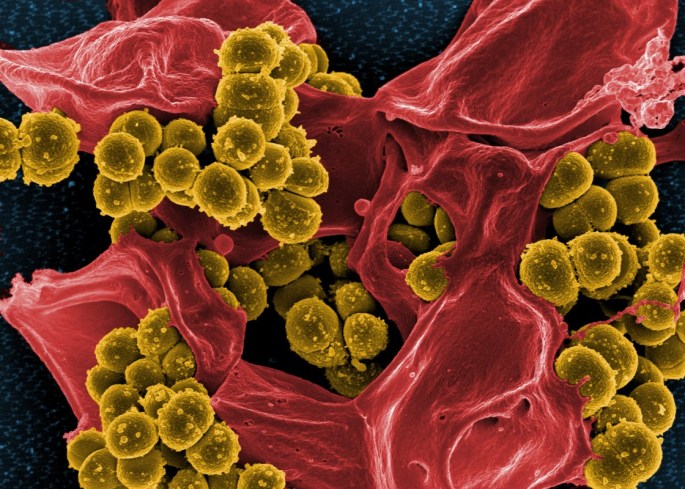
Among serious concern for the growing levels of antibiotic resistant superbugs, it appears there is some promising news. Durata Therapeutics have developed a new drug, Dalvance, which in clinical trials has proven as effective as vancomycin—another powerful antibiotic—against acute skin and soft tissue infections including methicillin-resistant Staphylococcus aureus (MRSA.) According to Durata, more than 4.8 million people were admitted to hospitals with skin and soft tissue infections between 2005 and 2011 and nearly 60% of these staph infections were the methicillin-resistant variety.

The Washington Post—“The drug, Dalvance, is the first approved by the FDA under the government’s Generating Antibiotic Incentives Now program, its effort to encourage pharmaceutical companies to produce new drugs to combat the growing problem of antibiotic resistant bacteria. Even asthe problem has grown around the world, the number of new drugs in the pipeline has dwindled, with drug companies focused on more profitable medications.”


Image Credit: Wikimedia Commons

Pandora Report 06.01.14

Highlights include Ebola research at UVA, No person-to-person MERS transmission in the U.S., Syria’s inability to meet deadlines, and the continuing negative impact of Anxi-Vaxxers.  Have a great Sunday!


Ebola’s Fist: UVA Unlocks How Deadly Virus Smashes into Human Cells

Further proving the superiority of public universities in Virginia, researchers at the University of Virginia School of Medicine have discovered how the Ebola virus enters the cytoplasm of human cells. This discovery comes at a critical time when Ebola is still raging in West Africa.

Augusta Free Press—“UVA’s new discovery offers important insight into how the virus works its way into cells. After the virus is engulfed by the cell, it is contained within a vesicle where it can do no harm. But Ebola quickly escapes the vesicle, and now scientists understand how. UVA researcher Lukas Tamm, PhD, of the Department of Molecular Physiology and Biological Physics, and his team discovered that the pH level inside the vesicle triggers the surface glycoprotein on the virus to form a “fist” that lets the virus punch its way into the cell’s cytoplasm, where it can effectively turn the cell into a factory for virus production.”


Nevermind! It Turns Out the Guy Who Tested Positive for MERS Doesn’t Have it

Everyone can breathe a sigh of relief! It turns out that the Illinois man who tested positive for MERS after shaking hands with an infected man never really had it. The tests used for diagnostics registered a false positive. This means that the only cases of MERS in the United States have been imported and have not passed through person-to-person transmission.

ABC News—“‘There is good news here,” ABC News chief health and medical editor Dr. Richard Besser said. “It was concerning that this man supposedly got infected through minimal contact – a couple of meetings and a handshake. Now that it’s clear that he was not infected, we’re back to a situation where those who have been infected have either been health care workers caring for MERS patients or close contacts, often family members.’”


Syria Set to Miss Deadline for Chemical Weapons Destruction

During the past week not only was a chemical weapons inspection team ambushed and held captive in Syria, but reports are coming out that the Syrian government will not meet the June 30, 2014, deadline for removal and destruction of their chemical weapons arsenal.  UN Secretary General, Ban Ki-moon, also voiced concerned about allegations that chlorine gas has been used in recent fighting in Syria.

The Moscow Times—“The Syrian government has missed several deadlines, most recently its own promise to hand over the remaining chemicals by April 27. It has also failed to destroy a dozen facilities that were part of the chemical weapons program. The government has blamed those failures on security problems and rebel activities, but Western officials have voiced skepticism about those explanations.”


The New Measles Outbreak: Blame the Anti-Vaxxers

This week, the Centers for Disease Control and Prevention released a report that new measles cases in the United States are at a 20 year high for the first five months of 2014.  The CDC reports that 97% of measles cases have been imported by people who have travelled to other countries and brought the disease back with them and that 90% of the infections have occurred among unvaccinated individuals. In his scathing Time piece, Jeffrey Kluger highlights the worldwide struggle to eradicate polio and the capriciousness of those in the U.S. choosing to not be vaccinated against preventable, and long-dormant, diseases.

Time—“Make no mistake, the measles outbreak in the U.S. is an act of choice, of election, of a decision to get sick—or a decision by parents to put their children at risk. Fully 90% of the new cases are among people who are unvaccinated or whose vaccination status is unknown. And nearly all of those people are unvaccinated for personal, philosophical or religious reasons—as opposed to any medical condition that requires them to avoid vaccines. This is true too of recent outbreaks of mumps and whooping cough, and of the dangerously declining rate of vaccination in the U.S. overall. Nearly all of that folly can be blamed on the rumors and outright lies that continue to be spread about various conditions vaccines are said to cause—autism, ADHD, vaguely defined immune system disorders and on and on depending on which celebrity or health faddist is telling the tale.” 


Image Credit: Wikimedia Commons

Pandora Report 5.16.14

There has been a lot on MERS this week as it continued to spread within the U.S. and Europe. The topic was so big that it was even covered on Buzzfeed (the web aggregator mostly known for quizzes and viral videos.) This made me think, “I wonder what sorts of biodefense topics are covered in traditional, mainstream news sources?” So, in celebration of the end of the Spring 2014 semester, this week I bring you just that!


We’ve got the U.S. Military’s defense plan for Zombies, measles and polio as a possible cancer cure, a photo essay about New York’s lost TB ward, and a doctor’s report from the Ebola fields of West Africa. Congrats to our newest graduates and have a wonderful weekend!

The Pentagon Has a Plan to Stop the Zombie Apocalypse. Seriously.

If you’re worried about the zombie apocalypse like I am (and let’s face it, you probably are since you’re here), here is one less thing to worry about. Like many other contingency plans, the Pentagon has one for dealing with the un-dead. Instead of using fictionalized versions of real countries, this scenario strings together a group of seemingly impossible scenarios that could never be mistaken for a real plan including “vegetarian zombies,” “chicken zombies,” and even (yes, this is not a joke) “evil magic zombies.”

Foreign Policy—“‘This plan fulfills fictional contingency planning guidance tasking for U.S. Strategic Command to develop a comprehensive [plan] to undertake military operations to preserve ‘non-zombie’ humans from the threats posed by a zombie horde,” CONOP 8888’s plan summary reads. “Because zombies pose a threat to all non-zombie human life, [Strategic Command] will be prepared to preserve the sanctity of human life and conduct operations in support of any human population — including traditional adversaries.’”

Can Measles or Polio be the Next Cure for Cancer?

Popular science speaks of viruses as something to be avoided, but what if injecting a person with large amounts of virus could actually cure cancer? That’s what researchers at the Mayo Clinic and Duke University Medical Center did when using measles virus to destroy cancer cells. The results? In very small patient trials the researchers saw significant successes including total remission!

Fox News—“This research is all part of a new medical field of oncolytic virotherapy.  The “proof of concept” studies stem from many years of animal research, analyzing how viruses can penetrate certain types of cancer cells.  A typical cancer cell moves very fast and replicates very rapidly.  Therefore, some viruses have an affinity to get into these cells and use them as incubators, so the viruses can multiply at a fast rate, as well.  But once these viruses are attached, the cancer cells essentially explode and release the virus into the body.”

The Mysterious New York City Island You’ve Never Heard Of

Those who have watched the History Channel’s Life After People or read Alan Weisman’s The World Without Us may find this story especially interesting. Photographer Christopher Payne, became aware of North Brother Island—which lies in the East River—and was allowed by the New York City Department of Parks and Recreation to conduct a photo survey of landscape. Used for a variety of purposes until its abandonment in the 1960s, between the 1880s and the 1930s, North Brother Island was the site of Riverside Hospital, where those suffering from infectious disease were treated in isolation.

Slate—“While Payne knew the island’s story, he often had trouble finding physical evidence of its past. “It was very hard for me to find the artifacts I expected to find. They really just didn’t exist. Most of the time you’re looking at the shell of a building, and it’s so far gone you can’t even tell what it was used for. It forced me to look closer, to see graffiti on the walls or to look on the floor,” he said. “A lot of it was detective work. It was like trying to invent a life for something, trying to find a shot or a view that suggested what it used to be.’”

Windsor Doctor Returns Home after Treating Deadly Ebola Outbreak

As the numbers of infected and deaths continue to rise in the Western Africa Ebola outbreak, one of the stories we haven’t heard often is from physicians working there. In this piece for The Windsor Star, Dr. Tim Jagatic, writes about his experience working for three weeks in Conakry, Guinea, as a member of Doctors without Borders.  He writes about the efforts of Doctors Without Borders and the WHO on stopping the spread of the virus as well as providing care for those infected. When not providing medical care, he reported that doctors would perform triage assessments or perform outreach looking for new patient cases.

The Windsor Star—“Jagatic and his fellow physicians would often encounter resistance to their efforts. “We have to work on demystifying the disease,” said Jagatic.“So many people who were infected with it, they were stigmatized. They were banished from their communities, their families, one thing I was really trying to push is that this is really just a virus, like the measles, like the flu, when you get it you treat it, you go home and you’re done. And you’re just like you were beforehand.’”


Image Credit: Christopher Payne

Pandora Report 4.18.14

I think I was coming down with something yesterday. It manifested as a pretty debilitating headache, so I am pretty sure it wasn’t Ebola, but I also had no desire to drink water, so it might have been rabies. Either way, I’m feeling much better today, and am excited to bring you a Saturday issue of Pandora Report. In fact, I’m pretty sure there is nothing that is more fun on the weekend…so let’s get into it!


Highlights include Bird Flu in North Korea, a TB drug that may be the answer to drug resistance, a new strain of Ebola, MERS CoV’s spread to Asia, and Tamiflu’s real utility. Have a great weekend and see you here next Friday!

Highly Pathogenic Avian Influenza (HPAI) outbreak in North Korea

On April 16, the North Korean veterinary authority sent a notice to the World Organization for Animal Health (OIE) alerting them to two H5N1 outbreaks among poultry in the isolated nation. This is a surprisingly transparent move. The first outbreak occurred at the Hadang chicken factory in Hyongjesan starting on March 21. All 46,217 birds died. A second outbreak occurred on March 27 in the same region at the Sopo chicken factory where an unreported number of birds died in the same cage. The source of the infection remains unknown.

The Poultry Site—“Usual control measures have been put in place to control the spread of infection: quarantine, movement control inside the country, screening and disinfection of infected premises/establishment(s). There is no vaccination and no treatment of affected birds.”

Could a new TB drug be the answer to resistance?

A research study at the University of Illinois shows that a new drug under clinical trials for tuberculosis treatment—SQ109—may be the basis for an entirely new class of drugs that could act against bacterial, fungal, and parasite infection and yet evade resistance. Lead researcher, chemistry professor Eric Oldfield, believes that multiple-target drugs like SQ109 and its analogs hold the key to new antibiotic development in the era of drug resistance and “the rise of so-called ‘superbugs’.” His claim is bolstered by experiments with SQ109 and TB where no instances of resistance have been reported.

Science Codex—“’Drug resistance is a major public health threat,” Oldfield said. “We have to make new antibiotics, and we have to find ways to get around the resistance problem. And one way to do that is with multi-target drugs. Resistance in many cases arises because there’s a specific mutation in the target protein so the drug will no longer bind. Thus, one possible route to attacking the drug resistance problem will be to devise drugs that don’t have just one target, but two or three targets.’”

Outbreak in West Africa is caused by a new strain of Ebola virus

As the death toll from the Ebola outbreak in West Africa climbs above 120, scientists are reporting that the virus is not the same strain that has killed in other African nations.  While the source of the virus is still unknown, blood samples from Guinea victims has confirmed that it is not imported strains of Ebola Zaire—the original strain of the virus discovered in Democratic Republic of Congo (formerly known as Zaire.)

The Huffington Post—“‘It is not coming from the Democratic Republic of Congo. It has not been imported to Guinea” from that country or from Gabon, where Ebola also has occurred, [Dr. Stephan] Gunther [of the Bernhard Nocht Institute for Tropical Medicine in Hamburg, Germany] said.

Researchers think the Guinea and other strains evolved in parallel from a recent ancestor virus. The Guinea outbreak likely began last December or earlier and might have been smoldering for some time unrecognized. The investigation continues to try to identify “the presumed animal source.’”

MERS CoV leaves the Middle East and travels to Asia

Though the method of transmission of Middle East Respiratory Syndrome (MERS) remains unknown—a report last week from the CDC finds the virus can stay alive in Camel milk—and thankfully, transmission from human to human has been rare, the disease has now spread beyond the Middle East to Asia via an infection emerging in Malaysia. A Malaysian man returning from Mecca, in Saudi Arabia, tested positive for, and died from, MERS on April 13. So far, a reported 33 people who have travelled to the Middle East for the Haj have tested negative for presence of the virus in neighboring Singapore.

Today Online—“There is currently no advisory against travel to countries of the Arabian Peninsula, or to countries reporting imported cases of MERS-CoV (including Malaysia).

Frequent travellers to the Middle East and Umrah/Haj pilgrims have been advised to take precautions, such as being vaccinated against influenza and meningitis. Those aged 65 years and above or with chronic medical conditions should also get vaccinated against pneumococcal infections before travelling. Pilgrims with pre-existing chronic medical conditions like diabetes, chronic heart and lung conditions should consult a doctor before traveling, to assess whether they should make the pilgrimage.”

A closer look at Tamiflu

With seasonal flu season behind us in the U.S., maybe it is time to look at better treatment options. A study published last week in the British Medical Journal, calls into question the effectiveness of Oseltamivir—brand name, Tamiflu. The international team of researchers found that while Tamiflu can shorten flu symptoms it does not reduce hospital admissions or medical complications. The study also demonstrated that Tamiflu can also cause nausea and vomiting and increases the risk of headaches and renal and psychiatric symptoms.

Global Biodefense—“‘The trade-off between benefits and harms should be borne in mind when making decisions to use oseltamivir for treatment, prophylaxis, or stockpiling,” concludes the study authors from The Cochrane Collaboration, an independent global healthcare research network. “There is no credible way these drugs could prevent a pandemic,” Carl Heneghan, one of the lead investigators of the review and a professor at Oxford University, told reporters. “Remember, the idea of a drug is that the benefits should exceed the harms. So if you can’t find any benefits, that accentuates the harms.’”

(Image credit: Robert Sharp/Flickr)