
Welcome to this week’s Pandora Report! This issue examines the United States officially losing its measles elimination status for the first time in over 25 years, rising H5N1 avian influenza and New World screwworm outbreaks, and global efforts to strengthen chemical and biological attribution.
Happy Thanksgiving from all of us at The Pandora Report! 🍂 We will be on holiday break next week and will return to your inboxes on Friday, December 4.
The U.S. Just Lost Its Measles Elimination Status. Other Diseases Could Follow.
By Carmen Shaw, Managing Editor, The Pandora Report | PhD Biodefense, GMU
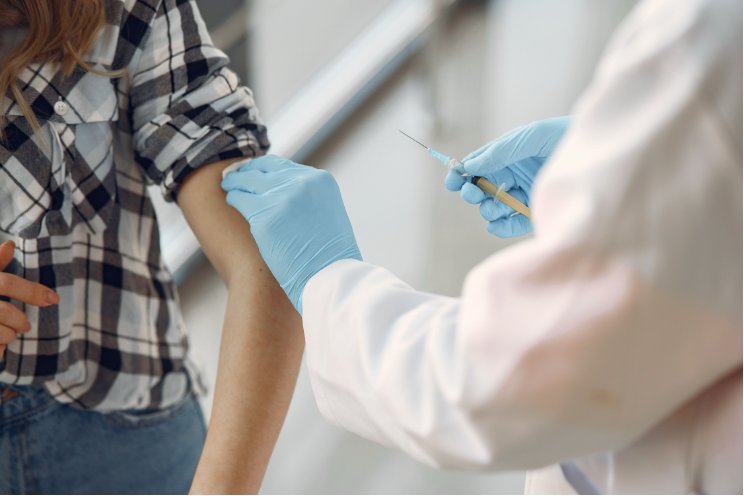
For the first time in over 25 years, the United States has officially lost its measles elimination status, marking a deeply concerning moment for the nation’s public health system. Under criteria used by the Pan American Health Organization (PAHO), which announced the decision on Tuesday, November 17, maintaining elimination depends on a country’s ability to interrupt sporadic outbreaks within a year. Sustained transmission across multiple U.S. states has now breached that threshold. “We are seeing a resurgence of a disease our region worked so hard to eliminate,” PAHO Director Jarbas Barbosa said at a press briefing. In the past two years alone, measles has sickened more than 8,000 Americans, hospitalized over 830, and imposed roughly $130 million in medical care, public health response, and lost productivity, according to Johns Hopkins University researchers. States have also reported 13 measles-associated deaths, including a 7-month-old in New York and infants in Pennsylvania and Wisconsin – children who are too young to even receive the routine two-dose measles-mumps-rubella (MMR) vaccine, which is typically given starting at age one.
Childhood vaccination rates have steadily declined since the COVID-19 pandemic began, a trend many scientists say has been compounded by the Trump administration for spreading vaccine misinformation, cutting millions of dollars from state-run children’s immunization programs and terminating research funding on vaccine hesitancy. “Measles causes so much unnecessary suffering, everything from a high fever and missed work and school to long-term complications like progressive nerve disease and death,” noted epidemiologist and former CDC Deputy Director, Anne Schuchat. Yet, measles outbreaks are entirely preventable: Two doses of the MMR vaccine prevent about 97% of infections, so when almost everyone in a community is fully vaccinated, the virus cannot spread.
Beyond its immediate human and economic toll, measles serves as a kind of epidemiological “canary in the coal mine” for broader domestic health security vulnerabilities. Because the virus is exceptionally contagious, it is typically the first pathogen to reemerge when routine immunization rates drop, signaling heightened risk for parallel resurgences of pertussis (whooping cough), mumps, and rubella, underscoring that regaining elimination status will require years of sustained investment in public health infrastructure and working to restore community trust in science.
Further Reading:
- “U.S. measles deaths rise to 10 after new reports in Pennsylvania and Wisconsin,” Aria Bendix, NBC News
- “The US Long Treated Measles as a Preventable Tragedy. Under Trump, It’s Roared Back.” Amy Maxmen, KFF Health News
- “Trust for America’s Health Statement on the United States Losing Its Measles Elimination Status,” Trust for America’s Health
- “Joint Statement: Loss of U.S. Measles Elimination Status,” CDC
- “New Cost Estimate Tool to Aid U.S. Measles Outbreak Response,” Victoria Willens, Johns Hopkins Bloomberg School of Public Health
- “Four ways the U.S. measles status could affect you,” Lena H. Sun, WP
- “Measles Is Back. It Will Take Years to Eliminate It Again.” Sumathi Reddy, WSJ
- “American Global Health Aid Isn’t Dead. It’s Changing.” Sheri Fink, NY Times
WOAH Urges Vigilance as Bird Flu Outbreaks Rise
By Margeaux Malone, Pandora Report Associate Editor
On November 16, the World Organisation for Animal Health (WOAH) called for heightened vigilance after reports indicated that outbreaks of high pathogenicity avian influenza H5N1 (HPAI) rose over the past three weeks in both poultry and wild birds. Drawing on data submitted through its World Animal Health Information System, WOAH stressed that the increase does not establish a global resurgence or forecast what the season has in store but is a signal for countries to review their preparedness, early detection, and response measures.
Over the past 15 years, reports have shown a recurring seasonal pattern, with Northern Hemisphere outbreaks generally starting to rise in October and peaking around February. Timing and severity vary by year and region, shaped by wild bird movements, farm biosecurity and animal movements. The organization highlighted that surveillance in wild birds can provide early warning, sometimes before outbreaks reach poultry farms. It is members to strengthen surveillance across poultry, wild birds and other susceptible animals, including mammals; reinforce biosecurity by preventing contact between poultry and wild birds and controlling access by people, vehicles and equipment; make reporting clear and accessible for farmers, veterinarians and wildlife workers; check the readiness of laboratories and veterinary services; and share information transparently.
Meanwhile, the U.S. continues to report new H5N1 outbreaks including confirmation of a case in an Oklahoma dairy herd, the state’s first since July 2024. On Wednesday November 18, Cal-Maine Foods, the nation’s largest egg producer, announced it will cull 1.8 million birds, about 2.7 percent of its flock, after detecting the virus at a Florida facility.
Screwworm spreads in the Southwest
Although the upcoming winter season is predicted to temporarily slow New World screwworm activity, outbreaks of the parasite have accelerated in recent weeks. The U.S. Department of Agriculture reports 139 confirmed animal infestations since June across Texas, New Mexico and Arizona. Since November first, cases have risen about 76% from 79 to 139 with new infestations reaching Goliad County, Texas, and Pima County, Arizona. Animal movement is restricted in infested zones, and owners are urged to inspect animals regularly and report unusual wounds. No U.S. human cases have been reported, though Mexico and Central America have recorded more than 2,850.
Further Reading:
- “Bird flu outbreak raises pandemic concerns as virus spreads across US farms,” Jay Gray, Scripps News
- “India to launch first indigenous H5N1 bird flu vaccine for chickens,” Surya S Pillai, The Tribune
- “New World screwworm now detected from Texas to Arizona, with dogs and cats among latest cases,” Texas Public Radio
- “USDA Begins Hiring for Nation’s Largest Facility to Combat New World Screwworm,” U.S. Department of Agriculture
IN OTHER NEWS
Chemical Weapons Use, Biological Attribution, and Accountability
- “From anthrax to AI: Biological attribution then and now,” Atlantic Council
- “Seeking the source: Biological attribution from anthrax to AI,” Bipartisan Commission on Biodefense at Atlantic Council
- “Why the Next Bioterrorists May Not Make the Same Mistakes as Aum Shinrikyo,” Eleanor Marshall and Antonia Juelich, War on the Rocks
- “Iran may use chemical weapons. Why is Washington starving the OPCW? – opinion,” Andrea Stricker and Gregory D. Koblentz, Jerusalem Post
- “Ukraine has submitted to the States Parties to the Convention the results of its investigation into Russia’s use of chemical munitions,” UNN
- “Ukraine traces Russian chemical grenade from factory to battlefield,” Odessa Journal
- “Ukraine: Statement by the Spokesperson on the perpetrators of chemical weapons attacks,” European Union External Action
- “Ukraine: Request for Circulation of a Document to the Thirty-First Session of the Conference of the States Parties,” OPCW
AI, Biotechnology, and Biosecurity Innovation
- “Data Availability for Artificial Intelligence and Engineering Biology,” Vikram Venkatram and Steph Batalis, CSET
- “The Promise of Biomanufacturing at the Edge,” Arye Lipman and Lucas Fluegel, War on the Rocks
- “The Benchtop Nucleic Acid Synthesis Device Landscape: Preliminary Findings,” Ivet A. Yordanova, Kirsten Engel, Mayra Ameneiros, Gary Abel, and Tessa Alexanian, IBBIS, SecureDNA, and the Fourth Eon Biosecurity Institute
- “The Seoul Biosecurity Dialogue: Accelerating the Development and Deployment of AI-Enabled Biodefense Capabilities,” Christopher East and Kyle Wilgus, CSR
Infectious Disease Outbreaks and Global Health
- “Congo’s Ebola outbreak is spreading and killing at a record pace,” Jessica Donati, Reuters
- “How the CIA tried to use chemistry to kill Castro—and why it failed,” Anirban Mukhopadhyay, C&EN
- “Up to 500 Ebola cases still diagnosed a week amid escalating attacks, officials say,” Mary Van Beusekom, CIDRAP
- “Antimicrobial resistance could kill 39 million people over 25 years: WHO,” Al Jazeera Staff, AFP and Reuters
- “U.S. Antibiotic Awareness Week (USAAW) Toolkit,” CDC
- “Infectious Disease Scientist to Lead N.I.A.I.D. Amid Turmoil,” Benjamin Mueller, NY Times
- “Scoop: White House drops Heidi Overton’s FDA nomination,” Alex Isenstadt, Axios

NEW: United States Measles Elimination Status: The Current Landscape and Path Toward Prevention – Congressional Briefing and Webinar
Wednesday, December 9 | 1:00 PM ET
For the first time in over 25 years, the United States is no longer considered to have eliminated measles. This unfortunate milestone shows that the U.S. is losing ground in measles prevention and control, causing unnecessary suffering for families and communities. Join the Association for Immunization Managers, Infectious Disease Society of America (IDSA), Trust for America’s Health, and Vaccinate Your Family for a congressional briefing and webinar explaining the Pan American Health Organization’s measles elimination status review process and implications for the country.
Canadian Biosafety Guidelines: Risk Management for Dual-Use Potential in Life Science Research – Webinar
Thursday, November 26 | 1:00 – 2:00 pm ET
From the Public Health Agency of Canada: “Life science research drives breakthroughs that benefit society, but how can organizations and researchers ensure those advances are pursued responsibly? Join the Centre for Biosecurity for an upcoming webinar to learn about the new Canadian Biosecurity Guideline on Risk Management for Dual-Use Potential in Life Science Research. Participants will gain an overview of the newly published guideline, learn the importance of dual-use risk management, and explore practical approaches for identifying, assessing, and mitigating associated risks.”
Gordon Research Seminar (GRS) on Chemical and Biological Defense
Saturday, February 27 – Sunday, February, 2027 | Ventura, CA
Held directly before the main Gordon Research Conference (see below), this two-day seminar, “Integrated Response Strategies for Complex Threats in Chemical and Biological Defense,” provides a unique forum for early-career researchers, doctoral students, and postdocs to present original work, discuss emerging threats, and build professional networks. Key topics include threat detection, characterization, and convergent approaches spanning in silico, in vitro, and in vivo models. The program features oral presentations, poster sessions, and a mentorship panel on “Career Pathways and Perspectives in Chemical and Biological Defense.” Abstract submission deadline for talk consideration is November 22, 2026; general applications close January 30, 2027.
Gordon Research Conference (GRC) on Chemical and Biological Defense
Sunday, February 28 – Friday, March 5, 2027 | Ventura, CA
Join international researchers, policy leaders, and scientists for a Gordon Research Conference, “The Convergence of In Silico, In Vitro, and In Vivo Models to Address the Divergent and Intersecting Profiles of Chemical and Biological Threats.” This five-day premier conference focuses on cutting-edge research in chemical and biological defense. Session topics include AI-accelerated science, agent-agnostic threat detection, attribution of CBRN events, medical countermeasure design, and biosecurity policy governance. Applications are due by January 31, 2027.

