This Week in DC: Events 9.23.13

Monday, September 23

Aiding Civilians in a Sectarian Conflict: Can Assistance to Syria Heal Without Harm?
Brookings Institution
2:00 – 3:00PM

On September 23, the Foreign Policy program at Brookings will host a panel discussion exploring the politicization of non-lethal aid to Syria. Brookings Fellow William McCants, director of the Project on U.S. Relations with the Islamic World in the Saban Center for Middle East Policy, will examine the role that Gulf charities are playing in fostering sectarian tensions in Syria and then moderate a panel on the sectarian dimension of non-lethal assistance for Syria coming outside the Gulf. The panel will include Abed Ayoub, president of Islamic Relief USA, Mouaz Moustafa, executive director of the Syrian Emergency Task Force, and Maria Stephan, strategic planner of the Bureau of Conflict and Stabilization Operations at the U.S. Department of State.

The Science of Science Communication II
National Academy of Sciences
Washington, DC
September 23 – 25 All day

Climate change. . . evolution . . . the obesity crisis .. .nanotechnology: These are but a few of the scientific topics dominating the world stage today. Yet discourse surrounding these and other science-based issues is often overwhelmed by controversy and conflicting perceptions, hampering understanding and action. The continuing challenges facing scientists, professional communicators, and the interested public as they seek to exchange information about science has resulted in a growing area of research—the science of science communication. Investigators are delving into such issues as the role of social networks in how information is disseminated and received; the formation of beliefs and attitudes leading to decisions and behaviors; and strategies for communicating science in a highly-charged, politicized environment. The National Academy of Sciences is hosting its second Sackler colloquium on this topic to advance a national dialogue about science communication.

Tuesday, September 24

2nd Annual National Health Impact Assessment Meeting
Pew Charitable Trusts
8:30AM – 5:00PM

Building on the success of the Inaugural Health Impact Assessment (HIA)meeting, this conference will convene policymakers, public health professionals, HIA practitioners, community-based organizations, researchers, decision makers from non-health agencies who might use or rely on the results of an HIA, such as planning, transportation, housing, agriculture, energy, environment and education, and others with an interest in learning more about HIAs. It will also offer a special, one-day summit tailored specifically to policymakers.

China’s Maritime Strategy in the East China Sea: Peaceful Coexistence, Deterrence, and Active Defense
Woodrow Wilson International Center for Scholars
9:00AM – 10:30AM

In September 2012, the Chinese-Japanese sovereignty dispute over the Diaoyu/Senkaku islands in the East China Sea reignited when the Japanese government purchased three disputed islands from a private Japanese citizen who claimed to be their owner. Chinese government ships have since increased patrolling of what Japan claims to be its territorial waters around the Diaoyu/Senkakus, expanding China’s maritime law enforcement and military presence in the region. Former Wilson Center Fellow, Dr. Liselotte Odgaard and Mr. Dennis J. Blasko will examine China’s objectives and strategy in the East China Sea from the perspective of the PRC’s long-standing official foreign and defense policies and assess to what extent their actions contribute to escalation and the prospects of the use of deadly force.

Strategic Agility
Stimson Center
10:00AM – 11:00AM

Join senior national security experts and former government officials convened by the Stimson Center for the release of their report outlining a new defense strategy that would strengthen America’s security and enable the Defense Department to cut tens of billions of dollars in annual spending. The 17-member Defense Advisory Committee includes two former vice chairmen of the Joint Chiefs of Staff, a former Air Force chief of staff, a former chief of naval operations and two retired four-star Army Generals.

Wednesdy, September 25

Explaining International Support for Torment: Is Torture the Shadow Cast by Terrorism?
GMU School of Public Policy
12:00PM – 1:00PM

SPP Brown Bag Seminar featuring Dr.Jerry Mayer, Associate Professor. Located in the Arlington Campus, Founders Hall, Room 317. Seating is limited, so please arrive early. For questions, please contact David Armor, darmor@gmu.edu.

What Asia Pivot?Defense Budget Cuts Undermine U.S. Interests in the Pacific
Heritage Foundation
1:30PM – 2:30PM

The Obama Administration’s defense strategy and its “Asia Pivot” are undercut by the fact that the U.S. military lacks the resources necessary to implement such strategies. Even as the number of threats to global peace and stability continues to multiply, there has not been a commensurate increase of U.S. capabilities. To what degree will massive defense cuts and reductions in the overall U.S. military structure constrain America’s global power projection and force sustainability capabilities in the Pacific?

Thursday, Septmber 26

Influenza Outlook 2013-2014: Preparing the Nation for Flu Season
National Press Club
10:00AM

Howard K. Koh, MD, MPH, Assistant Secretary for Health at the US Department of Health and Human Services, Anne Schuchat, MD, (RADM, USPHS), Assistant Surgeon General, US Public Health Service; Director, National Center for Immunization and Respiratory Diseases, Centers for Disease Control and Prevention (CDC), and other medical/public health experts ready the public for the coming flu season at a news conference presented by the National Foundation for Infectious Diseases. Last flu season was a stark reminder of how unpredictable and severe influenza can be. There were high influenza hospitalization rates, especially in the elderly (CDC saw the highest proportion of persons 65 and older hospitalized for flu since tracking began during the 2005-06 season). Sadly, the number of pediatric deaths (161) was the highest since surveillance began (excluding the pandemic year). US public health officials are encouraging the public to prepare for the upcoming flu season by getting vaccinated.

National Reconciliation and the Search for Peace and Stability in the Post-Arab Spring Middle East
GMU School for Conflict Analysis and Reconciliation
3:00 – 4:30PM

Yemen, Libya, and Tunisia have each, in their own way, struggled to achieve sustainable peace and stability. In many ways, toppling these countries’ dictators was the easy part. Now they must address historical divisions or otherwise descend into civil strife. This research project looks at the critical importance of national reconciliation in each of the three countries if they are to avoid violence and achieve sustainable stability. To understand the challenges facing national reconciliation and prospects of peaceful transition in the post-Arab Spring Middle East, the speaker conducted over 160 interviews in Yemen, Libya, and Tunisia talking to senior government officials, heads of political parties, revolutionaries and military councils, civil society organizations, tribal shaikhs, and IDPs. The speaker will share his research findings and compare progress made in all three cases.

Friday, September  27

Challenges of Chemical Weapons Disarmament in Syria
Woodrow Wilson International Center for Scholars
12:00 – 1:00PM

The U.S.-Russian agreement on Syria’s chemical weapons calls on the Assad regime to provide an inventory of its weapons stockpile and agree to a timetable for their removal and ultimate destruction. Charles Duelfer, a leading expert on WMD disarmament with extensive experience in Iraq with the UN and the U.S. government, will discuss the practical challenges of implementing this accord.

(image: Dell)

Koblentz on Syria

Dr. Gregory Koblentz, Deputy Director of the Biodefense Graduate Program, was featured in three pieces on Syria last week. Dr. Koblentz was quoted in an USA Today article, “Syria chemical weapons plan poses unprecedented challenge“. Speaking to the specific challenges the Syrian case presents, Koblentz explained that “[t]here has never been an effort to disarm an entire country of its chemical weapons during a civil war.” Dr. Koblentz was also featured in an interview with CTV Canada and CCTV (China).

The Pandora Report 9.20.13

Highlights include anthrax anti-toxin, the Pentagon and Ebola, antibiotics and global pandemics,  MERS baffling researchers, and a H7N9 vaccine. Happy Friday!

HHS replenishes nation’s supply of anthrax antitoxin

Rest assured, in case of an anthrax attack Uncle Sam has you covered. HHS, through BioShield, has renewed contracts with GlaxoSmithKline, replenishing our nation’s expiring supply of inhalation anthrax anti-toxin in the Strategic National Stockpile. Under the renewed contracts, we’ll be covered until 2018. The renewed contract also include a surge capacity, lest an anthrax attack occur and boosted production of anti-toxin is necessary. Believe it or not, surge capacity was not built into previous contracts.

KOAM – “To create surge capacity, the contracts allow HHS to place future delivery orders if an anthrax attack occurs, in addition to replenishing the current stockpile as needed over the next five years. The cost of future orders would be determined on a case-by-case basis, up to a maximum of $350 million per order. To receive a future order, the company must have antitoxin that is eligible for emergency use authorization or is FDA-approved at the time of the order. The replenishment and surge capacity are part of a governmentwide effort to prepare the nation to respond to security threats from chemical, biological, radiological or nuclear weapons. Federal agencies, including HHS agencies and the departments of Homeland Security, Defense, and Veterans Affairs coordinate closely to ensure programs and requirements are aligned.”

Pentagon puts Ebola virus on bio-threat research list

The Defense Threat Reduction Agency (DTRA) is actively soliciting research in therapeutics development against a slew of deadly bacterial and viral threat agents, ranging from our favorite Ebola to Burkholderia pseudomallei, the causative agent of melioidosis. Drug companies and the US government have had a tumultuous relationship when it comes to developing vaccine/therapeutics for select agents. The solicitation is encouraging, if only as a recognition of the critical importance of researching these pathogens (if we do say so ourselves).

USA Today – “DTRA officials, the document says, are concerned about the potential use of ‘aerosolized filoviruses or alphaviruses’ that could be delivered through the air. Some of the illnesses, such as Meloidosis, affect people in areas where the Pentagon is devoting more attention. For example, a contingent of Marines is now based in Darwin, a city in northern Australia. While there are some vaccines that can treat some of these conditions, the document says, ‘they have inherent limitations and a suitably effective vaccine has to be approved.’ That’s why it’s critical for more research to be conducted to find ways to prevent and treat them, DTRA says.”

Antibiotics Could Cause the Next Global Pandemic

The invention of antibiotics was understandably a big deal – before penicillin, scraping your knee could kill you. Now, we take for granted that infections are cured by a visit to the doctor and a prescription for antibiotics. Which is why this recent CDC report is so concerning.

PolicyMic – “In a press briefing about his recent research, Dr. Tom Frieden, the CDC’s director, warned ‘If we are not careful, we will soon be in a post-antibiotic era … And for some patients and for some microbes, we are already there.’ The confidence in his statement reflected the very first hard numbers for the incidence, deaths, and cost of all the major resistant organisms gathered by the CDC. The urgent worry gripping national health organizations like the CDC is that our current ‘gaps in knowledge’ and continued inadvertent strengthening of antibiotic-resistant bacteria could lead to the evolution of new vicious, contagious diseases with no current ways to combat them.”

MERS virus transmission continues to baffle

Maybe it wasn’t the camels after all. Scientists working together in the UK and Saudi Arabia are having difficulty determining the MERS virus’ route of tranmission. Yes, some camels possess the antibodies, yet most of those who contracted MERS had no contact with animals. Researchers are in agreement about one thing – the virus outbreak’s “focal point” is Riyadh. With hajj occurring next month, discovering more about the virus is becoming increasingly important.

Aljazeera – “The genetic history of the virus suggests repeat infections may have occurred since then, but what the animal source was, or is, remains unclear, it said. Tests are being carried on mammals in Saudi Arabia ranging from camels and bats to goats. The cluster in al-Hasa, in contrast, shows that viral strains there were closely related, which is consistent with spread from human to human. The samples in Riyadh have a broad genetic diversity, the paper said. This could mean that the virus is being transmitted through an animal source that is continuously being brought in from elsewhere, it said.

NIH-funded pandemic preparation: Baylor investigates bird flu vaccine

Researchers are testing vaccines against H7N9, in case the virus develops effective human-to-human transmission. H7N9 struck China in March of this year, infecting 135 and killing 44. With a fatality rate of nearly 1/3 in a totally naive population, the virus definitely has pandemic potential. H7N9 may reemerge again in the cooler fall and winter seasons.

MedScape – “Funded by the National Institutes of Health, the study being conducted at Baylor will recruit up to 1,000 adults nationally who are 19 to 64 years old and in good health. Study participants will receive different dosages of an investigational vaccine given with or without one of two adjuvants, which are substances added to a vaccine to increase the body’s immune response. Researchers at each site will gather safety information, risks and benefits of vaccinations and the effectiveness of the vaccines to trigger an immune response.”

(image: LA Department of Public Health)

Virus or Bacteria?

If you thought quickly determining whether a patient is suffering from a viral or a bacterial infection should be straightforward and easy, you would be wrong. The difficulty in answering this seemingly simple question is what has contributed so heavily to our current war against antibiotic-resistant bacteria. Luckily for all of us, researchers at Duke University are on it. According to a new study, taking a molecular snapshot of gene activity – when infected with a virus, your body activates a specific set of genes, which are entirely different from the set activated to fight a bacterial infection. The entire process currently takes 12 hours, a number which the researchers are hoping to slash to near-instant. The value in immediately determining something as simple as what kingdom the infectious agent belongs to would be a boon in fighting everything from over prescription of antibiotics to emergent pandemics.

Read more on viral signatures here.

(image: Thomas Splettstoesser)

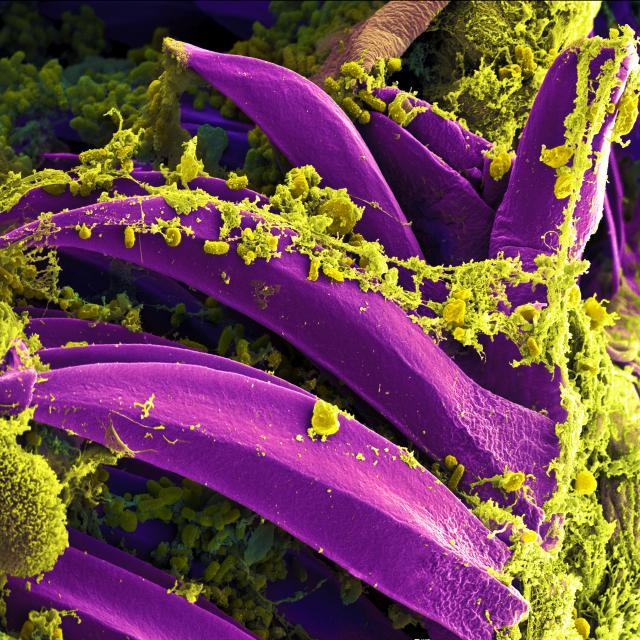
Image of the Week: Plague

This week’s image shows us everyone’s favorite scourge – plague! Depicted below is Yersinia pestis, the causative agent of plague, sticking to  the spines of a flea. Throughout history, Y. pestis has contributed to some of the most serious pandemics, at one point killing nearly half of Europe’s population. While plague still pops up occasionally (it’s endemic in the prairie dog population of the American Southwest), prompt treatment with antibiotics prevents serious illness. However, in aerosol form, unless antibiotics are administered in the first 24 hours, infection is almost always fatal. This is a big part of why Y.pestis is considered a potential bioterrorist agent.

Image: NIAID
Image: NIAID

Synthetic bio and dual-use anti-microbials

By Daniel McGown

Two articles were published in ACS Synthetic Biology this week, one from an MIT team and another from a team at Nanyang Technological University, iteratively outlining an approach for the custom design of a microbial hunter-killer against a pathogenic species.

In the first paper, Saurabh Gupta, Eran Bram, and Ron Weiss outlined proof of concept construction of an E. coli strain modified to do two novel things: 1) detect a quorum sensing signal emitted by Pseudomonas aeruginosa and 2) upon detection secrete a chimeric exotoxin designed to specifically destroy P. aeruginosa cells and nothing else. This use of passive detection to trigger an active and specific offense effectively converts the E. coli strain into a trap waiting for just P. aeruginosa – and because the toxin is secreted rather than requiring destruction of the cell, the trap can keep on trapping.

Matthew Wook Chang and company take a similar design and extend it two steps farther.   Firstly, they added a method to defeat one of P. aeruginosa’s best defenses, the biofilm.  Because P. aeruginosa biofilms include DNA into the extracellular matrix, they added a secreted DNAse to eliminate the DNA and disrupt the biofilm.  Secondly and perhaps more interestingly, the team retargeted the cell’s chemotaxis system by tying E. coli expression of a chemotaxis regulation protein to the presence of P. aeruginosa’s quorum sensing signal.  This caused the E. coli to gravitate toward P. aeruginosa and release their enzymatic arsenal where it would do the most P. aeruginosa damage.  With this latter addition, then, the waiting trap instead switched over to search and destroy.

This is a really cool idea – an appealing concept in a world that is running out of anti-microbials.  It brought to mind immediately the way the Russians used to use bacteriophages to attack bacterial infections, except these can be designed modularly to strike the right target instead of hoping nature is kind enough to deliver.  One has to wonder how easily it could be used in an infection inside a living system, but a proof of concept can’t be expected to jump that chasm – it’s cool enough that it works at all.  It will be nice, though, to see how readily the approach could actually be adapted to other pathogens and how well it will work clearing infections in vivo.

One also has to wonder, though, if the same idea couldn’t be turned in a different and less pleasant direction.  Could you use it to make a pathogen worse?  Say, could you build a pathogen that used the body’s chemokine and cytokine signals to specifically detect and defeat cells regulating immune responses with chimeric leukocidins or hemolysins or some such?  Beats me, but it feels like something of a goose and gander situation.

(image: Janice Haney Carr/CDC)
————————————————————————————————————————
Daniel McGown is a first year PhD student in the Biodefense program with a background in molecular microbiology.

Biodefense Policy Seminar Tonight!

Our first Biodefense Policy Seminar of Fall 2013 is tonight! Join us this evening as Dr. Daniel Dodgen discusses the importance of including special populations in biodefense & public health planning. As always, Seminars are free and open to the public – stop by!

September Seminar“The ABCs of Including Special Populations in Biodefense and Public Health Preparedness”
Speaker: Dr. Daniel Dodgen
DateTuesday, September 17th, 2013 at 7:20 PM
Where
: Meese Conference Room, Mason Hall, GMU Fairfax Campus

daniel_dodgenDr. Dodgen is the Director for At-Risk Individuals, Behavioral Health, and Community Resilience in the Office of the Assistant Secretary for Preparedness and Response at the U.S. Department of Health and Human Services (HHS). His office is tasked with ensuring that HHS is developing policies and capabilities for emergency planning, response, and recovery activities that integrate at-risk individuals (including children), behavioral health, and community resilience. Dr. Dodgen also served as the Executive Director of the White House directed national advisory group on disaster mental health, and played a coordinating role in the federal response to Hurricanes Sandy, Gustav, Ike, and Dean; the H1N1 epidemic, the BP oil spill, the Sandy Hook school shooting, and other natural and manmade disasters.

For more information about our Fall lineup, please visit our Events page.

This Week in DC: Events

If you go to one event this week, make it Tuesday’s Biodefense Policy Seminar! Dr. Daniel Dodgen, Director for At-Risk Individuals, Behavioral Health, and Community Resilience ASPR, will discuss including disaster preparedness. Join us at 7:20PM in GMU’s Mason Hall for a lively discussion!

Monday, September 16

Unthinkable: Iran, the Bomb, and American Strategy
Brookings Institution
2:30PM

Lying behind the turmoil over Syria is another, greater challenge. It is the challenge of a nuclear Iran, which already haunts our Syria debate. President Rouhani’s election has revived the hope of many that a negotiated resolution of this issue is still possible. However, the history of U.S.-Iranian relations leaves room for considerable skepticism. Should these negotiations fail too, the United States will soon have to choose between the last, worst options: going to war to prevent a nuclear Iran or learning to contain one. A nuclear Iran is something few in the international community wish to see, but many fear that a choice will have to be made soon to either prevent or respond to that reality. Can the U.S. spearhead a renewed international effort to prevent a nuclear Iran, or will it be forced to do the unthinkable: to determine how to contain a nuclear Iran?

Tuesday, September 17

Rapid Urbanization and Infectious Disease Outbreaks: The Case of Avian Influenza in Vietnam
East-West Center
10:30AM – 12:30PM

The global trend in urbanization is increasingly toward the “peri-urban,” areas that are unserviced and densely populated. Does increased human and animal density without good urban planning and design explain the emergence of new and reemerging infectious diseases in such areas? Are disease outbreaks in valuable livestock populations more common in the least developed areas? Or does the risk increase as the countryside transitions into city? To answer these questions, Dr. Melissa Finucane and Dr. James H. Spencer will examine the link between multifaceted man-made environmental changes and outbreaks of avian influenza in poultry in Vietnam, where the “bird-flu” has caused widespread economic damage. Presenting the results of their field research, Dr. Finucane and Dr. Spencer intend to highlight the importance of understanding environmental transformation and coupled natural-human systems so that planners and policy makers can manage diseases effectively in rapidly changing places.

Space and National Security
Stimson Center
12:30 – 2:00PM

Join us for a discussion on space and national security, the long-term consequences of destructive conflict in space, as well as appplying principles of deterrence to the space domain. The event features the release of a new Stimson book, “Anti-satellite Weapons, Deterrence and Sino-American Space Relations,” edited by Julia Thompson and Michael Krepon, which contains essays representing varied perspectives on the prospects for cooperation, competition and deterrence in space.

Syria’s Evolving Health Crisis and the Impact on its Neighbors
CSIS
3:00 – 4:30PM

Since Syria’s internal war began two years ago, the accumulating human consequences have been dire, both inside Syria and across the region: an estimated 100,000 people dead; the deliberate targeting of civilians and health infrastructure and medical personnel; mass internal displacement and the mass exodus of refugees to neighboring countries; and a worsening environment for the delivery of humanitarian assistance. Following the August 21 chemical attack outside Damascus, humanitarian and public health capacities are now under new, higher strains and uncertainty. Please join us for a timely discussion that will analyze events on the ground in Syria, their impact on neighboring states, and the actions of the international community both to meet humanitarian needs and serve the strategic interests of key international actors.

September Biodefense Policy Seminar: The ABCs of Including Special Populations in Biodefense and Public Health Preparedness
Meese Conference Room, Mason Hall, GMU Fairfax Campus
7:20 – 8:30PM

Join us as Dr. Daniel Dodgen discusses the importance of including special populations in Biodefense & Public Health planning. Dr. Dodgen is the Director for At-Risk Individuals, Behavioral Health, and Community Resilience in the Office of the Assistant Secretary for Preparedness and Response at the U.S. Department of Health and Human Services (HHS). His office is tasked with ensuring that HHS is developing policies and capabilities for emergency planning, response, and recovery activities that integrate at-risk individuals (including children), behavioral health, and community resilience. Dr. Dodgen also served as the Executive Director of the White House directed national advisory group on disaster mental health, and played a coordinating role in the federal response to Hurricanes Sandy, Gustav, Ike, and Dean; the H1N1 epidemic, the BP oil spill, the Sandy Hook school shooting, and other natural and manmade disasters.

Wednesday, September 18

Raising the Stakes on Syria: The U.S. Policy Debate and Regional Dynamics
Carnegie Endowment for International Peace
9:00AM – 10:30AM

In the wake of President Obama’s national address, U.S. allies and adversaries are struggling to assess the implications of the Russian proposal on Syria’s chemical weapons and what Washington’s next steps will be on Syria. Pressure is building for the Obama administration to get more involved in arming the rebel opposition, even as Americans continue to send a clear message that they want their country to stay out of the conflict. Carnegie experts will discuss regional views of recent developments and the impact of U.S. policy.

Panel Discussion: Security, Freedom and Privacy in the Digital Age
Newseum
9:30AM

The Newseum Institute, in partnership with the John S. and James L. Knight Foundation, will host “Security, Freedom and Privacy in the Digital Age,” a special program that will look at the need to balance national security with preserving journalists’ First Amendment freedoms. Journalists, lawyers, government officials, business leaders and educators will make up the panel that will discuss, among other issues, the PRISM program, media records seizures, and the proposed federal shield law.

A New Look at American Foreign Policy: The Second in a Series of Discussions
Heritage Foundation
12:00 – 1:00PM

American foreign policy is in flux. Libertarian-minded conservatives are joining liberals in their critiques of military interventions, defense budgets and the surveillance practices of the National Security Agency. “Neo” conservatives like John McCain are lining up with liberals in denouncing libertarian conservatives as “isolationists.” Liberals and conservatives alike are unhappy with the Obama Administration’s tepid support for humanitarian interventions in Syria and its failure to advance human rights abroad – normally touchstones of liberal internationalism. Are fundamental ideological changes in American foreign policy afoot? Join us as Heritage continues a series of discussions regarding this question, what the dangers and opportunities are, and whether they afford an opportunity to take a “new look” at American foreign policy.

Thursday, September 19

Security Trade-Off? Implications of Cybersecurity Regulations and International Trade
Brookings Institution
10:00 – 11:00AM

As cybersecurity dominates headlines, governments around the world are exploring their role in securing networks for their citizens and business interests. While different countries may choose different courses of action, some approaches may–intentionally or accidentally–serve as barriers to international trade. Impeding the flow of information technology goods and services could have an impact beyond the immediate markets affects, and may inspire broader conflicts over trade or limit the benefits of IT to promote development and growth. On September 19, the Center for Technology Innovation at Brookings will release a paper on “Cybersecurity and Trade: National Policies, Global and Local Consequences” and host a panel discussion. Experts will explore the impact of national security regulations, highlighting the issues at stake in the context of ongoing trade negotiations around the world, recent disclosures by the NSA and the expanding role of governments in securing cyberspace around the world.

Command and Control: Nuclear Weapons, the Damascus Accident, and the Illusion of Safety
New America Foundation
12:15 – 1:30PM

Since the dawn of the nuclear age, a dilemma has been left unresolved. How can we possess and deploy weapons of mass destruction without being destroyed by them? In his book Command and Control: Nuclear Weapons, the Damascus Accident, and the Illusion of Safety, Eric Schlosser casts light on the largely hidden world of America’s atomic arsenal, combining the thrilling, unsettling accounts of real-life nuclear accidents and near-misses with the stories of the officers, scientists, and policymakers who have devoted their lives to averting a nuclear holocaust—and in the process raises grave doubts about how much control we actually have.

Just for Fun: Neuroenhancement: Building an Improved Human Body and Mind
American Association for the Advancement of Science
5:30 – 7:00PM

Human enhancement is the notion that science and technology can be used to restore or expand cognitive and physical human capacities. It has received considerable public attention in recent years with the return of injured soldiers and the demand for prosthetic devices and with controversies surrounding the use of performance enhancing drugs in sports. This program will focus on a diverse set of enhancements for mind and body, examining the science of what can be done, what might be done in the near and far future, and what should be done. The remarkable opportunities created by scientific advancements are accompanied by ethical and policy challenges that demand a broader public conversation. Register for the event.

(image: Dell/Flickr)

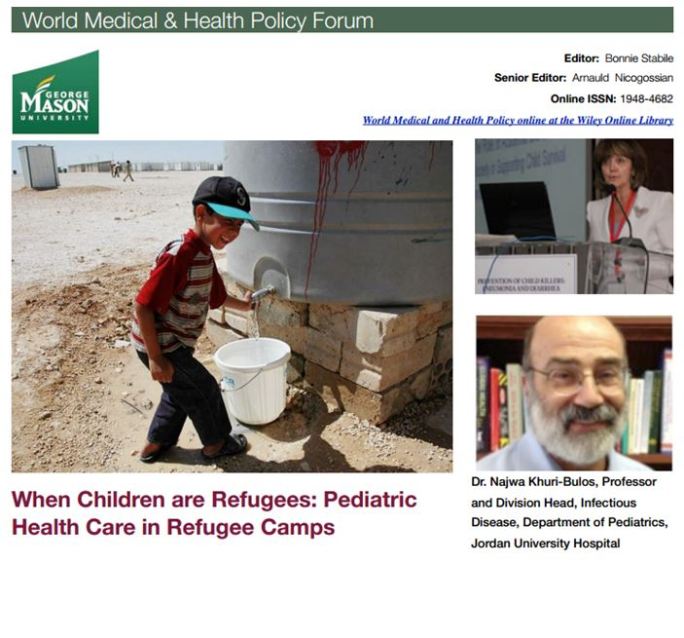
Event: When Children are Refugees: Pediatric Health Care in Refugee Camps

When Children are Refugees: Pediatric Health Care in Refugee Camps
Date: October 7, 2013
Time: 9:00am – 11:30am
Location: George Mason University, Arlington, VA, Founders Hall

Dr. Najwa Khuri-Bulos, Professor and Division Head, Infectious Disease, Department of Pediatrics, Jordan University Hospital, and Dr. Ronald Waldman, Professor of Global Health at George Washington University’s School of Public Health will discuss pediatric health care at Jordan’s Zaatari refugee camp and the problems that prevent an international standard for pediatric health care in refugee camps.

Dr. Khuri-Bulos, has written and spoken on “The Role of Immunization in Achieving the Millennium Development Goals,” and is responsible for the immunization program Jordan established for children living at Zaatari. Dr. Waldman, former Technical Director of the USAID-funded BASICS program, a global child survival effort, is President of the Board of Directors of Doctors of the World-USA.

Click here for the event flyer, including a schedule of events: October 7 Pediatric Refugee Health Care flyer.

For additional information regarding the program, please contact Dr. Denise Baken at dbaken@gmu.edu

SPONSORS

World Medical & Health Policy journal,
Policy Studies Organization
Center for International Medical Policy and Practice
George Mason’s School of Public Policy
Biodefense Program in George Mason’s Public and International Affairs Department

The Pandora Report 9.13.13

Highlights this week include further evidence linking camels to MERS, a big innovator turning his eye to biodefense, tracking influenza A in Norwegian birds, the “eradicated” measles in the US,  tripling Tamiflu to help us all survive a serious H1N1 pandemic, and this week’s weird piece. Happy Friday!

Blame the Camel

It looks like dromedary camels are indeed the vector transmitting MERS from its proposed bat reservoir to humans. Antibodies against the deadly respiratory virus have been found in blood samples collected from camels across the Middle East, including Egypt, Sudan, Oman, and the Canary Island. However, before everyone starts shunning the desert beast of burden, it should be noted that the vast majority or MERS cases have had no contact with the animals, further suggesting person-to-person spread. Officials are calling for greater surveillance, which to date has been spotty in most states.

New York Times – “…it appears that the first confirmed or suspected cases in three separate clusters may have [had contact with camels], and in two cases, the camels were observed to be ill. According to the Saudi newspaper Asharq, a 38-year-old man from Batin, Saudi Arabia, who died of what was diagnosed as bacterial pneumonia was a camel dealer with at least one obviously sick camel. Later, other members of his family, including a mother, daughter and cousin, fell ill with what was diagnosed as MERS, and two died. They were part of a cluster of cases reported Sept. 7 by the World Health Organization.”

Tech Visionary Focuses Now On Biological Weapons Threat

An interesting interview with a tech mogul formerly associated with Microsoft. Like so many of us in the biodefense field, he’s worried about a domestic terror threat operating out of a small lab. It’s refreshing to see someone outside of the industry, with potential means, getting involved with biodefense in a way that doesn’t just involve anthrax.

NPR – “Biological terror is interesting because it is so damn cheap and yet can be even more lethal than nuclear…In this case, the adversary is going to be hidden. It’s going to be a small lab of people who could be cooking up a bio-terror weapon. They’re very unlikely to announce themselves until after the attack.”

Influenza virus in wild birds in Norway

A group of researchers in Norway have determined that ducks and gulls are a natural host of influenza A. Dabbling ducks in particular are the most prevalent host of the virus. Researchers were interested in determining the primary host in order to better understand patterns of seasonal infection.

Phys.org – “The complete genetic material from a total of five influenza viruses from mallard and common gull were sequenced and characterized. The results showed that the genes of the Norwegian viruses resembled the genes found in influenza viruses from other wild birds in Europe…Due to limited overlap between the routes used by migratory birds in Eurasia and America, influenza viruses with different genetic material have developed between these two continents. However, in some areas, it has been observed that genes can be exchanged between influenza viruses from Eurasia and America.”

Measles still poses threat to US, health officials warn

Measles is making a comeback in the US, thanks to the groups of people who think that vaccinating for measles is a bad idea. Of the 159 cases last year, 82 percent involved those who had not been vaccinated. Technically the disease has been eradicated in the US.

FOX – “Of the patients who had not received measles immunizations, 79 percent had philosophical objections to vaccination, federal health officials said. Results of a National Immunization Survey released today show that 90.8 percent of U.S. toddlers between the ages of 19 and 35 months have received at least one dose of the measles, mumps and rubella vaccine (MMR) – just above the federal government’s target of 90 percent. However, federal health officials warned that measles imported from other countries can still cause large outbreaks in the U.S., especially if introduced into areas with clusters of unvaccinated persons.”

Triple Dose Tamiflu Beats Back H1N1

If at first you don’t succeed, try, try again. A study from the University of Manitoba in Winnipeg revealed that patients critically ill with H1N1 were able to clear the virus within five days if given triple the normal dose of Tamiflu. According to study researcher Dr. Anand Kumar, amongst those patients administered the triple dose of the flu drug, 79%  cleared the virus within the 5-day timeframe, compared with just 11% of patients given the normal dose. It should be noted that past studies involving the doubling  of Tamiflu doses did not yield significant clearance times.

MedPage Today – “‘What we found was that the treatment was well-tolerated, and there were many more patients achieving viral clearance at day 5, which was our study endpoint,’ Kumar said during a session at the Interscience Conference on Antimicrobial Agents and Chemotherapy. Kumar noted that the 5-day endpoint was important because of increased survival benefits from the shortened clearance time and the reduced amount of time a patient has to endure in continued isolation, “which is a source of significant manpower demand for an intensive care unit.”

This week’s weird piece: ‘US provided chemical and biological weapons to Saddam Hussein’ – retired military officer

Disclaimer: This is from Voice of Russia, which is  the Russian government’s broadcast network and therefore not exactly a pillar of journalistic integrity.

(image Adam Foster/Flickr)