Pandora Report 9.25.2015

You didn’t think a Papal visit would slow us down, did you? Even in the event of a zombie apocalypse, we GMU Biodefense folks would still find a way to get out the weekly report – perhaps pigeon carrier? Until that happens, don’t forget to check us out on Twitter! This week saw a lot of great focus on collaborations to fight public health threats like antimicrobial resistance and epidemics. Schools in Chicago were closed for concerns over Legionnaires’ disease, yours truly provided a piece on Ebola infection prevention, and we have a wonderful opportunity to contribute to World Medical & Health Policy regarding women’s health on a global stage.

Learned Lessons from Ebola in the US
Sylvia Burwell, Secretary of Health & Human Services, discusses the clinical complexity and reality that “our clinical approach to treating Ebola in a hospital setting posed different challenges.” Several key US health experts weighed in on the pivotal first patient, Thomas Duncan, to unknowingly bring Ebola to the US. The implications for healthcare and preparedness sent a tidal wave of response across US hospitals. Dr. Tom Frieden, director of the Centers for Diseases Control and Prevention (CDC), also highlights three main lessons from not only the cases in Dallas, but also the Ebola epidemic as a whole. He points to the necessity of a strong surveillance and response system, need for rapid international aid, and better infection control in hospitals….which segues beautifully into our next story.

The Infection Prevention Angle of the 2014 Ebola Crisis
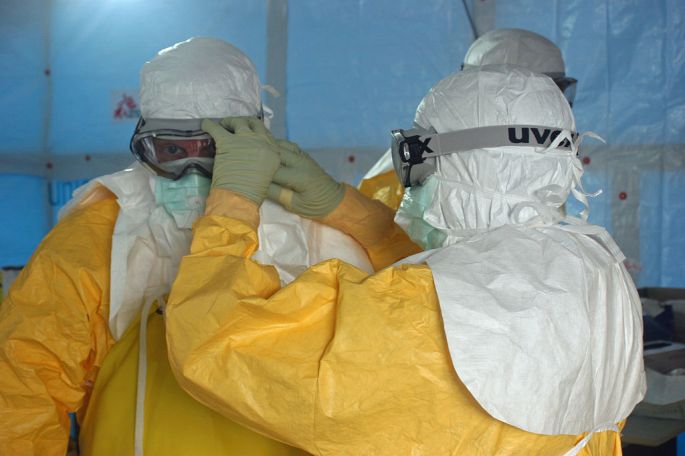
Reports and analyses from a range of responders to the crisis have been trickling out for several months now, but there’s a constant in all of them – infection control. Given my background and experiences in this field, I wanted to take our readers down the rabbit hole of what exactly it was like to be an Infection Preventionist during this time. A hopeful start to a series of pieces on this subject, it will give you a taste of not only the daily struggles, but the brevity of what potential Ebola patients meant for US healthcare preparedness.

Partnerships to Support Antibiotic Development
564px-Penicillin_Past,_Present_and_Future-_the_Development_and_Production_of_Penicillin,_England,_1943_D16963The ASPR’s (Office of the Assistant Secretary for Preparedness and Response) Biomedical Advanced Research and Development Authority (BARDA) is part of a larger initiative to use Other Transaction Authority (OTA – flexible advanced research and development funding instruments) to start developing business relationships between government and private industry. The relationships are mutually beneficial, allowing both parties to invest and develop products for biodefense and the growing threat of antibiotic resistance. Given the slowing of new antibiotic development, this joint agreement comes at a pivotal time for antimicrobial resistance efforts.

Three Chicago-area Schools Close in Response to Legionnaires’ Disease Concerns
Three schools in the Illinois U-46 district were shut down on Wednesday and Thursday after cooling tower test results showed “higher than normal levels of Legionella bacteria”. The OSHA recommended threshold is no higher than 1,000 CFU/ml (colony-forming units per milliliter) and with the outbreak among residents of the Illinois Veteran’s Home, it’s not surprising to see many water towers being frequently tested, etc. The important thing to note is that Legionella pneumophila infections are a result of the intensity of the exposure and the immune status of the exposed person. Legionella can’t be totally eradicated from the water supply and a majority cooling towers will contain some amount of growth.

Call for Papers – Women’s Health in Global Perspective
Papers sought for a special issue and workshop of World Medical & Health Policy on “Women’s Health in Global Perspective,” to contribute to understanding and improve policy related to women’s health and wellbeing.  Forces ranging from the economic to the climactic have human repercussions whose genesis and solutions demand consideration of their global context.  A wealth of recent research and inquiry has considered the particular plight of women, who often suffer disproportionately from lack of education, compromised nutrition, poverty, violence and lack of job opportunities and personal freedom.  The Workshop on Women’s Health in Global Perspective will consider the broad ranging social determinants of health on a global scale that importantly influence health outcomes for women everywhere, which in turn has implications for economic, political and social development.
Abstract submission deadline (250 words): October 16, 2015 
Contact: Bonnie Stabile, Deputy Editor, bstabile@gmu.edu
Notification of selected abstracts: November 13, 2015
Workshop March 3rd, 2016
Completed papers due: March 11, 2016

Stories You May Have Missed:

  • Personal Microbial Cloud – researchers found that a person’s microbiome form a cloud around them, allowing scientists to identify a specific person just by sampling their microbial cloud. Food for thought: would this be our microbial cloud version of a fingerprint?
  • C. Difficile Drug Success – Researchers at Stanford University School of Medicine were successful in their ability to get rid of the deadly gastrointestinal toxin via a drug that didn’t focus on the organism, Clostridium difficile, but rather the toxin itself. C. difficile is responsible for 250,000 hospitalizations and 15,000 deaths per year while costing the US more than $4 billion in healthcare expenses. Yay for successful treatments!
  • EC, EU, and WHO Work To Better Share Private Drug Data – The European Commission, European Medicines Agency, and World Health Organization are working to “step up coordination” on EU medicines regarding safety, quality, and efficacy of new drug candidates. The first step in solving a problem is recognizing you have one, right? The new focus on global public health threats is one we can all appreciate!
  • WHO Makes Changes to Southern Hemisphere Flu Vaccine – The WHO committee recommended changes for two of the three trivalent influenza vaccines for the Southern Hemisphere next year due to changes in the circulating viral strains. They suggested using H1N1, H3N2 an A/Hong Hong/4801/2014-like virus, and for influenza B, the Brisbane/60/2008-like virus. In the quadrivalent vaccine, they recommended adding the influenza B Yamagata lineage component, with the A/H1N1 strain staying.
Pandora Report 9.11.15

Miss us? Good news – the Pandora Report weekly update is back! With a new school year comes new faces and some organizational change-up. Dr. Gregory Koblentz is now the Senior Editor of Pandora Report and Saskia Popescu (yours truly) will be taking over from Julia Homstad as the Managing Editor. I come from the world of epidemiology, public health, and infection control. Having just started in the GMU Biodefense PhD program, I look forward to venturing down the rabbit hole that is the Pandora Report!

There’s been some pretty fascinating news over the past few weeks, so let’s try and catch up…

Lab Safety Concerns Grow 

Our very own Dr. Gregory Koblentz, director of the GMU Biodefense program, was interviewed by USA Today regarding the lab security issues that now involve mislabeled samples of plague. “Since there are now concerns about the biosafety practices at multiple DoD labs there needs to be an independent review of the military’s biosafety policies and practices,” Koblentz said Thursday. He said the Critical Reagents Program is an important biodefense resource. “It’s crucial that all problems with handling and shipping inactivated samples be resolved quickly so the program can resume its important role in strengthening U.S. biopreparedness.”

Reviving a 30,000-Year-Old Virus…Isn’t This How the Zombie Apocalypse Starts?

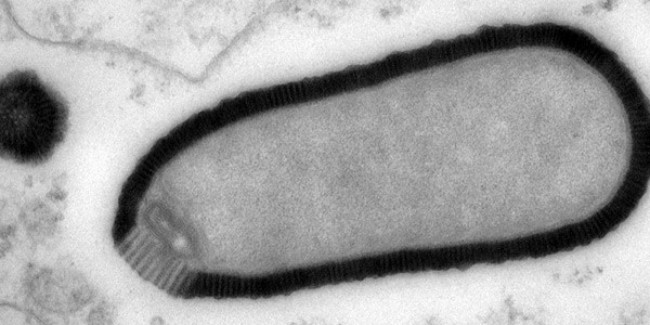
You may recall last year that French scientists stumbled across a 30,000-year-old virus frozen in the Siberian permafrost. Considered to be a “giant virus” (doesn’t that give you a warm, fuzzy feeling inside?), this is actually the fourth ancient, giant viral discovery since 2003. The new plan is to try to revive the virus in order to better study it.

Dr. Claverie told Agency France-Presse, “If we are not careful, and we industrialise these areas without putting safeguards in place, we run the risk of one day waking up viruses such as smallpox that we though were eradicated.” Given the recent concerns over biosafety lab specimen transport, we’re all curious to see how this new organism, coined “Frankenvirus”, turns out!

Cucumbers and A Multi-State Salmonella Outbreak

CDC updates regarding the Salmonella Poona outbreak reveal the brevity of the potentially contaminated product. As of September 9th, there have been two deaths, 70 hospitalizations, and 341 confirmed cases across 30 states. Perhaps the most worrisome is that 53% of affected individuals are children under the age of 18. While the produce company, Andrew & Williamson, issued a voluntary recall of their “slicer” or “American cucumber on September 4th, there have been 56 additional cases reported since then. Isolated samples from cucumbers in question were found in Arizona, California, Montana, and Nevada. The California Department of Public Health issued a warning and pictures of the affected cucumbers. 

Stories You May Have Missed:

Pandora Report 7.26.15

Mason students are working through their summer courses and I’m happy to say mine is OVER! Let the summer begin (two months late)! This week we’ve got great news about Polio in Nigeria and a somber anniversary in Japan. We’ve also got other stories you may have missed.

Enjoy the rest of your weekend and have a great week!

A-Bomb Victims Remembered in Potsdam, Where Truman Ordered Nuclear Strikes

Coming up on the 70th anniversary of the atomic bombs being dropped on Hiroshima and Nagasaki, German and Japanese citizens in the city of Potsdam held a remembrance ceremony for both the victims that died in the blast and the future. Japan has become, according to the former President of the International Court of Justice, the world’s conscience against nuclear weapons and power. Why? Japan is “the only country in the world to have been the victim of both military and civilian nuclear energy, having experienced the crazy danger of the atom, both in its military applications, destruction of life and its beneficial civilian use, which has now turned into a nightmare with the serious incidents of Fukushima.”

Japan Times—“The Potsdam Conference was held between July 17 and Aug. 2 in 1945. The United States dropped an atomic bomb on Hiroshima on Aug. 6 and another bomb on Nagasaki three days later. On Aug. 15 that year, Emperor Hirohito announced to the nation that Japan had accepted the Potsdam Declaration, in which the United States, Britain and China demanded the nation’s unconditional surrender.”

Nigeria Beats Polio

Very, very, very exciting news: Nigeria has not had a case of polio in a year. A year! This makes Nigeria polio free and the last country in Africa to eliminate the disease. The achievement was possible with contributions from the Nigerian government (where elimination of the disease was a point of “national pride”), UNICEF, the WHO, the CDC, the Bill and Melinda Gates Foundation, Rotary International, and other organizations. With Nigeria’s accomplishment, there are only two other countries in the world where polio still exists—Afghanistan and Pakistan.

Voice of America—“Carol Pandek heads Rotary International’s polio program. She told VOA via Skype that a year being polio-free is a milestone for Nigeria, but noted that it is not over. “Now they need to continue to do high quality immunization campaigns for the next several years,” she said, as well as have a strong surveillance system so, should there be any new cases, they can be identified as soon as possible.”

Stories You May Have Missed


Image Credit: Fg2

Pandora Report 12.21.14

The winter holidays are here and with them comes the final 2014 news roundup. This week we look at superspreaders, dengue fever, and, of course, Ebola.

There will be no roundup next week as I will be spending time with family and friends. I hope all of you have the opportunity to do the same and are surrounded by those you love during this time of year. It has been a privilege and a pleasure serving as the Managing Editor of the Pandora Report since March. I hope you have enjoyed reading it as much as I’ve enjoyed writing it.

I hope to see you right back here again in 2015!

The 20% Who Spread Most Disease

How did Typhoid Mary spread the disease to dozens of people but never get sick herself?

Researchers at Stanford University are looking into the science behind “superspreaders”—the idea that some people spread more disease than others. Recent experiments have suggested that the body’s immune response might play a role in helping to spread pathogens to others, however, it isn’t clear if the immune system of the superspreader or their behavior plays a bigger role in the passage of disease.

The Wall Street Journal—“‘It’s telling us that these superspreaders…are tolerant of high levels of the pathogen and any little disturbance and added inflammation that this antibiotic treatment did to them,” said Dr. Monack. “I wouldn’t say they have stronger immune systems. I would say it’s in a state that protected them from this added disturbance in the gut.’”

Dengue Fever Vaccine on the Cards After Novel Antibody Discovery

Over the past 50 years cases of dengue fever have soared—nearly 100 million per year. Normally the infection causes a fever which lasts about a week, but some develop hemorrhagic fever which kills about 22,000 a year. Gavin Screaton at the Imperial College in London warns “it’s likely that without a vaccine this disease is not going to be controlled.” That’s why a discovery of a new antibody brings hope that vaccine development may be closer than we thought.

The Guardian—“The researchers spotted the new group of antibodies while they were studying blood drawn from patients who picked up dengue infections in south-east Asia.

They found that about a third of the immune reaction launched by each patient came from a new class of antibodies. Instead of latching on to a single protein on the virus surface – as usually happens – the new group of antibodies latches on to a molecular bridge that joins two virus proteins together.”

This Week in Ebola

It’s been a hard year in West Africa with the worst Ebola outbreak in history still ongoing. In Sierra Leone, the country with the most cases, treatment centers are overflowing with patients. The President has announced that Christmas has been cancelled as news came that the most senior doctor—Victor Willoughby—died. Dr. Willoughby was the 11th of Sierra Leone’s 120 doctors to die from the virus. For the lucky ones who survive, they must cope with after effects including blindness and joint pain. And don’t forget the stigma—a heart breaking article in the New York Times describes the plight of Ebola orphans who aren’t taken in for fear that they are ticking disease time bombs. Cuban doctors are some of the most active on the front lines, but news this week came that the U.S. embargo has delayed payment of those doctors. There are glimmers of hope though, as the U.N. Economic Commission for Africa urged debt cancellation for Ebola affected West African countries and experimental serum therapy treatment made from the blood of recovered patients arrived in Liberia.

Stateside, a child flying though O’Hare Airport in Chicago was quarantined when a high fever was discovered after screening. Johns Hopkins University was chosen as one of the winners in a global competition to create an improved protection suit for those fighting Ebola on the front lines. Lastly, an American doctor—Richard Sacra—who was infected with Ebola in Liberia and returned to the U.S. for treatment, has said that he will return to Liberia in January to continue fighting the outbreak.

Stories You May Have Missed


Image Credit: Free Images

Image of the Day: CDC Ebola Infographic!

Ebola Infographic CDCOne thing you may not know about me is that I absolutely LOVE CDC infographics!

After this weekend’s events in Liberia, when people were seen carrying out bloody and fluid filled mattresses and other bedding, let’s take a look at how Ebola is actually transferred.

Please post this through your social media connections so we can work on spreading the correct information about the virus.

Image of the Week: Influenza!

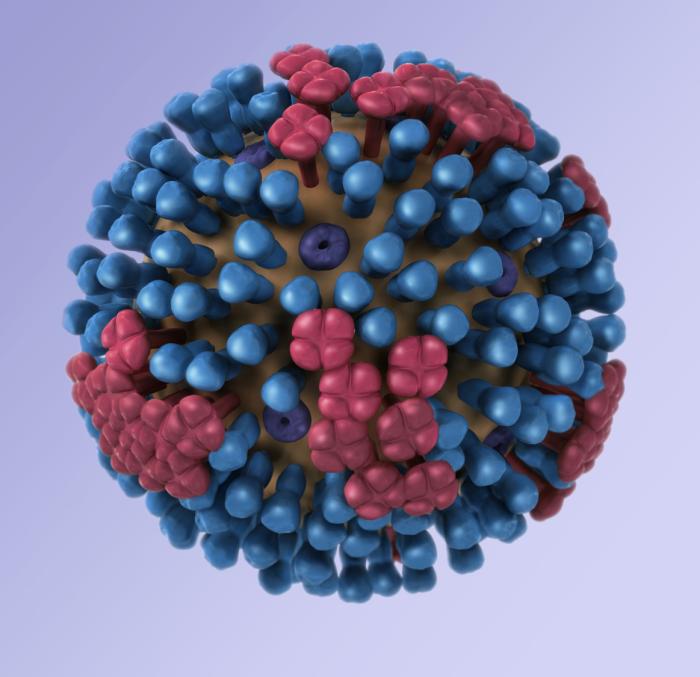
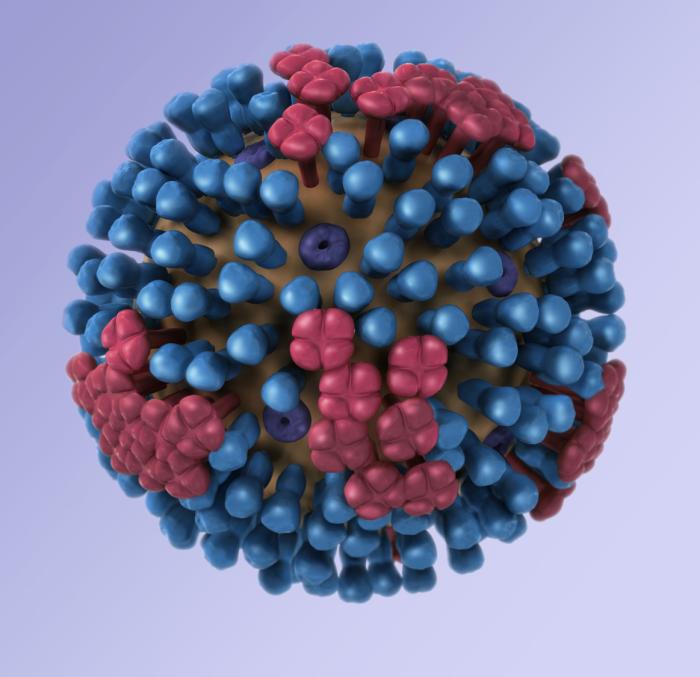
11825_loresThis illustration provides a 3D graphical representation of a generic influenza virion’s ultrastructure, and is not specific to a seasonal, avian or 2009 H1N1 virus. 

There are three types of influenza viruses: A, B and C. Human influenza A and B viruses cause seasonal epidemics of disease almost every winter in the United States. The emergence of a new and very different influenza virus to infect people can cause an influenza pandemic. Influenza type C infections cause a mild respiratory illness and are not thought to cause epidemics.

Influenza A viruses are divided into subtypes based on two proteins on the surface of the virus: the hemagglutinin (H), and the neuraminidase (N). There are 16 different hemagglutinin subtypes and 9 different neuraminidase subtypes. Influenza A viruses can be further broken down into different strains. Current subtypes of influenza A viruses found in people are influenza A (H1N1) and influenza A (H3N2) viruses. In the spring of 2009, a new influenza A (H1N1) virus emerged to cause illness in people. This virus was very different from regular human influenza A (H1N1) viruses and the new virus has caused an influenza pandemic.

Influenza B viruses are not divided into subtypes, however, influenza B viruses also can be further broken down into different strains.


Image and Caption Credit: CDC

Pandora Report 08.09.14

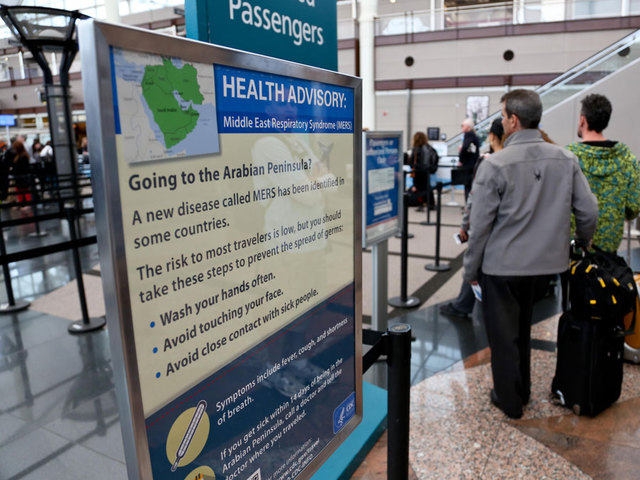
I spent about 12 hours at Dulles Airport yesterday. I didn’t fly anywhere, but I was ensuring that 120 international students were able to get from Washington DC to their host families all over the country. You may have noticed that in the security areas of Dulles Airport they have televisions that go over proper security screening procedures. On these same screens, they also show CDC travel alerts.

In June (when I was ensuring that 450 students were able to get back to their home countries), the alerts were for MERS and mosquito borne diseases like dengue and Chikungunya. Yesterday, Ebola was on alert for travelers to West Africa.

Last week we looked at the fever pitch of Ebola, today, lets look at the diseases designated by the CDCs travel alerts at Dulles.


Zika Virus: Another Threat from the Asian Tiger Mosquito

Travel alerts from the CDC often include Chickungunya and Dengue fever, but another disease from the same vector—the tiger mosquit0—is receiving alerts as well. Zika Fever, was isolated in humans in the 1970s, but has relatively few documented cases. In 2007, the virus demonstrated epidemic capacity with 5,000 cases in Micronesia. In 2013 there were 55,000 cases in Polynesia. Today the CDC has issued Watch Level 1 alerts for Zika in Easter Island, French Polynesia, and the Cook Islands and urges travelers to practice usual precautions.

Entomology Today—“Originally from Asia, the tiger mosquito was introduced to Africa in 1991 and detected in Gabon in 2007, where its arrival undoubtedly contributed to the emergence of dengue, chikungunya, and as shown by this new study, zika. The rapid geographic expansion of this invasive species in Africa, Europe, and America allows for a risk of propagation of zika fever around the world.”


Ramadan pilgrimage season in Saudi Arabia mostly free from MERS

Saudi Arabia reported only ten new cases of MERS from June 28- July 28 during the month of Ramadan. In April and May of 2014, hundreds of people were infected by MERS, which raised concerns about infection rates during Ramadan and during the Hajj, which will take place in October, when millions of pilgrims will travel to Mecca. Since 2012, Saudi Arabia has confirmed over 700 cases of infection resulting in nearly 300 deaths. The CDC designates the Hajj as an Alert Level 2, and urges U.S. residents to practice enhanced precautions.

Al Arabiya—“Saudi Arabia and the World Health Organization have said they are imposing no travel or other restrictions due to MERS during the Hajj, but have encouraged very young or old pilgrims, and those suffering from chronic disease, not to come this year.”


WHO: Ebola ‘an international emergency’

This week, the World Health Organization declared that the spread of Ebola in West Africa is an international health emergency. They urged coordinated response in order to keep the spread of the virus under control. Though no travel or trade bans have been enacted, the WHO recommends that Ebola cases or contacts should not travel internationally. This comes at a time when states of emergency have been declared in Liberia, Guinea, and Sierra Leone and the number of total cases has reached nearly 1,800 with over 950 deaths. The CDC designates outbreaks in these countries as a Warning Level 3, and urges U.S. residents to avoid non-essential travel.

BBC—“WHO director-general Dr. Margaret Chan appealed for help for the countries hit by the ‘most complex outbreak in the four decades of this disease.’

The decision by the WHO to declare Ebola a public health emergency is, by its own definition, an ‘extraordinary event’ which marks ‘a public health risk to other states through the international spread of disease’.”


Image Credit: The Denver Channel

Category A Bioterrorism Agent Lands in the U.S.

By Alena James

It has been one seriously scary and depressing summer with the multitude of cataclysmic events taking place all around the globe.  Much like the thousands of immigrant children whose futures are still being debated by the U.S. and Mexico, many of these crises have remained outside of U.S. soil. However, one potential crisis has been willingly brought to the U.S.

A few days ago a protocol was established to send medical evacuation planes to Liberia to bring back two missionary American health care workers suffering from the Ebola virus.  The decision to bring the patients back to the U.S. raised great alarm among many Americans that there is a chance of a major outbreak occurring with a disease that the U.S. is not prepared to fight

This past week, the Director of the CDC, Dr. Thomas Frieden, continually claimed that the necessary precautions were being taken to ensure the safety of the public from being exposed to the virus. According to Frieden, the chances of an outbreak taking place in the U.S. are minimal. Ebola is a virus that is not airborne and is not acquired through casual contact with an infected patient. For individuals to be infected they must have direct contact with bodily fluids septic (contaminated) with the virus.

During a CNN interview, Frieden explained that the decision to bring the Americans back to the U.S. was made by Samaritan’s Purse, the organization to which the two infected Americans, Dr. Kent Brantly and Nancy Writebol, belong. The role of the CDC will be to help assist in the transport and supportive care of the patients upon arrival at Emory University Hospital in Atlanta, Georgia.

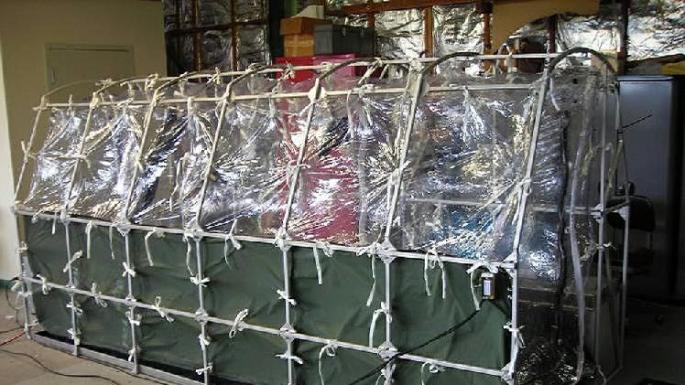
The plane that transported Dr. Kent Brantly on Saturday was fitted with an Aeromedical Biological Containment System. In this system, a tent like structure was set up on board a modified Gulfstream III aircraft and used to isolate Brantly from the rest of the people onboard.

During an aeromedical evacuation, a patient undergoes medical assessment and evaluation before transport. This is to ensure the patient’s survival during the course of the trip. According to a study conducted by the U.S. Army Medical Research Institute of Infectious Diseases in Fort Detrick, Maryland, the physiologic effects of altitude, effect of confinement on patient-care delivery, and psychological effect of confinement within the containment system must be taken into consideration before transport.

Dr. Brantly arrived safely in the United States on Saturday at Dobbins Air Force Base in Marietta, Georgia. He was then transported to Emory University Hospital in Atlanta.

So, why exactly was the decision made to bring back to the Americans infected with a viral agent; which the CDC has classified as a Category A Bioterrorism Agent and to which there is no cure?

In his interview with CNN, Dr. Frieden, gave credit for the medical evacuation operation to Samaritan’s Purse. However, without the assistance of the State Department, the U.S. military, and the CDC it seems likely that the operation would not have come to fruition at all.

The reasoning for this evacuation, made by many advocates, seems to lie with the high level of confidence among those at the CDC and Emory University in their ability to control and contain the infected patients.  Despite the unprecedented nature of an Ebola patient returning to the U.S., infectious disease experts maintain the appropriate precautions are being made and the virus will remain contained.

The medical evacuation operations for Dr. Brantly and Nancy Writebol do not offer only an increased chance of recovery from Ebola and the chance to be reunited with their loved ones—if only through a glass partition. These operations also provide an opportunity for America’s best infectious disease experts and healthcare workers to gain firsthand experience with actual cases of a virus not available for study at clinical levels in the U.S. The medical evacuation operation is also beneficial to emergency response personnel who have been training on how to deal with these types of medical cases for years.

Over the summer, Americans watched intently as the creditability of the CDC took a hit when many of its laboratory staff failed to abide by proper laboratory safety techniques upon dealing with samples of Bacillus anthracis and H5N1.  The CDC and NIH’s credibility took another hit when the CDC discovered more than 200 vials of smallpox in a refrigerator in an NIH lab in Bethesda, Maryland.

Hopefully the fouls ups of the past have provided important lessons for all fields working with infectious diseases to take safety protocols very seriously…especially while working with patients suffering from a virus that has no cure.


Image Credit: Yahoo

Pandora Report 7.26.14

Highlights this week include, Dr. Frieden goes to Washington, top Ebola doc comes down with the virus, a TB patient on the loose in California, and a plague based shut-down in China. Have a great weekend!

CDC Director to Tackle MERS, Measles, Global Health Threats

It was my absolute pleasure to be able to attend a talk given by Dr. Tom Frieden, Director of the Centers for Disease Control and Prevention, at the National Press Club on Tuesday.  Though Dr. Frieden briefly covered the stated topics, he spoke primarily about the dangers of growning antibiotic resistance and hospital acquired infections. He urged everyone, including the CDC, to work hard(er) to combat these issues that may usher us into a “post-antibiotic era.” The entire speech is available here. (You may even notice me in the lower left corner chowing down on a CDC cupcake!)

USA Today—“‘Anti-microbial resistance has the potential to harm or kill anyone in the country, undermine modern medicine, to devastate our economy and to make our health care system less stable,” Frieden said.

To combat the spread of resistant bacteria, Frieden said the CDC plans to isolate their existence in hospitals and shrink the numbers through tracking and stricter prevention methods.”


Sierra Leone’s Top Ebola Doctor Infected as the Worst Outbreak in History Continues

You may have seen this story pop up earlier this week in our facebook or twitter, but it certainly bears repeating. Dr. Sheik Umar Khan, who has been credited with treating more than 100 Ebola victims, has come down with the virus too. He is now one of hundreds who have been affected by the virus in West Africa, which has killed over 600.

The Washington Post-“In late June, Khan seemed keenly aware of the risk he faced. “I am afraid for my life, I must say, because I cherish my life,” he told Reuters. “Health workers are prone to the disease because we are the first port of call for somebody who is sickened by disease. Even with the full protective clothing you put on, you are at risk.’”


California Police Seek Man Who Refused Tuberculosis Treatment

Prosecutors in Northern California have obtained an arrest warrant for Eduardo Rosas Cruz, a 25 year old transient, who was diagnosed with TB and disappeared before he started treatment. Rosas Cruz needed to complete a nine-month course of treatment. Tuberculosis spreads through the air when an infected person coughs or sneezes. It is not known if Rosas Cruz is currently contagious. By law, health officials cannot force a patient to be treated but courts can be used to isolate an infectious individual from the public at large.

FOX News—“County health officials asked prosecutors to seek the warrant, in part, because Rosas Cruz comes from a part of Mexico known for its drug-resistant strain of tuberculosis. County health officials are searching for Rosas Cruz, and his name is in a statewide law enforcement system, San Joaquin County Deputy District Attorney Stephen Taylor said.”


In China, A Single Plague Death Means an Entire City Quarantined

Parts of Yumen City, in Gansu Province, were quarantined after a farmer died from bubonic plague. The man developed the disease after coming in contact with a dead marmot on a plain where his animals were grazing. According to experts, Chinese authorities categorize plague as a Class 1 disease, which enables them to label certain zones as “infection areas” and seal them off. 151 people were affected by the quarantine, which was lifted after none developed symptoms.

The Guardian—“The World Health Organization’s China office praised the Chinese government’s handling of the case. “The Chinese authorities notified WHO of the case of plague in Gansu province, as per their requirements under the International Health Regulations,” it said in a statement to the Guardian. “The national health authorities have advised us that they have determined this to be an isolated case, though they are continuing to monitor the patient’s close contacts.’”


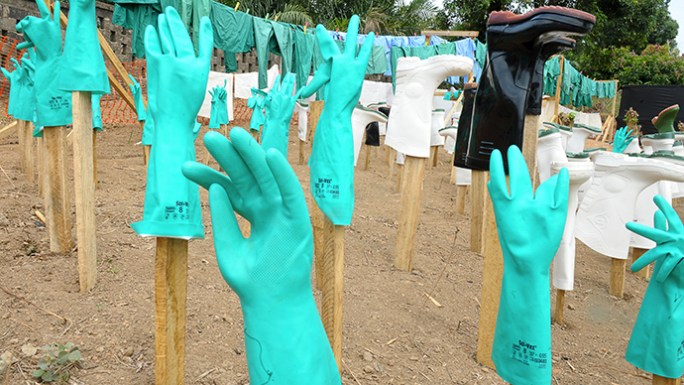
Image Credit: RT

Pandora Report 7.20.14

I feel like its been a bad week, right? Between the crash—or shoot down—of MH 17 (with nearly 100 WHO HIV/AIDS researchers aboard) and events in Gaza with Israel, it sort of seems like it couldn’t get much worse. Well, turns out, it could. This week we have the first cases of Chikungunya in the U.S. and Ebola still raging. However, no one, in the biodefense world, had a worse week than the CDC.


First Chikungunya Case Acquired in the U.S. Reported in Florida

So far, in 2014, there have been 243 travel-associated cases of Chikungunya reported in 31 American states and two territories. This week, the infection numbers grew. The difference in this case, was that the man in Florida who was diagnosed, had not travelled outside the U.S. recently. This makes it the first case of the disease that had been acquired domestically.

WALB—“The Centers for Disease Control and Prevention is working closely with the Florida Department of Health to investigate how the patient contracted the virus; the CDC said they will also monitor for additional locally acquired U.S. cases in the coming weeks and months.

“The arrival of Chikungunya virus, first in the tropical Americas and now in the United States, underscores the risks posed by this and other exotic pathogens,” said Roger Nasci, Ph.D., chief of CDC’s Arboviral Diseases Branch.”


WHO Can’t Fully Deal with Ebola Outbreak, Health Official Warns

With the death toll from the ebola outbreak in West Africa at 603 (at least), more bad news emerged this week when we learned that budget cuts to the WHO make it for difficult for the organization to respond to the ongoing medical emergency. Beyond funding issues, efforts to stem the outbreak have been hindered by some countries failure to implement the WHO’s International Health Regulations which outline methods of reporting disease outbreaks.

The LA Times—“‘The situation in West Africa should be a wake-up call to recognize that this weakening of this institution on which we all depend is not in anybody’s interest,” Scott Dowell, director of disease detection and emergency response at the U.S. Centers for Disease Control and Prevention, said during a briefing in Washington. “In my view, there’s no way that WHO can respond in a way that we need it to.’”


Update on the Found Vials: There Weren’t 6; There Were 327.

In last week’s Pandora Report we learned about unsecured vials of smallpox that were found in an FDA cold storage room in a Maryland lab. This week we learned that it wasn’t just smallpox and it wasn’t just six vials—it was 327. Some of these vials contained select agents other than smallpox, like dengue, influenza, Q fever and rickettsia. Whoops!

Wired—“Here’ is the gist of the FDA’s external announcement, “…this collection was most likely assembled between 1946 and 1964 when standards for work with and storage of biological specimens were very different from those used today. All of the items labeled as infectious agents found in the collection of samples were stored in glass, heat-sealed vials that were well-packed, intact, and free of any leakage, and there is no evidence that anyone was exposed to these agents.”


Image Credit: Eduardo