Pandora Report 4.19.2024

This week’s edition of the Pandora Report covers GMU’s opening of the Mason Autonomy and Robotics Center, the United States’ latest Global Health Security Strategy, WHO’s new definitions for airborne pathogens, and more. New publications, upcoming events, and job openings are also included.

GMU College of Engineering and Computing Opens Mason Autonomy and Robotics Center

George Mason University’s College of Engineering and Computing formally opened the Mason Autonomy and Robotics Center (MARC) this week at an event on the University’s campus in Fairfax, VA. In his remarks at the event, Dean Ken Ball told the crowd “MARC is the focal point for our research in autonomy, robotics, and AI. Mason truly is a pace-setter in these areas.”

Both Ball and University President Gregory Washington noted that in addition to being a leader in AI, the university is focusing on responsible AI, with a graduate certificate in that field launching in fall 2024.

Learn more about MARC and GMU’s focus on responsible AI and other technologies here.

White House Releases Latest Global Health Security Strategy

This week, the Biden administration launched the new U.S. Global Health Security Strategy (GHSS), which broadly calls for a whole-of-government, science-based approach to strengthening global health security. In a statement, the White House said “Building on progress achieved since 2019 and incorporating lessons from the COVID-19 pandemic, the Global Health Security Strategy lays out a path to deliver on the goals in the 2022 National Biodefense Strategy and Implementation Plan and the bipartisan Global Health Security and International Pandemic Prevention, Preparedness and Response Act of 2022, which was enacted as part of the James M. Inhofe National Defense Authorization Act for Fiscal Year 2023. ­It places county-driven action, equity, and inclusion at its core to ensure the world is better prepared to prevent and respond to health emergencies, including pandemics. The Strategy also envisions using United States leadership to drive global action toward shared goals, including stronger investment and commitment by other countries.”

The GHSS sets three main goals to guide the country’s global health security agenda:

  1. “Strengthen global health security capacities through bilateral partnerships”
  2. “Catalyze political commitment, financing, and leadership to achieve health security,” and
  3. “Increase linkages between health security and complementary programs to maximize impact”

Read the summary of these goals and the overall strategy here.

WHO Updates Terminology for Pathogens That Transmit Through the Air

The WHO announced changes to how it defines airborne transmission and other related terms this week. In a statement, the Organization said “Following consultation with public health agencies and experts, the World Health Organization (WHO) publishes a global technical consultation report introducing updated terminology for pathogens that transmit through the air. The pathogens covered include those that cause respiratory infections, e.g. COVID-19, influenza, measles, Middle East respiratory syndrome (MERS), severe acute respiratory syndrome (SARS), and tuberculosis, among others.”

“The publication, entitled “Global technical consultation report on proposed terminology for pathogens that transmit through the air”, is the result of an extensive, multi-year, collaborative effort and reflects shared agreement on terminology between WHO, experts and four major public health agencies: Africa Centres for Disease Control and Prevention; Chinese Center for Disease Control and Prevention; European Centre for Disease Prevention and Control; and United States Centers for Disease Control and Prevention. This agreement underlines the collective commitment of public health agencies to move forward together on this matter.”

This document, among other things, explains that the term “through the air” may be used in reference to infectious diseases “where the main type of transmission involves the pathogen travelling through the air or being suspended in the air, in line with other terms such as “waterborne” diseases, which are understood across disciplines and by the public.”

As Reuters explains, “Agencies have historically required high levels of proof before calling diseases airborne, which required very stringent containment measures; the new definition says the risk of exposure and severity of disease should also be considered. Past disagreements also centred around whether infectious particles were “droplets” or “aerosols” based on size, which the new definition moves away from.”

NIH Revises Guidelines for Research Involving Recombinant or Synthetic Nucleic Acid Molecules

The NIH recently published revisions to NIH Guidelines to outline biosafety practices for research involving gene drive modified organisms (GDMOs) in contained research settings. The revisions include:

  • “Specifying the minimum containment requirement for research involving GDMOs;
  • Articulating considerations for risk assessment and additional responsibilities for Institutional Biosafety Committees (IBCs) and Biosafety Officers”.

The revised version is now available here.

“Opinion: The Next Pandemic Threat Demands Action Now”

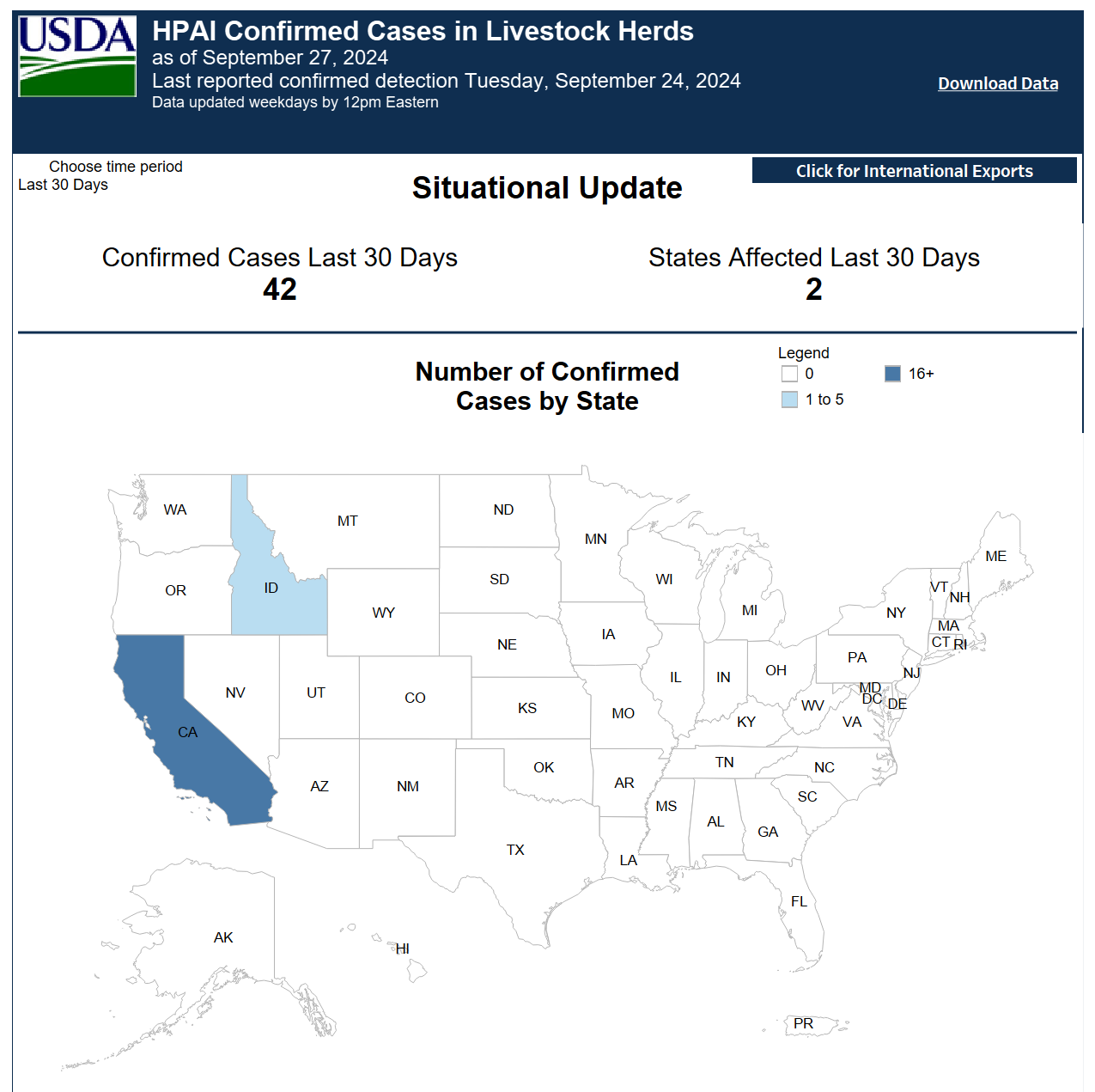
Jaime M. Yassif recently published this piece with CNN, writing in her introduction “The headlines are concerning: “Highly pathogenic avian influenza found in Texas, Kansas dairy cattle.” “Bird flu detected in dairy worker.” “First human case of avian flu in Texas raises alarm.” Could this be how the next pandemic begins? Well, so far US officials are saying they believe there is minimal risk to the public from the latest iteration of bird flu.”

“But with growing evidence of potential mammal-to-mammal spread just weeks after the new bird flu was detected in cows, many of us in the biosecurity and pandemic preparedness community believe that leaders in capitals around the globe should be working to get ahead of this new public health threat in case the H5N1 flu virus gains the ability to spread among humans.”

“H5N1 Bird Flu in U.S. Cattle: A Wake-Up Call to Action”

Luciana Borio and Phil Krause recently published this opinion piece with STAT News, in which they explain “Comparisons to seasonal flu management underestimate the unique challenges posed by H5N1. Unlike its seasonal counterparts, vaccines produced and stockpiled to tackle bird flu were not designed to match this particular strain and are available in such limited quantities that they could not make a dent in averting or mitigating a pandemic, even if deployed in the early stages to dairy workers. The FDA-approved H5N1 vaccines — licensed in 2013, 2017, and 2020 — do not elicit a protective immune response after just one dose. Even after two doses, it is unknown whether the elicited immune response is sufficient to protect against infection or severe disease, as these vaccines were licensed based on their ability to generate an immune response thought to be helpful in preventing the flu.”

The Outbreak Atlas

Rebecca Katz and Mackenzie S. Moore recently published this book: “Designed for the general public, this book provides an overview of outbreak activities alongside more than 100 engaging case studies and visuals to guide readers through the complexity involved in outbreak preparedness, response, and recovery and the many fields involved.”

“Outbreak Atlas lifts the curtain on the rationale and interconnectedness of outbreak responses across different fields and at various levels, presenting accessible information that ensures a shared understanding of the essential activities to control an outbreak.”

Learn more and purchase here.

“WHO Technical Advisory Group on the Responsible Use of the Life Sciences and Dual-Use Research (‎TAG-RULS DUR)‎:  Report of the Inaugural Meeting, 24 January 2024”

From WHO: “The Technical Advisory Group on the Responsible Use of the Life Sciences and Dual-Use Research (TAG-RULS DUR) was established in November 2023 to provide independent advice to WHO including on technical and strategic advice relevant to the monitoring and mitigation of biorisks, advances in the life sciences and related technologies, the governance of dual-use research and the responsible use of the life sciences.”

“On 24 January 2024, eighteen members of the TAG-RULS DUR virtually met to introduce TAG-RULS DUR members; to discuss current and future activities related to the responsible use of the life sciences and dual-use research; and to share the members’ perspectives and visions on the work ahead.”

Read the report here.

“Global Partnership Against the Spread of Weapons and Materials of Mass Destruction, Newsletter Issue No. 15, April 2024”

The Global Partnership Against the Spread of Weapons and Materials of Mass Destruction’s latest newsletter has several items of interest, including discussion of the recent creation of the Countering WMD Disinformation Initiative and the new home of the Global Partnership 1540 Assistance Support Initiative Database. Give the newsletter a read and subscribe here.

“The State of Compliance with Weapons of Mass Destruction-Related Treaties”

Shannon Green and Christine Parthemore recently authored this piece for the Council on Strategic Risks, explaining in their introduction “Every year, the US Department of State is mandated to provide an update to Congress on compliance with core treaties that focus on addressing weapons of mass destruction (WMD) risks: the Chemical Weapons Convention (CWC), the Biological Weapons Convention (BWC), and a host of agreements pertaining to nuclear weapons, including the New START Treaty, Nuclear Non-Proliferation Treaty, Threshold Test Ban Treaty, and nuclear testing moratoria. This post highlights a few key updates from these compliance reports, and examples of the many things the US government is pursuing to address these threats, with the greatest emphasis on the treaties banning chemical and biological weapons. On the whole, the reports show that most nations abide by these treaties, though the nations certified in non-compliance and those for which there is insufficient information to make a compliance determination, demonstrate increasingly troublesome developments such as the pursuit of dual-use programs.”

“NATO Releases First International Strategy on Biotechnology and Human Enhancement Technologies”

“NATO Allies broke new ground by adopting the first international strategy to govern the responsible development and use of biotechnologies and human enhancement technologies at a meeting of Allied Defence Ministers in February. On Friday (12 April 2024), NATO released a public version of the strategy.”

Read more here.

“Technological Risks Are Not the End of the World”

Jack Stilgoe, a sociologist, recently published this piece in Science discussing the risk AI and other technologies pose to humanity, writing in part “Sociologists have found that, when it comes to science and innovation, distance normally lends enchantment. Those on the fringes of innovation may see technology as magical, but the people who see it up close understand the messy reality. With AI, even the people nearest the technology seem in thrall to it. Hinton explained to me his surprise at the giant leaps made by the large language models that his research has helped enable: “it’s very exciting. It’s very nice to see all this work coming to fruition. But it’s also scary.” He, like other AI researchers, cannot fully explain how the machines do what they do and is troubled by the implications. Last year, Hinton stepped down from his role at Google and chose to speak out about what he saw as the existential dangers of AI.”

‘Astrobiodefense:’ Thinktank Calls for Defending Earth From Space Bugs”

In this piece for Space Insider, Leonard David discusses recent work done by members of the Bipartisan Commission on Biodefense focused on potential biodefense threats posed by space exploration. He writes in part “While many debate the possibility of advanced, intelligent life elsewhere, few consider the probability of non-intelligent alien microorganisms. These life forms could exist on other planets or moons, hitchhike on spacecraft, or move through the universe in the asteroids they inhabit.”

“They [there] could also be Earth microbes that mutate or evolve in response to the stress of spaceflight, becoming more virulent, resistant, or invasive. Either would seriously threaten the public health, safety, and security of humans, animals, and plants operating in space or living on Earth,” they noted.”

NEW-BWC: Scientific and Technological Advisory Mechanism

From UNIDIR: “The Friends of the Chair, together with UNIDIR and UNODA, are organizing an informal webinar on a BWC scientific and technological advisory mechanism. This webinar is intended to support ongoing activities of the BWC Working Group and stimulating thinking and discussion around a mechanism during the intersessional period. The event will consist of an expert panel followed by a moderated question-and-answer session with the audience.”

This online event will take place on April 25, 13:15-14:45 CEST. Learn more and RSVP here.

ICYMI: Capitol Hill Steering Committee on Pandemic Preparedness and Health Security, Preventing and Preparing for the Next Pandemic: A Focus on Funding Priorities

From the Johns Hopkins Center for Health Security: “The panel discussion, moderated by Anita Cicero, discussed highlights from the finalized FY 2024 funding bills and looked ahead to appropriations for FY 2025 and beyond. It considered the priorities laid out in the recently released President’s Budget Request and discussed how sustainable investments in preparedness can lead to tangible improvements in our nation’s health security.”

Watch here.

Industry Summit 2024: Partners for a Resilient Future

From ASPR’s Office of Industrial Base Management and Supply Chain (IBMSC): “Join industry and government partners in exploring federal opportunities for industry engagement aligned with ASPR’s strategic vision and organizational priorities for industrial base management and the public health and health care supply chain.”

This in-person event will take place on April 22, in Washington, DC. Learn more and register here.

3rd International Biosecurity Virtual Symposium

From ABSA: “The Symposium will bring together biosecurity professionals from a wide range of disciplines with varying expertise to share their experiences and knowledge on diverse biosecurity topics. The Symposium will offer attendees an opportunity to learn the latest in biosecurity and have thought-provoking conversations about real-world biosecurity issues, concerns, and scenarios.”

This symposium will take place May 7-8. Learn more and register here.

Addressing the Challenges Posed by Chemical and Biological Weapons: Intensive Online Introductory Course for Students of Technical Disciplines

“SIPRI and the European Union Non-Proliferation and Disarmament Consortium (EUNPDC) invite graduate and postgraduate students of the technical or natural science disciplines to apply for an intensive online introductory course on chemical and biological weapons—their proliferation, the efforts to eliminate them, the various mechanisms used to control their spread—and endeavours underway to reduce the risk of chemical or biological agents in terrorist attacks. The course will take place online, during four half-days on 2831 May 2024, 14:00 to 18:00 Central European Summer Time (CEST).”

“The course will cover the fundamentals of chemical and biological weapons as well as of missiles and other means of delivery; the history of chemical and biological warfare; the evolution of international norms against these weapons; the threats associated with potential terrorist uses of chemical and biological material; bioweapons and other related scientific advances; the current challenges posed by chemical weapons; arms control treaties; and mechanisms to curb the spread of dangerous substances, including export controls.”

“The course will also discuss the role of the EU institutions and industry to address the challenges mentioned above. The course will be instructed by renowned experts on non-proliferation, arms control, disarmament, export controls, verification and related subjects from SIPRI, other European research centres, think tanks and international organizations.”

Learn more and apply here.

Registration for GHS 2024 Now Open

Registration is now open for the Global Health Security 2024 conference in Sydney, Australia. This iteration will take place 18-21 June, 2024. The call for abstracts is also still open. “The mission of the Global Health Security conference is to provide a forum where leaders, researchers, policy-makers, and representatives from government, international organisations, civil society, and private industry from around the world can engage with each other, review the latest research and policy innovations, and agree solutions for making the world safer and healthier. To that end, our mission is to help foster a genuinely multidisciplinary community of practice that is committed to working collaboratively to enhance global health security and eliminate disease, irrespective of its origin or source.”

SBA.3 International Synthetic Biology, and Biosecurity Conference in Africa

“Join us for the SBA.3 International Synthetic Biology and Biosecurity Conference in Africa, a groundbreaking event that brings together experts, researchers, and enthusiasts in the field of synthetic biology. This in-person conference will take place at the Laico Regency Hotel from Wed, Jul 17, 2024 to Friday, Jul 19, 2024.”

“Get ready to dive into the exciting world of synthetic biology and explore its potential applications in Africa. From cutting-edge research to innovative solutions, this conference offers a unique opportunity to learn, network, and collaborate with like-minded individuals.”

“Discover the latest advancements, trends, and challenges in synthetic biology through engaging keynote speeches, interactive workshops, and thought-provoking panel discussions. Immerse yourself in a vibrant atmosphere where ideas flow freely and new connections are made.”

“Whether you’re a seasoned professional or just starting your journey in synthetic biology, this conference provides a platform to expand your knowledge, exchange ideas, and contribute to the growth of the field in Africa.”

“Don’t miss out on this extraordinary event that promises to shape the future of synthetic biology and biosecurity in Africa. Mark your calendars and join us at the SBA.3 International Synthetic Biology and Biosecurity Conference in Africa!”

Learn more and register here.

Job Openings at the Institute for Progress

Senior Biotechnology Fellow

“Our biotechnology portfolio explores how we can advance policies that improve U.S. state capacity to accelerate and shape promising innovations in biotechnology and biotechnology governance. Innovations in biology may finally deliver cures to HIVmalariainfluenza, and some cancers. New AI models are unfolding the secrets of the molecular world before our eyes. Spurred by the urgency of the pandemic, we are now closer than ever before to developing technologies to prevent future such outbreaks.”

“Biotechnology fellows are expected to have a keen interest in these issues. Under the guidance of the IFP team, they will explore and become experts in specific biotechnology topics, both from a technology and policy perspective. Fellows will interact with policymakers, write articles and white-papers, and more. We encourage fellows to pursue creative routes that they think might have significant counterfactual policy impact.”

Biotechnology Fellow

“Biotechnology fellows are expected to have a keen interest in these issues and the ways the U.S. government supports and oversees them. Under the guidance of the IFP team, they will explore and become experts in specific biotechnology topics, both from a technical and policy perspective. Fellows will interact with policymakers, write articles and white papers, and more – we encourage fellows to pursue creative routes that they think might have significant counterfactual policy impact.”

Learn more and apply to these positions here.

Job Opening at Blueprint Biosecurity

“Blueprint Biosecurity is seeking a full-time Program Director to build and lead our portfolio of work on personal protective equipment (PPE). We are seeking a proactive leader who thrives in a dynamic and evolving environment. You will have a high degree of autonomy to design and steer a pioneering program that aims to advance the state of PPE for pandemic prevention. This effort will build on the roadmap for Pandemic Proof PPE, developing goals and objectives to translate our ambitious vision into tangible outcomes. A successful candidate will be excited about building an effort from the ground up and willing to pivot and iterate to find ways to succeed.”

“In this role, you will be working collaboratively with other teams within and external to Blueprint Biosecurity. The ideal candidate will have excellent interpersonal abilities and strong skills in project management, strategic prioritization, research, and analysis.”

Learn more and apply here.

Job Openings at NTI

(NTI | bio), Focus: Biosecurity Dialogue

“NTI is seeking a Senior Program Officer or Director (title to be determined based on candidate experience) to join the Global Biological Policy and Programs team. The selected candidate will help lead NTI | bio efforts to bolster biosecurity in countries around the world, among other areas of focus. This position reports to the NTI Vice President for Global Biological Policy and Programs. This is a full-time hybrid position, working a minimum of three days a week in our Washington, DC office.”

Senior Program Officer/Director, Global Biological Policy and Programs (NTI | bio), Focus: Biotech Governance

“NTI is seeking a Senior Program Officer or Director (title to be determined based on candidate experience) to join the Global Biological Policy and Programs team. This position reports to the NTI Vice President for Global Biological Policy and Programs. The selected candidate will help lead NTI | bio efforts to strengthen biotechnology governance. This is a full-time hybrid position, working a minimum of three days a week in our Washington, DC office.”

Learn more and apply to these positions here.

Pandora Report 3.22.2024

Happy Friday! This week’s Pandora Report covers progress on the ninth round of negotiations on a Pandemic Accord and proposed amendments to the International Health Regulations, Murthy v. Missouri and the evolving threat of health and medical misinformation, a recently launched Senate biodefense and life science research investigation, EPA’s warnings about cyberattacks against the United States’ water infrastructure and more.

Global Leaders Call for Urgent Agreement on a Pandemic Accord

More than 100 global leaders have made a call “to press for an urgent agreement from international negotiators on a Pandemic Accord, under the Constitution of the World Health Organization, to bolster the world’s collective preparedness and response to future pandemics,” according to a recent WHO press release. It comes as member states of the WHO look to finalize an agreement that would amend the 2005 International Health Regulations (IHR), which will be considered by the World Health Assembly in May. David P. Fidler explains what is at stake during this ninth round of deliberations in a recent piece for CFR’s Think Global Health, writing in part “WHO documents on the negotiations, along with commentary parsing the talks, indicate that WHO member states have much to do in a short period to deliver final drafts of a pandemic agreement and amended IHR to the World Health Assembly. Unresolved issues include problems that have long confounded global health governance, including equitable access to pharmaceutical products, financing for public health capacity-building, and government accountability. Even if the negotiations achieve breakthroughs on those problems, the task of turning reforms on paper into reality in practice confronts a world in which solidarity is increasingly in short supply.”

The letter challenges those who argue such amendments will harm national sovereignty, reading in part, “A new pandemic threat will emerge; there is no excuse not to be ready for it. It is thus imperative to build an effective, multisectoral, and multilateral approach to pandemic prevention, preparedness, and response. Given the unpredictable nature of public-health risks, a global strategy must embody a spirit of openness and inclusiveness. There is no time to waste, which is why we are calling on all national leaders to redouble their efforts to complete the accord by the May deadline.”

“Beyond protecting countless lives and livelihoods, the timely delivery of a global pandemic accord would send a powerful message: even in our fractured and fragmented world, international cooperation can still deliver global solutions to global problems.”

SCOTUS Hears Case Concerning Social Media Platforms, Pandemic Misinformation

The Supreme Court heard arguments this week in Murthy v. Missouri, a case concerning the First Amendment and whether the Biden administration violated the right to freedom of expression in its communications with social media companies regarding COVID-19-related misinformation. The lawsuit, one of 26 filed against the administration by former Missouri Attorney General Eric Schmitt, alleges that the Biden administration was “…working with social media giants such as Meta, Twitter, and YouTube to censor and suppress free speech, including truthful information, related to COVID-19, election integrity, and other topics, under the guise of combating ‘misinformation.”

NYT‘s Dani Blum explains how this has refocused attention on misinformation and its evolving nature, writing in part “Health hacks not backed by science have spread widely on social media platformsThe same kinds of conspiracy theories that helped to fuel vaccine hesitancy during the Covid-19 pandemic are now undermining trust in vaccines against other diseases, including measles, as more people have lost confidence in public health experts and institutions. And rapid developments in artificial intelligence have made it even harder for people to tell what’s true and what’s false online.”

Blum continues, writing “Misinformation commonly includes “fake experts,” according to Sander van der Linden, a professor of social psychology in society at Cambridge who researches misinformation. These are either people making health claims who do not have any medical credentials, or doctors making statements about topics that they are not experts in. “You wouldn’t want to go to an ear and nose doctor to do a heart operation,” he said. “Is this a vaccine expert, or is this a doctor who actually does no research and has no expertise on vaccinations?”’

The effects of this are being keenly felt by healthcare providers. Amanda Johnson, a primary care physician in New York City, told USA Today about her approach to working with patients who have fallen victim to such information, saying “(Frustration) doesn’t get us anywhere. I think those conversations are more likely to go poorly if you take it as a personal affront.”

The same article explains further that “She has talked about misinformation with patients, some of whom have even asked her to review social media posts they’ve seen. The most animated responses come from patients who believe they’re losing control or having something forced on them, said Johnson, who also leads NYC Health + Hospitals’ AfterCare program for New Yorkers recovering from COVID-19 or living with long COVID.”

“Many people are disparaging or dismissive when talking about people who believe misinformation, but it can happen to anyone, said Sedona Chinn, an assistant professor in the life sciences communication department at the University of Wisconsin-Madison.”

Senate Homeland Security and Governmental Affairs Committee Announces Bipartisan Biodefense and Life Science Research Investigation

In a statement this week, the Senate Homeland Security and Governmental Affairs Committee announced, “U.S. Senators Gary Peters (D-MI) and Rand Paul (R-KY), Chairman and Ranking Member of the Homeland Security and Governmental Affairs Committee, announced a joint investigation of national security threats posed by high-risk biological research and technology in the U.S. and abroad. Peters and Paul plan to hold hearings and conduct government-wide oversight on areas including high-risk life science research, biodefense, synthetic biology, biosafety and biosecurity lapses, early warning capabilities for emerging outbreaks or possible attacks, and potential origins of the COVID-19 pandemic. This bipartisan oversight effort will assess and identify measures to mitigate longstanding and emerging risks and threats that may result in serious biological incidents – whether deliberate, accidental, or natural. The investigation will also seek to increase transparency and strengthen oversight of taxpayer-funded life sciences research, laboratories in the U.S. and abroad, and detection of biological threats.”

This is likely to add fire to efforts to impose new restrictions on contracted Chinese research firms like WuXi AppTec, as highlighted by Axios. At the same time, this will likely further reveal partisan divides on the topic, particularly given Paul’s emphasis on the Biden administration’s alleged efforts to conceal critical information about the COVID-19 pandemic.

EPA Confirms China- and Iran-Backed Hackers Are Targeting US Drinking Water Systems

“The country’s water systems are being hit with an increasing number of nation-state cyberattacks, according to the US Environmental Protection Agency (EPA),” explains a recent news article. In a recent letter to governors from EPA Administrator Michael Regan and National Security Adviser Jake Sullivan, the pair wrote ‘“We need your support to ensure that all water systems in your state comprehensively assess their current cybersecurity practices.”’ They also emphasized that, in many cases, “even basic cybersecurity precautions, are not present at water treatment facilities, urging that this “can mean the difference between business as usual and a disruptive cyberattack.”

CNN reports that “The EPA will also set up a “task force” to “identify the most significant vulnerabilities of water systems to cyberattacks,” among other pressing issues, Regan and Sullivan said in their letter. The Biden officials invited state homeland security and environmental officials to a meeting to discuss cybersecurity improvements needed in the water sector.”

This comes after industrial equipment at multiple water facilities in the US was hacked late last year, displaying an anti-Israel message, according to US officials. The administration blamed the Iranian government for these attacks. Hackers backed by the Chinese state have also recently infiltrated US water facilities, in “…a hacking campaign that the Biden administration worries Beijing could use to disrupt critical infrastructure in the event of a conflict with the US. China denies the allegations.”

US Hosts Launch for New Foreign Ministry Channel for Global Health Security

Recently, the US Department of State announced that Ambassador John Nkengasong – U.S. Global AIDS Coordinator and Senior Bureau Official for Global Health Security and Diplomacy, overseeing the Department’s Bureau for Global Health Security and Diplomacy – hosted a day-long discussion program to help plan priorities and review lines of efforts for the recently created Foreign Ministry Channel for Global Health Security.

The Department’s press statement explains that “The Channel builds on the 2022-2023 COVID-19 Pandemic Prioritized Global Action Plan for Enhanced Engagement (GAP).  The meeting is the first in a series of regular engagements between senior officials within Ministries of Foreign Affairs to focus diplomatic attention and action on critical global health security priorities.  The foreign ministries, and participants from other ministries, will build on progress in this first meeting to elevate global health security issues as a national security imperative, enhance pandemic preparedness, and advance concrete global health security deliverables.  Participants will collaborate on global efforts to:

  • Strengthen pandemic prevention and early-warning capacities
  • Address misinformation and disinformation on health issues, and leverage emerging technologies to strengthen global health security
  • Mitigate the human health impacts of climate change utilizing the One Health approach, which recognizes the interconnectedness of human, animal, and environmental health
  • Enable sustainable medical countermeasures for health emergencies
  • Enhance diplomatic workforce capacity on health security.”

“‘Lab Leak’ Proponents at Rutgers Accused of Defaming and Intimidating COVID-19 Origin Researchers”

Jocelyn Kaiser covers a recent formal complaint filed with Rutgers University regarding the conduct of molecular biologist Richard Ebright and microbiologist Bryce Nickels, both employed by the university. Kaiser explains in the news piece for Science, “But now, their targets have had enough. A dozen scientists filed a formal complaint with Rutgers yesterday alleging that the two faculty members have violated the university’s policies on free expression by posting “provably false” comments that are often defamatory, and that some of their actions could even threaten scientists’ safety.”

Read more here.

“How to Better Research the Possible Threats Posed by AI-Driven Misuse of Biology”

Matthew E. Walsh recently authored this piece for The Bulletin of the Atomic Scientists, writing in part “Nonetheless, researchers have conducted experiments that aim to evaluate sub-components of biological threats—such as the ability to develop a plan for or obtain information that could enable misuse. Two recent efforts—by RAND Corporation and OpenAI—to understand how artificial intelligence could lower barriers to the development of biological weapons concluded that access to a large language model chatbot did not give users an edge in developing plans to misuse biology. But those findings are just one part of the story and should not be considered conclusive.”

“An Action Plan to Increase the Safety and Security of Advanced AI”

This action plan from Gladstone AI was completed following the release of an October 2022 State Department assessment of proliferation and security risks posed by weaponized and misaligned AI. The plan-“Defense in Depth: An Action Plan to Increase the Safety and Security of Advanced AI“-explains in part of its introduction that “This action plan is a blueprint for that intervention. Its aim is to increase the safety and security of advanced AI by countering catastrophic national security risks from AI weaponization and loss of control. It was developed over thirteen months, and informed by conversations with over two hundred stakeholders from across the U.S., U.K., and Canadian governments; major cloud providers; AI safety organizations; security and computing experts; and formal and informal contacts at the frontier AI labs themselves. The actions we propose follow a sequence that:
● Begins by establishing interim safeguards to stabilize advanced AI development,
including export controls on the advanced AI supply chain;
● Leverages the time gained to develop basic regulatory oversight and strengthen
U.S. government capacity for later stages;
● Transitions into a domestic legal regime of responsible AI development and
adoption, safeguarded by a new U.S. regulatory agency; and
● Extends that regime to the multilateral and international domains.”

“Government Commissioned Report: AI is Creating New Categories of Weapons of Mass Destruction”

This recent article in the Claims Journal covers the aforementioned report from the State Department focused on WMD threats and AI: “A U.S. State Department-commissioned report asserts that advanced artificial intelligence is creating entirely new categories of weapons of mass destruction-like (WMD-like) and WMD-enabling catastrophic…The risks associated with these developments are global, have deeply technical origins and are quickly evolving, leaving policymakers with diminishing opportunities to introduce safeguards to balance these considerations and ensure advanced AI is developed and adopted responsibly.”

Read more here.

“Why Are Large AI Models Being Red Teamed?”

Natasha Bajema covers AI red teaming in this piece for IEEE Spectrum, writing in part “In February, OpenAI announced the arrival of Sora, a stunning “text-to-video” tool. Simply enter a prompt, and Sora generates a realistic video within seconds. But it wasn’t immediately available to the public. Some of the delay is because OpenAI reportedly has a set of experts called a red team who, the company has said, will probe the model to understand its capacity for deepfake videos, misinformation, bias, and hateful content.”

“Red teaming, while having proved useful for cybersecurity applications, is a military tool that was never intended for widespread adoption by the private sector.”

‘“Done well, red teaming can identify and help address vulnerabilities in AI,” says Brian Chen, director of policy from the New York–based think tank Data & Society. “What it does not do is address the structural gap in regulating the technology in the public interest.”’

“Biodefense in the FY25 President’s Budget Request”

Lillian Parr and Dan Regan recently published this blog post with CSR’s Nolan Center in which they compare the FY25 budget request to the FY24 Continuing Resolution. They explain “On Monday, March 11, the Biden Administration released the President’s Budget Request (PBR) for Fiscal Year 2025. While the final budget appropriations bills enacted by Congress will likely differ substantially from this request, the PBR provides useful insight into the Administration’s priorities. This blog post will highlight a few notable funding lines and trends for biodefense-focused programs…The initial tranche of the PBR documents, namely the Budget of the United States Government and the budget-in-briefs from each agency, state the priority budget items and highlight significant changes in funding. This analysis is largely based on these highlights and the topline budget numbers available. Over the next several weeks the agencies will complete the release of their budget justification books, which contain the highest level of detail on budgetary resourcing. Once all of the final justification books are released, we’ll announce our updated CSR Biodefense Budget Breakdown.”

“Public Health Emergency Medical Countermeasures Enterprise Multiyear Budget: Fiscal Years 2023-2027”

ASPR recently released the Public Health Emergency Medical Countermeasure Enterprise (PHEMCE) Multiyear Budget (MYB) for fiscal years 2023-2027. “The report assesses funding needs to support medical countermeasure priorities, which would allow the U.S. Government to prepare for the next public health threat. The MYB projects an estimated overall funding need of $79.5 billion over the five-year period, an increase of $15.5 billion over the 2022-2026 report. The MYB is not a budget request and does not replace funding levels requested in the President’s Budget or accompanying documents.”

“The MYB forecasts to Congress and external stakeholders the funding required to fully prepare the country for a range of chemical, biological, radiological, and nuclear threats, without regard to the competing priorities considered in the President’s Budget. The MYB also illustrates the support needed for other key priorities — such as supporting innovative approaches to medical countermeasure (MCM) development and fostering clear, scientifically supported regulatory pathways for MCMs.”

“Ready or Not 2024: Protecting the Public’s Health from Diseases, Disasters, and Bioterrorism”

From Trust for America’s Health: “As the nation experiences an increasing number of infectious disease outbreaks and extreme weather events, TFAH’s Ready or Not 2024: Protecting the Public’s Health from Diseases, Disasters, and Bioterrorism report identifies key gaps in national and state preparedness to protect residents’ health during emergencies and makes recommendations to strengthen the nation’s public health system and improve emergency readiness.”

“Op-Ed: Proposed LDTs Rule Threatens Outbreak Containment”

Linoj Samuel and Erin Graf, Chair and Vice Chair of the American Society for Microbiology’s Clinical and Public Health Microbiology Committee respectively, recently authored this opinion piece discussing how federal regulations currently under consideration might harm the effectiveness of of laboratory-developed tests for fast-moving outbreaks. They write in part, “The Food and Drug Administration (FDA) recently proposed a rule that would require the same premarket approval for LDTs as it does for medical devices, such as prosthetic joints or pacemakers. The potential rule could bring significant harm to patients by limiting the clinical microbiology and public health laboratories that serve them. The medical device pathway under consideration is designed for commercially developed medical devices. It’s ill-suited to regulate LDTs, and it’s especially at odds with the realities of infectious disease testing. If adopted, the FDA’s rule will disincentivize clinical and public health labs from developing and deploying essential LDTs. It will create gaps in diagnosis and care, and it could potentially impact underserved communities the most.”

“Clinical, Biomarker, and Research Tests Among US Government Personnel and Their Family Members Involved in Anomalous Health Incidents”

Chan, Hallett, and Zalewski recently published this article in JAMA: “Questions  Do US government officials and their family members involved in anomalous health incidents (AHIs) differ from control participants with respect to clinical, biomarker, and research assessments?”

Findings  In this exploratory study that included 86 participants reporting AHIs and 30 vocationally matched control participants, there were no significant differences in most tests of auditory, vestibular, cognitive, visual function, or blood biomarkers between the groups. Participants with AHIs performed significantly worse on self-reported and objective measures of balance, and had significantly increased symptoms of fatigue, posttraumatic stress disorder, and depression compared with the control participants; 24 participants (28%) with AHIs presented with functional neurological disorders.”

Meaning  In this exploratory study, there were no significant differences between individuals reporting AHIs and matched control participants with respect to most clinical, research, and biomarker measures, except for self-reported and objective measures of imbalance; symptoms of fatigue, posttraumatic stress, and depression; and the development of functional neurological disorders in some.”

“Russia Appears to Be Using Chemical Weapons in Ukraine. And Admitting It.”

Matt Field covers the debate over the validity of Ukraine’s claims that Russia is using CW in the ongoing war in Ukraine for The Bulletin of the Atomic Scientists, writing in part “For Lennie Phillips, a former inspector for the Organisation for the Prohibition of Chemical Weapons (OPCW), which implements the Chemical Weapons Convention, some of Ukraine’s claims appear credible, including a segment on Russian state-controlled TV that included an interview with a man the US embassy in The Hague reports is a Russian soldier discussing the effectiveness of chemicals as weapons. “The piece on Russia’s Channel [One] alone makes the use of tear gas by the [Russian Federation] very credible,” Phillips, now a research fellow at the UK defense think tank RUSI, said.”

“The Centre for Chemistry and Technology and the Future of the OPCW”

Ian Anthony recently published this paper with the Stockholm International Peace Research Institute: “With the destruction of the final remaining stockpiles of declared chemical weapons in 2023, the Organisation for the Prohibition of Chemical Weapons (OPCW) must adjust to a new role. The inauguration of the OPCW’s Centre for Chemistry and Technology (CCT) in 2023 provides a new resource to assist the organization and the international community in reducing and eliminating the threat from chemical weapons.”

“Now that the CCT is operational, it is important to build momentum behind a substantive programme of work. Projects for the programme could be grouped into four thematic categories: understanding technological developments; chemical forensics; broadening geographical representation; and tailored training programmes.”

“The CCT should be led by a director, who should work with a newly established Office of Science and Technology to develop the centre’s strategic direction. To provide the CCT with stable and secure financing, a trust fund for the CCT should be established.”

Report Release Webinar: Future State of Smallpox Medical Countermeasures

From National Academies of Science and Medicine: “Join the Committee on Current State of Research, Development, and Stockpiling of Smallpox Medical Countermeasures as it discusses its newly released report Future State of Smallpox Medical Countermeasures on Tuesday, March 26, 2024.”

Learn more and join the discussion here.

Artificial Intelligence and Automated Laboratories for Biotechnology: Leveraging Opportunities and Mitigating Risks

From the National Academies’ Board on Life Sciences: “Please join us April 3-4, 2024 for a hybrid workshop on the opportunities and mitigation of risks of the use of artificial intelligence and automated laboratories (i.e., self-driving labs) for biotechnology.”

“The workshop will consider opportunities to leverage AI and laboratory automation capabilities for discovery and development, explore methods and approaches to identify, track, and forecast the domestic and international development of such technologies, and convene experts across sectors to highlight recent advances and explore implications for the development and use of these technologies.”

Learn more and register here.

Launch of the 2024 National Blueprint on Biodefense

From the Bipartisan Commission on Biodefense: “On the 10th anniversary of its inception, the Bipartisan Commission on Biodefense will release its 2024 National Blueprint on Biodefense: Immediate Action Needed to Defend Against Biological Threats.”

“Please join us for this momentous event at the Congressional Auditorium, Capitol Visitor Center, on April 17th at 4:30pm.”

“The Bipartisan Commission on Biodefense (formerly the Blue Ribbon Study Panel on Biodefense) was established in 2014 to provide a comprehensive assessment of the state of United States biodefense efforts and to issue recommendations that foster change.  Subsequently, the Commission has briefed White House Administrations (including then Vice President Biden); testified before Congress; convened numerous meetings with experts; released 12 reports; produced the graphic novel Germ Warfare; and mobilized biodefense conversations and actions in the private and public sectors.”

Learn more and register here.

Addressing the Challenges Posed by Chemical and Biological Weapons: Intensive Online Introductory Course for Students of Technical Disciplines

“SIPRI and the European Union Non-Proliferation and Disarmament Consortium (EUNPDC) invite graduate and postgraduate students of the technical or natural science disciplines to apply for an intensive online introductory course on chemical and biological weapons—their proliferation, the efforts to eliminate them, the various mechanisms used to control their spread—and endeavours underway to reduce the risk of chemical or biological agents in terrorist attacks. The course will take place online, during four half-days on 2831 May 2024, 14:00 to 18:00 Central European Summer Time (CEST).”

“The course will cover the fundamentals of chemical and biological weapons as well as of missiles and other means of delivery; the history of chemical and biological warfare; the evolution of international norms against these weapons; the threats associated with potential terrorist uses of chemical and biological material; bioweapons and other related scientific advances; the current challenges posed by chemical weapons; arms control treaties; and mechanisms to curb the spread of dangerous substances, including export controls.”

“The course will also discuss the role of the EU institutions and industry to address the challenges mentioned above. The course will be instructed by renowned experts on non-proliferation, arms control, disarmament, export controls, verification and related subjects from SIPRI, other European research centres, think tanks and international organizations.”

Learn more and apply here.

Registration for GHS 2024 Now Open

Registration is now open for the Global Health Security 2024 conference in Sydney, Australia. This iteration will take place 18-21 June, 2024. The call for abstracts is also still open. “The mission of the Global Health Security conference is to provide a forum where leaders, researchers, policy-makers, and representatives from government, international organisations, civil society, and private industry from around the world can engage with each other, review the latest research and policy innovations, and agree solutions for making the world safer and healthier. To that end, our mission is to help foster a genuinely multidisciplinary community of practice that is committed to working collaboratively to enhance global health security and eliminate disease, irrespective of its origin or source.”

SBA.3 International Synthetic Biology, and Biosecurity Conference in Africa

“Join us for the SBA.3 International Synthetic Biology and Biosecurity Conference in Africa, a groundbreaking event that brings together experts, researchers, and enthusiasts in the field of synthetic biology. This in-person conference will take place at the Laico Regency Hotel from Wed, Jul 17, 2024 to Friday, Jul 19, 2024.”

“Get ready to dive into the exciting world of synthetic biology and explore its potential applications in Africa. From cutting-edge research to innovative solutions, this conference offers a unique opportunity to learn, network, and collaborate with like-minded individuals.”

“Discover the latest advancements, trends, and challenges in synthetic biology through engaging keynote speeches, interactive workshops, and thought-provoking panel discussions. Immerse yourself in a vibrant atmosphere where ideas flow freely and new connections are made.”

“Whether you’re a seasoned professional or just starting your journey in synthetic biology, this conference provides a platform to expand your knowledge, exchange ideas, and contribute to the growth of the field in Africa.”

“Don’t miss out on this extraordinary event that promises to shape the future of synthetic biology and biosecurity in Africa. Mark your calendars and join us at the SBA.3 International Synthetic Biology and Biosecurity Conference in Africa!”

Learn more and register here.

Eighth Annual Next Generation for Biosecurity Competition Open for Applications

“The Eighth Annual Next Generation for Biosecurity Competition is now open. NTI | bio hosts this competition to provide a platform for the next generation of global leaders in biosecurity to develop original concepts and share them with the wider biosecurity community. This year’s co-sponsors include 80,000 Hoursthe Global Health Security Networkthe iGEM Foundation, the International Federation of Biosafety Associations, the Next Generation Global Health Security NetworkPandemic Action NetworkSynBio Africa, and Women of Color Advancing Peace, Security, and Conflict Transformation.

This year, the competition invites innovative and creative papers focused on how investments in biosecurity can both contribute to a more equitable society and reduce biological risks. The full prompt is provided below.”

“Winners of the Biosecurity Competition will be awarded the following:

  • Online publication of their paper on the NTI website
  • The opportunity to attend a high-profile international biosecurity event, such as the Biological Weapons Convention, and present their paper at a prestigious side event.”

Learn more here.

Nonproliferation Review and CNS Announce McElvany Award Winners

“The Nonproliferation Review and the James Martin Center for Nonproliferation Studies (CNS) are pleased to announce that an article examining the George W. Bush administration’s policies toward the nuclear programs of Iran and South Korea, “A tale of two fuel cycles: defining enrichment and reprocessing in the nonproliferation regime” by Sidra Hamidi and Chantell Murphy, has won the Doreen and Jim McElvany Nonproliferation Award’s grand prize.”

“In examining the Bush administration’s policies toward two states with advanced nuclear fuel cycles, Hamidi and Murphy’s article also explores the various US and international definitions of uranium enrichment and spent-fuel reprocessing. Its analysis draws on the concept of “technopolitics,” the study of the mutually reinforcing processes by which political priorities shape technological systems while technology also limits and creates new kinds of politics.”

Read more here.