Pandora Report 10.11.14

With so many stories being dedicated to Ebola, I was absolutely delighted to see coverage of influenza this week. We’ve also got stories about the proliferation of antibiotic resistant bugs in nursing homes, George Washington as the first father of vaccination, and of course, an Ebola update.

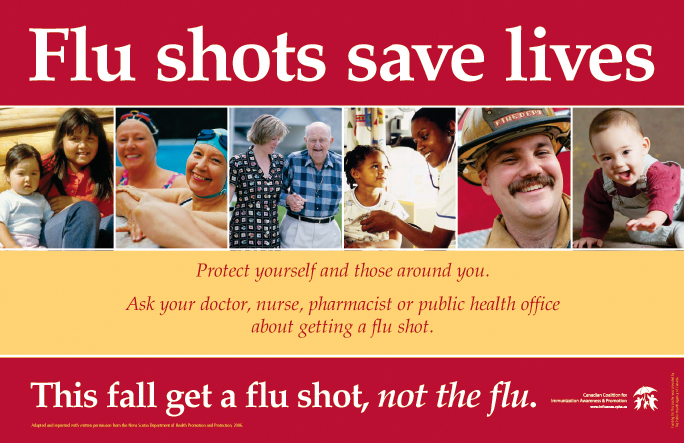
There will be no news round up next week, so I will see you all back here on October 25. Enjoy your weeks and don’t forget your flu shot!

Ebola’s Bad, but Flu’s Worse

With the coverage of the Ebola outbreak in media (and even on this blog) it may have inadvertently caused unreasonable panic in the American populace. The fact of the matter is one person in the U.S. has died from Ebola. Every year, according to the CDC, more than “226,000 Americans are hospitalized with flu and approximately 36,000 die from flu-related complications.” News outlets this week quietly reported on flu vs. Ebola and offered points of clarification about both diseases as well as tips for staying well. These include getting your flu vaccination, washing hands frequently especially after using the restroom and before eating or preparing food, and avoiding touching eyes, nose, or mouth to limit spread of germs.

Times Union—“‘The reality is there are vaccinations and treatment options available for the flu that are not available for Ebola. The reason for concern is there is no magic bullet to stop Ebola,’ said [Dr.Edward] Waltz [director of the Center for Public Health Preparedness at the University at Albany]. ‘I think the most important message to get is, take action on the things that you can control. We have so many things that affect our health that we can’t control, get yourself a vaccination if it is available.’”

Medical Superbugs: Antibiotic-resistant Bacteria Carried by More than a Third of Nursing Home Residents

A study out of Melbourne, Australia, reported that more than 1/3 of nursing home residents tested were carriers of antibiotic-resistant bacteria. And this problem isn’t just plaguing other countries. In fact, a report from the U.S. Centers for Medicare and Medicaid Services found rising rates of pneumonia, urinary tract infections, viral hepatitis and MRSA. The Australian study also found that more than half of the tested residents had received antibiotics within three months of being tested. Overuse of antibiotics can lead to higher rates of superbugs or other infections like C. difficile, which can be lethal in seniors. (On a personal note, my grandmother recently died from complications after a C. diff infection.)

ABC—“‘(Our concern is) that nursing homes are acting as a kind of reservoir, if you like, of antibiotic-resistant bacteria. We know these residents have fairly frequent movement in and out of acute care institutions, and this obviously poses risks to acute care hospitals for transmission. It could be transmitted to other patients in an acute care hospital, if the resident actually has an infection they might be infected with a more resistant bacteria – they’re the two main concerns.’”

George Washington, the First Vaxxer

This week, the Daily Beast provided an excerpt from historian Tom Shachtman’s new book, Gentlemen Scientists and Revolutionaries: The Founding Fathers in the Age of Enlightenment. At a time where people are choosing to forgo vaccinations and alarm over Ebola grows worldwide, it is amazing to see George Washington—Virginian, 1st President, Founding Father, serious boss, and old fashioned speller—decide that army immunization would not only save the lives of soldiers, but indirectly safeguard a young American nation. Shachtman recounts a February 1777 letter from Washington to John Hancock, President of the Continental Congress.

The Daily Beast—“‘The small pox has made such Head in every Quarter that I find it impossible to keep it from spreading thro’ the whole Army in the natural way. I have therefore determined, not only to innoculate all the Troops now here, that have not had it, but shall order Docr Shippen to innoculate the Recruits as fast as they come in to Philadelphia. They will lose no time, because they will go thro’ the disorder while their cloathing Arms and accoutrements are getting ready.’”

This Week in Ebola

The first (and only) patient with a domestically diagnosed case of Ebola died this week in Dallas, TX amid calls, and responses, about tightening airport screening and travel restrictions. Six major American international airports have enhanced screening for travellers arriving from West Africa while airline workers at LaGuardia have protested over what they say are inadequate protections from potential Ebola exposure. In other air travel related news, a passenger was removed from a US Airways flight after joking about being infected with Ebola and a sick passenger traveling from West Africa to Newark airport does not have Ebola. A nurse in Spain did get infected with the virus this week, as other European nations fear further spread inside their countries. American Ebola survivor Dr. Rick Sacra was hospitalized and treated this week for pneumonia and another American Ebola survivor, Dr. Kent Brantly donated his blood in order to help treat an infected NBC cameraman.

Evidently one fifth of Americans, according to a Gallup poll, are concerned about getting Ebola which is causing the ‘apocalypse business’ to boom. Meanwhile, West Africans living in the U.S. are taking action to spread information within their communities about the virus and there was a wonderful piece on how Nigeria beat Ebola. Finally, CDC director Dr. Tom Frieden spoke this week on how this Ebola outbreak is like the AIDS epidemic and why he doesn’t support a travel ban to combat the outbreak. All of this comes at a point in time where the number of deaths from the outbreak has reached over 4000.

Stories You May Have Missed

Image Credit: Immunize.ca

Pandora Report 7.4.14

I have to offer my apologies and my thanks. Please let me apologize for the lack of Pandora Report and the light coverage on the blog over these past two weeks. The month of June was absolutely insane between work and summer courses. Fortunately, all that craziness is finally over, so let me thank you most sincerely for your patience and understanding. With this special July 4th edition of Pandora Report, please consider things around here back to normal.

Now, onto the news!  Highlights include Syrian chemical weapon disarmament, the arrival of Chikungunya to the U.S., an anthrax incident at the CDC, an Etihad Airlines based polio campaign, and Ebola devastation in West Africa.


Syrian Chemical Weapons Transfer Complete

Earlier this week, the Pentagon reported that the transfer of Syrian chemical weapons, from a Danish cargo ship to the U.S. vessel that will neutralize and destroy the weapons, is complete. The weapons and associated materials were transferred to the Cape Ray, which will travel from Italy into international waters where the weapons will be dismantled and neutralized. The Pentagon press secretary Rear Admiral John Kirby reported that the process should take several weeks to complete.

Al Arabiya News—“The disposal process marks the culmination of a program to rid Syria of its chemical weapons stockpile after the outcry that followed chemical attacks by the Bashar al-Assad regime in the suburbs of Damascus on August 23 last year, that may have killed as many as 1,400 people.”

Polio Awareness Videos to be Shown on Flights to Pakistan

Much of my month of June was spent at Dulles airport, so I might be more excited about this story than your average person, but get ready for the coolest news story you have likely ever read about an airline! United Arab Emirates based Etihad Airlines, in response to the polio epidemic in Pakistan, will show a short in-flight movie on all their flights to Pakistan. Etihad said that the goal of the movie, titled “Leap of Faith,” is to raise awareness about “this crippling and potentially fatal disease among thousands of Pakistani workers returning home to visit their families.”

Business Standard—“‘By showing this engaging story on board our flights, Etihad Airways is supporting the efforts of the UAE in helping to eradicate polio in Pakistan,” said James Hogan, President and Chief Executive Officer of Etihad Airways.

Asif Durrani, Pakistan Ambassador to the UAE, said, “With approximately 1.25 million expatriate Pakistanis in the UAE, this is a perfect opportunity to educate our people during their journey home and ultimately help in the overall eradication of this terrible disease in our country.’”

CDC Reassigns Director of Lab Behind Anthrax Blunder 

According to the Centers for Disease Control and Prevention, sometime between June 6 and 13, up to 84 lab employees at the headquarters in Altanta, were possibly exposed to anthrax. The possible exposure, which was caused by technicians not following laboratory protocol, resulted not only in employees taking powerful antibiotics as prophylactics but also in the reassignment of the head of the Bioterror Rapid Response and Advanced Technology Laboratory, Michael Farrell, while the incident is investigated.

Reuters—“CDC spokesman Skinner on Sunday said the bioterror lab sent the anthrax bacteria to other labs in closed tubes. The recipients agitated the tubes and then removed the lids, raising concerns that live anthrax could have been released into the air.”

Mosquitos Carry Painful Chikungunya Virus to Americas

Chikungunya, a viral disease spread by the same mosquitos that spread Dengue fever, has made its way to the Americas. Fortunately, the type of mosquito that spreads the viruse, the Aedes aegypti, is not native to the United States. However, its close breed “cousin” Aedes albo, lives as far north as Chicago and is believed to be able to spread Chikungunya.

National Geographic—“There is no vaccine or medication that can change the course of the disease, though patients are given painkillers and told to drink a lot of fluids….To avoid getting chikungunya while staying in affected areas, take the usual precautions against mosquitoes: Wear long sleeves, use repellents, and keep outside areas free of standing water where mosquitoes can breed.”

West Africa Ebola Epidemic is ‘Out of Control’

With a current death count of 467, the Ebola outbreak affecting Guinea, Sierra Leone, and Liberia has become dire. Doctors without Borders’ (MSF) Director of Operations said “the epidemic is out of control.” He continued, “we have reached our limits. Despite the human resources and equipment deployed by MSF in the three affected countries, we are no longer able to send teams to the new outbreak sites.”

The Huffington Post—“The outbreak of the deadly disease is already the largest and deadliest ever, according to the WHO, which previously put the death toll at 399 as of June 23, out of 635 cases. The 17 percent rise in deaths and 20 percent jump in cases in the space of a week will add urgency to an emergency meeting of 11 West African health ministers in Accra, Ghana on Wednesday and Thursday, which aims to coordinate a regional response.”


Image Credit: Wikimedia Commons


From the Pandora Report and all of us at the George Mason Biodefense program, we wish you a happy and safe Independence Day!!

Pandora Report 05.24.14

Highlights include the CIA and their “Immunization Campaigns,” Ricin Sentencing, Dengue Warning for the World Cup, and Bacteria and E-Cigarettes. Have a safe and wonderful Memorial Day weekend!!

CIA Drops Vaccination Cover Story in the Wake of Polio Outbreak

Shakil Afridi, a Pakistani doctor, provided polio vaccinations in the city of Abbottabad as a cover for the CIA-backed effort to obtain DNA samples from children at a compound where Osama bin Laden was later found and killed in 2011. This week, however, the White House assured the deans of prominent U.S. Public Health Schools that the CIA will no longer use vaccination programs as a cover for spy operations. The agency also agreed not to use genetic materials obtained through such programs.  This announcement comes at a time when Polio cases are growing and spreading in Pakistan—in 2013 cases in Pakistan accounted for more than 20% of all new polio cases worldwide.

CBC—“The CIA’s use of a polio vaccine program to spy on bin Laden’s compound undercut Obama’s own high-profile speech to the Muslim world in 2009, in which he touted U.S. efforts to slash the growth of polio in Pakistan, Afghanistan and Nigeria. With Obama administration assurances, Muslim scholars in two international groups issued religious decrees urging parents to vaccinate their children.”

Mississippi Man Sentenced in Ricin Letter Investigation

This week, James Dutschke was sentenced to 25 years in prison for developing and possessing Ricin. Dutschke mailed the ricin-laced letters to the President, U.S. Senator Roger Wicker, and a Lee County Mississippi Judge.

FBI—“Following an investigation, Dutschke was arrested on April 27, 2013, and indicted by a federal grand jury on June 3, 2013. A superseding indictment was filed on November 20, 2013. Dutschke pled guilty on January 17, 2014, to one count of developing and possessing ricin and three subsequent counts of mailing threatening letters laced with the substance. According to the plea agreement between Dutschke and the U.S. Attorney’s Office that was filed in U.S. District Court in Oxford, Dutschke had agreed to serve a 300-month prison sentence and had waived his right to appeal.”

Scientists Warn of Dengue Fever Risk during Brazil’s World Cup

This topic has been circulating for weeks, if not months, but with the beginning of the World Cup a few weeks away, this story has been popping up in the news on a daily basis. Of the 12 World Cup host cities, the risk of Dengue fever has prompted a high alert in three—Natal, Fortaleza, and Recife—and an increased risk in four—Rio, Belo Horizonte, Salvador, and Manaus.

Dengue fever, sometimes called “breakbone fever,” is a viral infection transmitted by the Aedes aegypti mosquito. It can range from a mild, flu-like illness to a potentially deadly one, which occurs in approximately 5% of patients. There are no vaccines or effective treatments for Dengue Fever. Brazil has had more cases of the disease than anywhere in the world—more than seven million infections between 2000 and 2013.

Chicago Tribune—“Rachel Lowe, from the Catalan Institute of Climate Sciences in Barcelona, who helped develop the warning system, said the possibility of an outbreak during the World Cup large enough to infect visitors and spread back to their home countries will depend on a combination of factors. This include having large numbers of mosquitoes, a susceptible population and a high rate of mosquito-human contact, she said.”

Here’s Why Bacteria Like E-Cigs

Many, including everyone’s favorite anti-vaxxer Jenny McCarthy, claim that e-cigs are safer for their health than traditional cigarettes. However, it addition to the harm cigarettes inflict on the immune cell, it turns out that either type of cigarette may be just as bad for the body’s natural bacteria.

Time—“Dr. Laura Crotty Alexander, from the University of California at San Diego and the VA San Diego Healthcare System, found that the vapor from e-cigs prompts bacteria to become more resistant to antibiotics. In the presence of e-cig vapor, for example, methicillin resistant staphylococcus aureus (MRSA) became more resistant to the natural anti-microbial agents that the body makes. Cigarette smoke also produces the same effect, but Crotty Alexander was surprised that the e-cig vapors did as well, given that they were not supposed to contain the health-harming carcinogens that tobacco smoke does.”


Image Credit: Wikimedia Commons

Pandora Report 5.16.14

There has been a lot on MERS this week as it continued to spread within the U.S. and Europe. The topic was so big that it was even covered on Buzzfeed (the web aggregator mostly known for quizzes and viral videos.) This made me think, “I wonder what sorts of biodefense topics are covered in traditional, mainstream news sources?” So, in celebration of the end of the Spring 2014 semester, this week I bring you just that!


We’ve got the U.S. Military’s defense plan for Zombies, measles and polio as a possible cancer cure, a photo essay about New York’s lost TB ward, and a doctor’s report from the Ebola fields of West Africa. Congrats to our newest graduates and have a wonderful weekend!

The Pentagon Has a Plan to Stop the Zombie Apocalypse. Seriously.

If you’re worried about the zombie apocalypse like I am (and let’s face it, you probably are since you’re here), here is one less thing to worry about. Like many other contingency plans, the Pentagon has one for dealing with the un-dead. Instead of using fictionalized versions of real countries, this scenario strings together a group of seemingly impossible scenarios that could never be mistaken for a real plan including “vegetarian zombies,” “chicken zombies,” and even (yes, this is not a joke) “evil magic zombies.”

Foreign Policy—“‘This plan fulfills fictional contingency planning guidance tasking for U.S. Strategic Command to develop a comprehensive [plan] to undertake military operations to preserve ‘non-zombie’ humans from the threats posed by a zombie horde,” CONOP 8888’s plan summary reads. “Because zombies pose a threat to all non-zombie human life, [Strategic Command] will be prepared to preserve the sanctity of human life and conduct operations in support of any human population — including traditional adversaries.’”

Can Measles or Polio be the Next Cure for Cancer?

Popular science speaks of viruses as something to be avoided, but what if injecting a person with large amounts of virus could actually cure cancer? That’s what researchers at the Mayo Clinic and Duke University Medical Center did when using measles virus to destroy cancer cells. The results? In very small patient trials the researchers saw significant successes including total remission!

Fox News—“This research is all part of a new medical field of oncolytic virotherapy.  The “proof of concept” studies stem from many years of animal research, analyzing how viruses can penetrate certain types of cancer cells.  A typical cancer cell moves very fast and replicates very rapidly.  Therefore, some viruses have an affinity to get into these cells and use them as incubators, so the viruses can multiply at a fast rate, as well.  But once these viruses are attached, the cancer cells essentially explode and release the virus into the body.”

The Mysterious New York City Island You’ve Never Heard Of

Those who have watched the History Channel’s Life After People or read Alan Weisman’s The World Without Us may find this story especially interesting. Photographer Christopher Payne, became aware of North Brother Island—which lies in the East River—and was allowed by the New York City Department of Parks and Recreation to conduct a photo survey of landscape. Used for a variety of purposes until its abandonment in the 1960s, between the 1880s and the 1930s, North Brother Island was the site of Riverside Hospital, where those suffering from infectious disease were treated in isolation.

Slate—“While Payne knew the island’s story, he often had trouble finding physical evidence of its past. “It was very hard for me to find the artifacts I expected to find. They really just didn’t exist. Most of the time you’re looking at the shell of a building, and it’s so far gone you can’t even tell what it was used for. It forced me to look closer, to see graffiti on the walls or to look on the floor,” he said. “A lot of it was detective work. It was like trying to invent a life for something, trying to find a shot or a view that suggested what it used to be.’”

Windsor Doctor Returns Home after Treating Deadly Ebola Outbreak

As the numbers of infected and deaths continue to rise in the Western Africa Ebola outbreak, one of the stories we haven’t heard often is from physicians working there. In this piece for The Windsor Star, Dr. Tim Jagatic, writes about his experience working for three weeks in Conakry, Guinea, as a member of Doctors without Borders.  He writes about the efforts of Doctors Without Borders and the WHO on stopping the spread of the virus as well as providing care for those infected. When not providing medical care, he reported that doctors would perform triage assessments or perform outreach looking for new patient cases.

The Windsor Star—“Jagatic and his fellow physicians would often encounter resistance to their efforts. “We have to work on demystifying the disease,” said Jagatic.“So many people who were infected with it, they were stigmatized. They were banished from their communities, their families, one thing I was really trying to push is that this is really just a virus, like the measles, like the flu, when you get it you treat it, you go home and you’re done. And you’re just like you were beforehand.’”


Image Credit: Christopher Payne

Pandora Report 5.9.14

The stories this week cover topics that I am especially interested in: avian flu in Antarctica, wild poliovirus, and the Russia biological weapons program. Have a great weekend!

Avian Influenza Present in Antarctic Penguins

A team of international researchers have discovered a new strain of avian influenza among Adelie penguin populations in Antarctica which has been identified as H11N2. Presence of this strain of influenza was found in eight penguins from a sample size of 301 swabbed penguins and 270 penguins who had had blood drawn. Though the six adult penguins and two chicks only represent 2.6% of the total group, approximately 16% of the samples contained antibodies for H11N2, indicating the virus has likely been present in the population for “some length of time.”

Guardian Liberty Voice—“There has already been a theory posited which might explain how the H11N2 virus was transmitted to the Antarctic region. Due to both the relatively small incidence of the virus in the sample population, and the region from which the sample size was drawn. Hurt has posited that the introduction of the virus into the Antarctic ecosystem was conducted by migratory birds from South America, such as the yellow-billed pintail duck. This conclusion has been supported by the fact that distant similarities between the H11N2 strain of the virus and South American AIVs, primarily from Brazil and Chile, do in fact exist.”

Wild Poliovirus Making a Comeback, WHO says

In a statement made on Monday, the WHO applauded worldwide efforts to eradicate polio while cautioning that the wild poliovirus is spreading and may negate the hard fought eradication efforts. They declared this spread of wild poliovirus a Public Health Emergency of International Concern and warned that if the spread remains unchecked “this situation could result in failure to eradicate globally one of the world’s most serious vaccine preventable diseases.” The WHO declared that Pakistan, Cameroon, and Syria pose the greatest risk of wild poliovirus exportation while Afghanistan, Guinea, Ethiopia, Iraq, Israel, Somalia and Nigeria are infected with wild poliovirus but are not exporting it.

National Geographic—“The effort is to break the chains of transmission. The WHO is recommending that countries currently infected with polio ensure that their people who are traveling outside the country get vaccinated. About 72 percent of the people who are infected with the polio virus have no symptoms, but they can still spread the disease. Polio is now in just a few countries. The concern is not to re-infect the countries that have gotten rid of polio.”

Lawmakers Mull Biological Weapons Threat from Russia

Providing an opportunity for me to majorly geek out, the U.S. House of Representatives held a committee hearing this week regarding the biological weapons threat from Russia and beyond. Witnesses included Dr. Christopher Davis, a biomedical weapons expert and former member of the U.K.’s Defense Intelligence Staff; Dr. Amy E. Smithson, a senior fellow at the James Martin Center for Nonproliferation Studies; Milton Leitenberg, a senior research scholar at the University of Maryland and author of The Soviet Biological Weapons Program; and Dr. David Franz, former Commander of USAMRIID.

Time—“Leitenberg said it’s almost impossible to evaluate the extent of the Russian biological weapons stockpile because three Russian laboratories remain closed to outside inspection. “We don’t know what they’re doing,” Leitenberg said. ‘They may or may not have an active offensive program—I presume they do. I do not believe that the U.S. government thinks they are producing and stockpiling agent any more, but we don’t know that.’”

A recording of the hearing is available here.


Image Credit: Andrew Mandemaker/ Wikimedia Commons

Pandora Report 4.25.14

While Ebola Viral Disease still rages in West Africa and MERS continues to spread, let’s take this Friday to look at some other stories.

Highlights include Polio eradication in Southeast Asia, Manure and Antibiotic Resistance, Chemical weapons in Syria (yes, again), and the 28th anniversary of Chernobyl. Have a great weekend!


80% of the World Polio Free

If you’re anything like me, you hang on every word Dr. Tom Frieden, Director of the CDC and active tweeter, says. This week he lauds polio eradication in the 11 countries of Southeast Asia as a “remarkable achievement.” The countries include Bangladesh, Bhutan, South Korea, India, Indonesia, Maldives, Myanmar, Nepal, Sri Lanka, Thailand, and Timor-Leste and are home to 1.8 billion people.  While he applauds the work that has already been done, he highlights Afghanistan, Pakistan, and Nigeria as countries where there is still work to be done.

Huffington Post—“The lessons of Southeast Asia are being applied in these last three countries — improving immunization activities, outreach to underserved populations, special approaches in security-compromised areas, outbreak response, improved routine immunization and disease tracking — so the world can get to the finish line in the fight against polio.”


Cow Manure May Lead to Antibiotic Resistance

Using five stool samples collected from four cows at a dairy farm in Connecticut, scientists at Yale University found 80 unique antibiotic resistance genes, approximately three quarters of which were unfamiliar. Genetic sequencing showed that the AR genes were only distantly related to those already known to science. When applied to a lab strain of E. coli, the genes made the bacteria resistant to certain well-known antibiotics, including penicillin and tetracycline.

The New Zealand Herald—“Further study is needed to probe whether cow manure may harbour a major reservoir of antibiotic resistance genes that could move into humans.

“This is just the first in a sequence of studies – starting in the barn, moving to the soil and food on the table and then ending up in the clinic – to find out whether these genes have the potential to move in that direction,” Jo Handelsman, senior study author and microbiologist at Yale said.”


As Syria Closes in on Chemical Weapons Disarmament, New Concerns Arise

Like Russia, it seems Syria cannot stay out of the news lately. While Reuters reported this week on an apparent chemical attack in the province of Idlib (which followed a chemical attack in Hama earlier in April), news outlets are cheering Syria’s commitment to meeting their deadlines for disarmament of their chemical weapons stockpiles. Reports estimate that 85-90% of the Syrian stockpile has been shipped for dismantlement and destruction.

Los Angeles Times—“Under a revised plan, Syria has promised to remove all of its chemical weapons material by April 27. In the last two weeks, Syria has shipped out six batches, “marking a significant acceleration in the pace of deliveries,” the OPCW said. Russia provided armored vehicles and other equipment to assist the chemical convoys, which sometimes traversed roads near contested zones where rebels were present.

The U.N. set June 30 as a deadline for destruction of the chemicals.”


28th Anniversary of Chernobyl Nuclear Disaster

What is there to say, as we approach the 28th anniversary of the Chernobyl Nuclear Disaster? This event remains one of the most catastrophic nuclear disasters in the history of mankind. The ongoing after effects have harmed the environment, people, and there are consequences still yet unknown.

As the media looks back on this event, there are many good stories that cover the effects of this meltdown that happened in the early hours of April 26. Some focus on the lasting impact on the environment.

Birds Adapt to Long-Term Radiation Exposure

What’s Wrong With Chernobyl’s Trees?

Radiological Damage Still Poses ‘Catastrophic’ Threat to Ukraine

Some focus on the risks of nuclear power and call for greater awareness.

Ban marks Chernobyl anniversary with call for greater support for recovery efforts

Some focus on the ongoing Russia-Ukraine conflict and its effect on Chernobyl.

Chernobyl Radiation Shield Under Threat Amid Ukraine Crisis

But the one of the most interesting remembrances of this event was from the 10th anniversary of the meltdown in 1996. It is the tale of the Swedish scientist who alerted the world to the uptick in radiation…since the Soviet Union did not.

Chernobyl haunts engineer who alerted world


(Image Credit: Wikimedia Commons Firef7y)

Increasing Refugees, Increased Risk of Communicable Diseases

by Alena M. James

Since the start of the Syrian crisis three years ago, refugees have fled to camps in Jordan, Iraq, Turkey, Egypt, and Lebanon. Last week the United Nations High Commissioner for Refugees (UNHCR) reported the number of refugees from Syria to Lebanon has passed one million.  According to the report, this influx has stretched Lebanon’s social and economic infrastructure thin in public services such as electricity, water, sanitation services, education, and the public health sector. Tourism, trade, and investment within the country has also decreased significantly. The increase in the population has led to decreased wages among competing workers.  Lebanese residents find themselves struggling financially; while the refugees find themselves struggling to build better lives.

The competition for depleting resources is not the only concern facing both residents and refugees.  A high influx of refugees into any state can lay the ground for increases risk of communicable diseases or outbreaks of emerging infectious diseases. With small Lebanese communities overwhelmed by the drastic increase in the population, public health services struggle to provide adequate health care, antibiotic treatments, immunizations, and other medical aid to those in need. Not only are critical public health services overextended, but the high volume of individuals seeking services creates the ideal transmission grounds for microbial organisms and viral agents.

In overcrowded populations with limited health resources, the risk of spreading diseases is incredibly high and transmission can occur in a variety of mediums. Direct or indirect contact, the release of respiratory droplets, ingestion of contaminated food and water sources, contact with mechanical  or biological vectors are all various modes by which pathogenic agents spread from person to person.

Direct contact occurs from direct exposure to the pathogenic source, for example, when a patient is bit by a rabid dog and develops rabies. Indirect contact occurs via exposure to septic fomites, for example, when an unsterilized syringe is used to dispense a treatment or drug intravenously into a patient.  Respiratory droplets allow illnesses like the common cold, influenza, and measles to spread at a rapid pace through sneezing or coughing on and around others. Ingestion of contaminated water and foods lead to major gastrointestinal complications and other illnesses. Mechanical vectors, like insect bodies, indirectly spread diseases. For example, flies feeding on fecal material can pick up and spread pathogens, via their feet, after landing on a patient’s untreated injury or open wound. Biological vectors like mosquitos transmit viral, bacterial, and other parasitic organisms to patients. The chances of these transmission modes being employed by pathogens remain high among densely packed populations lacking in substantial health care resources.

According to the U.S. Centers for Disease Control, there are several diseases that migrants to Lebanon are susceptible to if the proper vaccinations are not sought. Such diseases include Hepatitis A and B, Typhoid, Polio, and Rabies. Refugees from Syria also pose a dangerous risk of transmitting communicable diseases if they have not received proper immunizations before fleeing from their country. Malnourished refugees deprived of food and clean water are at risk of developing weakened immune systems which makes them even more susceptible to virulent pathogens.

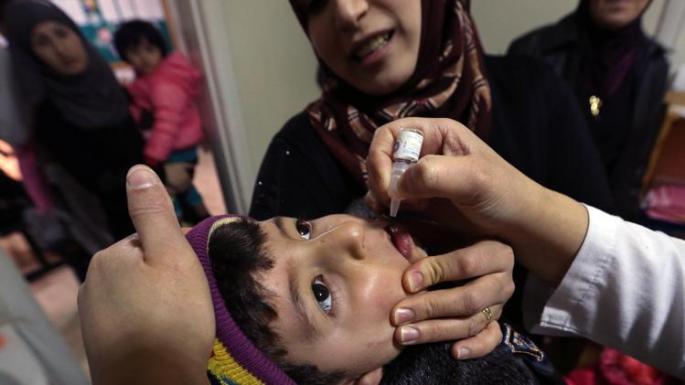
Despite the three-year Syrian conflict, many humanitarian workers continue to immunize children against preventable diseases. UNICEF in particular is actively working towards the vaccination of more than 20 million children against Poliomyelitis. Last October, the WHO confirmed at least 10 cases of children infected with Polio in Syria. This past weekend UNICEF re-launched its campaign to help control the spread of this virus among other states impacted by Syrian refugees.  Iraq, Turkey, Jordan also pledged to join the campaign due to the threat of incidences of the virus occurring in their countries.  So far Iraq has reported one case of the disease while the UN has reported 27 cases among Lebanese children.

Approximately 500,000 Syrian refugees to Lebanon have been children–who are at the greatest risk of acquiring polio if no vaccination has been administered. The war in Syria and the displacement of refugees has made it difficult for medical personal to provide vaccinations needed to control the spread of this and other communicable diseases.  The continued fighting in Syria is likely to lead to more bloodshed, the displacement of more refugees, the depletion of public service resources in several states, and the spread of more communicable diseases if efforts to resolve the conflict are not soon reached.


Image Credit: AP Photo/Bilal Hussein

Pandora Report 3.28.14

It’s been a busy week between Ebola and Ricin! Friday highlights include a Polio-free India, tuberculosis transmission from cat to human, and mandatory vaccines in Croatia. Have a great weekend!

India is Polio-Free after 3 years of no new cases

On March 27, 2014, India was declared Polio-Free by the World Health Organization after three years of no new cases. The last case of polio in India was Rukhsar Khatoon, a 4 year old girl who became ill as a baby when her parents forgot to vaccinate her.

The Huffington Post—“Being declared polio-free once was considered all but impossible in a nation hobbled by corruption, poor sanitation and profound poverty. Although the disease could return, eradicating it is a landmark public health achievement.

This is “a day that we have dreamt about,” said Poonam Khetrpal Singh, a WHO official at a ceremony in New Delhi to declare the entire Southeast Asian region free of the disease. Singh described it as ‘a day that all countries fought hard for, and a day when all stakeholders come together to celebrate the victory of mankind over a dreaded disease.’”

Pet cats infect two people with TB

Two people in England have contracted tuberculosis from a house cat infected with Mycobacterium bovis—a form of tuberculosis normally found in cattle. Nine cats in the Berkshire and Hampshire areas have tested positive for M.bovis which is extremely uncommon in cats and usually affects livestock.

BBC—“‘These are the first documented cases of cat-to-human transmission, and so although PHE has assessed the risk of people catching this infection from infected cats as being very low, we are recommending that household and close contacts of cats with confirmed M. bovis infection should be assessed and receive public health advice’ said Dr. Dilys Morgan, head of gastrointestinal, emerging and zoonotic diseases department at Public Health England.”

Thank You, Croatia: All Hail Mandatory Vaccinations

This week, the Constitutional Court of Croatia passed a law that mandates all children must receive childhood vaccinations for diphtheria, pertussis, measles, polio and others. This decision comes at a time when lively debate rages, in the U.S. and abroad, about vaccination and its importance or harm. This step by Croatia, in the words of the court, is a victory for children’s health over parents (wrong) choices.

The Daily Beast—“… public health imperatives and individual rights are often at odds: a country like the U.S. that values the rights of the individual always has trouble with laws that remind us that not everything is a choice. Kids must go to school. People must pay taxes. Children must be vaccinated. It is called living in modern society.”


Image Credit: Dwight Sipler/ Wikimedia Commons

Pandora Report 3.21.14

BREAKING NEWS

Positive Tests for Ricin at Georgetown University

Earlier this week, a white, powdery substance that tested positive for ricin, was found in a dorm room at Georgetown University. The 19 year-old student suspect who lived in the room reported that he made it and the Georgetown Voice spoke with a source who indicated the suspect possibly “intended to use the substance on another student.” Weapons-grade ricin is an extremely lethal toxin that has no available anti-toxin.

The Washington Post– “In an e-mail sent campus-wide, the university said there was no danger to the community. Law enforcement officials said they did not think that the case was connected to terrorism. School officials received no reports of anyone being exposed to the toxin, authorities said. D.C. health officials advised the school that symptoms of ricin exposure typically present themselves within 24 hours. “This window has passed and there are no reports consistent with ricin exposure,” the statement said.”


And now, our regularly scheduled Friday news…

Highlights include Polio-like virus in California, destruction of Syrian chemical weapons, the cost of Anti-Vaxxers, and domestic illness in pigs (or…the end of bacon?!) Happy Friday and have a great weekend!

Doctors continue the hunt for a Polio-like virus in California

Since September 2012, over two-dozen children in California have displayed symptoms of a rare Polio-like illness that has caused sudden paralysis, while doctors and health officials are still hunting for the cause. One possible suspect may be some sort of enterovirus, but more testing is required as the mystery continues.

San Francisco Chronicle—“Viruses can be difficult to detect after patients have been sick for a couple of weeks, and especially if they’ve already undergone treatment that can muddy test results. In the California cases, most children weren’t tested until many weeks or even months after they became sick. Waubant, a UCSF neurologist, said she is hoping to get funding to conduct immunoglobulin testing, which would determine whether the patients with polio-like illness have certain antibodies suggesting that they’d all been infected with the same virus.”

PEDv threatens future of pork industry

Are the days of available bacon coming to an end? A report coming out of the Dakotas paints a scary picture of the effect porcine epidemic diarrhea virus is having on the entire domestic pork industry. PEDv is a relatively new disease afflicting pigs but is has become widespread and with little known about the virus containment has become a top priority of both the pork industry and scientists.

Farm Forum—“‘PEDv has a significant economic impact,” Dr. Oedekoven, South Dakota State veterinarian said. “There is a high death rate in the naïve (newborn) population where 80 to 100 percent death losses are reported. The young piglets have no natural immunity and there is no vaccine. It’s a pretty terrible recipe. Biosecurity and sanitation are the tools being used in the industry to prevent the introduction of the disease into herds.’”

A Medical opinion on the anti-vaccination movement

With celebrities like Jenny McCarthy and Kristin Cavallari appearing in the media on an almost daily basis loudly championing the virtues of being “anti-vaxxer,” a medical doctor weighs in on the cost of that movement.

Forbes—“The result is an erosion in health gains, both individual and collective. And in some parts of the country, we are witnessing a reversal of what many believe is one of the greatest advances in medical science in the last century. And as a society, before we allow misinformation to threaten public health, we must recognize that vaccines today are safe and effective. Anything less is irresponsible. We owe it to our children and our communities to make vaccination universal.”

Will Syria meet the deadline for chemical weapon disarmament?

A deadline of June 30 has been set for Syria to hand over and destroy their chemical weapons arsenal. However, there are concerns that rocket strikes in Syria could delay this process and means the deadline will pass without completion.

Al Bawaba—“The Syrian government has repeatedly blamed security issues for its failure to meet the specified deadlines for removing its chemical weapon stockpile from the country. Damascus said last month that convoys carrying chemical weapons were subject to two attempted attacks while they attempted to transport the materials to Latakia.”

But, the U.S.-Russian brokered deal is not in danger, Russian authorities say.

ITAR/TASS—“‘We are not inclined to dramatize the fact that the milestone for their removal, February 5 this year, was not met, as it was planned by the decision of the Executive Council of the Organization for the Prohibition of Chemical Weapons (OPCW),” the ministry said. “It can be explained by the objective security situation around chemical weapons storage facilities and on the route of convoys’ movement, as well as by problems related to the logistical support of the operation. However, there is no reason at all to call into question the deadline for the liquidation of the Syrian chemical weapons potential – the first half of the current year.’”

(image courtesy of Wikimedia Commons)

The Pandora Report 11.22.13

Highlights this week include dengue in New York, detecting ricin, a suspected al Qaeda biological weapons expert, the evolution of flu, and polio and the Taliban. Happy Friday, and have a bacteria-free Thanksgiving!

‘Locally-Acquired’ Dengue Fever Case Reported In New York

For the first time, a locally-acquired case of dengue fever has popped up in the state of New York. The infected individual had not left the region at any point during the incubation period. This suggests that the probable route of infection was a mosquito which had taken a blood meal from an infected person before biting the New York patient. The patient has made a full recovery. However, this case highlights the truly global nature of infectious disease today. Dengue  is considered a “neglected disease” by the WHO, meaning its research on its treatment and cure receive comparatively less funding. This is especially unfortunate as the virus, which is considered “pandemic-prone” causes an estimated 100 million infections every year in 100 different countries. It’s easy to dismiss dengue as a disease which affects other people in far-flung parts of the world, but this simply isn’t the case anymore.  The prevalence of international travel means relative geographical isolation is no longer the protective boundary it once was.

Global Dispatch – “‘Given the recent introduction of Aedes albopictus into New York State and the high level of travel in New York to areas of the world endemic for dengue, it is not surprising that a locally acquired case of dengue has been found in the state,’ said State Health Commissioner, Nirav R. Shah, M.D., M.P.H. ‘This finding emphasizes the need for physicians to be aware of signs and symptoms of diseases common in tropical countries, but may occasionally present themselves in New York.'”

Army Scientists Improve Methods to Detect Ricin

The CDC has sponsored research on decontaminating ricin. While the utility of spending large amounts of money on vaccine development against certain pathogens can sometimes be questionable, decon is an area of real importance that is under-researched. A letter containing ricin may not kill a lot of people, but its particles can linger for a very long time at each of the mail facilities it traveled through.

Military News – “The paper, which is entitled, ‘Surface Sampling of a Dry Aerosol Deposited Ricin,’ examines swab materials commonly used to sample biological threat agents from surfaces. The paper documents his studies, which demonstrates the need for accurate dissemination techniques to effectively evaluate sampling technologies in an environment mimicking the ‘real-world’ environment where the toxin may be present.”

Israel Holding Suspected al-Qaida Bio Weapons Expert

Israel is currently in a bit of a bind over it’s holding of a suspected biological weapons expert. According to court documents released this week,  Samer Hilmi Abdullatif al-Barq was trained as a microbiologist in Pakistan, had military training in Afghanistan, and eventually was recruited by Ayman al-Zawahiri into the al Qaeda weapons program. Israeli courts have yet to try al-Burq, due to lack of sufficient evidence, but his actions in the area, including attempted recruitment of others into al Qaeda, render him too dangerous to release. Moreover, attempts to release him into the custody of neighboring states have been politely declined. It’s clearly a complicated case.

New York Times – “In a document presented to the court, the military prosecutors described Mr. Barq as an operative in the global Qaeda organization with ‘a rich background in the field of nonconventional weapons, with an emphasis on the biological field,’ having studied microbiology in Pakistan. The prosecutors argued that Mr. Barq’s release at this time to the West Bank, where he is a resident, would constitute ‘a point of no return in the development of a significant global jihadist infrastructure in the area.'”

Scientists zero in on flu virus defenses

A recent study published in the journal Science details novel research on the hemagglutinin protein (HA) of the H3N2 flu strain. The work examined mutations in the protein between 1968 and 2003 which prompted structural changes.  In doing so, researchers were able to pinpoint changes in seven key amino acids that prompted evolutionary change in the virus.  Better understanding the virus’ points and methods of evolution could help in the creation of more efficacious vaccines.

ABC Australia – “The researchers confirmed their findings by engineering changes to these seven amino acids and testing the antibody response to the new virus in ferrets. Importantly, the amino acids singled out by Barr and colleagues are close to the site on the HA protein that binds to host cells. This limits the number of amino acid substitutions that are possible as many changes will alter the protein’s structure, interfering with the virus binding process. ‘The virus can evolve in a number of different directions,” says Barr. “If we can narrow that down to a small number of directions then we’ve got a better chance of trying to work out which particular virus might be the one which is going to turn up in a year’s time.'”

The Surge

Wired has an excellent long-form piece on polio vaccinations and the Taliban. The six-part article is interactive, and includes audio interviews, photo galleries, and infographics on why eradicating polio is so important and so challenging. Obviously, we highly recommend it!

Excerpts – “The virus typically infects only the mucosal tissues of the gastrointestinal system for a few weeks, where the immune system clears it before any harm is done. After that, the infected person would be immune to future infections from the same strain. However, in less than 1 percent of infections, the virus attacks the central nervous system and causes paralysis. Typically this affects just the legs. But in 5 to 10 percent of paralytic cases (that is, 0.05 percent of total infections), polio paralyzes the breathing muscles, meaning that without artificial respiration the patient will suffocate. All this explains why polio is so difficult to annihilate. For every one person who actually gets sick, nearly 200 are carrying the virus and infecting others…

“[T]he math of cost-benefit analyses runs aground when it comes to eradication campaigns, because the benefits, in theory, are infinite. That is: No one will ever die from—or spend a dime on vaccinating against—smallpox for the remainder of human history, barring a disaster involving one of the few lingering military stockpiles. According to a 2010 study, polio eradication would generate $40 billion to $50 billion in net benefits by 2035.”

(image:  Sgt. Mike R. Smith, National Guard Bureau)