Pandora Report 5.30.15

It was a slow-ish news week, this week with very few small stories but two huge ones about Chemical Weapons threats against airplanes and an inadvertent shipment of live Anthrax spores. We’ve also got a few stories you may have missed.

As a reminder, the Early Registration Deadline for the Pandemics, Bioterrorism, and International Security professional education course has been extended to June 15. For more information and registration, please click here.

Have a great weekend!!

U.S. Military Says It Mistakenly Shipped Live Anthrax Samples

It was a big story this week when live anthrax spores were inadvertently shipped from Dugway Proving Ground—an army facility in Utah—to 19 military and civilian labs across as many as nine states and an overseas site. The shipments were supposed to contain dead spores. Army and CDC officials have emphasized that these shipments pose no risk to the public and there are no suspected or confirmed cases of anthrax infections among lab workers.

NBC New York—“The Defense Department, acting “out of an abundance of caution,” has halted “the shipment of this material from its labs pending completion of the investigation,” [Pentagon spokesman Col. Steve] Warren said.”

FBI Looking Into Chemical Weapons Threats Against Planes

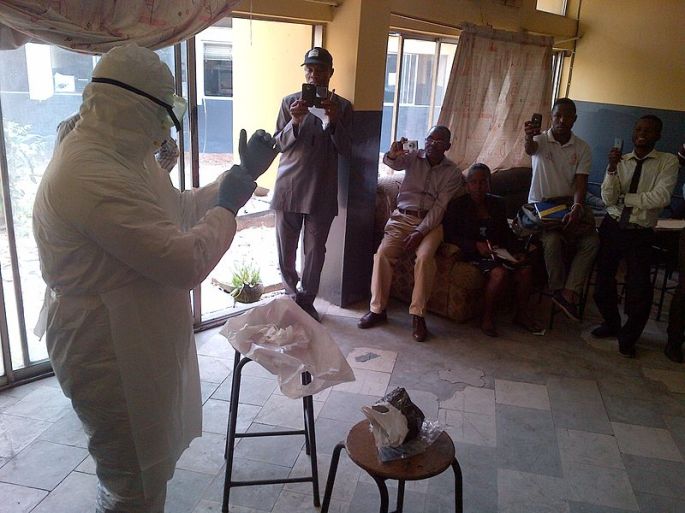
While many of us had a day off from work on Memorial Day, the FBI was investigating threats made against at least 10 flights claiming that chemical weapons were aboard the planes. These included a Delta Airings flight from London Heathrow, a United Airlines flight from Edinburgh, Scotland, and an Air France flight into New York that was escorted to the ground safely by two F-15 fighter jets.

NBC News—“The threats are not deemed credible, but the information has been passed along to the airlines anyway, out of an abundance of caution.

The male caller made threats against at least 10 flights in a quick series of calls to local police around the country. All but three planes have landed with nothing of concern found.”

Stories You May Have Missed


Image Credit: United States Government

Pandora Report 5.24.15

Two quick updates before we get into the weekly wrap-up.

First, the Early Registration Deadline for the Pandemics, Bioterrorism, and International Security professional education course at the GMU Arlington Campus has been extended to June 15. For more information and registration, please click here.

Second, we here at Pandora Report wanted to let you know about a new website designed to provide resources for biosecurity professionals and practitioners and key stakeholders. The International Biosecurity Prevention Forum (IBPF) brings together the world’s leading experts from the health and security communities to share expertise on key biosecurity and bioterrorism prevention issues. Registering to join IBPF is free and easy. Go to http://www.ibpforum.organd click the “Request Membership” button to request an IBPF member account. Members get access to a discussion section and projects, resources, and best practices submitted by other members. Contact the IBPF support team at IBPForum@ic.fbi.gov if you have any questions or problems.

Now, onto the news. This weekend we have stories about British nuclear submarines, anti-vaccine legislation in California, the development of bird flu vaccines, and other stories you may have missed.

Enjoy your Memorial Day weekend!!

Britain Investigates Sailor’s Disaster Warning Over Nuclear Subs

Able Seaman William McNeilly—a weapons engineer who served aboard HMS Vanguard, one of the four British submarines carrying Trident missiles—wrote a “lengthy dossier” released on the internet which says that the “Trident nuclear defense system was vulnerable both to enemies and to potentially devastating accidents because of safety failures.” McNeilly has since gone AWOL and both police and naval officials are trying to locate him.

The Japan Times—“The Royal Navy said it totally disagreed with McNeilly’s “subjective and unsubstantiated personal views,” describing him as a “very junior sailor.” But it added it was investigating both his claims and the “unauthorized release” of his dossier. “The naval service operates its submarine fleet under the most stringent safety regime and submarines do not go to sea unless they are completely safe to do so,” a spokeswoman said.”

A Blow to Anti-Vaxxers: California Approves Forced Vaccination Bill

By now, we all know that the measles outbreak that started last winter at Disneyland was a result of unvaccinated individuals. In California, the State Senate has passed a bill which limits parent’s use of the “personal belief exemption” in order to get out of getting their children vaccinated. Under the bill, parents who don’t get their children vaccinated would not be able to send their kids to state-licensed schools, nurseries, or day care centers.

State Column—“Only children who have a medical reason for why they can’t be vaccinated would still be allowed to attend schools without receiving their vaccinations under Senate Bill 277, which was sponsored by a California Sen. Dr. Richard Pan (D-Sacremento), a pediatrician, and Ben Allen (D-Santa Monica), a former school board member and the son of a survivor of polio, according to a Forbes report.”

Vaccines Developed for H5N1, H7N9 Avian Flu

Findings appearing in the Journal of Virology indicate that the U.S. Department of Homeland Security’s Center of Excellence for Emerging and Zoonotic Animal Diseases have developed a vaccine for both H5N1 and H7N9—two strains of avian influenza which can be transmitted from poultry to humans. The vaccine was developed by cloning the Newcastle disease virus and transplanting a small section of the H5N1 virus into it; the same method was used for the H7N9 vaccine.

Toronto Sun—“‘We believe this Newcastle disease virus concept works very well for poultry because you kill two birds with one stone, metaphorically speaking,” Richt said. “You use only one vector to vaccinate and protect against a selected virus strain of avian influenza.’”

Stories You May Have Missed


Image Credit: UK Ministry of Defence

Pandora Report 05.17.15

Yowza! That’s another semester in the books for the GMU Biodefense students. Please excuse the sparse activity on the blog, but with the semester over, things should be getting back to normal.

This weekend we have a updates on Ebola and the bird flu outbreak in the U.S., plus other stories you may have missed.

Have a great week, (enjoy the Mad Men finale!) and see you back here next weekend!

Ebola is (still) living in an American doctor’s eye

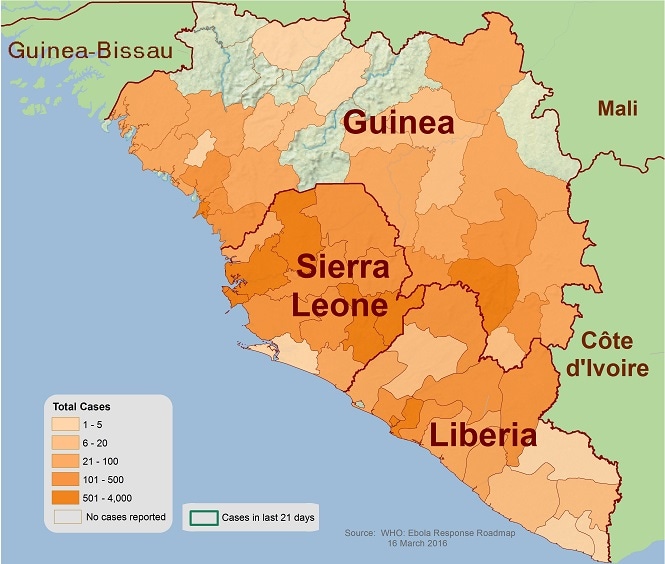
As an update, Liberia has (finally) been declared Ebola free, the number of cases in Guinea continue to rise due to transmissions at funerals, and those in Sierra Leone are dying less from Ebola than from other diseases due to the collapse of the healthcare system. It’s been over a year and we are still learning things about Ebola and its persistence on hospital surfaces, sexual fluids, and now, according to a study in the New England Journal of Medicine, the eye. WHO volunteer Ian Crozier was diagnosed in Sierra Leone and transported to Emory University where he was treated. Months later he returned to the hospital with symptoms like blurred vision and acute pain in his left eye. The cause? Ebola.

The Washington Post—“Ebola may have found refuge in patients’ eyes because, researchers said, the eye is walled off from the immune system. As the New York Times put it: “The barriers are not fully understood, but they include tightly packed cells in minute blood vessels that keep out certain cells and molecules, along with unique biological properties that inhibit the immune system.” This phenomenon is called “immune privilege” — and it means the eye can harbor viruses.”

America’s $45 Billion Poultry Industry Has a (Really) Bad Case of Bird Flu

The title says it all, frankly. Since early December 2014 three strains of highly pathogenic avian influenza have been circulating in North America. A state of emergency has been declared in Iowa (one of the hardest hit states) and over 21 million birds have been killed to contain and prevent the spread of the virus. Beyond the culling of birds, the outbreak is having an affect on business—China, South Korea, and Mexico have banned imports of U.S. poultry (to protect their own industries.)

The Motley Fool—“Falling exports could hurt farmers, but it could also help to offset domestic price increases from less supply. Although, with tens of millions of bird deaths and no end in sight to the pandemic, domestic food prices could be the largest casualty in the end.”

Stories You May Have Missed


Image Credit: 8thstar

Pandora Report 5.3.15

Over the past two weeks I’ve learned an important lesson which I would like to share with you: moving the same week you leave a job which is the week before the semester ends and you start a new job is too many things at the same time! Please excuse the lack of a weekly wrap-up last weekend—I was moving an apartment full of boxes which I am currently surrounded by. This weekend we look at antibiotic resistance in isolated societies and the eradication of rubella in the Americas plus other stories you may have missed.

Have a great week!

Tribe Isolated from Modern Societies for 11,000 Years Carries Antibiotic Resistant Genes

Findings published in the Science Advances journal describe the Yanomami Amerindians, who live in a remote, mountainous area of southern Venezuela and have been isolated from other societies for more than 11,000 years and yet still carry antibiotic resistant genes. This finding suggests that the human body may have carried the ability to resist antibiotics long before they became the overprescribed medicine they are today.

Design & Trend—“Thousands of years prior to the use of antibiotics to fight infection, soil bacteria began to produce natural antibiotics to kill competitors. The microbes evolved similar defenses to protect themselves from the soil bacteria. Researchers believe this was likely done by acquiring resistance genes from the producers themselves through a process known as horizontal gene transfer.”

Rubella Has Been Eliminated from the Americas

Joining the ranks of polio and smallpox, the Pan American Health Organization, the CDC, Unicef, and the United Nations Foundation announced this week that Rubella (also known as German Measles) has been eradicated in the Americas. The last case was confirmed in Argentina in 2009.Each year, approximately 120,000 children worldwide are born with severe birth defects that can be attributed to the disease.

The Science Times—“The Americas region is the first region to eliminate rubella.  The European region, which includes Eastern Europe, Russia and Central Asia, hopes to be next, according to the World Health Organization.

Some regions are still not close enough to set firm target dates, so there is no chance that the disease will be eliminated worldwide before 2020, said Dr. Susan E. Reef, team lead for rubella at the CDC’s global immunization division, who joined in the announcement.

Stories You May Have Missed


Image Credit: Juan Tello

Pandora Report 4.19.15

Sunday has to be the biggest brunch day of the week, so it is only fitting that our lead story looks at the many (delicious and nutritious) uses of maple syrup. We also look at Dengue fever in Brazil, missteps in the U.S. fight against Ebola, and other stories you may have missed.

Once you’re updated, get out there and enjoy the rest of your weekend and the beautiful weather! Have a great week!

Syrup Extract Found to Make Antibiotics More Effective Against Bacteria

It seems like we look at growing antibiotic resistance every week here at Pandora Report. This week, researchers at McGill University in Montreal reported that a “concentrated extract of maple syrup makes disease-causing bacteria more susceptible to antibiotics.” This finding suggests that combining the extract with antibiotics could increase their effectiveness and lead to lower antibiotic usage overall. Honestly, is there anything maple syrup can’t make better?!

Infection Control Today—“‘We would have to do in vivo tests, and eventually clinical trials, before we can say what the effect would be in humans,” [Professor Nathalie] Tufenkji says. “But the findings suggest a potentially simple and effective approach for reducing antibiotic usage. I could see maple syrup extract being incorporated eventually, for example, into the capsules of antibiotics.’”

Brazilian Teams on Alert because of Dengue Fever Outbreak

Brazilian soccer teams are on high alert because of a dengue fever outbreak that has already affected some of the country’s top teams. This week three players were diagnosed with the mosquito borne disease, which normally takes about two weeks to recover from. Players have been forced to use insect repellent during games and practices and health officials have been asked to check fields and training centers for mosquito breeding sites.

USA Today—“Cases of dengue fever have increased significantly across Brazil this year, with most of them reported in Sao Paulo state. Brazil’s health ministry said there have been more than 460,000 cases of the disease in the country in 2015, which accounts for almost 5,000 cases a day. More than 130 people have died so far this year, the ministry said.”

Empty Ebola Clinics in Liberia Are Seen as A Misstep in U.S. Relief Effort

After spending hundreds of millions of dollars and deploying 3,000 U.S. troops to build Ebola treatment centers (E.T.C.) in Liberia, the facilities have largely sat empty. Only 28 Ebola patients have been treated at the 11 E.T.C.s built by the U.S. military. Nine of the centers never had a single Ebola patient. Looking back, the emphasis on building E.T.C.s had far less of an impact than the “inexpensive, nimble measures taken by residents to halt the outbreak.”

The New York Times—“Had the Americans and other donors been more flexible, critics and some officials contend, the money could have been put toward rebuilding Liberia’s shattered health care system—or backing the efforts of local communities—instead of focusing on treatment centers that would scarcely be used.”

Stories You May Have Missed


Image Credit: Dvortygirl

Pandora Report 4.11.15

It’s a public health weekend here at Pandora Report as we check out stories on TB and Polio. We also have other stories you may have missed.

Have a great week and see you back here next weekend!

Ancient Hungarian Crypt Offers Clues to Tuberculosis Origins

As one of the leading infectious disease killers, Tuberculosis, a bacterial infection, holds interest for scientists who disagree over the origins of the human disease. However, a new study in Nature Communications uses a cutting-edge approach called metagenomics to analyze corpses that were naturally mummified in a Hungarian crypt. Of 14 genomes found in eight of the corpses, researchers discovered that multiple strains were circulating in Hungary in the 18th century when these people died.

The Toronto Star—“‘All the historic genomes belonged to lineages that we see today,” said senior author Dr. Mark Pallen, a professor of microbial genomics at the University of Warwick. “So TB hasn’t changed much in 200 years … (and) it turns out that the most common ancestor of the Euro-American lineage that all our (tuberculosis) genomes belonged to dates back to late Roman times.’”

Polio, Cancer—One Nemesis May Counter the Other

Tomorrow, April 12, is the 60th anniversary of when Dr. Jonas Salk’s polio vaccine was declared to be effective. Today, as the world inches closer to full polio eradication, interesting news highlighted on “60 Minutes” looks at the polio virus’ ability to kill another lethal illness—Cancer. A genetically engineered strain of polio virus appears to thwart lethal brain cancer tumors.

The Huffington Post—“The modified polio virus seems to deactivate the cancer tumor’s ability to defeat immune capacities. Freed up, the immune system works at defeating the tumor. Miraculously, the immunotherapy workings spare healthy tissues, while killing cancer cells.”

Stories You May Have Missed

Image Credit: Pudelek

Pandora Report 4.5.15

I love when the stories find me, so we’ve got some big ones this week including the nuclear deal with Iran and the arrival of multi-drug resistant Shigella in the United States. We’ve also got an Ebola update and other stories you may have missed.

Enjoy your (Easter) Sunday, have a great week and see you back here next weekend!

An Iran Nuclear Deal Built on Coffee, All-Nighters and Compromise

For months—many, many, months—there has been discussion of potential for Iranian nuclear weapons and what the U.S. planned to do about it. This week, those questions were finally answered as a nuclear agreement between American and Iranian officials was reached in Lausanne, Switzerland.

New York Times—“The agreement calls for Tehran to slash its stockpile of nuclear materials and severely limit its enrichment activities, theoretically bringing the time it would take to produce a nuclear weapon to a year — a significant rollback from the current estimate of two to three months.

Both sides made significant compromises. For the United States, that meant accepting that Iran would retain its nuclear infrastructure in some shrunken form. For Iran, it meant severe limits on its production facilities and submitting to what Mr. Obama has called the most intrusive inspections regime in history.”

Drug-Resistant Food Poisoning Lands in the U.S.

Before I travelled to China in 2012, my doctor prescribed me ciprofloxacin. It was, in his opinion, almost guaranteed I would come into contact with some sort of bacteria that would result in the dreaded “travel tummy.” Now, Cipro-resistant Shigella (a bacterial infection of the intestines) is becoming a growing problem in Asia and around the world. Over the past year, the resistant strain has shown up in 32 U.S. states and was linked with international travel to India, the Dominican Republic, and Morocco. However, in many instances, people who got sick hadn’t travelled outside the U.S. meaning the strain has already started to circulate unrelated to international travel. This could be a real problem.

NPR—“‘If rates of resistance become this high, in more places, we’ll have very few options left for treating Shigella with antibiotics by mouth,” says epidemiologist Anna Bowen, who led the study. Then doctors will have to resort to IV antibiotics.

Shigella is incredibly contagious. It spreads through contaminated food and water. “As few as 10 germs can cause an infection,” Bowen says. “That’s much less than some other diarrhea-causing germs.’”

This Week in Ebola

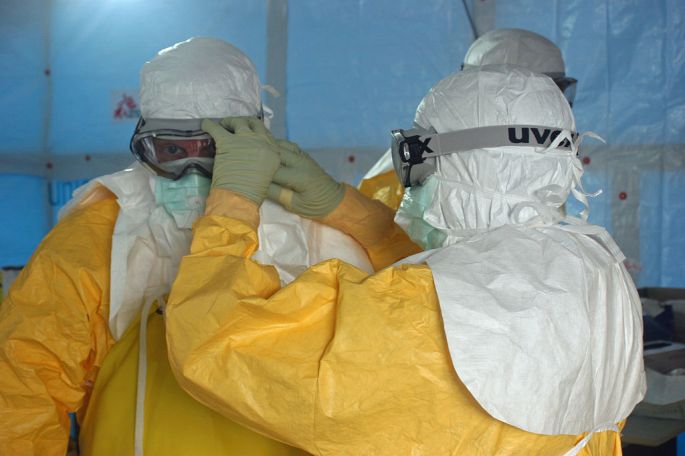
It’s been awhile since we’ve had an Ebola update, which should mostly be interpreted as a good sign. And there are good signs, like the two experimental trials of Ebola vaccine candidates have proven to be both safe and effective. However, during a three-day countrywide shutdown in Sierra Leone, 10 new cases of Ebola were found. The good news is that there were not hundreds of hidden cases, as some feared, and the Head of Sierra Leone’s Ebola Response has said the small figures indicate that the country is now at the “tail end” of the epidemic. If things are going relatively well in Liberia and Sierra Leone, Ebola still remains entrenched in Guinea. This week Guinea closed its border with Sierra Leone as an effort to stamp out the virus. Even those who aren’t sick, or have recovered, must still deal with the after effects of the disease. This week, the Liberian government recommended that all Ebola survivors practice “safe sex indefinitely” until more information can be collected on the length of time the virus may remain present in bodily fluids. All these stories should serve as a reminder that even though Ebola may not be as present in the news, the disease is still affecting people around the world.

Stories You May Have Missed

Image Credit: Zeynel Cebeci

Pandora Report 3.28.15

This week we’re covering a new treatment for inhalation anthrax, Russian nuclear threats, chlorine accelerating antibiotic resistance and other stories you may have missed.

Have a great week and see you back here next weekend!

FDA Approves Emergent BioSolutions’ Inhaled Anthrax Treatment

Considered one of the most likely agents to be used in biological warfare, Anthrax now has a new enemy—Anthrasil. This treatment, developed by Emergent BioSolutions Inc., neutralizes toxins of Bacillus anthracis and requires only two doses to confer immunity, versus the three of BioThrax (the current treatment for inhaled anthrax).

Reuters—“The company developed the treatment, Anthrasil, as part of a $160 million contract it signed in 2005 with the Biomedical Advanced Research and Development Authority (BARDA), a part of the HHS. Anthrasil, which is approved in combination with other antibacterials, is already being stored in the U.S. Strategic National Stockpile, the company said on Wednesday. The drug is made using plasma from healthy, screened donors who have been immunized with Emergent Bio’s Anthrax vaccine, BioThrax, the only FDA-licensed vaccine for the disease. Anthrasil has an orphan drug designation and qualifies for seven years of market exclusivity.”

Russia Threatens to Aim Nuclear Missiles at Denmark Ships if it Joins NATO Shield

Denmark has said that in August it will contribute radar capacity on some of its warships to NATO’s missile defense system. Russia has now threatened to aim nuclear missiles at Danish warships if Copenhagen goes through with its actions. Moscow opposes the system arguing that it reduces the effectiveness of the Russian nuclear arsenal and could lead to a new Cold War-style arms race.

The World Post—“‘We have made clear that NATO’s ballistic missile defense is not directed at Russia or any country, but is meant to defend against missile threats. This decision was taken a long time ago, so we are surprised at the timing, tone and content of the statements made by Russia’s ambassador to Denmark,” [NATO spokeswoman Oana Lungescu] said. “Such statements do not inspire confidence or contribute to predictability, peace or stability.’”

Chlorine Treatment Can Accelerate Antibiotic Resistance, Study Says

Research presented at the American Chemical Society meeting last week shows that chlorine treatment of wastewater may actually encourage the formation of new antibiotics—rather than eliminating the drug residues. While scientists are looking for new antibiotics, this isn’t good news. ACS says that upon re-entering the environment, the new drugs—in theory—can promote the growth of antibiotic resistant bacteria. In a test, doxycycline was exposed to chlorine; the results are described below.

Gizmodo—“The study evaluated the changes in the antibacterial activity of the products that form in the reaction between doxycycline and chlorine using antibiotic resistance assays. The results showed that some of the transformation products have antibiotic properties. The products of chlorination were also examined…and several chlorinated products were detected. These transformation products may still select for antibiotic resistant micro-organisms in the environment even in the absence of the parent doxycycline molecule. This suggests that re-evaluation of wastewater disinfection practices may be needed.”

Stories You May Have Missed

Image Credit: The U.S. Food and Drug Administration

Pandora Report 3.21.15

This week we’ve got stories about pets and antibiotic resistance, a new Ebola patient in Liberia, rapid neutralization of chemical weapons, and other stories you may have missed.

Have a great week and see you back here next weekend!

Antibiotic Use in Pets Could Give Rise to Superbugs, Experts Warn

We all know that the overuse and over-prescription of antibiotics is leading to the end of antibiotic effectiveness and the rise of antibiotic resistant bacteria. According to Health Canada, this extends beyond humans to our furry friends, too. Many pet owners are purchasing the drugs at pet stores, but just like with humans, pets require monitored use of antibiotics and appropriate prescriptions for antibiotic treatment.

CBC News—“‘It might be cheaper, but it might cost you more in the long run if you don’t treat it right — if the dog gets another problem or needs a different antibiotic, or gets sicker, or dies because of inappropriate treatment. Or it might be that it builds up a resistance bacterium, then it gets an infection later that’s harder to treat or passes it to you and you get the disease,” said [Dr. Scott] Weese [infectious disease specialist at the Ontario Veterinary College at the University of Guelph].

Liberia Officials: New Patient Tests Positive for Ebola

This week, 16 Americans were flown from West Africa (via a really cool plane) back to the U.S. after exposure to Ebola from an infected Partners in Health co-worker. And lest those fighting the outbreak become too complacent, a new case of the virus has been diagnosed in Liberia. This news is especially devastating because the last patient with Ebola in Liberia was discharged on March 5 and the country was in the midst of the 42-day countdown that ensures the country is disease free. This new patient arrived in the emergency room of a Monrovia hospital on Thursday night, March 20.

Time—“She was identified as a suspected Ebola case and transferred to the hospital’s transit unit, where she could be isolated while awaiting test results. She is now at a treatment center. In a worrying sign, it is not clear where the woman became infected. She doesn’t seem to be linked to any of the people on an Ebola contacts list, [Dr. Francis]Kateh [acting head of Liberia’s Ebola Incident Management Team] said.”

A New Synthetic Compound Can Neutralize Chemical Weapons in Minutes 

A team of scientists from Northwestern University have developed a new compound that can deactivate chemical weapons in minutes. A naturally occurring enzyme usually produced by bacteria—called phosphotriesterases—can deactivate some pesticides, and nerve gases, in milliseconds. Researchers attempted to reproduce the same effects using a synthetic catalyst.

Gizmodo—“In tests published in Nature Materials, the team used their catalyst to deactivate a pesticide similar to nerve agents but safer to use in the lab. Experiments showed that the new compounds—known as NU-1000—deactivated half of the pesticide in 15 minutes. Further testing by U.S army facilities has shown that it neutralizes half of the nerve agent GD—more toxic than the well-known sarin—in just three minutes. The researchers claim that that’s 80 times faster than any previous compound has managed.”

Stories You May Have Missed

Image Credit: Lhixon

Pandora Report 3.15.15

For those of us at Mason, Spring Break is nearing its end. For the rest of us, however, it’s business as usual. This week we’ve got stories about engineering nuclear worries in South Africa, the eradication of guinea worm, the lasting health impacts of Ebola, and other stories you may have missed.

Have a great week, enjoy the longer daylight hours, and we’ll see you back here next weekend!

U.S. Unease about Nuclear-Weapons Fuel Takes Aim at a South African Vault

Located in a former silver vault at a nuclear research center near Pretoria, South Africa, is enough nuclear weapons explosive to fuel half a dozen bombs. Roughly 485 pounds of highly enriched uranium exist as remnants of the apartheid regime’s nuclear weapons program. U.S. officials worry that not only does this stockpile give South Africa the theoretical ability to regain its status as a nuclear-weapons state, but the stockpile’s vulnerability makes it a target for terrorist thieves. This isn’t a far-fetched concept, because in November 2007 two teams of raiders breached the fences at the nuclear center, entered the site, and broke into the central alarm station. Obama has urged President Jacob Zuma to transform the nuclear explosives into benign reactor fuel—with U.S. assistance—to no avail.

The Washington Post—“‘The bottom line is that South Africa has a crime problem,” [arms control expert Jon] Wolfsthal said. “They have a facility that is holding onto material that they don’t need and a political chip on their shoulder about giving up that material. That has rightly concerned the United States, which is trying to get rid of any cache of HEU [highly enriched uranium] that is still out there.’”

Tug of War: On the Verge of the Greatest Public Health Triumph of the 21st Century

As people work around the world to eradicate Polio, another public health enemy is about to be eliminated first—guinea worm. This parasite, found in rivers and streams, enters the body in larval form through contaminated drinking water. The larvae mature inside the body and move towards the skin’s surface in the form of a burning blister. When the infected human puts water on the blister, the worm bursts out into water, continuing the source infection cycle. However, the number of cases of guinea worm is way down—from 3.5 million cases in 1986 to 126 cases in 2014—thanks to a simple nylon filter attached to a drinking straw. The weave on the nylon is tight enough to filter out the larvae from drinking water.

Slate—“Vanquishing guinea worm would be arguably the first great public health triumph of the 21st century. It would also give new life to the human disease eradication movement, which suffered through 35 mostly frustrating years following the conquest of smallpox in 1980. The victory would prove to governments and private foundations that we can still accomplish eradication.”

Ebola Could Cause Thousands More Deaths—By Ushering in Measles

As Liberia removed their Ebola crematorium—with the declaration that the outbreak is contained—new cases of the disease are still popping up in Sierra Leone and Guinea and have resulted in nearly a dozen American volunteers returning to U.S. facilities for treatment.  And this week, in Science, researchers from NIH and four universities have warned that Ebola’s interruption in other health services—like immunization campaigns—could result in epidemics of preventable diseases with larger fatality numbers than Ebola. Specifically, they warn that up to 100,000 cases of measles could result in 16,000 additional deaths.

Wired—“Measles is already present in West Africa, so the team is not arguing that Ebola will revive an eradicated disease — although, poignantly, hard work in the three countries had recently forced measles incidence way down. “Between 1994 and 2003, the countries reported — and this is just how many they reported, not necessarily how many occurred — about 100,000 cases of measles,” Lessler said. “Whereas in the last decade, they’ve only reported 7,000. So they’ve done an excellent job of controlling the virus compared to the previous (decade).’”

Stories You May Have Missed


Image Credit: FEMA