Pandora Report 7.11.15

Sorry for the late update here at Pandora Report. We’ve got how the plague turned so deadly, an Ebola update, and of course other stories you may have missed.

Have a great week!

These Two Mutations Turned Not-so-Deadly Bacteria Into the Plague

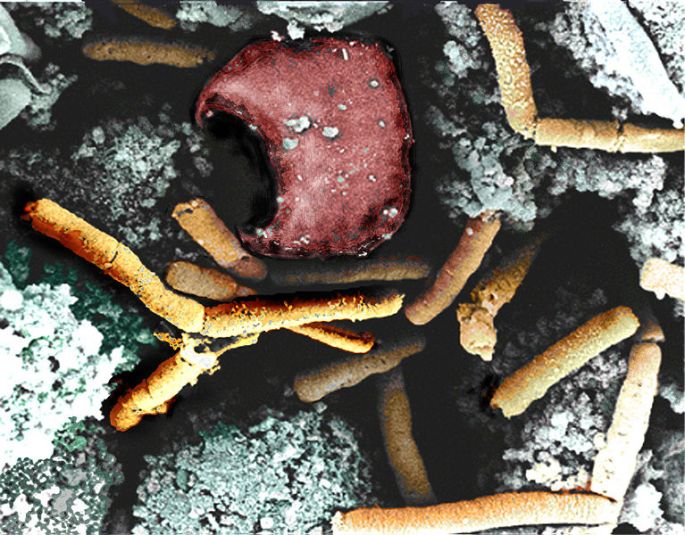
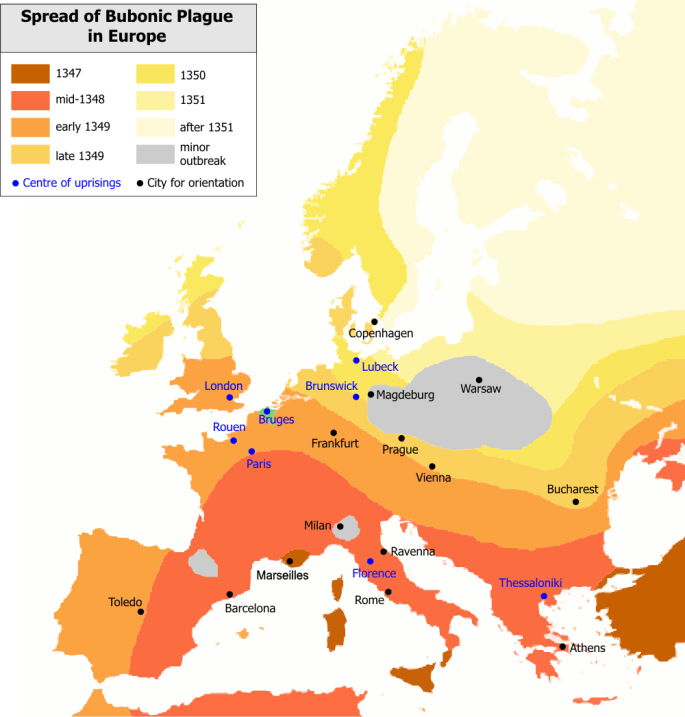
Researchers at Northwestern University have been investigating how Yersinia pestis—the bacteria that causes bubonic, pneumonic, and septicemic plague—became the infective cause of the Black Death. They discovered two mutations that help to explain the bacteria’s lethality.

Smithsonian.com—“The first mutation gave the bacteria the ability to make a protein called Pla. Without Pla, Y. pestis couldn’t infect the lungs. The second mutation allowed the bacteria to enter deeper into the bodies, say through a bite, to infect blood and the lymphatic system. In other words, first the plague grew deadly, then it found a way to leap more easily from infected fleas or rodents to humans.

Ebola Strain Found on Teen in Liberia Genetically Similar to Viruses in Same Area Months Ago

I’m sure you’ve heard that there were three new cases of Ebola in Liberia—a country that was declared free of the disease on May 9. According to the World Health Organization, samples taken from a teenager who died from Ebola two weeks prior indicate that the disease is genetically similar to strains that infected people in the same area over six months ago—while the outbreak was still ongoing.

US News and World Report—“That finding by genetic sequencing suggests it is unlikely the virus was caught from travel to infected areas of Guinea or Sierra Leone, the group said. “It also makes it unlikely that this has been caused by a new emergence from a natural reservoir, such as a bat or other animal,” it said.”

Stories You May Have Missed

Image Credit: en.wikipedia

Pandora Report 6.28.15

It was a big week, right? The Supreme Court was making declarations and in California the General Assembly was making some decisions of their own. We’ve got the mandate for childhood vaccines in California, World War II chemical weapons testing, and other stories you may have missed.

There will be no news round up next week, in honor of one of my favorite holidays, Independence Day! I’ll be wearing red, white, and blue, watching July 4th themed movies, and celebrating with all the American spirit I can muster. I wish all of you the same!

See you back here in July!

California Passes Bill to Require Vaccines and Ban Religious Exemptions

On Thursday, the California State Assembly passed SB 277, which mandates that children attending day care or public school must be vaccinated. The bill eliminated personal-belief and religious exemptions. Largely, this bill was in response to the outbreak of measles that began at Disneyland last year. Children who cannot receive vaccinations for medical reasons can still receive the vaccine exemption. Governor Jerry Brown is expected to sign the bill into law.

Slate—“The New York Times quoted Christina Hildebrand, the founder of A Voice for Choice, a nonprofit organization that has lobbied against the bill, about her unsuccessful campaign to stop this legislation, “There are large numbers of parents who are very concerned about the fact that we’re going to have mandated medical treatment against a fundamental right to education. Parental freedom is being taken away by this, because the fear of contagion is trumping it.’”

Secret World War II Chemical Experiments Tested Troops by Race

According to documents declassified in the 1990s, the U.S. Army conducted secret chemical weapons tests on minority soldiers in order to determine the effect weapons had on non-white skin. African-American and Puerto Rican soldiers were tested upon to see if their darker pigment made them less susceptible to the weapons. Japanese-Americans were used to determine how the weapons would affect enemy Japanese soldiers. The soldiers were subjected to mustard gas and lewisite and volunteered for the assignment.

NPR—“All of the World War II experiments with mustard gas were done in secret and weren’t recorded on the subjects’ official military records. Most do not have proof of what they went through. They received no follow-up health care or monitoring of any kind. And they were sworn to secrecy about the tests under threat of dishonorable discharge and military prison time, leaving some unable to receive adequate medical treatment for their injuries, because they couldn’t tell doctors what happened to them.”

Stories You May Have Missed

Image Credit: David Monniaux

Pandora Report 6.14.15

I’ve got brunch reservations this morning so the big story about the coming egg shortage is hitting close to home. We’ve also got a story about ISIS’ WMD and a bunch of stories you may have missed.

As a final reminder, the Early Registration Deadline for the Pandemics, Bioterrorism, and International Security is tomorrow, Monday, June 15. For more information and registration, please click here.

Enjoy the rest of your weekend!

Egg Shortage Scrambles U.S. Food Industries

The unprecedented outbreak of avian influenza in the U.S. has meant massive losses in the domestic poultry industry which has left experts warning that U.S. consumers are very likely to see an increase in egg prices. Cases of avian flu have been reported in 15 states, with Iowa and Minnesota being some of the hardest hit. “In Minnesota, the number of lost turkeys represent about 11 percent of our total turkey production…of the chickens we’ve lost that are laying eggs, 32 percent… have been affected by this” In Iowa, about 40 percent of the state’s egg-laying chickens and 11 percent of its turkeys have been affected. All these losses will mean a shortage of whole eggs and other egg-based products.

U.S. News and World Report—“Consumers haven’t felt the pinch too much just yet, but they are unlikely to emerge with their pocketbooks unscathed, [Rick] Brown [Senior VP at Urner Barry, a food commodity research and analysis firm]. He says two-thirds of all eggs produced in the U.S. remain in a shell, many of which are placed in cartons and sold in grocery stores. This stock of eggs has been hit significantly less by the avian flu outbreak than those used in the egg products industry, which Brown says encompasses “everything from mayonnaise to salad dressings to cake mixes to pasta to bread.”

Australian Official Warns of Islamic State Weapons of Mass Destruction

You may have already seen this, since this story was everywhere this week. Julie Bishop, Australia’s Minister for Foreign Affairs, said the Islamic State (ISIS) already has and is already using chemical weapons. Bishop made these comments in an address to the Australia Group—a coalition of 40 countries seeking to limit the spread of biological and chemical weapons. In a follow-up interview, Bishop also said that NATO was concerned about the theft of radioactive material and what that could mean for nuclear weapons proliferation.

The Washington Post—“‘The use of chlorine by Da’ish, and its recruitment of highly technically trained professionals, including from the West, have revealed far more seriou­s efforts in chemical weapons development,” Bishop said, using an alternate name for the Islamic State in a speech reported by the Australian. She did not specify the source of her information.  “… Da’ish is likely to have amongst its tens of thousands of recruits the technical expertise necessary to further refine precursor materials and build chemical weapons.’”

Stories You May Have Missed


Image Credit: Hannahdownes

Pandora Report 6.7.15

We’ve got stories this week about MERS spread in South Korea and Ebola drugs that may already be in your medicine cabinet. We’ve also got some stories you may have missed.

As a reminder, the Early Registration Deadline for the Pandemics, Bioterrorism, and International Security professional education course has been extended to June 15. For more information and registration, please click here.

Enjoy the rest of your weekend!

South Korea Grapples to Contain MERS as 1,369 in Quarantine

The big story this week is MERS in South Korea. Last week we reported that there were five cases. As of Friday, the number has jumped to 36 confirmed cases and three deaths. Hundreds of schools have closed in an effort to prevent further spreading of the disease, which arrived in a 68-year old index patient who had traveled in Saudi Arabia, Qatar, the United Arab Emirates, and Bahrain. Many in public health have been surprised by the extent of the outbreak in South Korea because the virus has not been shown to pass easily from human to human and the health care system is “considered to be sophisticated and modern.”

CNN—“‘This is quite unusual. I think this is the only country, apart from those in the Middle East, that has such a number of cases,” said [Dr. Leo] Poon [a virology expert at the School of Public Health at the University of Hong Kong, who worked on the SARS outbreak more than a decade ago]. “It’s not entirely surprising. In the Middle East, people in Saudi Arabia had hospital outbreaks where a few people got infected. It’s a similar situation at the moment.’”

Drugs to Fight Ebola May Already Be in Your Medicine Cabinet, Study Suggests

A team from USAMRIID, the University of Virginia, and Horizon Discovery Inc. have been working to determine if any existing drugs could be used to fight Ebola. Using 2,635 compounds, including FDA-approved drugs, amino acids, food additives, vitamins and minerals they discovered a possible answer could already be in your medicine cabinet—Zoloft and Vascor.

The LA Times—“But Zoloft (also known by the generic name sertraline) and Vascor (generic name bepridil) had more encouraging results. Of the 10 mice that got Zoloft, seven survived for 28 days. Even better, all 10 of the mice treated with Vascor were still alive 28 days after [Ebola] infection. For the sake of comparison, all of the untreated mice that served as controls were dead within nine days.”

Stories You May Have Missed


Image Credit: Shikhlinski

Pandora Report 5.30.15

It was a slow-ish news week, this week with very few small stories but two huge ones about Chemical Weapons threats against airplanes and an inadvertent shipment of live Anthrax spores. We’ve also got a few stories you may have missed.

As a reminder, the Early Registration Deadline for the Pandemics, Bioterrorism, and International Security professional education course has been extended to June 15. For more information and registration, please click here.

Have a great weekend!!

U.S. Military Says It Mistakenly Shipped Live Anthrax Samples

It was a big story this week when live anthrax spores were inadvertently shipped from Dugway Proving Ground—an army facility in Utah—to 19 military and civilian labs across as many as nine states and an overseas site. The shipments were supposed to contain dead spores. Army and CDC officials have emphasized that these shipments pose no risk to the public and there are no suspected or confirmed cases of anthrax infections among lab workers.

NBC New York—“The Defense Department, acting “out of an abundance of caution,” has halted “the shipment of this material from its labs pending completion of the investigation,” [Pentagon spokesman Col. Steve] Warren said.”

FBI Looking Into Chemical Weapons Threats Against Planes

While many of us had a day off from work on Memorial Day, the FBI was investigating threats made against at least 10 flights claiming that chemical weapons were aboard the planes. These included a Delta Airings flight from London Heathrow, a United Airlines flight from Edinburgh, Scotland, and an Air France flight into New York that was escorted to the ground safely by two F-15 fighter jets.

NBC News—“The threats are not deemed credible, but the information has been passed along to the airlines anyway, out of an abundance of caution.

The male caller made threats against at least 10 flights in a quick series of calls to local police around the country. All but three planes have landed with nothing of concern found.”

Stories You May Have Missed


Image Credit: United States Government

Pandora Report 5.24.15

Two quick updates before we get into the weekly wrap-up.

First, the Early Registration Deadline for the Pandemics, Bioterrorism, and International Security professional education course at the GMU Arlington Campus has been extended to June 15. For more information and registration, please click here.

Second, we here at Pandora Report wanted to let you know about a new website designed to provide resources for biosecurity professionals and practitioners and key stakeholders. The International Biosecurity Prevention Forum (IBPF) brings together the world’s leading experts from the health and security communities to share expertise on key biosecurity and bioterrorism prevention issues. Registering to join IBPF is free and easy. Go to http://www.ibpforum.organd click the “Request Membership” button to request an IBPF member account. Members get access to a discussion section and projects, resources, and best practices submitted by other members. Contact the IBPF support team at IBPForum@ic.fbi.gov if you have any questions or problems.

Now, onto the news. This weekend we have stories about British nuclear submarines, anti-vaccine legislation in California, the development of bird flu vaccines, and other stories you may have missed.

Enjoy your Memorial Day weekend!!

Britain Investigates Sailor’s Disaster Warning Over Nuclear Subs

Able Seaman William McNeilly—a weapons engineer who served aboard HMS Vanguard, one of the four British submarines carrying Trident missiles—wrote a “lengthy dossier” released on the internet which says that the “Trident nuclear defense system was vulnerable both to enemies and to potentially devastating accidents because of safety failures.” McNeilly has since gone AWOL and both police and naval officials are trying to locate him.

The Japan Times—“The Royal Navy said it totally disagreed with McNeilly’s “subjective and unsubstantiated personal views,” describing him as a “very junior sailor.” But it added it was investigating both his claims and the “unauthorized release” of his dossier. “The naval service operates its submarine fleet under the most stringent safety regime and submarines do not go to sea unless they are completely safe to do so,” a spokeswoman said.”

A Blow to Anti-Vaxxers: California Approves Forced Vaccination Bill

By now, we all know that the measles outbreak that started last winter at Disneyland was a result of unvaccinated individuals. In California, the State Senate has passed a bill which limits parent’s use of the “personal belief exemption” in order to get out of getting their children vaccinated. Under the bill, parents who don’t get their children vaccinated would not be able to send their kids to state-licensed schools, nurseries, or day care centers.

State Column—“Only children who have a medical reason for why they can’t be vaccinated would still be allowed to attend schools without receiving their vaccinations under Senate Bill 277, which was sponsored by a California Sen. Dr. Richard Pan (D-Sacremento), a pediatrician, and Ben Allen (D-Santa Monica), a former school board member and the son of a survivor of polio, according to a Forbes report.”

Vaccines Developed for H5N1, H7N9 Avian Flu

Findings appearing in the Journal of Virology indicate that the U.S. Department of Homeland Security’s Center of Excellence for Emerging and Zoonotic Animal Diseases have developed a vaccine for both H5N1 and H7N9—two strains of avian influenza which can be transmitted from poultry to humans. The vaccine was developed by cloning the Newcastle disease virus and transplanting a small section of the H5N1 virus into it; the same method was used for the H7N9 vaccine.

Toronto Sun—“‘We believe this Newcastle disease virus concept works very well for poultry because you kill two birds with one stone, metaphorically speaking,” Richt said. “You use only one vector to vaccinate and protect against a selected virus strain of avian influenza.’”

Stories You May Have Missed


Image Credit: UK Ministry of Defence

Pandora Report 05.17.15

Yowza! That’s another semester in the books for the GMU Biodefense students. Please excuse the sparse activity on the blog, but with the semester over, things should be getting back to normal.

This weekend we have a updates on Ebola and the bird flu outbreak in the U.S., plus other stories you may have missed.

Have a great week, (enjoy the Mad Men finale!) and see you back here next weekend!

Ebola is (still) living in an American doctor’s eye

As an update, Liberia has (finally) been declared Ebola free, the number of cases in Guinea continue to rise due to transmissions at funerals, and those in Sierra Leone are dying less from Ebola than from other diseases due to the collapse of the healthcare system. It’s been over a year and we are still learning things about Ebola and its persistence on hospital surfaces, sexual fluids, and now, according to a study in the New England Journal of Medicine, the eye. WHO volunteer Ian Crozier was diagnosed in Sierra Leone and transported to Emory University where he was treated. Months later he returned to the hospital with symptoms like blurred vision and acute pain in his left eye. The cause? Ebola.

The Washington Post—“Ebola may have found refuge in patients’ eyes because, researchers said, the eye is walled off from the immune system. As the New York Times put it: “The barriers are not fully understood, but they include tightly packed cells in minute blood vessels that keep out certain cells and molecules, along with unique biological properties that inhibit the immune system.” This phenomenon is called “immune privilege” — and it means the eye can harbor viruses.”

America’s $45 Billion Poultry Industry Has a (Really) Bad Case of Bird Flu

The title says it all, frankly. Since early December 2014 three strains of highly pathogenic avian influenza have been circulating in North America. A state of emergency has been declared in Iowa (one of the hardest hit states) and over 21 million birds have been killed to contain and prevent the spread of the virus. Beyond the culling of birds, the outbreak is having an affect on business—China, South Korea, and Mexico have banned imports of U.S. poultry (to protect their own industries.)

The Motley Fool—“Falling exports could hurt farmers, but it could also help to offset domestic price increases from less supply. Although, with tens of millions of bird deaths and no end in sight to the pandemic, domestic food prices could be the largest casualty in the end.”

Stories You May Have Missed


Image Credit: 8thstar

Pandora Report 3.21.15

This week we’ve got stories about pets and antibiotic resistance, a new Ebola patient in Liberia, rapid neutralization of chemical weapons, and other stories you may have missed.

Have a great week and see you back here next weekend!

Antibiotic Use in Pets Could Give Rise to Superbugs, Experts Warn

We all know that the overuse and over-prescription of antibiotics is leading to the end of antibiotic effectiveness and the rise of antibiotic resistant bacteria. According to Health Canada, this extends beyond humans to our furry friends, too. Many pet owners are purchasing the drugs at pet stores, but just like with humans, pets require monitored use of antibiotics and appropriate prescriptions for antibiotic treatment.

CBC News—“‘It might be cheaper, but it might cost you more in the long run if you don’t treat it right — if the dog gets another problem or needs a different antibiotic, or gets sicker, or dies because of inappropriate treatment. Or it might be that it builds up a resistance bacterium, then it gets an infection later that’s harder to treat or passes it to you and you get the disease,” said [Dr. Scott] Weese [infectious disease specialist at the Ontario Veterinary College at the University of Guelph].

Liberia Officials: New Patient Tests Positive for Ebola

This week, 16 Americans were flown from West Africa (via a really cool plane) back to the U.S. after exposure to Ebola from an infected Partners in Health co-worker. And lest those fighting the outbreak become too complacent, a new case of the virus has been diagnosed in Liberia. This news is especially devastating because the last patient with Ebola in Liberia was discharged on March 5 and the country was in the midst of the 42-day countdown that ensures the country is disease free. This new patient arrived in the emergency room of a Monrovia hospital on Thursday night, March 20.

Time—“She was identified as a suspected Ebola case and transferred to the hospital’s transit unit, where she could be isolated while awaiting test results. She is now at a treatment center. In a worrying sign, it is not clear where the woman became infected. She doesn’t seem to be linked to any of the people on an Ebola contacts list, [Dr. Francis]Kateh [acting head of Liberia’s Ebola Incident Management Team] said.”

A New Synthetic Compound Can Neutralize Chemical Weapons in Minutes 

A team of scientists from Northwestern University have developed a new compound that can deactivate chemical weapons in minutes. A naturally occurring enzyme usually produced by bacteria—called phosphotriesterases—can deactivate some pesticides, and nerve gases, in milliseconds. Researchers attempted to reproduce the same effects using a synthetic catalyst.

Gizmodo—“In tests published in Nature Materials, the team used their catalyst to deactivate a pesticide similar to nerve agents but safer to use in the lab. Experiments showed that the new compounds—known as NU-1000—deactivated half of the pesticide in 15 minutes. Further testing by U.S army facilities has shown that it neutralizes half of the nerve agent GD—more toxic than the well-known sarin—in just three minutes. The researchers claim that that’s 80 times faster than any previous compound has managed.”

Stories You May Have Missed

Image Credit: Lhixon

Pandora Report 3.15.15

For those of us at Mason, Spring Break is nearing its end. For the rest of us, however, it’s business as usual. This week we’ve got stories about engineering nuclear worries in South Africa, the eradication of guinea worm, the lasting health impacts of Ebola, and other stories you may have missed.

Have a great week, enjoy the longer daylight hours, and we’ll see you back here next weekend!

U.S. Unease about Nuclear-Weapons Fuel Takes Aim at a South African Vault

Located in a former silver vault at a nuclear research center near Pretoria, South Africa, is enough nuclear weapons explosive to fuel half a dozen bombs. Roughly 485 pounds of highly enriched uranium exist as remnants of the apartheid regime’s nuclear weapons program. U.S. officials worry that not only does this stockpile give South Africa the theoretical ability to regain its status as a nuclear-weapons state, but the stockpile’s vulnerability makes it a target for terrorist thieves. This isn’t a far-fetched concept, because in November 2007 two teams of raiders breached the fences at the nuclear center, entered the site, and broke into the central alarm station. Obama has urged President Jacob Zuma to transform the nuclear explosives into benign reactor fuel—with U.S. assistance—to no avail.

The Washington Post—“‘The bottom line is that South Africa has a crime problem,” [arms control expert Jon] Wolfsthal said. “They have a facility that is holding onto material that they don’t need and a political chip on their shoulder about giving up that material. That has rightly concerned the United States, which is trying to get rid of any cache of HEU [highly enriched uranium] that is still out there.’”

Tug of War: On the Verge of the Greatest Public Health Triumph of the 21st Century

As people work around the world to eradicate Polio, another public health enemy is about to be eliminated first—guinea worm. This parasite, found in rivers and streams, enters the body in larval form through contaminated drinking water. The larvae mature inside the body and move towards the skin’s surface in the form of a burning blister. When the infected human puts water on the blister, the worm bursts out into water, continuing the source infection cycle. However, the number of cases of guinea worm is way down—from 3.5 million cases in 1986 to 126 cases in 2014—thanks to a simple nylon filter attached to a drinking straw. The weave on the nylon is tight enough to filter out the larvae from drinking water.

Slate—“Vanquishing guinea worm would be arguably the first great public health triumph of the 21st century. It would also give new life to the human disease eradication movement, which suffered through 35 mostly frustrating years following the conquest of smallpox in 1980. The victory would prove to governments and private foundations that we can still accomplish eradication.”

Ebola Could Cause Thousands More Deaths—By Ushering in Measles

As Liberia removed their Ebola crematorium—with the declaration that the outbreak is contained—new cases of the disease are still popping up in Sierra Leone and Guinea and have resulted in nearly a dozen American volunteers returning to U.S. facilities for treatment.  And this week, in Science, researchers from NIH and four universities have warned that Ebola’s interruption in other health services—like immunization campaigns—could result in epidemics of preventable diseases with larger fatality numbers than Ebola. Specifically, they warn that up to 100,000 cases of measles could result in 16,000 additional deaths.

Wired—“Measles is already present in West Africa, so the team is not arguing that Ebola will revive an eradicated disease — although, poignantly, hard work in the three countries had recently forced measles incidence way down. “Between 1994 and 2003, the countries reported — and this is just how many they reported, not necessarily how many occurred — about 100,000 cases of measles,” Lessler said. “Whereas in the last decade, they’ve only reported 7,000. So they’ve done an excellent job of controlling the virus compared to the previous (decade).’”

Stories You May Have Missed


Image Credit: FEMA

CIA Purchase of Iraqi CW: Background and Context

By Greg Mercer

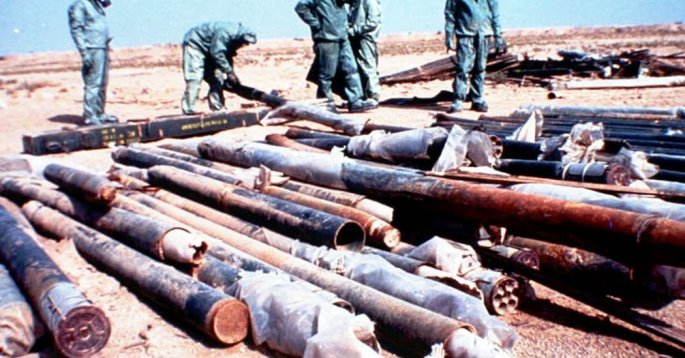
Recently, a CIA program to buy and destroy chemical weapons in Iraq has come to light.   The New York Times reports that from 2005 to 2006, Operation Avarice saw the purchase and destruction of 400 chemical weapon rockets originally developed by the Hussein regime in the 1980s.  Reports vary on the contents of the rockets, which may have contained either degraded chemical components or still-active sarin.  The Times article states that, in cooperation with the Army 203rd Military Intelligence Battalion, the CIA station in Baghdad made the purchase from a single Iraqi seller and destroyed the weapons.

These events notably fall outside of the findings of the Iraq Survey Group (ISG), the 2003 Department of Defense-led fact finding mission.  The ISG released a final report in 2004 detailing Iraqi WMD-related activities from 1991 to 2003. However, ongoing conflict in Iraq has led to further encounters with remnants of Hussein’s WMD programs.

An October 2014 article detailed claims made by veterans that military personnel had been exposed to sulfur mustard during the destruction of seized Iraqi chemical weapons near Taji.  The Times’ CJ Chivers places the number of service members exposed to chemical weapons at no fewer than 17, and asserts that they received inadequate healthcare.  His investigation led to the Pentagon acknowledging that hundreds of service members had been exposed to chemical weapons and had received insufficient treatment.

A May 2004 Fox News article reported that a 155mm artillery shell used as part of a roadside bomb in Iraq was found to have contained sarin, and two service members were treated for mild symptoms of exposure.  While the shell contained three liters of sarin, it was a binary system, where separate chemical compounds are mixed to form the weapon agent.  Due to its use as an improvised explosive and failure to combine, the agent was not potent enough to be lethal.  The article notes that a different shell containing mustard gas was found in a similar setup.  However, this shell also did not detonate, and the chemical agent was found by the ISG to be inactive due to improper storage.

In July 2004 the Washington Post reported that warheads found in Iraq by Polish forces, originally believed to be chemical weapons dating back to the Iran-Iraq war (which saw the use of chemical weapons by both sides), did not, in fact, contain chemical agents.  The warheads were reportedly purchased, not confiscated, rockets, though this point was disputed by an unnamed senior intelligence official, who said that the U.S. had been told that the rockets were found alongside other conventional weapons.  Chemical weapons or not, the episode demonstrates the severity with which international forces in Iraq treated claims of insurgents and terrorists possessing or seeking unsecured Hussein-era weapons.

It’s important to note that these brushes with chemical weapons involved agents dating to before 1991.

Chemical weapons were not the only illicit goods seized in Iraq.  In 2005, the Associated Press reported that 550 metric tons of yellowcake uranium had been sold to Canadian uranium producer Cameco Corp. for use as nuclear fuel.  The U.S. conducted a top-secret airlift operation of 37 flights to move the uranium from Baghdad to Montreal.  The uranium was a remnant of Hussein’s nascent nuclear weapons program.  Yellowcake uranium is an intermediate product of uranium processing, not weapons-grade material.  It can either be smelted into fuel rods for use in nuclear reactors for power production, or enriched into U-235 via gas centrifuge.  Low-enriched uranium (up to 20% U-235) is also used in nuclear reactors, but highly-enriched uranium (90%) is used in nuclear weapons.


Image Credit: The New York Times