Pandora Report 8.19.2016

The Olympics are winding down and now many are waiting with bated breath to see if those attending the games will bring back more than just memories to their home countries. A recent study revealed that people infected with Ebola were 20% more likely to survive if they were co-infected with malaria-causing Plasmodium parasites.  Yellow fever continues to burn through the DRC and many are wondering if it could become the next pandemic as it’s on the brink of spreading to Europe and the Americas.  The UN has finally acknowledged the role it played in the cholera epidemic that hit Haiti following the devastating earthquake six years ago. The UN acknowledgement comes after years of cited reports and public outrage regarding the importation of the disease as a result of UN peacekeepers. China has reported several cases of human infection with avian influenza (H7N9). While human-to-human transmission has not occurred, it can’t be ruled out.

From Anthrax to Zika – We’ve Got You Covered 

We’re always on the lookout for new pieces written on biowarfare and this week brought some gems to the table. Get the scoop on Russia’s old anthrax bioweapons program and how genomic sequencing revealed more details into both the program and the “biological Chernobyl” that was Sverdlovsk. Researchers like Paul Keim, Matthew Meselson, and Jeanne Guillemin, have been looking to unravel the outbreak in Sverdlovsk and that it wasn’t “unreasonable to suspect that the Soviets would have tried to create a superstrain” of the disease. Interestingly, “the team didn’t see any evidence that Soviet engineers had tried to grow a strain that was resistant to drugs or vaccines, or that they had genetically engineered the bacteria in any way” and there were actually few changes within the genome. You can read more about the genome sequence from the Sverdlovsk 1976 autopsy specimens here.  The good news is that through Keim’s work, it is possible to review anthrax genome sequences from any future outbreaks and determine if it is some leftover Soviet weapon strain or another source. The CDC recently published an overview of biological warfare in the 17th century within the Emerging Infectious Diseases journal. You can venture through time to look at the siege of Candia during the Venetian-Ottoman War of the 17th century. “Plague was first detected in Reval on August 10, 1710, while the army from Russia was still approaching the city. Reval was not besieged, and the Russians merely camped outside the city while attempting to isolate it. The army dumped corpses into a stream that flowed into Reval, but evidence does not show that the dead were plague victims, nor does evidence exist that clarifies whether the intent was contamination of the water supply or disposal of bodies. Original accounts provide no evidence to suggest that Russians hurled bodies into the city, much less plague-infected bodies.”

ISIS’ Chemical Weapon Use: A Serious Threat On The Rise

Senior DoD consultant, Zamawang Almemar is discussing the rising threat of chemical weapons and why the “international community must respond aggressively to this threat and prevent ISIS’ ability to access chemical raw materials and transform them into weapons.” The recent chemical attacks on Kurdish civilians aren’t the first and probably won’t be the last. From President Saddam Hussein to ISIS, the threat of chemical weapons and use of mustard gas (sulfur mustard) has been a consistent tool in warfare. Almemar points to the psychological impact of chemical weapons use against the Peshmerga and that ISIS also employs these tactics to benefit from the lack of protective gear and preparedness within the Kurdish military and civilians. “The Kurdish Peshmerga forces undoubtedly continue to win the war against ISIS with conventional weapons on the battlefield and with help from the U.S. and coalition forces. However, when it comes to unconventional weapons, such as chemical weapons, they are lacking even the most basic protective equipment”. Given the consistent use of these weapons, now is the time for the international community to help supply basic protective gear for both Peshmerga forces and Kurdish civilians, to help prepare and defend against ISIS chemical weapons attacks.

Does the U.S. Need a Rapid-Response Fund for Infectious Diseases?

Greg Mercer talked about this a few weeks back, but I think we can all safely say the answer to this question is a rather enthusiastic “YES”. The Congressional standoff with Zika funds has brought the role of federal emergency funds into the limelight. The good news is that it sounds like lawmakers have learned from this situation and it’s sounding more and more like the next health spending bill will emphasize the creation of a reserve fund for the CDC to use in the next public health crisis. “The House version of the bill, which would fund the federal health agencies for the fiscal year that starts in October, has a $300 million “rapid response reserve fund” for infectious diseases. It’s a smaller version of an idea that Democratic lawmakers and current and former Obama administration officials have been promoting for months, ever since it became clear that Congress was incapable of anything close to a rapid response to Zika.” While there’s no guarantee and it will require the spending bill to be completed before President Obama leaves office, it’s a step in the right direction. The question now becomes, is this enough? Many are pointing out that while this is a great start, $300 million is simply not enough and the fund needs to be labeled as an emergency fund, not a rapid response reserve. CDC Director Tom Friden as been fighting the funding battle for over six months now, pointing to the rising case counts and growing presence of local transmission. “If you were going to do something like create a vaccine, $300 million would be entirely used up by that,” Frieden said. “If you were going to do something like a rapid response while you kind of assessed the disaster … that obviously is enough to get started. It’s not going to provide all of the funding, but it would allow you not to be so stuck.”

Report Details DoD Chem/Bio Defense Programs 

The DoD 2016 report to Congress was released recently, describing the research and development practices that have used to combat chemical and biological threats. In fact, the DoD’s Chemical and Biological Defense Program (CBDP) has provided funding for the new plague drug that was recently approved as a medical countermeasure. “The DoD faces CB threats that are complex, diverse, and pose enduring risks to the Joint Force and Homeland,” the new report said. The variety, origin, and severity of these threats continues to grow while resources shrink. DoD said it performed basic research in genetic engineering and nanoelectromechanical systems related to defense against CB threats, and supported the response to the Ebola outbreak in West Africa, among other initiatives.” Despite their work and progress, there are still challenges when it comes to biosafety, which were noted in regards to the shipping of live anthrax spores from a DoD lab. Budget reductions are expected to translate into a decrease in ChemBio defense research funding, which makes the job of combatting an increasingly complex threat that much more difficult. As the report notes, “this environment translates into increasingly complex program management decisions with no margins for error due to a lack of sufficient and predictable resources.” As Almemar previously noted, the recent use of chlorine gas by Syrian government forces and the ongoing use of chemical weapons by ISIS all point to the imperative need for continued support and funding for chemical weapon defense.

BARDA Medical Counter Measures Industry Day

The Biomedical Advanced Research and Development Authority (BARDA) and the Office of Acquisitions Management Contracts and Grants (AMCG) will be hosting their annual conference to provide a better understanding about federal medical countermeasure requirements. The October 18-20th event in Washington, DC, will allow participants to interact with BARDA and AMCG staff, and network with private sector colleagues. During the conference, participants will also learn about BARDA’s strategies and goals for FY2017 and beyond, challenges of dealing with emergency, as well as current, infectious diseases, new initiatives, and roles and responsibilities of BARDA, AMCG, and private sector partners.

Zika Virus – Emergency State of Affairs

The CDC has declared a public state of emergency in Puerto Rico over Zika virus. Last week saw over 1,900 new cases reported in Puerto Rico, which brings the total case count to over 10,690. Concerns are growing after the massive flooding in Louisiana and the potential risk for increased Zika virus transmission. While flood water may wash away eggs, the risk for containers and abandoned housing as a breeding ground for mosquitoes may support further transmission. Forbes has posted the winners and losers of $81 million in Zika funding hereWhat are the legal implications of employee-related Zika virus infections? Legal teams around the U.S. are starting to gear up for the potential legal ramifications and how employers and/or employees will respond to infections. Check out this personal account of a patient infected with Zika, who experienced the challenges of getting medical care in the U.S.  As of August 17th, the CDC has reported 2,260 cases within the U.S. You can find a timeline of the spread of Zika here.

Stories You May Have Missed:

  • The Women Protecting Us From the Next Pandemic– If you caught the PBS special, Spillover, you saw Dr. Jonna Mazet talk about the powers of the global surveillance system, PREDICT. Having detected over 800 viruses that have pandemic potential, her work looks to the relationships between humans, animals, and nature to predict the next pandemic. “The entire world is vulnerable. … It’s proven to us every single year when influenza comes around. [Viruses occur] as people search for new occupations, as more [development] pushes into wildlands, as there’s more contact between people and wildlife, which are the natural hosts. We’re seeing increases in these spillover events and diseases. …”
  • Smallpox Rising From the Grave? 
    Courtesy of UK DailyMail
    Courtesy of UK DailyMail

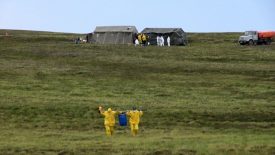
    Following Russia’s frozen anthrax problem, many are worried that something much more sinister, like smallpox, could be found in the permafrost. Siberia, like the rest of the world, dealt with smallpox outbreaks in the 19th century. One particular outbreak was in a town that saw 40% of the population die and resulted in the rapid burial under the permafrost soil. With the eroding river banks and disappearing permafrost, time will tell if there are more zombie microbes awaiting their rise from the permafrost grave.

  • Michigan Pigs & H3N2 – The pigs in Michigan are battling H3N2 influenza. Two more county fairs have reported cases within their pigs, with the first testing positive on August 9th. Twenty pigs have tested positive at the Cass County fair, where over 300 pages were displayed. While humans can acquire H3N2 from close contact with infected pigs, the illness is considered mild in humans.

Pandora Report: 7.29.2016

Happy Friday! With the Olympics right around the corner, there’s a lot of buzz surrounding the games (not just Aedes mosquitoes) and the athlete living quarters. Make sure to watch the PBS special, “Spillover- Zika, Ebola & Beyond“, on August 3rd at 10/9c. The special will look at the rise of spillover diseases like Nipah and the impact of human behavior on the spread of zoonotic diseases. The Society for Healthcare Epidemiology of America (SHEA) reported a new study that finds three key factors increase the risk for patient-to-patient transmission of the extremely resistant CP-CRE. The Democratic National Convention closed last night and Hilary Clinton made it a point to say, “I believe in science”, which highlights  the stark differences between the candidates on topics like climate change and stem cell research. 

What Damage Could CRISPR Do To The BWC?
Daniel Gerstein points to the approaching Eighth Review Conference of the Biological Weapons Convention and the assessment of new technologies, like CRISPR. Since James R. Clapper, Director of National Intelligence, stated that genome editing is a global danger, many are waiting to see what the convention will say about the future threats of technologies like CRISPR. Gerstein notes that, “if the seven previous review conferences are any indication, the gathering in November will recognize Crispr’s contribution to the biotech field, then enthusiastically declare the convention fit to address any problems it might create. But will that be enough?” The flexible nature of the convention is meant to support the ever-changing world of science and technology, however this also means that any potential bans on experiments are that much more challenging. In his article, Gerstein discusses the assessment of CRISPR as a nonproliferation threat and the risks associated with limiting technological innovation. Despite the challenges of banning certain biotechnologies, there are things that can still be done within the conference. Surveillance and training are imperative, especially in terms of “spotting the development of new pathogens or the modification of existing ones”, and national responsibility needs to be part of this equation. Gerstein’s points on not just national implementation, but also national responsibility emphasizes the transition from a traditional method into an emphasis on people and activities. Practices need to match the pace of biotech development, which means expanding the Implementation Support Unit, strengthening surveillance capabilities, and reinforcing institutional structures. “Those gathering at the review conference in November must seriously consider whether advances in biotechnology have made the existing bioweapons convention obsolete, but they must also ask what more the convention can do, as the reigning body for regulating biological weapons, to ensure that new biotechnologies continue to be used for peaceful purposes only.”

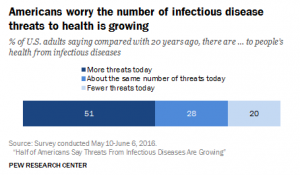
Half of Americans Say Infectious Disease Threats Are Growing  

Courtesy of Pew Research Center

The Pew Research Center conducted a recent survey in the wake of the very public Zika virus outbreak. While some may have noted that Americans aren’t as worried about Zika, the survey found that 51% of U.S. adults feel that, compared to 20 years ago, there are more infectious diseases threats to health today. 82% of Americans polled stated that they pay at least some attention to the news regarding infectious disease outbreaks and 58% believe that Zika is a major threat to the health of women who are pregnant. 31% believe that Zika is a major threat to the U.S. population as a whole, while 58% felt it was a minor threat. The poll also found that more people had heard of Ebola at the time of the 2014 outbreak than Zika as a problem right now. Broken down by demographics, those most worried about Zika include older adults, especially women.

Containment: Lessons Learned and Cringe-Worthy Moments2015_0326_Biohazard_Suits
Tuesday nights won’t be the same since Containment ended – what will we do without the asymptomatic super-spreaders like Thomas, the overly gory hemorrhaging, or the suspension of infection prevention practices? Like any science-based show, there are moments of accuracy and moments of pure dramatic exaggeration. Check out our list of the things we enjoyed about the show and some of the more eye-rolling moments. While it’s rare to have a prime-time show involving an outbreak, we’re hoping that the future will hold more scientifically accurate series that will dismantle the hysteria we too often see during public health emergencies.

Australia Utilizes Bioterrorism Algorithm to Predict Flu Outbreaks
Victoria’s health department is currently using a tool, EpiDefend, that can “accurately predict flu outbreaks up to eight weeks in advance.” Combining environmental data, lab results, and more, the tool is funded by the US Department of Defense and designed by the Australian Department of Science and Technology (DST) to aid in Australian disease prediction practices and strengthen global bio-surveillance. ”Our team’s goal is dual-purpose, we want to fulfil our defence charter, protecting our forces against intentionally released biological agents; but disease forecasting will also support the national security and public health areas,” said Tony Lau, defence scientist. EpiDefend incorporates electronic health records (EHR) via the healthcare sector, which means it can be especially powerful, but also requires the presence and reliability of EHR. The system uses an algorithm that is still being refined. “Particle filtering is a technique which helps us close in on the degree of uncertainty by the help of information gathered from particular situation. In other words, it helps the algorithm churn out more precise readings.”

Zika Virus
The Department of Health and Human Services (HHS) has published a webpage on what you need to know about Zika virus. A recent study is estimating that as many as 1.65 million women in Latin American could be infected while pregnant. Researchers, from another study published in the Annals of Internal Medicine, are pointing to a low risk for international Zika spread from the 2016 Olympics in Brazil.  Researchers calculated “the worst-case estimates of travel-associated Zika virus by assuming visitors encounter the same infections exposures as local residents. This is highly unlikely, as visitors would be staying in screened and air-conditioned accommodations, as well as taking personal preventive measures. But under the authors’ pessimistic conditions, they estimate an individual traveler’s probability to acquire infection in Rio de Janeiro is quite low. Specifically, they estimate anywhere from 6 to 80 total infections with between and one and 16 of those infected experiencing any symptoms.” Florida officials announced the investigation of another two potential cases of local-transmission. These new cases have pushed the FDA to curb blood collection in Florida. A new study performed a real-time Zika risk assessment in the U.S, suggesting that 21 Texas counties along the Texas-Mexico border, the Houston Metro area, and throughout the I-35 corridor (San Antonio to Waco) have the greatest risk for sustained transmission. As of July 27th, the CDC has reported 1,658 cases of Zika in the U.S. 

Stories You May Have Missed: 

  • CSIS Curated Conversations on Pandemic Preparedness & the World Bank – The Center for Strategic & International Studies has made its Curated Conversations podcast available on iTunes, which means you can check out the June 3rd episode, “the World Bank President on Preventing the Next Pandemic”. The World Bank Group president, Jim long Kim, discusses funding to help prevent the next pandemic and lessons learned from Ebola.
  • Joint West Africa Biopreparedness Efforts – The DOD is investing in the Joint West Africa Research Group to help improve and sustain biopreparedness within the region. Following the Ebola outbreak, this new program will build upon existing programs and strengthen lab and clinical resources, as well as biosurveillance efforts.
  • Yellow Fever in the Americas? The Pan American Health Organization is currently investigating a case of yellow fever in a man who traveled to Angola. Genetic testing is underway, but there is concern that the virus could ramp up in the Americas during a vaccine shortage.

Pandora Report 6.10.2016

Summer temperatures are soaring (Arizona hit 115F last week, so I guess it’s time to start baking cookies on the dashboard again- just make sure not to use General Mills flour!) and we’ve got your weekly biodefense cool down. Check out this global outbreak monitor, where you can keep an eye on all your favorite cases. The DoD is currently conducting market research to identify vaccine developers for medical countermeasure manufacturing. They’re looking for “advanced manufacturing platforms which are adaptable to incorporating known antigens for use as a prophylaxis countermeasure against weaponizable biological agents.” Before we venture down the biodefense rabbit hole, the Pandora Report will be on hiatus next week (June 17th), but don’t fear- we’ll return the week of June 24th!

Infectious Disease Threat Management
Are emerging infectious disease outbreaks an anomaly or are these events the new norm? Dr. Daniel M. Gerstein points to a 2014 study on the global rise of these outbreaks, which point to the growing threat of zoonotic disease spillover. Gerstein discusses the common trend of failure to predict such events but also the poor response in medical countermeasures and diagnostics. Between West Nile Virus, Ebola, H1N1, and now Zika, we’ve had ample time to get both preparedness and response right. “A recent commentary by Ronald A. Klain — a former White House Ebola response coordinator — should be required reading on the United States’ lack of preparedness for responding to the Zika virus. In it, Klain provided both a dire assessment of Congress’ uncertain funding support for the current response, and made longer-term recommendations for improving our rapid response to infectious disease outbreaks. Yet while these recommendations are spot on, including calls for a dedicated organization with specialized capability to respond to disease outbreaks, more must be done to ensure adequate preparedness against emerging infectious disease in the future.” U.S. preparedness measures utilize epidemiology and biosurveillance, however these are both passive methods that rely on reactive measures, rather than proactive. “This reactive approach to emerging infectious disease should be augmented with an anticipatory model that accounts for the dramatic changes occurring through globalization, greater interactions between human and zoonotic populations, and changes to the environment and climate patterns.” He points to the need for predictive analytical tools and modeling to better focus research and development efforts in order to control and prevent such events. Gerstein acknowledges the long-term and challenging realities of such efforts though, pointing to the need for private sector contributions and strategies to focus on anticipating infectious disease threats.

CDC Biosafety Failures – “Like a Disaster Movie” 
The stories of biosafety failures in U.S. labs working with select agents is enough to send chills through even the toughest of pathologists. Reporters recently gained access to records from the CDC regarding the 2009 events in which safety mechanisms in a CDC biosafety level 4 lab failed. “The gasket seal around the exit door to the changing room deflated to the point that the scientists could see light coming in. And as they held that door shut and started an emergency chemical deluge, things got even worse.” Records include emails that hoped to avoid federal lab regulatory reporting. While these reports are shocking to biosafety experts like Richard Ebright from Rutgers University, CDC officials claim there was no risk from the equipment failures. The release of these records draws further attention to the failures but also the CDC response and challenges in even getting the records released under the Freedom of Information Act. You can read more of the records released to USAToday here and here.

Back to the Future in Global Health Security? 
People frequently think back to the days of the Black Death as a reminder of the progress we’ve made in disease defense. Are we really in a better position though? Globalization, growing populations, rising global temperatures, urbanization, and easy international travel all make it possible for diseases to jump around in a matter of hours. WHO Director-General Margaret Chan noted that “For infectious diseases, you cannot trust the past when planning for the future. What we are seeing is a dramatic resurgence of the threat from emerging and reemerging infectious diseases. The world is not prepared to cope.” The lessons from Ebola, H1N1, and even Zika haven’t truly sunken in yet and there are more outbreaks on the horizon. “International mechanisms must be established to coordinate the upstream research and development (R&D) of new medical tools to respond to priority pathogens and the downstream testing, manufacturing, and delivery of those tools as part of the larger humanitarian response to an ongoing outbreak.” Researchers have suggested four lessons from our past to encourage technological innovation to better prevent and respond to health crises – ensure adequate and sustainable long-term investment, coordinate R&D around a roadmap of priority goals, engage and energize a network of geographically distributed multi-sector partners, and remember that sustainability depends on adequate systems and equitable access. Establishing an environment of coordination and sustainability will be vital to move from a reactive to a proactive practice of global health security.

DoD Biosafety Report
GMU Biodefense MS student, Stevie Kiesel discusses the report the DoD Inspector General published regarding the biosafety and biosecurity failures within DoD labs that work with biological select agents and toxins (BSAT). Stevie’s deep dive into this report addresses the systematic failures that led to such events. Inconsistent internal or external technical or scientific peer reviews and even inspection standards led to not only missing inspections, but also duplicative ones. “Some inspectors failed to review specific vulnerability assessments for their assigned labs to ensure that shortcomings identified during previous inspections had been mitigated.  In some cases, these vulnerability assessments were not reviewed because they had never been conducted, or had not been conducted annually as required.”

Immune System Education and the Realities of the Antibiotic Resistance
Autoimmune diseases and antibiotic resistance have risen in the past half-century…but what does this really mean? The human microbiome (your body’s own community of microbes that help run your immune system) is now being considered as a potential puzzle piece for the increase in autoimmune issues. Have these microbiome communities changed so largely that our entire society is being impacted? “To test this possibility, some years ago, a team of scientists began following 33 newborns who were genetically at risk of developing Type 1 diabetes, a condition in which the immune system destroys the insulin-producing cells of the pancreas. After three years, four of the children developed the condition. The scientists had periodically sampled the children’s microbes, and when they looked back at this record, they discovered that the microbiome of children who developed the disease changed in predictable ways nearly a year before the disease appeared. Diversity declined and inflammatory microbes bloomed. It was as if a gradually maturing ecosystem had been struck by a blight and overgrown by weeds.” Coupled with several other studies, there is a growing thought that toughening the immune system early in life can alter our response later in life or that the kind of microbiome you have will determine your response to viral infections. So what happens if our immune systems begin to fail us and antibiotics are a thing of the past? That’s a pretty devastating notion and it’s right before the weekend, so let’s scale it back to just consider a world without antibiotics – would you still shake hands or take an international flight? Physiologist Kevin Fong notes “If we are to avoid a return to the pre-antibiotic landscape with all its excess mortality we must be bold. To squander the advantage we have so recently gained against microorganisms in the fight for life would be unthinkable.”

The Race Against Zika Screen Shot 2016-06-09 at 1.40.13 PM
The debate regarding the 2016 Rio Olympics took a turn this week as the WHO stated it will look again at the Zika risk during the games.  150 international experts penned an open letter to the WHO regarding their “irresponsible” actions and that the organization was rejecting calls to move or postpone the games due to it’s official partnership with the International Olympic Committee. What are the actual risks? Will the Rio Olympics put the rest of the world at risk for Zika? Here is an interesting infographic and article on that exact question. Bringing thousands of people from different countries together is definitely a gold medal strategy for spreading infectious disease. The ECDC has posted their epidemiological data here, as well as their risk assessment. A new study looks at sexual transmission and the persistence of Zika virus in semen, finding that RNA can persist in semen for 62 days. Researchers found a case of a woman with Zika virus presenting 44 days after the onset of symptoms in her partner, which “corresponds to a sexual transmission occurring between 34 and 41 days after the index case.” This announcement comes after there were no previously reported secondary cases more than 19 days after the onset of signs in a man. Concerns regarding congenital eye issues in babies without microcephaly were also raised after a case was identified. As of June 8th, the CDC has reported 691 travel-associated cases within the U.S.

Stories You May Have Missed:

  • CRISPR’s Gene-Editing Skills on RNA – researchers have now established a method for targeting and cutting RNA. “The new cutting tool should help researchers better understand RNA’s role in cells and diseases, and some believe it could one day be useful in treatments for illnesses from Huntington’s to heart disease.” The process involves using CRISPR to create “blades”. Given the concerns around CRISPR and dual-use technologies of concern, researchers are pointing out that there are far less ethical concerns regarding manipulation of RNA.
  • Legionnaires’ On the Rise – sadly this isn’t the name of a new historical action flick, but rather a public health concern that has the CDC looking into water system integrity. Cases of Legionnaires’ disease have quadrupled since 2000. The CDC has stated that the reason for such a stark increase is most likely due to aging building water systems, an aging population, and better surveillance/reporting systems.
  • Ebola Stability Under Hospital and Environmental Conditions – a new study looks at the role of fomites in EVD transmission, especially in healthcare settings. “To assess the potential contribution of fomites to human infections with EBOV, we tested EBOV stability in human blood spotted onto Sierra Leonean banknotes and in syringe needles under hospital and environmental conditions.” Researchers found that the virus survived more than 30 days in blood in syringes, despite hot/humid conditions, and six days on paper money under experimental conditions.


Pandora Report 2.12.2016

This week we saw a lot of movement on the Zika response front – from increased funding to research teams prepping for field work, the outbreak hype is picking up traction as the horrors of Ebola are still fresh. Natural outbreaks aren’t the only thing drawing concern this week, as James Clapper, Director of US National Intelligence, added gene editing to the list of dangers posed by “weapons of mass destruction and proliferation.” The annual worldwide threat assessment report stated that, “research in genome editing conducted by countries with different regulatory or ethical standards than those of Western countries probably increases the risk of the creation of potentially harmful biological agents or products,”. Good news for hospital preparedness, the US Department of Health and Human Services Office of the Assistant Secretary for Preparedness and Response and the CDC have announced continued funding for the Hospital Preparedness Program (HPP). The HPP supports critical healthcare preparedness efforts in order to reduce the “supplemental state and federal resources during emergencies, and enables rapid recovery.” If you’re trying to work some biodefense into your Valentine’s Day, you’ve got a few options via Jane Austen-inspired zombie adventures in Pride and Prejudice and Zombies or episodes of The Walking Dead. Whichever zombie adventure you choose, just remember to avoid cuddling with any armadillos (read on to find out why). Happy Friday!

Lassa Fever Outbreak Grows
The Lassa fever outbreak that began hitting Nigeria in August 2015 has continued to spread, worrying many health officials. 101 people have already died from the infection and roughly 175 people have become infected. The Nigeria Centre for Disease Control (NCDC) stated, “As of today, 19 [including Abuja] states are currently following up contacts, or have suspected cases with laboratory results pending or laboratory confirmed cases.” Annually, Lassa fever causes 100,000-300,000 infections and 5,000 deaths in west Africa. Nigeria’s neighbor, Benin, is also seeing an increase in cases, in which seventeen have died and fifty have been infected.

Back Down the Zika Rabbit Hole
In response to the growing threat of Zika virus, the Obama administration announced on Monday that it would formally be requesting an emergency funding of $1.8 billion to combat the outbreak. The Department of Health and Human Services (including the CDC) would obtain the majority of the funds ($1.48 billion). CDC efforts will be ramped up as its emergency operations center was moved to a level 1 (the highest level) and teams are being coordinated to study the microcephaly-infection links. You can also check out the White House press release here. The WHO will be working to prioritize and fast-track research and development projects, of which Zika virus will be included. You can also find a great timeline here. According to the CDC, as of February 3, 2016, there were 35 travel-associated cases in the US. The Lancet also just released this piece discussing the labeling of Zika virus as a public health issue of concern.  On February 16, 2016, The National Academies of Sciences, Engineering, and Medicine are holding a workshop on research priorities to inform public health and medical practice for domestic Zika virus cases.

ASM-BiodefenseScreen Shot 2016-02-10 at 11.49.22 PM 
The 2016 American Society for Microbiology Biodefense and Emerging Diseases Research Meeting took place this week in Arlington, VA. For a biodefense fan, this was a pretty amazing three-day experience. Conference attendees were treated to presentations on antimicrobial resistance, applied biodefense, medical countermeasure developments, agroterrorism, and much more. Did I mention the keynote speaker was Dr. Tom Frieden, director of the CDC? I’m not even a little ashamed to admit how great it was to see Dr. Frieden emphasize that “nature is unpredictable but what is predictable is that we can be better prepared.” He also noted that “Zika is a rapidly changing situation” and the CDC would be sending a team within the next week to start a case-control study related to infection and microcephaly. Some highlights included getting to listen to Dr. Raymond Zilinskas discuss Russian biodefense efforts and how CBR training exercises increased in 2015. Dr. Jens Kuhn from the NIH wins the award for most humor during his fascinating presentation on Marburg and Ebola research within the Soviet bioweapons program. The infection preventionist in me greatly appreciated the session on antibiotic resistance and the role of medical tourism as an exposure for patients to CRE, not to mention how travel assists global clonal expansion. The Mayo Clinic’s Dr Tosh pointed out the short term (isolation of patients, hand hygiene, etc.), medium term (new microbial therapeutics, new diagnostics, etc.), and long term (specific pathogen therapy, decolonization, and immunologic therapy) response and control mechanisms for drug resistance. Last but not least, one of the biggest objectives from the applied biodefense presentations was the need for scientists to help inform policymakers about their work to drive the best policies. I would highly encourage anyone interested in the biodefense field to attend future conferences, as it was a wonderful learning experience and the poster/exhibitor sessions were an excellent way to learn about new research and network.

Lessons Learned: Using North Korea’s History to Better Understand Iran’s Nuclear Program
GMU biodefense professors, Dr. Thrall and Dr. Koblentz, discuss the use of North Korean nuclear history as a teaching tool regarding Iran’s nuclear program. By comparing and contrasting these two countries and their propensity for nuclear weapons, they look to similarities like the fact that both countries “are located in historically dangerous neighborhoods and face militarily superior adversaries. In North Korea’s case, South Korea and the United States; in Iran’s case, a Middle East full of Sunni Arabs and a nuclear-armed Israel. From a national security perspective, both countries have obvious reasons for pursuing a nuclear capability.” Given that both countries tend to be immune towards coercion, continued engagement and confrontation is vital. Using North Korea as a model for behavior, vigilant deterrence will be necessary to prevent Iran from cheating on the nuclear deal.

Managing Emerging Health Security Threats Since 9/11: The Role of Intelligence
Dr. Patrick F. Walsh, Associate Professor of Intelligence and Security Studies at Charles Sturt University in Australia, discusses the role of intelligence throughout the evolution of biosecurity since the 9/11 attacks. Dr. Walsh calls attention to the difficulties in defining biosecurity and that “cross-disciplinary focus is both a strength and weakness to understanding biosecurity threats. It is a weakness in that the presence of multiple players in the biosecurity field can result in a more fragmented understanding and operational response to various biosecurity threats. But it is also a strength in that, if intelligence systems are optimal, a multi-disciplinary approach allows a combination of expertise to assess and manage the bio-threat or risk.” Dr. Walsh presents the role of dual-use research, stolen biological agents, and the growing concern among biosecurity regulators and national security intelligence groups regarding the dwindling role of tacit knowledge and availability of equipment and technology. Dr. Walsh points out that the character of intelligence varies depending on the issue and one must account for the role of decision making. Lastly, he reminds us that “to conceptualize the role of intelligence in improving early warning of biosecurity threats is to examine how it can provide warning through various stages of the intelligence cycle, which includes the following stages—direction, collection, analysis, and dissemination.” While the role of intelligence will continue to evolve with biosecurity threats, Dr. Walsh emphasizes that strategic early warning capabilities are dependent upon the efficacy of intelligence framework. Improving these two facets of biodefense will allow critical infrastructure to not only respond to threats of bioterrorism and emerging infectious diseases, but also the growing threats of microbial resistance and dual-use research. You can also find the article here (2016 Walsh Health Security and Intelligence Jan).

Biosecurity in the Age of Big Data: A Conversation with the FBI
Advances in life science and technology can solve many health issues, but they can also pose a threat if used within the wrong context. Dual-use research of concern, CRISPR, and biotechnologies have led to some remarkable revolutionary advances, however, where do these fit within the FBI’s security concerns for bioweapons? Keith Kozminski of Molecular Biology of the Cell met with FBI Supervisory Special Agent (SSA) and head of the Biological Countermeasures Unit at their Washington, DC headquarters, Edward You, to discuss the security implications of Big Data. SSA You detailed his work with the American Association for the Advancement of Science and the United Nations Interregional Crime and Justice Research Institute to identify the security issues associated with Big Data when it comes to biology. Whether collaborating with companies like Amazon and IBM or government agencies like the CDC, SSA You has worked to identify potential vulnerabilities and how they can be addressed without halting innovation. SSA You states that “Over the last two years, we have had the issues with regard to the Centers for Disease Control and Prevention (CDC) and Department of Defense (DoD). A lot of discussion also came when the J. Craig Venter Institute synthesized that bacterial genome. There were a lot of calls and discussions about the scientific community needing more ethics training and the need to develop a greater culture of responsibility. From a law enforcement perspective those are necessary but not sufficient. What has been lacking is the scientific community being provided security awareness—something that augments how they approach the life sciences.” While there are vulnerabilities across the board, SSA You emphasized the need for partnership between biologists and WMD coordinators to not only safeguard science, but reduce threats.

UN- Protecting Humanity from Future Health Crises: Report of the High-level on the Global Response to Health Crises 
The UN has released an advanced copy of their report regarding global health safety. Highlighting the efforts and failures within the Ebola outbreak, this report emphasizes the global burden of communicable diseases and how better response and preparedness is needed. The report points out that only a third of the 196 State Parties have fully implemented the International Health Regulations (IHR, 2005) and there has been little global investment in R&D for emerging infectious diseases. 27 recommendations were made to address issues at the national, regional, and international levels, of which one of the first was for the WHO to build a new Centre for Emergency Preparedness and Response. The report also states that “all countries must meet the full obligations of the IHR” and “appropriate financing is required. Assistance should be provided to countries requiring additional support for IHR compliance, while WHO and the new Centre for Emergency Preparedness and Response must be resourced to meet global needs.” Overall, the use of the 2014 Ebola outbreak as a case study for health security recommendations echoes the sentiment that Dr. Frieden once noted– “a disease outbreak somewhere is a risk anywhere”

Stories You May Have Missed:

  • Vaccines & Therapeutic Conference– Mark your calendars for the 14th annual conference from May 17-19, 2016, in Washington DC, that covers biodefense, antimicrobial resistance, and emerging infectious diseases. Given the recent push for emergency funding for Zika virus research, this conference will be a great resource for up and coming research.
  • Quality Training for BSL-4 Biocontainment Laboratories– Interested in BSL-4 lab training? The FDA and University of Texas Medical Branch, Galveston National Medical Branch, will host training April 25-29, 2016. Held in Bethesda, MD, the course will include faculty and subject matter experts from the FDA, academia, and more.
  • Leprosy Spike in Florida– Florida has seen an increase in leprosy cases this year. Five cases have been reported in 2016 so far and 27 were reported in 2015. The spike in cases is suspected to be a result of armadillo transmission. If you find yourself traveling in Florida, you may want to avoid armadillo cuddling.