Pandora Report 5.17.2024

This week’s edition of the Pandora Report covers news from the Biodefense Graduate Program, HHS’ announcement to cut federal funding to the EcoHealth Alliance, and more.

Biodefense Program Receives Gift from the CBRNE Industry Group

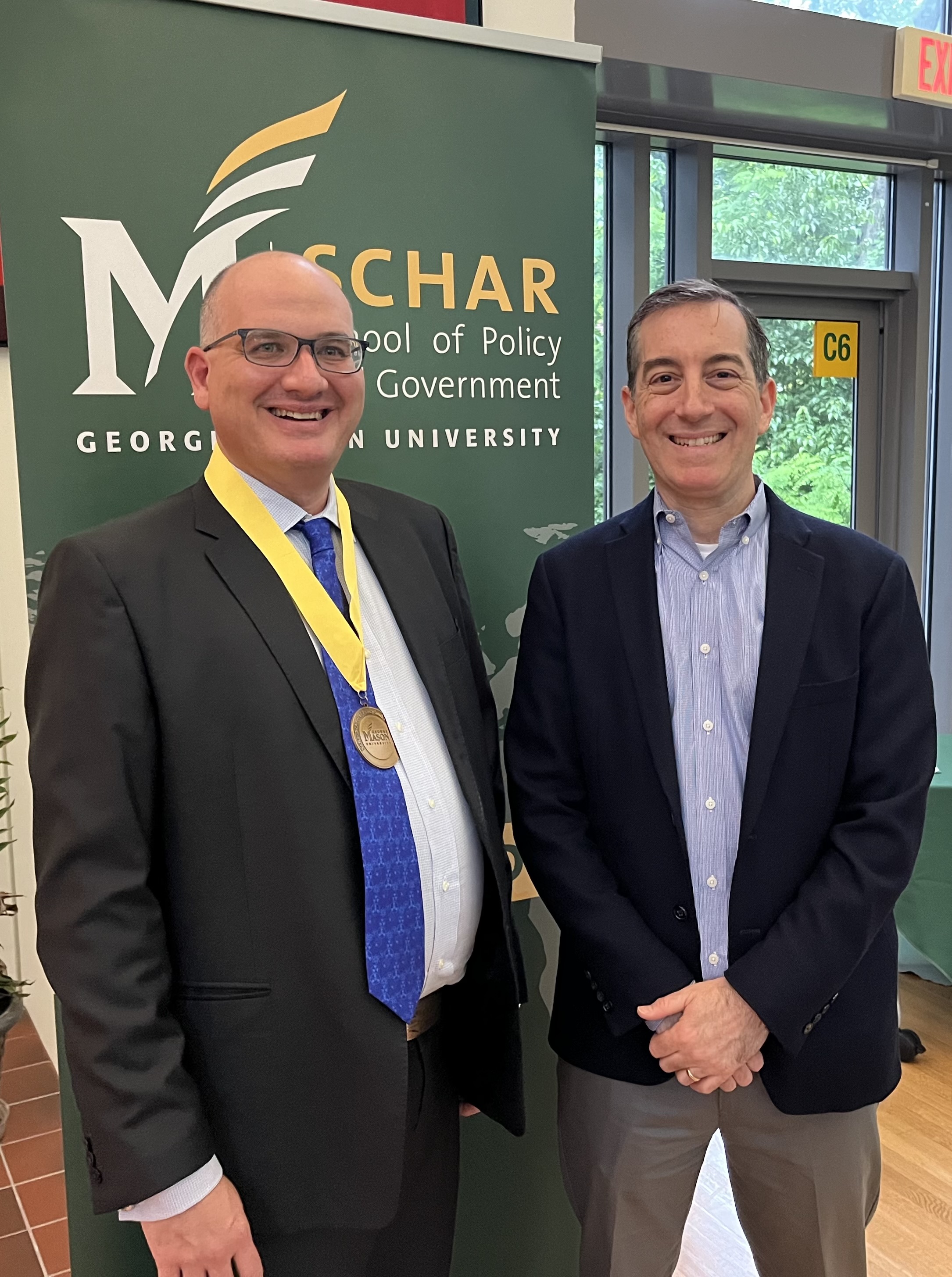
For the second year, the Schar School of Policy and Government at George Mason University received a generous gift from the CBRNE Industry Group, an association of organizations supporting chemical, biological, radiological, nuclear, and explosive defenses, to support the Biodefense Graduate Program. Program director Dr. Gregory Koblentz accepted the award on behalf of the Schar School and Biodefense Program at the CBRNE Industry Group’s annual dinner on May 15. The dinner’s keynote speaker was Rebecca Hersman, director of the Defense Threat Reduction Agency (DTRA).

Congratulations to Graduating Biodefense Students

Congratulations to the newly minted MS in Biodefense students who graduated from the Schar School this week: Abigail Danfora, Theresa Hoang, Emily Johnson, John Kisko, Nick Marko, Geoff Mattoon, Jack Moore, Miranda Nastasi, Brittany Novak, Olivia Parker, Max Towers and Jacob Wellerman. A special congratulations to Nick Marko for receiving the Outstanding Biodefense MS Student Award for his exemplary scholarship and to Olivia Parker for receiving the Frances Harbour Award in recognition of her community leadership in the Biodefense Program.
Biden Administration Moves to Ban Funding for EcoHealth Alliance

Following a tense Congressional hearing and the release of a highly critical select subcommittee interim report earlier this month, the Department of Health and Human Services announced in a letter on Wednesday that it is moving forward with debarment proceedings and implementing a government-wide suspension of federal funding for EcoHealth Alliance. This includes active grants, three of which totaled $2.6 million in NIH funding for EcoHealth Alliance last year. The NIH cited multiple failures on the part of the organization that it first reported three years ago, including EcoHealth’s failure to “promptly report findings from studies on how well bat coronaviruses grow in mice…”

House Select Subcommittee on the Coronavirus Pandemic Chairman Brad Wenstrup (R-OH) said in a statement about the announcement, ‘“EcoHealth Alliance and Dr. Peter Daszak should never again receive a single penny from the U.S. taxpayer. Only two weeks after the Select Subcommittee released an extensive report detailing EcoHealth’s wrongdoing and recommending the formal debarment of EcoHealth and its president, HHS has begun efforts to cut off all U.S. funding to this corrupt organization. EcoHealth facilitated gain-of-function research in Wuhan, China without proper oversight, willingly violated multiple requirements of its multimillion-dollar National Institutes of Health grant, and apparently made false statements to the NIH. These actions are wholly abhorrent, indefensible, and must be addressed with swift action. EcoHealth’s immediate funding suspension and future debarment is not only a victory for the U.S. taxpayer, but also for American national security and the safety of citizens worldwide.”

‘“The Select Subcommittee’s investigation into EcoHealth and the origins of COVID-19 is far from over. Dr. Daszak and his team are still required to produce all outstanding documents and answer the Select Subcommittee’s questions, specifically related to Dr. Daszak’s potential dishonesty under oath. We will hold EcoHealth accountable for any waste, fraud, and abuse and are committed to uncovering any illegal activity, including lying to Congress, NIH, or the Inspector General,” he continued.

EcoHealth Alliance said in a statement that it “is disappointed by HHS’[s] decision today and we will be contesting the proposed debarment. We disagree strongly with the decision and will present evidence to refute each of these allegations and to show that NIH’s continued support of EcoHealth Alliance is in the public interest.”
“China and Medical AI: Implications of Big Biodata for the Bioeconomy”

Caroline Schuerger, Vikram Venkatram, and Katherine Quinn recently published this CSET Issue Brief: “China supports medical artificial intelligence development to achieve bioeconomy leadership. Countries that strategically prioritize medical AI could benefit from an economic advantage and set global norms for future developments. Our new report examines China’s stated goals for medical AI, which range from the collection and protection of vast amounts of biodata, to facilitating research and development, to supporting medical AI commercialization. China’s comprehensive actions to prioritize medical AI development have major implications for U.S. economic and technological competitiveness.”

“China’s Industrial Clusters: Building AI-Driven Bio-Discovery Capacity”

Anna Puglisi and Daniel Chou recently authored this CSET Data Brief: “China is banking on applying AI to biotechnology research in order to transform itself into a “biotech superpower.” In pursuit of that goal, it has emphasized bringing together different aspects of the development cycle to foster multidisciplinary research. This data brief examines the emerging trend of co-location of AI and biotechnology researchers and explores the potential impact it will have on this growing field.”

“China’s Hybrid Economy: What to Do About BGI?”

Anna Puglisi tackles China’s industrial policy and BGI (formerly Beijing Genomics Institute) in this CSET blog post: “As the U.S. government considers banning genomics companies from China in the Biosecure Act, it opens a broader question of how the U.S. and other market economies should deal with China’s national champions. This blog post provides an overview of BGI and how China’s industrial policy impacts technology development.”

“Science and Technology Advisory Mechanism for the Biological Weapons Convention, A Proof-of-Concept Exercise”

From The Interacademy Partnership: “This document encapsulates the insights emanating from the recent ‘Proof of Concept Meeting for a Scientific Advisory Body for the Biological and Toxin Weapons Convention’ (BWC) that IAP hosted in Trieste, Italy, on 27-28 February 2024.”

“The meeting, convened under the auspices of IAP and in coordination with the US National Academies of Sciences, Engineering, and Medicine (NASEM), brought together 38 technical experts from 32 countries. Their deliberations focused on the potential impact of Artificial Intelligence (AI) on global biosecurity and international cooperation within the framework of the BWC. Participants stressed the need for a continuous review process to monitor AI trends, especially its implications for biology relevant to the BWC. The report serves as the report of a putative Science Advisor to the BWC, summing up the expert deliberations from the proof of concept meeting.”

“The release of “Science and Technology Advisory Mechanism for the Biological Weapons Convention, A Proof-of-Concept Exercise”, deriving from the proof of concept meeting, marks a key moment in the journey towards establishing a scientific advisory body for the BWC.”

“Read and download the Biosecurity Report here.”

“USDA, FDA Turf Battles Hamper Responses to Outbreaks Like H5N1 Bird Flu”

Rachel Cohrs Zhang, Lizzy Lawrence, and Nicholas Florko discuss federal agencies’ turf battles in this STAT News piece that includes information derived from interviews with more than 20 former federal officials. They explain in part, “Because H5N1 is currently an animal disease, it’s clearly the USDA’s responsibility to test cattle and get a handle on the outbreak. But already, public health experts are concerned that the scope of that agency’s testing regime is too limited. The department is requiring farmers test only lactating cows before moving them across state lines.”

‘“There needs to be a better understanding of the scope and scale of the problem,” said Stephen Ostroff, a former deputy commissioner in charge of food safety at the FDA. “This seems like it’s not necessarily going to be able to identify problems that could occur within a state.”’

Read more here.

“As Bird Flu Looms, the Lessons of Past Pandemics Take On New Urgency”

John M. Barry discusses lessons learned from the 1918 flu pandemic and other pandemics and their significance as bird flu continues to spread in this New York Times opinion piece. He writes in part, “While much would still have to happen for this virus to ignite another human pandemic, these events provide another reason — as if one were needed — for governments and public health authorities to prepare for the next pandemic. As they do, they must be cautious about the lessons they might think Covid-19 left behind. We need to be prepared to fight the next war, not the last one…Two assumptions based on our Covid experience would be especially dangerous and could cause tremendous damage, even if policymakers realized their mistake and adjusted quickly.”

“Rise of Drug-Resistant Superbugs Could Make COVID Pandemic Look ‘Minor’, Expert Warns”

This piece from The Guardian discusses warnings from Prof Dame Sally Davies, England’s former chief medical officer and the UK’s current special envoy on AMR. It explains, “She paints a bleak picture of what could happen if the world fails to tackle the problem within the next decade, warning that the issue is “more acute” than climate change. Drug-resistant infections already kill at least 1.2 million people a year…“It looks like a lot of people with untreatable infections, and we would have to move to isolating people who were untreatable in order not to infect their families and communities. So it’s a really disastrous picture. It would make some of Covid look minor,” said Davies, who is also the first female master of Trinity College, Cambridge.”

“Dissecting Pandemic-Prone Viral Families, Volume 4: The Pneumoviridae”

This document by Amesh A. Adalja for Johns Hopkins Center for Health Security covers the pandemic threats posed by the Pneumoviridae family: “The Pneumoviridae viral family, formerly a subfamily of Paramyxoviridae, consists of 2 genera: Orthopneumovirus, the members of which infect mammals, and Metapneumovirus, which are specific for either mammals or birds.”

Pneumoviridae poses a largely underappreciated pandemic threat. Only 2 known viral family members infect humans: human respiratory syncytial virus (HRSV, commonly RSV) and human metapneumovirus (HMPV).1 These 2 endemic respiratory viruses confer substantial morbidity and mortality on the human species, particularly among older adults and young children and across different sociodemographic strata.2 If a zoonotic or yet undiscovered viral family member acquired the ability to efficiently infect humans, it could spread prolifically, especially when faced with little immunity”

Read more here.

“Remarks by Dr. Liz Sherwood-Randall Assistant to the President for Homeland Security on Countering Bioterrorism in an Era of Technology Convergence”

Read Liz Sherwood-Randall’s remarks at the Ash Carter Exchange that focus on preventing bioterrorism and threats posed by rapidly advancing biotechnologies. She said in part, “And this frame of “preventive defense” – which identifies what we can do now to prevent far more pernicious threats from emerging in the future – is a guiding principle for me as we face the emergence of a whole new category of “A list” threats at the intersection of biology, engineering, and artificial intelligence.”

“Given my current duties as the President’s Homeland Security Advisor, this is a major concern because of the very real prospect that these technologies – which are largely out “in the wild” rather than controlled by governments – could be accessed and weaponized by terrorists with potentially catastrophic effects.”

“So, I chose to talk with you here today about what we can do to counter biological terrorism and other malicious uses of advances in biotechnology in this era of rapid technology convergence.”

“Getting Down to Science”

This USDA post by Stephanie Jacques discusses the work starting to take shape at the new National Bio and Agro-Defense Facility (NBAF). She writes in part “Science at NBAF is starting in phases. This phased process began with low-risk, common science practices that don’t involve infectious pathogens and is moving to more advanced or mission-focused science in later phases. As NBAF is ramping up science operations in Manhattan, Kansas, its predecessor — the Plum Island Animal Disease Center in New York — will continue protecting American agriculture until NBAF is ready to assume the center’s full mission.”

“Trumping Pandemic Preparedness”

Chelsea Cirruzzo and Ben Leonard recently published this piece in Politico that discusses former President Trump’s promise that, if re-elected, he will abolish the White House’s Office of Pandemic Preparedness and Response Policy. While they explain that he can not entirely get rid of the office on his own, they cover three ways he could undermine the office, including not appointing anyone to run or staff the office, asking Congress to overturn the law it passed creating the office, or reshaping the office to better suit his political interests.

“A ‘Plague’ Comes Before the Fall: Lessons from Roman History”

Colin Elliott discusses the effects of the Antonine plague in this piece, writing in part “The Pax Romana—the 200-year “golden age” of the Roman Empire—was a marvel of diversity, connectivity, and unchallenged hegemony. By the middle of the second century AD, imperial Rome ruled territory across three different continents. Roughly one-quarter of the Earth’s population, some 60 million people, lived under Rome’s vast aegis, and the emperors of the age—most notably Marcus Aurelius—enjoyed the consent of those they governed. The Empire’s elites—witnessing the disciplined legions, widespread religiosity, cultural efflorescence, and dominant economy—likely expected their world order to endure forever.”

“In the year 166 AD, however, seemingly eternal Rome was caught completely off-guard as a deadly novel disease swept across the Eurasian landmass. It ransacked Rome’s cities for at least a decade and preceded centuries of decline. This major biological event—now known as the Antonine plague—appears to have been the world’s first pandemic.”

“Chloropicrin and Its Alleged Use in the Ukrainian War”

JP Zanders breaks down the United States’ accusation that Russia used RCAs and chloropicrin against Ukrainian forces in this post on The Trench: “This three-part blog contribution analyses the publicly available information about RCA and chloropicrin use in the Russo-Ukrainian war. The first part summarises the chemical warfare allegations between 2014 and 2024. Part 2 investigates the reports of chloropicrin use, and the final part discusses how the international community can address the CW allegations through action in the Organisation for the Prohibition of Chemical Weapons (OPCW).”

What We’re Listening To🎧

The Arms Control Poseur, The US and the Chemical Weapons Convention with Laura J. Gross

“On the ninth episode of season 2, William is joined by Laura J. Gross to discuss the completion of the destruction of the US chemical weapons stockpile.”

“In order to understand the current commitments of the United States to the Chemical Weapons Convention (CWC), Laura J. Gross joins William to discuss the completion of the destruction of the US chemical weapons stockpile, which was announced on the 7th of July 2023. This destruction was then verified by the Organisation for the Prohibition of Chemical Weapons (OPCW). In this episode, Ms Gross discusses the challenges that were faced in the destruction of this stockpile, and outlines the achievement itself in light of upholding global norms on arms control and verifiability. However, various challenges remain regarding the implementation of the Convention’s provision, such as the conflict in Gaza, the potential possession of chemical weapons by the Syrian Arab Republic, and the war in Ukraine. Ms Gross explains how the US assists other countries in the destruction of their declared chemical weapons stockpiles. When looking towards the future of the CWC, Ms Gross also touches upon the renewed use of chemical weapons by Syria, Russia, and North Korea and what the US is undertaking to counter the return to such use.”

“Laura J. Gross is the director of the Office of Chemical and Biological Weapons Affairs, Bureau of Arms Control, Deterrence, and Stability, at the United States Department of State, and she is the Executive Director of the US National Authority for the CWC.”

NEW-Pandemic Accord: Partial Failure or Partial Success?

From Brown Pandemic Center: “On 23 May at 12:00PM ET the Pandemic Center will host a webinar titled Pandemic Accord: Partial Failure or Partial Success?”

“Member States of the World Health Organization have been negotiating a new pandemic treaty to address challenges in the response to and sub-optimal international coordination during the Covid-19 pandemic. A vote on the treaty is expected during the upcoming World Health Assembly, taking place 27 May through 1 June. This Pandemic Center webinar will convene an expert panel to assess the strengths and limitations of the current draft of the treaty and its prospects for adoption.”

Learn more and RSVP here.

NEW-Ready or Not 2024: Protecting the Public’s Health from Diseases, Disasters, and Bioterrorism

From TFAH: “Please join Trust for America’s Health (TFAH) for a virtual Congressional briefing and national webinar on our recent report, Ready or Not 2024: Protecting the Public’s Health from Diseases, Disasters, and Bioterrorism.”

“The report identifies gaps in national and state preparedness to protect residents’ health during emergencies and makes recommendations to strengthen the nation’s public health system and improve emergency readiness. As the nation experiences an increasing number of infectious disease outbreaks and extreme weather events, the report found that while emergency preparedness has improved in some areas, policymakers not heeding the lessons of past emergencies, funding cuts, and health misinformation are all putting decades of progress at risk.”

“A panel of subject matter experts will discuss the nation’s readiness for public health emergencies, examine the findings of the report, and discuss key recommendations for policymakers. The briefing will include time for Q&A from the audience.”

This event will take place on May 29 and 2 pm EST. Learn more and register here.

NEW-Optimizing Federal, State, and Local Response to Public Health Emergencies

From NASEM: “The National Academies of Sciences, Engineering, and Medicine’s Committee on Science, Technology, and Law cordially invites you to attend a virtual workshop to examine how legal authorities affected the ability of public health agencies and federal, state, and local governments to respond to the COVID-19 pandemic and explore approaches to ensure a more effective response to future public health crises. The allocation of legal authority has become an issue of immediate relevance as the United States confronts an H5N1 avian influenza outbreak in dairy cattle.”

“The workshop, which will highlight ideas for optimizing the response to future public health emergencies, will be held on Thursday, May 30, 2024 from 12:00 to 5:30 pm U.S. Eastern and Friday, May 31, 2024 from 12:00 to 4:30 pm U.S. Eastern. It will include the following sessions:

1) Optimizing Federal, State, and Local Public Health Preparedness  
2) The COVID-19 Pandemic: What happened? What went right? What went wrong?  
3) Public Health Emergency Authorities: What we know about them and how did we experience them before, during, and after the COVID-19 pandemic? 

  • Case Study I: Pandemic Orders and Religious Liberty
  • Case Study II: New York City Vaccine Mandates: Who Has the Authority?
  • Case Study III: The Experience with Public Health Emergency Authorities Before, During, and After COVID-19
  • Case Study IV: The Future of Public Health Authority at the Federal, State, and Local Level

4) Exploring Routes and Barriers to Effective Public Health Response Efforts During the COVID-19 Pandemic
5) Looking to the Future: Where do we go from here? 
6) Concluding Thoughts from Workshop Planning Committee”

Learn more and register here.

NEW-American Democracy and Health Security Initiative: Lighting a Path Amid Pandemic Polarization

“Please join the Brown University School of Public Health Pandemic Center, the COVID Collaborative, and the CSIS Bipartisan Alliance for Global Health Security for the launch of the American Democracy and Health Security Initiative.”

“The story of how America fared under the Covid-19 pandemic is actually two stories. While the more well-known story is one of failure, confusion, and polarization, the other story is one of American ingenuity amidst profound uncertainty. State and local leaders were at the center of this untold story—in serving their communities they innovated, bridged divides, and illuminated America’s path during the Covid-19 pandemic’s darkest days. The American Democracy and Health Security Initiative spotlights these lamplighters and harvests their hard-won lessons, to ensure the most successful strategies can be sustained or replicated in future crises.”

“On June 5, the American Democracy and Health Security Initiative will publish its findings on what actionable steps are needed to advance our health security for the future. The event will feature leaders from across the country from Governors, advisors, and health leaders to community organizations, educators, businesses, and crisis managers. We will discuss urgent opportunities to make the country more resilient against future threats to our health security and to our democracy and identify national and local innovations that must be retained and playbooks that are needed to reinvigorate leadership, bipartisanship, and equitable access in the face of the next health emergency in America.”

This event will take place on June 5 at 2 pm ET. Register here.

Getting Ahead of Avian Influenza: Why Organizations Need to Prepare Today

From Bluedot: “Highly Pathogenic Avian Influenza A(H5N1), commonly referred to as bird flu, has been making headlines around the world, as the virus rapidly spreads to new animal species. Already the cause of a panzootic (global animal pandemic), last month a human H5N1 case was reported in the U.S. after likely contracting it from infected dairy cattle. The virus has now been detected in dairy herds across multiple states, with evidence to suggest it has been spreading more widely than previously thought — begging the question: Are we at risk for an avian influenza-instigated pandemic?”

“Join us for a deep dive into avian influenza as we explore why and how organizations should prepare to safeguard against bird flu. Together, through collaborative efforts and informed decision-making, we can mitigate the risk of increased transmission to humans. BlueDot’s experts have been closely monitoring the situation and potential risks, issuing multiple alerts on H5N1 — and other avian influenzas — over the past 15 months.”

This event will take place on May 23, at 11 am ET. Learn more and register here.

Addressing the Challenges Posed by Chemical and Biological Weapons: Intensive Online Introductory Course for Students of Technical Disciplines

“SIPRI and the European Union Non-Proliferation and Disarmament Consortium (EUNPDC) invite graduate and postgraduate students of the technical or natural science disciplines to apply for an intensive online introductory course on chemical and biological weapons—their proliferation, the efforts to eliminate them, the various mechanisms used to control their spread—and endeavours underway to reduce the risk of chemical or biological agents in terrorist attacks. The course will take place online, during four half-days on 2831 May 2024, 14:00 to 18:00 Central European Summer Time (CEST).”

“The course will cover the fundamentals of chemical and biological weapons as well as of missiles and other means of delivery; the history of chemical and biological warfare; the evolution of international norms against these weapons; the threats associated with potential terrorist uses of chemical and biological material; bioweapons and other related scientific advances; the current challenges posed by chemical weapons; arms control treaties; and mechanisms to curb the spread of dangerous substances, including export controls.”

“The course will also discuss the role of the EU institutions and industry to address the challenges mentioned above. The course will be instructed by renowned experts on non-proliferation, arms control, disarmament, export controls, verification and related subjects from SIPRI, other European research centres, think tanks and international organizations.”

Learn more and apply here.

Registration for GHS 2024 Now Open

Registration is now open for the Global Health Security 2024 conference in Sydney, Australia. This iteration will take place 18-21 June, 2024. The call for abstracts is also still open. “The mission of the Global Health Security conference is to provide a forum where leaders, researchers, policy-makers, and representatives from government, international organisations, civil society, and private industry from around the world can engage with each other, review the latest research and policy innovations, and agree solutions for making the world safer and healthier. To that end, our mission is to help foster a genuinely multidisciplinary community of practice that is committed to working collaboratively to enhance global health security and eliminate disease, irrespective of its origin or source.”

SBA.3 International Synthetic Biology, and Biosecurity Conference in Africa

“Join us for the SBA.3 International Synthetic Biology and Biosecurity Conference in Africa, a groundbreaking event that brings together experts, researchers, and enthusiasts in the field of synthetic biology. This in-person conference will take place at the Laico Regency Hotel from Wed, Jul 17, 2024 to Friday, Jul 19, 2024.”

“Get ready to dive into the exciting world of synthetic biology and explore its potential applications in Africa. From cutting-edge research to innovative solutions, this conference offers a unique opportunity to learn, network, and collaborate with like-minded individuals.”

“Discover the latest advancements, trends, and challenges in synthetic biology through engaging keynote speeches, interactive workshops, and thought-provoking panel discussions. Immerse yourself in a vibrant atmosphere where ideas flow freely and new connections are made.”

“Whether you’re a seasoned professional or just starting your journey in synthetic biology, this conference provides a platform to expand your knowledge, exchange ideas, and contribute to the growth of the field in Africa.”

“Don’t miss out on this extraordinary event that promises to shape the future of synthetic biology and biosecurity in Africa. Mark your calendars and join us at the SBA.3 International Synthetic Biology and Biosecurity Conference in Africa!”

Learn more and register here.

IBBIS Announces The Common Mechanism

The International Biosecurity and Biosafety Initiative for Science (IBBIS) recently launched The Common Mechanism, “An open-source, globally available tool for DNA synthesis screening.” The organization explains on its website that “The Common Mechanism helps providers of synthetic DNA and RNA to effectively screen orders to prevent synthesis technology from being exploited. We provide free, distributed, open-source, automated software for screening sequences of nucleic acids (including DNA and RNA) as well as resources to facilitate customer screening.”

Learn more and access the tool here.
Pandora Report 4.19.2024

This week’s edition of the Pandora Report covers GMU’s opening of the Mason Autonomy and Robotics Center, the United States’ latest Global Health Security Strategy, WHO’s new definitions for airborne pathogens, and more. New publications, upcoming events, and job openings are also included.

GMU College of Engineering and Computing Opens Mason Autonomy and Robotics Center

George Mason University’s College of Engineering and Computing formally opened the Mason Autonomy and Robotics Center (MARC) this week at an event on the University’s campus in Fairfax, VA. In his remarks at the event, Dean Ken Ball told the crowd “MARC is the focal point for our research in autonomy, robotics, and AI. Mason truly is a pace-setter in these areas.”

Both Ball and University President Gregory Washington noted that in addition to being a leader in AI, the university is focusing on responsible AI, with a graduate certificate in that field launching in fall 2024.

Learn more about MARC and GMU’s focus on responsible AI and other technologies here.

White House Releases Latest Global Health Security Strategy

This week, the Biden administration launched the new U.S. Global Health Security Strategy (GHSS), which broadly calls for a whole-of-government, science-based approach to strengthening global health security. In a statement, the White House said “Building on progress achieved since 2019 and incorporating lessons from the COVID-19 pandemic, the Global Health Security Strategy lays out a path to deliver on the goals in the 2022 National Biodefense Strategy and Implementation Plan and the bipartisan Global Health Security and International Pandemic Prevention, Preparedness and Response Act of 2022, which was enacted as part of the James M. Inhofe National Defense Authorization Act for Fiscal Year 2023. ­It places county-driven action, equity, and inclusion at its core to ensure the world is better prepared to prevent and respond to health emergencies, including pandemics. The Strategy also envisions using United States leadership to drive global action toward shared goals, including stronger investment and commitment by other countries.”

The GHSS sets three main goals to guide the country’s global health security agenda:

  1. “Strengthen global health security capacities through bilateral partnerships”
  2. “Catalyze political commitment, financing, and leadership to achieve health security,” and
  3. “Increase linkages between health security and complementary programs to maximize impact”

Read the summary of these goals and the overall strategy here.

WHO Updates Terminology for Pathogens That Transmit Through the Air

The WHO announced changes to how it defines airborne transmission and other related terms this week. In a statement, the Organization said “Following consultation with public health agencies and experts, the World Health Organization (WHO) publishes a global technical consultation report introducing updated terminology for pathogens that transmit through the air. The pathogens covered include those that cause respiratory infections, e.g. COVID-19, influenza, measles, Middle East respiratory syndrome (MERS), severe acute respiratory syndrome (SARS), and tuberculosis, among others.”

“The publication, entitled “Global technical consultation report on proposed terminology for pathogens that transmit through the air”, is the result of an extensive, multi-year, collaborative effort and reflects shared agreement on terminology between WHO, experts and four major public health agencies: Africa Centres for Disease Control and Prevention; Chinese Center for Disease Control and Prevention; European Centre for Disease Prevention and Control; and United States Centers for Disease Control and Prevention. This agreement underlines the collective commitment of public health agencies to move forward together on this matter.”

This document, among other things, explains that the term “through the air” may be used in reference to infectious diseases “where the main type of transmission involves the pathogen travelling through the air or being suspended in the air, in line with other terms such as “waterborne” diseases, which are understood across disciplines and by the public.”

As Reuters explains, “Agencies have historically required high levels of proof before calling diseases airborne, which required very stringent containment measures; the new definition says the risk of exposure and severity of disease should also be considered. Past disagreements also centred around whether infectious particles were “droplets” or “aerosols” based on size, which the new definition moves away from.”

NIH Revises Guidelines for Research Involving Recombinant or Synthetic Nucleic Acid Molecules

The NIH recently published revisions to NIH Guidelines to outline biosafety practices for research involving gene drive modified organisms (GDMOs) in contained research settings. The revisions include:

  • “Specifying the minimum containment requirement for research involving GDMOs;
  • Articulating considerations for risk assessment and additional responsibilities for Institutional Biosafety Committees (IBCs) and Biosafety Officers”.

The revised version is now available here.

“Opinion: The Next Pandemic Threat Demands Action Now”

Jaime M. Yassif recently published this piece with CNN, writing in her introduction “The headlines are concerning: “Highly pathogenic avian influenza found in Texas, Kansas dairy cattle.” “Bird flu detected in dairy worker.” “First human case of avian flu in Texas raises alarm.” Could this be how the next pandemic begins? Well, so far US officials are saying they believe there is minimal risk to the public from the latest iteration of bird flu.”

“But with growing evidence of potential mammal-to-mammal spread just weeks after the new bird flu was detected in cows, many of us in the biosecurity and pandemic preparedness community believe that leaders in capitals around the globe should be working to get ahead of this new public health threat in case the H5N1 flu virus gains the ability to spread among humans.”

“H5N1 Bird Flu in U.S. Cattle: A Wake-Up Call to Action”

Luciana Borio and Phil Krause recently published this opinion piece with STAT News, in which they explain “Comparisons to seasonal flu management underestimate the unique challenges posed by H5N1. Unlike its seasonal counterparts, vaccines produced and stockpiled to tackle bird flu were not designed to match this particular strain and are available in such limited quantities that they could not make a dent in averting or mitigating a pandemic, even if deployed in the early stages to dairy workers. The FDA-approved H5N1 vaccines — licensed in 2013, 2017, and 2020 — do not elicit a protective immune response after just one dose. Even after two doses, it is unknown whether the elicited immune response is sufficient to protect against infection or severe disease, as these vaccines were licensed based on their ability to generate an immune response thought to be helpful in preventing the flu.”

The Outbreak Atlas

Rebecca Katz and Mackenzie S. Moore recently published this book: “Designed for the general public, this book provides an overview of outbreak activities alongside more than 100 engaging case studies and visuals to guide readers through the complexity involved in outbreak preparedness, response, and recovery and the many fields involved.”

“Outbreak Atlas lifts the curtain on the rationale and interconnectedness of outbreak responses across different fields and at various levels, presenting accessible information that ensures a shared understanding of the essential activities to control an outbreak.”

Learn more and purchase here.

“WHO Technical Advisory Group on the Responsible Use of the Life Sciences and Dual-Use Research (‎TAG-RULS DUR)‎:  Report of the Inaugural Meeting, 24 January 2024”

From WHO: “The Technical Advisory Group on the Responsible Use of the Life Sciences and Dual-Use Research (TAG-RULS DUR) was established in November 2023 to provide independent advice to WHO including on technical and strategic advice relevant to the monitoring and mitigation of biorisks, advances in the life sciences and related technologies, the governance of dual-use research and the responsible use of the life sciences.”

“On 24 January 2024, eighteen members of the TAG-RULS DUR virtually met to introduce TAG-RULS DUR members; to discuss current and future activities related to the responsible use of the life sciences and dual-use research; and to share the members’ perspectives and visions on the work ahead.”

Read the report here.

“Global Partnership Against the Spread of Weapons and Materials of Mass Destruction, Newsletter Issue No. 15, April 2024”

The Global Partnership Against the Spread of Weapons and Materials of Mass Destruction’s latest newsletter has several items of interest, including discussion of the recent creation of the Countering WMD Disinformation Initiative and the new home of the Global Partnership 1540 Assistance Support Initiative Database. Give the newsletter a read and subscribe here.

“The State of Compliance with Weapons of Mass Destruction-Related Treaties”

Shannon Green and Christine Parthemore recently authored this piece for the Council on Strategic Risks, explaining in their introduction “Every year, the US Department of State is mandated to provide an update to Congress on compliance with core treaties that focus on addressing weapons of mass destruction (WMD) risks: the Chemical Weapons Convention (CWC), the Biological Weapons Convention (BWC), and a host of agreements pertaining to nuclear weapons, including the New START Treaty, Nuclear Non-Proliferation Treaty, Threshold Test Ban Treaty, and nuclear testing moratoria. This post highlights a few key updates from these compliance reports, and examples of the many things the US government is pursuing to address these threats, with the greatest emphasis on the treaties banning chemical and biological weapons. On the whole, the reports show that most nations abide by these treaties, though the nations certified in non-compliance and those for which there is insufficient information to make a compliance determination, demonstrate increasingly troublesome developments such as the pursuit of dual-use programs.”

“NATO Releases First International Strategy on Biotechnology and Human Enhancement Technologies”

“NATO Allies broke new ground by adopting the first international strategy to govern the responsible development and use of biotechnologies and human enhancement technologies at a meeting of Allied Defence Ministers in February. On Friday (12 April 2024), NATO released a public version of the strategy.”

Read more here.

“Technological Risks Are Not the End of the World”

Jack Stilgoe, a sociologist, recently published this piece in Science discussing the risk AI and other technologies pose to humanity, writing in part “Sociologists have found that, when it comes to science and innovation, distance normally lends enchantment. Those on the fringes of innovation may see technology as magical, but the people who see it up close understand the messy reality. With AI, even the people nearest the technology seem in thrall to it. Hinton explained to me his surprise at the giant leaps made by the large language models that his research has helped enable: “it’s very exciting. It’s very nice to see all this work coming to fruition. But it’s also scary.” He, like other AI researchers, cannot fully explain how the machines do what they do and is troubled by the implications. Last year, Hinton stepped down from his role at Google and chose to speak out about what he saw as the existential dangers of AI.”

‘Astrobiodefense:’ Thinktank Calls for Defending Earth From Space Bugs”

In this piece for Space Insider, Leonard David discusses recent work done by members of the Bipartisan Commission on Biodefense focused on potential biodefense threats posed by space exploration. He writes in part “While many debate the possibility of advanced, intelligent life elsewhere, few consider the probability of non-intelligent alien microorganisms. These life forms could exist on other planets or moons, hitchhike on spacecraft, or move through the universe in the asteroids they inhabit.”

“They [there] could also be Earth microbes that mutate or evolve in response to the stress of spaceflight, becoming more virulent, resistant, or invasive. Either would seriously threaten the public health, safety, and security of humans, animals, and plants operating in space or living on Earth,” they noted.”

NEW-BWC: Scientific and Technological Advisory Mechanism

From UNIDIR: “The Friends of the Chair, together with UNIDIR and UNODA, are organizing an informal webinar on a BWC scientific and technological advisory mechanism. This webinar is intended to support ongoing activities of the BWC Working Group and stimulating thinking and discussion around a mechanism during the intersessional period. The event will consist of an expert panel followed by a moderated question-and-answer session with the audience.”

This online event will take place on April 25, 13:15-14:45 CEST. Learn more and RSVP here.

ICYMI: Capitol Hill Steering Committee on Pandemic Preparedness and Health Security, Preventing and Preparing for the Next Pandemic: A Focus on Funding Priorities

From the Johns Hopkins Center for Health Security: “The panel discussion, moderated by Anita Cicero, discussed highlights from the finalized FY 2024 funding bills and looked ahead to appropriations for FY 2025 and beyond. It considered the priorities laid out in the recently released President’s Budget Request and discussed how sustainable investments in preparedness can lead to tangible improvements in our nation’s health security.”

Watch here.

Industry Summit 2024: Partners for a Resilient Future

From ASPR’s Office of Industrial Base Management and Supply Chain (IBMSC): “Join industry and government partners in exploring federal opportunities for industry engagement aligned with ASPR’s strategic vision and organizational priorities for industrial base management and the public health and health care supply chain.”

This in-person event will take place on April 22, in Washington, DC. Learn more and register here.

3rd International Biosecurity Virtual Symposium

From ABSA: “The Symposium will bring together biosecurity professionals from a wide range of disciplines with varying expertise to share their experiences and knowledge on diverse biosecurity topics. The Symposium will offer attendees an opportunity to learn the latest in biosecurity and have thought-provoking conversations about real-world biosecurity issues, concerns, and scenarios.”

This symposium will take place May 7-8. Learn more and register here.

Addressing the Challenges Posed by Chemical and Biological Weapons: Intensive Online Introductory Course for Students of Technical Disciplines

“SIPRI and the European Union Non-Proliferation and Disarmament Consortium (EUNPDC) invite graduate and postgraduate students of the technical or natural science disciplines to apply for an intensive online introductory course on chemical and biological weapons—their proliferation, the efforts to eliminate them, the various mechanisms used to control their spread—and endeavours underway to reduce the risk of chemical or biological agents in terrorist attacks. The course will take place online, during four half-days on 2831 May 2024, 14:00 to 18:00 Central European Summer Time (CEST).”

“The course will cover the fundamentals of chemical and biological weapons as well as of missiles and other means of delivery; the history of chemical and biological warfare; the evolution of international norms against these weapons; the threats associated with potential terrorist uses of chemical and biological material; bioweapons and other related scientific advances; the current challenges posed by chemical weapons; arms control treaties; and mechanisms to curb the spread of dangerous substances, including export controls.”

“The course will also discuss the role of the EU institutions and industry to address the challenges mentioned above. The course will be instructed by renowned experts on non-proliferation, arms control, disarmament, export controls, verification and related subjects from SIPRI, other European research centres, think tanks and international organizations.”

Learn more and apply here.

Registration for GHS 2024 Now Open

Registration is now open for the Global Health Security 2024 conference in Sydney, Australia. This iteration will take place 18-21 June, 2024. The call for abstracts is also still open. “The mission of the Global Health Security conference is to provide a forum where leaders, researchers, policy-makers, and representatives from government, international organisations, civil society, and private industry from around the world can engage with each other, review the latest research and policy innovations, and agree solutions for making the world safer and healthier. To that end, our mission is to help foster a genuinely multidisciplinary community of practice that is committed to working collaboratively to enhance global health security and eliminate disease, irrespective of its origin or source.”

SBA.3 International Synthetic Biology, and Biosecurity Conference in Africa

“Join us for the SBA.3 International Synthetic Biology and Biosecurity Conference in Africa, a groundbreaking event that brings together experts, researchers, and enthusiasts in the field of synthetic biology. This in-person conference will take place at the Laico Regency Hotel from Wed, Jul 17, 2024 to Friday, Jul 19, 2024.”

“Get ready to dive into the exciting world of synthetic biology and explore its potential applications in Africa. From cutting-edge research to innovative solutions, this conference offers a unique opportunity to learn, network, and collaborate with like-minded individuals.”

“Discover the latest advancements, trends, and challenges in synthetic biology through engaging keynote speeches, interactive workshops, and thought-provoking panel discussions. Immerse yourself in a vibrant atmosphere where ideas flow freely and new connections are made.”

“Whether you’re a seasoned professional or just starting your journey in synthetic biology, this conference provides a platform to expand your knowledge, exchange ideas, and contribute to the growth of the field in Africa.”

“Don’t miss out on this extraordinary event that promises to shape the future of synthetic biology and biosecurity in Africa. Mark your calendars and join us at the SBA.3 International Synthetic Biology and Biosecurity Conference in Africa!”

Learn more and register here.

Job Openings at the Institute for Progress

Senior Biotechnology Fellow

“Our biotechnology portfolio explores how we can advance policies that improve U.S. state capacity to accelerate and shape promising innovations in biotechnology and biotechnology governance. Innovations in biology may finally deliver cures to HIVmalariainfluenza, and some cancers. New AI models are unfolding the secrets of the molecular world before our eyes. Spurred by the urgency of the pandemic, we are now closer than ever before to developing technologies to prevent future such outbreaks.”

“Biotechnology fellows are expected to have a keen interest in these issues. Under the guidance of the IFP team, they will explore and become experts in specific biotechnology topics, both from a technology and policy perspective. Fellows will interact with policymakers, write articles and white-papers, and more. We encourage fellows to pursue creative routes that they think might have significant counterfactual policy impact.”

Biotechnology Fellow

“Biotechnology fellows are expected to have a keen interest in these issues and the ways the U.S. government supports and oversees them. Under the guidance of the IFP team, they will explore and become experts in specific biotechnology topics, both from a technical and policy perspective. Fellows will interact with policymakers, write articles and white papers, and more – we encourage fellows to pursue creative routes that they think might have significant counterfactual policy impact.”

Learn more and apply to these positions here.

Job Opening at Blueprint Biosecurity

“Blueprint Biosecurity is seeking a full-time Program Director to build and lead our portfolio of work on personal protective equipment (PPE). We are seeking a proactive leader who thrives in a dynamic and evolving environment. You will have a high degree of autonomy to design and steer a pioneering program that aims to advance the state of PPE for pandemic prevention. This effort will build on the roadmap for Pandemic Proof PPE, developing goals and objectives to translate our ambitious vision into tangible outcomes. A successful candidate will be excited about building an effort from the ground up and willing to pivot and iterate to find ways to succeed.”

“In this role, you will be working collaboratively with other teams within and external to Blueprint Biosecurity. The ideal candidate will have excellent interpersonal abilities and strong skills in project management, strategic prioritization, research, and analysis.”

Learn more and apply here.

Job Openings at NTI

(NTI | bio), Focus: Biosecurity Dialogue

“NTI is seeking a Senior Program Officer or Director (title to be determined based on candidate experience) to join the Global Biological Policy and Programs team. The selected candidate will help lead NTI | bio efforts to bolster biosecurity in countries around the world, among other areas of focus. This position reports to the NTI Vice President for Global Biological Policy and Programs. This is a full-time hybrid position, working a minimum of three days a week in our Washington, DC office.”

Senior Program Officer/Director, Global Biological Policy and Programs (NTI | bio), Focus: Biotech Governance

“NTI is seeking a Senior Program Officer or Director (title to be determined based on candidate experience) to join the Global Biological Policy and Programs team. This position reports to the NTI Vice President for Global Biological Policy and Programs. The selected candidate will help lead NTI | bio efforts to strengthen biotechnology governance. This is a full-time hybrid position, working a minimum of three days a week in our Washington, DC office.”

Learn more and apply to these positions here.

Pandora Report 10.16.2015

What a busy week in the world of biodefense! First, let’s give a round of applause for Global Handwashing Day (and now, go wash your hands!). This week we saw a nurse from the UK experience Ebola-associated complications months after her recovery. The CDC released a report stating that 17 states exceeded their recommendations for Ebola screening/monitoring and a recent study discussed vaccination rates and herd immunity. Let’s not forget that we’ve got another segment on 2016 Presidential candidate chatter on nonproliferation, a call for papers, and an open house on GMU’s Master’s program. Grab your morning coffee/tea and let’s explore this week’s biodefense news!

Global Handwashing Day 
Global Handwashing Day was Thursday, October 15th, but really we should be celebrating it every day! It may seem like a simple thing but the truth is that hand hygiene is one of the most important things you can do to prevent the spread of infection. Whether it’s a hospital-acquired infection or avoiding illness in the workplace, hand hygiene is the first line of defense. The WHO estimates that hand hygiene, just in healthcare, saved millions of lives in the last years. The CDC even calls it the “do-it-yourself” vaccine – five simple steps (wet, lather, scrub, rinse, dry) to help prevent the spread of infections. Many people think it’s a small or “easy” thing, but coming from an infection preventionist, it’s the small things that make the biggest difference. You’d be surprised how many organisms we carry around on our hands and on fomites, so using alcohol-based hand sanitizer or washing with soap and water is the only way to get rid of those. University of Arizona professor, Dr. Gerba, (we lovingly referred to him as Dr. Germ – funny enough, he even gave one of his children the middle name of Escherichia!) has focussed much of his research on the household and public objects we may not realize are covered in germs. Perhaps the most important take-away from Global Handwashing Day isn’t just its importance in healthcare, but its role as an important part of disease prevention everywhere. In the U.S.  we’re fortunate to have access to the resources that allow us to have phenomenal hand hygiene practices however, it’s the behavior we tend to fall short on. From today forward, I encourage you to make a personal decision to be vigilant in hand hygiene.

Last Call for Papers – Women’s Health in Global Perspective!
Papers sought for a special issue and workshop of World Medical & Health Policy on “Women’s Health in Global Perspective,” to contribute to understanding and improve policy related to women’s health and wellbeing.  Forces ranging from the economic to the climactic have human repercussions whose genesis and solutions demand consideration of their global context.  A wealth of recent research and inquiry has considered the particular plight of women, who often suffer disproportionately from lack of education, compromised nutrition, poverty, violence and lack of job opportunities and personal freedom.  The Workshop on Women’s Health in Global Perspective will consider the broad ranging social determinants of health on a global scale that importantly influence health outcomes for women everywhere, which in turn has implications for economic, political and social development.
Abstract submission deadline (250 words): October 16, 2015 Contact: Bonnie Stabile, Deputy Editor, bstabile@gmu.edu
Notification of selected abstracts: November 13, 2015

Presidential Candidates on Nonproliferation Part II
GMU’s Greg Mercer has put together a wonderful second part to his series on one of our favorite topics (nonproliferation) and what the 2016 presidential candidates are saying about it. Check out Greg’s review of these candidates’ stance so we can track how they might change over the course of the election.

west-africa-distribution-map
Source: CDC

Updates and Mapping Ebola
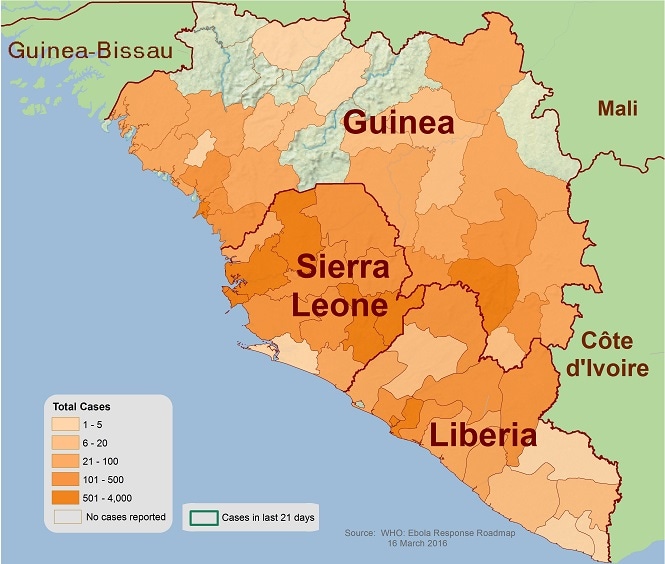
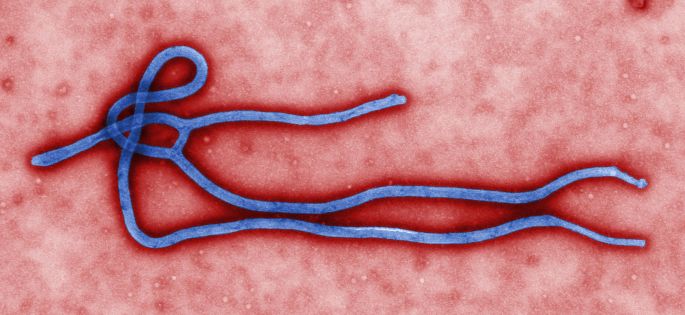
BBC recently published a nice overview of the Ebola outbreak in West Africa. Since the first case 18 months ago, it has been a whirlwind, in more ways than one, for those of us in the public health/global health security world. Cheerfully, the outbreak region has officially gone two weeks without a new case! Unfortunately, Pauline Cafferkey, the Scottish nurse who was treated and recovered from Ebola in December of 2014, is in critical condition due to a late Ebola-related complication. It was just released that her complications are neurological, including severe central nervous system (CNS) disorder and that the virus was detected in her spinal fluid. Scottish public health officials did identify 58 close contacts and offered them the SV-EBOV vaccine.

Master’s Open House
Learn more about the GMU School of Policy, Government, and International Affairs Masters’ programs on Wednesday, October 21, 2015 at 6:30pm at our Arlington Campus, Founders Hall, Room 126. This informational sessional will discuss our Master’s programs ranging from Public Administration, Biodefense, Political Science, Health and Medical Policy, etc.

Imported Measles and Need for Vaccination –This past week at the IDWeek 2015 meeting, scientists reported on a study reviewing measles vaccination rates in the US and susceptible children in relation to the number of measles cases that have occurred. They noted, “this analysis highlights the need for high measles vaccination coverage to support population-level immunity and prevent reestablishment of indigenous measles transmission in the United States.” The Daily Beast also incorporated this into an article on diminishing herd immunity and anti-vaxxers.

Avian Influenza Vaccine Added to National Veterinary Stockpile
APHIS (United States Department of Agriculture’s Animal and Plant Health Inspection Services) awarded contracts to two companies to ensure manufacturing of the vaccine for avian influenza. The goal is to strengthen the Agency National Veterinary Stockpile. “This action is being taken to develop the Agency’s National Veterinary Stockpile., and does not signal a decision to vaccinate for highly pathogenic avian influenza (HPAI). While APHIS has not approved the use of vaccine to respond to HPAI, the Agency is preparing to ensure that vaccine is available should the decision be made to use it during a future outbreak.”

Stories You May Have Missed:

  • International Infection Prevention Week is next week! October 18-24, 2015 will celebrate the importance of infection prevention and control in healthcare. Let’s celebrate by not just washing our hands, but also considering all the small ways we can prevent the spread of germs in our homes and workplaces!
  • Salmonella Cucumber Outbreak – The CDC has released new data on the Salmonella Poona outbreak related to imported Mexican cucumbers. As of October 14th, there have been 757 people infected across 36 states and 4 deaths related to the outbreak.
  • DHS Wants to Revive Terrorism Alert System – In wake of the attacks in Chattanooga, President Obama’s security officials are initiating a review of the nation’s terrorism alert system to support what many consider a growing threat of domestic attacks. DHS wishes to revise and restart the National Terrorism Alert System to better respond to these evolving attacks.

THIS WEDNESDAY: November Biodefense Policy Seminar

Title: Pathway to Civilian Medical Countermeasure (MCM) Requirement Setting and Utilization
Speaker: Richard I. Jaffe, M.S., Ph.D., MT(ASCP), Director, Medical Countermeasures, Strategy, & Requirements , Office of the Assistant Secretary for Preparedness and Response , U.S. Department of Health and Human Services (HHS)
Date: Wednesday, November 5, 2014
Time: 7:30 – 9:00pm; food will be served at 7:00pm
Location: Research Hall 163, George Mason University, Fairfax, VA
Dr. Richard Jaffe is an internationally recognized subject matter expert in the field of chemical, biological, radiological and nuclear defense issues with almost 30 years of technical and operational experience in government, academia, military, and industry.

Dr. Jaffe was the scientific lead for the Federal Bureau of Investigation’s AMERITHRAX case in 2001-2003 while working at Commonwealth Biotechnologies, Inc. in Richmond VA. There he led a scientific team that developed the molecular assays that provided the FBI the crucial scientific evidence to proceed in their investigation. From 2006-2012, as the Senior Medical Advisor to the Office of the Assistant Secretary of Defense for Nuclear and Chemical and Biological Defense/Chemical and Biological Defense Programs at the Pentagon, he helped lead, guide, and integrate the Department of Defense’s (DoD) policies in areas such as medical countermeasures (MCM), diagnostics, public health, and biosurveillance.

Dr. Jaffe is currently the Director of the Division of Medical Countermeasures, Strategy, and Requirements in the Office for Policy and Planning, Office of the Assistant Secretary for Preparedness and Response at HHS. The Division leads the efforts to develop policy initiatives, planning and analysis, activities for storage, dispensing, administration, etc., and requirements for MCM that help protect the U.S. civilian population during public health emergencies.

Dr. Jaffe received a Ph.D. in Microbiology and Immunology from Medical College of Virginia, a M.S. in Human Genetics from George Washington University, and a B.S. in Microbiology from the University of Maryland. He is a board certified Medical Technologist and served honorably in the United States Air Force before separating at the rank of Major.

Mark Your Calendars: October 2014 Biodefense Policy Seminar

Title: The Future of Weapons of Mass Destruction in 2030
Speakers: John P. Caves, Jr. and Dr. W. Seth Carus
Date: Wednesday, October 22, 2014
Time: 7:30 – 9:00pm; food will be served at 7:00pm
Location: Merten Hall 1202, George Mason University, Fairfax Campus

Nuclear weapons are likely to play a more significant role in an increasingly multipolar global system, and technological advances will enable new forms of chemical and biological weapons. The proliferation and use of these weapons could be harder to prevent. To discuss the impact of technological change and the evolving geopolitical environment on the future of weapons of mass destruction, this Biodefense Policy seminar will feature John P. Caves, Jr., and Dr. W. Seth Carus of the Center for the Study of Weapons of Mass Destruction at National Defense University.

October BPS CavesJohn P. Caves, Jr., is the Deputy Director of the Center for the Study of Weapons of Mass Destruction and a Distinguished Research Fellow at the National Defense University. He joined the Center in 2003, where nuclear and chemical weapons matters have been the principal focus of his work. Prior to joining the Center, Mr. Caves served as the Deputy Director for Counterproliferation Policy in the Office of the Secretary of Defense (OSD). From 1997 to 1999, he was the Country Director for Turkey, Spain, and Cyprus in the Office of European Policy, OSD. From 1986 to 1997, he served in a variety of positions within the Defense Security Assistance Agency and in the Office of the Defense Adviser, U.S. Mission to the North Atlantic Treaty Organization.

October BPS CarusDr. W. Seth Carus is a Distinguished Research Fellow in the Center for the Study of Weapons of Mass Destruction at NDU. His research focuses on issues related to biological warfare, including threat assessment, biodefense, and the role of the Department of Defense in responding to biological agent use. From 2001 to 2003, Dr. Carus was detailed to the Office of the Vice President, where he was the Senior Advisor to the Vice President for Biodefense. Before assuming that position, he was on the staff of the National Preparedness Review commissioned to recommend changes in homeland security organization and support the Office of Homeland Security while it was being established. Prior to joining NDU, Dr. Carus was a research analyst at the Center for Naval Analyses, a member of the Policy Planning Staff in OSD Policy, and a research fellow at the Washington Institute for Near East Policy.

The Biodefense Policy Seminars are monthly talks focused on biodefense and biosecurity broadly conceived. Free and open to the public they feature leading figures within the academic, security, industry, and policy fields.

Dr. Gregory Koblentz on Background Briefing with Ian Masters

KoblentzLast week, Dr. Gregory Koblentz, Deputy Directory of the GMU Biodefense Program was interviewed on Background Briefing with Ian Masters to discuss the ongoing Ebola outbreak in West Africa. He covers the role of the Pentagon in combating the disease in Liberia and the virulence of Ebola that was weaponized as a biological weapon in the former Soviet Union.

You can listen to the interview here.

September 2014 Biodefense Policy Seminar

Title: Biosurveillance and the Atypical Epidemic: The 2014 West African Ebola Epidemic
Speaker: Dr. Michael Smith, Director of the Critical Reagents Program (CRP) within the Medical Countermeasure Systems Joint Project Management Office, Department of Defense
Date: Wednesday, September 17, 2014
Time: 7:30 – 9:00pm; food will be served at 7:00pm
Location: George Mason University, Fairfax Campus, Research Hall 163

September BPSDr. Michael Smith is the Director of the Critical Reagents Program (CRP) within the Medical Countermeasure Systems Joint Project Management Office (MCS JPMO) headquartered at Fort Detrick, Maryland. In this role, he manages the characterization, production, and distribution of reagents and consumables employed on deployed platforms and those under development by other programs.

Previously, he served in the United States Army’s 75th Ranger Regiment. He has also held several positions at the Defense Threat Reduction Agency (DTRA), including senior science and technology manager and most recently, acting division chief, Diagnostic and Disease Surveillance Division of the Joint Science and Technology Office. In December 2011, Dr. Smith became the director of the CRP within the Chemical Biological Medical Systems (CBMS) JPMO where he continued to serve through the transition of CBMS into the MCS JPMO. Mr. Smith assumed his current role as Director of the CRP in June 2013.

Dr. Smith earned a bachelor’s degree in Microbiology from the Pennsylvania State University. He continued his education and attained both a master’s degree and a doctor of philosophy degree in Molecular Microbiology from Yale University.

Mason Researchers Looking for Fresh Answers in a Medieval Disease

George Mason University’s National Center for Biodefense and Infectious Diseases has been researching the causative agent of plague–Yersinia pestis.


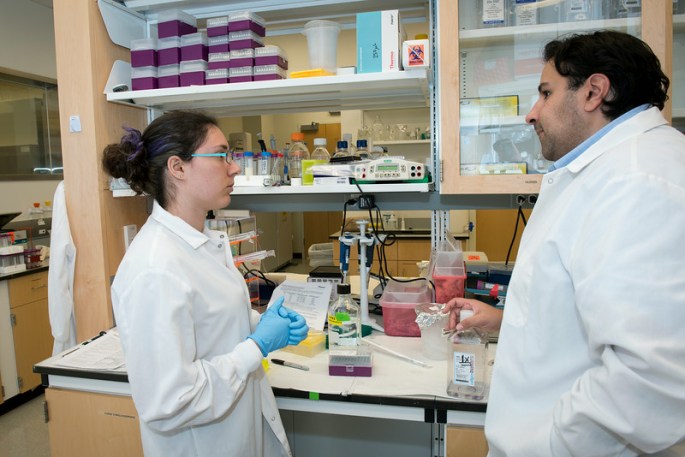
George Mason University professor Ramin M. Hakami is searching for new ways to treat modern ailments by studying bacterial and viral biodefense agents, including the medieval disease notoriously known as the Black Death.

Along the way, he’s also coaching the next generation of researchers. The two endeavors are equally critical, says Hakami, who knows firsthand how crucial mentoring can be to young researchers from when he himself was a student earning his doctorate in biochemistry in the laboratory of the Nobel Laureate Professor Har Gobind Khorana at the Massachusetts Institute of Technology (MIT).

Read the full article here.


Image credit: George Mason University

Looking Clearly at Right-Wing Terrorism

Charles P. Blair is a Washington, D.C.-based university instructor, researcher, writer, and thinker specializing in terrorism and the history, technical underpinnings, and potential futures of Weapons of Mass Destruction. He is the director for two courses in the Summer Program in International Security: 21st Century Terrorism: Emerging Trends and Evolving Tactics which runs July 14-16 and Terrorism Analysis: Quantitative and Qualitative Research Methodologies and Tools which runs July 17-18.

Register before June 15 and save $200-$300 on course registration for the GMU Summer Program in International Security!


By Charles P. Blair

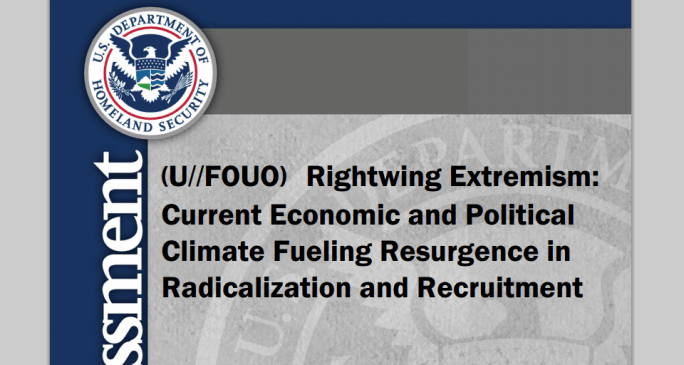
Five years ago the US Department of Homeland Security’s Homeland Environment Threat Analysis Division released an assessment of US far-right extremism. Initially intended for law enforcement and intelligence agencies only, the report—“Rightwing Extremism: Current Economic and Political Climate Fueling Resurgence in Radicalization and Recruitment”—was almost immediately leaked. The report warned that small cells practicing “leaderless resistance” and “white supremacist lone wolves [posed] the most significant domestic terrorist threat.” Significantly, it highlighted the likelihood of expanded attempts by far-right extremists “to recruit and radicalize returning veterans in order to boost their violent capabilities.” Overall, the report warned of trends similar to “the 1990s when rightwing extremism experienced a resurgence.” That far-right extremist rally reached a violent crescendo with the bombing of the Alfred P. Murrah federal building in Oklahoma City on April 19, 1995.

Reflecting on the past five years, a leading far-right extremism expert I recently interviewed described the homeland security report as “prophetic.” Mark Pitcavage, the Anti-Defamation League’s director of investigative research, explained that most of the warnings in the 2009 report have become realities. Yet at the time of its release, the document was derided by many inside and outside of government as “ridiculous [and] deeply offensive,” an “inconceivable” assault on US veterans, and, in general, “a piece of crap.” …

Introducing: Keith Ward

I’m delighted to introduce new Affiliate Faculty Member of the Departments of Molecular and Microbiology and Bioinformatics and Computational Biology at George Mason University, Keith B. Ward, Ph.D.

Keith will be contributing to the Pandora Report, so check here for his articles!


Keith

Keith retired as Senior Science Advisor, FBI Laboratory, in 2011. There he coordinated basic and applied Science and Technology (S&T) efforts between the FBI and other government agencies and provided technical expertise to the Head of the FBI Laboratory and the Director of the FBI S&T Branch.

Prior to joining the FBI, Keith was Chief of the Research and Development Branch and Science Advisor to the Director, Chemical and Biological Division, of the DHS S&T Directorate. This Branch develops novel basic and applied technology to counter chemical and biological threats within the US. He represented S&T on several Homeland Security Council Inter-agency Policy Coordination work groups.

After receiving a BS in physics (Texas A&M) and a PhD in biophysics (Johns Hopkins), Dr. Ward became a professor of chemistry at the University of Wisconsin. In 1984 he joined the Naval Research Laboratory, as team leader of the macromolecular crystallography and molecular modeling group. His research focused on understanding the structure and function of proteins involved with marine bioluminescence, chemical agent-degrading enzymes, and phospholipase A2 snake venom toxins. In 1993, he became a NASA flight principal investigator, and his group developed remote-controlled protein crystallization systems for both Space Shuttle and Space Station experiments.

In 1995 Dr. Ward joined the Office of Naval Research and served as chair of the Biomolecular and Biosystems group within the Cognitive, Neural, and Biomolecular Science and Technology Division. He served as the Navy’s representative to the Joint Services Technical Panel for Decontamination and to the Joint Warfighting Science and Technology Plan Chapter on Combating Terrorism.

He received the Navy Meritorious Civilian Service Award in 2003 and the Presidential Rank Award of Meritorious Senior Professional in 2008. Keith was inducted into the Academy of Distinguished Former Students by the College of Science, Texas A&M University in 2013.

Since retiring, Keith serves on the Steering Group of the AAAS STEM Volunteers supporting Fairfax County Public Schools:  http://www.seniorscientist.org . He serves as pro-bono technical advisor on chemical warfare to both Human Rights Watch and Amnesty International. To pursue a new avocation, Keith became a docent in the Hall of Human Origins at the Smithsonian National Museum of Natural History in 2013.