Pandora Report 5.17.2024

This week’s edition of the Pandora Report covers news from the Biodefense Graduate Program, HHS’ announcement to cut federal funding to the EcoHealth Alliance, and more.

Biodefense Program Receives Gift from the CBRNE Industry Group

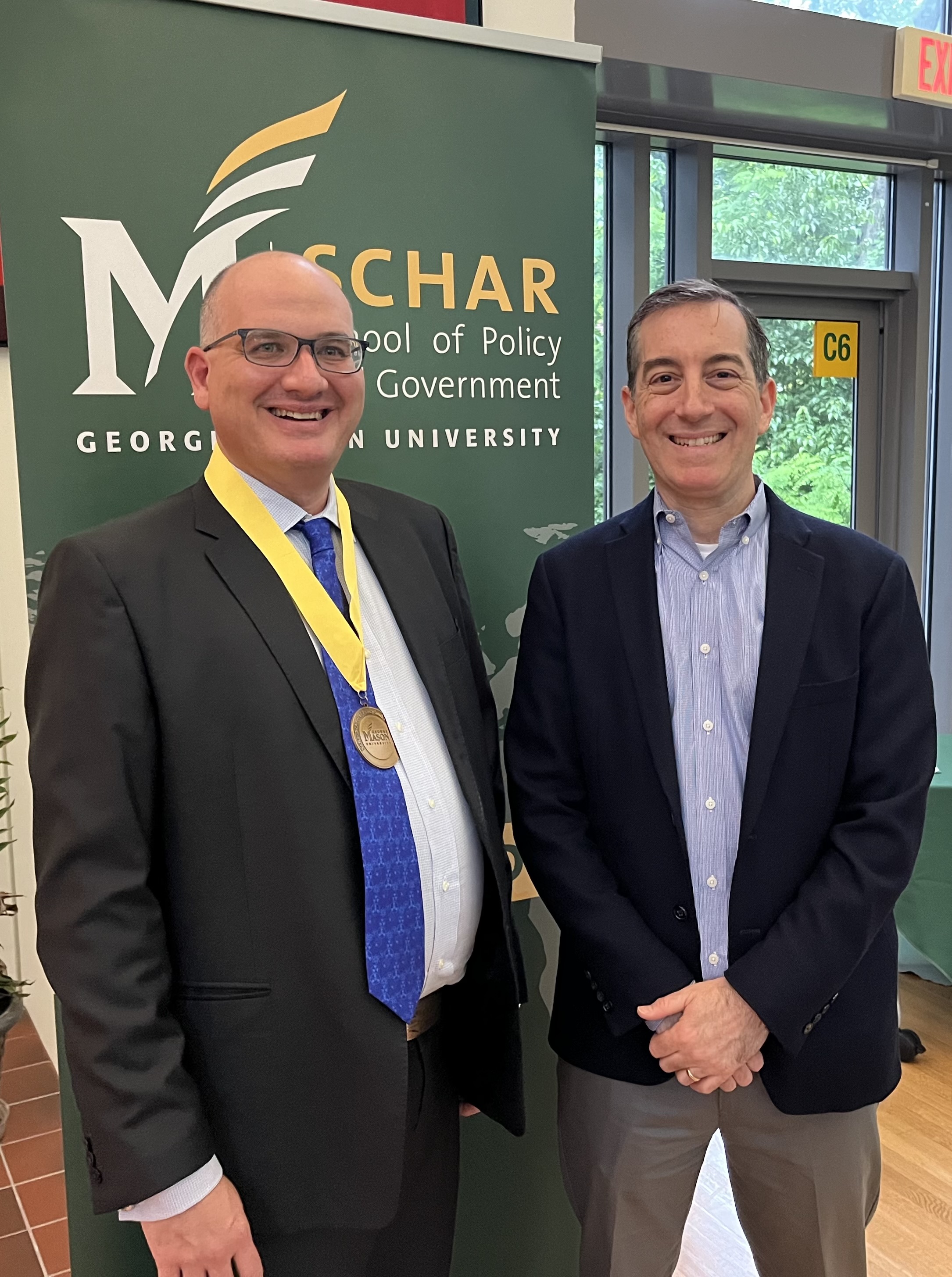
For the second year, the Schar School of Policy and Government at George Mason University received a generous gift from the CBRNE Industry Group, an association of organizations supporting chemical, biological, radiological, nuclear, and explosive defenses, to support the Biodefense Graduate Program. Program director Dr. Gregory Koblentz accepted the award on behalf of the Schar School and Biodefense Program at the CBRNE Industry Group’s annual dinner on May 15. The dinner’s keynote speaker was Rebecca Hersman, director of the Defense Threat Reduction Agency (DTRA).

Congratulations to Graduating Biodefense Students

Congratulations to the newly minted MS in Biodefense students who graduated from the Schar School this week: Abigail Danfora, Theresa Hoang, Emily Johnson, John Kisko, Nick Marko, Geoff Mattoon, Jack Moore, Miranda Nastasi, Brittany Novak, Olivia Parker, Max Towers and Jacob Wellerman. A special congratulations to Nick Marko for receiving the Outstanding Biodefense MS Student Award for his exemplary scholarship and to Olivia Parker for receiving the Frances Harbour Award in recognition of her community leadership in the Biodefense Program.
Biden Administration Moves to Ban Funding for EcoHealth Alliance

Following a tense Congressional hearing and the release of a highly critical select subcommittee interim report earlier this month, the Department of Health and Human Services announced in a letter on Wednesday that it is moving forward with debarment proceedings and implementing a government-wide suspension of federal funding for EcoHealth Alliance. This includes active grants, three of which totaled $2.6 million in NIH funding for EcoHealth Alliance last year. The NIH cited multiple failures on the part of the organization that it first reported three years ago, including EcoHealth’s failure to “promptly report findings from studies on how well bat coronaviruses grow in mice…”

House Select Subcommittee on the Coronavirus Pandemic Chairman Brad Wenstrup (R-OH) said in a statement about the announcement, ‘“EcoHealth Alliance and Dr. Peter Daszak should never again receive a single penny from the U.S. taxpayer. Only two weeks after the Select Subcommittee released an extensive report detailing EcoHealth’s wrongdoing and recommending the formal debarment of EcoHealth and its president, HHS has begun efforts to cut off all U.S. funding to this corrupt organization. EcoHealth facilitated gain-of-function research in Wuhan, China without proper oversight, willingly violated multiple requirements of its multimillion-dollar National Institutes of Health grant, and apparently made false statements to the NIH. These actions are wholly abhorrent, indefensible, and must be addressed with swift action. EcoHealth’s immediate funding suspension and future debarment is not only a victory for the U.S. taxpayer, but also for American national security and the safety of citizens worldwide.”

‘“The Select Subcommittee’s investigation into EcoHealth and the origins of COVID-19 is far from over. Dr. Daszak and his team are still required to produce all outstanding documents and answer the Select Subcommittee’s questions, specifically related to Dr. Daszak’s potential dishonesty under oath. We will hold EcoHealth accountable for any waste, fraud, and abuse and are committed to uncovering any illegal activity, including lying to Congress, NIH, or the Inspector General,” he continued.

EcoHealth Alliance said in a statement that it “is disappointed by HHS’[s] decision today and we will be contesting the proposed debarment. We disagree strongly with the decision and will present evidence to refute each of these allegations and to show that NIH’s continued support of EcoHealth Alliance is in the public interest.”
“China and Medical AI: Implications of Big Biodata for the Bioeconomy”

Caroline Schuerger, Vikram Venkatram, and Katherine Quinn recently published this CSET Issue Brief: “China supports medical artificial intelligence development to achieve bioeconomy leadership. Countries that strategically prioritize medical AI could benefit from an economic advantage and set global norms for future developments. Our new report examines China’s stated goals for medical AI, which range from the collection and protection of vast amounts of biodata, to facilitating research and development, to supporting medical AI commercialization. China’s comprehensive actions to prioritize medical AI development have major implications for U.S. economic and technological competitiveness.”

“China’s Industrial Clusters: Building AI-Driven Bio-Discovery Capacity”

Anna Puglisi and Daniel Chou recently authored this CSET Data Brief: “China is banking on applying AI to biotechnology research in order to transform itself into a “biotech superpower.” In pursuit of that goal, it has emphasized bringing together different aspects of the development cycle to foster multidisciplinary research. This data brief examines the emerging trend of co-location of AI and biotechnology researchers and explores the potential impact it will have on this growing field.”

“China’s Hybrid Economy: What to Do About BGI?”

Anna Puglisi tackles China’s industrial policy and BGI (formerly Beijing Genomics Institute) in this CSET blog post: “As the U.S. government considers banning genomics companies from China in the Biosecure Act, it opens a broader question of how the U.S. and other market economies should deal with China’s national champions. This blog post provides an overview of BGI and how China’s industrial policy impacts technology development.”

“Science and Technology Advisory Mechanism for the Biological Weapons Convention, A Proof-of-Concept Exercise”

From The Interacademy Partnership: “This document encapsulates the insights emanating from the recent ‘Proof of Concept Meeting for a Scientific Advisory Body for the Biological and Toxin Weapons Convention’ (BWC) that IAP hosted in Trieste, Italy, on 27-28 February 2024.”

“The meeting, convened under the auspices of IAP and in coordination with the US National Academies of Sciences, Engineering, and Medicine (NASEM), brought together 38 technical experts from 32 countries. Their deliberations focused on the potential impact of Artificial Intelligence (AI) on global biosecurity and international cooperation within the framework of the BWC. Participants stressed the need for a continuous review process to monitor AI trends, especially its implications for biology relevant to the BWC. The report serves as the report of a putative Science Advisor to the BWC, summing up the expert deliberations from the proof of concept meeting.”

“The release of “Science and Technology Advisory Mechanism for the Biological Weapons Convention, A Proof-of-Concept Exercise”, deriving from the proof of concept meeting, marks a key moment in the journey towards establishing a scientific advisory body for the BWC.”

“Read and download the Biosecurity Report here.”

“USDA, FDA Turf Battles Hamper Responses to Outbreaks Like H5N1 Bird Flu”

Rachel Cohrs Zhang, Lizzy Lawrence, and Nicholas Florko discuss federal agencies’ turf battles in this STAT News piece that includes information derived from interviews with more than 20 former federal officials. They explain in part, “Because H5N1 is currently an animal disease, it’s clearly the USDA’s responsibility to test cattle and get a handle on the outbreak. But already, public health experts are concerned that the scope of that agency’s testing regime is too limited. The department is requiring farmers test only lactating cows before moving them across state lines.”

‘“There needs to be a better understanding of the scope and scale of the problem,” said Stephen Ostroff, a former deputy commissioner in charge of food safety at the FDA. “This seems like it’s not necessarily going to be able to identify problems that could occur within a state.”’

Read more here.

“As Bird Flu Looms, the Lessons of Past Pandemics Take On New Urgency”

John M. Barry discusses lessons learned from the 1918 flu pandemic and other pandemics and their significance as bird flu continues to spread in this New York Times opinion piece. He writes in part, “While much would still have to happen for this virus to ignite another human pandemic, these events provide another reason — as if one were needed — for governments and public health authorities to prepare for the next pandemic. As they do, they must be cautious about the lessons they might think Covid-19 left behind. We need to be prepared to fight the next war, not the last one…Two assumptions based on our Covid experience would be especially dangerous and could cause tremendous damage, even if policymakers realized their mistake and adjusted quickly.”

“Rise of Drug-Resistant Superbugs Could Make COVID Pandemic Look ‘Minor’, Expert Warns”

This piece from The Guardian discusses warnings from Prof Dame Sally Davies, England’s former chief medical officer and the UK’s current special envoy on AMR. It explains, “She paints a bleak picture of what could happen if the world fails to tackle the problem within the next decade, warning that the issue is “more acute” than climate change. Drug-resistant infections already kill at least 1.2 million people a year…“It looks like a lot of people with untreatable infections, and we would have to move to isolating people who were untreatable in order not to infect their families and communities. So it’s a really disastrous picture. It would make some of Covid look minor,” said Davies, who is also the first female master of Trinity College, Cambridge.”

“Dissecting Pandemic-Prone Viral Families, Volume 4: The Pneumoviridae”

This document by Amesh A. Adalja for Johns Hopkins Center for Health Security covers the pandemic threats posed by the Pneumoviridae family: “The Pneumoviridae viral family, formerly a subfamily of Paramyxoviridae, consists of 2 genera: Orthopneumovirus, the members of which infect mammals, and Metapneumovirus, which are specific for either mammals or birds.”

Pneumoviridae poses a largely underappreciated pandemic threat. Only 2 known viral family members infect humans: human respiratory syncytial virus (HRSV, commonly RSV) and human metapneumovirus (HMPV).1 These 2 endemic respiratory viruses confer substantial morbidity and mortality on the human species, particularly among older adults and young children and across different sociodemographic strata.2 If a zoonotic or yet undiscovered viral family member acquired the ability to efficiently infect humans, it could spread prolifically, especially when faced with little immunity”

Read more here.

“Remarks by Dr. Liz Sherwood-Randall Assistant to the President for Homeland Security on Countering Bioterrorism in an Era of Technology Convergence”

Read Liz Sherwood-Randall’s remarks at the Ash Carter Exchange that focus on preventing bioterrorism and threats posed by rapidly advancing biotechnologies. She said in part, “And this frame of “preventive defense” – which identifies what we can do now to prevent far more pernicious threats from emerging in the future – is a guiding principle for me as we face the emergence of a whole new category of “A list” threats at the intersection of biology, engineering, and artificial intelligence.”

“Given my current duties as the President’s Homeland Security Advisor, this is a major concern because of the very real prospect that these technologies – which are largely out “in the wild” rather than controlled by governments – could be accessed and weaponized by terrorists with potentially catastrophic effects.”

“So, I chose to talk with you here today about what we can do to counter biological terrorism and other malicious uses of advances in biotechnology in this era of rapid technology convergence.”

“Getting Down to Science”

This USDA post by Stephanie Jacques discusses the work starting to take shape at the new National Bio and Agro-Defense Facility (NBAF). She writes in part “Science at NBAF is starting in phases. This phased process began with low-risk, common science practices that don’t involve infectious pathogens and is moving to more advanced or mission-focused science in later phases. As NBAF is ramping up science operations in Manhattan, Kansas, its predecessor — the Plum Island Animal Disease Center in New York — will continue protecting American agriculture until NBAF is ready to assume the center’s full mission.”

“Trumping Pandemic Preparedness”

Chelsea Cirruzzo and Ben Leonard recently published this piece in Politico that discusses former President Trump’s promise that, if re-elected, he will abolish the White House’s Office of Pandemic Preparedness and Response Policy. While they explain that he can not entirely get rid of the office on his own, they cover three ways he could undermine the office, including not appointing anyone to run or staff the office, asking Congress to overturn the law it passed creating the office, or reshaping the office to better suit his political interests.

“A ‘Plague’ Comes Before the Fall: Lessons from Roman History”

Colin Elliott discusses the effects of the Antonine plague in this piece, writing in part “The Pax Romana—the 200-year “golden age” of the Roman Empire—was a marvel of diversity, connectivity, and unchallenged hegemony. By the middle of the second century AD, imperial Rome ruled territory across three different continents. Roughly one-quarter of the Earth’s population, some 60 million people, lived under Rome’s vast aegis, and the emperors of the age—most notably Marcus Aurelius—enjoyed the consent of those they governed. The Empire’s elites—witnessing the disciplined legions, widespread religiosity, cultural efflorescence, and dominant economy—likely expected their world order to endure forever.”

“In the year 166 AD, however, seemingly eternal Rome was caught completely off-guard as a deadly novel disease swept across the Eurasian landmass. It ransacked Rome’s cities for at least a decade and preceded centuries of decline. This major biological event—now known as the Antonine plague—appears to have been the world’s first pandemic.”

“Chloropicrin and Its Alleged Use in the Ukrainian War”

JP Zanders breaks down the United States’ accusation that Russia used RCAs and chloropicrin against Ukrainian forces in this post on The Trench: “This three-part blog contribution analyses the publicly available information about RCA and chloropicrin use in the Russo-Ukrainian war. The first part summarises the chemical warfare allegations between 2014 and 2024. Part 2 investigates the reports of chloropicrin use, and the final part discusses how the international community can address the CW allegations through action in the Organisation for the Prohibition of Chemical Weapons (OPCW).”

What We’re Listening To🎧

The Arms Control Poseur, The US and the Chemical Weapons Convention with Laura J. Gross

“On the ninth episode of season 2, William is joined by Laura J. Gross to discuss the completion of the destruction of the US chemical weapons stockpile.”

“In order to understand the current commitments of the United States to the Chemical Weapons Convention (CWC), Laura J. Gross joins William to discuss the completion of the destruction of the US chemical weapons stockpile, which was announced on the 7th of July 2023. This destruction was then verified by the Organisation for the Prohibition of Chemical Weapons (OPCW). In this episode, Ms Gross discusses the challenges that were faced in the destruction of this stockpile, and outlines the achievement itself in light of upholding global norms on arms control and verifiability. However, various challenges remain regarding the implementation of the Convention’s provision, such as the conflict in Gaza, the potential possession of chemical weapons by the Syrian Arab Republic, and the war in Ukraine. Ms Gross explains how the US assists other countries in the destruction of their declared chemical weapons stockpiles. When looking towards the future of the CWC, Ms Gross also touches upon the renewed use of chemical weapons by Syria, Russia, and North Korea and what the US is undertaking to counter the return to such use.”

“Laura J. Gross is the director of the Office of Chemical and Biological Weapons Affairs, Bureau of Arms Control, Deterrence, and Stability, at the United States Department of State, and she is the Executive Director of the US National Authority for the CWC.”

NEW-Pandemic Accord: Partial Failure or Partial Success?

From Brown Pandemic Center: “On 23 May at 12:00PM ET the Pandemic Center will host a webinar titled Pandemic Accord: Partial Failure or Partial Success?”

“Member States of the World Health Organization have been negotiating a new pandemic treaty to address challenges in the response to and sub-optimal international coordination during the Covid-19 pandemic. A vote on the treaty is expected during the upcoming World Health Assembly, taking place 27 May through 1 June. This Pandemic Center webinar will convene an expert panel to assess the strengths and limitations of the current draft of the treaty and its prospects for adoption.”

Learn more and RSVP here.

NEW-Ready or Not 2024: Protecting the Public’s Health from Diseases, Disasters, and Bioterrorism

From TFAH: “Please join Trust for America’s Health (TFAH) for a virtual Congressional briefing and national webinar on our recent report, Ready or Not 2024: Protecting the Public’s Health from Diseases, Disasters, and Bioterrorism.”

“The report identifies gaps in national and state preparedness to protect residents’ health during emergencies and makes recommendations to strengthen the nation’s public health system and improve emergency readiness. As the nation experiences an increasing number of infectious disease outbreaks and extreme weather events, the report found that while emergency preparedness has improved in some areas, policymakers not heeding the lessons of past emergencies, funding cuts, and health misinformation are all putting decades of progress at risk.”

“A panel of subject matter experts will discuss the nation’s readiness for public health emergencies, examine the findings of the report, and discuss key recommendations for policymakers. The briefing will include time for Q&A from the audience.”

This event will take place on May 29 and 2 pm EST. Learn more and register here.

NEW-Optimizing Federal, State, and Local Response to Public Health Emergencies

From NASEM: “The National Academies of Sciences, Engineering, and Medicine’s Committee on Science, Technology, and Law cordially invites you to attend a virtual workshop to examine how legal authorities affected the ability of public health agencies and federal, state, and local governments to respond to the COVID-19 pandemic and explore approaches to ensure a more effective response to future public health crises. The allocation of legal authority has become an issue of immediate relevance as the United States confronts an H5N1 avian influenza outbreak in dairy cattle.”

“The workshop, which will highlight ideas for optimizing the response to future public health emergencies, will be held on Thursday, May 30, 2024 from 12:00 to 5:30 pm U.S. Eastern and Friday, May 31, 2024 from 12:00 to 4:30 pm U.S. Eastern. It will include the following sessions:

1) Optimizing Federal, State, and Local Public Health Preparedness  
2) The COVID-19 Pandemic: What happened? What went right? What went wrong?  
3) Public Health Emergency Authorities: What we know about them and how did we experience them before, during, and after the COVID-19 pandemic? 

  • Case Study I: Pandemic Orders and Religious Liberty
  • Case Study II: New York City Vaccine Mandates: Who Has the Authority?
  • Case Study III: The Experience with Public Health Emergency Authorities Before, During, and After COVID-19
  • Case Study IV: The Future of Public Health Authority at the Federal, State, and Local Level

4) Exploring Routes and Barriers to Effective Public Health Response Efforts During the COVID-19 Pandemic
5) Looking to the Future: Where do we go from here? 
6) Concluding Thoughts from Workshop Planning Committee”

Learn more and register here.

NEW-American Democracy and Health Security Initiative: Lighting a Path Amid Pandemic Polarization

“Please join the Brown University School of Public Health Pandemic Center, the COVID Collaborative, and the CSIS Bipartisan Alliance for Global Health Security for the launch of the American Democracy and Health Security Initiative.”

“The story of how America fared under the Covid-19 pandemic is actually two stories. While the more well-known story is one of failure, confusion, and polarization, the other story is one of American ingenuity amidst profound uncertainty. State and local leaders were at the center of this untold story—in serving their communities they innovated, bridged divides, and illuminated America’s path during the Covid-19 pandemic’s darkest days. The American Democracy and Health Security Initiative spotlights these lamplighters and harvests their hard-won lessons, to ensure the most successful strategies can be sustained or replicated in future crises.”

“On June 5, the American Democracy and Health Security Initiative will publish its findings on what actionable steps are needed to advance our health security for the future. The event will feature leaders from across the country from Governors, advisors, and health leaders to community organizations, educators, businesses, and crisis managers. We will discuss urgent opportunities to make the country more resilient against future threats to our health security and to our democracy and identify national and local innovations that must be retained and playbooks that are needed to reinvigorate leadership, bipartisanship, and equitable access in the face of the next health emergency in America.”

This event will take place on June 5 at 2 pm ET. Register here.

Getting Ahead of Avian Influenza: Why Organizations Need to Prepare Today

From Bluedot: “Highly Pathogenic Avian Influenza A(H5N1), commonly referred to as bird flu, has been making headlines around the world, as the virus rapidly spreads to new animal species. Already the cause of a panzootic (global animal pandemic), last month a human H5N1 case was reported in the U.S. after likely contracting it from infected dairy cattle. The virus has now been detected in dairy herds across multiple states, with evidence to suggest it has been spreading more widely than previously thought — begging the question: Are we at risk for an avian influenza-instigated pandemic?”

“Join us for a deep dive into avian influenza as we explore why and how organizations should prepare to safeguard against bird flu. Together, through collaborative efforts and informed decision-making, we can mitigate the risk of increased transmission to humans. BlueDot’s experts have been closely monitoring the situation and potential risks, issuing multiple alerts on H5N1 — and other avian influenzas — over the past 15 months.”

This event will take place on May 23, at 11 am ET. Learn more and register here.

Addressing the Challenges Posed by Chemical and Biological Weapons: Intensive Online Introductory Course for Students of Technical Disciplines

“SIPRI and the European Union Non-Proliferation and Disarmament Consortium (EUNPDC) invite graduate and postgraduate students of the technical or natural science disciplines to apply for an intensive online introductory course on chemical and biological weapons—their proliferation, the efforts to eliminate them, the various mechanisms used to control their spread—and endeavours underway to reduce the risk of chemical or biological agents in terrorist attacks. The course will take place online, during four half-days on 2831 May 2024, 14:00 to 18:00 Central European Summer Time (CEST).”

“The course will cover the fundamentals of chemical and biological weapons as well as of missiles and other means of delivery; the history of chemical and biological warfare; the evolution of international norms against these weapons; the threats associated with potential terrorist uses of chemical and biological material; bioweapons and other related scientific advances; the current challenges posed by chemical weapons; arms control treaties; and mechanisms to curb the spread of dangerous substances, including export controls.”

“The course will also discuss the role of the EU institutions and industry to address the challenges mentioned above. The course will be instructed by renowned experts on non-proliferation, arms control, disarmament, export controls, verification and related subjects from SIPRI, other European research centres, think tanks and international organizations.”

Learn more and apply here.

Registration for GHS 2024 Now Open

Registration is now open for the Global Health Security 2024 conference in Sydney, Australia. This iteration will take place 18-21 June, 2024. The call for abstracts is also still open. “The mission of the Global Health Security conference is to provide a forum where leaders, researchers, policy-makers, and representatives from government, international organisations, civil society, and private industry from around the world can engage with each other, review the latest research and policy innovations, and agree solutions for making the world safer and healthier. To that end, our mission is to help foster a genuinely multidisciplinary community of practice that is committed to working collaboratively to enhance global health security and eliminate disease, irrespective of its origin or source.”

SBA.3 International Synthetic Biology, and Biosecurity Conference in Africa

“Join us for the SBA.3 International Synthetic Biology and Biosecurity Conference in Africa, a groundbreaking event that brings together experts, researchers, and enthusiasts in the field of synthetic biology. This in-person conference will take place at the Laico Regency Hotel from Wed, Jul 17, 2024 to Friday, Jul 19, 2024.”

“Get ready to dive into the exciting world of synthetic biology and explore its potential applications in Africa. From cutting-edge research to innovative solutions, this conference offers a unique opportunity to learn, network, and collaborate with like-minded individuals.”

“Discover the latest advancements, trends, and challenges in synthetic biology through engaging keynote speeches, interactive workshops, and thought-provoking panel discussions. Immerse yourself in a vibrant atmosphere where ideas flow freely and new connections are made.”

“Whether you’re a seasoned professional or just starting your journey in synthetic biology, this conference provides a platform to expand your knowledge, exchange ideas, and contribute to the growth of the field in Africa.”

“Don’t miss out on this extraordinary event that promises to shape the future of synthetic biology and biosecurity in Africa. Mark your calendars and join us at the SBA.3 International Synthetic Biology and Biosecurity Conference in Africa!”

Learn more and register here.

IBBIS Announces The Common Mechanism

The International Biosecurity and Biosafety Initiative for Science (IBBIS) recently launched The Common Mechanism, “An open-source, globally available tool for DNA synthesis screening.” The organization explains on its website that “The Common Mechanism helps providers of synthetic DNA and RNA to effectively screen orders to prevent synthesis technology from being exploited. We provide free, distributed, open-source, automated software for screening sequences of nucleic acids (including DNA and RNA) as well as resources to facilitate customer screening.”

Learn more and access the tool here.
Pandora Report 5.10.2024

This week’s Pandora Report covers a new interim staff report from the House Select Subcommittee on the Coronavirus Pandemic, the new United States Government Policy for Oversight of Dual Use Research of Concern and Pathogens with Enhanced Pandemic Potential, the OPCW’s statement on Russia’s alleged use of toxic chemicals as weapons in Ukraine, and more.

GMU Biodefense Students Visit National Museum of Health and Medicine

“Late last month a cadre of students from the Schar School of Policy and Government’s biodefense graduate program visited the National Museum of Health and Medicine in Silver Spring, Maryland, not far from the George Mason University campuses.”

“The 150-year-old museum is known for its collections that depict the human anatomy and everything that can befall it, in sometimes stark and gory detail. What else would you expect from a museum with a pathology guide with listings for “bilateral nephrolithiasis (kidney stones),” “liver, hydatid cyst from tape worm,” and an all-time-favorite, “trichobezoar (human hairball from stomach).”’

Read more about this visit here on the Schar School’s website.

GMU Biodefense students at the National Museum of Health and Medicine

Select Subcommittee on the Coronavirus Pandemic Interim Staff Report Calls for Daszak, EcoHealth Alliance Debarment

Earlier this month, the House Select Subcommittee on the Coronavirus Pandemic’s chairman, Rep. Brad Wenstrup (R-OH), released an interim staff report-“An Evaluation of the Evidence Surrounding EcoHealth Alliance, Inc.’s Research Activities”. The press release explains in part, “This report details the Select Subcommittee’s comprehensive investigation into the U.S. government’s funding and lack of oversight of gain-of-function research, EcoHealth Alliance (EcoHealth), and the Wuhan Institute of Virology (WIV). The report reveals serious, systemic weaknesses in the National Institute of Allergy and Infectious Diseases (NIAID) and National Institutes of Health’s (NIH) grant procedures and examines how these failures enabled EcoHealth President Dr. Peter Daszak to fund dangerous gain-of-function research in Wuhan, China without sufficient oversight.”

The select subcommittee’s recommendations include:

  • “The Select Subcommittee on the Coronavirus Pandemic recommends that EcoHealth Alliance and Dr. Peter Daszak are formally debarred and cut off from receiving any future U.S. taxpayer funding.”
  • “The Select Subcommittee also recommends that the U.S. Department of Justice conduct a formal investigation into Dr. Daszak.”
  • “Further, the Select Subcommittee recommends eight improvements to NIAID and NIH procedures that will improve grant compliance, increase biosafety and biosecurity of high-risk research, and advance transparency and accountability in America’s federal health agencies.”

Daszak testified before the select subcommittee on the day the report was released, which was covered by Matt Field in The Bulletin of the Atomic Scientists. Field explains in his coverage that Daszak was grilled by members of both major political parties during the subcommittee’s hearing on May 1, writing “On Wednesday, however, members of both US political parties came armed with blistering criticism for Peter Daszak, the head of the nonprofit EcoHealth Alliance, questioning his honesty in dealing with federal agencies and skewering his alleged conflicts of interests as he attempted to assume the role of a leading scientific voice on the pandemic’s origins. Beginning in 2014, EcoHealth ran a US-funded, multimillion-dollar project to identify hotspots where patterns of interaction between humans and animals could spark disease outbreaks.”

He later writes, “They hammered away on one of the plot points in the origins debate, EcoHealth’s transparency in reporting on its studies to the National Institutes of Health (NIH). Over the course of one five-year grant, EcoHealth was supposed to submit annual reports. One of those, covering 2018-2019, came two years late. Daszak claimed that EcoHealth had tried to submit the report, but the NIH had a problem with its computerized reporting platform. According to a report by the subcommittee’s Democrats, however, a forensic audit found no evidence for this assertion.”

Chairman Wenstrup said in a statement, ““EcoHealth Alliance President Dr. Peter Daszak is not a good steward of U.S. taxpayer dollars and should never again receive funding from the U.S. taxpayer. Dr. Daszak and his organization conducted dangerous gain-of-function research at the WIV, willfully violated the terms of a multi-million-dollar NIH grant, and placed U.S. national security at risk. This blatant contempt for the American people is reprehensible. It is imperative to establish higher standards of oversight at the NIH. The Select Subcommittee’s detailed and comprehensive report today holds Dr. Daszak and EcoHealth Alliance accountable and sheds light on severe shortcomings in our public health systems.”

US Agencies Set to Tighten Gain-of-Function Research Oversight

This White House announced this week the new United States Government Policy for Oversight of Dual Use Research of Concern and Pathogens with Enhanced Pandemic Potential and accompanying implementation guidance, following years of public debate and recommendations made by the National Science Advisory Board for Biosecurity. As the New York Times explains, “The new policy, which applies to research funded by the federal government, strengthens the government’s oversight by replacing a short list of dangerous pathogens with broad categories into which more pathogens might fall. The policy pays attention not only to human pathogens, but also those that could threaten crops and livestock. And it provides more details about the kinds of experiments that would draw the attention of government regulators.”

Read Max Kozlov’s summary and discussion of this new policy in Nature.

Emergent BioSolutions Announces Layoff Plans, Plant Closures

Emergent BioSolutions, the Gaithersburg-based company best known for producing Narcan, has announced it is shuttering its Maryland manufacturing facilities and laying off about 300 employees. This includes its Baltimore-Bayview Drug Substance manufacturing facility and its Rockville Drug Product facility, according to The Baltimore Banner. The company has also said it will eliminate 85 currently vacant positions. This is all on top of the more than 230 Maryland employees Emergent laid off last year.

Emergent drew national attention in the summer of 2021 after the company, which had secured a government contract to produce COVID-19 vaccines on behalf of Johnson & Johnson and AstraZeneca, came under Congressional scrutiny for potentially contaminating at least 75 million vaccine doses. Furthermore, as The New York Times highlighted at the time, “With its stock price cut in half, Emergent faces several shareholder lawsuits accusing it of securities fraud, and a pension fund filed a complaint last Tuesday claiming that some executives and board members — including several former federal officials — had engaged in insider trading by unloading more than $20 million worth of stock over the past 15 months.”

An investigation found that Emergent was forced to destroy or discard up to 400 million doses’ worth of ingredients for COVID-19 vaccines. ABC News explained in a piece about the report that “Congressional investigators probing the Maryland-based biotech company found that Emergent executives had privately raised urgent quality-control concerns even before the company began manufacturing the vaccines’ key ingredient — despite publicly expressing confidence in their ability to deliver on their multimillion-dollar government contract.”

‘”Despite major red flags at its vaccine manufacturing facility, Emergent’s executives swept these problems under the rug and continued to rake in taxpayer dollars,” House Oversight and Reform Committee Chairwoman Carolyn Maloney, D-N.Y., said of the report, which determined that the company’s “manufacturing failures and deceptive tactics” led to the large-scale waste of ingredients that could have helped make millions of vaccine doses.”

Emergent’s stock price did jump following the announcement of the layoffs, finishing yesterday at $4.37 up from $1.93 on May 1, a far cry from the $130 its shares were traded for in August 2020. According to The Baltimore Banner, “The company estimated that the restructuring will cost up to $21 million this year and save the company about $80 million annually. In a filing with the U.S. Securities and Exchange Commission, Emergent said most of those initial costs will be related to severance and benefits.”

OPCW Releases Statement on Ukraine

The OPCW released this week a statement about Russia’s alleged use of toxic chemicals as weapons in Ukraine. It reads in part “The Secretariat of the Organisation for the Prohibition of Chemical Weapons (OPCW) has been monitoring the situation on the territory of Ukraine since the start of the war in February 2022 in relation to allegations of use of toxic chemicals as weapons…The information provided to the Organisation so far by both sides, together with the information available to the Secretariat, is insufficiently substantiated.”

Read more here.

Mason Biodefense Graduate Program Director Discusses AI, Biological Weapons Risks with CNN

Biodefense Graduate Program Director Gregory Koblentz was recently interviewed in this May 5 CNN Newsroom segment covering AI and biological weapons proliferation risks. It was filmed ahead of the release of an episode of CNN’s “How It Really Happened” focused on the 2001 Amerithrax attacks.

“2024 U.S. Department of State Report on North Korea’s ‘Genetic Scissors’ Technology and Capabilities and Its National Security Implications”

This report from the Institute for National Security Strategy was co-authored by Biodefense PhD Program alumnus Hyun Jung Kim: “The recent U.S. State Department’s report, titled “2024 Adherence to and Compliance with Arms Control, Nonproliferation, and Disarmament Agreements and Commitments,” articulates that North Korea has acquired the capability to genetically engineer biological products utilizing CRISPR. This report raises alarms over the potential transformation of this genetic engineering technology into an offensive biological weapons program. CRISPR, often referred to as ‘genetic scissor’ technology, renowned for its ability to precisely cut and replace sections of the genome, holds promise for groundbreaking developments in medicine, agriculture, and energy sectors. However, this technology also faces several challenges, including ethical and institutional issues and safety concerns. The national security threats posed by the advancement of North Korea’s genetic engineering technology include unconventional warfare tactics such as terrorism and targeted assassinations, the potential leakage of genetically modified bioagents due to laboratory accidents, and the proliferation of weapons of mass destruction. Furthermore, the same report notes the development of ‘dual-use marine toxins’ by the Chinese People’s Liberation Army, which may imply possible strategic cooperation and coordination between China and North Korea in the development of biological toxins, posing a significant challenge to the international security landscape.”

“China, Biotechnology, and BGI: How China’s Hybrid Economy Skews Competition”

Anna Puglisi and Chryssa Rask recently published this issue brief with Georgetown’s Center for Security and Emerging Technology: “As the U.S. government considers banning genomics companies from China, it opens a broader question about how the United States and other market economies should deal with China’s “national champions.” This paper provides an overview of one such company—BGI—and how China’s industrial policy impacts technology development in China and around the world.”

“The National Blueprint for Biodefense: Immediate Action Needed to Defend Against Biological Threats”

This latest report from the Bipartisan Commission on Biodefense urges policymakers to adopt several measures to help sustain and grow US biodefense, including establishing a congressional working group focused on biodefense at the start of each Congress, making amendments to the Public Health Service Act in order to “produce a research and development plan for reducing pathogen transmission in built environments,” and replacing BioWatch.

In addition to the report linked above, Axios’ Alison Snyder has summarized the report and provided context to its recommendations here.

“Twenty Years of Preparedness: Reflecting on the Legacy of the Project BioShield Act of 2004”

Adey Pierce-Watkins and Tanima Sinha recently published this report for BDO: “This July 2, 2024, marks the 20th anniversary of The Project BioShield Act of 2004 (P.L. 108-276); legislation enacted in response to the anthrax attacks of September 2001, which revealed the need for development and acquisition of medical countermeasures (vaccines, therapeutics, and diagnostics) to protect the U.S. population from chemical, biological, radiological, and nuclear (CBRN) threats. This Act, and associated Congressional Appropriations, established a Special Reserve Fund (SRF) of $5.593B advanced funding available over a 10-year period for the advanced development and procurement of medical countermeasures with the intent of initiating a new posture of national preparedness.1 Simultaneously, this legislation created new market incentives for pharmaceutical and biotech companies to engage in the development of CBRN medical countermeasures and transformed the partnership between the federal government and industry into a shared responsibility for increasing preparedness against CBRN threats. As a result, this legislation and the SRF created a “guaranteed market” for pharmaceutical companies to produce CBRN medical countermeasures for which there previously was no commercial demand…In recognition of the 20th Anniversary of The Project BioShield Act, it is fitting to highlight the impact and milestones of this legislation based on its intended purpose and outcomes to date.”

“It Shouldn’t Be Easy to Buy Synthetic DNA Fragments to Recreate the 1918 Flu Virus”

Kevin M. Esvelt recently authored this piece for STAT News, writing in part “It should be hard — exceedingly hard — to obtain the synthetic DNA needed to recreate the virus that caused the deadly 1918 influenza pandemic without authorization. But my lab found that it’s surprisingly easy, even when ordering gene fragments from companies that check customers’ orders to detect hazardous sequences…Our experiment demonstrates that the immense potential benefits of biotechnology are profoundly vulnerable to misuse. A pandemic caused by a virus made from synthetic DNA — or even a lesser instance of synthetic bioterrorism — would not only generate a public health crisis but also trigger crippling restrictions on research.”

Applied Biosafety Special Issues on Biosafety and Biosecurity for Synthetic Genomics

Applied Biosafety‘s first and second special issues focused on biosafety and biosecurity for synthetic genomics is now available online. Articles include “Enhancing Gene Synthesis Security: An Updated Framework for Synthetic Nucleic Acid Screening and the Responsible Use of Synthetic Biological Materials,” “Developing a Common Global Baseline for Nucleic Acid Synthesis Screening,” Biosecurity Risk Assessment for the Use of Artificial Intelligence in Synthetic Biology,” “Biosecurity Assessments for Emerging Transdisciplinary Biotechnologies: Revisiting Biodefense in an Age of Synthetic Biology,” and more.

“Supporting Follow-Up Screening for Flagged Nucleic Acid Synthesis Orders”

Tessa Alexanian and Sella Nevo recently published this briefer with CSR’s Nolan Center, writing in part “Medical diagnostics, biomanufacturing, and many other parts of the bioeconomy rely on synthetic DNA and RNA purchases, which are ordered from commercial providers and shipped to laboratories around the globe. In addition to enabling beneficial biotechnology, affordable and accessible nucleic acid synthesis raises biosecurity concerns: some sequences can be used to reconstruct pathogen genomes or engineer dangerous biological agents, and it’s necessary to ensure those sequences are not misused by actors seeking to cause harm.”

“Most commercial synthesis providers screen the orders they receive to identify sequences of concern that could facilitate the construction of dangerous biological agents. When sequences in an order are flagged, follow-up screening determines whether the order is fulfilled. This screening centers on the customer: do they have a legitimate, peaceful purpose for obtaining the flagged sequences of concern?”

“This follow-up screening is the subject of this briefer. Between July and August 2023, we interviewed industry contacts and other policy and biosecurity experts. In the subsequent months, we conducted independent research and solicited expert feedback on report drafts. This process made clear that today, the follow-up screening process is ad-hoc. The customer service representatives, bioinformaticians, and security experts conducting follow-up screening often lack support for handling ambiguous cases, and there is little infrastructure to support information-sharing with other synthesis providers or law enforcement…”

“Developing a Customer Screening Framework for the Life Sciences”

A new report from Blueprint Biosecurity: “Since the 1970’s and the advent of recombinant DNA, biology has consistently become easier to engineer, and the pace of these advances is increasing. Many tools and capabilities for engineering biology are becoming more powerful, more affordable, and more widely available. These capabilities are critical for basic scientific research as well as advances in health, agriculture, and a wide range of applications in the burgeoning bioeconomy. However, access to these tools also raises the possibility that they could be accidentally or deliberately misused to cause harm by enabling development of toxins, pathogens, or other dangerous biological agents, including some not found in nature. Potential biological harms include high-consequence events such as the development and release of an engineered pathogen that causes a global catastrophe as well as a wide range of lower-consequence, higher-likelihood events. To prevent this type of misuse, policy experts have recommended expanding customer screening practices and policy frameworks to include a broad range of life sciences products, services, and infrastructure (Carter and DiEuliis, 2019a). Recent advances in artificial intelligence (AI) have increased this type of risk and have intensified these calls for action (Carter, et al., 2023Helena, 2023).”

“To Combat Cow Flu Outbreak, Scientists Plan to Infect Cattle with Influenza in High-Security Labs”

Science’s Kai Kupferschmidt discusses current efforts to better understand H5N1 in this piece, writing in part “The avian influenza virus that has been infecting dairy cows and spreading alarm in the United States was expected to reach Germany this week. But that’s actually good news. A shipment of samples of the H5N1 virus from Cornell University virologist Diego Diel is destined for the Federal Research Institute for Animal Health in Riems, which has one of the rare high-security labs worldwide that are equipped to handle such dangerous pathogens in cattle and other large animals. There, veterinarian Martin Beer will use the samples to infect dairy cows, in search of a fuller picture of the threat the virus poses, to both cattle and people, than researchers have been able to glean from spotty data collected in the field.”

“Biodiversity Loss is Biggest Driver of Infectious Disease Outbreaks, Says Study”

This piece from The Guardian discusses the findings of a recent Nature meta-analysis: “New infectious diseases are on the rise and they often originate in wildlife. In meta-analysis published in the journal Nature, researchers found that of all the “global change drivers” that are destroying ecosystems, loss of species was the greatest in increasing the risk of outbreaks. Biodiversity loss was followed by climate change and introduction of non-native species.”

“Washington Accuses Russia of Chemical Weapons Attacks in Ukraine”

Andrea Stricker and Anthony Ruggiero recently authored this piece for the Foundation for Defense of Democracies that summarizes the United States’ claim that Russia has used CW in Ukraine, writing in part “The United States last week accused Russia of using chemical weapons against Ukrainian troops and sanctioned 12 Russian entities and individuals associated with Vladimir Putin’s ongoing chemical weapons program. The finding points to yet another instance of Moscow’s violation of international norms and conventions through the continued possession, stockpiling, and use of chemical weapons.”

“The Alleged Use of Chemical Weapons in Ukraine: How the International Community Can Investigate”

Ahmet Üzümcü recently authored this commentary piece for the European Leadership Network, explaining in part “I have summarised above the different mechanisms employed in the recent past to investigate allegations of the use of chemical weapons. I believe that one of them might be activated to investigate reported incidents in Ukraine. Whichever is selected may not enjoy the support of the whole membership; however, if one of the options is chosen, it needs to be practical and produce concrete results despite the challenges associated with the ongoing conflict. One of the strengths of the OPCW’s robust verification and compliance regime has always been its level of expertise and objectivity in the area of chemical weapons. The international community could leverage these strengths to test the veracity of the allegations that have been levelled against Russia about chemical weapons use during the armed conflict in Ukraine. The States Parties to the Chemical Weapons Convention should support such an initiative for two reasons: first, to provide a deterrent effect against further alleged uses of chemical weapons, and second, to uphold the integrity and credibility of the Chemical Weapons Convention, which is one of the pillars of the rules-based international order.”

ICYMI: Biological Weapons Convention Scientific and Technological Advisory Mechanism

From the UN Institute for Disarmament Research: “The Friends of the Chair, together with UNIDIR and @unitednations_disarmament, organized this informal webinar on a BWC scientific and technological advisory mechanism. This webinar was designed to support ongoing activities of the BWC Working Group and to stimulate thinking and discussion around a mechanism during the intersessional period. The event consisted of an expert panel followed by a moderated question-and-answer session with the audience.”

Watch here.

NEW-Slaves to the Bomb: The Role & Fate of N. Korea’s Nuclear Scientists

“The Committee for Human Rights in North Korea (HRNK) is delighted to invite you to the rollout of its latest report, Slaves to the Bomb: The Role & Fate of North Korea’s Nuclear Scientists by Robert Collins. The event will be open to the press and on the record. The report will be published on HRNK’s website on the day of the report rollout.”

This event will take place on May 17, at 3 pm EST. Learn more and RSVP here.

NEW-Getting Ahead of Avian Influenza: Why Organizations Need to Prepare Today

From Bluedot: “Highly Pathogenic Avian Influenza A(H5N1), commonly referred to as bird flu, has been making headlines around the world, as the virus rapidly spreads to new animal species. Already the cause of a panzootic (global animal pandemic), last month a human H5N1 case was reported in the U.S. after likely contracting it from infected dairy cattle. The virus has now been detected in dairy herds across multiple states, with evidence to suggest it has been spreading more widely than previously thought — begging the question: Are we at risk for an avian influenza-instigated pandemic?”

“Join us for a deep dive into avian influenza as we explore why and how organizations should prepare to safeguard against bird flu. Together, through collaborative efforts and informed decision-making, we can mitigate the risk of increased transmission to humans. BlueDot’s experts have been closely monitoring the situation and potential risks, issuing multiple alerts on H5N1 — and other avian influenzas — over the past 15 months.”

This event will take place on May 23, at 11 am ET. Learn more and register here.

Biosafety and the Origin of the COVID-19 Pandemic: Evidence and Policy Implications

From Brookings: “The world just lived through the COVID-19 pandemic, with more than 7 million reported direct deaths globally, more than 775 million reported cases, more than 14 million indirect excess deaths, and likely millions more unreported deaths. Despite the devastating effects on people and economies around the world, we still do not know with certainty how the pandemic originated, with the two most likely hypotheses either a natural spillover from an animal host or a research lab leak. Finding an answer to this question is not just a matter of doing justice to the millions of victims of COVID-19—it will have significant ramifications for policy implementation to help prevent the next pandemic.”

“Importantly, the catastrophic impact of the COVID-19 disease has shown us that preventing the next pandemic and biosafety in general should be top of mind for researchers, regulators, policymakers and public health officials, and it will likely require an array of measures by private, public, and nongovernmental organizations. This includes reconsidering our early warning systems for emergent diseases from the natural world, and taking a closer look at research with dangerous pathogens in biolabs. Identifying the origins of the recent pandemic can help target those efforts.”

“On May 14, the Brookings Center on Regulation and Markets will address these complex questions. First, Alina Chan, scientific advisor at the Broad Institute, and Alison Young, Curtis B. Hurley chair in public affairs reporting at the University of Missouri School of Journalism, will explain why the origin of the SARS-CoV-2 virus matters for public policy. Then, a balanced expert panel will debate the two most likely origins: natural spillover or a leak from a lab. A final panel of biosafety experts will discuss what measures would be best suited to improve biosafety and reduce the risks for research-related lab incidents as well as future pandemics. This event is a part of the CRM series on Reimagining Modern-day Markets and Regulations.”

This online event will take place on May 14 at 1:30 pm EDT. Learn more and access the event here.

Addressing the Challenges Posed by Chemical and Biological Weapons: Intensive Online Introductory Course for Students of Technical Disciplines

“SIPRI and the European Union Non-Proliferation and Disarmament Consortium (EUNPDC) invite graduate and postgraduate students of the technical or natural science disciplines to apply for an intensive online introductory course on chemical and biological weapons—their proliferation, the efforts to eliminate them, the various mechanisms used to control their spread—and endeavours underway to reduce the risk of chemical or biological agents in terrorist attacks. The course will take place online, during four half-days on 2831 May 2024, 14:00 to 18:00 Central European Summer Time (CEST).”

“The course will cover the fundamentals of chemical and biological weapons as well as of missiles and other means of delivery; the history of chemical and biological warfare; the evolution of international norms against these weapons; the threats associated with potential terrorist uses of chemical and biological material; bioweapons and other related scientific advances; the current challenges posed by chemical weapons; arms control treaties; and mechanisms to curb the spread of dangerous substances, including export controls.”

“The course will also discuss the role of the EU institutions and industry to address the challenges mentioned above. The course will be instructed by renowned experts on non-proliferation, arms control, disarmament, export controls, verification and related subjects from SIPRI, other European research centres, think tanks and international organizations.”

Learn more and apply here.

Registration for GHS 2024 Now Open

Registration is now open for the Global Health Security 2024 conference in Sydney, Australia. This iteration will take place 18-21 June, 2024. The call for abstracts is also still open. “The mission of the Global Health Security conference is to provide a forum where leaders, researchers, policy-makers, and representatives from government, international organisations, civil society, and private industry from around the world can engage with each other, review the latest research and policy innovations, and agree solutions for making the world safer and healthier. To that end, our mission is to help foster a genuinely multidisciplinary community of practice that is committed to working collaboratively to enhance global health security and eliminate disease, irrespective of its origin or source.”

SBA.3 International Synthetic Biology, and Biosecurity Conference in Africa

“Join us for the SBA.3 International Synthetic Biology and Biosecurity Conference in Africa, a groundbreaking event that brings together experts, researchers, and enthusiasts in the field of synthetic biology. This in-person conference will take place at the Laico Regency Hotel from Wed, Jul 17, 2024 to Friday, Jul 19, 2024.”

“Get ready to dive into the exciting world of synthetic biology and explore its potential applications in Africa. From cutting-edge research to innovative solutions, this conference offers a unique opportunity to learn, network, and collaborate with like-minded individuals.”

“Discover the latest advancements, trends, and challenges in synthetic biology through engaging keynote speeches, interactive workshops, and thought-provoking panel discussions. Immerse yourself in a vibrant atmosphere where ideas flow freely and new connections are made.”

“Whether you’re a seasoned professional or just starting your journey in synthetic biology, this conference provides a platform to expand your knowledge, exchange ideas, and contribute to the growth of the field in Africa.”

“Don’t miss out on this extraordinary event that promises to shape the future of synthetic biology and biosecurity in Africa. Mark your calendars and join us at the SBA.3 International Synthetic Biology and Biosecurity Conference in Africa!”

Learn more and register here.

IBBIS Announces The Common Mechanism

The International Biosecurity and Biosafety Initiative for Science (IBBIS) recently launched The Common Mechanism, “An open-source, globally available tool for DNA synthesis screening.” The organization explains on its website that “The Common Mechanism helps providers of synthetic DNA and RNA to effectively screen orders to prevent synthesis technology from being exploited. We provide free, distributed, open-source, automated software for screening sequences of nucleic acids (including DNA and RNA) as well as resources to facilitate customer screening.”

Learn more and access the tool here.

Pandora Report 4.5.2024

This week’s edition of the Pandora Report covers the United States’ second case of H5N1 in a human, HHS’ efforts to improve its cybersecurity resources and guidance for the healthcare sector, He Jiankui’s latest work, and more.

Texas Reports First Human Case of Avian Influenza

The Texas Department of State Health Services (DSHS) reported this week a human case of avian influenza a (H5N1), the second human case in the United States. The patient’s only symptom was eye inflammation, and they were tested late last week for influenza. CDC confirmatory testing was conducted over the weekend and the patient is now being treated with oseltamivir. Texas DSHS emphasized in its statement that the risk to the general public remains low, and cattle infections do not present a concern for the commercial milk supply. DSHS has issued a health alert that requests healthcare providers around affected facilities remain vigilant for possible human H5N1 cases.

The Texas Animal Health Commission announced the first cases of H5N1 in Texas Panhandle dairy cattle last month. The DSHS announcement explains that “DSHS is working with TAHC, CDC and other state and federal health agencies to investigate the human and animal cases and understand how the virus is spreading in order to protect livestock and people who work with it…DSHS is providing guidance to affected dairies about how to minimize workers’ exposure and how people who work with affected cattle can monitor for flu-like symptoms and get tested. Illnesses in people with H5N1 flu infections have ranged from mild, such as eye infection and upper respiratory symptoms, to severe, such as pneumonia and death.”

While there was a lull in spread between birds from 2016 to 2022, the recent spread from animal to animal and animal to human is concerning because there is an increased chance the virus will mutate to spread efficiently among humans. Since 2022, the US has been in its longest and largest outbreak that has spread from wild birds to domestic ones and mammals. While this is unsettling, there have yet to be key indicators that the general public is at risk.

USDA: Detections of Highly Pathogenic Avian Influenza in Mammals

HHS Aims to Create “One-Stop Shop” for Cyber

In the aftermath of the ransomware attack on Change Healthcare, part of UnitedHealth, the US Department of Health and Human Services announced that it is working to improve its healthcare cybersecurity resources and programs. In a March 29 webinar, Biodefense PhD Program alumnus Brian Mazanec, the current Deputy Director of HHS’ Administration for Strategic Preparedness and Response (ASPR), discussed these efforts, saying “We’re really establishing ASPR as that one-stop shop to manage this information sharing across the department, with our partners in industry, with the interagency.”

Read more about HHS’ role in healthcare cybersecurity risk management and ASPR’s efforts to improve in this area in this Federal News Network piece.

He Jiankui Out of Jail and Back in Lab

He Jiankui, a Chinese biophysicist known for creating the first gene-edited embryos in 2018, was released from prison in 2022, having served three years for his unauthorized work. He began trying to make a comeback last year, this time focused primarily on researching Duchenne muscular dystrophy, a currently uncurable genetic disease. Alongside his conviction, the Chinese government placed restrictions on He’s future work, banning him from doing anything “related to assisted human reproductive technology” while also limiting his work related to human genes.

He recently was interviewed by The Mainichi, during which he discussed his current work. As the paper explains, “After his release, he reportedly established three laboratories in China, including in Beijing and Wuhan, and resumed his research. “We will use discarded human embryos and comply with both domestic and international rules,” he explained, denying any current intent to produce more genome-edited babies.”

He continues to defend his infamous human embryo experiments, saying of the children that came from his 2018 work, “The results of analyzing their (the children’s) entire gene sequences show that there were no modifications to the genes other than for the medical objective, providing evidence that genome editing was safe. I’m proud to have helped families who wanted healthy children.”

He told the paper that he believes society will “eventually accept” human embryo gene editing “in the quest to find treatments for genetic diseases.”

Read about He’s initial controversy and the Chinese government’s handling of it in this article from Sonia Ben Ouagrham-Gormley and Kathleen M. Vogel.

“Exploring List-Based Approaches and Potential Threat Agnostic Applications in US Biodefense and Public Health – Toward a Hybrid Approach”

Yong-Bee Lim and Saskia Popescu, both alumni of the Biodefense PhD Program, recently published this article in Health Security. In it, they discuss the shortcomings of list-based approaches to prioritizing biological threats and challenges to leveraging threat agnostic approaches to these threats. They discuss these hurdles and how they might be overcome, writing in their conclusion “Threat agnostic strategies have the potential to address key vulnerabilities in current efforts and increasingly complex biological threats, but it is critical they are seen as complementary to pathogen-specific programs rather than replacements in order to successfully integrate, implement, and unlock threat agnostic activities to the best extent possible.”

“Emerging Technology and Risk Analysis: Artificial Intelligence and Critical Infrastructure”

Biodefense PhD alumnus and Schar School adjunct Daniel M. Gerstein recently co-authored this RAND Corporation research report with Erin N. Leidy: “This report is one in a series of analyses on the effects of emerging technologies on U.S. Department of Homeland Security (DHS) missions and capabilities. As part of this research, the authors were charged with developing a technology and risk assessment methodology for evaluating emerging technologies and understanding their implications within a homeland security context. The methodology and analyses provide a basis for DHS to better understand the emerging technologies and the risks they present.”

“This report focuses on artificial intelligence (AI), especially as it relates to critical infrastructure. The authors draw on the literature about smart cities and consider four attributes in assessing the technology: technology availability and risks and scenarios (which the authors divided into threat, vulnerability, and consequence). The risks and scenarios considered in this analysis pertain to AI use affecting critical infrastructure. The use cases could be either for monitoring and controlling critical infrastructure or for adversaries employing AI for use in illicit activities and nefarious acts directed at critical infrastructure. The risks and scenarios were provided by the DHS Science and Technology Directorate and the DHS Office of Policy. The authors compared these four attributes across three periods: short term (up to three years), medium term (three to five years), and long term (five to ten years) to assess the availability of and risks associated with AI-enabled critical infrastructure.”

“Inside Pentagon’s Shaky Efforts to Combat Russian Disinformation”

Bloomberg’s Jason Leopold discusses DTRA’s struggles to combat Russian disinformation targeting its work in Ukraine in recent years in this FOIA Files piece. He writes in part, “That’s what I found in the trove of acronym-heavy documents that I obtained from the Defense Threat Reduction Agency, also referred to as DTRA, the division that was singled out by Russia and accused of operating biowarfare labs in Ukraine. I filed a FOIA request with DTRA and asked for emails, memos, letters, reports, talking points – pretty much everything – to find out what happens when a government agency becomes the target of a disinformation campaign by a foreign adversary.”

“Report on New Security Challenges”
This new report from the State Department’s International Security Advisory Board identifies several new security challenges, including the emergence and spread of human, animal, and plant diseases. The report explains in part “Climate disruptions are likely to affect the frequency and severity of biological events, as changing rainfall patterns and temperatures shift the ranges of insects capable of transmitting diseases such as malaria and dengue fever, and lead to the growth and persistence of water and foodborne pathogens with the potential to cause outbreaks. In parallel, resource scarcity helps drive changing land use patterns and habitat alterations, creating new opportunities for the “spillover” of zoonotic diseases from wild animal populations to humans and their domesticated and companion animals. Once an infection occurs, the dynamic and complex flow of travel and trade can allow biological threats to spread rapidly within densely populated urban areas and across international borders, especially where weak governance and inadequate infrastructure complicate public health surveillance and response. Fear and uncertainty during infectious disease outbreaks can be exploited through the spread of disinformation and misinformation to undermine public trust in governments, institutions, and technical authorities.”

“Annotation of Functions of Sequences of Concern and Its Relevance to the New Biosecurity Regulatory Framework in the United States”

Gene D. Godbold and Matthew B. Scholz recently published this article in Applied Biosafety: “Introduction: Recent regulations from United States Government agencies reshape the screening of synthetic nucleic acids. These take a step away from categorizing hazard on the basis of “bad” taxa and invoke the function of the sequence in pathogenesis or intoxication. Ascertaining functions related to pathogenesis and distinguishing these from other molecular abilities that are unproblematic is not simple. Some have suggested that this information can be readily obtained from existing databases of pathogens.”

“Objectives: We evaluate how virulence factors are described in current databases of pathogens and their adequacy for biothreat data science. We discuss limitations of how virulence factors have been conceived and propose using the sequence of concern (SoC) term to distinguish sequences with biothreat from those without. We discuss ways in which databases of SoCs might be implemented for research and regulatory purposes. We describe ongoing work improving functional descriptions of SoCs.”

“Methods: We assess the adequacy of descriptions of virulence factors in pathogen databases following extensive engagement with the literature in microbial pathogenesis.”

“Results/Conclusions: Descriptions of virulence factors in pathogen databases are inadequate for understanding biothreats. Many are not biothreats and would not be concerning if transferred to another pathogen. New gene ontology terms have been authored, and those specific to pathogenic viral processes are being generalized to make them relevant to other pathogenic taxa. This allows better understanding by humans and better recognition by machines. A database of annotated functions of SoCs could benefit the evolving biosecurity regulatory framework in the United States.”

“Mapping America’s Biosurveillance”

Arielle D’Souza and Janika Schmitt recently created this tool for IFP that offers a comprehensive map to monitor which US federal government entities monitor biological threats. They explain in their discussion of the map that “Although the U.S. had invested ~$700M in pathogen early warning in 2019 across different federal bodies, the COVID-19 pandemic caught us off guard. It wasn’t until well into the pandemic that reliable data on infection levels across the country became available.”

“Today, biosurveillance and early warning in the federal government remain fragmented across jurisdictions. We’ve created a comprehensive visual map of the entities that monitor biological threats across the U.S. federal government. The map is a tool to understand the fragmented landscape of federal biosurveillance and early warning efforts.”

“As the map makes clear, surveillance is distributed across a wide range of federal bodies, including key players like the Department of Health and Human Services (HHS), the Department of Defense (DoD), and the Department of Homeland Security (DHS), but also lesser-known efforts within the Department of Energy, the Postal Service, and Fish and Wildlife. Efforts are often siloed, leading to gaps, duplication, and uncoordinated response strategies. New stakeholders like the Advanced Research Projects Agency for Health (ARPA-H) are expected to become part of this ecosystem, further increasing the need for coordination.”

“Biotech Matters: Great Data Competition and Interoperability with Allies and Partners”

Michelle Holko recently published this piece with CNAS, writing in her introduction “In the U.S.-China competition over biotechnology, America’s most powerful asset with untapped potential is data. Data are the foundation of discovery; data of adequate size, type, and diversity are necessary to realize the potential of artificial intelligence and machine learning (AI/ML), and to support the growing bioeconomy.1 In a world where natural resources are dwindling and current agricultural practices are at risk, using biotechnology to do things such as develop crops that can survive in a changing environment, and to make things that cannot otherwise be manufactured, will soon be essential for survival.2 Understanding and strengthening America’s biotechnology leadership requires exploring the limits of existing data relevant to the U.S. bioeconomy so that policymakers and the biotechnology community can promote data policies and practices that drive sustainability and interoperability, while preserving U.S. values, privacy, and security interests.”

“Chemical and Biological Terrorism and the Norms of the CBW Prohibition Regimes”

CBWNet recently published this working paper edited by Alexander Kelle that covers a workshop. Kelle explains in its introduction that “This workshop forms an important element in the implementation of the CBWNet work package on terrorism with chemical and biological weapons (CBW). In a nutshell, this work package seeks to analyze the emergence of CBW terrorism, assess its impact on the CBW prohibition regimes, and evaluate the measures taken to strengthen regime implementation.”

“Regulation of Toxins and Bioregulators Under the Chemical Weapons Convention and the Biological and Toxin Weapons Convention”

Michael Crowley and Malcolm Dando recently published this article in the Journal of Biosafety and Biosecurity: “In this paper we highlight how the apparent double coverage of toxins and bioregulators by both the Biological and Toxin Weapons Convention (BTWC) and the Chemical Weapons Convention (CWC) in fact masks a regulatory gap that has left such potentially dangerous agents neglected by both the control regimes during a period of rapid advances in relevant chemical, life and associated sciences and technologies. We first review what toxins, bioregulators and other mid-spectrum agents are and why they are of such concern and then examine how they are regulated under the BTWC and CWC. This paper then examines an illustrative range of contemporary chemical and life science research and associated activities of concern drawn from case study research on China, India, Iran, Russia and the United States, and assesses how the CWC and BTWC States Parties have inadequately addressed these threats. We then examine how both the CWC and BTWC Review Conferences failed to address these long-term challenges, and we end by providing a series of recommendations for how both regimes can be strengthened in this area.”

“Robust Scientific Advisory Mechanisms Future-Proof Disarmament Treaties”

Sarah Clapham and Peter J. Hotchkiss recently published this commentary piece with Nature. They argue that “The Chemical Weapons Convention has a unique Scientific Advisory Board that ensures it keeps pace with science, and its implementing body is prepared for future challenges. It is a model that could be usefully applied to other disarmament treaties.”

“Could AI Make the Next Pandemic Deadlier?”

Tom Ough interviews NTI’s Jaime Yassif in this piece for Prospect, writing in part “A report from NTI Bio, an American non-profit that develops policy-based solutions to pandemic risks, lays out how AI will, over the coming years, threaten global biosecurity. It will be central to great advances in biotechnology, but its large language models (LLMs) could democratise knowledge of how to assemble dangerous bacteria and viruses. Worse, it could plausibly be used to design and manufacture entirely new pathogens…These are troubling prospects, and I do not envy Dr Jaime Yassif her remit. Yassif, who co-authored the report I mentioned, oversees NTI Bio’s work on global health security. If there are such things as rock stars of pandemic prevention, she is one of them, appearing last year at a US House of Representatives hearing on America’s vulnerability to future pandemics. (Asked by Representative Debbie Dingell whether the US is indeed prepared, Yassif was blunt: “No.”)”

“The Evolutionary Drivers and Correlates of Viral Host Jumps”

Cedric C. S. Tan, Lucy van Dorp, and Francois Balloux recently published this article in Nature Ecology and Evolution: “Most emerging and re-emerging infectious diseases stem from viruses that naturally circulate in non-human vertebrates. When these viruses cross over into humans, they can cause disease outbreaks, epidemics and pandemics. While zoonotic host jumps have been extensively studied from an ecological perspective, little attention has gone into characterizing the evolutionary drivers and correlates underlying these events. To address this gap, we harnessed the entirety of publicly available viral genomic data, employing a comprehensive suite of network and phylogenetic analyses to investigate the evolutionary mechanisms underpinning recent viral host jumps. Surprisingly, we find that humans are as much a source as a sink for viral spillover events, insofar as we infer more viral host jumps from humans to other animals than from animals to humans. Moreover, we demonstrate heightened evolution in viral lineages that involve putative host jumps. We further observe that the extent of adaptation associated with a host jump is lower for viruses with broader host ranges. Finally, we show that the genomic targets of natural selection associated with host jumps vary across different viral families, with either structural or auxiliary genes being the prime targets of selection. Collectively, our results illuminate some of the evolutionary drivers underlying viral host jumps that may contribute to mitigating viral threats across species boundaries.”

“Eyes on Disease X: Ranking the Next Pandemic”

Jane Fieldhouse, David Wolking, Nistara Randhawa, Timothy Endy, and Angel Desai recently published this article with CFR’s Think Global Health. In it, they discuss UC Davis’ SpillOver tool and recent expansions made to it, writing in part “To direct resources toward the most high-consequence pathogens, it is paramount that leaders have an accurate concept of pandemic risk—for individual viruses as well as viral families. Several institutions are developing disease rankings at national and global levels, including the Priority Zoonotic Diseases Lists facilitated by the U.S. Centers for Disease Control and Prevention and the Research and Development (R&D) Blueprint created by the World Health Organization…Although important for informing global and national health priorities, disease-ranking initiatives are time intensive and costly processes, requiring ongoing updates as new data and pathogen discoveries emerge. To complement these efforts, the Coalition for Epidemic Preparedness Innovations (CEPI) has partnered with the University of California, Davis, to expand SpillOver, their viral risk ranking platform launched in 2021.”

“A Physician Travels to South Asia Seeking Enduring Lessons From the Eradication of Smallpox”

Céline Gounder recently published this KFF Health News commentary piece discussing her time in Bangladesh speaking with public health workers who aided in the fight to eradicate smallpox. She writes in part, “My field reporting began in summer 2022, when I traveled to India and Bangladesh — which had been the site of a grueling battle in the war on the disease. I tracked down aging smallpox workers, some now in their 80s and 90s, who had done the painstaking work of hunting down every last case of smallpox in the region and vaccinating everyone who had been exposed. Many of the smallpox campaign veterans had fallen out of touch with one another. Their friendships had been forged at a time when long-distance calls were expensive and telegrams were still used for urgent messages.”

“Another State Tries to Weaken School Vaccine Rules”

Matt Field discusses West Virginia lawmakers’ efforts to weaken the state’s school vaccine requirements in this piece for The Bulletin of the Atomic Scientists. He writes in part, “Every state in the country requires school children to be vaccinated against measles and other vaccine-preventable diseases. Those policies have been in place for decades, but during the COVID pandemic, a handful of states worked to weaken them—mainly by making it easier for individuals to claim exemptions. West Virginia lawmakers recently took the crusade against routine vaccinations a step further, passing a bill to allow private and parochial schools to set whatever rules they see fit.”

What We’re Listening To 🎧

The Security Circle-“EP 066 Dan Kaszeta: Chemical and Biological Defense Specialist, Ex-Pentagon, Ex-White House Staff, Ex-Secret Service….(and he made Chat GPT safer)”

“Dan Kaszeta is a specialist in defence against chemical, biological, and radiological weapons and warfare. Although he has lived in London since 2008, the first part of his career was in the United States. He earned a BA in Political Science and Russian language from Texas Christian University. After graduation, he was commissioned as an officer in the US Army in the small but highly skilled Chemical Corps. Dan was honour graduate of his lengthy training course at US Army Chemical School. After only brief active service, he was reassigned to the Army Reserve and spent over a decade in reserve and National Guard assignments while pursuing a civilian career.”

“He subsequently moved to Washington DC and was awarded an MA in International Affairs from George Washington University. The Tokyo Sarin attacks in 1995, combined with scarce chemical weapons expertise, meant that in early 1996 he took up the post of Disaster Preparedness Advisor at the White House Military Office, where he had responsibility for chemical and biological preparedness and training for the office of the President. After the 9/11 attacks and the anthrax terrorism, the responses to which he was heavily involved in, Dan transferred to the US Secret Service, where he joined the team protecting the President and the White House complex from chemical and biological threats.”

“In 2008, Dan relocated to London. From 2008 to 2011 he worked for Smiths Detection, managing their chemical warfare detection business in Central and Eastern Europe. Since 2011, he has been an independent security consultant and author.”

“He is the author of numerous articles and his recent publications include: ‘CBRN and Hazmat Incidents at Major Public Events: Planning and Response’ (Wiley, 1st ed 2012 2nd ed 2022), ‘Toxic: A History of Nerve Agents’ (Hurst, 2020) and ‘Forest Brotherhood: Baltic Resistance against the Nazis and Soviets’ (Hurst, 2023). Mr. Kaszeta has been selected as a Writer-in-Residence at Gladstone’s Library for 2024.”

Listen to this episode here.

NEW: Industry Summit 2024: Partners for a Resilient Future

From ASPR’s Office of Industrial Base Management and Supply Chain (IBMSC): “Join industry and government partners in exploring federal opportunities for industry engagement aligned with ASPR’s strategic vision and organizational priorities for industrial base management and the public health and health care supply chain.”

This in-person event will take place on April 22, in Washington, DC. Learn more and register here.

NEW: 3rd International Biosecurity Virtual Symposium

From ABSA: “The Symposium will bring together biosecurity professionals from a wide range of disciplines with varying expertise to share their experiences and knowledge on diverse biosecurity topics. The Symposium will offer attendees an opportunity to learn the latest in biosecurity and have thought-provoking conversations about real-world biosecurity issues, concerns, and scenarios.”

This symposium will take place May 7-8. Learn more and register here.

EBRC & NIST Sequence Screening Virtual Workshop #1

From ERBC: “Synthetic DNA enables life sciences research that can be applied to pressing societal challenges across many sectors, but could also be used in the development of biological parts, systems, or organisms that cause great harm to human, public, or environmental health. Many companies that produce and sell synthetic DNA screen ordered sequences to prevent customers from inappropriately accessing Sequences of Concern (SOCs). This project aims to improve DNA synthesis screening by enabling the development of better tools and mechanisms for screening performance evaluation.”

“This will be the first workshop in the series. Additional virtual workshops will be held over the next six months, with an in-person meeting to be held in the fall. More details to come.”

This event will take place on April 9 at 1 pm EST. Learn more and register here.

The Advancing Threat Agnostic Biodefense Webinar Series

From PNNL: “Join us as we welcome Patrick Chain, scientist at Los Alamos National Laboratory (LANL). His talk, titled “Toward Pathogen-Agnostic Detection: Advances and Challenges in Shotgun Sequencing-Based Biosurveillance” will be Tuesday, April 16, at noon PT.”

“Patrick Chain leads the Metagenomics Applications, Bioinformatics, and Analytics Teams in the Bioscience Division at LANL, while also co-managing the Division’s Genomics Program. His team pioneers innovative algorithms and methods in bioinformatics and metagenomics, applying them to various research areas such as organism detection, sample characterization, and fundamental research across different ‘biomes’. With a background including a B.Sc. and M.Sc. from McMaster University and a Ph.D. from Michigan State University, Chain brings a wealth of expertise to the field.”

“The Advancing Threat Agnostic Biodefense Webinar Series brings together like-minded science and policy members of the biodefense community to discuss relevant research activities as well as barriers and enablers of a threat agnostic approach. The webinar series is hosted by the Nuclear, Chemical, and Biological Technology Division.”

Register here.

Launch of the 2024 National Blueprint on Biodefense

From the Bipartisan Commission on Biodefense: “On the 10th anniversary of its inception, the Bipartisan Commission on Biodefense will release its 2024 National Blueprint on Biodefense: Immediate Action Needed to Defend Against Biological Threats.”

“Please join us for this momentous event at the Congressional Auditorium, Capitol Visitor Center, on April 17th at 4:30pm.”

“The Bipartisan Commission on Biodefense (formerly the Blue Ribbon Study Panel on Biodefense) was established in 2014 to provide a comprehensive assessment of the state of United States biodefense efforts and to issue recommendations that foster change.  Subsequently, the Commission has briefed White House Administrations (including then Vice President Biden); testified before Congress; convened numerous meetings with experts; released 12 reports; produced the graphic novel Germ Warfare; and mobilized biodefense conversations and actions in the private and public sectors.”

Learn more and register here.

Addressing the Challenges Posed by Chemical and Biological Weapons: Intensive Online Introductory Course for Students of Technical Disciplines

“SIPRI and the European Union Non-Proliferation and Disarmament Consortium (EUNPDC) invite graduate and postgraduate students of the technical or natural science disciplines to apply for an intensive online introductory course on chemical and biological weapons—their proliferation, the efforts to eliminate them, the various mechanisms used to control their spread—and endeavours underway to reduce the risk of chemical or biological agents in terrorist attacks. The course will take place online, during four half-days on 2831 May 2024, 14:00 to 18:00 Central European Summer Time (CEST).”

“The course will cover the fundamentals of chemical and biological weapons as well as of missiles and other means of delivery; the history of chemical and biological warfare; the evolution of international norms against these weapons; the threats associated with potential terrorist uses of chemical and biological material; bioweapons and other related scientific advances; the current challenges posed by chemical weapons; arms control treaties; and mechanisms to curb the spread of dangerous substances, including export controls.”

“The course will also discuss the role of the EU institutions and industry to address the challenges mentioned above. The course will be instructed by renowned experts on non-proliferation, arms control, disarmament, export controls, verification and related subjects from SIPRI, other European research centres, think tanks and international organizations.”

Learn more and apply here.

Registration for GHS 2024 Now Open

Registration is now open for the Global Health Security 2024 conference in Sydney, Australia. This iteration will take place 18-21 June, 2024. The call for abstracts is also still open. “The mission of the Global Health Security conference is to provide a forum where leaders, researchers, policy-makers, and representatives from government, international organisations, civil society, and private industry from around the world can engage with each other, review the latest research and policy innovations, and agree solutions for making the world safer and healthier. To that end, our mission is to help foster a genuinely multidisciplinary community of practice that is committed to working collaboratively to enhance global health security and eliminate disease, irrespective of its origin or source.”

SBA.3 International Synthetic Biology, and Biosecurity Conference in Africa

“Join us for the SBA.3 International Synthetic Biology and Biosecurity Conference in Africa, a groundbreaking event that brings together experts, researchers, and enthusiasts in the field of synthetic biology. This in-person conference will take place at the Laico Regency Hotel from Wed, Jul 17, 2024 to Friday, Jul 19, 2024.”

“Get ready to dive into the exciting world of synthetic biology and explore its potential applications in Africa. From cutting-edge research to innovative solutions, this conference offers a unique opportunity to learn, network, and collaborate with like-minded individuals.”

“Discover the latest advancements, trends, and challenges in synthetic biology through engaging keynote speeches, interactive workshops, and thought-provoking panel discussions. Immerse yourself in a vibrant atmosphere where ideas flow freely and new connections are made.”

“Whether you’re a seasoned professional or just starting your journey in synthetic biology, this conference provides a platform to expand your knowledge, exchange ideas, and contribute to the growth of the field in Africa.”

“Don’t miss out on this extraordinary event that promises to shape the future of synthetic biology and biosecurity in Africa. Mark your calendars and join us at the SBA.3 International Synthetic Biology and Biosecurity Conference in Africa!”

Learn more and register here.

Job Announcement: George Mason University, Research Faculty, Infectious Diseases

“The Institute for Biohealth Innovation harnesses the collective talent of more than 300 GMU faculty and staff and thousands of students across 34 academic departments. The IBI connects Mason researchers with potential collaborators, both within the university and externally, to take on some of biohealth’s biggest challenges.”

“The Biomedical Research Lab (BRL), is a core facility overseen by the Institute. The 52,000 square-foot regional biocontainment laboratory (RBL) was established in 2010 as one of 12 NIAID-funded RBLs to support infectious disease research and foster collaborations with other national and global laboratories. It operates as a central core facility to advance research and develop novel diagnostics, therapeutics, and vaccines against viral and bacterial infectious agents by a diverse population of internal and external investigators. The facility is capable of housing multiple species and has a variety of established animal models, with an emphasis on aerosolized exposures. The BRL is fully approved and licensed for work by the CDC and USDA and is accredited by AAALAC.”

“The research faculty will join a collaborative team that works on bacterial or viral pathogens relevant to human and animal disease. The research foci are within broad fields including but not limited to immunology and immunity in disease, host-pathogen interactions, cellular microbiology, biochemistry, animal imaging and pathology, aerobiology, and countermeasure development (diagnostics, vaccines, and therapeutics). The incumbent will work with a diverse team of internal and external investigators including faculty, postdoctoral fellows, undergraduate and graduate students, and industry professionals. The incumbent will be responsible for conducting research, providing training and mentorship, disseminating findings, and contributing to grant proposals to advance infectious disease research and countermeasure development.”

Learn more and apply here.

CEPI Calls for Experts to Join Its Scientific Advisory Committee

From CEPI: “CEPI’s call for new individuals to join its Scientific Advisory Committee, or SAC —an external expert group providing guidance and recommendations to CEPI on R&D programmes and broader outbreak response efforts—is now open through 9 April 2024.”

“CEPI is recruiting global health professionals with extensive experience across relevant scientific and product development disciplines to join its SAC, and is particularly interested in applicants from Latin America and Africa; female applicants are especially encouraged to apply.

“Successful applicants’ scientific input, guidance and challenge will be critical in the continued implementation of the CEPI 2.0 strategy, which aims to accelerate the development of vaccines and other biological countermeasures to tackle emerging infectious diseases and enhance global preparedness for future threats.”

“New members’ terms will last three years, starting in June 2024, with the first face-to-face meeting taking place in Rio de Janeiro from 31 July to 1 August. Virtual participation will be made available for anyone unable to travel at this time.”

“Interested individuals can apply using our online form linked here.

Pandora Report 3.29.2024

This week’s Pandora Report covers the creation of the National Bioeconomy Board, reports of HPAI infections in cattle in multiple states, a new PBS public health docu series, new professional opportunities, and more.

Biodefense PhD Student Presents Research at 2024 Preparedness Summit

Kimberly Ma, a PhD student in the Biodefense Graduate Program, recently presented her research at the 2024 Preparedness Summit in Cleveland. She told the Pandora Report a bit about it, saying “This week, I had the fortune to once again attend the Preparedness Summit in Cleveland. This was my third time attending, but this time, instead of as a public health worker, I came in my personal and Ph.D. student capacity to present my poster “Bioterrorism Risk Communications: Where Are We Now?” and a session born out of a peer-reviewed article in Health Security that I wrote with preparedness leaders across the country, “Reimagining Incident Management Systems for Public Health Responses.”

Read more about her experience here.

White House Launches National Bioeconomy Board

The White House recently announced that it is launching the National Bioeconomy Board to help manage the economic impact of biotechnology and biomanufacturing. In a blog post for the Office of Science and Technology Policy (OSTP), Sarah Glaven, OSTP’s Principal Assistant Director for Biotechnology and Biomanufacturing, Industrial Innovation, explained “Biotechnology harnesses the power of biology to create new services and products, which provide opportunities to grow the U.S. economy and workforce and improve the quality of our lives and the environment. This week, the Biden-Harris Administration took an important step toward realizing the potential of biotechnology for the U.S. economy by launching the National Bioeconomy Board. The Board will work with partners across the public and private sectors to advance societal well-being, national security, sustainability, economic productivity, and competitiveness through biotechnology and biomanufacturing.”

The same blog explains that “The National Bioeconomy Board is co-chaired by the White House Office of Science and Technology Policy (OSTP), the Department of Commerce (DOC), and the Department of Defense. The Board also includes representatives from nine additional federal departments and agencies: The State Department, National Science Foundation, Department of Homeland Security, Department of Health and Human Services, National Aeronautics and Space Administration (NASA), Department of Justice, Department of Energy, Department of Agriculture (USDA) and the Office of the Director of National Intelligence. Board members represent the variety of biotechnology and biomanufacturing stakeholders across the federal government, including departments and agencies that promote economic development, sponsor fundamental research, facilitate technology commercialization, focus on safety and security, and engage in workforce training.”

The creation of the Board accompanies the Inflation Reduction Act, Bipartisan Infrastructure Law, and CHIPS and Science Act as part of the administration’s Investing in America agenda, which aims “…to revitalize U.S. manufacturing, bolster national security, and build a sustainable economy for all Americans. The strategy is catalyzing investment in the bioeconomy: since the start of the Biden-Harris Administration, private companies have announced over $20 billion in biomanufacturing investments.”

Bird Flu Detected in Texas, Kansas, and New Mexico

On March 25, USDA officials reported cows in Texas, Kansas, and New Mexico were sick with what is presumed to be the H5N1 influenza virus that has already killed millions of birds. These cattle infections are spoiling milk and causing disease in older animals, with some impacted farms also reporting that dead birds have been discovered on their property, potentially explaining the source of the cattle infections. A case of highly pathogenic avian influenza was detected in a Minnesotan goat earlier this month, marking the first US livestock case of a disease that very rarely spreads between mammalian species.

An article for Science News explains that “Gregory Gray, an epidemiologist at the University of Texas Medical Branch, calls the new detections in cows across multiple states a “worrisome” development because it may signal this bird flu strain is spreading directly between cattle, instead of via birds, and has mutated in ways that could allow it to better infect people. But preliminary studies on the affected cows show no signs that the virus has changed, the National Veterinary Services Laboratories said in a statement yesterday.”

The threat to the public is still considered low, though human cases have been reported recently in Cambodia and Vietnam.

“National Road Map to Invest in RNA Science and Biotechnology”

This write-up from Global Biodefense breaks down a recent report from the National Academies that “charts a course for developing technologies and infrastructure that would enable the determination of any epitranscriptome of scientific and public interest.” The write-up explains in part “Currently, without knowing the exact composition of all RNA molecules that derive from each gene, researchers’ ability to understand the molecular underpinnings of health and disease is severely limited. Every cell in every organism has a different set of modified RNA molecules that make up its epitranscriptome. Epitranscriptomes are constantly changing as cells develop and respond to their environment. RNA can act as an indicator about a patient’s health, is a potential pathway for delivering treatments, and provides real-time information about what is changing and happening in an organism.”

“Charting a Future for Sequencing RNA and Its Modifications: A New Era for Biology and Medicine”

From the National Academies: “Concerted efforts to deepen understanding of RNA modifications and their role in living systems hold the potential to advance human health, improve crop yields, and address other pressing societal challenges. RNA, which carries the information encoded by DNA to the places where it is needed, is amazingly diverse and dynamic. RNA is processed and modified through natural biological pathways, giving rise to hundreds, in some cases thousands, of distinct RNA molecules for each gene, thereby diversifying genetic information. RNA modifications are known to be pivotal players in nearly all biological processes, and their dysregulation has been implicated in a wide range of human diseases and disorders. Yet, our knowledge of RNA modifications remains incomplete, hindered by current technological limitations. Existing methods cannot discover all RNA modifications, let alone comprehensively sequence them on every RNA molecule. Nonetheless, what is known about RNA modifications has already been leveraged in the development of vaccines that helped saved millions of lives worldwide during the COVID-19 pandemic. RNA modifications also have applications beyond health, for example, enhancing agricultural productivity.”

Charting a Future for Sequencing RNA and Its Modifications: A New Era for Biology and Medicine calls for a focused, large-scale effort to accelerate technological innovation to harness the full potential of RNA modifications to address pressing societal challenges in health, agriculture, and beyond. This report assesses the scientific and technological breakthroughs, workforce, and infrastructure needs to sequence RNA and its modifications, and ultimately understand the roles RNA modifications play in biological processes and disease. It proposes a roadmap of innovation that will make it possible for any RNA from any biological system to be sequenced end-to-end with all of its modifications – a capability that could lead to more personalized and targeted treatments and instigate transformative changes across various sectors beyond health and medicine.”

“Future State of Smallpox Medical Countermeasures”

From the National Academies: “At the request of the Administration for Strategic Preparedness and Response, the National Academies convened a committee to examine lessons learned from the COVID-19 pandemic and mpox multi-country outbreak to inform an evaluation of the state of smallpox research, development, and stockpiling of medical countermeasures (MCM). In the resulting report, the committee presents findings and conclusions that may inform U.S. Government investment decisions in smallpox MCM readiness, as well as the official U.S. position on the disposition of live viral collections at future World Health Assembly meetings.”

Bonus: Read Mary Van Beusekom’s discussion of this report for CIDRAP

“Ten Years of High-Consequence Pathogens—Research Gains, Readiness Gaps, and Future Goals”

McQuiston, Montgomery, and Hutson recently published this commentary article in Emerging Infectious Diseases, explaining in part: “Despite successful variola virus eradication, orthopoxviruses remain high-consequence pathogens that create complex control challenges. During 2014–2024, reports of mpox caused by MPXV surged in regions where the virus is enzootic. During 2017–2022, increased reports of mpox in Nigeria initially raised little concern, even though mpox was diagnosed in occasional travelers from Nigeria who had no history of animal contact (9). In May 2022, MPXV clade II began circulating person-to-person globally, primarily through sexual contact among gay, bisexual, and other men who have sex with men (10). Thanks to smallpox preparedness work performed by the US Centers for Disease Control and Prevention and other partners, regulatory agency-approved diagnostics, the JYNNEOS vaccine (https://www.jynneos.comExternal Link), and TPOXX therapeutic agent (SIGA Technologies, https://www.siga.comExternal Link) were available in some countries; however, limited early supplies of the JYNNEOS vaccine and lack of licensure in some countries meant the vaccine was not accessible to all persons at risk for MPXV exposure. Before the global mpox outbreak, no real-world efficacy data for TPOXX was available; clinical trials are ongoing. After the mpox outbreak peak in 2022, MPXV has continued to circulate at low levels through 2024; since 2022, >90,000 cases have been reported worldwide (11). Since 2023, similar surveillance signals have been seen in DRC with MPXV clade I (12), raising concerns for another global mpox outbreak caused by a more lethal virus clade.”

“The Impact of Vaccines and Behavior on US Cumulative Deaths from COVID-19”

This Brookings summary of a paper authored by Andrew Atkeson and Stephen Kissler offers insight into potential approaches to addressing shortfalls in how the federal government manages massive amounts of public health data and the importance of both vaccines and behavioral changes in reducing overall COVID-19 deaths. The summary explains in part, “However, the authors write in “The Impact of Vaccines and Behavior on U.S. Cumulative Deaths from COVID-19,” the ad hoc effort’s effectiveness came as a surprise. Public health officials could not precisely target mitigation because they lacked precise information on the routes and mechanisms of the disease’s transmission.”

“Awaiting a Decision On New Research Regulations, Scientists Pen Dueling Articles to Shape ‘Gain-of-Function’ Policies”

Matt Field breaks down the scientific community’s responses to recommendations made by the National Science Advisory Board for Biosecurity last year in this article for The Bulletin of the Atomic Scientists, writing in part “As they await a decision on policies for potential pandemic pathogen research, dueling camps of scientists have emerged, weighing in through a journal article, responses to the article, and even responses to the responses. Those camps are seeking to undercut or boost the advisory recommendations developed in the wake of the COVID pandemic—and to bolster or diminish the suspicion that a lab accident could have caused it.”

“Ecological Countermeasures to Prevent Pathogen Spillover and Subsequent Pandemics”

Plowright et al. recently published this article in Nature: “Substantial global attention is focused on how to reduce the risk of future pandemics. Reducing this risk requires investment in prevention, preparedness, and response. Although preparedness and response have received significant focus, prevention, especially the prevention of zoonotic spillover, remains largely absent from global conversations. This oversight is due in part to the lack of a clear definition of prevention and lack of guidance on how to achieve it. To address this gap, we elucidate the mechanisms linking environmental change and zoonotic spillover using spillover of viruses from bats as a case study. We identify ecological interventions that can disrupt these spillover mechanisms and propose policy frameworks for their implementation. Recognizing that pandemics originate in ecological systems, we advocate for integrating ecological approaches alongside biomedical approaches in a comprehensive and balanced pandemic prevention strategy.”

“To Prevent Global Catastrophe, Governments Must First Admit There’s a Problem”

Rumtin Sepasspour and Courtney Tee recently published this piece in The Bulletin of the Atomic Scientists discussing political inaction on perceived risks of global catastrophe, writing in part “To properly prevent and prepare for the risk, governments must admit there’s a problem. Such an admission can only come with proper effort to assess and monitor global catastrophic risk, develop potential future scenarios, build and analyze intelligence, and invest in scientific and technical expertise.”

“Bibliometric Analysis of China’s Non-Therapeutic Brain-Computer Interface Research: Alternate Paths to Cognitive Augmentation and Control”

From CSET: “China’s brain-computer interface research has two dimensions. Besides its usual applications in neuropathology, China is extending the benefits of BCI to the general population, aiming at enhanced cognition and a “merger” of natural and artificial intelligence. This report, authored in collaboration with researchers from the Department of War Studies at King’s College London uses bibliometric analysis and expert assessment of technical documents to evaluate China’s BCI, and conclude that the research is on track to achieve its targets.”

“Russia’s Increasing Illegal Chemical Weapons Usage in Ukraine”

Tim Mak, Alessandra Hay, and Oksana Ostapchuk cover an interview with a survivor of a 2013 sarin gas attack in Syria and how inaction afterward has emboldened leaders like Vladimir Putin to use these weapons more frequently in this piece for The Counteroffensive. Warning: this article does contain graphic content.

“VX Nerve Agent Incident: Lessons Learned, Best Practices, and the Challenges Ahead”

From CBNW Magazine: “The 2017 VX nerve agent incident in Malaysia stands as a poignant demonstration of the catastrophic capability of asymmetrical chemical weapon threats, underscoring the critical necessity for increased attentiveness in averting and addressing such risks, writes Dr. Raja Subramanian.”

“CHEMEX Africa 2023: Interview with H.E. Ambassador Salima Abdelhak, P.R. of Algeria to OPCW”

From CBNW Magazine: “Taking place from September 23 to October 5, 2023, in the Algerian capital of Algiers, CHEMEX Africa was the first ever large-scale chemical emergency response exercise for African countries organized by the OPCW. CBNW Magazine Editor Patrick Norén spoke to the Permanent Representative (P.R.) of Algeria to the OPCW, H.E. Ambassador Salima Abdelhak, about the exercise and Algeria’s commitment to implementing the Chemical Weapons Convention (CWC). A full article on CHEMEX Africa containing extracts from this interview will be published in April.”

Read here.

What We’re Watching 🍿

The Invisible Shield

A new four-part docu series from PBS, “The Invisible Shield examines how public health makes modern life possible, but it is underfunded, undervalued and misunderstood putting our health at risk.”

Strem this series here.

NEW: The Future of U.S. Bulk Data Sharing and Use

From BIO-ISAC: “On February 28, 2024, the White House issued an Executive Order on Preventing Access to Americans’ Bulk Sensitive Personal Data and United States Government-Related Data by Countries of Concern.”

“The Executive Order (EO) seeks to secure sensitive data from being shared with individuals, companies, and investors outside the US, particularly those connected to countries that may harm the US or its people.”

“The Department of Justice (DOJ) also issued a fact sheet and advanced notice of proposed rulemaking (ANPRM) regarding the proposed guidance and implementation strategies in the text.

  • What does this mean for the bioeconomy?
  • How has industry responded to this call for action?
  • What does this mean for the future of data sharing collaborations and research?”

“This collaborative discussion, with the BIO-ISAC community and representatives from the U.S. Department of Justice, will share an overview of the EO and ANPRM, explore the intent and efforts connected to these actions, and offer a Q&A session to review specific examples, pinch points, and ideas.”

This discussion will take place on April 5 at 12 pm EST. Learn more and register here.

NEW: EBRC & NIST Sequence Screening Virtual Workshop #1

From ERBC: “Synthetic DNA enables life sciences research that can be applied to pressing societal challenges across many sectors, but could also be used in the development of biological parts, systems, or organisms that cause great harm to human, public, or environmental health. Many companies that produce and sell synthetic DNA screen ordered sequences to prevent customers from inappropriately accessing Sequences of Concern (SOCs). This project aims to improve DNA synthesis screening by enabling the development of better tools and mechanisms for screening performance evaluation.”

“This will be the first workshop in the series. Additional virtual workshops will be held over the next six months, with an in-person meeting to be held in the fall. More details to come.”

This event will take place on April 9 at 1 pm EST. Learn more and register here.

NEW: The Advancing Threat Agnostic Biodefense Webinar Series

From PNNL: “Join us as we welcome Patrick Chain, scientist at Los Alamos National Laboratory (LANL). His talk, titled “Toward Pathogen-Agnostic Detection: Advances and Challenges in Shotgun Sequencing-Based Biosurveillance” will be Tuesday, April 16, at noon PT.”

“Patrick Chain leads the Metagenomics Applications, Bioinformatics, and Analytics Teams in the Bioscience Division at LANL, while also co-managing the Division’s Genomics Program. His team pioneers innovative algorithms and methods in bioinformatics and metagenomics, applying them to various research areas such as organism detection, sample characterization, and fundamental research across different ‘biomes’. With a background including a B.Sc. and M.Sc. from McMaster University and a Ph.D. from Michigan State University, Chain brings a wealth of expertise to the field.”

“The Advancing Threat Agnostic Biodefense Webinar Series brings together like-minded science and policy members of the biodefense community to discuss relevant research activities as well as barriers and enablers of a threat agnostic approach. The webinar series is hosted by the Nuclear, Chemical, and Biological Technology Division.”

Register here.

Artificial Intelligence and Automated Laboratories for Biotechnology: Leveraging Opportunities and Mitigating Risks

From the National Academies’ Board on Life Sciences: “Please join us April 3-4, 2024 for a hybrid workshop on the opportunities and mitigation of risks of the use of artificial intelligence and automated laboratories (i.e., self-driving labs) for biotechnology.”

“The workshop will consider opportunities to leverage AI and laboratory automation capabilities for discovery and development, explore methods and approaches to identify, track, and forecast the domestic and international development of such technologies, and convene experts across sectors to highlight recent advances and explore implications for the development and use of these technologies.”

Learn more and register here.

Launch of the 2024 National Blueprint on Biodefense

From the Bipartisan Commission on Biodefense: “On the 10th anniversary of its inception, the Bipartisan Commission on Biodefense will release its 2024 National Blueprint on Biodefense: Immediate Action Needed to Defend Against Biological Threats.”

“Please join us for this momentous event at the Congressional Auditorium, Capitol Visitor Center, on April 17th at 4:30pm.”

“The Bipartisan Commission on Biodefense (formerly the Blue Ribbon Study Panel on Biodefense) was established in 2014 to provide a comprehensive assessment of the state of United States biodefense efforts and to issue recommendations that foster change.  Subsequently, the Commission has briefed White House Administrations (including then Vice President Biden); testified before Congress; convened numerous meetings with experts; released 12 reports; produced the graphic novel Germ Warfare; and mobilized biodefense conversations and actions in the private and public sectors.”

Learn more and register here.

Addressing the Challenges Posed by Chemical and Biological Weapons: Intensive Online Introductory Course for Students of Technical Disciplines

“SIPRI and the European Union Non-Proliferation and Disarmament Consortium (EUNPDC) invite graduate and postgraduate students of the technical or natural science disciplines to apply for an intensive online introductory course on chemical and biological weapons—their proliferation, the efforts to eliminate them, the various mechanisms used to control their spread—and endeavours underway to reduce the risk of chemical or biological agents in terrorist attacks. The course will take place online, during four half-days on 2831 May 2024, 14:00 to 18:00 Central European Summer Time (CEST).”

“The course will cover the fundamentals of chemical and biological weapons as well as of missiles and other means of delivery; the history of chemical and biological warfare; the evolution of international norms against these weapons; the threats associated with potential terrorist uses of chemical and biological material; bioweapons and other related scientific advances; the current challenges posed by chemical weapons; arms control treaties; and mechanisms to curb the spread of dangerous substances, including export controls.”

“The course will also discuss the role of the EU institutions and industry to address the challenges mentioned above. The course will be instructed by renowned experts on non-proliferation, arms control, disarmament, export controls, verification and related subjects from SIPRI, other European research centres, think tanks and international organizations.”

Learn more and apply here.

Registration for GHS 2024 Now Open

Registration is now open for the Global Health Security 2024 conference in Sydney, Australia. This iteration will take place 18-21 June, 2024. The call for abstracts is also still open. “The mission of the Global Health Security conference is to provide a forum where leaders, researchers, policy-makers, and representatives from government, international organisations, civil society, and private industry from around the world can engage with each other, review the latest research and policy innovations, and agree solutions for making the world safer and healthier. To that end, our mission is to help foster a genuinely multidisciplinary community of practice that is committed to working collaboratively to enhance global health security and eliminate disease, irrespective of its origin or source.”

SBA.3 International Synthetic Biology, and Biosecurity Conference in Africa

“Join us for the SBA.3 International Synthetic Biology and Biosecurity Conference in Africa, a groundbreaking event that brings together experts, researchers, and enthusiasts in the field of synthetic biology. This in-person conference will take place at the Laico Regency Hotel from Wed, Jul 17, 2024 to Friday, Jul 19, 2024.”

“Get ready to dive into the exciting world of synthetic biology and explore its potential applications in Africa. From cutting-edge research to innovative solutions, this conference offers a unique opportunity to learn, network, and collaborate with like-minded individuals.”

“Discover the latest advancements, trends, and challenges in synthetic biology through engaging keynote speeches, interactive workshops, and thought-provoking panel discussions. Immerse yourself in a vibrant atmosphere where ideas flow freely and new connections are made.”

“Whether you’re a seasoned professional or just starting your journey in synthetic biology, this conference provides a platform to expand your knowledge, exchange ideas, and contribute to the growth of the field in Africa.”

“Don’t miss out on this extraordinary event that promises to shape the future of synthetic biology and biosecurity in Africa. Mark your calendars and join us at the SBA.3 International Synthetic Biology and Biosecurity Conference in Africa!”

Learn more and register here.

Job Announcement: George Mason University, Research Faculty, Infectious Diseases

“The Institute for Biohealth Innovation harnesses the collective talent of more than 300 GMU faculty and staff and thousands of students across 34 academic departments. The IBI connects Mason researchers with potential collaborators, both within the university and externally, to take on some of biohealth’s biggest challenges.”

“The Biomedical Research Lab (BRL), is a core facility overseen by the Institute. The 52,000 square-foot regional biocontainment laboratory (RBL) was established in 2010 as one of 12 NIAID-funded RBLs to support infectious disease research and foster collaborations with other national and global laboratories. It operates as a central core facility to advance research and develop novel diagnostics, therapeutics, and vaccines against viral and bacterial infectious agents by a diverse population of internal and external investigators. The facility is capable of housing multiple species and has a variety of established animal models, with an emphasis on aerosolized exposures. The BRL is fully approved and licensed for work by the CDC and USDA and is accredited by AAALAC.”

“The research faculty will join a collaborative team that works on bacterial or viral pathogens relevant to human and animal disease. The research foci are within broad fields including but not limited to immunology and immunity in disease, host-pathogen interactions, cellular microbiology, biochemistry, animal imaging and pathology, aerobiology, and countermeasure development (diagnostics, vaccines, and therapeutics). The incumbent will work with a diverse team of internal and external investigators including faculty, postdoctoral fellows, undergraduate and graduate students, and industry professionals. The incumbent will be responsible for conducting research, providing training and mentorship, disseminating findings, and contributing to grant proposals to advance infectious disease research and countermeasure development.”

Learn more and apply here.

CEPI Calls for Experts to Join Its Scientific Advisory Committee

From CEPI: “CEPI’s call for new individuals to join its Scientific Advisory Committee, or SAC —an external expert group providing guidance and recommendations to CEPI on R&D programmes and broader outbreak response efforts—is now open through 9 April 2024.”

“CEPI is recruiting global health professionals with extensive experience across relevant scientific and product development disciplines to join its SAC, and is particularly interested in applicants from Latin America and Africa; female applicants are especially encouraged to apply.

“Successful applicants’ scientific input, guidance and challenge will be critical in the continued implementation of the CEPI 2.0 strategy, which aims to accelerate the development of vaccines and other biological countermeasures to tackle emerging infectious diseases and enhance global preparedness for future threats.”

“New members’ terms will last three years, starting in June 2024, with the first face-to-face meeting taking place in Rio de Janeiro from 31 July to 1 August. Virtual participation will be made available for anyone unable to travel at this time.”

“Interested individuals can apply using our online form linked here.

Pandora Report 12.15.2023

This week covers the FDA’s ongoing investigation into contaminated applesauce, the passing of Gao Yaojie-an activist responsible for bringing to light the extent of China’s AIDS epidemic-, and more.

Biodefense MS Graduates Riley Flynn and Sophie Hirshfield at GMU’s 2023 Winter Commencement Ceremony

FDA Leadership Says Tainted Applesauce Pouches May Have Been Intentionally Contaminated

Cinnamon applesauce pouches available Weis, WanaBanana, and Schnucks have been pulled from shelves after they were found to be contaminated with lead. Dozens of children in the United States have been sickened by the tainted products. Now, the FDA’s Deputy Commissioner for Human Foods, Jim Jones, says they may have been intentionally contaminated.

In an interview with Politico, Jones said “We’re still in the midst of our investigation. But so far all of the signals we’re getting lead to an intentional act on the part of someone in the supply chain and we’re trying to sort of figure that out.” All of the pouches in question were linked to a manufacturing facility in Ecuador that the FDA is currently inspecting.

‘“My instinct is they didn’t think this product was going to end up in a country with a robust regulatory process,” Jones said. “They thought it was going to end up in places that did not have the ability to detect something like this.”’

Politico further explained that “The FDA continues to investigate a number of theories for how the pouches became contaminated, and has not drawn any conclusions about the way the lead was added, why or by whom. The FDA says it currently believes the adulteration is “economically motivated.” That generally refers to ingredients being altered in order to make products appear higher in value, often so companies can produce a cheaper item and sell it at an elevated price.”

“The agency and the Centers for Disease Control and Prevention have collaborated with state and local health authorities as well as Ecuadorian authorities to trace the origin of the cinnamon in the applesauce pouches, which is believed to be the source of the lead contamination. More than 60 U.S. children under the age of 6 have tested positive for lead poisoning after consuming the pouches — some at levels more than 500 times the acceptable threshold for lead, according to The Washington Post.”

Gao Yaojie, Chinese Physician and Self-Exiled AIDS Activist, Dead at 95

Gao Yaojie, a gynecologist and well-known AIDS activist, died on December 10 in New York City. Gao, formerly based in China’s Henan province, was famous for her work to expose the outbreak of HIV/AIDS in the country in the 1990s and 2000s. The outbreak was large in scale and primarily driven by the country’s Plasma Economy, which arose because of restrictions on foreign imports of blood products in the 1990s. This resulted in blood plasma donation becoming a way for rural populations to make money in government-supported plasma donation centers. However, unsafe practices like repeated use of unsterilized needles and pooling multiple donors’ blood during the plasmapheresis allowed HIV to spread widely.

Because of the Chinese government’s efforts to suppress reporting on this epidemic, poor rural populations were left largely unaware of the dangers of plasma donation and the public in general was unaware of the severity of the crisis. Gao was one of the first to speak publicly about the outbreak, helping draw the attention of media outlets. She later told documentary filmmakers about her motivations for doing this, saying, “My driving thought is: how can I save more people from dying of this disease? We each only live one life.”

It is estimated that at least one million Chinese were infected with HIV during this epidemic, highlighting the importance of Gao’s and others’ bravery. For this, she garnered praise from the United Nations, several Western organizations, and even Hillary Clinton. This rising fame led to her being placed under house arrest in 2007, with about 50 police preventing her from traveling to the United States to accept an award recognizing her work. In response to this, she told NPR “I think they feel I got in the way of their political achievements and their official careers…Otherwise, why would they put me under house arrest? What law did I break to warrant mobilizing all these police?”

NPR further explained her activities later in life in their article on her passing, writing: “Despite pressure from Henan provincial authorities to stop publicizing the AIDS crisis, she continued her work, using all the proceeds from her books and pamphlets to support AIDS families, especially children orphaned by the disease or the many suicides that it caused.”

“Restrictions on her movement began hindering in work in China, however, and in 2009, she abruptly fled to the US, after fearing she would be put under house arrest again. Many admirers continued to visit her apartment in West Harlem, including a group of young Chinese students who kept her company in the loneliness of exile.”

‘”Many Chinese regarded her as a hero, and when they came to New York, if they didn’t know how to contact her , [sic] they would ask me. I would ask them for an email written in Chinese and would forward it to her. So far as I know, she always wrote back to those people and welcomed them to come visit,” remembers Andrew Nathan, a political science professor at Columbia University who handled much of Gao’s affairs in New York.”

“The Biological and Toxin Weapons Convention in 2023: Glimmers of Progress Set Against a Troubled Geopolitical Landscape”

Experts at CSR’s Nolan Center, including Biodefense PhD Program alumna and current faculty member Saskia Popescu, recently authored this blog post focused on the BWC’s potential for success in verification, universalization and effective implementation in Africa, and the creation of an International Agency for Biological Safety. They explain in their introduction: “For nearly two decades, efforts to strengthen the Biological and Toxin Weapons Convention (BWC) were in stasis, with opportunities missed and States Parties unable to agree to definite action. States Parties arrived at the Review Conference last year facing a growing biological weapons threat—augmented by rapidly converging complimentary technologies—coupled with a status quo in the BWC that was insufficient for the task. Yet nations drove a breakthrough: the consensus achieved at last year’s Review Conference proved that action is still possible despite the challenging international security environment.”

“In a world in which biological threats and vulnerabilities are exceedingly complex, there is a critical need to reinforce relationships among global experts, national governments, and civil society. Over the past two weeks, these stakeholders have met to identify, examine, and develop specific and effective measures to strengthen the Convention. An unwavering theme throughout the Meeting of States Parties underscored that preparedness and resilience are investments, rather than costs, reinforcing the deterrence by denial efforts CSR continues to promote. Although the challenging international security environment continues to hinder progress there are glimmers of genuine progress across several fronts…”

“Biosecurity in the Americas: Regional Threat Assessment”

A new from UMD’s START, co-authored by Biodefense MS Program alumna Alexandra Williams: “This publication, currently available in Spanish, provides a breadth and depth of focuses as a high-level assessment of the Central and South America regions and introduction to key topics as:

  1. The needed expansion of understanding of the differences and areas of collaboration between the concepts of biosafety and biosecurity,
  2. Existing international obligations to biosecurity through the BWC and UNSC Resolution 1540,
  3. How biosecurity applies to and may differ in application across a variety of facility types that engage in biological research or production, whether private or public laboratories, agricultural or university-based facilities,
  4. Biosecurity risks that include proliferation, bioterrorism, agroterrorism, and biocrime,
  5. The five pillars and mechanisms of biosecurity,
  6. Lastly, the application of biosecurity in the Central and South American regions.”

“NTI|Bio Convenes Workshop on Disincentivizing State Bioweapons Development and Use”

From NTI: “A week ahead of the Biological Weapons Convention (BWC) Working Group meetings in Geneva, Switzerland, NTI | bio convened a workshop on “Disincentivizing State Bioweapons Development and Use.” This two-day workshop on November 29 and 30 brought together academics, diplomats, biosecurity experts, and government policy makers to begin developing a cross-disciplinary thought and practice community to explore and develop potential disincentivizing solutions. Current thinking and policy on disincentivizing bioweapons acquisition and use is underdeveloped—especially by comparison with the nuclear security field.”

‘“We launched this effort because we see the need for more rigorous thinking on effective approaches to making bioweapons unattractive to nation-states,” said NTI | bio Vice President Jaime Yassif. “NTI’s goal is to bridge theory and practical policy-relevant approaches to develop new ideas that can invigorate international efforts to reduce biological threats.”’

Biodefense Graduate Program Director Gregory Koblentz and Associate Professor Sonia Ben Ouagrham-Gormley both participated in this workshop. Read more about it here.

“Great Powers and the Norms of the BW Prohibition Regime”

A new working paper from CBWNet: “The United States of America and the Soviet Union were instrumental in creating the biological weapons prohibition regime more than 50 years ago. This has left the regime with a big gap in its normative structure related to the verification of treaty compliance. The working paper by Alexander Kelle and Eva Siegmann analyses great power involvement in several areas of regime implementation and concludes that none of the great powers, including China, has supported the addition of declaration and inspection norms. While recent US and Chinese initiatives could still lead to a strengthening of the regime in different areas, Russian policies, most notably false accusations against the US and others, threaten to undermine the regime.”

“AI and Biorisk: An Explainer”

A new explainer from Georgetown’s CSET: “Recent government directives, international conferences, and media headlines reflect growing concern that artificial intelligence could exacerbate biological threats. When it comes to biorisk, AI tools are cited as enablers that lower information barriers, enhance novel biothreat design, or otherwise increase a malicious actor’s capabilities. In this explainer, CSET Biorisk Research Fellow Steph Batalis summarizes the state of the biorisk landscape with and without AI.”

“Bio X AI: Policy Recommendations For A New Frontier”

Jeffrey et al. discuss the work of the Federation of American Scientists’ Bio x AI Policy Development Sprint in this piece, explaining in their introduction: “Artificial intelligence (AI) is likely to yield tremendous advances in our basic understanding of biological systems, as well as significant benefits for health, agriculture, and the broader bioeconomy. However, AI tools, if misused or developed irresponsibly, can also pose risks to biosecurity. The landscape of biosecurity risks related to AI is complex and rapidly changing, and understanding the range of issues requires diverse perspectives and expertise. To better understand and address these challenges, FAS initiated the Bio x AI Policy Development Sprint to solicit creative recommendations from subject matter experts in the life sciences, biosecurity, and governance of emerging technologies. Through a competitive selection process, FAS identified six promising ideas and, over the course of seven weeks, worked closely with the authors to develop them into the recommendations included here. These recommendations cover a diverse range of topics to match the diversity of challenges that AI poses in the life sciences. We believe that these will help inform policy development on these topics, including the work of the National Security Commission on Emerging Biotechnologies.”

“Push to Improve Biosecurity in the Age of Genetic Engineering”

Wilmot James recently authored this opinion piece for Business Day, explaining in part “The possibility of using AI to develop bioweapons raises additional concerns, and remains uncharted territory. While the intersection of AI and biotechnology holds immense potential for positive applications in healthcare, research and diagnostics, it also poses risks if misused. AI algorithms could be employed to analyse vast genetic data sets and identify specific sequences for manipulation. This could accelerate the process of genetic engineering, allowing for the creation of more efficient and potentially harmful pathogens…To safeguard against such threats, multilateral and public-private sector agreements and regulations to govern the ethical use of AI in science, emphasising the prohibition of bioweapon development, should be established, with strong oversight committees responsible for assessing the ethical implications at the intersection of AI and biotechnology. These committees should include experts in AI, virology, bioethics and global health security.”

“Sounding the Alarm on Anti-Science”

Margaret Winchester provides background and overview of Peter Hotez’s latest book-The Deadly Rise of Anti-Science-in this piece for Health Affairs: “In his book, The Deadly Rise of Anti-Science, Hotez, professor and dean of the National School of Tropical Medicine at Baylor College of Medicine, and co-director of the Center for Vaccine Development at Texas Children’s Hospital, paints a bleak picture of public science denial during the pandemic, embedded in historic context. He tells the story of systematic anti-science efforts from his view in the trenches—and as a personal target for anti-science activists. This book, and his commentary in our December issue of Health Affairs on global lessons from COVID-19, highlight the very real effects of this movement, including lives lost, undermined public health efforts, foregone vaccinations, social schisms, and more, that will be felt for generations to come. As he writes, “anti-science now kills more Americans than global terrorism, or other deadly societal forces and social determinants.” Drawing from multiple sources, he estimates that approximately 200,000 people needlessly died in the US after COVID-19 vaccines became widely available.”

EU vs Disinfo Disinformation Review

The most recent edition of EU vs Disinfo’s Disinformation Review is now available and features multiple sections focused on Russia’s continued use of alleged US biological weapons laboratories as a bogeyman. Be sure to check it out for fantastic lines such as “If the only tool that you have is a hammer, everything looks like a biolab,” and “At a staged event, Putin mumbled out an announcement to veterans and the wider public that his regime would continue to rule over Russia after an orchestrated ritual not to be confused with an event known as an ‘election’ in the free world.”

2023 State of the Bioeconomy

From BIOISAC: “We have a lot to celebrate as we close 2023 and just over 12 months since the Executive Order calling for a safe, secure bioeconomy. Join us as we recap the activity, publications, outcomes, and – we will of course share a glimpse of the “behind the scenes” conversations from our 3 regional events and our one-day “Closing the Knowledge Gaps” event, our two-day table top training and the resulting “Going Viral: Bioeconomy Defense TTX” report, and, of course, the industry-demanded outputs from our hardware/software device security workgroup report and supplements, “Fortifying the Bioeconomy” as well as the Bioeconomy Security Questionnaire and Instrument Disposal Guide. We also have a lot left to do! We plan to share a few of our goals for 2024 and our upcoming regional events schedule.”

“Join us December 19th at 2pm Eastern-US for a live discussion.” Register here.

Presidential Advisory Council on Combating Antibiotic-Resistant Bacteria (PACCARB) Virtual Meeting

“The Presidential Advisory Council on Combating Antibiotic-Resistant Bacteria (PACCARB) provides advice, information, and recommendations to the U.S. Secretary of Health and Human Services (HHS Secretary). The council supports and evaluates U.S. government activities focused on fighting antimicrobial resistance (AMR) in human health, animal health, and environmental health. Using this One Health approach, members of the PACCARB have expertise from a range of backgrounds, including academia, industry, public health, advocacy, veterinary, and agricultural production.”

“The PACCARB was established under Executive Order 13676 and included in the Pandemic and All-Hazards Preparedness and Advancing Innovation Act of 2019 (PAHPAIA). Since 2019, the President has given authority to the HHS Secretary as the primary recipient of PACCARB recommendations. Additional information on the authority and activities of the PACCARB can be found on the About Us page in the charter.”

“As a federal advisory committee, the PACCARB looks to engage with the public and all AMR stakeholders. The council holds several public meetings every year both in-person and live streamed on the HHS.gov website. These meetings are open to anyone with an interest in combating AMR. See how to get involved!”

This virtual meeting will take place on December 20 from 9-4 EST. Learn more here.

61st ISODARCO Course: Nuclear Order and International Security after Ukraine

“The war in Ukraine has had an enormous impact on global security, reviving nuclear fears, undermining the prospects for arms control, and shattering many of the norms and constraints that were the foundation of European security.  ISODARCO 2024 will examine the global nuclear order in light of the Ukraine war, focusing on the states, the policies and the technologies that will shape the future in a much more difficult environment.  How will we cope with this more dangerous world?”

This course will take place January 7-14, 2024, at the University of Trento. Learn more and register here.

International Conference, CBRNE Research & Innovation

“The last 40 years have demonstrated that both military and civilian populations could be exposed to highly hazardous CBRNE agents following conflicts, natural outbreaks and disasters, industrial incidents or terrorist attacks.”

“Worldwide, researchers, responders and industrial capacities have been commited to provide adapted response to these challenges.”

“Building on the success of the first 5 International Conferences « CBRNE Research and Innovation » which took place in Antibes (2015), Lyon (2017), Nantes (2019), on line (2021) and Lille (2022), we want to give you a new opportunity to build up or strengthen collaborative networks in Strabourg (March 19th – 21rst 2024).”

“The CBRNE R&I Conference is specifically devoted to scientific updates, responders’ feedbacks and expression of needs. It also includes workshops and demonstrations of innovative materials, technologies and procedures, according to the following themes: DETECTION – IDENTIFICATION, PROTECTION – DECONTAMINATION, MEDICAL COUNTERMEASURES, RISKS & CRISIS MANAGEMENT.”

“Looking forward to your proposals for communication and to welcoming you at Strasbourg in March 2024!”

Learn more here.

Registration for GHS 2024 Now Open

Registration is now open for the Global Health Security 2024 conference in Sydney, Australia. This iteration will take place 18-21 June, 2024. The call for abstracts is also still open. “The mission of the Global Health Security conference is to provide a forum where leaders, researchers, policy-makers, and representatives from government, international organisations, civil society, and private industry from around the world can engage with each other, review the latest research and policy innovations, and agree solutions for making the world safer and healthier. To that end, our mission is to help foster a genuinely multidisciplinary community of practice that is committed to working collaboratively to enhance global health security and eliminate disease, irrespective of its origin or source.”

WHO Announces Proposed Members of Technical Advisory Group on Response Use of the Life Sciences and Dual-Use Research

The WHO recently announced its proposed membership of its Technical Advisory Group on Responsible use of the life sciences and dual-use research (TAG-RULS DUR). According to WHO, “As per WHO processes, there will be now a two-week public consultation period for WHO to receive feedback on the proposed TAG-RULS DUR members and set in place the modalities for the TAG-RULS DUR’s first meeting, which is planned to take place following this consultation period…The final membership to the TAG-RULS DUR is subject to the above-mentioned public consultation period and relevant WHO practices and procedures.”

The proposed membership and instructions for providing commentary on the individuals included are both available here.

Vote: 2023 Arms Control Person(s) of the Year Nominees

“Since 2007, the independent, nongovernmental Arms Control Association has nominated individuals and institutions that have, in the previous 12 months, advanced effective arms control, nonproliferation, and disarmament solutions and raised awareness of the threats posed by mass casualty weapons.”

“In a field that is often focused on grave threats and negative developments, the Arms Control Person(s) of the Year contest aims to highlight several positive initiatives—some at the grassroots level, some on the international scale—designed to advance disarmament, nuclear security, and international peace, security, and justice.”

Voting will take place between Dec. 8, 2023, and Jan. 11, 2024. The results will be announced on Jan. 12, 2024. Follow the discussion on social media using the hashtag #ACPOY2023.”

Learn about the nominees and vote here.

Pandora Report 4.14.2023

This week is a big one! We kick off congratulating Biodefense MS alumna Aurelia Berisha for her work as a Presidential Management Fellow before getting into recent updates on the Biden administration’s pandemic policy, China distancing itself from UN efforts to study wet markets and other high-risk locations in Asia, and more. There are also plenty new publications and upcoming events in this issue, including a book talk hosted by the Schar School covering Lessons From the COVID War: An Investigative Report.

Biodefense Alumna Lands Prestigious Presidential Management Fellowship

“Aurelia Berisha has always been interested in public service to have an opportunity to make a positive difference in the community and other people’s lives. Now, she has that opportunity in her new role as a Program and Management Analyst at the United States Department of Agriculture (USDA) through the highly competitive Presidential Management Fellowship (PMF) program.”

“Berisha, a native of Chesapeake, Virginia, graduated from George Mason University in 2017 with her bachelor of science degree in biology and worked for a few years as a medical technologist. After the onset of the Covid-19 pandemic, Berisha became interested in strengthening biosafety and biosecurity in the U.S. and enrolled in the Schar School of Policy and Government’s highly ranked Master of Biodefense program, from which she graduated in 2021. While taking classes at Mason Square, Berisha heard about the PMF Program through several professors, including biodefense adjunct professors Ashley Grant and Andrew Kilianski, who encouraged her to apply.”

Read more about Aurelia’s PMF placement and time in the Biodefense MS program here on the Schar School site.

President Biden Signs Bill Ending COVID-19 Emergency

President Biden signed a bill immediately ending the COVID-19 national emergency this week. Previously Biden indicated he planned to extend both the national and public health emergencies until May 11. However, House Republicans soon thereafter pushed bills to end both emergencies immediately. The new law from this week only ended the national emergency despite recent statements from the White House saying these proposals “would be a grave disservice to the American people,” that would “create wide-ranging chaos and uncertainty throughout the health care system.”

Politico explains that “Despite this, Biden told Senate Majority Chuck Schumer last month that he did not plan to veto it — marking the second time in recent weeks that the president has signaled opposition to a Republican-sponsored bill, only to later decline to veto it.”

However, in the last week, 101,437 new cases of COVID-19 were reported in the United States, along with 1,327 new deaths and 1,874 new hospitalizations. With just 16.7% of the American population fully vaccinated with updated boosters, the pandemic is not over and there is a major risk in pulling federal funding for things like these boosters. With the US short about 80,000 public health professionals and the administration dragging its feet on standing up the Congressionally-instructed pandemic response office, it is hard to see the utility in ending these emergencies now.

In better news, the Biden administration is launching a $5 billion+ program aimed at accelerating the development of new coronavirus vaccines and treatments to address future challenges with COVID-19 and other coronaviruses. Dan Diamond writes of the initiative in the Washington Post ““Project Next Gen” — the long-anticipated follow-up to “Operation Warp Speed,” the Trump-era program that sped coronavirus vaccines to patients in 2020 — would take a similar approach to partnering with private-sector companies to expedite development of vaccines and therapies. Scientists, public heath experts and politicians have called for the initiative, warning that existing therapies have steadily lost their effectiveness and that new ones are needed.”

“Officials note that several coronavirus-driven outbreaks in the past two decades, including severe acute respiratory syndrome coronavirus in 2002 and Middle East respiratory syndrome in 2012, have spurred worries about the potential for future health crises related to the viruses. That said, a universal coronavirus vaccine could take years to develop; researchers have sought unsuccessfully for decades to create such a vaccine against influenza.”

China Sits Out On UN Wet Market Survey Project

This week, Reuters reported that the United Nations told the outlet that China will not be participating in a project to survey wet markets and other facilities across Asia considered to be at high risk of spreading infectious diseases. This was despite long-running talks with Beijing about engagement in the project. The article explains “Four Asian countries – China, Thailand, Vietnam and Laos – were initially selected for the survey by the scientific advisory committee of the project, called the Safety across Asia For the global Environment (SAFE), because they host multiple facilities presenting risks of animal-to-human disease transmission, the UN official said.”

While China’s National Forestry and Grasslands Administration initially showed interest and engaged in talks about the project, the organization has since withdrawn and refused to answer media questions about the project. Importantly, “China’s public security organs have handled more than 70,000 criminal cases involving wild animals from 2020-2022, confiscating 1.37 million wild animals in the process, state news agency Xinhua has reported.”

WHO Makes Progress on Draft Pandemic Accord

In a recent press release, the WHO said “Countries of the World Health Organization have mapped out how negotiations on a global accord on pandemic prevention, preparedness and response will move forward with a view to presenting a draft accord for approval by the World Health Assembly in May 2024.”

“Ending Thursday, discussions on the draft pandemic accord took place during the fifth meeting of the Intergovernmental Negotiating Body (INB), which includes WHO’s 194 countries…Countries agreed to keep a window open for additional written proposals until 22 April and that those proposals will be compiled with all others made over recent weeks into a package that will be made available to all drafting group participants.”

“In parallel with the pandemic accord negotiations, governments are also discussing more than 300 amendments to the International Health Regulations (2005) (IHR) in an effort to strengthen those regulations and make the world safer from communicable diseases while ensuring greater equity in the global response to public health emergencies.”

“Governments have been working to ensure consistency and alignment across the INB and IHR processes. The proposed IHR amendments will also be presented to the World Health Assembly in 2024, and would together, with a future pandemic accord, provide a comprehensive, complementary, and synergistic set of global health agreements.”

“Economic Security and the U.S. Department of Homeland Security”

This new RAND Corporation Perspective was co-authored by Dr. Daniel Gerstein, an alumnus of the Biodefense PhD program and current Schar School adjunct professor, and Douglas Ligor. They write in their summary “The U.S. Department of Homeland Security’s (DHS’s) contributions to U.S. economic security and, by extension, the economy itself are often misunderstood and undervalued. The country’s economic prosperity depends increasingly on the flow of goods and services, people and capital, and information and technology across U.S. borders — both visible and invisible.”

“The challenges the United States faces from an interconnected world have never been more significant. As witnessed during the coronavirus disease 2019 (COVID-19) pandemic, the American public has been affected greatly, and many of these challenges are rooted in previously unforeseen vulnerabilities to the U.S. economy. To ensure its economic security now and in the future, the United States should ensure both continued global economic leadership and security of its key economic advantages. To this end, the United States must continue to lead in trade, technology, information systems, innovation, human capital acquisition (through both education and immigration), and travel. These are all areas in which DHS is uniquely postured to support, facilitate, and promote U.S. economic leadership.”

“DHS plays a crucial role in proactively identifying and addressing the harmful influence on U.S. economic actors or sectors that would result in a geopolitical disadvantage to the United States and limit U.S. persons, companies, or entities from prospering in the global economy. This Perspective describes DHS’s role in supporting economic security now and into the future. It begins by describing the evolving strategic environment and concludes by examining DHS’s critical role in economic security.”

“Research with Exotic Viruses Risks a Deadly Outbreak, Scientists Warn”

In this feature for the Washington Post, David Willman and Joby Warrick discuss ongoing fears about the risks posed by seeking out viruses that may one day be able to spread in human populations, starting first with recounting concerns about research in Southeast Asia in the 2010s. They then write “Three years after the start of the coronavirus pandemic, a similar reckoning is underway among a growing number of scientists, biosecurity experts and policymakers. The global struggle with covid-19, caused by the novel coronavirus, has challenged conventional thinking about biosafety and risks, casting a critical light on widely accepted practices such as prospecting for unknown viruses.”

“A Post examination found that a two-decade, global expansion of risky research has outpaced measures to ensure the safety of the work and that the exact number of biocontainment labs handling dangerous pathogens worldwide, while unknown, is believed by experts to bein the thousands.”

They also feature Dr. Gregory Koblentz, Director of the Biodefense Graduate Program at George Mason, and his work with the Global Biolabs project: “Global Biolabs, the advocacy group, found that nearly 1 in 10 BSL-4 labs operating in other countries score poorly in international rankings for lab safety. In some cases, labs were constructed without local regulations or meaningful oversight of the handling of dangerous pathogens, or “even a well-established culture of responsible research,” said Gregory Koblentz, a co-author of the Global Biolabs report and the director of the biodefense graduate program at George Mason University’s Schar School of Policy and Government.”

“Most countries lack the sophisticated controls needed to prevent dangerous viruses or bacteria from being misused or diverted for illicit purposes, he said. “This is a major blind spot in global surveillance for future biological threats,” Koblentz said.”

“Expanding on Future Biological Weapons Convention Verification: An Interview with Dr. Piers Millett”

The Council on Strategic Risks’ Dr. Dan Reagan interviews Dr. Piers Millett, Executive Director, International Biosecurity & Biosafety Initiative for Science, in this piece covering the future of the BWC and its verification. Reagan writes in part “Across the biodefense community, there was a significant sense of uneasiness heading into the Ninth Review Conference of the Biological Weapons Convention (BWC), held in Geneva at the end of 2022. This was largely due to the stalled progress of previous review conferences, coupled with the current state of affairs shaped by Russian disinformation and concerns about non-compliance. Luckily, the result of the conference was generally positive, and there is renewed focus on how verification of compliance with the convention might be pursued in the future. To prepare for the Tenth Review Conference, a working group was established to address seven topics, including “measures on compliance and verification.”’

“The last time the BWC significantly addressed the technical aspects of verification was the 1991-1994 Ad Hoc Group of Governmental Experts to Identify and Examine Potential Verification Measures. The result was the VEREX Report, which offered potential measures for on-site and off-site verification, emphasizing that multiple measures would be needed for an effective review of compliance. Between 1995-2001, the Ad Hoc Group worked on drafting a binding resolution for verification within the BWC, which ultimately was shuttered after rejections in 2001 by the President George W. Bush administration.”

“Along the way, multiple experts have been working to develop ideas for how verification could be pursued. In a recent articleFeasibility of On-Site Verification, experts across academia, private industry, and non-government organizations addressed the modern considerations for a potential BWC verification protocol. In our efforts at the Council on Strategic Risks to raise the profile of such work, I recently spoke with co-author Dr. Piers Millett, who currently serves as the Executive Director of the International Biosecurity & Biosafety Initiative for Science (IBBIS).”

“What’s a Chemical Weapon? A Global Weapons Treaty Could Use Some Clarity”

Lennie Phillips addresses some points of confusion regarding the CWC in this piece for the Bulletin of the Atomic Scientists, writing in part “What is a chemical weapon? The Chemical Weapons Convention (CWC), the international treaty banning chemical weapons, recognizes that chemicals have both beneficial and malign uses and takes a nuanced approach to defining chemical weapons and their use. It is within these nuances thatin many cases, non-governmental groups have claimed use of chemical weapons against them or the people they represent. Are these claims based on ignorance of what is classed as use of chemical weapons? Are they indeed cases where chemical weapons have been used or merely attempts to grab headlines? Conversely, have the alleged perpetrators used chemicals for reasons that wouldn’t violate the treaty, or have they hidden within in the middle of the treaty’s nuances and masked deliberate use of chemical weapons, perhaps on the pretense that there is a gray area?”

“Reconciling Discrepancies in the International Trade of Dual-use Chemicals: The Potential of Blockchain Technology”

This recent issue brief from the Stimson Center discusses how blockchain technology may help address discrepancies in declared quantities of dual-use chemicals transferred internationally: “Under Article VI of the Chemical Weapons Convention, States Parties are required to submit an annual declaration to the Organisation for the Prohibition of Chemical Weapons including the quantities of dual-use chemicals they have imported and exported across national borders. However, the complexities of global chemical trade and uneven national implementation of the Convention, including the lack of harmonization across industry reporting on chemical transfers, has contributed to an increasing number of discrepancies in States Parties’ declarations. The Stimson Center’s MATCH Project explores how blockchain technology can streamline reporting on chemical transfers between industry and national authorities and reduce the risk of discrepancies while improving the ability of national authorities to accurately track the movement of dual-use chemical weapons precursors as they are transferred between countries.”

“Biosecurity Risk Assessment in the Life Sciences: Towards a Toolkit for Individual Practitioners”

Dr. Mirko Himmel recently published this report with the Stockholm International Peace Research Institute: “There are a number of potential risks and unintended consequences associated with research at the intersection of biological sciences and emerging technologies, including the risk of misuse for malicious purposes. While there are established biorisk management approaches to dealing with these dangers, gaps remain. This paper focuses on the role of individual practitioners in contributing to a larger culture of biosafety and biosecurity. It presents a proposed toolkit that involves a risk assessment process and strategies to manage potential risks. The paper outlines ways to motivate practitioners to proactively take responsibility for considering and managing the biorisks associated with their work, aiming to close the knowledge gap by equipping scientists with appropriate tools to implement a comprehensive biorisk mitigation strategy at the practical level. It concludes by deploying the approach using a potential application from nanobiotechnology for demonstration purposes and considers next steps.”

“Preparing for the Next Pandemic in the Era of Antimicrobial Resistance”

The US Presidential Advisory Council on Combating Antibiotic-Resistant Bacteria recently released this report discussing how the United States should prepare for the next pandemic with consideration for AMR in mind. The report summary explains in part “It is with this underlying premise of immediate action that the PACCARB presents this report with a total of 14 recommendations…The PACCARB has identified four major areas in which improvements can strengthen our preparedness for future PHEs and reduce the toll of resistant infections now and during a PHE. In each of these areas, investments in steady-state capabilities and capacities are needed to help address the current rise in AMR infections and to respond to the next PHE quickly and effectively.”

“Antimicrobial Resistance: An Opportunity to Save Millions of Lives and Transform the Field”

This report was recently published by Dr. Akhil Bansal for the AMR Funding Circle with support from Schmidt Futures: “This report, which is the culmination of conversations with over 100 experts in the field and supported by Schmidt Futures, a philanthropic initiative co- founded by Eric and Wendy Schmidt, considers AMR from a bird’s eye perspective and identifies areas that are currently being overlooked and where there are opportunities for outstripped positive impact. The recommendations that this report makes, which are summarised below, have not been conceived of with a specific client in mind, but suggests which stakeholders might be best placed to[.]”

What We’re Listening To 🎧

Interventions to Reduce Risk for Pathogen Spillover and Early Disease Spread to Prevent Outbreaks, Epidemics, and Pandemics

In this CDC Podcast “Dr. Neil Vora, a physician with Conservation International in Arlington, Virginia, and Sarah Gregory discuss pathogen spillover and ways to reduce the risk of spillover events.”

Lessons From the COVID War: An Investigative Report

ASPR TRACIE Roundtable: Lessons Learned in Healthcare Communications

“Healthcare and public health entities have learned many lessons about communicating to their personnel and the public after three years of responding to the COVID-19 pandemic and concurrent emergencies. The U.S. Department of Health and Human Services (HHS) Administration for Strategic Preparedness and Response Technical Resources, Assistance Center, and Information Exchange (ASPR TRACIE) invites you to this webinar where speakers representing a wide range of stakeholders and jurisdiction types (national, large/urban, regional, and rural/tribal) will share their perspectives on how they integrated these lessons into current and future responses. Topics will include channels used for outreach and continued engagement, strategies for reaching different community and cultural groups and countering rumors, and working with partners to create complementary messaging.”

This event will take place virtually on April 20 at 3 pm EST. Register here.

Training Course: Achieving Data Quality and Integrity in Maximum Containment Laboratories

From FDA and UTMB: “This popular course offers a unique opportunity for the regulatory and scientific communities to discuss complex issues in an interactive environment and identify and share best practices for ensuring data quality and integrity in BSL-4 facilities.”

“The week-long, data quality course is designed to help researchers who conduct studies intended to support approval under the Animal Rule, which may be used to grant marketing approval of certain products when human challenge studies would not be ethical or feasible.”

“The course includes expert lectures and hands-on laboratory activities conducted in BSL-2 and BSL-4 training laboratories to emphasize the differences between biosafety levels, and the complexity of conducting laboratory activities in a BSL-4 environment. An online training module on GLP regulations (21 CFR Part 58) is included as a course pre-requisite.”

This course will take place April 24-28 in Bethesda and Frederick, MD OR virtually. Registration ends today (April 14), so act quickly!

Online Event: Civil Society at the 5th CWC Review Conference

From the CWC Coalition: “The Fifth Five-Year Review Conference (RC-5) for the 1997 Chemical Weapons Convention will be held in the Hague from May 15-19, 2023.”

“At the CWC RevCon, member states and the broader chemical weapons disarmament community will gather to assess past achievements, treaty implementation and compliance, and discuss plans to strengthen the CWC in the years ahead.”

“You are invited to join a virtual discussion on the upcoming Fifth Five-Year CWC Review Conference (RC-5), major issues to be addressed, and the role of civil society and non-governmental organizations.”

“We will be joined by Elisabeth Waechter, Head of Public Affairs at the OPCW. Paul Walker, the Chair of the CWC Coalition, will moderate.”

This event will take place on April 26 at 10 am EST. Register here.

National Biodefense Science Board Public Meeting

The NBSB will meet virtually on May 4 at 2 pm EST to discuss lessons from COVID-19 and will present recommendations on several topics, including collection, analysis, and sharing of operational health data, uses of virtual healthcare during disaster response, and disaster response challenges specific to rural and underserved communities. Register here.

Virtual Workshop: Prioritizing Actions for Epidemic and Pandemic Preparedness

From the National Academies: “Please join us May 4 & 18, 2023 from 8 a.m. to 12 p.m. ET for a virtual symposium examining how to strengthen the evidence-based prioritization of epidemic and pandemic preparedness and response capabilities.

The symposium will convene global health planning stakeholders, including those in government and academia, and across health- and non-health sectors to:

  • Review assessment tools and how, independently and together, they relate to national action planning.
  • Gain insight into how countries and organizations currently select priorities in funding for epidemic prevention, detection, and response.
  • Assess evidence for effective prioritization approaches to building disease surveillance and risk communication capabilities.
  • Identify governance structures that can support robust and reliable systems for epidemic and pandemic preparedness and response investments.

This symposium is in collaboration with the Division on Earth and Life Studies. Learn more about this workshop by visiting the event webpage.”

Nobel Prize Summit-Truth, Trust and Hope

Taking place May 24-26 this year in DC and virtually, this Nobel Prize Summit asks “How can we build trust in truth, facts and scientific evidence so that we can create a hopeful future for all?”

“Misinformation is eroding our trust in science and runs the risk of becoming one of the greatest threats to our society today.”

“Join us at this years’ Nobel Prize Summit which brings together laureates, leading experts and you in a conversation on how we can combat misinformation, restore trust in science and create a hopeful future.”

Learn more and register here.

Gordon Research Conference: Cross-Cutting Science Facilitating Collaboration Across the Threat-Science Research Community

“The Nonproliferation, Counterproliferation and Disarmament Science GRC is a premier, international scientific conference focused on advancing the frontiers of science through the presentation of cutting-edge and unpublished research, prioritizing time for discussion after each talk and fostering informal interactions among scientists of all career stages. The conference program includes a diverse range of speakers and discussion leaders from institutions and organizations worldwide, concentrating on the latest developments in the field. The conference is five days long and held in a remote location to increase the sense of camaraderie and create scientific communities, with lasting collaborations and friendships. In addition to premier talks, the conference has designated time for poster sessions from individuals of all career stages, and afternoon free time and communal meals allow for informal networking opportunities with leaders in the field.”

This conference will take place July 9-14 in Ventura, CA. Learn more and register here.

Disarmament and Non-Proliferation of WMD 2023 Training Programme

“The global non-proliferation norms regarding the use and proliferation of weapons of mass destruction are under pressure. The threat posed by nuclear, chemical and biological weapons has reached levels of urgency not seen since the Cold War. Consequently, there is a growing demand for professionals with the necessary legal, technical and policy expertise to tackle the challenges of today’s non-proliferation and disarmament agenda. Register now for the fourteenth training programme on disarmament and non-proliferation of weapons of mass destruction, co-organised with the Organisation for the Prohibition of Chemical Weapons (OPCW) on 18 to 22 September 2023 in The Hague.”

CDC Laboratory Leadership Service Application Open

The CDC’s Laboratory Leadership Services (LLS) program is currently accepting applications through June 1. Designed as a companion to the Epidemic Intelligence Service, this service was launched in 2015 and aims to train lab-oriented public health professionals. “The LLS fellowship provides a one-of-a-kind training experience for laboratory scientists who are ready to apply their expertise inside and outside of the lab, ultimately preparing them to be the next generation of public health laboratory leaders who work to protect public health. Fellows conduct cutting-edge research, support rapid response to disasters and disease outbreaks, help investigate emerging health threats, and enhance the laboratory systems and practices that are essential for public health. LLS seeks laboratory scientists looking to take their careers to the next level while doing work that delivers real benefits to communities across the country.” Learn more and apply here.

Weekly Trivia Question

You read the Pandora Report every week and now it’s time for you to show off what you know! The first person to send the correct answer to biodefense@gmu.edu will get a shout out in the following issue (first name last initial). Our question this week is: “In the 2011 film Contagion, Dr. Erin Mears (played by Kate Winslet) is an officer in which CDC program?”

Shout out to Sam R. for correctly answering last week’s trivia. Our question was: “The Forced Evolutionary Virus was developed by the the West Tek Corporation’s NBC Division in what popular video game franchise?” The answer is the Fallout franchise.

Pandora Report: 1.27.2023

The year of the rabbit is off to one heck of a start. This week we cover COVID-19’s spread in China as the Party increasingly cracks down on Zero-COVID protesters, growing concern amount H5N1 in mammals, new insight into the history of the plague, and more. Several new publications are listed, including a fresh book from Ed Regis about the history of the Pacific Ocean Biological Survey Program and multiple works on misinformation’s impact on COVID-19 responses. As always, we round out with events and announcements, including multiple great upcoming professional opportunities. Happy Friday!

COVID-19 Multiplying Like Rabbits in China

China’s CDC claimed this week that cases of critically ill COVID-19 patients are down 72% from a peak earlier this month in the country, with daily deaths of hospitalized COVID-19 patients down 79% as well. This comes as Wu Zunyou, Chief Epidemiologist at China CDC, claims that 80% of the country’s 1.4 billion people have already been infected. This seems like an effort to indicate that a rebound is unlikely in the coming months amid concerns that the new year travel season will cause further spread and deaths. Just last week, China claimed to have 60,000 COVID-19 deaths in the month since it rolled back its notorious Zero-COVID policies, a number far below the one million some models estimated the country will suffer this winter.

However, CNBC notes, “…some experts said that figure probably vastly undercounts the full impact, as it excludes those who die at home, and because many doctors have said they are discouraged from citing Covid as a cause of death.” This understanding better aligns with reports of over-crowded funeral homes and crematoriums, and reports of coffin makers and funeral decoration companies repeatedly selling out of their products amid the spread. Because of these discrepancies, many are doubtful of the government’s official statistics.

At the same time, reports of Zero-COVID protesters being arrested or intimidated are mounting. Four women in Beijing are known to have been arrested in connection with these protests, seemingly in retaliation for their role in what has been described as “the boldest challenge to the Communist Party’s rule in decades and an embarrassing affront to its leader, Xi Jinping.” The New York Times explains the Party’s need to do this, writing “The party seems determined to warn off anyone who may have been emboldened by the remarkable outburst of public discontent, which was followed just days later by Beijing’s abrupt decision to abandon Covid restrictions. Since then, domestic challenges have mounted: Youth unemployment is high, the economy is slowing, and Covid infections and deaths have accelerated.”

The same piece continues, “The party is also working to discredit the protesters by casting them as tools of malevolent foreign powers. Beijing has long dismissed dissent at home — from calls for women’s rights to pro-democracy activism to ethnic unrest — as the result of Western-backed subversion. The protests against “zero Covid” were no exception: One Chinese diplomat suggested that some of the demonstrators had been “bought by external forces.”

Chunyun, the Lunar New Year travel period in China, typically lasts from mid-January through late-February, meaning opportunities for spread in rural parts of the country are far from over, despite China CDC’s apparent claims to the contrary. The continued supply of highly suspect statistics and crackdowns on Zero-COVID protesters presents a troubling situation and indicates that the Party has done anything but change its ways.

Thinking of Offering a Nice Egg in This Trying Time? Mink Again

US egg prices skyrocketed in price by more than 137% between December 2021 and December 2022, leaving many in constant sticker shock at the grocery store as this once reliably cheap staple becomes increasingly expensive. Much of this is attributed to outbreaks of highly pathogenic avian influenza (HPAI) A(H5N1), which has been spreading in US flocks since January 2022, resulting in cullings of over 57 million birds across industrial and backyard flocks. However, over the past year, this virus has also demonstrated its ability to spread from birds to mammals, with infections found in several species in the US so far, including raccoons, foxes, seals, grizzly bears, and, most recently, minks. Naturally, this had led to increased concern about potential spread into other mammal populations.

“Transmission electron microscopic image of two Influenza A (H5N1) virions, a type of bird flu virus Note the glycoprotein spikes along the surface of the virion and as a stippled appearance of the viral envelope encasing each virion.” Credit: CDC PHIL

Nature covered this story this week, writing “Until this particular outbreak, all mammalian infections could be attributed to direct contact with virus-contaminated material, says Hualan Chen, a virologist at the Harbin Veterinary Research Institute in China. For example, animals that ingest wild-bird droppings, or that prey on infected animals, can develop the disease. But its spread between mammals “implies that this H5N1 virus may pose a higher risk to public health”, Chen says.”

A new article in Eurosurveillance discusses the alarming spread of HPAI A(H5N1) at an American mink farm in Galicia, Spain in October 2022. In it, Agüero et al. explain that the farm experienced an acute increase in its mortality rate (.77% versus an expected range of .2-.3%), prompting the facility’s clinical veterinarian to collect samples from affected animals. These animals tested positive for H5N1, and “Post-mortem examination revealed haemorrhagic pneumonia or red hepatisation of the lungs as the most notable lesions”

The authors further explain the set-up of the farm, which housed 51,986 minks, writing “The minks were housed in wire netting cages placed in rows and situated in a series of over 30 partially open barns, which provided overhead protection but not total shelter of their sides. The minks were fed with raw fish and poultry by-products, cereals and blood meal. Poultry farms and avian slaughterhouses supplying the poultry by-products were located in Galicia. Up to 10 January 2023, H5N1 poultry outbreaks have not been reported from this region.”

The outbreak soon peaked, with a weekly mortality rate of 4.3% documented between October 17 and 23. Culling measures were ordered quickly, and all minks from infected pens were culled by November 17, along with destruction of all carcasses, fomites, and waste. Of the farm’s 12 workers, 11 were in contact with infected and culled animals, though none of them tested positive and they all completed quarantine without any problems. However, as the authors note in their abstract, “The identified viruses belong to clade 2.3.4.4b, which is responsible of the ongoing epizootic in Europe. An uncommon mutation (T271A) in the PB2 gene with potential public health implications was found. Our investigations indicate onward mink transmission of the virus may have occurred in the affected farm.”

While the mink farm seems to have been thorough in its efforts to stop this outbreak, there are concerns that this new variant may be circulating in wild bird populations. Nature writes, “But Puryear thinks that because the new variant contains genetic material from gull flu, it’s likely that at least some of its genetic changes arose in gulls before entering the mink farm. This means that a strain containing those mutations is probably still circulating in the bird population. But for human populations, the outlook is still good: if the new strain did start to infect people, health authorities could probably produce a vaccine quickly, and the antiviral drug Tamiflu (oseltamivir) can reduce the severity of the disease.”

The Nature news piece concludes with, “The potential risk to wild animals is greater. Bird flu has consistently caused high levels of sickness and death among wild birds and mammals over the past year, and how the new variant will affect that trend remains to be seen. “We just simply don’t know,” says Puryear.”

Shake Ups and Mess Ups at the Department of Health and Human Services

CDC Takes Major Steps in Revamp

CDC Director Dr. Rochelle Walensky announced a number of high-level changes to her agency this week, including the creation of the Office of Health Equity and the Office of Public Health Data, Surveillance, and Technology. These are steps taken in light of last year’s internal review that found, among other things, that the agency struggled with appropriately and rapidly sharing scientific findings, communications in general, and that it needed to strengthen relationships with federal, state, and local partners. Furthermore, most of the organizations under CDC will now report directly to the Office of the Director, moving away from what has been described as a “Community of Practice structure”.

MedPage Today explained this leadership re-structuring, writing “Today, additional details about that leadership structure became clear. There will be a centralized leadership team of experts housed within the director’s office, which will include the director of the CDC/Agency for Toxic Substances and Disease Registry; the principal deputy director; the deputy director for program and science/chief medical officer; the deputy director for policy, communications, and legislative affairs/chief strategy officer; the deputy director for global health; the chief operating officer; and the chief of staff.”

“These changes will improve efficiency, speed decision-making, and strengthen the communication of scientific information to the American public, ensuring CDC’s science reaches the public in an understandable, accessible, and implementable manner as quickly as possible,” an unnamed staffer told The Hill.

OIG Report Finds NIH and EcoHealth Alliance Fell Short in Monitoring and Oversight

The Office of Inspector General (OIG) at HHS released this week the findings of its audit of the National Institutes of Health’s grants to the EcoHealth Alliance. This audit was initiated because of concerns over NIH’s grant awards to EcoHealth as well as EcoHealth’s subawards to foreign entities. OIG aimed to “…determine whether NIH monitored grants to EcoHealth in accordance with Federal requirements, and whether EcoHealth used and managed its NIH grant funds in accordance with Federal requirements.”

The Office found that, “Despite identifying potential risks associated with research being performed under the EcoHealth awards, we found that NIH did not effectively monitor or take timely action to address EcoHealth’s compliance with some requirements. Although NIH and EcoHealth had established monitoring procedures, we found deficiencies in complying with those procedures limited NIH and EcoHealth’s ability to effectively monitor Federal grant awards and subawards to understand the nature of the research conducted, identify potential problem areas, and take corrective action. Using its discretion, NIH did not refer the research to HHS for an outside review for enhanced potential pandemic pathogens (ePPPs) because it determined the research did not involve and was not reasonably anticipated to create, use, or transfer an ePPP. However, NIH added a special term and condition in EcoHealth’s awards and provided limited guidance on how EcoHealth should comply with that requirement. We found that NIH was only able to conclude that research resulted in virus growth that met specified benchmarks based on a late progress report from EcoHealth that NIH failed to follow up on until nearly 2 years after its due date. Based on these findings, we conclude that NIH missed opportunities to more effectively monitor research. With improved oversight, NIH may have been able to take more timely corrective actions to mitigate the inherent risks associated with this type of research.”

Biodefense Graduate Program Director Dr. Gregory Koblentz was quoted in the New York Timespiece on this report, saying “Although concerns were identified by NIAID staff, the proposal was not referred to NIAID’s review committee for further consideration.” He continued, saying “On paper, NIAID staff were encouraged to ‘err on the side of caution’ in identifying and referring such proposals…but in practice it looks like they erred on the side of complacency.” 

Woman Pleads Guilty to Mailing Ricin Letters in 2020

Pascale Cecile Veronique Ferrier pleaded guilty this week in a US District Court “…to sending a threatening letter containing homemade ricin to then-President Donald J. Trump at the White House in September 2020, and eight similar letters, each containing ricin, to Texas State law enforcement officials.” Ferrier, a dual French-Canadian national, holds a French engineering degree and admitted in her plea agreements that she made ricin in her Quebec home in September 2020. According to the FBI, “Ferrier placed the ricin in envelopes containing letters she wrote to then-President Trump at the White House and to eight Texas State law enforcement officials.”

“Ferrier was detained in the State of Texas for around 10 weeks in the spring of 2019, and she believed that the law enforcement officials were connected to her period of detention. In early September 2020, Ferrier used the Twitter social media service to propose that someone should “please shoot [T]rump in the face.” The letters in the envelopes contained threatening language, and the letter addressed to then-President Trump instructed him to “[g]ive up and remove [his] application for this election.” Ferrier mailed each of the threatening ricin letters from Canada to the United States. Ferrier then drove a car from Canada to the Peace Bridge Border Crossing in Buffalo, New York, on Sept. 20, 2020, where border patrol officials found her in possession of a loaded firearm, hundreds of rounds of ammunition and other weapons.”

Ferrier is scheduled for sentencing on April 26. She faces 262 months imprisonment if her plea agreements are accepted.

An Oldie, But a (Not So) Goodie: Y. Pestis Strains May Have Been Around Centuries Before Outbreaks

A new article in Communications Biology discusses how Yersinia pestis spread globally over longer periods of time than previously estimated. Eaton et al. estimate that the strain of Y. pestis responsible for the Black Death in the mid-14th century diverged from the ancestral strain as early as 1214, while the one responsible for the Plague of Justinian may have cropped up between 272 and 465–up to nearly 270 years before the epidemic began in 541. “‘It shows that each major plague pandemic has likely emerged many decades to centuries earlier than what the historical record suggests,” study coauthor and evolutionary geneticist Hendrik Poinar, director of McMaster University’s Ancient DNA Centre in Canada,” said in a statement to CNN.

The authors write in their abstract: “Plague has an enigmatic history as a zoonotic pathogen. This infectious disease will unexpectedly appear in human populations and disappear just as suddenly. As a result, a long-standing line of inquiry has been to estimate when and where plague appeared in the past. However, there have been significant disparities between phylogenetic studies of the causative bacterium, Yersinia pestis, regarding the timing and geographic origins of its reemergence. Here, we curate and contextualize an updated phylogeny of Y. pestis using 601 genome sequences sampled globally. Through a detailed Bayesian evaluation of temporal signal in subsets of these data we demonstrate that a Y. pestis-wide molecular clock is unstable. To resolve this, we developed a new approach in which each Y. pestis population was assessed independently, enabling us to recover substantial temporal signal in five populations, including the ancient pandemic lineages which we now estimate may have emerged decades, or even centuries, before a pandemic was historically documented from European sources. Despite this methodological advancement, we only obtain robust divergence dates from populations sampled over a period of at least 90 years, indicating that genetic evidence alone is insufficient for accurately reconstructing the timing and spread of short-term plague epidemics.”

Read the entire article here.

“Produced by the National Institute of Allergy and Infectious Diseases (NIAID), this digitally colorized scanning electron microscopic (SEM) image depicts a number of yellow-colored, Yersinia pestis bacteria, that had gathered on the proventricular spines of a Xenopsylla cheopis flea. These spines line the interior of the proventriculus, a part of the flea’s digestive system. The Y. pestis bacterium is the pathogen that causes bubonic plague.” Credit: CDC PHIL

It’s 90 Seconds to Midnight (That’s Not Good)

“This year, the Science and Security Board of the Bulletin of the Atomic Scientists moves the hands of the Doomsday Clock forward, largely (though not exclusively) because of the mounting dangers of the war in Ukraine. The Clock now stands at 90 seconds to midnight—the closest to global catastrophe it has ever been.” Read the Bulletin’s statement here (also available in РУССКИЙ and УКРАЇНСЬКА).

Say “Hello” to the International Biosecurity and Biosafety Initiative for Science

The Nuclear Threat Initiative recently announced the creation of the International Biosecurity and Biosafety Initiative for Science (IBBIS), an organization “trying to prevent dramatic advances in bioscience from unleashing engineered pathogens from the lab, and wants research funders, scientists and journals to help.” NTI explains: “NTI is working with international stakeholders to establish the International Biosecurity and Biosafety Initiative for Science (IBBIS), an independent organization dedicated to reducing emerging biological risks associated with technology advances. A core element of the IBBIS mission will be to strengthen international biosecurity norms and develop innovative, practical tools and incentives to uphold them. IBBIS has a broadly defined mission, but initially it will focus on preventing the misuse of DNA synthesis technology—with the understanding that it will expand its remit over time.”

“IBBIS will collaborate with stakeholders across the global bioscience and biotechnology enterprise including academia, industry, the public health community, governments and philanthropy. These activities will complement the important work of the World Health Organization, the United Nations Office of Disarmament Affairs, and other national, regional, and international organizations. NTI’s work to establish IBBIS is rooted in the vision of a world in which bioscience and biotechnology flourish, with safeguards against deliberate or accidental misuse with potentially catastrophic consequences.”

David Matthews discusses IBBIS in-depth, including the fraught geopolitical situation it faces, in this piece for Science Business.

The Lancet Series on One Health and Global Health Security

Check out this recent series from the Lancet: “Following the 2014-2016 Ebola outbreak in West Africa, and the on-going global COVID-19 pandemic, the One Health approach (bridging the Animal-Environmental-Human Health interface)  has rapidly gained political and financial support, particularly in regional and transcontinental initiatives to improve Global Health Security, including through recently established institutions like Africa CDC and other multidisciplinary consortia. This four-paper Lancet Series explores the adoption of One Health approaches to improve health security and include an analysis of the current landscape of preventive, surveillance, and response measures in outbreak situations of emerging and re-emerging zoonotic infectious diseases with epidemic potential as well as other potential public health emergencies such as neglected endemic diseases, antimicrobial resistance, environmental and chemical hazards and natural disasters.”

“Combating Misinformation as a Core Function of Public Health”

Knudsen et al. discuss the New York City Department of Health and Mental Hygiene’s role in countering misinformation in this New England Journal of Medicine Catalyst piece: “The New York City Department of Health and Mental Hygiene determined that the spread of misinformation about Covid-19 was having a harmful health impact, particularly on communities of color with low vaccination rates. It established a dedicated Misinformation Response Unit to monitor messages containing dangerous misinformation presented on multiple media platforms, including social media, non-English media, and international sites, and proliferating in community forums. The Misinformation Response Unit and the Health Department collaborated with more than 100 community partners to tailor culturally appropriate, scientifically accurate messages to different populations. The Health Department and its partners were able to rapidly identify messages containing inaccurate information about Covid-19 vaccines, treatment, and other issues and to support the delivery of accurate information to various populations. Although the harms of misinformation and benefits of addressing the problem require additional evaluation, internal and external interviews suggested that the Misinformation Response Unit helped the Health Department counter misinformation and disseminate accurate scientific information to the community, thus improving health and vaccine equity during the Covid-19 pandemic.”

“Fault Lines: The Expert Panel on the Socioeconomic Impacts of Science and Health Misinformation”

This new report from the Council of Canadian Academies includes a number of important findings, including that COVID-19 misinformation cost at least 2,800 Canadian lives and CAD 300 million in hospital expenses over a period of just nine months. “Fault Lines details how science and health misinformation can proliferate and its impacts on individuals, communities, and society. It explores what makes us susceptible to misinformation and how we might use these insights to improve societal resilience to it. The report includes a model of the impacts of COVID‑19 misinformation on vaccination rates in Canada, producing quantitative estimates of its impacts on our health and the economy, and situating these within a broader context of societal and economic harms.”

“Battling Biological Threats: Complacency, Progress, or Both?”

“As 2023 opens, there is apprehension that partisan divisions and politicized health security approaches may worsen as the United States moves into a divided government of ultra-thin margins. But over the course of 2022, several important new national security directives and policies and bipartisan legislative actions significantly advanced thinking on health security and what is required to better protect Americans—proving that progress remains in reach, despite tough odds. Global health security, including biodefense, has been elevated to new prominence in U.S. national security thinking. The Biodefense Posture Review, expected to be released in early 2023, is mandated to unify and modernize DOD’s broad, comprehensive biodefense capabilities, and synchronize these efforts with those of other federal departments in line with the recently released National Defense and Biodefense Strategies. The United States must be resolute and clear, leaning forward not backwards, investing in new capabilities sustained over many years to protect Americans and the larger world against future dangerous pathogens. In a new commentary, Thomas R. Cullison and J. Stephen Morrison argue that it remains possible to bridge divides and make measurable progress to prepare the United States for inevitable future biological threats.” Read this CSIS report here.

“The Pentagon’s Chemical and Biological Defense Program Moves Towards Modernization, Yet Congress Slashes Funding”

Dan Regan discusses DoD’s seemingly mismatched objectives and funding decisions in this piece for the Council on Strategic Risks. He writes, “To achieve its mission set, including investing in emerging biotechnologies and bolstering industrial capacity to scale MCMs to novel threats, developing and investing in stand-off pathogen early warning detection, and advancing protective equipment for the Joint Force, the CBDP budget requires a nearly two-fold increase from the President’s request of $1.32 billion in FY23 to $3 billion for FY24. However, Congress unfortunately just dealt a 7% cut to chemical and biodefense programs with the FY23 omnibus spending bill, following years of declining funds for CBDP. As the FY24 Presidential Budget Request is being drafted, the Biden Administration and Congress should consider significant increases to CBDP’s budget, along with the other biodefense and global health security priorities outlined in the 10 + 10 over 10 strategy, to combat biological threats.”

“Virology Under the Microscope–a Call for Rational Discourse”

In this commentary in mBio, more than 130 authors call for a return to rational discourse about virology and its role in modern issues like pandemic response and debates over GoF research. “Viruses have brought humanity many challenges: respiratory infection, cancer, neurological impairment and immunosuppression to name a few. Virology research over the last 60+ years has responded to reduce this disease burden with vaccines and antivirals. Despite this long history, the COVID-19 pandemic has brought unprecedented attention to the field of virology. Some of this attention is focused on concern about the safe conduct of research with human pathogens. A small but vocal group of individuals has seized upon these concerns – conflating legitimate questions about safely conducting virus-related research with uncertainties over the origins of SARS-CoV-2. The result has fueled public confusion and, in many instances, ill-informed condemnation of virology. With this article, we seek to promote a return to rational discourse. We explain the use of gain-of-function approaches in science, discuss the possible origins of SARS-CoV-2 and outline current regulatory structures that provide oversight for virological research in the United States. By offering our expertise, we – a broad group of working virologists – seek to aid policy makers in navigating these controversial issues. Balanced, evidence-based discourse is essential to addressing public concern while maintaining and expanding much-needed research in virology.”

“CRISPR Technology: A Decade of Genome Editing is Only the Beginning”

Wang and Doudna discuss the first decade of CRISPR in Science: “In the decade since the publication of CRISPR-Cas9 as a genome-editing technology, the CRISPR toolbox and its applications have profoundly changed basic and applied biological research. Wang and Doudna now review the origins and utility of CRISPR-based genome editing, the successes and current limitations of the technology, and where innovation and engineering are needed. The authors describe important advances in the development of CRISPR genome-editing technology and make predictions about where the field is headed. They also highlight specific examples in medicine and agriculture that show how CRISPR is already affecting society, with exciting opportunities for the future. —DJ”

“Zombie Viruses from the Arctic”

Jean-Michel Claverie’s new piece in Think Global Health discusses the threat global warming poses to global health by threatening Earth’s permafrost, potentially releasing ancient microbes. Claverie explains the evolution of this threat and how it may evolve throughout the piece, writing in part “This science fiction scenario became more realistic in 2015 when an international research team succeeded in resurrecting several viruses isolated from permafrost dating back 30,000 years. Following additional experiments, it is now clear that a significant proportion of prehistorical viruses can remain infectious for even longer periods of time. This article reviews the reality of the risks that their release might represent for the future.”

Science, Secrecy, and the Smithsonian

New from Ed Regis, author of The Biology of Doom, is this book, Science, Secrecy, and the Smithsonian:

“This is the story of how the Smithsonian Institute became intertwined in a secret biological warfare project.”

“During the 1960s, the Smithsonian Institution undertook a large-scale biological survey of a group of uninhabited tropical islands in the Pacific. It was one of the largest and most sweeping biological survey programs of all time, a six-year-long enterprise during which Smithsonian personnel banded 1.8 million birds, captured live specimens and took blood samples, and catalogued the avian, mammalian, reptile, and plant life of 48 Pacific islands.”

“But there was a twist. The study had been initiated, funded, and was overseen by the U.S. Biological Laboratories at Fort Detrick, Maryland. The home of the American biological warfare program. In signing the contract to perform the survey, the Smithsonian became a literal subcontractor to a secret biological warfare project. And by participating in the survey, the Smithsonian scientists were paving the way for top-secret biological warfare tests in the Pacific.”

“Critics charged the Smithsonian with having entered into a Faustian bargain that made the institution complicit in the sordid business of biological warfare, a form of combat which, if it were ever put into practice and used against human populations, could cause mass disease, suffering, and death. The Smithsonian had no proper role in any such activities, said the critics, and should never have undertaken the survey.”

Science, Secrecy, and the Smithsonian: The Strange History of the Pacific Ocean Biological Survey Program explores the workings of the survey program, places it in its historical context, describes the military tests that followed, and evaluates the critical objections to the Smithsonian’s participation in the project.”

Jonathan Tucker CBW Symposium

“The James Martin Center for Nonproliferation Studies cordially invites you to the 11th annual Jonathan Tucker Symposium on chemical and biological weapons issues on February 9th and 10th, 2023.” BW topics include “Revisiting the Siege of Caffa & Catapulting Cadavers” and “Governance of Dual-Use Biological Research,” the latter of which will be moderated by Dr. Gregory Koblentz. CW topics include “Lessons learned from the U.S. Chemical Weapons Destruction Program” and “The 2023 CWC Review Conference”. Learn more and register for the virtual events here.

Novel Applications of Science and Technology to Address Emerging Chemical and Biological Threats

For the first time since 2019, this Gordon Research Conference is back, this time in sunny Ventura, CA. “The Chemical and Biological Defense GRC is a premier, international scientific conference focused on advancing the frontiers of science through the presentation of cutting-edge and unpublished research, prioritizing time for discussion after each talk and fostering informal interactions among scientists of all career stages. The conference program includes a diverse range of speakers and discussion leaders from institutions and organizations worldwide, concentrating on the latest developments in the field. The conference is five days long and held in a remote location to increase the sense of camaraderie and create scientific communities, with lasting collaborations and friendships. In addition to premier talks, the conference has designated time for poster sessions from individuals of all career stages, and afternoon free time and communal meals allow for informal networking opportunities with leaders in the field.” The conference will be held March 19-24, 2023. Learn more and apply here by February 19.

High School and College Student Internship: Data Analytics for Elite Young Scholars – Biology and Medical Science Experience

“This Young Scholars Research Program is designed for Elite High School Students and Undergrad Students, who are interested in pursuing their study and/or career in the fields of biology or medical science with emphasis on advanced data analytics. You will work with our esteemed George Mason University faculty members on a specific team project. The team will consist of about three to four members of both high school and undergraduate students. The project will be assigned to the students at the beginning of the program based on the preference indicated by the students prior to the program. Two outputs will be expected from each team at the end of the programs: i) a final paper which will be published on the Center for Biomedical Science and Policy website as well as a special issue of World Medical & Health Policy; and ii) Team presentation at a symposium at which students compete for prizes.”

“During this program, students will be participating in a research project applying some of the following methods, including but not limited to biostatistics using R or Stata, data visualization using QGIS or ArcGIS, and network visualization using Gephi.”

“During this program, students will be participating in a research project applying some of the following methods, including but not limited to biostatistics using R or Stata, data visualization using QGIS or ArcGIS, and network visualization using Gephi.”

Special Call for Papers-Journal of Science Policy & Governance

The Journal of Science Policy & Governance recently announced a special call for papers “and competition to provide policymakers with a new perspective on how scientific expertise could be useful to the complex brew of 21st foreign policy and national security challenges, resulting in a special issue on Policy and Governance on Science, Technology and Global Security.” The journal invites “students, post-doctoral researchers, policy fellows, early career researchers and young professionals from around the world to submit op-eds, policy position papers and other articles addressing foreign policy and national security challenges. These include concerns about the use of nuclear or radiological weapons driven by the war in the Ukraine, hypersonic weapons, immigration driven by climate change, and emerging threats in cybersecurity and biosecurity.” The deadline for submission is April 30.

Additionally, there will be a science policy writing workshop on January 30 in addition to two webinars on February 20 and March 30 (one on Policy and Governance on Science and Technology and one on Foreign Policy and National Security, respectively) to help prospective authors prepare their submissions. Learn more about these events and register here.

Weekly Trivia Question

You read the Pandora Report every week and now it’s time for you to show off what you know! The first person to send the correct answer to biodefense@gmu.edu will get a shout out in the following issue (first name last initial). For this week, our question is “On April 22, 1915, the German Army infamously unleashed more than 160 tons of chlorine gas on French trenches near which Belgian city?”

Shout out to Morgan M. for winning last week’s trivia! The correct answer to “In 1985, an American extremist group’s compound was raided by more than 300 law enforcement officers from several federal, state, and local agencies following a three-day standoff. Among other items, officers seized about thirty gallons of potassium cyanide the group intended to use to poison water supplies of several cities. What was the name of this group?” is the Covenant, the Sword and the Arm of the Lord.

Pandora Report: 1.6.2023

Happy New Year! This first edition of the year covers a number of updates from happenings over the course of our break, including the announcement of an exciting new book on genome editing from a Biodefense Program alumna. We also discuss the XBB.1.5 sub-variant, Dr. Fauci’s retirement from government, and more this week.

XBB.1.5 is the Most Transmissible COVID-19 Strain Yet According to WHO

XBB.1.5, yet another Omicron subvariant, rapidly went from accounting for just 4% of new US COVID-19 cases to more than 44% in a matter of weeks. Dr. Maria Van Kerkhove, the WHO’s COVID-19 Technical Lead, said this week “We are concerned about its growth advantage, in particular in some countries in Europe and the Northeast part of the United States, where XBB.1.5 has rapidly replaced other circulating sub-variants.” Thus far, the strain has been detected in at least 29 countries, though the WHO cautions it could be circulating in many more. Importantly, as Politico notes, “Van Kerkhove said the increase in hospitalizations in the Northeast cannot be attributed yet to XBB.1.5 because other respiratory illnesses, including flu, could be partially responsible.”

The WHO does not have data on the severity of the sub-variant yet, though it is currently conducting a risk assessment and monitoring any possible changes in severity via lab studies and real world data. Dr. Ashish Jha, White House COVID-19 Response Coordinator, recently Tweeted that immunity against this subvariant is “probably not great” if someone’s prior infection was before July 2022 or if they have not received a bivalent COVID-19 booster. However, he indicated Paxlovid and Molnupiravir as well as current COVID-19 tests should still work sufficiently against this sub-variant.

FY 2023 Omnibus Brings Changes in Global Health Funding, Gain of Function Research

Weeks before the current hullabaloo of the 118th Congress began, President Biden signed the late 2022 Omnibus appropriations bill on December 29, 2022, bringing about $1.7 trillion in funding for different programs that deal with health broadly. According to the Kaiser Family Foundation, the bill “…ncludes funding for U.S. global health programs at the State Department, U.S. Agency for International Development (USAID), Centers for Disease Control and Prevention (CDC), and National Institutes of Health (NIH). Funding provided to the State Department and USAID through the Global Health Programs (GHP) account, which represents the bulk of global health assistance, totals $10.6 billion, an increase of $731 million above the FY 2022 enacted level and $15 million below the FY 2023 request. The bill provides higher levels of funding for almost all program areas compared to the FY 2022 enacted level, with the Global Fund to Fight AIDS, Tuberculosis and Malaria (Global Fund) and global health security receiving the largest increases; funding for bilateral HIV and family planning and reproductive health (FPRH) remained flat. Funding for global health provided to the CDC totals $693 million, an increase of $46 million compared to the FY22 enacted level, but $55 million below the FY23 request. Funding for the Fogarty International Center (FIC) at the NIH totaled $95 million, $8 million above the FY22 enacted level and essentially flat compared to the FY23 request.”

The new legislation also takes aim at gain-of-function (GoF) research, after GOP lawmakers pushed the administration to halt federally-funded GoF research, citing beliefs that such research is responsible for the COVID-19 pandemic. On page 3,354 of the more than 4,100 page bill, it reads, “(1) IN GENERAL.—Beginning not later than 60 days after the date of the enactment of this Act, the Secretary of Health and Human Services shall not fund research conducted by a foreign entity at a facility located in a country of concern, in the estimation of the Director of National Intelligence or the head of another relevant Federal department or agency, as appropriate, in consultation with the Secretary of Health and Human Services, involving pathogens of pandemic potential or biological agents or toxins listed pursuant to section 351A(a)(1) of the Public Health Service Act (42 U.S.C. 262a(a)(1)).”

The Act also includes provision for tempering undue foreign influence in biomedical research, such as foreign talent recruitment programs, and addressing national security risks related to biomedical research generally. Importantly, too, it provides greater funding for countermeasure development, including $1.5 billion for the recently formed Advanced Research Projects Agency for Health, and $3.3 billion for MCM research and improving elements like the Strategic National Stockpile.

For a concise run-down, check out the KFF’s budget tracker to see details on historical annual appropriations for global health programming.

On the Topic of Risky Research…

With all the political mudslinging regarding GoF and biomedical research in general, it is important to have access to quality information about the facilities around the world conducting this kind of research. The Bulletin of the Atomic Scientists recently highlighted the work of Drs. Greg Koblentz and Filippa Lentzos on this front–Global Biolabs. The Bulletin explains, “George Mason University biosecurity expert Gregory Koblentz, who co-leads the project with Filippa Lentzos, a King’s College London researcher, said shining a light on the proliferation of the labs can help cut through misinformation about them and allow for a clear-eyed look at how these beneficial, yet also potentially risky facilities are managed. “One of the goals of our project is to increase transparency and educate the public and policy-makers about these labs’ activities and what governance measures are necessary to ensure they are operating safely, securely, and responsibly,” Koblentz said. “Accurate information is a prerequisite for an informed debate on the benefits and risks posed by these labs.”

Throughout the rest of the piece, Dr. Koblentz addresses common questions and assumptions about high risk work and the kinds of facilities it takes place in, covering everything from national-level biosafety and dual-use research policies to the time and effort it takes to actually build these facilities, and the challenges in gauging on-the-ground implementation of good policy.

Dr. Anthony Fauci Retires From Federal Service

After a marathon 38-years as the Director of the National Institute of Allergy and Infectious Diseases, Dr. Anthony S. Fauci retired from government on December 31, 2022. During his tenure, he advised seven presidents on HIV/AIDS and other domestic and global health issues, even serving as one of the main architects of the President’s Emergency Plan for AIDS Relief (PEPFAR), a program estimated to have saved more than 20 million lives. Having served the American public for more than 50-years, Dr. Fauci has earned distinctions such as a Federal Citation for Exemplary Leadership from the National Academy of Medicine in 2020, the National Medal of Science from President George W. Bush in 2005, and, in 2008, the Presidential Medal of Freedom-the highest civilian award in the United States, bestowed by the President of the United States to recognize those who have made “an especially meritorious contribution to the security or national interests of the United States, world peace, cultural, or other significant public or private endeavors.” In a famous 1988 clip from that year’s presidential debate, then Vice President George H.W. Bush identified a then relatively unknown Dr. Fauci as his idea of an American hero, commending his work to fight HIV/AIDS.

Dr. Fauci’s career ended in a rocky last couple years as the COVID-19 pandemic gripped the world and, amid the United States’ lackluster response, public health and its leadership became increasingly politicized. The GOP has increasingly targeted Dr. Fauci, even going so far as to promise to investigate his role in the COVID-19 response upon taking control of the House of Representatives. Dr. Fauci has indicated he is fully willing to testify and cooperate with such an investigation, saying he has nothing to hide.

Despite the incessant calls to “fire” or “imprison Fauci,” the esteemed former NIAID director has indicated he does not plan to completely stop his work now that he is no longer a government employee. He told the New York Times that he “…hopes to do some public speaking, become affiliated with a university and treat patients if it has a medical center. He intends to write a memoir, he said, and he wants to encourage people to pursue careers in science, medicine and public service.”

When asked, “Are there other threats that you think about beyond infectious disease threats?,” Dr. Fauci responded: “What really, really concerns me is the politicization of public health principles. How you can have red states undervaccinated and blue states well vaccinated and having deaths much more prevalent among people in red states because they’re undervaccinated — that’s tragic for the population,” showcasing his unfailing concern and dedication to the mission to the very end.

IAVI’s Ebola Sudan Vaccine Arrives in Uganda

IAVI, the International AIDS Vaccine Initiative, announced in late December that the first shipment of its Sudan virus (SUDV) vaccine arrived in Entebbe, Uganda, on December 17. IAVI’s press release explains the goal of shipping its candidate, writing “The IAVI vaccine candidate is one of three intended to be evaluated in a “ring vaccination” clinical trial being planned to assess vaccine effectiveness in preventing Ebola Sudan disease, should the outbreak in Uganda continue or recur. In November, a WHO-convened expert independent group ranked IAVI’s investigational SUDV vaccine candidate as the number one priority investigational vaccine for inclusion in the trial. As public health measures implemented in Uganda have fortunately been successful in limiting new cases of Ebola Sudan virus disease, it may not be possible to conduct a formal ring vaccination study. Even if the ring vaccination trial cannot be conducted as currently designed, IAVI will continue to move our program forward as expeditiously as possible. Alternative clinical studies are being considered that would contribute to the evidence base needed to bring promising vaccine candidates to regulatory approval and support their use to control future outbreaks. These studies will be co-sponsored by the Ministry of Health in Uganda and WHO, with support from other partners.”

“Genome Editing and Biological Weapons: Assessing the Risk of Misuse”

In her new book, GMU Biodefense PhD alumna Dr. Katherine Paris introduces state-of-the-art genome editing technologies, and she assesses the risk that nefarious actors could intentionally misuse these technologies to develop more dangerous biological weapons. Dr. Paris uncovers how concerns over the possible misuse of genetic engineering began in the mid-1970s, and she traces how these warnings unfolded over time. These cautions came to a head in the 2016 Worldwide Threat Assessment of the United States Intelligence Community, which warned about the deliberate or unintentional misuse of genome editing to create harmful biological agents or products. In the foreword of Genome Editing and Biological Weapons: Assessing the Risk of Misuse, Dr. Gregory Koblentz, Biodefense Graduate Program Director, emphasizes the need for a “thorough, informed, and accessible analysis” of genome editing technologies, which Dr. Paris delivers in her book.

Dr. Paris systematically assesses both the risk of misuse and the potential governability of genome editing technologies. Policymakers have the ultimate challenge of protecting and safeguarding the continued development and use of genome editing for legitimate purposes, while putting in place biodefense and biosecurity strategies to prevent misuse. Dr. Paris provides a tailored set of recommendations that are sensitive to the cost-benefit trade-off of regulating genome editing technologies. The book is a must-read for policymakers as well as researchers, defense and security personnel, and intelligence analysts.

Dr. Paris is a Senior Program Analyst with over a decade’s worth of government contracting experience, and she is a certified Project Management Professional. Prior to her studies in Biodefense at GMU, she earned her MS in Biotechnology at Johns Hopkins University and BS in Biology from the University of Virginia. Dr. Paris continues her involvement at GMU as a mentor for students in the Schar School Alumni Mentoring Program.

“The Treaties That Make the World Safer Are Struggling”

Jen Kirby, a Senior Foreign and National Security Reporter at Vox, recently authored this piece discussing current issues in international disarmament and nonproliferation, focusing in large part on the Biological Weapons Convention. Kirby summarizes last year’s BWC RevCon, writing “But after three weeks of discussions that ended about a week before Christmas, the BWC RevCon ended up a modest success. The parties basically agreed to agree to keep talking, establishing a working group, which would meet for a little more than two weeks each year and deal with a long, long list of issues related to the BWC, including evaluating developments in science and technology and potential verification and compliance measures. And the unit that implements the convention would get another staff member. A team of three people tasked with helping to keep the world free of bioweapons became four.”

She then writes, “Modest,” then, is doing a lot of work. But in this geopolitical climate, you take what you can get.”

The piece continues, covering US political wrangling at past RevCons and comparable issues with the Nuclear Nonproliferation Treaty and the New Strategic Arms Reduction Treaty. She explains that this is part of a broader issue, writing “The Ukraine war and its fallout may be among the biggest current threats to global stability. But Russia is not alone. China is expanding its nuclear arsenal and has rebuffed attempts to engage bilaterally on arms control with the US even as the competition between Washington and Beijing escalates. North Korea is likely closing in on more nuclear tests. Tensions simmer between nuclear powers India and Pakistan. The United States tore up the Iran deal during the Trump administration, one of a few arms control treaties Washington exited in recent years, including the Intermediate-Range Nuclear Forces Agreement (INF) and the Open Skies Treaty, which allowed for unarmed reconassaince flights. The latter two exits chipped away at the arms control regime with Russia, even as the US had very valid claims of Russian noncompliance.”

“The 20-Year Boondoggle”

In this piece for The Verge, Amanda Chicago Lewis writes, “The Department of Homeland Security was supposed to rally nearly two dozen agencies together in a modernized, streamlined approach to protecting the country. So what the hell happened?” In it, she discusses the early and enduring challenges of forming DHS and ensuring it meets is goals, focusing in part on the BioWatch program in addition to ongoing issues with Congressional approval and agency morale in the catch-all department.

She writes, “The dysfunction might have been funny, in a Dilbert-meets-Veep way, if the stakes weren’t so high. Albright was overseeing a project called BioWatch, a system intended to detect traces of biological and chemical weapons of mass destruction. Bush described BioWatch in his 2003 State of the Union as “the nation’s first early warning network of sensors,” which would initiate processes to mobilize hospitals, alert the public, and deploy supplies from the national stockpile.”

She continues, “There was only one problem: BioWatch never functioned as intended. The devices were unreliable, causing numerous false positives. “It was really only capable of detecting large-scale attacks,” Albright explained, because of “how big a plume would have to be” for the sensors to pick it up. And the system was prohibitively slow: every 24 hours, someone had to retrieve a filter and then send it to a laboratory for testing, which might then take another 24 hours to discover a pathogen.”

“The time required after BioWatch might pick up evidence of a toxin and the time required to get it to somebody who might be able to reach a conclusion there might be a terrorist attack — my God, by that time, a lot of people would have gotten sick or died,” former Senator Joe Lieberman told me.”

“Hacked Russian Files Reveal Propaganda Agreement with China”

In this piece for The Intercept, Mara Hvistendahl and Alexey Kovalev cover Russia’s attempts to coordinate with China to spread disinformation about the United States’ Cooperative Threat Reduction program and its facilities in Ukraine. In their piece, they explain that, “A bilateral agreement signed July 2021 makes clear that cooperating on news coverage and narratives is a big goal for both governments. At a virtual summit that month, leading Russian and Chinese government and media figures discussed dozens of news products and cooperative ventures, including exchanging news content, trading digital media strategies, and co-producing television shows. The effort was led by Russia’s Ministry of Digital Development, Communication and Mass Media, and by China’s National Radio and Television Administration.”

“In the propaganda agreement, the two sides pledged to “further cooperate in the field of information exchange, promoting objective, comprehensive and accurate coverage of the most important world events.” They also laid out plans to cooperate on online and social media, a space that both countries have used to seed disinformation, pledging to strengthen “mutually beneficial cooperation in such issues as integration, the application of new technologies, and industry regulation.” 

Read this piece here.

Managing Hazardous and Biohazardous Materials/Waste in the Laboratory Setting

The Chesapeake Area Biological Safety Association recently announced this technical seminar offering from Triumvirate Environmental, which will take place at 6 pm on January 10, 2023 both virtually and in-person in Gaithersburg, MD. “Laboratories can generate biohazardous and hazardous waste. Confusion is not uncommon on what the differences are when it comes to disposal and handling.  This webinar will review the differences and discuss proper handling and disposal of each type of waste.  Potential recycling options will also be discussed.” Learn more and register here.

Closing the Knowledge Gaps

“BIO-ISAC, in partnership with the Department of Homeland Security and Johns Hopkins Applied Physics Laboratory, will host a one-day event (with remote participation available) on January 24, 2023.”

“This gathering of thought leaders across the industry and its partners will address knowledge gaps about the bioeconomy itself. The event is expected to deliver recommendations that demonstrate the scope and breadth of industry impacts, identify specific safety needs and goals, and carve the path forward for a secure future.” Learn more and register here.

Novel Applications of Science and Technology to Address Emerging Chemical and Biological Threats

For the first time since 2019, this Gordon Research Conference is back, this time in sunny Ventura, CA. “The Chemical and Biological Defense GRC is a premier, international scientific conference focused on advancing the frontiers of science through the presentation of cutting-edge and unpublished research, prioritizing time for discussion after each talk and fostering informal interactions among scientists of all career stages. The conference program includes a diverse range of speakers and discussion leaders from institutions and organizations worldwide, concentrating on the latest developments in the field. The conference is five days long and held in a remote location to increase the sense of camaraderie and create scientific communities, with lasting collaborations and friendships. In addition to premier talks, the conference has designated time for poster sessions from individuals of all career stages, and afternoon free time and communal meals allow for informal networking opportunities with leaders in the field.” The conference will be held March 19-24, 2023. Learn more and apply here by February 19.

Weekly Trivia Question

You read the Pandora Report every week and now it’s time for you to show off what you know! The first person to send the correct answer to biodefense@gmu.edu will get a shout out in the following issue (first name last initial). For this week, our question is “Before perpetrating the infamous Tokyo subway sarin attack in 1995, this Japanese cult attempted to disseminate botulinum neurotoxin and Bacillus anthracis, among other agents. What was the name of this cult prior to its split/name change in 2007?”

Shout out to Scott H. (a loyal reader and proud parent of a talented Biodefense MS student!) for winning last week’s trivia! The correct answer to “In 2016, there was an outbreak of what disease in reindeers in the Yamalo-Nenets region of Russia?” is anthrax.

Pandora Report: 12.23.2022

Happy Holidays from the Pandora Report! This week we are covering updates on China’s rollback of Zero-COVID policies, outcomes of the Ninth BWC RevCon, the new White House Office of Pandemic Preparedness and Response Policy, and more. There will be no issue next week for the holidays, so we will see you next year!

The Paper Tiger of Pandemic Response? China’s Rollback of Zero-COVID

Shockingly low case counts, the conclusion of the Party’s Central Economic Work Conference, thick smoke emanates from Beijing crematoriums, and reports of a closed-door meeting of the National Health Commission hinting at much higher infection and death counts than those officially reported…The situation in China is complex and dire right now. Rather than packing this weekly issue full of extended analysis on China’s Zero-COVID exit, there is a separate post available here covering everything from confusion over case counts, China’s real estate sector woes creating even more danger for the economy, urban-rural healthcare disparities, and more.

Harbin’s Museum of Evidence of War Crimes by the Japanese Army Unit 731 Adds New Display

China’s Museum of Evidence of War Crimes by the Japanese Army Unit 731, located in the city of Harbin in the northeast, has recently added a new exhibit with more than 20,000 artifacts. The museum, housed in what was the base for the infamous Imperial Japanese Army Unit 731, features artifacts and exhibits dedicated to Japan’s use of biological weapons and other atrocities committed by the unit during the Second Sino-Japanese War. Known officially as the Kwantung Army’s Epidemic Prevention and Water Purification Department, Unit 731 was commanded by LTG Shiro Ishii and conducted BW testing, controlled dehydration, vivisections, and more primarily on Chinese and Korean prisoners.

Jin Chengmin, the museum’s curator, told state media that the new exhibit includes “2,862 incriminating artifacts, 23,000 pages of historical files, and 810 minutes of video footage, which were obtained through archaeological excavations, transnational forensics, and academic research since 2015.” This includes a roster of those affiliated with the unit, showing that it had nearly 3,500 members. It is thought that 12,000 prisoners, most of them Chinese, were killed at Unit 731’s base in Harbin, with many more killed in field offices throughout Manchuria. The United States, through GEN Douglas MacArthur, traded those involved at Unit 731 immunity for information about their experiments, according to former US officers and declassified documents. Images of the new exhibit are available in Xinhua‘s article about the new displays.

Pandemic Preparedness and Response Gets Permanent Spot at the White House

Ebola czars, the White House Coronavirus Task Force, and other ad hoc positions created at the White House in response to everything from HIV/AIDS to Zika could soon be a thing of the past as bipartisan members of Congress look to establish the White House Office of Pandemic Preparedness and Response Policy. According to STAT next year’s funding package includes provisions establishing this office by hiring a director and up to 25 staff. Furthermore, “The new director’s main responsibilities would be to advise the president on preparing for pandemics and other biological threats, to coordinate response activities across the federal government — including research into new countermeasures and distribution of medical supplies — and to evaluate the government’s readiness. The director would also be a member of the Domestic Policy Council and the National Security Council.” The director would also have to lead an interagency working group that would evaluate biosecurity and preparedness, touching on an area many believe is under prioritized.

It is not clear how much this office would overlap with the existing NSC Directorate for Global Health Security and Biodefense or whether it would have its own budget. Furthermore, as STAT highlights, “One of the most important factors for the new office’s success would be whether officials leading the defense and health departments truly believe that the new director actually has the backing and authority of the president to direct spending plans and coordinate resources, Bernard said.” The Senate passed the version of the $1.7 trillion spending bill containing these measures last night. It is expected to pass the House before being signed by President Biden.

Outcomes of the Ninth Biological Weapons Convention Review Conference

As we discussed last week, the Ninth BWC RevCon wrapped up recently, bringing a few important changes for the the next few years aimed at improving implementation of the BWC. The US Department of State released this press statement on RevCon this week:

“The Ninth Biological Weapons Convention (BWC) Review Conference concluded on December 16 with the adoption by consensus of a final document, which launches a new, expert-led process to strengthen the BWC to address the challenges of the future. We congratulate Special Representative Ken Ward and his team for their hard work during the three weeks of the Review Conference and the numerous preparatory meetings over the past year. We also commend Ambassador Leonardo Bencini, President of the Review Conference, for his dedication in bringing the States Parties to consensus on a final document.”

“The Review Conference established a new Working Group that will make recommendations on measures to strengthen the BWC. These will address advances in science and technology, confidence-building and transparency, compliance and verification, as well as national implementation measures, international cooperation, and preparedness and response.”

“While the final consensus document did not include all the improvements proposed by the United States, we are confident this document is a step forward in improving implementation of the Convention. We will continue to work with other countries who share the goal of a world free of biological weapons, while ensuring that legitimate biological and public health research continues under effective safety and security guidelines and assisting other countries to meet that goal.”

The Youth For Biosecurity initiative also recently released its “Youth Recommendations for the Ninth Review Conference of the BWC,” which was presented by youth delegates to senior leaders at RevCon a couple weeks ago. The Youth for Biosecurity Initiative is “…a project funded under European Union Council Decision 2019/97 which aims at informing young scientists – in particular from the Global South – about their critical role in biosafety and biosecurity and bolstering global capacities against the misuse of biological agents.” The group’s recommendations cover issues in cooperation and assistance; developments in S&T; strengthening national implementation; assistance, response, and preparedness; and institutional strengthening of the convention.

“Experts Debate the Risks of Made-to-Order DNA”

Michael Schulson recently published this piece in Undark discussing concerns about synthetic DNA advancements and services. Biodefense Graduate Program Director Dr. Greg Koblentz is quoted throughout the piece discussing the challenges the government faces in trying to regulate something like this. Schulson writes, “It’s not that I’m worried about something happening tomorrow. But the reality is, this capability is increasingly powerful in terms of how long the DNA fragments can be, what you can create with them, the ability of recipients to then assemble the DNA fragments into a new virus,” said Gregory Koblentz, a biodefense researcher at George Mason University. “This is the kind of thing that we really should be more proactive on — and try to get ahead of the curve.”

Of companies’ efforts to screen customers, he writes “This is the first legal requirement in the U.S. for a user of synthetic DNA to pay attention to the security safeguards that are in place for what they’re ordering,” said Koblentz, the George Mason University expert, who consulted on the bill…Ultimately, Koblentz said, the federal government should do more to incentivize good screening. For example, major federal science funders could give grants on the condition that institutions buy their DNA from more secure providers, using their market power, he said, “to require researchers to use biosecurity safeguards.”

Schulson also mentions a piece Koblentz wrote in 2020 for The Bulletin of the Atomic Scientists-“A biotech firm made a smallpox-like virus on purpose. Nobody seems to care”.

“Future Planning for the Public Health Emergency Preparedness Enterprise: Lessons Learned from the COVID-19 Pandemic”

This new Proceedings of a Workshop from the National Academies discusses the findings of a virtual meeting of leaders from government, NGOs, and the private sector that aimed to explore the nation’s public health emergency (PHE) preparedness enterprise. Discussion focused on topics like global disease surveillance, health care delivery and core public health functions, supply chain vulnerability, medical countermeasure development, and more. Download this publication for free on the National Academies’ site to learn more about the workshop and its outcomes.

“The Unintended Consequences of Information Provision: The World Health Organization and Border Restrictions during COVID-19”

Worsnop et al. discuss failures of international agreements in the context of border restrictions during the pandemic in their new article in International Studies Perspectives: “Why do some international agreements fail to achieve their goals? Rather than states’ engaging in cheap talk, evasion, or shallow commitments, the World Health Organization’s (WHO) International Health Regulations (IHR)—the agreement governing states’ and WHO’s response to global health emergencies—point to the unintended consequences of information provision. The IHR have a dual goal of providing public health protection from health threats while minimizing unnecessary interference in international traffic. As such, during major outbreaks WHO provides information about spread and severity, as well as guidance about how states should respond, primarily regarding border policies. During COVID-19, border restrictions such as entry restrictions, flight suspensions, and border closures have been commonplace even though WHO recommended against such policies when it declared the outbreak a public health emergency in January 2020. Building on findings from the 2014 Ebola outbreak, we argue that without raising the cost of disregarding (or the benefits of following) recommendations against border restrictions, information from WHO about outbreak spread and severity leads states to impose border restrictions inconsistent with WHO’s guidance. Using new data from COVID-19, we show that WHO’s public health emergency declaration and pandemic announcement are associated with increases in the number of states imposing border restrictions.”

“Ukraine: The Human Price of War”

Throughout this year, we have covered Russia’s targeting of civilians and healthcare facilities, an under-discussed topic. The Center for Strategic and International Studies’ Commission on Strengthening America’s Health Security recently presented “Ukraine: The Human Price of War,” a “short documentary series examining the shocking attack on the country and whether Russian President Vladimir Putin and his armed forces will continue their past behavior in Syria and Chechnya – targeting civilian populations and infrastructure – including the medical sector.” The series consists of six videos covering numerous facets of this topic and featuring input from experts and professionals across the world involved in documenting and addressing these acts.

Managing Hazardous and Biohazardous Materials/Waste in the Laboratory Setting

The Chesapeake Area Biological Safety Association recently announced this technical seminar offering from Triumvirate Environmental, which will take place at 6 pm on January 10, 2023 both virtually and in-person in Gaithersburg, MD. “Laboratories can generate biohazardous and hazardous waste. Confusion is not uncommon on what the differences are when it comes to disposal and handling.  This webinar will review the differences and discuss proper handling and disposal of each type of waste.  Potential recycling options will also be discussed.” Learn more and register here.

Closing the Knowledge Gaps

“BIO-ISAC, in partnership with the Department of Homeland Security and Johns Hopkins Applied Physics Laboratory, will host a one-day event (with remote participation available) on January 24, 2023.”

“This gathering of thought leaders across the industry and its partners will address knowledge gaps about the bioeconomy itself. The event is expected to deliver recommendations that demonstrate the scope and breadth of industry impacts, identify specific safety needs and goals, and carve the path forward for a secure future.” Learn more and register here.

Novel Applications of Science and Technology to Address Emerging Chemical and Biological Threats

For the first time since 2019, this Gordon Research Conference is back, this time in sunny Ventura, CA. “The Chemical and Biological Defense GRC is a premier, international scientific conference focused on advancing the frontiers of science through the presentation of cutting-edge and unpublished research, prioritizing time for discussion after each talk and fostering informal interactions among scientists of all career stages. The conference program includes a diverse range of speakers and discussion leaders from institutions and organizations worldwide, concentrating on the latest developments in the field. The conference is five days long and held in a remote location to increase the sense of camaraderie and create scientific communities, with lasting collaborations and friendships. In addition to premier talks, the conference has designated time for poster sessions from individuals of all career stages, and afternoon free time and communal meals allow for informal networking opportunities with leaders in the field.” The conference will be held March 19-24, 2023. Learn more and apply here by February 19.

Weekly Trivia Question

You read the Pandora Report every week and now it’s time for you to show off what you know! The first person to send the correct answer to biodefense@gmu.edu will get a shout out in the following issue (first name last initial). For this week, we’re turning our attention to sustaining Santa Clause’s operations. In 2016, there was an outbreak of what disease in reindeers in the Yamalo-Nenets region of Russia?

Shout out to Georgios P. for winning last week’s trivia! The correct answer to “Who is the longest serving director of the United States’ National Institute of Allergy and Infectious Diseases (NIAID)?” is Dr. Anthony Fauci.

The End of Zero-COVID in China: What’s Happening and What’s Coming Next

Shockingly low case counts, the Party’s Central Economic Work Conference concludes, thick smoke emanating from Beijing crematoriums, and a closed-door meeting of the National Health Commission…

Amid the endless stream of Tweets and headlines warning of a massive wave of COVID-19 deaths in China, there is no shortage of discussion about how serious the situation in the country might become. However, there has been some confusion, incomplete information, and countless questions circulating about what is known right now. We discussed the rollback of China’s Zero-COVID policies and growing problems like antiviral shortages in last week’s Pandora Report, so check there for more detailed discussion on those topics. This update aims to explain and clarify what is known about the current situation and analyze what might happen as a result of it, covering how China is counting cases and deaths, what vaccines are available in the country, critical threats the healthcare system is facing, and what this means in the current economic and political environment in the country.

The Basics

The current wave in China is being driven by BF.7, which is short for BA.5.2.1.7, a sub-lineage of the Omicron BA.5 variant (good luck remembering all that!). BF.7 is reported to transmit faster than other variants, have a shorter incubation period, and be better able to infect those who previously had COVID-19 or are vaccinated. Dr. Li Dongzeng, Chief Physician at Beijing YouAn Hospital’s Infectious Disease Department, reported late last month that BF.7 is thought to have an R0 between 10.0 and 18.6. For context, the original strain of SARS-CoV-2 had an R0 between 2.0 and 3.0 and it officially infected 68,150 people as it ripped through Wuhan in 2020, though estimates of the true case count are as much as three times that number. Given what we have discussed previously about China’s Zero-COVID policy, specifically its failed vaccine strategy, this is incredibly dangerous with many models predicting around one million COVID-19 deaths in China in the coming months. Furthermore, with the rollback of Zero-COVID restrictions, a massive, immunologically vulnerable population is likely to be quickly infected, causing national and global economic problems. This policy pivot is also likely to further complicate business for the Chinese Communist Party (CCP) as its credibility is challenged by this spread and as the likely economic and human costs it will bring come to fruition.

What’s Up with China’s Case and Death Counts?

The incredibly low case and death counts China is reporting currently have left many highly skeptical of the government’s truthfulness. For example, there were officially five COVID-19 deaths on Tuesday, December 20, and just two the day before-and zero in the two weeks prior. The government also reported shockingly low numbers of new cases throughout this week. Meanwhile, the World Health Organization reported that China has 26,878 new cases and 78 new deaths, causing some confusion online and in media reporting. So, what gives?

First-What Counts as China in These Numbers?

Regarding the WHO numbers, it is important to remember that they include Taiwan’s counts in the totals for China. While the WHO’s interactions with and stance on Taiwan made global headlines in early 2020, little has been done to address this issue. Taiwan, officially the Republic of China (ROC), initially represented China in the United Nations and its umbrella organizations. This was because China was one of the original UN member states during the organization’s creation in 1945. This predated the Chinese Communist Party’s defeat of the Kuomintang-led government of the ROC, which led to the establishment of the People’s Republic of China (PRC) and the exiling of the ROC to the island of Taiwan in 1949. The ROC (still under the leadership of Chiang Kai-shek) continued to represent China in the UN until the passage of United Nations General Assembly Resolution 2758, or the Resolution on Admitting Peking, in 1971. This resolution recognized the PRC as “the only legitimate representative of China to the United Nations,” giving the PRC its permanent seat on the UN Security Council and expelling “representatives of Chiang Kai-shek from the place which they unlawfully occupy at the United Nations and in all the organizations related to it.”

Though Taiwan has functioned as a self-ruled democracy since 1949, the PRC insists that Taiwan is a renegade province that will eventually be reunified to the rest of the country. As a result, Taiwan lacks proper representation in organizations ranging from those in the UN System to the International Olympic Committee (where it is listed as Chinese Taipei). While this might normally seem like a purely political issue between the countries, it has important implications, particularly in the context of global health. Taiwan is an excellent international player in pandemic response, as demonstrated in its work to support other countries during the COVID-19 pandemic. The WHO has been largely unresponsive, however, which many critics argue is because the PRC forces its view of Taiwan as a province of the PRC on international organizations, irrespective of the potential harm this carries in matters like international development and global health. Earlier this year, there was a movement to allow Taiwan to attend the WHO’s World Health Assembly as an observer, which had support from 13 member states, including the United States. However, this bid was rejected.

Important to also consider is that the WHO counts Hong Kong and Macao in its counts for China, whereas some data sources differentiate between them and the mainland. Hong Kong and Macao are special administrative regions (SARs) of the PRC with their executive, legislative, and judicial powers devolved from the national PRC government. These SARs are the subject of the “one country, two systems” policy in China which came about as Hong Kong and Macao were transferred to the PRC from the United Kingdom and Portugal respectively in the late 1990s. Under this policy, the SARs would continue to have their own governments and maintain functions like overseeing their own legal financial affairs, including foreign trade. This has allowed them to hold onto their distinct cultures and functions with, for example, both SARs maintaining their own currencies separate from the PRC’s renminbi. In recent years, China has aimed to reduce the independence of the SARs, taking aim at Macao’s famous casinos this year and implementing the Hong Kong National Security Law in 2022, which sharply reduced Hong Kong’s autonomy. Importantly, despite these changes, the SARs have separate healthcare systems and have implemented different policies to control COVID-19 than the mainland. As we will discuss later, this has made the SARs an attractive location for mainlanders to seek care and vaccinations. However, the point here is that it is important to take Taiwan and the SARs into consideration when looking at COVID-19 cases and deaths in China.

What Does the PRC Consider a COVID-19 Death?

Irrespective of all this, the low number of total deaths in mainland China is still suspicious given the sudden policy reversals and sub-pay vaccines in the country. This is made worse by reports of funeral homes and crematoriums in the country being overrun by COVID-19 victims. For starters, the Chinese government is very strict in how it identifies a cause of death, which was a point of confusion even before this pandemic in comparing things like influenza mortality rates in the United States and China. However, it is even more important right now. China is only counting deaths from pneumonia or respiratory failure in its official COVID-19 deaths. This does not include deaths of COVID-19 patients who had pre-existing conditions, and proof like evidence of lung damage caused by SARS-CoV-2 is required for confirming COVID-19 deaths. This goes against the WHO’s guidelines and helps explain the shocking discrepancies between China and other countries’ COVID-19 death counts. During the outbreak in Shanghai earlier this year, many also claimed that their elderly family members who tested positive for COVID-19 and then later died were not included in the city’s official COVID-19 death count if they had underlying diseases, for example. Essentially this means that, even without overtly concealing numbers, China will always have a lower mortality rate than countries that count deaths where COVID-19 was a factor as COVID-19 deaths.

What About the Case Counts?

Okay, so it isn’t a COVID-19 death if a person has any kind of underlying condition or did not clearly die of pneumonia or respiratory distress after testing positive for COVID-19–but why are China’s case counts still so low? In the last two weeks, China has abandoned its mass testing strategy completely and even gone so far as to stop counting asymptomatic COVID-19 cases. It has also slashed central quarantine requirements, further reducing opportunities to accurately count cases. In May this year, as hundreds of millions were forced into lockdowns, the government ordered all cities with more than 10 million people to implement routine testing requirements and to ensure that testing facilities were available within a fifteen-minute walk from anywhere in the city. Places like malls, grocery stores, and restaurants required people to show a negative PCR test from less than 48 or 72 hours ago in order to enter, meaning that people were constantly testing even if their city, neighborhood, or building were not locked down.

Large scale mandatory testing was also mandated when cities entered lockdowns after cases were detected. For example, when Shanghai shutdown in March this year, the city tested all 26 million residents as it kept them all at home or in public quarantine centers if they were positive. The disease spread widely again this fall, prompting lockdowns across the country in an effort to control outbreaks ahead of the National Congress of the Chinese Communist Party, further demonstrating that the Party’s Zero-COVID strategy was not working well even with mass testing requirements.

In mid-November, as cases soared in Guangzhou and Chongqing and discontent rose across the country, the National Health Commission announced its 20 rules for optimizing Zero-COVID, which included relaxation of quarantine measures. This coincided with cities like Shijiazhuang, Yanji, and Hefei announcing they would end their mass testing programs. Later, cities like Beijing and Shenzhen relaxed their requirements for negative tests to use public transportation on December 3, which came before the total abandonment of mass testing just days later following the State Council’s announcement of its ten-point plan on December 7. Xinhua News, an official state media outlet, reported on December 7 that the new rules indicate that, “Apart from nursing homes, medical institutions, primary and secondary schools, kindergartens and other special places, people will no longer be required to provide negative nucleic acid test results and undergo health code checks to access public venues or travel to other regions.”

Furthermore, the ten-point plan’s changes in quarantine policies and determination of high/low risk areas are impacting overall case counts. While the previous 20 rules from November cut down central quarantine facility requirements, ended many mass testing requirements, and changed testing and arrival procedures for international flights, the new ten-point plan totally cut central quarantine requirements for mild and asymptomatic cases. It also changed requirements for close contacts to just five days of home quarantine as well, in lieu of being taken to a central facility. While these new requirements are helpful in that people should not be yanked away for an unknown amount of time because they are considered a close contact, these new changes also mean it is not really possible to have a reasonable understanding of the full extent of COVID-19’s spread in the country. While other countries have dealt with similar issues as at-home testing became more common, this is a much more complicated problem as China faces a winter of overwhelming case counts.

However, as we discussed on Sunday, provinces are introducing rollbacks at different paces. Now we are also seeing cities reintroducing stricter measures on their own, with Shanghai ordering schools and childcare facilities to close this Monday as cases climb. This has created a confusing patchwork of different policies and requirements, further adding to the chaos unfolding as China exits Zero-COVID. As we mentioned last time, CSIS has a helpful map tracking where provinces are at in terms of rolling back restrictions, though it is still hard to keep track of how individual cities are responding as the situation progresses.

Finally, in perhaps the most shocking change, many in China are being encouraged to go to work still even if they are positive for COVID-19. Earlier this month, with some hospitals reporting as many as 80% of their staff were infected, healthcare workers were encouraged or required to still come into work in order to keep up with demand. Now several local governments in China have asked workers to continue going to work even if they are sick in what many view as a warning of the coming economic problems that will be discussed later in this post. These complete 180° changes are simultaneously removing virtually all precautions while also overtly encouraging further infections by encouraging or requiring those who are sick to continue going around others.

Announcement of Chengdu’s new “2+3” requirements for people arriving to the city. In this scheme, arrivals will take one nucleic acid test on arrival and one on their first day at a quarantine hotel. They will spend just two days in quarantine before staying home for three days afterwards, in contrast to the 7+3 and 5+3 arrangement previously in place. For context, Chengdu, the capital of Sichuan province, locked down entirely for four days just in September to test its 21.2 million residents after 157 cases were detected.

A Glimpse Into What’s Actually Happening?

Despite the impossibly low official counts presenting by the government, a closed-door meeting of the National Health Commission reportedly offered a much better look into how many are currently infected. Reports claim that Sun Yang, Director of the Chinese Center for Disease Control and Prevention, informed the commission that at an estimated 37 million people, or about 2.6% of the population, are thought to be recently infected. Estimates from this meeting also indicate that about 248 million Chinese were infected between December 1 and 20, making the cumulative infection rate about 17.56%. The provinces with the high single-day new infection rates are Sichuan, Anhui, Hubei, Shanghai, and Hunan. Perhaps most shockingly, both Sichuan and Beijing are thought to have infection rates over 50%. Finally, infections have spread more rapidly in the Jingjinji Metropolitan Region (the megalopolis of Beijing-Tianjin-Hebei), the Chengdu-Chongqing region, Hubei and Central China. In contrast, the Yangtze River Delta (another megalopolis incorporating Shanghai, China’s most populous city), the Pearl River Delta (yet another megalopolis in the Guangdong–Hong Kong–Macau Greater Bay Area), and the Northwest and Northeast regions of the country are less impacted thus far.

Post from popular Twitter account sharing Chinese social media posts and trends, Teacher Li is Not Your Teacher, featuring posts by netizens discussing the National Health Commission Meeting.

Though these reports indicate health officials believe Beijing is past the peak of this phase, this is still very clearly just the beginning of this disaster. Shanghai has already ordered schools to shutdown in anticipation of growing case counts, in contrast to Beijing (which rolled back essentially all of its COVID-19 policies) and Chengdu, the capital of Sichuan province and the producer of the 2+3 quarantine poster above. As we will discuss further down in this post, this situation is likely to get far worse as the disease continues to spread in other major metropolitan centers and, eventually, across rural regions of the country, especially with the country’s subpar vaccines and the approaching holiday travel season.

Don’t Shoot the Messenger(RNA): China’s COVID-19 Vaccine Problem

Earlier in the pandemic, China claimed that it was nearing production of a domestically-produced mRNA vaccine for COVID-19 (even going so far as to announce the construction of a facility to manufacture ARCoVax/AWcorna in late 2020) and that it would approve the mRNA vaccine from Pfizer/BioNTech. Today, AWcorna only has emergency use approval in Indonesia, and the only people who have access to the Pfizer/BioNTech shot in China are German expats. China’s vaccination campaign has instead depended on two domestically-produced inactivated offerings-Sinopharm BIBP and CoronaVac. The country did recently approve and rollout CanSino Biologics’ aerosol offering, Convidecia Air, a viral vector vaccine growing in popularity as more Chinese seek out booster doses.

In mid-2021, the WHO approved the initial two offerings for emergency use based on limited clinical-trial data indicating that CoronaVac was about 51% effective while Sinopharm was about 79% effective. This was alright relative to the 63% efficacy reported for AstraZeneca’s viral-vector vaccine, but it was not as effective as the 90%+ reported for the Pfize-BioNTech and Moderna mRNA offerings. Nature News explained the initial criticism of China’s vaccines, writing “Both the Chinese vaccines are inactivated vaccines, which use killed SARS-CoV-2 virus. Researchers say this type of vaccine seems to be less potent because it triggers an immune response against many viral proteins. By contrast, mRNA and viral-vector vaccines target the response to the spike protein, which is what the virus uses to enter human cells.”

These numbers sound okay, especially with a high number of fully-vaccinated individuals in the country, but these efficacy rates were for the original strain found in Wuhan in 2020 and it has been several months since most people received their last dose of vaccine. 90.3% of the population has received the entire initial protocol, but, as of December 20, just 60.5% of the population has received a booster dose. Worse, those numbers shrink to 65.8% and 40% respectively for those over the age of 80 as of November. During Hong Kong’s outbreak earlier this year, similar hesitancy in elderly people (just 20% were vaccinated at the start of the outbreak in February) contributed to widespread death in the city’s nursing facilities. China announced in late December it would push to vaccinate those over the age of 60, though this is likely too little too late now, particularly given Chinese vaccines’ even more limited efficacy against Omicron and its sub-variants.

Finally, as was hinted previously, Macao and Hong Kong have become popular destinations for mainlanders throughout the pandemic, in large part because Pfizer/BioNTech’s mRNA offering is available in the special administrative regions. The SARs have also largely sold out of cold and flu medications and painkillers after the rollback of Zero-COVID on the mainland as people rush to find these supplies where they could.

Why Isn’t There a Vaccine Mandate?

This issue naturally leads to questions of why the government hasn’t just mandated vaccines already, even if the ones they can offer are not as effective as the mRNA offerings in the West. A vaccine mandate intuitively makes sense at first look, especially as much of the discourse about China’s handling of COVID-19 in the early days of the pandemic centered on the potential benefits of authoritarian rule in pandemic response. However, if it isn’t clear yet, China is playing a unique game and even its brand of authoritarianism is not always black-and-white.

There were attempts to create a mandate, with the Beijing Municipal Health Commission announcing one this summer, for example. Dr. Yangzhong Huang at the Council on Foreign Relations explained the announcement in June, writing “On July 7, Li Ang, the deputy head of Beijing Municipal Health Commission (BMHC) announced that beginning on July 11, those who had not received COVID-19 vaccines would be denied access to public venues including libraries, museums, and cinemas. The mandate also stated that those elderly who live in military and civilian retirement and nursing homes, as well as their visitors, be fully vaccinated.”

Chinese social media was lit up with backlash over the mandate and concerns that citizens’ informed consent was being compromised. Others directly asked the municipal government to reverse the policy, which ultimately did happen the very next day on July 8. Many around the world touted this as a victory for the people, but this is bizarre event points to the difficulty in understanding China’s health policies and to a complicated vaccine hesitancy more than a purely anti-vaccine sentiment. As Huang points out, this reversal came in a city where 98% of the residents were fully vaccinated. Furthermore, that explanation does not explain why the government reversed its policy on vaccines but not on other also unpopular measures like central quarantining. This reversal was also in response to social media posts over the course of a day so, while local governments in China do make similar policy reversals in the face of opposition movements, this usually takes much more time and is the result of backlash that is much more serious in nature. While Huang’s piece focuses on fragmented authoritarianism in the CCP and friction between leaders who supported Zero-COVID and mass vaccination, it also offers very important context for understanding vaccine hesitancy in China.

While there are younger people in China who have openly avoided getting vaccinated for COVID-19, this problem is concentrated in the elderly population. Again using the example of Hong Kong this year, 20% were vaccinated at the start of the outbreak in February, in sharp contrast to the more than 60% in that same group who were vaccinated for seasonal influenza. For reasons discussed earlier in this post, it makes sense for Hong Kong’s elderly to be hesitant to take a vaccine offered by the PRC’s government. However, these low rates were true despite the Pfizer/BioNTech mRNA vaccine being available.

While some point to the initial focus on essential workers as a likely reason why vaccination rates lag in China’s elderly population, a history of scandal is likely in large part to blame. For example, in 2018, Changchun Changsheng Life Sciences was fined ¥ 9.11 billion (about $1.32 billion at the time) after an investigation by the National Medical Products Administration found the company in violation of eight drug regulations. This kind of punishment was at the very least rare and came after some had severe reactions to the company’s rabies vaccine. The incident led many netizens to express their distrust in the country’s pharmaceutical industry, prompting calls from the likes of Xi Jinping and Li Keqiang for severe punishment for the company. However, the effects of this and similar events seem to have stuck around.

John Ruwitch discussed this issue recently in a piece for NPR, writing “It wasn’t always like this, according to Mary Brazelton, an expert in the history of science and medicine in China at the University of Cambridge.​ In the months after the Communist takeover in 1949, the Chinese government launched several successful vaccination campaigns, taking on smallpox, tuberculosis, diphtheria and other diseases.”

He continues, “If you look at earlier periods in the People’s Republic of China’s history…what you see is in some ways almost the opposite in terms of really strong vaccination programs that work quite hard to convince people, particularly elderly people, to receive vaccines against infectious diseases,” Brazelton says. But lax oversight and corruption during recent decades of breakneck economic growth has led to a string of product quality scandals in China — from baby formula cut with industrial chemicals to contaminated blood thinner and tainted vaccines.​”

Now, as the government rushes to try and vaccinate more people, they seem to be pulling out every stop short of using foreign mRNA vaccines, seemingly sticking to the most flawed gun in the safe. Furthermore, this points to a complicated and sensitive situation for Chinese citizens as they try to balance the realities of heavily censored channels of communication, poor signaling and a history of mismanagement from the government, and a desire to protect themselves as best as possible. This situation, unfortunately, is likely to get much worse in the coming weeks as the healthcare system is overwhelmed.

Growing Danger for China’s Broken Healthcare System

Much of the world watched in horror in February 2020 as time lapse footage of Wuhan’s nearly overnight construction of two temporary hospitals to manage COVID-19 cases as the city’s normal hospitals became overburdened dominated news coverage. This wasn’t unique in the government’s epidemic playbook, as it had similarly erected the Xiaotangshan Hospital in Beijing amid the outbreak of SARS in 2003. However, it highlights an important flaw in the playbook. This kind of construction doesn’t really do much in the absence of an appropriately sized and prepared healthcare workforce. China faced a shortage of physicians and nurses well before the pandemic, a fact made much worse once case counts soared in 2020. Furthermore, as diseases spread across the country, Chinese rural citizens are typically left much less protected than their urban counterparts. These are central issues to the looming COVID-19 crisis unfurling in the country today.

The PRC has undergone significant healthcare reforms in the last decade or so, in large part through the Healthy China 2020 initiative, which sought to cut healthcare costs by increasing the percentage of care covered by insurance. Furthermore, as of 2020, about 95% of the population has at least some form of health insurance, though it typically covers only about half of medical costs. Coverage is split between employee medical insurance for employed urban residents, and resident medical insurance for unemployed urban and rural residents. About 75% of those insured in the country are insured by the resident medical insurance program, pointing to the sheer portion of the population that is either rural and unemployed.

This is an especially concerning fact as the healthcare system is overly reliant on urban hospitals for basic healthcare. The United States-China Economic and Security Review Commission (USCC) notes that hospitals account for 3.5% of medical institutions in China despite handling 45% of all outpatient visits. So, while the Party views quality healthcare delivery as an important part of its political agenda and there have been improvements in coverage and care, there are still serious issues in providing quality care nationally. As is often the case, corruption is a large part of this problem. As the USCC explains:

“Corruption among China’s hospitals and doctors is a widely acknowledged problem that has contributed to a low level of public trust in the country’s healthcare system and at times led to violence against Chinese doctors. In many cases, doctors accept illicit payments, known as hongbao, from patients in exchange for a higher quality of care. The practice of hongbao is widespread in China: in a 2013 survey of residents of Beijing, Shanghai, and Guangzhou, nearly one-third of respondents said they or a family member had given hongbao to physicians between 2000 and 2012. In addition to accepting these payments from patients, doctors and hospital officials also receive kickbacks for purchasing certain types of medical equipment or pharmaceutical products, a practice that has been described as “endemic” in China. In a 2010 survey of Chinese doctors, 78 percent of respondents said healthcare companies could not compete in China without paying bribes.”

This seems to bleed into patient distrust of medical clinics, interestingly, contributing to the over-reliance on hospitals to treat minor conditions. Beyond simple perceived incompetence of clinic physicians, there is a cycle of patient-physician mistrust at this level, as Nie at al. have discussed in Developing World Bioethics. They write, “Mistrust (particularly physicians’ distrust of patients and their relatives) leads to increased levels of fear and self-protection by doctors which exacerbate difficulties in communication; in turn, this increases physician workloads, adding to a strong sense of injustice and victimization. These factors produce poorer healthcare outcomes and increasingly discontented and angry patients, escalate conflicts and disputes, and result in negative media coverage, all these ultimately contributing to even greater levels of mistrust.”

This is worse at small clinics, with providers enduring verbal and physical abuse at the hands of patients’ loved ones. There is even a recently coined term, zhiye yilao that describes a “medical mob”, or “people who support families and their relatives in demanding financial compensation from hospitals following medical disputes, as Nie et al. highlight. While many of China’s elites can afford to simply seek care at a private hospital, this is not the case for the majority of Chinese who rely on public hospitals and clinics for their care, particularly those who live in rural areas.

Rural citizens typically either use small clinics or travel to wait in lines in an attempt to get into a hospital, further burdening the system. These rural clinics are often understaffed and poorly equipped, and the national health insurance scheme creates incentives to hospitalize people with relatively minor problems, which is especially problematic for these rural populations. Socioeconomic determinants associated with rural living and resources also contribute to the stark difference in health outcomes between China’s urban and rural populations. Rural residents also are at higher risk of developing many chronic conditions like heart disease, putting them at increased risk during outbreaks of infectious diseases like COVID-19.

As cases climb in urban centers, there are distressing signs that the much better-equipped urban hospitals are becoming overrun. As we discussed, many hospitals are requiring sick staff to still come into work as individual patient loads continue to swell. We and others have also stressed, too, that China does not have the kind of ICU capacity needed to deal with what it faces. This is true in urban centers, but even more so in rural areas, where there are also 30% fewer healthcare workers available. Furthermore, retired physicians and other professionals across the country are currently being called upon to help support efforts to combat the current surge in Beijing. All these signs point to major trouble in urban centers, indicating it is likely to be much worse for rural regions of the country.

As the Spring Festival travel rush, chunyun, approaches, many will travel from urban centers to their rural hometowns, likely spreading COVID-19 to these vulnerable areas. While many are currently opting to stay home on their own and a number of universities have given students the option to finish the semester virtually to cut down on travel, these factors might not be enough to protect these places from becoming overwhelmed in the coming weeks. As a result, the Party has urged local governments to upgrade their facilities and prepare for the oncoming waves. South China Morning Post reports that, “In a directive on Sunday, the Joint Prevention and Control Mechanism of the State Council asked rural hospitals and clinics to ensure pandemic medical services and timely treatment for high-risk patients, such as the elderly and people with underlying diseases.”

The directive reads in part, “Rural areas should…improve the ability of county-level hospitals to treat severe cases, and give full play to the role of health monitoring in township hospitals and village clinics to minimise the severity rate and mortality rate.” However, there is clearly no overnight fix for the kinds of deficiencies rural healthcare facilities struggle with. Despite this, Ma Xiaowei, Director of the National Health Commission, demanded on Wednesday that hospitals address swamped emergency rooms and get patients admitted to different departments. Ma also requested that medium and large hospitals accept more severe cases while promising that regulators will not hold them accountable for increasing fatality rates, according to the Financial Times.

Imploring under-equipped rural healthcare institutions and swamped urbans ones to suddenly improve their ability to treat an onslaught of severe cases is almost an unimaginable request, even for the State Council, as the country had over two years to get ready for its Zero-COVID exit. This complete failure of policymaking and pandemic management will almost certainly cost an unimaginable number of lives, irreversibly harm many people who do survive, further damage China’s and the global economy, and leave many demanding to know why the government did not prepare for this during the years the country spent shutdown.

What Does All This Mean Long-Term?

Just a couple weeks ago, testing positive for COVID-19, even if symptoms were mild or non-existent, was an express ticket to a government quarantine center for however long it took until the government decided one could leave. Shanghai shutdown for all of April and May just months ago, wreaking havoc on the local and national economy and causing global supply chain disruptions. The Party spent the last couple years pushing the message that this “devil” virus was so incredibly dangerous that it was worth it to continue these lockdowns and economic hardships. Today, however, the government insists COVID-19 is basically a cold, that nothing much will come of being infected, and that everything from herbal supplements to canned peaches are good remedies for it. This complete turnaround has many anxiously waiting for the economic consequences and wondering what this means for Xi Jinping and the Party in the long-run.

It’s the Economy, Shagua!

The CCP and State Council recently wrapped up the annual Central Economic Work Conference (CEWC), a meeting that sets the Party’s national economic agenda and directives for the financial and banking sector for the next year. At the meeting, Xi Jinping, who has been remarkably quiet since the end of Zero-COVID, gave a speech in which he indicated that China’s economy is expected to recover and improve in 2023, a tall order given the situation. A number of other critical points were made in an attempt to address the intense downward pressure the national economy is under, explicitly recognizing that the domestic economy has weak prospects coupled with unstable supply chains and shrinking demand.

Another critical point of the CEWC was that, “The meeting urged efforts to deepen the reform of state-owned enterprises (SOEs) while improving their core competitiveness, requiring that legal and institutional arrangements must be made to ensure the equal treatment of private enterprises and SOEs.” While China’s 2001 accession into the World trade Organization was contingent on achieving predominantly “market economy conditions,” the Chinese economy never truly transformed into a market-based one. Rather, despite some reforms in the 1990s and early 2000s, the government has maintained large SOEs in strategic and financial sectors while also maintaining policies that strongly favor these companies. Nicholas Borst explained the logic behind this succinctly for the Lowy Institute, writing “Rather than allowing the private sector more space, Beijing wants a tool for the implementation of government policy.”

In 2021, China had over 150,000 SOEs, with most of its Fortune Global 500 companies under state control. In 2019, SOEs accounted for more than 60% of the PRC’s market capitalization while accounting for 40% of its national GDP. For context, in 2019, Chinese SOEs made up more than 4.5% of the global economy–and now they are going to be treated equally with private businesses in China. This marks an important change as the Party also looks to increase demand by ensuring higher quality supply, and get a better hold on the deleveraging of the country’s real estate industry, stating that bail outs will come only if companies have well-founded plans for recovery. Just last month, amid further reduced apartment sales, the cabinet urged banks (again, most of which are SOEs) to increase loans for completion of unfinished apartments, with the central People’s Bank of China going so far as to reduce “by $70 billion the money that the country’s commercial banks are together required to hold for emergencies, freeing them to lend that money instead.”

Is This China’s Lehman Moment?

The current real estate crisis in China offers a particularly concerning look into just how damaging the sudden removal of Zero-COVID policies in the country could be both domestically and internationally. In recent years, it has been clear China’s real estate market was heading for trouble, with many people paying mortgages on apartments that are not even finished contrasting with the estimated 65 million units (1/5 of the homes available in the country) sitting completely open in China’s ghost cities. In late September last year, China Evergrande Group, China’s second largest property group, was forced to begin payments on its hundreds of billions of dollars in debt amid new regulations on developers’ debt limits. This started the current real estate sector crisis as when it caused several stock market indices to drop on September 20, 2021.

In the last year, it seemed that the Party was concerned the crisis would worsen in the absence of Zero-COVID restrictions. As Keith Bradsher explains in the New York Times, “Real estate development plays an outsize role in China’s economy, representing about a quarter of economic output and a quarter of its bank loans. Housing represents at least three-fifths of household assets in China, and many Chinese regard apartments as the only reliable way to build wealth.” This seemed to leave the Party locked into the restrictions in an effort to protect such an important but struggling part of its economy. Today, however, Zero-COVID is dead and the Party has indicated it wants less borrowing overall and that companies will only be bailed out if they present “well-founded” plans.

In the last year, the government has spent heavily on new railways and other infrastructure investments to try and help the economy amid low confidence, but that was with consistent COVID-19 policies in place. Furthermore, there have been concerns that injecting too much credit too quickly would be counterproductive to the goals of getting companies to borrow less and strengthen their balance sheets. In the real estate sector, the country has to somehow balance achieving sustainable growth and lowering prices, but that is not going to happen if sales keep falling. For example, in Shanghai this year, luxury apartment prices fell as much as 40% after the Party Congress because of concerns about the economic and political direction the country will take in Xi Jinping’s third term.

The CCP is Anything but a Party Right Now

Today, it is hard to fault those in Shanghai for selling off their multi-million dollar properties while they could. Models range in their estimated COVID-19 deaths in China in the absence of Zero-COVID, with some predicting under one million and some going over two million. This high of a number of deaths so suddenly, particularly as a result of the sudden end of virtually all precautions after years of constant testing and lockdowns, will be politically difficult to manage.

This also does not touch on how many Chinese will likely suffer from Long COVID and other long-term conditions if they do recover from COVID-19, something many other countries have had to learn the hard way. In the US, it is estimated that Long COVID costs the economy $3.7 trillion. While the US certainly has struggled with its COVID-19 response, it at least has effective vaccines. In September, Chinese state media was full of pieces talking about the “West’s hidden pandemic” of Long COVID and, now, it is nearly impossible to find any PRC official discussing this condition. The narrative has done a complete 180° on all fronts.

The threat of suddenly losing one million people completely and leaving an untold number burdened with long-lasting symptoms should be enough to make anyone reconsider their policy decisions. However, this is difficult for someone like Xi Jinping who has spent years building an image of infallibility while also championing Zero-COVID the last two years. He has often relied on rhetoric describing pandemic response as a war and continuously touted China’s unique approach as a better alternative to the “chaos of the West.” It is hard to believe what is happening in Xi’s China today is anything but complete chaos, and no amount of internet censorship and state media pieces about the supposed correctness of this new approach can keep the population totally unaware of that fact.

It still is not clear why Xi Jinping suddenly reversed course on Zero-COVID, even in the face of protests against the largely unpopular policy. Furthermore, as Xi begins his historic third term, he does so coming off a year of remarkable failure. As James Palmer recently pointed out in Foreign Policy, the once seemingly boring, safe choice in Chinese politics has proven to be anything but in the years since he took power, eliminated competition, and doubled down on state control over every facet of life in his country. Now, with mass death and further economic turmoil on the horizon, what will happen next for Xi Jinping and the CCP?