The Ebola Vaccine and the Ethics of Drug Trials

By Greg Mercer

The World Health Organization recently announced that a trial of the VSV-EBOV Ebola virus vaccine in Guinea has been “highly effective,” and that randomization in the trial would be stopped to allow for expansion of the range of subjects and protection of more people against the virus.  The trial began in March, and until recently, randomized subjects so that some received the vaccine immediately, while others received it later, after the virus’ gestation period.

A paper published in The Lancet details the study, and finds that the vaccine is highly effective and likely safe to use in the affected population.  The “recombinant, replication-competent vesicular stomatitis virus-based” vaccine is administered in a single dose via the deltoid muscle.  4,123 people received the vaccination immediately, while 3,528 people received the delayed vaccination (more on the study methodology in a moment). The researchers found that no subjects developed a case of Ebola after receiving the immediate or delayed vaccination, meaning that the vaccine proved 100% effective (with p=0.0036 at 95% CI).  These findings are excellent news for researchers, government officials, and those in the affected counties, and are fascinating from a scientific standpoint.

At The New Republic, Timothy Lahey, of Dartmouth, argues that these results, while promising, aren’t necessarily confirmed.  He notes that the lack of a placebo (because of the study’s particular methodology) makes it difficult to determine effectiveness, the vaccine could have failed to protect subjects from infection in a way that the study didn’t detect, and that a statistical aberration could mean that while the vaccine is not actually 100 % effective.  Regardless of whether these potential pitfalls affected the study or not, Lahey raises an important issue in drug testing for a disease like Ebola.  He is concerned that a lower standard for vaccines could mean that lower-income countries might not receive drugs of the same quality as rich countries, and points to past failed vaccines to illustrate the fallacy of believing that all vaccines work as intended.

The ethical dilemmas of drug testing have been front and center in the Ebola crisis.  Back in November, 2014, Nature reported on public health officials weighing the question of whether to use control groups when testing treatments for a disease with 70% mortality.  At the time, some advocated for applying experimental treatments (like the ZMapp antiviral cocktail, which had been used in patients but whose effectiveness was not entirely determined) to all patients, while others argued that these treatments might not be more effective than standard care, and that randomized trials guard against harmful side effects and provide a clearer picture of a drug’s effectiveness.

The VSV-EBOV vaccine was tested in the “ring” method that was previously used in the eradication of Smallpox.  This method eschews the double-blind placebo treatments commonly associated with drug trials.  Instead, this method creates a “ring” around new cases.  Contacts and contacts of contacts were identified by Guinea’s tracking system, and eligible adults were entered into randomization blocks, and received either the immediate or delayed vaccination.  This way, all of the subjects received the treatment, but in varying circumstances to establish effectiveness.  The full study is available via The Lancet.

Ethical drug testing is a crucial consideration, and has an imperfect past.  The National Institutes of Health’s own ethics guide cites a study that led to the United States’ ethics rules: a study that withheld syphilis treatment from 400 African-American men.  And for many, there’s good reason to be concerned about the actions of international organizations and multinational corporations.  In 1996, Pfizer conducted a study of an experimental drug on children with meningitis in Nigeria. While Pfizer maintained that the study was philanthropic, allegations arose from Nigerians and international organizations that children and parents were not informed that they were part of a study, and that Pfizer withheld treatment without consent or administered dangerous drugs.  The incident spawned a series of lawsuits and a panel of Nigerian medial experts condemned Pfizer’s actions in 2006, as reported by The Washington Post.

Epidemics and drug testing present a multitude of practical and ethical concerns, but careful consideration of the issues and sound methodology can, as they did in Guinea, produce exciting scientific and humanitarian results.

Image Credit: Psychonaught

Pandora Report 8.9.15

My apologies for lack of update last weekend…but that means a SUPER UPDATE this weekend! This week marked the 70th anniversary of atomic bombs being dropped in Japan. Rather than find an insufficient story that attempted to address the gravity of that event, we’re focusing on a successful Ebola vaccine trial, UN consensus on Syrian chemical weapons, and airplane bathrooms (because I can’t help myself when I see a story like that!) We’ve also got stories you may have missed.

Have a great week!

Vaccine Success Holds Hope for End to Deadly Scourge of Ebola

Some great news from West Africa: an Ebola vaccine trial in Guinea has returned results that are 100% effective. 4,000 people who had been in close contact with a confirmed Ebola case showed complete protection after ten days. A ring vaccination strategy—where those who have close contact with an infected person—was used, and after success was demonstrated, the vaccine is now being extended to 13-17 year olds, and possibly 6-12 year old children.

Reuters—“The success of the Guinea trial is a big relief for researchers, many of whom feared a sharp decline in cases this year would scupper their hopes of proving a vaccine could work. Another major trial in Liberia, which had aimed to recruit some 28,000 subjects, had to stop enrolling after only reaching its mid-stage target of 1,500 participants. Plans for testing in Sierra Leone were also scaled back. That left the study in Guinea, where Ebola is still infecting new victims, as the only real hope for demonstrating the efficacy of a vaccine.”

U.N. Approves Resolution on Syria Chemical Weapons

The UN Security Council unanimously—yes, even Russia—adopted a resolution aimed at identifying those responsible for the use of chemical weapons in Syria over the past two years. The resolution established an investigative body that would assign blame for the attacks “so that the perpetrators can be brought to justice.”

Salt Lake Tribune—“‘Pointing a finger matters,” U.S. Ambassador Samantha Power told the council. “This sends a clear and powerful message to all those involved in chemical weapons attacks in Syria that the [new investigative body] will identify you if you gas people.” But she added that prosecuting perpetrators will take time because there is still no tribunal to investigate alleged crimes during the war in Syria, which has killed at least 250,000 people since it began in March 2011, according to the U.N.”

Airplane Toilets Can Help Researchers Find Disease Outbreaks

A recent study in Scientific Reports finds that researchers can tell what continent you’re from and give early indication of disease outbreaks, all from the poop left in airplanes. (I think this is the first time I’ve been able to say “poop” here on the blog.) The researchers gathered samples from 18 airplanes that departed from nine cities and landed in Copenhagen and were able to identify continental trends. Microbes from Southeast Asia had higher incidence of antibiotic resistance; food transmitted microbes were also more frequent in the Southeast Asian samples; and C. diff was much more common in the North American samples.

Popular Science—“These findings led the researchers to believe that they could start to create a typical microbiome for each continent. And any big shifts that happen in their makeup—say, the concentration of C. diff rises dramatically in samples from Southeast Asia—could indicate a growing public health issue. If it’s caught early enough, public health officials could take preventative action.”

Stories You May Have Missed


Image Credit: CDC Global

Pandora Report 7.26.15

Mason students are working through their summer courses and I’m happy to say mine is OVER! Let the summer begin (two months late)! This week we’ve got great news about Polio in Nigeria and a somber anniversary in Japan. We’ve also got other stories you may have missed.

Enjoy the rest of your weekend and have a great week!

A-Bomb Victims Remembered in Potsdam, Where Truman Ordered Nuclear Strikes

Coming up on the 70th anniversary of the atomic bombs being dropped on Hiroshima and Nagasaki, German and Japanese citizens in the city of Potsdam held a remembrance ceremony for both the victims that died in the blast and the future. Japan has become, according to the former President of the International Court of Justice, the world’s conscience against nuclear weapons and power. Why? Japan is “the only country in the world to have been the victim of both military and civilian nuclear energy, having experienced the crazy danger of the atom, both in its military applications, destruction of life and its beneficial civilian use, which has now turned into a nightmare with the serious incidents of Fukushima.”

Japan Times—“The Potsdam Conference was held between July 17 and Aug. 2 in 1945. The United States dropped an atomic bomb on Hiroshima on Aug. 6 and another bomb on Nagasaki three days later. On Aug. 15 that year, Emperor Hirohito announced to the nation that Japan had accepted the Potsdam Declaration, in which the United States, Britain and China demanded the nation’s unconditional surrender.”

Nigeria Beats Polio

Very, very, very exciting news: Nigeria has not had a case of polio in a year. A year! This makes Nigeria polio free and the last country in Africa to eliminate the disease. The achievement was possible with contributions from the Nigerian government (where elimination of the disease was a point of “national pride”), UNICEF, the WHO, the CDC, the Bill and Melinda Gates Foundation, Rotary International, and other organizations. With Nigeria’s accomplishment, there are only two other countries in the world where polio still exists—Afghanistan and Pakistan.

Voice of America—“Carol Pandek heads Rotary International’s polio program. She told VOA via Skype that a year being polio-free is a milestone for Nigeria, but noted that it is not over. “Now they need to continue to do high quality immunization campaigns for the next several years,” she said, as well as have a strong surveillance system so, should there be any new cases, they can be identified as soon as possible.”

Stories You May Have Missed


Image Credit: Fg2

Pandora Report 7.11.15

Sorry for the late update here at Pandora Report. We’ve got how the plague turned so deadly, an Ebola update, and of course other stories you may have missed.

Have a great week!

These Two Mutations Turned Not-so-Deadly Bacteria Into the Plague

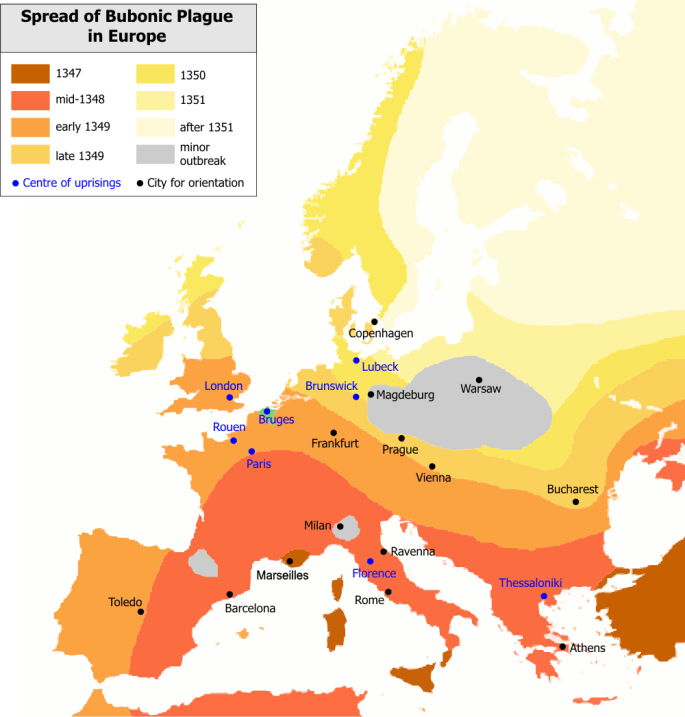
Researchers at Northwestern University have been investigating how Yersinia pestis—the bacteria that causes bubonic, pneumonic, and septicemic plague—became the infective cause of the Black Death. They discovered two mutations that help to explain the bacteria’s lethality.

Smithsonian.com—“The first mutation gave the bacteria the ability to make a protein called Pla. Without Pla, Y. pestis couldn’t infect the lungs. The second mutation allowed the bacteria to enter deeper into the bodies, say through a bite, to infect blood and the lymphatic system. In other words, first the plague grew deadly, then it found a way to leap more easily from infected fleas or rodents to humans.

Ebola Strain Found on Teen in Liberia Genetically Similar to Viruses in Same Area Months Ago

I’m sure you’ve heard that there were three new cases of Ebola in Liberia—a country that was declared free of the disease on May 9. According to the World Health Organization, samples taken from a teenager who died from Ebola two weeks prior indicate that the disease is genetically similar to strains that infected people in the same area over six months ago—while the outbreak was still ongoing.

US News and World Report—“That finding by genetic sequencing suggests it is unlikely the virus was caught from travel to infected areas of Guinea or Sierra Leone, the group said. “It also makes it unlikely that this has been caused by a new emergence from a natural reservoir, such as a bat or other animal,” it said.”

Stories You May Have Missed

Image Credit: en.wikipedia

Pandora Report 6.28.15

It was a big week, right? The Supreme Court was making declarations and in California the General Assembly was making some decisions of their own. We’ve got the mandate for childhood vaccines in California, World War II chemical weapons testing, and other stories you may have missed.

There will be no news round up next week, in honor of one of my favorite holidays, Independence Day! I’ll be wearing red, white, and blue, watching July 4th themed movies, and celebrating with all the American spirit I can muster. I wish all of you the same!

See you back here in July!

California Passes Bill to Require Vaccines and Ban Religious Exemptions

On Thursday, the California State Assembly passed SB 277, which mandates that children attending day care or public school must be vaccinated. The bill eliminated personal-belief and religious exemptions. Largely, this bill was in response to the outbreak of measles that began at Disneyland last year. Children who cannot receive vaccinations for medical reasons can still receive the vaccine exemption. Governor Jerry Brown is expected to sign the bill into law.

Slate—“The New York Times quoted Christina Hildebrand, the founder of A Voice for Choice, a nonprofit organization that has lobbied against the bill, about her unsuccessful campaign to stop this legislation, “There are large numbers of parents who are very concerned about the fact that we’re going to have mandated medical treatment against a fundamental right to education. Parental freedom is being taken away by this, because the fear of contagion is trumping it.’”

Secret World War II Chemical Experiments Tested Troops by Race

According to documents declassified in the 1990s, the U.S. Army conducted secret chemical weapons tests on minority soldiers in order to determine the effect weapons had on non-white skin. African-American and Puerto Rican soldiers were tested upon to see if their darker pigment made them less susceptible to the weapons. Japanese-Americans were used to determine how the weapons would affect enemy Japanese soldiers. The soldiers were subjected to mustard gas and lewisite and volunteered for the assignment.

NPR—“All of the World War II experiments with mustard gas were done in secret and weren’t recorded on the subjects’ official military records. Most do not have proof of what they went through. They received no follow-up health care or monitoring of any kind. And they were sworn to secrecy about the tests under threat of dishonorable discharge and military prison time, leaving some unable to receive adequate medical treatment for their injuries, because they couldn’t tell doctors what happened to them.”

Stories You May Have Missed

Image Credit: David Monniaux

Pandora Report 6.21.15

Changing things up this week, our lead story is a nuclear photo essay. We’ve also got Russian nuclear posturing and a bunch of other stories you may have missed.

Happy Father’s Day to all the dads out there and enjoy the rest of your weekend!

Next Exit, Armageddon: Photos of America’s Nuclear Weapons Legacy

I love a good photo essay, especially those focused on abandoned places—so this is the perfect* combination of that and nuclear history. Many times on the blog I’ve made somewhat flippant comments about visiting nuclear sites on summer vacation. However, evidently there is great public interest in this. As such, the National Park Service and the Department of Energy will establish the Manhattan Project National Historical Park that will include sites as Los Alamos, Oak Ridge and Hanford.

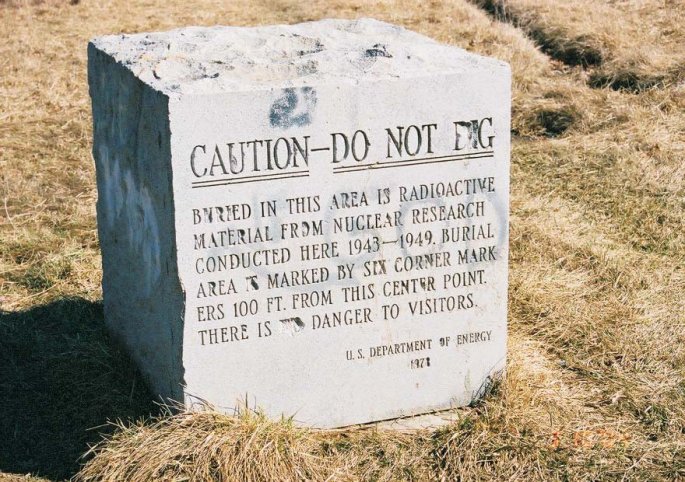
VICE News—“Elsewhere in the US, the ruins of the Manhattan Project and the arms race that followed remain overlooked. In North Dakota, a pyramid-like anti-missile radar that was built to detect an incoming nuclear attack from the Soviet Union pokes through the prairie grass behind an open fence. In Arizona, a satellite calibration target that was used during the Cold War to help American satellites focus their lenses before spying on the Soviet Union sits covered in weeds near a Motel 6 parking lot. And in a suburban Chicago park, where visitors jog and bird watch, nuclear waste from the world’s first reactor — developed by Italian physicist Enrico Fermi for the Manhattan Project in 1942 — sits buried beneath a sign that reads ‘Caution — Do Not Dig.’”

*Check out the photos. They’re truly extraordinary.

Putin: Russia to Boost Nuclear Arsenal with 40 Missiles

Everything old is new again, it seems. This week Vladimir Putin announced that Russia will put more than 40 new intercontinental ballistic missiles into service in 2015. It is said that the new missiles are part of a military modernization program. However, the announcement comes on the heels of a US proposal to increase its own military presence in NATO states in Eastern Europe.

BBC—“Nato Secretary-General Jens Stoltenberg said that the statement from Mr. Putin was “confirming the pattern and behaviour of Russia over a period of time; we have seen Russia is investing more in defence in general and in its nuclear capability in particular”.

He said: “This nuclear sabre-rattling of Russia is unjustified, it’s destabilising and it’s dangerous.” He added that “what Nato now does in the eastern part of the alliance is something that is proportionate, that is defensive and that is fully in line with our international commitments.’”

Stories You May Have Missed

Image Credit: Federal Government of the United States

Pandora Report 6.14.15

I’ve got brunch reservations this morning so the big story about the coming egg shortage is hitting close to home. We’ve also got a story about ISIS’ WMD and a bunch of stories you may have missed.

As a final reminder, the Early Registration Deadline for the Pandemics, Bioterrorism, and International Security is tomorrow, Monday, June 15. For more information and registration, please click here.

Enjoy the rest of your weekend!

Egg Shortage Scrambles U.S. Food Industries

The unprecedented outbreak of avian influenza in the U.S. has meant massive losses in the domestic poultry industry which has left experts warning that U.S. consumers are very likely to see an increase in egg prices. Cases of avian flu have been reported in 15 states, with Iowa and Minnesota being some of the hardest hit. “In Minnesota, the number of lost turkeys represent about 11 percent of our total turkey production…of the chickens we’ve lost that are laying eggs, 32 percent… have been affected by this” In Iowa, about 40 percent of the state’s egg-laying chickens and 11 percent of its turkeys have been affected. All these losses will mean a shortage of whole eggs and other egg-based products.

U.S. News and World Report—“Consumers haven’t felt the pinch too much just yet, but they are unlikely to emerge with their pocketbooks unscathed, [Rick] Brown [Senior VP at Urner Barry, a food commodity research and analysis firm]. He says two-thirds of all eggs produced in the U.S. remain in a shell, many of which are placed in cartons and sold in grocery stores. This stock of eggs has been hit significantly less by the avian flu outbreak than those used in the egg products industry, which Brown says encompasses “everything from mayonnaise to salad dressings to cake mixes to pasta to bread.”

Australian Official Warns of Islamic State Weapons of Mass Destruction

You may have already seen this, since this story was everywhere this week. Julie Bishop, Australia’s Minister for Foreign Affairs, said the Islamic State (ISIS) already has and is already using chemical weapons. Bishop made these comments in an address to the Australia Group—a coalition of 40 countries seeking to limit the spread of biological and chemical weapons. In a follow-up interview, Bishop also said that NATO was concerned about the theft of radioactive material and what that could mean for nuclear weapons proliferation.

The Washington Post—“‘The use of chlorine by Da’ish, and its recruitment of highly technically trained professionals, including from the West, have revealed far more seriou­s efforts in chemical weapons development,” Bishop said, using an alternate name for the Islamic State in a speech reported by the Australian. She did not specify the source of her information.  “… Da’ish is likely to have amongst its tens of thousands of recruits the technical expertise necessary to further refine precursor materials and build chemical weapons.’”

Stories You May Have Missed


Image Credit: Hannahdownes

Pandora Report 6.7.15

We’ve got stories this week about MERS spread in South Korea and Ebola drugs that may already be in your medicine cabinet. We’ve also got some stories you may have missed.

As a reminder, the Early Registration Deadline for the Pandemics, Bioterrorism, and International Security professional education course has been extended to June 15. For more information and registration, please click here.

Enjoy the rest of your weekend!

South Korea Grapples to Contain MERS as 1,369 in Quarantine

The big story this week is MERS in South Korea. Last week we reported that there were five cases. As of Friday, the number has jumped to 36 confirmed cases and three deaths. Hundreds of schools have closed in an effort to prevent further spreading of the disease, which arrived in a 68-year old index patient who had traveled in Saudi Arabia, Qatar, the United Arab Emirates, and Bahrain. Many in public health have been surprised by the extent of the outbreak in South Korea because the virus has not been shown to pass easily from human to human and the health care system is “considered to be sophisticated and modern.”

CNN—“‘This is quite unusual. I think this is the only country, apart from those in the Middle East, that has such a number of cases,” said [Dr. Leo] Poon [a virology expert at the School of Public Health at the University of Hong Kong, who worked on the SARS outbreak more than a decade ago]. “It’s not entirely surprising. In the Middle East, people in Saudi Arabia had hospital outbreaks where a few people got infected. It’s a similar situation at the moment.’”

Drugs to Fight Ebola May Already Be in Your Medicine Cabinet, Study Suggests

A team from USAMRIID, the University of Virginia, and Horizon Discovery Inc. have been working to determine if any existing drugs could be used to fight Ebola. Using 2,635 compounds, including FDA-approved drugs, amino acids, food additives, vitamins and minerals they discovered a possible answer could already be in your medicine cabinet—Zoloft and Vascor.

The LA Times—“But Zoloft (also known by the generic name sertraline) and Vascor (generic name bepridil) had more encouraging results. Of the 10 mice that got Zoloft, seven survived for 28 days. Even better, all 10 of the mice treated with Vascor were still alive 28 days after [Ebola] infection. For the sake of comparison, all of the untreated mice that served as controls were dead within nine days.”

Stories You May Have Missed


Image Credit: Shikhlinski

Pandora Report 05.17.15

Yowza! That’s another semester in the books for the GMU Biodefense students. Please excuse the sparse activity on the blog, but with the semester over, things should be getting back to normal.

This weekend we have a updates on Ebola and the bird flu outbreak in the U.S., plus other stories you may have missed.

Have a great week, (enjoy the Mad Men finale!) and see you back here next weekend!

Ebola is (still) living in an American doctor’s eye

As an update, Liberia has (finally) been declared Ebola free, the number of cases in Guinea continue to rise due to transmissions at funerals, and those in Sierra Leone are dying less from Ebola than from other diseases due to the collapse of the healthcare system. It’s been over a year and we are still learning things about Ebola and its persistence on hospital surfaces, sexual fluids, and now, according to a study in the New England Journal of Medicine, the eye. WHO volunteer Ian Crozier was diagnosed in Sierra Leone and transported to Emory University where he was treated. Months later he returned to the hospital with symptoms like blurred vision and acute pain in his left eye. The cause? Ebola.

The Washington Post—“Ebola may have found refuge in patients’ eyes because, researchers said, the eye is walled off from the immune system. As the New York Times put it: “The barriers are not fully understood, but they include tightly packed cells in minute blood vessels that keep out certain cells and molecules, along with unique biological properties that inhibit the immune system.” This phenomenon is called “immune privilege” — and it means the eye can harbor viruses.”

America’s $45 Billion Poultry Industry Has a (Really) Bad Case of Bird Flu

The title says it all, frankly. Since early December 2014 three strains of highly pathogenic avian influenza have been circulating in North America. A state of emergency has been declared in Iowa (one of the hardest hit states) and over 21 million birds have been killed to contain and prevent the spread of the virus. Beyond the culling of birds, the outbreak is having an affect on business—China, South Korea, and Mexico have banned imports of U.S. poultry (to protect their own industries.)

The Motley Fool—“Falling exports could hurt farmers, but it could also help to offset domestic price increases from less supply. Although, with tens of millions of bird deaths and no end in sight to the pandemic, domestic food prices could be the largest casualty in the end.”

Stories You May Have Missed


Image Credit: 8thstar

Pandora Report 4.19.15

Sunday has to be the biggest brunch day of the week, so it is only fitting that our lead story looks at the many (delicious and nutritious) uses of maple syrup. We also look at Dengue fever in Brazil, missteps in the U.S. fight against Ebola, and other stories you may have missed.

Once you’re updated, get out there and enjoy the rest of your weekend and the beautiful weather! Have a great week!

Syrup Extract Found to Make Antibiotics More Effective Against Bacteria

It seems like we look at growing antibiotic resistance every week here at Pandora Report. This week, researchers at McGill University in Montreal reported that a “concentrated extract of maple syrup makes disease-causing bacteria more susceptible to antibiotics.” This finding suggests that combining the extract with antibiotics could increase their effectiveness and lead to lower antibiotic usage overall. Honestly, is there anything maple syrup can’t make better?!

Infection Control Today—“‘We would have to do in vivo tests, and eventually clinical trials, before we can say what the effect would be in humans,” [Professor Nathalie] Tufenkji says. “But the findings suggest a potentially simple and effective approach for reducing antibiotic usage. I could see maple syrup extract being incorporated eventually, for example, into the capsules of antibiotics.’”

Brazilian Teams on Alert because of Dengue Fever Outbreak

Brazilian soccer teams are on high alert because of a dengue fever outbreak that has already affected some of the country’s top teams. This week three players were diagnosed with the mosquito borne disease, which normally takes about two weeks to recover from. Players have been forced to use insect repellent during games and practices and health officials have been asked to check fields and training centers for mosquito breeding sites.

USA Today—“Cases of dengue fever have increased significantly across Brazil this year, with most of them reported in Sao Paulo state. Brazil’s health ministry said there have been more than 460,000 cases of the disease in the country in 2015, which accounts for almost 5,000 cases a day. More than 130 people have died so far this year, the ministry said.”

Empty Ebola Clinics in Liberia Are Seen as A Misstep in U.S. Relief Effort

After spending hundreds of millions of dollars and deploying 3,000 U.S. troops to build Ebola treatment centers (E.T.C.) in Liberia, the facilities have largely sat empty. Only 28 Ebola patients have been treated at the 11 E.T.C.s built by the U.S. military. Nine of the centers never had a single Ebola patient. Looking back, the emphasis on building E.T.C.s had far less of an impact than the “inexpensive, nimble measures taken by residents to halt the outbreak.”

The New York Times—“Had the Americans and other donors been more flexible, critics and some officials contend, the money could have been put toward rebuilding Liberia’s shattered health care system—or backing the efforts of local communities—instead of focusing on treatment centers that would scarcely be used.”

Stories You May Have Missed


Image Credit: Dvortygirl