Pandora Report 2.5.2016

Fear of mosquitoes continues to grow as Zika virus joins the list of burdening arbovirus infections. Perhaps the biggest surprise this week wasn’t that imported Zika cases continue to spring up across the US, but rather that the first sexually transmitted case occurred in Dallas, Texas. I’m starting to think Dallas, TX, could use a break from emerging infectious diseases… As influenza season picks up in the US, Avian influenza outbreaks are popping up in Taiwan, South Africa, and Macao. Good news- it’s safe to go back to your favorite burrito bowl! The CDC declared the Chipotle-associated E. coli outbreak over, however, their co-CEO has voiced frustration over delayed reporting. In the interview, he felt that it gave the “mistaken impression that people were still getting sick” and news was “fueled by the sort of unusual and even unorthodox way the CDC has chosen to announce cases.” Before we venture down the biodefense rabbit hole, don’t forget to stay healthy and safe this Super Bowl Sunday. Spikes in cases and flu-related deaths (in those >65 years of age) can jump by 18%  in the home regions of the two teams. Take care to avoid respiratory viruses and food-borne issues while cheering on your favorite team this weekend!

Medical Counter Measures for Children
Having worked in pediatrics, I was thrilled to see the American Academy of Pediatrics publish the updated guidelines. Throughout my work in infection prevention and collaborations with hospital emergency preparedness and local county health departments, it became increasingly evident that in many ways, this is a patient population that is easily forgotten. There is a woefully apparent gap in preparedness methodology to recognize and modify practices to meet the unique needs of children. While many may laugh at the notion that “children aren’t just little adults”, those who have worked in pediatrics can attest to these common misconceptions. Children are not only more susceptible to the devastation of disasters and CBRN attacks, the medical counter measures often do not account for pediatric dosages. The published report discussed their work over the past five years to better address and fill major gaps in preparedness efforts when it comes to medical counter measures (MCM) for children. “Moreover, until recently, there has been a relative lack of pediatric MCM development and procurement; many MCMs were initially developed for use by the military and have been evaluated and tested only in adults.” Some of the recommendations that were made from this report include: “the SNS and other federal, state, and local caches should contain MCMs appropriate for children in quantities at least in proportion to the number of children in he intended population for protection by the cache” and “federal agencies collaborating with industry, academia, and other BARDA partners, should research, develop, and procure pediatric MCMs for all public health emergency, disaster, and terrorism scenarios and report on progress made.” Perhaps one of the most interesting recommendations was that “the federal government should proactively identify anticipated uses of MCMs in children during a public health emergency and, where pediatric FDA-approved indications do not exist, establish a plan to collect sufficient data to support the issuance of a pre-event EUA that includes information such as safety and dosing information and the federal government should use existing entities with pediatric SMEs, such as the PHEMCE, PedsOB IPT, and the DHHS National Advisory Committee on Children and Disasters, and continue to collaborate with private sector partners offering pediatric expertise to provide advice and consultation on pediatric MCMs and MCM distribution planning.” Overall, these recommendations and the push for data collection and clear progress reporting are definitely a step in the right direction.

GMU Open House
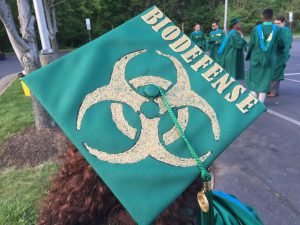
Interested in a master’s degree that allows you to focus on bioweapons, global health security, and WMD’s? Check out GMU’s School of Policy, Government, and International Affairs (SPGIA) Open House on Thursday, February 25th at 6:30pm, at our Arlington Campus in Founders Hall, room 126. Representatives from our Biodefense program will be there to answer all your questions. Better yet, check out our Biodefense Course Sampler on Wednesday, March 2nd, at 7pm (Arlington Campus, Founders Hall, room 502). Dr. Gregory Koblentz,  director of the Biodefense graduate program, will be presenting “Biosecurity as a Wicked Problem”. Come check out our curriculum and get a taste of the amazing topics we get to research!

From Anthrax to Zikam6502e1f
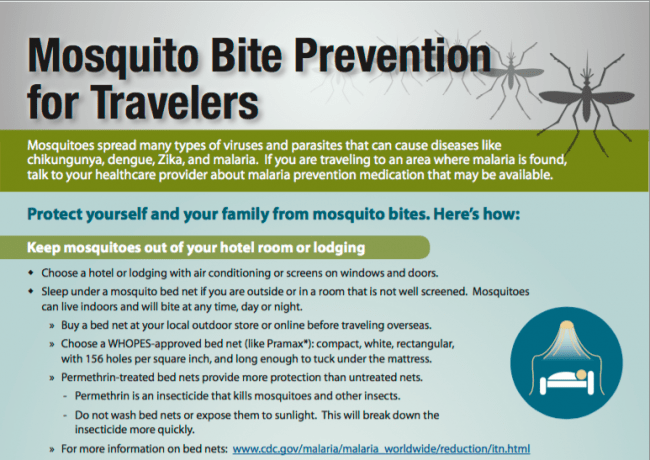
Researchers at the University of Greenwich are finding a potential cancer-fighting strategy using the anthrax toxin. Lead scientist, Dr. Simon Richardson, is working with his team to convert the anthrax toxin into a delivery tool for medications.“This is the first time a disarmed toxin has been used to deliver gene-modulating drugs directly to a specific compartment within the cell. We’ve achieved this without the use of so called helper molecules, such as large positively charged molecules like poly(L-lysine). This is important as while these positively charged molecules, known as polycations, can condense DNA and protect it from attack by enzymes before it reaches the target, they are also known to be toxic, break cell membranes and are sent quickly to the liver to be removed from the body. In this study we demonstrate that using disarmed toxins without a polycation is effective, at a cellular level.” In the world of Zika virus….On Monday, the WHO Zika virus team met and announced that the outbreak should now be considered a public health emergency of international concern. Dr. Margaret Chan, WHO director general, stated, “I am now declaring that the recent cluster of microcephaly and other neurological abnormalities reported in Latin America following a similar cluster in French Polynesia in 2014 constitutes a public health emergency of international concern.” Given the level of uncertainty regarding the disease, many feel this was a justified classification of the outbreak. The first case of sexual transmission within the US also occurred in Dallas, Texas. The patient became sick after having sexual contact with an individual who became symptomatic upon return from Venezuela. Chile and Washington DC have just confirmed their first three cases this week. Mexico’s Health Ministry is trying to downplay the Zika impact on tourism, however as the outbreak unfolds, it will be interesting to see long-term tourism repercussions within the affected countries. The state of Florida is ramping up their mosquito elimination, control, and education efforts to combat the growing epidemic, as it is one of the mosquito-heavy states within the US. Governor Rick Scott recently declared a health emergency in four Florida counties. If you’re on the lookout for educational tools, there are several helpful CDC informational posters regarding mosquito bite prevention.

US Military and the Global Health Security Agenda
In effort to protect military members and support global public health, the DoD (specifically, the Military Health System in coordination with the Defense Health Agency’s Armed Forces Health Surveillance Branch) developed the 2014 Global Health Security Agenda (GHSA). The GHSA established a five-year plan with specific agenda items, targets, and milestones that would incorporate its 31 partner countries. The DoD’s Global Emerging Infections Surveillance and Response System (GEIS) will also support these efforts through their biosurveillance practices in over 70 countries. The international work is as varied as the challenges one might see in global biosurveillance. The Armed Forces Health Surveillance Branch (AFHSB) “leveraged existing febrile and vector-borne infection control efforts in Liberia to support the recent Ebola outbreak response. The Liberian Institute for Biomedical Research served as a central hub for Ebola diagnostic testing with the help of the Naval Medical Research Unit-3 in Cairo, Egypt and two Maryland-based facilities, the Naval Medical Research Center in Silver Spring and the U.S. Army Medical Research Institute of Infectious Diseases in Frederick.” Surveillance efforts will also look at antimicrobial resistance and the development of additional research laboratories to work in coordination with host-nations and certain regional networks. You can also read Cheryl Pellerin’s work on DoD Biosurveillance and the role it plays in maintaining global public health efforts. Pellerin reports on the duties of the GEIS and the US Army Medical Research Institute of Infectious Disease (USAMRIID) in not only global health security, but also protecting US military personnel from infections while abroad.

Norovirus Outbreak in Kansas
There are few things that will make a food-borne disease epidemiologist (or infection preventionist for that matter) as frustrated as a norovirus outbreak. It hits quickly, is highly infectious, and tends to leave you with stories from case-control interviews that will make you either laugh, cry, or need some fresh air. A Kansas City suburb is currently experiencing a 400 person outbreak of gastroenteritis associated with the New Theatre Restaurant. Initial lab reports have confirmed norovirus as the culprit. The Vice President of the restaurant said that three employees have also been confirmed as norovirus cases. To date, the almost 400 people who reported symptoms are said to have eaten at the restaurant between January 15 to present. Norovirus is a pretty unpleasant gastroenteritis (you’ve probably heard it called the “cruise ship bug”) as it has a low infectious dose (estimates put it as low as 18 viral particles, while 5 billion can be shed in each gram of feces during peak shedding). Norovirus outbreaks tend to spring up quickly and infect high volumes of people, making it difficult for public health officials to jump ahead of the outbreak. Perhaps one of the biggest components to stopping the spread of infection is good hand hygiene, environmental cleaning, and staying home when sick.

TB Transmission on Airplanes
We’ve all been there – you’re seated next to someone with a nasty cough or cold and you just know you’re going to get sick. But what happens if you’re on a plane and there’s a person a few rows away that has tuberculosis (TB)? The European Centre for Disease Prevention and Control (ECDC) reviewed evidence of TB transmission on airplanes to update their Risk Assessment Guidelines. Of all the records/studies reviewed, 7/21 showed some evidence for potential in-flight (all flights lasted more than 8 hours) TB transmission, while only one presented evidence for transmission in this environment. The interesting component is that this low transmission risk is considered only for in-flight, as they excluded transmission on the ground since the before and after flight ventilation system is not in full-function mode. The one study that did show transmission risk involved six passengers that were in the same section as the index case, of which, four were seated within two rows. After their review, they found that the risk for TB transmission on airplanes is “very low”. They noted that “the updated ECDC guidelines for TB transmission on aircraft have global implications due to inevitable need for international collaboration in contact tracing and risk assessment.”

Stories You May Have Missed:

  • Resistant HIV – A recent study published in The Lancet discusses drug resistance after virological failure with the first-line HIV medication, tenofovir-containing ART (antiretroviral  therapy). This treatment is used as both a prevention and pre-exposure prophylaxis (PrEP). Researchers found “drug resistance in a high proportion of patients after virological failure on a tenofovir-containing first-line regimen across low-income and middle-income regions”. This study highlights the growing need for surveillance of microbial drug resistance.
  • Active Monitoring of Returning Travelers – Ebola Surveillance – The CDC’s MMWR for the week of January 29, 2016, discussed NYC monitoring of returned travelers from October 2014-April 2015. Monitoring of returned travelers from Ebola-affected countries was one strategy the US employed to prevent imported cases. This report reviews the 2,407 travelers that returned from affected countries, of which no cases were detected. The NYC Department of Health and Mental Hygiene (DOHMH)’s active monitoring system proved successful, however it was very taxing on resources and reinforces the need to minimize duplication and enhanced cooperation. Speaking of Ebola, investigators from the University of Texas Medical Branch at Galveston, Vanderbilt University, the Scripps Research Institutem and Integral Molecular Inc., have performed research to establish that “antibodies in the blood of people who have survived a strain of the Ebola virus can kill various types of Ebola.” Further work will now seek to understand immune response to the virus and how we can modify treatments and potential vaccines to be more effective.
  • DoD BioChem Defense take a glimpse into the global biosurveillance and defense efforts within the DoD Chemical and Biological Defense Program (CBDP). Working within several joint programs and striving to get ahead of outbreaks and attacks with early warning systems, this program faces the challenges of monitoring biochem threats on an international scale.

Enjoying your weekly dose of the Pandora Report? Sign up to receive it every week so the fun never ends! 

Pandora Report 7.26.15

Mason students are working through their summer courses and I’m happy to say mine is OVER! Let the summer begin (two months late)! This week we’ve got great news about Polio in Nigeria and a somber anniversary in Japan. We’ve also got other stories you may have missed.

Enjoy the rest of your weekend and have a great week!

A-Bomb Victims Remembered in Potsdam, Where Truman Ordered Nuclear Strikes

Coming up on the 70th anniversary of the atomic bombs being dropped on Hiroshima and Nagasaki, German and Japanese citizens in the city of Potsdam held a remembrance ceremony for both the victims that died in the blast and the future. Japan has become, according to the former President of the International Court of Justice, the world’s conscience against nuclear weapons and power. Why? Japan is “the only country in the world to have been the victim of both military and civilian nuclear energy, having experienced the crazy danger of the atom, both in its military applications, destruction of life and its beneficial civilian use, which has now turned into a nightmare with the serious incidents of Fukushima.”

Japan Times—“The Potsdam Conference was held between July 17 and Aug. 2 in 1945. The United States dropped an atomic bomb on Hiroshima on Aug. 6 and another bomb on Nagasaki three days later. On Aug. 15 that year, Emperor Hirohito announced to the nation that Japan had accepted the Potsdam Declaration, in which the United States, Britain and China demanded the nation’s unconditional surrender.”

Nigeria Beats Polio

Very, very, very exciting news: Nigeria has not had a case of polio in a year. A year! This makes Nigeria polio free and the last country in Africa to eliminate the disease. The achievement was possible with contributions from the Nigerian government (where elimination of the disease was a point of “national pride”), UNICEF, the WHO, the CDC, the Bill and Melinda Gates Foundation, Rotary International, and other organizations. With Nigeria’s accomplishment, there are only two other countries in the world where polio still exists—Afghanistan and Pakistan.

Voice of America—“Carol Pandek heads Rotary International’s polio program. She told VOA via Skype that a year being polio-free is a milestone for Nigeria, but noted that it is not over. “Now they need to continue to do high quality immunization campaigns for the next several years,” she said, as well as have a strong surveillance system so, should there be any new cases, they can be identified as soon as possible.”

Stories You May Have Missed


Image Credit: Fg2

Pandora Report 6.21.15

Changing things up this week, our lead story is a nuclear photo essay. We’ve also got Russian nuclear posturing and a bunch of other stories you may have missed.

Happy Father’s Day to all the dads out there and enjoy the rest of your weekend!

Next Exit, Armageddon: Photos of America’s Nuclear Weapons Legacy

I love a good photo essay, especially those focused on abandoned places—so this is the perfect* combination of that and nuclear history. Many times on the blog I’ve made somewhat flippant comments about visiting nuclear sites on summer vacation. However, evidently there is great public interest in this. As such, the National Park Service and the Department of Energy will establish the Manhattan Project National Historical Park that will include sites as Los Alamos, Oak Ridge and Hanford.

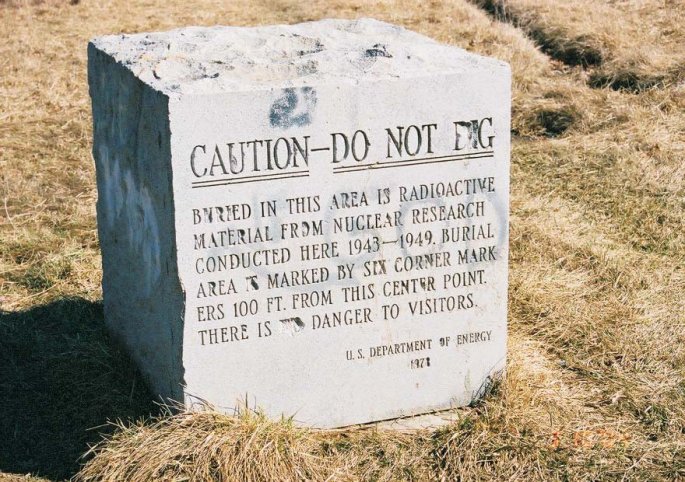
VICE News—“Elsewhere in the US, the ruins of the Manhattan Project and the arms race that followed remain overlooked. In North Dakota, a pyramid-like anti-missile radar that was built to detect an incoming nuclear attack from the Soviet Union pokes through the prairie grass behind an open fence. In Arizona, a satellite calibration target that was used during the Cold War to help American satellites focus their lenses before spying on the Soviet Union sits covered in weeds near a Motel 6 parking lot. And in a suburban Chicago park, where visitors jog and bird watch, nuclear waste from the world’s first reactor — developed by Italian physicist Enrico Fermi for the Manhattan Project in 1942 — sits buried beneath a sign that reads ‘Caution — Do Not Dig.’”

*Check out the photos. They’re truly extraordinary.

Putin: Russia to Boost Nuclear Arsenal with 40 Missiles

Everything old is new again, it seems. This week Vladimir Putin announced that Russia will put more than 40 new intercontinental ballistic missiles into service in 2015. It is said that the new missiles are part of a military modernization program. However, the announcement comes on the heels of a US proposal to increase its own military presence in NATO states in Eastern Europe.

BBC—“Nato Secretary-General Jens Stoltenberg said that the statement from Mr. Putin was “confirming the pattern and behaviour of Russia over a period of time; we have seen Russia is investing more in defence in general and in its nuclear capability in particular”.

He said: “This nuclear sabre-rattling of Russia is unjustified, it’s destabilising and it’s dangerous.” He added that “what Nato now does in the eastern part of the alliance is something that is proportionate, that is defensive and that is fully in line with our international commitments.’”

Stories You May Have Missed

Image Credit: Federal Government of the United States

Pandora Report 6.14.15

I’ve got brunch reservations this morning so the big story about the coming egg shortage is hitting close to home. We’ve also got a story about ISIS’ WMD and a bunch of stories you may have missed.

As a final reminder, the Early Registration Deadline for the Pandemics, Bioterrorism, and International Security is tomorrow, Monday, June 15. For more information and registration, please click here.

Enjoy the rest of your weekend!

Egg Shortage Scrambles U.S. Food Industries

The unprecedented outbreak of avian influenza in the U.S. has meant massive losses in the domestic poultry industry which has left experts warning that U.S. consumers are very likely to see an increase in egg prices. Cases of avian flu have been reported in 15 states, with Iowa and Minnesota being some of the hardest hit. “In Minnesota, the number of lost turkeys represent about 11 percent of our total turkey production…of the chickens we’ve lost that are laying eggs, 32 percent… have been affected by this” In Iowa, about 40 percent of the state’s egg-laying chickens and 11 percent of its turkeys have been affected. All these losses will mean a shortage of whole eggs and other egg-based products.

U.S. News and World Report—“Consumers haven’t felt the pinch too much just yet, but they are unlikely to emerge with their pocketbooks unscathed, [Rick] Brown [Senior VP at Urner Barry, a food commodity research and analysis firm]. He says two-thirds of all eggs produced in the U.S. remain in a shell, many of which are placed in cartons and sold in grocery stores. This stock of eggs has been hit significantly less by the avian flu outbreak than those used in the egg products industry, which Brown says encompasses “everything from mayonnaise to salad dressings to cake mixes to pasta to bread.”

Australian Official Warns of Islamic State Weapons of Mass Destruction

You may have already seen this, since this story was everywhere this week. Julie Bishop, Australia’s Minister for Foreign Affairs, said the Islamic State (ISIS) already has and is already using chemical weapons. Bishop made these comments in an address to the Australia Group—a coalition of 40 countries seeking to limit the spread of biological and chemical weapons. In a follow-up interview, Bishop also said that NATO was concerned about the theft of radioactive material and what that could mean for nuclear weapons proliferation.

The Washington Post—“‘The use of chlorine by Da’ish, and its recruitment of highly technically trained professionals, including from the West, have revealed far more seriou­s efforts in chemical weapons development,” Bishop said, using an alternate name for the Islamic State in a speech reported by the Australian. She did not specify the source of her information.  “… Da’ish is likely to have amongst its tens of thousands of recruits the technical expertise necessary to further refine precursor materials and build chemical weapons.’”

Stories You May Have Missed


Image Credit: Hannahdownes

Pandora Report 5.24.15

Two quick updates before we get into the weekly wrap-up.

First, the Early Registration Deadline for the Pandemics, Bioterrorism, and International Security professional education course at the GMU Arlington Campus has been extended to June 15. For more information and registration, please click here.

Second, we here at Pandora Report wanted to let you know about a new website designed to provide resources for biosecurity professionals and practitioners and key stakeholders. The International Biosecurity Prevention Forum (IBPF) brings together the world’s leading experts from the health and security communities to share expertise on key biosecurity and bioterrorism prevention issues. Registering to join IBPF is free and easy. Go to http://www.ibpforum.organd click the “Request Membership” button to request an IBPF member account. Members get access to a discussion section and projects, resources, and best practices submitted by other members. Contact the IBPF support team at IBPForum@ic.fbi.gov if you have any questions or problems.

Now, onto the news. This weekend we have stories about British nuclear submarines, anti-vaccine legislation in California, the development of bird flu vaccines, and other stories you may have missed.

Enjoy your Memorial Day weekend!!

Britain Investigates Sailor’s Disaster Warning Over Nuclear Subs

Able Seaman William McNeilly—a weapons engineer who served aboard HMS Vanguard, one of the four British submarines carrying Trident missiles—wrote a “lengthy dossier” released on the internet which says that the “Trident nuclear defense system was vulnerable both to enemies and to potentially devastating accidents because of safety failures.” McNeilly has since gone AWOL and both police and naval officials are trying to locate him.

The Japan Times—“The Royal Navy said it totally disagreed with McNeilly’s “subjective and unsubstantiated personal views,” describing him as a “very junior sailor.” But it added it was investigating both his claims and the “unauthorized release” of his dossier. “The naval service operates its submarine fleet under the most stringent safety regime and submarines do not go to sea unless they are completely safe to do so,” a spokeswoman said.”

A Blow to Anti-Vaxxers: California Approves Forced Vaccination Bill

By now, we all know that the measles outbreak that started last winter at Disneyland was a result of unvaccinated individuals. In California, the State Senate has passed a bill which limits parent’s use of the “personal belief exemption” in order to get out of getting their children vaccinated. Under the bill, parents who don’t get their children vaccinated would not be able to send their kids to state-licensed schools, nurseries, or day care centers.

State Column—“Only children who have a medical reason for why they can’t be vaccinated would still be allowed to attend schools without receiving their vaccinations under Senate Bill 277, which was sponsored by a California Sen. Dr. Richard Pan (D-Sacremento), a pediatrician, and Ben Allen (D-Santa Monica), a former school board member and the son of a survivor of polio, according to a Forbes report.”

Vaccines Developed for H5N1, H7N9 Avian Flu

Findings appearing in the Journal of Virology indicate that the U.S. Department of Homeland Security’s Center of Excellence for Emerging and Zoonotic Animal Diseases have developed a vaccine for both H5N1 and H7N9—two strains of avian influenza which can be transmitted from poultry to humans. The vaccine was developed by cloning the Newcastle disease virus and transplanting a small section of the H5N1 virus into it; the same method was used for the H7N9 vaccine.

Toronto Sun—“‘We believe this Newcastle disease virus concept works very well for poultry because you kill two birds with one stone, metaphorically speaking,” Richt said. “You use only one vector to vaccinate and protect against a selected virus strain of avian influenza.’”

Stories You May Have Missed


Image Credit: UK Ministry of Defence

Pandora Report 05.17.15

Yowza! That’s another semester in the books for the GMU Biodefense students. Please excuse the sparse activity on the blog, but with the semester over, things should be getting back to normal.

This weekend we have a updates on Ebola and the bird flu outbreak in the U.S., plus other stories you may have missed.

Have a great week, (enjoy the Mad Men finale!) and see you back here next weekend!

Ebola is (still) living in an American doctor’s eye

As an update, Liberia has (finally) been declared Ebola free, the number of cases in Guinea continue to rise due to transmissions at funerals, and those in Sierra Leone are dying less from Ebola than from other diseases due to the collapse of the healthcare system. It’s been over a year and we are still learning things about Ebola and its persistence on hospital surfaces, sexual fluids, and now, according to a study in the New England Journal of Medicine, the eye. WHO volunteer Ian Crozier was diagnosed in Sierra Leone and transported to Emory University where he was treated. Months later he returned to the hospital with symptoms like blurred vision and acute pain in his left eye. The cause? Ebola.

The Washington Post—“Ebola may have found refuge in patients’ eyes because, researchers said, the eye is walled off from the immune system. As the New York Times put it: “The barriers are not fully understood, but they include tightly packed cells in minute blood vessels that keep out certain cells and molecules, along with unique biological properties that inhibit the immune system.” This phenomenon is called “immune privilege” — and it means the eye can harbor viruses.”

America’s $45 Billion Poultry Industry Has a (Really) Bad Case of Bird Flu

The title says it all, frankly. Since early December 2014 three strains of highly pathogenic avian influenza have been circulating in North America. A state of emergency has been declared in Iowa (one of the hardest hit states) and over 21 million birds have been killed to contain and prevent the spread of the virus. Beyond the culling of birds, the outbreak is having an affect on business—China, South Korea, and Mexico have banned imports of U.S. poultry (to protect their own industries.)

The Motley Fool—“Falling exports could hurt farmers, but it could also help to offset domestic price increases from less supply. Although, with tens of millions of bird deaths and no end in sight to the pandemic, domestic food prices could be the largest casualty in the end.”

Stories You May Have Missed


Image Credit: 8thstar

Pandora Report 2.7.15

Whatta week, right?! Let’s jump right in to the stories. We’ve got the Subway, flu forecasting, American chemical weapons, and stories you may have missed.

Have a great weekend and a safe and healthy week!

A Close Look at the Germs Crawling Around the Subway

Every single day I ride the metro to work, and every single day, the first thing I do when I get to the office is wash my hands. And, really, that’s what everyone should be doing. A research team from the Weill Cornell Medical College spent the summer of 2013 swabbing turnstiles, subway poles, kiosks, benches, and other “human penetrated surfaces” in all 466 NYC subway stations.

Gothamist—“And they found quite a few signs of life—15,152 types of DNA, in fact—nearly half of which they identified as bacteria. Shocking!

[They] did manage to find some scary stuff, with E. coli, Staphylococcus aureus (skin infections, respiratory disease and food poisoning), Bacillus anthracis (anthrax), and even Yersinia pestis, which is associated with the bubonic plague, popping up in some swabs. Nearly all the stations harbored an antibiotic resistant bacteria called Stenotrophomonas maltophilia, one that often causes respiratory infections in hospitals.”

Forecasts May Soon Predict Flu Patterns

What if we could predict the flu like we predict the weather? That is what teams of researchers are looking at; devising and testing methods to predict the start, peak, and end of flu season. How will they do this? By combining data from the present with knowledge of past patterns to project what might happen in the future.

The Boston Globe—“If the CDC had a flu-season preview in hand, the agency could better time messages on use of vaccines and flu-fighting drugs.

Hospitals could plan staffing for patient surges or make sure key personnel are not on vacation when it appears the epidemic will probably peak. Parents could even take flu forecasts into account in scheduling birthday parties and play dates.”

U.S. to Destroy Largest Remaining Chemical Weapons Cache

Syria isn’t the only country working on destruction of its chemical weapons cache. The Pueblo Chemical Depot, in Southern Colorado, will begin neutralization of 2,600 tons of aging mustard agent in March. This action moves towards American compliance with a 1997 treaty that banned all chemical weapons.

USA Today—“‘The start of Pueblo is an enormous step forward to a world free of chemical weapons,” said Paul Walker, who has tracked chemical warfare for more than 20 years, first as a U.S. House of Representatives staffer and currently with Green Cross International, which advocates on issues of security, poverty and the environment.”

Stories You May Have Missed


Image Credit: Wikimedia Commons

Pandora Report 1.18.15

For those who’ve been reading for awhile, you’ve probably surmised that one of my personal health interests is seasonal and pandemic flu. There were plenty of stories about that this week, so that’s what we’ll focus on. We’ll also look at Ebola and other stories you may have missed. My apologies for posting delays this week, I’m dealing with some rotator cuff and carpal tunnel issues in my right arm, and let me tell you, it is HARD to type with your dominant arm in a sling!

Enjoy your holiday Monday (if you have one) and have a safe and healthy week!

Texas Health Experts Say Universal Flu Vaccine Could be a Reality

The CDC has said that this year’s seasonal flu vaccine was only 23% effective due to unanticipated antigenic drift—meaning the predicted strains in the vaccine didn’t match the dominant strains of the virus that are currently circulating. In order to combat this in the future, scientists at Mount Sinai health system in New York are in the process of testing a universal flu vaccine which will go into clinical trials this year.

KLTV.com—“‘There is work going on to see if, perhaps a different kind of vaccine could be developed maybe against a different part of the flu virus, one that is not so subject to this antigenic drift or to change as readily from one year to the next,” [Dr. Levin of UT Health Northeast] says.”

Scientists Find Brain Protein Aids Influenza Recovery

Scientists at Washington State University in Spokane have found a brain protein that boosts the healing power of sleep and speeds recovery from the flu in mice. Professor James M. Kruger said this discovery could lead to alternative treatments for flu and other infectious diseases by stimulating production of the brain protein called AcPb. This discovery comes at a time where avian influenza is prevalent in Taiwan, Japan, Nigeria, China, Egypt, Canada, the U.S. and Mexico.

Washington State University—“Krueger showed this recovery involves AcPb and an immune system signaling chemical called interleukin-1. AcPb links up with interleukin-1 to help regulate sleep in healthy animals. It also prompts infected animals to spend more time sleeping during an illness.

In the study, mice who lacked the gene for AcPb slept less after being infected with influenza virus. They also became chilled, grew sluggish, lost their normal circadian rhythms and ultimately died in higher numbers than the mice who slept longer.”

This Week in Ebola

As GMU students return to classes, so do students in Ebola affected Guinea. Schools in Guinea will re-open Monday, and schools in Liberia are set to re-open “next month.” No date has been set for schools in Sierra Leone. Despite this, the President of Sierra Leone has declared that there will be zero new confirmed Ebola cases by the end of March the country will be Ebola-free, by WHO standards, by May. These announcements come at a time when Dr. Thomas Frieden, Director of the CDC, has said he was “very confident we can get to zero cases in this epidemic if we continue the way we’re going and nothing unexpected happens” and the outbreak appears to be slowing down. Last week brought record low numbers—for Guinea, the lowest total since mid-August; for Liberia, the lowest total since the first week of June; for Sierra Leone the second week of declines and the lowest level since the end of August. However, there are still “at least 50 micro-outbreaks” underway throughout West Africa.

Pauline Cafferkey, the Scottish nurse infected with Ebola, is “showing signs of improvement” and an American soldier who was found dead in Texas after his deployment in West Africa reportedly showed no signs of Ebola leaving officials to remark that there was “no evidence of a public health threat.”

A seemingly large amount of good news this week left space for new ruminations on Ebola and outbreaks in general. Wired  had an interesting piece on Nanobiophysics and how it could stop future global pandemics while The Chicago Tribune looked at bats and their likely role in Ebola outbreaks and CNBC looked at the price of protection from global pandemics—would you believe $343.7 billion?

Stories You May Have Missed


Image Credit: NBC News

Pandora Report 12.21.14

The winter holidays are here and with them comes the final 2014 news roundup. This week we look at superspreaders, dengue fever, and, of course, Ebola.

There will be no roundup next week as I will be spending time with family and friends. I hope all of you have the opportunity to do the same and are surrounded by those you love during this time of year. It has been a privilege and a pleasure serving as the Managing Editor of the Pandora Report since March. I hope you have enjoyed reading it as much as I’ve enjoyed writing it.

I hope to see you right back here again in 2015!

The 20% Who Spread Most Disease

How did Typhoid Mary spread the disease to dozens of people but never get sick herself?

Researchers at Stanford University are looking into the science behind “superspreaders”—the idea that some people spread more disease than others. Recent experiments have suggested that the body’s immune response might play a role in helping to spread pathogens to others, however, it isn’t clear if the immune system of the superspreader or their behavior plays a bigger role in the passage of disease.

The Wall Street Journal—“‘It’s telling us that these superspreaders…are tolerant of high levels of the pathogen and any little disturbance and added inflammation that this antibiotic treatment did to them,” said Dr. Monack. “I wouldn’t say they have stronger immune systems. I would say it’s in a state that protected them from this added disturbance in the gut.’”

Dengue Fever Vaccine on the Cards After Novel Antibody Discovery

Over the past 50 years cases of dengue fever have soared—nearly 100 million per year. Normally the infection causes a fever which lasts about a week, but some develop hemorrhagic fever which kills about 22,000 a year. Gavin Screaton at the Imperial College in London warns “it’s likely that without a vaccine this disease is not going to be controlled.” That’s why a discovery of a new antibody brings hope that vaccine development may be closer than we thought.

The Guardian—“The researchers spotted the new group of antibodies while they were studying blood drawn from patients who picked up dengue infections in south-east Asia.

They found that about a third of the immune reaction launched by each patient came from a new class of antibodies. Instead of latching on to a single protein on the virus surface – as usually happens – the new group of antibodies latches on to a molecular bridge that joins two virus proteins together.”

This Week in Ebola

It’s been a hard year in West Africa with the worst Ebola outbreak in history still ongoing. In Sierra Leone, the country with the most cases, treatment centers are overflowing with patients. The President has announced that Christmas has been cancelled as news came that the most senior doctor—Victor Willoughby—died. Dr. Willoughby was the 11th of Sierra Leone’s 120 doctors to die from the virus. For the lucky ones who survive, they must cope with after effects including blindness and joint pain. And don’t forget the stigma—a heart breaking article in the New York Times describes the plight of Ebola orphans who aren’t taken in for fear that they are ticking disease time bombs. Cuban doctors are some of the most active on the front lines, but news this week came that the U.S. embargo has delayed payment of those doctors. There are glimmers of hope though, as the U.N. Economic Commission for Africa urged debt cancellation for Ebola affected West African countries and experimental serum therapy treatment made from the blood of recovered patients arrived in Liberia.

Stateside, a child flying though O’Hare Airport in Chicago was quarantined when a high fever was discovered after screening. Johns Hopkins University was chosen as one of the winners in a global competition to create an improved protection suit for those fighting Ebola on the front lines. Lastly, an American doctor—Richard Sacra—who was infected with Ebola in Liberia and returned to the U.S. for treatment, has said that he will return to Liberia in January to continue fighting the outbreak.

Stories You May Have Missed


Image Credit: Free Images

Pandora Report 12.7.14

I hope all of you had a wonderful Thanksgiving! There were a lot of stories to consider for this extra long (extra late) week in review. We cover the AIDS pandemic, Avian Influenza, Polio in Pakistan, and, of course, Ebola. For those of you in school, I hope your papers and exams aren’t too overwhelming! For everyone else, have a wonderful week, hopefully paper and exam-free week!

AIDS Campaigners Say Pandemic Has Finally Reached Tipping Point

A report released by the ONE campaign to mark World AIDS Day on December 1 said that “the world has finally reached “the beginning of the end” of the AIDS pandemic that has infected and killed millions in the past 30 years.” What is the tipping point? The number of newly infected HIV patients is lower than the number of HIV positive patients who have access to retroviral medications that keep AIDS at bay. However, this doesn’t mean the fight is over.

Reuters—“‘We’ve passed the tipping point in the AIDS fight at the global level, but not all countries are there yet, and the gains made can easily stall or unravel,” said Erin Hohlfelder, ONE’s director of global health policy.”

FAO, OIE Warn of Avian Influenza’s Rapid Spread

The Food and Agriculture Organization of the United Nations and the World Organization for Animal Health have warned that the new avian flu strain detected in Europe is similar to those found in Asia and pose a significant threat to the poultry sector. Evidence of H5N8 has been found in Germany, the Netherlands, and the United Kingdom, as well as China, Japan, and South Korea. So far, it doesn’t appear this strain is infecting people, however, this week there were reported human cases and deaths from H5N1.

The Poultry Site—“The new virus strain provides a stark reminder to the world that avian influenza viruses continue to evolve and emerge with potential threats to public health, food security and nutrition, to the livelihoods of vulnerable poultry farmers, as well as to trade and national economies. Therefore extreme vigilance is strongly recommended while progressive control efforts must be sustained and financed.”

Pakistan Polio Outbreak ‘Will Probably be Fixed Next Year’ says WHO Official

So far this year there have been 262 cases of polio detected in Pakistan, which is the highest number of cases in 14 years. Pakistan is one of only three countries in the world, including Afghanistan and Nigeria, where the virus remains endemic. Despite these numbers, a WHO official in Pakistan says the disease will “most probably be fixed in the first half of 2015.” Military campaigns around the country have not only made vaccination more difficult but have faced tribal militants who banned all vaccinations.

The Guardian—“Persistent public awareness campaigns have not fully quashed popular fears that the drops given to children – a solution of highly weakened polio virus – are part of a western conspiracy to make Muslims infertile.

The Pakistani Taliban have attacked and killed health workers who conduct door-to-door campaigns, forcing the government to mount massive security operations during major vaccination drives.”

This Week in Ebola

We’ve got a lot of news from the last two weeks, so today, let’s start stateside.

The CDC says you can stop worrying because it is very unlikely that Ebola will become airborne, so you can stop cancelling your African safaris. Ebola anxiety has left the U.S. buying up all the PPEs leaving little for workers in West Africa, while the Director of the Harvard School of Public Health Emergency Preparedness has said that U.S. quarantine policy could discourage volunteers from going to help the outbreak. However, recently, no one has been caught in quarantines entering New York and New Jersey airports. 35 American hospitals have been designated as Ebola centers and already the U.S. government is looking past Ebola for the next health disaster. Meanwhile, the first human trial of an experimental vaccine for the virus has produced promising results.

Overseas, the German airline Lufthansa adapted an A340-300 to transport Ebola patients. In Liberia, the President has banned election rallies and mass gatherings under the reasoning that they risk worsening the spread of the virus and Ebola moves out of the cities, it is ‘pingponging’ into rural areas. In Sierra Leone there are approximately 80-100 new cases of Ebola daily, they are running out of beds, and in protest of non-payment, burial workers are dumping bodies in public in the city of Kenema. One piece of good news coming out of this outbreak that has affected more than 16,000 people is that female genital mutilation is on the decline. Also, a new 15-minute test for Ebola is being tested in Guinea, which, if it works, will help medical staff identify and isolate Ebola patients sooner.

The UN warns that the longer the disease is allowed to spread unchecked in West Africa, the more likely it is that Ebola will appear in new places in the world but EcoHealth journal notes that closer study of zoonotic diseases could help prevent Ebola and other diseases from affecting humans. Don’t worry though, according to North Korea Ebola isn’t a zoonotic disease, it is a bioweapon created by the U.S.

Stories You May Have Missed


Image Credit: Free Internet Pictures